Anuradhapura
Anuradhapura, Sri Lanka
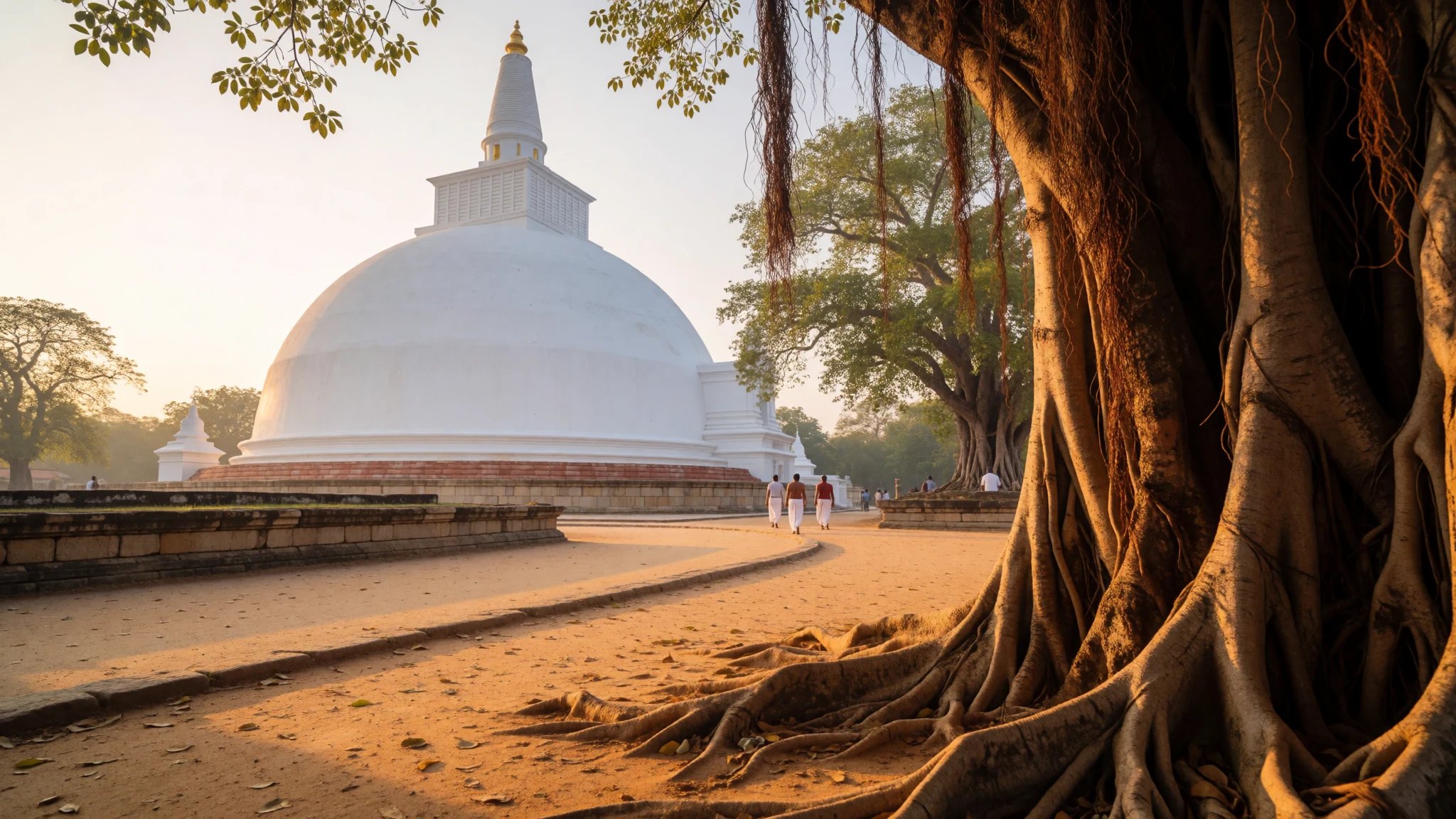
Anuradhapura is Sri Lanka’s ancient religion-and-ruins city, where huge stupas and quiet monastery remains explain how civilisation organised itself.
The place
Anuradhapura (අනුරාධපුරය) sits in Sri Lanka’s north central plain, on the banks of the historic Malwathu Oya, and it still feels like a place shaped by faith and water management. This is a city of ruins, but it doesn’t feel abandoned: the sites are active, and pilgrims move through the same courtyards you photograph.
The centre of gravity is the old sacred zone, packed with large Buddhist monuments—stupas (dagobas) and monastery spaces—that were built, expanded, and then layered with time. Even if you arrive without a detailed plan, you’ll notice that many monuments share a similar rhythm: broad stone platforms, whitewashed domes or tall brick forms, and surrounding compounds where the ground itself seems to hold stories.
What makes Anuradhapura more than “temples and rocks” is the way it links city life to long-term engineering. The city is described as the cradle of the Hydraulic Sinhalese civilisation, and that idea becomes visible when you look beyond the biggest structures. Reservoirs and canals aren’t just background; they help explain why a settlement could stay important for so long.
Expect tropical heat and long sun hours, with crowds that spike around popular sites and prayer times. A morning start helps: light falls nicely on the white stupas, temperatures are kinder, and you get quieter photos before the day fills up.
Its story
Anuradhapura’s story runs on long timelines. The site is said to have been founded in 437 BCE, yet archaeological evidence points to human settlement far earlier, with habitation dating back to the 10th century BCE. That overlap—chronicles on one hand, layers of earth on the other—is part of why the place feels so layered when you walk it.
In its traditional narrative, the city developed into the capital of the Rajarata region, after earlier centres such as Tambapanni and Upatissa Nuwara. Over time, Anuradhapura became closely associated with Theravada Buddhism, while also sitting in a broader religious landscape where different forms of Buddhism appear in the historical record. On the ground, you can sense this through the variety of monastery remains and the different monument styles.
The city’s practical life mattered as much as its spiritual life. Wikipedia frames Anuradhapura as a strong example of early pre-modern urbanisation in Sri Lanka, tied to changes like iron technology and the formation of organised settlements. Later centuries bring a more political rhythm: the city served as an ancient capital through many reigns, then faced decline and eventual abandonment at the end of the 10th century CE.
What still survives is not a single intact “ancient city”, but a set of key monuments and archaeological zones that were later restored. By the late 13th century CE, rulers are said to have worked on major monuments again—so today’s Anuradhapura is both ruin and remembrance. Walking among the stupas, you’re not just looking backward; you’re seeing how people chose what to rebuild and what to preserve.
What to see
- Ruwanwelisaya — Anuradhapura sacred zone
Ruwanwelisaya is a fully restored, white-painted stupa and a major centre of worship in Anuradhapura. It’s the sort of monument that makes your camera search for perspective—start with a wide shot, then come back for details like the base and surrounding pathways.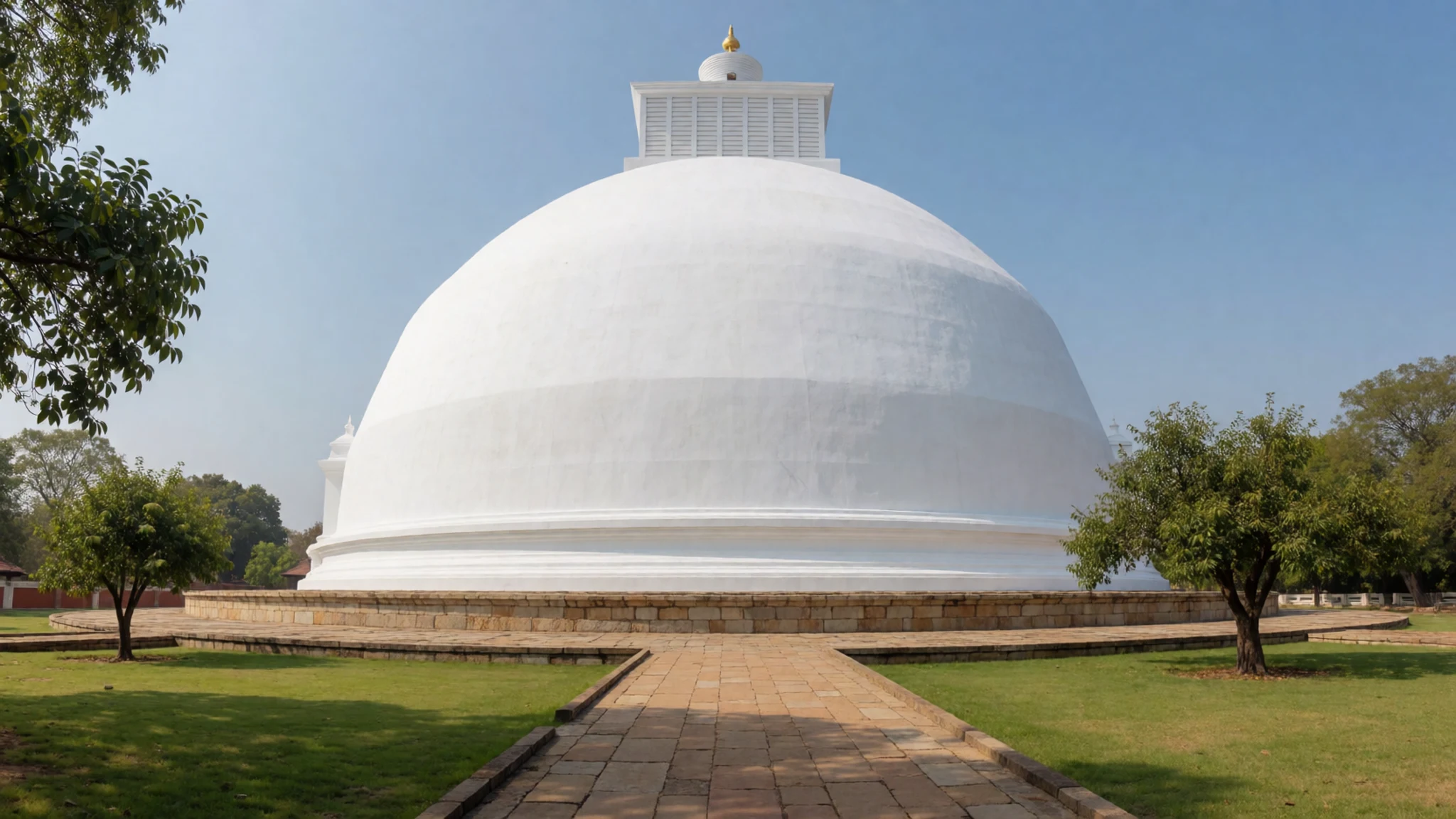
- Bodhi Tree Temple — Bodhi Tree Temple area
Bodhi Tree Temple is closely tied to Sri Lanka’s Buddhist sacred landscape and is presented as the second most sacred place in the country after the Temple of the Tooth in Kandy. The atmosphere is quieter and more devotional, so keep your voice low and give people space around the main areas.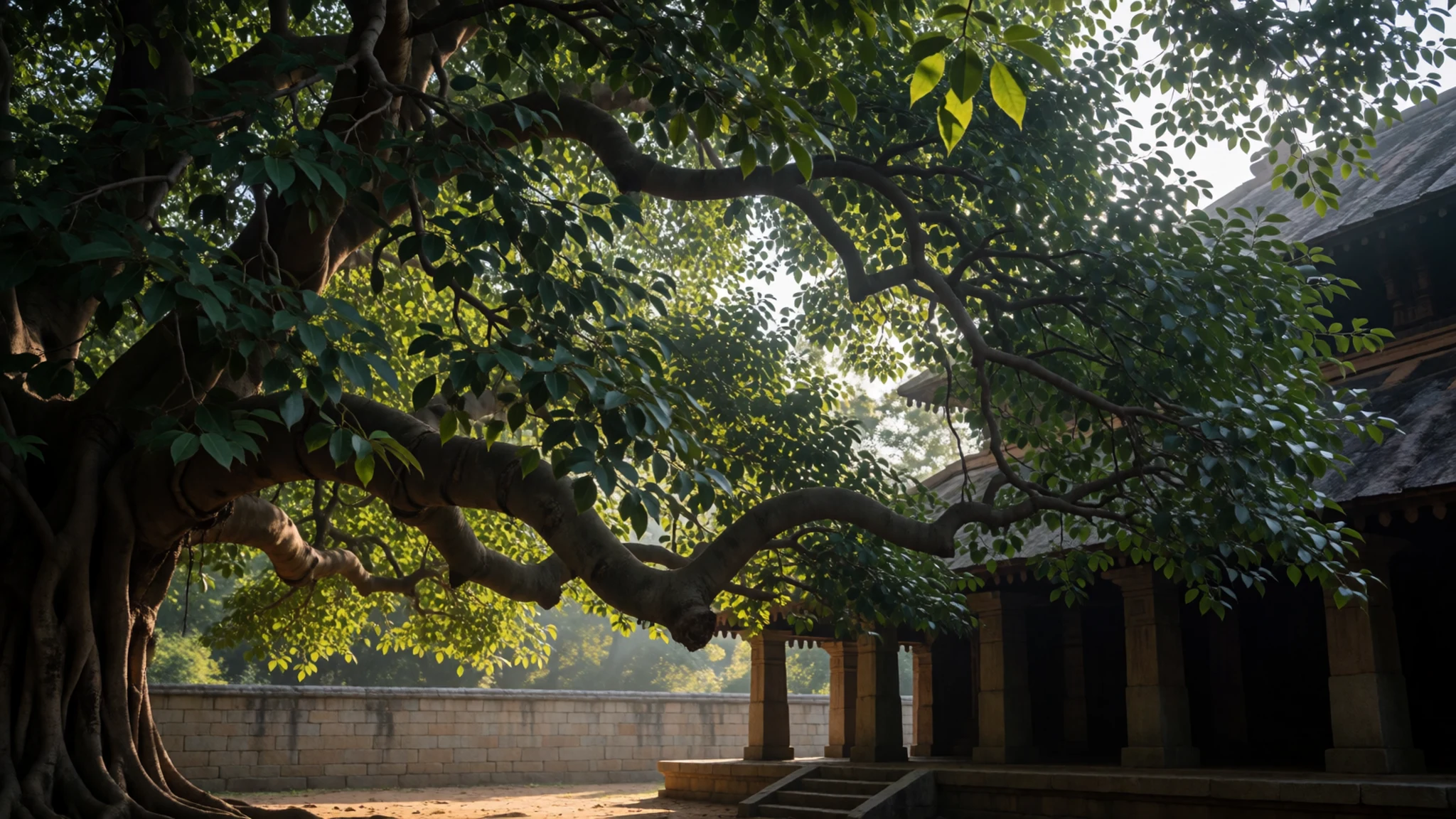
- Jetavanaramaya (Jetavana) stupa — Jetavana monastery area
Jetavana or Jetavanaramaya is a large stupa (a dagoba) and is also linked with ongoing restoration work. It’s a good contrast to the smaller-looking monuments around it—standing back helps you appreciate its mass and how scale changes when you move a few steps.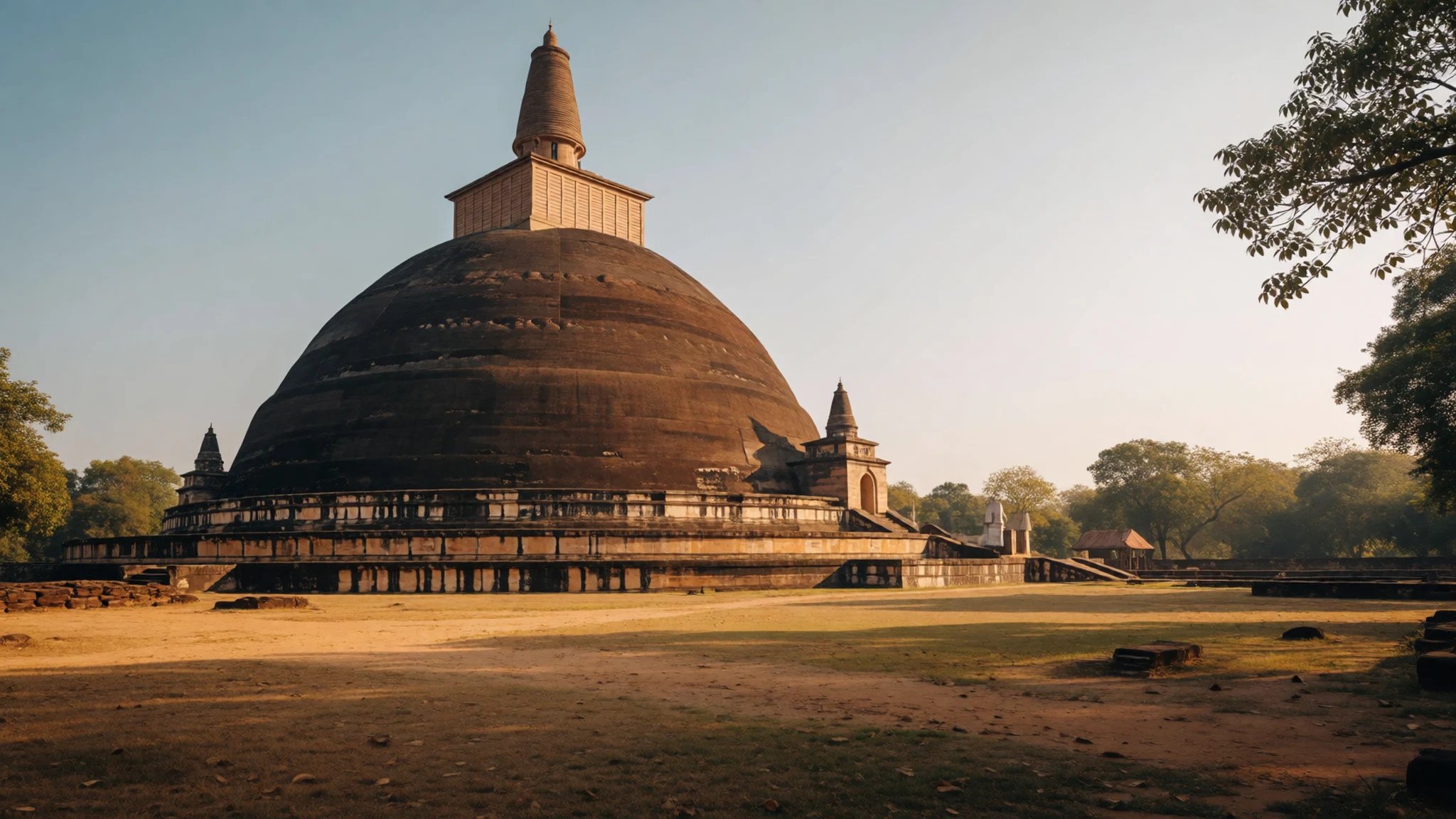
- Abhayagiri Vihāra — Abhayagiri monastery area
Abhayagiri Vihāra is described as a monastery site connected with multiple Buddhist traditions. The remains spread the feeling of a complex, not a single photo point—wander slowly and notice how the layout opens up into courtyards and viewpoints.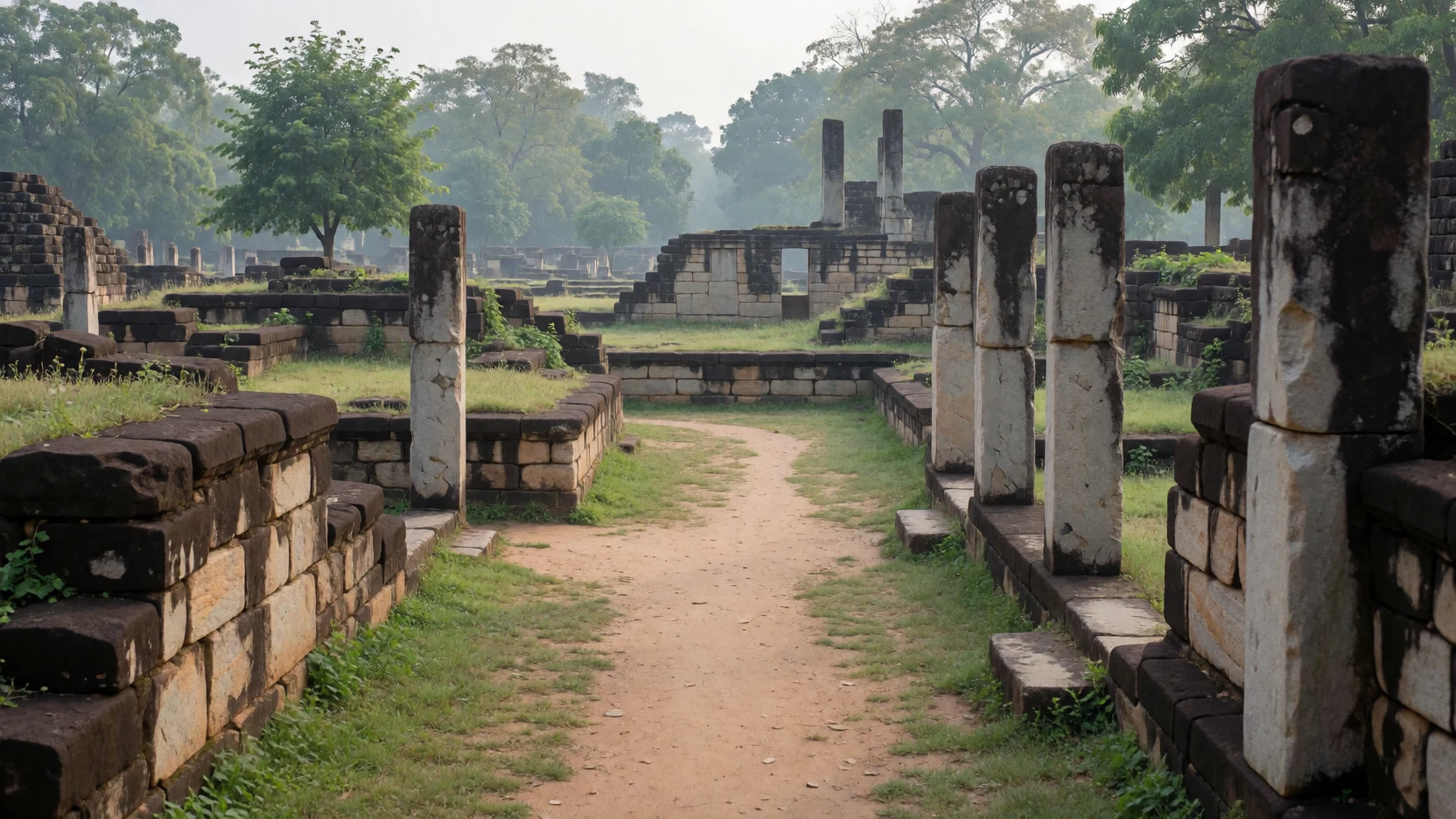
- Archaeology Museum — Museum area
The Archaeology Museum helps you connect the sites you’re seeing with objects found at the complex: jewellery and gems, coins, and pottery, with an emphasis on religious and elite items. If you’re visiting in the heat, the museum is a good reset between outdoor walks.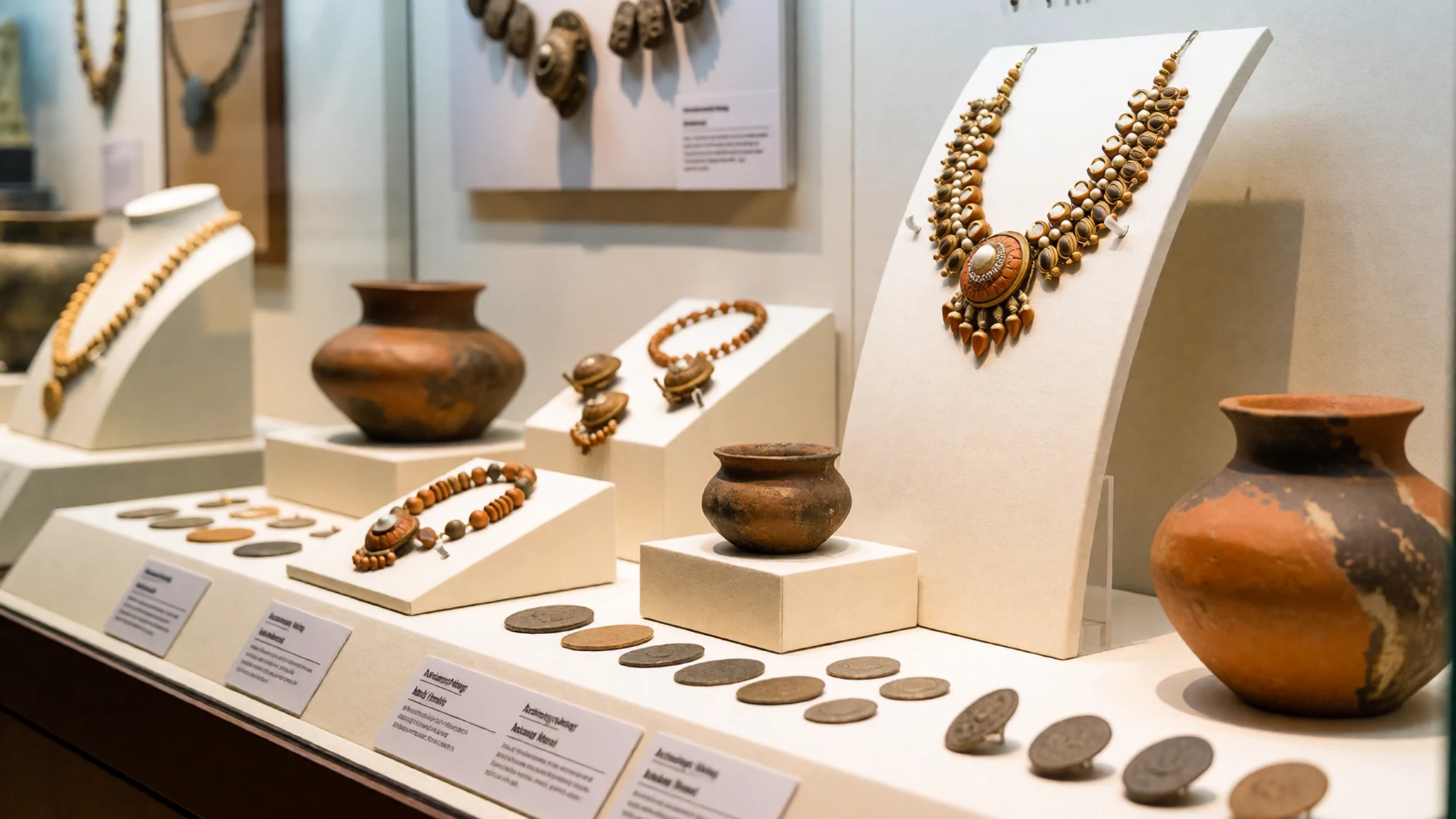
Culture
In Anuradhapura, basic Buddhist-site etiquette goes a long way. Removing shoes and hats when walking around areas of Buddhist veneration is respectful, and many sites will expect people to dress modestly—especially coverage around shoulders for women. Another small but important habit is to circumambulate to the right: walk to the left around the object so your right hand stays closest to the monument.
You’ll also notice how people behave near Buddha representations. While photography is generally fine, it’s worth being cautious: don’t aim a camera at people standing in front of images. If you’re viewing a stupa or shrine, avoid actions that block others’ sightlines, and don’t treat the monuments like a stage.
The practical side matters too. The sites can be bright and hot, so carry water and keep movements unhurried—rushing tends to make visitors careless.
Visitor etiquette: remove shoes where required, dress modestly with shoulders covered, and avoid photographing people directly in front of Buddha images.
What to wear
In Anuradhapura, clothes are about practical comfort in the heat and respectful coverage at Buddhist sites. The traditional dress you’ll see includes sari-style outfits for many women, with light fabrics that cope better with humidity and sun; men often wear shirts and dhotis or sarongs in day-to-day settings, depending on the occasion. Textures vary—cotton and other breathable materials are common because this is a warm climate.
What you’ll see day-to-day now is simpler: many visitors wear lightweight long trousers or breathable trousers, plus T-shirts or lightweight shirts. However, for temple compounds and sacred monuments, modesty rules still apply, especially around shoulders.
What to wear as a visitor: light, long-sleeved or shoulder-covering tops, breathable trousers or skirts that reach below the knee, and footwear you can remove easily. Bring a thin layer or scarf for extra coverage and for shade when the sun is strong. If you’re planning long walks between sites, closed shoes help on uneven ground—even if you’ll still need to take them off in the places where it’s required.
What to eat
- Sri Lankan rice-and-curry plate — Anuradhapura New Town eateries and small “hotel” restaurants
In Anuradhapura New Town, many small restaurants in the “hotel” style serve a typical rice-and-curry plate with multiple sides. When you order, you can usually ask for fewer chillies if you’re not used to Sri Lankan heat.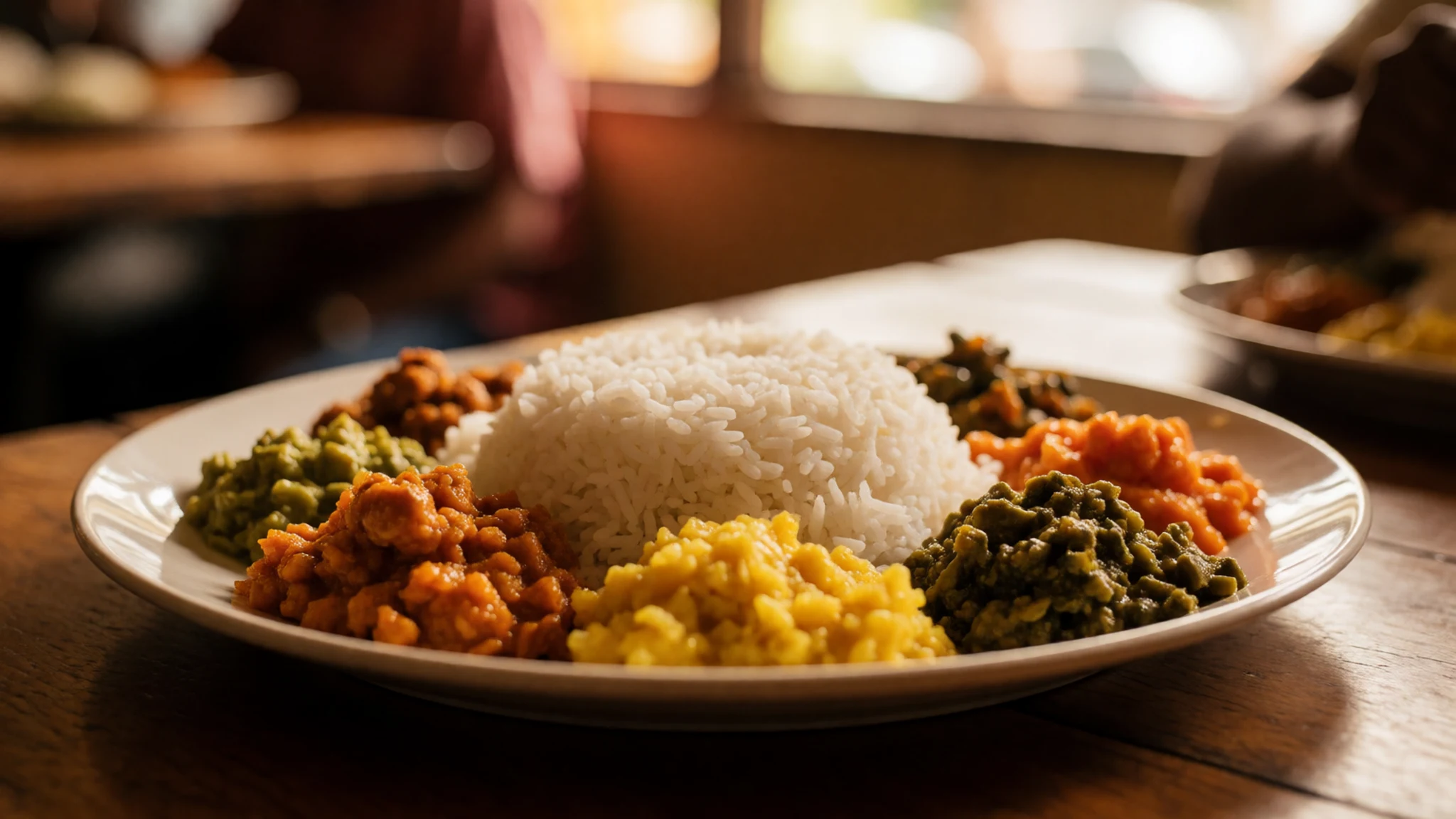
- Pastries and rolls (quick eats) — New Town small food shops and snack stalls
For a quick bite between temple blocks, look for smaller shops serving pastries and rolls. They’re popular as an easy lunch option when you don’t want a full sit-down meal.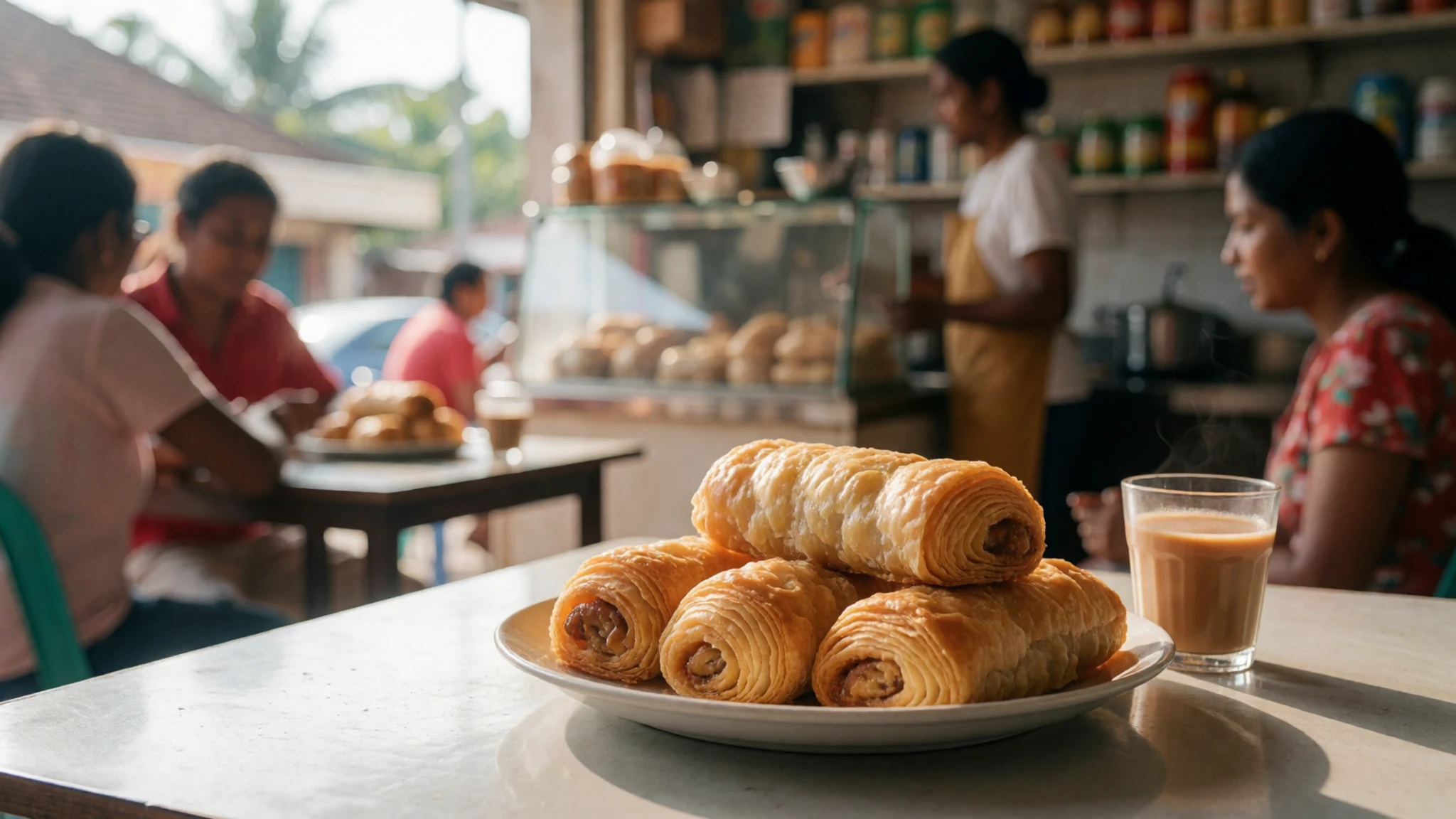
- Market snacks: chips, nuts and chocolate bars — Small markets around the New Town
In the New Town and surrounding area, small markets carry common snack foods like chips, nuts, and chocolate bars, often alongside cold drinks. It’s a practical way to keep energy up while moving between sites. - Fresh fruit — Local markets in and around the New Town
Many markets in Anuradhapura sell fresh fruit—an easy, cooling option during the hottest parts of the day. It’s ideal when you want something simple that won’t sit heavy in your stomach. - Lunch packets from eateries — Food counters that sell lunch packets (late morning to early afternoon)
Lunch packets are a common Sri Lankan solution for travellers: you grab food during the late morning to early afternoon window, then carry on exploring. It’s an efficient way to eat without losing a chunk of the day.
Plan it
Best time. March–April for blossom, late October–November for cooler, clearer sightseeing; June is the rainy season and August is hot and humid.
How long. 3–4
Getting there. Fly into Sri Lanka via Colombo and then take a bus to Anuradhapura (longer rides from Central Bus Station or Bastian Mawatha Bus Station, terminal 3), or transfer via nearby towns by bus before reaching Anuradhapura New Town bus stations.
Budget. mid
Tips
- Start early in the day to avoid the harshest sun and to make monuments feel calmer
- If you’re coming by bus, plan which of Anuradhapura’s two intercity bus stations (Old Bus Stand or New Town) you’ll use
- Carry cash for small purchases around markets and snacks
- If you’re sensitive to chillies, ask for less spice when ordering rice-and-curry
- Use a loose route: do one big stupa area first, then pair a museum visit for a mid-day break
Etiquette
- Remove shoes and hats where sites of Buddhist veneration expect it
- Circumambulate to the right by walking to the left so your right hand stays closest to the object
- Don’t photograph people directly in front of Buddha images
Nearby
Sources
- Wikidata Q5724 (CC0)
- Wikipedia (Anuradhapura) (CC BY-SA 4.0)
- Wikivoyage (Anuradhapura) (CC BY-SA 4.0)
- Ruwanweli Maha Saaya photo (CC BY-SA 4.0)
- Kala Wewa photo (CC BY-SA 4.0)
- Jetavanaramaya Stupa profile photo (CC BY-SA 4.0)
- Thuparamaya Stupa and stone pillars photo (CC BY-SA 4.0)
- Abhayagiri Dagoba photo (CC BY 4.0)
- Rock Shelters, Vessagiri photo (CC BY-SA 4.0)
- Anuradhapura in Sri Lanka photo (CC BY-SA 4.0)
- Ruwanweliseya Stupa photo (CC BY-SA 4.0)


