Nusa Lembongan
Nusa Lembongan, Indonesia
Nusa Lembongan is a small, nearly car-free island off Bali, with reefs, mangroves, seaweed farms and a slow pace an easy boat ride away.
The place
Nusa Lembongan is a small island south-east of Bali, one of three Nusa Islands in Klungkung Regency, alongside Nusa Penida and Nusa Ceningan. About 5,000 people live here year-round, most of them in Lembongan Village, while the visitor trade gathers around Jungut Batu on the north-west coast and Mushroom Bay on the west. The land is low, rising to 57 metres at its highest, and there are no permanent streams, so water supply is a constant concern. Reefs ring the coast. Sheltered bays hold pale sand, and limestone cliffs take the full force of the swell on the south-west side. On the north-east, a broad belt of mangroves shelters a tidal lagoon. A narrow channel divides Lembongan from Ceningan, and a suspension bridge across it carries only people on foot and motorbikes. Cars are scarce, so the lanes belong to scooters, bicycles and the occasional truck carrying building materials. To the east, the Lombok Strait marks the point where Asian and Australasian wildlife give way to one another, a boundary associated with the naturalist Alfred Russel Wallace. Day-trippers arrive on fast boats from Bali in the morning and leave in the afternoon, so the beaches and cafés feel noticeably calmer early and late. Accommodation is mostly guesthouses and small villas, and the island is easy to cross by scooter in well under an hour.
Its story
The story of Nusa Lembongan is that of a farming and fishing island that found a second living in visitors. Seaweed is the older thread. Lines of it are tied out across the shallow flats south of Lembongan Village, and most of the harvest ends up in the cosmetics trade in Asia. Families still dry and bag it, and the tides set the rhythm of the working day. Surfers and divers followed, drawn by the swell and the reef, and guesthouses grew up around Jungut Batu and Mushroom Bay to house them. The water also interests scientists. A marine research centre on the island works with local dive shops to keep track of manta rays and mola mola, the ocean sunfish, around the Nusa Islands, so a dive here can feed into real records. Geography adds another layer: the strait to the east is where Wallace noticed that animal life changes character, a fact that gives the whole archipelago a quiet scientific pedigree. The mangroves on the north-east side tell a different story, of boats, birds and tidal channels that have little to do with beach life. Growth has brought ordinary island problems, chiefly rubbish and pressure on scarce fresh water. Which operators visitors pay and how much plastic they leave behind genuinely makes a difference here.
What to see
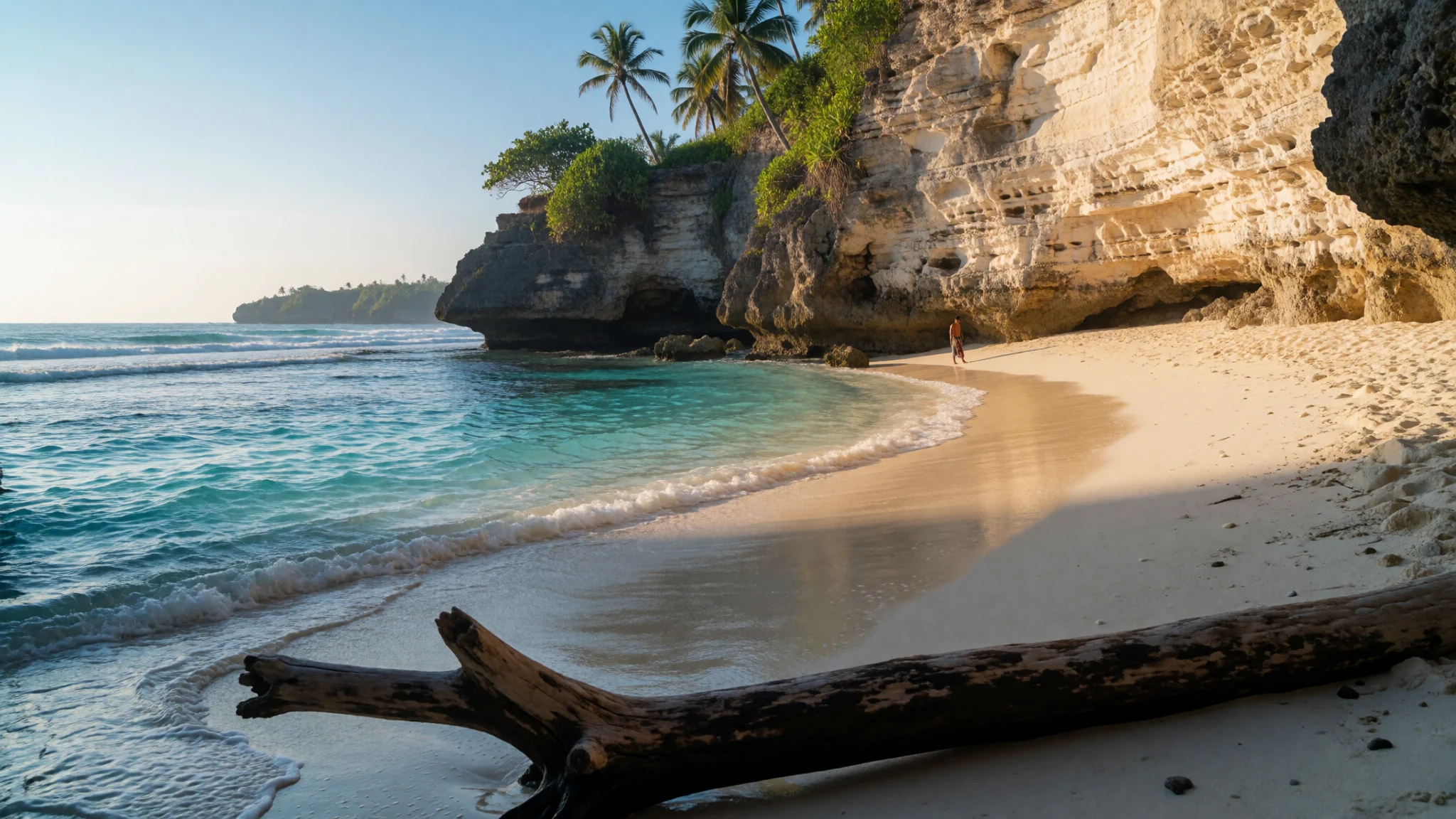
- Dream Beach and Sandy Bay — South coast
Dream Beach on Nusa Lembongan's south coast is a small crescent of white sand below low cliffs, and Sandy Bay sits just to its north. Both are signposted from Lembongan Village. The surf is strong and the currents can be serious, so many people paddle at the edge and watch the waves from the sand.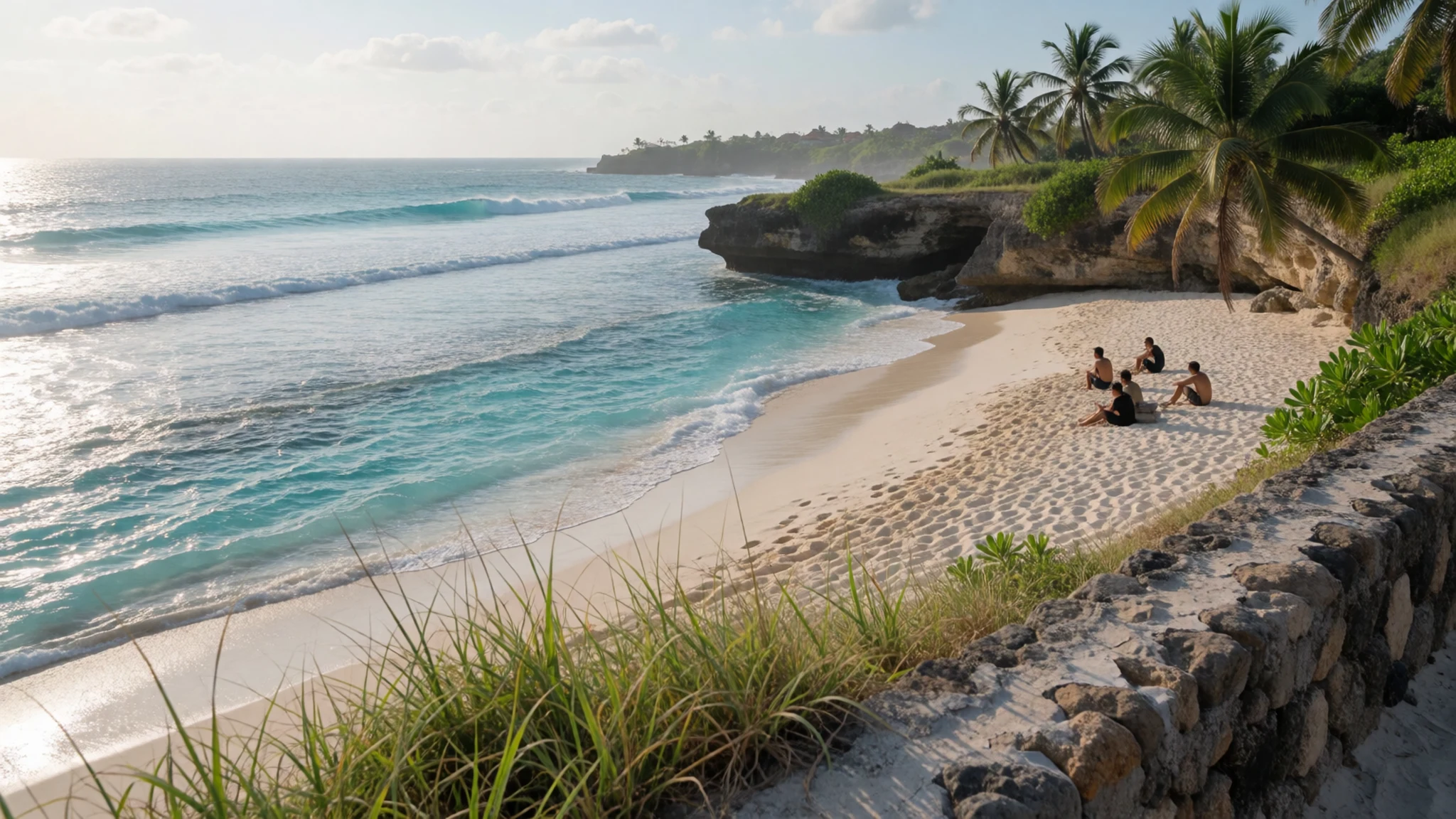
- Devil's Tear — South-west coast
Devil's Tear is a rocky headland on the south-west of Nusa Lembongan where swells slam into the cliff and throw up plumes of spray. It is best watched from a safe distance, ideally at a rising tide or in rougher weather. Keep well back from the edge, because the rock is wet and uneven.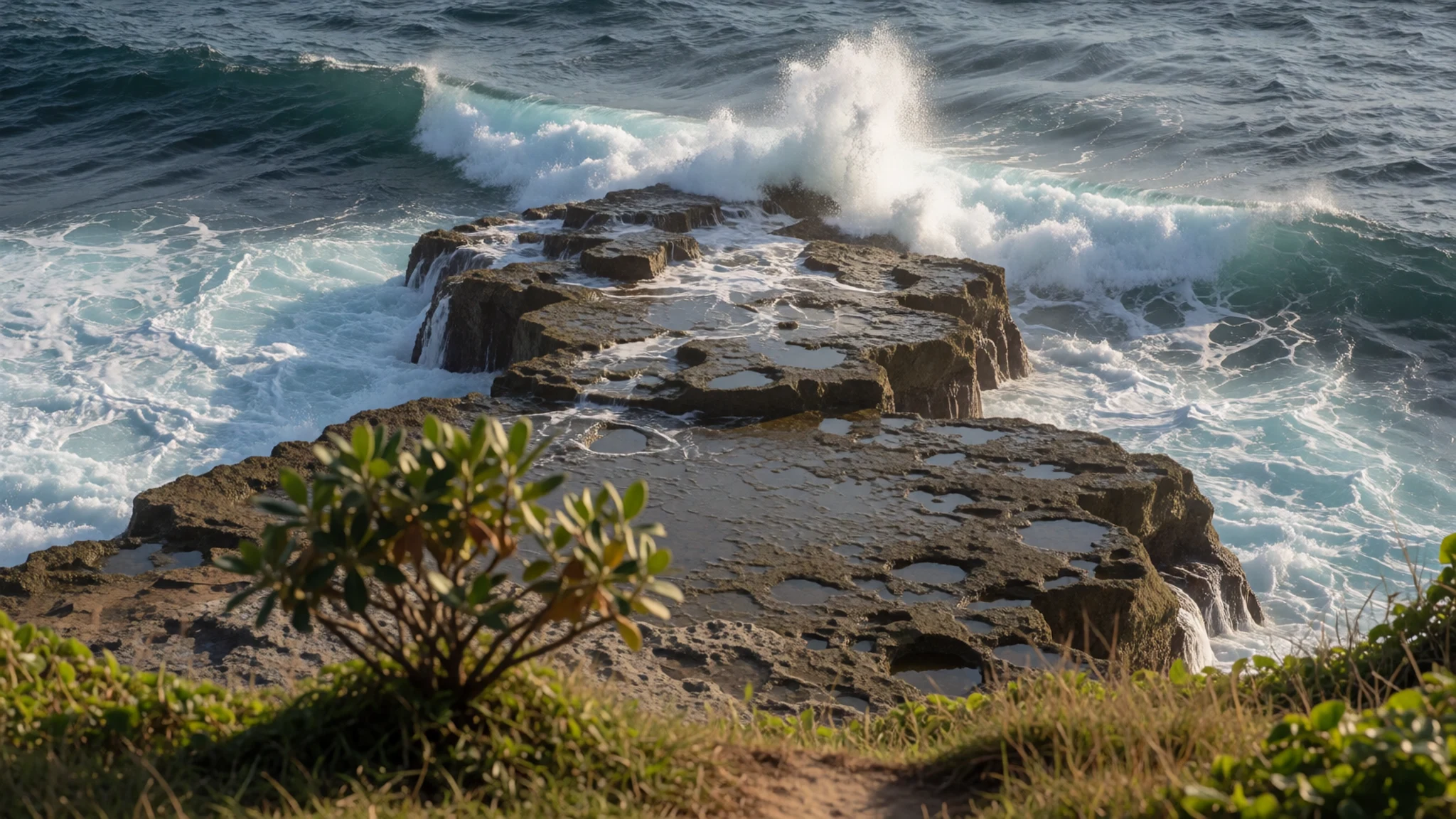
- Mangrove Forest — North-east coast
Northern Nusa Lembongan has an extensive stand of mature mangroves, best explored from a jukung, the local outrigger boat, which glides through the channels between the roots. At high tide the lagoon is calm and shallow enough for children to swim. Birdlife is easier to spot early in the morning.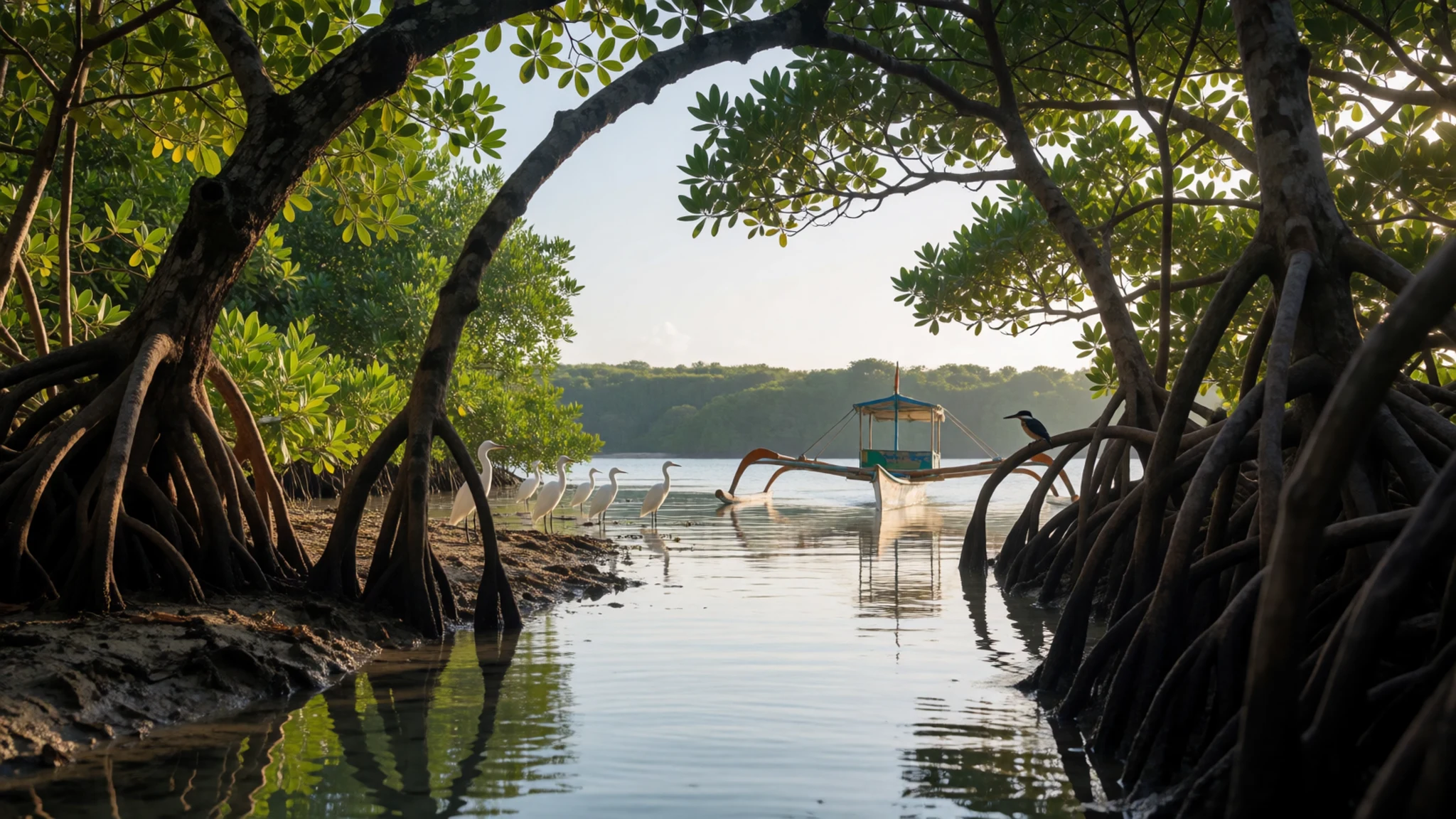
- Seaweed Farms — South of Lembongan Village
On the southern side of Lembongan Village, Nusa Lembongan's seaweed farms spread across the shallows in neat rows of lines and floats. Most of the crop goes to cosmetics manufacturers elsewhere in Asia. A walk along the shore at low tide shows how people work the flats, so ask before photographing workers.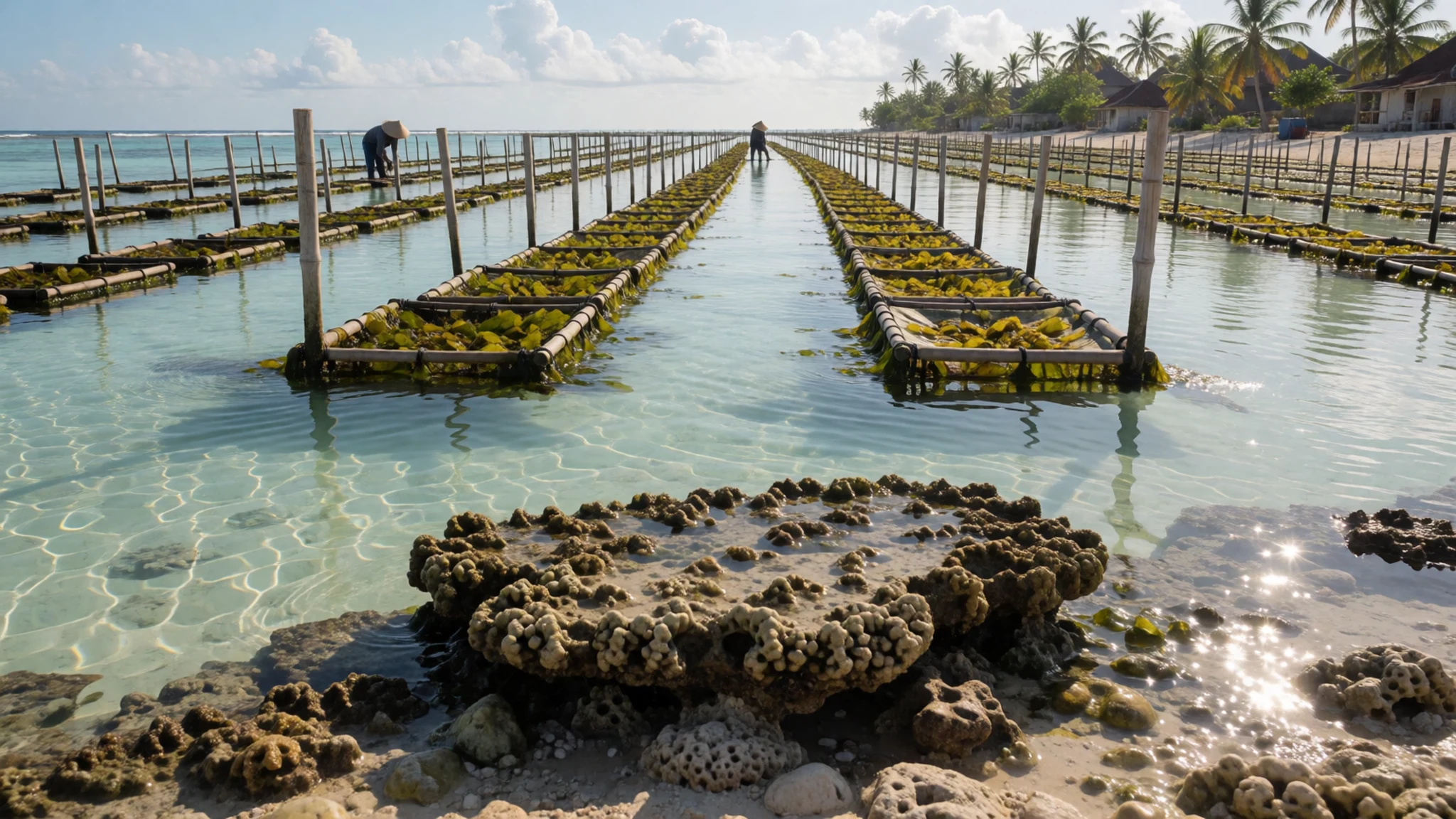
- Puncak Sari Temple — Near Mushroom Bay
Puncak Sari is the main Hindu temple on Nusa Lembongan, with carved gateways and shrines set above the coast. From the grounds the view runs across the strait towards Bali. Entry as a visitor depends on ceremonies and local rules, so dress modestly, stay quiet, and check whether a service is under way.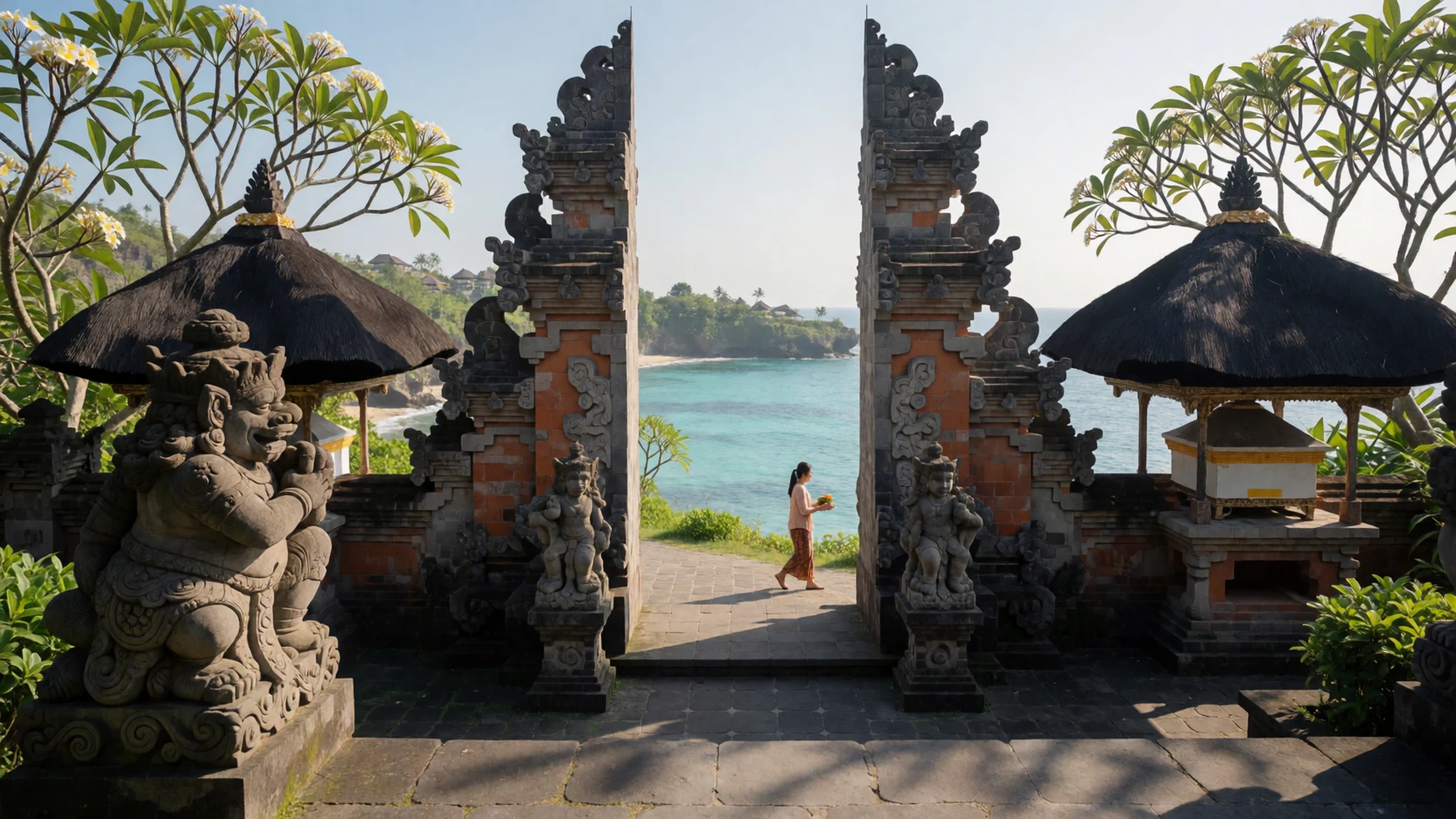
- Panorama Point — Bukit Jungut Batu
Panorama Point is a small clearing on the hill above Jungut Batu, reached by a short climb. It gives a clear look down over the village, the beach and the boats moored offshore. Go in the cooler hours of early morning or late afternoon, and carry water.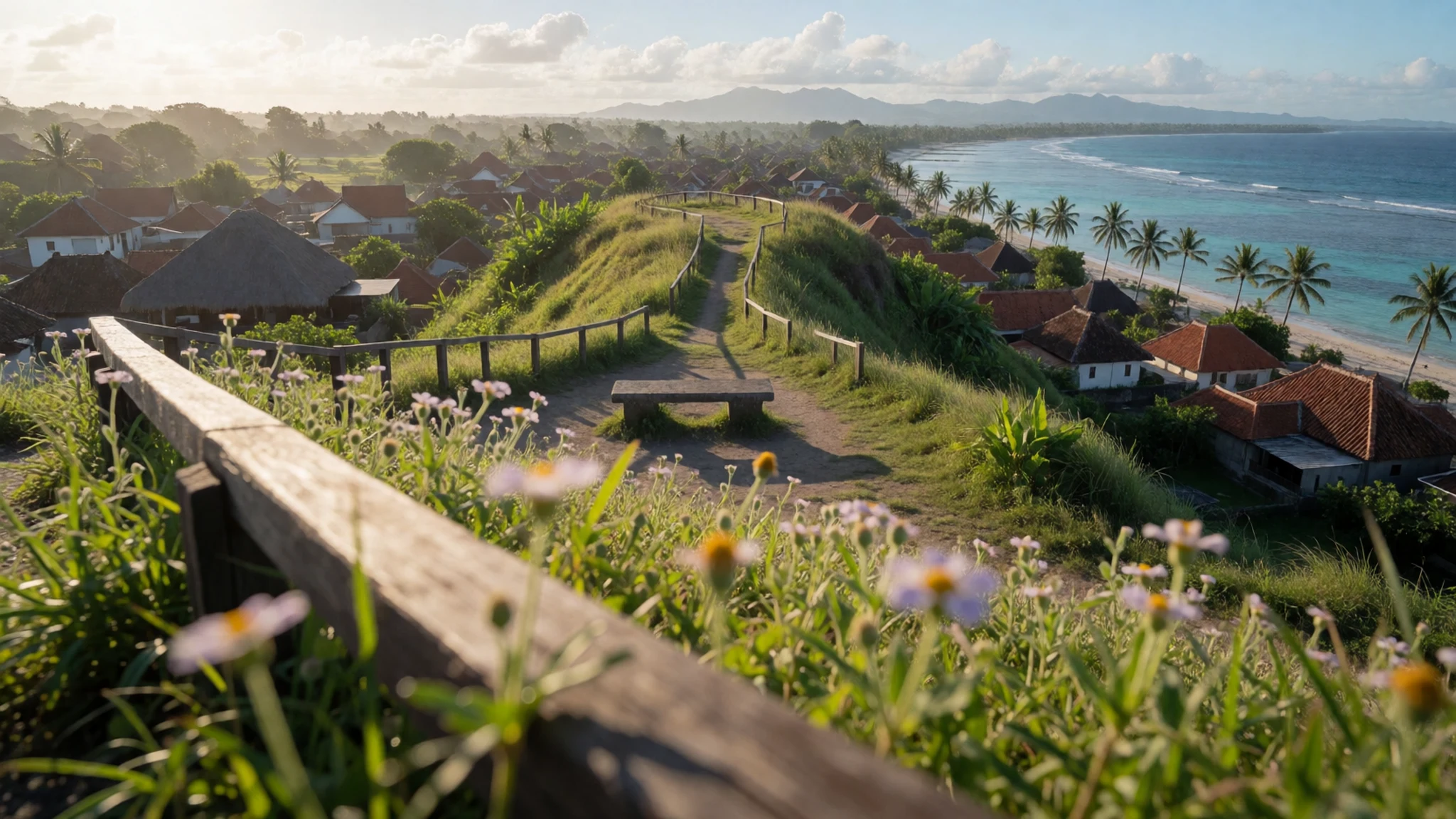
Culture
Nusa Lembongan follows Balinese Hindu traditions, and they show in small daily acts. Each morning, families set out canang sari, little woven palm-leaf trays holding flowers, rice and incense, at doorways, shrines, shopfronts and boats. Temples hold ceremonies on set dates in the Balinese calendar, with processions in ceremonial dress, gamelan percussion and offerings carried on women's heads. Visitors may stumble on one while out on a scooter, and the polite response is to slow down, give the procession room and take photographs only if invited. The island's working life has its own customs too. Seaweed farming follows the tides, fishing boats are blessed, and villages arrange work through community groups called banjar. Black-and-white chequered cloth is tied around trees, statues and shrine posts to mark them as protected. Tourism sits alongside all of this rather than replacing it, and the best moments often come when guests simply watch a quiet ritual from a respectful distance. Alcohol, loud music and revealing clothing away from the beach are tolerated more in the tourist zones than in Lembongan Village, where residents live a more traditional pace. Please step around offerings on the ground rather than over them, and cover your shoulders and knees with a sarong and sash before entering Puncak Sari or any other temple.
What to wear
Nusa Lembongan's traditional dress is Balinese. For temple ceremonies, women wear a kebaya, a fitted lace or cotton blouse, over a wrapped cloth called a kamen, with a sash tied at the waist. Men wear a kamen, a short overskirt known as a saput, a shirt and the udeng, a knotted headcloth. The cloths are often endek, an ikat in which the threads are dyed before weaving, or songket, which has gold or silver thread woven into the pattern. These are worn for temple festivals, weddings and other rites, not for daily work. Day to day, people on the island wear what suits heat, boats and scooters: cotton T-shirts, shorts or sarongs, caps, and rash vests for anyone who works in the water. Seaweed workers wear long sleeves and hats against the sun. Visitors should pack light cotton or linen, swimwear, a brimmed hat, a rash vest and sunscreen, since the sun is strong with little shade. Sandals are fine on the beach, but water shoes help on the rocky entries to the sea and sturdy sandals suit uneven paths. Carry a sarong and a light scarf for temples, and cover up when walking through villages, away from the beach, as a courtesy to residents.
What to eat
- Nasi campur — Local warungs in Lembongan Village and Jungut Batu
A plate of steamed rice with small portions of vegetables, tempeh, egg, spiced meat or fish and sambal. It is the everyday meal on Nusa Lembongan, and you point at what you want. Late morning is when the choice is widest.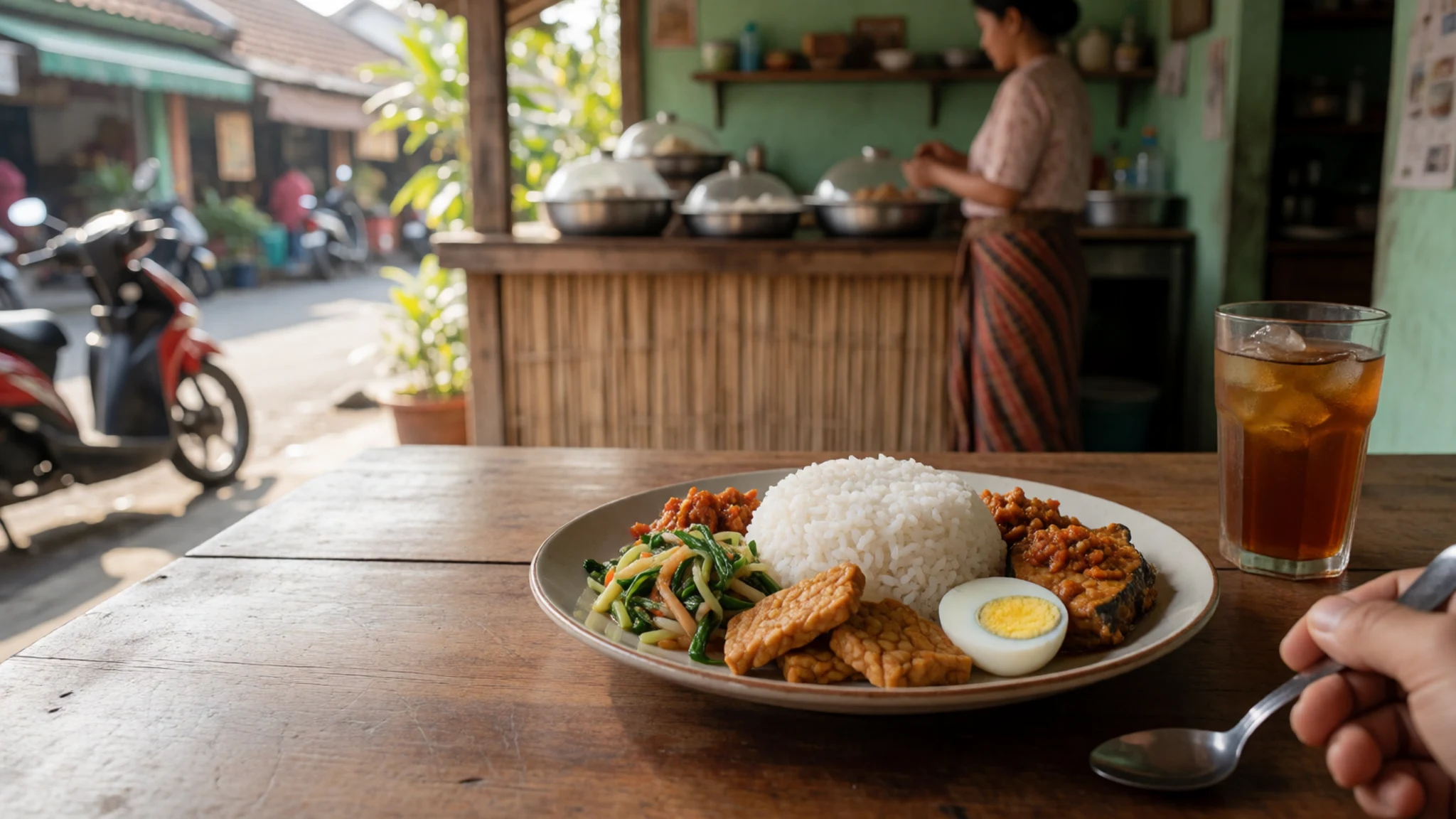
- Nasi goreng and mie goreng — Small family warungs along the main lanes
Fried rice or fried noodles, flavoured with sweet soy, shallots and chilli and topped with a fried egg. Simple, filling and easy to find, they suit a late breakfast or a quick dinner after a day on the water.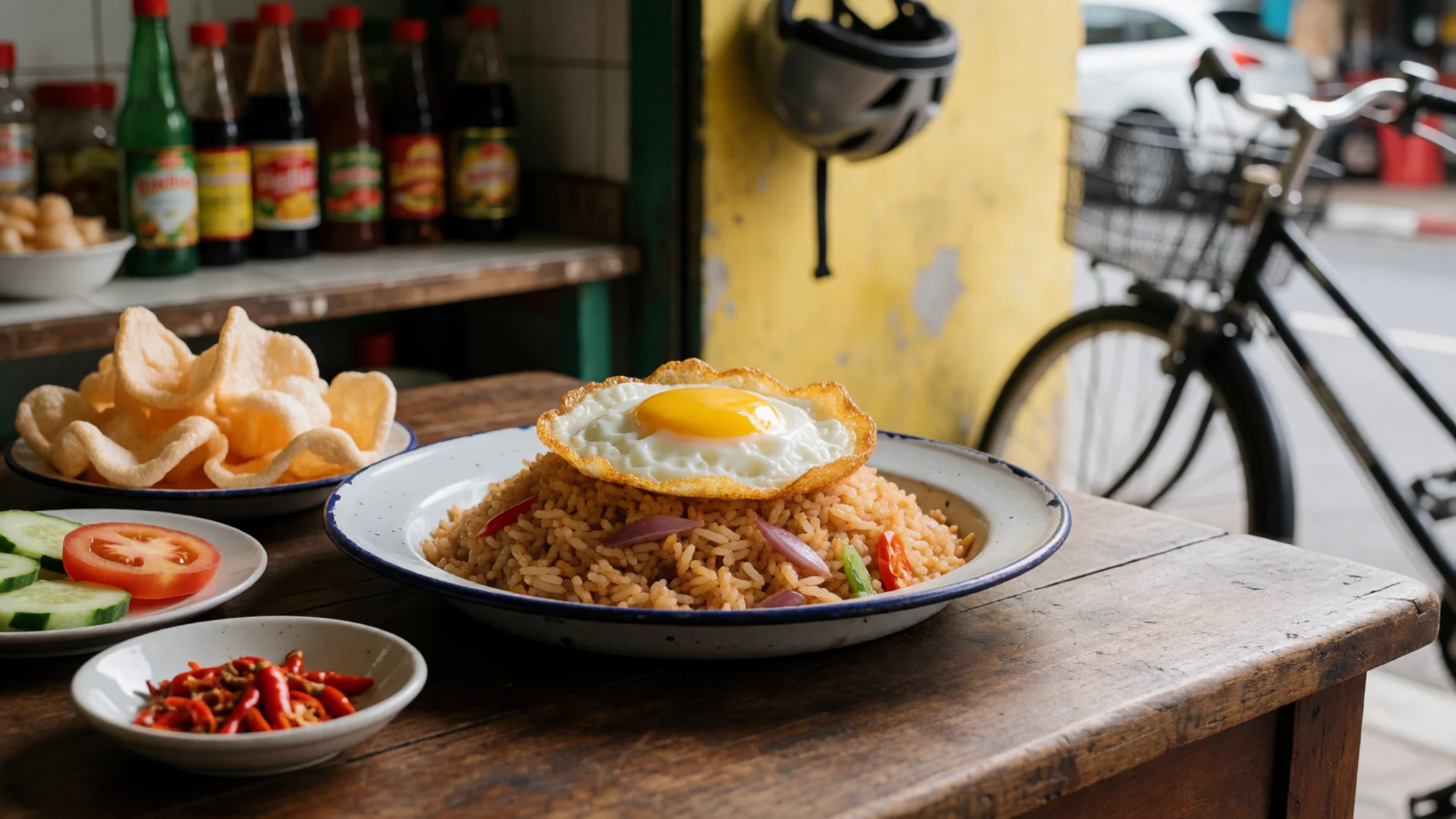
- Ikan bakar — Seafront eateries at Jungut Batu and Mushroom Bay
Grilled fish, often caught nearby, rubbed with garlic, turmeric and chilli and cooked over coals. It usually comes with rice, a raw-vegetable plate and sambal. Choose a place where the catch is displayed on ice. - Sate lilit — Evening grill stalls and warungs around the island
A Balinese satay in which minced fish or meat is mixed with grated coconut and spices, then pressed around a lemongrass stalk and grilled. The lemongrass perfumes the meat. It makes a good starter to share. - Fresh juice and kelapa muda — Juice bars and coffee corners near the beaches
Blended tropical fruit juices and young coconut drunk straight from the shell are the island's answer to the heat. Ask for no added ice if unsure of the water, and check whether a plastic straw is needed.
Plan it
Best time. The dry season, roughly April to October, brings the most sun and the calmest crossings from Bali. July and August are the busiest, with more day-trippers. From about November to March it is hotter, wetter and more humid, and rough seas can delay boats.
How long. 2–3
Getting there. Fly to Bali's Ngurah Rai airport, then go by road to Sanur for a fast boat to Nusa Lembongan, about 30 minutes in daylight. Boats also leave from Serangan and, less often, from Padang Bai. On arrival, walk or take a scooter to your stay, since cars are scarce.
Budget. mid
Tips
- Compare several fast boat operators and book an e-ticket or through a trusted agent, as standards vary
- Take the first boat out to find the beaches and mangroves quiet before the day-trippers arrive
- Carry some cash for small warungs and scooter rental, as card machines are patchy
- Bring a refillable water bottle and refill it, rather than buying plastic bottles
- Lock your room, since theft from unlocked rooms is the most common problem
Etiquette
- Cover shoulders and knees at temples, and step around offerings on the ground
- Do not buy, carry or use drugs, since Indonesian law treats them very seriously
- Ask before photographing people at work or during ceremonies
Nearby
Sources
- Wikidata Q1970352 (CC0)
- Wikipedia: Nusa Lembongan (rev 1369617228) (CC BY-SA 4.0)
- Wikivoyage: Nusa Lembongan (rev 5434371) (CC BY-SA 4.0)
- Photo: Dream Beach (Burmesedays) (CC BY 3.0)
- Photo: Blue Lagoon (AkbarWilliams) (CC BY-SA 4.0)
- Photo: Mushroom Bay (Burmesedays) (Public domain)
- Photo: View towards Bali from Jungut Batu bukit (Public domain)
- Photo: Nusa Lembongan reef (Ilse Reijs and Jan-Noud Hutten) (CC BY 2.5)
- Photo: Mushroom Beach (San Andreas) (CC BY 3.0)
- Photo: Ceningan and Lembongan aerial (FBilula) (CC BY 4.0)
- Photo: Jungut Batu beach (LembonganZone) (CC BY 3.0)


Wildlife
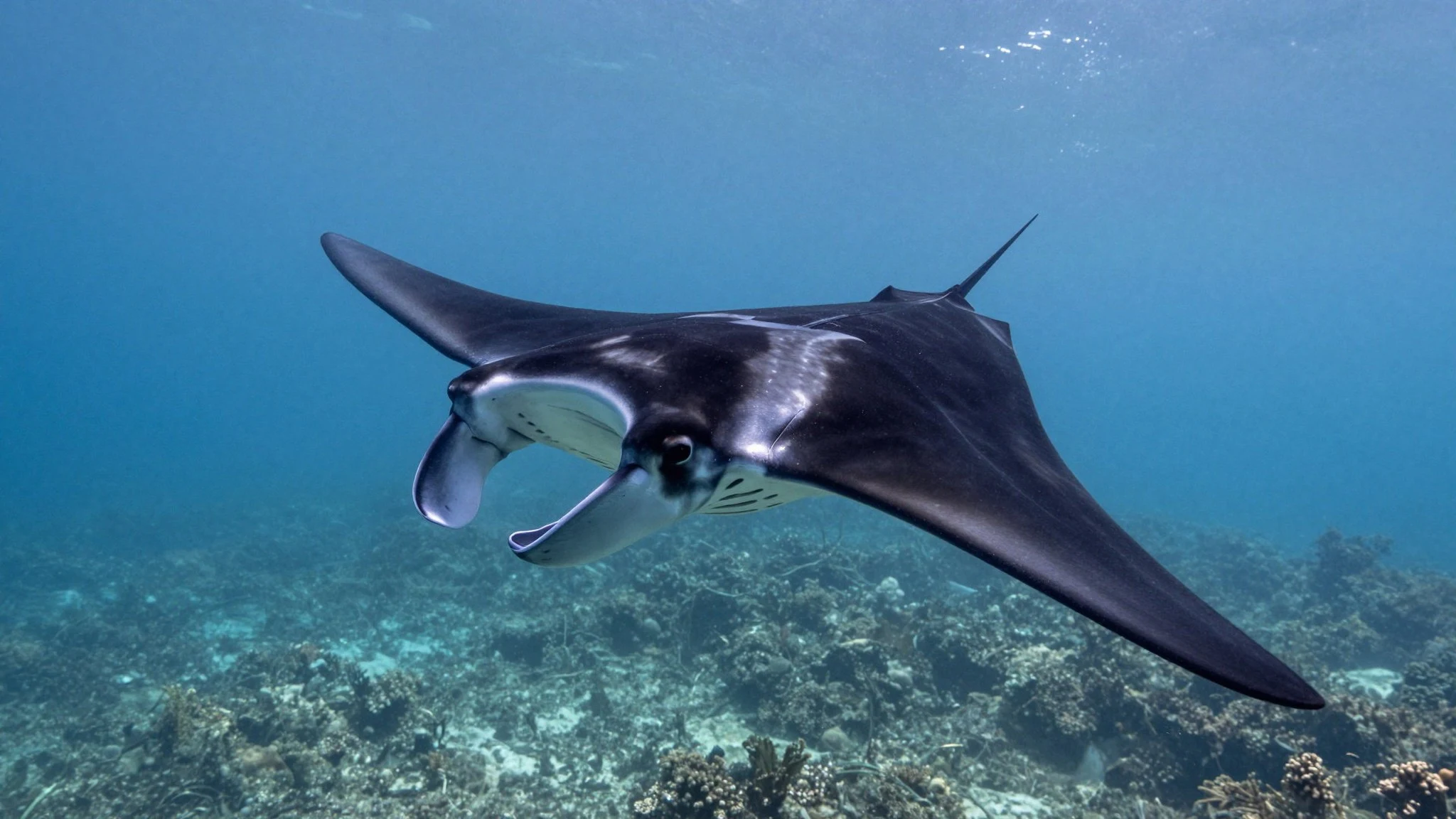
- Manta ray (animal)
The reef manta ray is a huge, flat, wing-shaped ray that glides through the sea like an underwater kite, and only two other rays grow bigger. Around the Nusa Islands, a marine research centre on Lembongan keeps track of mantas with the help of local dive shops. We cannot promise a particular season or hour, so ask the shops what is likely. Watch with one of them, because your dive can then add to real records.