Nukunonu
Nukunonu, New Zealand
Nukunonu is a quiet Pacific atoll where a lagoon, a village and a church make up a rare, slow stay far from any crowds.
The place
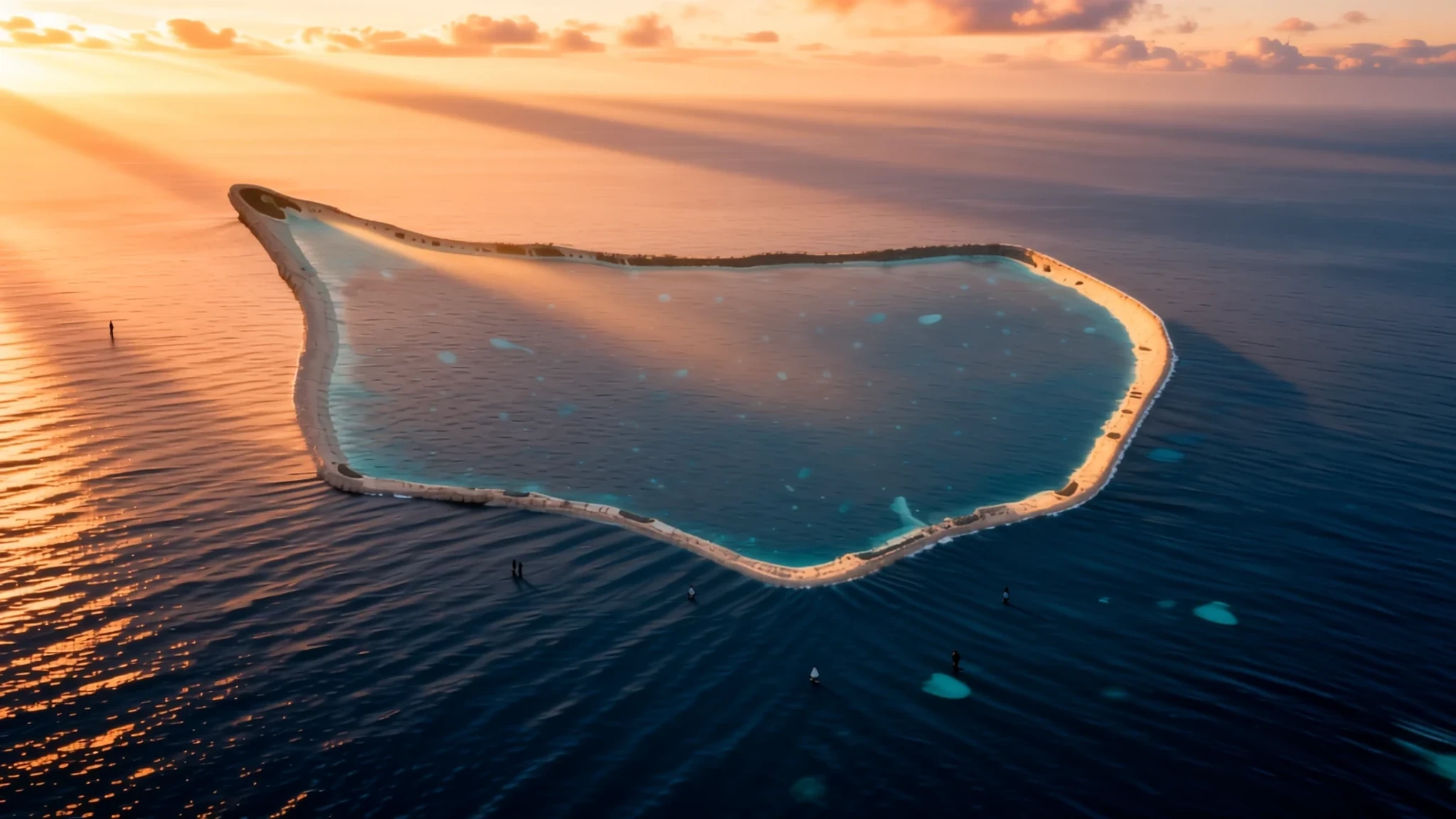
Nukunonu is an atoll in Tokelau, a New Zealand dependency in the south Pacific, and it is the biggest of Tokelau's three atolls. A ring of 30 islets encloses a lagoon of roughly 109 square kilometres, while the dry land adds up to only about 5.5 square kilometres. Of all those islets, just one, Motuhaga, has a village on it, and the population is estimated at 531.
The feel of the place follows from that arithmetic. Nearly everything is water, sky and coconut palm, and the land sits barely above the sea. Life revolves around the single village: the church, the school, shared meals and the lagoon, which provides fish and a daily view.
The weather is tropical, with an average annual temperature of about 28°C. Trade winds soften the heat from April to November. Rain is irregular but can be heavy, with downpours of up to 80 mm in a day at any time of year. Tropical storms occasionally pass between November and March, though Tokelau sits at the northern edge of the main hurricane belt and has recorded only three hurricanes since 1846.
The economy is tiny. Farming is limited to subsistence, and the territory leans heavily on New Zealand aid. The island earns its money from copra, internet domain names, postal stamps, commemorative coins and crafted goods. Tokelau also moved across the International Date Line in 2011, skipping 30 December, so Nukunonu now keeps a calendar day ahead of where it once sat.
Its story
Nukunonu was settled long ago by Polynesian voyagers from neighbouring island groups, whose descendants still live there. The first European ship known to have found it was HMS Pandora in 1791. Her captain, Edward Edwards, was hunting for the Bounty mutineers, and he named the atoll Duke of Clarence Island after a son of George III who later reigned as William IV.
Early in the nineteenth century, Samoan missionaries brought Roman Catholicism to the island. That faith shapes village life to this day, and the church is the most prominent building.
The atoll then passed between claimants. In 1859 a United States guano company claimed it, along with other Tokelauan atolls, under American law, and the State Department bonded the claim in 1860. Little guano work followed on most of these islands. Britain claimed the group in 1889 as part of the Union Islands. In 1916 they were attached to the Gilbert and Ellice Islands colony, and in 1925 they were handed to New Zealand, administered through Western Samoa.
The last piece of the puzzle fell into place in 1979. Under the Treaty of Tokehega, the United States formally gave up its old claim to Nukunonu and the other Tokelauan islands, and a sea boundary was agreed between Tokelau and American Samoa. Nukunonu today is a New Zealand dependency, with its own village life and a long history of being claimed by others.
What to see
- The lagoon — Central lagoon
The lagoon is the main attraction, a huge sheet of sheltered water ringed by islets. The view from the balcony of the village's only hotel gives a good sense of its scale and colour. Ask locally about safe places for swimming, as tides and currents can matter.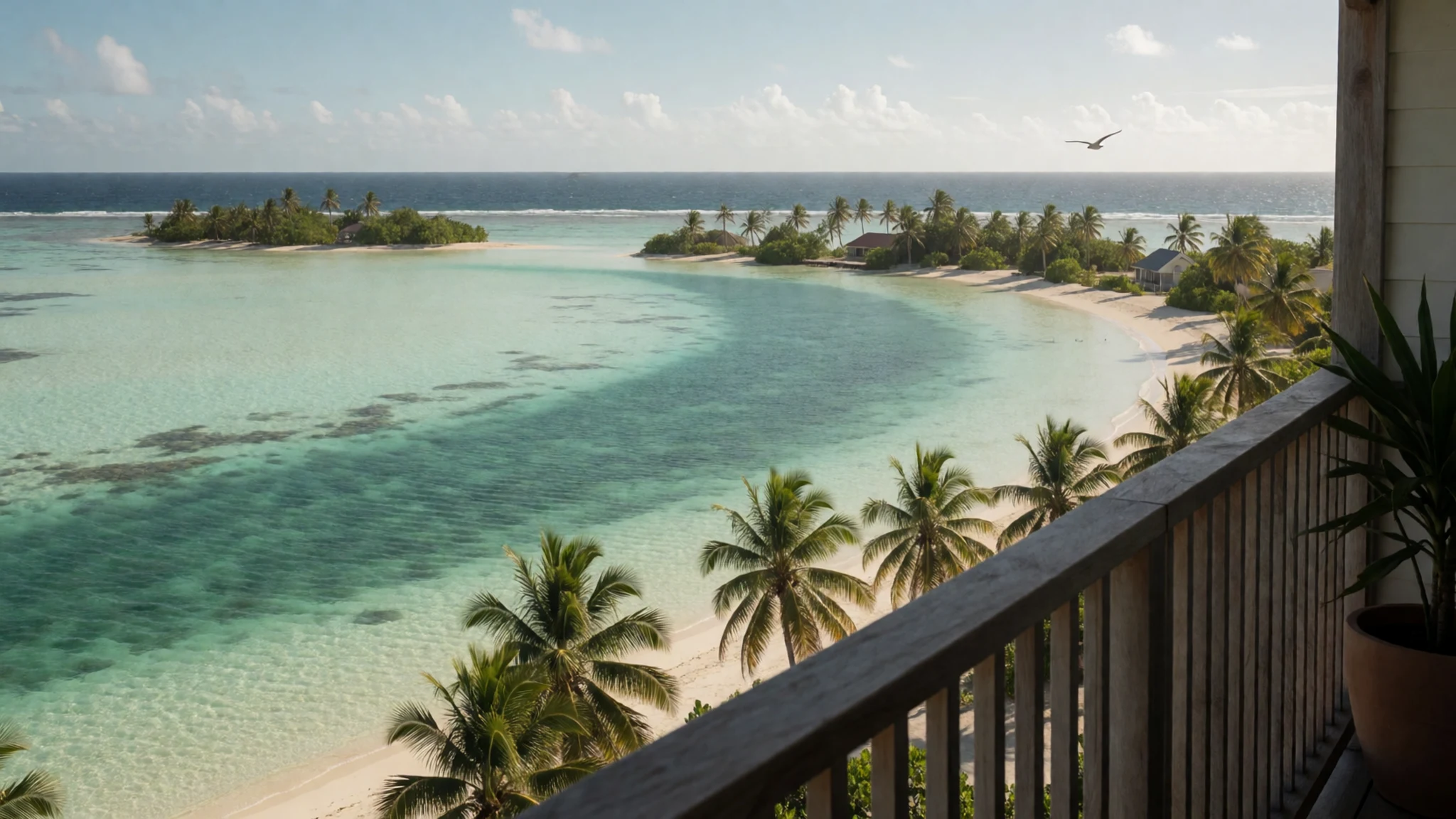
- The Catholic church — Motuhaga village
The church is the landmark of the village, with an arch over the main street beside its nave. It reflects the conversion by Samoan missionaries in the early nineteenth century. Visit outside services, and ask before going in or taking photographs.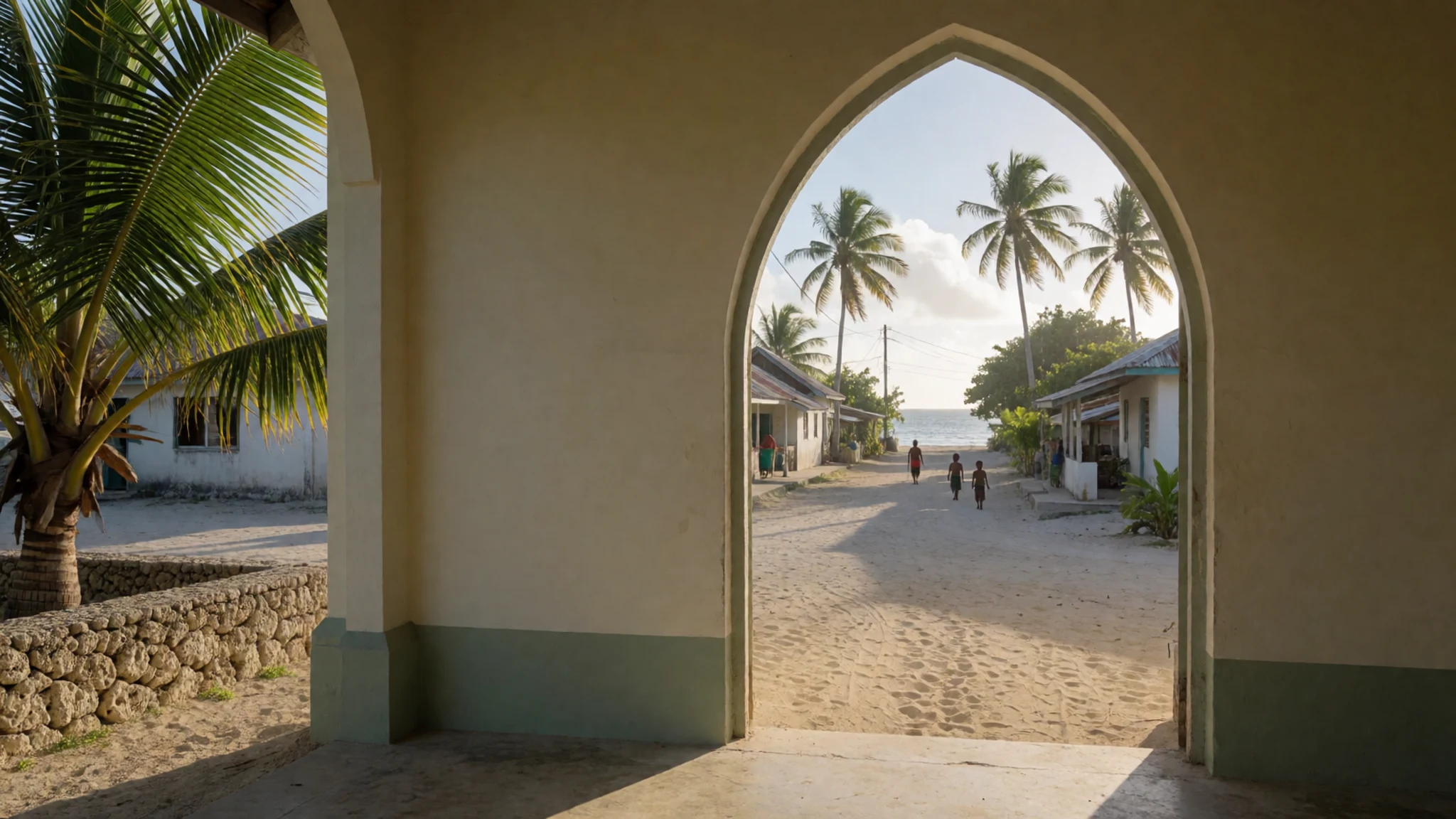
- Village walk on Motuhaga — Motuhaga
Motuhaga is the only inhabited islet, so a slow walk covers the whole community: homes, school, shared spaces and the shoreline. Expect greetings and curiosity. This is a living village rather than a sight, so keep to paths and be discreet with cameras.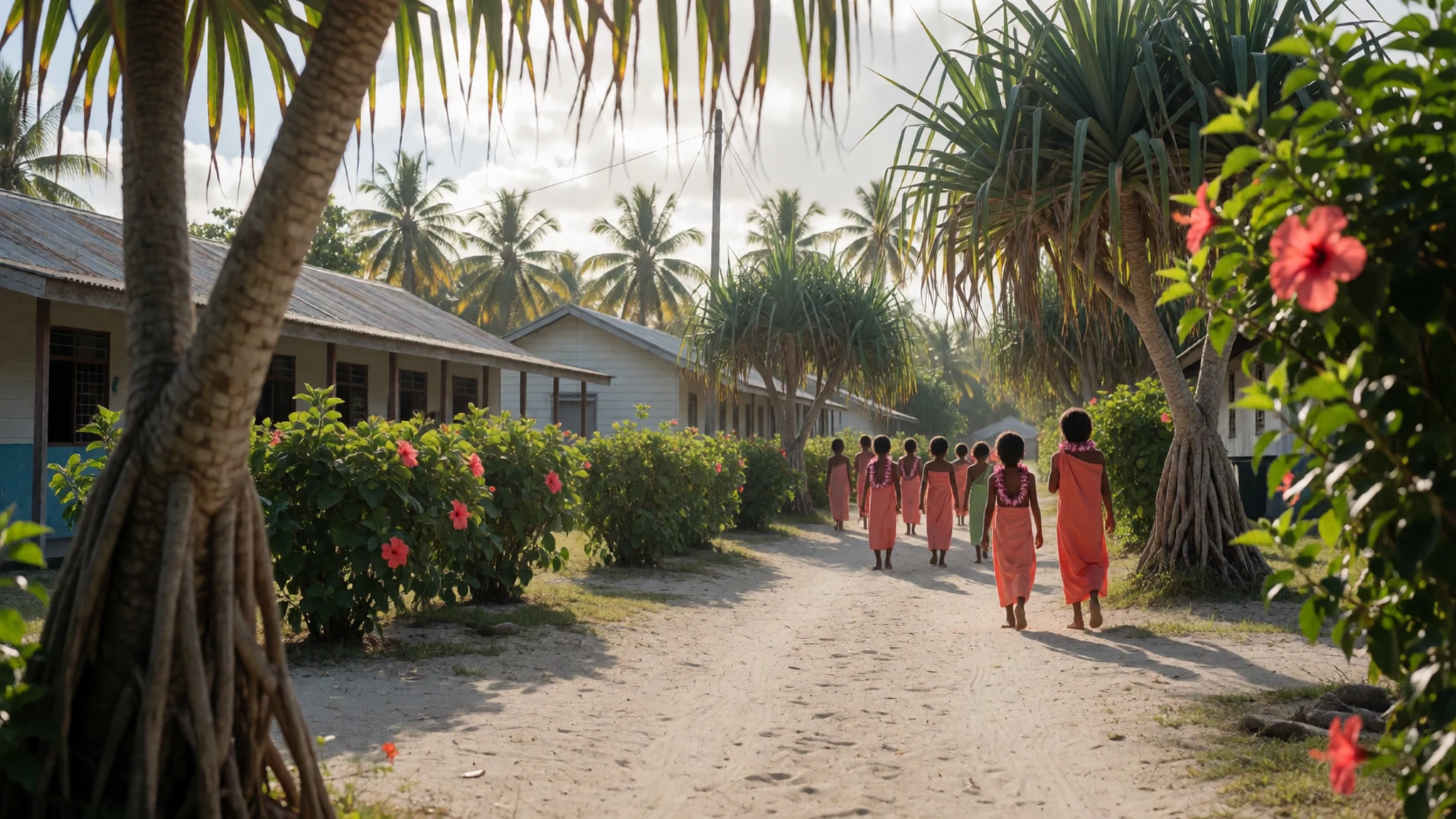
- Wildlife of the atoll — Outer islets and shoreline
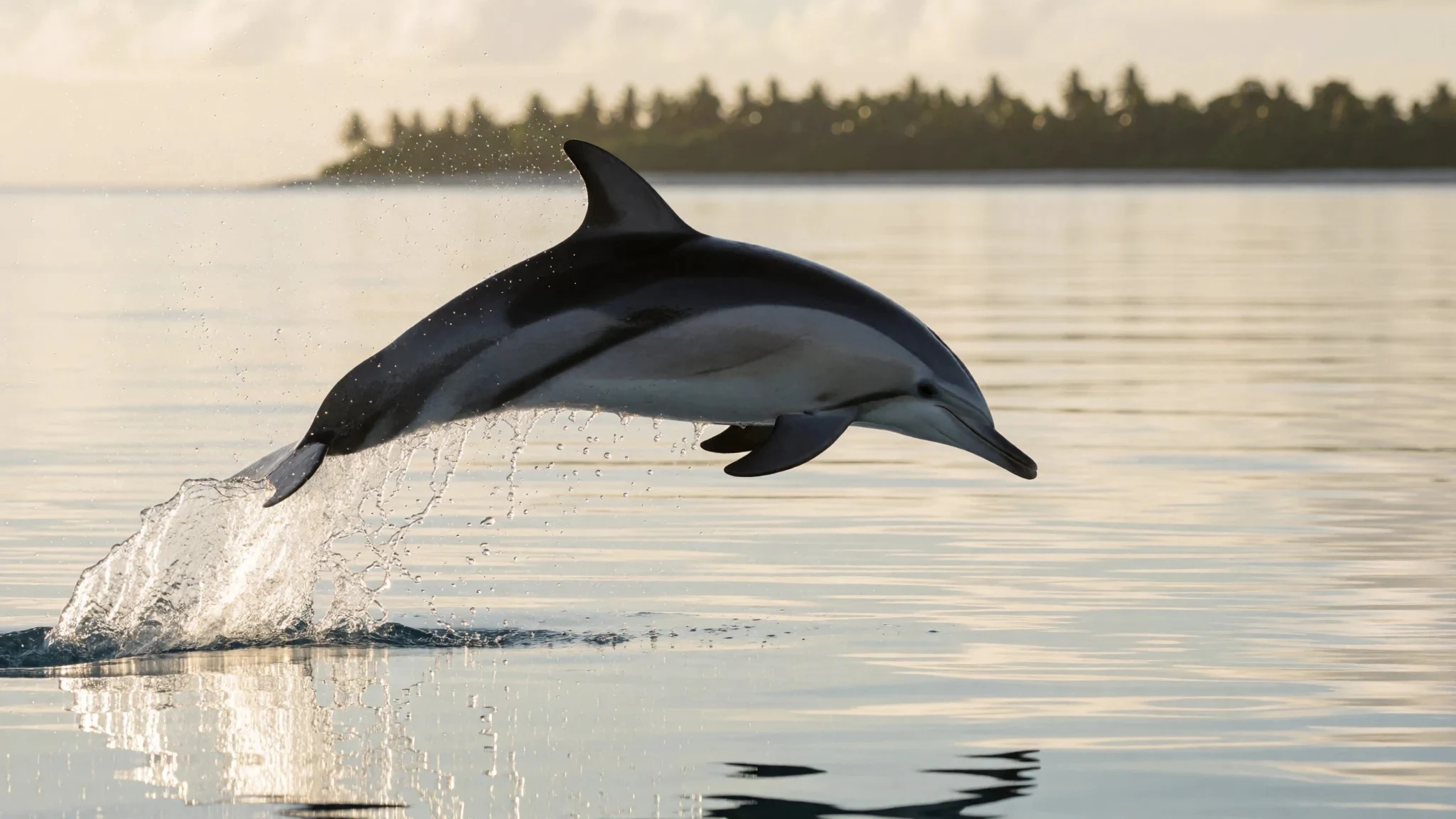
The islands support native plants and insects, land crabs, and 29 bird species, while whales and dolphins pass offshore. Coconut palms dominate the land. Early mornings and evenings are best for birds and crabs, and a local guide will know where to look.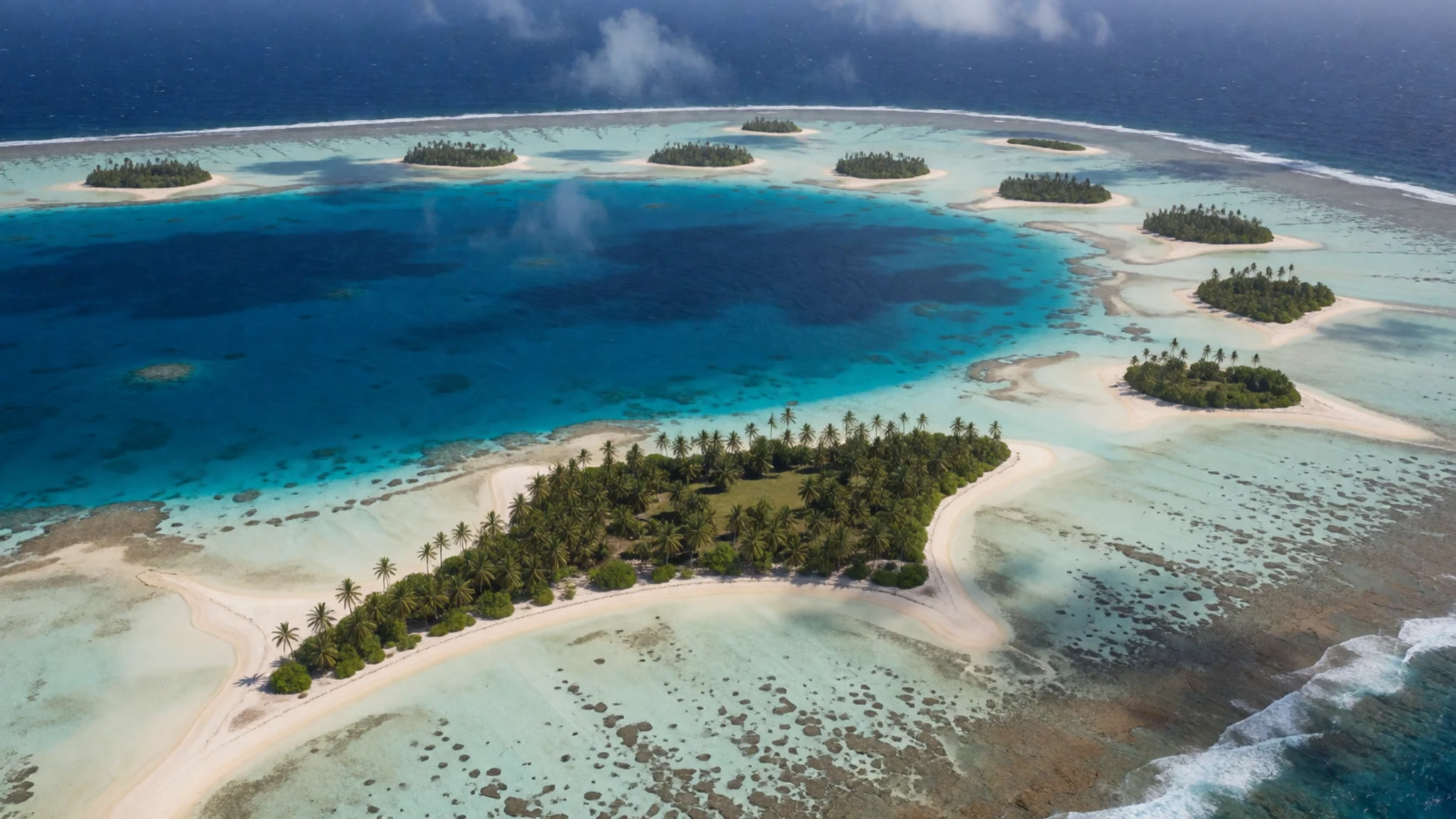
- The view from space — Whole atoll
A satellite image shows what makes Nukunonu unusual: a thin broken ring of green islets around a vast pale lagoon in dark ocean. Look at it before travelling, and the sense of scale on arrival, with water everywhere and land barely above it, makes much more sense.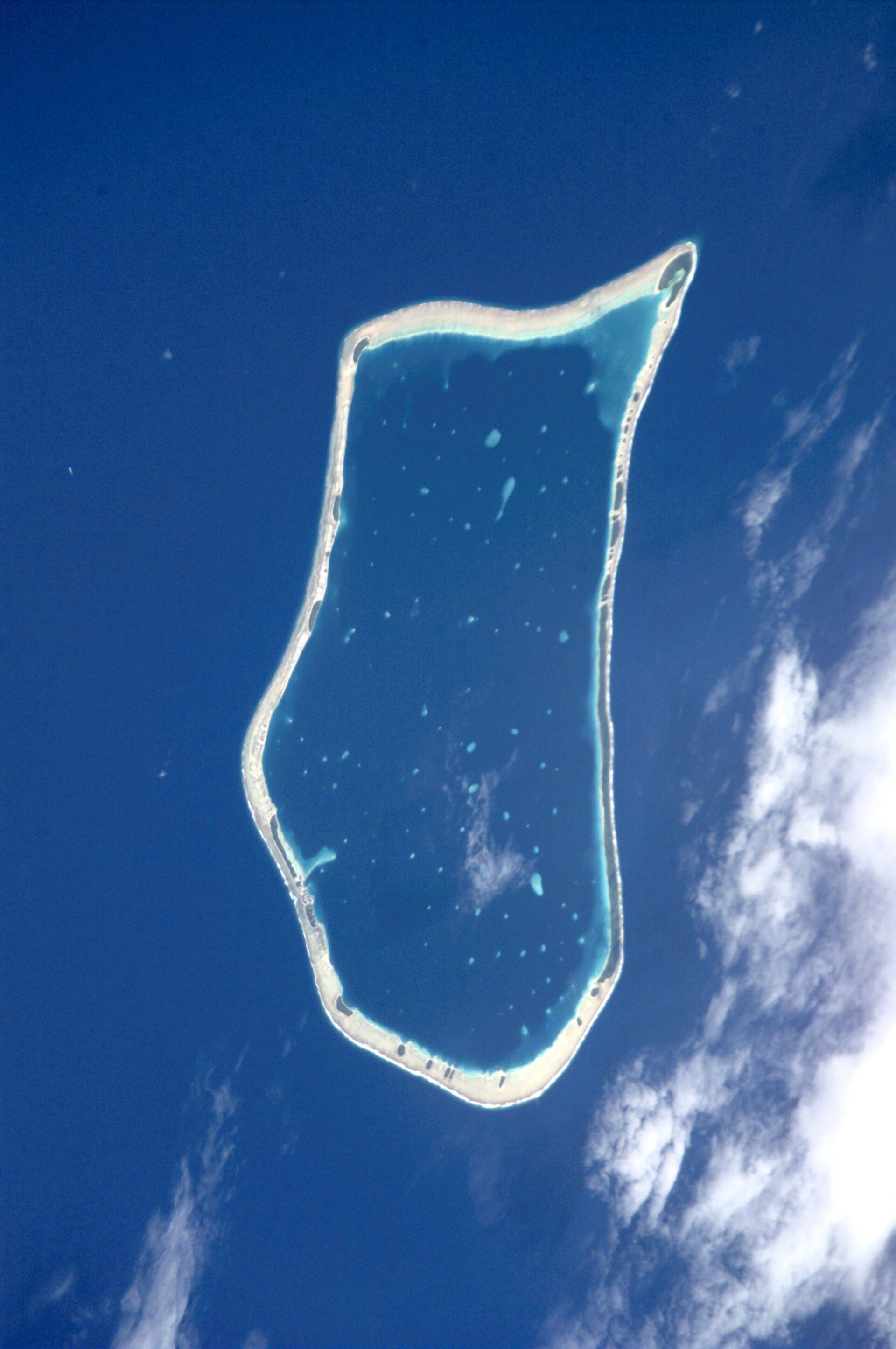
Culture
Nukunonu is a small, close community of Polynesian descent, and its customs revolve around family, village decisions and the Catholic church. Sunday matters. Services shape the rhythm of the week, and many people dress up and gather for worship and shared meals.
Samoan influence runs through the language, faith and traditions, and the village works collectively. Food, fishing catches and tasks are shared, and visitors are noticed and welcomed, though privacy and quiet are valued. With around 531 people on the atoll, everyone knows who is staying.
Crafts matter here, and handicrafts are one of the few sources of income, so buying directly from makers is a good way to support families. Alcohol is rationed in Nukunonu, which reflects local choices about community life, and the legal drinking age is 18.
The atoll lives with its isolation and its low-lying land, and people are well aware of rising seas. Conversations about climate are not abstract here, so listen more than you lecture.
The etiquette line: dress modestly in the village, avoid swimming or loud activity during church services on Sundays, and ask before photographing people or the inside of the church.
What to wear
Traditional dress in Nukunonu belongs to the wider Polynesian tradition. The lava-lava, a wrapped waist cloth worn by men and women, is the core garment, and flower or leaf lei are worn for celebrations and church. Woven pandanus mats and handicrafts are made locally, and historic photographs of schoolchildren show lava-lava and lei worn together at school.
In daily life, people wear light, practical clothing suited to the heat: cotton shirts, shorts, and lava-lava for many everyday occasions. For church and formal gatherings, people dress up, often in clean, neat clothes with a lei or similar adornment. Footwear is simple, usually sandals or bare feet at home.
Visitors should pack for a hot, humid, sunny climate, with an average around 28°C and sudden heavy rain. Choose loose cotton or quick-drying fabrics that cover shoulders and knees, as modesty is the norm in the village, especially around the church. A lava-lava is a practical and respectful thing to wear, and you can buy one in Samoa before travelling.
Bring a hat, strong reef-safe sun protection, and a light rain jacket. Reef sandals or water shoes protect feet from sharp coral and shells on the shoreline. Swimwear is for the beach or lagoon only, so cover up with a shirt and wrap when walking through the village.
What to eat
- Fresh lagoon and reef fish — Hotel meals and family homes
Fish is the staple protein, caught in the lagoon and on the reef, and served grilled, boiled or raw in simple preparations. The catch depends on the day and the weather, so meals vary. Ask your hosts what came in that morning.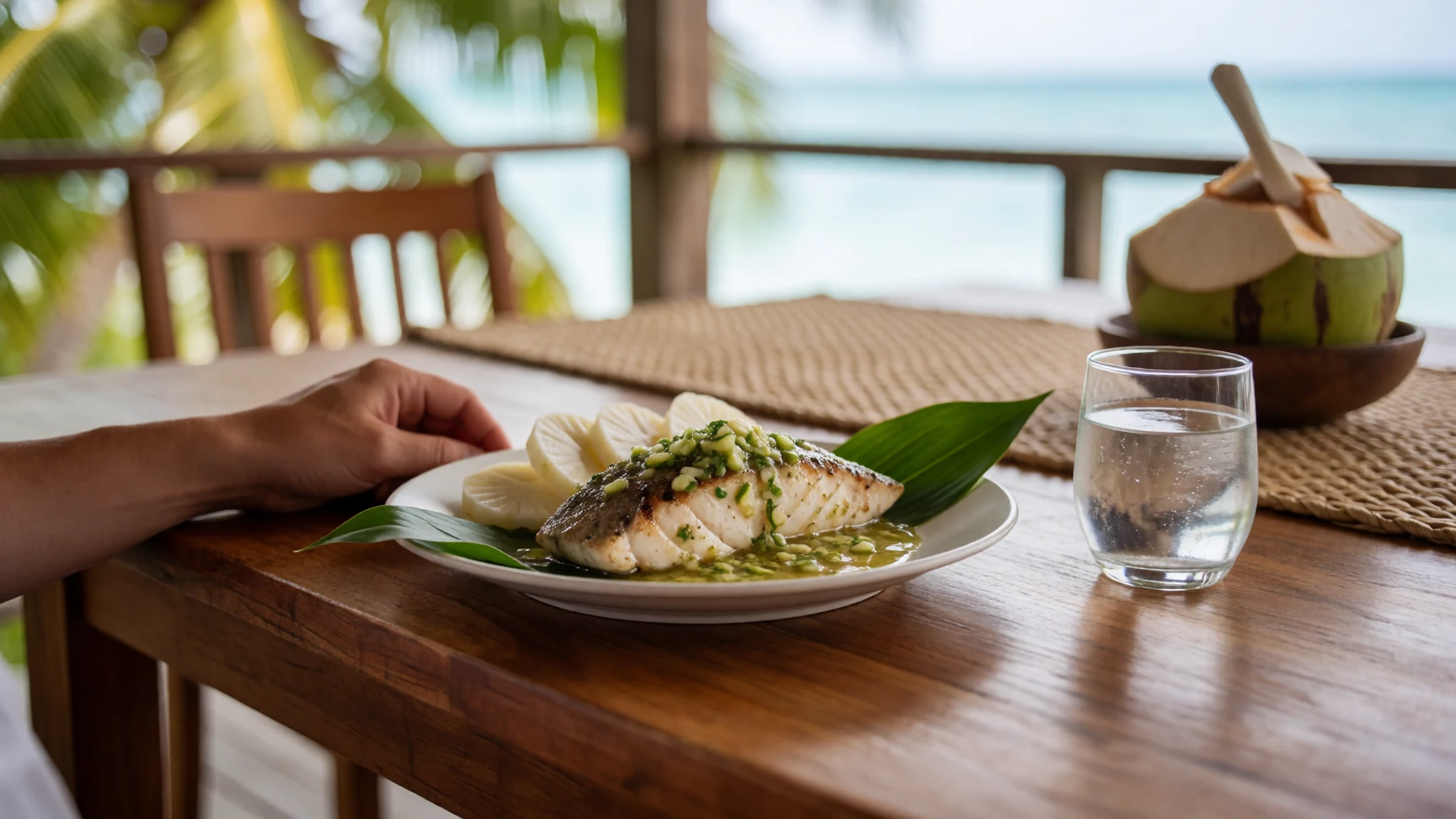
- Coconut — Anywhere on the islet
Coconut is a key food source and is used in many ways: fresh drinking nuts, grated flesh, cream for cooking and dried copra for sale. Rats compete for the harvest, so palms are a precious resource. A cold drinking coconut is a fine refreshment in the heat.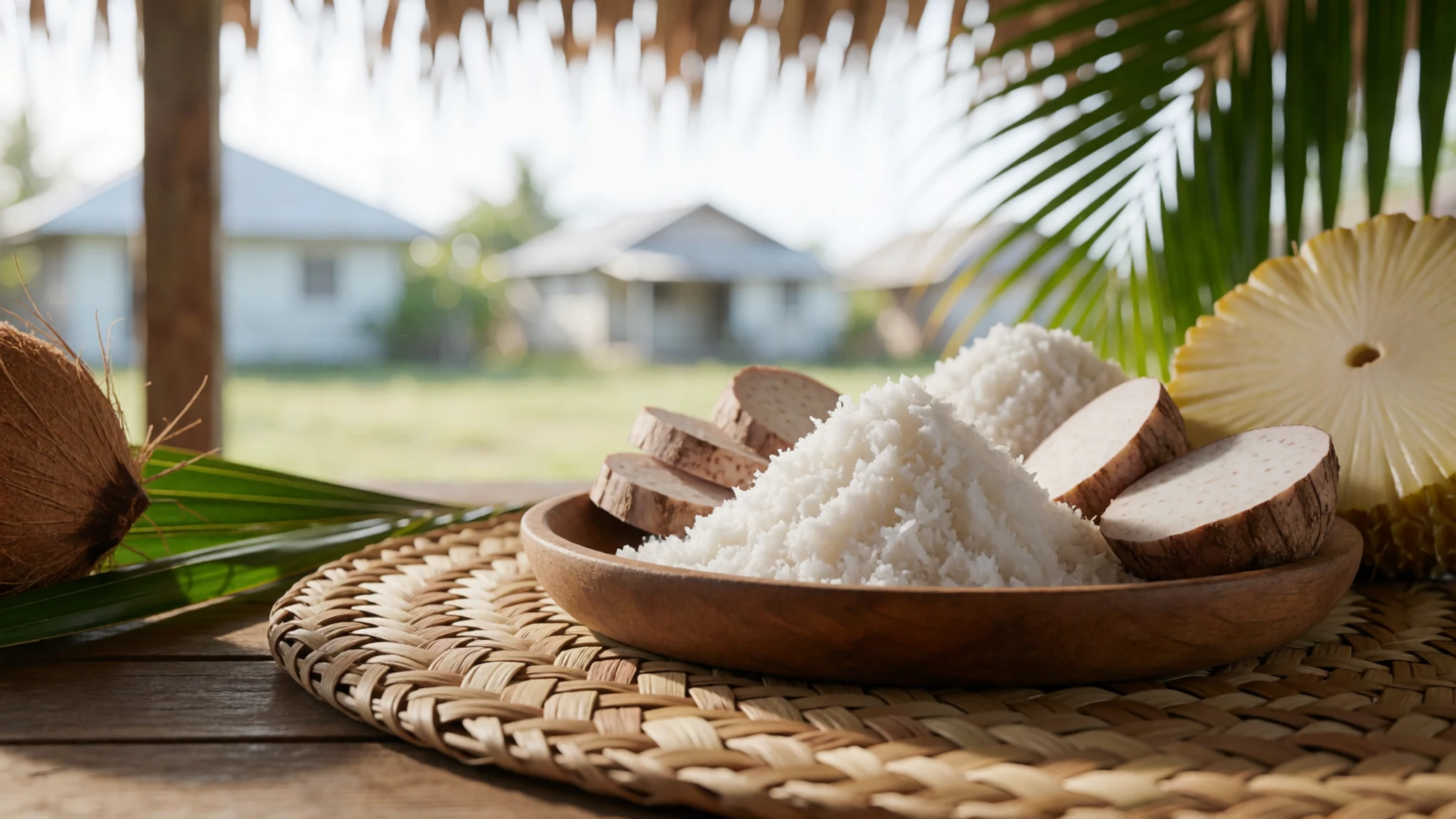
- Taro and breadfruit — Family meals
Starchy staples such as taro and breadfruit commonly accompany fish in Pacific atoll meals, baked or boiled. Atoll soil is poor, so availability varies, and some staples may be brought in by ship. Treat them as shared food and take modest portions. - Hotel set meals — Luana Liki Hotel
The Luana Liki Hotel is the only public place to eat on Nukunonu, and guests staying there have all three daily meals covered by the room rate. Expect simple, local-style cooking. If you are not a guest, ask well ahead.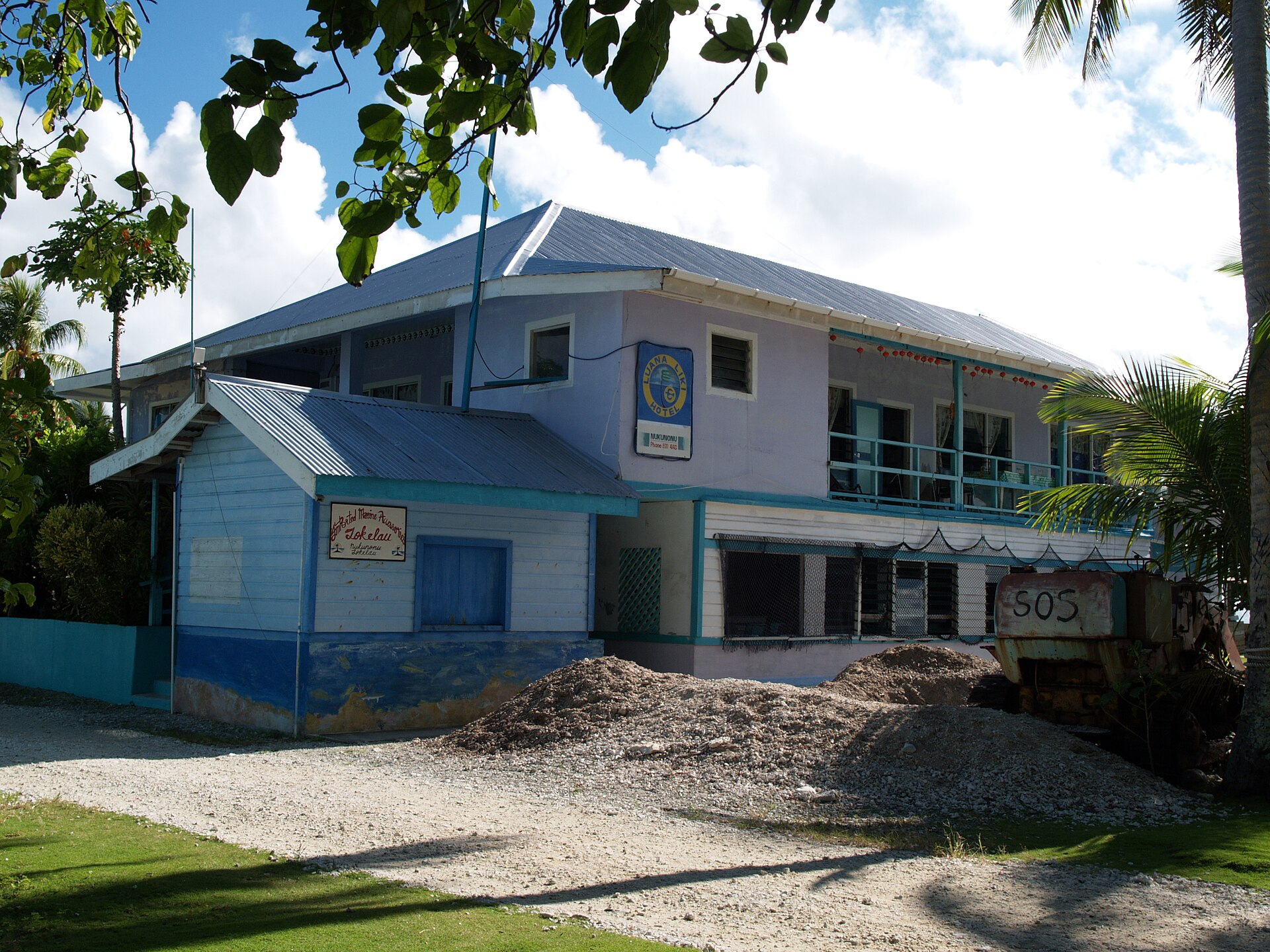
- Samoan beer — Village shops and the hotel
Samoan beer can be found in the shops and at the hotel, but sales are strictly rationed on Nukunonu. Do not count on it being available. If you want a drink, ask politely, and do not take it into public spaces or near church.
Plan it
Best time. May to October, when the trade winds keep the heat bearable and tropical storms are least likely; November to March brings the occasional storm, and heavy rain can fall in any month.
How long. 5–7
Getting there. Fly to Apia in Samoa, the nearest international airport, then take the twice-monthly passenger ship to Tokelau. The crossing takes more than a day, schedules often shift, and foreign visitors come last for places. Non-New Zealand citizens need a travel permit arranged in advance through the Tokelau liaison office in Apia, so start the paperwork well ahead. Allow at least two weeks in total, and check current details with the office.
Budget. mid
Tips
- Start the permit process one to two months before travel, and keep your dates flexible
- Expect delays to ships and plan buffer days at both ends
- Bring cash, supplies, medicines and sun protection, as shops are small
- The Luana Liki Hotel is the only commercial accommodation, so book through the Apia office; homestays can be arranged the same way
- Carry a refillable bottle and ask your hosts about drinking water
Etiquette
- Dress modestly in the village and cover up when away from the beach
- Respect Sunday services and keep noise low
- Ask before photographing people, homes or the church
Nearby
Sources
- Wikidata Q656709 (CC0)
- Wikipedia: Nukunonu (CC BY-SA 4.0)
- Wikivoyage: Tokelau (CC BY-SA 4.0)
- Satellite picture of Nukunonu, NASA Johnson Space Center (Public domain)
- Catholic church, CloudSurfer (CC BY-SA 2.5)
- Luana Liki hotel, CloudSurfer (CC BY 3.0)
- Nukunonu Lagoon, CloudSurfer (CC BY 3.0)
- Students outside school, Tudor Washington Collins (CC BY 4.0)
- Nukunonu Lagoon banner, CloudSurfer (CC BY 3.0)
- Nukunonu Lagoon esvoy banner, CloudSurfer (CC BY 3.0)
- Map of Nukunonu, HansVZ (CC0 1.0)


Wildlife
- Spinner dolphin (animal)
The spinner dolphin is a small tropical dolphin famous for leaping from the sea and twirling in the air like a playful acrobat. Around Nukunonu, dolphins are among the wildlife you may spot offshore, though the notes do not say which season or hour is best. Watch from a respectful distance, keep your voice low and let the dolphins choose whether to approach. A local guide can help you find them safely. Never feed them.