New Island
New Island, United Kingdom
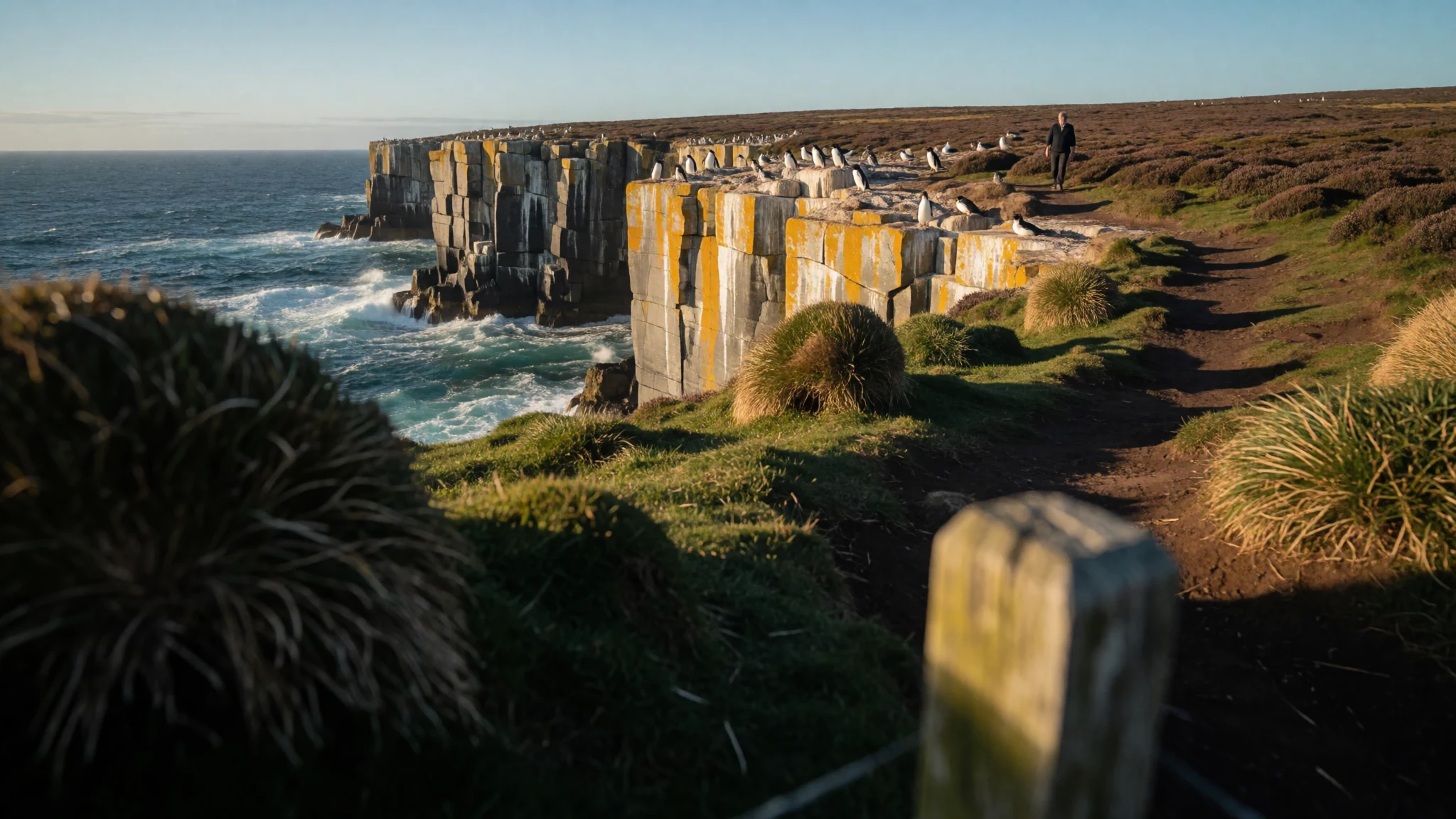
New Island is a small Falklands nature reserve where rockhopper penguins and albatrosses nest on sea cliffs, and old whaling ruins lie nearby.
The place
New Island lies in the west of the Falkland Islands, just north of Beaver Island and a long way from the capital: Stanley is about 238 km away. The island is a thin strip, roughly 13 km from end to end and averaging only 750 m across, so a walk from one coast to the other is short. The geography splits cleanly in two. Along the west, high cliffs drop straight into the Atlantic, while the east is lower and gentler, with rocky shores broken by sandy bays. The highest ground reaches 226 m. Several smaller islets sit just offshore; North Island and Saddle Island have steep cliffs, while Ship Island and Cliff Knob Island are low and flat. A small settlement sits roughly midway down the east coast, with an airstrip a little to the south. Spanish speakers know the island as Isla de Goicoechea. Its working past as a whaling base, sheep farm and guano digging has given way to a different purpose: since 1972 it has been a nature reserve, set up by Ian Strange. The draw today is wildlife rather than people, with penguins, albatrosses and other seabirds nesting on the cliffs and shores. Visiting is tightly managed, and the weather decides everything. Wind, rain and sun can arrive within a single afternoon, so plans stay loose. There is no shop, no café and little spare comfort, which is much of the appeal for people who like their islands unfussy.
Its story
New Island has drawn outsiders for a long time. American whalers may have been calling in the 1770s, and the names Coffin's Harbour and Coffin's Island recall a Nantucket family, while the nearby Quaker, Barclay, Fox and Penn islands point to early settlers from New England with Quaker roots. In 1813 Captain Charles Barnard of Nantucket and his crew were stranded here and lived on the island for two years, building a rough stone shelter. Part of it is thought to survive inside the Barnard Building, restored as a museum in 2006. Two ships, HMS Indispensable and Asp, eventually rescued the men. The explorer James Weddell anchored in 1823 and noted good harbours with food and fresh water close at hand. Guano was dug here in the middle of the nineteenth century. Then came industrial whaling. A Norwegian company sent its first floating factory, the Admiralen, in 1905; it took only a few dozen whales in a month before heading for the Antarctic, where it became the first floating factory to work. From 1908 the Scottish firm Christian Salvesen ran a shore station, shipping in a second-hand plant from Iceland. The first whale was landed in January 1909, and sei whales made up most of the catch. Returns disappointed, and the station last worked in 1915. Its remains can still be seen. A beached sealing vessel, the Protector III, has lain on the shore since 1969.
What to see
- Rockhopper and albatross colony — Western cliffs, opposite the settlement
The best-known walk on New Island leads from the settlement across to the western cliffs, a short and easy trail. At the end, rockhopper penguins and black-browed albatrosses nest on the slopes above the sea, with king cormorants alongside. It is noisy and smelly, and visitors watch from the edge of the colony rather than walking into it.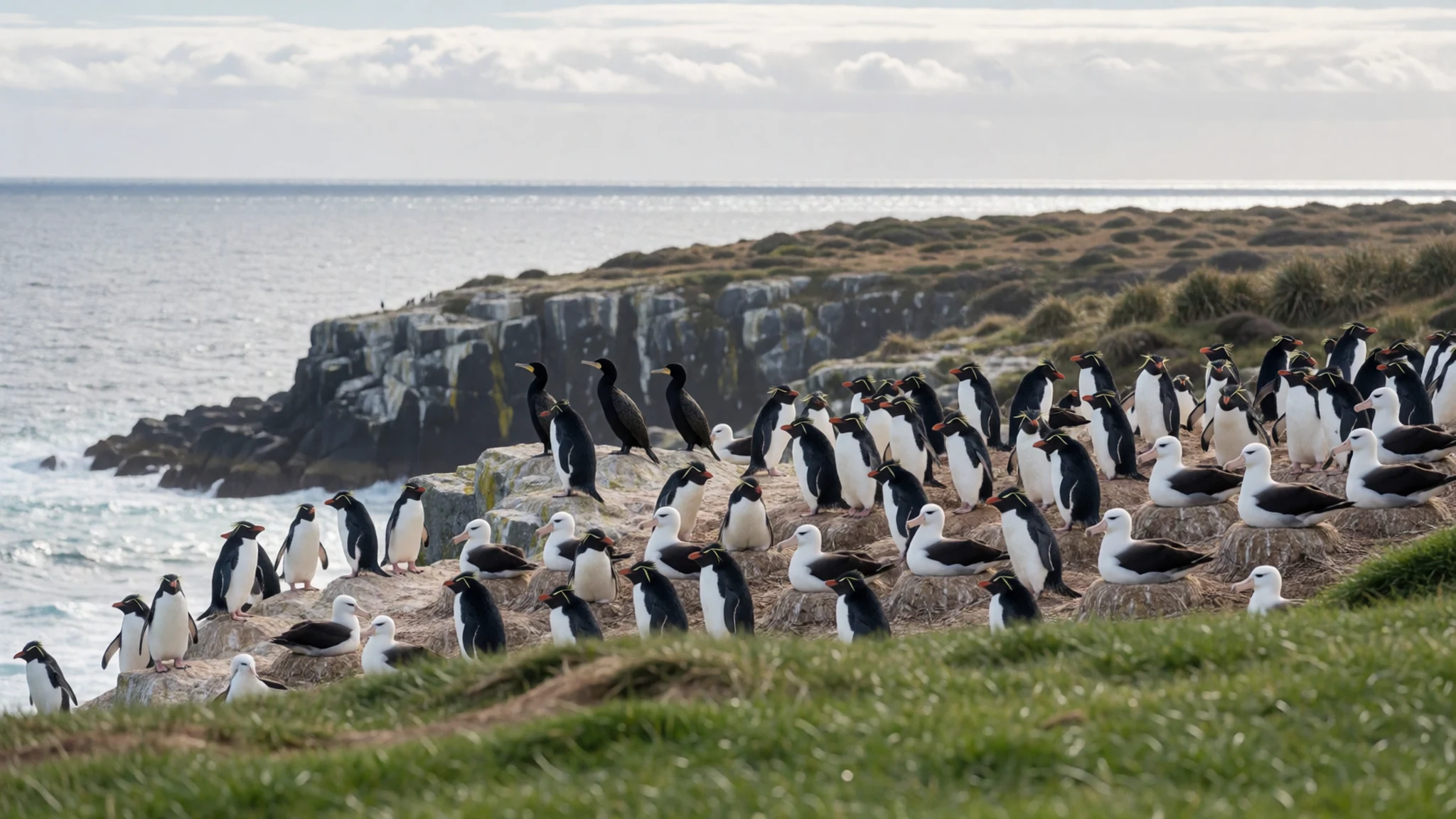
- Eastern shore and sandy bays — East coast
The east of New Island slopes gently towards the sea, and its sandy bays are a calmer counterpart to the cliffs. Magellanic and gentoo penguins come ashore here, along with oystercatchers and many other birds. The water can look turquoise in sun, though it stays cold, and the beaches are for watching wildlife, not swimming.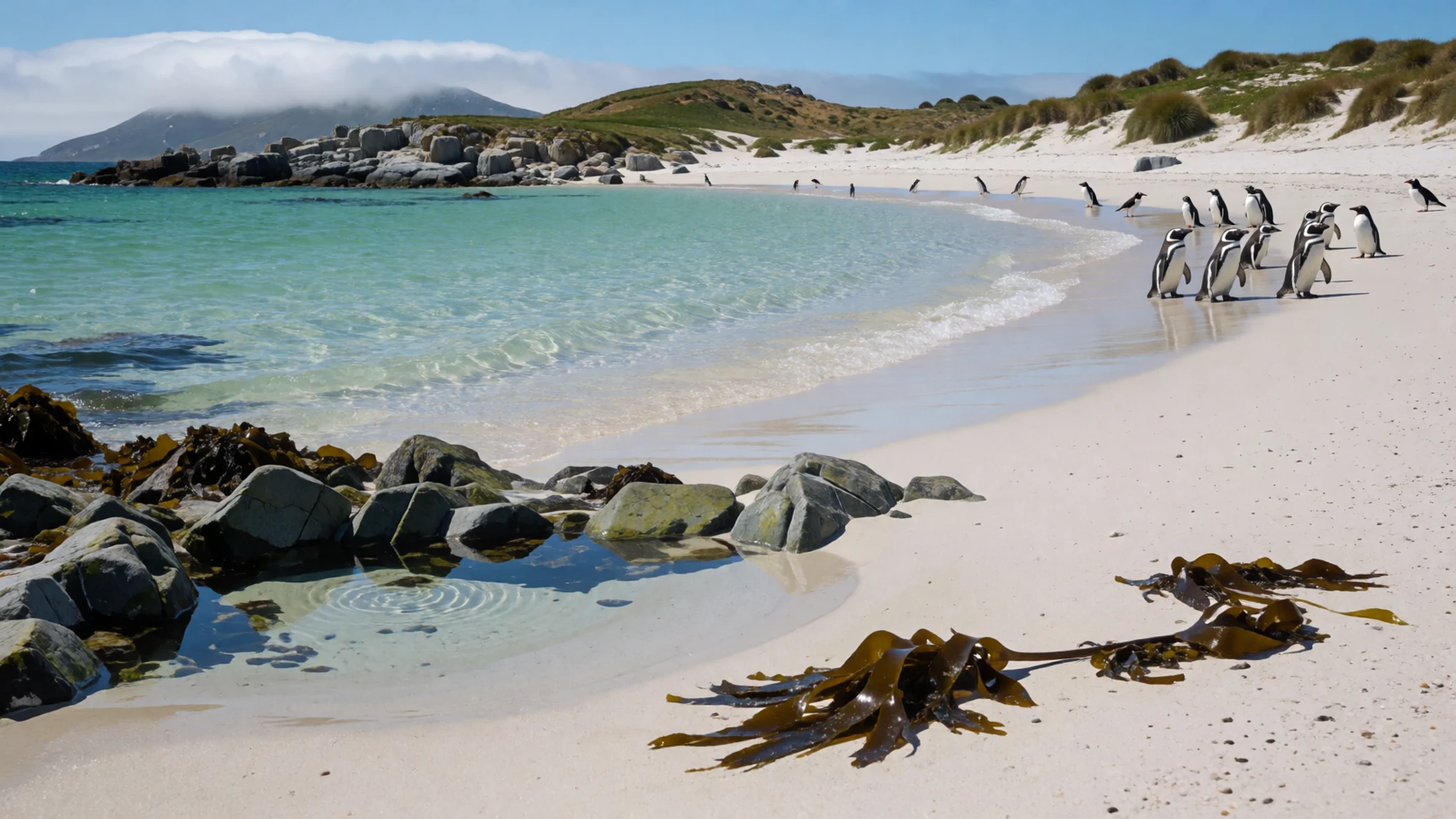
- The Barnard Building — Settlement, east coast
The Barnard Building stands near the settlement as a small museum of the island's castaway story. Part of its stone is thought to go back to the shelter built by Captain Barnard's stranded crew, and the whole was restored in 2006. It is a modest room, but it puts a human face on a place now known mainly for birds.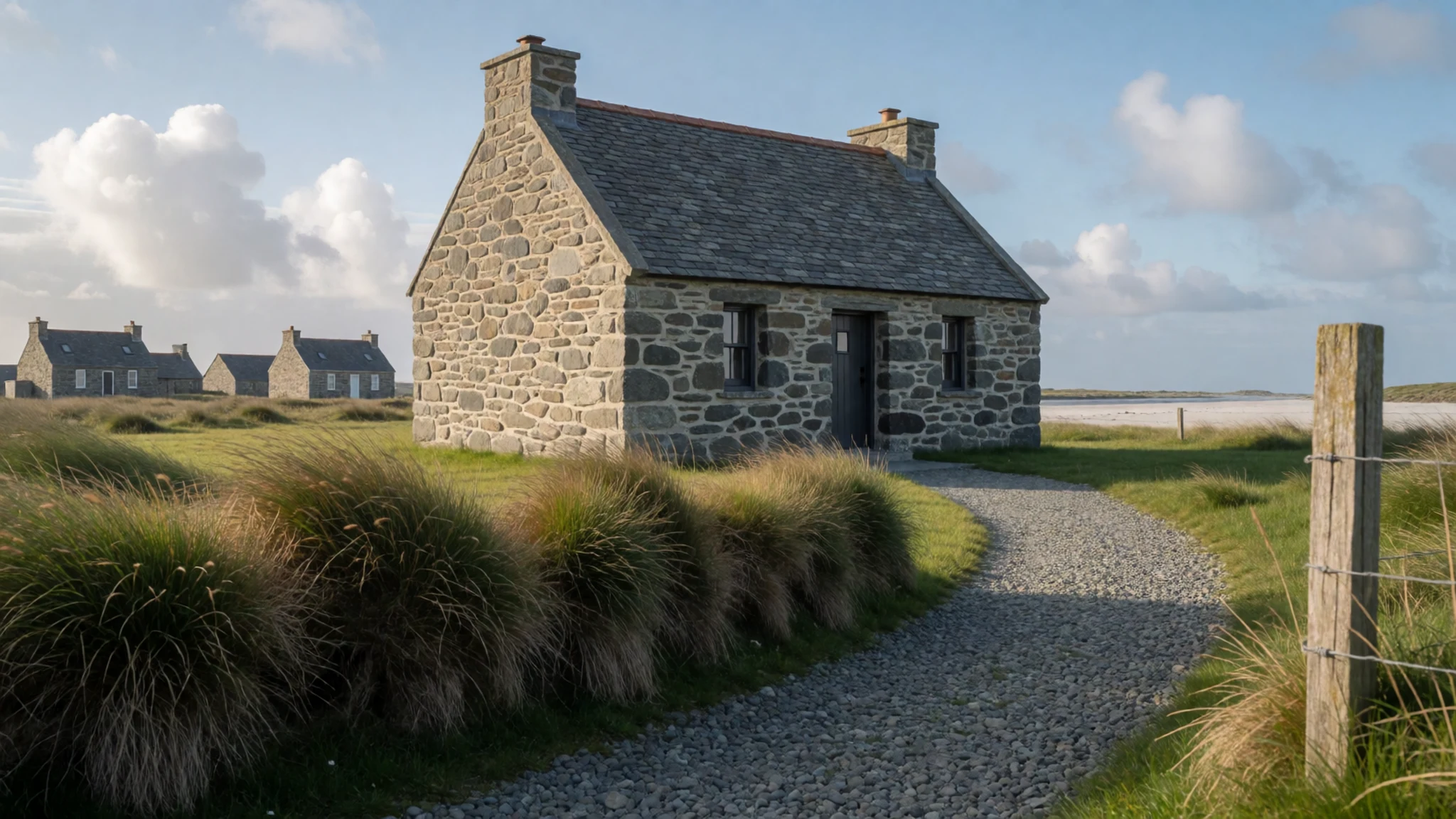
- Whaling station remains — New Island South
On New Island South lie the remains of the shore whaling station run in the early twentieth century. Rusting machinery and foundations show how much effort went into an operation that lasted only a few seasons. Wrecks, including the sealer Protector III, also lie along the shore, weathered into the landscape.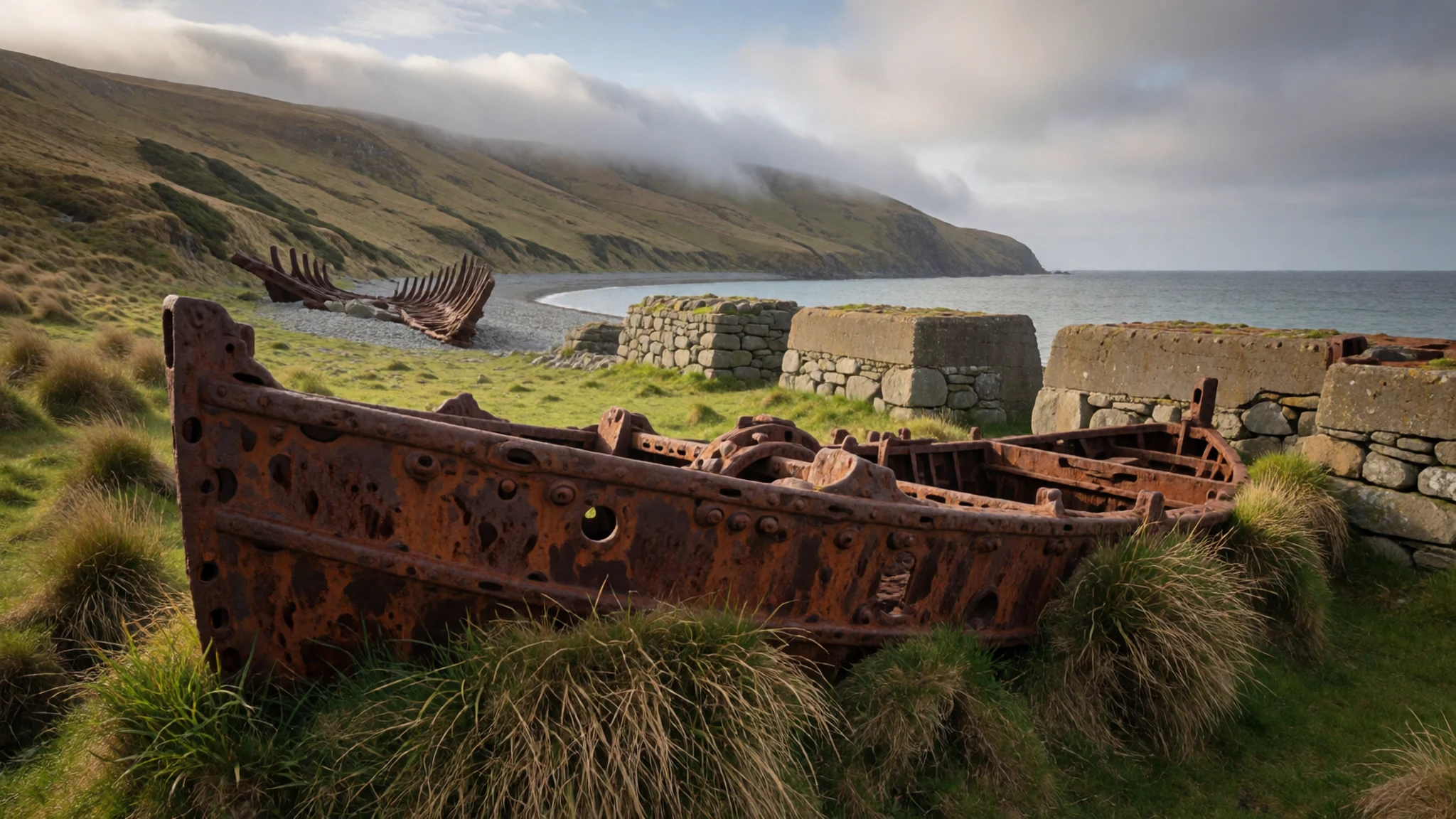
- Western sea cliffs and marine life — West coast
The western coast of New Island ends in sheer sea cliffs, best seen from the clifftop paths or from a small boat offshore. Peale's porpoises often escort landing boats, and fur seals and sea lions haul out around the shore. In summer, minke, fin, sei and southern right whales pass by, though sightings are never guaranteed.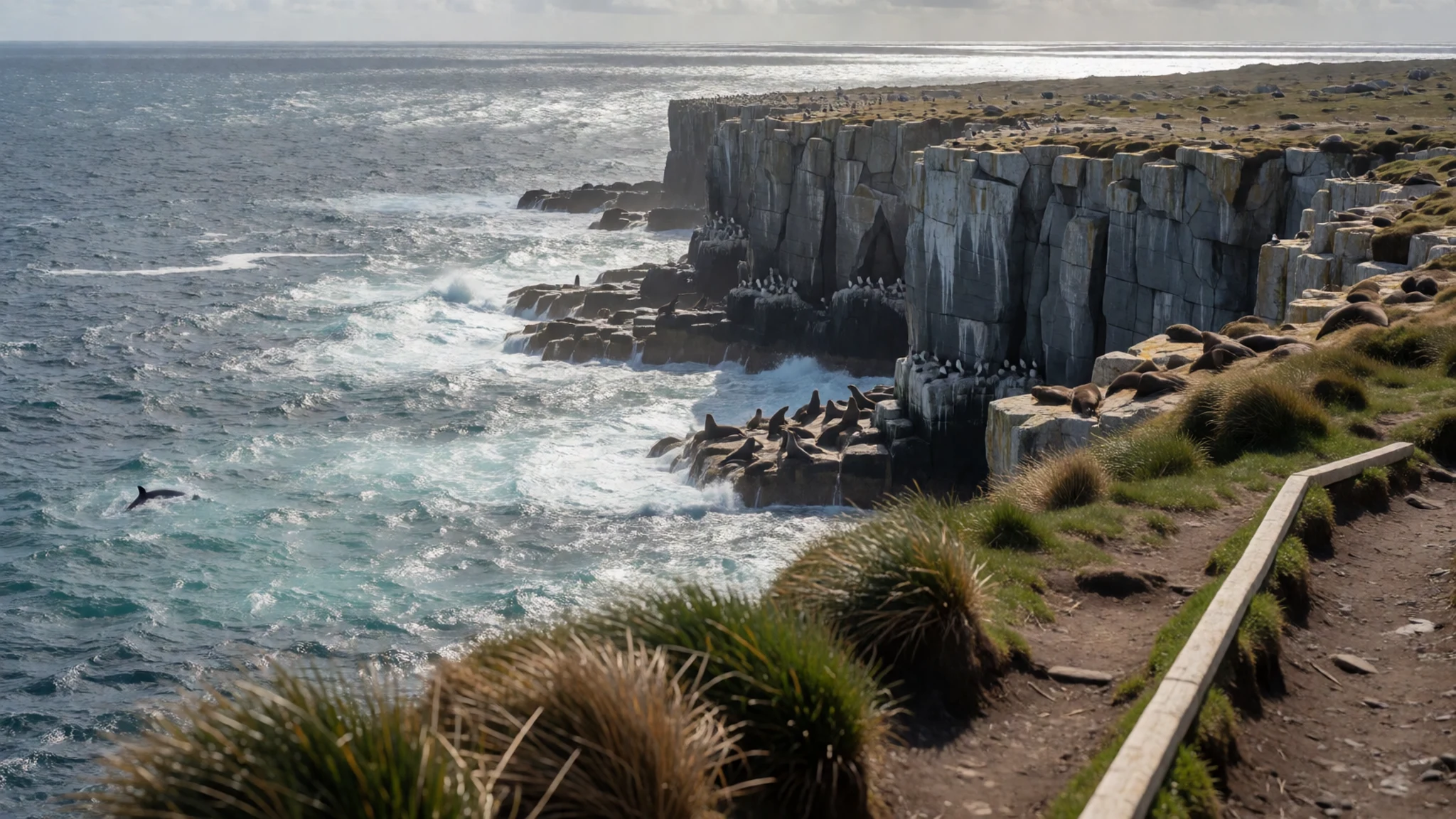
Culture
New Island has no village life in the usual sense, so its culture is that of a remote Falklands outpost: small, practical and tied to the land and sea. The settlement is home to reserve staff and visiting scientists, and the daily rhythm follows weather, birds and boats rather than shops and timetables. The island's layers of history show in its names. Spanish gave it Isla de Goicoechea, Nantucket whalers left the Coffin names, Quaker settlers left a cluster of island names nearby, and Norwegian and Scottish whalers left rusting machinery. The shift from killing wildlife to protecting it is the island's defining story. Whalers, sealers and sheep farmers once used it hard; now it is run as a reserve, backed by a trust that decides who may stay and for how long. Visitors arrive mostly by small expedition ship, and the limit on vessel size is a cultural choice as much as a rule: the island would rather host few people well than many badly. Conversation with staff tends to turn quickly to penguin counts, fire risk and the next change in the wind. Hospitality is real but stretched, since drinking water and supplies are limited. Tea, when offered, is a kindness, not an entitlement. Keep to the marked paths, stay well back from nesting birds and never walk through a colony to get a better photograph.
What to wear
New Island has no distinctive traditional costume that a visitor could point to; the nearest thing is the working clothing of the Falklands countryside, shaped by sheep farming and a cold, windy climate. Wool is the old staple: knitted jumpers, thick socks and caps, with waxed or oilskin jackets and rubber boots over the top. On the island today, residents and scientists wear much the same, only in modern fabrics: waterproof shells, fleeces, thermal layers and sturdy boots, chosen for function and often muddy. Nobody dresses up, and nobody notices if clothes are old. For a visitor, the climate is the only rule that matters. Pack a fully waterproof jacket and trousers, a windproof layer, a warm hat and gloves, and a few thin layers that can come off if the sun appears. Footwear should be waterproof and grippy, because landings from small boats can be wet and the trails are grassy and uneven. Sunglasses and sunscreen are worth carrying; the light off the sea is strong even on cool days. There are no modesty norms to worry about, and no religious sites with dress codes. Avoid brightly coloured clothing that might unsettle birds, and keep loose items zipped away, since wind can take a hat or glove in seconds.
What to eat
- Packed lunch from Stanley — Stanley, before flying or sailing out
There is no food on New Island, so visitors bring everything they need. Sandwiches, fruit, snacks and a flask are the usual choice, bought or prepared in Stanley beforehand. Drinking water can be requested from the settlement, but only with permission, so bring a refillable bottle.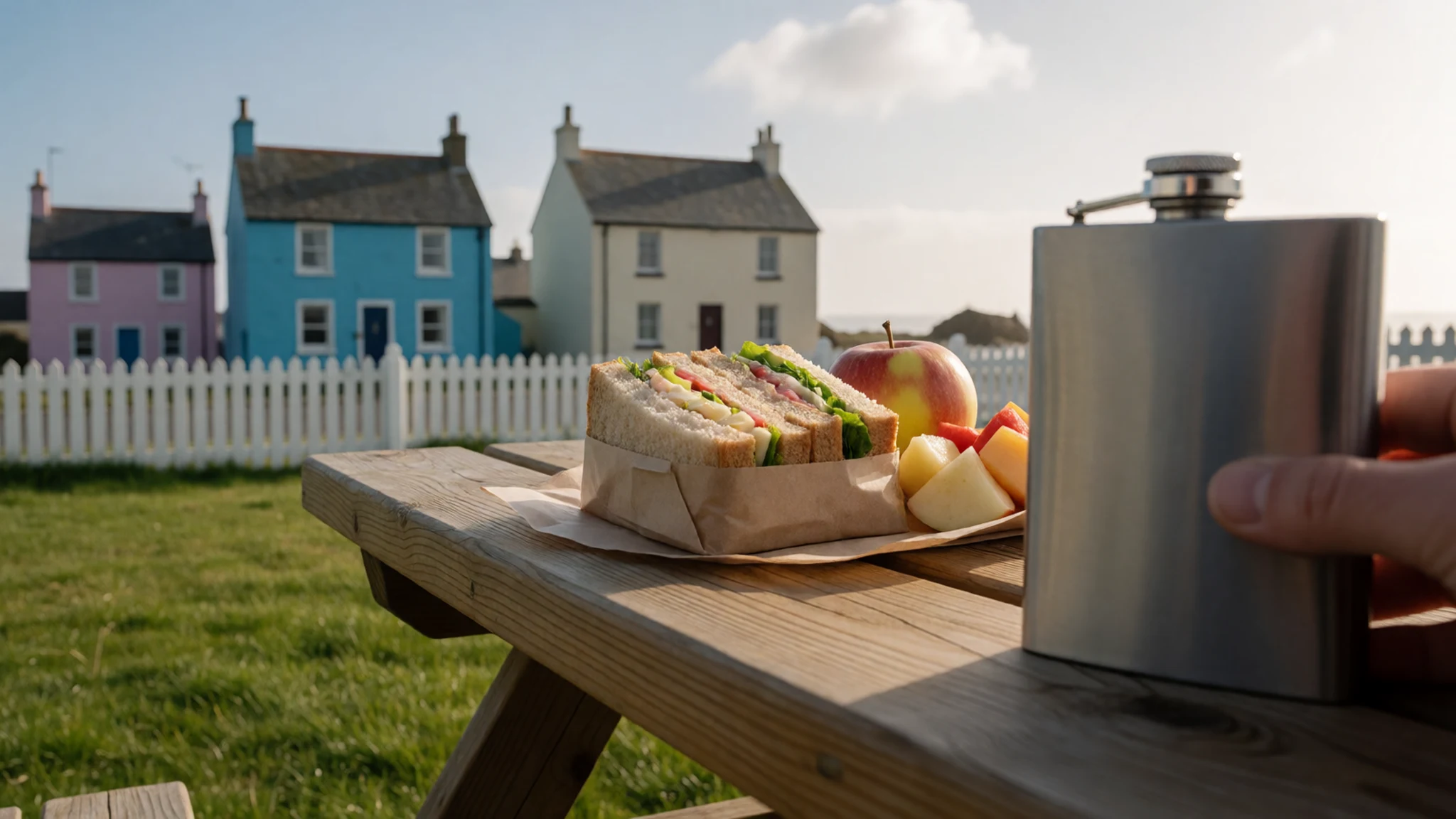
- Roast mutton or lamb — Stanley pubs and eateries, and farm settlements on other islands
Sheep farming shaped the Falklands, and mutton and lamb are the traditional main dishes, usually roasted with potatoes and vegetables. It is hearty food suited to a cold climate and appears on many home tables and menus.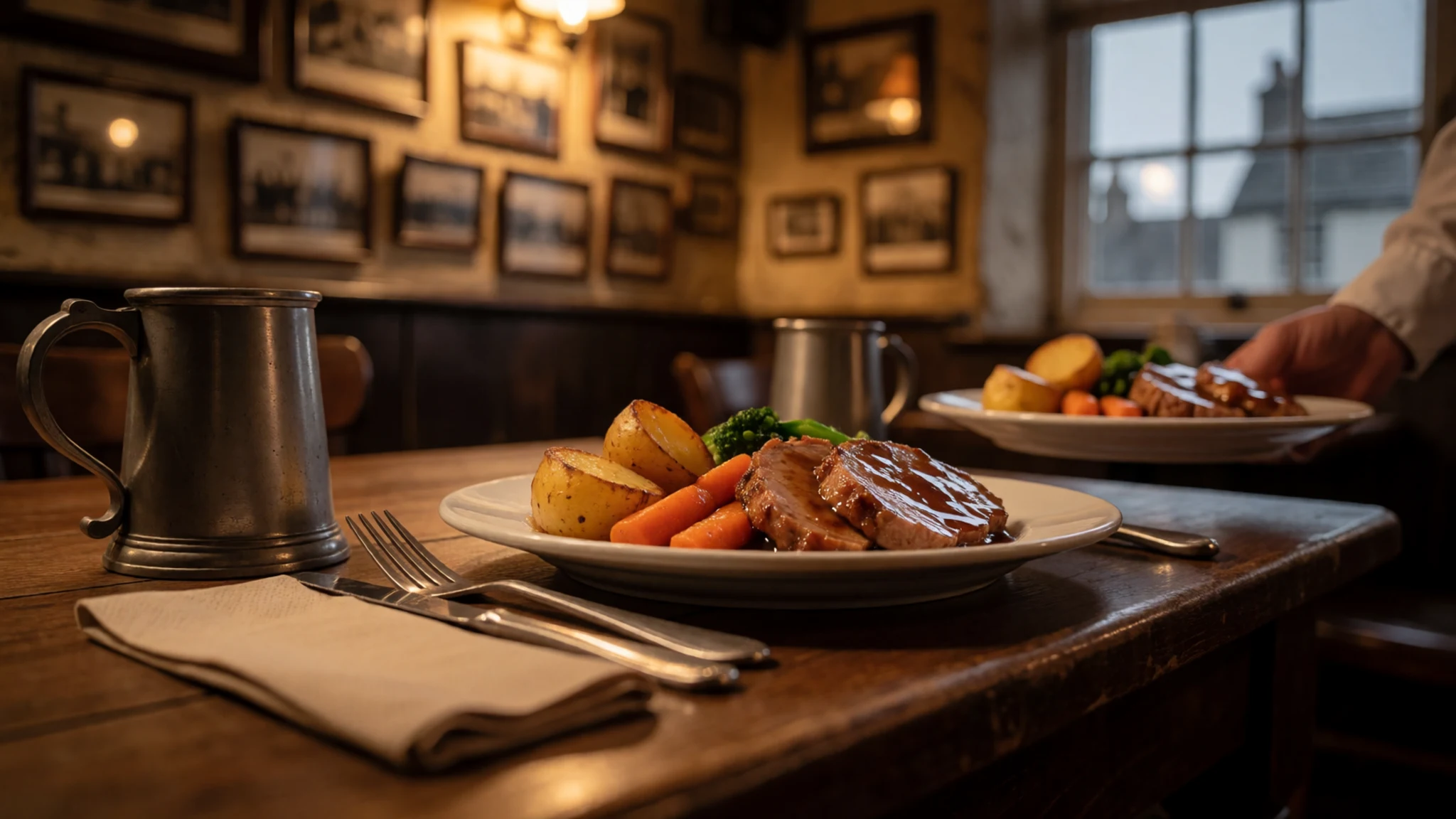
- Diddle-dee jam — Shops and craft stalls in Stanley
Diddle-dee is a small red berry that grows on Falklands moorland, and its tart jam is a local favourite. It is spread on bread or scones, and a jar makes a sensible, light souvenir to carry home. - Tea-time cakes — Farm kitchens and cafés in Stanley
Falklands households keep up a strong habit of stopping for tea and something baked, often called smoko. Expect scones, sponge or fruit cake with a strong brew, offered warmly when farm kitchens have visitors. - Fish and chips — Takeaways and eateries in Stanley
Fish from the South Atlantic, fried in batter and served with chips, is a comforting end to a windy day. It suits British visitors and is easy to find, though availability on the day depends on supplies and season.
Plan it
Best time. October to March, the summer season when seabirds are nesting, whales migrate past and the trust's accommodation may be open. Even then, expect wind, rain and cool temperatures at any time.
How long. 1–2
Getting there. Fly to Stanley, the Falklands capital, then either join a small expedition cruise or take a small light aircraft to the island's airstrip. Cruise ships stop only briefly, usually at the southern half.
Budget. high
Tips
- Book far ahead: the island admits only small cruise vessels, and overnight places are limited because staff and scientists use most beds
- Check with the New Island Trust's warden for availability of the self-contained A-frames; camping is not permitted
- Bring all food and a water bottle, as nothing is sold on the island
- Carry a full waterproof kit and expect wet landings from small boats
- Allow slack in your plans; weather can delay flights and landings
Etiquette
- Stay on marked trails and well back from nesting birds
- Follow the warden's instructions, especially on fire risk
- Ask permission before taking drinking water from the settlement
Nearby
Sources
- Wikidata Q1968010 (CC0)
- Wikipedia: New Island (rev 1376926729) (CC BY-SA 4.0)
- Wikivoyage: New Island (rev 5311961) (CC BY-SA 4.0)
- Satellite image of New Island, NASA Johnson Space Center (Public domain)
- Rockhopper penguins at water's edge, Stan Shebs (CC BY 3.0)
- Rockhopper penguin, Stan Shebs (CC BY 3.0)
- Coffins Harbour, New Island, Stefan Brending (2eight) (CC BY-SA 3.0 de)
- New Island, Stefan Brending (2eight), 7DS7891 (CC BY-SA 3.0 de)
- New Island, Stefan Brending (2eight), 7DS7907 (CC BY-SA 3.0 de)
- New Island, Stefan Brending (2eight), 7DS7909 (CC BY-SA 3.0 de)
- New Island, Stefan Brending (2eight), 7DS7912 (CC BY-SA 3.0 de)


Wildlife
- Rockhopper penguin (animal)
Think of the rockhopper as a small penguin that calls the chilly southern seas home, from the southern coast of South America out to nearby islands. On New Island it nests on the slopes above the shore, close to albatrosses and king cormorants. The notes do not tell us when to look, so ask a local guide. Keep your distance, stay calm and quiet so the birds are undisturbed, and never give them food. - Black-browed albatross (animal)
This is a large ocean bird, the most common and widespread of the albatross family. Here on New Island it makes its nest on the hillsides above the sea, among rockhopper penguins and king cormorants. The notes say nothing about season or time of day, so check with a guide. Watch from afar, keep noise to a murmur, let the birds go about their business undisturbed, and never feed them. - Rockhopper penguin (bird)
Think of the rockhopper as a small penguin that calls the chilly southern seas home, from the southern coast of South America out to nearby islands. On New Island it nests on the slopes above the shore, close to albatrosses and king cormorants. The notes do not tell us when to look, so ask a local guide. Keep your distance, stay calm and quiet so the birds are undisturbed, and never give them food. - Black-browed albatross (bird)
This is a large ocean bird, the most common and widespread of the albatross family. Here on New Island it makes its nest on the hillsides above the sea, among rockhopper penguins and king cormorants. The notes say nothing about season or time of day, so check with a guide. Watch from afar, keep noise to a murmur, let the birds go about their business undisturbed, and never feed them.