Naruto Whirlpools
Naruto Whirlpools, Japan
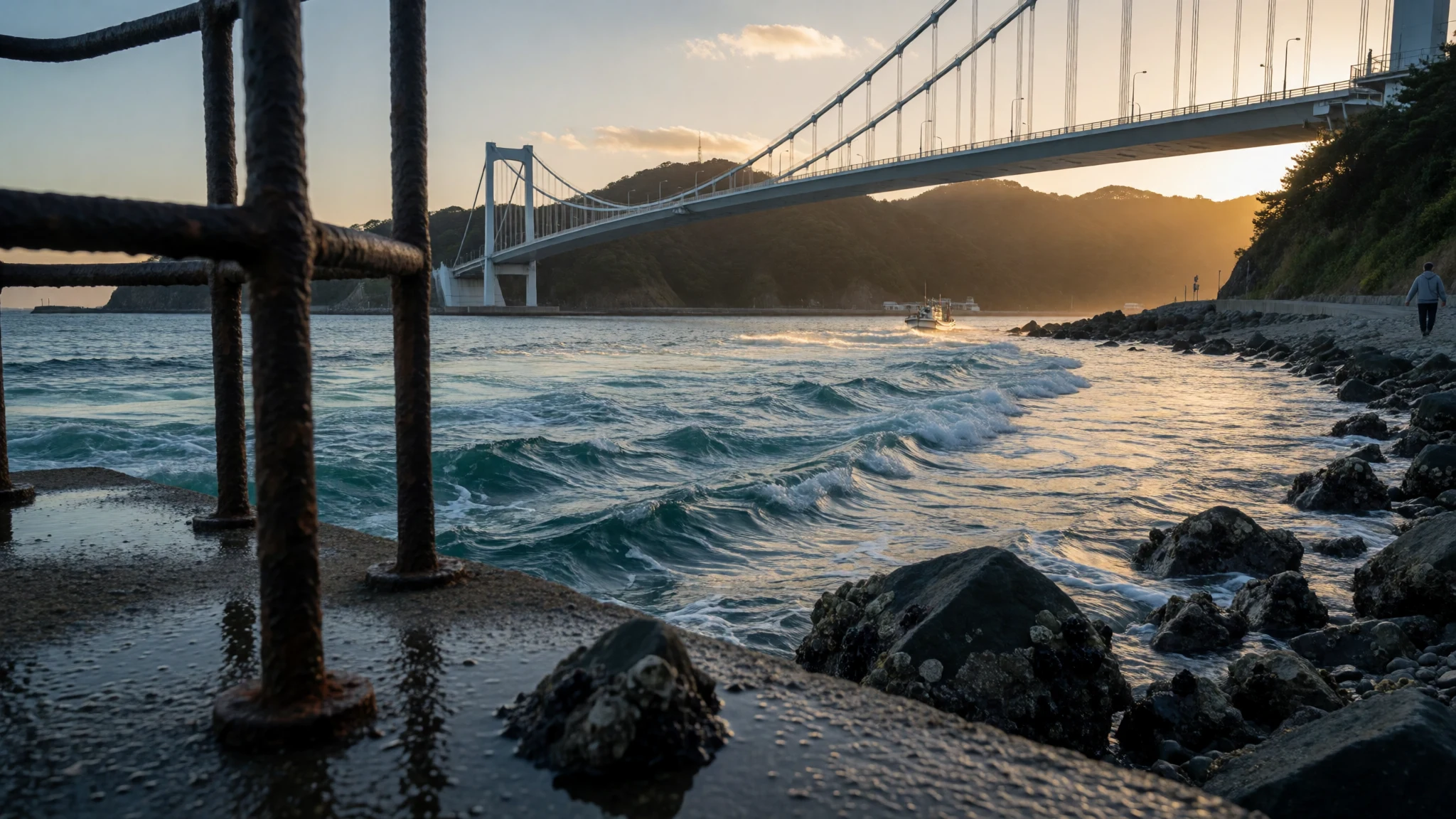
Naruto Whirlpools turn a narrow Japanese strait into a tidal show, with vortices to watch from a boat or a bridge.
The place
The Naruto Whirlpools (鳴門の渦潮, Naruto no Uzushio) appear in the Naruto Strait, the channel between the town of Naruto, in Tokushima prefecture on Shikoku, and Awaji Island, which belongs to Hyōgo. The gap is only about 1.3 km wide, and that narrowness explains everything. The strait is one of the links between the Pacific Ocean and the Inland Sea, the water that separates Honshū from Shikoku. Tidal water enters the Inland Sea and leaves it again on a twice-daily rhythm, and during that cycle the Pacific and the Inland Sea stand at different heights, by up to 1.5 m. Squeezed through the gap, the water runs at roughly 13–15 km/h, four times a day: two inflows and two outflows. At spring tide the flow can reach about 20 km/h, and the vortices can open up to about 20 m across. Wikipedia describes this as the fastest tidal current in Japan.
Size depends on the moon. Around new and full moon the tides are strongest, so those are the days when the whirlpools look their best; on weaker tides the surface may only boil and swirl a little. The options for watching are the shore on Awaji Island, sightseeing boats that run out into the strait, and the Uzunomichi Walkway on the Ōnaruto Bridge, a suspension bridge opened in 1985. Its centre span over the water is 876 m long and sits 41 m above the sea. Naruto town itself is small and low-key, with fields, temples and a few museums behind the waterfront.
Its story
Naruto Whirlpools have been a subject for artists for a long time. Utagawa Hiroshige turned the strait into prints, among them a scene dated 1855 that shows foaming water under a low hill on the far shore. Copies are now held by museums as far away as the Rijksmuseum in Amsterdam, whose impression belongs to his series Snow, Moon and Flowers, and the Metropolitan Museum of Art in New York. Those prints show that people were drawing the strait long before the bridge and the sightseeing boats arrived.
The whirlpools also left their mark on everyday language. Narutomaki, the fish-paste cake with a pink spiral, takes its name from them. Franziska Ehmcke, a professor of Japanese studies at Cologne University, has suggested that the manga and anime hero Naruto Uzumaki owes his name to the same source, since uzumaki means whirlpool.
Naruto also has a place on the religious map of Shikoku. It is where the 88-temple pilgrimage begins, with Ryōzenji (霊山寺) and Gokurakuji (極楽寺) as the first two stops. Pilgrims who start here set out from a town that outsiders know better for its water than for its temples.
A quieter chapter belongs to the First World War, when German soldiers were held as prisoners of war in a camp near Naruto. The stone bridges and a cenotaph they built still survive, and the German House keeps documents that describe daily life in the camp. Together these threads make Naruto more layered than a single natural phenomenon suggests.
What to see
- Ōnaruto Bridge and Uzunomichi Walkway — Across the Naruto Strait
The Ōnaruto Bridge carries traffic across the strait on a suspension span of 876 m, set 41 m above the sea. The Uzunomichi Walkway on the bridge lets visitors look down on the current from a height, which shows the pattern of the water clearly. Check local tide tables and opening times before going.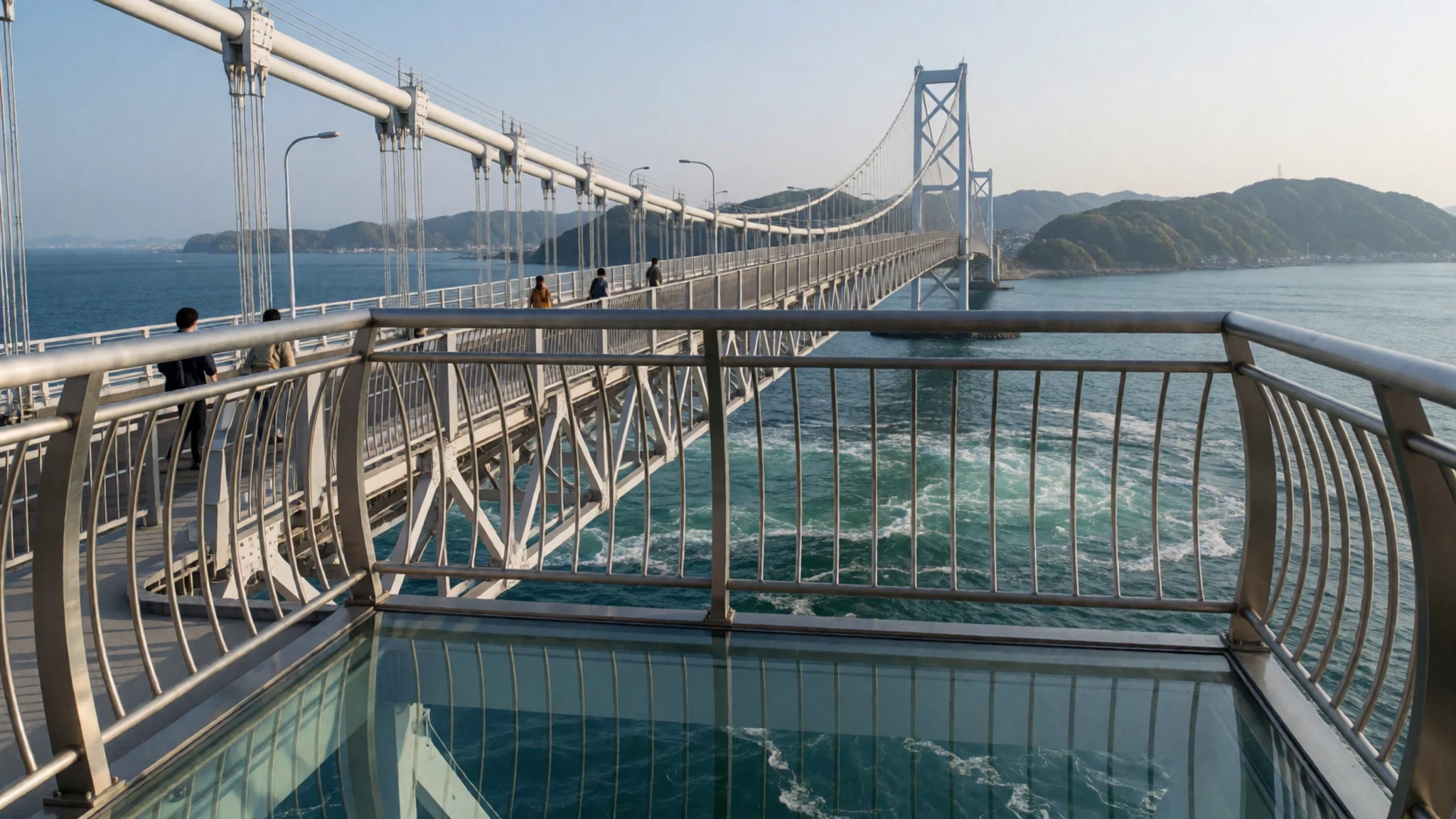
- Sightseeing boats on the strait — Naruto waterfront
Boats run out from the Naruto side and cruise directly to the whirlpools, which is the closest anyone gets to the swirling water at surface level. Size varies a lot with the tide, so a trip timed for new or full moon rewards the planning. Sailings follow the tide, so confirm the schedule locally.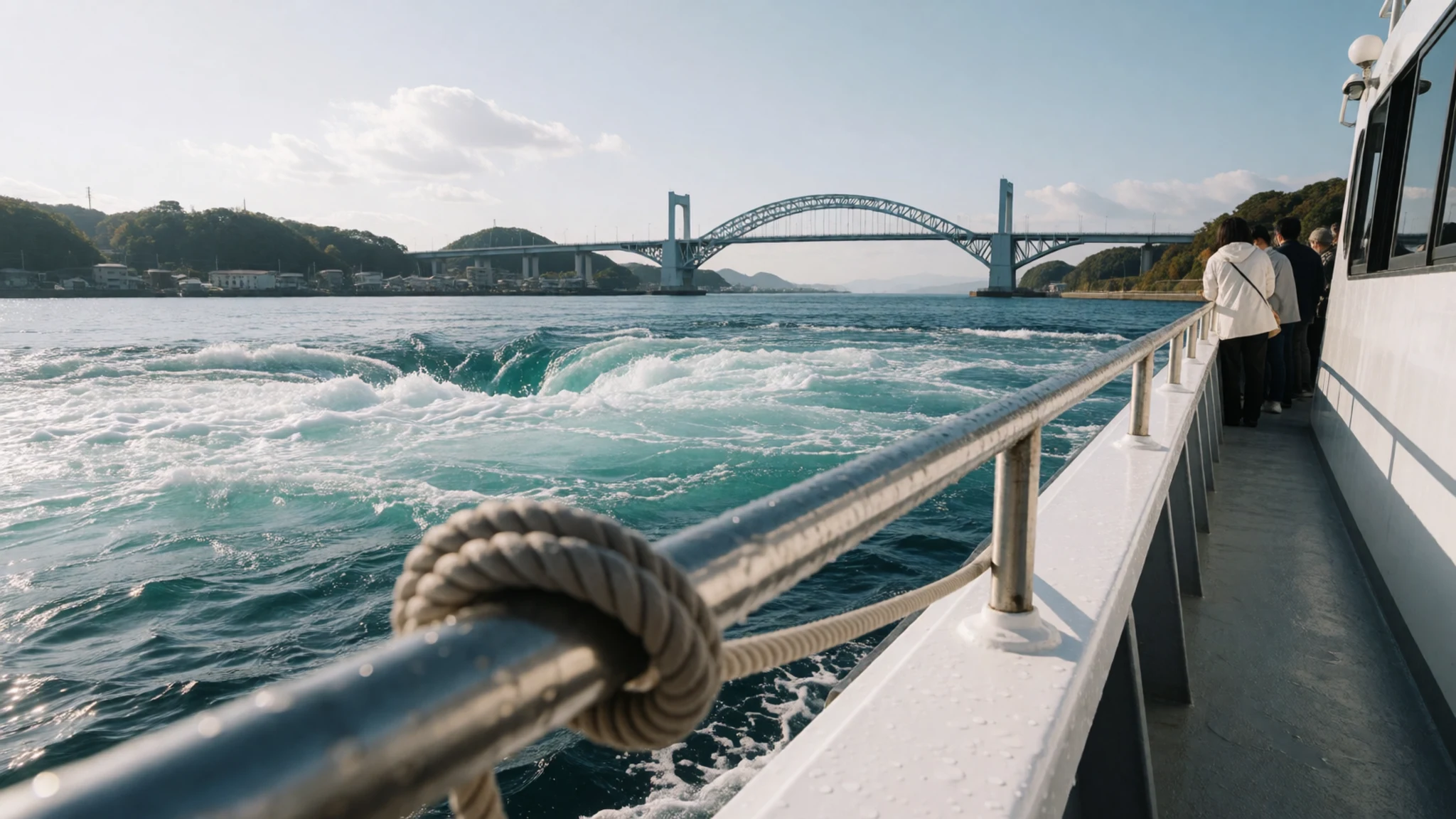
- Awaji Island shore viewpoints — Awaji Island, Hyōgo
On the Awaji Island side, which belongs to Hyōgo, viewpoints along the shore give a look at the strait without boarding anything. The view is wider but more distant than from a boat. It suits anyone who dislikes choppy water, or who simply wants to compare the two sides of the channel.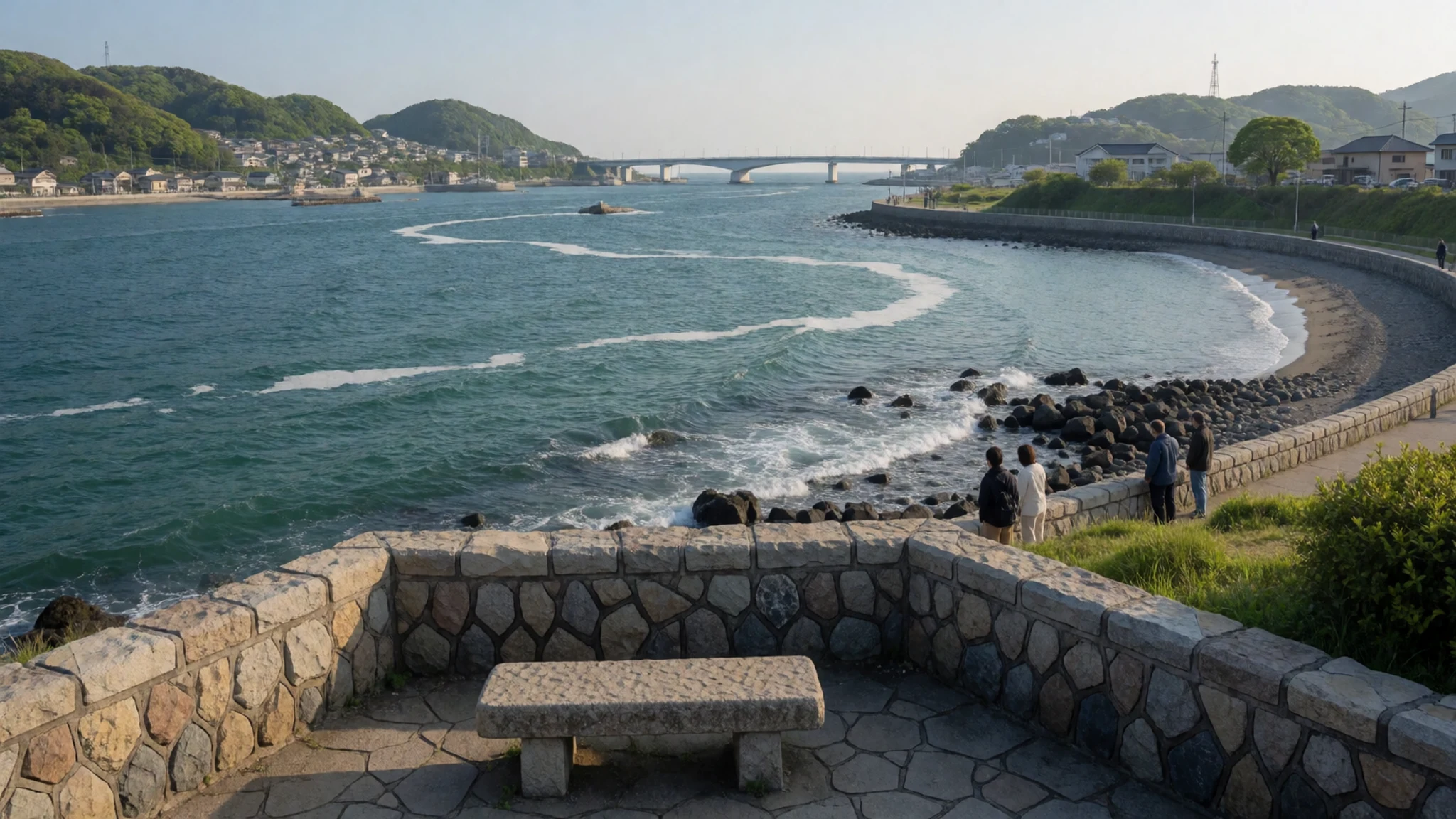
- Otsuka Art Museum — Naruto, Tokushima
The Otsuka Art Museum holds no original paintings; every work on its walls is a reproduction printed onto ceramic. That makes it an odd but useful stop on a wet or windy day, when famous masterpieces can be compared inside one building on the Naruto side of the strait.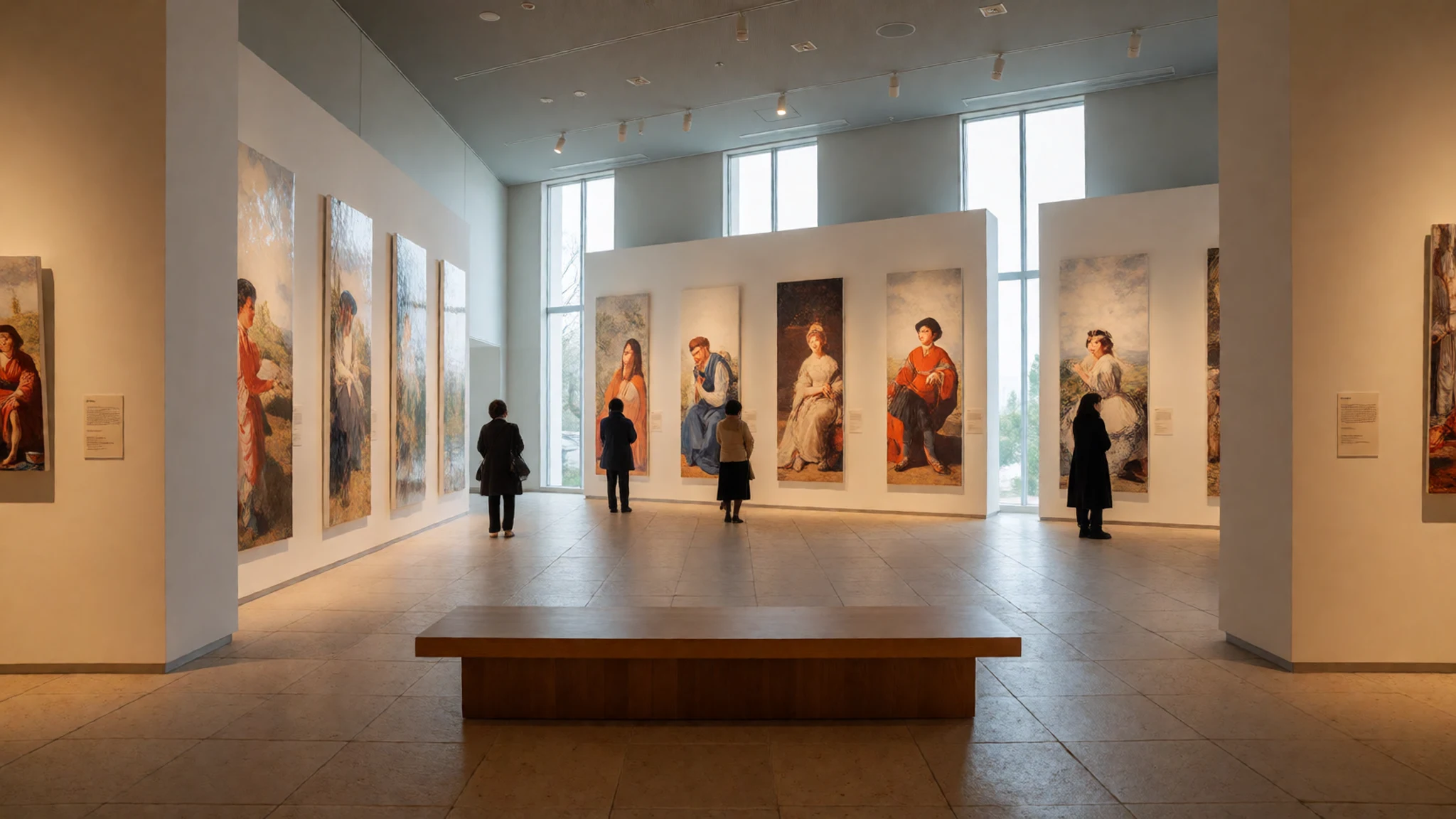
- German House — Inland, west of the strait
German House marks the site of a First World War camp that held German prisoners of war. Stone bridges and a cenotaph built by the prisoners are preserved, and documents describe daily life in the camp. It is a quiet, reflective counterpoint to the coast and its boats.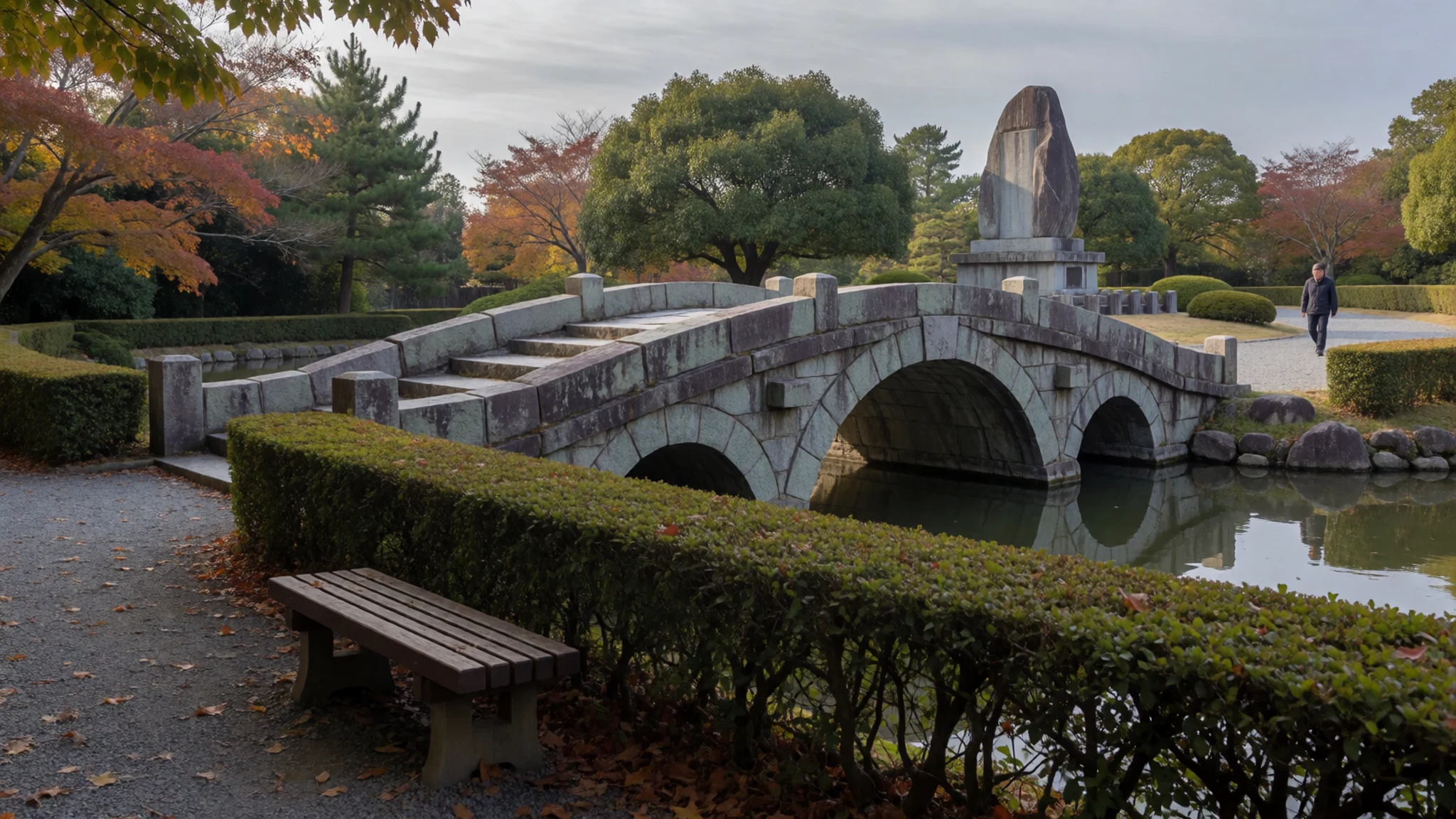
- Ryōzenji and Gokurakuji — Naruto, Tokushima
Ryōzenji (霊山寺) and Gokurakuji (極楽寺) are the first two temples of the 88-temple pilgrimage around Shikoku. Visitors who are not walking the route can still stop in for a short visit, and may see pilgrims in white jackets and sedge hats beginning their journey here.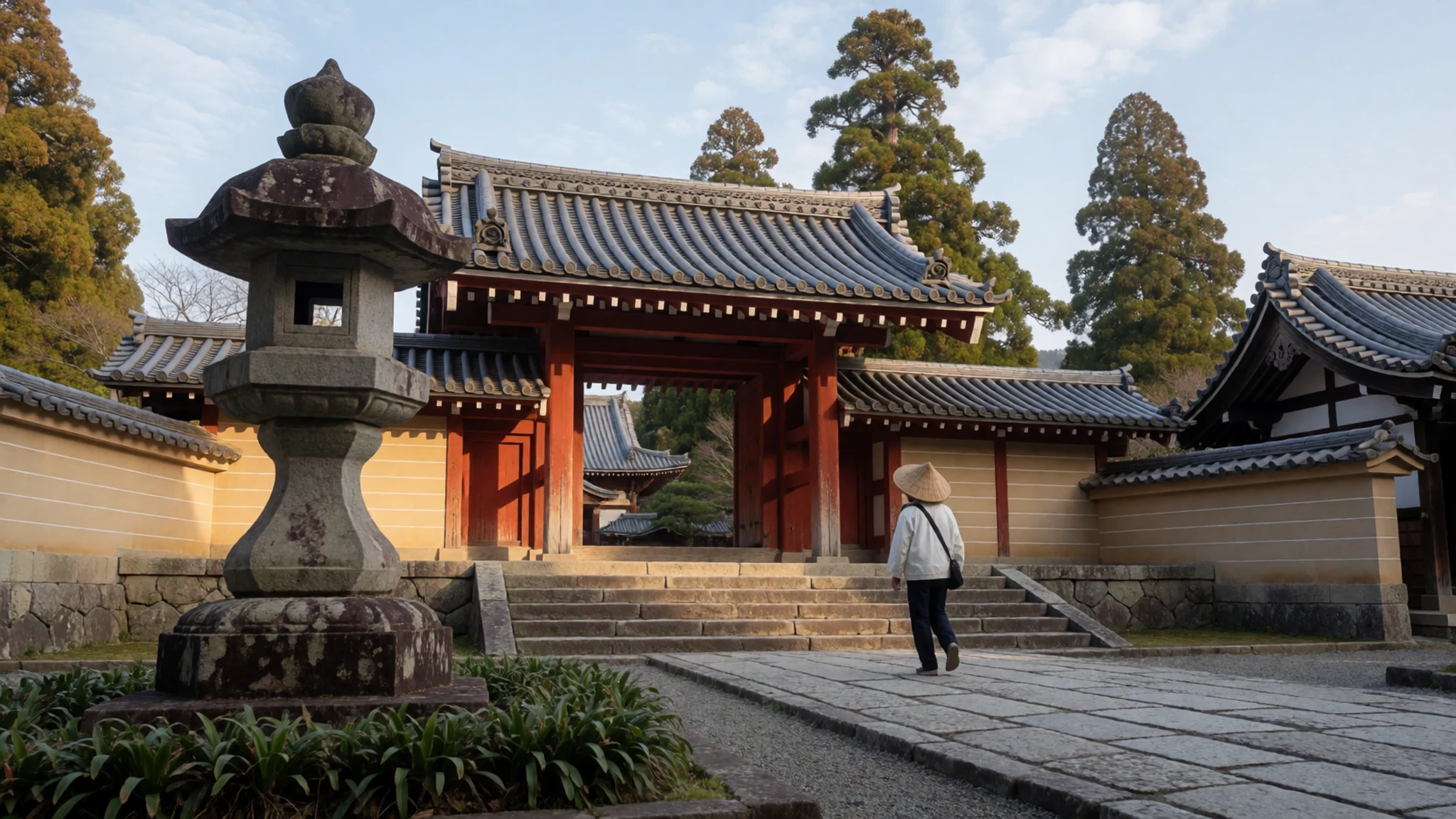
Culture
Naruto Whirlpools shape the town around them in small ways. Life by the strait has long run on the tide rather than the clock, and the spiral has become a local motif, from nineteenth-century woodblock prints to the swirl in a bowl of noodles and the decorated manhole covers in Naruto's streets.
The other thread is the pilgrimage. Naruto is where the 88-temple circuit of Shikoku begins, at Ryōzenji and Gokurakuji. Pilgrims, called henro in Japanese, walk or travel the route as a spiritual practice, and it is a local tradition to offer them small kindnesses, such as snacks or a drink, along the way. Visitors passing through are welcome at these first two temples, but the halls are working places of worship rather than museums.
Naruto also keeps a reminder of the First World War. The German House tells the story of the German prisoners of war held nearby, through documents and the stone bridges and cenotaph they built. The Otsuka Art Museum adds a very different note, displaying only reproductions of famous paintings printed on ceramic.
At Ryōzenji and Gokurakuji, speak quietly, step aside for pilgrims at the main hall, and ask before photographing anyone at prayer.
What to wear
Around the Naruto Whirlpools, traditional dress follows the wider Japanese pattern: cotton yukata for summer evenings and festivals, and silk or wool kimono for formal days, tied with an obi. Tokushima prefecture has long been associated with indigo dyeing, so deep blue cotton is the regional textile most worth looking for in craft shops. Pilgrims on the Shikoku route have their own uniform of a white jacket, a conical sedge hat and a walking staff, which marks them out clearly at Ryōzenji and Gokurakuji.
Day to day, people in Naruto dress simply and practically: trousers or jeans, light jackets, sturdy shoes, and rain gear when the weather turns. Suits appear on weekdays in offices and shops, while fishing and farm work call for waterproofs and boots.
Visitors should dress for wind and spray first. Near the strait, a windproof layer matters on a boat deck or on the bridge walkway even in warm months, and flat, non-slip shoes are safer than sandals on wet decks and steps. In summer a hat and sun protection are sensible, and a compact rain jacket earns its space in the wetter months. At temples there is no strict dress code, but neat, modest clothes covering shoulders and knees feel respectful, and shoes that slip off easily save fuss at hall entrances.
What to eat
- Kintoki sweet potato sweets — Souvenir shops near the strait and town bakeries
Kintoki sweet potatoes are Naruto's local pride and end up in cakes, cookies and other sweets. A slice with tea makes a good pause after a windy hour on the water. Look in souvenir shops near the strait and in town bakeries.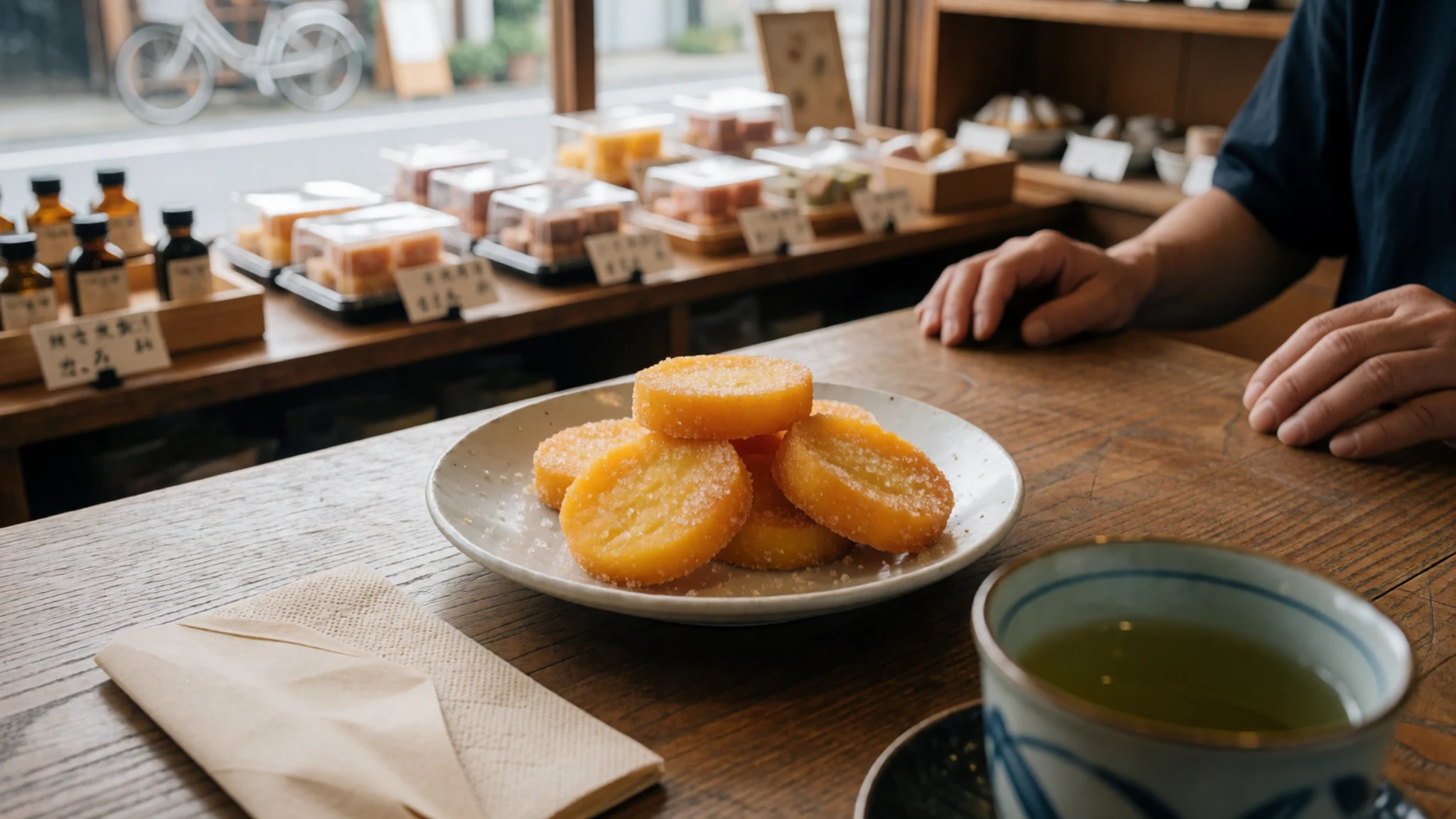
- Naruto Kintoki Shochu — Gift shops, liquor shops and local izakaya
The same sweet potato goes into Naruto Kintoki Shochu, a distilled local spirit. Drink it neat, over ice or with water, as is usual with shochu. Bottles turn up in gift shops and liquor stores around town, and local izakaya, the casual evening pubs, may pour it.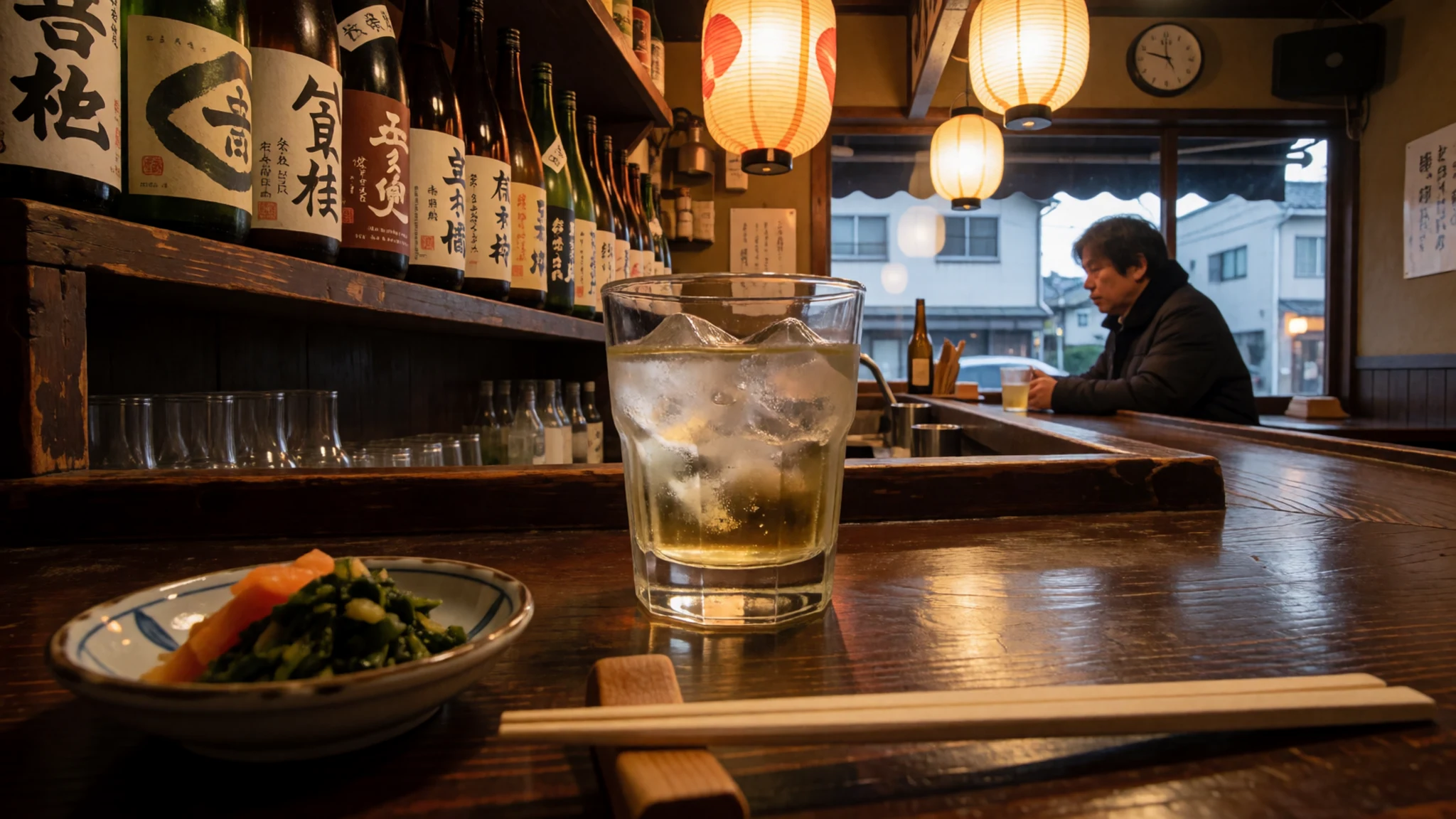
- Sudachi Chu — Local izakaya and liquor shops
Sudachi Chu is a lime-style spirit drink flavoured with sudachi, a small, sharp green citrus fruit strongly linked with Tokushima prefecture. It is tart, light and easy after a day outdoors. Order it at an izakaya or pick up a bottle at a local liquor shop. - Fresh fish set meals — Eateries near the harbour
Fresh fish from the tidal waters around the strait turns up on set meals at eateries near the harbour. Ask for the day's catch, as it changes with season and tide. Set meals usually come with rice, soup and pickles. - Narutomaki — Noodle shops and souvenir counters in Naruto
Narutomaki is a fish-paste cake with a pink spiral, and its name comes from the Naruto whirlpools. Thin slices float on ramen and udon. Noodle shops across Japan serve it, but eateries and souvenir counters in Naruto itself are a fitting place to try it.
Plan it
Best time. Whirlpool size follows the tides, not the season, so aim for days around new and full moon and check a tide table for the flow times. For comfort on deck, April–May and October–November are milder; mid-summer is hot and sunny on the water, the June rains bring grey, wet views, and winter wind can be bitter.
How long. 1–2
Getting there. The nearest airport is Kobe Airport, with JR buses on to Naruto. Most visitors come from Osaka, Kobe or Kyoto on the Awa Express bus across the Akashi-Kaikyo Bridge, getting off at Kōsoku Naruto (高速鳴門), about two hours from Osaka. From Shinkansen cities, change at Shin-Kobe for the same bus. Naruto has a train station, about a 15-minute walk from that bus stop, but trains are sparse. Check current bus timetables locally.
Budget. mid
Tips
- Check the tide table before choosing a day; spring tides around new and full moon give the biggest whirlpools.
- Confirm sailing times with the boat operator, as boats follow the tide rather than a fixed daily pattern.
- Weekends and holidays at spring tide draw crowds, so a weekday morning is calmer.
- Carry some cash for small shops and eateries, and bring a windproof layer and motion-sickness tablets if the sea affects you.
- Combine the whirlpools with the first temples of the Shikoku pilgrimage, or continue to Awaji Island or Tokushima.
Etiquette
- Keep your voice low and stand aside for pilgrims at Ryōzenji and Gokurakuji.
- Follow crew instructions on boats and keep to the marked walkway on the bridge.
- Carry your rubbish with you until you find a bin, as public bins are scarce in Japan.
Nearby
Sources
- Wikidata Q1350120 (CC0)
- Wikipedia: Naruto whirlpools (rev 1331437300) (CC BY-SA 4.0)
- Wikivoyage: Naruto (Tokushima) (rev 5354142) (CC BY-SA 4.0)
- Photo: Naruto Whirlpools taken 4-21-2008 (Hellbuny) (CC BY 3.0)
- Photo: NarutoStraitFlow.jpg (unknown author) (CC BY 3.0)
- Photo: Hiroshige, Wild sea breaking on the rocks (Public domain)
- Photo: Hiroshige, The Whirlpools of Awa (Metropolitan Museum of Art) (CC0 1.0)
- Photo: Hiroshige, Awa, Naruto Whirlpools, ca. 1855 (Public domain)
- Photo: Gezicht op de draaikolken te Naruta in de provincie Awa (Rijksmuseum) (CC0 1.0)
- Photo: Manhole in Naruto (VKaeru) (CC BY 3.0)
- Photo: Naruto (Munvar Miya Shaik) (CC BY 3.0)


