Mustique
Mustique, Saint Vincent and the Grenadines
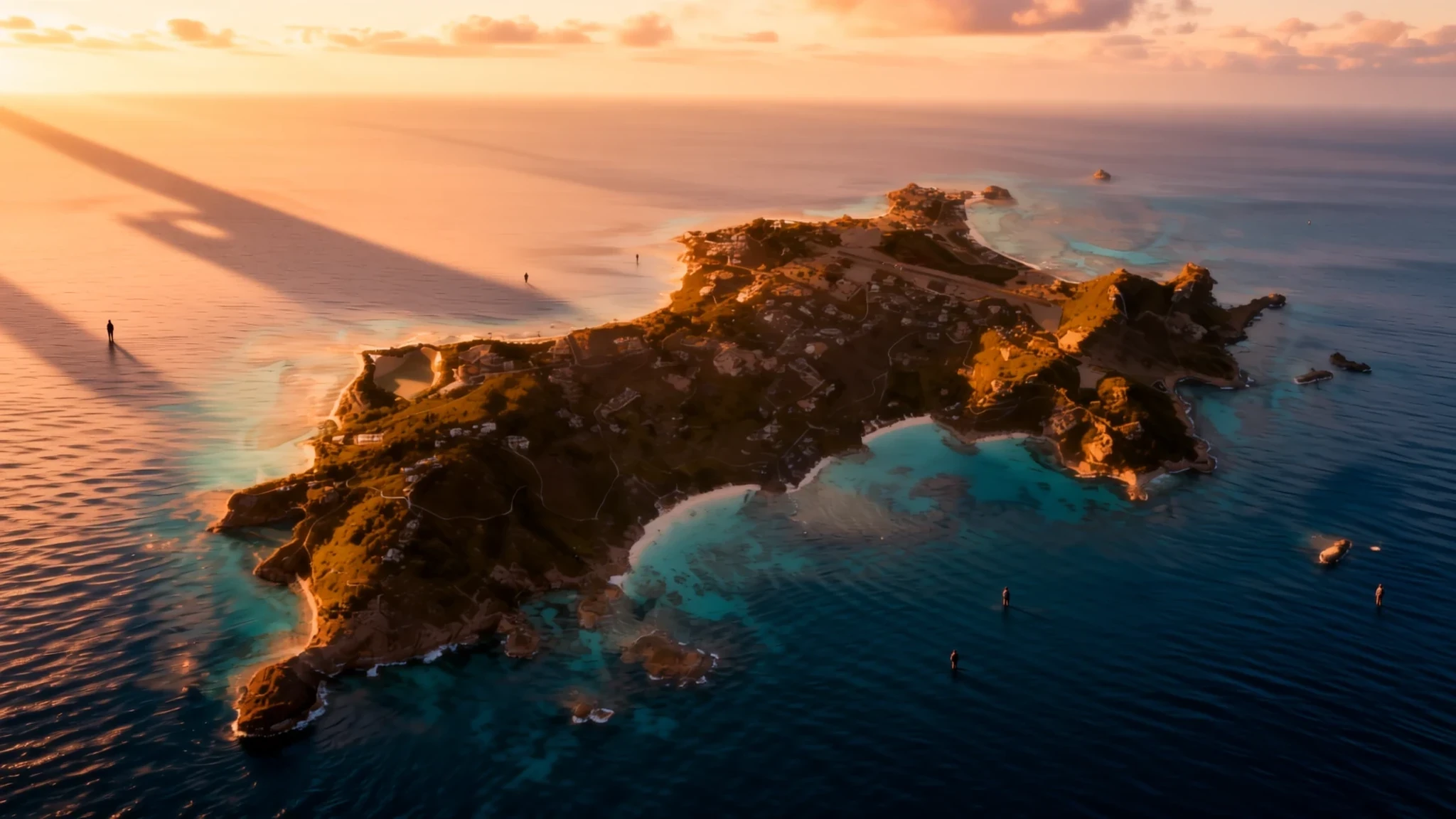
Mustique is a private Grenadine island of villa bays, a village and one bar where the Caribbean social season still gathers.
The place
Mustique sits in the Grenadines, part of Saint Vincent and the Grenadines, where low green hills drop to coves of pale sand and the water changes from turquoise over the reefs to deep blue in the channels. The island is privately held and run for the people who own houses here, so the land reads as villas among trees rather than a built-up resort strip. Britannia Bay is the working heart: anchorage, jetty and bar share the western shore, and small boats come and go all day. Inland, Lovell Village holds the resident community, with a church, a school and the ordinary business of a Grenadine settlement inside a quiet estate. The Atlantic side is wilder. Macaroni Beach takes the ocean swell, while the leeward coves stay calmer for swimming. A short airstrip on the southern flats is how most people arrive; there is no ferry town and no cruise pier. Roads are narrow, shared by golf carts, ATVs and people on foot, and a short ride still feels like a passage from one bay to the next. Sea grape, palm and ridge scrub provide the shade. Evenings pull life towards the water, with lights on the bay, music from the bar and the dark outline of neighbouring islands. Coral stone, painted timber and mown grass are the materials, and the management of the shore is what a first arrival notices after the swim.
Its story
Mustique began as a quiet Grenadine island of cotton plots and fishing, worked by people whose ties to Saint Vincent and the neighbouring islands were older than any later plan for villas. Through the colonial years the land changed hands, as Caribbean estates often did, and for a long stretch it stayed thinly settled: fields, a shoreline used by fishermen, and neighbours who came by boat. The modern island grew from a private scheme to lease house plots to individual owners while one management kept the roads, the water, the airstrip and the shore. Colin Tennant, later Lord Glenconner, drove that idea, and friends who built houses turned Mustique into a winter retreat. Princess Margaret's visits, above all, fixed the island in the public mind. Families who were already there did not vanish. A village stayed the local centre, and islanders took up the work a villa estate needs: building, boats, gardens, kitchens and security. The bar on Britannia Bay became the public room, where owners, crew and staff actually meet. Mustique is still that bargain between a managed estate and a living Grenadine community, with its own church, school and social life inside a very private island. What visitors see now, the villas and the beaches, sits on top of that older cotton ground and the village that never left.
What to see
- Britannia Bay — western shore
Britannia Bay is Mustique's harbour and its social shore. Yachts and small boats use the anchorage, and the jetty is where launches put people ashore. The sand is a working waterfront as well as a swimming beach, with tenders near the pier and the walk up to the bar.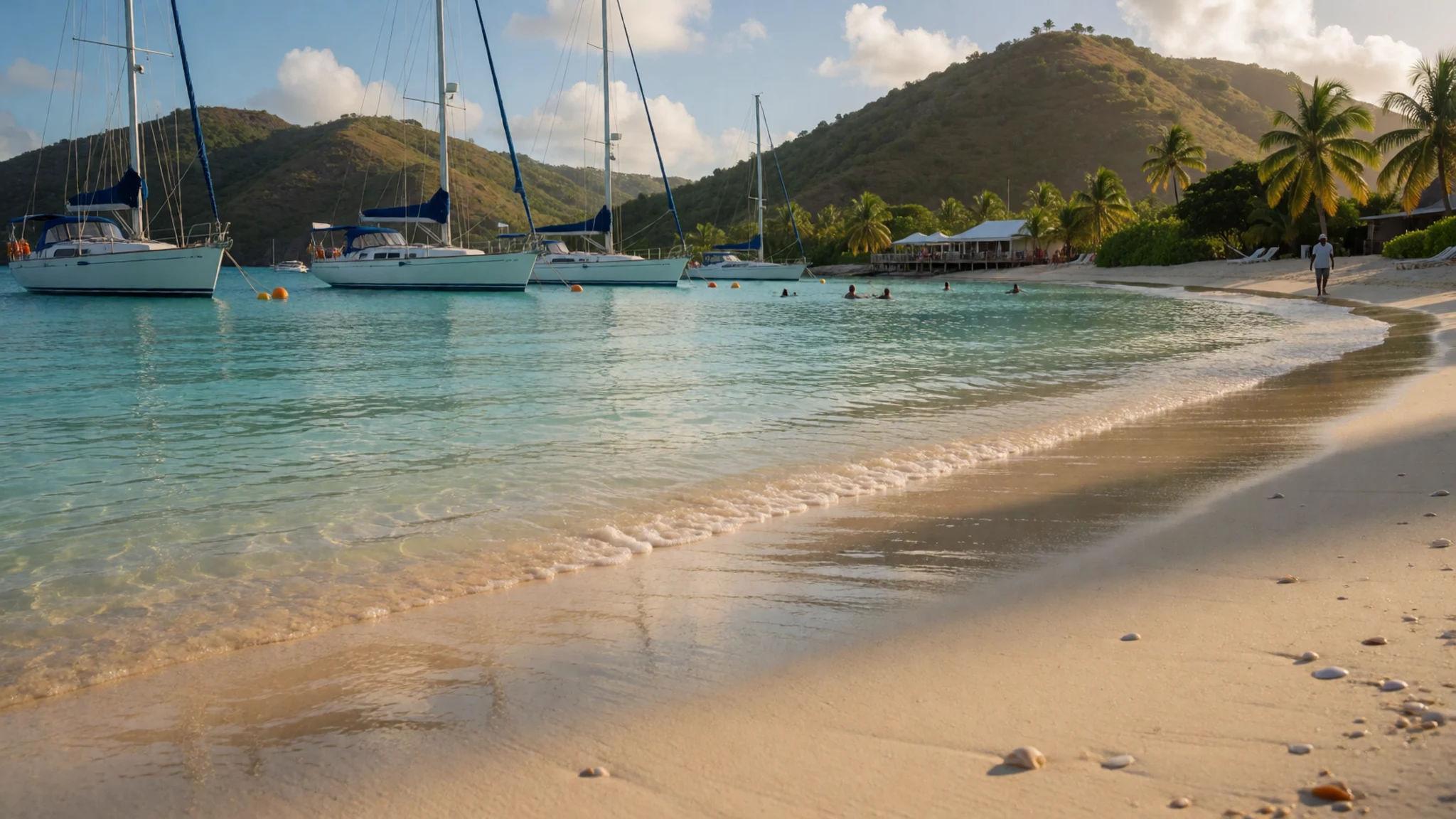
- Basil's Bar — Britannia Bay
Basil's Bar stands on Mustique at the edge of Britannia Bay, a timber room over the water and the island's public gathering place. Owners, boat crews and staff share the floor. Daytime stays casual, a drink after the beach, and after dark the room dresses up, with music and people along the rail. Nobody needs a villa key to walk in, which is why the island actually meets itself here.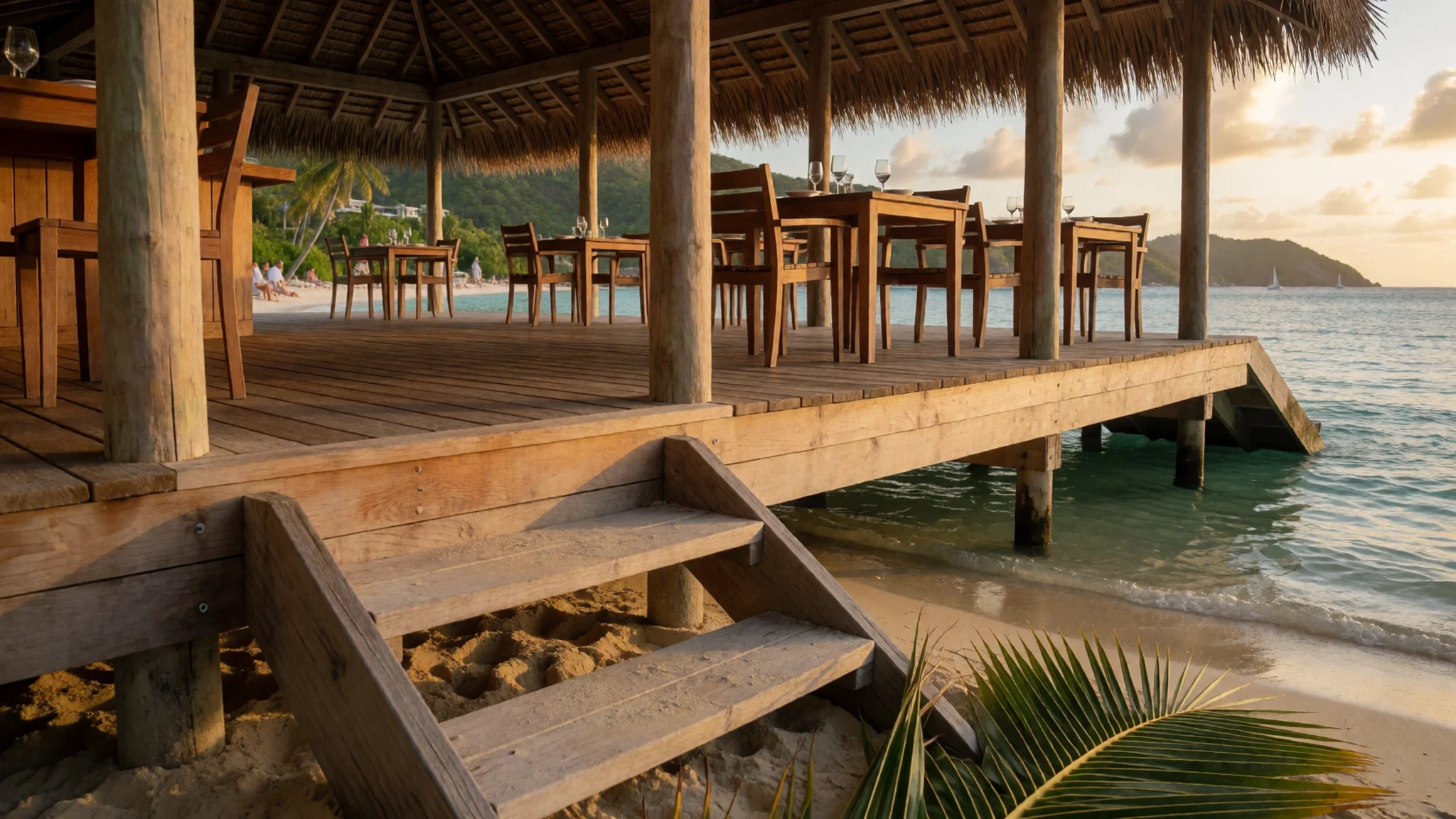
- Western beach — western shore
The western beach on Mustique faces the calmer channel, a pale curve of sand with less swell than the Atlantic shore. Lagoon is too shallow and weedy for swimming, and the sheltered bay for a swim is Gelliceaux. The walk from Britannia Bay is short.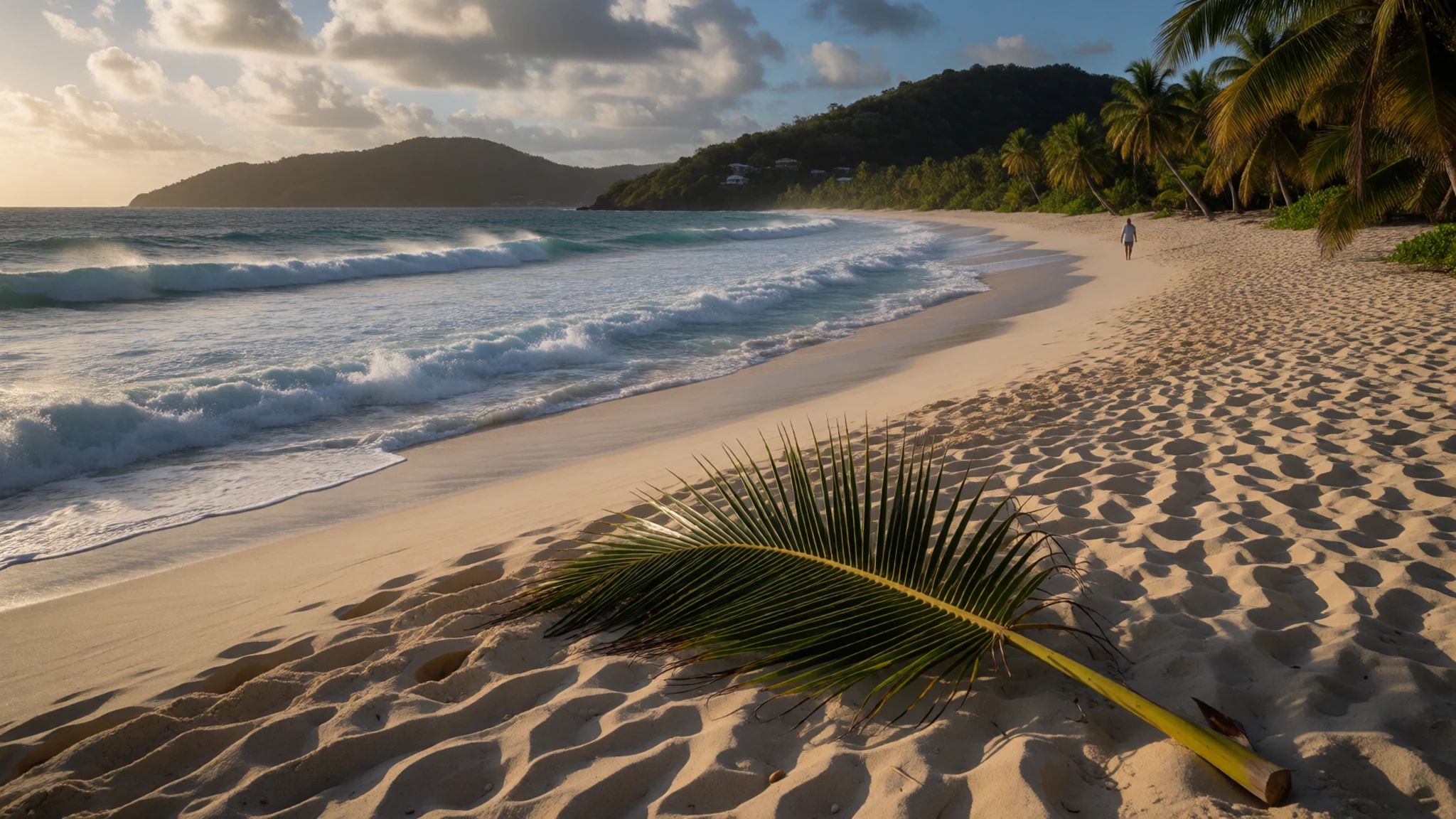
- Macaroni Beach — Atlantic coast
Macaroni Beach is Mustique's Atlantic shore, a long stretch of sand open to the ocean swell on the windward side of the island. The surf runs stronger than in the western coves, so the beach suits a walk and a long look at the open sea. On a calm morning the rocks at either end are the safer place to get into the water.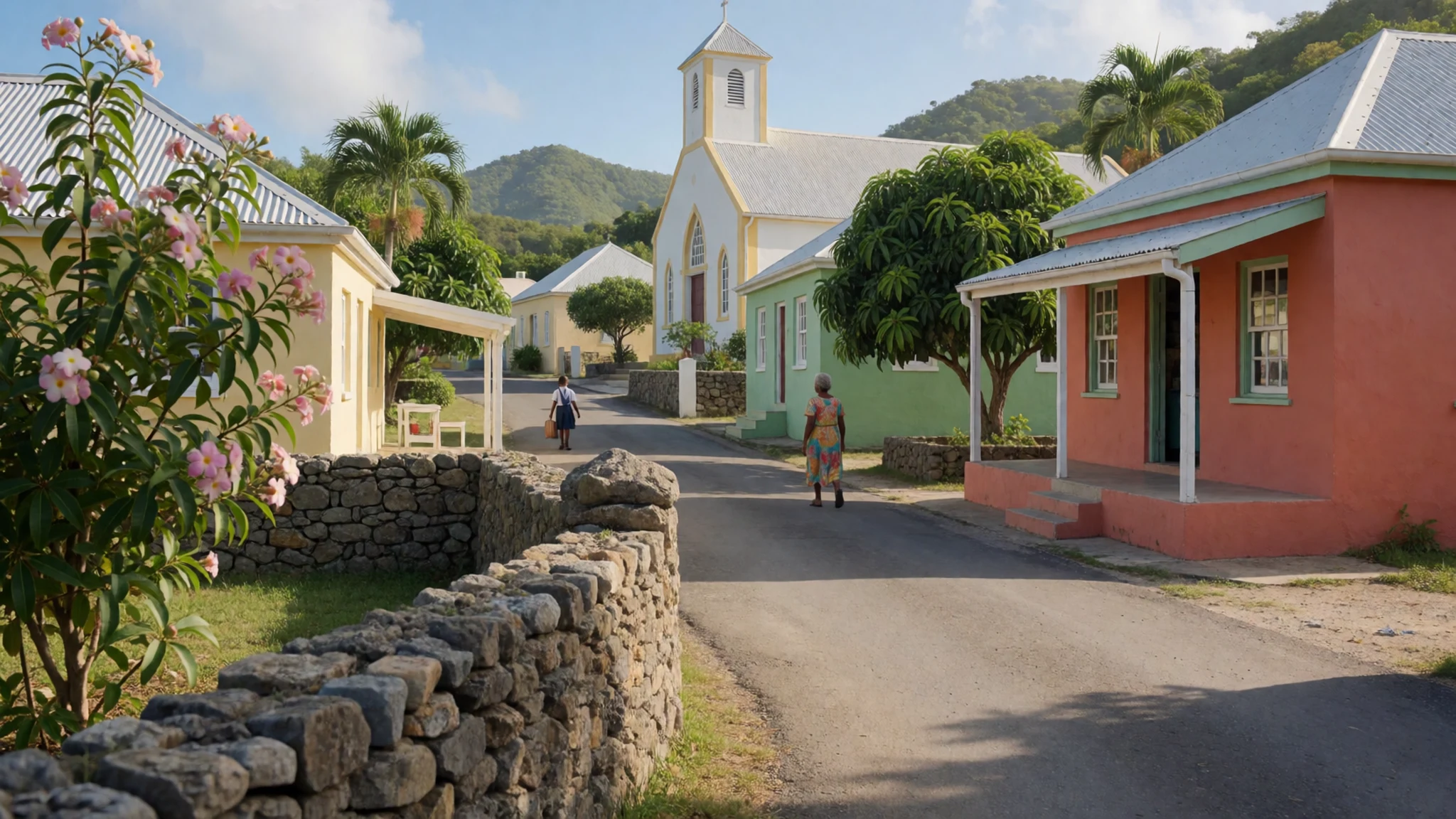
- Lovell Village — inland village
Lovell Village is where Mustique's Vincentian families live, a small settlement set among the villa estate rather than a stop made for visitors. A church and a school anchor the week, and the lanes belong to residents on ordinary errands. The way to walk through is quietly, without photographing people or doorways. Shops and stalls open when islanders are selling, and they shut when the day is done.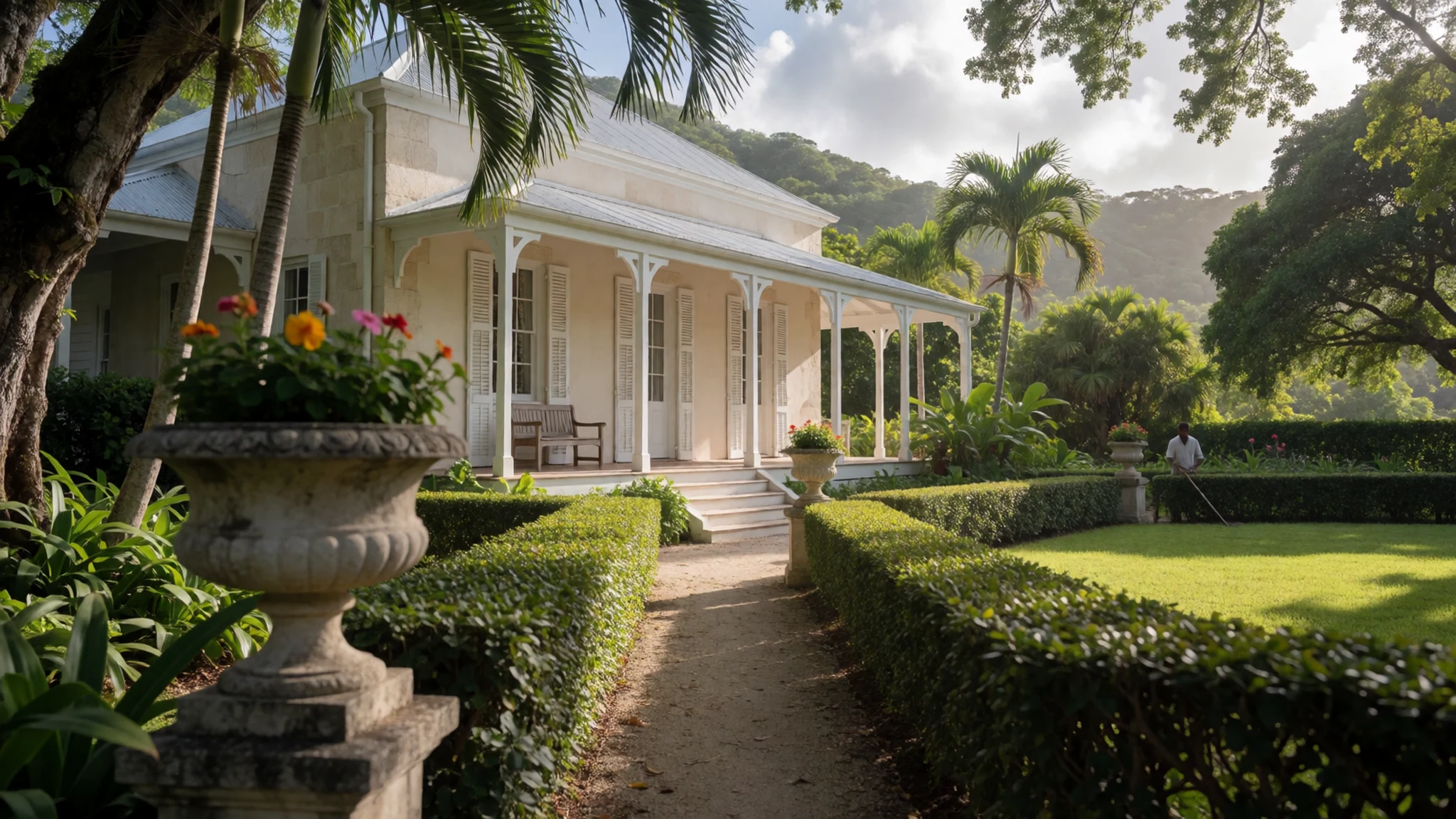
- Mustique Airport — southern flats
Mustique Airport is a short strip on the southern flats, and it is how almost everyone reaches the island. Light aircraft from Saint Vincent and neighbouring Grenadine strips use the runway, and the M/V Endeavour ferry from Saint Vincent does the same. The terminal is a modest building, with buggies waiting to take people out to the houses.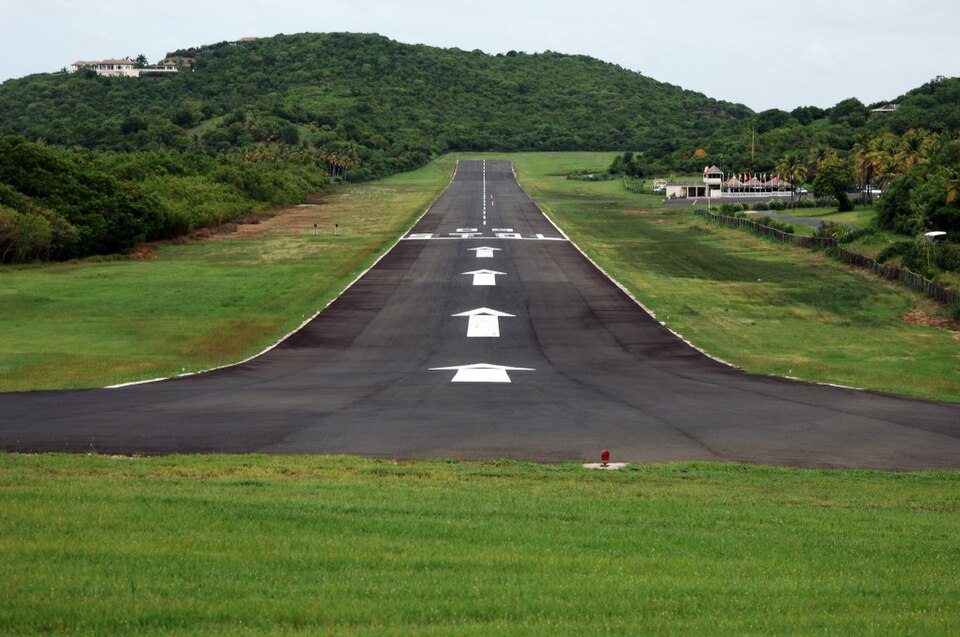
Culture
Mustique holds the village and the villa estate in one small space, and noticing only the houses misses the island. Vincentian families share the language, church calendar and family ties of Saint Vincent and the Grenadines, from Sunday service and school events to boat news and the music of the southern Caribbean. Beside that sits the seasonal life of house owners, with its rituals of arrival, drinks at the bar and a firm expectation of privacy. Staff cross between those worlds every working day, and much of the island's real courtesy is theirs. Talk is easy at the bar and restrained everywhere else; well-known residents come so that nobody will make a scene. Faith is present without being staged for guests, and the church remains a village church. Rubbish, noise and a stranger on a private drive are what frustrate people who live here all year. Ask before you photograph anyone on Mustique, and stay off a house's grounds unless you have been invited.
What to wear
Mustique belongs to a Vincentian and wider Caribbean dress tradition. For church, weddings and national days, islanders still bring out formal West Indian clothes: women in dresses of bright cotton or lace, sometimes with a headpiece, and men in pressed shirts. Festival costume from Saint Vincent — mas bands in printed cotton, plenty of colour — is the reference for celebration, not European resort tailoring. What people wear now on Mustique depends on the hour and the job. Staff wear neat polo shirts, shorts or light trousers and practical shoes. Fishermen and gardeners wear sun-faded cotton, caps and boots that can take coral rock. Owners and guests spend the daylight in linen and swimwear, then change. After dark at the bar, a collared shirt or a dress replaces swimwear, and sandals are still fine. Swimwear stays on the beach or by the pool, with a shirt or cover-up on the buggy and in the village. A hat and a layer that can soak and dry matter more than a large suitcase, because midday on pale sand burns. Footwear has to manage hot sand, wet jetty timber and a rough path; flip-flops slip on the hills. Evenings need one smarter outfit, and the village and the church expect covered shoulders rather than beachwear.
What to eat
- Grilled lobster — villa cookouts and the bar on Britannia Bay
Grilled lobster is the celebratory plate on Mustique, split and finished over a fire with garlic butter, lime and pepper. It turns up at villa cookouts and at the bar on Britannia Bay when the boats have had a good day.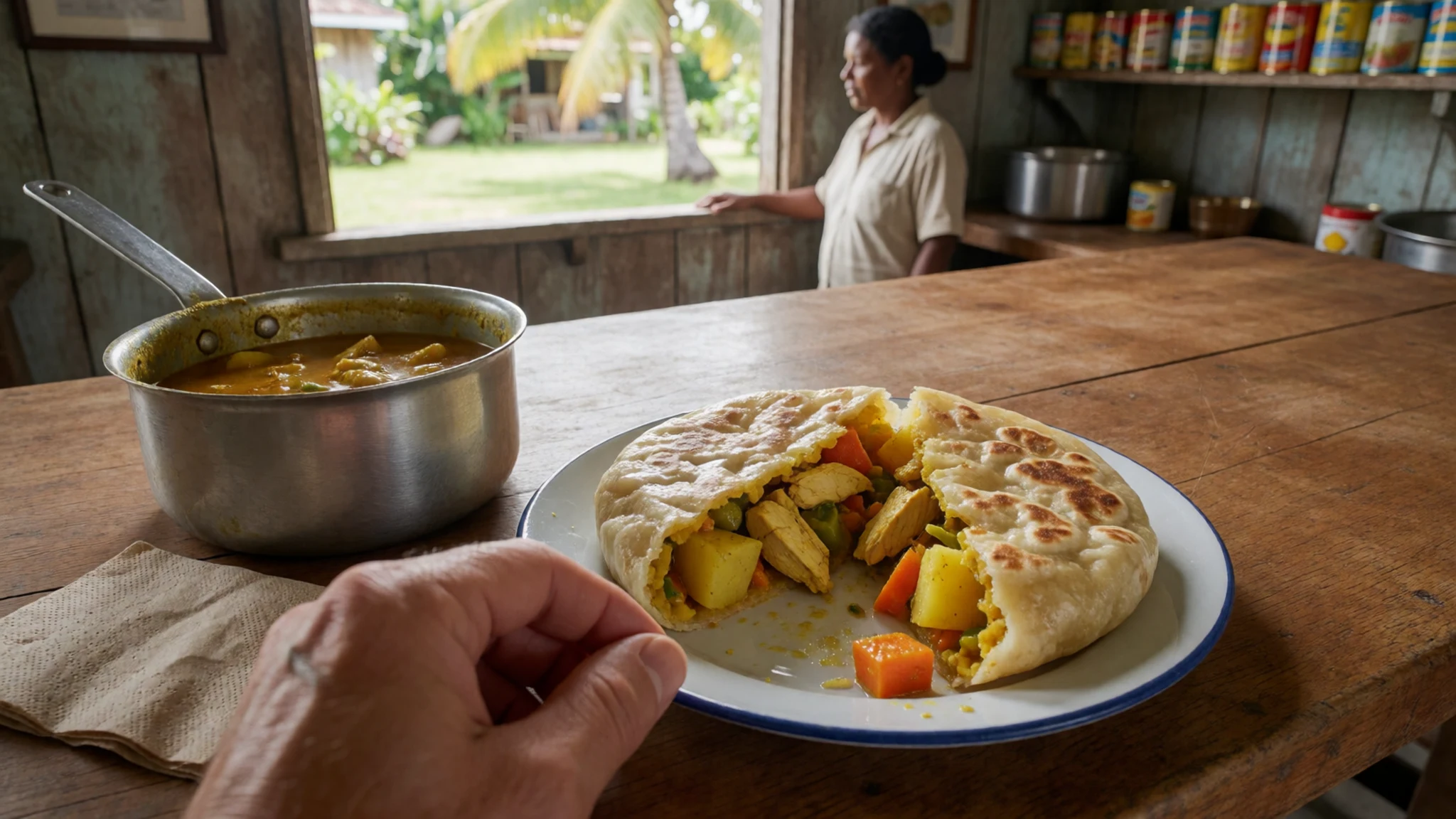
- Roti — a village kitchen
Roti on Mustique is the folded flatbread of Saint Vincent and the Grenadines, filled with curry goat, chicken or vegetables and wrapped to carry. It is weekday food from a village kitchen when a pot is on, and it travels well to the beach at noon.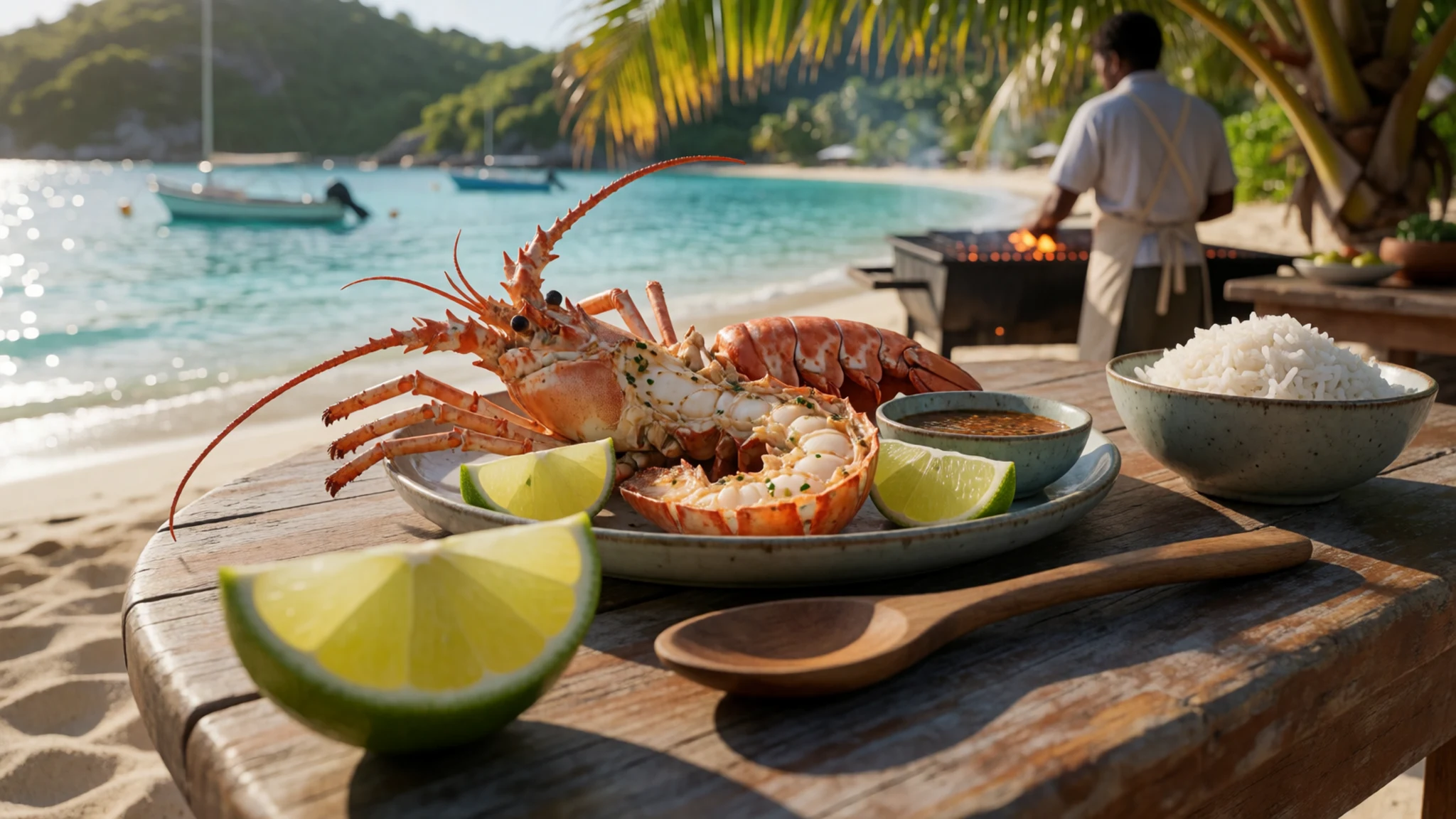
- Fried fish — Britannia Bay and the village
Fried fish is the ordinary catch on Mustique, often jack or snapper, floured and cooked until the skin blisters, then served with hot sauce, lime and a starch. Britannia Bay and the village are where to look, especially just after a boat comes in. - Callaloo — family tables in the village
Callaloo on Mustique is the green soup of the eastern Caribbean, made from dasheen leaves simmered with coconut milk, herbs and a little salt meat or crab. It appears beside rice at family tables in the village and, less often, as a side when a villa is serving lunch. - Breadfruit — villas and the village
Breadfruit is a staple starch on Mustique, roasted in the coals until the skin blackens or boiled and sliced, with a flavour close to a dense potato. Villas set it next to fish, and in the village it is everyday food in the months when the trees are bearing.
Plan it
Best time. December to April is the easier stretch on Mustique, with more sun, a steady trade wind and fewer heavy showers. Temperatures barely change through the year, September is hottest, October the wettest and February the most comfortable, and the rainy season runs from May to November. June to November is greener and quieter, with short violent rain and a real risk of tropical storms, so flights need slack in the plan.
How long. 4–6
Getting there. Most people reach Mustique via Argyle International Airport on Saint Vincent, then a light aircraft to the strip on the southern flats. Private boats come into Britannia Bay. There is no cruise pier, so the last leg is a small plane or a boat, on the operator's own schedule.
Budget. high
Tips
- Reserve the house and the light-aircraft seat well ahead for the drier months, because both are limited.
- Leave a spare day around the flights, since wind and rain can close a short strip.
- Carry cash for village stalls; a card is a poor bet for a small purchase.
- Walk the beaches in the early morning, when the sand is cooler and the shade still helps.
- Take a buggy between bays, keep left, and expect narrow lanes with people on foot.
Etiquette
- Ask before photographing people, houses or children.
- Do not walk up a private drive or onto a villa deck unless invited.
- Dress away from pure beachwear for the village, the church and the bar after dark.
Nearby
Sources
- Wikidata (CC0)
- Wikipedia — Mustique (CC BY-SA 4.0)
- Wikivoyage — Saint Vincent and the Grenadines (CC BY-SA 4.0)
- 01-iss-47-mustique-island-grenadines-cropped.jpg (Public domain)
- 04-mustique-airport.jpg (CC BY 3.0)
- 05-mustique-beach.jpg (CC BY-SA 4.0)
- 07-basil-s-bar-panoramio.jpg (CC BY 3.0)
- 08-britannia-bay-mustique-panoramio.jpg (CC BY 3.0)
More in Saint Vincent and the Grenadines
- Baliceaux
- Barrouallie
- Battowia
- Bequia
- Canouan
- Chateaubelair
- Fort Duvernette
- La Soufrière
- Mayreau
- Owia
- Petit St. Vincent
- Rabacca
Every place in Saint Vincent and the Grenadines · Every place, A to Z