Rabacca
Rabacca, Saint Vincent and the Grenadines
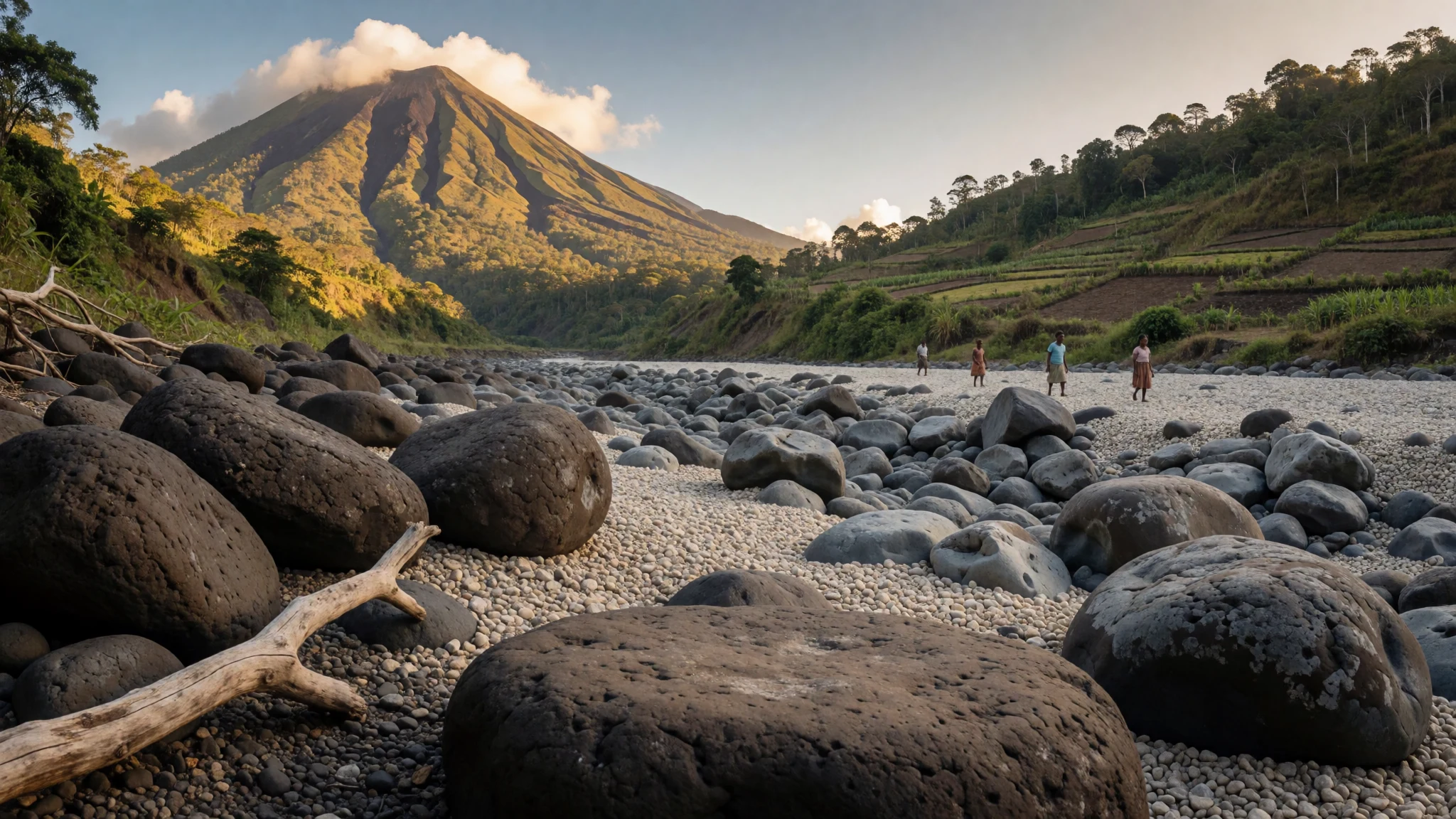
Rabacca Dry River is a stony volcanic channel on Saint Vincent that only runs in heavy rain, and it shows how the island's volcano shapes the land.
The place
Rabacca Dry River lies on the north-eastern, windward side of Saint Vincent, on the outskirts of Georgetown, and it is a river that spends most of its life without water. What fills the channel for much of the year is stone: a broad bed of boulders, gravel and volcanic debris that runs down from the slopes of La Soufrière towards the Atlantic. Only after heavy rain does water come through, and when it does it arrives fast and muddy, then drains away again. That makes Rabacca an unusual kind of wonder. There is no waterfall to queue for, no ticket office and no viewing platform. It is a working landscape of the kind volcanic islands produce, and its interest lies in what it says about the mountain above it. The surrounding country is green and farmed, with steep valleys, small plots and a coast where the Atlantic arrives with real force. Georgetown, the nearest town, is small and unhurried, with shops, a market and minibus connections. Rabacca suits a visitor curious about geology and rural Caribbean life far better than one wanting a resort. Saint Vincent is not a beach-lounger's island in the way some of its neighbours are, and the north-east especially rewards patience, a local guide and a flexible plan.
Its story
Rabacca Dry River owes its existence to La Soufrière, the volcano that dominates the northern end of Saint Vincent. The river was formed as a result of the volcano's eruptions, and the mountain is also where it begins. That origin explains the river's odd character. After an eruption, the slopes above are covered with loose ash, rock and fragments of lava. Rain then washes this material downhill, and the channels that carry it grow wide, shallow and stony. A river like this does not behave like a stream in a temperate valley. For long stretches the bed stays dry, because water soaks quickly into the loose ground, and only a heavy downpour sends a real flow down to the sea. The riverbed is therefore a record of the volcano's moods. Artists of the colonial era were drawn to it, and an engraving of the dry river with Soufrière in the background survives from that time, showing a bare, open channel under a cloud-wrapped peak. People on the island have long lived with this arrangement, farming the fertile volcanic soil while keeping a respectful eye on the summit. The soil that makes the land productive comes from the same mountain that can disrupt it, and Rabacca sits right in the middle of that bargain.
What to see
- The Rabacca riverbed — Outskirts of Georgetown
The dry channel itself is the point of the visit: a wide sweep of rock and gravel running towards the sea, with the volcano rising behind it. It looks different after rain, so ask locally about conditions first, and never walk the bed when heavy cloud sits over the mountain.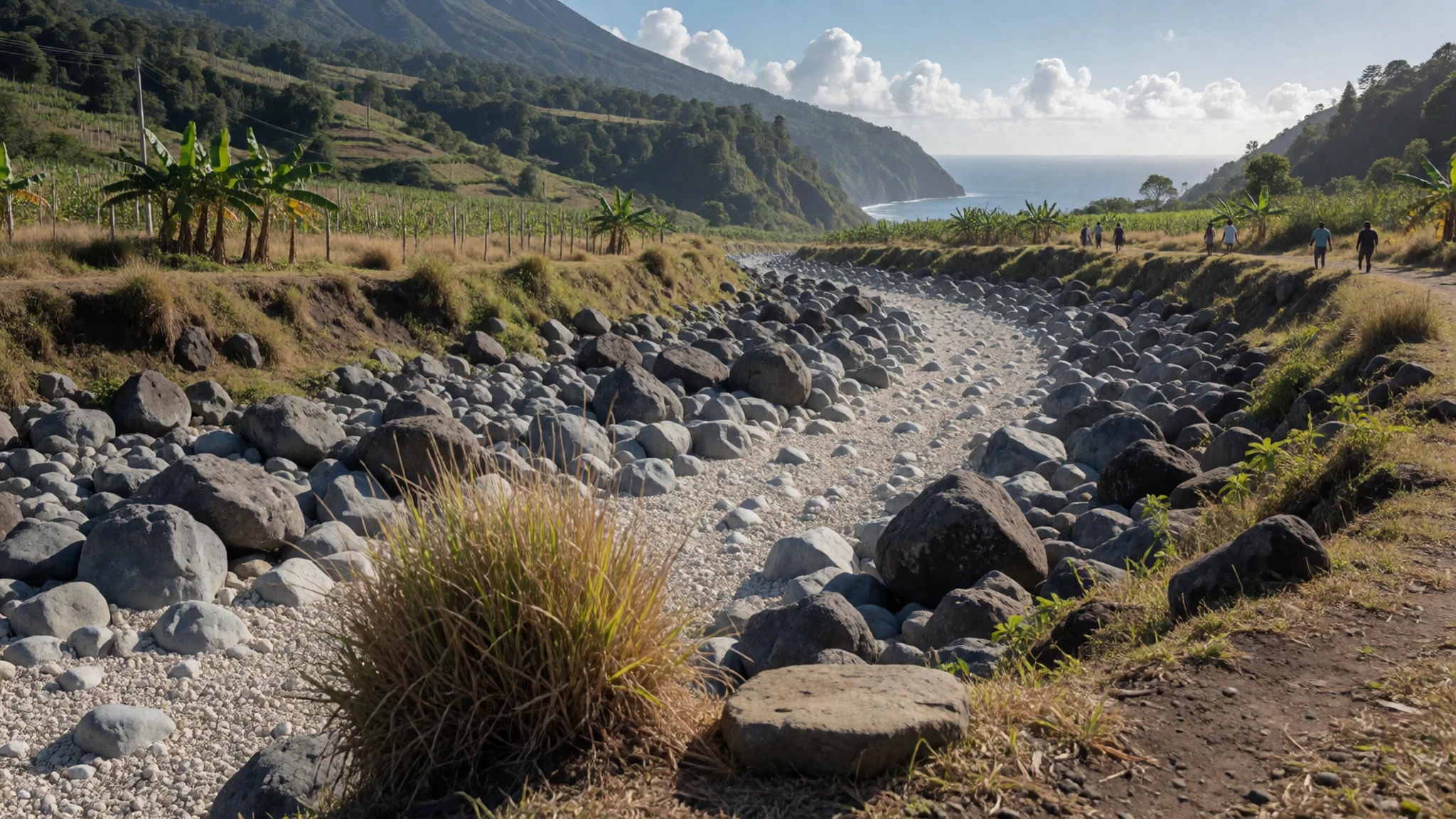
- Georgetown town centre — North-east Saint Vincent
Georgetown is the practical base for Rabacca, a modest windward-coast town with a market, small shops and eateries. It is a good place to ask about river conditions, find a driver or guide, and see everyday Vincentian life away from the tourist circuit.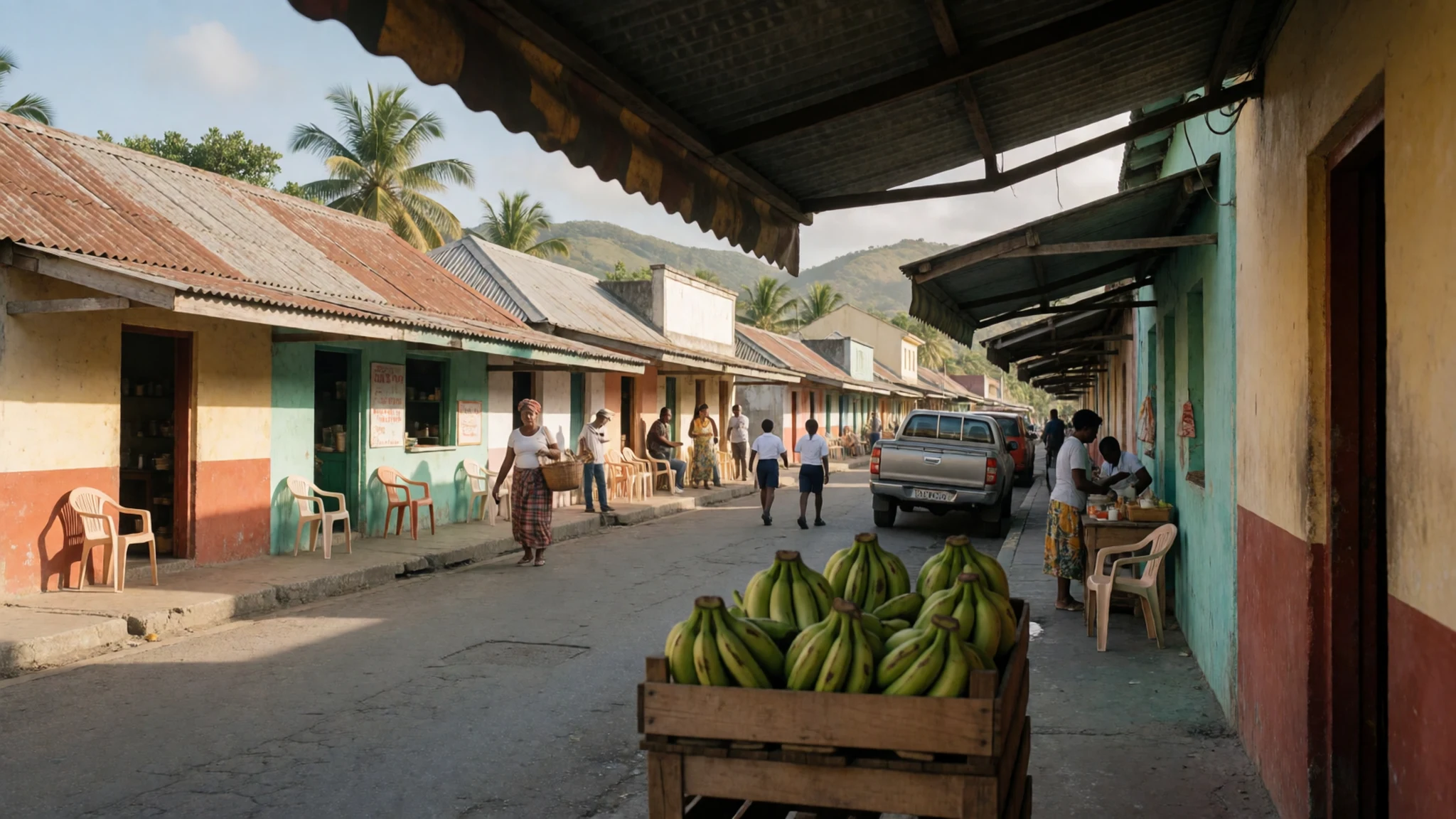
- La Soufrière from the windward side — Northern Saint Vincent
The volcano is the backdrop to everything here. On a clear morning its upper slopes stand out above the farmland, and photographs taken from open ground near the coast show the full line from summit to sea. Cloud often gathers by midday, so early starts give the best views.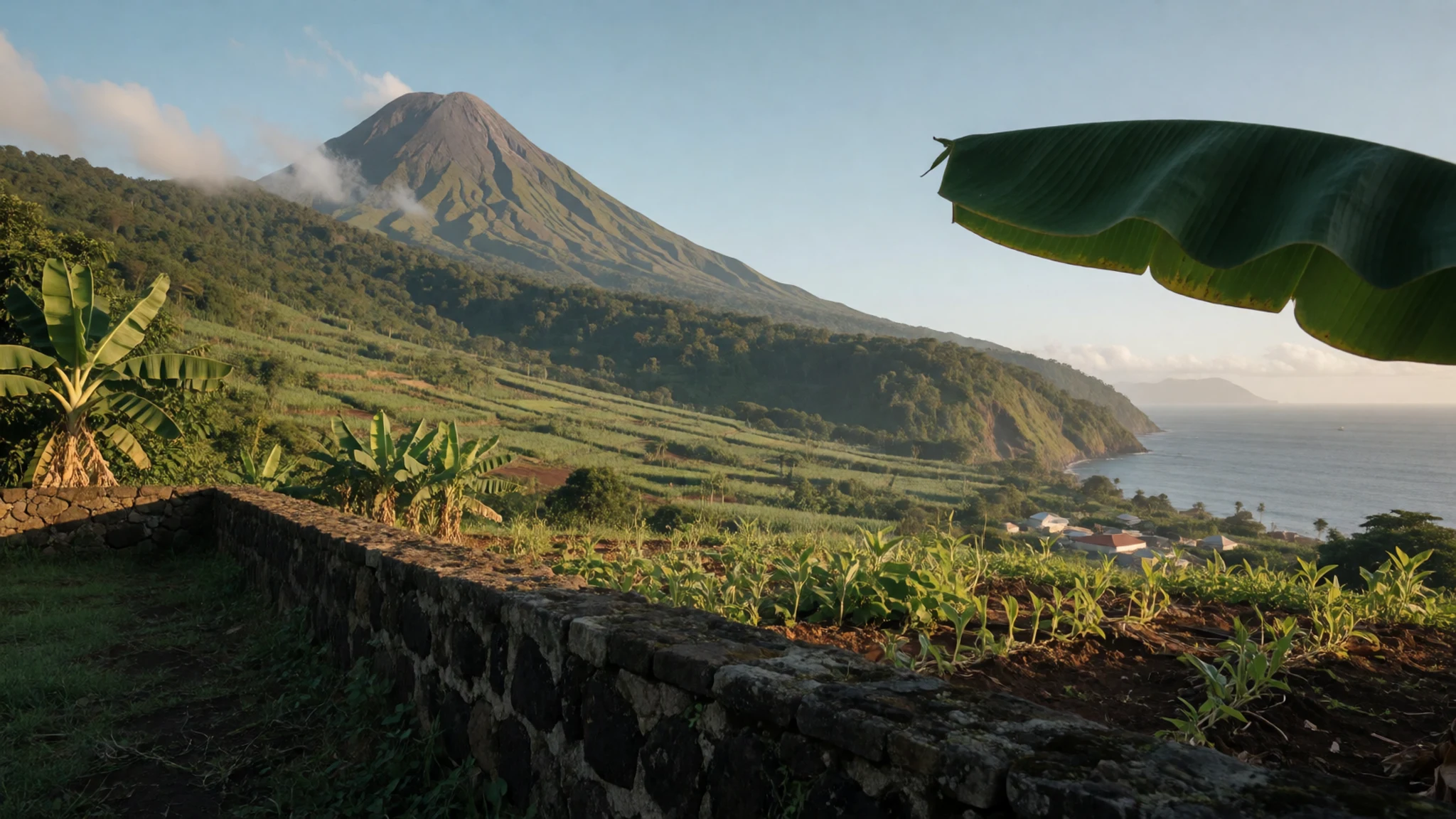
- The windward coast road — North-east coast
The road along the Atlantic side passes dark beaches, small fishing communities and farms. Swimming is rarely wise here because of strong surf and currents, but the drive is rewarding for its sea views, roadside stalls and the way the landscape changes from stony river mouths to green hillsides.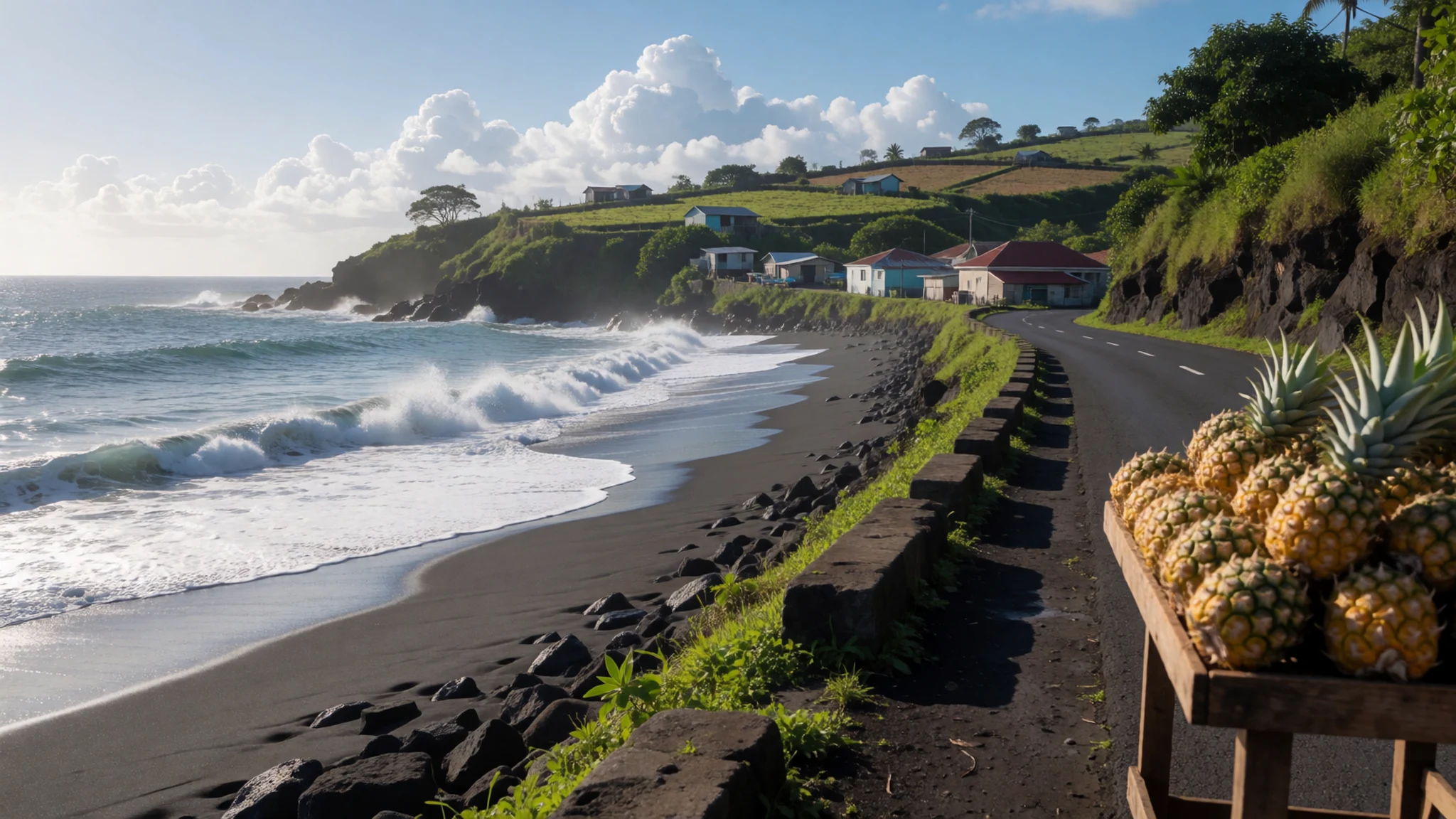
- Farmland around the river — Hills above Georgetown
The fertile slopes near Rabacca have long supported crops such as arrowroot and bananas. Walking quietly along farm tracks, with permission and a local companion, shows how people use volcanic soil and how close cultivation comes to the edge of the riverbed.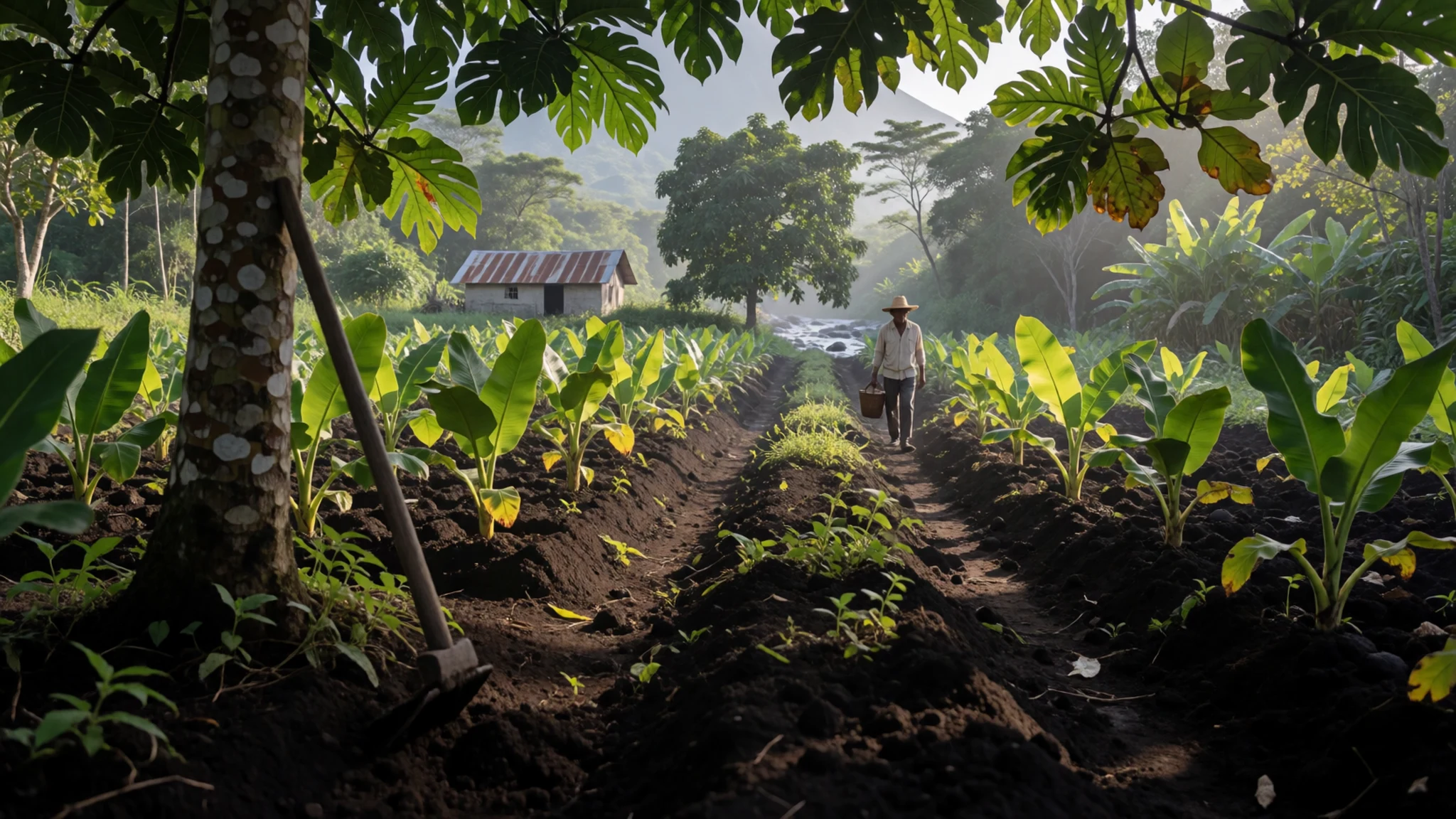
Culture
Rabacca Dry River sits in a part of Saint Vincent where daily life follows farming, fishing and the weather, and where the volcano is part of the family conversation. People in the north-east have lived through eruptions and evacuations, and many have stories about them, told with a mix of humour and caution. Heritage on the island also includes the Garifuna, descendants of Indigenous Caribbean and African peoples, whose history is closely tied to Saint Vincent. Their story is told on the island and in communities far beyond it. Churches matter in village life, and Sunday is often quiet, with services in the morning and families gathering afterwards. Music is everywhere, from calypso and soca to steelpan, and the island's carnival, known as Vincy Mas, is the major festive event of the year. Greetings count for a lot. A friendly good morning or good afternoon to anyone you pass on a village road is expected, and conversation tends to start before business does. Rural people are generally welcoming but also protective of their land, and a riverbed that looks empty may belong to a farmer or serve as a local route. Asking before photographing people, homes or crops is the norm, and a small purchase from a roadside stall is a polite way to say thanks. Always greet people you meet with a friendly good morning or afternoon, and ask permission before photographing them or entering farmland.
What to wear
Rabacca and the wider island of Saint Vincent have no single formal costume that applies everywhere, so traditional dress is best understood through occasions. Cotton madras, the brightly checked fabric common across the Caribbean, appears in headwraps, skirts and shirts at festivals and heritage events, and carnival brings elaborate feathered and beaded costumes during the Vincy Mas season. Garifuna communities have their own dress traditions, usually shown at cultural celebrations rather than worn daily. In everyday life, people in the north-east dress for heat, humidity and farm work: light cotton shirts, shorts or skirts, rubber boots or sturdy shoes, and caps or straw hats against the sun. Church clothes on Sunday are noticeably smarter, with dresses, collared shirts and sometimes hats. For a visit to Rabacca, visitors should wear lightweight, quick-drying clothes that cover shoulders and knees in town and villages, since beachwear is for the beach. Sturdy closed shoes or trail sandals with grip are essential, because the riverbed is loose, uneven rock. A wide-brimmed hat, sunscreen and sunglasses help under the strong Caribbean sun, and a light waterproof jacket is worth carrying in case a shower comes over the mountain. Long trousers also help against insects and sharp vegetation on farm tracks.
What to eat
- Roast breadfruit with fried jackfish — Village eateries and roadside stalls on the windward coast
A classic Vincentian plate: breadfruit roasted over fire until smoky and soft inside, served with small fish fried crisp. It turns up at village eateries, beach stalls and family gatherings, and is the dish most often named when locals describe island cooking.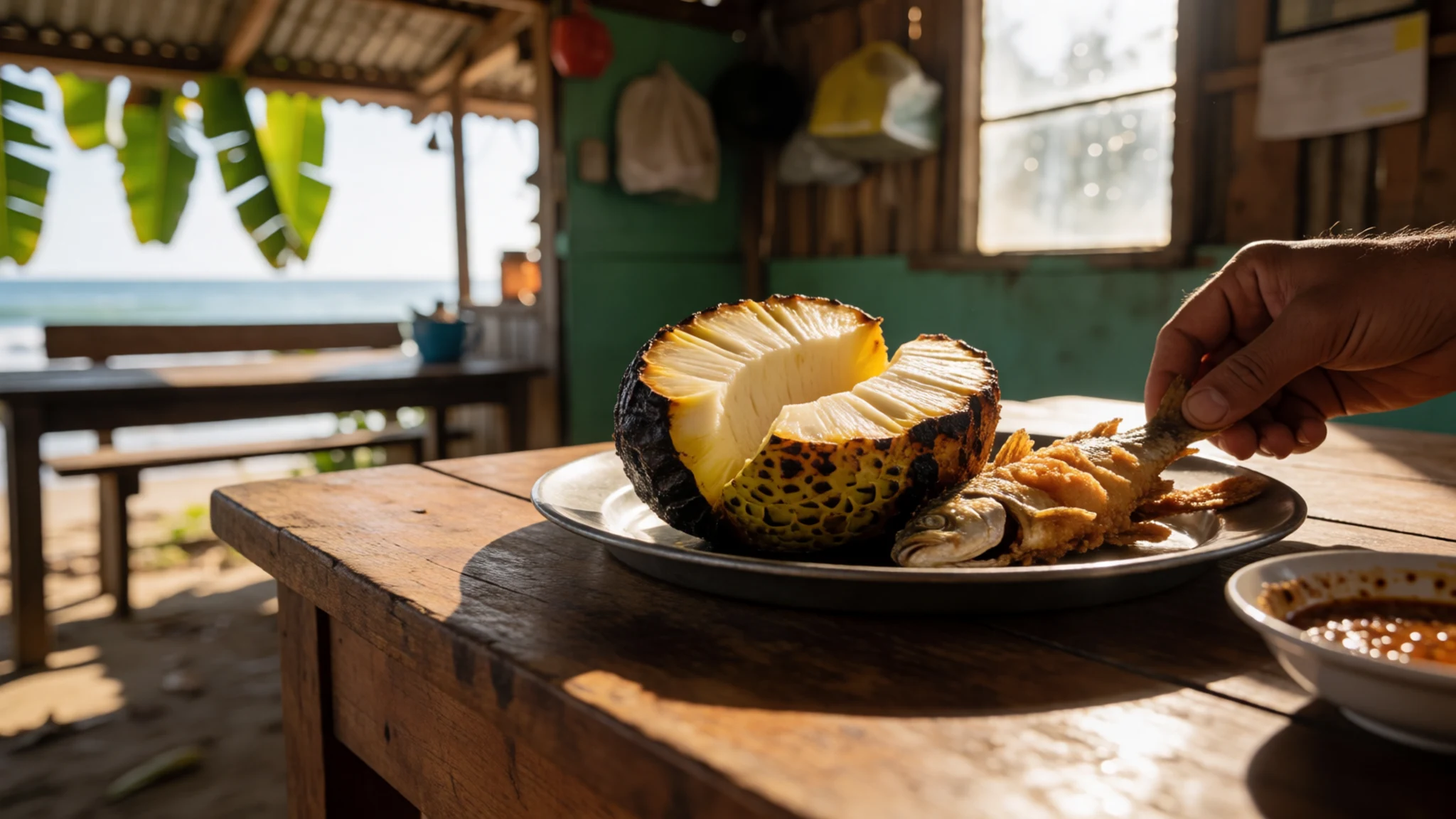
- Callaloo soup — Georgetown eateries and home-style lunch places
A thick green soup made from the leaves of the dasheen or similar plant, usually simmered with coconut milk, seasoning and sometimes meat or crab. It is gentle, savoury and filling, and often eaten at lunchtime in small local restaurants.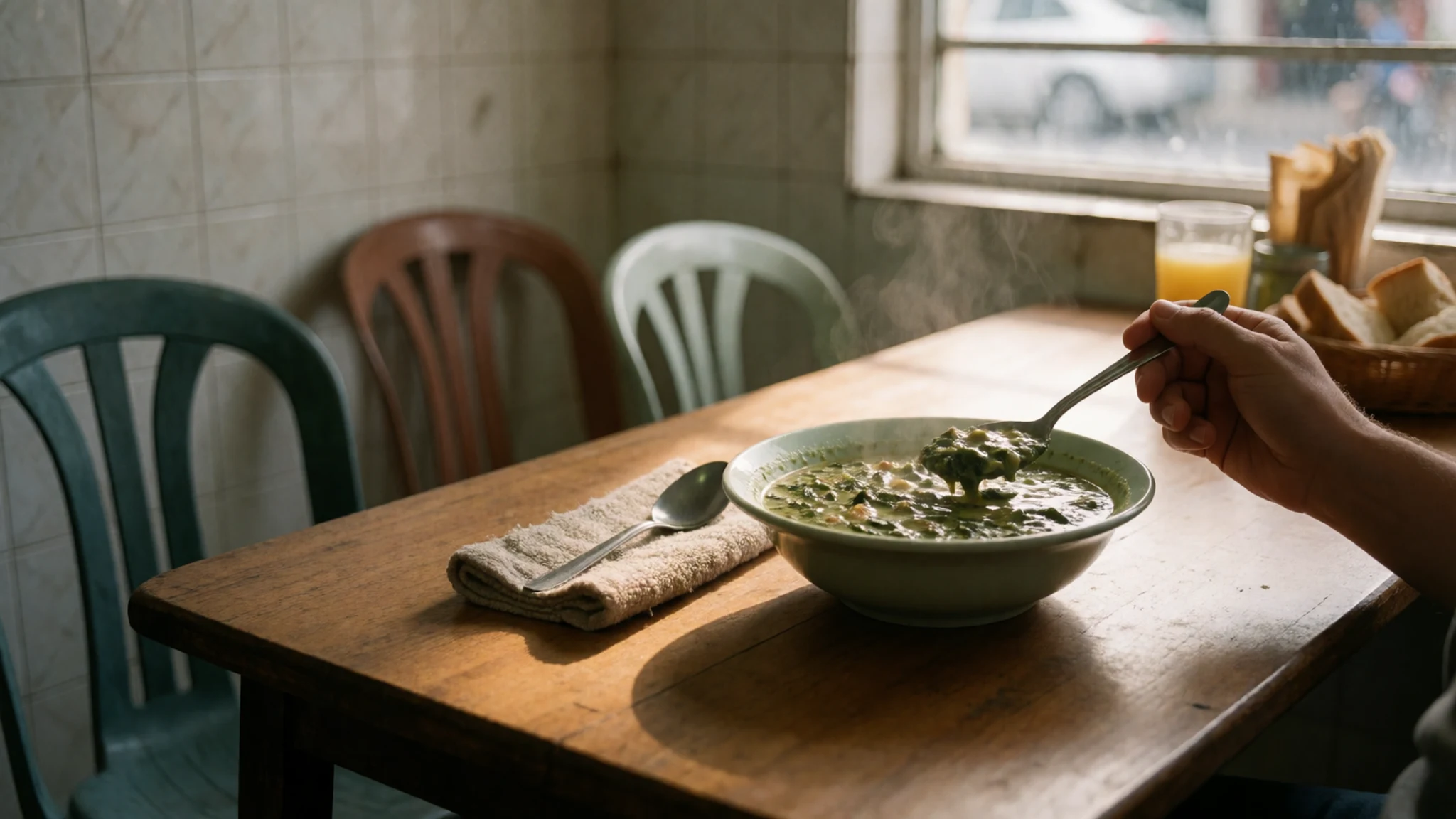
- Bake and saltfish — Georgetown market area and morning shops
Fried or baked dough, often split open and filled with seasoned salted fish, onion and pepper. It is a common breakfast and a practical snack to carry on a walk, and bakeries and small shops in town often sell it in the morning. - Arrowroot biscuits and puddings — Small shops and market stalls
Saint Vincent has a long history of growing arrowroot, a starch used in baking and thickening. Biscuits and sweet puddings made with it are light and slightly chewy, and they make a modest, easily packed gift to take home. - Fried plantain and local ground provisions — Roadside stalls and the Georgetown market
Ripe plantain fried until caramelised, plus boiled or roasted roots like sweet potato, dasheen and yam, appear as sides on most plates. Farmers grow many of these on the slopes near Rabacca, so freshness is rarely in doubt.
Plan it
Best time. February to May is generally the drier part of the year in the Caribbean, which gives clearer views of La Soufrière and safer ground around the riverbed. June to November is the wetter season, with heavier showers that can make a dry river dangerous; check local conditions before any visit.
How long. 1–2
Getting there. Fly to Argyle International Airport on Saint Vincent, which handles regional connections, then continue by taxi or minibus along the windward road to Georgetown, a drive of under an hour or so depending on stops. Rabacca is on the outskirts, so the last leg is a short local ride or walk.
Budget. mid
Tips
- Ask locally about rain and river conditions before going near the channel, as water can arrive fast from the mountain
- Start early, since cloud often builds over La Soufrière later in the day and hides the views
- Carry cash for stalls and small eateries, as card acceptance is patchy outside larger towns
- Bring water, a hat and sun protection, because the riverbed offers little shade
- Check official island or volcano-monitoring notices for any current alerts before visiting the area
Etiquette
- Greet people you meet and ask before photographing them or their land
- Do not enter farmland or private plots without permission
- Take all rubbish with you, including from the riverbed
Nearby
Sources
- Wikidata Q7278477 (CC0)
- Wikipedia: Rabacca Dry River (rev 1367775538) (CC BY-SA 4.0)
- The Rabacca or Dry River, Soufriere Mountain in the distance, St. Vincent (W. Westall, after John Herbert Caddy) (Public domain)
- Wikivoyage (CC BY-SA 4.0)

More in Saint Vincent and the Grenadines
- Baliceaux
- Barrouallie
- Battowia
- Bequia
- Canouan
- Chateaubelair
- Fort Duvernette
- La Soufrière
- Mayreau
- Mustique
- Owia
- Petit St. Vincent
Every place in Saint Vincent and the Grenadines · Every place, A to Z