Barrouallie
Barrouallie, Saint Vincent and the Grenadines
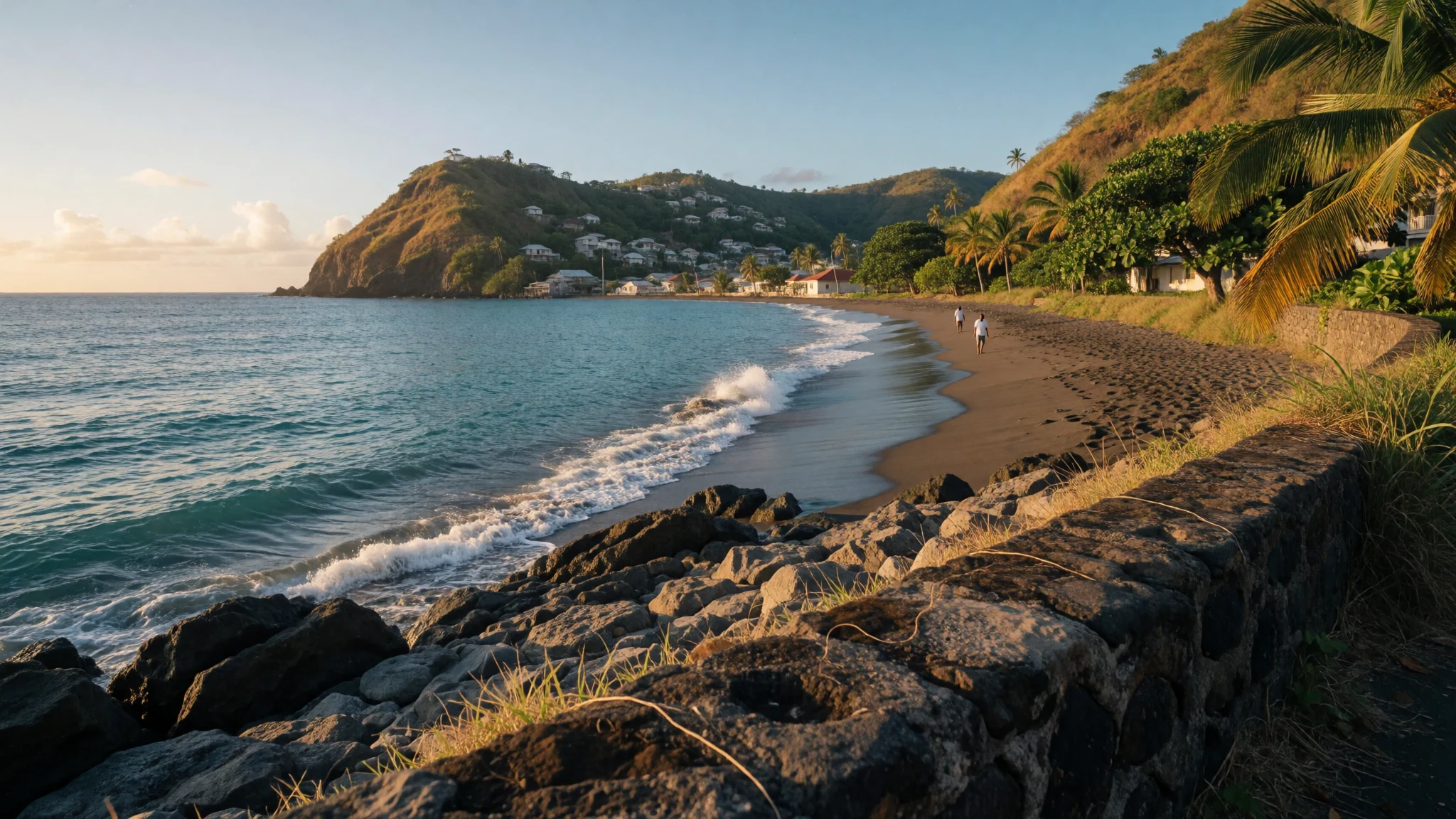
Barrouallie is a working fishing town on Saint Vincent's leeward coast, with old colonial history and easy access to volcano trails.
The place
Barrouallie sits on the leeward, western coast of Saint Vincent, where the sea is calmer than on the Atlantic side and steep green slopes drop almost to the shore. The town lies about 76 m above sea level, in a bowl-like fold of the land. Locals credit that shape with helping to shield it from volcanic damage. It is the parish capital of Saint Patrick, yet it feels like a working fishing village rather than a resort. Boats are pulled up on the shore, nets are mended in doorways, and the main road doubles as the place to catch up on news.
The area is best known for blackfish, the local name for a small whale that has long been hunted here. The practice is part of the town's identity, and many outsiders find it uncomfortable, so expect strong opinions on both sides. Beyond fishing, the wider economy leans on bananas and other farm produce, with tourism and services growing slowly. Unemployment is high, and incomes rise and fall with the seasons for farming and visitors.
Barrouallie is not a place of big hotels or organised attractions. Most travellers stay in or near Kingstown, or at a guest house, and come up the coast for a few hours or a day. Expect heat and humidity, sudden rain showers, and a pace set by the weather and the catch. The reward is a look at everyday Vincentian life, with little polish and plenty of conversation.
Its story
Barrouallie has one of the longest layered histories on Saint Vincent. Carib people lived here first and left a petroglyph, a carved face with a halo of rays, that became a local landmark. Carib resistance kept Europeans from settling the island for a long time. In 1719 French settlers from Martinique founded their first colony here, the first European settlement on Saint Vincent. Plantations tending to coffee, tobacco, indigo, corn and sugar relied on the labour of enslaved Africans. The nearby volcanic slopes carried sugar estates, and the town was admired for its Anglican church, with a bell tower and a floor of black and white marble tiles that had arrived as ballast on sugar ships.
Control of the island swung between France and Britain. Britain gained it by the Treaty of Paris in 1763, lost it, and took it back under the Treaty of Versailles in 1783. Slavery ended in 1834, though the changeover brought an economic crisis as plantation labour dried up and European beet sugar undercut cane. Many families left for other islands. Some went to Trinidad, where their descendants later became well known.
Disaster struck in September 1898, when a hurricane flattened much of the island and Barrouallie in particular. The church and almost every house were destroyed, and a photograph taken soon afterwards shows only two or three roofs left. The church records were lost, which erased much of the town's written memory. Then in 1902 the Soufrière volcano erupted and killed about 2,000 people on the island. Recovery here has always been slow and local.
What to see
- The Carib petroglyph — Barrouallie town
Barrouallie holds a rock carving left by the Caribs, a stylised face ringed with rays. It is a small, quiet sight rather than a monument, and finding it is easier with a local guide or by asking in town. It is a tangible reminder of who lived here before the French.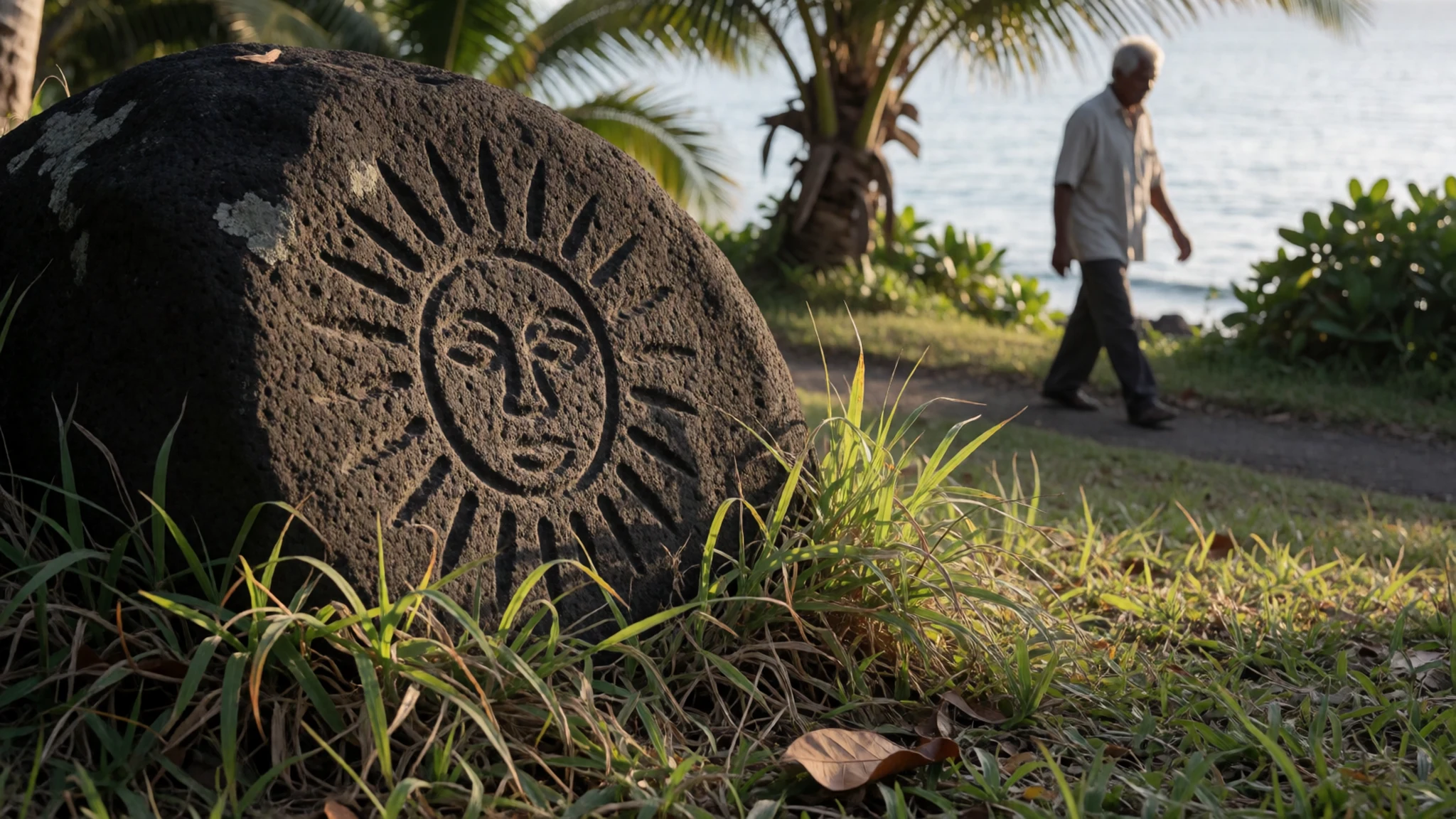
- The fishing beach and landing — Barrouallie waterfront
Barrouallie's shoreline is its living sight. Open boats come in, fishers sort and sell the catch, and people gather to talk. Early morning and late afternoon are the busiest times. Watch quietly, buy fish if the chance arises, and ask before photographing people or their catch.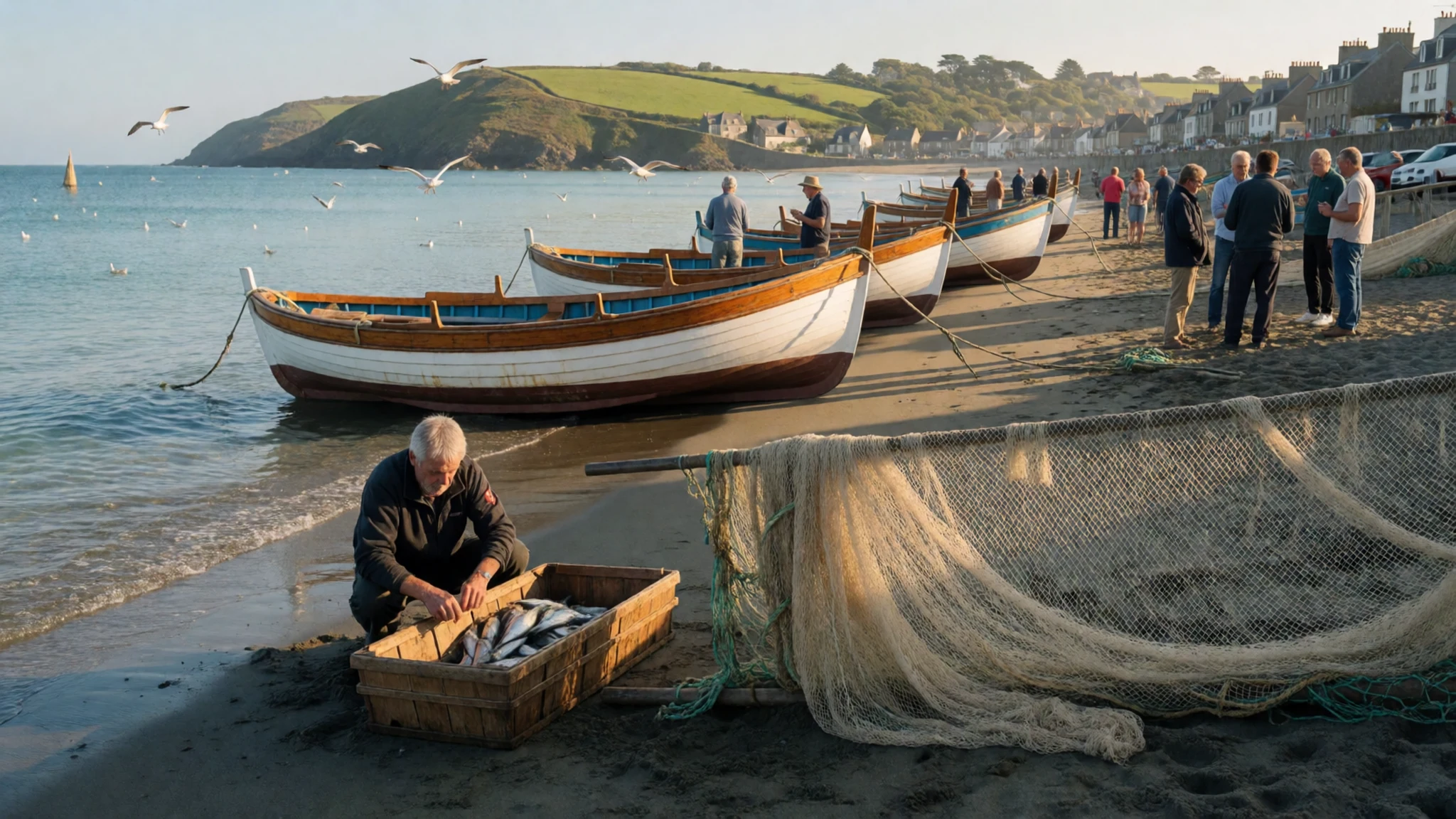
- The Anglican church — Barrouallie town centre
Barrouallie's Anglican church once had a bell tower and a floor of black and white marble that came as ballast on sugar ships. The 1898 hurricane destroyed the original. It is worth a short stop for the story of loss and rebuilding, and for the calm inside when it is open.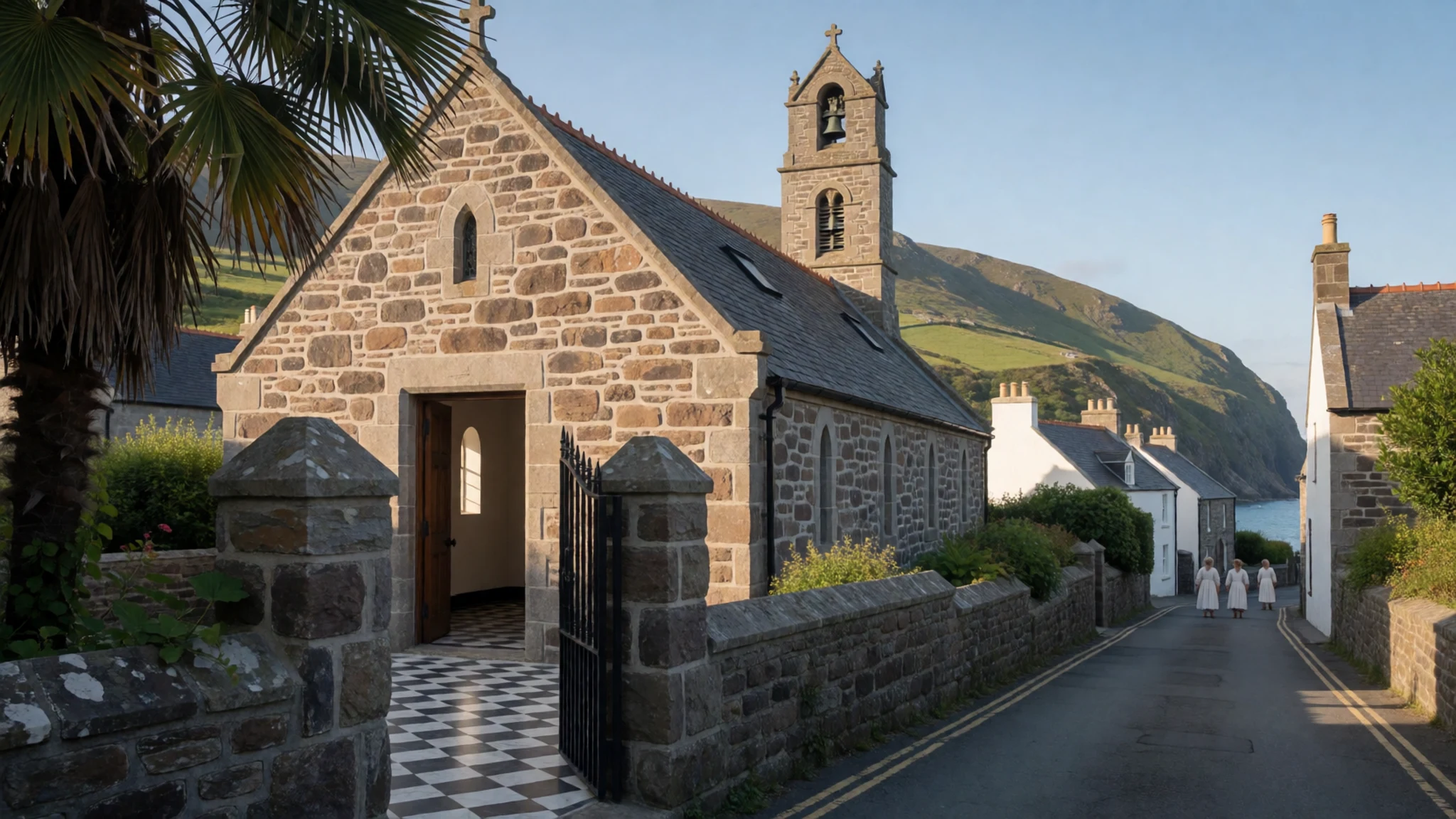
- La Soufrière volcano — North of Barrouallie
La Soufrière is the active volcano at the northern end of Saint Vincent, and the climb to its crater is long, steep and hot. Go with a local guide, start early, and bring water and sturdy shoes. Check current conditions first, because the volcano erupted as recently as 2021.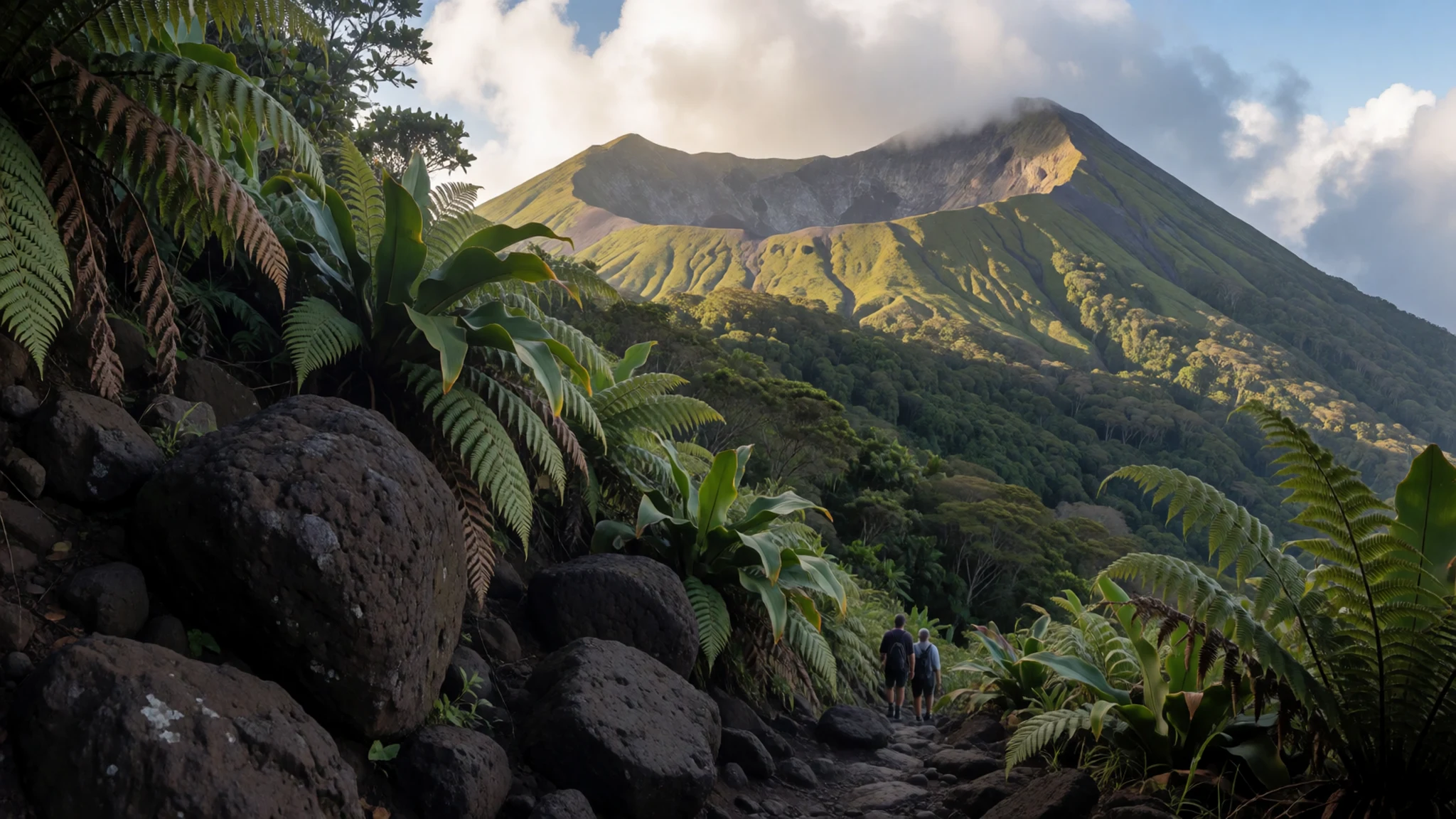
- Fort Charlotte, Kingstown — Kingstown
Fort Charlotte is a British-era fort on a ridge above Kingstown, the capital, and gives a wide view over the harbour and the coast. It is an easy half-day trip from Barrouallie by road, and pairs well with a wander through the capital's market streets.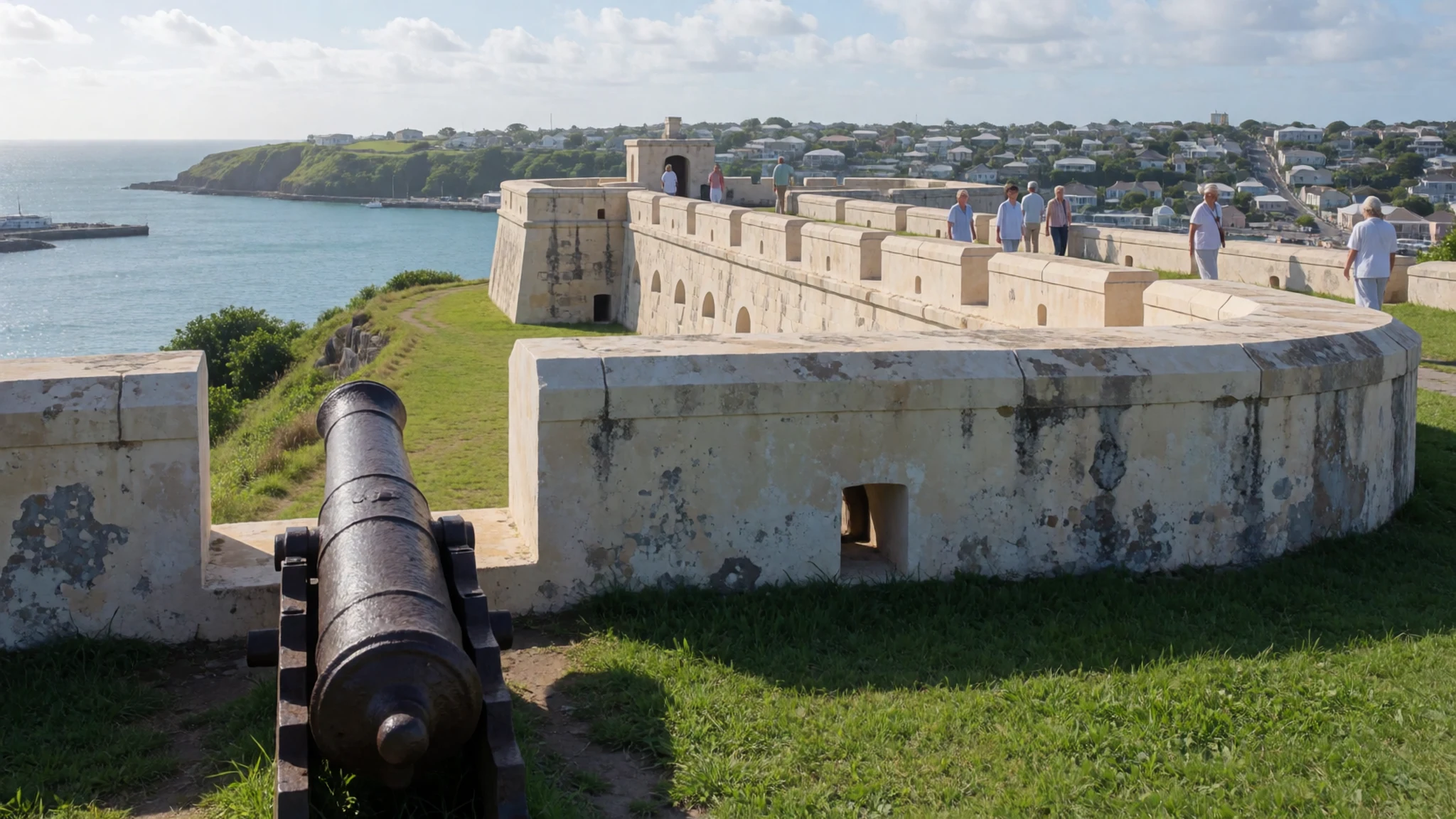
Culture
Barrouallie's culture is Vincentian first, shaped by Carib, African, French and British history, and later by Portuguese and Indian arrivals who came to work on plantations after slavery ended. The result is a blend you notice in surnames, church music, cooking and speech. Most people speak English, with a Vincentian creole that is easiest to follow when you listen for a few minutes before replying.
Church matters here. Sunday services draw families in their best clothes, and the rebuilding of the town after the 1898 hurricane is remembered as a community effort. Fishing is another thread. Boats are shared, catches are sold on the shore, and the sea's mood shapes the week. The blackfish hunt is a source of local pride and a point of outside criticism, and it is wise to listen rather than argue.
Music and festival life run through the island. Vincy Mas, the carnival, takes over in early July, with calypso, soca, steel pan and street parades. Barrouallie is quieter than Kingstown during carnival, but its own gatherings can be warm, loud and welcoming to anyone who joins in politely. On weekend evenings, roadside barbecues become social spots. Greetings count for a lot: a good morning or good afternoon before any question is expected.
Ask before you photograph people, their boats or their catch, and respect a no without argument.
What to wear
Barrouallie has no single everyday costume. Traditional Vincentian dress appears at heritage events, church festivals and cultural shows, and draws on the wider Caribbean use of checked, madras-style cotton for headwraps, skirts and shirts, in bold colours and often worn with simple gold jewellery. Carnival costume is a separate world: feathers, sequins, beads and bright satin, built over weeks and worn for the parades of Vincy Mas in early July.
On an ordinary day, people dress for heat and work. Fishers wear shorts, old T-shirts and rubber boots or bare feet near the boats. Others wear light cotton shirts, cotton dresses, jeans for evenings, and sandals or trainers. On Sundays and for church, people dress neatly: collared shirts, dresses and often hats. Swimwear is for the beach only, not for walking through town.
For a visitor, light, quick-drying clothes in cotton or linen suit the warm, humid climate. Cover shoulders and knees for church, and bring a sun hat, sunscreen and a compact rain jacket for sudden showers. Closed shoes with good grip matter for volcano and forest trails, which can be muddy and steep. Sandals or water shoes are best for rocky beaches and boat landings. Dark volcanic sand gets very hot at midday, so shoes help there too.
What to eat
- Roasted breadfruit with fried jackfish — Small local eateries on the coast road
Barrouallie's version of the national dish pairs charred, starchy breadfruit with crisp fried jackfish. It is simple, filling and tastes of the coast. Look for it at small local eateries along the main road, and ask what the fishers brought in.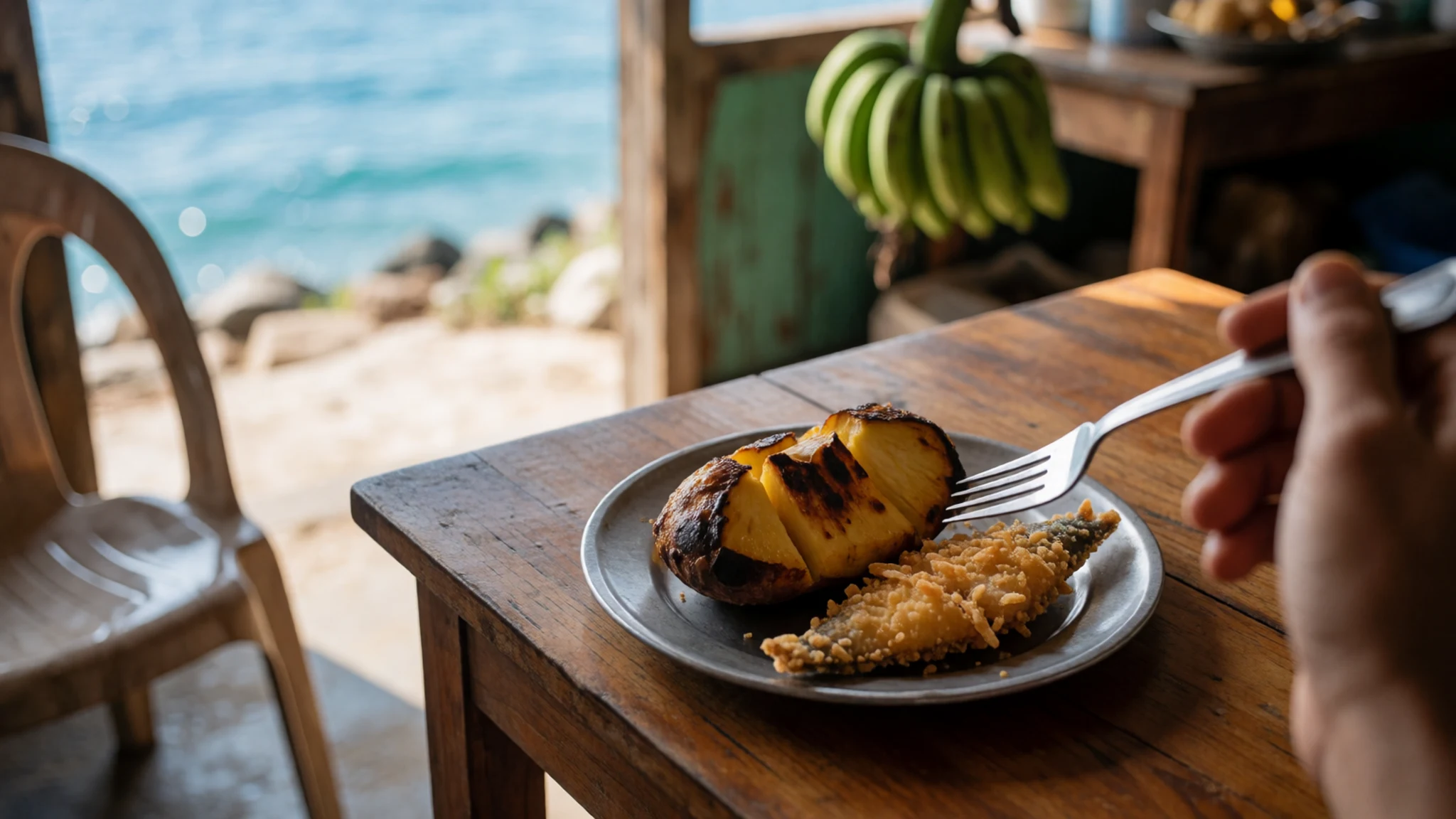
- Roadside barbecue pork or chicken — Roadside stalls on weekend nights
On Friday and Saturday evenings, smoking grills appear beside the road, selling pork or chicken by the portion. The meat is smoky, salty and often paired with simple sides. Go early, bring small notes, and eat standing among neighbours.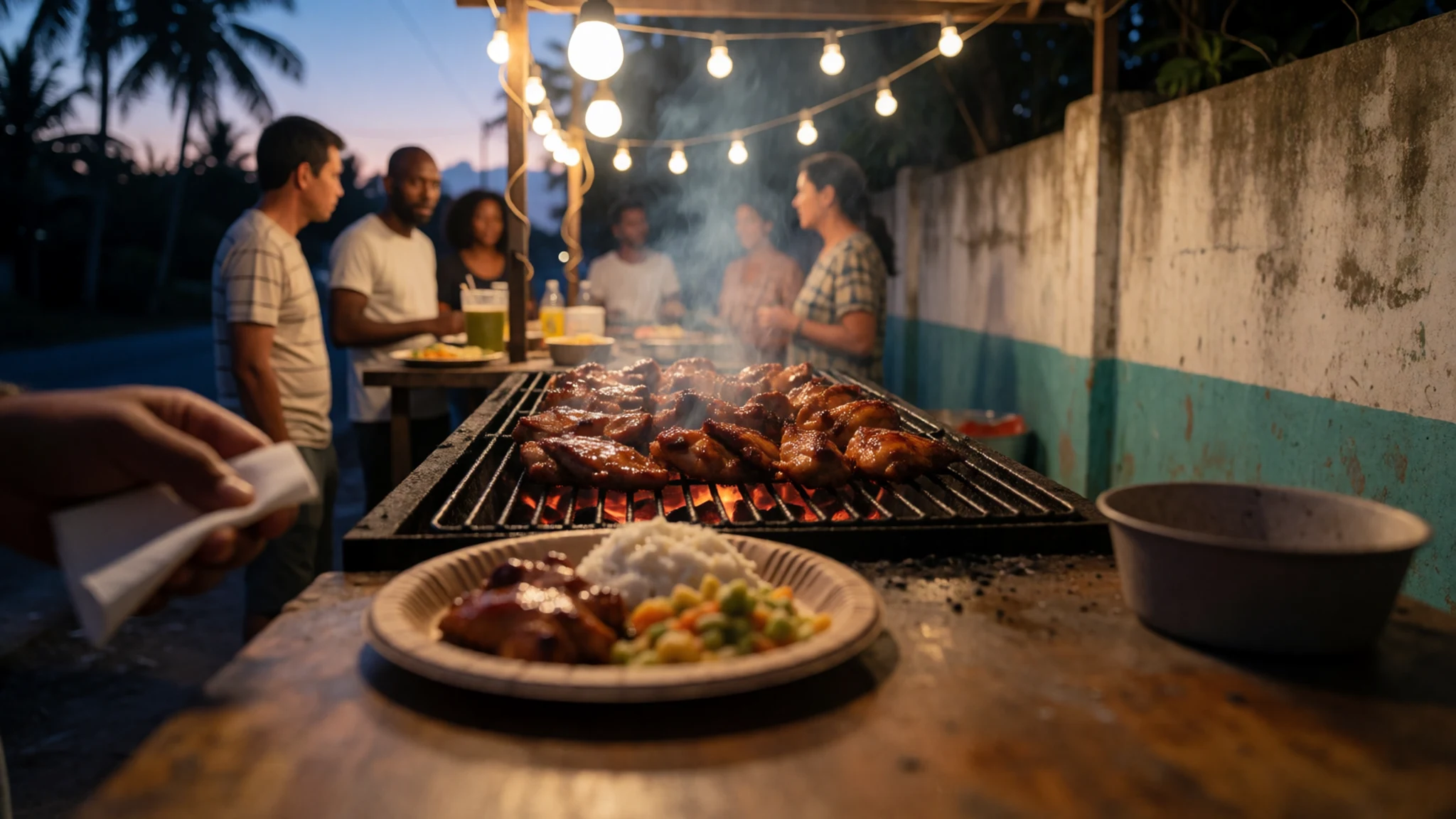
- Fresh fish from the landing — The fishing beach, mornings and late afternoons
Barrouallie is a fishing town, so the freshest food is whatever comes ashore that day. Buy from the fishers and ask a local eatery or household to cook it, or ask where the grill is. Species vary by season and luck. - Hairoun beer — Rum shops and small bars
Hairoun is the local lager, a light, cold drink that suits the heat and goes well with barbecue. It is sold in rum shops, small bars and shops across the island, and is often the easiest way to start a conversation. - Black wine — Small local bars; ask around
Black wine is a dark, strong local drink for the adventurous, and its taste is sharp rather than sweet. It is sold in small bars and homes rather than in supermarkets, so ask locally and sip slowly. Bitter Lemon and Fruit Cocktail sodas are gentler options.
Plan it
Best time. January to May is the drier, calmer season and the most comfortable for hiking and coastal visits. June to November brings heavier rain, higher humidity and the annual hurricane risk. Vincy Mas carnival in early July is lively but busy on the island.
How long. 1–2
Getting there. Fly to Argyle International Airport (SVD), which has mostly regional flights to nearby islands such as Barbados, St Lucia and Canouan. Then take a taxi or minibus via Kingstown and up the leeward coast to Barrouallie. Ask your host for the current best route and timing.
Budget. mid
Tips
- Base yourself in or near Kingstown, and treat Barrouallie as a day trip or a quiet one-night stay
- Carry some cash for small shops, roadside food and minibuses, as cards are not accepted everywhere
- Start early for the coast and for any hike, as the middle of the day is hot and humid
- Check official volcano and weather updates before travelling, especially in hurricane season
- Bring your own water and sun protection, and ask a local guide for trails and the petroglyph
Etiquette
- Greet people before asking questions or for directions
- Ask before photographing people, boats or catches
- Dress neatly for church and keep swimwear for the beach
Nearby
Sources
- Wikidata Q2885705 (CC0)
- Wikipedia: Barrouallie (CC BY-SA 4.0)
- Wikivoyage: Saint Vincent and the Grenadines (CC BY-SA 4.0)
- Tempest Anderson, Barrualli, Saint Vincent (YORYM-TA0135), via Wikimedia Commons (Public domain)

Wildlife
- Short-finned pilot whale (animal)
The short-finned pilot whale is a dolphin that people call a whale, a cousin of the dolphins of the open sea. In Barrouallie it is known as blackfish, the local name for a small whale, and it has been hunted here for a very long time, so it is part of the town's story. A local guide is the best person to ask about when and where to find it. Watch from a respectful distance, keep quiet, let the animals set the pace, and never feed them.
More in Saint Vincent and the Grenadines
- Baliceaux
- Battowia
- Bequia
- Canouan
- Chateaubelair
- Fort Duvernette
- La Soufrière
- Mayreau
- Mustique
- Owia
- Petit St. Vincent
- Rabacca
Every place in Saint Vincent and the Grenadines · Every place, A to Z