Petit St. Vincent
Petit St. Vincent, Saint Vincent and the Grenadines
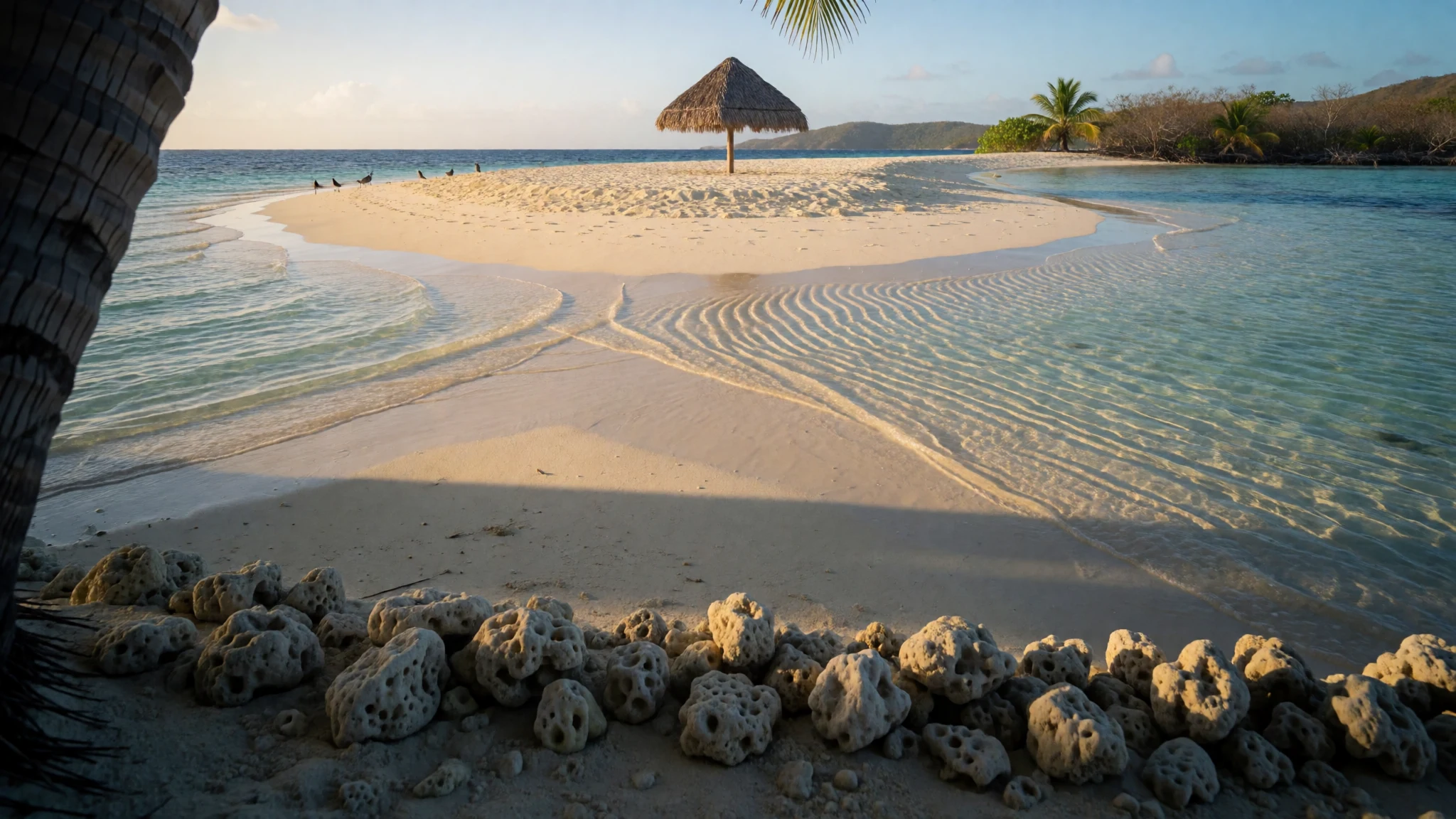
Petit St. Vincent is a private Grenadine island of sand, reef and quiet, reached by boat; its one resort was badly damaged by Hurricane Beryl on 1 July 2024 and is under restoration, aiming to reopen in 2026.
The place
Petit St. Vincent sits in the southern Grenadines, a low island of Saint Vincent and the Grenadines lying between Union Island and Grenada's Petite Martinique. Pale sand, coral rubble and low rock make up the shore, and the water changes from clear shallows to deep blue within a short swim. Trade winds keep the air moving. Inland the island is gently rolling hills and tropical woodland, rising to Marni Hill at 275 feet (84 m) in the northwest. There is no town and no public road; the island is run as one resort, so the day turns on boats, cottages and the reef rather than on streets.
From the beach the horizon is other small islands. Petite Martinique lies close to the south. Mopion, a speck of sand with a single thatched shelter, is the view many people remember off the western side. On calm mornings the bottom shows through the sea; by afternoon the wind chops the surface and the boat crossing from Union Island feels longer than the chart suggests. Rain arrives as short squalls. In the wetter months cloud hangs longer, and a tropical storm can pass along the chain.
Bananaquits work the flowering shrubs, and seabirds use the quieter points of shore. After dark the island is properly black: cottage lamps, a launch light, little else. The sound is wind, surf on the windward side, and the motor when a boat runs. Anyone hoping for a village lane, a market or a choice of independent guesthouses will not find them. Petit St. Vincent is a kept, private shore, paced and priced as a resort island rather than as an open beach in the Grenadines.
Its story
Petit St. Vincent takes its name from the French layer of the Grenadines, where saints' names mark island after island along the chain. Before the resort, the islet was a working edge of the southern Grenadines: fishers from nearby shores knew the reef, the anchorage and the passage toward Petite Martinique, which sits so close that both shores read as one group from the sea. Saint Vincent to the north and Grenada to the south passed through Kalinago life, then French and British colonial rule, and these small cays followed the same flags without ever growing a town.
What changed Petit St. Vincent was the decision to treat the whole island as a single private resort rather than as a scatter of houses. Cottages went up back from the beach, a jetty took the launches, and the staff who run the place have long come from Saint Vincent, the other Grenadines and nearby Petite Martinique. The resort's habit of leaving guests alone unless they ask — a flag at the cottage, raised when service is wanted and lowered when it is not — became the detail travellers repeat.
The island never grew another economy beside the resort. There is no school and no shop row. Supplies, guests and laundry move by boat, mostly via Union Island, and the weather still decides whether that boat runs comfortably. In the modern Grenadines, where some islands mix yachts, holiday homes and local villages, Petit St. Vincent stayed a single operation on a small cay. That is the story a visitor walks into: not a capital and not a fishing town that added rooms, but a resort that became the island.
What to see
- The leeward beaches — West and south shore
Petit St. Vincent's leeward beaches are the sheltered arcs of pale sand where swimming is easiest, the bottom visible on a calm morning and a quick drop into deeper blue. Coral rubble and low rock break the sand in places. Trade winds still cross the island, but this side is the one used for a long swim.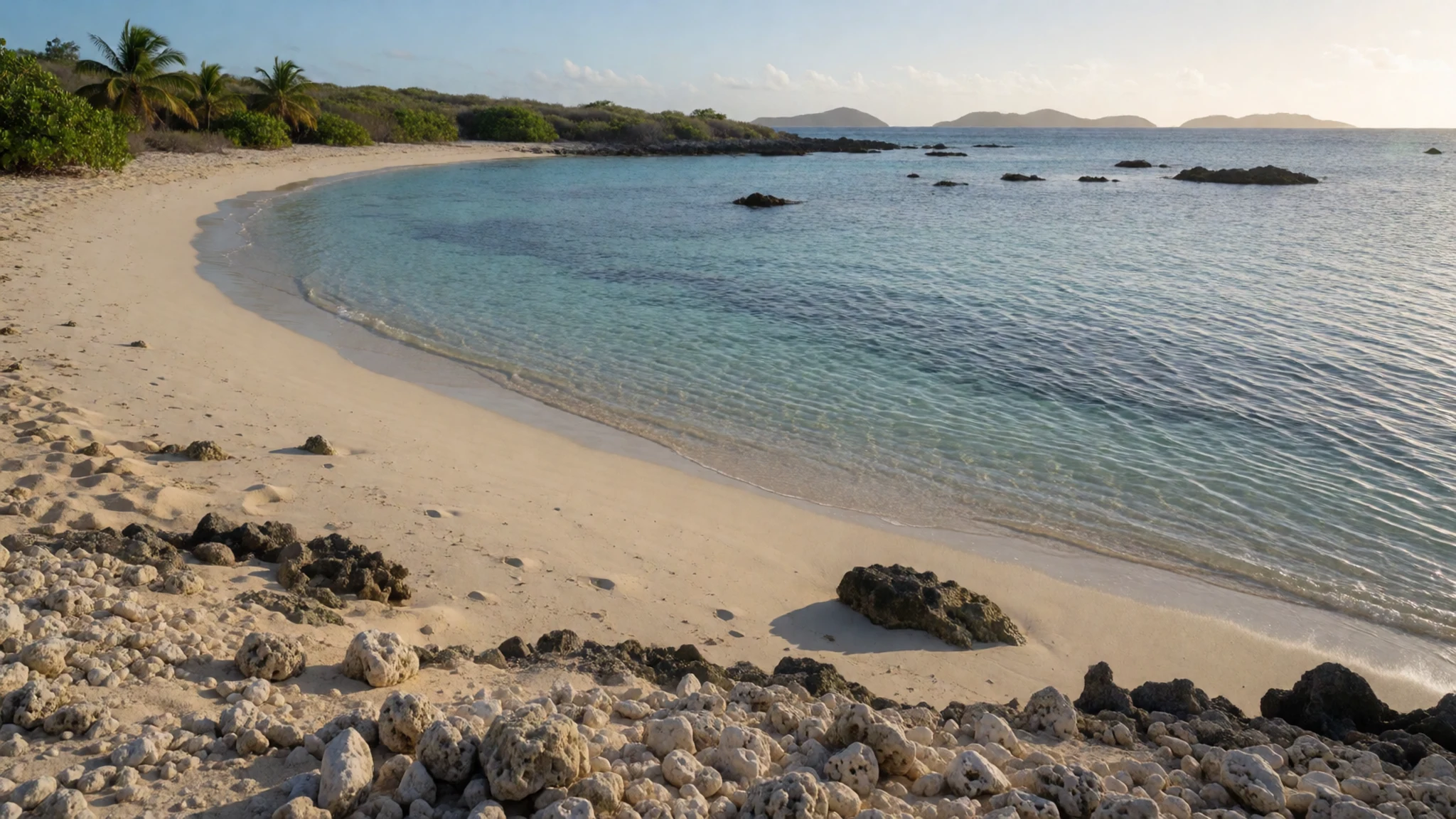
- Mopion — Sandbar just west of the island
Mopion, sometimes called Sandy Island, is the tiny sandbar just off Petit St. Vincent, a patch of beach and a single thatched shelter standing in clear water. It is the picture people take from the western side. The bar is exposed, with no shade beyond that roof and no services, so a visit is a short boat hop in settled weather.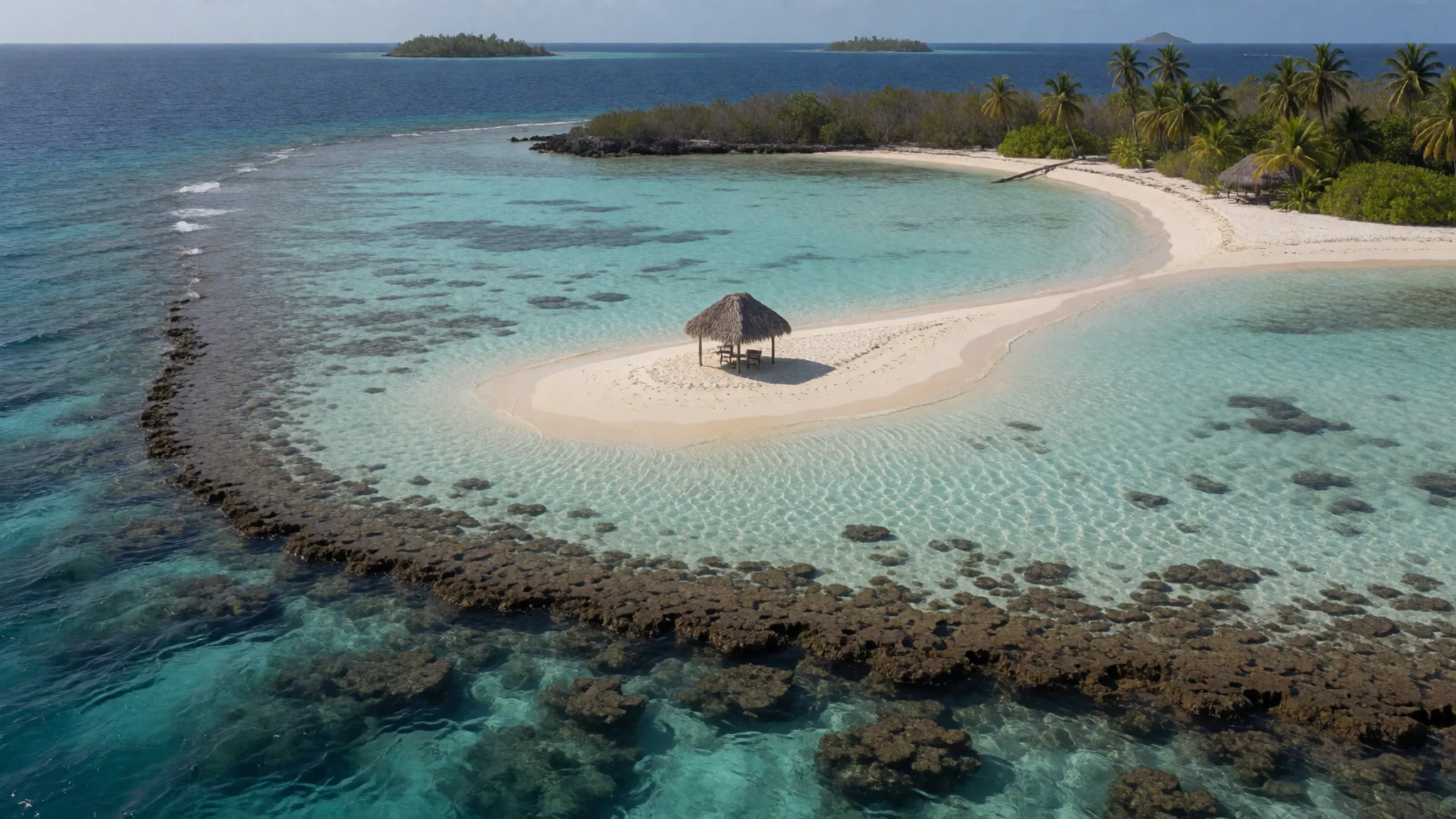
- The reef — Shallows off the beaches
The reef around Petit St. Vincent breaks the water into colour: shallow coral heads, sand channels and a darker drop a short swim from shore. Snorkelling is done from the beach or from the resort boat when the sea is calm enough to see. The windward edge is rougher, and after a squall the water clouds with sand.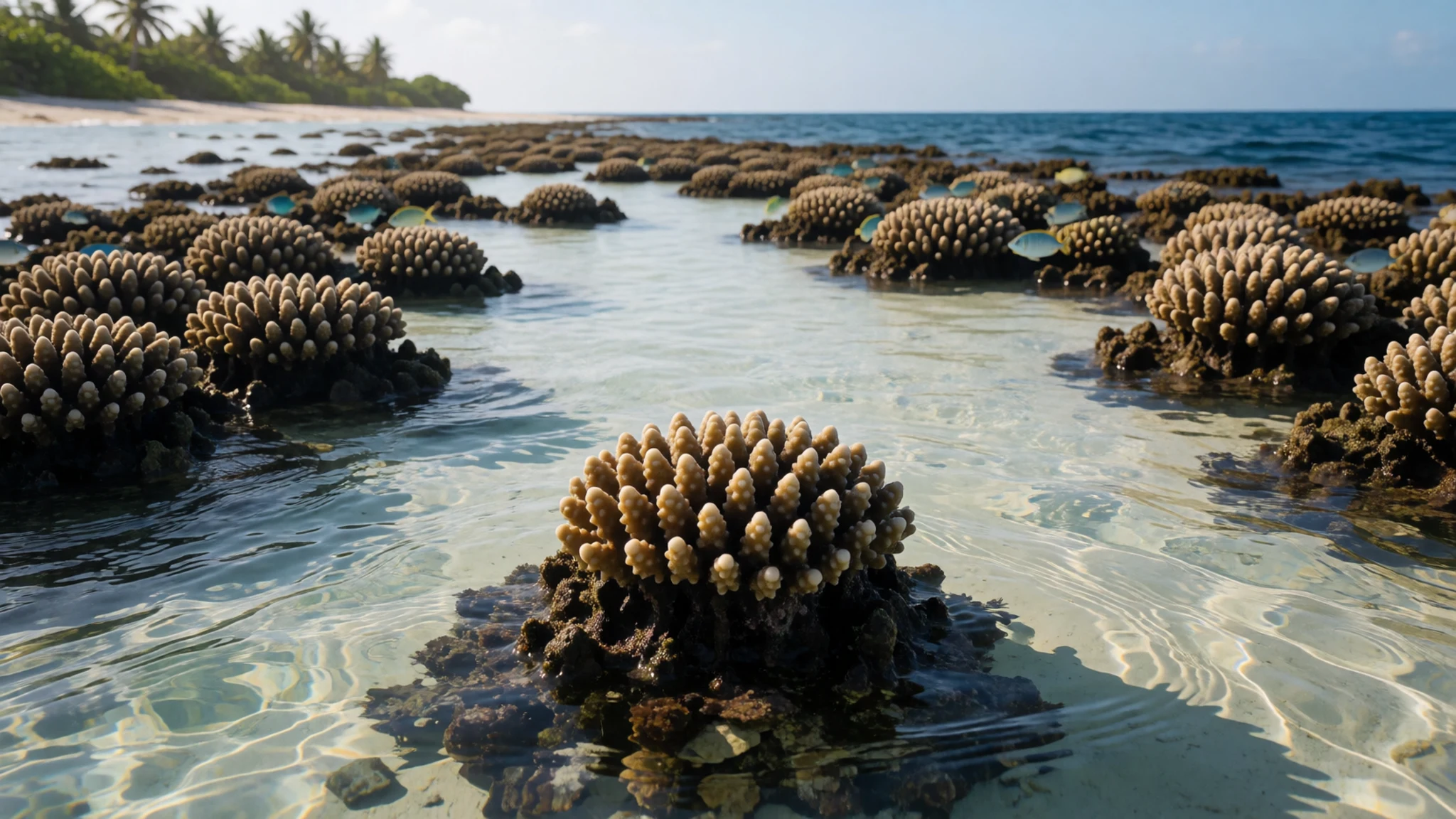
- Petite Martinique across the channel — South-facing shore
Petite Martinique, a Grenadian island, lies just south of Petit St. Vincent, close enough that houses and boats on the far shore are part of the view. The channel between them is a working passage for local launches, not empty sea. Late light picks out those hills and the sense of the Grenadines stepping south toward Carriacou.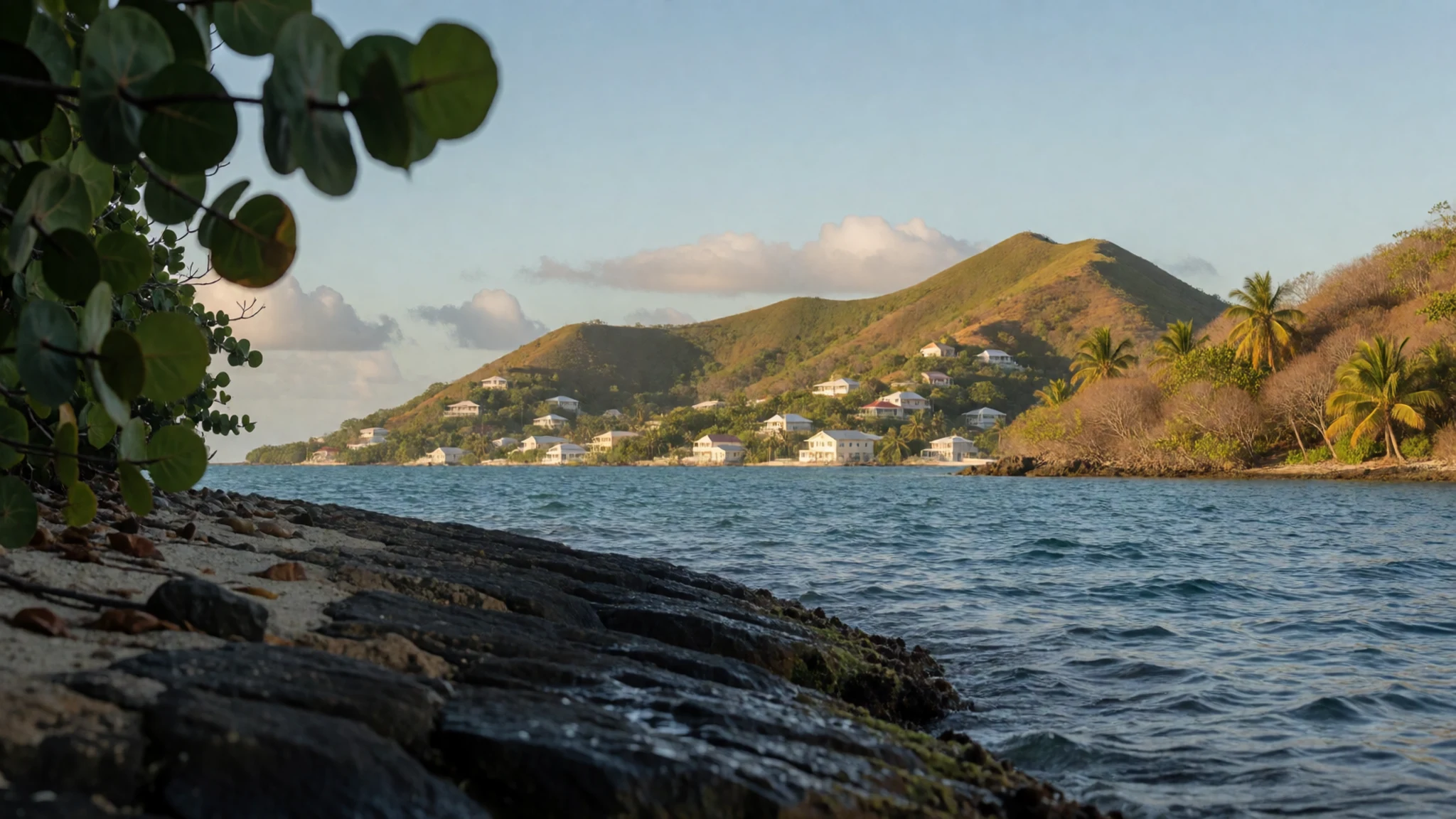
- The island paths — Interior of the cay
Paths on Petit St. Vincent link the cottages, the beach and the higher scrub without ever becoming a road. The walk crosses from leeward glitter to the windward chop, where the sea is louder and the vegetation lower. Bananaquits and other small birds use the flowering shrubs along the way.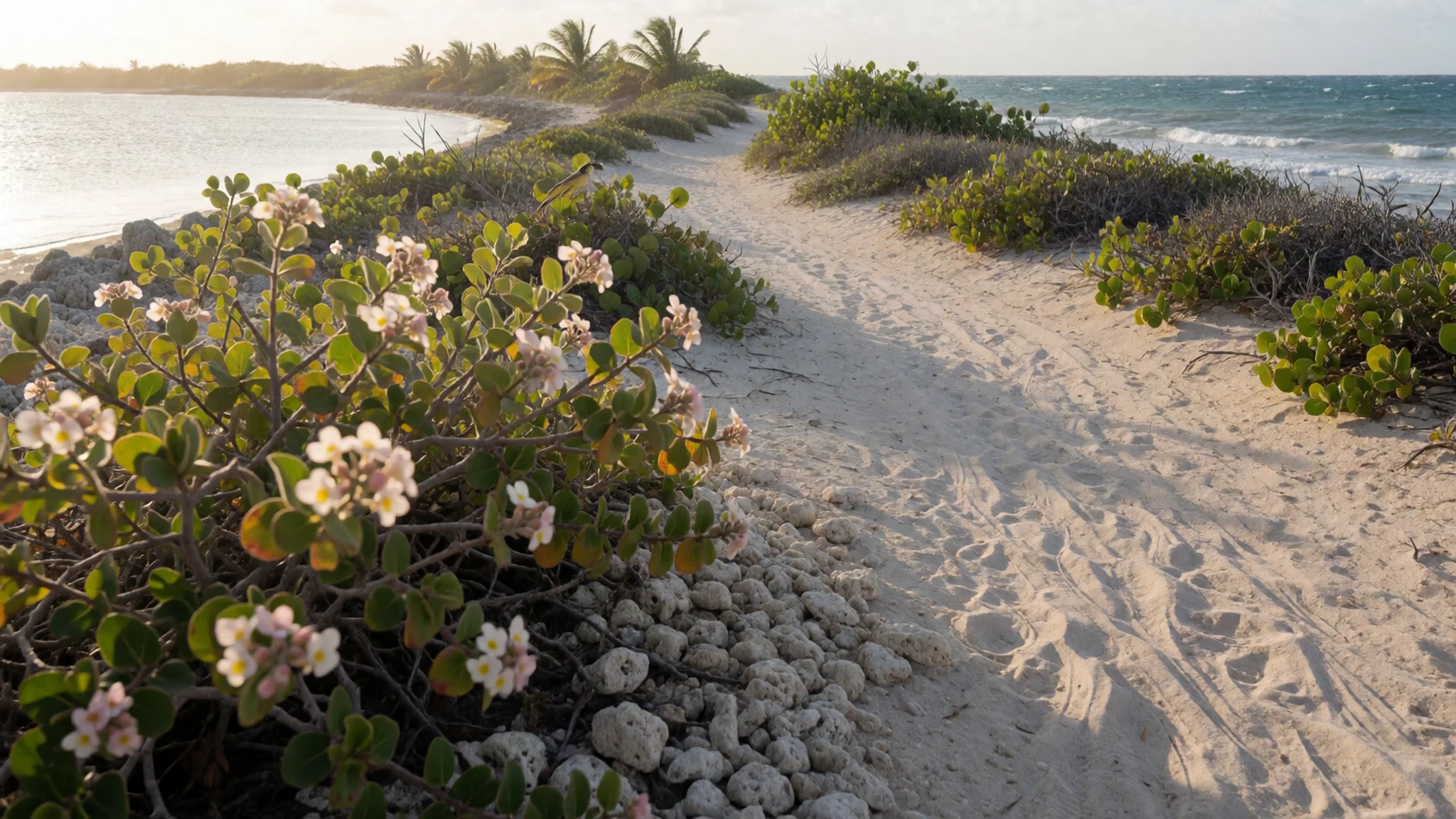
- The jetty — Arrival landing
The jetty is how Petit St. Vincent begins: the launch from Union Island comes alongside, luggage is handed up, and the island opens as beach and cottages rather than as a terminal. There is no town behind it. Yacht tenders use the same approach when the anchorage is workable, and the engine stopping is the real arrival.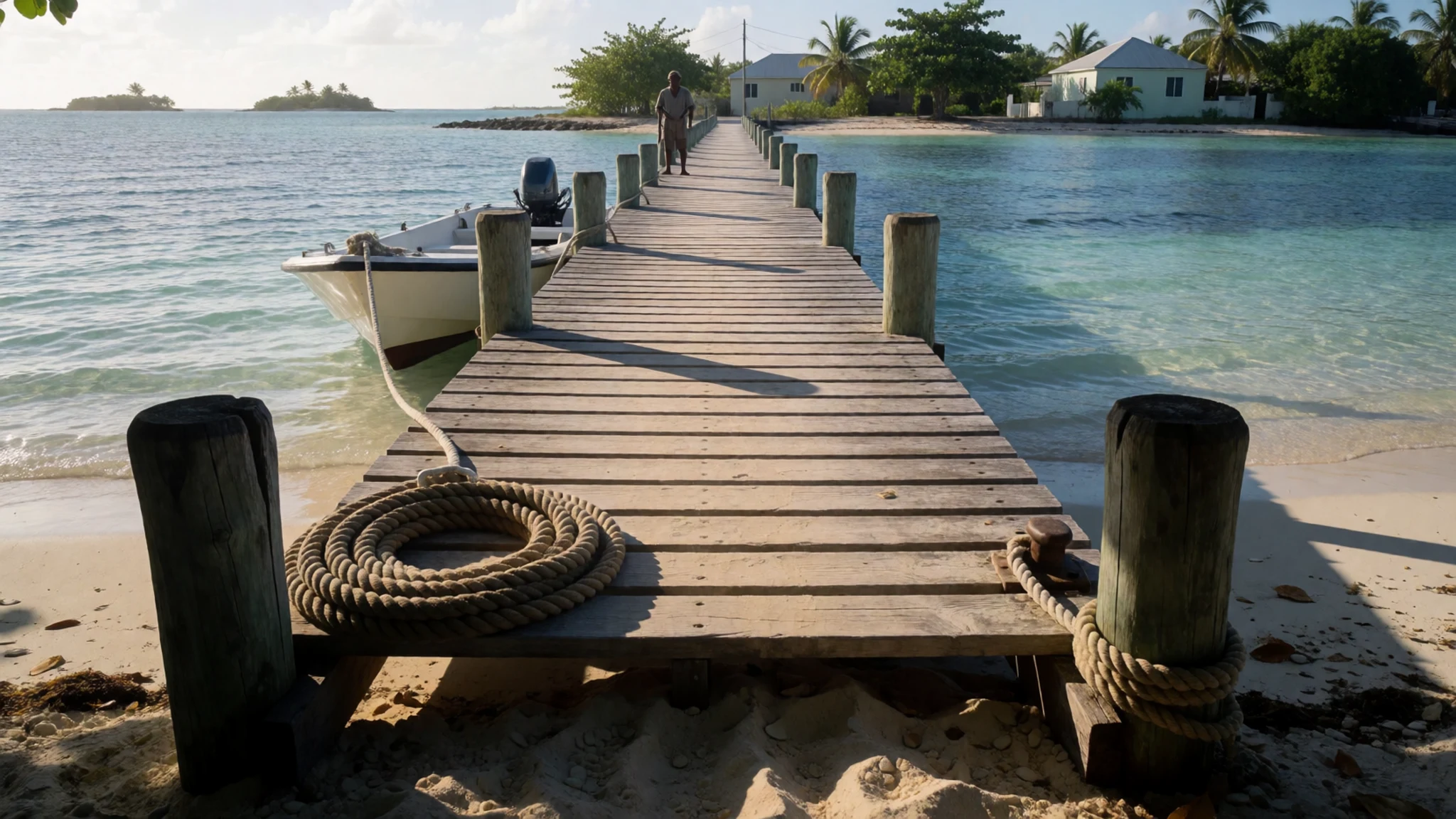
Culture
Petit St. Vincent has almost no public culture of its own in the way a town does, because there is no town. What a visitor meets is the culture of the southern Grenadines brought to work: staff from Saint Vincent, Union Island, the other cays and Grenadian Petite Martinique, moving between English and the local Creole, with French place-names still on the chart. Food, music and church life sit on the larger islands; here they arrive as people, not as a parade. The resort custom of the flag is the island's own piece of etiquette. A flag at the cottage signals whether guests want to be left alone or want service. It is a practical code on an island where knocking on every door would spoil the quiet. Around it, ordinary Caribbean manners still hold: greet people, and remember that the crew are at home in these islands in a way a guest is not. Sunday on the neighbouring shores can be quiet and church-centred, and boat plans sometimes flex around that. Music, when it happens, is calypso, soca or reggae on a radio, not a show staged for the sand. Leave the cottage flag on the privacy signal unless you actually want staff at the door, and ask before you photograph any member of the crew.
What to wear
Petit St. Vincent inherits the dress of Saint Vincent and the Grenadines rather than a costume unique to the cay. For festivals, weddings and Independence events on the main islands, formal cloth is bright cotton, headwraps, and skirts and shirts kept for church and celebration, often cut from Madras-influenced or African-Caribbean patterns. Day to day, cloth is cotton that can take salt and sun. On the island, staff dress for the job in neat shirts, shorts or light trousers and a cap against the glare, while guests live in swimwear with a shirt thrown on at lunch and sandals or bare feet between cottage and beach. Away from the resort, on Union Island or in Kingstown, people wear the same hot-weather clothes as the rest of the eastern Caribbean: shorts, vests, light dresses, football shirts and a hat that stays on in the trade wind. Swimwear belongs on the beach and the boat, with a cover-up for meals and for the launch, where spray and sun both last the crossing. Pale, loose cotton beats heavy cloth. Paths are sand, coral bits and rough ground, so sturdy sandals or water shoes beat new leather, and a hat matters more than anything formal. There is no shrine on Petit St. Vincent with a dress code, but the crew's workplace still asks for a cover away from the beach.
What to eat
- Grilled reef fish and lobster — The resort dining room
Lobster and reef fish turn up grilled or in a light sauce when the boats have had a good day, which is the point of eating on Petit St. Vincent. The resort table is where most guests meet it, and the kitchen will say what came in that morning.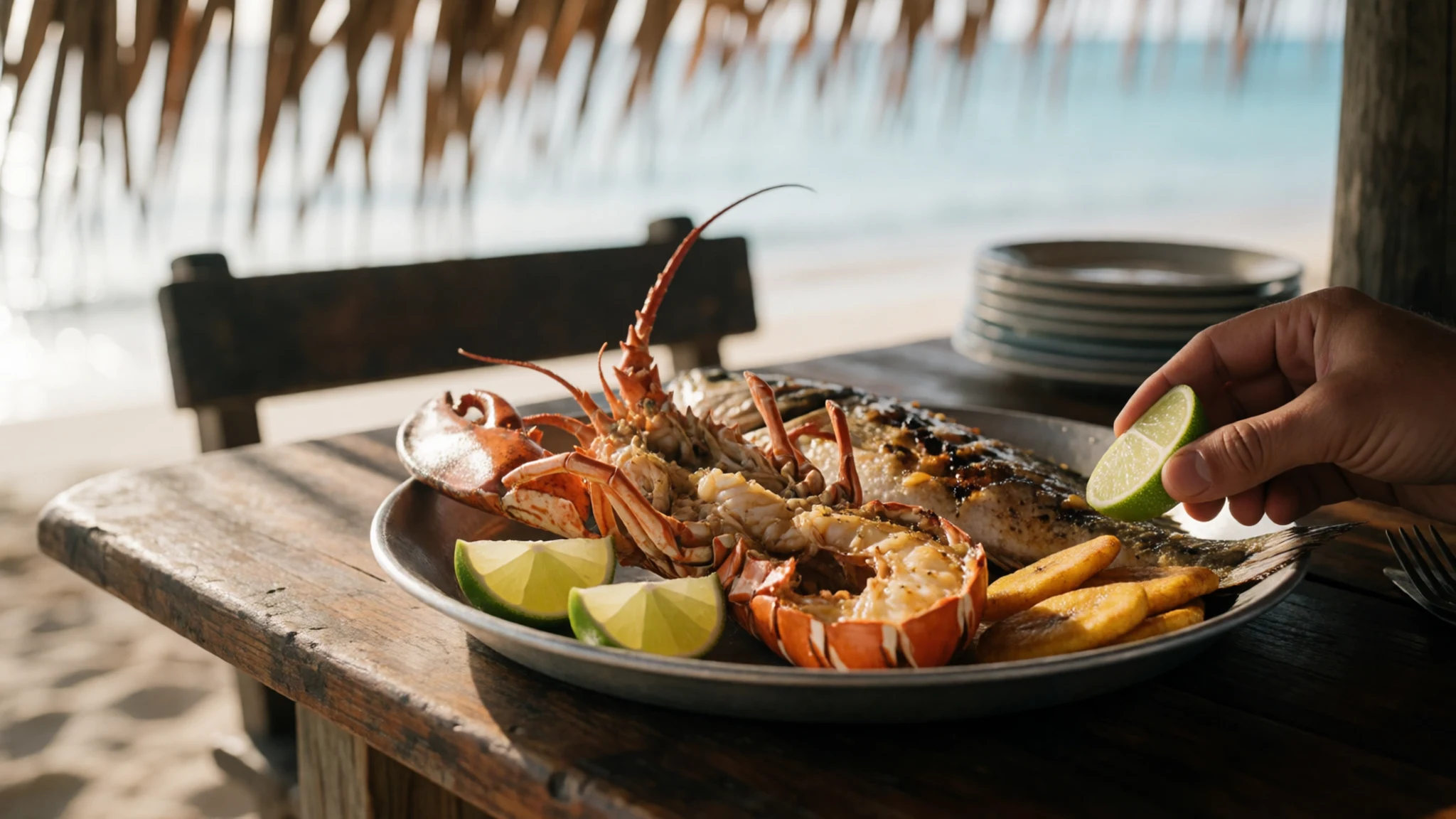
- Roti — A cookshop on Union Island
Roti is the flatbread parcel of Saint Vincent and the Grenadines, wrapped around curry — chicken, goat, vegetables or conch when it is in. Guests on Petit St. Vincent sometimes meet it at lunch, but the reliable bowl is a cookshop on Union Island before the boat.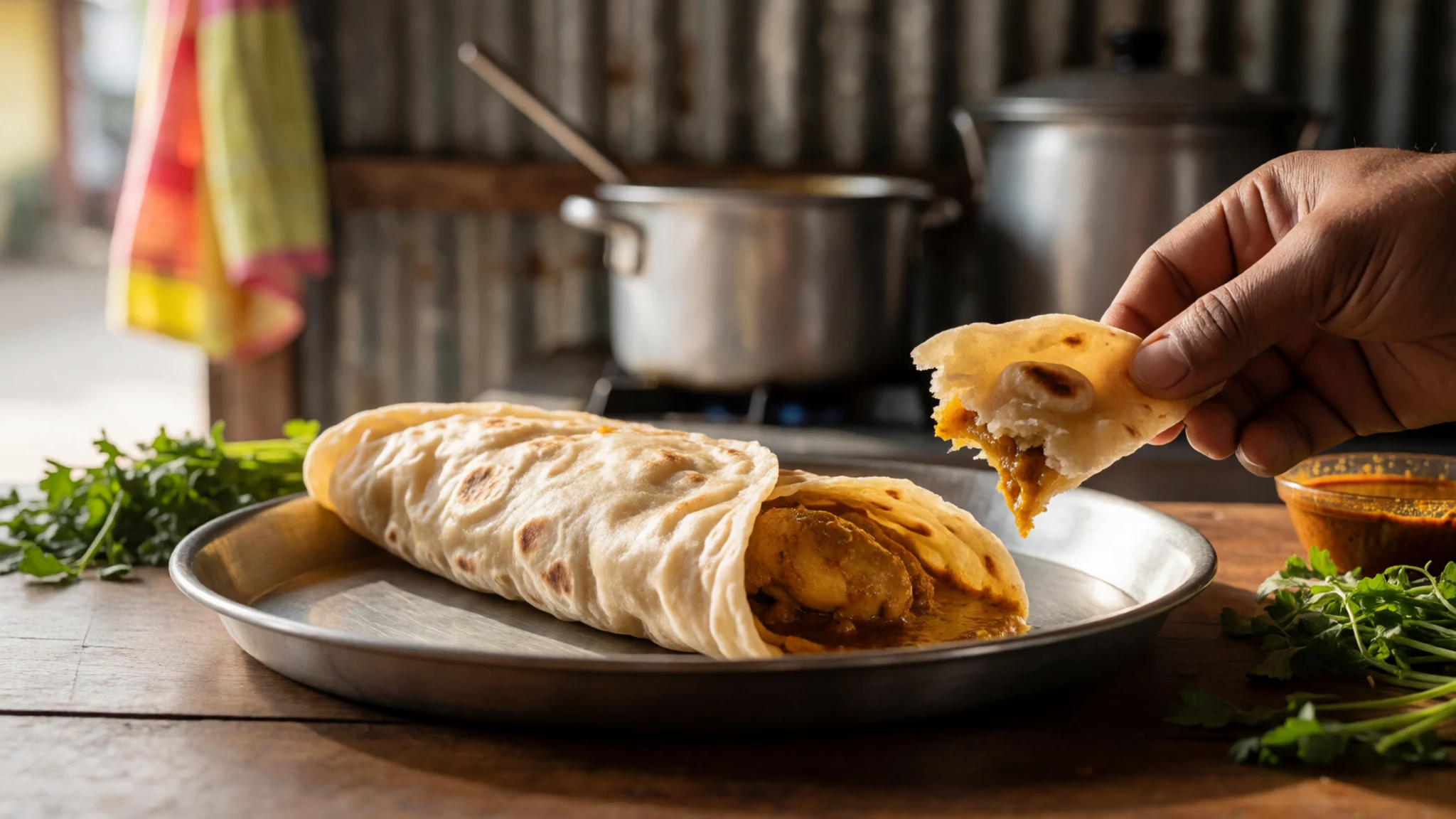
- Callaloo — The resort kitchen, or a small eatery on Union Island
Callaloo is the green soup of the eastern Caribbean, built on dasheen leaves cooked down with coconut milk and okra. On Petit St. Vincent it belongs to the resort kitchen's West Indian side. The same pot shows up in homes and small eateries on Union Island. - Pelau — The resort kitchen on a West Indian night
Pelau is pigeon peas and rice cooked with meat, herbs and a little caramelised sugar so the pot comes out brown rather than plain. It is Sunday and party food across Saint Vincent and the Grenadines, and a fair bet when Petit St. Vincent's kitchen cooks a West Indian spread. - Provisions and fried plantain — The resort dining room
Provisions — boiled green banana, plantain, breadfruit and dasheen — are the starch beside fish all through the Grenadines, and fried plantain is the sweet version of the same idea. Petit St. Vincent serves them when the kitchen is cooking local rather than a plain international plate.
Plan it
Best time. Petit St. Vincent is most comfortable in February, the mildest and driest month, and January through April are the steadier boat months. May is a shoulder. September is the hottest month and October the wettest, and hurricanes threaten from July to October, so squalls and a delayed crossing are possible.
How long. 3–4
Getting there. Fly into Argyle on Saint Vincent, or into Grenada, then continue by small plane or ferry to Union Island. A resort launch covers the last stretch of water to Petit St. Vincent. Check the official site for the meeting point, because the hop is by boat and depends on the sea.
Budget. high
Tips
- Book the Union Island connection before you travel; Petit St. Vincent is not a walk-up ferry stop.
- Snorkel in the morning, before the trade wind roughs up the water.
- Carry some cash for Union Island; small cookshops may not take cards.
- If you are prone to seasickness, pick the calmest day for the crossing.
- Pack sun cover before you arrive; there is no shop on the island.
Etiquette
- Use the cottage flag as the staff explain, and leave them in peace when it signals privacy.
- Greet boatmen and crew; they are hosts, not part of the view.
- Ask before you photograph any person.
- Do not stand on living coral, and take nothing from Mopion or the reef.
Nearby
Sources
- Wikidata (CC0)
- Wikipedia (CC BY-SA 4.0)
- Wikivoyage (CC BY-SA 4.0)
Wildlife
- Bananaquit (animal)
Remember the bananaquit as the small bird with a sweet tooth, forever visiting flowers for nectar. It is a familiar sight in the warmer parts of the Americas, and on Petit St. Vincent you will find it busy among the flowering shrubs. Keep still, speak softly and watch from a little way off, ideally with a guide who knows the blooms it favours. Never feed it; the flowers give it all it needs. - Bananaquit (bird)
Remember the bananaquit as the small bird with a sweet tooth, forever visiting flowers for nectar. It is a familiar sight in the warmer parts of the Americas, and on Petit St. Vincent you will find it busy among the flowering shrubs. Keep still, speak softly and watch from a little way off, ideally with a guide who knows the blooms it favours. Never feed it; the flowers give it all it needs.
More in Saint Vincent and the Grenadines
- Baliceaux
- Barrouallie
- Battowia
- Bequia
- Canouan
- Chateaubelair
- Fort Duvernette
- La Soufrière
- Mayreau
- Mustique
- Owia
- Rabacca
Every place in Saint Vincent and the Grenadines · Every place, A to Z