Bequia
Bequia, Saint Vincent and the Grenadines
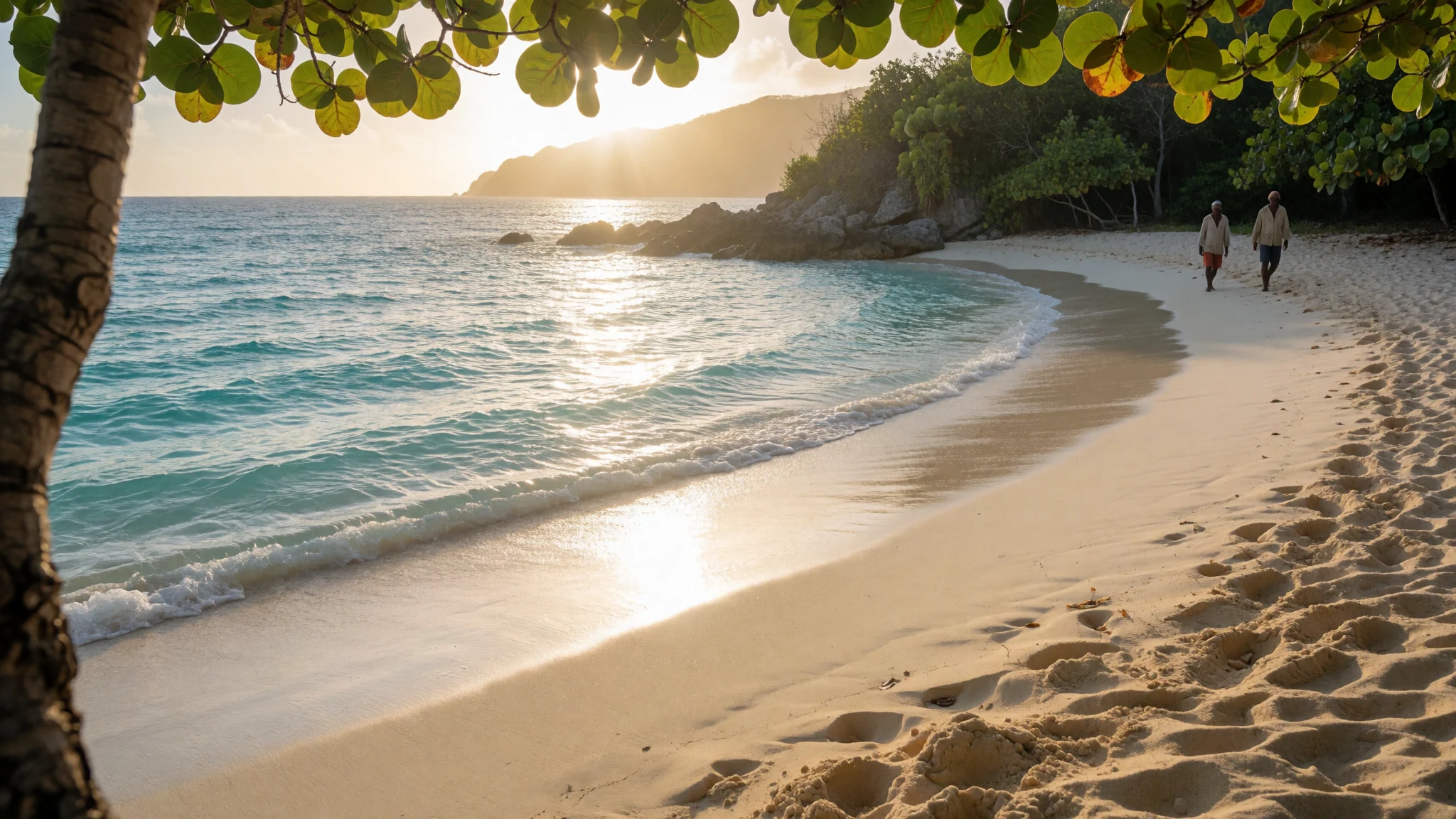
Bequia is a Grenadine harbour island of working boats, short hill walks and quiet beaches reached from Saint Vincent.
The place
Bequia sits in the Grenadines, a green island of ridges and bays belonging to Saint Vincent and the Grenadines. Admiralty Bay cuts into the sheltered side and holds Port Elizabeth, where ferries, fishing boats and visiting yachts share the harbour. Hills rise straight behind the waterfront, so the town stays a narrow band of shops, churches and wooden houses before the shore path leads on to a pale beach. The windward coast is rougher, broken into smaller coves with fewer buildings. South of the harbour, Friendship Bay looks out towards the rest of the Grenadine chain, and Paget Farm still lives by boats.
Bequia is a working island that also takes holidaymakers. Fishermen land their catch along the same front where visitors drink juice, and schoolchildren use the roads that lead over the hills to the beaches. Shade comes from sea grape, verandas and the folds of the hills, not from a city grid. Rooms cluster near the harbour, along Friendship Bay and on the ridges, rather than in a single resort strip. Most journeys between the town, the sand and the viewpoints are made on foot, and the climbs are short but exposed at midday. By evening the waterfront quietens to voices, rigging and the odd outboard crossing Admiralty Bay. The pleasure of Bequia is that slowness: a swim before the day boats, a ridge for the view, and a while watching the harbour change colour.
Its story
Bequia’s story is a harbour story. Indigenous people of the southern Caribbean knew the island long before European charts renamed the Grenadines, and the name is often explained as an indigenous reference to cloud on the ridges. French and then British rule folded Bequia into the colony centred on Saint Vincent, while enslaved Africans and, later, free black families made up most of the population that stayed. Plantation agriculture never swallowed the whole island; the useful skills were boats, fishing and getting around the channels.
Later, whalers from the North Atlantic brought the humpback hunt to Friendship Bay. Local crews learned to put out in small wooden boats, to sail close, and to hunt humpbacks from those open boats. That practice did not fade when industrial whaling ended elsewhere. Families in Paget Farm kept it as a seasonal community hunt, and visitors still hear it defended and criticised in the same afternoon. Alongside the hunt, Bequia built trading schooners on the beach. A launch drew the island down to the shore: timber, sweat, and a new hull sliding into Admiralty Bay.
A later age turned the harbour towards visitors without erasing the working waterfront. A royal visit left its name on the beach beside Port Elizabeth. Yacht crews began to treat Admiralty Bay as a winter anchorage. Regattas formalised the island’s habit of racing workboats. Model-boat makers set up along the front, shrinking the schooner tradition to something a traveller could carry home. Independence placed Bequia inside a sovereign Saint Vincent and the Grenadines, but daily life still faces the channel, the ferry and the next hull on the stocks.
What to see
- Admiralty Bay — Admiralty Bay
Admiralty Bay is Bequia’s harbour on the sheltered side, a deep curve busy with yachts, ferries and local fishing boats. The Belmont Walkway follows the western shore from Port Elizabeth towards Princess Margaret Beach, passing gardens and small jetties. The path is level, public and open to the anchorage the whole way. Morning is the quiet time, before dinghies begin crossing from the yachts to the shore.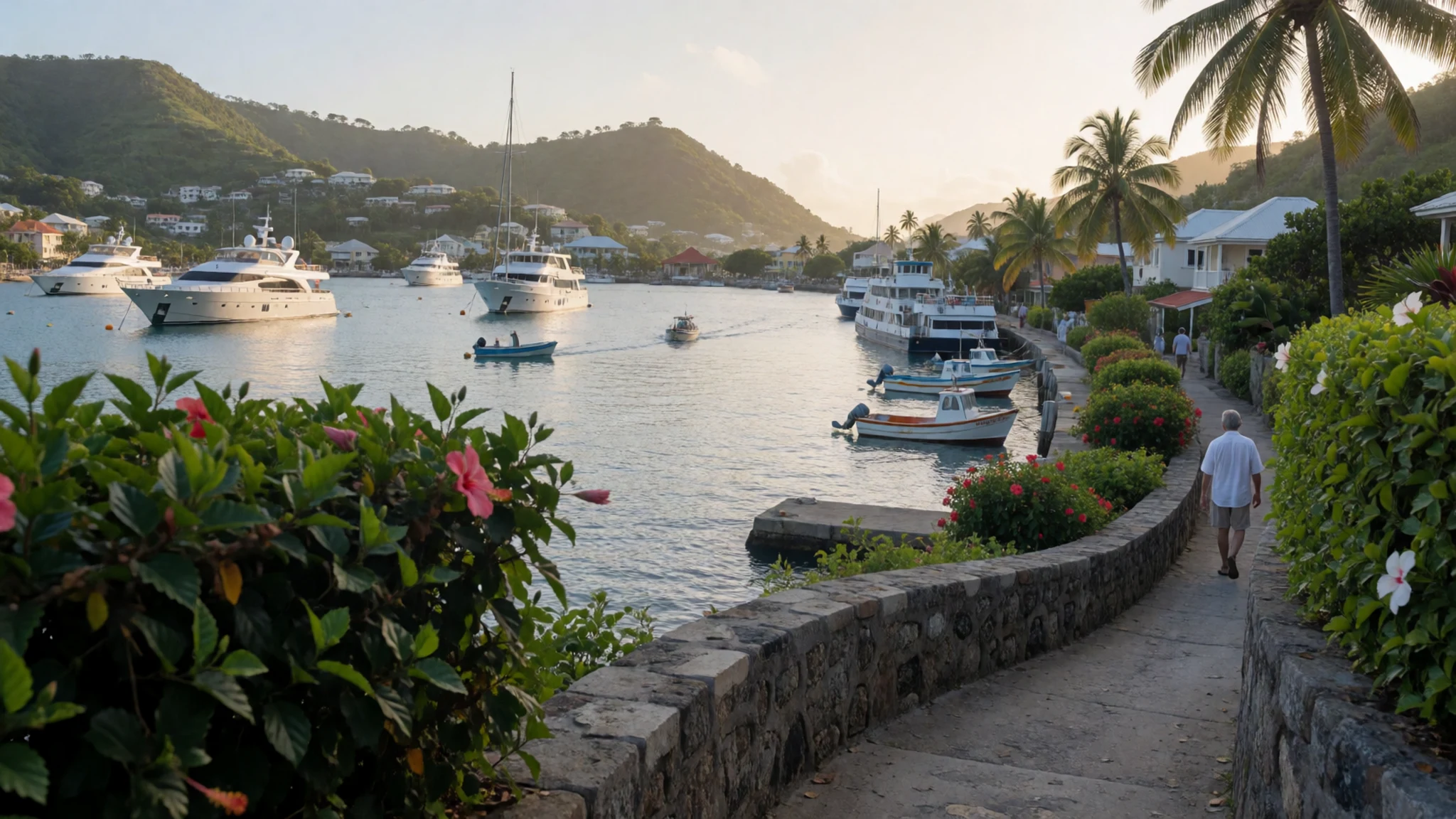
- Port Elizabeth — Port Elizabeth
Port Elizabeth is Bequia’s town, wrapped around the head of Admiralty Bay. The ferry comes in beside a small waterfront of provisioning shops, churches, rum shops and the market where fish and fruit are sold in the morning. Model-boat makers work in open sheds along the front, and the church and the main jetty mark the centre. The town suits errands, a cold drink and harbour-watching.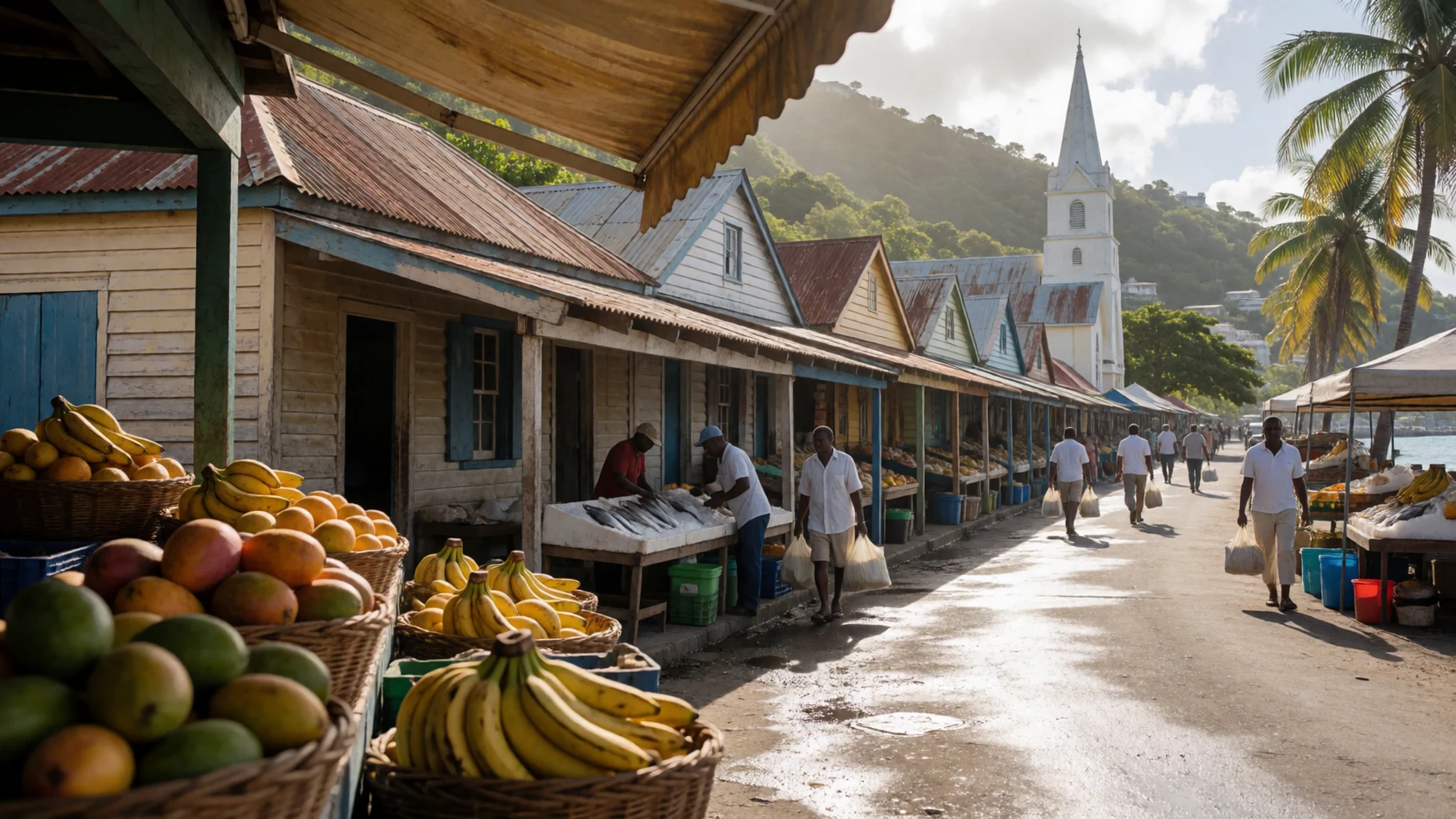
- Princess Margaret Beach — western shore of Admiralty Bay
Princess Margaret Beach on Bequia lies just west of Port Elizabeth, at the end of the Belmont Walkway, and takes its name from a royal visit. Pale sand and usually calm water sit in the lee of the island, with low trees for shade. Small bars and water taxis use the shore. Masts in the anchorage fill the view as much as the open sea.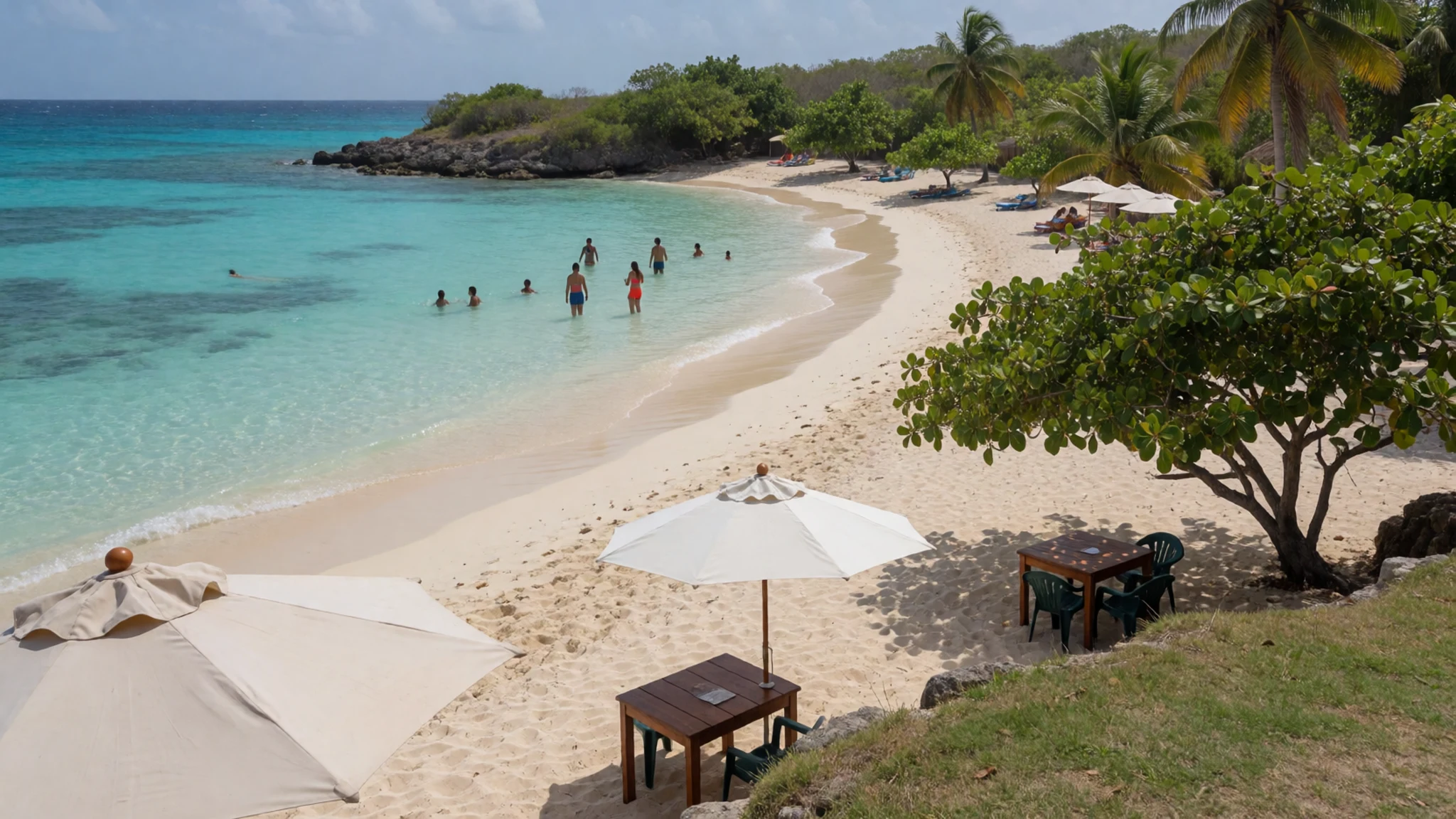
- Lower Bay — Lower Bay
Lower Bay is Bequia’s beach over the hill south of Port Elizabeth, reached by a steep footpath or a longer road. The sand is broad, the water suits snorkelling along the reef edges, and the shore draws cookshops, families and visitors together. The walk over is hot and uneven; a water taxi from the harbour is the gentler arrival. Shade thins out once the sun is high.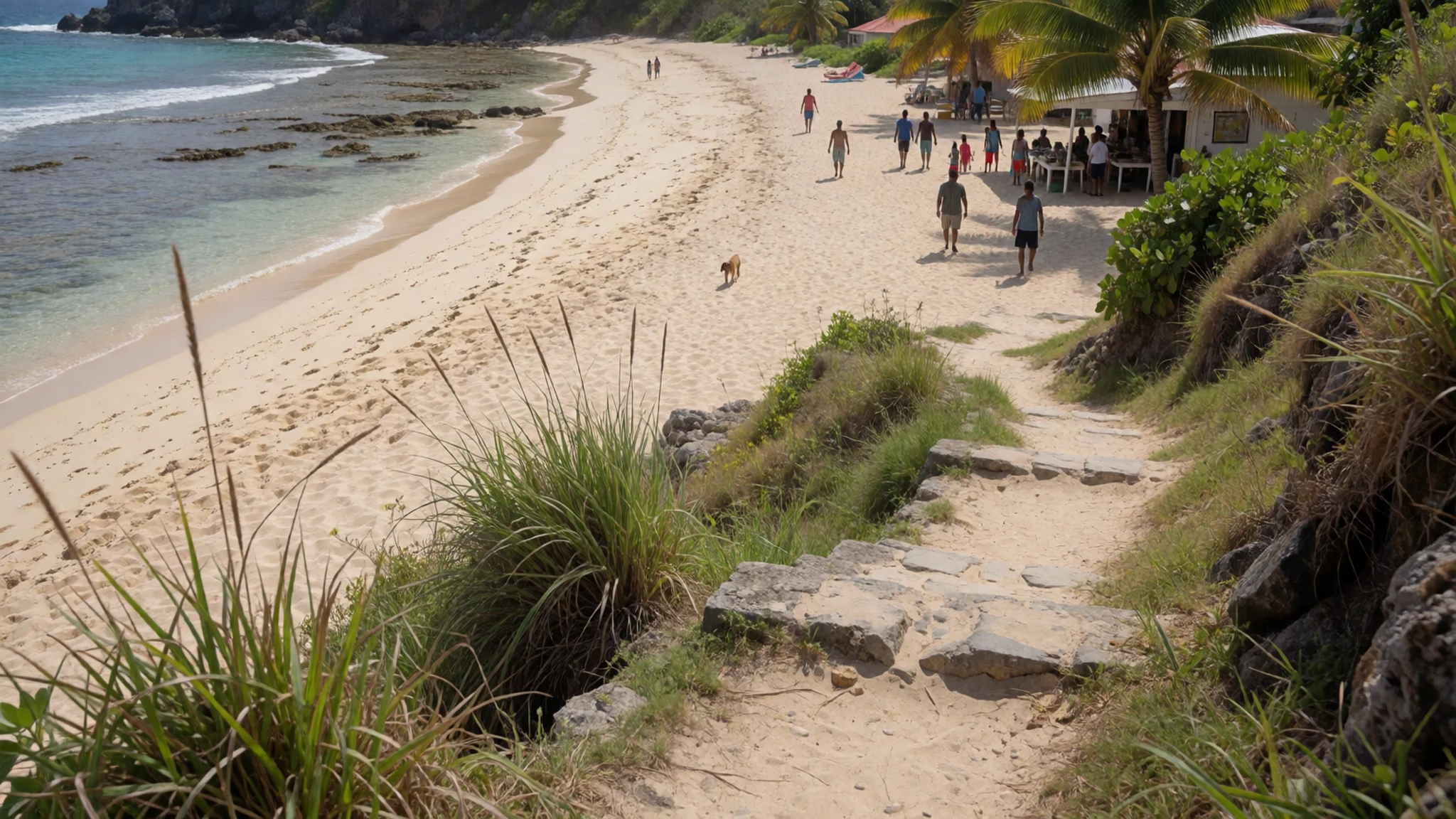
- Friendship Bay — south coast
Friendship Bay opens on Bequia’s south coast, a long beach with a different character from the harbour side: more wind, a view towards the other Grenadines, and a community tied to fishing and the old whaling boats. Paget Farm sits at the western end, near the island’s airstrip. The bay rewards a swim and a quiet look at the working boats.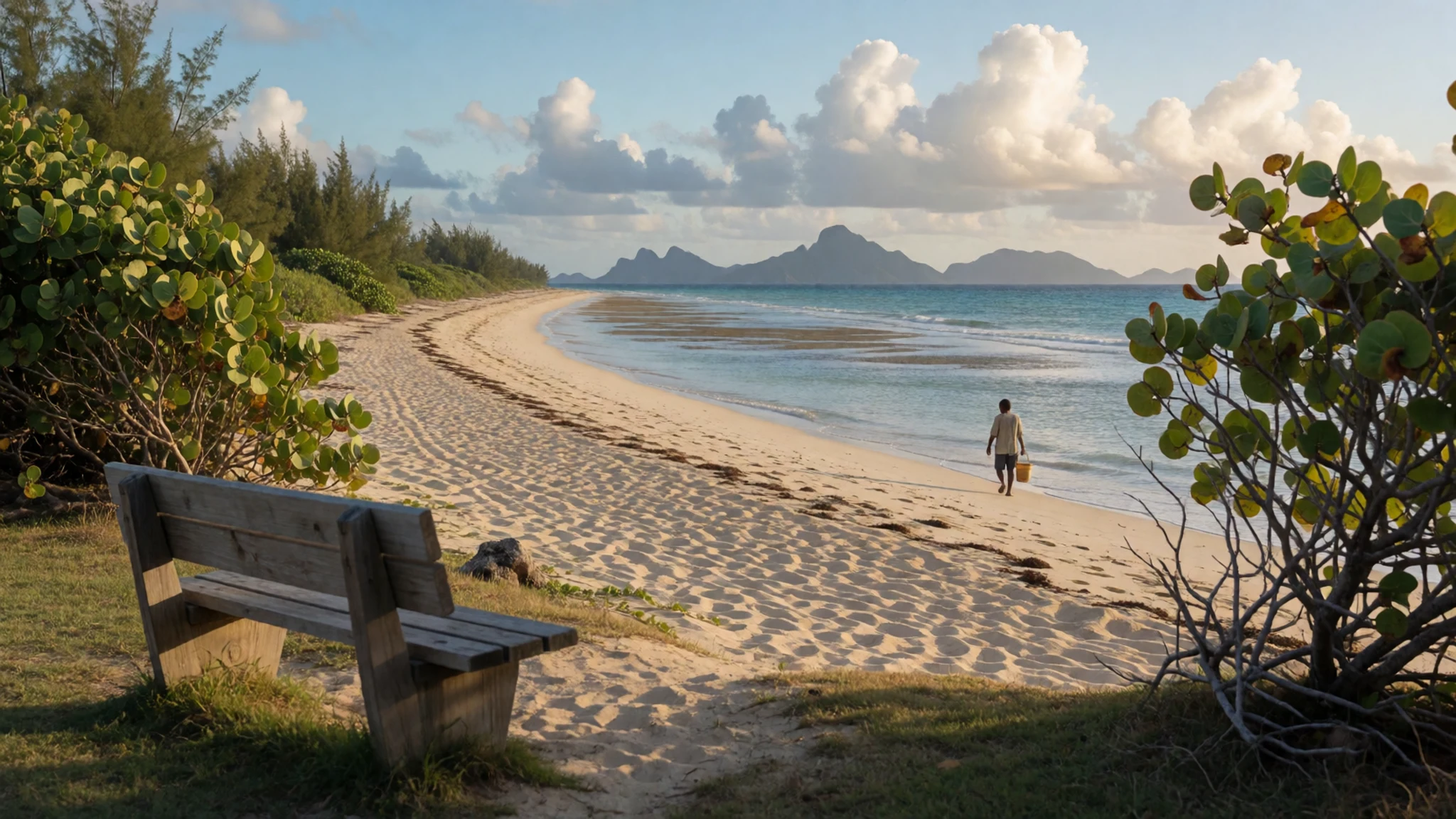
Culture
Bequia’s culture is maritime before it is anything else. Children learn the harbour the way other places learn a high street: boat names, weather signs, who is related to whom. Church on Sunday still structures the week, and dress and punctuality matter there even when the beach is the rest of the day’s plan. Bequia’s Easter regatta brings racing, parties and reunions that draw home people who live abroad. New Year has its own harbour joke, locals paddling inflatable lilos in a messy race. Music is the wider eastern Caribbean mix of calypso, soca and reggae, loud at regatta time and otherwise spilling from rum shops.
A pair of crafts carry the memory of heavier work. Model boats, built by hand on the waterfront, copy the schooners Bequia once launched. The whaling tradition at Paget Farm is more serious: a seasonal humpback hunt from open boats, kept by particular families and argued over on the island and far beyond it. Visitors are guests in that argument, not its judges. The Old Hegg Turtle Sanctuary, on the south of the island, raises hawksbill hatchlings for release, and a visit there feels closer to husbandry than to a show.
Ask before you photograph people, boats or the turtle tanks, and treat the whaling shore as someone’s workplace.
What to wear
Bequia has no single court costume still worn by the whole island. What lasts from older life is practical sea cloth and Sunday cotton. Fishermen and boat builders wore, and often still wear, light trousers or shorts, a shirt that can get wet, and a hat against the glare. For church and for funerals the island dresses up: pressed shirts, dresses, hats, and bright colour that reads clearly in strong sun. Madras and other checked cottons appear at family celebrations, as they do across the eastern Caribbean, though the handmade object visitors notice on Bequia is the wooden model boat rather than a woven garment. Sea-island cotton is the textile name visitors sometimes hear; on the street the cloth is simply light cotton that breathes.
Daily dress now is ordinary Caribbean warm-weather clothing. In Port Elizabeth people wear shorts, T-shirts, sundresses and sandals; rash guards and long-sleeve sun shirts appear on boats, and flip-flops are normal until a path turns rocky. Regatta week is louder — team shirts, swimwear in town, a little costume — and then Bequia goes back to work clothes.
Swimwear belongs on Princess Margaret Beach, Lower Bay and Friendship Bay, with a shirt or a wrap for shops, churches and the ferry. The hill path to Lower Bay needs sandals that grip, rather than smooth soles. A hat and a cover for the shoulders matter even when the breeze feels cool, and a light rain layer is worth packing for wetter months.
What to eat
- Fried fish and provisions — Port Elizabeth market and Lower Bay cookshops
Fried fish on Bequia is usually reef or jack fish, served with breadfruit, plantain or boiled provisions and a sharp pepper sauce. Cookshops around the Port Elizabeth market sell it from morning into early afternoon, and beach kitchens on Lower Bay do the same.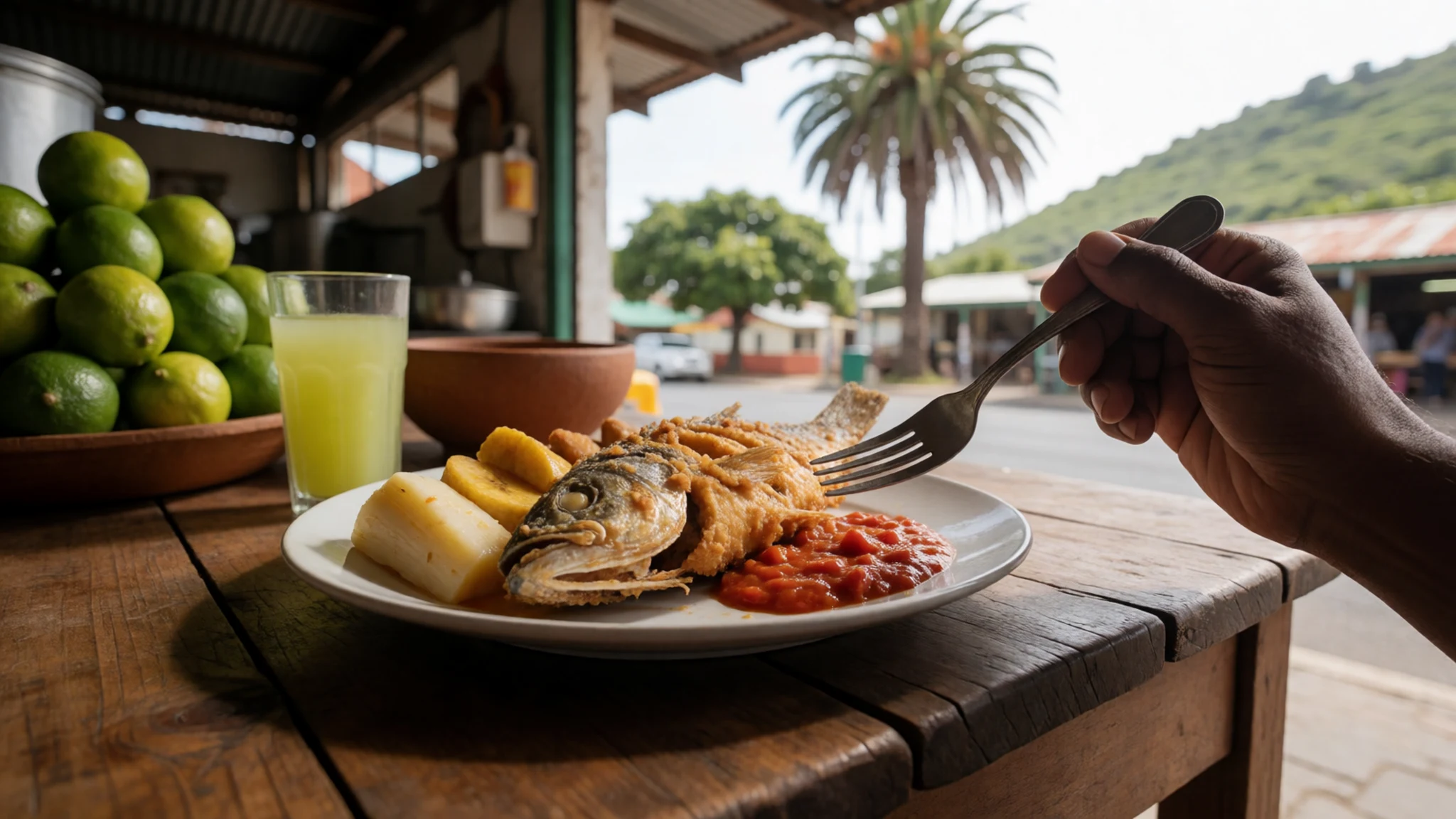
- Lambi — Port Elizabeth rum shops and Friendship Bay
Lambi, the local name for conch on Bequia, is eaten stewed, curried or as a cold souse with lime, onion and hot pepper. Harbourfront eateries and rum shops in Port Elizabeth serve it when boats have brought it in, and it also appears at Friendship Bay.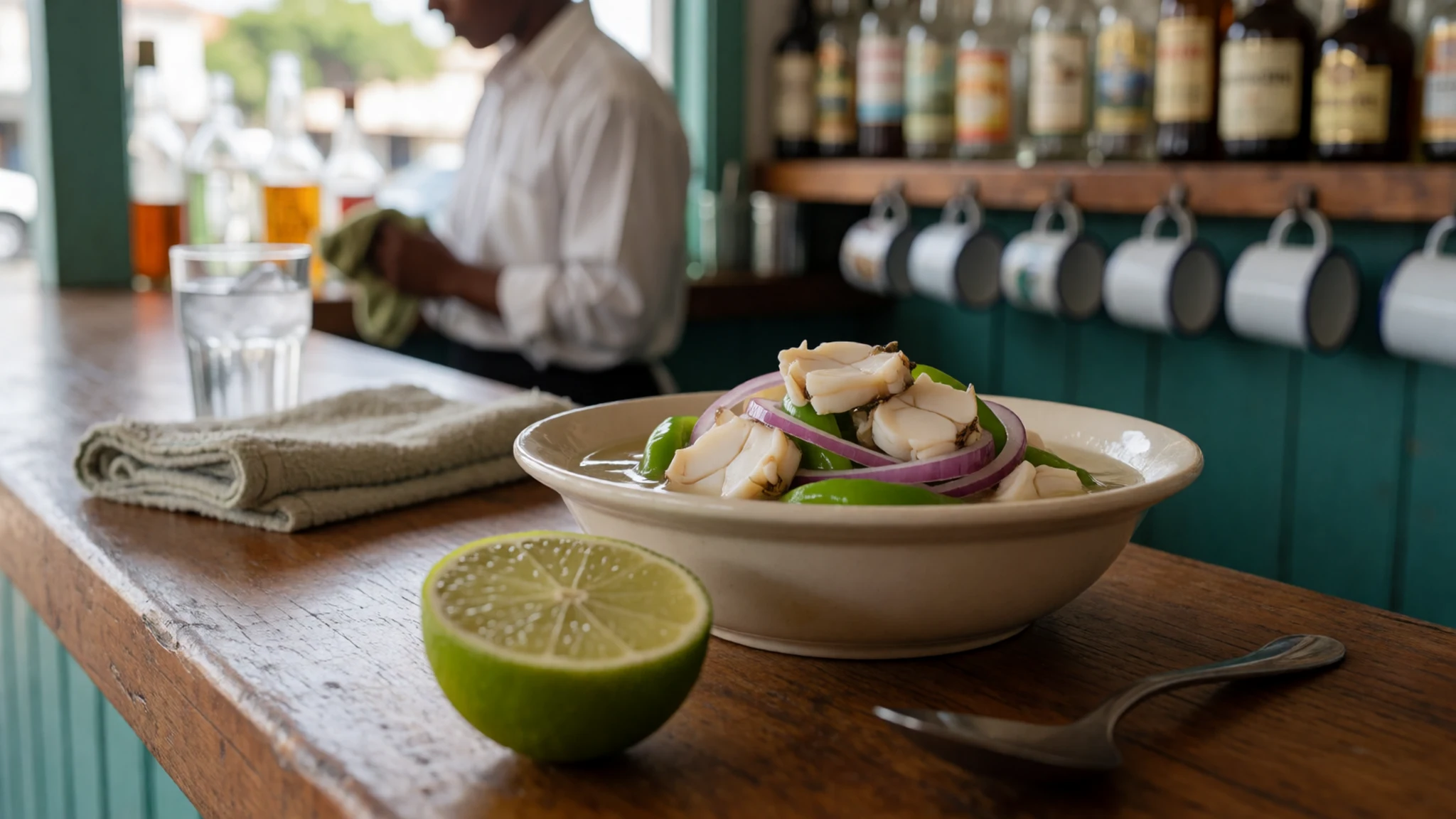
- Roti — takeaway counters in Port Elizabeth
Roti on Bequia is the West Indian flatbread wrapped around a curry, usually chicken, goat or vegetables, with potato and chickpea in the gravy. It is a portable lunch, eaten from paper at counters in Port Elizabeth. The filling follows whatever curry was cooked that morning. - Grilled lobster — Lower Bay and Friendship Bay beach restaurants
Grilled lobster is Bequia’s dish for a long beach afternoon, split and cooked over a grill and served with garlic butter and rice or provisions. It appears when boats land it and when the closed season allows. Beach restaurants at Lower Bay and along Friendship Bay serve it. - Callaloo — midday eateries in Port Elizabeth
Callaloo on Bequia is a soup-stew of dasheen leaves cooked down with coconut milk, okra and salted meat or crab. On Bequia it comes with ground provisions such as yam, green banana and sweet potato. Small eateries in Port Elizabeth that fill at midday are the place to find it.
Plan it
Best time. Drier months from the northern winter into spring suit Bequia: the breeze is steadier and the channel crossing is generally kinder. Easter week is the crowded, joyful exception because of the regatta. Late summer and autumn turn wetter, with a higher chance of tropical storms, and some services slow down.
How long. 3–4
Getting there. Fly into Argyle on Saint Vincent, then take the ferry from Kingstown to Port Elizabeth on Bequia. A small plane also serves the airstrip beside Paget Farm from Saint Vincent and some neighbouring islands. Confirm the current sailing and flight pattern with the operator before travelling.
Budget. mid
Tips
- Walk the Belmont Walkway in the morning, before the dinghy traffic builds across Admiralty Bay.
- Carry cash for rum shops, water taxis and market fruit; cards are patchy outside the larger guesthouses.
- Book a room well ahead for Easter regatta week, when Bequia fills with returning families and boats.
- Take water on the hill paths; the walk from town to Lower Bay is short, steep and exposed.
Etiquette
- Ask before photographing people, fishing boats or the turtles.
- Wear a cover-up away from the beach, and dress modestly if you step into a church.
- Do not treat a whale hunt as entertainment; watch only if a crew is comfortable with you there.
Nearby
Sources
- Wikidata (CC0)
- Wikipedia (CC BY-SA 4.0)
- Wikivoyage (CC BY-SA 4.0)
Wildlife
- Humpback (animal)
The humpback is a huge baleen whale, a gentle giant with very long flippers and bumps on its head, famous for leaping clear of the sea. Males sing long, winding songs. Bequia's boat crews once learned to sail close to humpbacks in small open wooden boats, so the island has long known them. Watch from a respectful distance, keep voices low, go with a local guide, and never feed or chase them.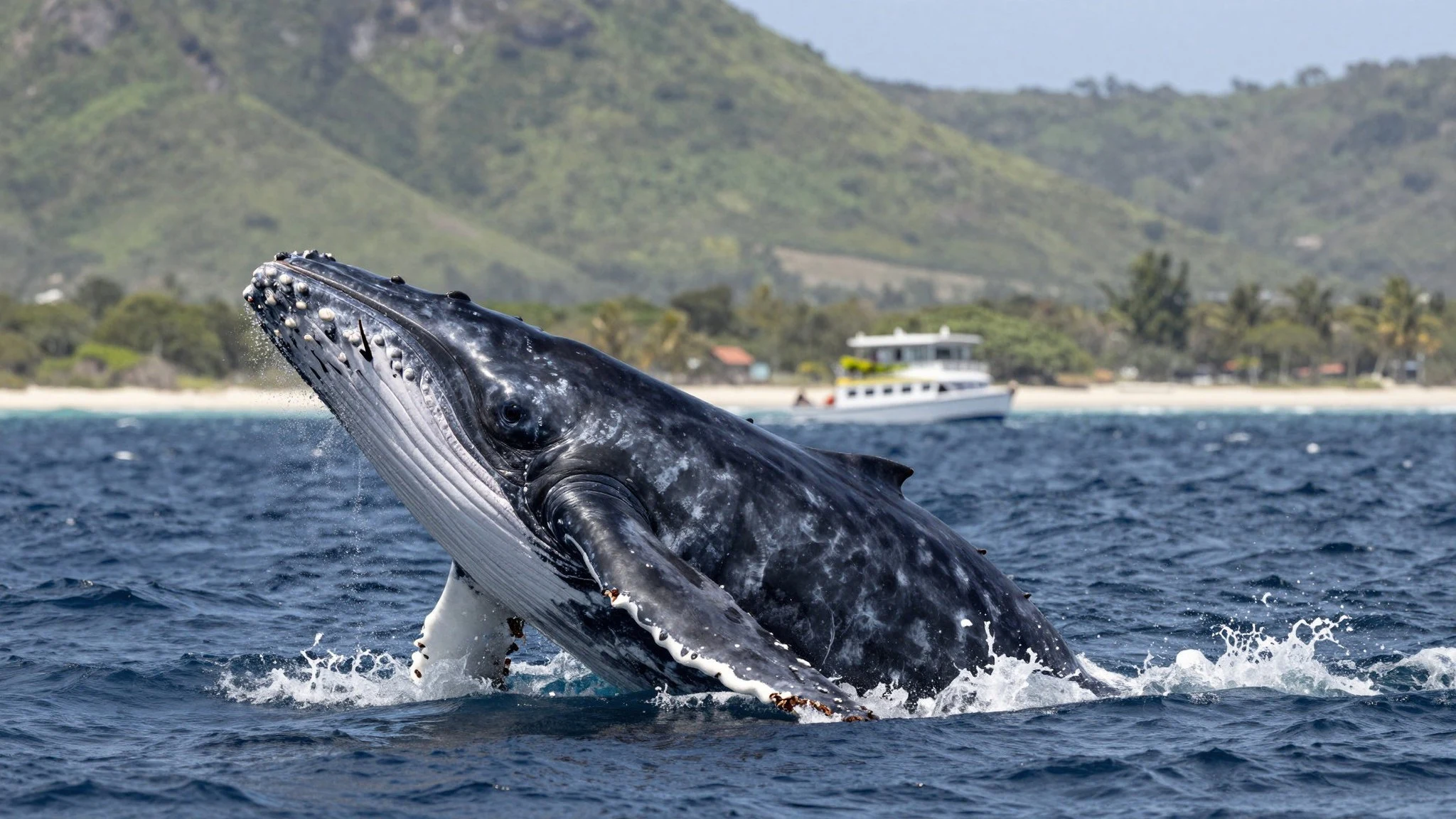
- Hawksbill (animal)
The hawksbill is a sea turtle that lives in warm seas, and sadly it is critically endangered, so every one matters. On the south of Bequia, the Old Hegg Turtle Sanctuary raises hawksbill hatchlings until they are ready to be set free, and a visit feels more like careful farm-keeping than a show. Walk quietly, stay at a gentle distance, follow the staff or a guide, and never feed or handle the turtles.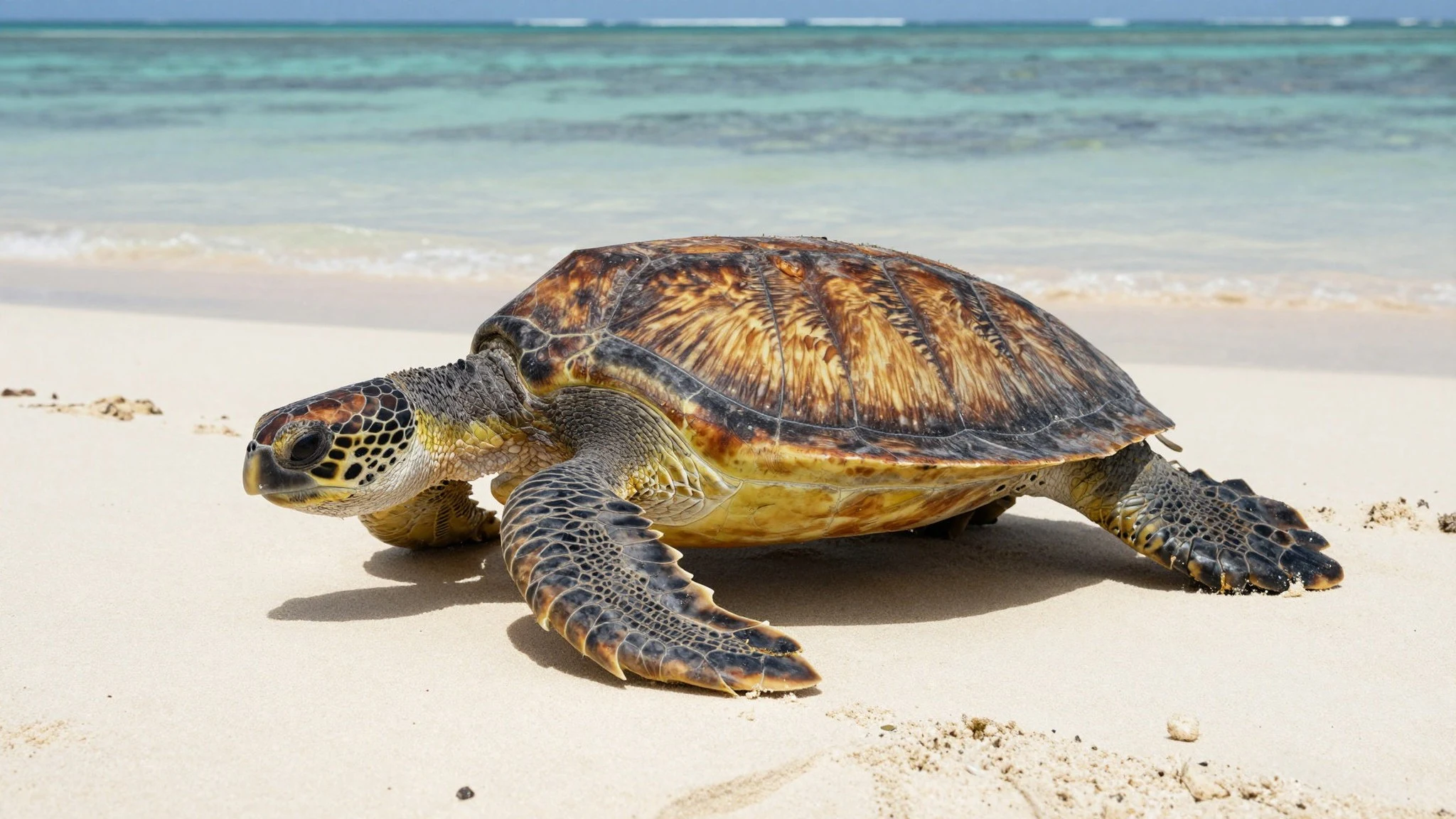
More in Saint Vincent and the Grenadines
- Baliceaux
- Barrouallie
- Battowia
- Canouan
- Chateaubelair
- Fort Duvernette
- La Soufrière
- Mayreau
- Mustique
- Owia
- Petit St. Vincent
- Rabacca
Every place in Saint Vincent and the Grenadines · Every place, A to Z