Mayreau
Mayreau, Saint Vincent and the Grenadines
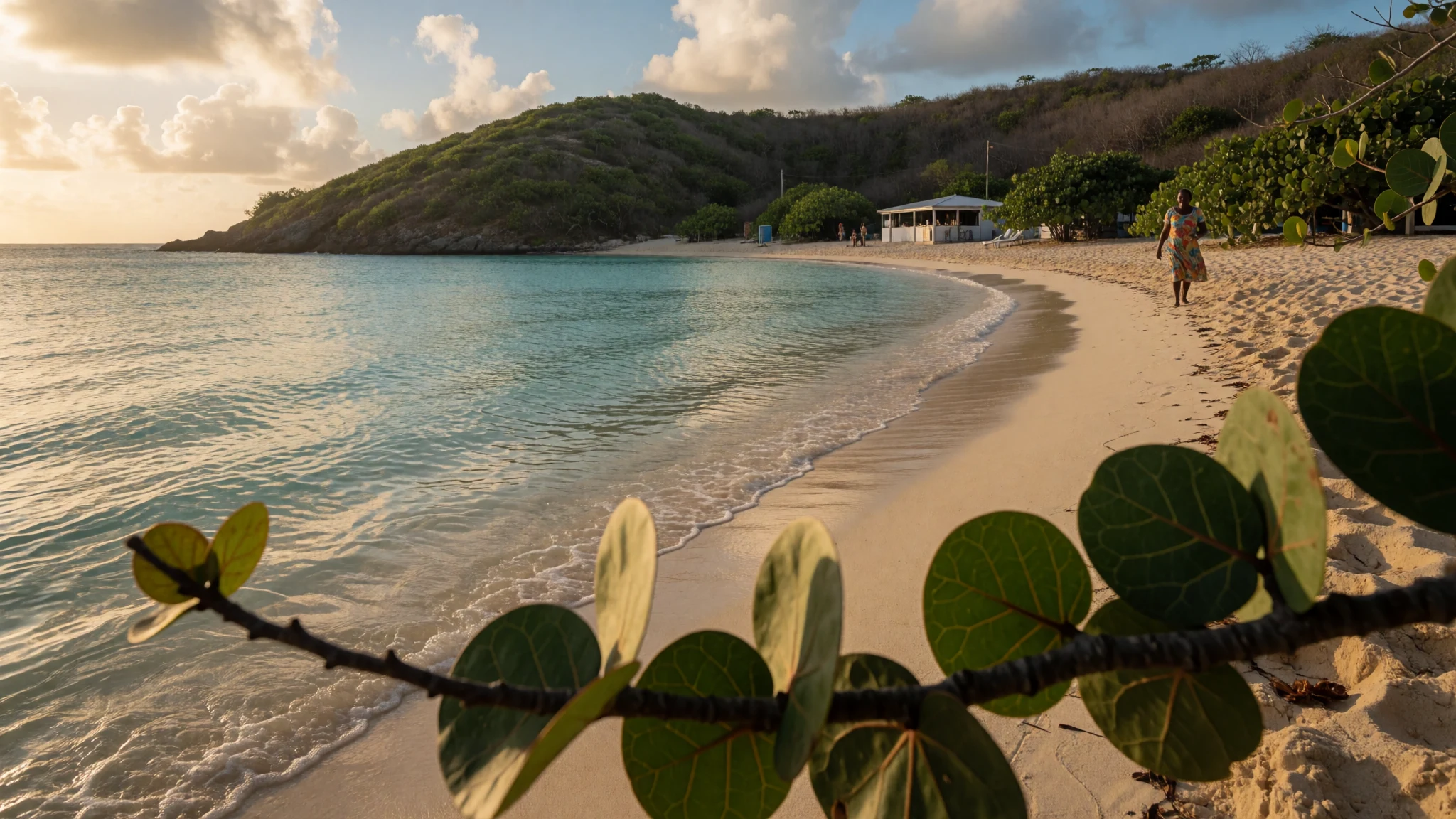
Mayreau pairs a quiet anchorage with a hilltop village and a fishing life a short boat ride from the Tobago Cays.
The place
Mayreau is a small inhabited island in the Grenadines, the chain that runs between Saint Vincent and Grenada, and it is part of Saint Vincent and the Grenadines. The land is a low ridge rather than a mountain, dry on the exposed slopes and greener in the sheltered folds, with the sea close on both flanks. Salt Whistle Bay, on the northwest, is a long pale beach where the water stays shallow well off the sand and yachts lie inside the curve of the anchorage. Saline Bay, on the south, is the working shore: a jetty, fishing boats, and the landing for ferries and water taxis. A footpath climbs the saddle between them, so the walk from one bay to the other also passes the village. That village is the whole settlement. Houses, a church on the high ground, a handful of shops and cookshops, and goats on the slopes account for the lived-in part of the island. Beyond them the ground is scrub and, in the drier corners, cactus, with a coast of rock and sand open to the trade winds. On a clear day Union Island stands one way and Canouan the other, and the low cays that boats cross for snorkelling sit in the same water. Mayreau's scale is the point. Fishers, families and visiting sailors share the same jetty, the same ridge path and a limited supply of fresh water, and the island reads as a home that also makes a good anchorage.
Its story
Mayreau's past is the past of a Grenadine fishing island that learned, late, to share its bays with visiting yachts. Before European charts, Kalinago communities knew the southern Caribbean as a sea of crossings, fishing grounds and dry island camps, and the Grenadines were part of that older map. French and then British colonial rule pulled the chain into the territory that is now Saint Vincent and the Grenadines. The island's name is usually traced to French, a linguistic trace of the earlier European presence in these waters. Plantation life — cotton, livestock, a thin scatter of estates — arrived here more lightly than on the big volcanic islands, and the houses of Mayreau stayed clustered on the ridge. Families fished, kept goats, worked small plots and traded by boat with Union Island and with Saint Vincent. A Catholic church built on the ridge became both landmark and meeting place, so the island's religious calendar sits closer to Catholic practice than to the Anglican pattern more widely associated with Saint Vincent. When cruising yachts took up the Grenadines as a sailing ground, Salt Whistle Bay became an anchorage sailors spoke of by name, and local boats began carrying guests toward the Tobago Cays. The jetty, the goats and the habit of recognising every boat in the bay did not disappear. Mayreau's recent history is that adjustment: a community that now earns part of its living from visitors, and that still organises the day around weather, the catch and the boat across from Union Island.
What to see
- Salt Whistle Bay — northwest shore
Salt Whistle Bay is Mayreau's northwest anchorage, a pale crescent where the sand shelves gently and yachts lie in calm water inside the point. Low beach bars sit back from the sand among sea grape. Swimming is easy off the beach, and snorkelling is better toward the rocks. The bay is a working anchorage as well as a swimming shore, so the moorings fill when the weather is kind.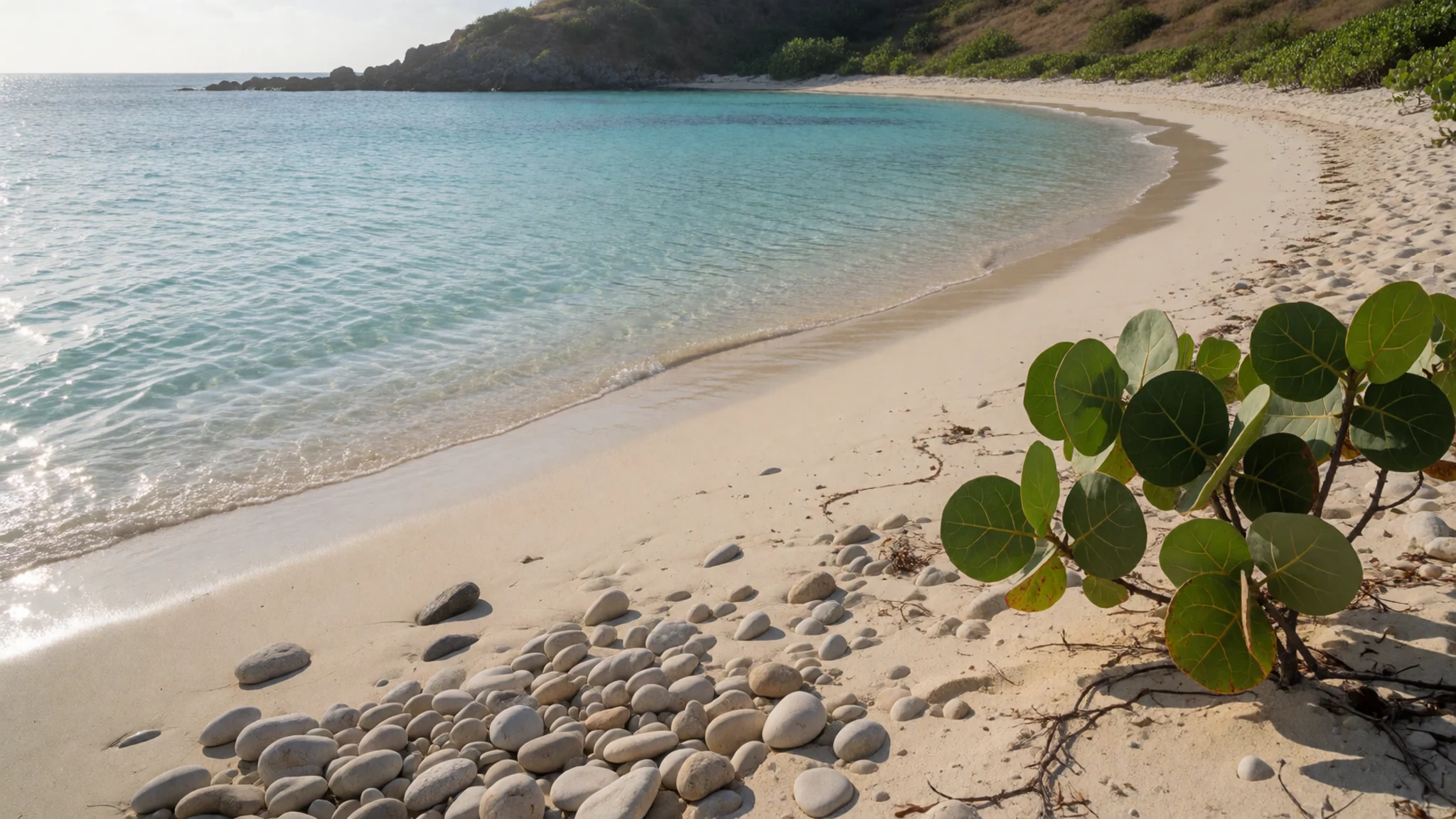
- Saline Bay — south shore
Saline Bay is Mayreau's southern landing, where the ferry, the water taxis and the fishing boats come in. A welcome sign stands near the jetty, and the path up to the village starts close by. The beach is busier and less polished than Salt Whistle Bay. Fuel, catch, groceries and people all pass through here, and the jetty stays a working edge rather than a swimming platform.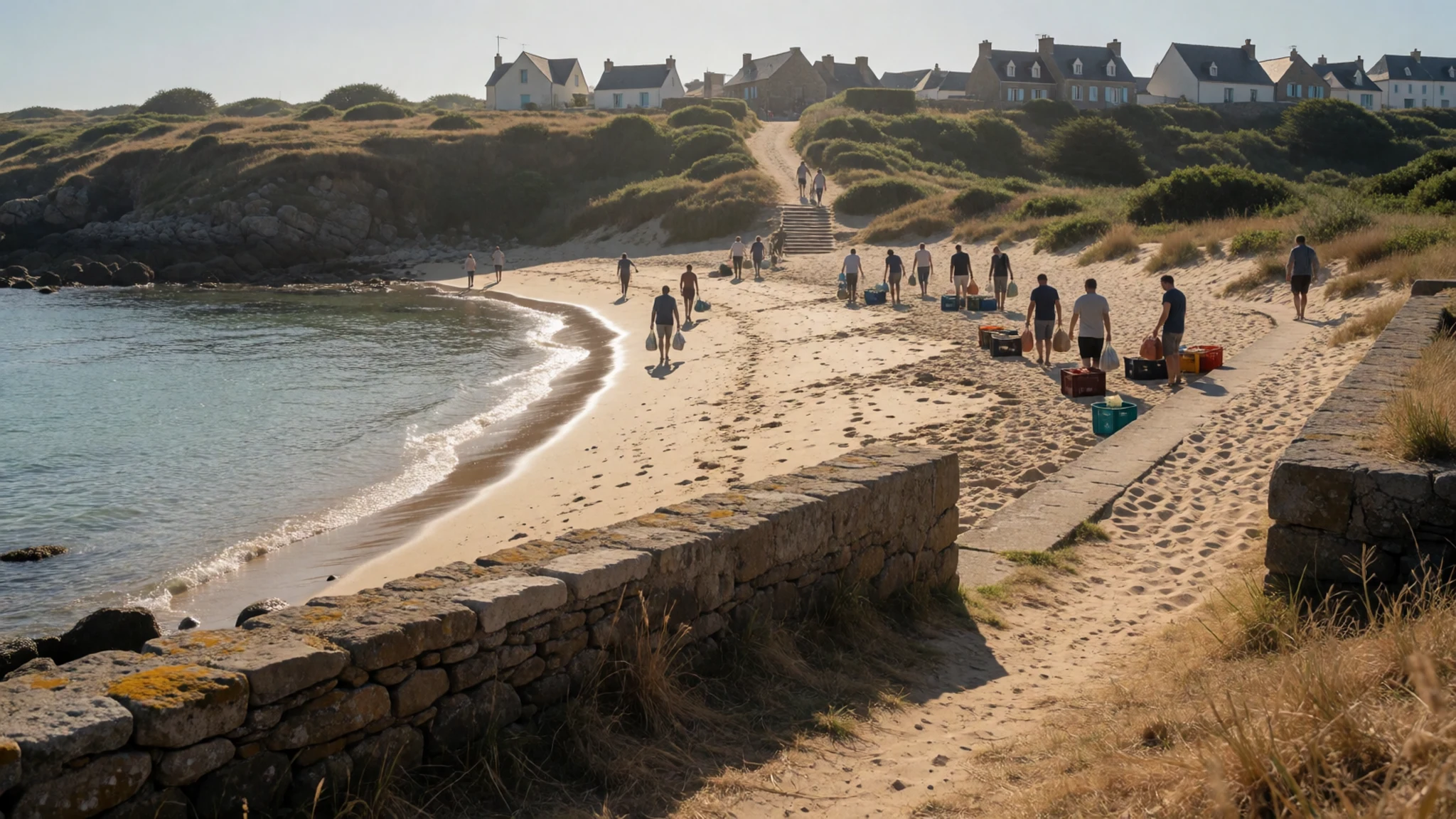
- The ridge village — the ridge
The village on Mayreau's ridge is the island's settlement, strung along the high ground between the bays. The Catholic church stands at the top and shows from the water, a white landmark looking over the coasts and the neighbouring islands. Schoolchildren, cookshops and goats set the pace. The paths are a neighbourhood, shared with the people who live there.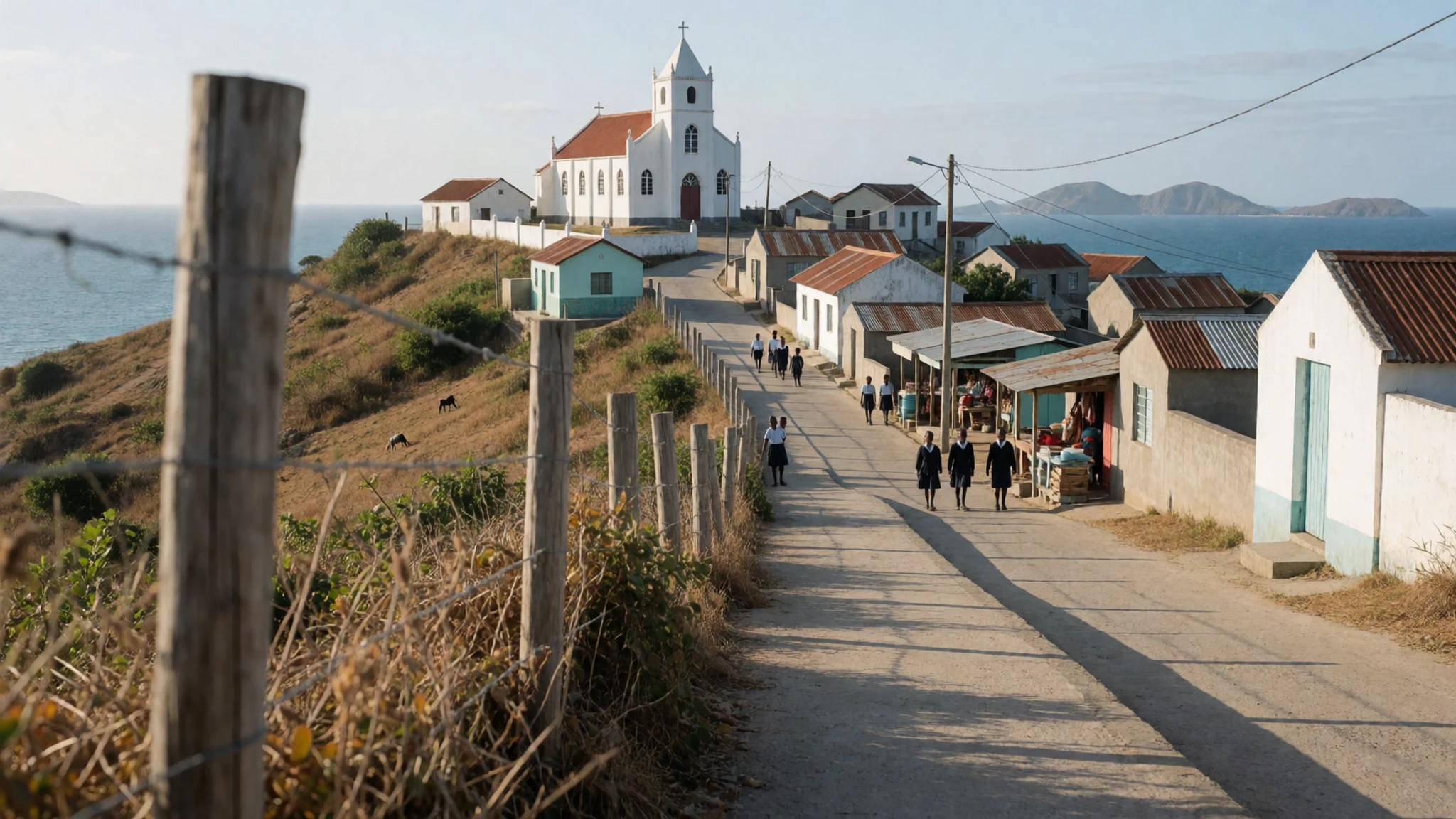
- The cross-island path — the saddle between the bays
The footpath over Mayreau's saddle links Saline Bay to the village and on to Salt Whistle Bay. It is a short, steep walk on concrete, stone and packed earth, with goats often sharing the way and views opening near the top. Shade is scarce, and the sun matters more than the distance. Taken slowly, with water, the path shows how compact the island feels underfoot.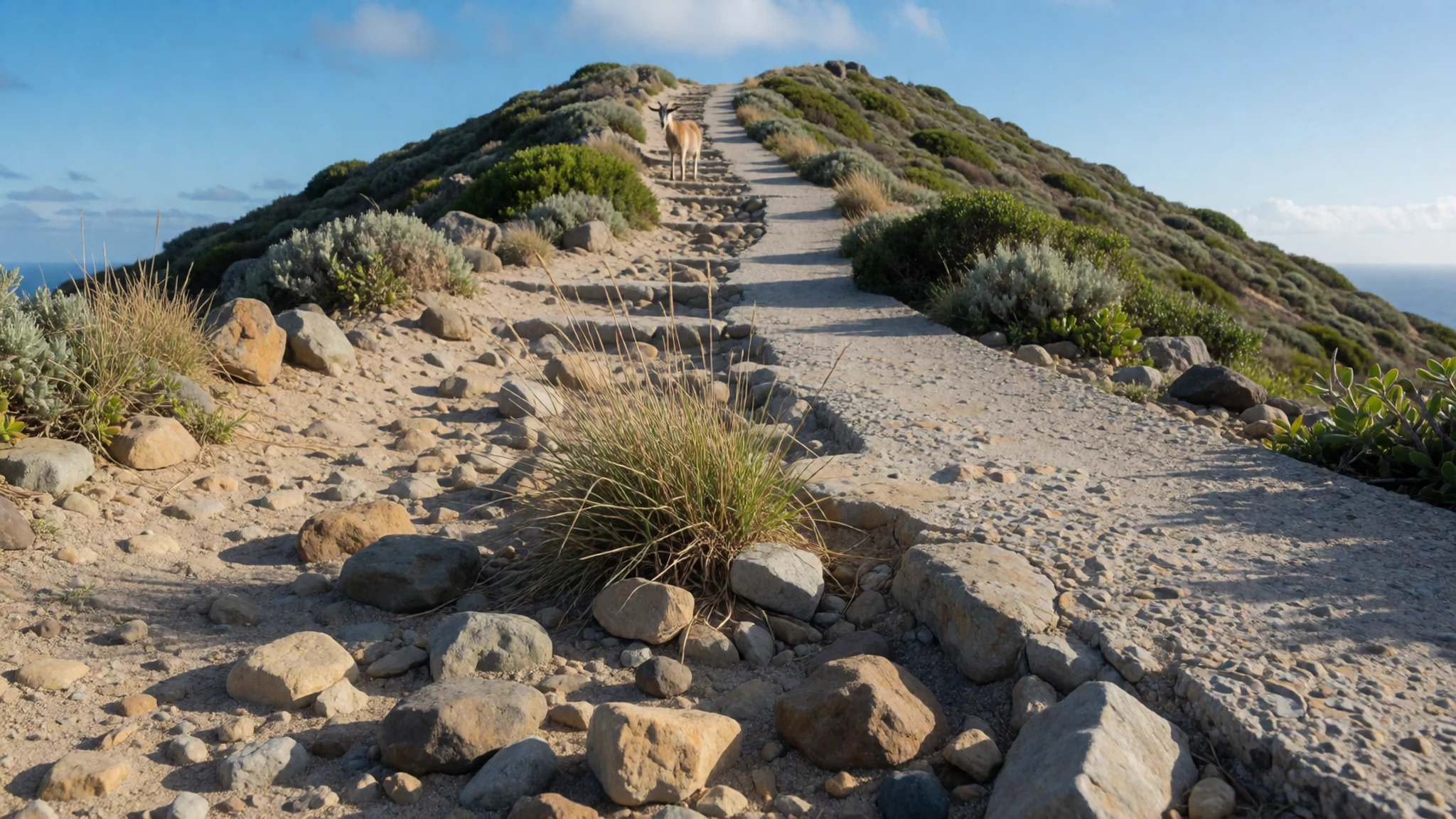
- A boat to the Tobago Cays — by boat from either bay
The Tobago Cays are not on Mayreau, but they shape a day based there. Boats leave from Saline Bay or Salt Whistle Bay for the marine park, a scatter of low islets and reef where snorkelling is the point of the crossing. The trip depends on sea state and on space aboard, and it is arranged with a local operator.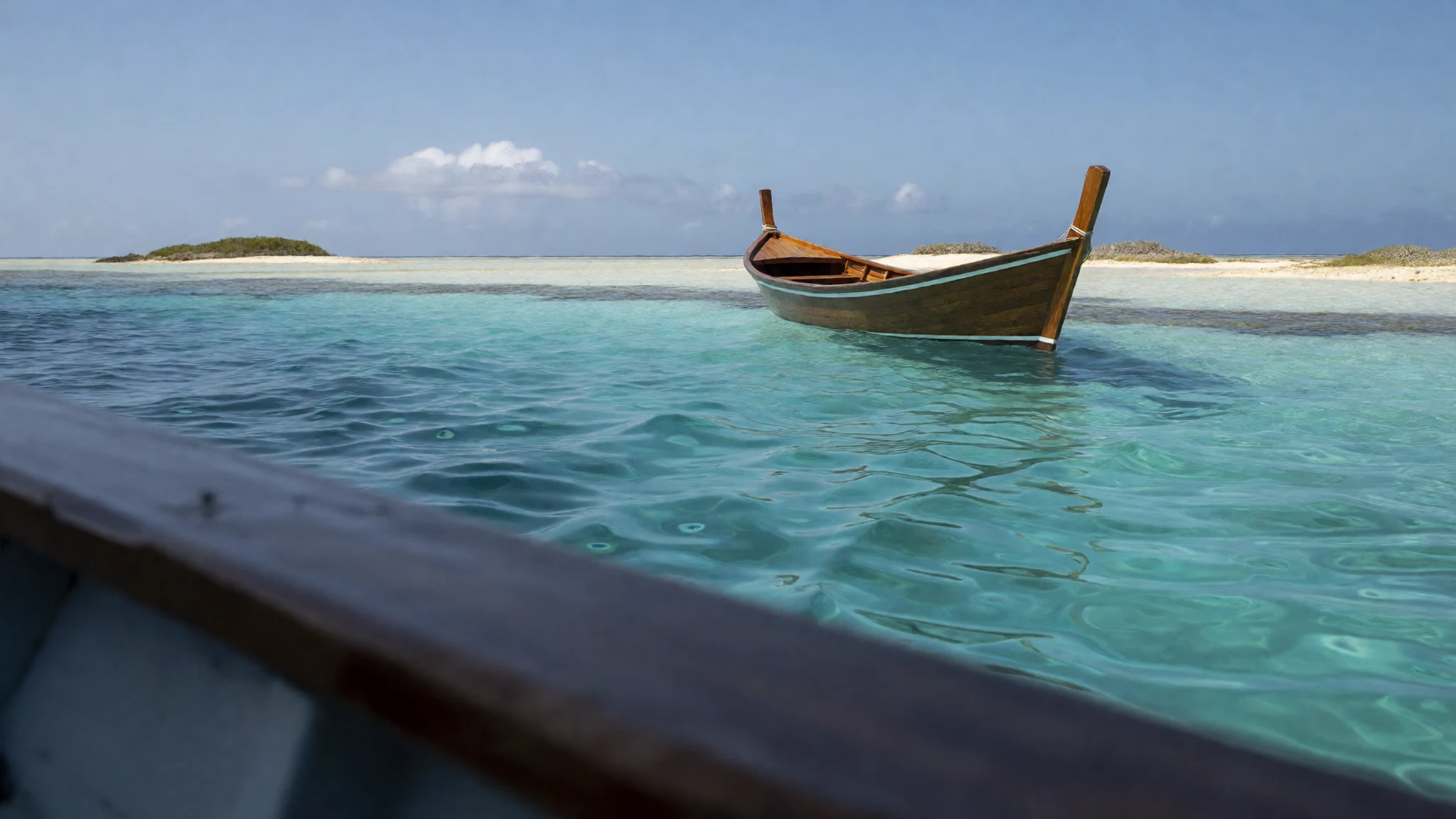
Culture
Mayreau's culture is village culture: a community small enough that people know one another by boat, by family and by church. English is the language of school and of the state, and everyday speech carries the rhythm of Vincentian English, with French echoes still audible in place names around the Grenadines. The Catholic church on the ridge is the public calendar. Sunday mass, feast days, weddings and funerals pull the island together in a way no beach bar does. Fishing still organises status and conversation: who went out, what came back, and whether the channel is passable matter as much as a visitor's plans. Music leans toward the soca and calypso of Saint Vincent's carnival season, and a sound system appears for a fête rather than as a nightly show. Goats, school runs and the arrival of the ferry are the ordinary spectacle. Residents are used to sailors and day visitors, and they are also used to being watched as scenery, which wears thin. A greeting on the path changes the tone of the walk. Ask before you photograph residents, cover your shoulders if you step into the church, and leave the beaches as clean as you found them.
What to wear
Mayreau dresses like the rest of the Grenadines, with a church wardrobe and a shore wardrobe that are not the same clothes. For Sunday and for feast days, older women still favour a modest dress, often in a bright cotton print, sometimes with a headscarf, and men put on a collared shirt and trousers rather than the singlet they fish in. Madras checks and bright printed cottons appear at fêtes and at carnival, when costume and matching bands take over for a day. Those clothes are for occasions. On an ordinary day the island wears what the heat allows: shorts, T-shirts, sundresses, caps and flip-flops, with swimwear reserved for the beach rather than the shop. Visitors fit in by copying that split. Light, breathable cotton is enough for the ridge; a hat and sunscreen matter more than an extra layer, except in a rainy squall, when a thin waterproof is worth having in the bag. Swimwear is right for Salt Whistle Bay and for a boat, and a cover-up is the polite way to walk through the village. Shoulders and knees covered are the expectation at the church door. Sturdy sandals beat flimsy flip-flops on the steeper, stonier bits of the path, and shoes come off if a visitor is waved onto a boat or into a house.
What to eat
- Fried fish — village cookshops and beach bars on either bay
Fried fish is Mayreau's everyday plate, a reef or open-water catch served with rice, plantain or salad. Cookshops in the village and beach bars on Salt Whistle Bay and Saline Bay cook it when the boats are in. The species depends on the morning's catch.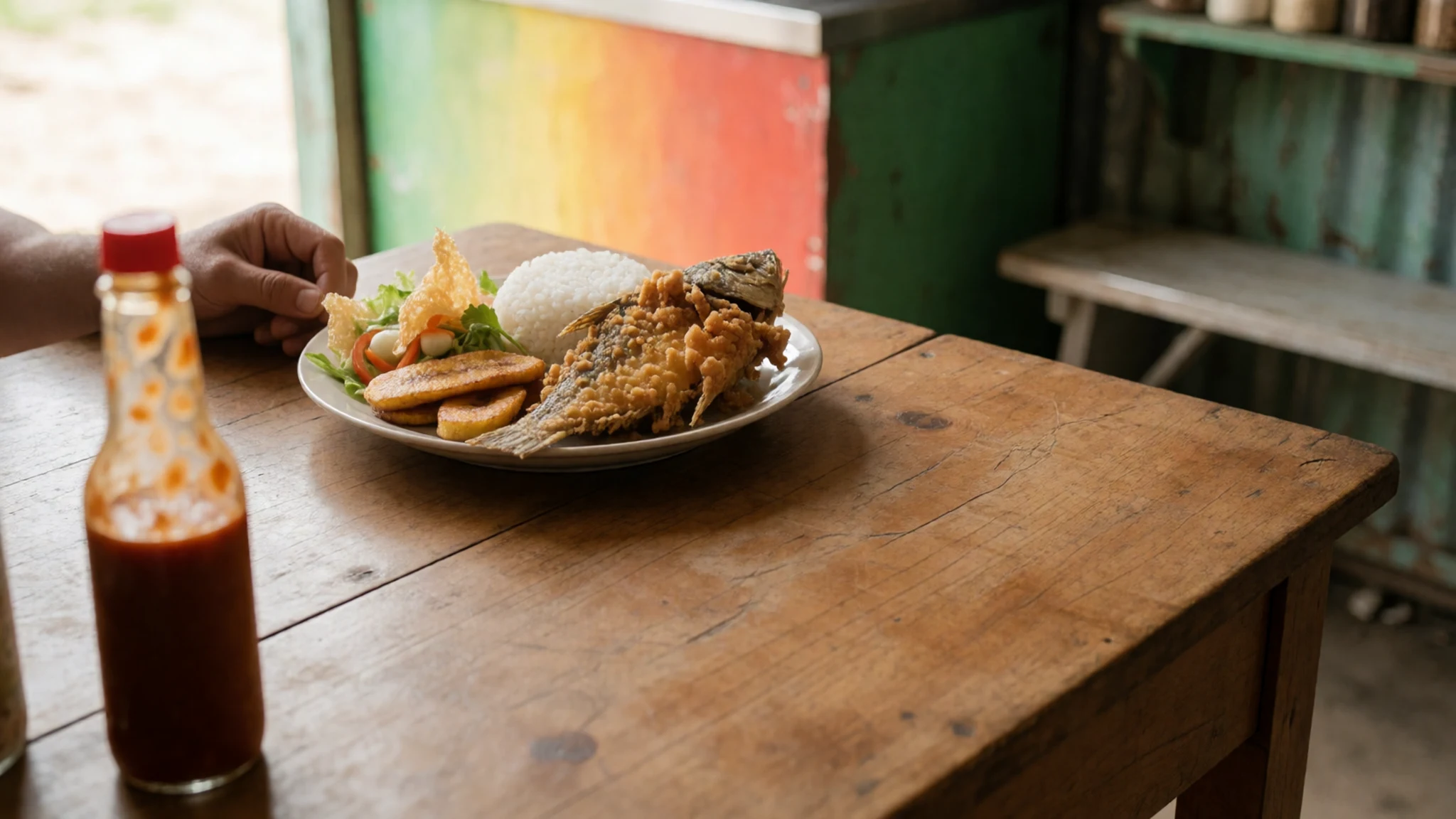
- Lambi — cookshops and beach bars
On Mayreau, lambi — conch — is stewed or fried with onion, pepper and thyme and eaten with rice or ground provisions. Cookshops and beach bars serve it when a diver has brought it in. Some days the pot is empty.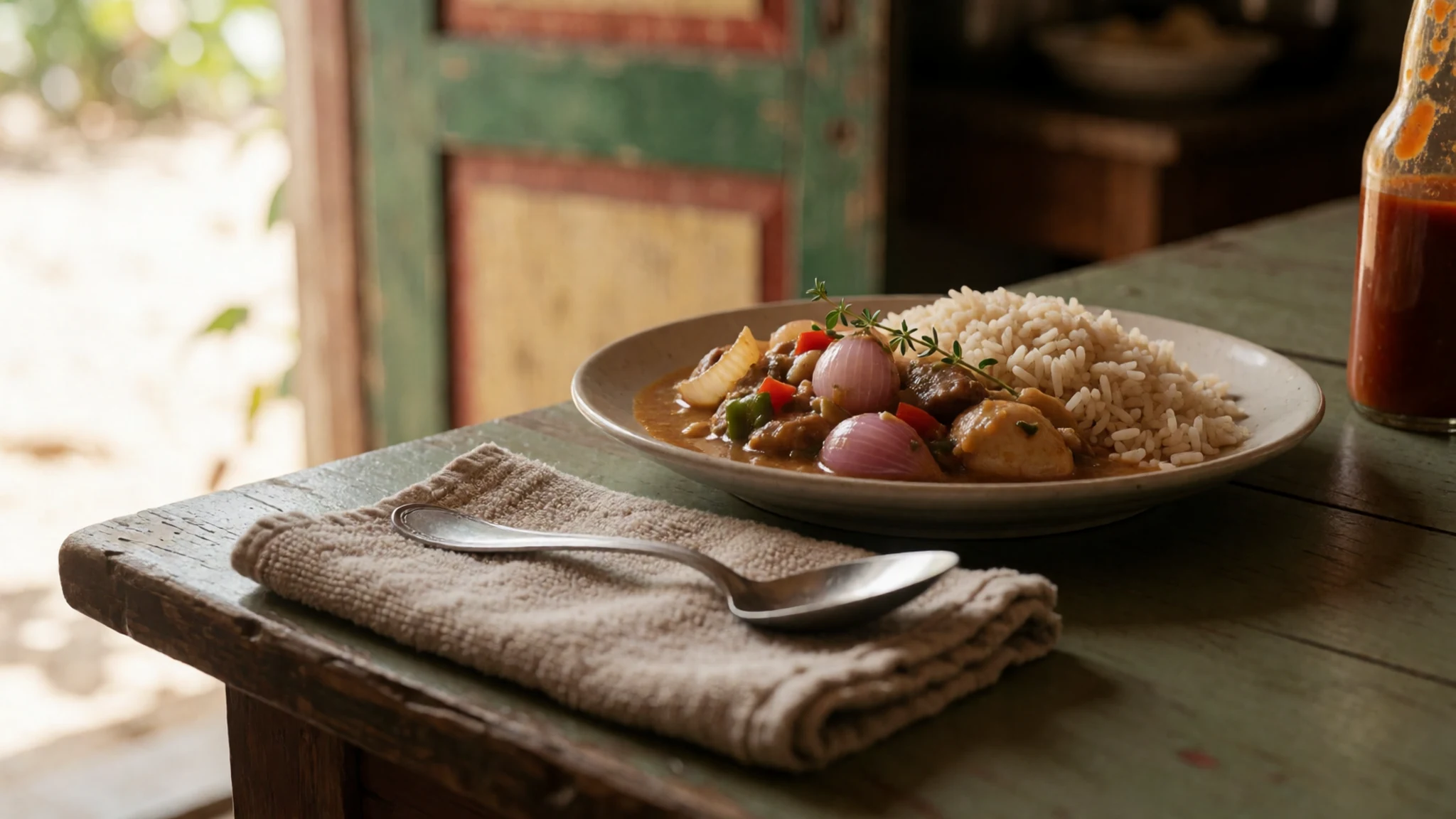
- Roti — village cookshops
Roti on Mayreau is a flatbread folded around curry — chicken, goat or vegetables — often with potato in the filling. A village cookshop is the reliable place around midday, and beach bars sometimes have it too. It travels well in a boat bag. - Saltfish and provisions — village cookshops
On Mayreau, saltfish and provisions means salted cod with onion and pepper beside boiled breadfruit, plantain, sweet potato or dasheen. Village cookshops make it as a family-style lunch more often than as a yacht special. - Callaloo — village cookshops and beach bars
Callaloo on Mayreau is a green stew of dasheen leaves cooked down with onion, herbs and a little salted meat or crab. Village cookshops serve it beside other plates, and beach bars have it less often. The leaves should be soft and the seasoning warm.
Plan it
Best time. Mayreau is kinder in the drier months, December to April, when the trade winds are steadier and heavy showers are fewer. From May through November the rainy season brings more frequent rain, October is the wettest month and September the hottest, February is the most comfortable, and hurricanes threaten from July to October, so travellers watch forecasts and keep plans flexible.
How long. 2–3
Getting there. Mayreau is reached by boat on the last leg. Flights land at Argyle International Airport on Saint Vincent, or on the short runways at Union Island and Canouan, then a water taxi or the inter-island ferry runs into Saline Bay. Wind and swell can delay that crossing, so check current ferry and airline notices before a tight connection.
Budget. mid
Tips
- Carry Eastern Caribbean dollars in cash; card machines are uncommon away from the busier beach bars.
- Confirm the boat from Union Island on the day, because wind and swell move the crossing.
- Walk the ridge early or late; shade is scarce and the sun is strong.
- Fresh water is limited, so refill bottles and use it sparingly.
- Arrange a Tobago Cays boat with a local operator before the morning you want to go.
- Pack reef-safe sunscreen and a hat; both bays are bright and short of shade.
Etiquette
- Greet people on the path; Mayreau is a neighbourhood before it is a stopover.
- Ask before photographing residents, and do not photograph children without a parent's agreement.
- Cover shoulders and knees if you go into the church.
- Carry rubbish off the beach; do not leave it for someone else to deal with.
- Keep to paths, and do not cross private yards or pick fruit.
Nearby
Sources
- Wikidata (CC0)
- Wikipedia (CC BY-SA 4.0)
- Wikivoyage (CC BY-SA 4.0)
More in Saint Vincent and the Grenadines
- Baliceaux
- Barrouallie
- Battowia
- Bequia
- Canouan
- Chateaubelair
- Fort Duvernette
- La Soufrière
- Mustique
- Owia
- Petit St. Vincent
- Rabacca
Every place in Saint Vincent and the Grenadines · Every place, A to Z