Canouan
Canouan, Saint Vincent and the Grenadines
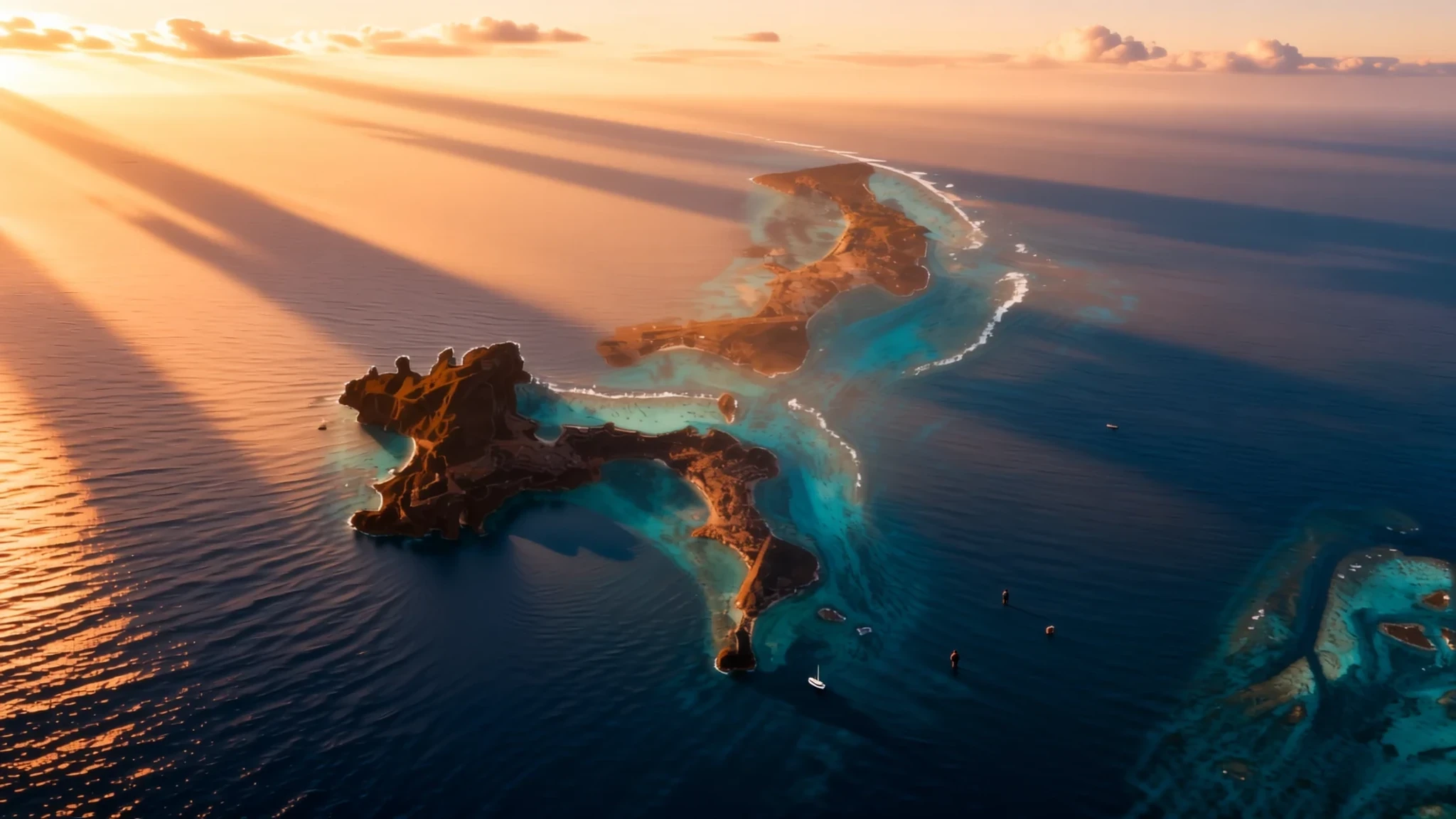
Canouan is a small Grenadine island where a fishing village, the Grenadines' jet port and a windward barrier reef sit a short sail from the Tobago Cays.
The place
Canouan is one of the Grenadines, a thin chain of islands in the southern Caribbean and part of Saint Vincent and the Grenadines. It sits south of Saint Vincent and north of Grenada, with Mustique and the northern Grenadines in one direction and Mayreau, the Tobago Cays and Union Island in the other. The island is small and uneven: a hilly centre, a sheltered western shore facing the Caribbean Sea, and an eastern shore open to the Atlantic trades.
Charlestown is the only town, set on the leeward water with a jetty, churches, houses and a handful of shops. Boats matter more than cars, people greet by name, and the road runs out quickly into dry hills, scrub and a few gardens. The walk from the jetty to a viewpoint and back is an ordinary morning, and by midday the sensible place to be is shade.
The island is shared by sharply different uses of land, and the join is visible. North and west, Canouan is a Vincentian community of family plots, fishing and small trade. South, the coast was developed as resort grounds: groomed bays, quiet paths and a privacy that does not resemble Charlestown. The western sand is the swimming water, calmer in the lee of the island; the windward side takes a heavier sea. The barrier reef runs along the Atlantic shore, so the coral is a windward swim, not a step from the western sand.
Its story
Canouan has a longer human story than its small map suggests. Indigenous people of the southern Caribbean used these islands for fishing, turtles and canoe passages long before any European chart named them. The island's own name is widely explained as a word for turtle, a reading that suits reefs and nesting shores better than it suits a deep harbour. France and Britain later folded the Grenadines into their contest for the Lesser Antilles, and the island that settled inside the British colony of Saint Vincent was a margin: too dry and too small to become a planter's capital.
Enslaved Africans were carried here to work what estates there were. Cotton and other export crops were attempted, as on neighbouring islands, yet Canouan never became a sugar island on any serious scale. After emancipation the families who remained made a living from the channel: fishing, building boats, keeping gardens on thin soil, and staying kin to Bequia, Union Island and Saint Vincent.
Through most of the last century the island stayed quiet, reached by sea and known to Vincentians and to sailors working down the chain. The change that still divides the map was the choice to develop the southern land as a resort and, in 2008, to lengthen the runway to nearly 6,000 feet for larger aircraft. Guests on the south and residents of Charlestown share the island and do not share the same freedom of movement. Canouan's story is Grenadine continuity — Indigenous passage, an African village, the sea as the real road — meeting a private landscape that now occupies the southern end of the island.
What to see
- Charlestown — Western shore
Charlestown is Canouan's town, a tight cluster of houses, churches and small shops beside the leeward water. The jetty is the working centre, with fishing boats and people waiting on a passage to another island. In the morning the heat is still kind and the place reads as a village, not a resort annexe. There is no grand square; the interest is ordinary life, with the hills behind the roofs.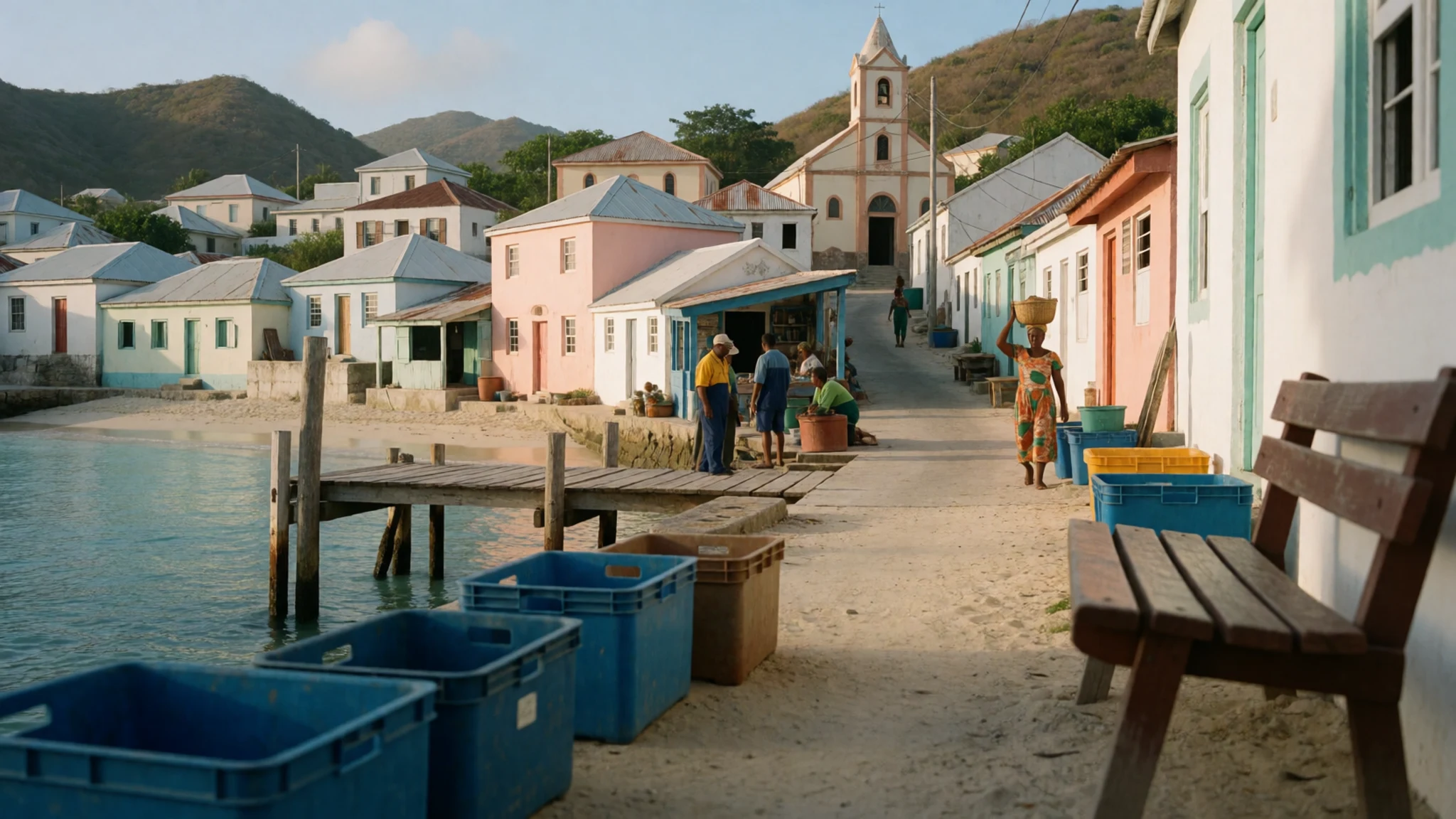
- Shoreline airstrip — Shore beside the runway
Canouan's airstrip sits against the shore, so an arrival is also a view of the island. Larger aircraft come in low over the water, with sand, scrub and the first roofs close to the wing. For residents it is transport, the link with Saint Vincent. For everyone else it shows how small the island is: runway, beach and sea together.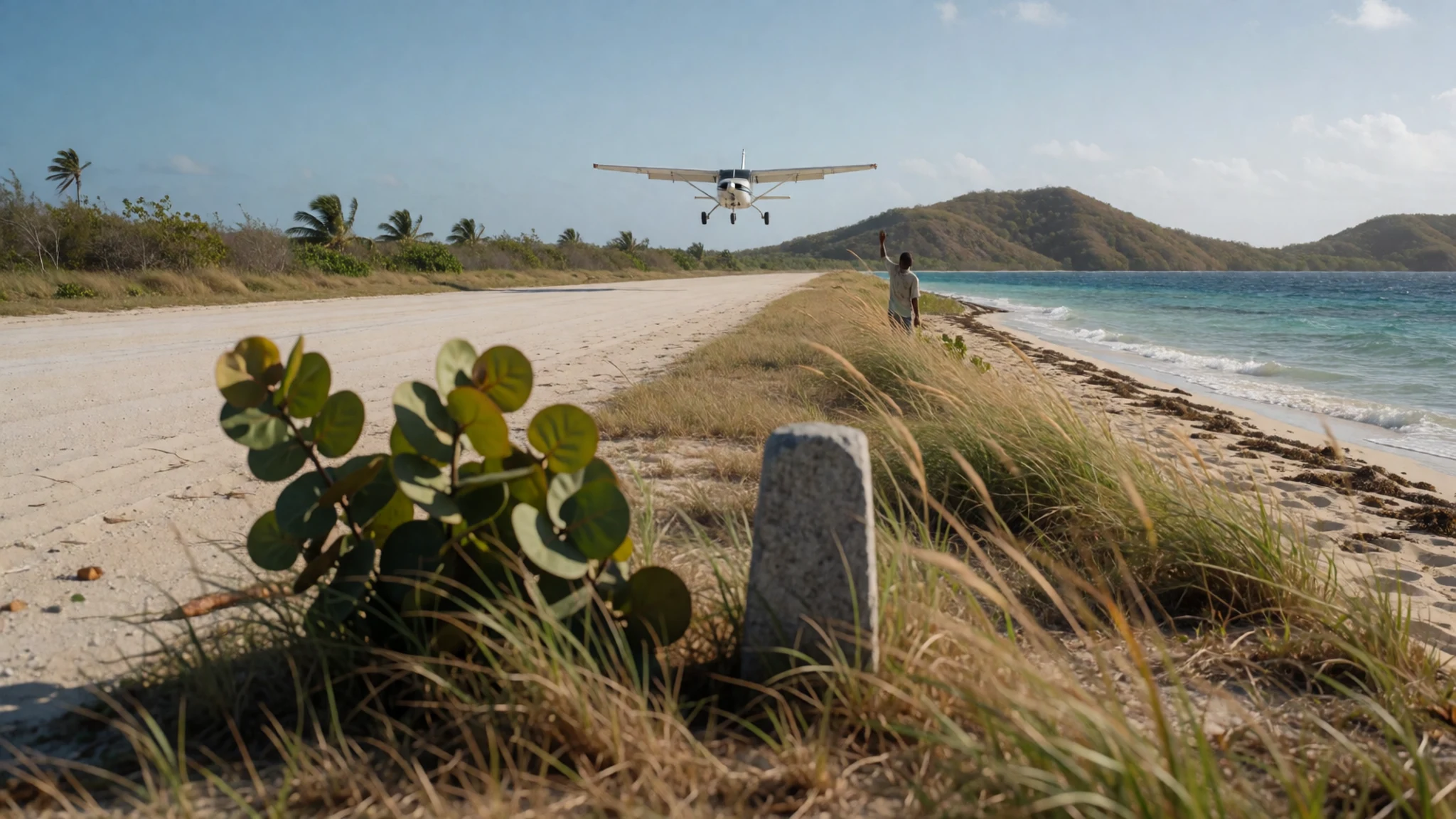
- Leeward beaches — Western coast
The western beaches are Canouan's swimming coast, in the lee of the island where the Caribbean Sea is calmer than the Atlantic shore. Sand, calm water and a line of low hills are the scene. Some bays face the village and feel open; others run along resort grounds, and the beach itself remains open to the public. The snorkelling is on the windward reef, so fins need to stay off the coral.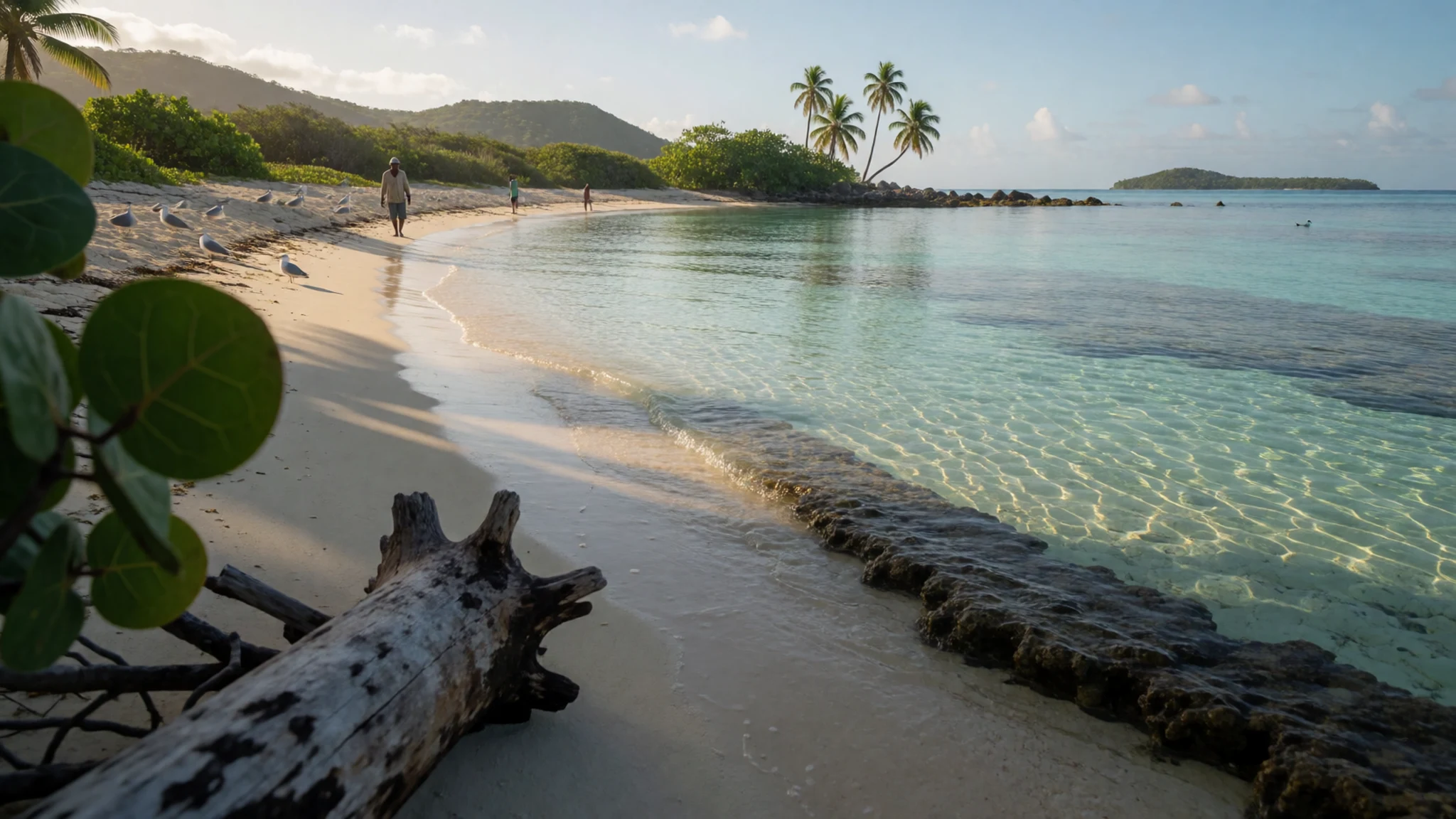
- Windward hills — Eastern hills
The windward side of Canouan faces the Atlantic and takes the full trade wind, with a rougher sea than the western bays. Tracks climb into dry hills of scrub and grass. From higher ground Charlestown sits below and neighbouring islands mark the horizon. It is a short, hot walk that makes the island's size obvious, and the kinder hours are early, with water and a hat.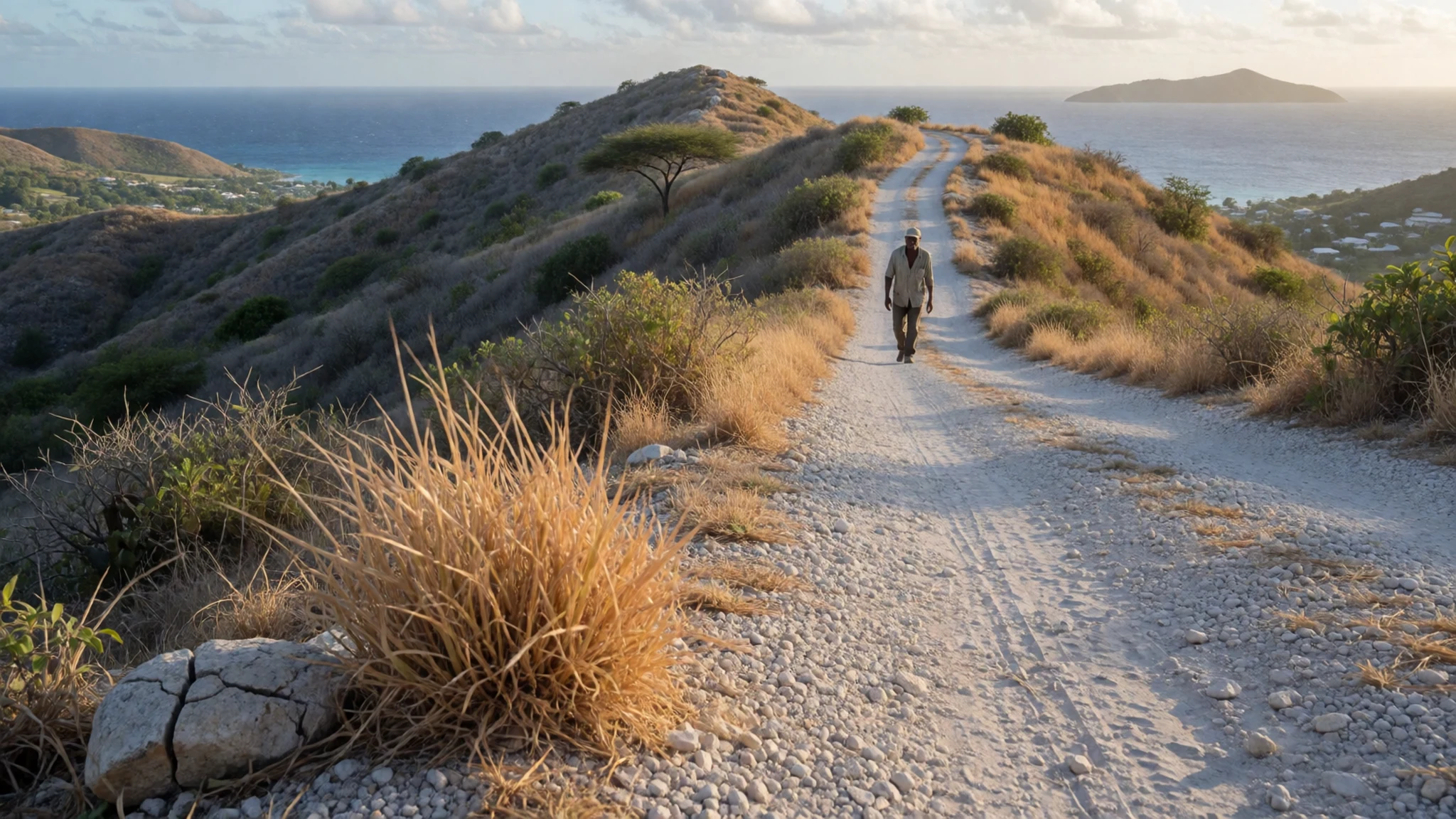
- Southern bays — South coast
The south end of Canouan is the resort coast: pale bays and groomed grounds that feel separate from Charlestown. The sea is the same clear water as the west, and the beach remains public, though resort roads and private grounds are closed to visitors. Seen from a boat or from a hill to the north, this shore shows the island's modern split more plainly than the village does.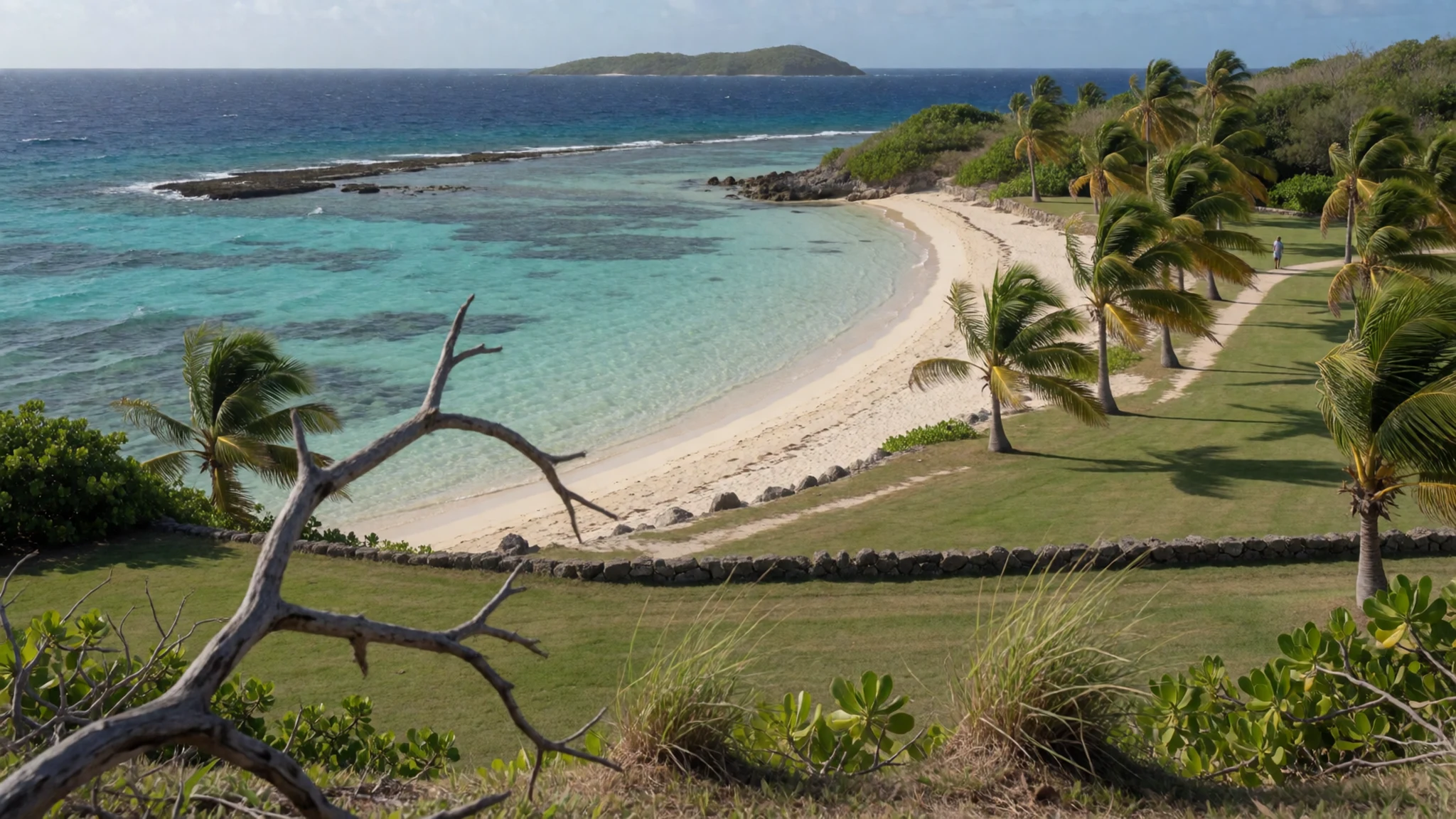
Culture
Canouan keeps the habits of a small Vincentian community. People greet on the road, Sunday is visibly a church day, and a lot of news still moves by the jetty, where boats leave for Saint Vincent and for other Grenadine islands. Many have cousins on Bequia or Union Island and treat those channels as a normal journey, not as foreign travel. The public music is the music of the country around them: calypso, soca and reggae on a speaker at a fete, with Carnival centred in Saint Vincent and felt here in smaller gatherings.
Boats sit at the middle of that culture. In the Grenadines a sailing boat has long been how people shift food, family and a catch, and skill on the water still earns respect that a visitor's charter yacht does not automatically share. Alongside it is the newer culture of the southern resort, with quiet grounds and guests who may never buy a drink in town. Islanders talk about that split without romance. Work is welcome; the loss of easy access to part of their own shore is not.
A visitor is noticed at once, and the courtesy is simple: greet people before asking anything, and do not photograph residents or private yards without permission.
What to wear
Dress on Canouan follows Saint Vincent and the Grenadines, not a costume found only on this island. For church, weddings and national days women wear bright cotton and sometimes a lace trim or a headtie, and men a pressed shirt and trousers. Madras and other Caribbean plaids appear in celebration clothes, alongside the national green, yellow and blue. The elaborate work — feathers, beads, bands built to dance in the heat — belongs to Carnival in Saint Vincent, and it shows up here when families travel or when a fete calls for it.
In Charlestown the weekday uniform is a t-shirt, shorts or a cotton dress, sandals and a cap. Fishers add sleeves and clothes that can take salt. On the southern resort grounds the look is the international one: linen, swimwear, dark glasses, shoes that stay on a pool deck. Both wardrobes pass each other on the same short roads.
What a visitor should wear is decided by sun, wind and the gap between beach and village. Swimwear belongs on the sand and beside a pool. A shirt, a wrap or a simple dress belongs in Charlestown, in a shop and in church. Loose cotton and a colour that does not trap heat will feel better than heavy synthetic cloth. Sandals need to cope with a rough track, and water shoes help on rocky entries to the reef. The hills are low and dry, so the useful standard is modest village dress and sun protection, not mountain kit.
What to eat
- Fried jackfish — Cook shops and rum shops by the Charlestown jetty
Fried jackfish is the ordinary main plate on Canouan when the boats have had a fair day. Seasoned and fried, it comes with breadfruit or rice at cook shops and rum shops by the Charlestown jetty, where the lunch crowd is local.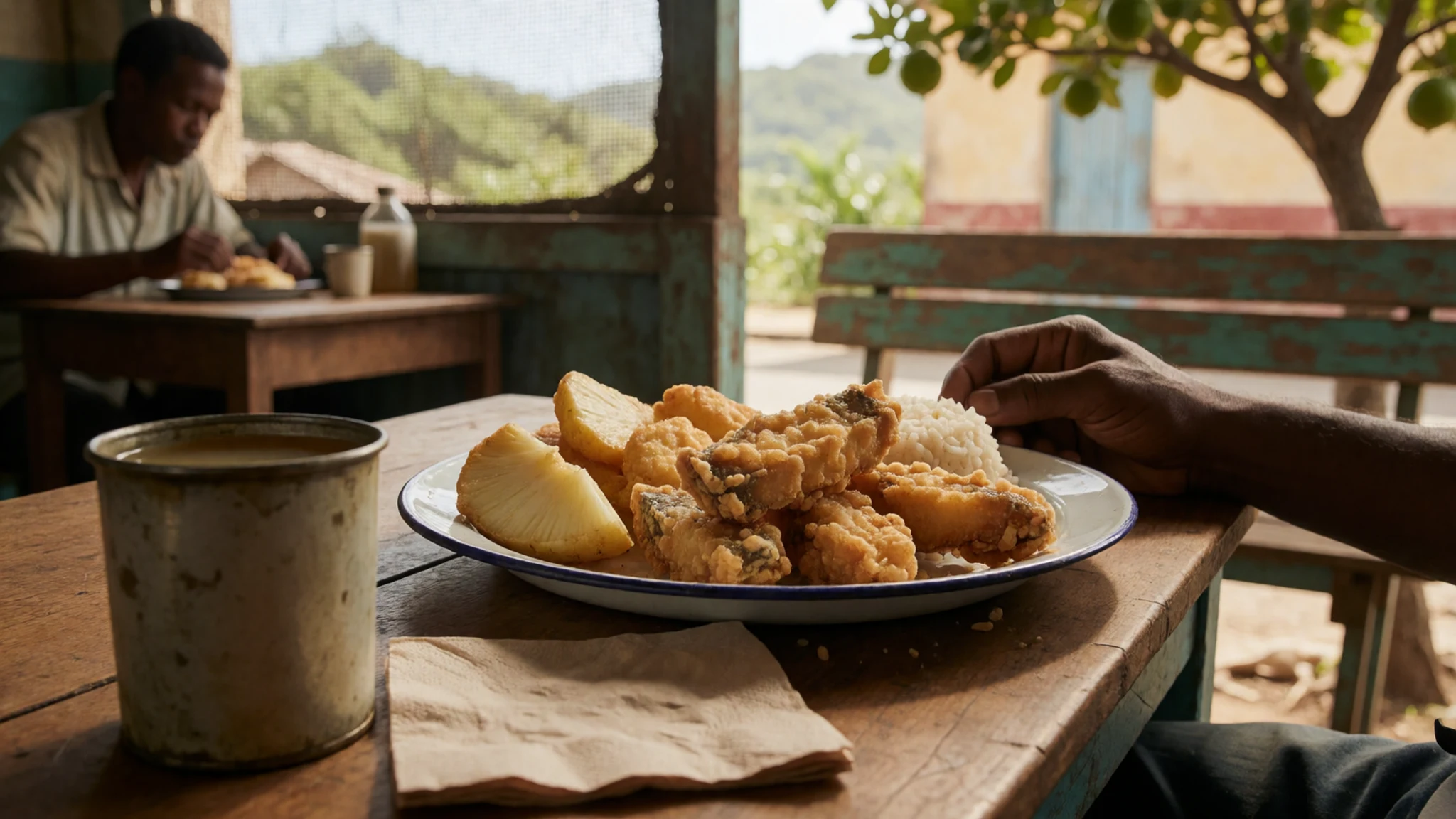
- Lambie — Charlestown cook shops and weekend tables
Lambie, the Grenadine name for conch, is cooked on Canouan as a curry, a stew or a lime-sharp souse. It shows up in Charlestown cook shops and at weekend tables, without a fixed hour or a printed tariff.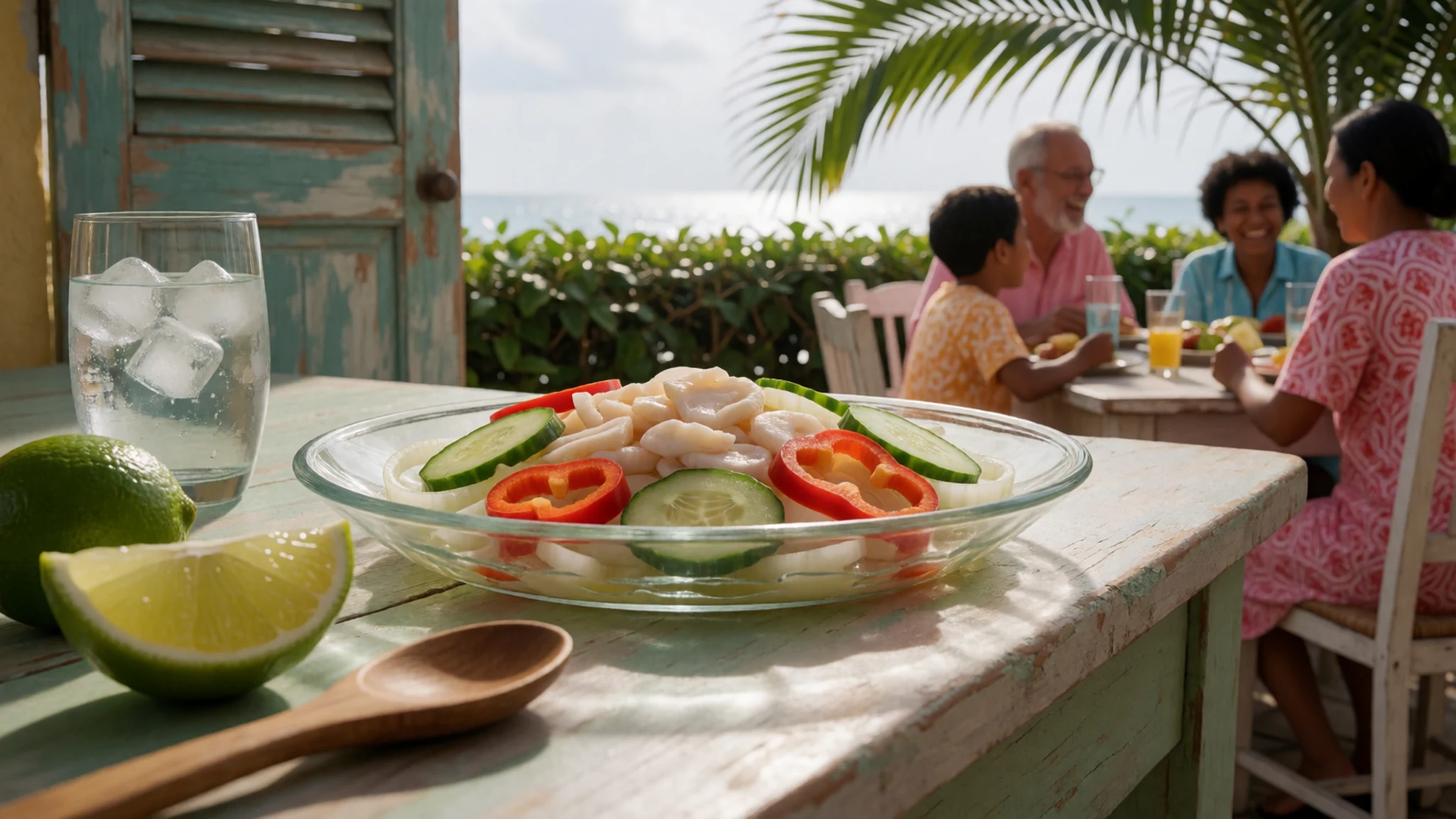
- Roasted breadfruit and provisions — Village eateries and home kitchens in Charlestown
Roasted breadfruit, with dasheen, yam or sweet potato, fills the plate on Canouan beside fried fish. The fruit is dense and mild, a Grenadine staple rather than a novelty. It turns up at village eateries around Charlestown and in home kitchens. - Callaloo — Home kitchens and weekend cook shops in Charlestown
Callaloo is a slow pot of dasheen leaves, dumplings and often crab or salt meat, and on Canouan it is a home dish more than a stall snack. Weekend cook shops in Charlestown sometimes have it. The taste is green, salty and filling. - Roti — Small eateries and bakery counters in Charlestown
Roti, a flatbread folded around a curry of vegetables, chicken or meat, is the portable lunch that Vincentian habits brought into daily life on Canouan. It travels well and does not need a table. A small eatery or bakery counter in Charlestown is the realistic place to find one.
Plan it
Best time. February, March and April are the most comfortable months on Canouan, mild and dry, the kinder stretch for swimming and sailing. August and September are the hottest, and October is the wettest, with rain heavy from July through November. Confirm a forecast before booking, and treat any sailing plan as weather-dependent.
How long. 3–4
Getting there. Canouan is the jet port for the Grenadines, with a runway of nearly 6,000 feet, and most people arrive by air, usually changing planes in Saint Vincent or at another Caribbean hub. Ferries and small boats also link Charlestown with Kingstown and with neighbouring Grenadine islands. Schedules change with the season and the weather, so check the operator before travel.
Budget. high
Tips
- Carry drinking water. Shops are concentrated in Charlestown and the sun on the hills is strong.
- Bring cash for cook shops, boats and small purchases. Card machines are not something to rely on outside the resorts.
- Use the early morning for the jetty, the village and any walk. The middle of the day is for shade.
- Agree any boat towards the cays in daylight, with a local operator, and keep the plan flexible if the wind rises.
- Treat the southern sand as public beach, and stay off resort roads and private grounds unless you work there.
Etiquette
- Greet people in Charlestown before you ask a question or lift a camera.
- Cover swimwear with a shirt or a wrap in the village and at church.
- Ask before photographing residents, children or a private yard.
- Do not cross resort docks or unmarked southern paths as if they were a public trail.
Nearby
Sources
- Wikidata (CC0)
- Wikipedia: Canouan (CC BY-SA 4.0)
- Wikivoyage: Canouan (CC BY-SA 4.0)
More in Saint Vincent and the Grenadines
- Baliceaux
- Barrouallie
- Battowia
- Bequia
- Chateaubelair
- Fort Duvernette
- La Soufrière
- Mayreau
- Mustique
- Owia
- Petit St. Vincent
- Rabacca
Every place in Saint Vincent and the Grenadines · Every place, A to Z