Chicago
Chicago, United States
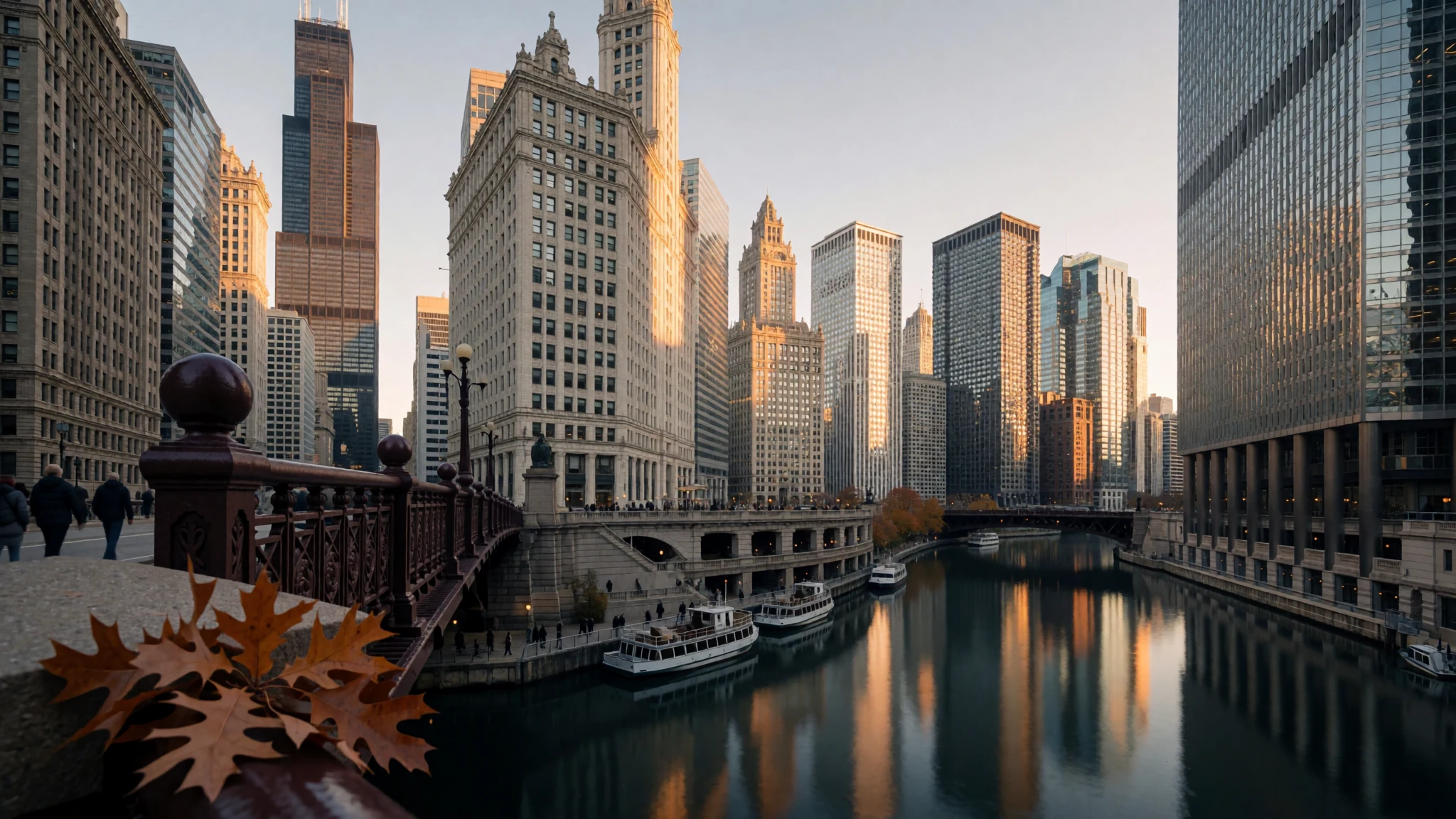
Chicago offers towering architecture, rich ethnic enclaves, world-class museums, and vast lakefront parks waiting to be explored.
The place
Chicago sits along the western shore of Lake Michigan, anchoring the Midwestern United States as a major global hub for commerce, industry, transport, and culture. Founded near a strategic portage connecting the Great Lakes to the Mississippi River watershed, the municipality expanded rapidly through the nineteenth and twentieth centuries. Today, it remains the most populous urban centre in Illinois, drawing visitors to its sweeping shoreline, grid-aligned streets, and distinctive neighbourhoods.
The municipal layout follows a precise address grid that radiates outward from the intersection of State and Madison streets. Downtown, frequently called the Loop, houses the financial district, government offices, and iconic high-rise towers that trace the evolution of modern structural engineering. Beyond the commercial core, residential and ethnic enclaves stretch north, west, and south along the lake and inland arteries. These districts maintain distinct cultural identities, culinary traditions, and architectural styles, ranging from classic brick-and-stone apartment blocks to leafy suburban-style avenues within the urban boundary.
Water defines much of the terrain. Lake Michigan provides recreational beaches, harbours, and extensive parklands that run parallel to the shore. The Chicago River and its branches wind through the urban fabric, spanned by historic movable bridges that open for maritime traffic. Weather varies dramatically across the year, marked by warm summers and cold, windy winters shaped by cold air currents sweeping across the inland plains. Spring and autumn bring pleasant interludes, drawing residents outdoors to enjoy the extensive park system and public plazas.
Its story
Chicago has a history rooted in indigenous stewardship, frontier trade, and dramatic industrial expansion. Before European contact, the region was inhabited by the Potawatomi people, who succeeded earlier communities such as the Miami, Sauk, and Meskwaki. Jean Baptiste Point du Sable, a trader of African descent, established the first permanent non-indigenous settlement here in the seventeen-eighties, earning recognition as the founder of the community.
Following the Northwest Indian War and subsequent treaties, the United States established military control, constructing Fort Dearborn in eighteen hundred and three. Incorporated as a city in eighteen hundred and thirty-seven, the settlement grew quickly as a transport nexus linking eastern markets with the western frontier. The opening of canals and railways cemented its status as a commercial crossroads.
A devastating disaster struck in eighteen hundred and seventy-one when the Great Chicago Fire destroyed large swathes of the central area and left thousands without shelter. Rather than decline, the municipality experienced a dramatic rebirth. Architects and engineers pioneered steel-frame construction and innovative urban planning principles, giving rise to the Chicago School of architecture and defining the modern skyline.
Throughout the twentieth century, industrial growth drew millions of new residents, including waves of European immigrants and African Americans arriving during the Great Migration. This cultural convergence shaped local music, literature, and neighbourhood traditions, transforming the urban centre into a dynamic mosaic of communities that continues to evolve today.
What to see
- Art Institute of Chicago — The Loop
Located in Grant Park, the Art Institute of Chicago holds one of the world's finest collections of impressionist and post-impressionist paintings, alongside extensive galleries featuring ancient art, modern installations, photography, and textiles from global cultures across thousands of years.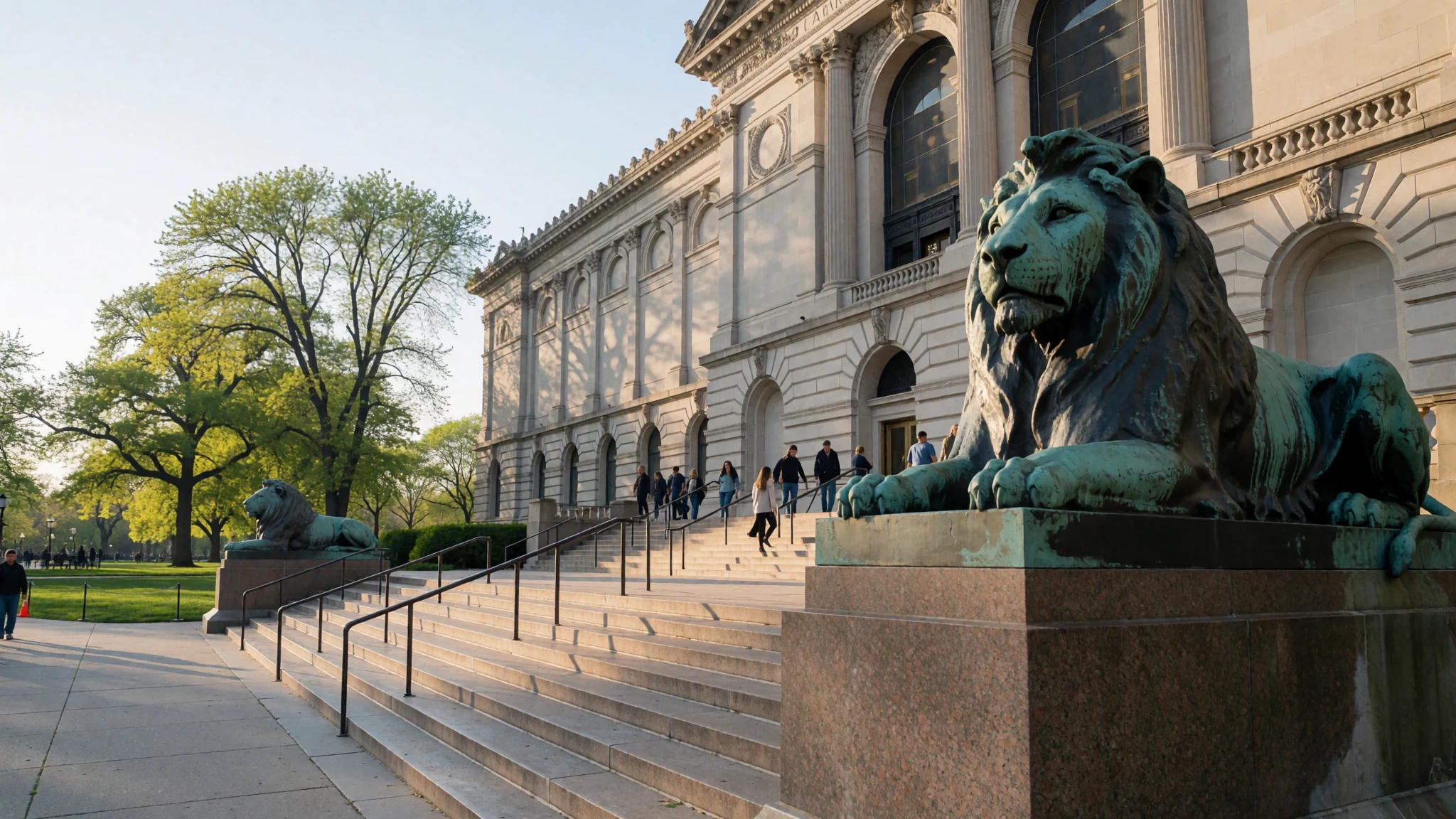
- Wrigley Field — Lakeview
Wrigley Field stands as one of the oldest and most revered baseball stadiums in the country, famous for its ivy-covered outfield brick wall, hand-operated scoreboard, and passionate local sports fans who gather in the surrounding neighbourhood on game days.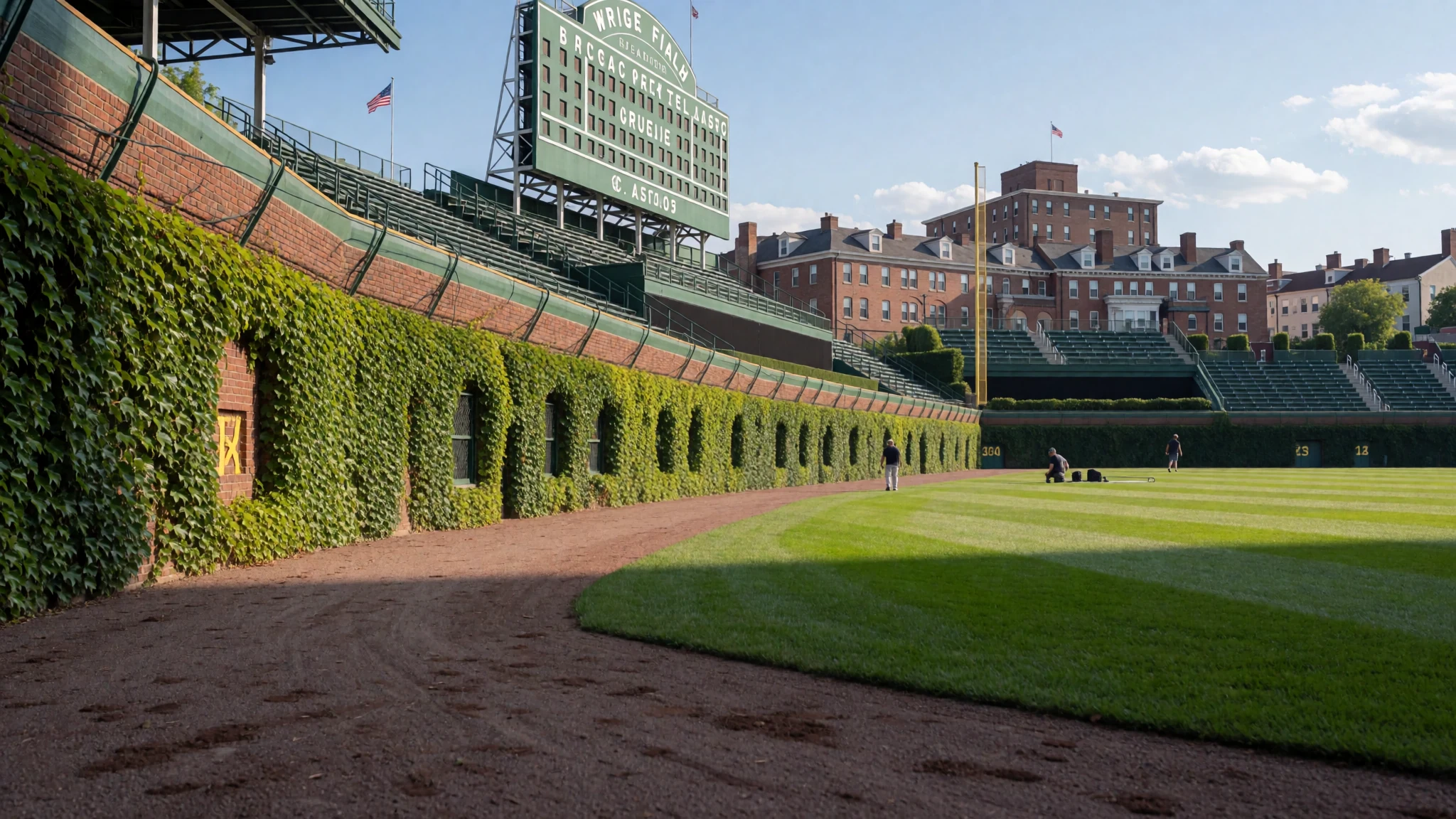
- Navy Pier — Near North Side
Navy Pier extends far out into the waters of Lake Michigan, offering family attractions, exhibition halls, public gardens, boat tour departures, and a giant Ferris wheel that provides sweeping views of the shoreline and the distant downtown towers.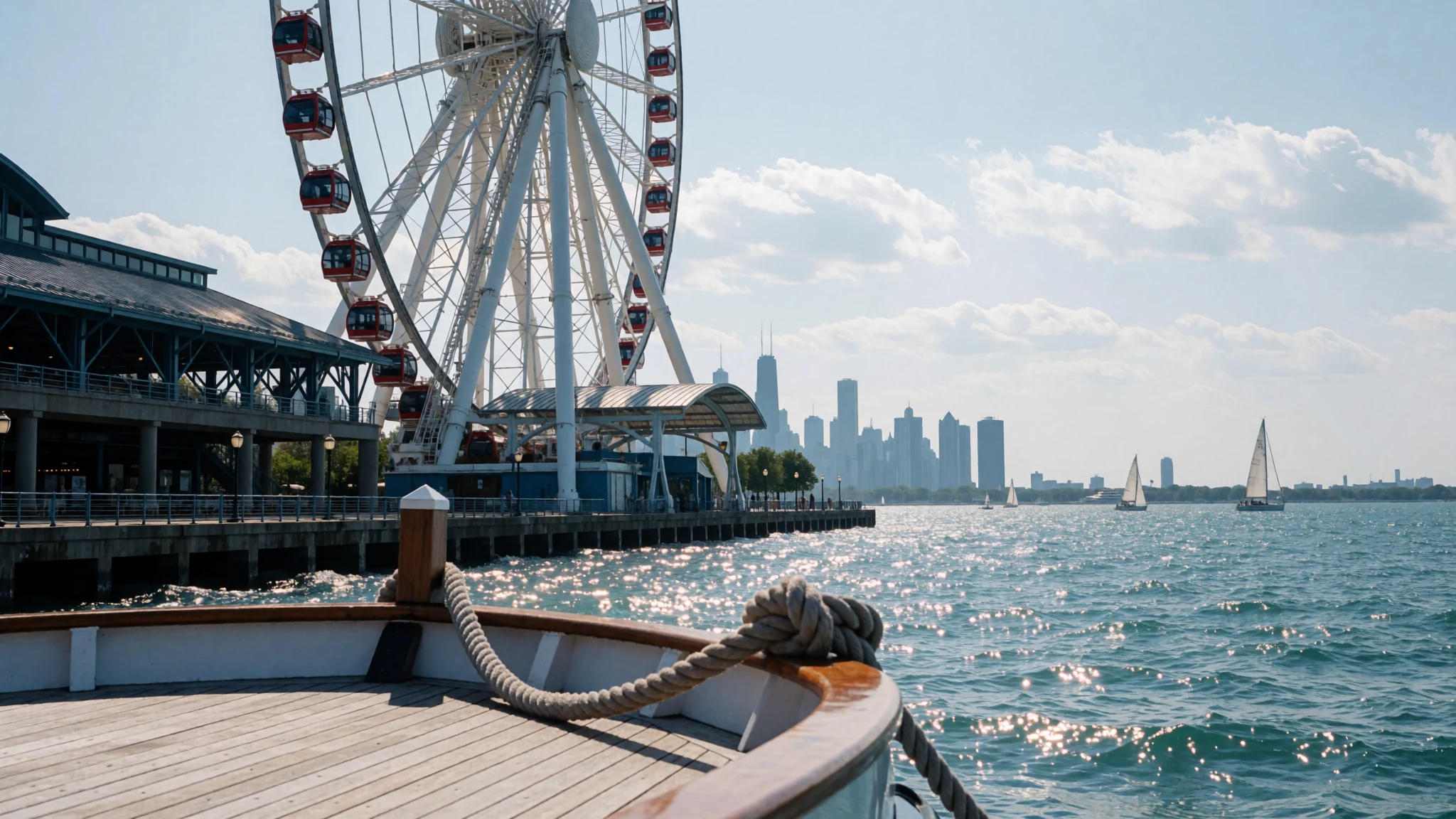
- Buckingham Fountain — Grant Park
Buckingham Fountain anchors Grant Park with classic rococo-style tiers modelled after Latona basin at Versailles, putting on regular water displays accompanied by music during the warmer months while framing the striking backdrop of the eastern skyline.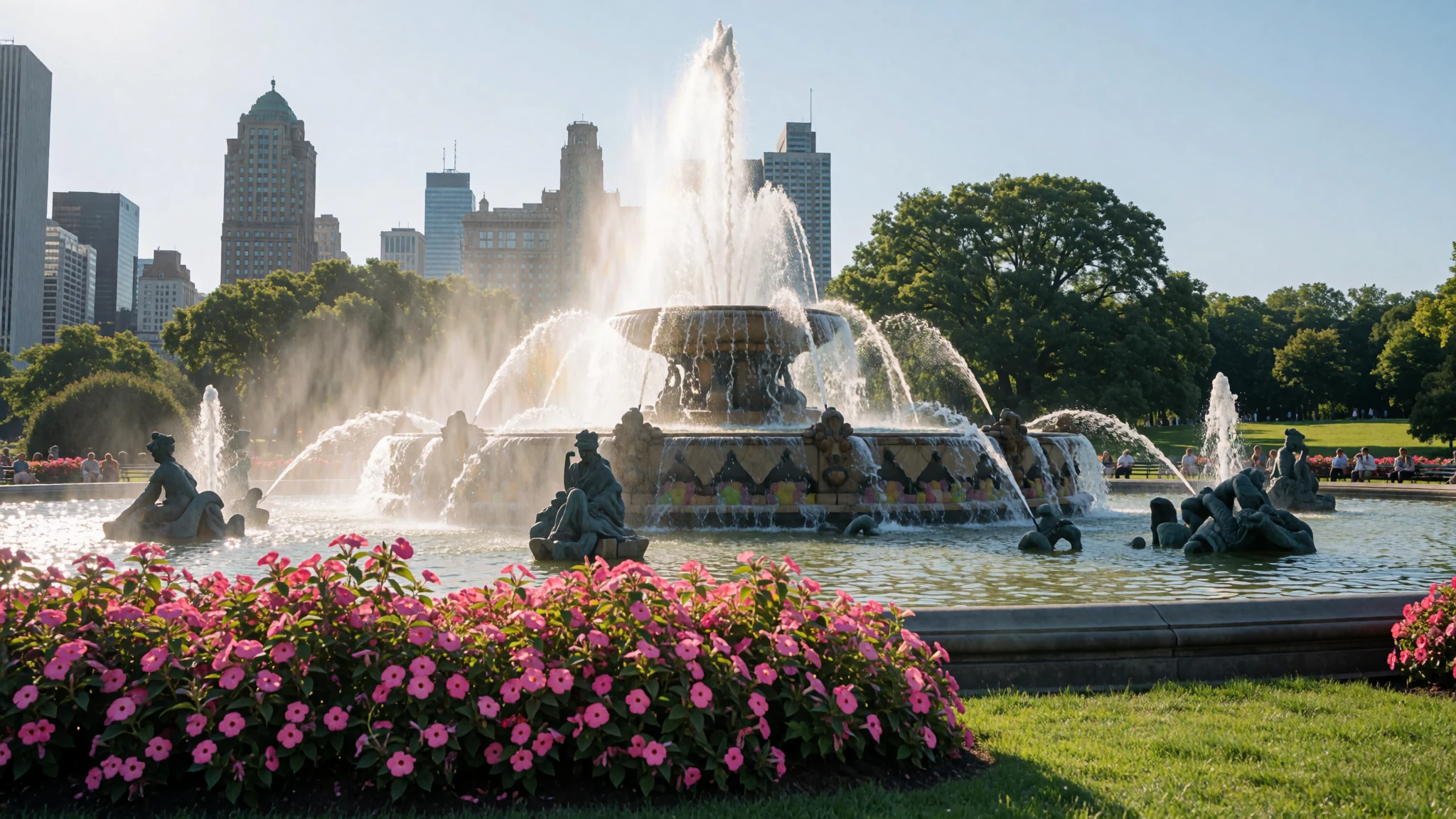
- Chicago Riverwalk — Downtown
The Chicago Riverwalk provides a continuous pedestrian path carved into the stone banks of the waterway, lined with outdoor seating, public art installations, boat rentals, and cafes where visitors can watch movable bridges lift for passing vessels.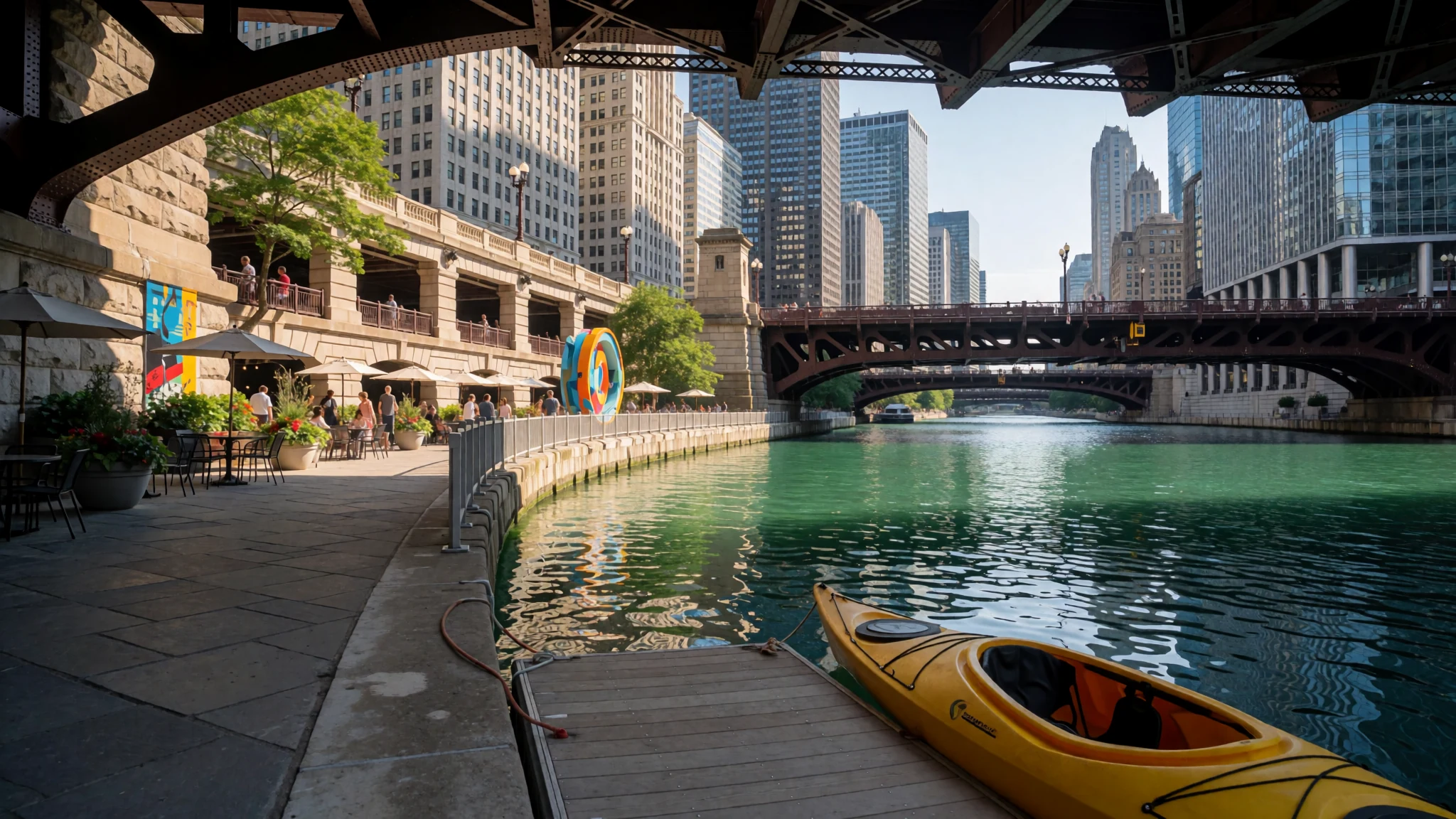
Culture
Chicago is a mosaic of distinct neighbourhoods, where over a third of residents live within the lakefront districts stretching from Rogers Park down to South Shore. The cultural fabric is deeply shaped by historic immigrant enclaves and ethnic communities. Mexican American heritage thrives in Pilsen along Eighteenth Street and La Villita along Twenty-Sixth Street, while Puerto Rican culture centres on Paseo Boricua in Humboldt Park. Other vibrant districts include Greektown along South Halsted Street, Little Italy along Taylor Street, Chinatown in Armour Square, Polish patches in West Town, Little Seoul around Lawrence Avenue, Little Vietnam in Uptown, and the Desi commercial corridor along Devon Avenue in West Ridge. Downtown serves as the administrative and financial core, punctuated by Grant Park and major cultural institutions. Residents value directness, community involvement, and local sports traditions. When using public transit or walking on crowded sidewalks, keep conversation tones moderate and allow passengers to exit trains before boarding.
What to wear
Chicago fashion reflects a pragmatic Midwestern sensibility paired with cosmopolitan style, shaped heavily by the changing seasons. Historically, indigenous Potawatomi attire featured crafted animal hides, natural plant fibres, and decorative beadwork suited to the local climate, examples of which are preserved in city museums. Today, everyday wear by locals prioritises comfort and durability, with practical denim, layered knitwear, and sturdy footwear dominating the streets during cooler months. Professional workers in the financial district often lean towards classic tailoring and smart coats, while creative neighbourhoods like Wicker Park favour vintage finds and contemporary independent labels. Visitors should pack versatile layers, as lake breezes can cause temperatures to drop swiftly regardless of the calendar month. Sturdy walking shoes are essential for navigating the extensive grid system and park trails, and a waterproof outer layer is recommended for unexpected lakefront rain showers.
What to eat
- Greektown Specialities — Greektown
Along South Halsted Street, long-standing taverns and family-run dining rooms serve classic Mediterranean fare, featuring spit-roasted meats, fresh seafood, flaky spanakopita, and seasoned cheeses. - Devon Avenue Desi Cuisine — West Ridge
The Devon Avenue corridor offers authentic South Asian dining, ranging from Hyderabadi biryani and spicy street snacks to rich curries and traditional sweets. - Chinatown Dim Sum and Noodles — Armour Square
Armour Square's Chinatown houses bustling dining halls and tea houses serving Cantonese dim sum, hand-pulled noodles, barbecue meats, and regional Chinese dishes. - Chatham Soul Food and Barbecue — Chatham
Southern-influenced eateries in neighbourhoods like Chatham dish out smoked ribs, fried catfish, collard greens, cornbread, and classic homestyle side dishes. - Southeast Asian and Global Bites — Uptown
Uptown features an eclectic mix of eateries offering Vietnamese pho, Laotian specialities, and diverse international flavours reflecting the area's immigrant communities.
Plan it
Best time. May through September offers warm weather, outdoor festivals, and accessible lakefront parks; winters are cold and snowy.
How long. 3–4
Getting there. Arrive via O'Hare International Airport or Midway International Airport, then take the direct CTA rapid transit trains into the city centre.
Budget. mid
Tips
- Use the CTA train network rather than taxis to avoid rush hour delays from the airports
- Book popular museum tickets and architectural tours in advance
- Wear comfortable walking shoes to explore the grid system and lakefront paths
- Check weather forecasts daily as lake winds can change conditions rapidly
Etiquette
- Keep voices moderate on public transport and let passengers exit before boarding
- Tip standard service staff around fifteen to twenty percent in restaurants and bars
- Yield to pedestrians at marked crossings on busy streets
Nearby
Sources
- Wikidata Q1297 (CC0)
- Wikipedia (CC-BY-SA 4.0)
- Wikivoyage (CC-BY-SA 4.0)