Baliceaux
Baliceaux, Saint Vincent and the Grenadines
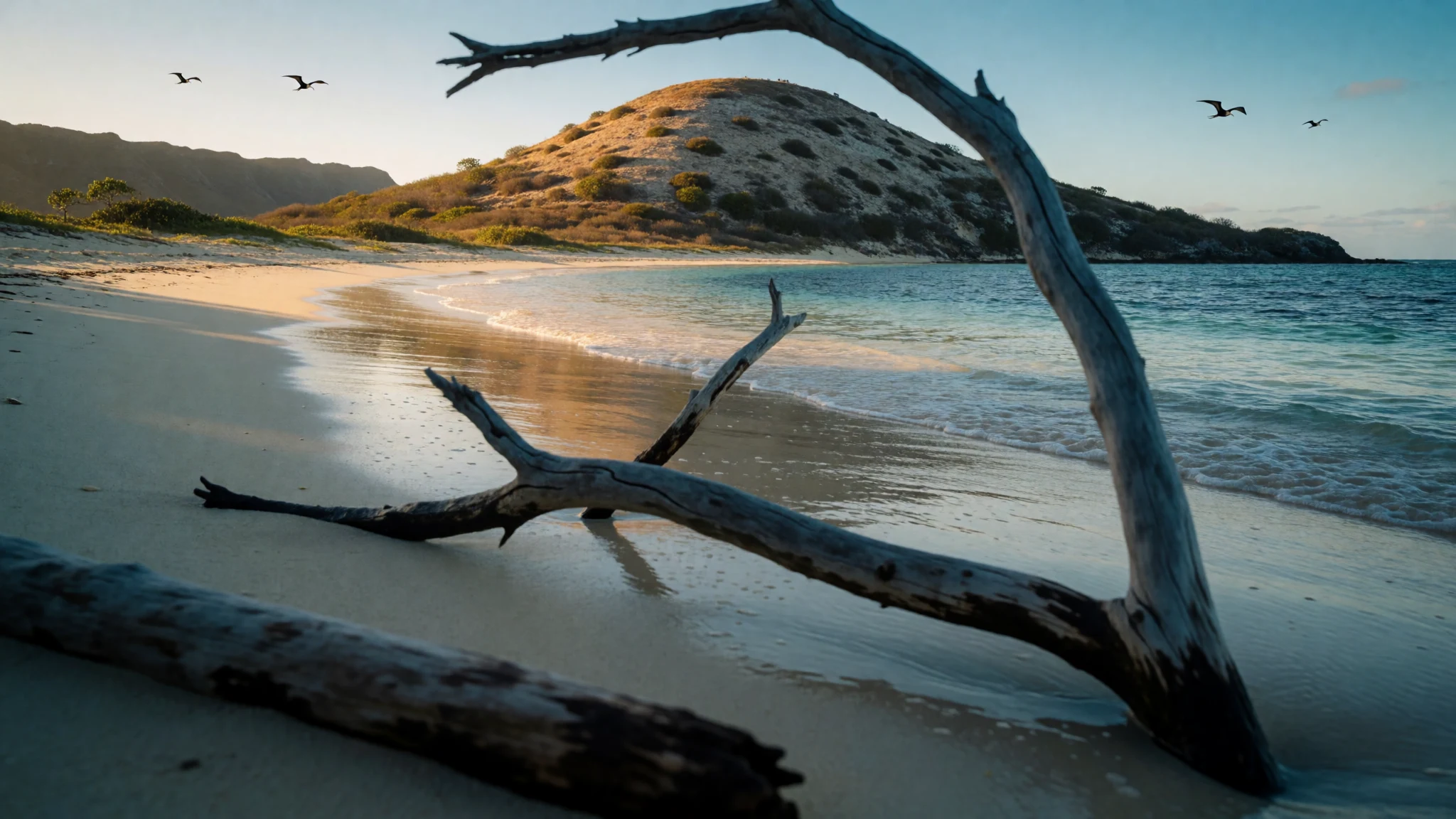
Baliceaux is a quiet Grenadine island whose scrubby shore holds the memory of Garifuna exiles, and a place for thoughtful, respectful travel.
The place
Baliceaux is a small Caribbean island in the Grenadines, the scatter of islands that runs between Saint Vincent to the north and Grenada to the south. It belongs to the nation of Saint Vincent and the Grenadines, and its position sits at roughly 12.95° north, 61.13° west, in the sheltered waters south of Saint Vincent itself. Its highest ground is a modest rise called Gun Hill, once used by soldiers as a lookout. The rest is low, dry, scrubby land fringed by shoreline, with none of the postcard resort infrastructure found on better-known neighbours such as the Tobago Cays.
The wider country still leans on agriculture, with bananas the long-standing crop, while tourism and services have grown only moderately. Unemployment is high, and the economy swings with the seasons in farming and visitor numbers. That context matters for Baliceaux: most travellers to this part of the Caribbean arrive by air or by yacht, and the islands are scattered enough that boats are the real transport network.
Baliceaux has long been privately owned, and it has not been set up for casual holidaymakers. Its importance is historical and emotional rather than scenic. The government has since announced that it has taken the island into national hands because of what it means to the Garifuna people, which may change how and whether visitors can go ashore. Anyone interested should treat the island as a place of remembrance first, and confirm access through official channels before planning anything around it.
Its story
Baliceaux is best known for a grim episode at the end of the eighteenth century. After Britain put down the Second Carib War on Saint Vincent, the colonial authorities rounded up the Garifuna, people of mixed Carib and African ancestry who had resisted European rule under their leader Joseph Chatoyer. In the 1790s, about 5,000 of them were taken to Baliceaux and left there.
The island was undeveloped, exposed and short of food and shelter. Hunger, disease and the weather killed more than half of the exiles. The British then moved about 2,500 survivors on to Roatán, off the coast of Honduras. From there the Garifuna spread along the Caribbean coast of Central America, and their descendants now live in Honduras, Belize, Guatemala and Nicaragua, with communities in the United States too.
Those who died on Baliceaux lie in unmarked ground. No formal marking or excavation of the burial places has taken place, so the whole island is understood as a vast graveyard. Each March a pilgrimage is held to remember the dead, timed to coincide with National Heroes' Day in Saint Vincent.
The island's earlier role was military. Spanish navigators were the first Europeans to note the Grenadines, and during the wars of the later eighteenth century Gun Hill served as an observation post. Its private owners later put the island up for sale, and the government of Saint Vincent and the Grenadines then announced in parliament that it had acquired Baliceaux, citing its cultural and historical weight for the Garifuna, with compensation promised to the former owners.
What to see
- Baliceaux itself — Southern Grenadines
Baliceaux is the point of the journey: a low island with a quiet shoreline and Gun Hill as its high point. There is little to see in a conventional sense, and the value lies in standing at a burial ground in silence. Confirm access first, since the island has only recently passed into public hands.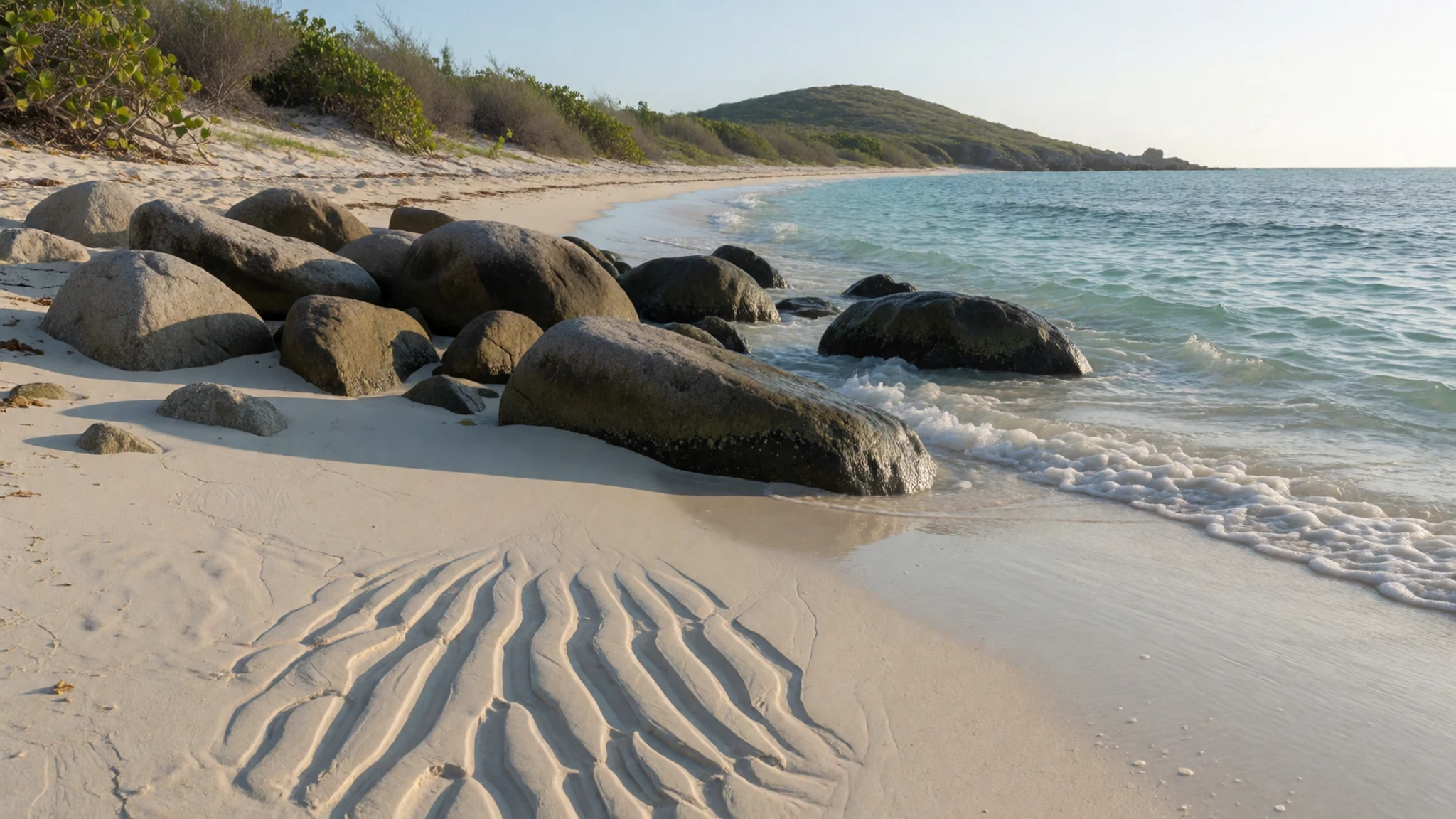
- Tobago Cays Marine Park — Southern Grenadines
The Tobago Cays are a protected group of small islands and reefs in the Grenadines, popular with yacht crews and day-boat visitors. Swimming and snorkelling in the shallow, clear water is the main draw. Expect boats to share the anchorage in the drier months, so go early.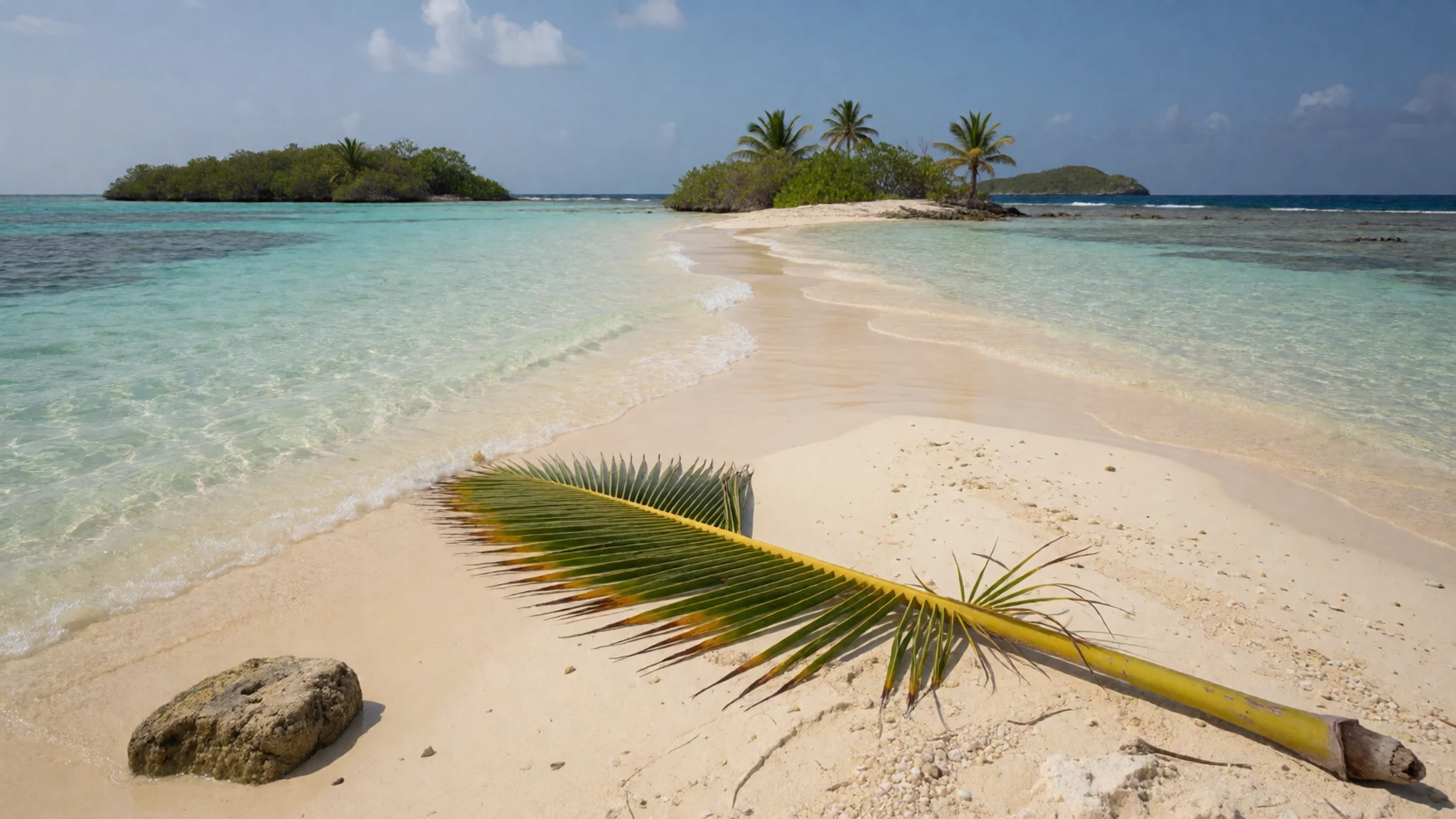
- La Soufrière volcano — Northern Saint Vincent
La Soufrière dominates the north of Saint Vincent, and the climb to its crater is a long, demanding day of about three hours up. It has erupted within living memory, in 1979 and 2021, and a warning system is in place. Check current conditions and hire a local guide.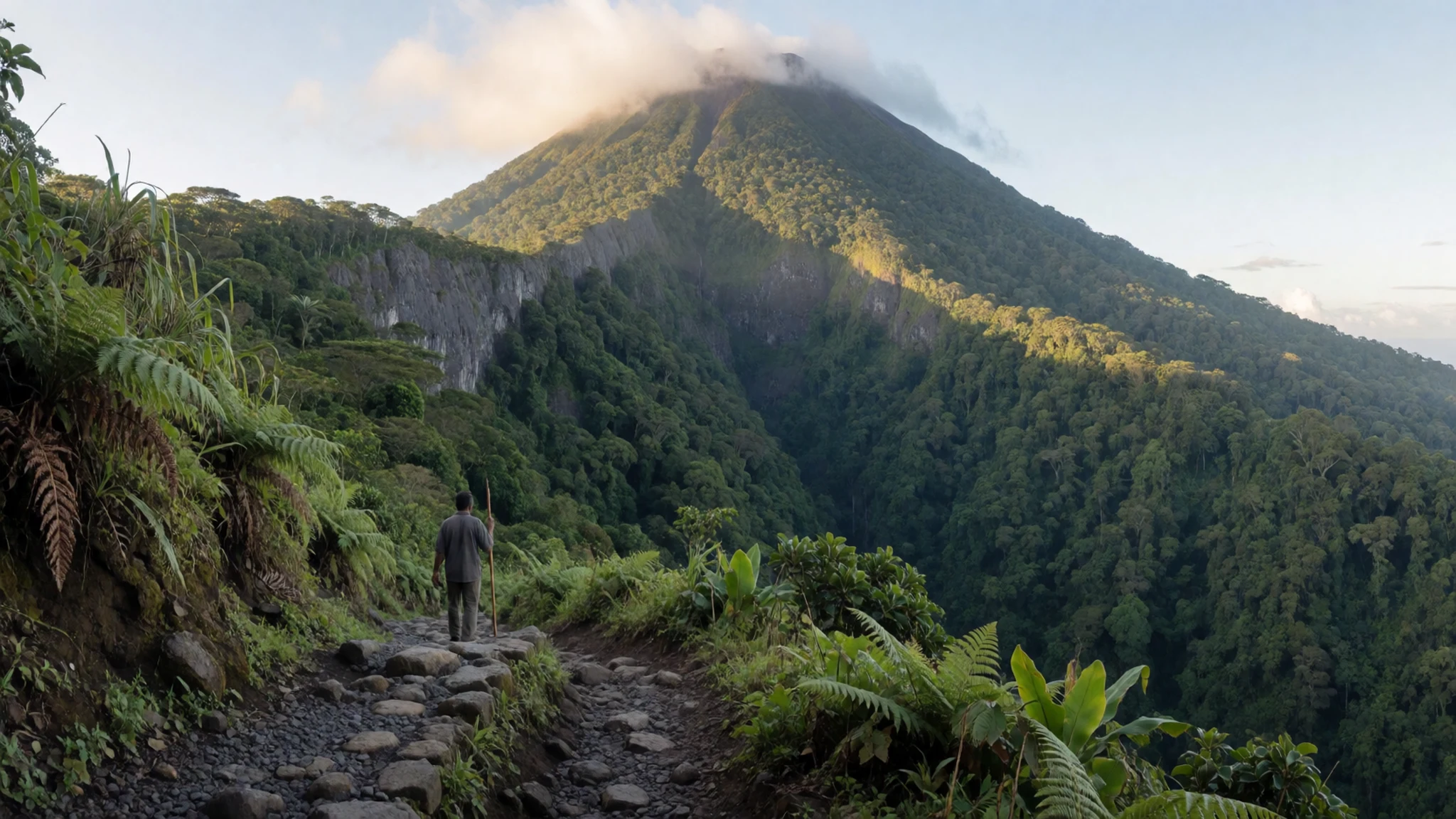
- Fort Charlotte — Kingstown
Fort Charlotte is a British-era fortress on a ridge above Kingstown, the capital. The main reward is the wide view over the town, harbour and coast, which gives a sense of how the colonial powers watched these waters. It makes a straightforward half-day stop before or after a boat trip.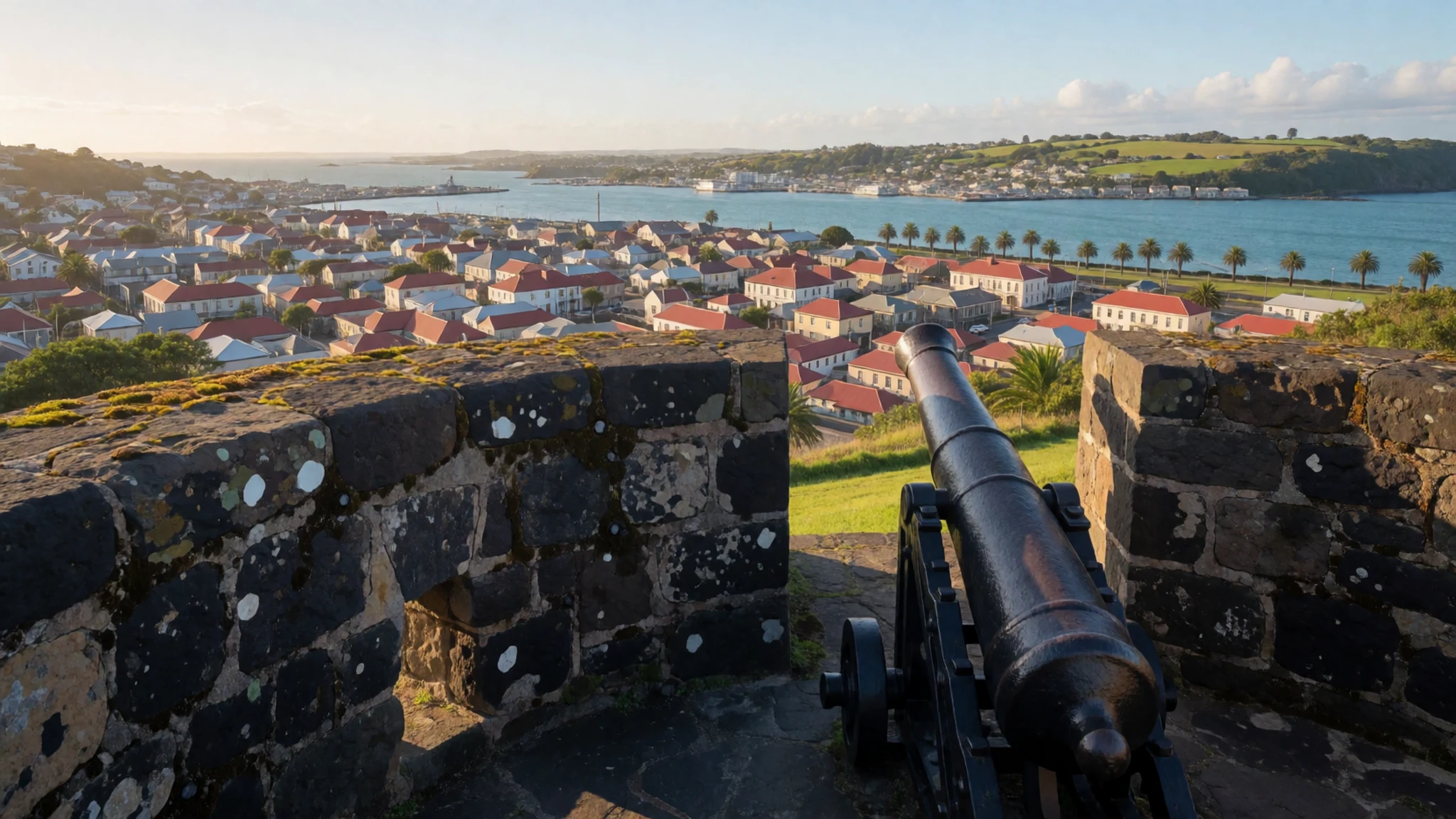
- Fort Duvernette — Southern Saint Vincent
Fort Duvernette sits on a small rocky islet off the south coast of Saint Vincent, reached by a short boat ride and then a climb of steps up to the old gun emplacements. The view back to the mainland is the reason to make the effort. Wear shoes with good grip.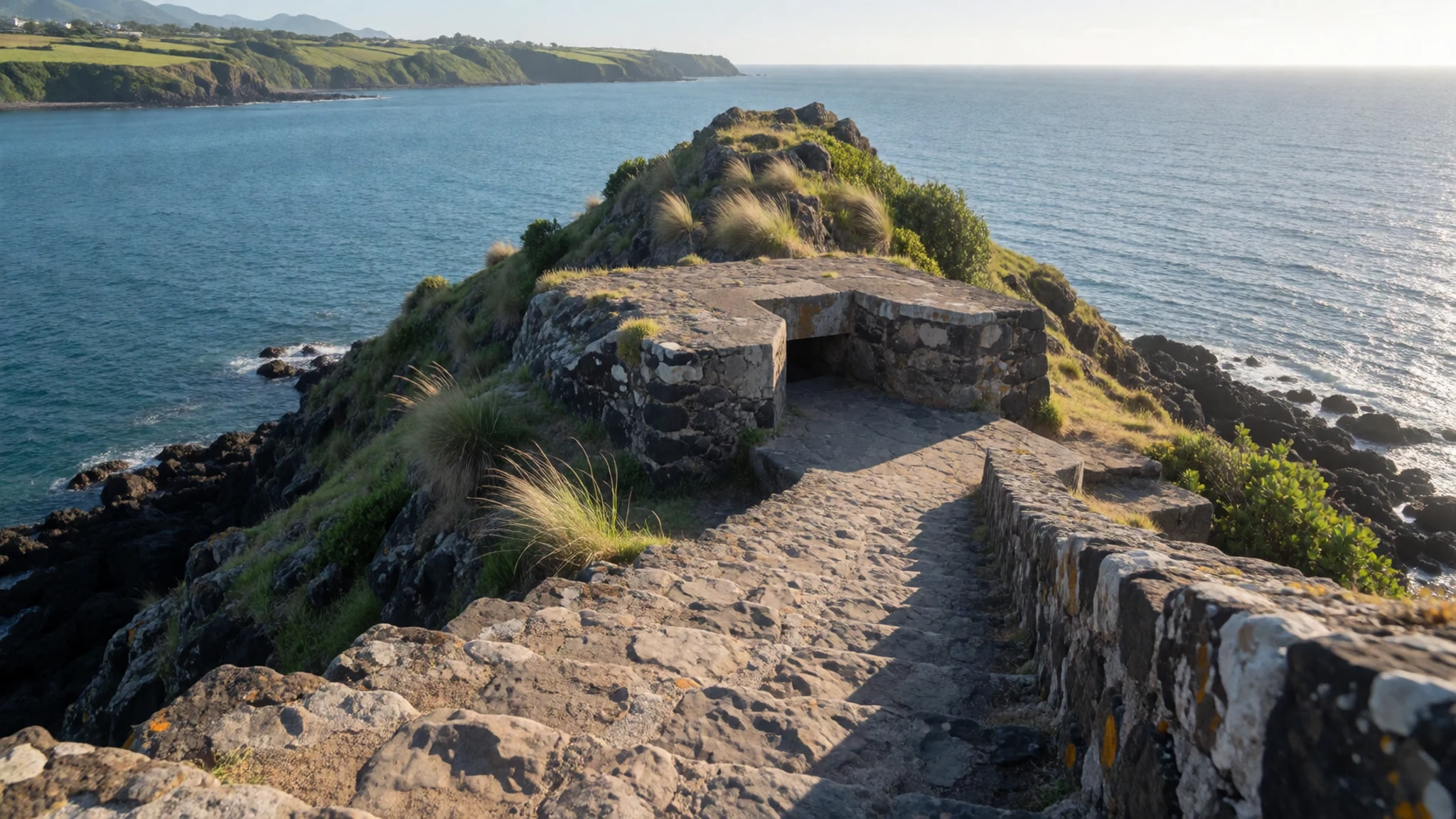
- Botanical Gardens, Kingstown — Kingstown
The Botanical Gardens near Kingstown offer shaded paths, tropical plantings and a calm break from heat and traffic. It is an easy place for a slow hour after arrival or before a flight. Opening arrangements change, so check locally before setting out.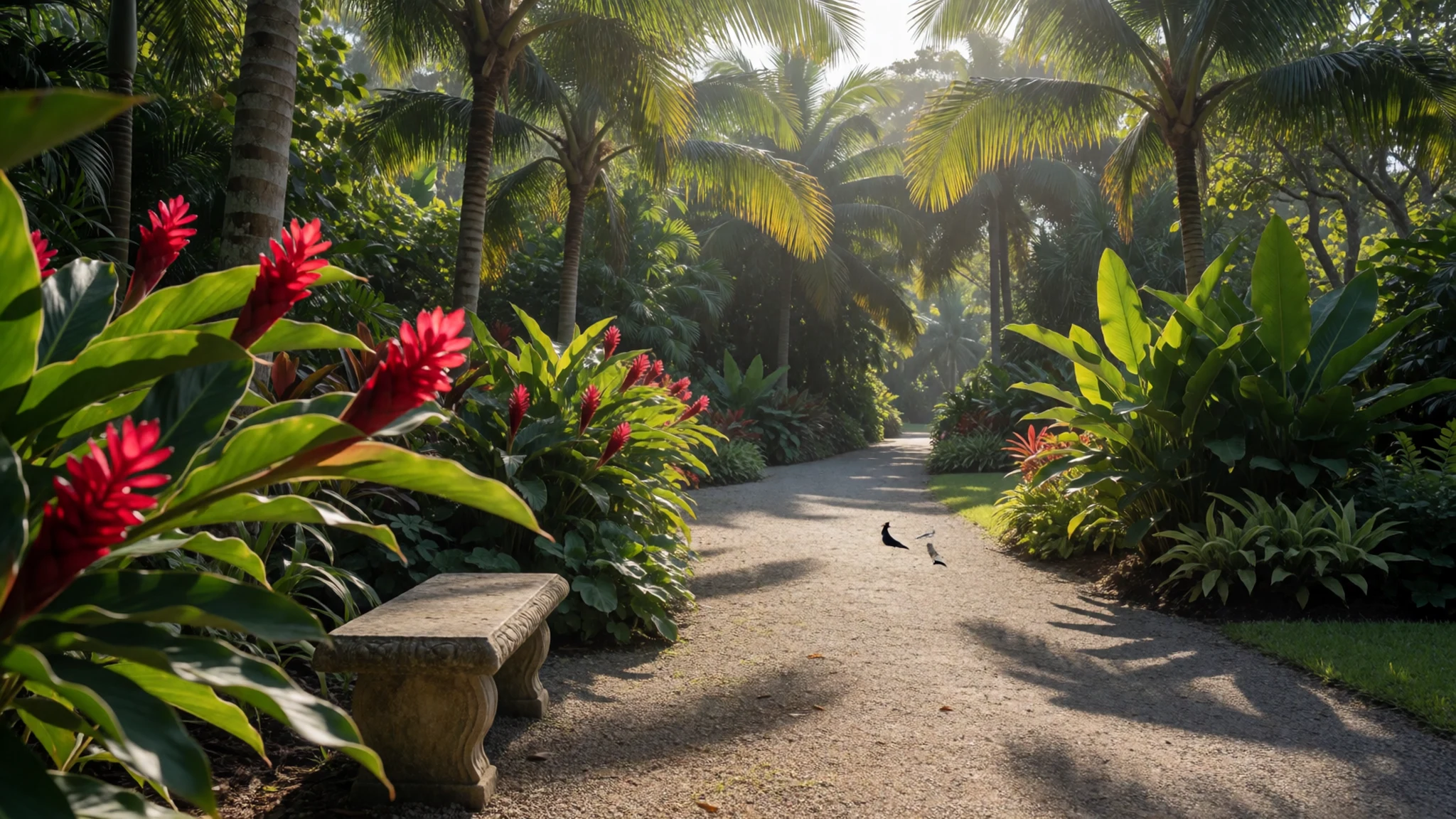
Culture
Baliceaux is, above all, a site of Garifuna memory, and the culture connected with it is carried mostly by communities far from the island itself. The Garifuna descend from Carib and African peoples who intermarried on Saint Vincent, and after the exile of the 1790s they rebuilt their lives along the Central American coast. Their language, drumming, dance and food remain living traditions, and the story of Baliceaux sits at the centre of how they understand their origins.
In Saint Vincent, the March pilgrimage to the island is the clearest public expression of this memory. It coincides with National Heroes' Day, which honours Joseph Chatoyer, the Garifuna leader who resisted British rule. Services, readings and music often feature, and the mood is solemn rather than festive.
Wider Vincentian culture is a blend of African, Carib, European, Portuguese and Indian influences, a result of the plantation era and the labour that followed the end of slavery. Carnival, known locally as Vincy Mas, takes over the country in early July and is loud, joyful and heavily musical. That contrast is useful to know: the island of the exiles is a place of quiet, while the rest of the country can be exuberant.
Respect for the burial ground is the main rule, so on Baliceaux speak quietly, take nothing away, do not disturb the ground, and ask before photographing any ceremony or the people attending it.
What to wear
Baliceaux has no dress tradition of its own, so clothing here means Garifuna and wider Vincentian practice. Garifuna women have traditionally worn bright cotton headwraps and loose, full dresses, particularly at festivals and commemorations, while men wear light shirts and trousers, often in white or plain colours on ceremonial days. Fabrics are generally cotton or similar light weaves, suited to heat and humidity.
In daily life across Saint Vincent and the Grenadines, people dress for the climate: shorts, T-shirts, sundresses and sandals on the coast, and neater shirts and skirts or trousers for church, offices and town. Beachwear is for the beach; walking around Kingstown in swimwear is frowned on. Carnival costumes in July are another matter, with feathers, beads and bright colour.
Visitors heading for Baliceaux should pack for sun, sea spray and rough ground. A wide-brimmed hat, long-sleeved lightweight shirt, high-factor sunscreen and sunglasses help on open decks and exposed shore. Shoes with grip are useful for wet boat steps and dry, scrubby paths, and sandals alone are not enough. For the March pilgrimage or any gathering at the burial ground, choose modest, plain clothing, such as covered shoulders and knees, and avoid anything with slogans. Carry a light rain layer, since squalls pass through quickly.
What to eat
- Roasted breadfruit with fried jackfish — Local eateries and cookshops in Kingstown and coastal villages
The national dish of Saint Vincent and the Grenadines pairs smoky, roasted breadfruit with crisp fried jackfish. The breadfruit is starchy and filling, and the fish is salty and simple. Look for it at local eateries and village cookshops across the main island.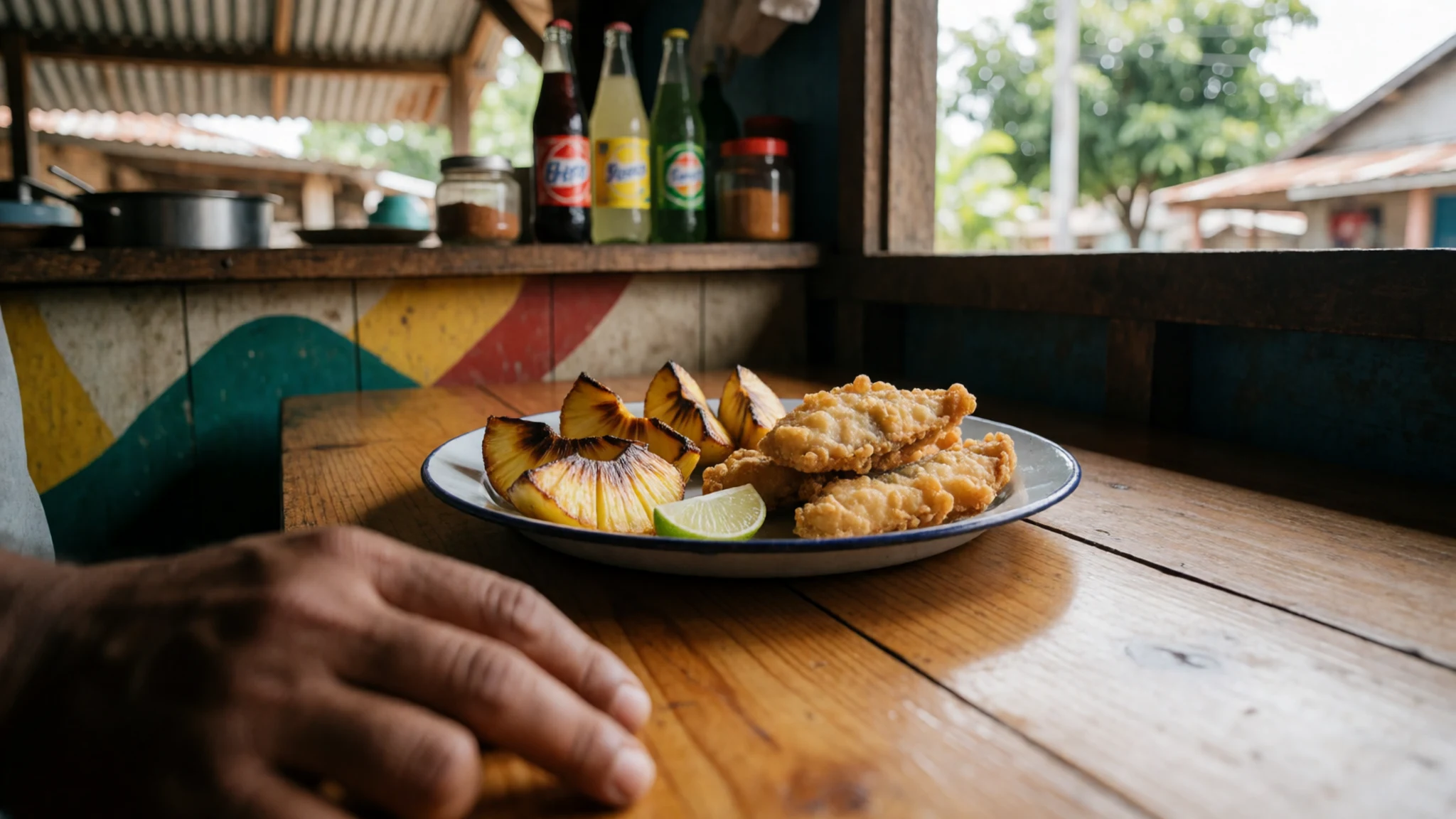
- Roadside barbecue pork or chicken — Roadside stalls on Saint Vincent, weekend evenings
On Friday and Saturday evenings, cooks set up grills by the road and sell smoky pork or chicken, usually in a paper box with simple sides. It is casual, sociable food and a good way to meet locals.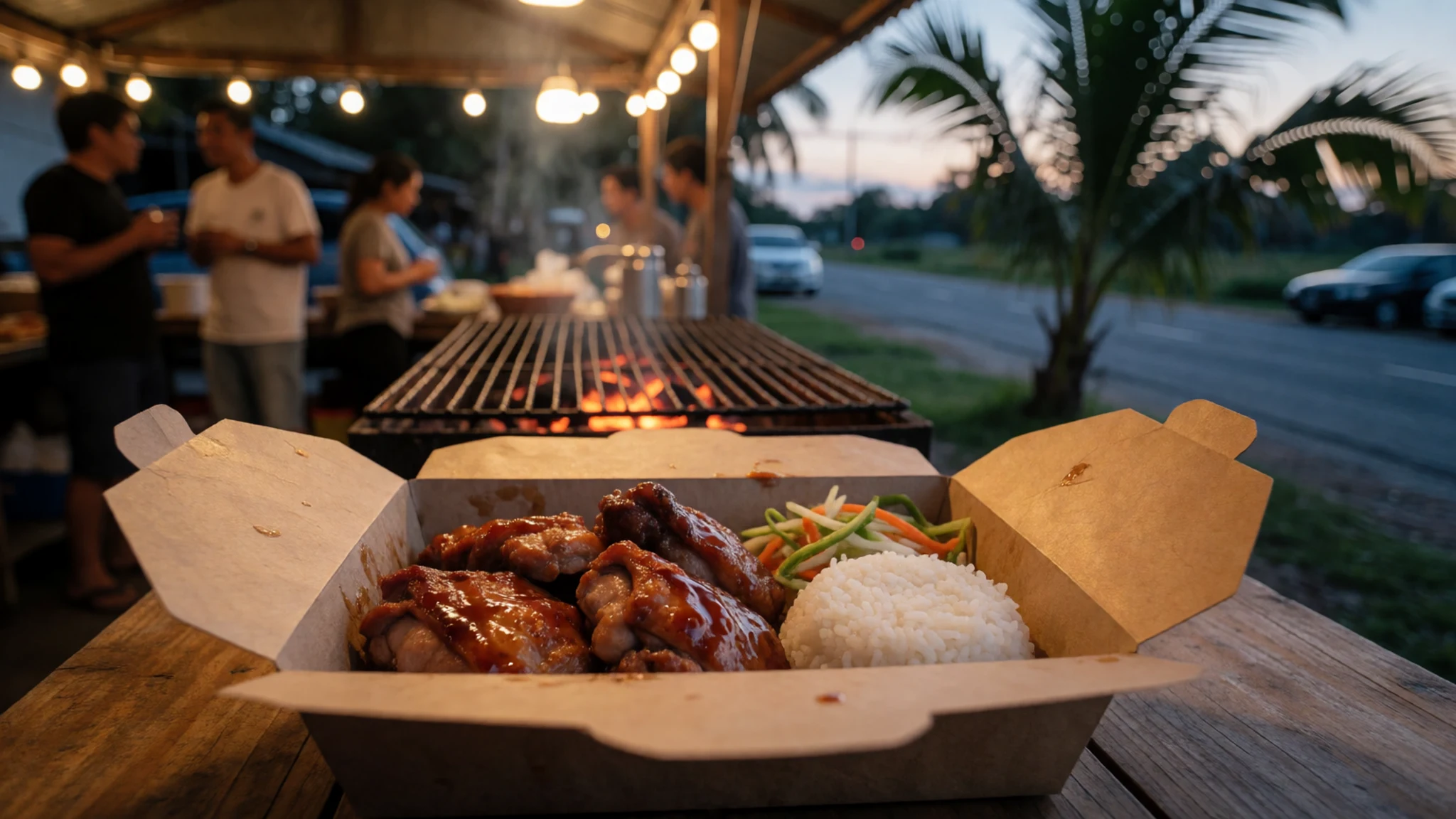
- Hairoun beer — Bars and beach cafés across the islands
Hairoun is the locally brewed beer and a familiar sight at bars, beach shacks and barbecues. It is light and cold, which suits the heat, and it is a gentle introduction to local drinking before trying anything stronger. - Black Wine — Local bars and rum shops
Black Wine is a strong, dark drink that suits the adventurous. It is an acquired taste, and it is best sampled in small amounts, ideally with a local who can tell you what to expect. - Bitter Lemon and fruit cocktail sodas — Corner shops, snack bars and beach cafés
Bitter Lemon and Fruit Cocktail are popular local soft drinks, sweet and sharply fruity. They are a cheap, cold alternative to alcohol on a hot day and are sold almost everywhere.
Plan it
Best time. February to May is the drier part of the year and generally the most comfortable for boat trips; March suits anyone wanting to attend the Garifuna pilgrimage. Hurricanes are an annual risk later in the year, and July brings Carnival crowds to Saint Vincent.
How long. 2–3
Getting there. Fly to Argyle International Airport (SVD) on Saint Vincent, which mostly links to nearby islands such as Canouan, Saint Lucia, Barbados and Saint Kitts. Baliceaux itself is reached by boat from the Grenadines, usually a chartered or yacht trip arranged locally.
Budget. high
Tips
- Confirm access to Baliceaux through official channels first, as the island has only recently passed into government hands
- Book boat transfers and charters well ahead in the dry season
- Carry some cash, since small boats and roadside stalls may not take cards
- Bring plenty of drinking water, sun protection and a hat for exposed shoreline
- Consider staying in a guest house in Kingstown to meet local people rather than only resorts
Etiquette
- Treat Baliceaux as a burial ground: keep voices low and leave the ground undisturbed
- Ask before photographing people at commemorations
- Dress modestly away from the beach
Nearby
Sources
- Wikidata Q804963 (CC0)
- Wikipedia: Baliceaux (rev 1380774278) (CC BY-SA 4.0)
- Wikivoyage: Saint Vincent and the Grenadines (rev 5362959) (CC BY-SA 4.0)
- Baliceaux2.jpg — Cior at en.wikipedia (CC BY 3.0)
- Location map of Saint Vincent und the Grenadines — Carport (CC BY 3.0)
- Relief Map of Caribbean — Nzeemin (CC BY 3.0)


More in Saint Vincent and the Grenadines
- Barrouallie
- Battowia
- Bequia
- Canouan
- Chateaubelair
- Fort Duvernette
- La Soufrière
- Mayreau
- Mustique
- Owia
- Petit St. Vincent
- Rabacca
Every place in Saint Vincent and the Grenadines · Every place, A to Z