Battowia
Battowia, Saint Vincent and the Grenadines
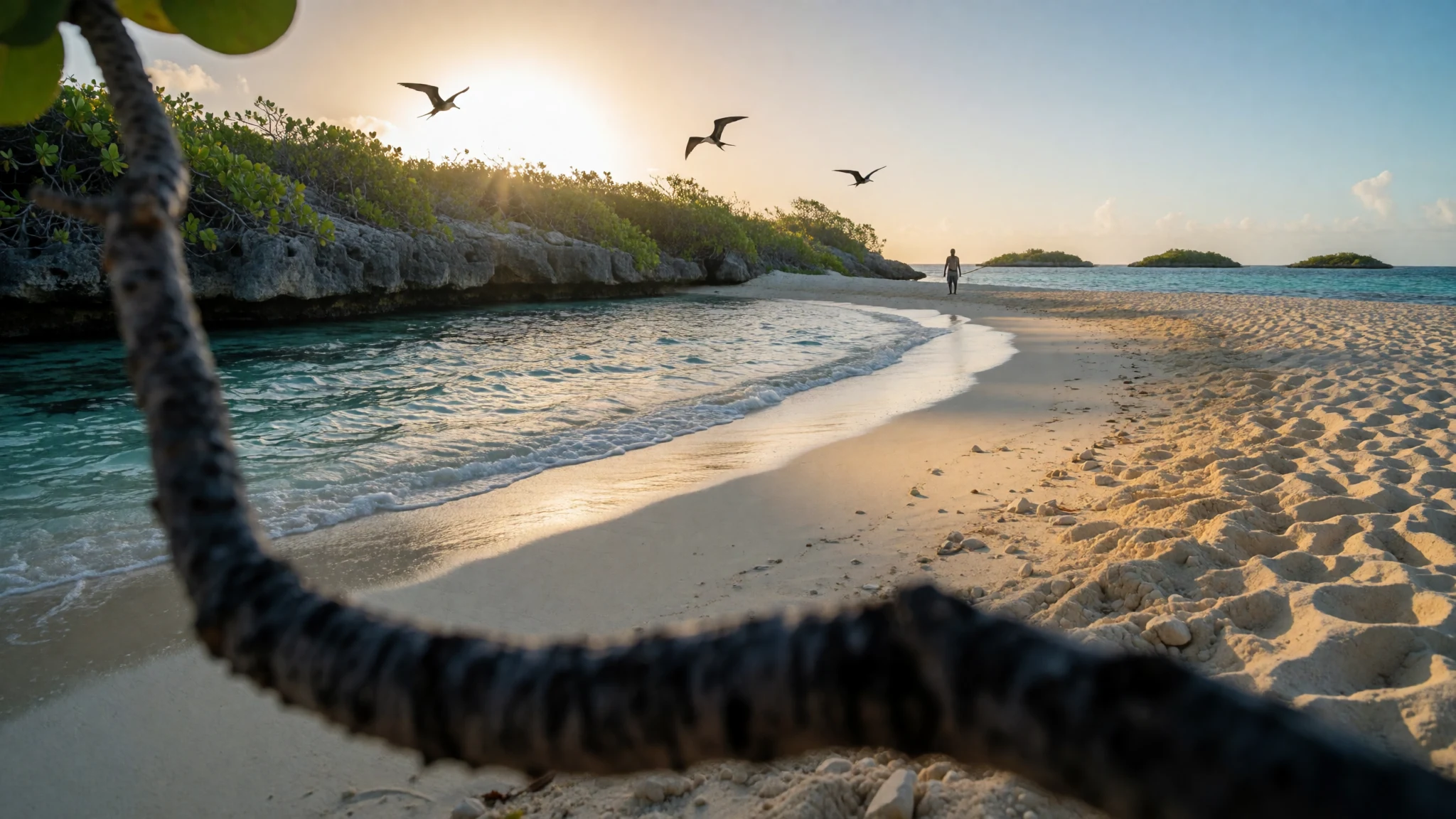
Battowia is a protected wildlife reserve in the Grenadines, best seen from a sailing boat among clear water and volcanic neighbours.
The place
Battowia is a small island in the Grenadines, the chain of islets strung between Saint Vincent to the north and Grenada to the south. It belongs to the nation of Saint Vincent and the Grenadines and has been declared a wildlife reserve, which says most of what matters: this is land set aside for nature rather than developed for visitors. The facts block spells the name Bettowia, and both spellings turn up on maps and in local usage. Its high point is 70 m above the sea, so from the water it reads as a low, rugged ridge rather than a mountain, very different from the volcanic peaks of Saint Vincent itself. The wider setting is tropical, with little change in temperature through the year. Rain is most likely from May to November, and hurricanes threaten the islands between July and October, which shapes when boats go out and when they stay in harbour. Nearly all travellers reach this part of the Caribbean by plane to Saint Vincent or by yacht, and the Grenadines are known for sailing, shallow clear water and small resort islands. Battowia sits outside that resort pattern. Public information on landing is thin, so the honest framing is that this is an island to see from a boat, with a local skipper or the national tourism office confirming what is permitted, rather than a stop with beaches, shops and somewhere to sleep.
Its story
Battowia's story is largely the story of Saint Vincent, the bigger island that shaped the region's politics. Carib communities defended Saint Vincent so firmly that European settlement came slowly. The English claimed it early, but the French were first to found a colony, on the leeward coast at Barrouallie. People of African descent, shipwrecked or escaped from neighbouring islands, found refuge there and intermarried with the Caribs. Control then passed back and forth between Britain and France through a series of treaties, and the islands ended up in British hands. After slavery ended in 1834, plantations short of labour recruited workers from Portugal and, later, from India, which is why the population carries a wider mix of heritage than many visitors expect. Britain governed under changing colonial arrangements until a referendum in 1979 led to full independence as one nation. Nature has been as decisive as politics. The Soufrière volcano erupted in 1902 with heavy loss of life and again in 1979, and an early warning system meant no deaths in the later eruptions of 1979 and 2021. Hurricanes have repeatedly flattened banana and coconut crops. Battowia is small and exposed, and today it is protected as a wildlife reserve, a quiet footnote beside the busier human history of its neighbours.
What to see
- Battowia from the water — Grenadines, open water
The island itself is the first sight worth seeking. Seen from a boat, Battowia is a low, rugged ridge rising to 70 m, with surf along its edges and, with luck, birds overhead. As a wildlife reserve it is for looking at, not exploring, so ask a local skipper what distance is respectful and which landing rules apply.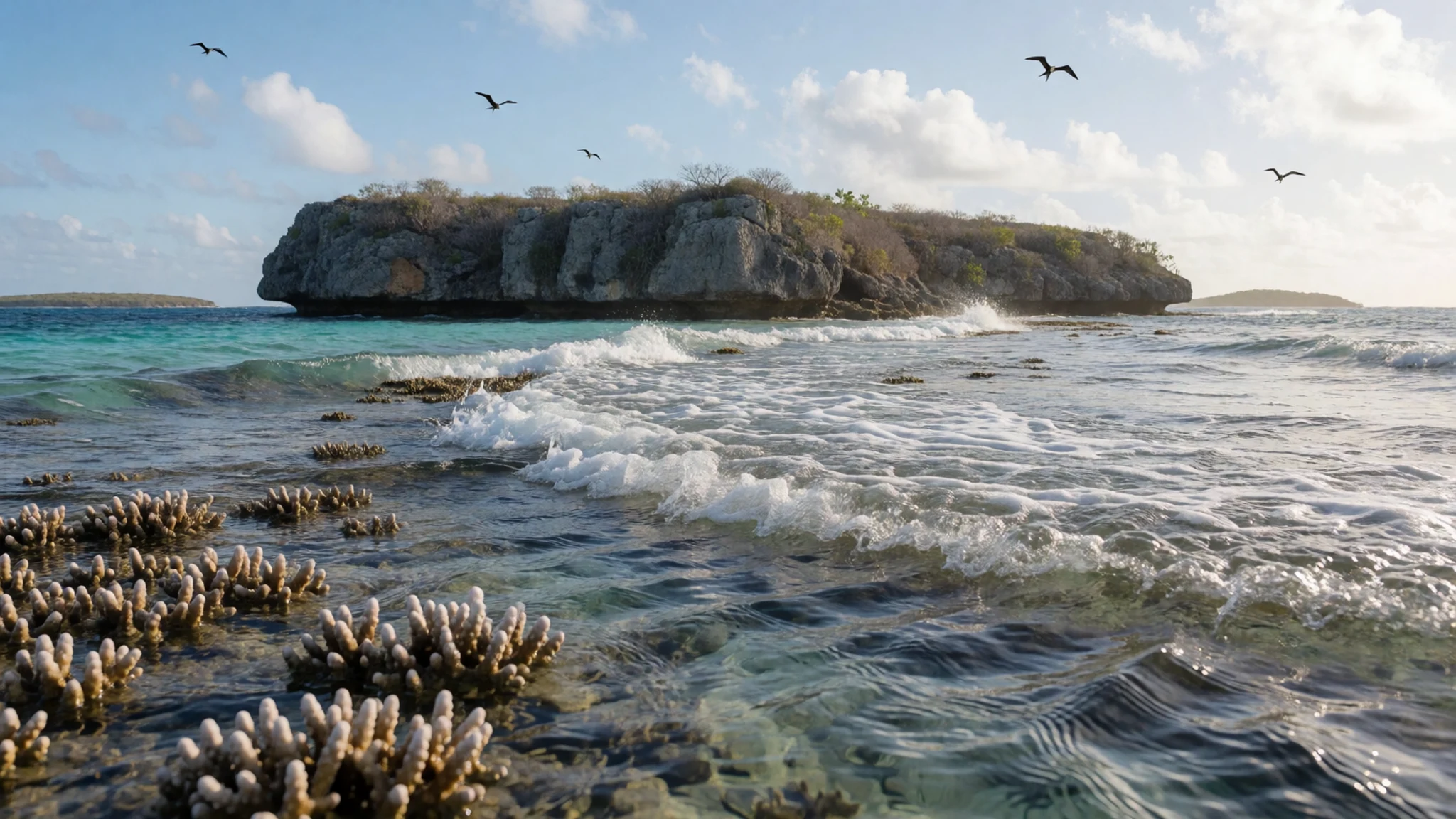
- Tobago Cays Marine Park — Southern Grenadines
A marine park of small uninhabited islets and shallow reef, south-west of Battowia on the usual sailing routes. Snorkelling here is the standard Grenadines day out, and nearby sites were used for the Pirates of the Caribbean films. Go early, since day boats and yachts crowd the anchorage by late morning, and check park fees with the official operator.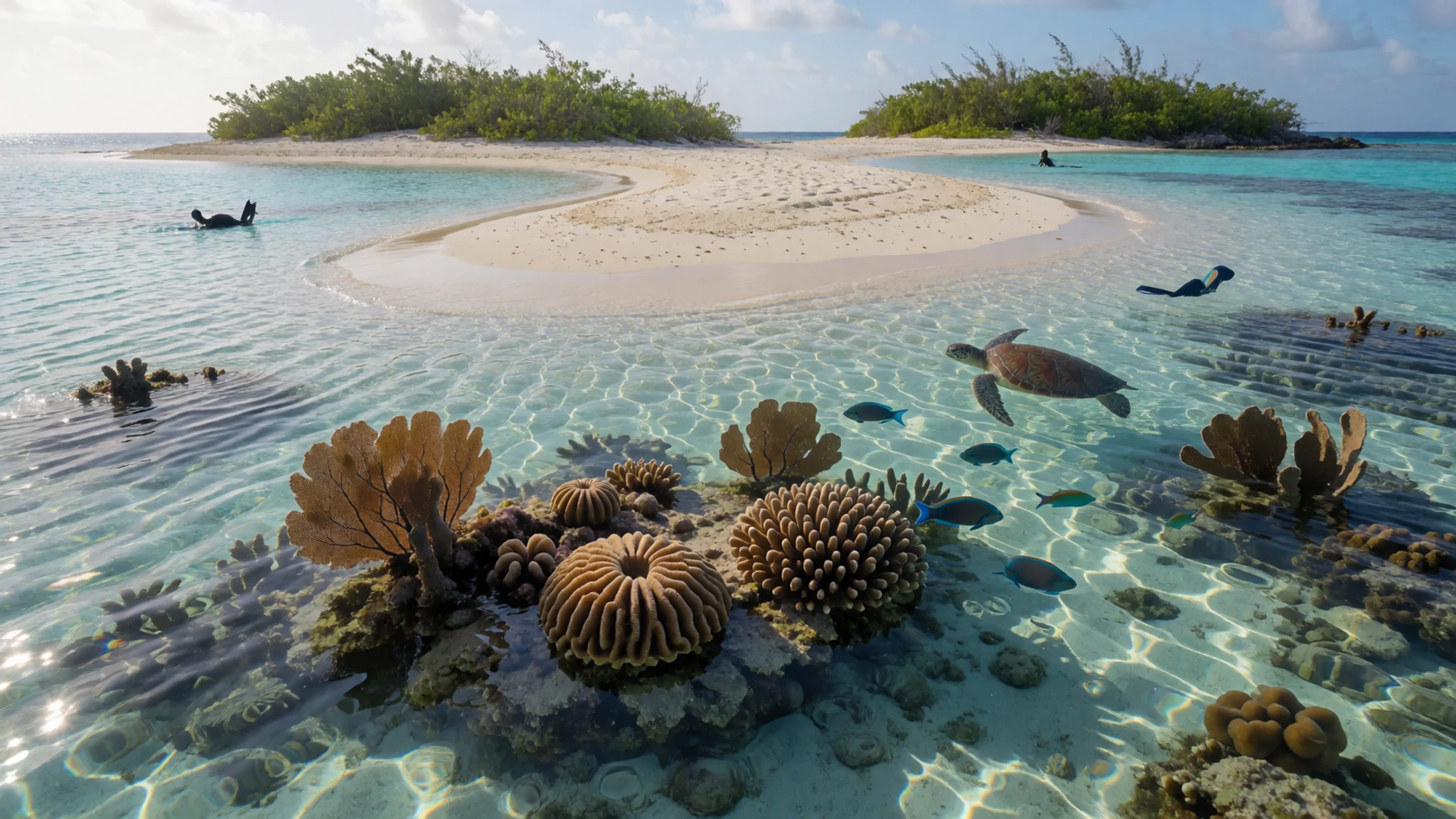
- La Soufrière — Northern Saint Vincent
La Soufrière is the active volcano on Saint Vincent and, at 1,234 m, the highest point in the country. The hike is long and steep, about three hours up with a climb of roughly 1,200 m, and not an easy one. Eruptions are monitored, so confirm current access locally, and start at first light for clearer views.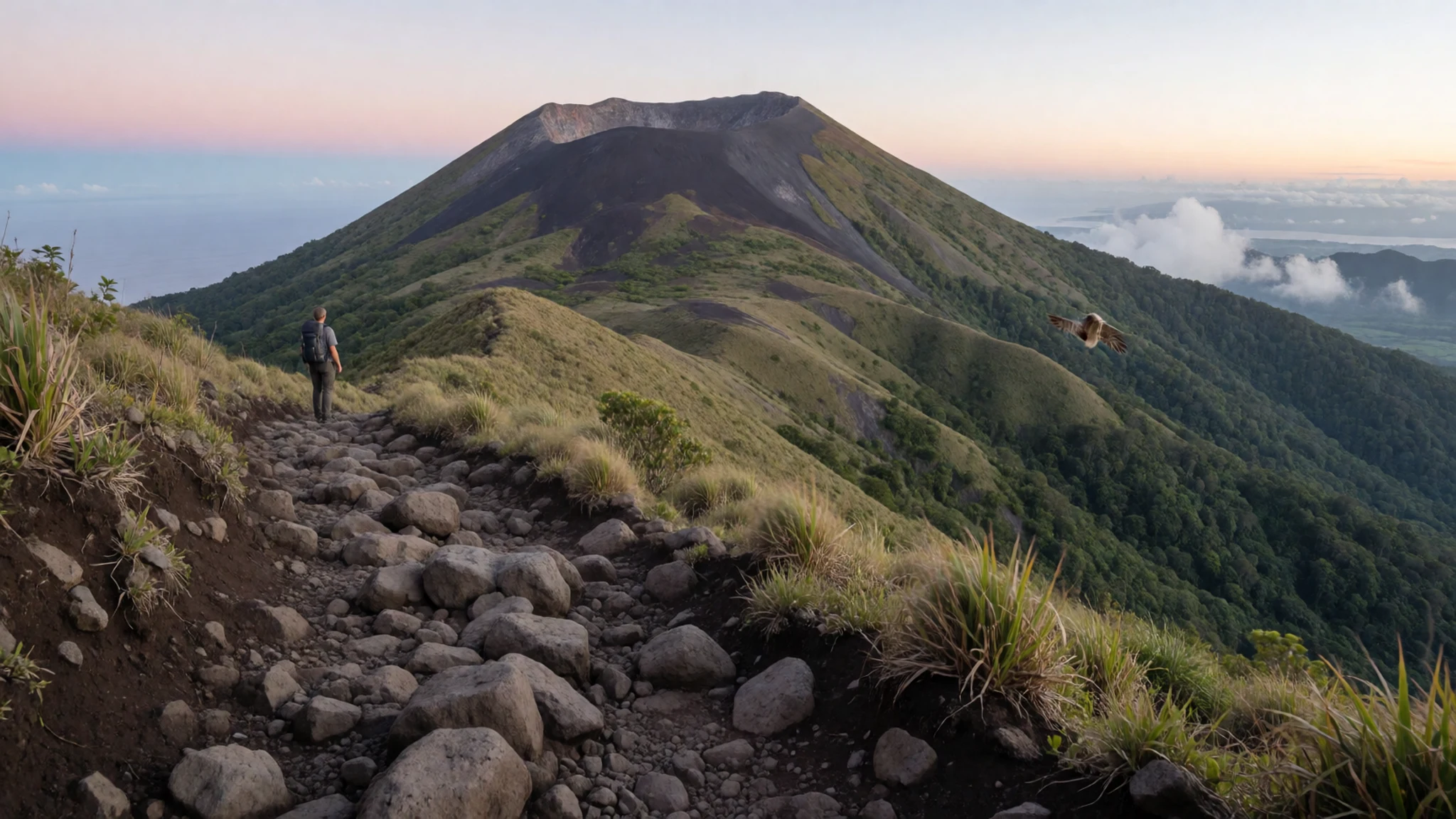
- Fort Duvernette — South coast, Saint Vincent
Fort Duvernette stands on a steep rock just off Saint Vincent's south coast. A stepped climb leads to old gun emplacements and a wide view over the water and the islands to the south. A short boat transfer from the shore is needed, so confirm arrangements with the boatmen, wear shoes with grip and carry water.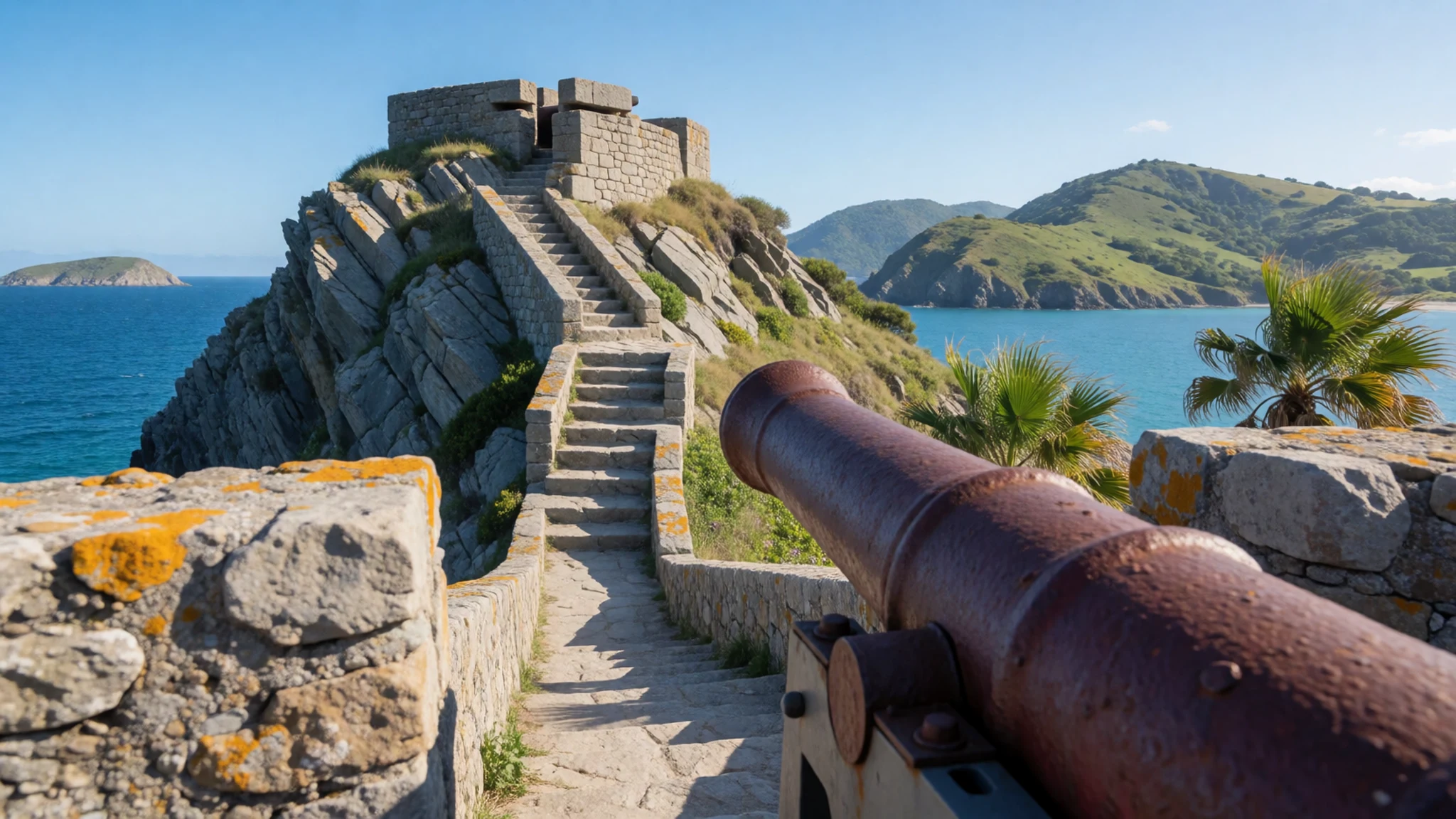
- Fort Charlotte — Above Kingstown
Fort Charlotte looks over Kingstown and the Grenadine chain from a headland above the capital. The visit is mostly about the view and the layers of colonial history, with the British and French struggle for the island easy to picture from the ramparts. Late afternoon suits best, when the heat eases and the light over the water softens.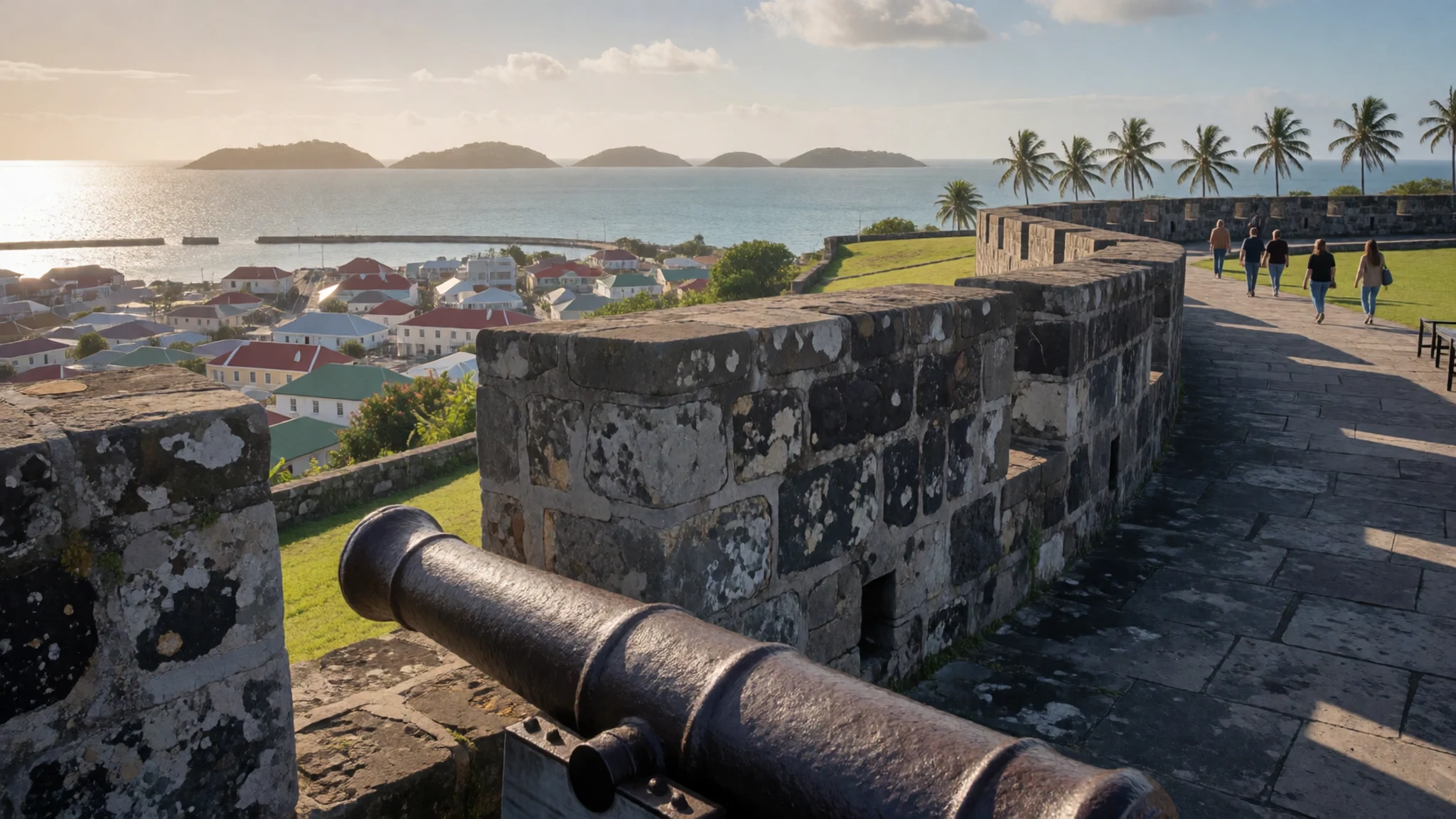
- Botanical Gardens — Kingstown
The Botanical Gardens in Kingstown offer a shaded, easy break from heat and boats. Paths wind among tropical trees and flowering plants, and the grounds suit a slow morning before or after a flight at Argyle. Opening arrangements change, so check the Discover St. Vincent website before going.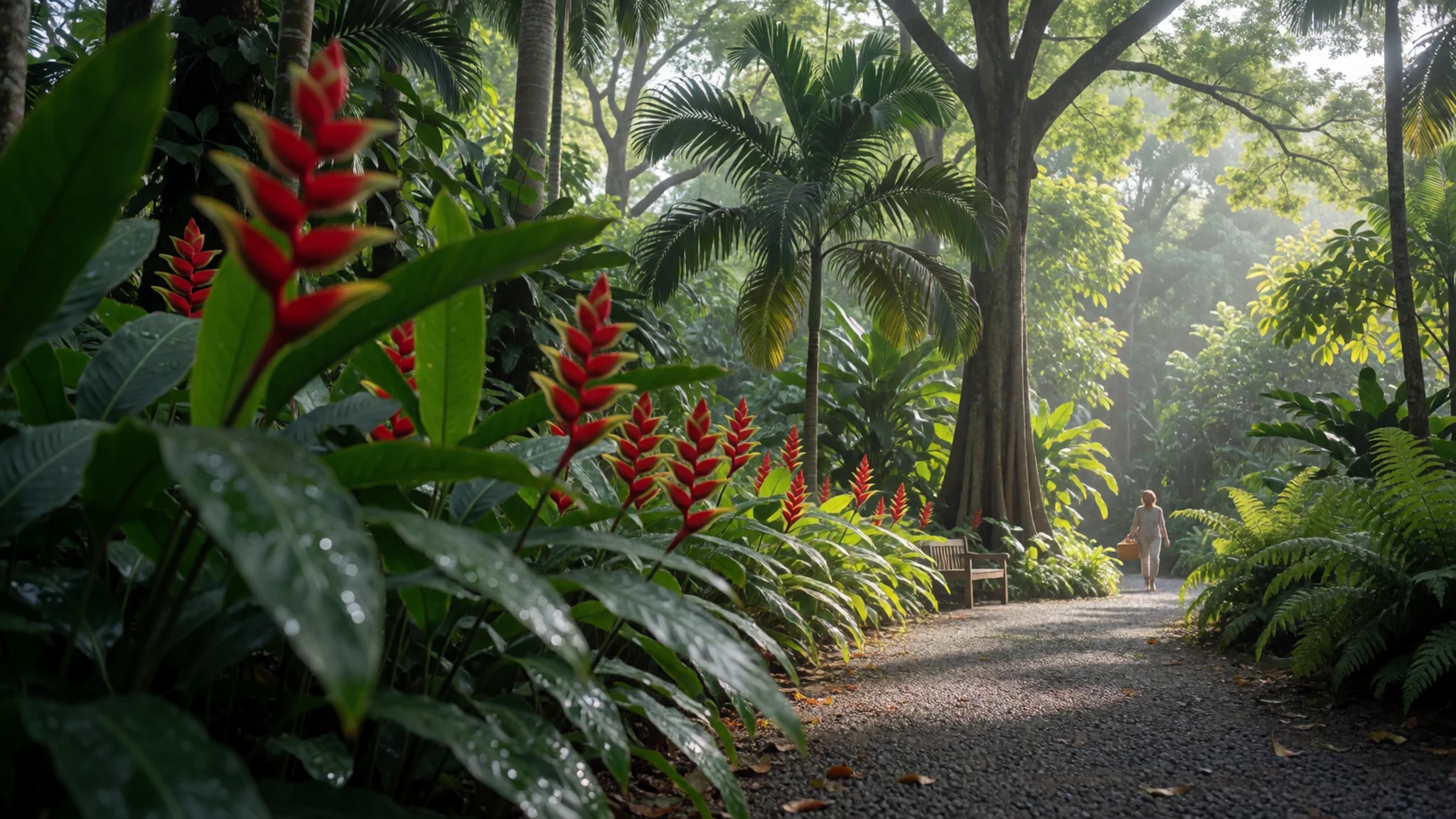
Culture
Battowia has no community of its own to describe, so its culture is that of the surrounding nation of Saint Vincent and the Grenadines, where African, Carib, European, Portuguese and Indian threads have woven together over centuries. The islands live by the sea, and boats, fishing and sailing shape daily rhythm far more than museums do. Music is central. Carnival, known locally as Vincy Mas, takes over in early July with bands, costumes, steel pan and calypso, and it comes with plenty of drinking and late nights. On Friday and Saturday evenings, roadside barbecues turn ordinary corners into social spots where neighbours meet over grilled pork or chicken. Many visitors stay at a resort and never meet local people, so a guest house or apartment in Kingstown is a better way to hear the island's conversation, in a mix of English and Vincentian Creole. The history of slavery, indentured labour and colonial rule is close to the surface and is treated seriously in conversation, in churches and in public holidays. Volcanic eruptions and hurricanes have also bred a practical, community-minded outlook, with neighbours helping neighbours after storms. Greet people before asking a question, as a plain good morning goes a long way. When visiting a reserve or marine park, follow your skipper's guidance, leave coral, shells and plants where they are, and ask before photographing people.
What to wear
Battowia is uninhabited reserve land, so its fashion is that of Saint Vincent and the Grenadines. Traditional dress here draws on wider Caribbean habits, notably cotton madras-style checks in headwraps, skirts and shirts, worn mostly at festivals, national events and cultural shows rather than every day. Carnival adds another textile tradition, with sequins, feathers and bright synthetic fabrics built into elaborate costumes for the July celebrations. Day to day, people dress for heat and humidity: light cotton shirts, breathable dresses, shorts and sandals, with smarter, fuller outfits for church and formal events. On boats and at the water, sailing shirts, swimwear and quick-dry layers are common. Visitors should pack light, loose clothing in cotton or linen, a wide-brimmed hat, sunglasses and high-factor sunscreen, since the sun at this latitude is strong all year. Rubber-soled shoes with grip help on boat decks and wet jetties, and water shoes suit rocky landings and reef snorkelling. For the La Soufrière hike, wear proper trainers or light boots and carry a thin waterproof, as rain can arrive in any month and more often between May and November. Cover up with a shirt or wrap when walking through Kingstown or entering a church, as beachwear is for the beach and the boat.
What to eat
- Roasted breadfruit with fried jackfish — Local eateries in Kingstown and roadside cookshops
The national dish pairs a smoky, starchy roasted breadfruit with fried jackfish, a small silvery fish. The breadfruit is charred over fire and served in thick slices. It is a hearty plate for a hot day, and it shows how closely the cooking follows the shoreline.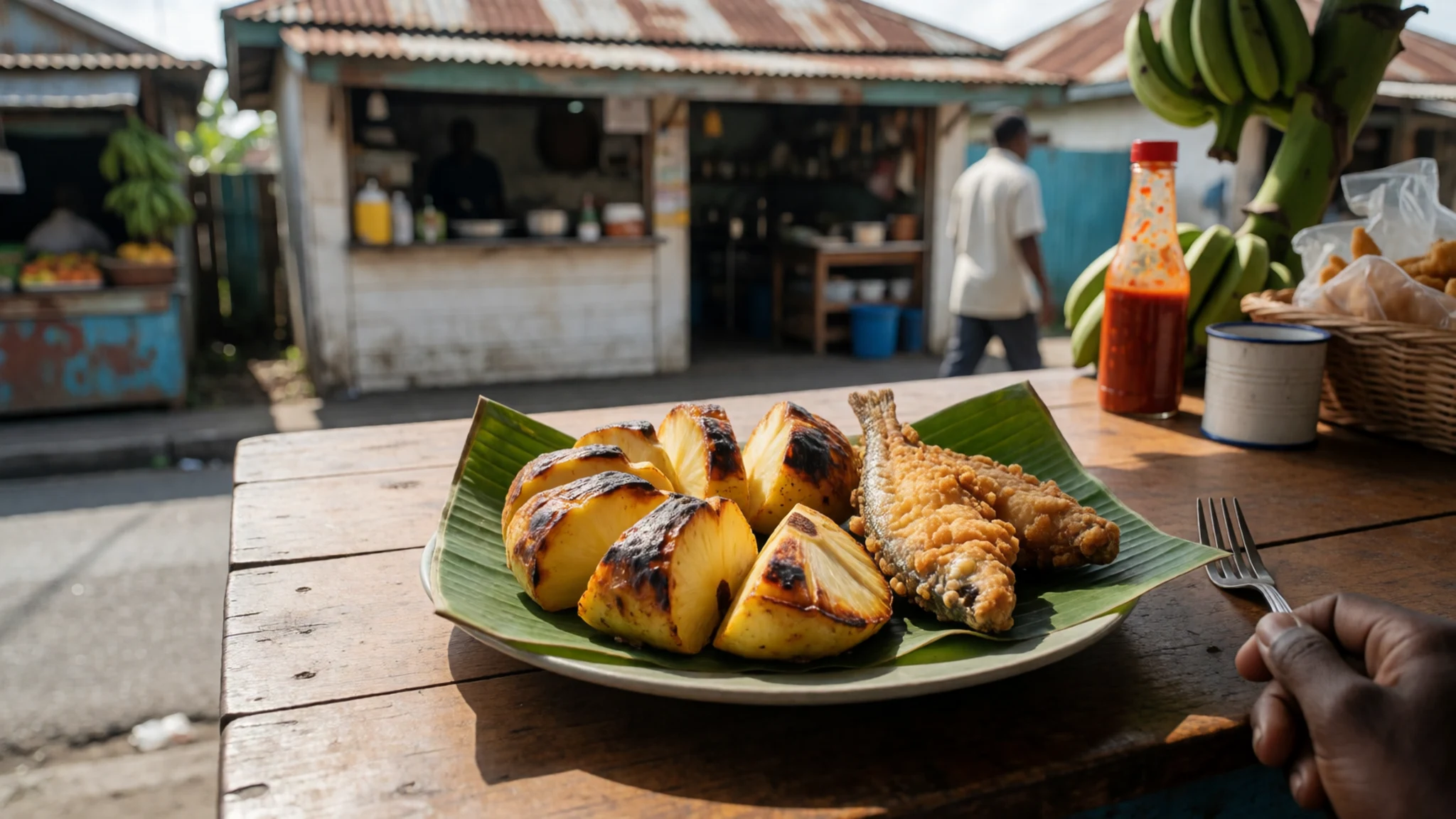
- Roadside barbecue pork or chicken — Roadside stalls on Friday and Saturday nights
On Friday and Saturday evenings, cooks set up grills by the road and sell pork or chicken, often with sides and hot sauce. It is casual, smoky and social, and eaten standing or at simple tables as the music starts.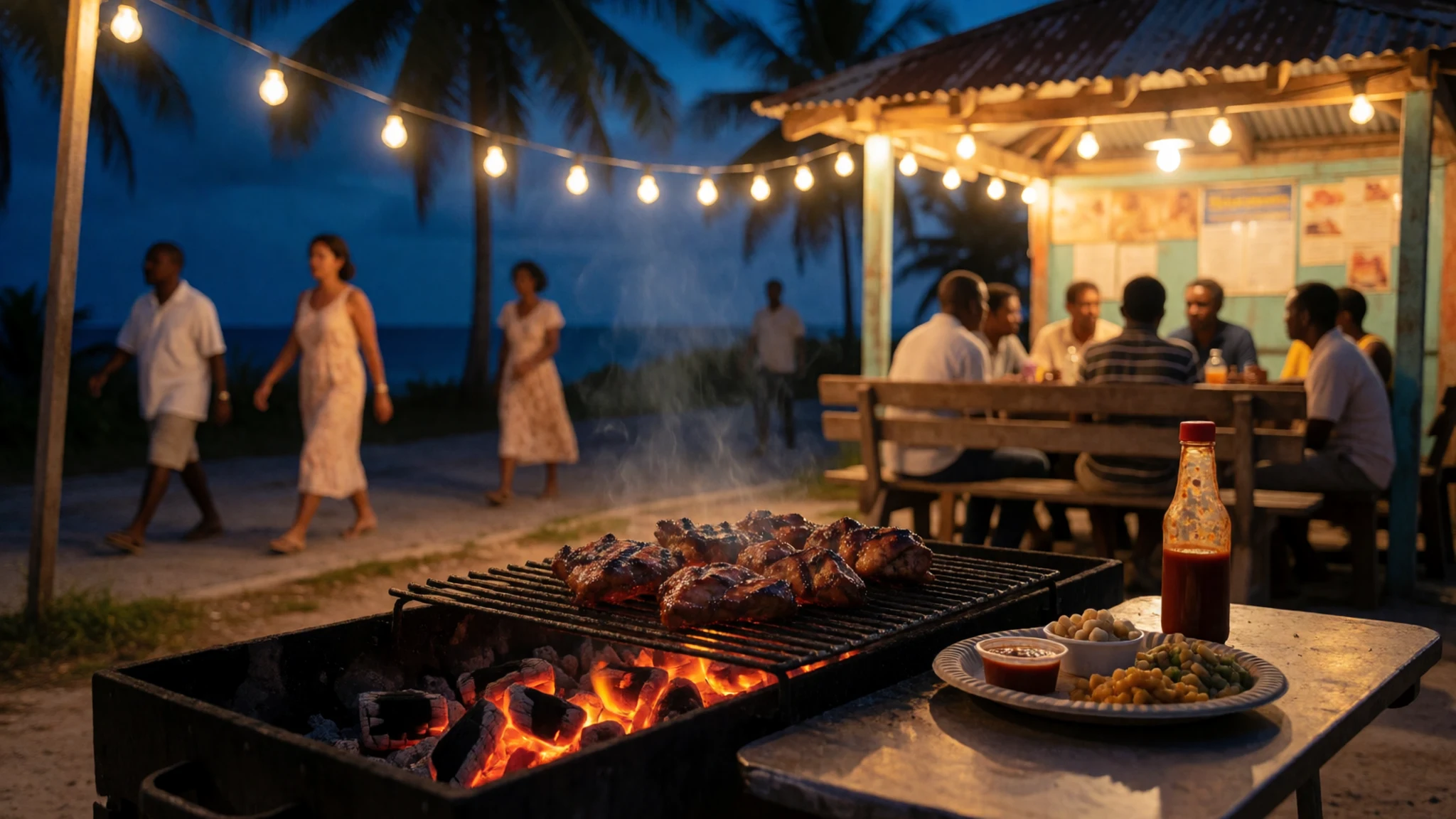
- Hairoun beer — Bars, beach stalls and shops across Saint Vincent
Hairoun is the locally brewed beer, light and crisp, and the usual cold drink after a day in the sun or on a boat. Order it at a bar or beach stall and drink it with grilled fish or barbecue. - Bitter Lemon and Fruit Cocktail sodas — Corner shops, snack bars and market stalls
These are popular local soft drinks, sharp and sweet in turn, and a good alternative to beer when the heat is high. They are cheap, widely stocked, and served very cold with lunch. - Black wine — Local bars and rum shops in Kingstown
For adventurous drinkers, Black Wine is a dark, strong local drink worth a small sip. Treat it as an experience rather than a daily habit, and ask the seller or a local friend how to take it.
Plan it
Best time. December to April is the easiest window, outside the rainy season that runs from May to November. Hurricanes threaten from July to October, so those months need flexible plans. Early July brings Carnival, which is lively but busy.
How long. 2–3
Getting there. Fly to Argyle International Airport (SVD) on Saint Vincent, mostly via regional connections such as Barbados, St Lucia, Canouan or Saint Kitts. The last leg is by boat from Saint Vincent or a nearby Grenadine island; no regular public service is listed, so arrange a charter or local skipper in advance.
Budget. mid
Tips
- Arrange a local skipper in advance and ask what is permitted near Battowia, since it is a wildlife reserve
- Check hurricane forecasts and sea conditions before booking boats between July and October
- Start boat trips and hikes early, before the heat and the crowds build
- Carry some cash for small shops, boat operators and roadside food, and check which places take cards
- Bring water, sun protection and a light rain layer in any season
Etiquette
- Keep your distance from wildlife and do not land on the reserve without permission
- Take all rubbish back with you and leave coral, shells and plants untouched
- Greet people politely and ask before photographing them
Nearby
Sources
- Wikidata Q886822 (CC0)
- Wikipedia: Battowia (CC BY-SA 4.0)
- Wikivoyage: Saint Vincent and the Grenadines (CC BY-SA 4.0)
- Location map of Saint Vincent and the Grenadines — Carport (CC BY 3.0)
- Relief Map of Caribbean — Nzeemin (CC BY 3.0)


More in Saint Vincent and the Grenadines
- Baliceaux
- Barrouallie
- Bequia
- Canouan
- Chateaubelair
- Fort Duvernette
- La Soufrière
- Mayreau
- Mustique
- Owia
- Petit St. Vincent
- Rabacca
Every place in Saint Vincent and the Grenadines · Every place, A to Z