Moyo Island
Moyo Island, Indonesia
Moyo Island offers quiet limestone waterfalls, reef diving and dry forest just off Sumbawa, with almost none of the crowds of better-known Indonesian islands.
The place
Moyo Island lies just off the north coast of Sumbawa, in West Nusa Tenggara province, Indonesia, and it feels more remote than the short boat crossing suggests. Around 6,000 people live here, mostly in small coastal settlements, with Labuan Haji (also written Labuan Aji) as the main village. The interior is dry forest and scrub, reaching an elevation of 214 metres, with pale coral and limestone rock showing through the trees and a few streams that gather into pools and waterfalls.
There are no towns in the usual sense, no nightlife and very little traffic. Tracks are rough, and getting around usually means a motorbike, a hired driver, a boat or a long walk in the heat. Tourism is still light, and the island is often described as undiscovered. Accommodation is limited: simple guesthouses and homestays in and near Labuan Haji, a small jungle resort a few kilometres away, and a luxury tented camp on the southern side that belongs to the Aman group. That split shapes the island. Budget travellers get a village and a handful of local guides, while the camp offers a self-contained, very expensive stay.
Most days revolve around water. Dive operators based on Sumbawa run trips to Moyo's reefs, and the same boats go on to Satonda, Medang and Komodo National Park. On land, the draw is the freshwater pools in the forest and the quiet. Expect dry heat, strong sun, few shops and patchy phone signal. Bring cash, water and patience, because services here depend on boats, weather and the goodwill of small businesses.
Its story
Moyo Island has a short written history in the sources behind this reading, so its story is best told through a few threads. The first is the name. The island is older spelled Mojo, and both forms still turn up on maps and signs, much as Labuan Haji and Labuan Aji do for the main village.
The second thread is the sea. Photographs from the island show wooden boats being built by hand at Labuan Haji, and others show the sea nomads, boat-dwelling communities who have long worked these waters between Sumbawa and the islands around it. Boats are not a tourist attraction here. They are how people fish, trade and reach the mainland, and the yard at Labuan Haji is a working place.
The third thread is visitors. Moyo stayed outside mainstream tourism for a long time, and the luxury camp on its southern side changed that only slightly. In 1993 the camp hosted Diana, Princess of Wales, who was going through a difficult stretch in her marriage and wanted somewhere out of reach of the press. Her trip to the island's waterfall made the place briefly famous abroad, and the pools she visited are still the best-known sight on Moyo.
The result today is an island that holds a very quiet life next to a very small, very expensive tourism footprint. Villagers, divers and a few resort guests share the same coast without much overlap. Anyone arriving should expect that mix, and treat it as the island's real character rather than a flaw.
What to see
- Mata Jitu Waterfall — Inland from the west coast, near the main village
Mata Jitu is a chain of clear limestone pools linked by small cascades, set in forest inland from the coast. It is the island's most famous sight, partly because Princess Diana visited in 1993. Go early, when it is cooler and quieter, and wear shoes with grip, since the rocks are slippery.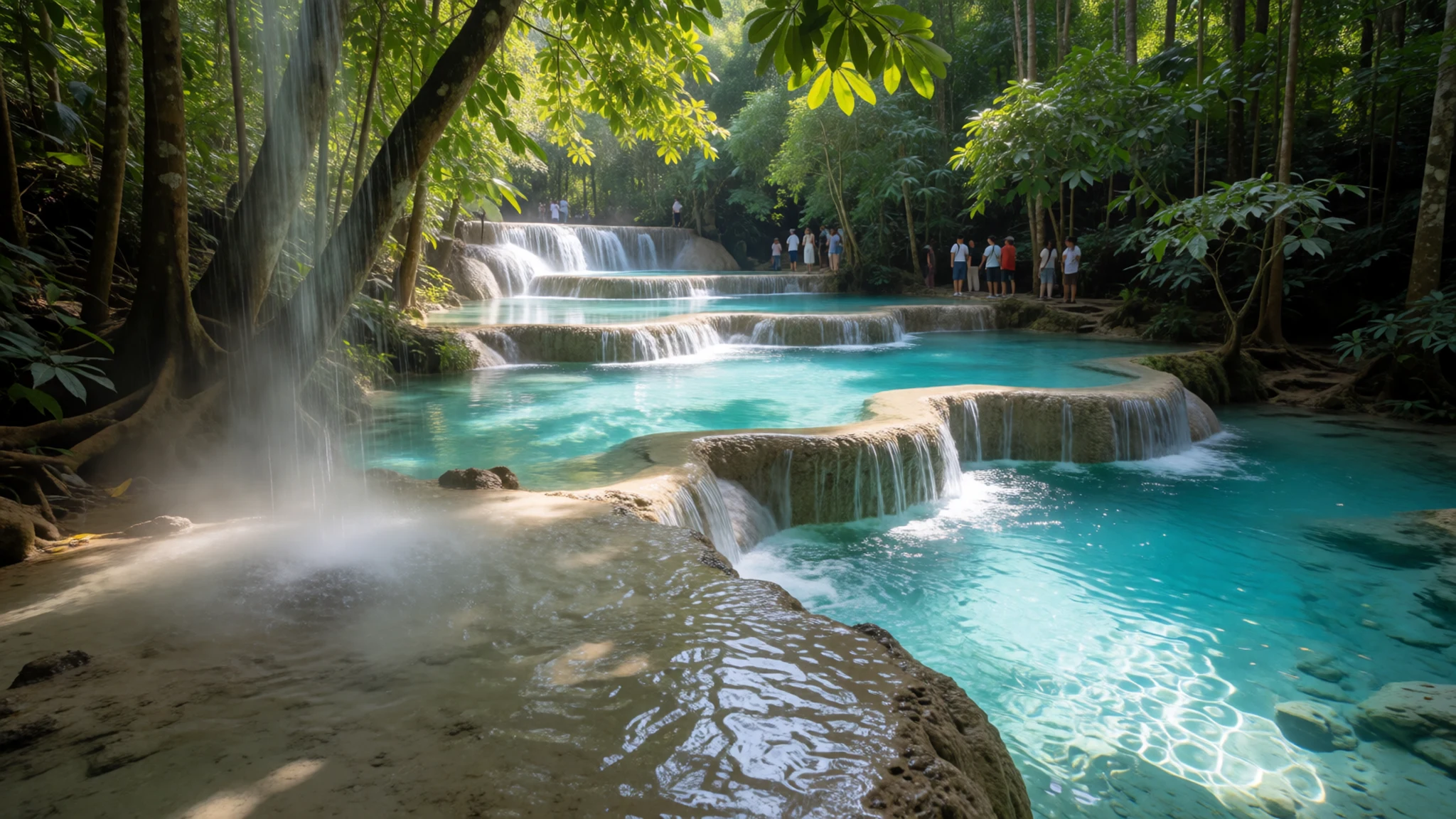
- Diwu Mbai waterfall — Near Labuan Haji
Diwu Mbai is a smaller waterfall near Labuan Haji, where water drops over rock into a shaded pool. It sees fewer visitors than Mata Jitu and suits a short, unhurried stop. Flow depends on the season, so it can look much thinner late in the dry months. Ask locally before setting out.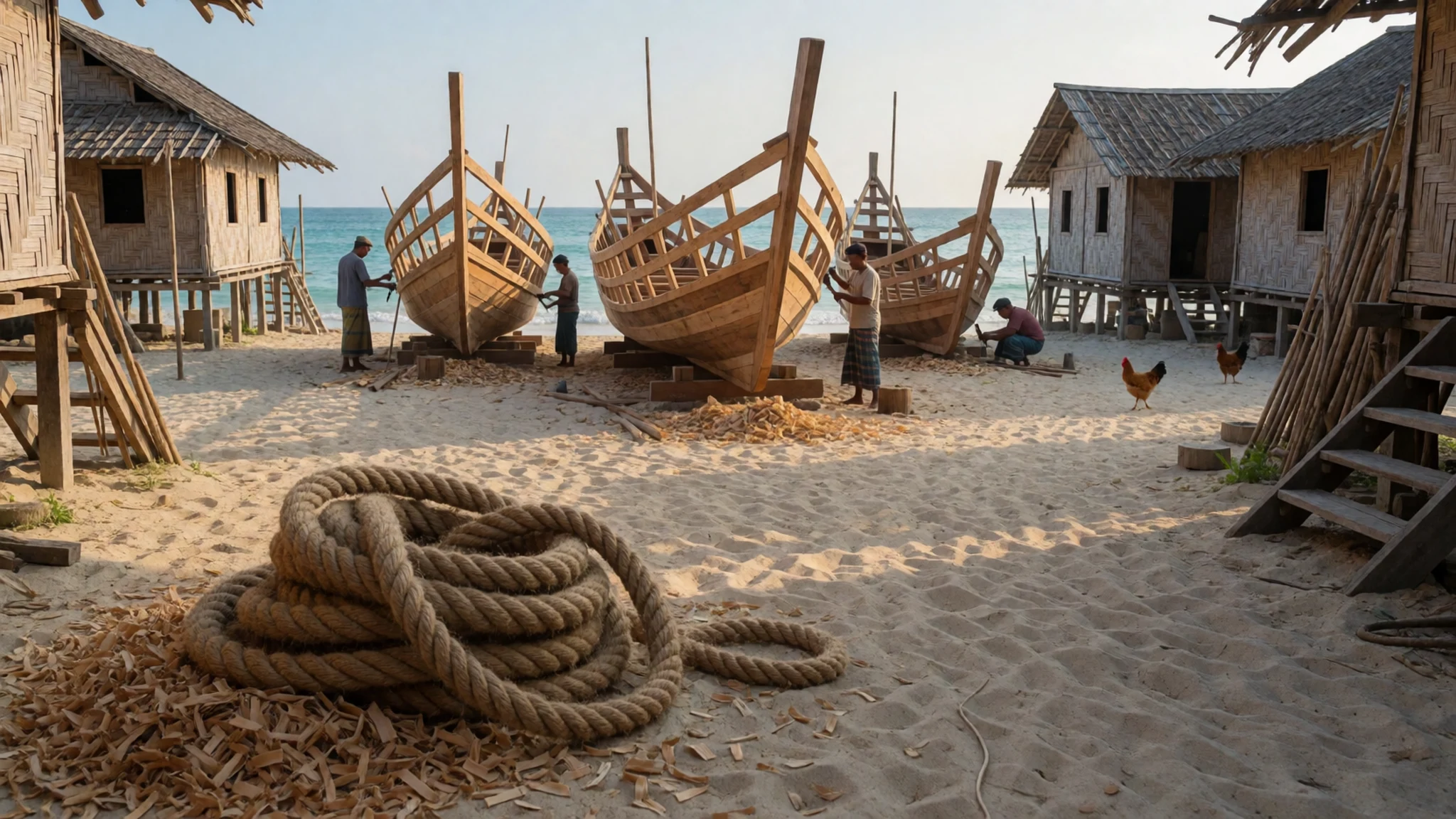
- Boatbuilding at Labuan Haji — Labuan Haji village
At Labuan Haji, wooden boats are still built by hand close to the water, using methods passed down through local families. It is a working yard rather than a show, so watch from a respectful distance, ask before taking photographs, and do not expect formal tours or fixed opening times.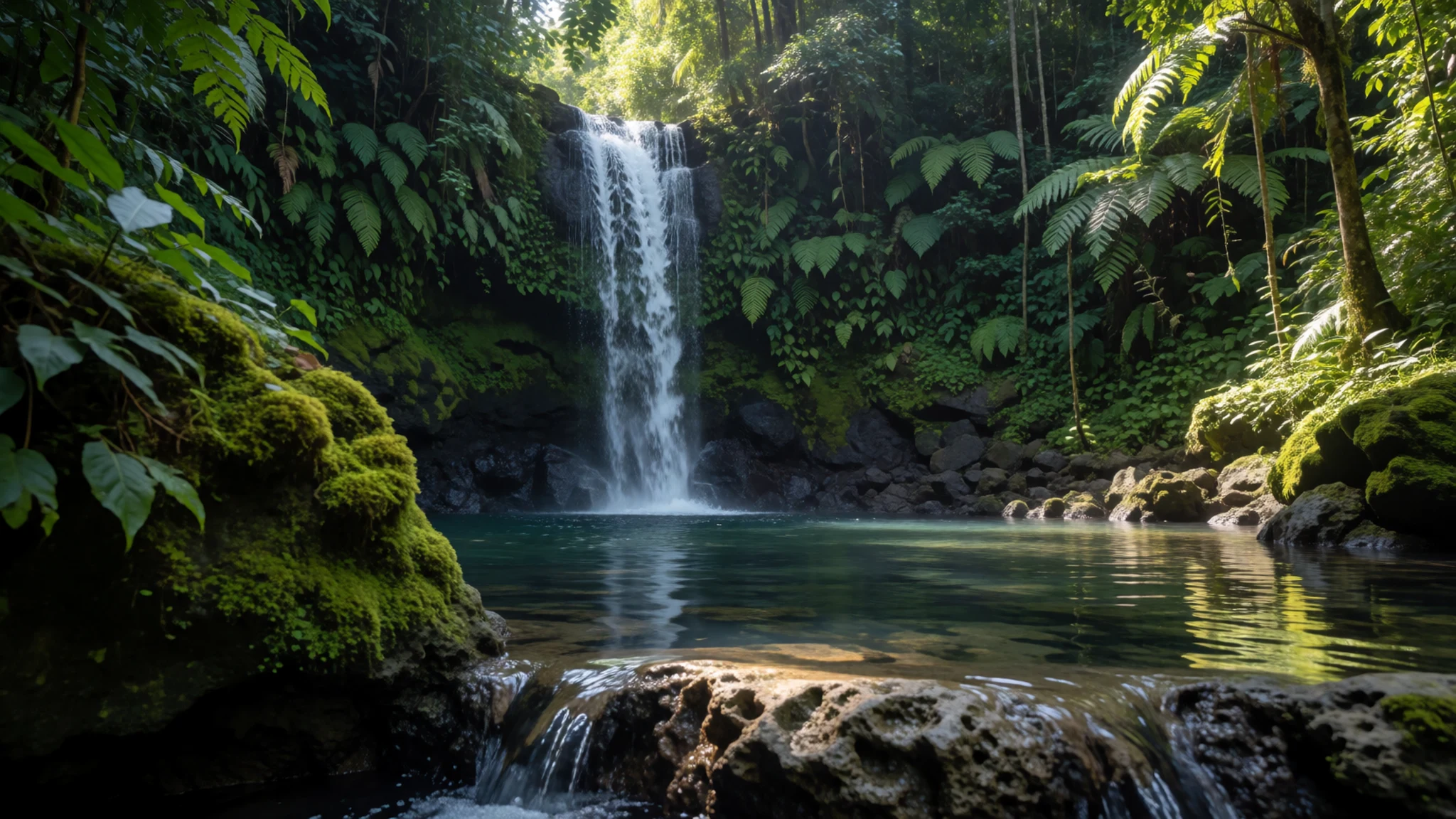
- Coral rock in the forest — Forest near Labuan Haji
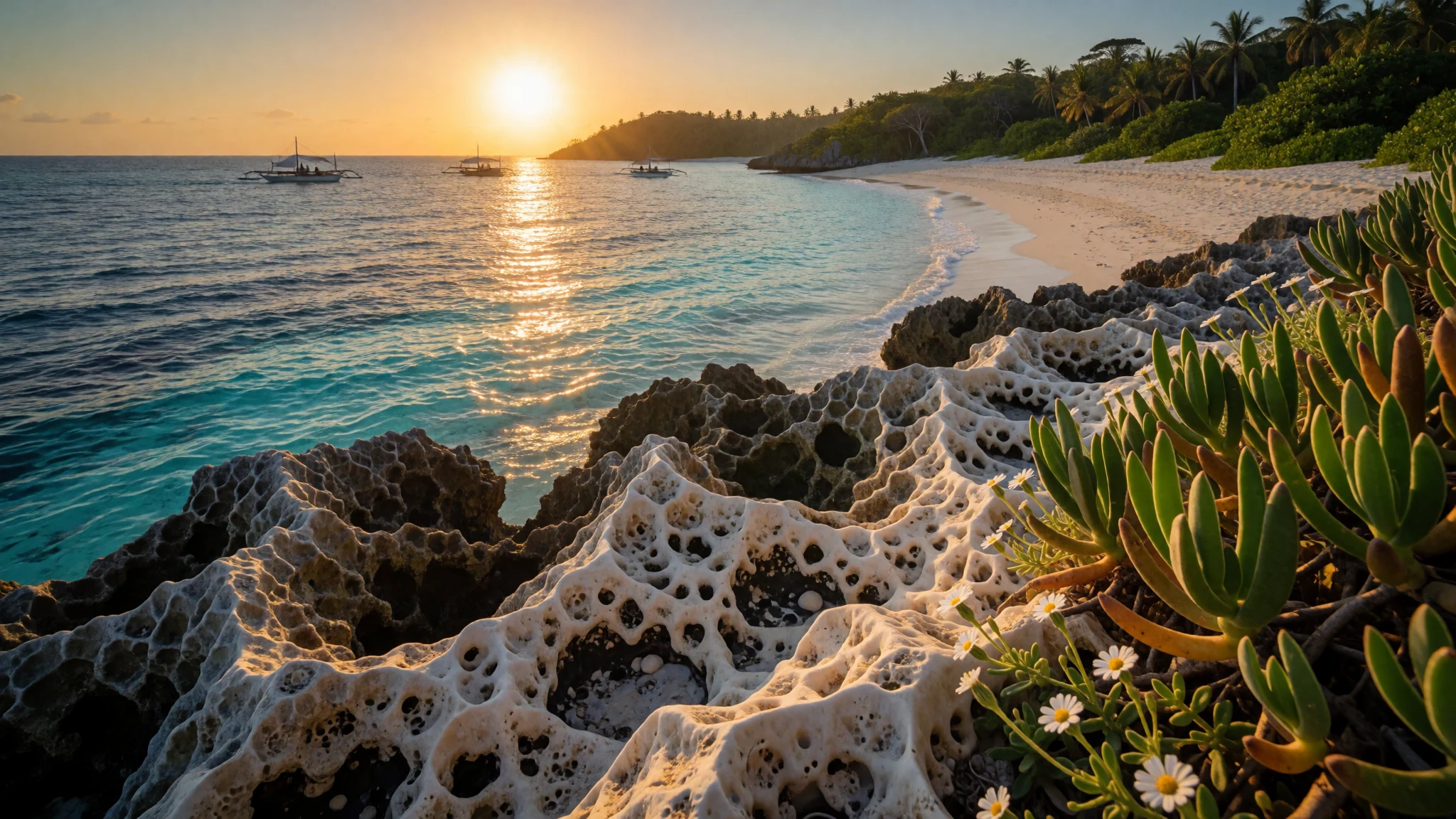
Inland from Labuan Haji, pale coral rock pokes through the jungle, a reminder that much of the island is old seabed lifted above the waterline. The shapes are odd and photogenic, but the ground is uneven and the shade patchy. A local guide helps with both the route and the context.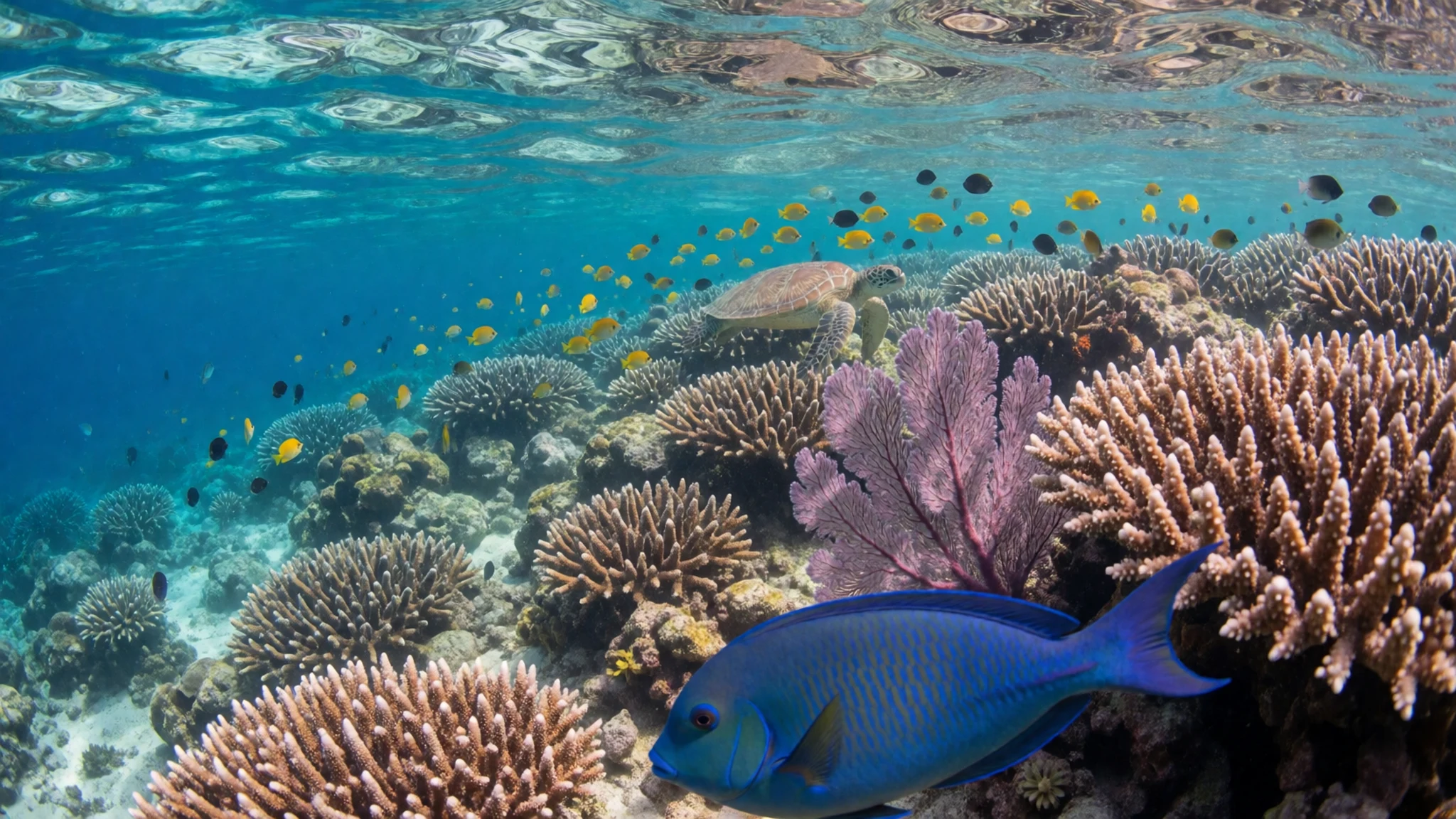
- Diving and snorkelling off Moyo — Reefs around the island, boats from Sumbawa
Operators based on Sumbawa run diving and snorkelling trips to Moyo's reefs, and the same boats also reach Satonda, Medang and Komodo National Park. Conditions change with season and current, so book through a reputable operator, ask about their safety briefing, and check the official island website for current information.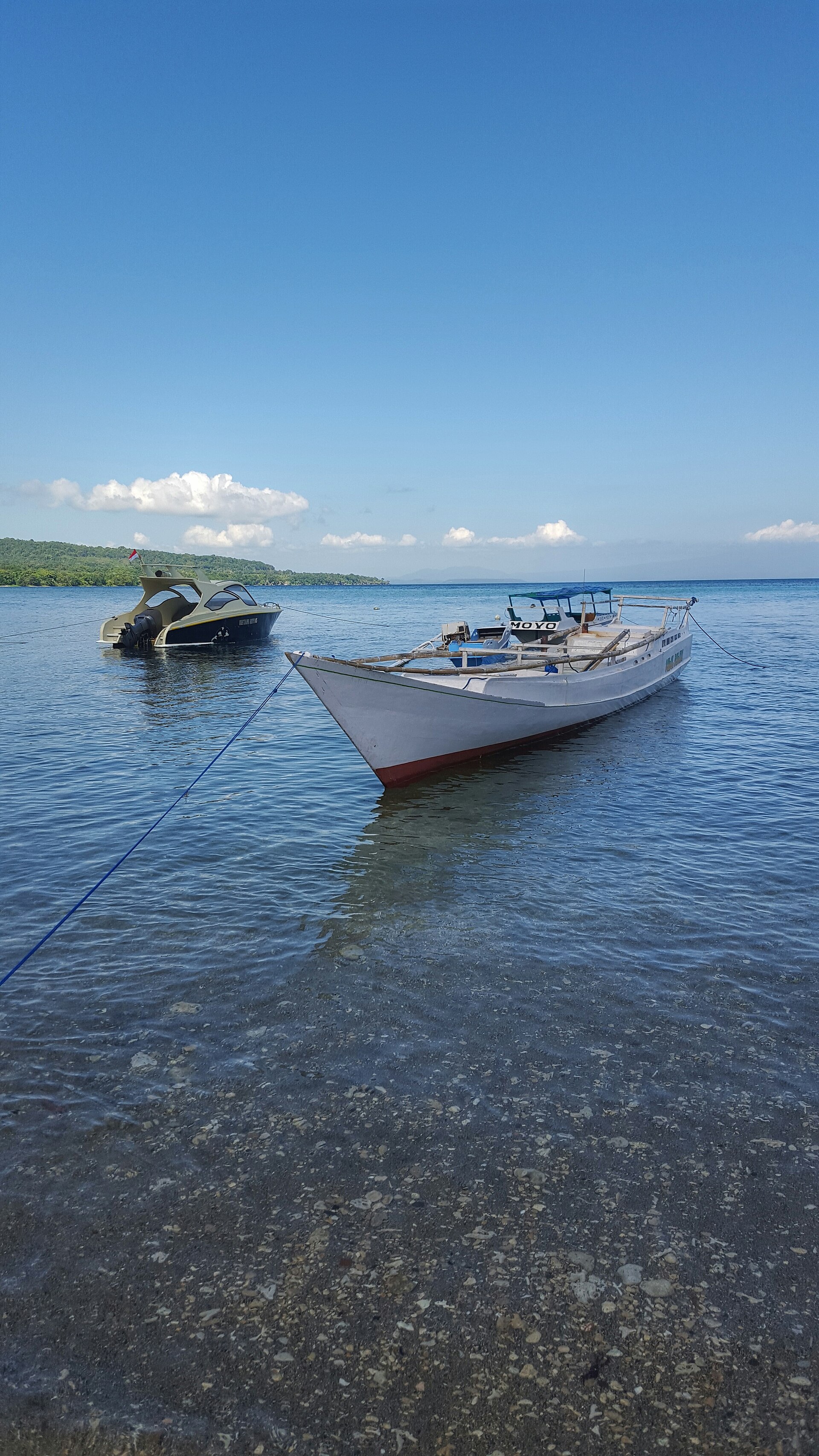
Culture
Moyo Island is part of Sumbawa Regency, and daily life follows the customs of the Sumbawa coast, where Islam is the main religion and village routines are shaped by prayer times, fishing and farming. Most people live quietly in small coastal communities, and the island's character comes from that rhythm rather than from sights or festivals.
Boats sit at the centre of it. The yard at Labuan Haji, the fishing craft along the shore and the sea nomads seen in local photographs all point to a culture oriented to the water. Skills such as building a hull by hand or reading the sea and weather are valued, and they are not performed for visitors.
Hospitality is warm but unshowy. Homestay hosts often cook for guests, and a short conversation in Bahasa Indonesia, even a few words, goes a long way. Village life tends to be early to bed and early to rise, so evenings are quiet and mornings start before sunrise. Alcohol is rarely on sale outside the resorts, and public displays of affection are best avoided.
The tourism that does exist is small and run by a mix of local families and one international resort group. The contrast between a simple village and an expensive camp is part of the island, and visitors who spend with local guesthouses, drivers and guides help keep money in the community. Ask before photographing people, particularly women, children and anyone working on a boat, and always accept a refusal graciously.
What to wear
Moyo Island sits in the Sumbawa cultural area, where traditional dress centres on the sarong and on hand-woven cloth. Weaving is a long-standing craft across Sumbawa and nearby islands, with cotton cloth patterned in bold geometric motifs, sometimes with metallic thread in the songket style. These textiles are mostly kept for weddings, religious celebrations and formal community occasions, when women wear a wrapped skirt with a fitted blouse and a shawl, and men wear a sarong with a shirt and a headcloth.
Day to day, people wear what suits a hot, humid coast. Men commonly wear T-shirts, shorts or lightweight trousers, and often a songkok cap for prayers. Women usually wear loose, long-sleeved tops with long skirts or trousers, and many wear a headscarf. Fishermen and boatbuilders wear whatever copes with salt and sun, often old shirts and sarongs tied at the waist.
A visitor should dress for heat, sun and modesty together. Light, loose cotton or linen with covered shoulders and knees is comfortable and respectful in villages, with swimwear kept to the beach and resort grounds. Bring a wide-brimmed hat, reef-safe sun cream and a cover-up for boat trips. Sturdy sandals or trainers with grip are needed for the waterfall paths, where wet limestone is slippery, and water shoes help on rocky shore entries. A sarong is useful as a scarf, a beach wrap or a seat cover, and a light rain layer is sensible outside the dry months.
What to eat
- Ikan bakar — Harbour eateries around Labuan Haji and homestay kitchens
Grilled fresh fish is the staple of the Moyo coast, usually served with rice, sambal and a squeeze of lime. The catch depends on the day's boats, so ask what came in that morning. Look for it at harbour-side eateries and at homestay dinners.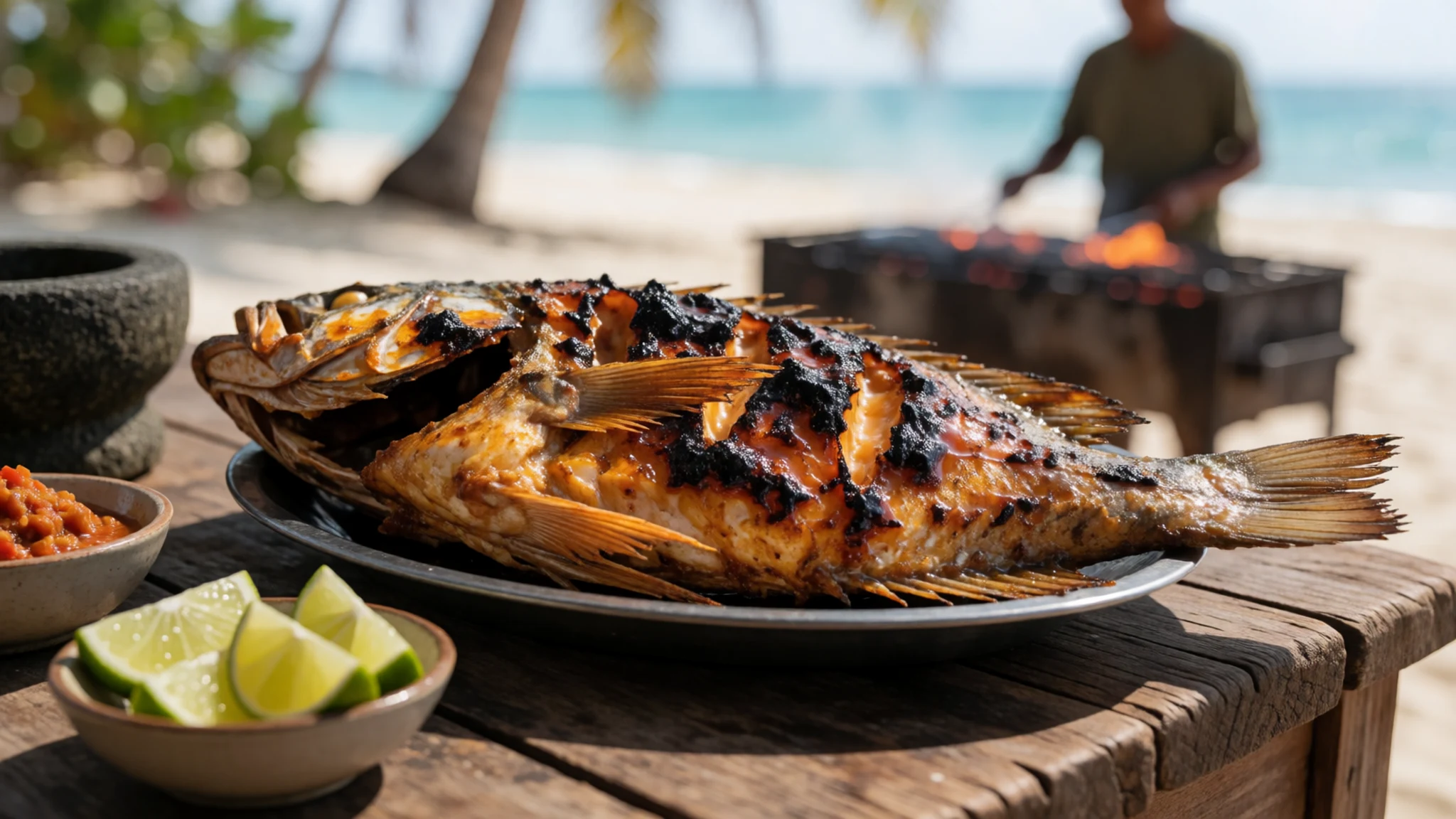
- Sepat — Family kitchens, homestays and eateries in Sumbawa Besar
A sour, fragrant fish soup from the Sumbawa region, typically brightened with tamarind or similar souring ingredients and served with rice. It is light, tangy and well suited to hot days. Ask a homestay host whether they cook it, or try it in Sumbawa Besar.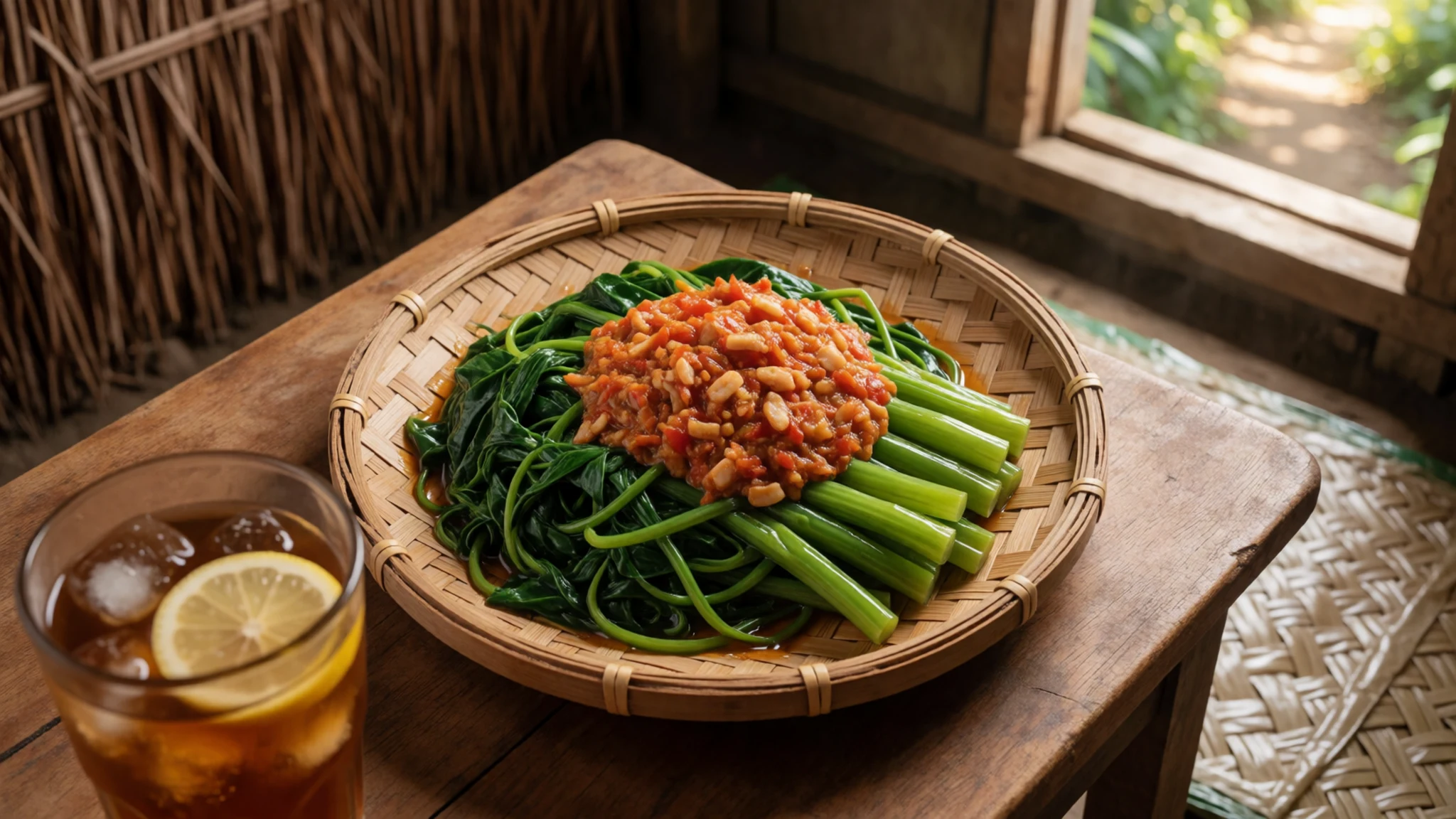
- Pelecing kangkung — Simple eateries and warung on Sumbawa and Moyo
Blanched water spinach served with a chilli and shrimp-paste sambal, a dish from nearby Lombok that is widely eaten across the region. It is hot, salty and fresh, and works well beside grilled fish. Spice levels vary, so ask for less if unsure. - Sumbawa honey — Markets and roadside stalls on Sumbawa
Sumbawa is known for forest honey, which is sold in recycled bottles at roadside stalls and shops. It is thick, dark and sometimes smoky, and is eaten with bread or stirred into hot drinks. Buy from a trusted seller, since quality varies. - Nasi campur — Village warung in Labuan Haji and eateries in Sumbawa Besar
A plate of rice with a few small side dishes such as fish, vegetables, tempeh and sambal, chosen from what is on offer that day. It is the practical meal for most visitors, and usually the cheapest. Look for it at simple village eateries around lunchtime.
Plan it
Best time. May–June and September–October fall in the drier, sunnier part of the year in this part of Indonesia, which suits waterfall walks, boat crossings and reef visits. The wet months bring heavier rain, rougher seas and thinner visibility underwater, so check conditions before booking boats.
How long. 2–4
Getting there. Fly to Lombok airport, then take a short domestic flight to Sumbawa (about 30 minutes). From there transfer by road to Ai Bari harbour (about 30 minutes) and take a speedboat from Sumbawa Besar to Moyo (about 15 minutes). A floatplane from Lombok is also offered at a premium. Check the official site, pulaumoyo.com, for current options.
Budget. high
Tips
- Book lodging and boat transfers well ahead, since there are few beds and services depend on sea conditions.
- Carry enough cash for homestays, guides and meals, because card machines and cash points are scarce on the island.
- Start waterfall walks early, before the heat, and wear shoes with grip for wet limestone.
- Bring drinking water, sun protection and any medicines, as shops on the island are limited.
- Ask a local guide about trails, as signage is minimal and paths can be hard to follow.
Etiquette
- Dress modestly in villages, with shoulders and knees covered, and keep swimwear to the beach.
- Ask before photographing people or their boats.
- Take all rubbish away with you, as the island has little waste infrastructure.
Nearby
Sources
- Wikidata Q1951280 (CC0)
- Wikipedia: Moyo Island (rev 1373331593) (CC BY-SA 4.0)
- Wikivoyage: Moyo (rev 5319622) (CC BY-SA 4.0)
- Photo: Waterfall Diwu mbai near Labuan Haji, Torbenbrinker (CC BY 3.0)
- Photo: South Sea Nomads off Moyo Island, Katiebowl (CC BY 3.0)
- Photo: Traditional shipbuilding, Labuan Haji, Torbenbrinker (CC BY 3.0)
- Photo: Beach and clear water, Missteddybear (CC BY-SA 4.0)
- Photo: Mata Jitu, Farhan Perdana (Blek) (CC BY 2.5)
- Photo: South Sea Nomads off Moyo Island (banner), Katiebowl (CC BY 3.0)
- Photo: Coral rock in the jungle near Labuan Haji, Torbenbrinker (CC BY 3.0)
- Photo: Mata Jitu Waterfall, Egaryan Saadi (CC BY-SA 4.0)


Wildlife
- Macaque (animal)
The long-tailed macaque is a clever, adaptable monkey with a very long tail. On Moyo, look for it in the jungle-covered interior, which climbs to 648 metres away from the villages, though the species is also known to live close to people and in regrown forest. Go with a local guide. Keep well back, stay quiet and calm, and never feed it, however bold it seems.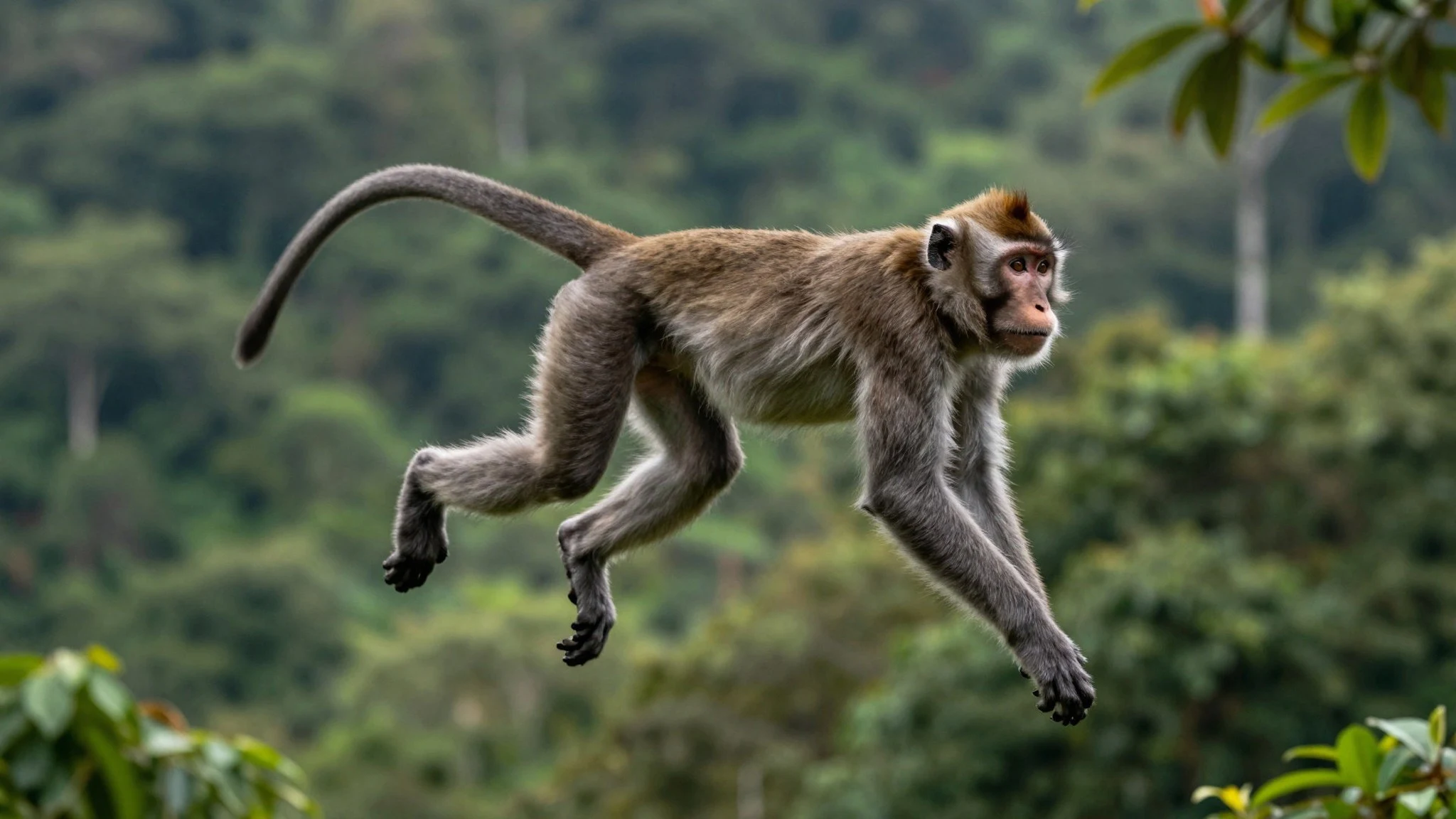
- Sea turtle (animal)
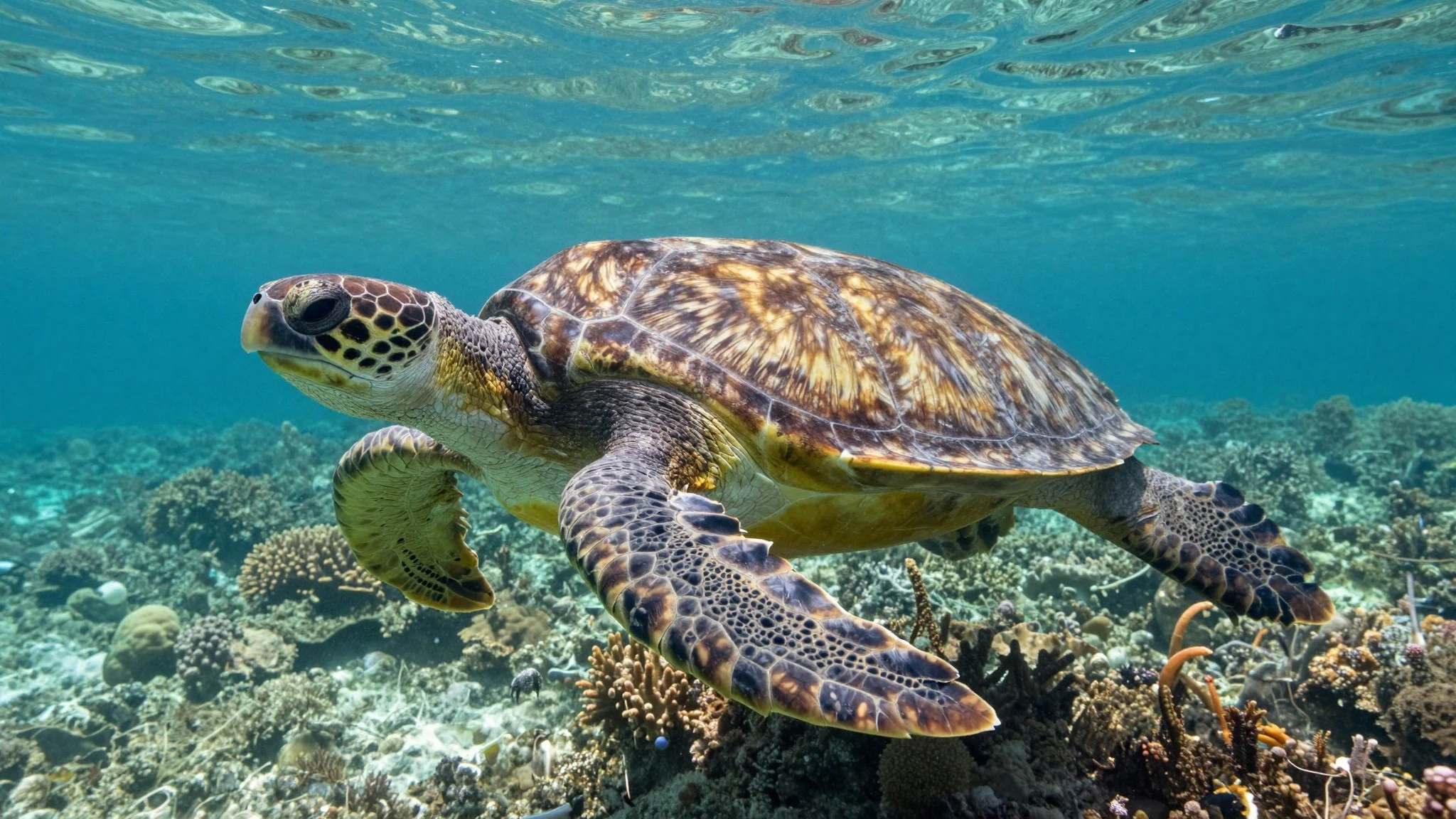
The green sea turtle is a big sea reptile that eats only seagrass, and its name comes from the greenish fat under its shell, not from the shell itself, which is olive to black. Around Moyo it is found among the coral reefs, which teem with marine life. Slip in quietly with a guide, keep a respectful distance, never chase, touch or feed it, and let it graze in peace.