Mount Tsurugi
Mount Tsurugi, Japan
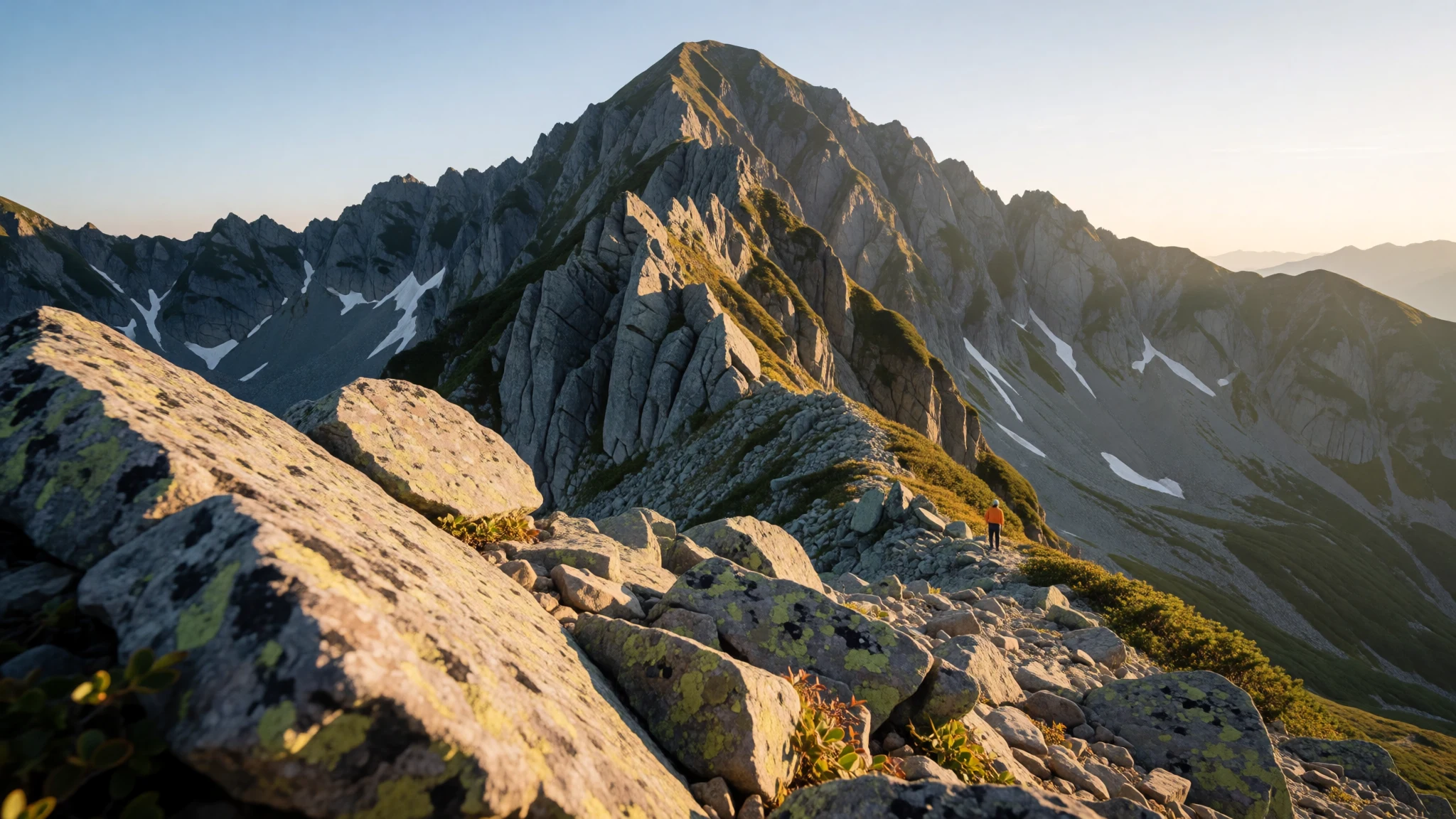
Mount Tsurugi is a 2,999 m pyramid of dark rock in Toyama, where serious scrambling, lingering snow and an ancient iron sword meet.
The place
Mount Tsurugi (剱岳, Tsurugi-dake) stands in the eastern part of Toyama Prefecture, on the Sea of Japan side of Honshu, and reaches 2,999 m. It belongs to the Hida Mountains, the range often called the Northern Alps. Wikidata classes it as a pyramidal peak and a shintaisan, a mountain treated as the body of a deity, and the eye agrees: a steep tower of fractured dark rock, with gullies that keep their snow long after the valleys have turned green. The name means sword, and from the neighbouring ridges the summit does look like a blade standing on edge. Climbers in Japan take the mountain seriously. Winter ascents are a specialist undertaking, and even in the snow-free months the standard routes involve exposed scrambling, fixed chains and loose stone, so weather judgement and rescue planning matter as much as fitness. The peak is also on the list of the 100 Famous Japanese Mountains, so on a fine summer weekend the approach trails are busy with people heading for the huts. Most visitors will never stand on top, and that is a reasonable choice. The country around it offers a gentler way in: high trails, hut stays and long views of the face from ridges such as Bessan. Heavy snow blows in off the sea here, which shapes everything. The walking season is short, trails open late, and plans bend to the forecast. Toyama city, with its airport and bullet-train station, is the practical base, with the Kurobe valley and Unazuki Onsen as the last staging points before the hills.
Its story
Mount Tsurugi has a history that runs in two layers, and the older one only surfaced in 1907. That year Shibazaki Yoshitarō and Ikuta Nobu made the first modern ascent. At the top Ikuta came across something nobody expected: a rusted iron sword and a staff, lying where someone had left them long before. Scientific study later placed the sword between the late Nara and early Heian periods, around 800 AD. That means the summit had been reached roughly 1,200 years earlier, almost certainly by shugenja, the mountain ascetics who blended Buddhist and Shinto practice and used steep, remote peaks as places of discipline. The find changed the way the mountain is told. The 1907 climb is the first by modern surveyors and mountaineers, not the first by anyone, and the earlier visitors had come for ritual rather than for a view or a record. A replica of the sword has since been shown in a science exhibition in Toyama, which keeps the object in public view without disturbing the original. The two stories sit comfortably together in local memory. Tsurugi is remembered as a sporting objective and as sacred ground, a place where the idea of a peak as a deity's body and the plain facts of a technical climb sit side by side. Modern climbers repeat the same movements on the same rock as the ascetics did, with better boots and a weather forecast.
What to see
- Tsurugi's summit and ridge views — Hida Mountains, eastern Toyama
The summit block of Mount Tsurugi is for experienced climbers using fixed chains and exposed rock, and a guide is sensible for anyone unsure. Viewing is easier from neighbouring ridges, where the serrated face fills the horizon and the huts near Tsurugisawa look tiny against it. Start early, because cloud often builds by midday.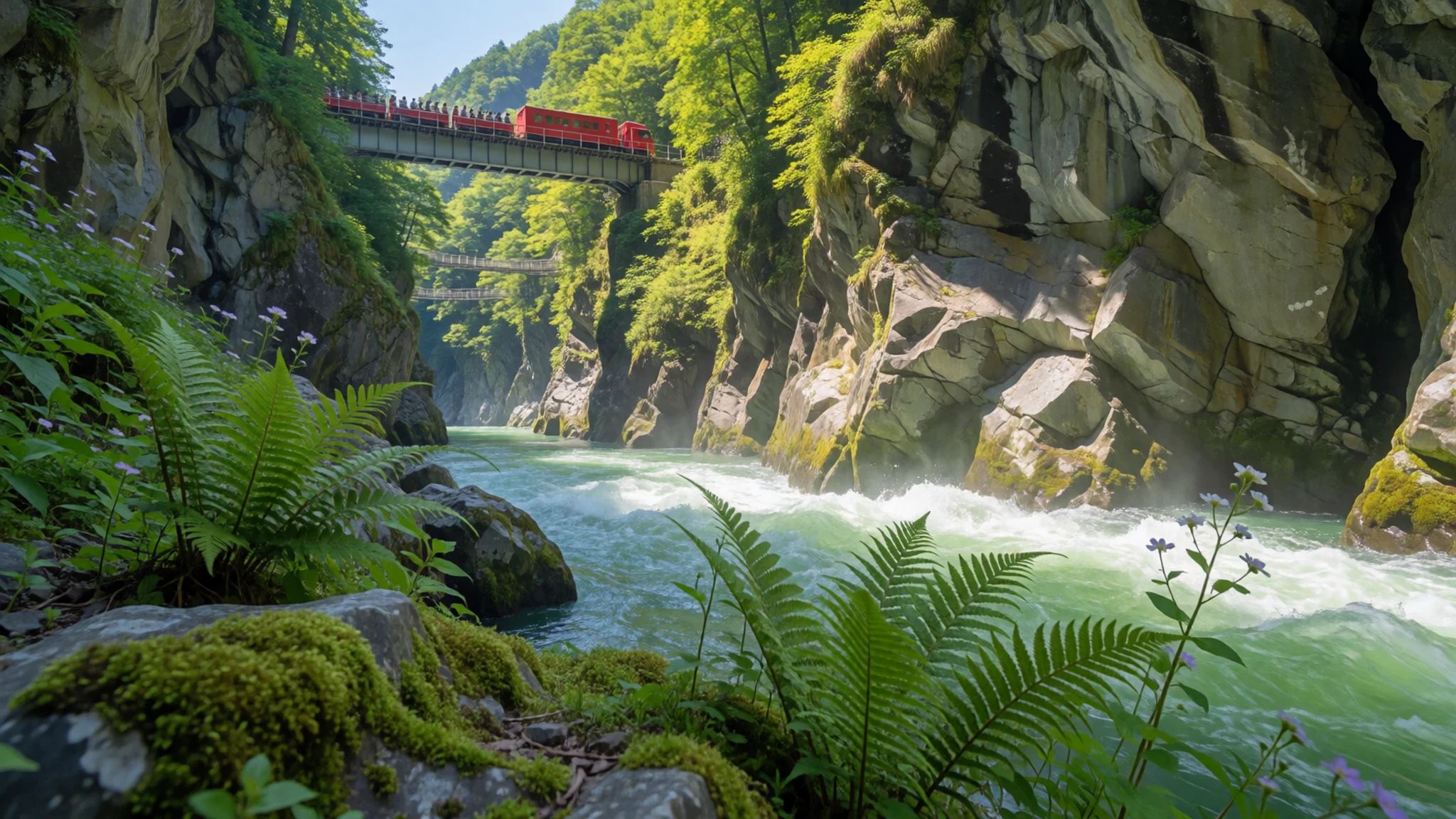
- Maetsurugi and the Bessan ridge — Hida Mountains, eastern Toyama
Maetsurugi and Bessan are among the vantage points from which Tsurugi's whole profile can be photographed, the main peak standing behind its lower neighbour. These are mountain walks, not strolls, so check conditions with the Visit Toyama site and hut staff before setting out, and allow for snow lingering in early summer.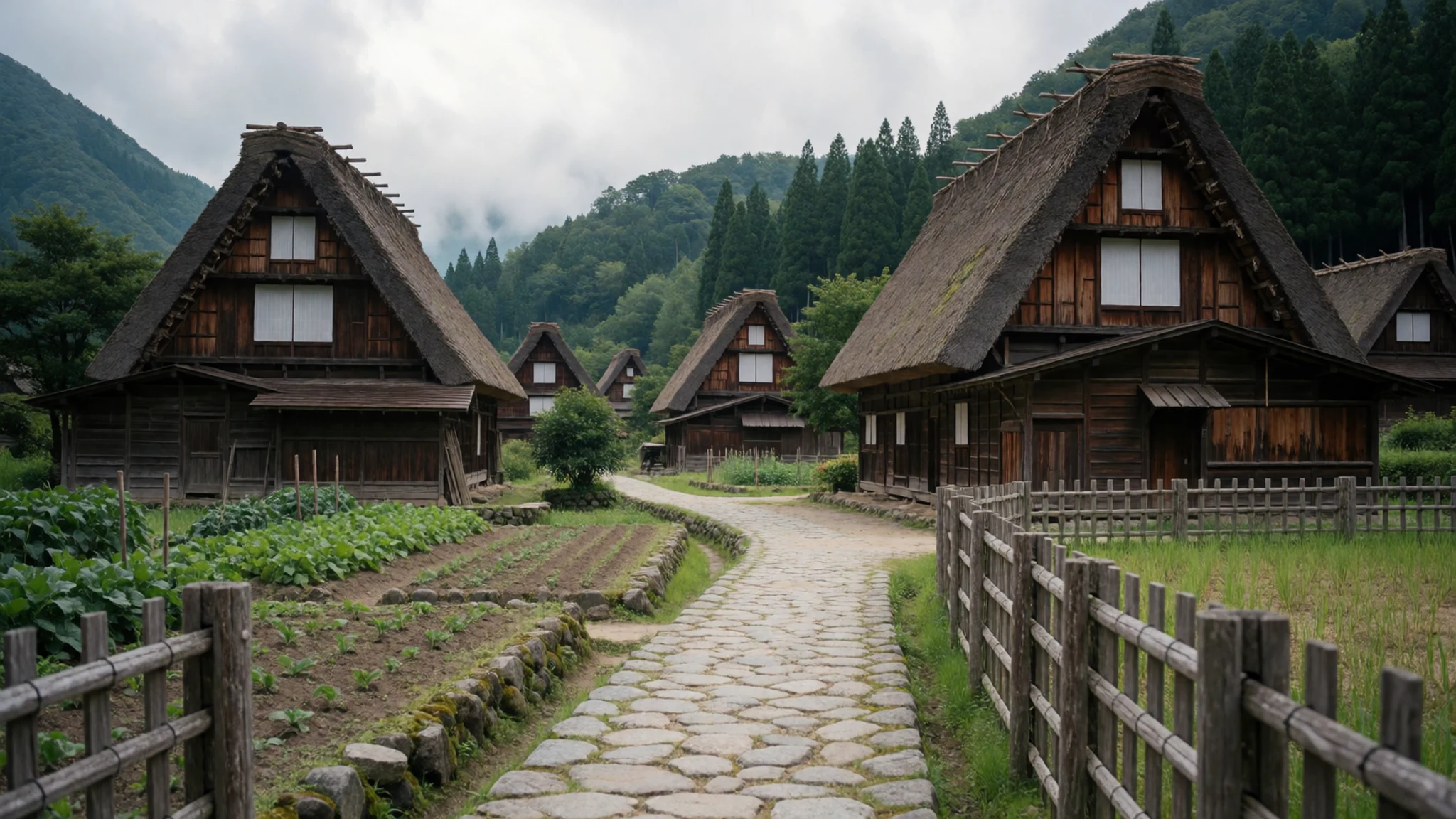
- The iron sword replica — Toyama Prefecture
A replica of the corroded iron sword found at the summit has been displayed in Toyama, and it is the quickest way to grasp the mountain's pre-modern story. The original find is why Tsurugi turns up in accounts of Japanese mountain religion. Ask locally or check Visit Toyama for where replicas are currently shown.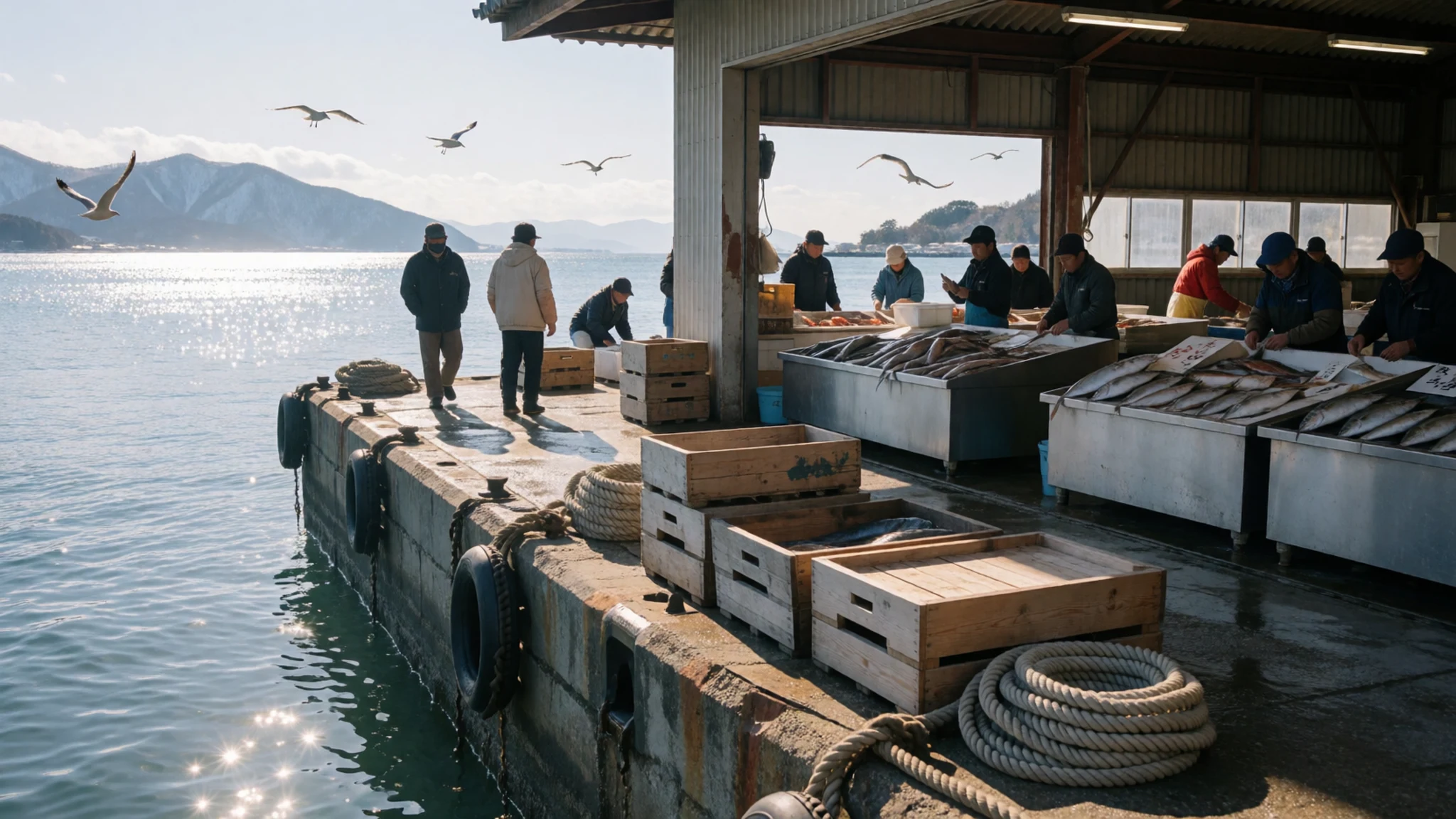
- Kurobe Gorge — Kurobe, Unazuki Onsen
Kurobe Gorge, reached from Unazuki Onsen station in Kurobe city, is a steep-sided valley with a small railway that carries passengers part of the way up in open-sided cars. Walking paths and natural hot-spring baths line the route. The railway runs seasonally, so check the operator's site first.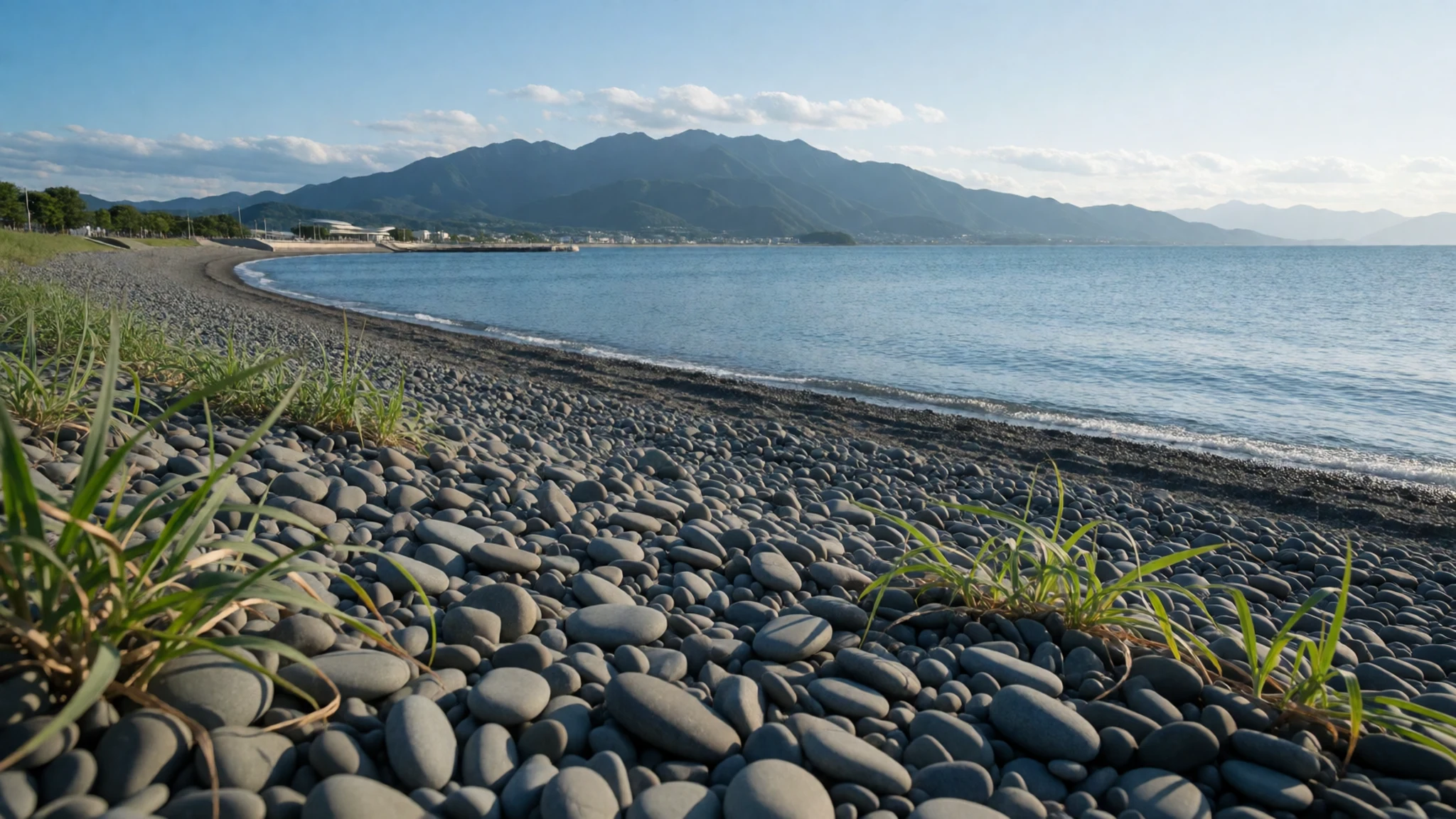
- Gokayama — South-western Toyama
Gokayama lies in the far south-west of Toyama beside the Gifu line, and its villages keep steep-roofed thatched farmhouses built in the gassho style. It is a calm, rural contrast to the high peaks, best taken slowly, with a walk between the houses and a meal at a local eatery.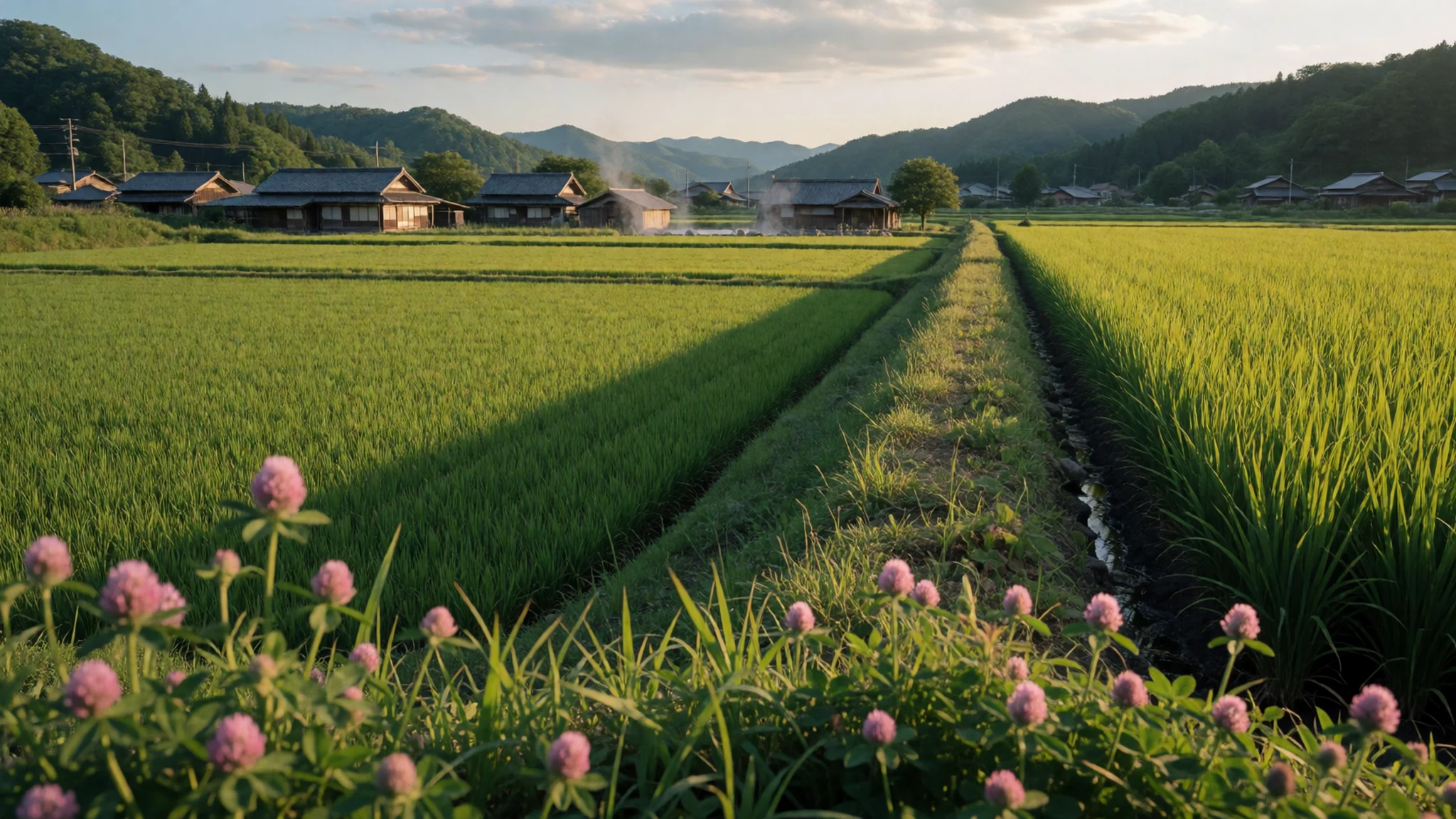
- Himi — Toyama coast
Himi is a fishing town on Toyama's Sea of Japan coast, with a harbour fish market that makes a good first or last stop around a mountain trip. Boats bring in local catch daily, and the market is best visited in the morning when stalls are busiest.
Culture
Mount Tsurugi sits inside a long Japanese tradition of mountains as sacred ground. Wikidata lists it as a shintaisan, a peak treated as the body of a deity, and the iron sword found at the top suggests that shugenja, ascetic practitioners of mountain religion, were climbing it about 1,200 years ago. Modern climbing culture grew on top of that older reverence, and many hikers still pause to bow or say a short word before setting out on a big peak. The huts are where the culture is most visible. Boots come off at the door, bunks are shared, and evenings end early because starts are before dawn. Meals are usually served at fixed times to everyone together. On the trail, passing walkers commonly exchange a quick greeting, and on narrow ridges the party going uphill generally has priority. Planning is part of the ethic too. Japanese mountaineers submit a climbing plan before a serious route, and hut staff and guides expect to hear when it changes. Weather, snow condition and fitness are treated as shared responsibility rather than individual bravado, and visitors who bring the same restraint are usually welcomed warmly. Remove your boots at the hut entrance, keep voices low after lights-out, and file your climbing plan before you set off.
What to wear
The traditional dress linked to Mount Tsurugi is that of the shugenja, the mountain ascetics. Their clothing is mostly white or undyed and made from hemp and cotton: a loose jacket called a suzukake and a small black cap called a tokin, with a conch-shell trumpet carried as an instrument. Today it is worn mainly by practitioners during ritual mountain practice and festivals, not by ordinary walkers. What people actually wear on the mountain now is modern outdoor gear: synthetic base layers, waterproof shells, helmets on the harder routes, gloves for chains and rock, and sturdy boots. Evenings in the huts are spent in fleeces and hut slippers. In Toyama city and the valley towns, dress is ordinary casual, with light jackets in summer and heavier coats once autumn sets in. A visitor heading up should treat the mountain as alpine terrain even in July or August. Pack layers, a rain shell, a helmet, gloves with good grip, and boots with stiff soles and ankle support, because nights at height are cold and weather turns fast. No special modesty dress is needed on the trail, though shrines in the valleys call for tidy, covered shoulders, and hot-spring baths require washing first and bathing without swimwear.
What to eat
- Shiro-ebi (white shrimp) — Seafood eateries and market stalls around Toyama city and the bay
Small, translucent shrimp from Toyama Bay, sweet and delicate. They are served as tempura, in a crisp kakiage fritter, or raw over rice. Season and catch vary, so ask what is fresh.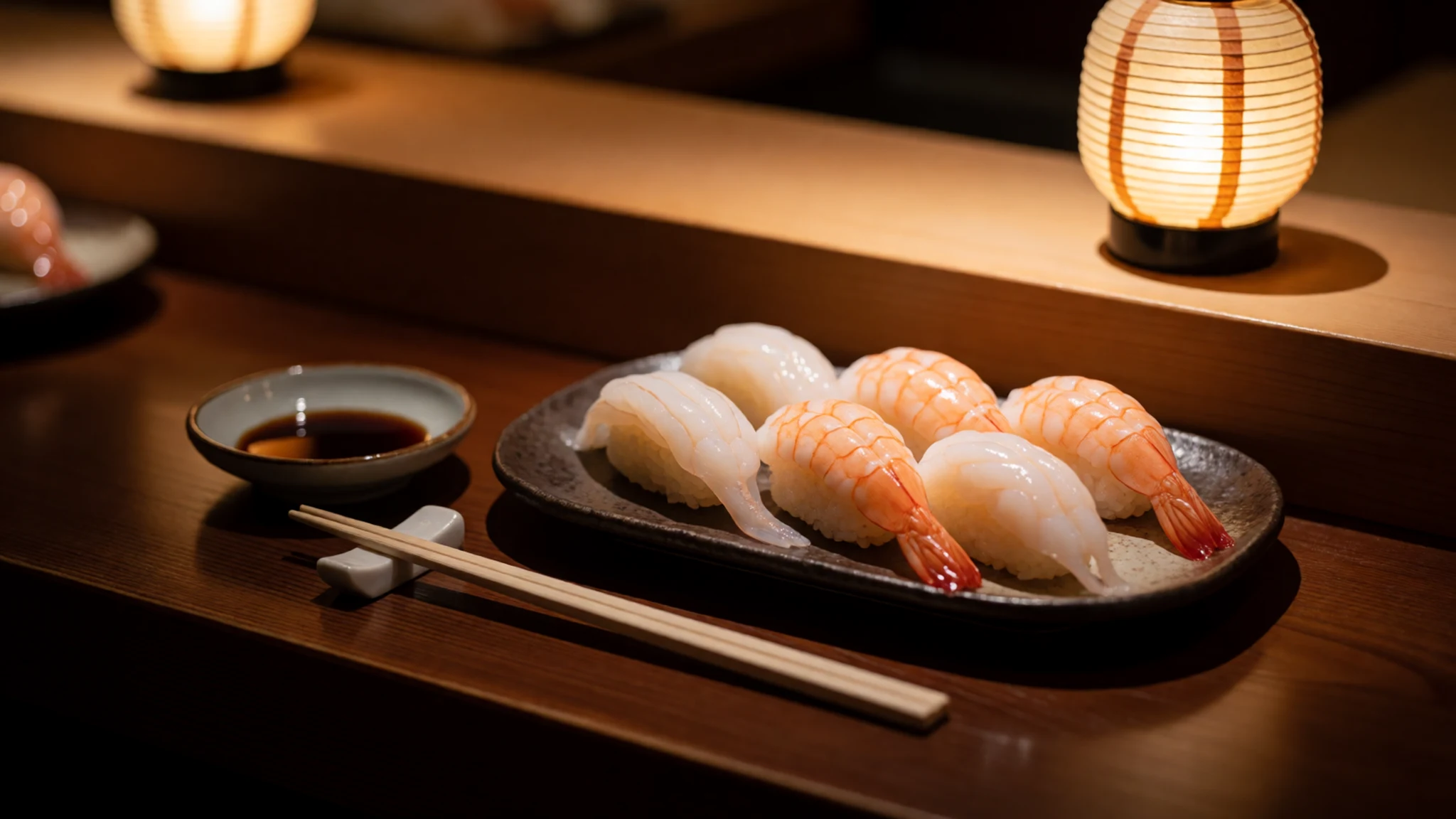
- Masuzushi — Station shops and food halls in Toyama city
Pressed trout sushi, shaped in a round wooden frame and wrapped in bamboo leaves. It keeps well, which makes it a practical lunch for a train or a trail day, with a tangy, lightly salty flavour.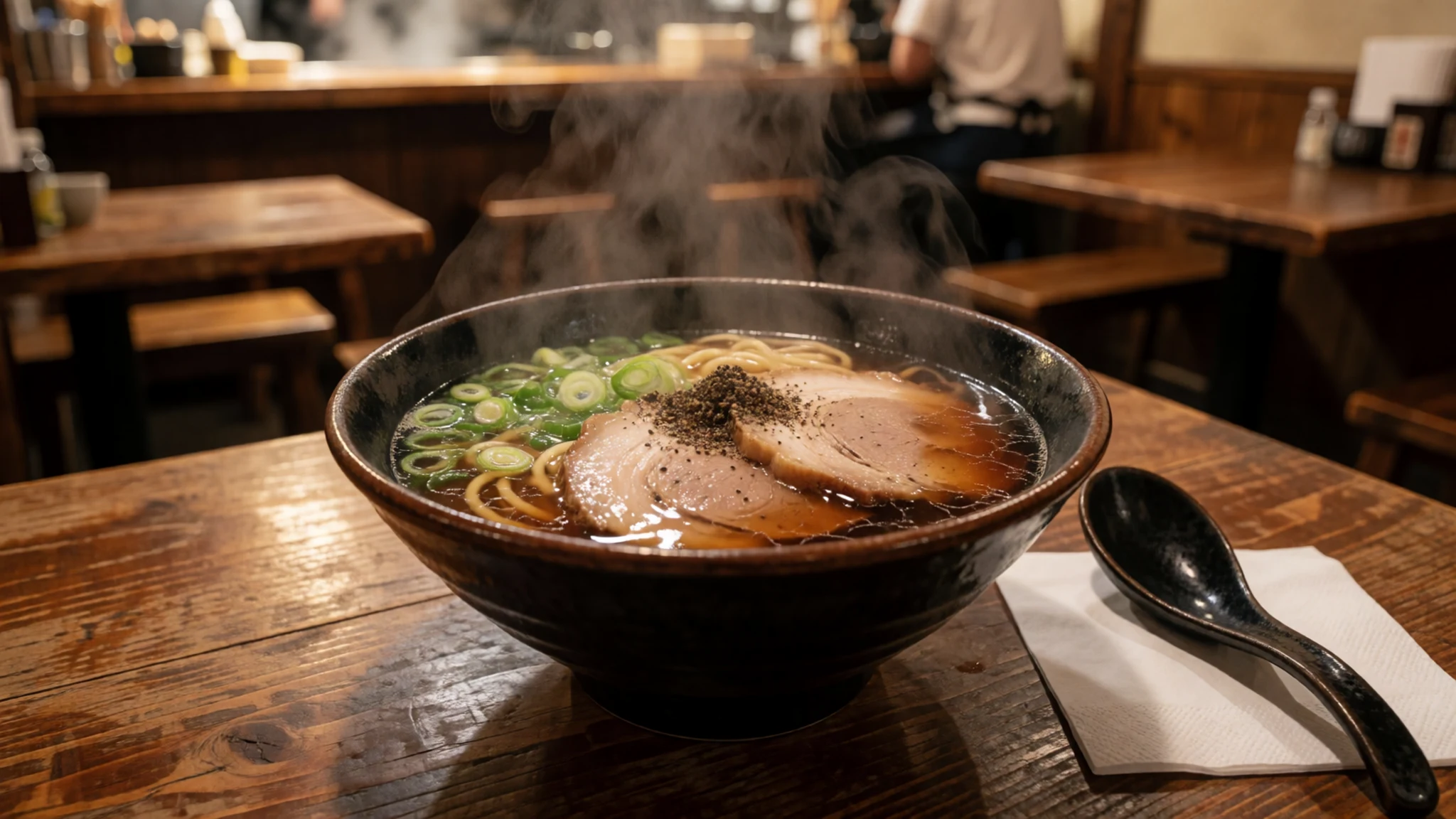
- Kanburi (winter yellowtail) — Himi fish market and harbourside eateries
Fatty yellowtail from the cold winter sea, eaten as sashimi, grilled or in hot pot. It is a cold-season dish tied to the Himi coast, so it suits trips outside the main climbing months. - Toyama black ramen — Noodle shops in Toyama city
Ramen in a dark soy broth with a strong, peppery bite, historically a salty meal for working people. The noodles and toppings are simple, and the dish is filling after a long day. - Hut curry and miso soup — Mountain huts in the Hida Mountains
Mountain huts serve plain, hearty meals at fixed times: rice with curry or a set meal with miso soup, pickles and grilled fish. It is simple fuel for early starts, and bookings usually include it.
Plan it
Best time. July to September, when most snow has gone from the routes and huts are open; early snow can return in October, and winter climbing is for technical specialists only. Heavy snow off the Sea of Japan keeps the season short, so check conditions before booking.
How long. 2–3
Getting there. Toyama Airport (TOY) has flights from Tokyo, Sapporo, Seoul and Taipei. By rail, the Hokuriku Shinkansen links Tokyo to Toyama in about 2 hours, with stations also at Takaoka and Unazuki Onsen. The last leg is by local rail and bus towards the Kurobe valley and trailheads; check the Visit Toyama site for current services.
Budget. mid
Tips
- Book hut beds well ahead in the summer season, since huts are the only places to sleep on the high routes
- Start walking at first light, as cloud and storms often build by midday
- Carry a helmet, gloves and a full waterproof set, even in high summer
- Check the Visit Toyama site and hut staff for trail and snow conditions before you set out
- Carry cash for huts and small valley shops, as cards are not always accepted
Etiquette
- Remove boots at the hut entrance and keep noise down after lights-out
- Submit your climbing plan before a serious route and report any change
- Greet other walkers and give way to those climbing uphill on narrow ridges
Nearby
Sources
- Wikidata Q1109050 (CC0)
- Wikipedia: Mount Tsurugi (Toyama), rev 1382908958 (CC BY-SA 4.0)
- Wikivoyage: Toyama (prefecture), rev 5213990 (CC BY-SA 4.0)
- Alpsdake, Tsurugidake from Bessan (Public domain)
- Hanoitaxi, Tsurugidake seen from the WNW (Public domain)
- Alexrk2, Japan natural location map (CC BY 3.0)
- alpsdake, Mount Tsurugi from Maetsurugi (CC0 1.0)
- Kumpei Shiraishi, From Mount Tsurugi (CC BY 2.5)
- Draupnir3, 09 Kani no tatebai (CC BY-SA 1.0)
- Draupnir3, Example of a climbing point (CC BY-SA 1.0)
- テレストレラッソ, Iron sword replica (CC BY-SA 4.0)


