Mount Takao
Mount Takao, Japan
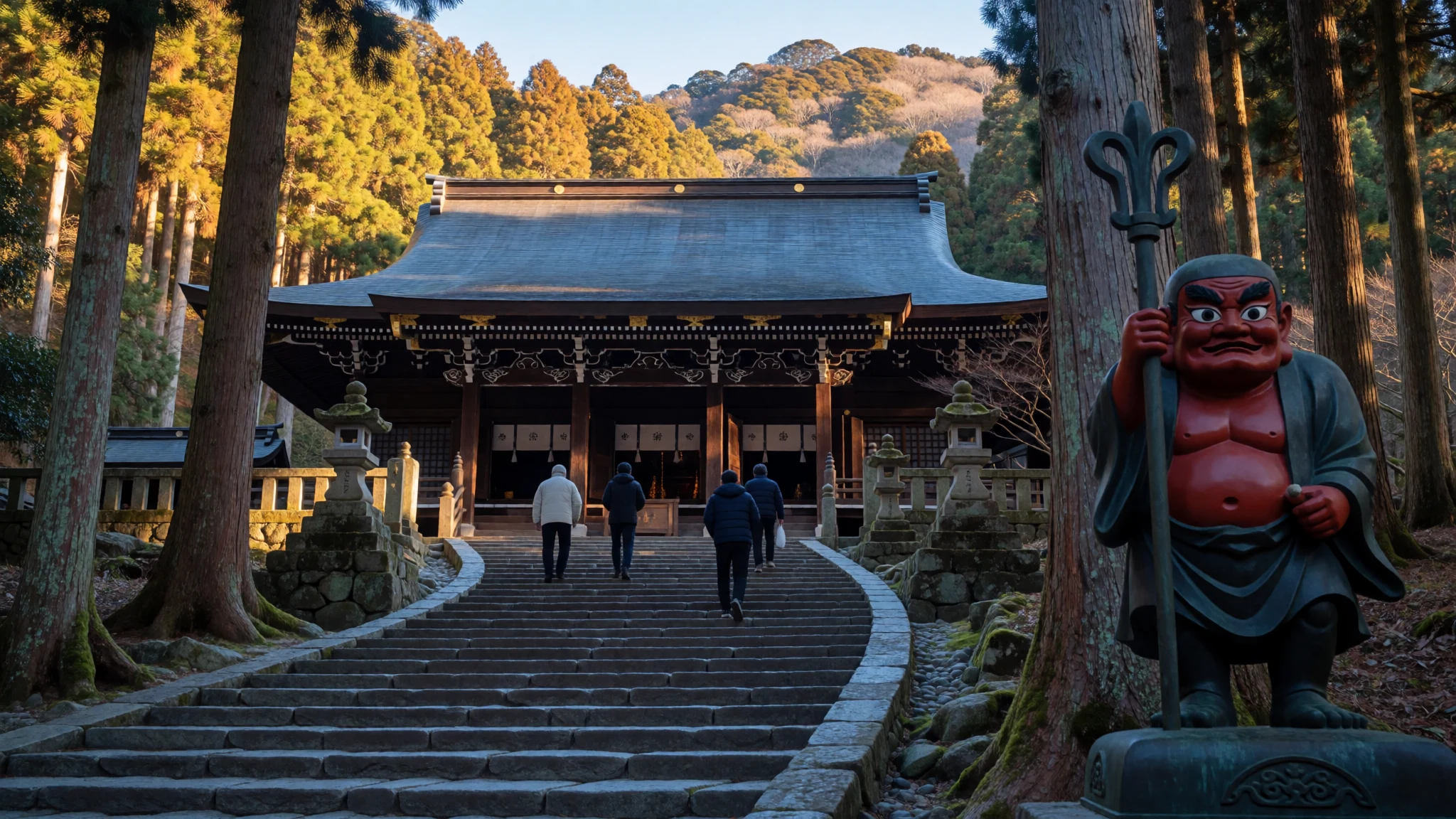
Mount Takao gives Tokyo a forested, temple-studded mountain within reach, with tengu legends, Fuji views on clear days and trails for every energy level.
The place
Mount Takao (高尾山, Takao-san) rises 599 metres above the western edge of Tokyo, in the city of Hachiōji. It lies inside Meiji no Mori Takao Quasi-National Park, and the Tama Forest Science Garden sits near its foot. The height is modest, but the mountain behaves like a real one: the slopes are thickly wooded, the paths climb steadily, and a Buddhist temple stands partway up. Several trails reach the summit, from a paved route that most families take to rougher forest tracks with roots and steps. A cable car and a chairlift cover the lower slope for anyone who would rather save their knees. It is an easy train ride from central Tokyo, and the walk begins almost at the station exit, which is a large part of the hill's popularity. Visitor numbers run into the millions each year, and the crowds are real. Autumn weekends are the busiest, with slow queues on the main path and a packed summit, while weekday mornings are far calmer. In summer the tree cover takes the edge off the heat, though humidity stays high and the climb is sticky. On clear days, most reliably in the dry winter air, the summit looks across to Mount Fuji. Takao is best understood as a sacred mountain that doubles as a city escape: pilgrims, school groups, dog walkers and serious hikers share the same paths.
Its story
Mount Takao has been a sacred mountain far longer than it has been a weekend hiking spot. Its religious life blends Shinto and Buddhist ideas, and the best-known figure in that world is the tengu, a supernatural creature of Japanese folklore, often drawn with a long nose or a beak and wings. On Takao the tengu are treated as guardians of the mountain, and worshippers still pray to them for good fortune. The mountain is also known for Shugendō, a tradition of mountain asceticism built on strict discipline, in which practitioners walk, fast, chant and sit beneath waterfalls to train body and mind. Takaosan Yakuōin Yūkiji, the temple on the slope, belongs to the Shingon school of Buddhism and carries this heritage today; it draws worshippers and ordinary walkers in roughly equal measure. Takao also has a military past. Hachiōji Castle once stood on a ridge nearby and was destroyed during the Warring States Period, leaving ruins that can still be found. The district's later history is quieter, shaped by its position where the Tokyo plain gives way to forest. Hachiōji is a city in its own right, and the mountain behind it has long served as both a place of worship and a green lung for the capital's western suburbs. Among the tengu statues and the temple halls, devotion and recreation seem to have settled into an easy partnership.
What to see
- The summit viewpoint — Summit, Mount Takao
The summit of Mount Takao, at 599 metres, is a broad clearing with benches, tea stalls and a wooden marker board that everyone photographs. On clear days, especially in winter, Mount Fuji shows on the western horizon. Arrive early for better light and thinner crowds; midday on autumn weekends is shoulder to shoulder.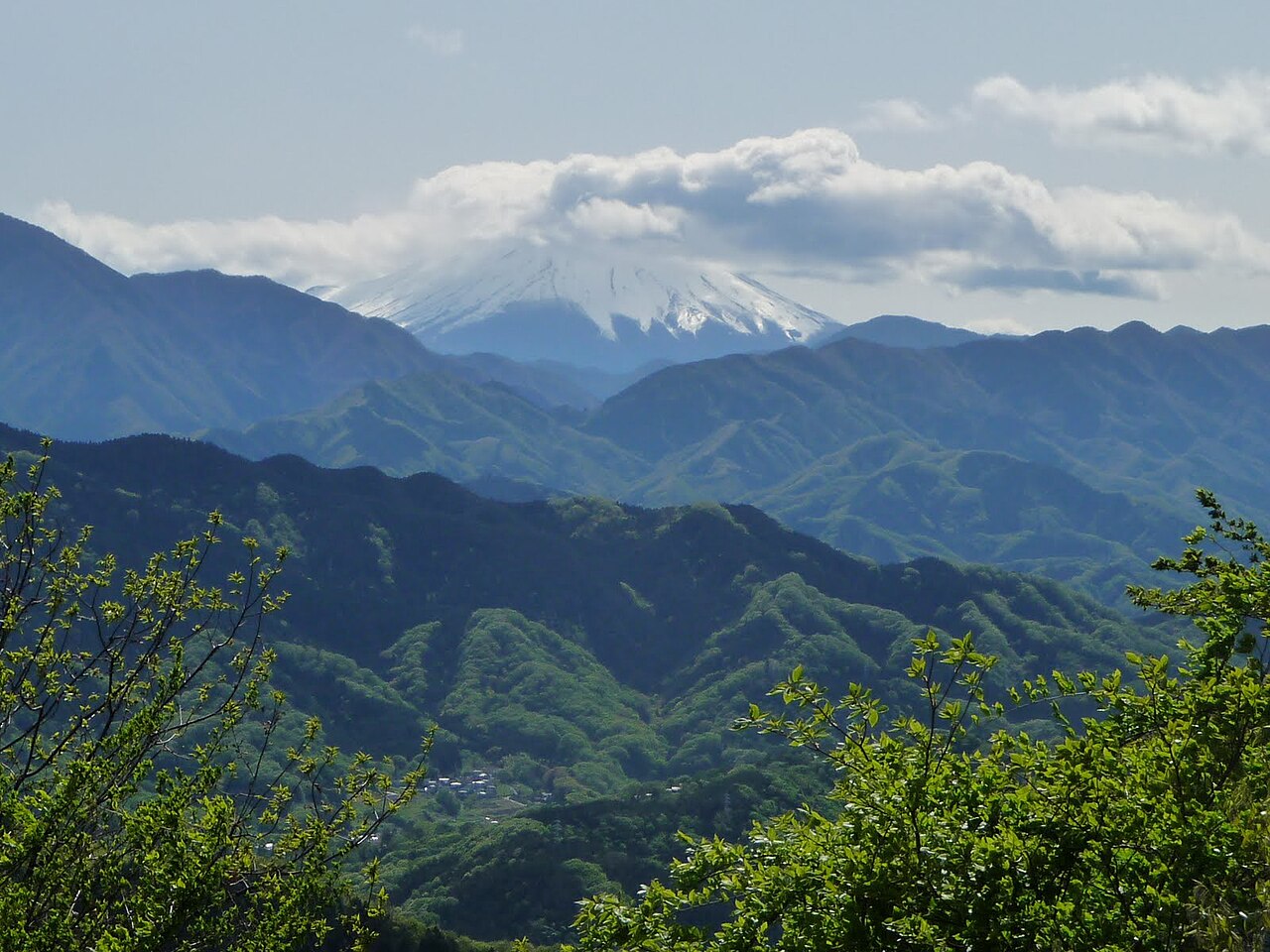
- Takaosan Yakuōin Yūkiji — Mid-slope, Mount Takao
This Shingon Buddhist temple stands on the mountain's slope, with a main hall, gates and tengu statues watching over the approach. Worshippers come to pray for good fortune, and the grounds are quiet enough for a pause. It sits on the main route up, so most walkers pass through without any detour.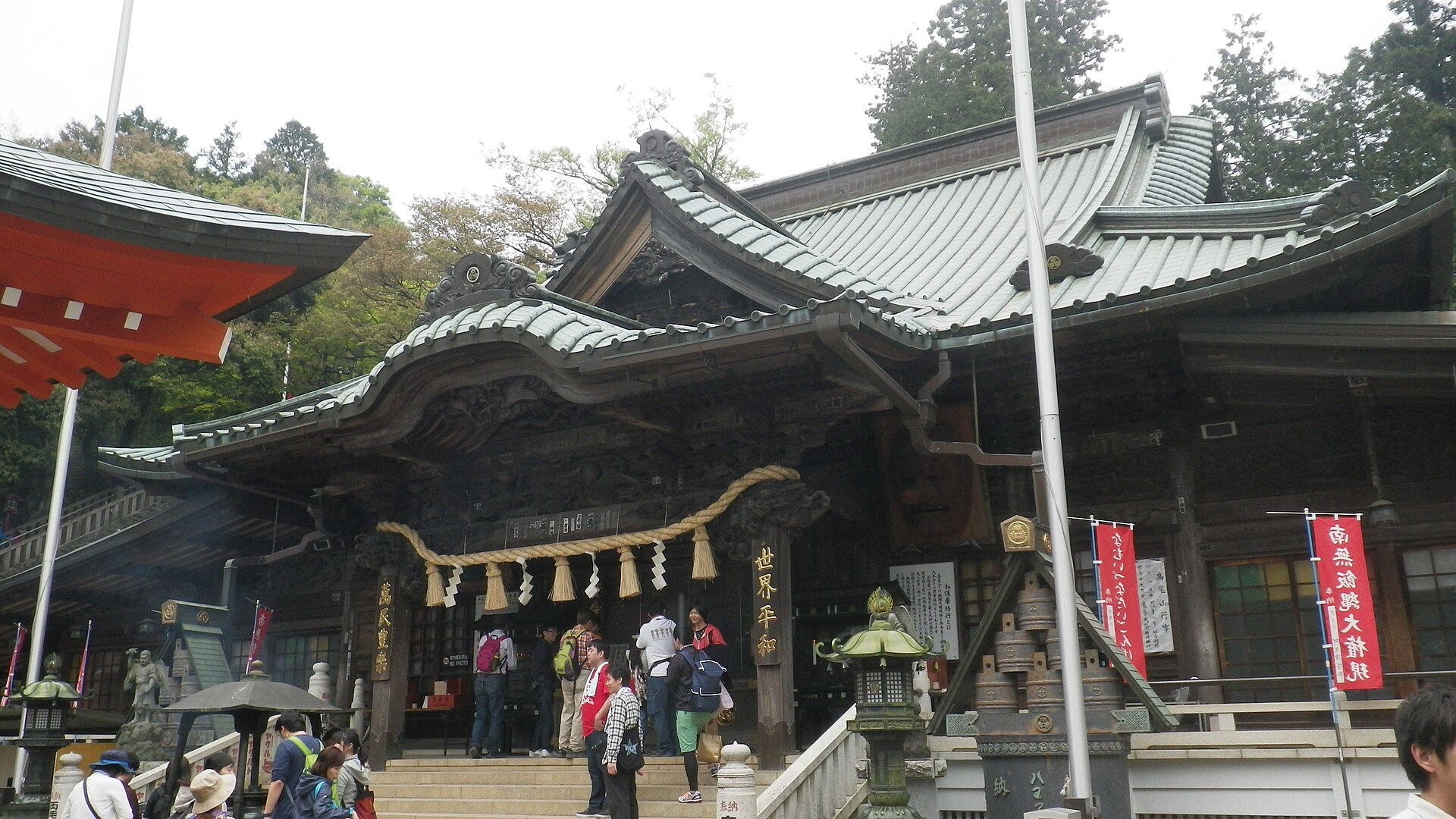
- Hachiōji Castle ruins — Ridge near Mount Takao, Hachiōji
The ruins of Hachiōji Castle lie on a ridge near the mountain, left over from a stronghold destroyed in the Warring States Period. Little survives beyond earthworks and foundations, so the appeal is atmosphere and a quiet walk rather than spectacle. It suits anyone who wants some history alongside the forest. - Trick Art Museum — Foot of Mount Takao
The Trick Art Museum, near the foot of the mountain, is given over to optical illusions: paintings and rooms built to fool the eye and to be photographed. It is light entertainment rather than serious culture, and a useful backup when rain makes the trails slippery or the weather has closed in. - Imperial Mausoleum — Hachiōji hills
The Imperial Mausoleum, in the Hachiōji hills, holds the graves of the Shōwa Emperor Hirohito and his predecessor, the Taishō Emperor Yoshihito. It is a solemn place of gravel paths and trees, very different from the busy summit. The mood calls for a quiet, unhurried visit rather than a quick photo stop. - Keio Takaosan Onsen — Takaosanguchi station area
Beside the mountain's main station, this day-use hot spring bath is where many walkers soak after the descent. It is a sensible way to finish, though the usual bathing rules apply: wash first, then enter the water without swimwear. Check the official site for opening times and entry costs before planning around it.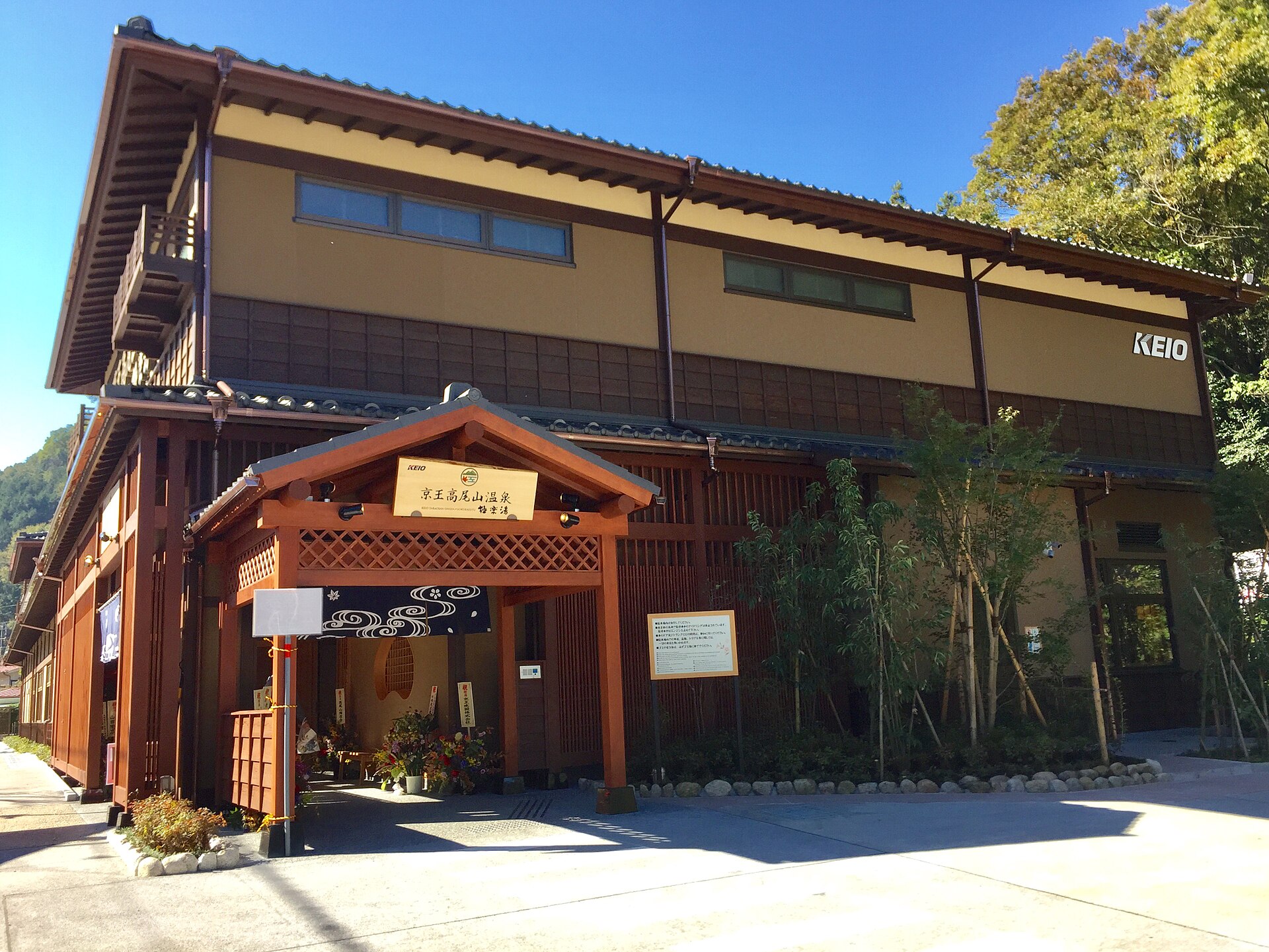
Culture
Mount Takao is a working religious site, and that shapes how people behave on it. The temple Takaosan Yakuōin Yūkiji belongs to Shingon Buddhism, and the mountain's identity rests on Shugendō and on the tengu, creatures from Shinto-Buddhist folklore. Along the paths stand tengu statues, and many visitors touch or pose beside them for luck, while others buy wooden plaques or paper fortunes at the temple. At a prayer hall the usual pattern is simple: pause, bow slightly, offer a coin, and pray silently. Practitioners in white robes sometimes pass by, and ceremonies are part of a living tradition rather than a performance, so onlookers keep a respectful distance. The trail itself is a social space. Families, school groups, older walkers in matching hats and visitors from abroad share narrow stretches, and a quiet greeting as people pass is common and welcome. Bins are scarce on many Japanese trails, so the habit is to carry rubbish home. Autumn and clear winter weekends are the busiest times, and patience on steps and bottlenecks goes a long way. Takao is also a place where people come to feel calm, so loud music from phones is out of step with the mood. At the temple, keep your voice low, do not photograph worshippers or monks at prayer without asking, and take all your rubbish back down with you.
What to wear
Mount Takao's traditional dress belongs mostly to its religious life. Shugendō practitioners, known as yamabushi, wear white cotton or hemp robes with a small black cap and sometimes a conch shell for signalling; pilgrims often dress in plain white cotton for devotion. Kimono and cotton yukata appear at local festivals and in summer, usually in cotton rather than silk because they are easier to wash and wear in the heat. Day to day, the mountain is a casual place. Most people wear practical outdoor clothing: lightweight trousers or leggings, trainers or walking shoes, a cap and a small daypack. Some serious walkers bring poles and proper boots, and on warm days many people go light with a towel round the neck. A visitor should dress for a forest hike rather than a temple visit. Layers work best, since mornings are cool and the climb warms the body quickly. Shoes with a decent grip matter on wet leaves, stone steps and the rougher trails, and a light waterproof is sensible outside the dry months. In summer, wear breathable fabrics and bring a hat and sunscreen. Modesty rules at the temple are relaxed, but covered shoulders and knees are respectful. Footwear that slips on and off easily helps where shoes come off at a temple hall.
What to eat
- Tororo soba — Tea houses and noodle restaurants near the base station
Buckwheat noodles topped with grated mountain yam, a light, slippery dish that suits a hike. Walkers usually find it at the restaurants and tea houses clustered near the base station and the main approach. It is filling without being heavy, and available hot or cold. - Hachiōji ramen — Ramen shops around the JR and Keio Hachiōji stations
The city's own ramen uses a soy-sauce soup with lard and, unusually, chopped raw onion on top. The city tourism board has promoted it as a local speciality, so official shops are scattered through town. It is a good reward after the descent, found around the main Hachiōji stations. - Dango and grilled skewers — Stalls along the main path up the mountain
Sweet rice dumplings on sticks, often glazed with soy sauce, and other grilled snacks are sold from stalls along the main path. They make a quick stop on the climb and a cheap way to try simple Japanese street food without leaving the trail. - Chicken and sashimi sets — Restaurants in the wooded valleys below the mountain
Some mountain-side restaurants serve fixed dinner sets built on chicken and sashimi, with little that challenges a first-time visitor's palate. They are a gentle way to sample set-meal dining in a quiet, wooded setting after a day outdoors. - Tengu sweets and local snacks — Stalls near the summit and cable car station
Stalls near the summit and the cable car often sell sweets and baked goods shaped or named after the mountain's tengu, which make easy souvenirs. They are light, sugary and good with tea, and they suit anyone looking for a small taste of local flavour.
Plan it
Best time. March–April for spring blossom and mild walking weather, October–November for autumn colour; winter is dry and often the clearest for Fuji views, while summer is hot and humid and the rainy season makes the trails slippery.
How long. 1
Getting there. Fly into Haneda or Narita, then take trains to Shinjuku in central Tokyo. From Shinjuku, the Keio Line runs to Takaosanguchi station at the foot of the mountain; the Chuo Line also serves Hachiōji. The last leg is a short walk to the cable car, chairlift or trailheads.
Budget. low
Tips
- Start early, as weekends and autumn colour season are crowded and the paths are slow by late morning
- Carry water and some cash for stalls, tea houses and small shrine offerings
- Check the official site for cable car and chairlift operating times before planning around them
- Wear shoes with grip, since leaves and stone steps get slippery after rain
- Take the paved route if short of time, or choose a quieter forest trail if you want to avoid the crowds
Etiquette
- Keep your voice low at the temple and do not photograph worshippers at prayer without asking
- Carry your rubbish back down, as bins are scarce on the trails
- Step aside on narrow stretches to let others pass
Nearby
Sources
- Wikidata Q1329959 (CC0)
- Wikipedia: Mount Takao (rev 1381544370) (CC BY-SA 4.0)
- Wikivoyage: Hachioji (rev 5403502) (CC BY-SA 4.0)
- Photo: Mount Takao hike in January (Syced) (CC0 1.0)
- Photo: Japan natural location map (Alexrk2) (CC BY 3.0)
- Photo: Mount Takao relief map, SRTM-1 (Batholith) (Public domain)
- Photo: Sign of summit of Mt. Takao (Nikm) (Public domain)
- Photo: A view from Mount Takao (Asteiner) (CC BY 3.0)
- Photo: Takaosan Yakuōin hondo (KENPEI) (CC BY-SA 4.0)
- Photo: Keio Takaosan Onsen Gokurakuyu (Thirteen-fri) (CC BY-SA 4.0)
- Photo: Mount Takao, Tokyo (Shift) (CC BY 3.0)


