Mount Kirishima
Mount Kirishima, Japan
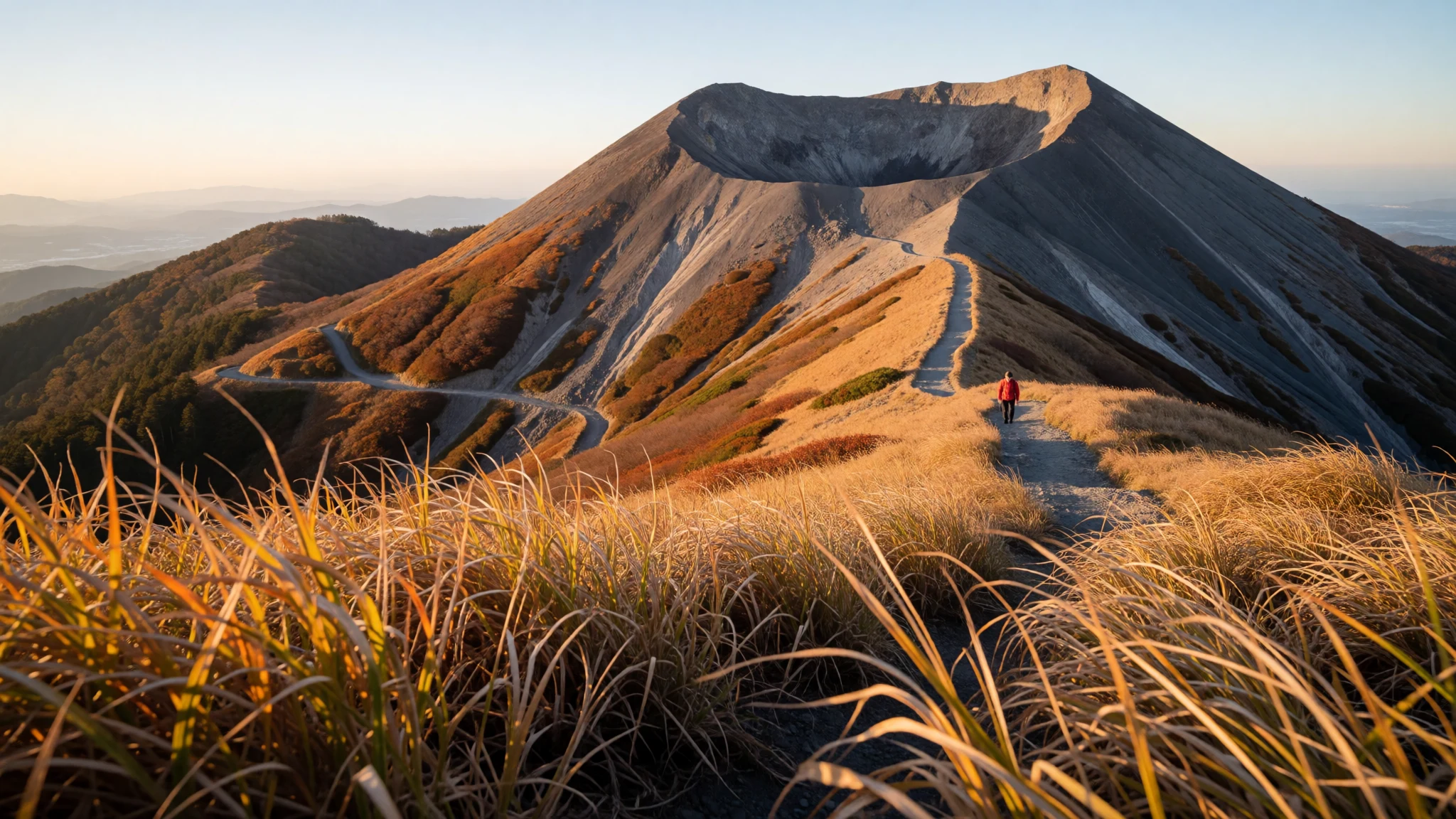
Mount Kirishima is a cluster of active volcanoes in southern Kyushu, where crater lakes, steaming slopes and mythic summits sit close together.
The place
Mount Kirishima is less a single peak than a crowd of volcanoes packed along the border of Kagoshima and Miyazaki prefectures in southern Kyushu. The group's high point, Karakuni-dake, reaches 1,700 m, and around it stand cones, crater lakes, lava fields and forested ridges, most of them inside Kirishima-Yaku National Park. Andesite is the dominant rock, which is why bare slopes look dark and rough wherever vegetation gives way. Several of the volcanoes are still active, and Shinmoe-dake in particular has erupted repeatedly in recent years, so the landscape is never quite finished. Trails and viewpoints open and close according to what the mountain is doing. The name Kirishima is usually explained as 'fog island', and the description fits: cloud often fills the lowlands and leaves the summits floating above it. Karakuni-dake's own name means 'Korea Peak', from an old belief that the Korean Peninsula could be seen from the top. Takachiho-no-mine, another summit, has a place in Japan's foundation myths. Weather shapes every day here. Mist can erase a view within minutes, lower ground is hot and humid in summer, and the East Asian rainy season brings downpours that can set off flash floods and landslides on the slopes and in the valleys below. Kirishima City is the nearest town of any size, while Kagoshima, the prefectural capital, lies a fair distance away. Hot springs rise across the area, a steady reminder of what lies underneath.
Its story
Mount Kirishima is bound up with Japan's foundation myths. In the oldest surviving texts, the summit of Takachiho-no-mine is where the legendary Ninigi-no-Mikoto came down to earth and drove a mysterious spear, Ama-no-Sakahoko, into the rock. Pilgrims have climbed the peak with that story in mind ever since. The mountain's own record is just as dramatic. Chroniclers have logged eruptions here for well over a thousand years, including several violent ones, and Shinmoe-dake has kept the tradition alive in modern times. The region also sits in the old heartland of Satsuma, the name by which Kagoshima was known until the Meiji era. Satsuma was one of Japan's strongest provinces, with influence reaching from northern Kyushu down to Okinawa. It was also stubborn. English warships bombarded Kagoshima city after an English trader was killed, an episode still remembered in Japan as the Satsuma-England War. The province then backed the Meiji Restoration and helped defeat the shogunate's forces, only to turn against the new government when it began stripping samurai of their privileges. The resulting Satsuma Rebellion was led, somewhat reluctantly, by Saigō Takamori, a near-legendary figure whose life loosely inspired the film The Last Samurai. The mountain's name travelled too: a battlecruiser of the Imperial Japanese Navy and, later, a destroyer of the Maritime Self-Defense Force were both called Kirishima.
What to see
- Karakuni-dake — Kirishima-Yaku National Park
Karakuni-dake is the group's high point at 1,700 m, with a big open crater and, on clear days, views across the other volcanoes and out to the sea. The climb is steady rather than technical. Cloud can arrive quickly, so an early start gives the best chance of a view.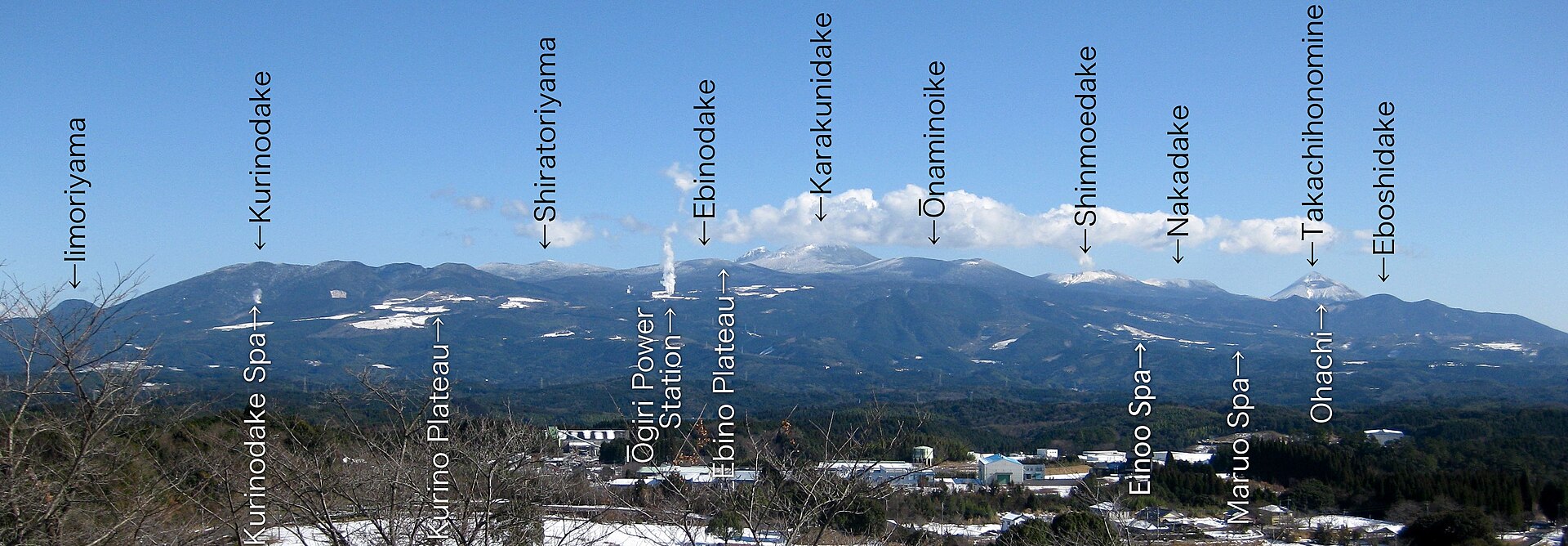
- Takachiho-no-mine — Southern end of the Kirishima range
This is the mythic summit, where Ninigi-no-Mikoto is said to have planted his spear. The upper slopes are loose volcanic gravel and mostly treeless, so the walk feels exposed and the wind can be strong. A spear stands at the top, and the view over the cone and lowlands rewards the effort.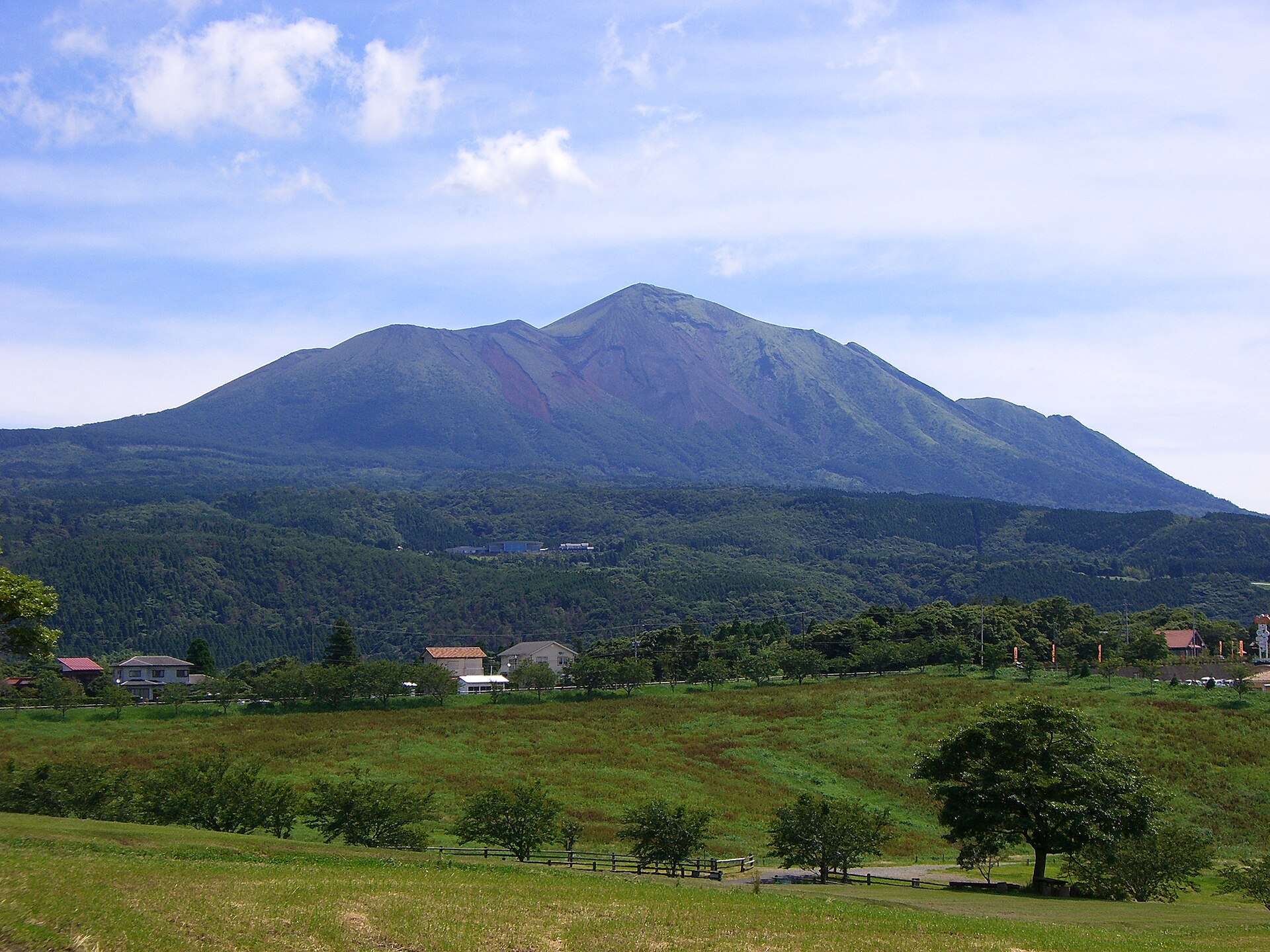
- Shinmoe-dake — Central Kirishima
Shinmoe-dake is the volcano most often in the news, and access to its crater area depends entirely on current alerts. Even when the summit is closed, the surrounding ridges and viewpoints show the ash-grey cone and the fresh scars of recent eruptions. Check local advice before planning a route.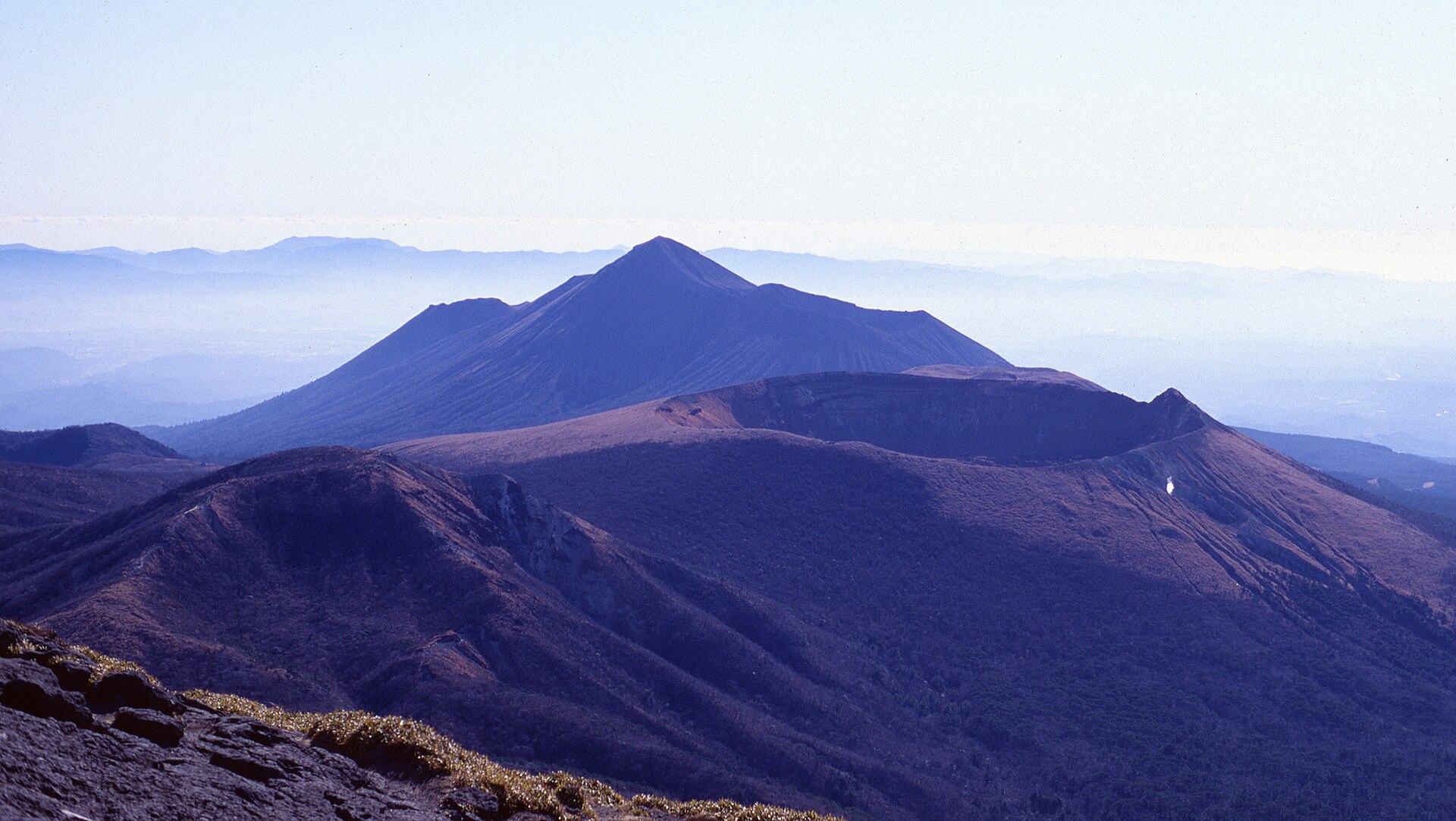
- Ohachi — Between Kagoshima and Miyazaki
Ohachi takes its name from its bowl-like crater, which looks like a monk's begging bowl from the right angle. It sits quietly beside its better-known neighbours and gives a feel for the volcanic group's shape. Walking its rim is a good way to understand how these cones crowd together.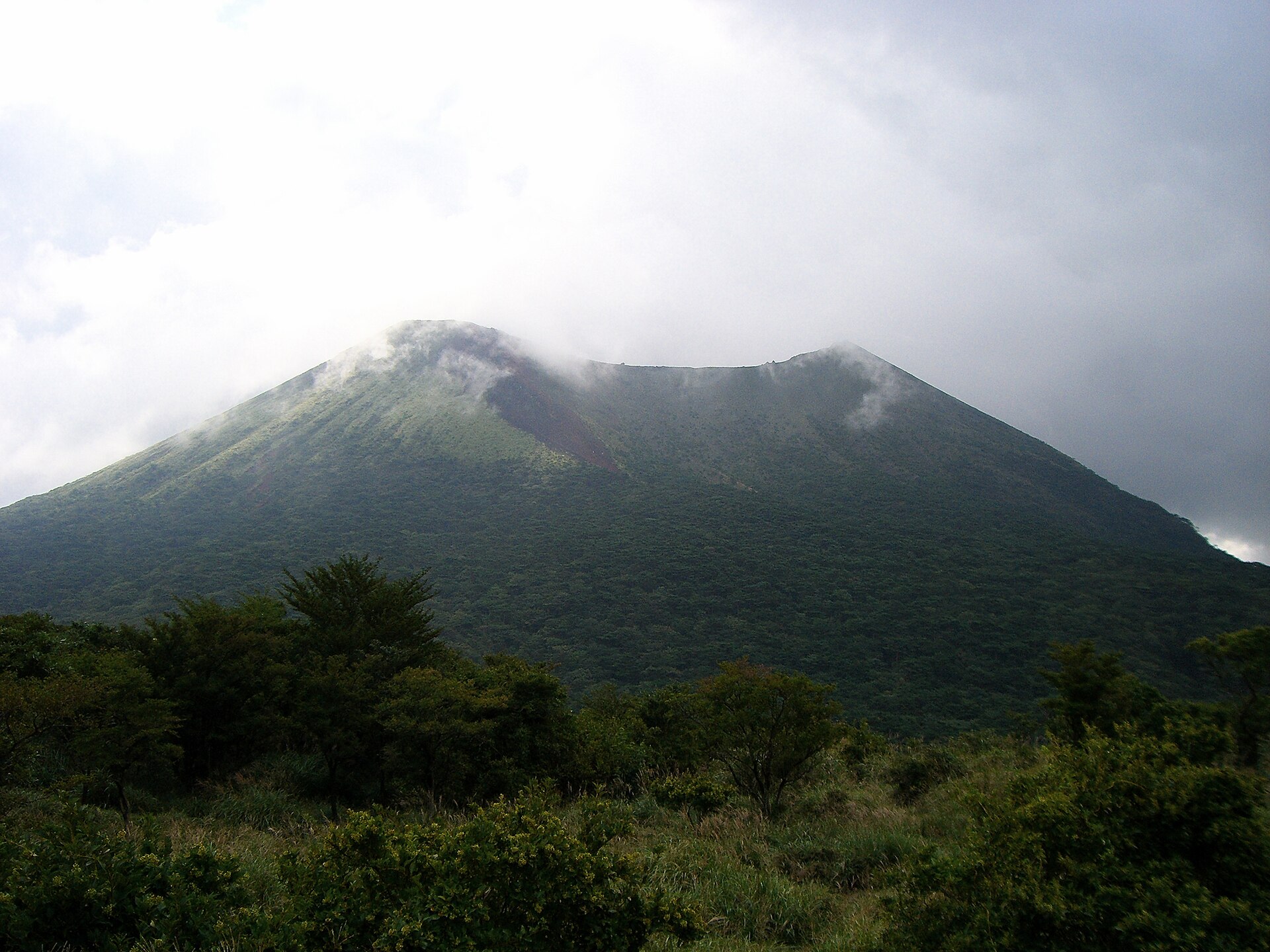
- Lake Rokkannonmiike — Ebino highland, Miyazaki side
Lake Rokkannonmiike fills an old crater and sits below the wooded bulk of Koshikidake. A path circles the water through forest, and the lake changes colour with the light and the season. It is a gentler outing than the summits, and a good choice when cloud sits on the peaks.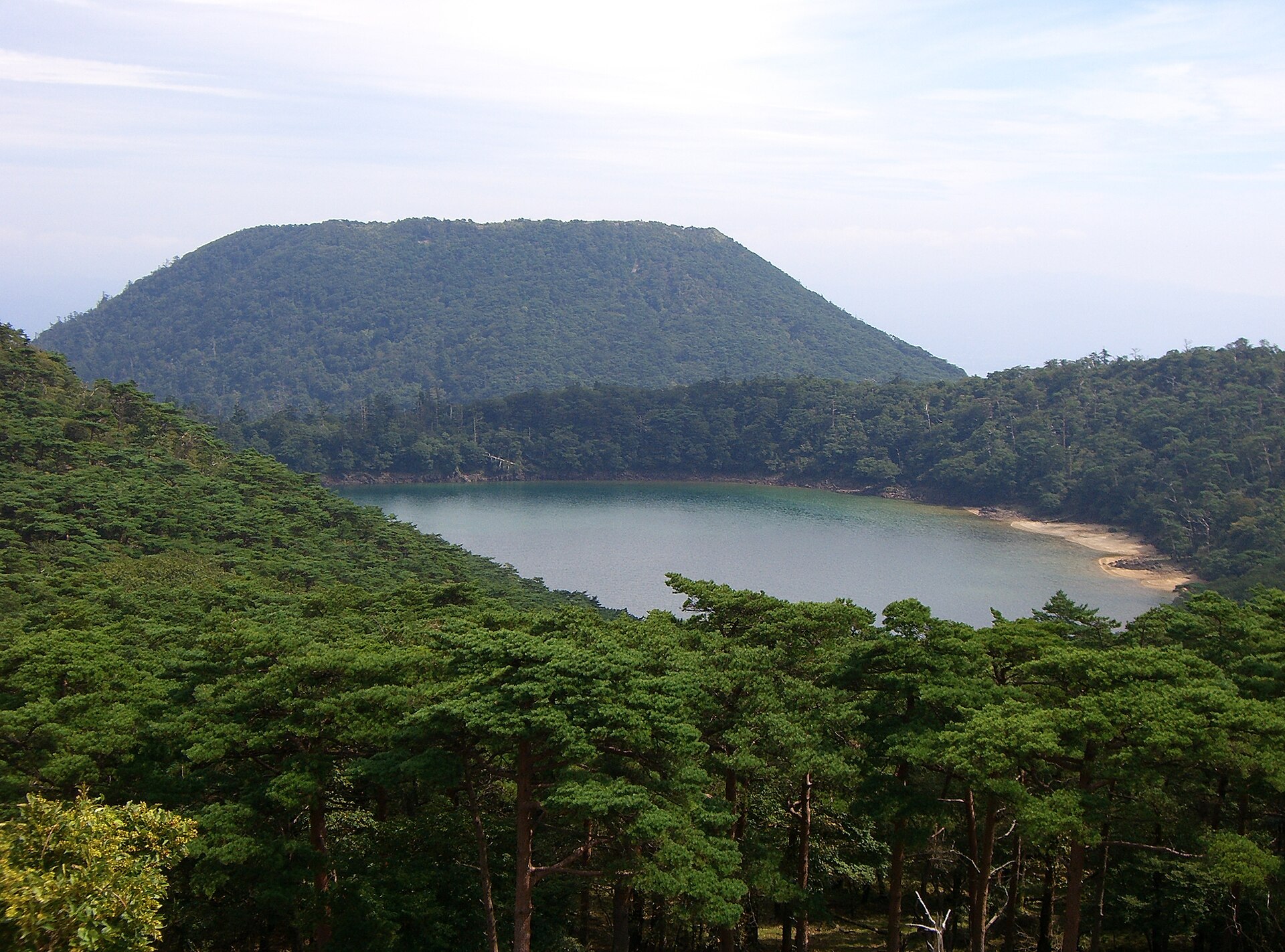
Culture
Mount Kirishima has a cultural weight that goes beyond its scenery. In Shinto tradition the peaks are sacred, and Takachiho-no-mine in particular is tied to the story of the divine descent that underpins Japan's foundation mythology. Shrines at the foot of the mountains and old pilgrim routes reflect that belief, and people still come to pray as well as to hike. The volcanoes also shape ordinary life. Residents live with ash falls, eruption alerts and the occasional closure, and a practical respect for the mountain is part of local habit; official warnings are taken seriously. The same activity that makes the ground unstable also feeds the hot springs, so bathing is woven into the area. Small onsen towns and inns around the foot of the range offer mineral baths that locals use as casually as visitors use a café. Satsuma pride runs deep in this part of Kyushu too. People here remember the region's powerful history and its independent streak, and they are happy to talk about both, as well as about local pork, sweet potatoes and shochu. Courtesy matters more than ceremony: greet people politely, keep voices low on trails and in shrine grounds, and carry your litter out. At shrines and in the onsen towns, rinse thoroughly before getting into a bath, keep your towel out of the water, and bow slightly at a shrine gate before walking through.
What to wear
Mount Kirishima sits in Kagoshima Prefecture, where traditional dress means the kimono, often in silk. Kagoshima's islands are known for Ōshima tsumugi, a silk pongee dyed with mud and plant tannins to a deep, dark finish. Kimono of this kind are worn today for weddings, tea gatherings and formal events rather than daily life. Lighter cotton yukata appear in summer, at festivals and at hot-spring inns, where guests often wear the one provided. For everyday life, people near the mountain dress like most Japanese: practical, neat and unflashy. In towns that means casual shirts, jeans or smart trousers and clean trainers. On the mountain, locals favour walking trousers, a rain shell and a small day pack. A visitor should dress for the terrain and for changeable weather first. Wear sturdy shoes with good grip, since the upper slopes are loose gravel and volcanic rock, and bring layers because it is cool and windy on summits even when the lowlands are hot and humid. A waterproof jacket is useful in any season, especially during the rainy months. A hat and sunscreen help on exposed ridges. At shrines no special dress is required, but covered shoulders and tidy clothes show respect. For onsen, bring a small towel and expect to bathe without swimwear.
What to eat
- Kurobuta (black pork) — Tonkatsu and shabu-shabu eateries across Kagoshima Prefecture
Kurobuta comes from a Berkshire-type hog and is named for the animal's black coat, not the colour of the meat. It is rich and sweet in flavour, usually served as a deep-fried cutlet or in a hot pot. Local pork eateries are the place to try it. - Kuroushi (black beef) — Grill restaurants and local meat shops
Kuroushi is the well-marbled local beef, served as steak, thinly sliced for grilling or in a hot pot. Prices vary widely, so look for set lunches at grill restaurants if the budget matters. Local meat shops sometimes sell it ready to cook. - Torisashi (chicken sashimi) — Izakaya, the casual Japanese pubs of Kagoshima
Torisashi is sliced raw chicken eaten with garlic and soy dip, and sometimes offal as well. It is a regional speciality rather than an everyday dish, and the raw-chicken risk is real even with careful preparation. Many visitors skip it, and that is perfectly acceptable. - Sweet potato (satsumaimo) and purple potato ice cream — Roadside stalls, souvenir shops and tourist-town cafés
Sweet potatoes are a staple of Kagoshima, baked, fried, steamed or turned into snacks. Purple sweet-potato ice cream is sold at shops in the tourist areas and is a good reward after a hike. Look for it at roadside stops. - Imojōchū (sweet potato shochu) — Izakaya and local liquor shops
Imojōchū is a strong spirit distilled from sweet potatoes and the drink most associated with Kagoshima. Locals sip it with water or hot water, alongside food. Bottles on sale in local shops make portable souvenirs, though strength varies, so go slowly. - Kokutō (brown sugar) sweets — Souvenir shops and market stalls selling confectionery
Brown sugar from the prefecture's southern islands turns up in candy, cakes and other sweets, and even in some shochu. The flavour is deep and slightly smoky, closer to molasses than refined sugar. Small packs are easy to carry home.
Plan it
Best time. April–May and October–November, when the air is mild, skies are often clear in the mornings and autumn colour or spring flowers add interest. June and July fall in the East Asian rainy season, with flood and landslide risk, and summer is hot and humid at lower levels.
How long. 2–3
Getting there. Fly to Kagoshima Airport (KOJ), well linked to Tokyo and with flights from Seoul and Shanghai, or take the Kyushu Shinkansen to Kagoshima. From there, local trains, buses or a hire car reach the Kirishima area; check current services, because a car makes the highland much easier to explore.
Budget. mid
Tips
- Check volcano alerts and trail closures with locals or the tourist office before any hike, especially around Shinmoe-dake
- Start early, since cloud often builds by midday and hides the views
- Carry layers and a waterproof jacket, as summits are cooler and windier than the lowlands
- Bring cash for small inns, onsen and roadside stalls
- Check typhoon and heavy-rain forecasts before travelling, particularly in early summer
Etiquette
- Obey closure signs and barriers near craters; they exist because of real volcanic danger
- Rinse before entering any hot spring and keep towels out of the water
- Carry your litter out and keep noise low on trails and at shrines
Nearby
Sources
- Wikidata Q1319361 (CC0)
- Wikipedia: Mount Kirishima (rev 1369573275) (CC BY-SA 4.0)
- Wikivoyage: Kagoshima (prefecture) (rev 5135906) (CC BY-SA 4.0)
- Photo: Kirishima volcano (Jun Seita) (CC BY 2.5)
- Photo: Shinmoe-dake Volcano Erupts on Kyushu Feb 2011 (Robert Simmon) (Public domain)
- Photo: Kirishima Volcano Relief Map, SRTM-1 (Batholith) (Public domain)
- Photo: Kirishima from Maruoka (Ray_go) (CC BY-SA 2.5)
- Photo: Kirishima Takachihonomine (Ray_go) (CC BY-SA 2.5)
- Photo: 1998 Shinmoe Takachiho (名古屋太郎) (CC BY-SA 2.5)
- Photo: Kirishima Ohachi (Ray_go) (CC BY-SA 2.5)
- Photo: Koshikidake Rokkannonmiike (Ray_go) (CC BY-SA 1.0)


