Mount Jiuhua
Mount Jiuhua, People's Republic of China
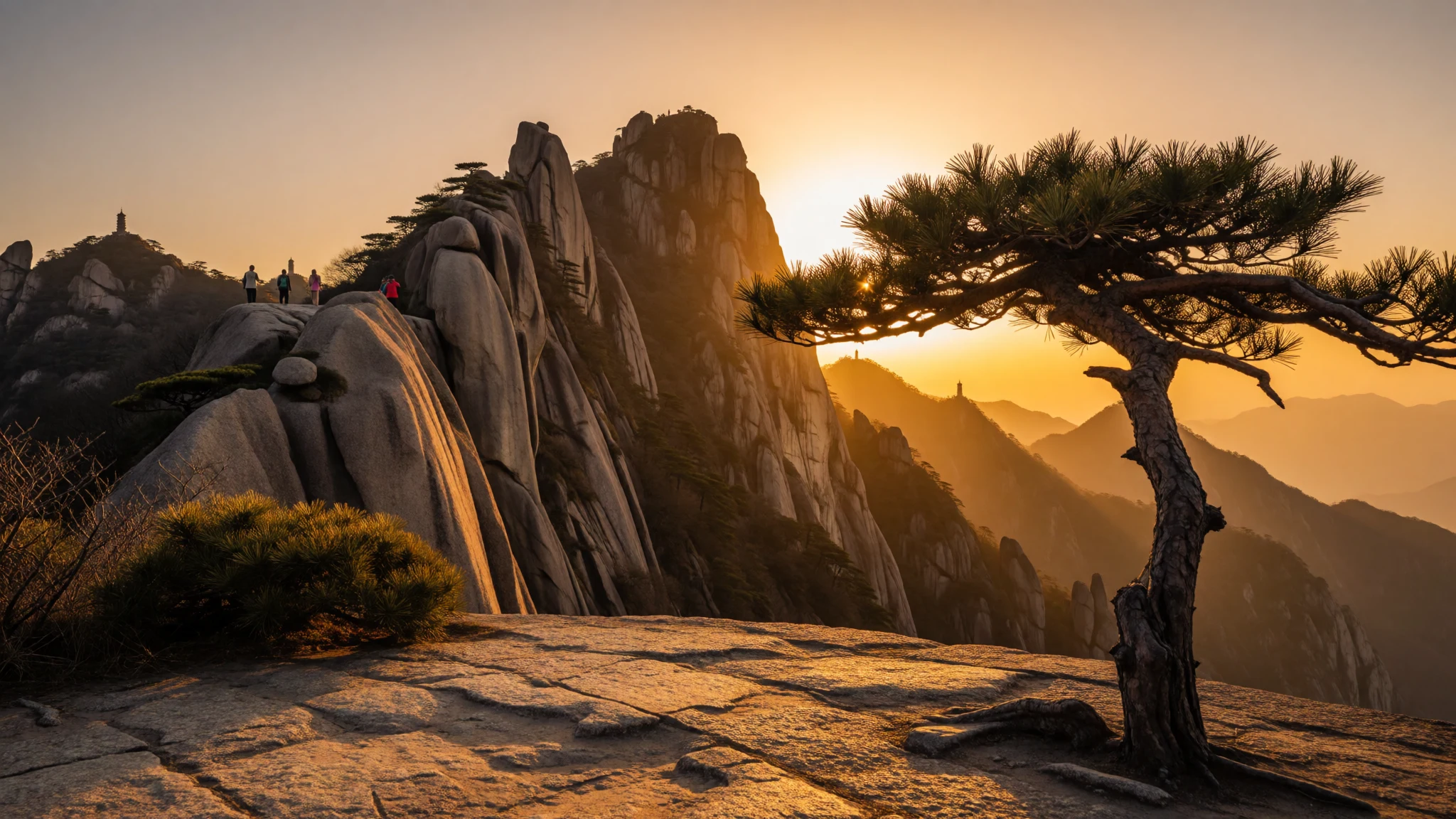
Mount Jiuhua is a working Buddhist pilgrimage mountain in Anhui, where incense, mist and temple stairs shape every day of a visit.
The place
Mount Jiuhua stands in Chizhou, in southern Anhui province, and reaches 1,342 m at its highest point. It is one of China's four famous Buddhist mountains and the one devoted to Dizang, the bodhisattva (Ksitigarbha in Sanskrit) who vows to help souls in the realms of suffering. The Chinese name, 九华山, is usually translated as Nine Glorious Mountains. The area is less a single summit than a cluster of wooded peaks, streams, waterfalls and small valleys, divided into about eleven scenic zones. Temples sit on ridges and in folds of the hills, and a pilgrim village of guesthouses, vegetarian eateries and incense stalls fills the valley floor.
Mist is part of the scenery. Peaks appear and vanish within minutes, and on a clear morning cloud pools in the valleys below the ridgelines. Pines, bamboo and rock outcrops give the slopes a look that painters and poets have recorded for centuries.
Two kinds of traveller share the paths. Pilgrims come to burn incense, kneel in the halls and sometimes stay overnight in simple temple rooms. Sightseers arrive by coach for a day or two, mostly on weekends and Chinese public holidays, when the main temples and the road up are crowded. Midweek outside festival days is far quieter. Summers are warm and humid, winters cold and damp, with slippery steps. Reaching the quieter temples means climbing stone stairs, so sturdy legs matter more than any special equipment.
Its story
Mount Jiuhua carried other names before the current one. Under the Han dynasty it was called Mount Lingyang, and in the southern dynasties that followed it was Mount Jiuzi, after its cluster of peaks. The present name is credited to the Tang poet Li Bai, who is said to have looked at the peaks from the river and wrote of nine glorious summits, a phrase that stuck.
Its religious identity comes from a Korean prince. In 719 a monk from the Silla kingdom, remembered as Kim Qiaoque, settled here and lived an austere life on the mountain for around seventy-five years. When he died at 99, his body was reported not to decay. Local monks noted his resemblance to the Dizang Bodhisattva and concluded that he was an incarnation of that figure. From then on the mountain was understood as Dizang's seat, and pilgrims from across China, and later from Korea and Japan, began to arrive.
By the Ming and Qing dynasties the slopes held hundreds of temples and several thousand monks and nuns. Far fewer temples remain today, but those that do are active, and the mountain reopened to visitors in 1979. Beyond religion, the place gathered scholars and writers over the centuries, and the surviving poems, inscriptions and ruined academies give the hills a literary layer alongside the devotional one. That mix of Korean origin, Tang verse and living ritual is why the mountain still matters to many Buddhists in East Asia.
What to see
- Baisuigong Monastery — Mount Jiuhua scenic area, Chizhou
Baisuigong is a hillside monastery tied to the mountain's long monastic tradition. Its setting among pines and steep stairs is as much the draw as the halls themselves. Go early, before tour groups arrive, and allow time to rest on the climb. Check the official site for any opening limits.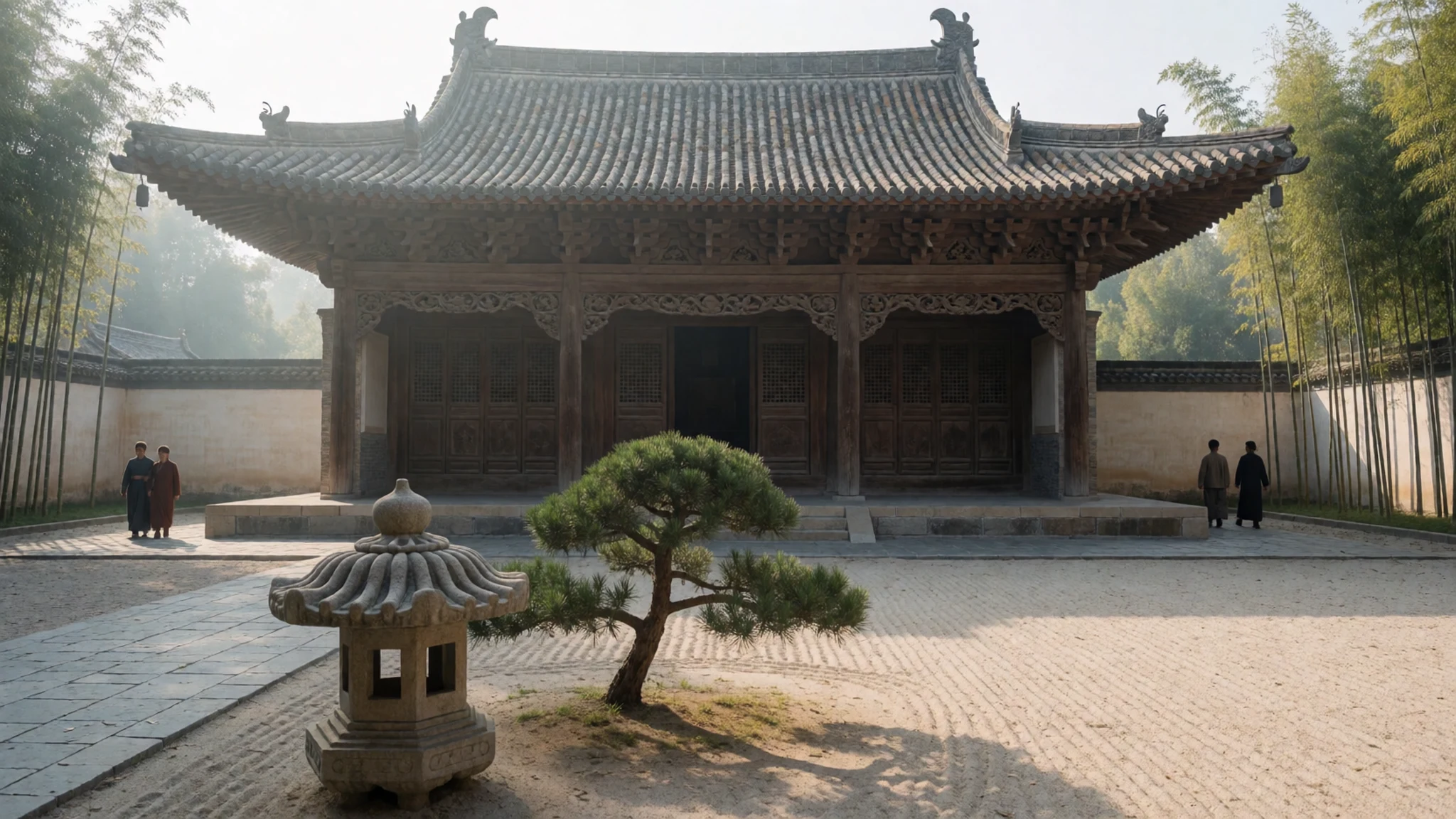
- Ganlu Monastery — Mount Jiuhua scenic area, Chizhou
Ganlu Monastery is one of the working temples where pilgrims light incense and pray, so the atmosphere is devotional rather than museum-like. Look for the layered roofs, the smell of smoke and the monks' chanting at set hours. Keep voices low and step aside for worshippers.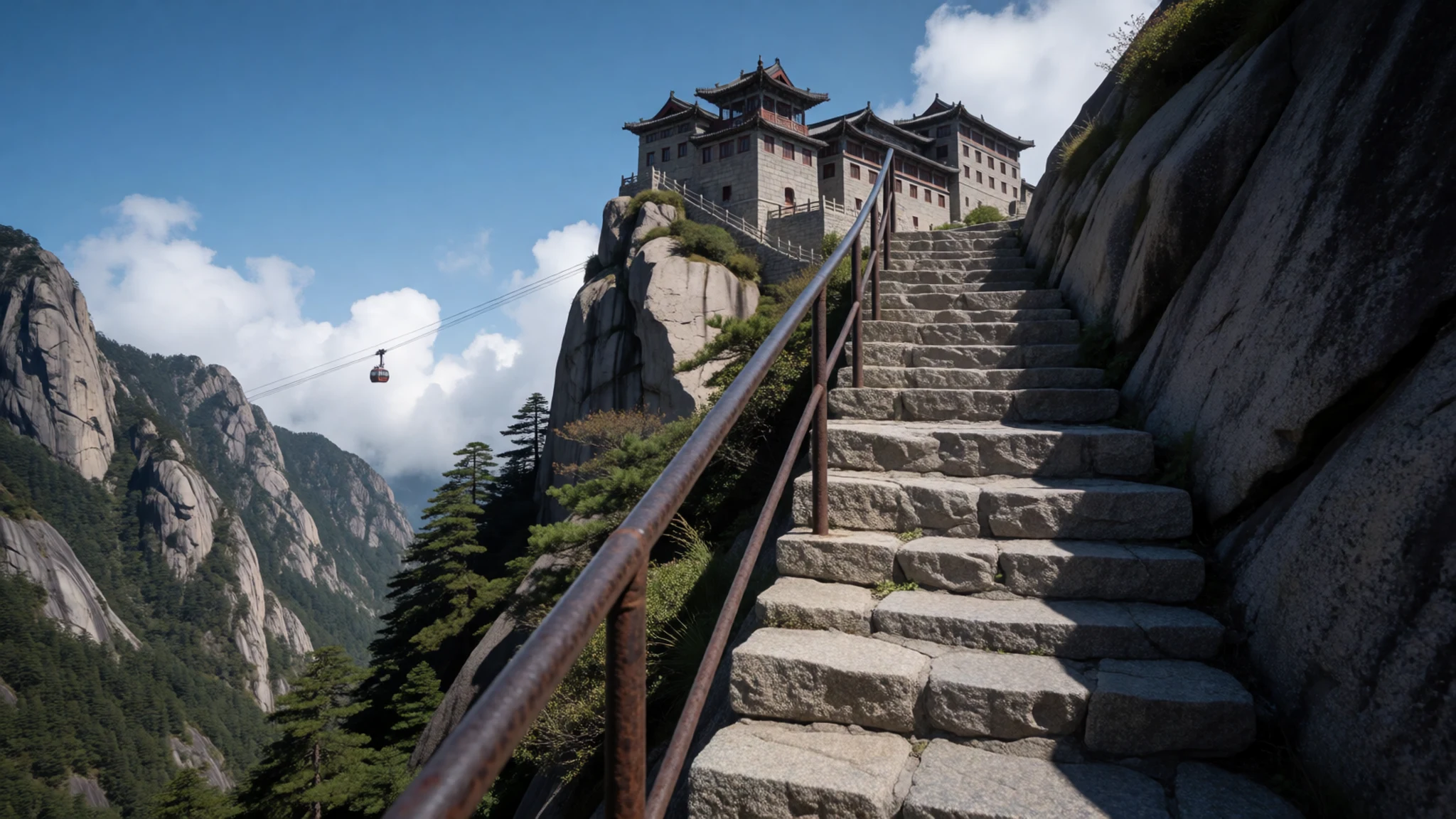
- Huacheng Monastery — Near the pilgrim village, Mount Jiuhua
Huacheng is a major temple complex on the mountain and a natural first stop for anyone trying to understand how Dizang worship is organised here. Halls rise in tiers up the slope. Expect crowds at festival times and quieter courtyards on weekday mornings.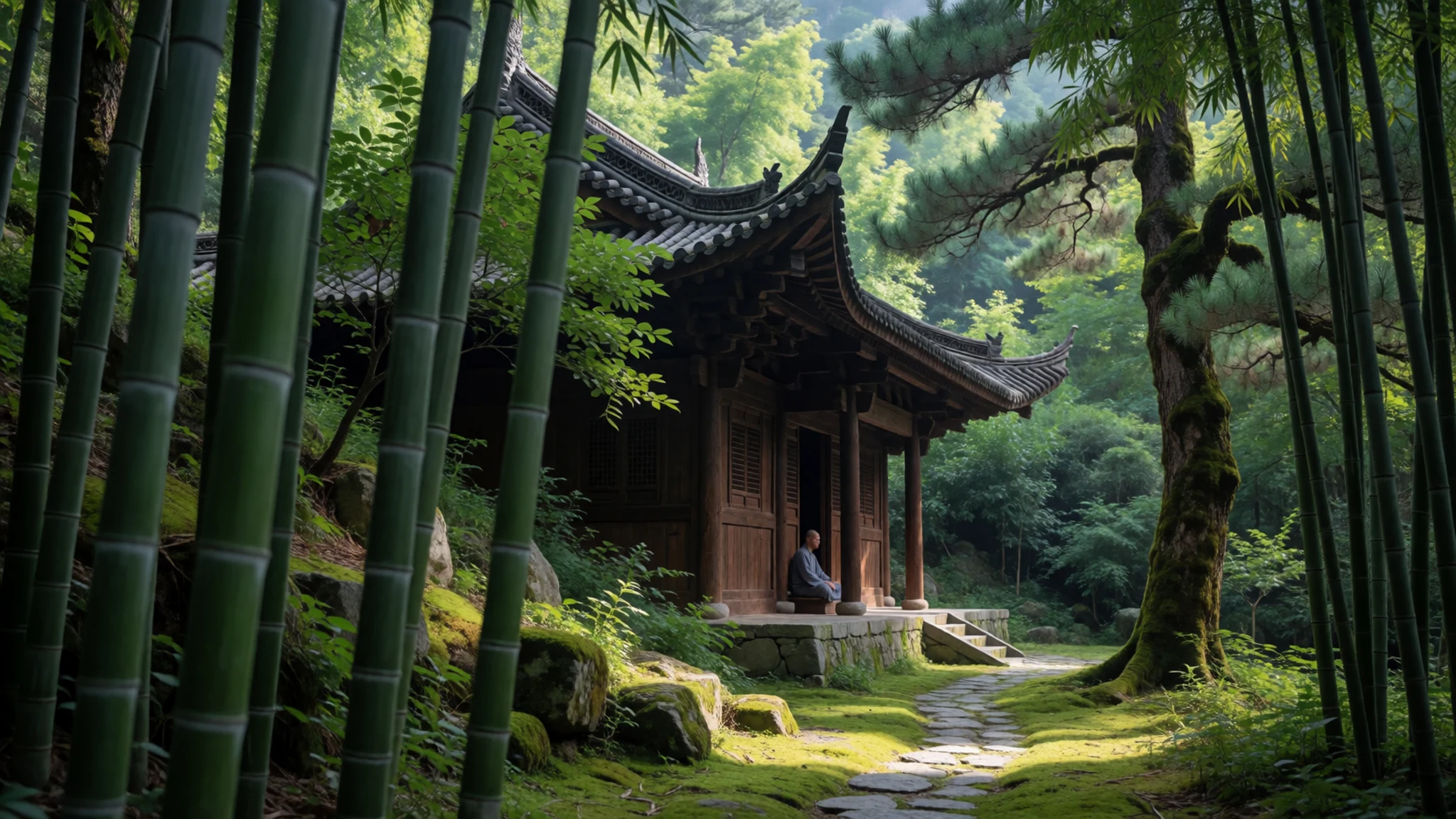
- Zhiyuan Monastery — Mount Jiuhua scenic area, Chizhou
Zhiyuan Monastery gives a calmer alternative to the busiest halls. The approach is worth the effort for the sense of being in a hill temple rather than a visitor attraction. Bring water, wear good shoes for the steps and be ready to sit quietly for a while.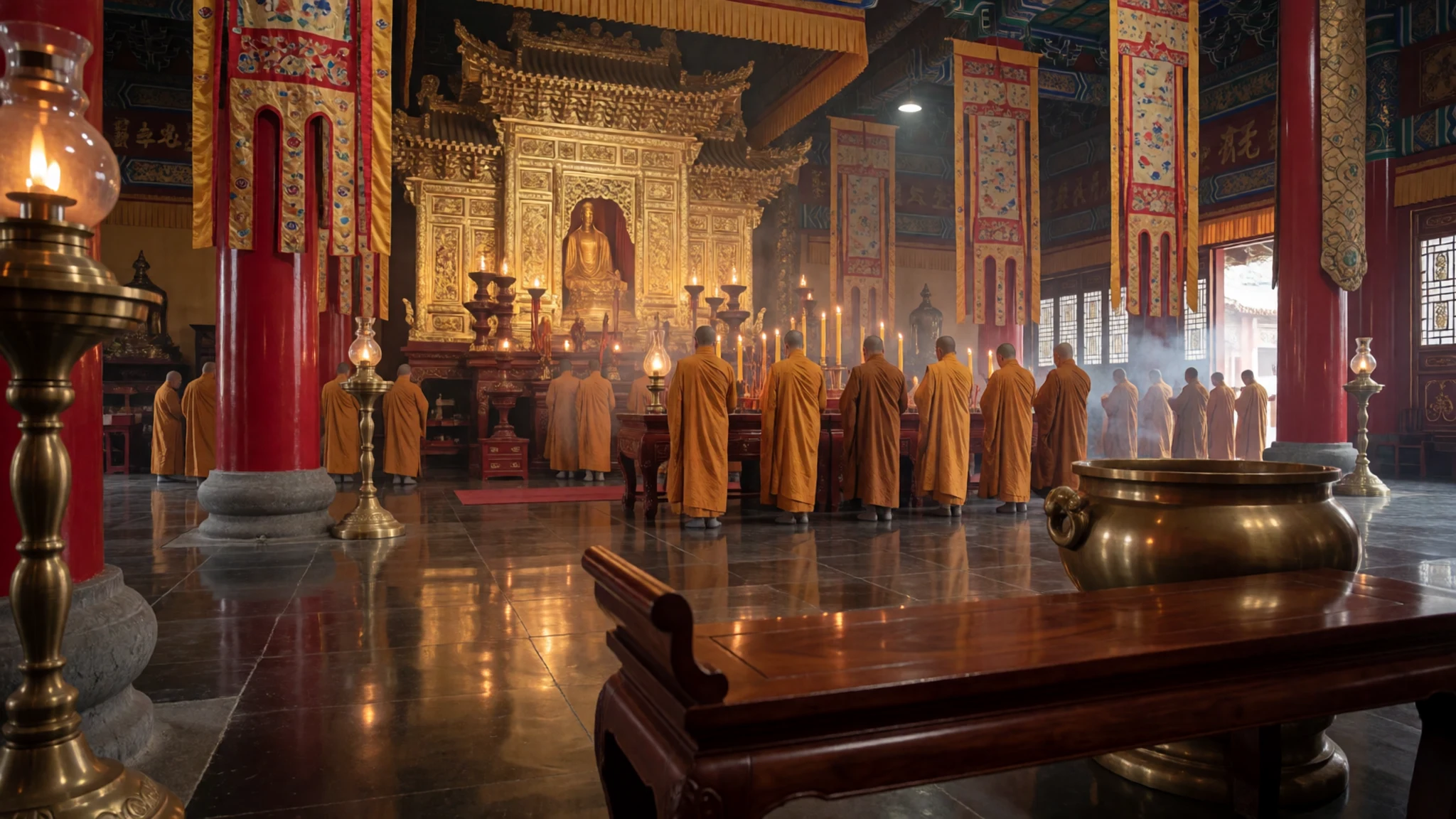
- Zhuhai bamboo forest — Minyuan village, on the way to Tiantai Peak
Zhuhai, a stretch of dense bamboo near Minyuan, lies along the trail towards Tiantai Peak. The walk is a pleasant change from stone steps and incense. Light filters green through the stems, the air feels cooler, and the path suits a slow half-day outing.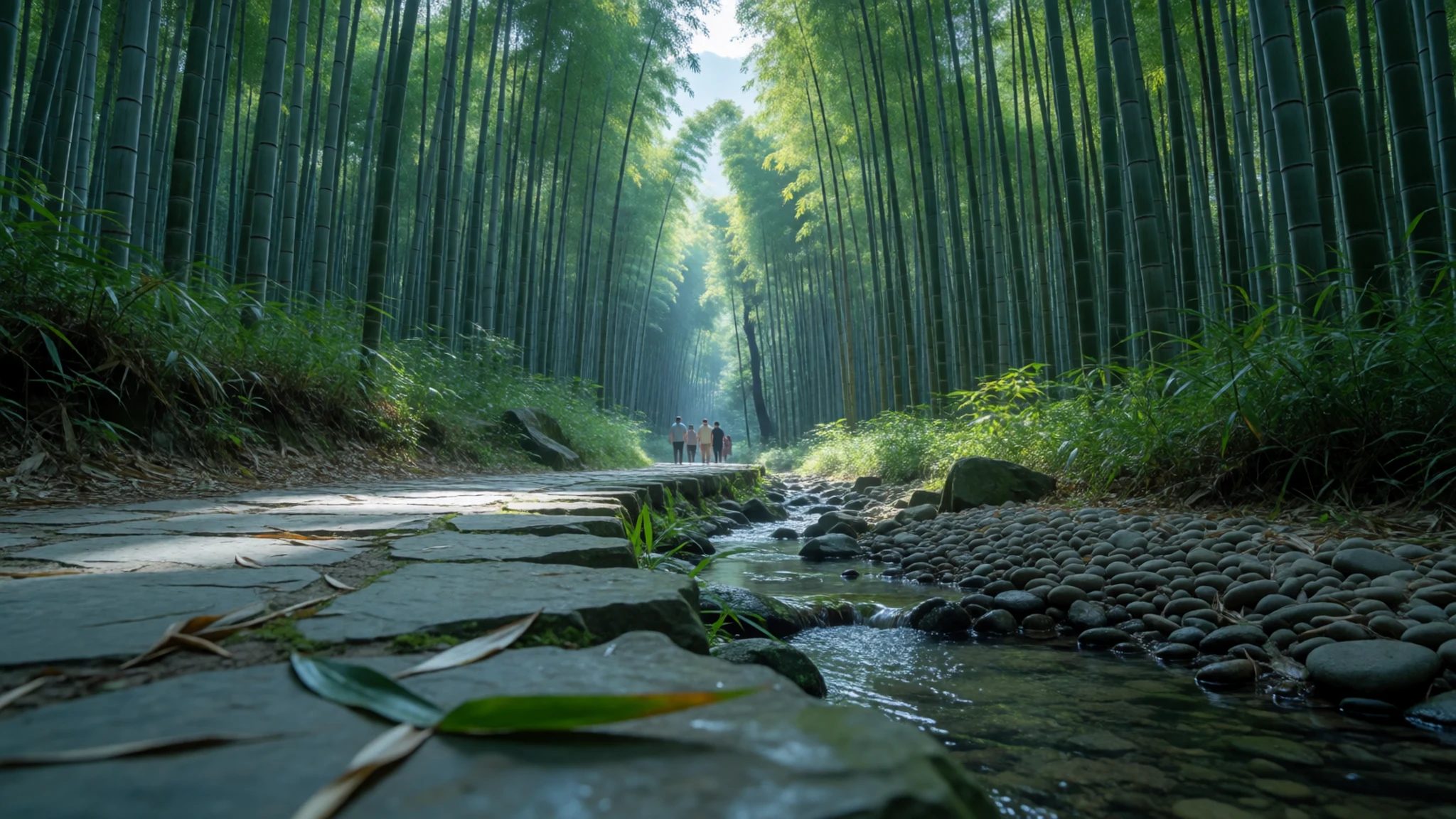
- The Dizang statue — Mount Jiuhua scenic area, Chizhou
A large bronze-toned statue of Ksitigarbha, the Dizang Bodhisattva, stands at the mountain and is about 99 m tall according to the photo caption in our reference set. It can be seen from far off on clear days. For a closer look, expect steps, queues at busy times and a more ceremonial mood.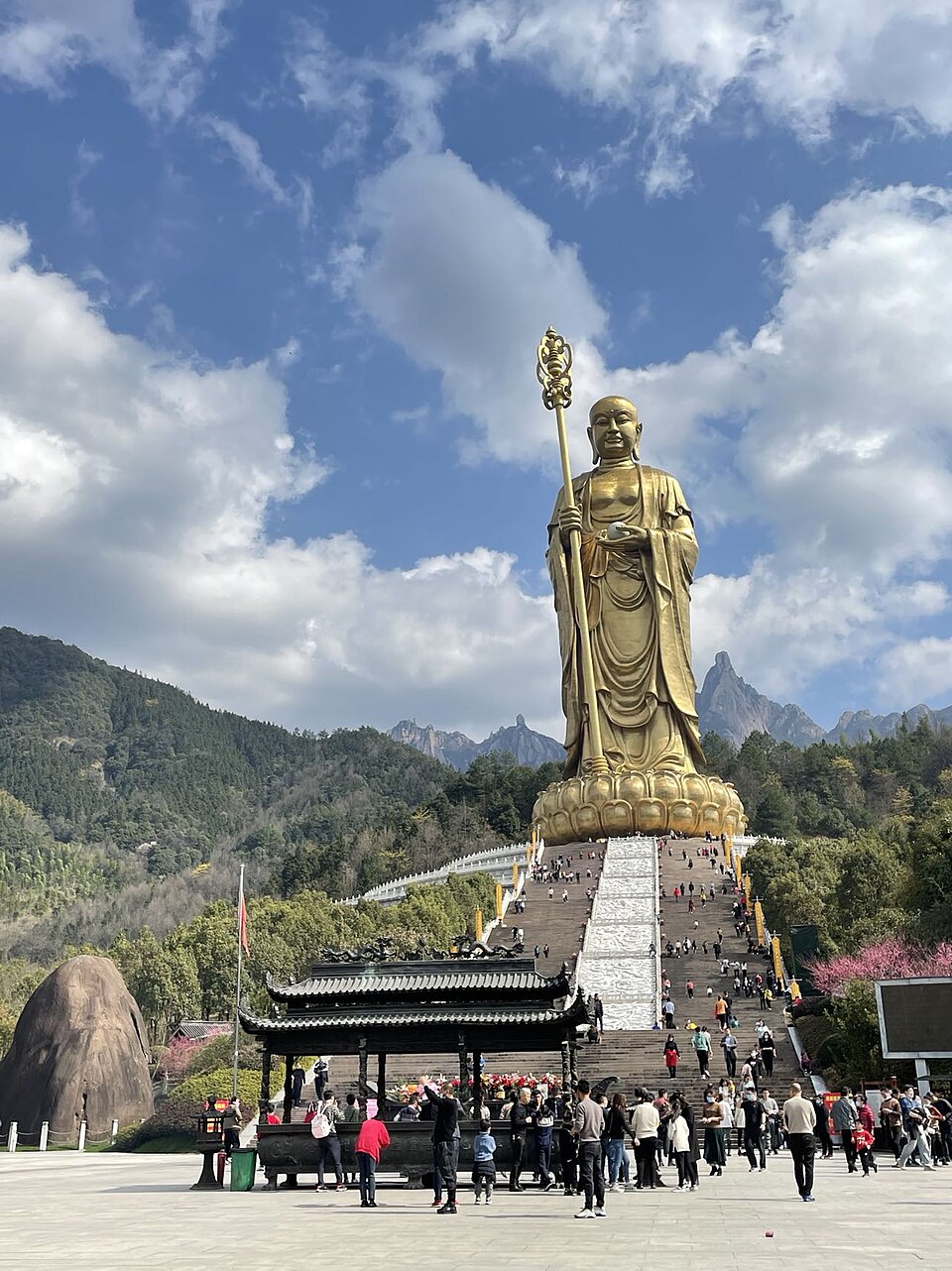
Culture
Mount Jiuhua is first of all a place of worship, and its culture revolves around Dizang, the bodhisattva associated with compassion for the dead and for those in suffering. Families come to pray for deceased relatives, to ask for protection and to mark the Buddhist festival calendar. The most visible act is burning incense in the courtyard burners, followed by bowing or kneeling in the hall before the main image.
Monastic life shapes the daily rhythm. Monks and nuns rise early for chanting, and temple meals are vegetarian. Many visitors from Korea and Japan come because of the mountain's Silla connection, so the temples sit within a wider East Asian Buddhist network rather than a purely Chinese one.
The mountain also holds a scholarly side. Poets of the Tang period and later wrote about its peaks, and old academy sites survive among the trees. Calligraphy on rock faces and temple plaques is part of the landscape, and it rewards slow reading if a translation or guide is on hand.
Festival days draw the largest crowds, with long lines of pilgrims on the stairs and chanting echoing through the halls. For visitors, the best approach is to watch what others do, move at the pace of the line and treat the halls as active sanctuaries, not stage sets.
When entering a prayer hall, keep your voice low, do not step on the threshold, and ask permission before photographing monks or worshippers, since many halls forbid photography of the images.
What to wear
Mount Jiuhua's traditional dress is monastic. Monks and nuns wear loose robes in grey, brown or saffron-toned cotton and linen, often with a long outer robe for ceremonies; the exact colours vary by tradition and the occasion. Lay pilgrims on certain festival days sometimes wear simple dark or plain clothes and carry prayer beads, a cloth bag for offerings and incense bundles. Silk is used in ceremonial vestments, but everyday monastic dress is plain and practical, closer to work clothing than costume.
On the mountain today, most people wear modern casual clothing. Day visitors favour trainers, light jackets and sun hats, while pilgrims often dress a little more conservatively, in long trousers and plain tops. Local people in the pilgrim village wear everyday clothes suited to steps, damp weather and long days outdoors.
Visitors should dress for a climbing walk and for temple respect. Shoes with grip matter more than anything else, since the stone steps are often wet or mossy. Layers help because the mountain can be cool and misty even when the valley is warm, and a light rain jacket is useful in most seasons. Winter needs warm layers and gloves.
For temple halls, cover shoulders and knees, avoid slogans or very short shorts, and choose clothing that is easy to move in when others kneel. A small bag with water and a scarf is enough for most days.
What to eat
- Temple vegetarian meal — Dining halls near the main temples and eateries in the pilgrim village
Mount Jiuhua's temples and many village eateries serve vegetarian dishes in line with Buddhist practice, often built around tofu, mushrooms and seasonal greens. It is plain, filling food that suits long walking days. Look for simple dining halls near the main monasteries.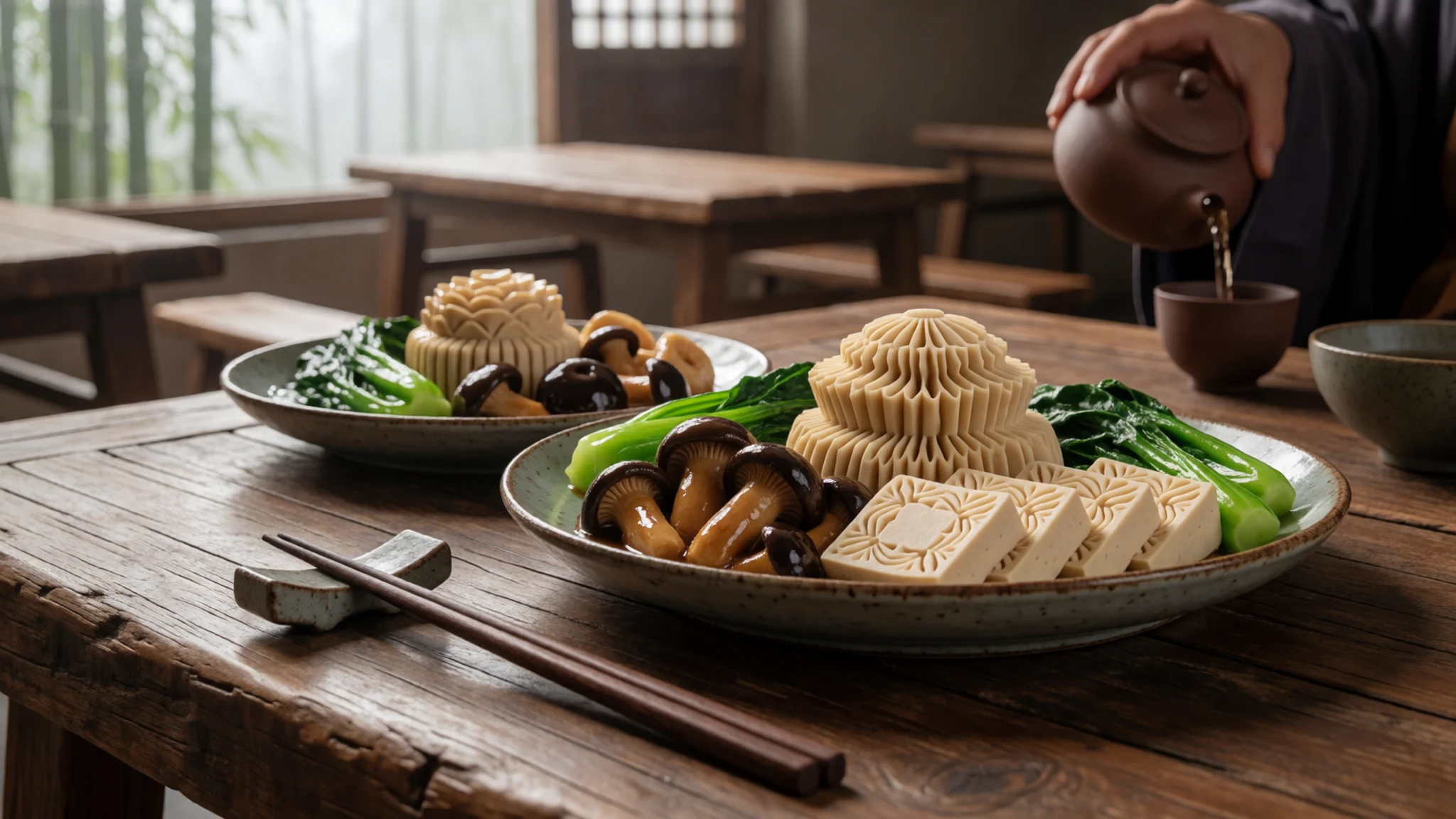
- Mountain mushrooms and greens — Village eateries along the main street below the temples
Wild and cultivated mushrooms, bamboo shoots and leafy vegetables are typical of Anhui hill cooking. They usually arrive stir-fried with garlic or in a clear broth. Ask what is in season, because the range changes through the year.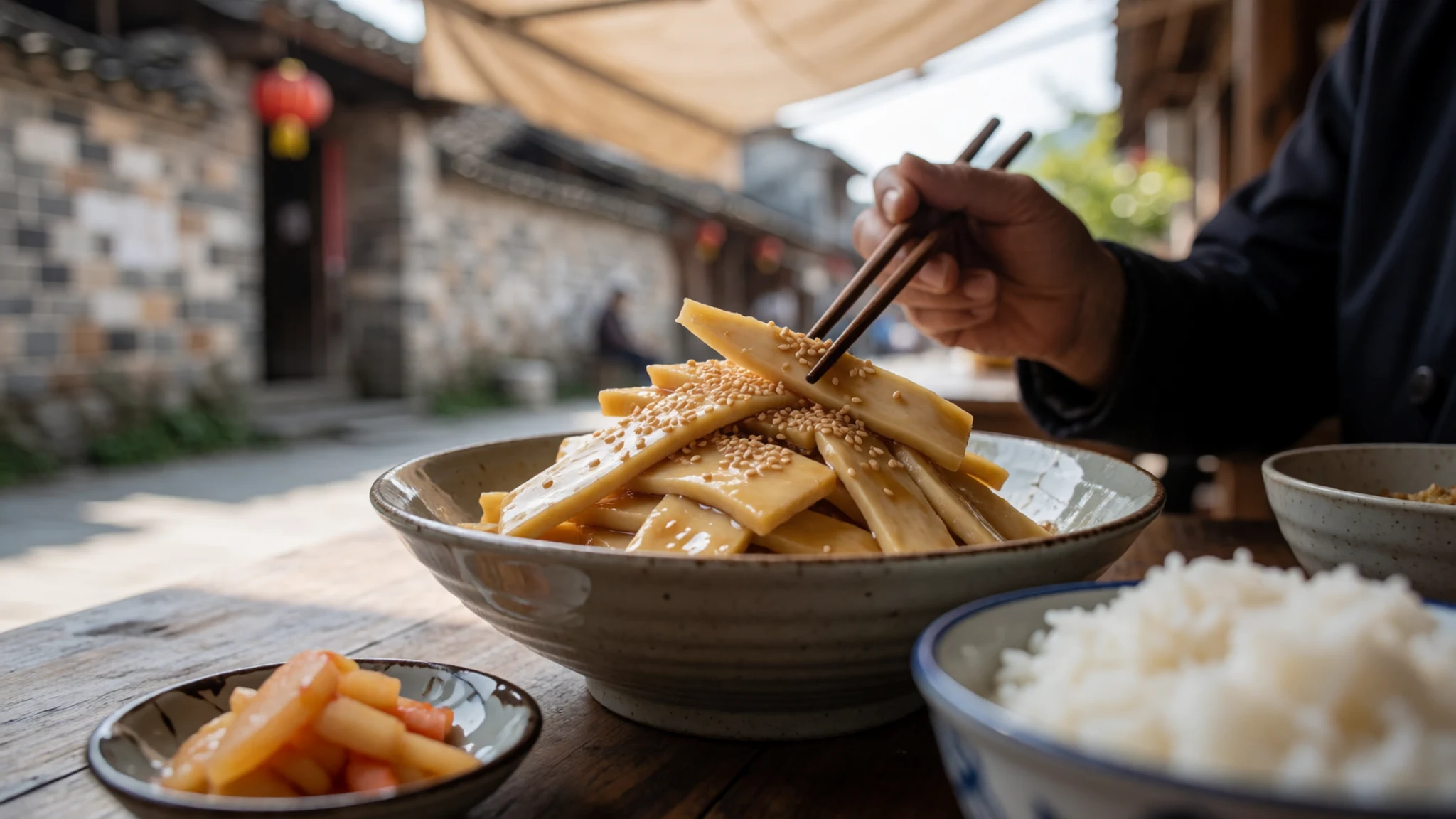
- Tofu dishes — Temple canteens and small eateries around the pilgrim village
Tofu appears in many forms, from silky soups to firm slices fried and braised with soy. It is the backbone of vegetarian eating here and an easy order if the menu is only in Chinese. Pair it with rice and a plate of greens. - Mountain tea — Tea stalls and shops near the monasteries
Anhui is a tea-growing province, and green tea is the usual drink at tea stalls and in temple courtyards. It is poured hot in small cups, and refills are often free at casual tea houses. A pot is a good reason to rest between climbs. - Bamboo shoot dishes — Village restaurants and market stalls near the foot of the mountain
Bamboo grows widely on these slopes, and shoots are cooked in soups, stir-fries and pickles. The texture is crunchy and slightly sweet. Spring is the best moment for fresh shoots, while preserved versions turn up through the year.
Plan it
Best time. April–May and October–November are the most comfortable months, with milder temperatures and good visibility between mist banks. Summer is warm and humid, with crowds at weekends and public holidays, and winter is cold and damp with slippery steps.
How long. 2–3
Getting there. Take a train to Tongling or Chizhou, the two rail points named for this area, then a direct coach to Mount Jiuhua. Check coach times locally on the day, as schedules change.
Budget. mid
Tips
- Go midweek and start early to avoid holiday and festival crowds
- Wear shoes with good grip, since the stone steps are often wet
- Carry water, a light rain jacket and some cash for small stalls and tea
- Check the official site and local notices for temple hours and any entry limits
Etiquette
- Lower your voice and dress modestly in prayer halls
- Ask before photographing monks, nuns or worshippers
- Do not step on temple thresholds, and walk around incense burners rather than through them
Nearby
Sources
- Wikidata Q1154854 (CC0)
- Wikipedia: Mount Jiuhua (rev 1369569936) (CC BY-SA 4.0)
- Wikivoyage: Mount Jiuhua (rev 4737300) (CC BY-SA 4.0)
- Jiuhuashan yunhai.JPG (Public domain)
- Temple in Jiuhuashan, Serge925 (CC BY 3.0)
- A view of the 99-meter statue of Ksitigarbha Bodhisattva at Jiuhuashan, Beccabubu (CC BY-SA 4.0)
- Jiuhuashan from below.jpg (Public domain)
- Jiuhuashan higher Daxiong Baodian.jpg (Public domain)
- The Wanfo Pagoda at Jiuhuashan in Anhui, China, Angus Cepka (CC BY-SA 2.5)
- Jiuhuashan Dizang Dian view.jpg (Public domain)
- 1962-05 1962年 九华山, 《人民画报》 (Public domain)


