Mount Ishizuchi
Mount Ishizuchi, Japan
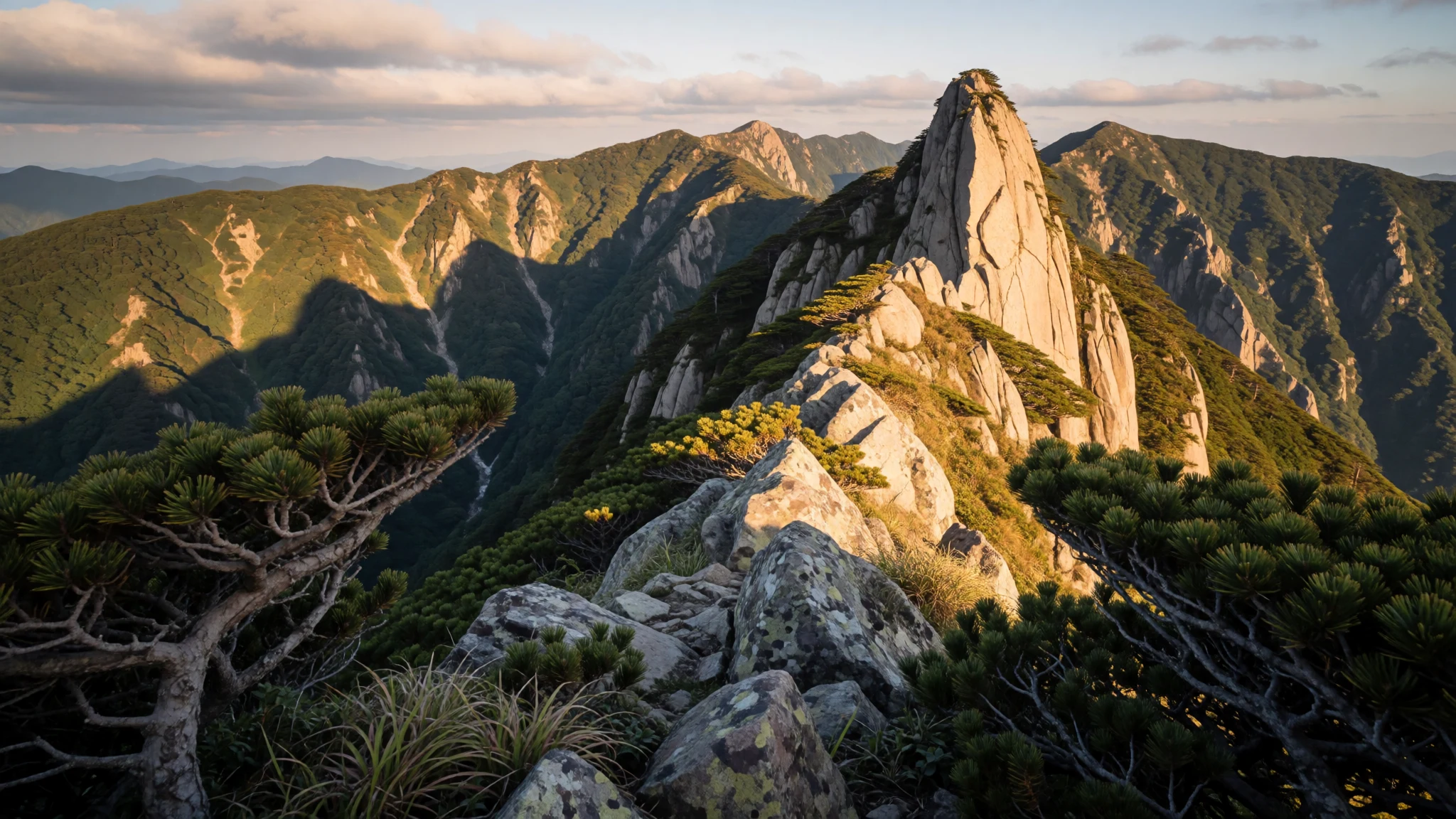
Mount Ishizuchi is the highest peak on Shikoku, a sacred mountain where a forest trail, iron chains and a summit shrine make one memorable day.
The place
Mount Ishizuchi (石鎚山, Ishizuchi-san) rises to 1,982 metres on the border of Saijō and Kumakōgen in Ehime Prefecture, on the island of Shikoku. It is the island's highest point and is generally counted as the highest mountain in western Japan. It also appears on the list of Japan's 100 famous mountains, and it has long been treated as sacred ground rather than simply a hiking objective.
Geologically it is an old volcano. It was once a large stratovolcano, and the magma that built it died away long ago. There has been no eruption for at least 10,000 years, so the jagged rock that crowns the peak is the worn remnant of that activity rather than anything threatening. The area became a national park in 1955 and shelters wildlife such as falcons and dormice.
Most people start from the Jōju shrine area, reached by ropeway from the valley. That puts the trailhead at about 1,450 metres, which saves a lot of climbing but not a lot of effort, because the ground above is steep, stepped and often busy. Autumn weekends are the crowded ones, when the path to the top can back up with walkers. In winter a small ski and snowboard area operates on the same slopes, while the Jōju shrine itself stays open all year and draws visitors at New Year. The mountain is a day out from Saijō, but it rewards an early start and a spare layer.
Its story
Mount Ishizuchi's story is mostly one of worship. Long before anyone counted it among famous mountains, it was regarded as a sacred peak, and the habit of climbing it as a pilgrimage has outlasted the centuries. The shrine complexes on the mountain, at Jōju lower down and on the summit above, are the physical trace of that belief. Even now many people go up less for the view than for the act of reaching the top shrine.
That devotion explains a surviving rule. The official climbing season runs from the start of July into October, and the first day of it has traditionally been reserved for men only. It is a reminder that the mountain keeps older customs alive alongside the modern ropeway. In practice, people can hike Mount Ishizuchi from as early as May through to as late as November, but the huts and other facilities on the route are limited in those shoulder months, so the official season dates are worth taking seriously.
The mountain's geological past sits behind the religious one. About 15 million years ago it is believed to have been an active volcano, and what pilgrims climb today is the eroded core of that old edifice. Rock faces, steep spines and narrow ridges give the route its character. Chains were fixed to some of the steeper pitches, partly as a practical aid and partly as part of the ritual of the ascent. Walking up, one passes through forest, past torii gates, and finally onto bare rock, a sequence that still feels like a progression toward something.
What to see
- Jōju shrine — Above the Ishizuchi ropeway
The main shrine grounds sit about a 20-minute walk above the ropeway station, at 1,450 metres. The complex is austere and elegant rather than showy, and it is known for the stone hammers displayed around it. It is open all year and is the natural place to start or finish.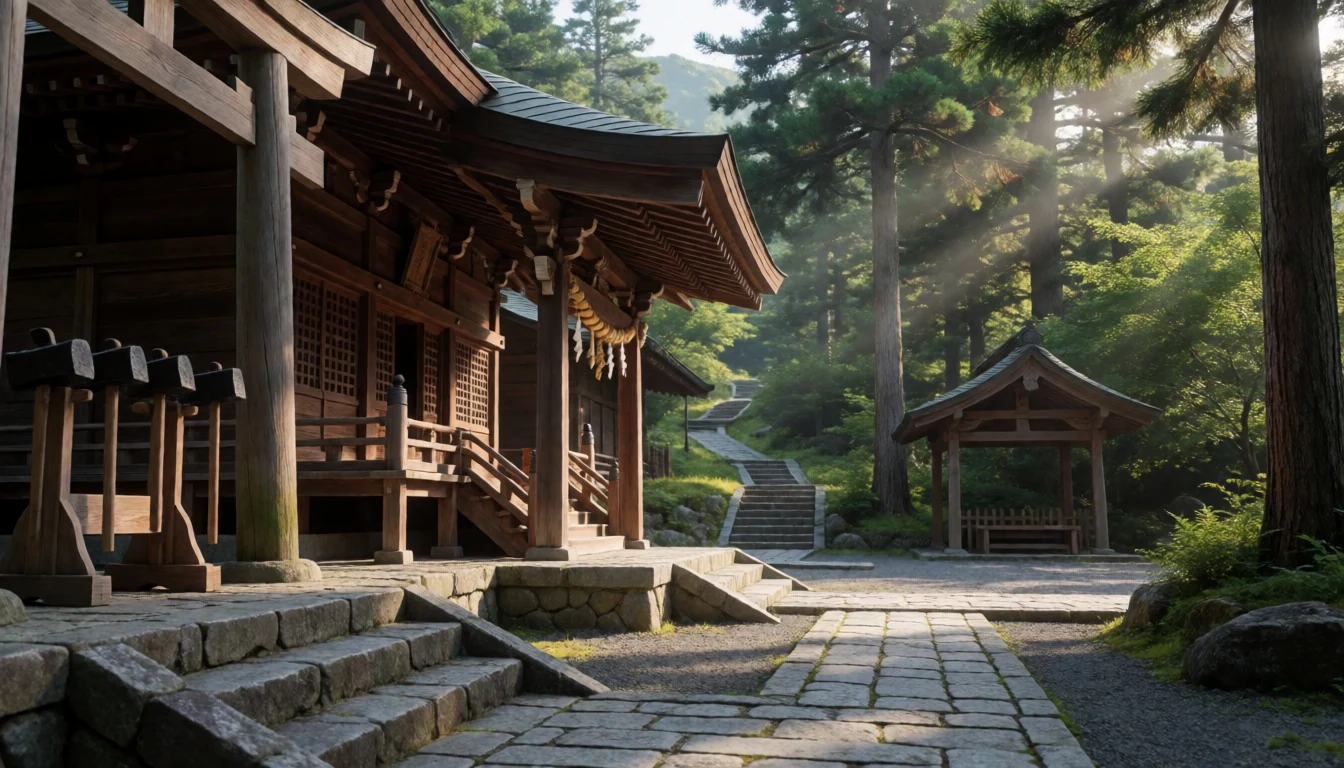
- The trail from the torii gate — Jōju trailhead
The route begins at Jōju through a torii marked with the characters 登山口. Oddly, the first kilometre goes downhill, back to about 1,300 metres, before the real climb starts. Plan roughly three hours up and at least two hours down, and keep some energy for the descent.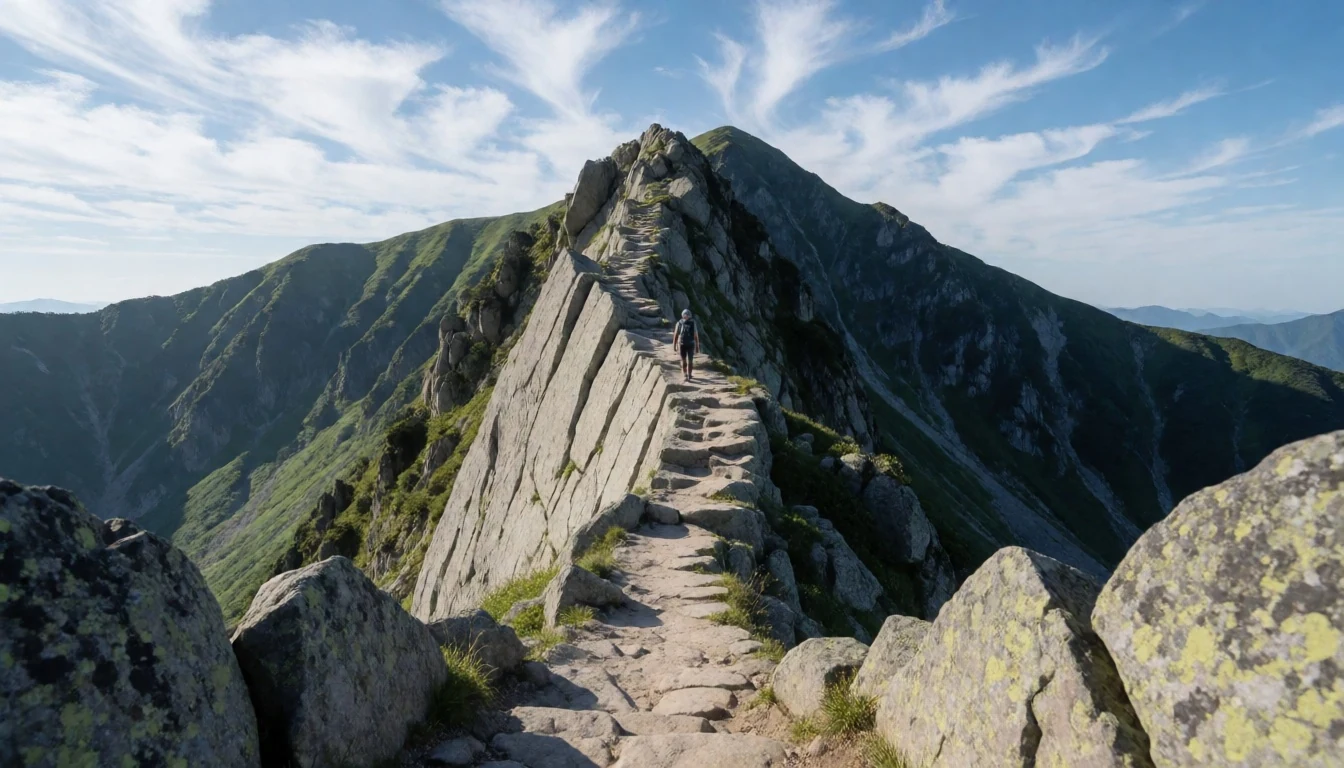
- Hatchōzaka and the chain section — Mid-trail saddle
From the saddle at Hatchōzaka, a long run of wooden steps climbs the mountainside, built to hold back erosion. A set of chains here leads up a 74-metre rock spur with a fine view, but it is a dead end, so you climb back down afterwards.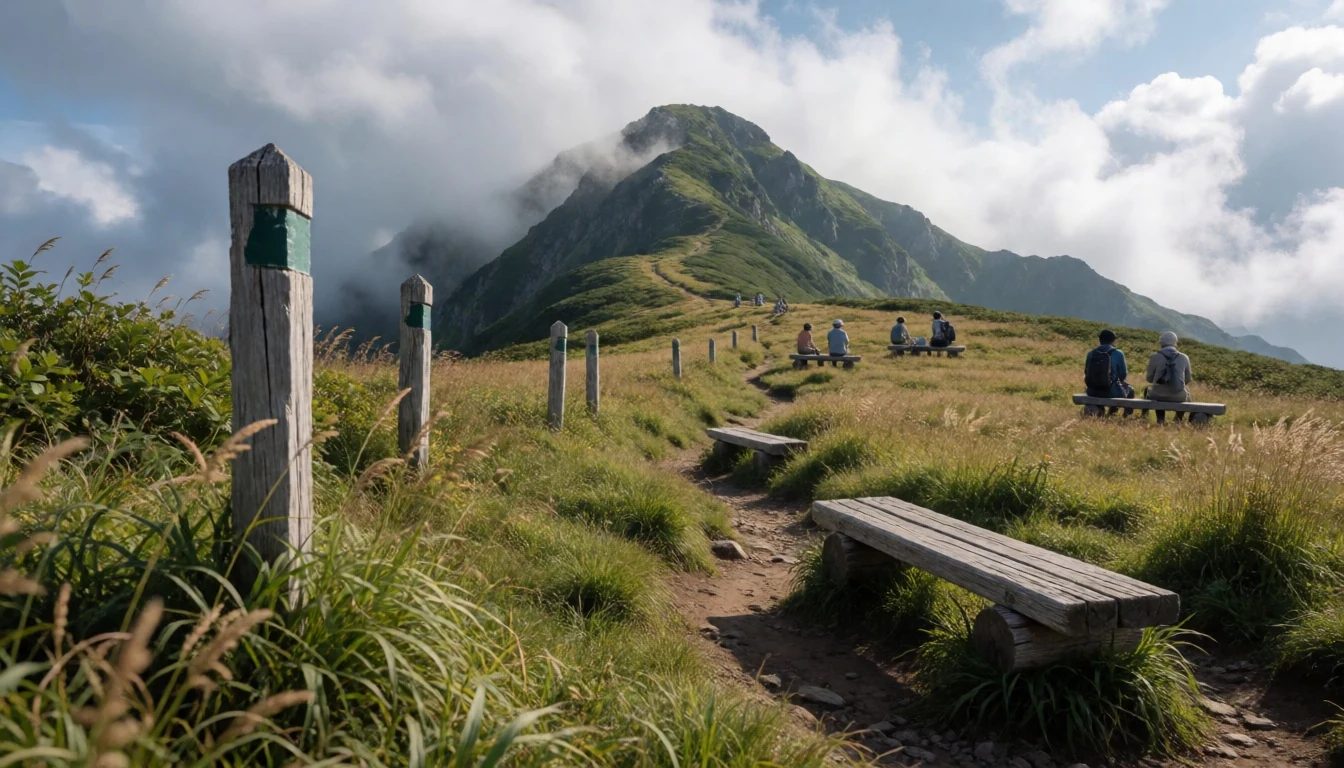
- Yoakashi Pass — Below the summit
After about an hour in the forest the path reaches Yoakashi Pass, around 1,600 metres, where the summit finally comes into view. About one kilometre and 300 metres of ascent remain. It is a sensible place to rest, drink and decide how much cloud is coming.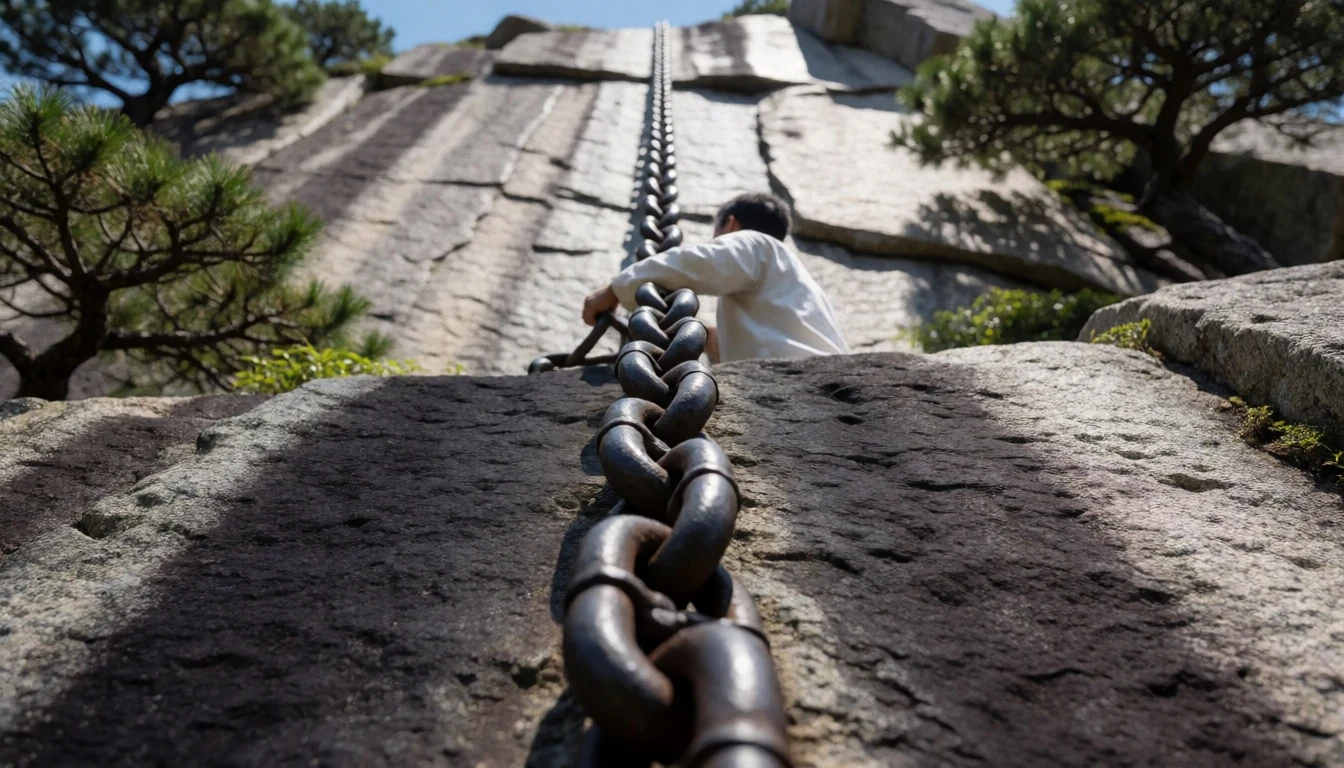
- The summit and Tengudake — Summit ridge
The top of Mount Ishizuchi is a rocky crest crowned by a shrine, with Tengudake the peak most photographed. The ridge is narrow and exposed, so keep to the marked route. On a clear day the outlook across Shikoku is wide and the effort feels justified.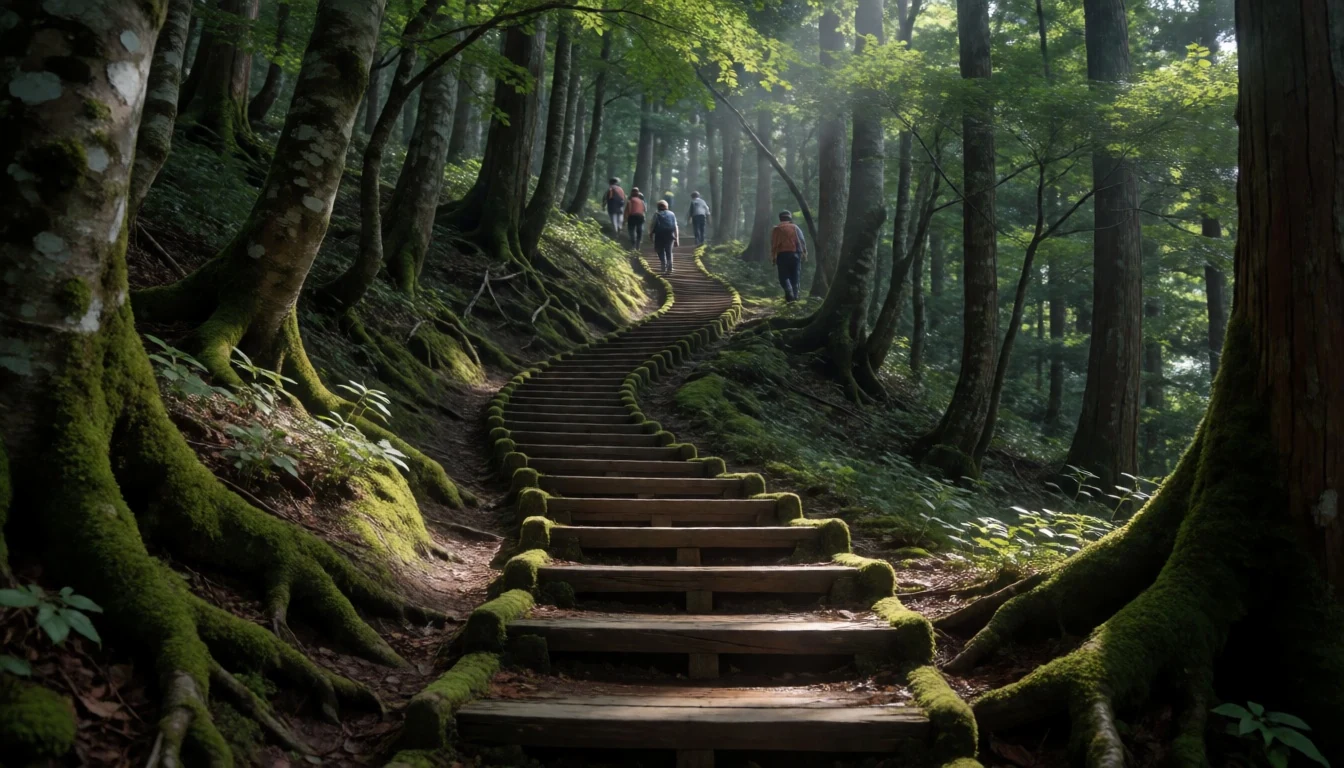
Culture
Mount Ishizuchi is a working sacred mountain, and its culture is Shinto and mountain-pilgrim in character. Climbing it has long been an act of devotion as much as recreation, and the shrines at Jōju and on the summit are the points the whole route is organised around. The stone hammers on display at Jōju echo the mountain's name, which can be read as a reference to a stone hammer, and they are a visible link between landscape and ritual.
The tradition of the opening of the climbing season, with its men-only first day, shows how customs persist beside the ropeway and the weekend crowds. Local life around the mountain is quiet and small-scale, with a few lodges close to Jōju, and the tone among walkers is friendly but unhurried. People greet each other on the path, and that habit is worth joining in with.
New Year is the busiest ceremonial moment, when Jōju shrine draws visitors who come to make a first visit of the year. In ordinary weeks it is calm. Visitors tend to be a mix of serious hikers, families on a day out and older pilgrims, and the pace of the path is set by the slowest of them.
At the shrines, bow briefly at the torii gate, keep your voice low, and step aside on narrow sections so that people coming down can pass safely.
What to wear
Mount Ishizuchi has no single regional costume that visitors will see on the trail, but its religious life has its own dress. Pilgrims in the mountain-worship tradition may wear white clothing, and Shinto priests at the shrines wear the usual robes of their office, in plain fabrics such as cotton and hemp or silk for ceremonial pieces. These are worn for rites and festivals rather than for everyday use, and most people will encounter them only at the shrine.
What people actually wear on the mountain is practical outdoor gear. Japanese walkers are usually well equipped, in synthetic layers, brimmed hats, gaiters and sturdy boots, often with a small towel round the neck. Retired groups tend to be especially smart and organised, and the mountain has a tidy, prepared feel.
Visitors should dress for changeable mountain weather rather than for the valley below. Wear walking boots with a good grip, because the path includes wooden steps, wet rock and chains. Carry a waterproof layer and a warm layer even in summer, since the summit is far cooler than the town. In autumn add gloves and a hat. Shorts are fine in warm weather, but cover shoulders and knees if you plan to spend time at the shrine grounds, and keep a small bag for rubbish, since there are few bins on the way.
What to eat
- Mikan citrus and juice — Shops and stalls in Saijō and Matsuyama
Ehime is famous across Japan for its mandarins, and fresh fruit, juice and sweets made from them appear in shops and stalls in and around Saijō. A cold juice is a pleasant reward after a hot descent.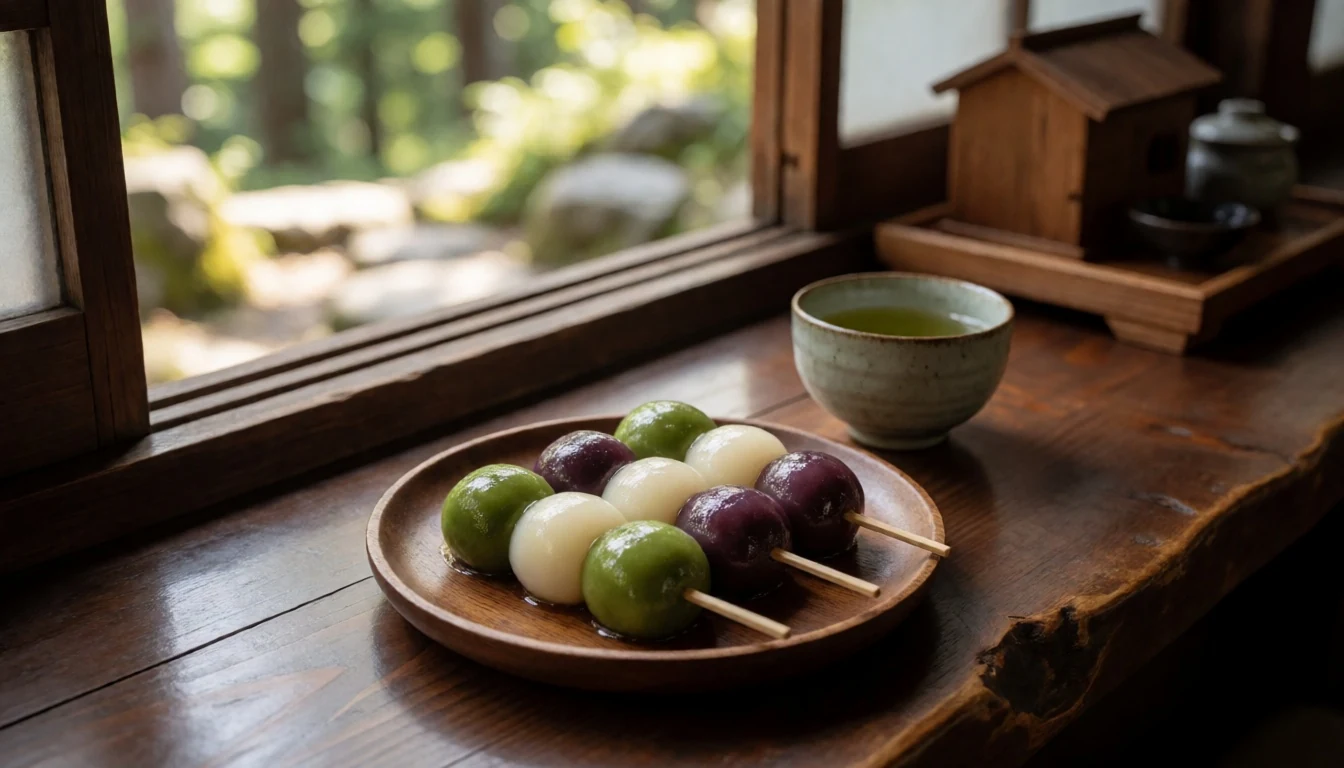
- Taimeshi — Restaurants and eateries in Matsuyama and nearby towns
A regional rice dish built around sea bream, served either with the raw fish over rice or cooked together with it. It is a Ehime favourite and a good meal in the lowland towns before or after the climb.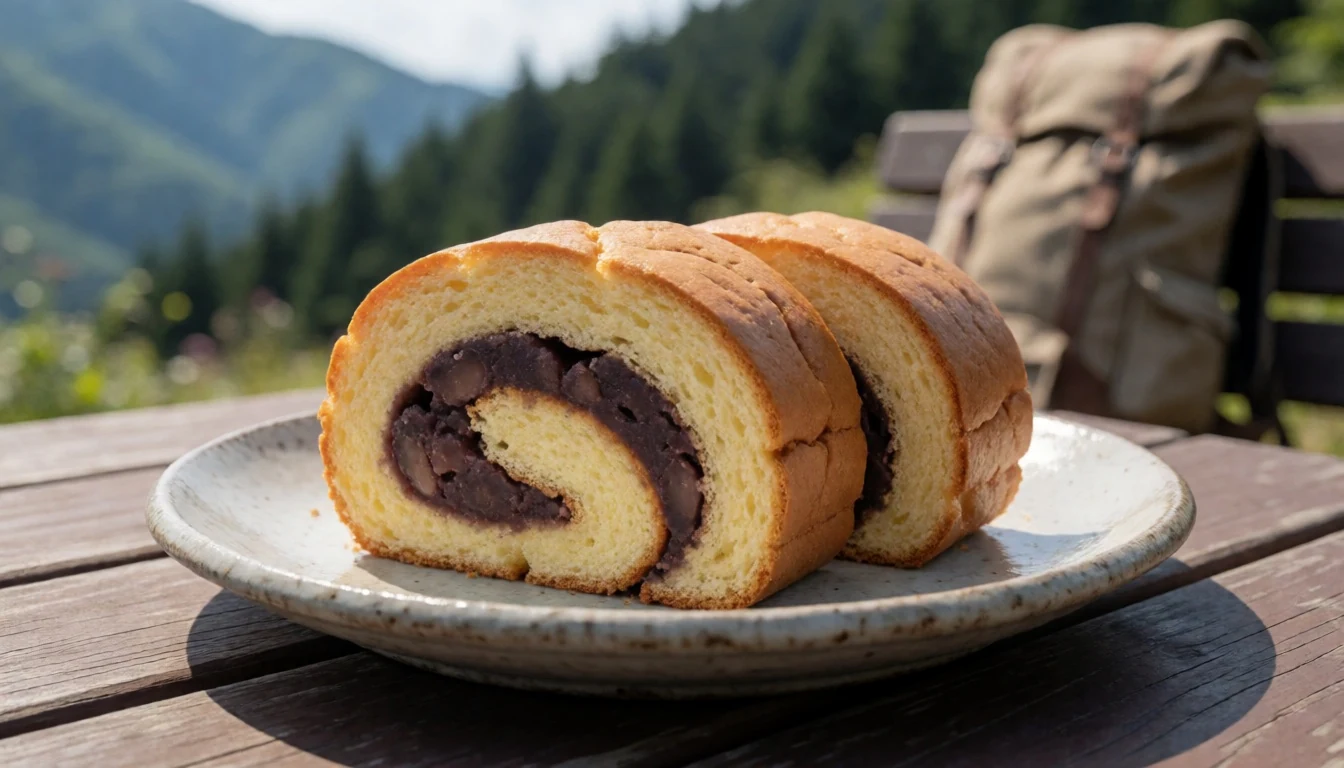
- Jakoten — Food shops and market stalls across Ehime
Fried fish cakes made from small whole fish, with a chewy, savoury texture. They are sold as a snack and are easy to carry for a picnic lunch or an early start. - Onigiri and bento — Convenience shops and station kiosks
Rice balls and packed lunches are the standard trail food in Japan. Buy them at a convenience shop or station kiosk before the bus, since options near the ropeway are limited and facilities may be closed outside the season. - Udon — Noodle eateries in Saijō, Matsuyama and Takamatsu
Shikoku is udon country, and a hot bowl of thick wheat noodles in broth is an easy, cheap meal. It suits the cool air after a mountain day and appears in almost every town.
Plan it
Best time. July to October is the official climbing season, and mid-October is the time for autumn colour, though weekends then are crowded. May and November are possible but facilities along the route are limited. Winter brings snow and a small ski area.
How long. 1–2
Getting there. Take the JR Yosan Line to Iyo-Saijō station, reached by limited express from Okayama, Takamatsu or Matsuyama. From there a connecting bus runs to the ropeway, but only a few run each day, so check the operator's current timetable, which is published in Japanese. A route from Matsuyama via Kuma Kogen also exists, with summer weekend direct buses to Tsuchigoya.
Budget. mid
Tips
- Check the bus timetable before you go, since there are only a few services a day and the last one back leaves in the late afternoon.
- Allow about three hours up and at least two down, and start on the earliest bus you can.
- Avoid autumn weekends if you dislike queues on the path.
- Lockers at the ropeway station are small, so pack light.
- Carry water, food and a waterproof layer, as facilities are limited outside the season.
Etiquette
- Bow at the torii gate and keep voices low at the shrines.
- Stay on the marked route and step aside on narrow sections.
- Take all rubbish back down with you.
Nearby
Sources
- Wikidata Q2744214 (CC0)
- Wikipedia: Mount Ishizuchi (rev 1369569489) (CC BY-SA 4.0)
- Wikivoyage: Mount Ishizuchi (rev 5314182) (CC BY-SA 4.0)
- Photo: Isiduti05.jpg (Dokudami) (CC BY 3.0)
- Photo: Mount_Ishizuchi.jpg (HendrixEesti) (CC BY 3.0)
- Photo: Japan natural location map (Alexrk2) (CC BY 3.0)
- Photo: Ishizuchi1.jpg (Mass Ave 975) (CC BY 3.0)
- Photo: Ishizuchi Shrine on the mountaintop (Mass Ave 975) (CC BY 3.0)
- Photo: Ishizuchi3.jpg (Mass Ave 975) (CC BY 3.0)
- Photo: Ishizuchi4.jpg (Mass Ave 975) (CC BY 3.0)
- Photo: Mt. Ishizuchi from Joju Shrine (Vickerman625) (CC BY 3.0)


Wildlife
- Peregrine falcon (animal)
The peregrine falcon is a speedy hunter of other birds, about as big as a crow, with a black head and a blue-grey back; the females are noticeably bigger than the males. Look for it soaring above the forests that cover the lower slopes of Mount Ishizuchi, before the land turns to steep granite. The notes give no season or time of day, so ask your guide. Keep well back, speak softly, use binoculars, and never offer it food.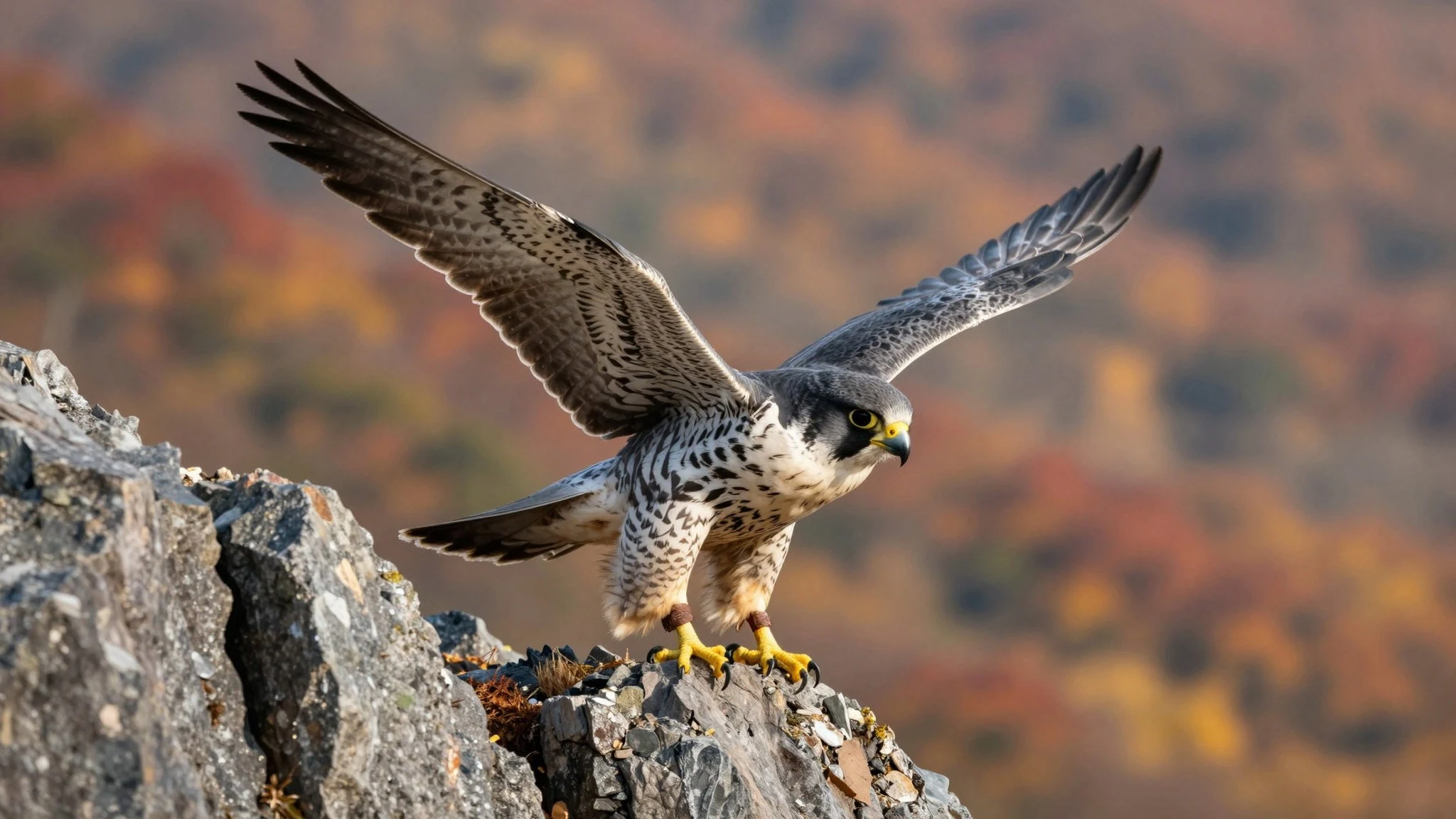
- Peregrine falcon (bird)
The peregrine falcon is a speedy hunter of other birds, about as big as a crow, with a black head and a blue-grey back; the females are noticeably bigger than the males. Look for it soaring above the forests that cover the lower slopes of Mount Ishizuchi, before the land turns to steep granite. The notes give no season or time of day, so ask your guide. Keep well back, speak softly, use binoculars, and never offer it food.