Mount Guiting-Guiting
Mount Guiting-Guiting, Philippines
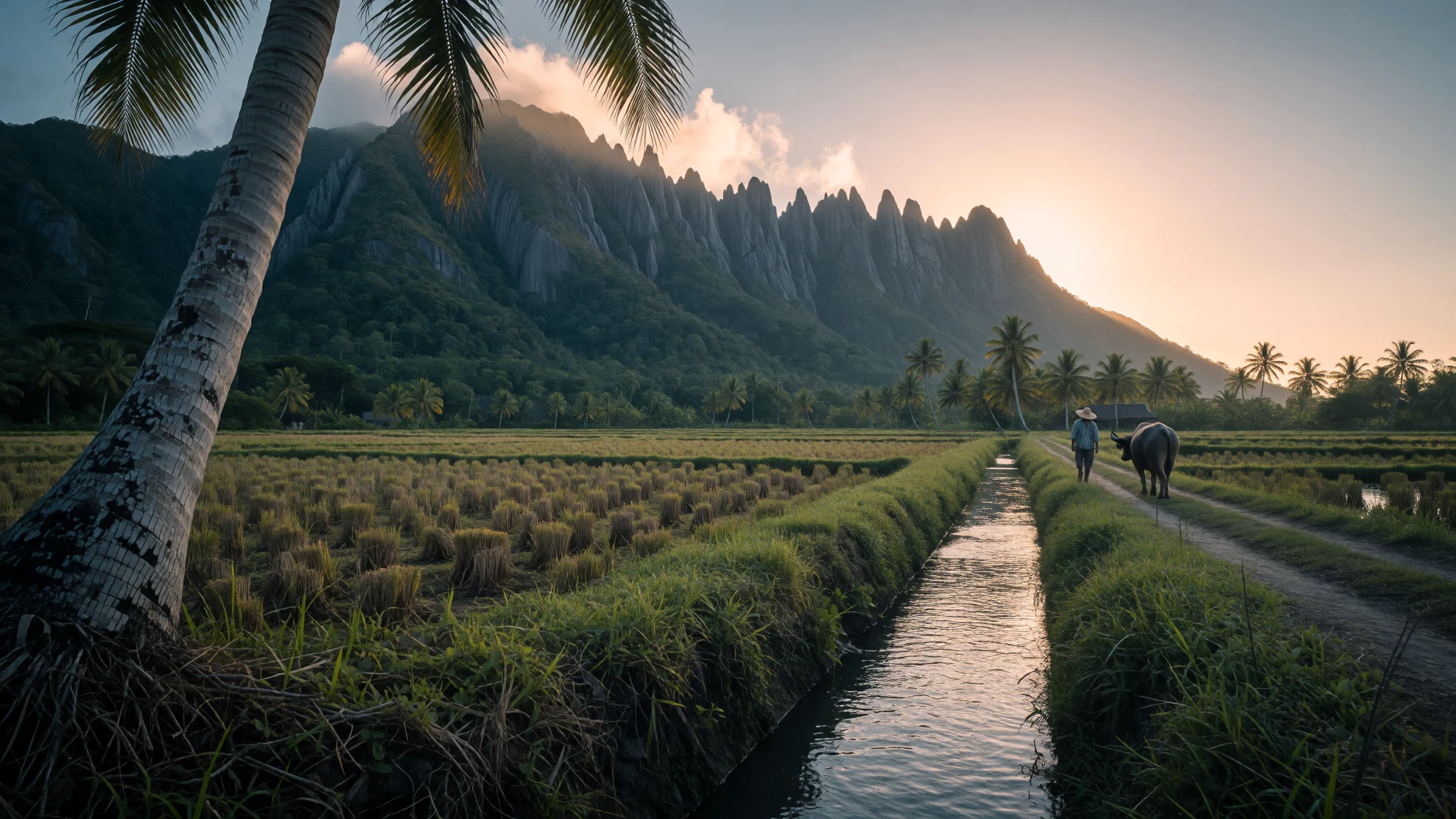
Mount Guiting-Guiting is a serrated peak on a small Philippine island, a hard trek through forest that grows nowhere else.
The place
Mount Guiting-Guiting stands in the middle of Sibuyan Island, in Romblon province in the central Philippines, and at 2,058 m it is the highest point in the province. The name is Romblomanon for "jagged", and the summit ridge, a row of grey teeth, explains it at a glance. Because the mountain sits at the island's core, it dominates the skyline from most of the coast, and the road that circles the island gives views of it from the south, near Espana, and from other sides.
Sibuyan is small and round, and the mountain takes up much of it. Climbing from the shore, the vegetation changes from lowland forest to mossy, cloud-wrapped growth, and then to bare rock and low scrub near the top. Much of the mountain and its slopes became the Mt. Guiting-Guiting Natural Park in 1996, which also covers nearby Mount Nailog to the west.
Naturalists have compared the island with the Galapagos because so many of its plants and animals are found nowhere else, and the nickname "the Galapagos of Asia" is sometimes used. It is a fair reason to come, though the mountain is not a casual outing. The route involves steep scrambling, narrow ridges and wet, slippery ground, and it is regarded as one of the more technical climbs in the country. Walkers who do not want that can still enjoy rivers, forest edges and quiet coastal villages. Phone signal and facilities thin out quickly beyond the towns.
Its story
Mount Guiting-Guiting owes its fame to a combination of difficulty and isolation. Sibuyan is an oceanic island, surrounded by deep water, so its plants and animals developed apart from those of neighbouring islands. Over a long time that produced a high share of species found only here. Scientists who studied the island drew the comparison with the Galapagos, and the comparison stuck in the press and in local pride.
That reputation is what led to formal protection. In 1996 the mountain and its slopes were declared a natural park, a step meant to safeguard the forest from clearing and from other pressures. Islanders have since shown a strong interest in keeping that forest intact, and conservation is a regular topic in local life rather than something imposed from outside.
The mountain also earned a name among Filipino climbers. Its jagged crest, exposed ridges and unreliable weather made it a goal for people who had already done easier peaks, and a successful summit became a point of pride. Climbing it has gradually become a source of work for the island, with local guides, porters and homestay hosts forming a small trekking economy around the trailheads.
The name itself is plain: guiting-guiting means jagged, and the first islanders to give it that label were simply describing what they saw each morning. The mountain has since become a symbol on the island of both its natural wealth and its need for care.
What to see
- The jagged summit ridge — Summit area, Mt. Guiting-Guiting Natural Park
The serrated crest that gave the mountain its name is the main sight, and it is best seen on a clear morning from the upper trail. The rock is steep and broken, with narrow sections where hands are as useful as feet. Cloud often covers it by midday.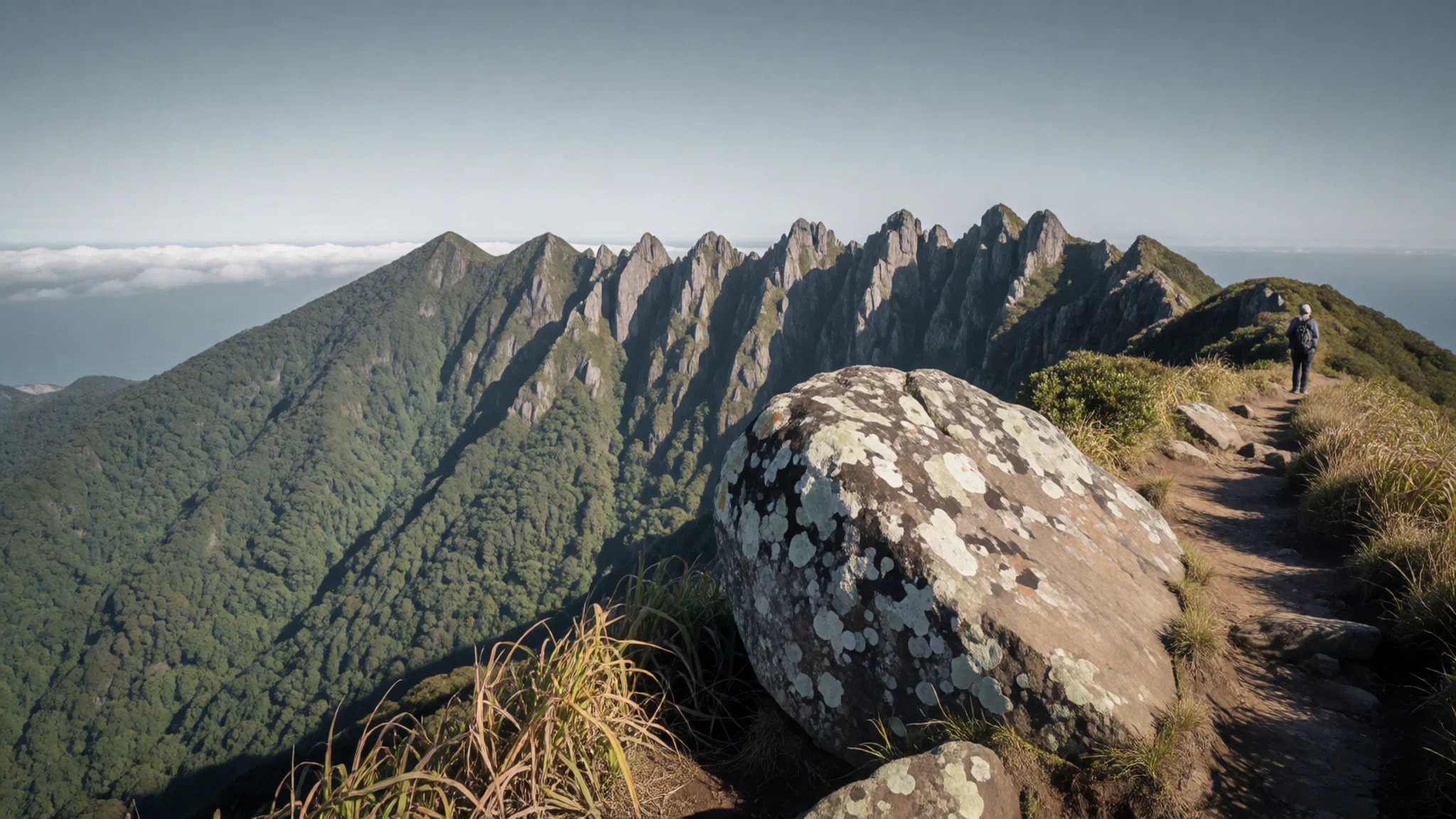
- Mayo's Peak — Upper ridge, Sibuyan Island
Mayo's Peak is a neighbouring high point linked to the main summit by a narrow ridge, and it gives the clearest view of the summit itself. Climbers treat it as a viewpoint and a place to judge the weather before the final push.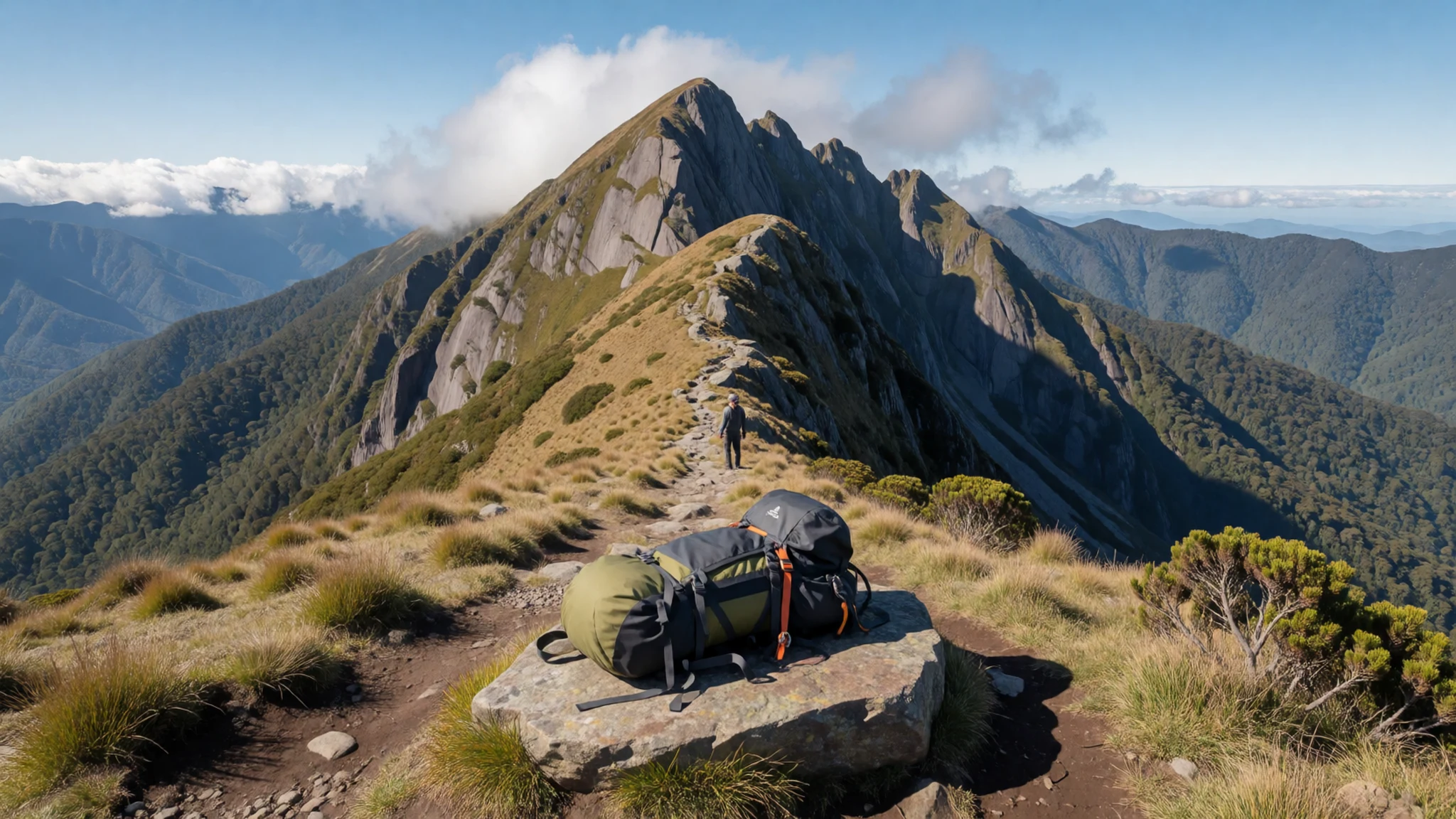
- The rocky traverse — Upper slopes, Mt. Guiting-Guiting Natural Park
Higher up, the route crosses bare rock and exposed slopes with long drops to either side. Progress is slow and calls for steady footing and a calm head. Guides know the line well, and wet rock changes how long each section takes.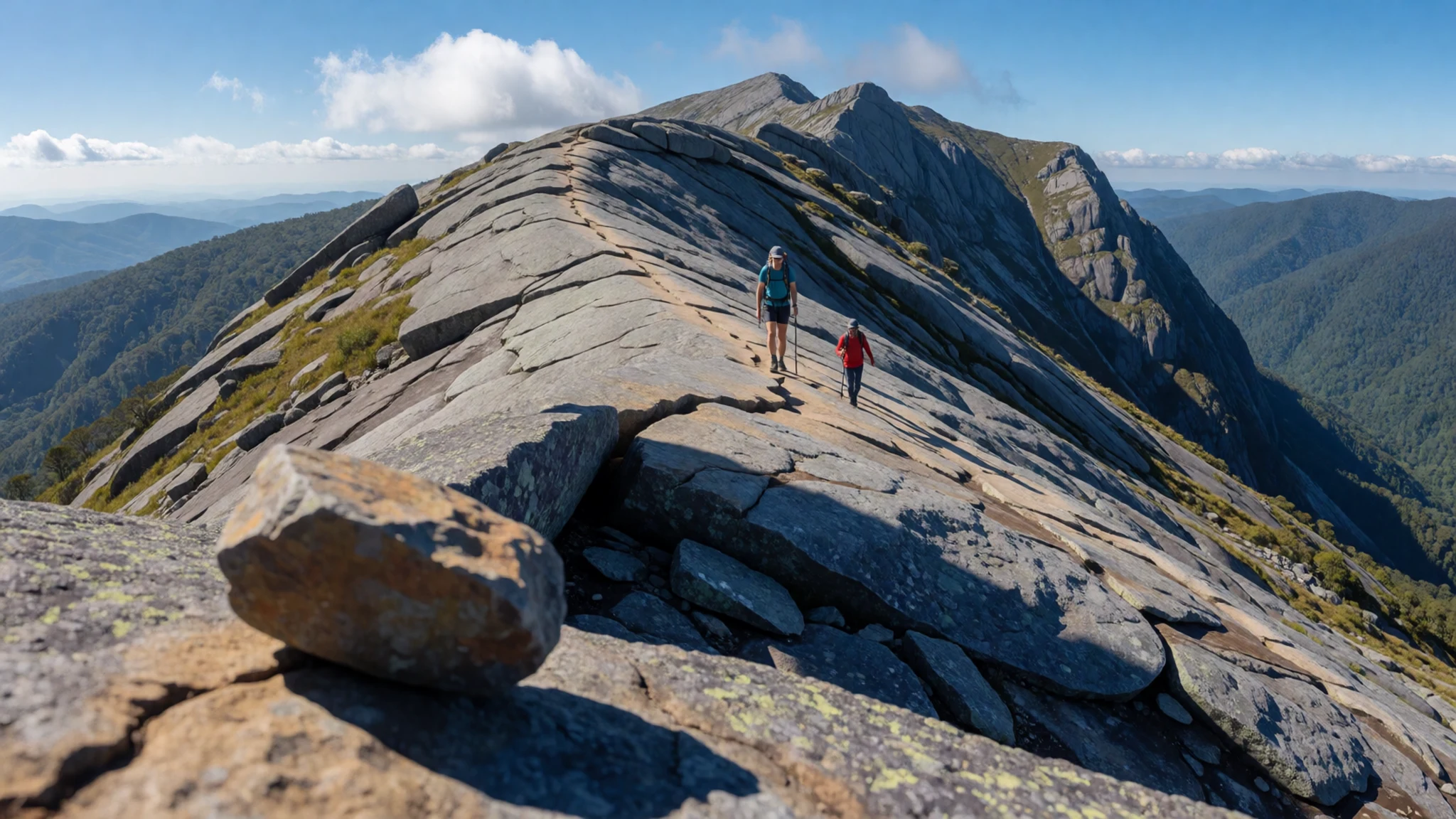
- The forested lower slopes — Lower slopes, Sibuyan Island
The lower mountain is covered by dense old forest, the part that interests naturalists most. The walk through it is humid, shaded and muddy, with plenty of birdsong. It is worth going slowly, since many of the plants and animals here live only on this island.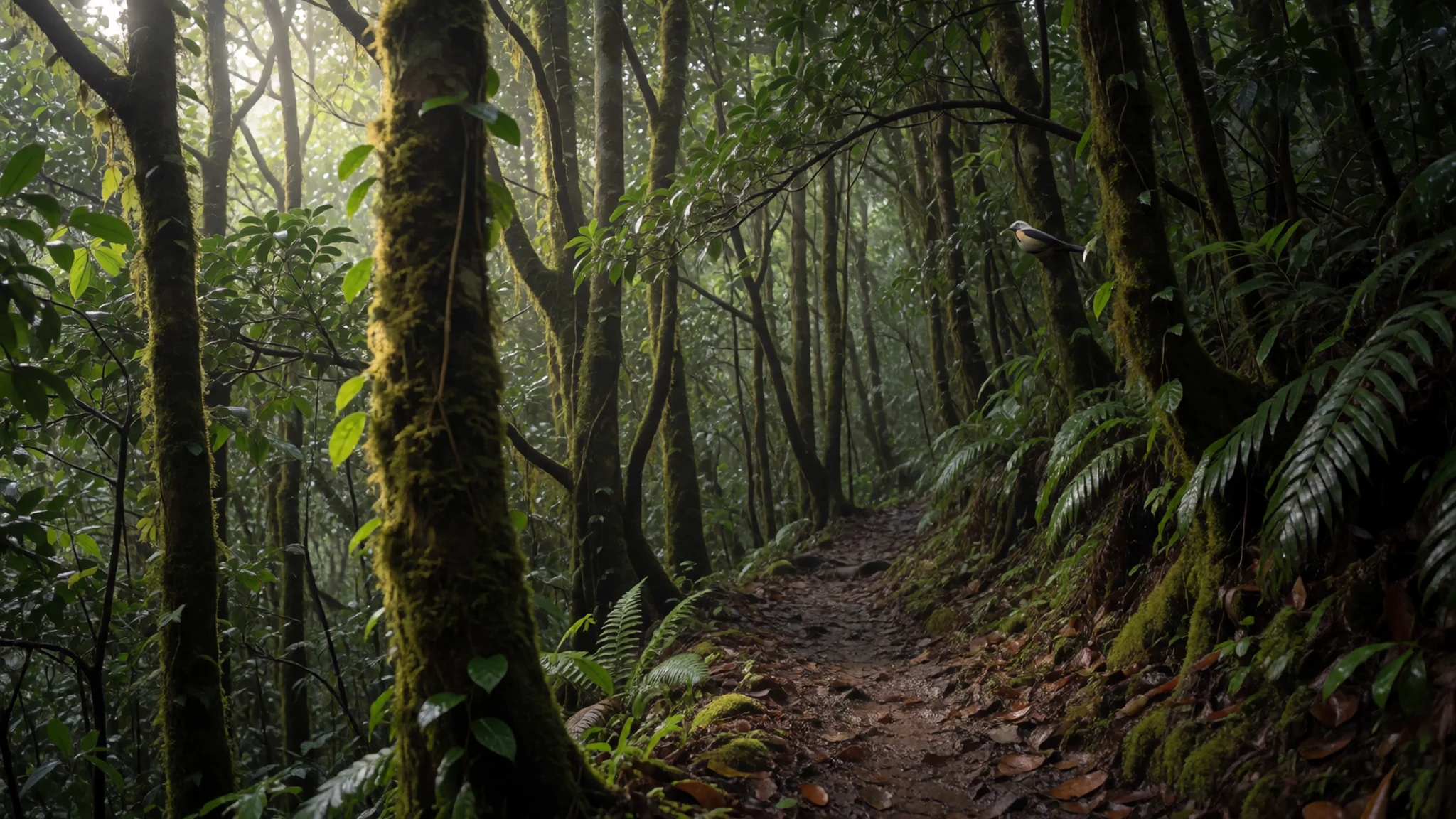
- The view from the south — Espana, south Sibuyan
From the south coast near Espana, the whole mountain shows as one dark massif with a notched top, rising behind rice fields and coconut palms. Anyone not climbing can still take it in from the road, ideally in the early light before cloud gathers.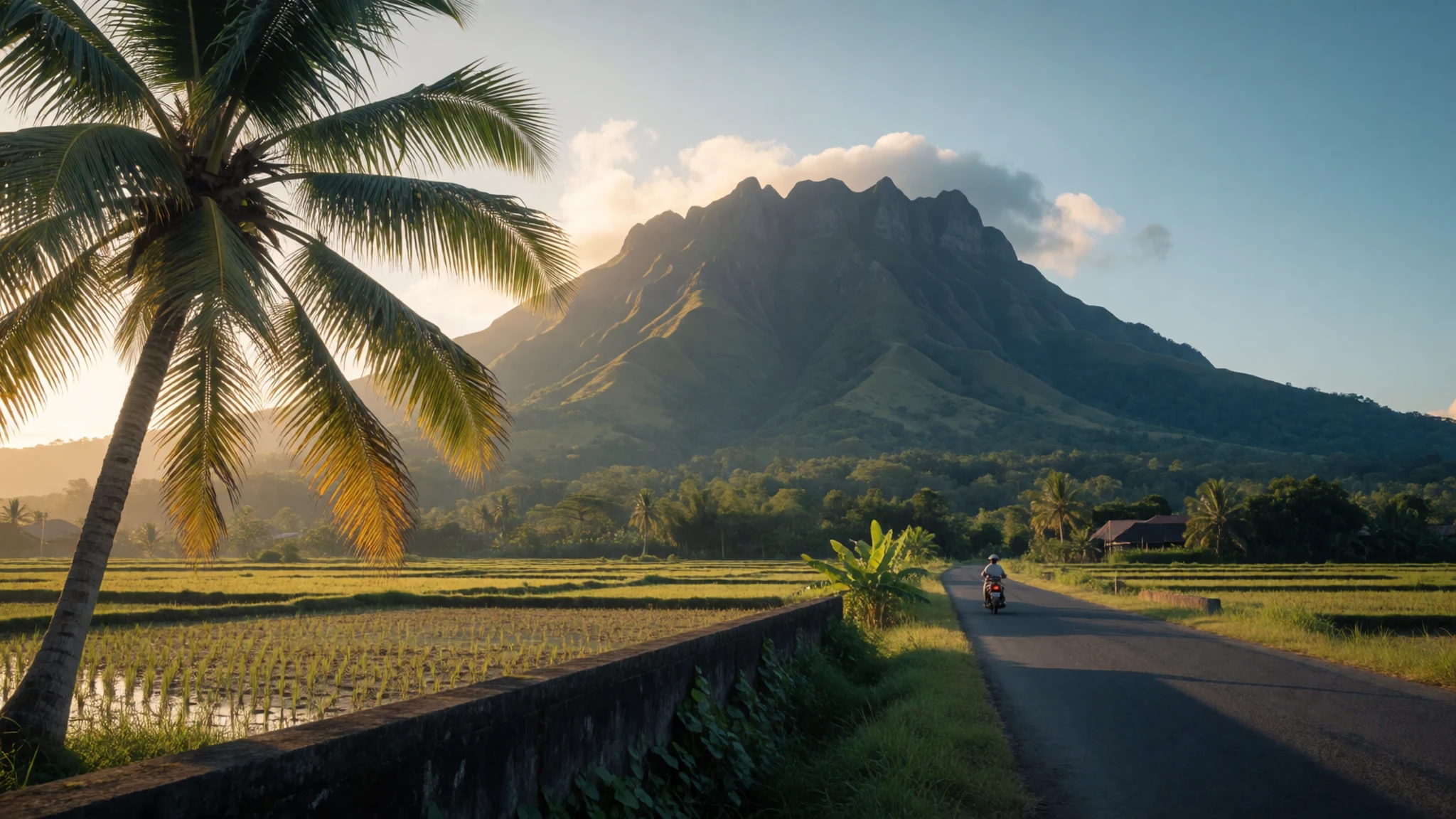
Culture
Mount Guiting-Guiting belongs to a small island where daily life is quiet, Catholic and close-knit. Most people speak Romblomanon at home, with Filipino and some English for visitors, and fishing, farming and coconut work shape the week. Town fiestas, usually built around a patron saint, bring processions, music and shared meals, and visitors who happen to be on the island at that time are generally welcomed as guests.
The mountain matters to islanders in practical and emotional terms. It supplies water to the villages below, it shapes the weather, and it is the island's best-known landmark. Locals tend to speak of the forest with pride and with some protectiveness, and conservation is discussed openly. Guiding is a local trade, and hiring a local guide is both a requirement of the park and a direct way to support the community.
Hospitality is warm but modest. Meals are often shared, and a refusal is politely explained rather than brushed aside. Greetings such as "po" and "opo" show respect to elders, and a smile goes a long way in places where few outsiders pass through. Rubbish is a real concern on an island with limited collection, so carrying litter back to town is expected.
Register with the park office before any climb, follow your guide's instructions on the trail, and carry out everything you carry in.
What to wear
Mount Guiting-Guiting has no single signature costume that the brief documents, so the traditional picture here is the national one. For fiestas, weddings and formal events, Filipinos wear the barong tagalog, a lightweight embroidered shirt often made of fine pineapple-leaf or silk-like fibre, and women wear the baro't saya or the terno, a dress with distinctive raised sleeves. These are worn on special occasions rather than daily, and they appear most often in town on feast days.
Everyday dress on Sibuyan is practical and tropical. People wear T-shirts, shorts or light trousers, rubber sandals and caps, and farmers and fishers favour long sleeves for sun. Swimwear stays on the beach, and in the town centres and churches people dress more neatly.
For visitors, the mountain sets the terms. Wear quick-drying layers, long trousers for scrub and rock, and a long-sleeved top against sun and scratches. Trail shoes with real grip matter more than anything else, since the rock and mud are slippery. Gloves help on scrambles, and a waterproof shell is essential in any season. A warm layer is useful near the summit, where cloud and wind cool the air. Leeches are possible in damp forest, so some people wear gaiters or tuck trousers into socks. In villages and churches, cover shoulders and knees, and keep beachwear for the shore.
What to eat
- Kinilaw — Seaside eateries near the fishing landings
Kinilaw is raw fresh fish cured in vinegar or citrus with onion, ginger and chilli. On an island like this the fish is landed that day, and the dish is sharp, clean and cold. Ask for it at seaside eateries near the fishing landings.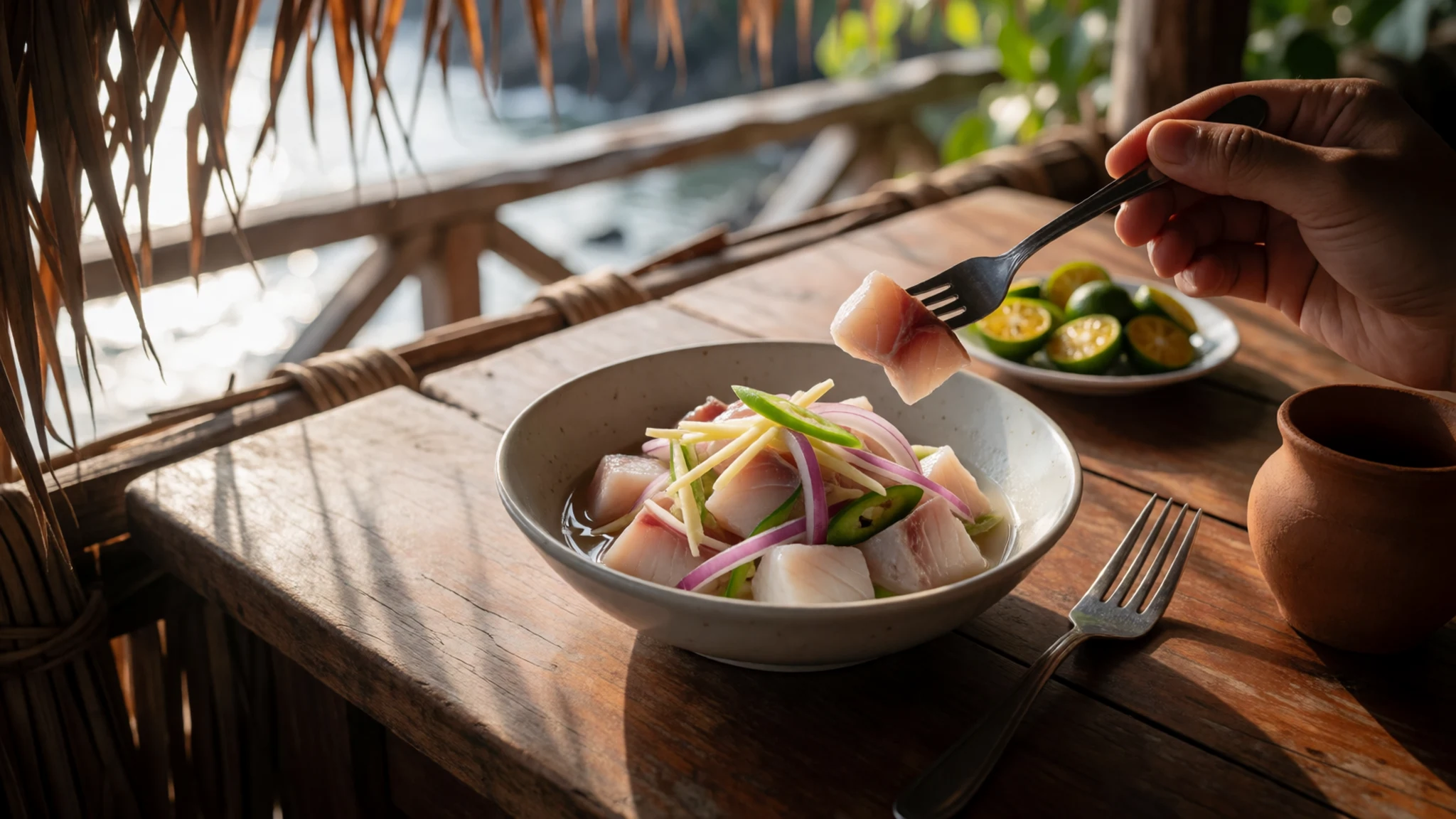
- Inihaw na isda — Roadside grills and market stalls in the island towns
Grilled fish, often served whole with rice and a dipping sauce of soy, vinegar and chilli. The skin is charred and the flesh stays moist. It is a simple meal and a good one after a long descent from the mountain.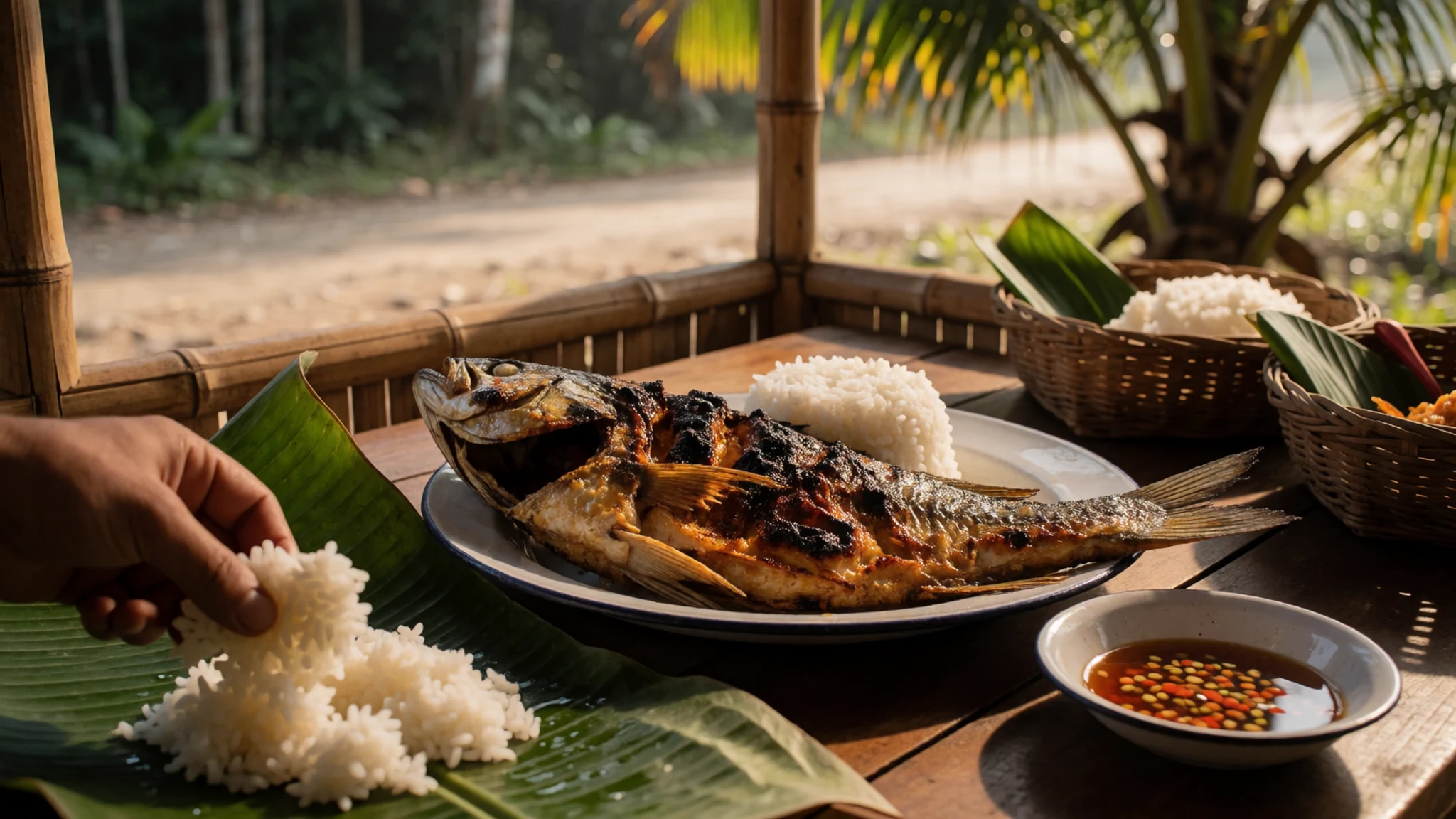
- Adobo — Home-style carinderia eateries in the towns
Adobo is chicken or pork simmered in vinegar, soy sauce, garlic and pepper until the sauce reduces. Every household has its own version, so tasting a few is part of the pleasure. It keeps well, which is why trekkers sometimes carry it. - Ginataang gulay — Market eateries and homestay kitchens
Vegetables such as squash and beans simmered in coconut milk, often with a little dried or fresh fish. It is mild, rich and filling, and the coconut comes from the island's own palms. A comforting dish after wet weather. - Sinigang — Local eateries and family-run kitchens in the island towns
A sour soup of fish or pork flavoured with tamarind or another souring fruit, with vegetables. It is hot, tangy and restorative, and suits cool wet evenings. Order it with plenty of rice.
Plan it
Best time. March and April are generally the drier and more settled window for the climb, though you should check with the park office for current conditions. Mid-year to late-year brings heavier rain and typhoon risk, which makes the rock slippery and can close the trail.
How long. 3–4
Getting there. Fly or take a ferry to the central Philippines via Manila. Roll-on roll-off ferries and small-boat connections serve Sibuyan from nearby ports, with routes that change by season, so check current schedules. The last leg is by road to the trailhead town, usually by tricycle or arranged transfer.
Budget. mid
Tips
- Register with the park office and hire a local guide; check the official park office for current rules and requirements.
- Start walking early, since cloud and rain usually build in the afternoon.
- Carry cash, because cards and cash machines are scarce outside the towns.
- Bring plenty of water and a way to purify more, as sources on the trail are limited.
- Pack for wet weather in every season, with a waterproof shell and a dry bag.
Etiquette
- Follow your guide's instructions, especially on exposed ridges.
- Carry all rubbish back down with you.
- Dress modestly in towns and churches.
Nearby
Sources
- Wikidata Q389889 (CC0)
- Wikipedia — Mount Guiting-Guiting (rev 1369567425) (CC BY-SA 4.0)
- Androkoy — Guiting-guiting 1, via Wikimedia Commons (CC BY-SA 4.0)
- Androkoy — Guiting-guiting 3, via Wikimedia Commons (CC BY-SA 4.0)
- PM Imperial — Up to the summit of Mt. Guiting-Guiting 2, via Wikimedia Commons (CC BY-SA 4.0)
- Androkoy — Guiting-guiting 2, via Wikimedia Commons (CC BY-SA 4.0)
- Androkoy — Guiting-guiting 4, via Wikimedia Commons (CC BY-SA 4.0)
- Androkoy — Guiting-guiting 5, via Wikimedia Commons (CC BY-SA 4.0)
- Petros Mabasa — LV IMG 1588426936316, via Wikimedia Commons (CC BY-SA 4.0)
- Ray Santa Maria — Mount Guiting Guiting 3, via Wikimedia Commons (CC BY-SA 4.0)
- Wikivoyage (CC BY-SA 4.0)


