Mount Gongga
Mount Gongga, People's Republic of China
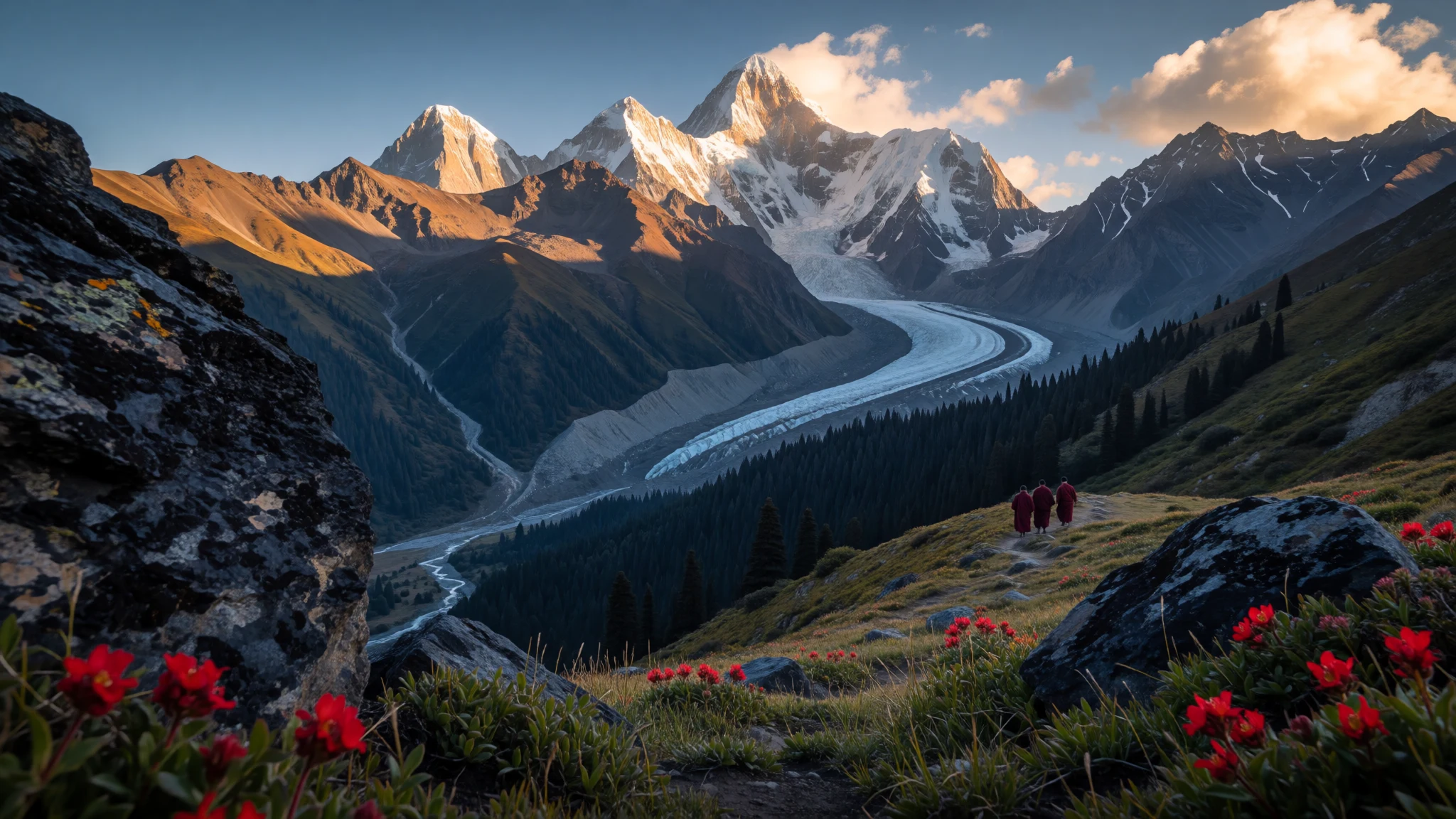
Mount Gongga is Sichuan's highest peak, a glacier-carved giant on the Tibetan Plateau's edge, with sacred valleys, monasteries and grassland roads below it.
The place
Mount Gongga, also called Minya Konka and written 贡嘎山 (Gònggā Shān) in Chinese, stands in western Sichuan at the eastern edge of the Tibetan Plateau. The facts list it at 7,556 m, which makes it the highest point in the province. It belongs to the Daxue Shan range, wedged between the Dadu and Yalong rivers, and forms part of the wider Hengduan mountain region. Its reputation rests as much on isolation as on height: Wikipedia describes it as the easternmost and most remote peak above seven thousand metres anywhere. On the eastern side the ground falls about 6,400 m to the Dadu River valley, over a horizontal distance of only 29 km, so the mountain seems to loom unnaturally from below. The rock is granodiorite, sculpted by ice. Five glaciers flow from it: Yanzigou, Hailuogou, Mozigou, Gongba and Bawang. Hailuogou is the longest, at 14.2 km, and it ends low, at about 2,850 m, which is why forest, hot-spring valleys and ice sit so close together here. Glacial erosion has cut four narrow ridges into the main peak, with slopes reaching about 70°. For most visitors the mountain is something to look at rather than climb, seen from valley floors, lakes and viewpoints, while the summit itself is left to experienced mountaineers. Cloud often hides it, and clear early mornings are the reward for patience. Kangding is the usual gateway town, and the surrounding country is a meeting point of Tibetan, Han and Yi communities.
Its story
Mount Gongga carries a name that explains how people have seen it. The name Gongga translates to white snow mountain in Tibetan, whereas Mi'nyag (or Minya) refers to the surrounding cultural area inhabited by the Mi'nyag Tibetans. Local people regard the peak and the Gongba valley beside it as sacred, and that belief has shaped how the place is approached for centuries. The Old Gongga Monastery, a medieval foundation west of the mountain, still serves as the usual starting point for mountaineers. Outsiders came much later. The best-known early account of the mountain in Western literature is Eduard Imhof's book about his 1930 expedition, published in German as Die Grossen Kalten Berge von Szetshuan, a title that translates roughly as the great cold mountains of Sichuan. His photographs and maps helped introduce the peak to a wider audience. Its height has also been a matter of debate. The 1972 Chinese national primary topographic map gave the figure of 7,556 m, which is still the number most often quoted and the one in the facts for this reading. A more recent official survey produced a somewhat lower result, so reference books may disagree. Whichever figure is used, the mountain's drama comes from the steep drop to the Dadu valley and from the glaciers that spill into forested gorges, which gave early travellers an unusual contrast between ice and green within a single view.
What to see
- Hailuogou Glacier — Eastern flank of Mount Gongga, near Moxi
Hailuogou is the longest of the mountain's five glaciers and ends well below the snowline, so ice meets forest in one walk. It is the easiest way to feel Gongga's scale. Go early, because afternoon cloud often closes the view, and expect crowds in summer holidays.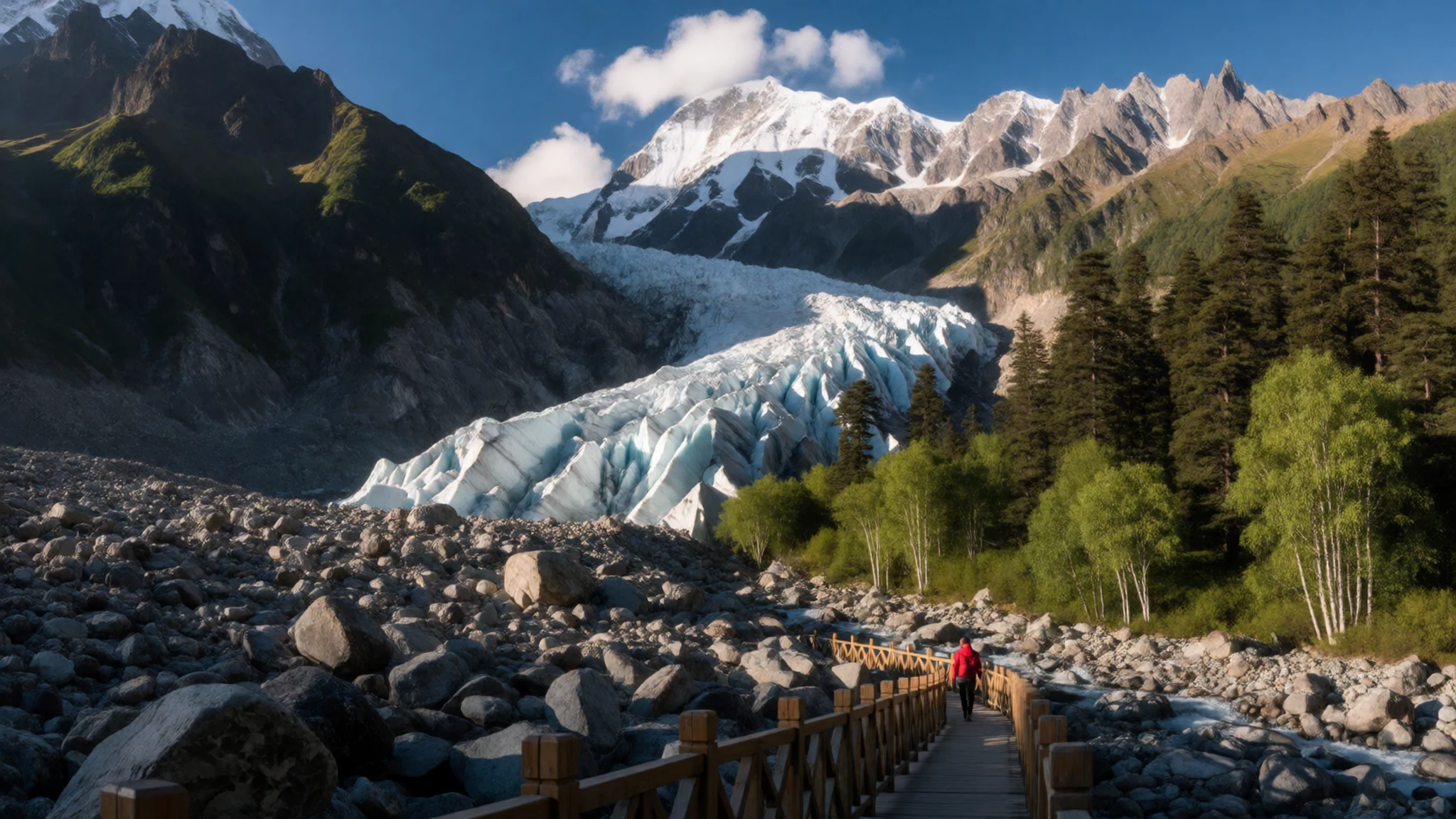
- Gongba valley and Old Gongga Monastery — Western side of Mount Gongga
The west side is quieter and more Tibetan in feel. The Old Gongga Monastery sits in the Gongba valley, which local people consider sacred, and mountaineers traditionally use it as a base. Visit with a local guide, treat it as a living place of worship, and check access before travelling.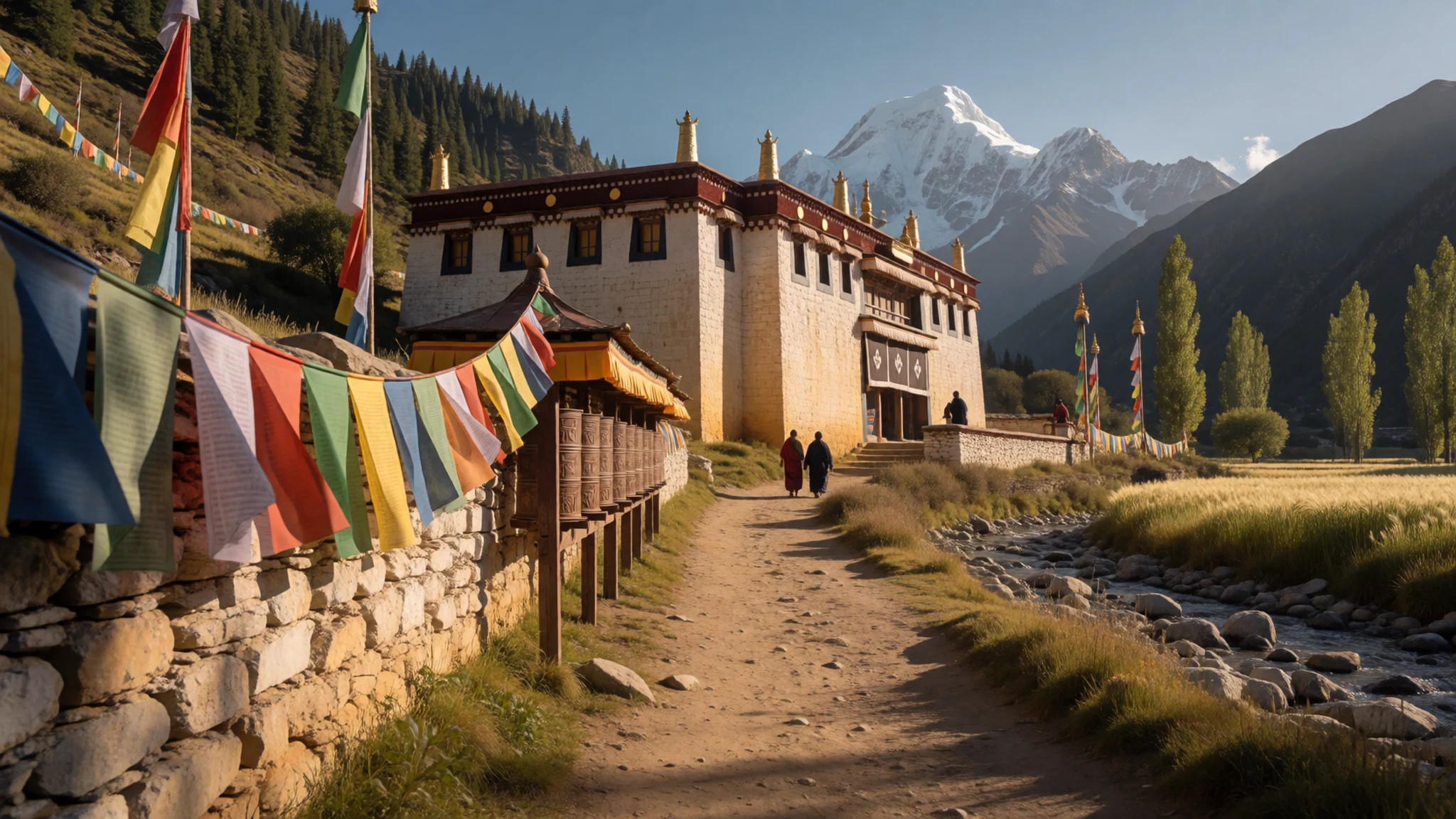
- Mugecuo lake area — North of Kangding, Ganzi prefecture
Wikivoyage lists the Mugecuo lake area among the region's sights. It is a high, calm landscape of water, meadow and mountain backdrops, a gentler alternative to glacier walking. Because it sits at altitude, allow a day or two in Kangding first to adjust, and carry warm layers.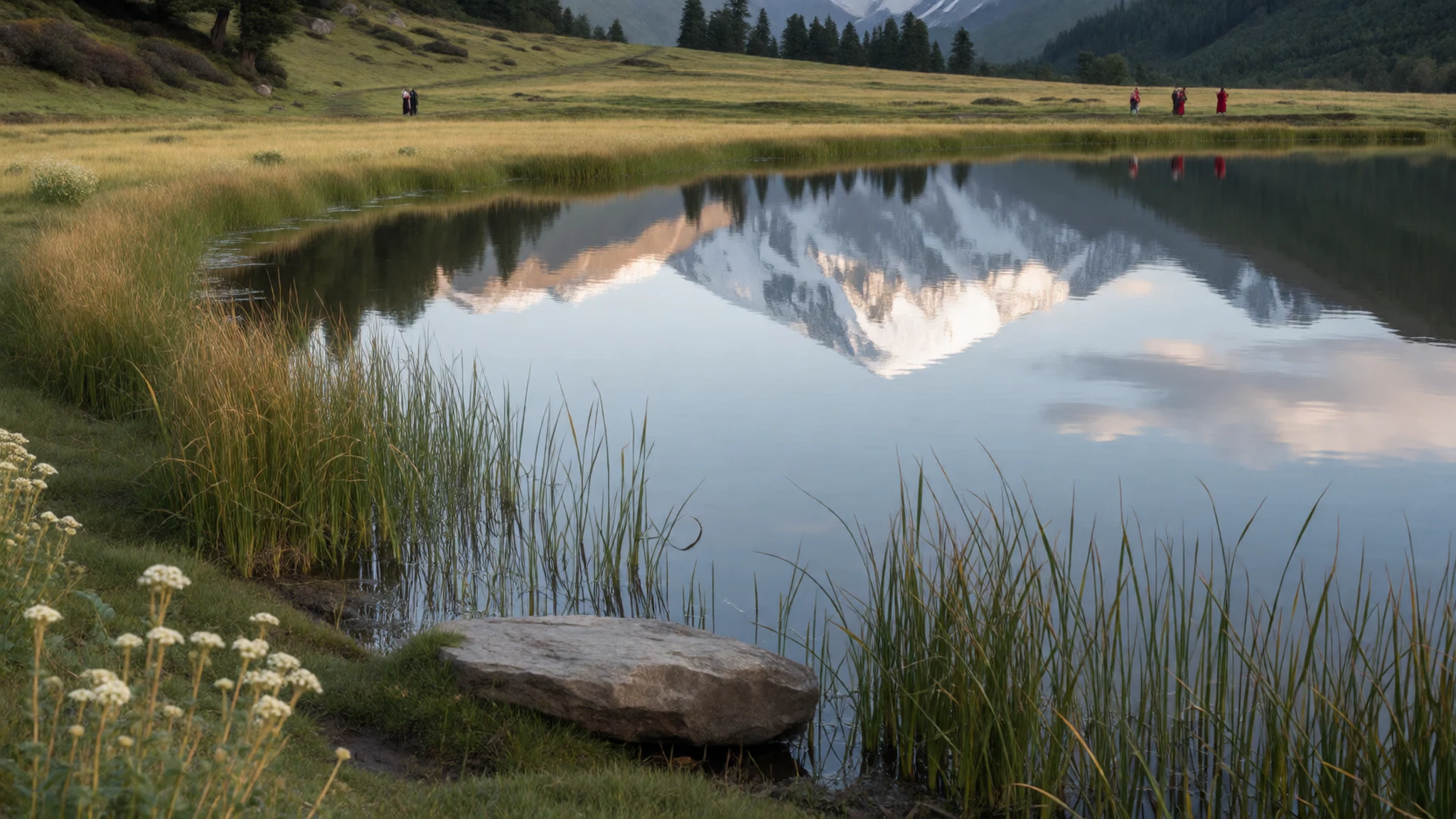
- Yading Nature Reserve — Southwest Sichuan, Daocheng area
Yading is known for three Tibetan holy mountains, and it is a long journey from Gongga, so it suits a longer trip through Ganzi. Treat it as a separate destination, not a day trip. Roads, permits and conditions change, so check locally before planning.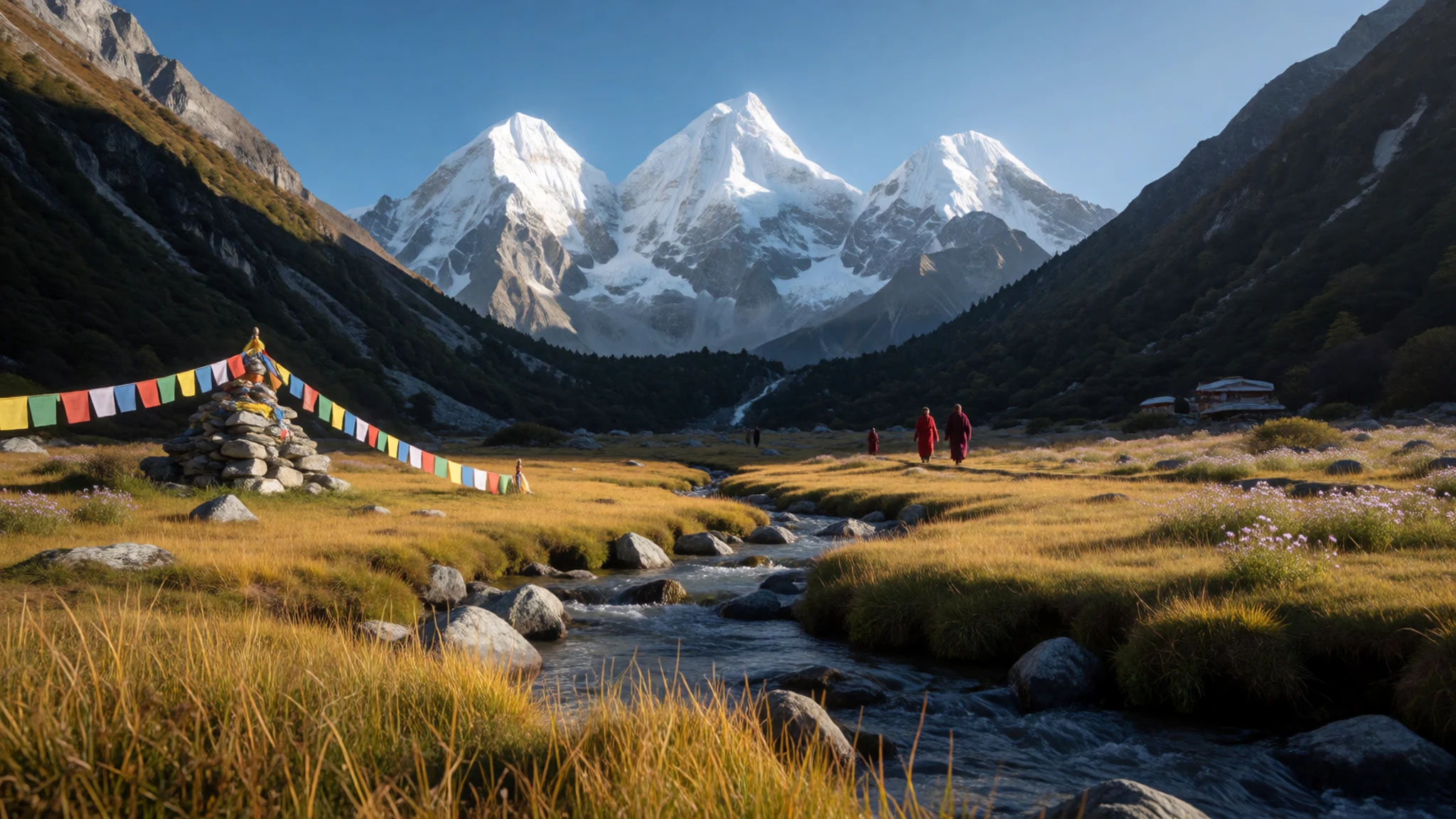
- Litang Horse Festival — Grassland outside Litang, Ganzi prefecture
Every August a horse festival takes place on the prairie outside Litang, with other Tibetan summer festivals scattered across the region. It is a lively way to see local culture beyond the mountains. Dates vary, so ask in Kangding or Tagong, and book beds well in advance.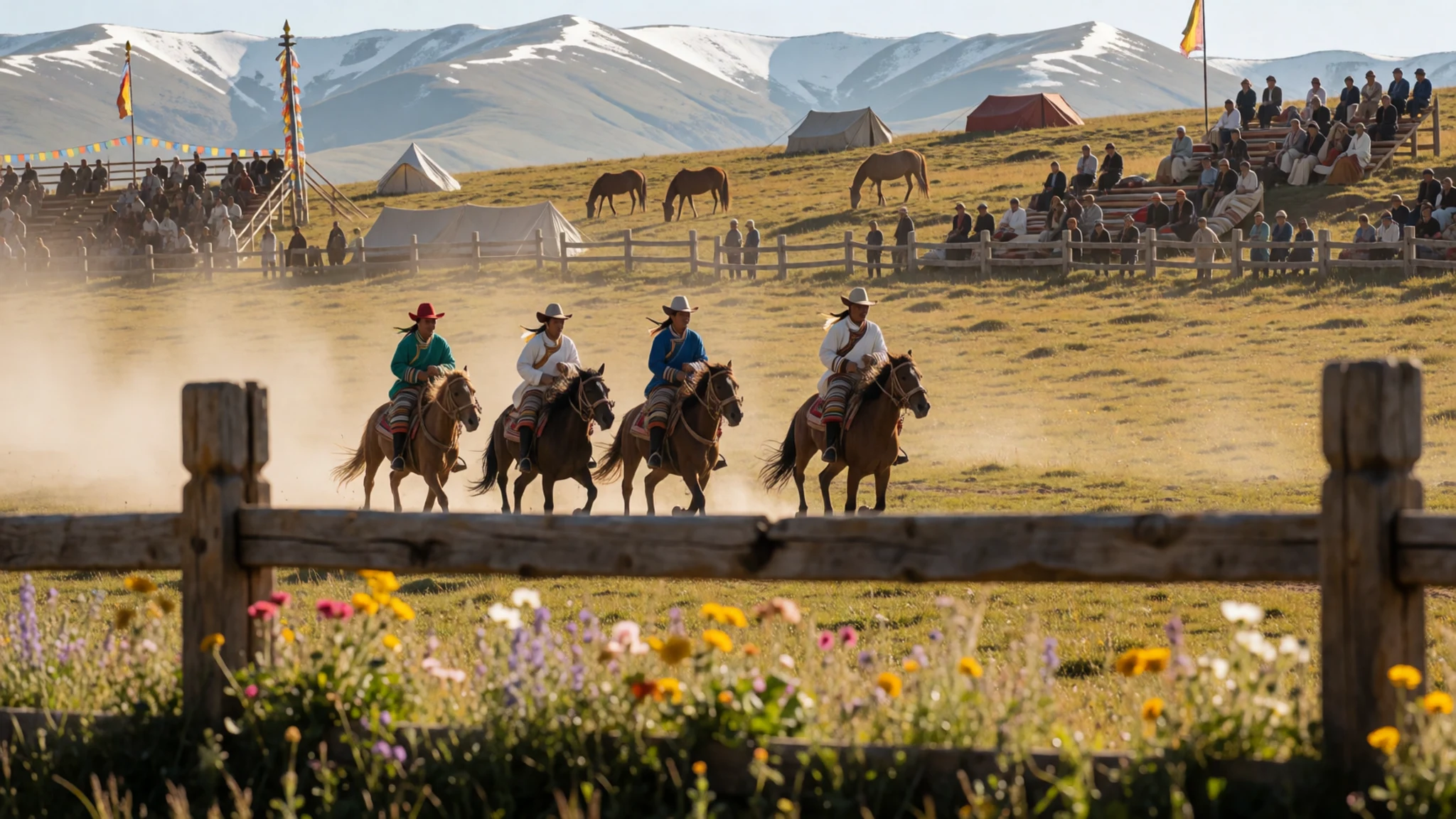
Culture
Mount Gongga sits on an old cultural boundary. To its east live Han and Yi communities, and to its west the Mi'nyag Tibetans, who speak the Mi'nyag or Muya language and give the mountain half of its name. The peak and the Gongba valley are considered sacred, and that colours daily life: prayer flags, stone cairns and mani walls (carved prayer stones) mark passes and village edges, and pilgrims treat certain landscapes as holy in themselves. Buddhism shapes much of the western side, and most larger towns in the Ganzi region have a monastery, often called a gompa, where visitors may be welcome outside ceremonies. The Old Gongga Monastery, founded in medieval times, is the best-known near the mountain and doubles as a mountaineers' base camp. Towns in the region mix Chinese and Tibetan businesses, while Tibetan families dominate the countryside, so the experience changes noticeably as you leave the roadside towns for the grasslands. Politics is a sensitive subject. Local people can be put at risk by open talk of Tibetan independence, so it is kinder to leave the topic alone and ask about food, horses and festivals instead. Walk clockwise around prayer walls, stupas and monasteries, and ask permission before photographing monks, pilgrims or anyone at prayer.
What to wear
Mount Gongga country has a strong Tibetan dress tradition, and the Mi'nyag communities on its west side wear versions of it. The classic garment is the chuba, a long, wrap-over robe, often made of heavy wool and sometimes lined or trimmed with sheepskin, tied at the waist with a sash. Women may wear a striped apron with it, and festival days bring out silver, coral, turquoise and amber jewellery, with braided hair and bright silk trim. Families usually wear this dress for weddings, religious festivals and horse festivals such as the one near Litang each August. Day to day, most people dress much as they do elsewhere in China: fleece, down jackets, jeans, trainers and caps, with the chuba reserved for occasions or worn by older residents. Visitors should dress for the altitude and the weather first. Cold and rain can arrive quickly even in summer, so layers, a windproof shell, a hat and gloves are sensible. Sturdy, broken-in walking boots suit glacier paths and rough tracks. At monasteries, cover shoulders and knees, avoid hats inside prayer halls, and wear shoes that slip off easily. Good sun protection matters too, since the light at height is strong. A warm layer helps on long bus rides, because heating can be uneven.
What to eat
- Butter tea (po cha) — Tibetan homes, monasteries and rural teahouses
Butter tea is a salty tea churned with yak butter, served all day in Tibetan households. It is warming at altitude, though the taste surprises many newcomers. Sip slowly, and expect your cup to be topped up unless you leave it full.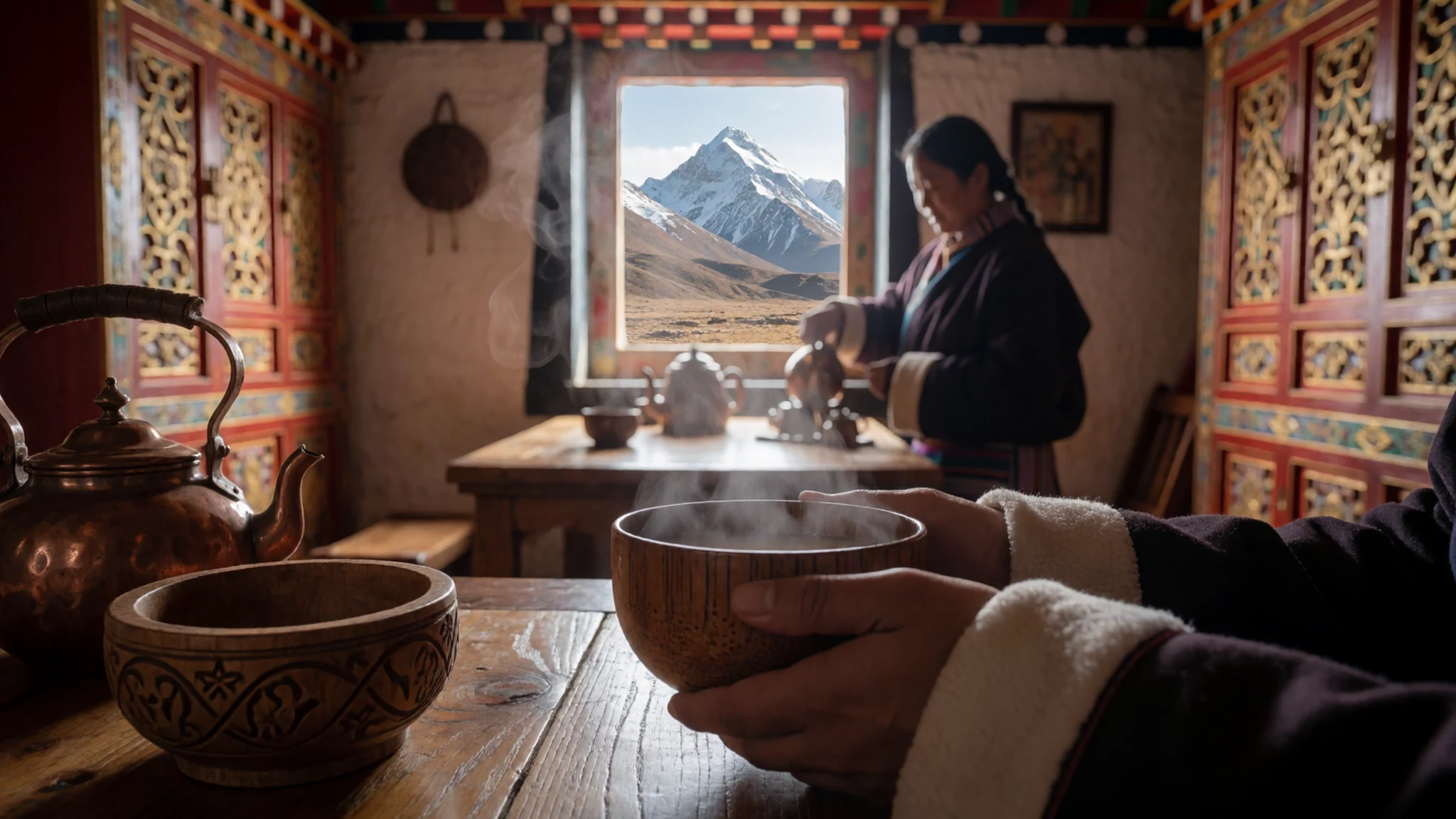
- Tsampa — Tibetan villages and homes in the grasslands
Tsampa is roasted barley flour, usually mixed with butter tea into a doughy ball or eaten as porridge. It is plain, filling, and a staple of Tibetan travel and daily life. Ask a host to show you how it is kneaded by hand.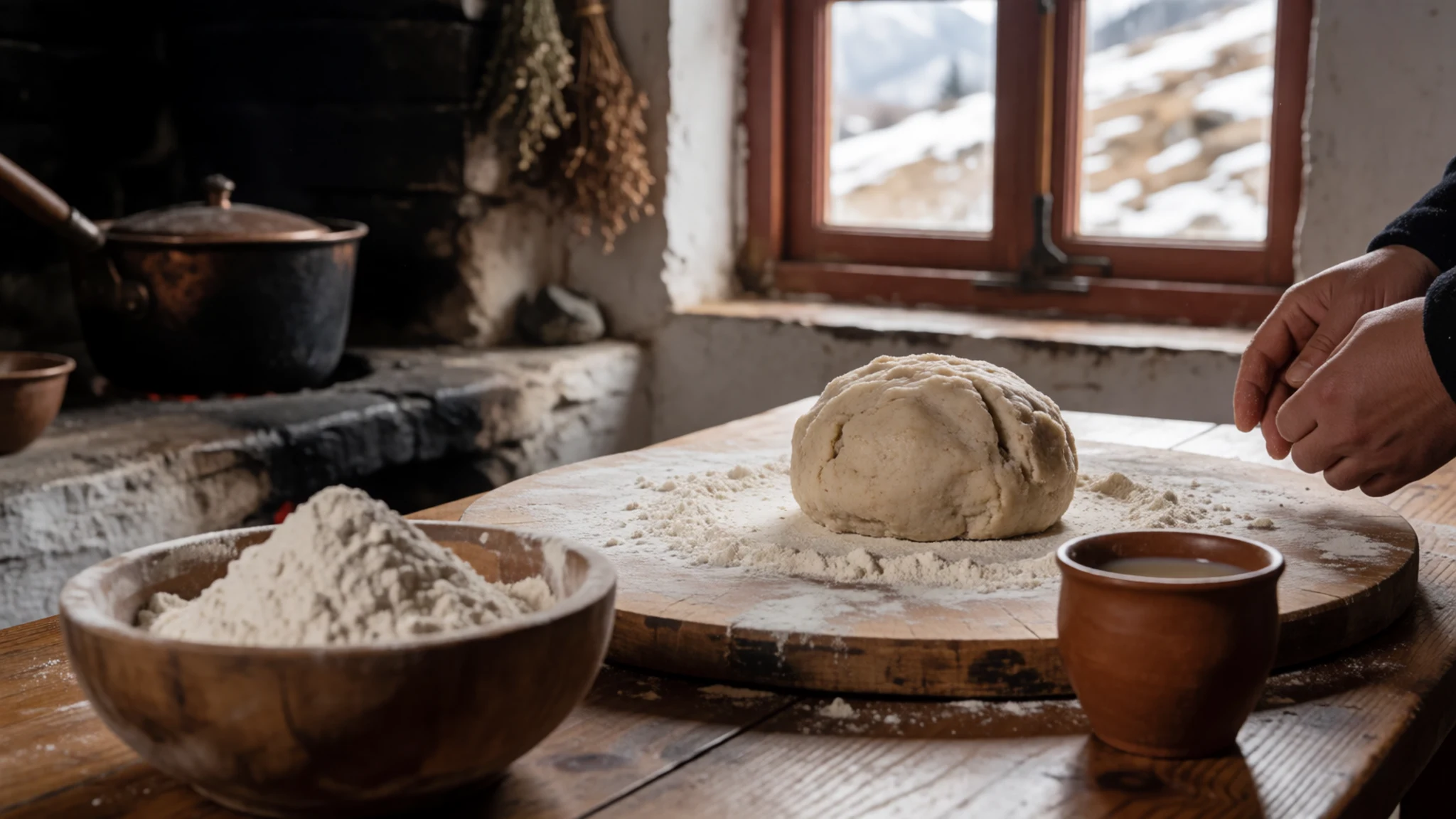
- Tibetan barley wine (chang) — Rural Tibetan households and village gatherings
Barley wine is a mild, slightly sour home brew from the region. Try it if you are offered some, but not while you are still adjusting to altitude, because alcohol hits harder and worsens symptoms. - Momo — Tibetan eateries in Kangding and larger Ganzi towns
Momo are Tibetan dumplings, steamed or fried, usually filled with yak or beef, or with vegetables. They are a dependable, inexpensive meal after a cold day outside, often served with a spicy chilli dip. - Sichuan dishes such as mapo tofu and hotpot — Chinese-run restaurants and eateries in Kangding and other towns
Chinese businesses dominate the towns, so Sichuan food is easy to find, including mapo tofu, stir-fries and hotpot. Order with care if you dislike numbing Sichuan pepper, and say clearly if you want less chilli.
Plan it
Best time. April–May and October–November are usually the better windows for clearer mountain views, though weather at altitude changes fast. August suits the Litang horse festival, but the mountain is often hidden by summer cloud. Winters are cold, so check road conditions before travelling.
How long. 3–5
Getting there. Fly to Chengdu, then take a bus to Kangding, the main hub, with Ganzi (Garze) the other large one. There is also an airport serving Kangding, roughly halfway between Kangding and Tagong. The last leg to the glacier or valleys is by local transport or a hired car with a driver, so confirm routes locally.
Budget. mid
Tips
- Spend a night or two in Kangding before going higher, since altitude sickness is a real risk
- Check whether any foreigner travel restriction is in force for Ganzi before you book
- Ask at hostels in Kangding or Tagong about guides, treks and mountaineering options
- Start glacier and viewpoint visits early, because cloud tends to build later in the day
- Carry some cash and warm layers, as services thin out quickly beyond the towns
Etiquette
- Do not raise Tibetan independence in conversation, as local people may face consequences
- Ask before photographing monks, pilgrims or people at prayer
- Walk clockwise around stupas, mani walls and monasteries
Nearby
Sources
- Wikidata Q1537157 (CC0)
- Wikipedia: Mount Gongga (rev 1369567084) (CC BY-SA 4.0)
- Wikivoyage: Ganzi (prefecture) (rev 5187749) (CC BY-SA 4.0)
- Minya Konka Northwest Ridge — Kogo (CC BY 3.0)
- peak of Gongga,SiChuan,China — xin.tang (CC BY-SA 4.0)
- Hailuogou Glacier and the Gongga Mountain — Oded Gilad (CC BY-SA 4.0)
- Graf Béla Széchenyi von Sárvár-Felsővidék — Ede Ellinger (Public domain)
- Title page, Im fernen Osten — Gustav Kreitner (Public domain)
- Die Grossen Kalten Berge von Szetshuan cover — LOwens (CC BY-SA 4.0)
- Minya Konka from the west — LOwens (CC BY-SA 4.0)
- 金色贡嘎 - Golden Mountains — rheins (CC BY 3.0)


