Mount Elbrus
Mount Elbrus, Russia
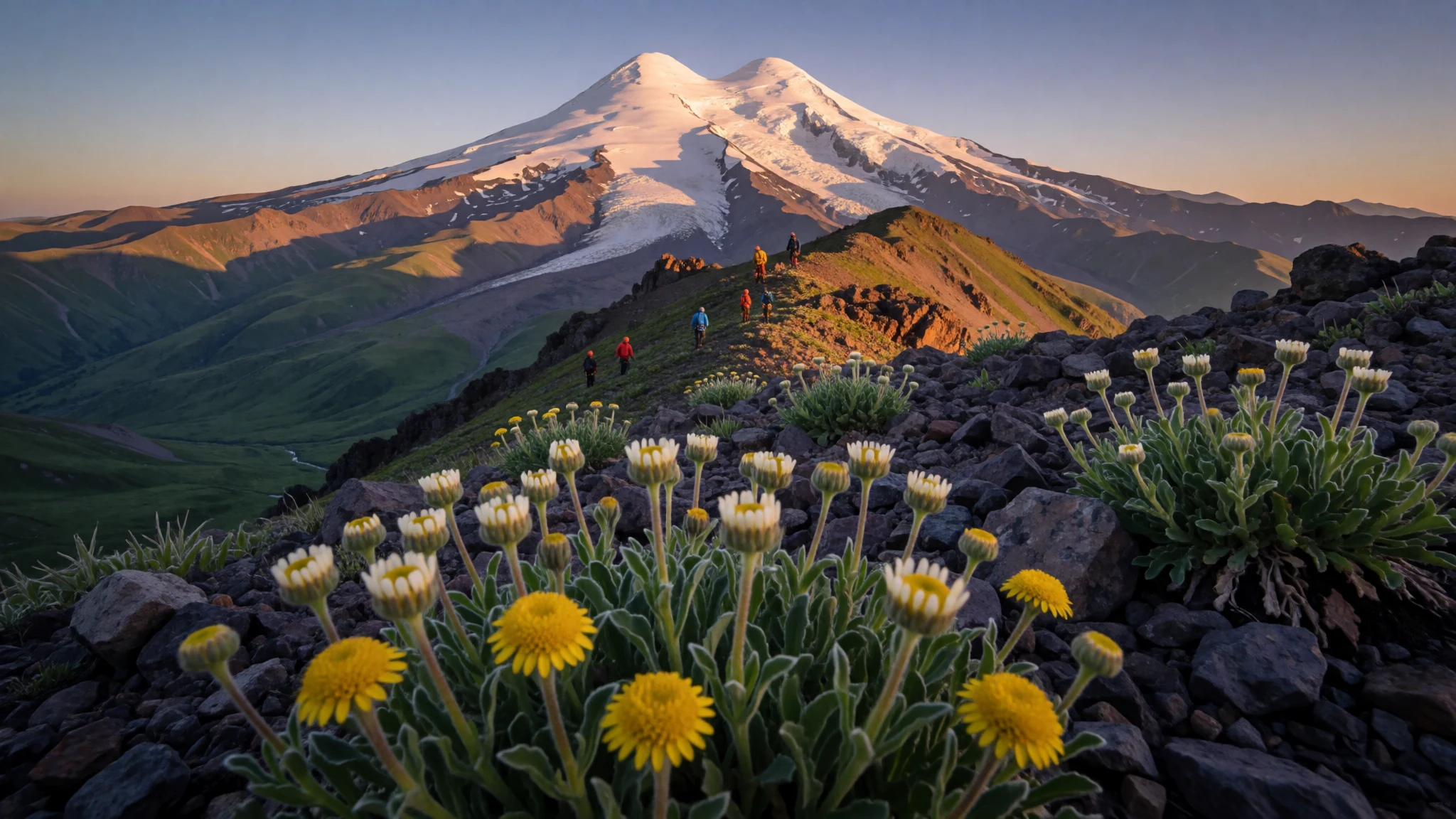
Conquer the highest point in Europe on this dormant volcanic giant in the heart of the Caucasus Mountains.
The place
Mount Elbrus is a dormant stratovolcano located in the Kabardino-Balkaria republic of southern Russia. As the highest peak in both Russia and Europe, it reaches an elevation of 5,642 m, making it a primary goal for those seeking to complete the Seven Summits. The mountain is characterised by its distinct double-coned shape, with two separate summits separated by a high pass. It sits in the western reaches of Ciscaucasia, roughly 100 kilometres from the Black Sea, though on a perfectly clear day, the Caspian Sea can be spotted in the distance.
While the peak is technically accessible for many climbers, the environment is unforgiving. The weather is notoriously volatile, with sudden storms and plummeting temperatures common regardless of the season. Most visitors approach from the Baksan Valley, where a series of cable cars help bridge the gap between the valley floor and the high-altitude camps. Because the mountain is so close to the Georgian border, the area is heavily monitored, and visitors usually need specific permits to explore the southern flanks. It is a place of stark contrasts, where lush Caucasian foothills give way to permanent glaciers and wind-swept volcanic rock. For those not attempting the summit, the lower slopes offer rugged hiking and skiing, though the thin air at these heights remains a challenge for everyone.
Its story
The legend of Mount Elbrus is entwined with ancient Greek mythology. Some early writers identified the peak as Strobilos, the site where the Titan Prometheus was chained to the Caucasus Mountains by Hephaestus as punishment for giving fire to humanity. The name Strobilos suggests a pinecone or twisted shape, a fitting description for the volcano's symmetrical profile. This mythological weight adds a layer of timelessness to the mountain's imposing presence.
Historically, the mountain remained unconquered for centuries. The eastern, lower summit was first reached in 1829 by a Circassian guide named Khillar Khashirov. It took several more decades before the western, higher summit was climbed in 1874 by a British expedition led by F. Crauford Grove. During the Soviet era, mountaineering shifted from an elite pursuit to a popular mass sport. This led to high traffic on the slopes, but also tragedy; in 1936, a group of inexperienced Komsomol members suffered four deaths after slipping on the ice.
The mountain also witnessed the brutality of the Second World War. During the Battle of the Caucasus, German Gebirgsjäger from the 1st Mountain Division occupied the surrounding area for several months. Today, the mountain has transitioned from a site of military conflict and imperial exploration to a global trekking hub, though it retains the wild, dangerous spirit that once attracted the early explorers of the 19th century.
What to see
- The Western Summit — Western Peak
The highest point of Mount Elbrus, reaching 5,642 m. This is the primary goal for serious mountaineers and those completing the Seven Summits, offering a challenging ascent through snow and ice with a rewarding view of the Caucasus range.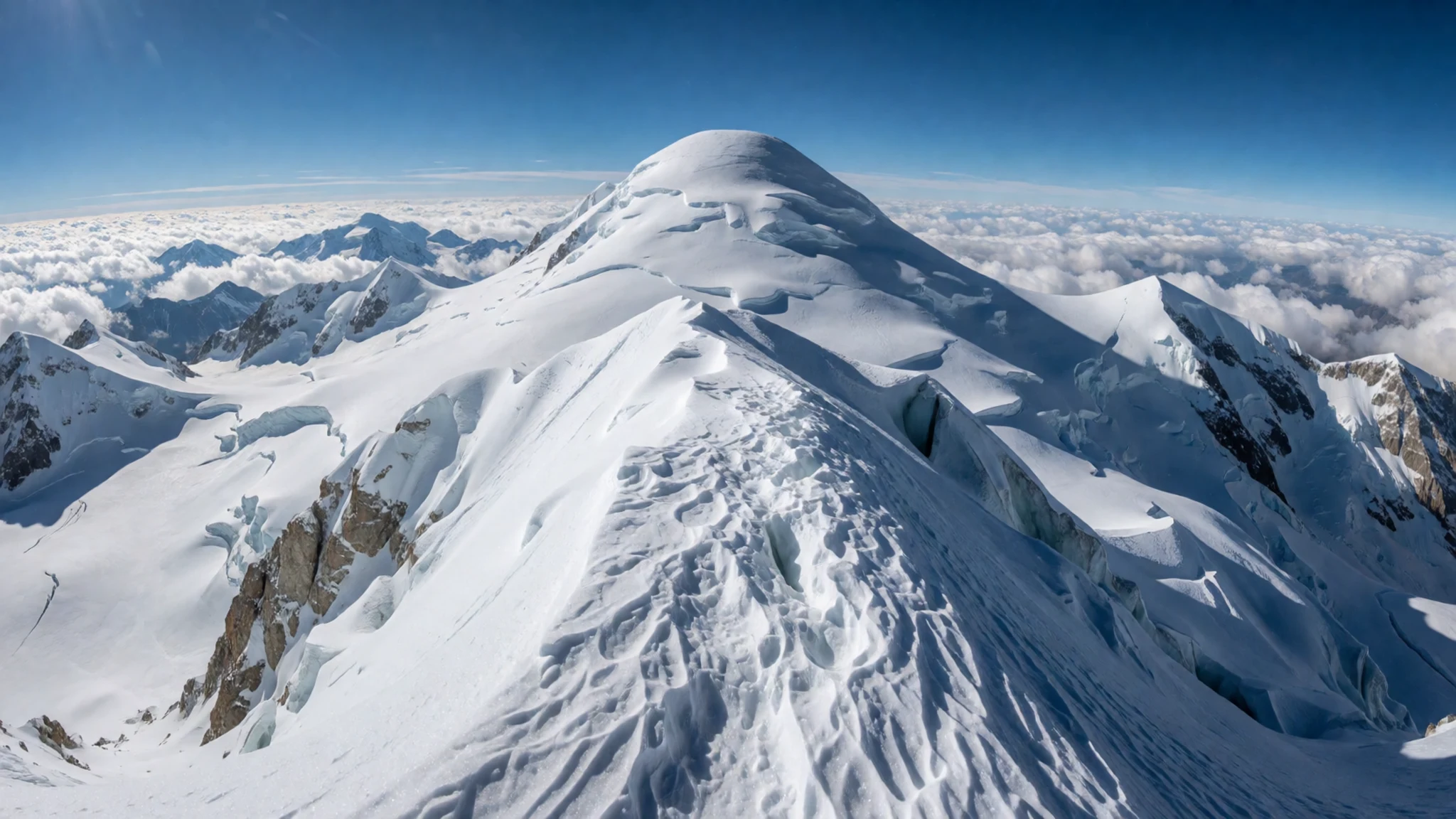
- Baksan Valley Cable Cars — Baksan Valley
A series of three lifts that transport visitors from the valley floor up to 3,847 m. These lifts allow hikers and skiers to bypass the lower slog and reach the Garabachi huts without an exhausting day of walking.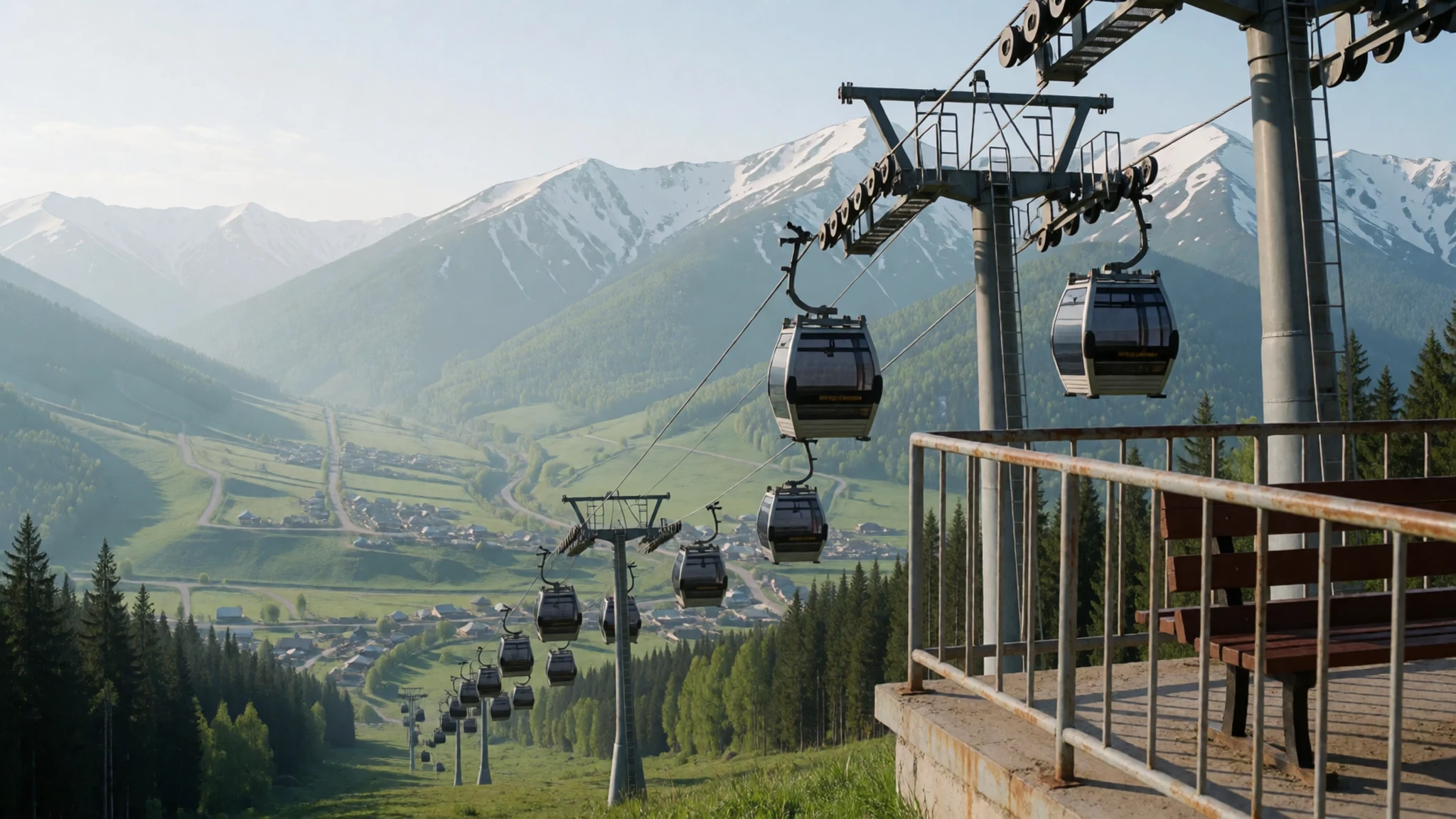
- The Eastern Summit — Eastern Peak
The second, slightly lower peak of the volcano. While less famous than its western sibling, it holds historical significance as the first summit to be climbed in 1829 and offers a slightly different perspective of the surrounding peaks.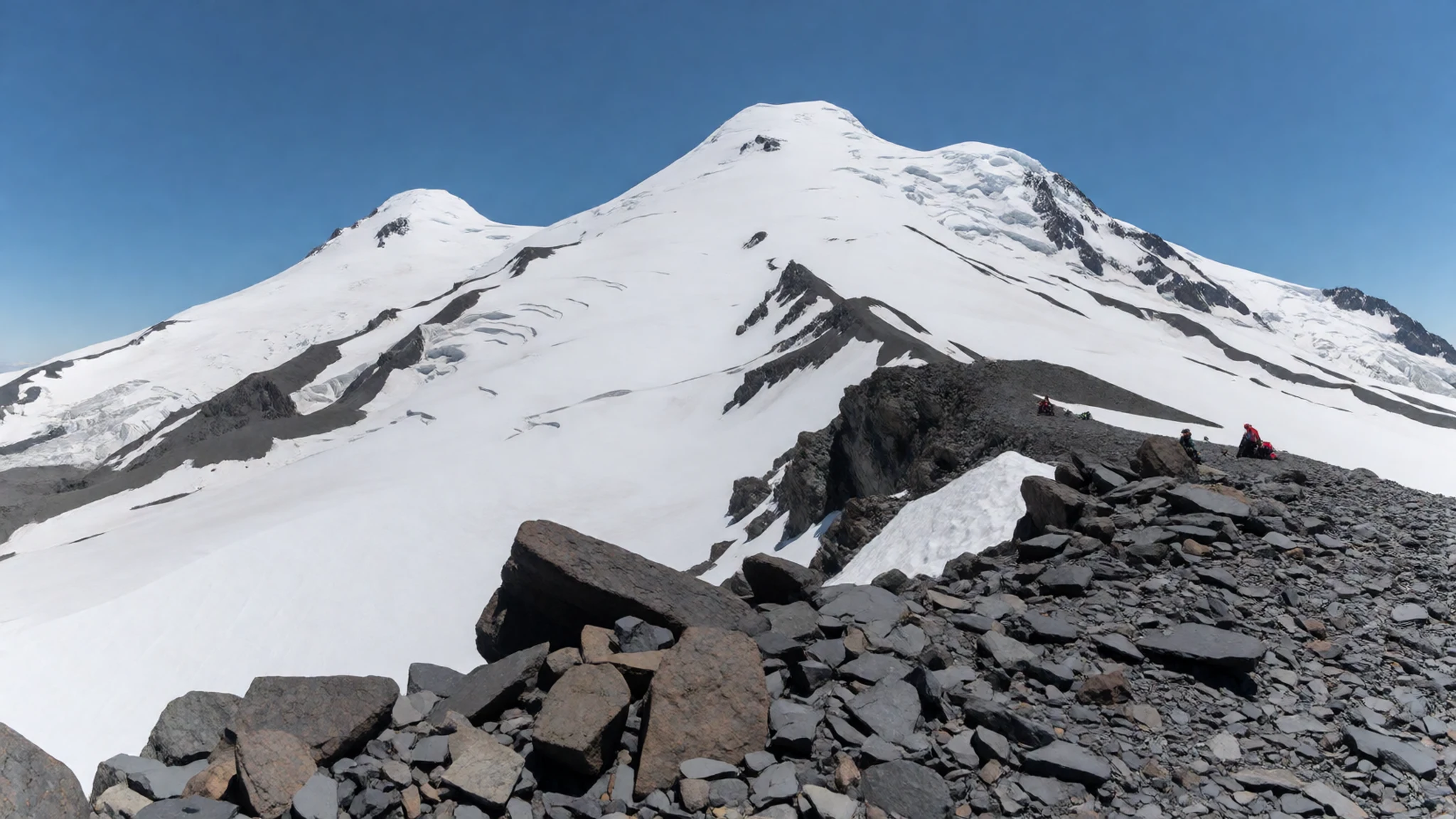
- Prielbrusye National Park — Baksan Valley
A protected area encompassing the southeastern flank of the mountain. It is the gateway for most climbers, providing access to the glaciers and the high-altitude shelters required for a successful summit push in the Caucasus.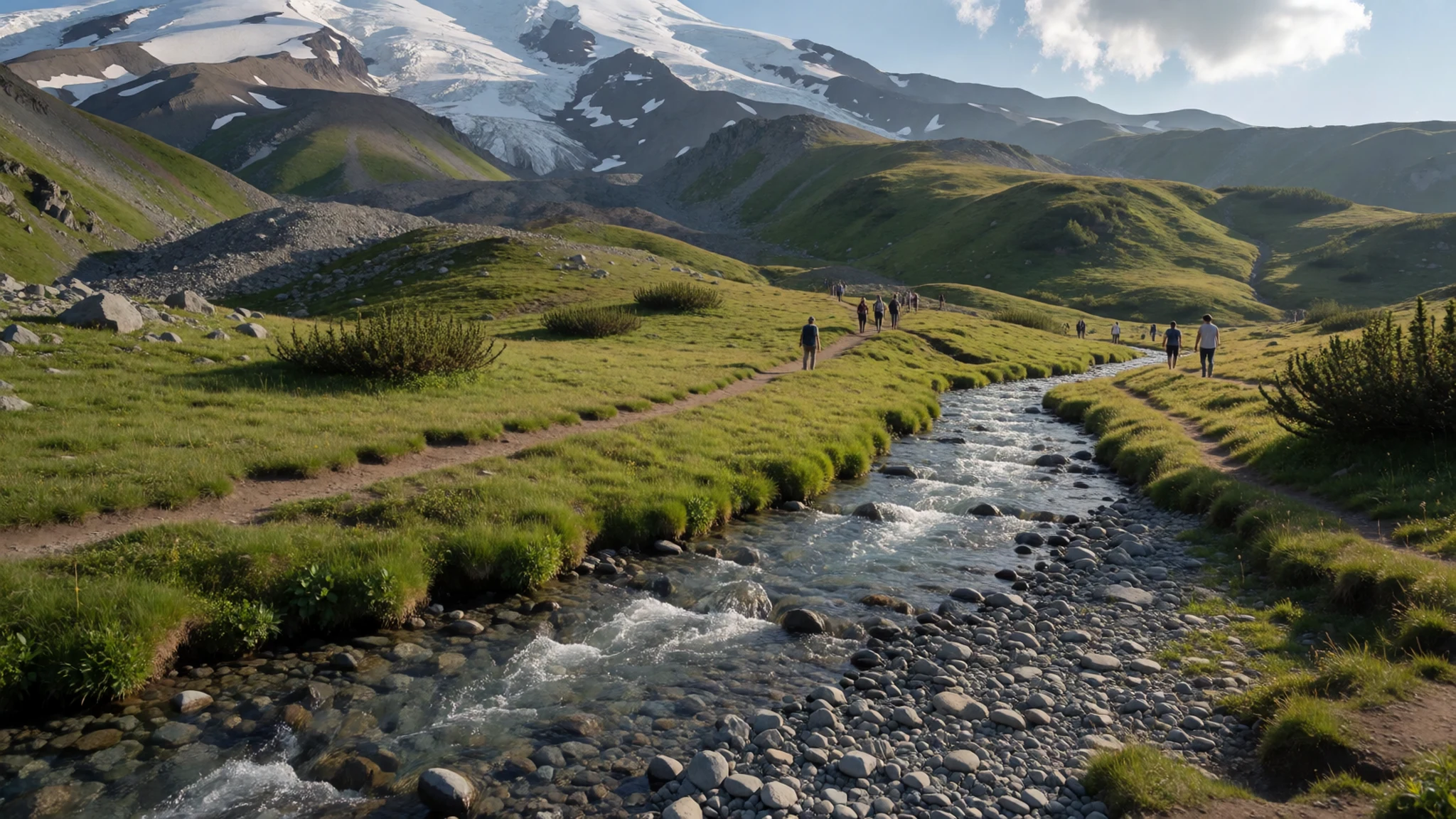
- Priyut 11 — High slopes
The famous 'Refuge of 11', a high-altitude shelter that has served climbers for decades. It is a critical waypoint for those resting before the final push to the summits, though conditions here are often brutal.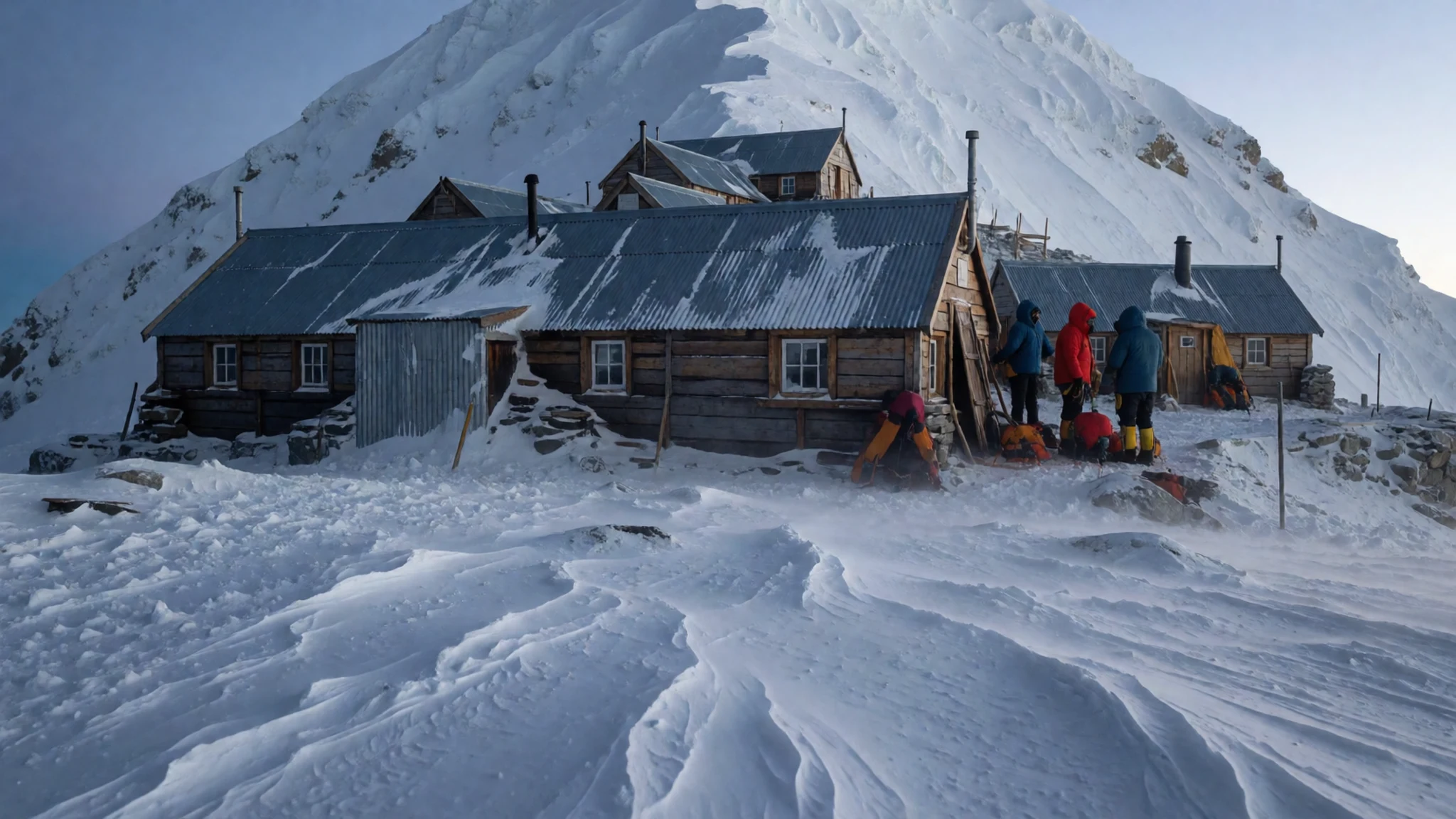
Culture
The culture around Mount Elbrus is a blend of Russian influence and the deep-rooted traditions of the North Caucasus, particularly the Kabardian and Balkar peoples. Hospitality is a cornerstone of local life; visitors are often welcomed with warmth, though the region's history of instability means that security is very tight. There is a strong respect for the mountains, viewed both as a source of livelihood through tourism and as a spiritual, imposing force. Mountaineering has become a professionalised industry here, with local guides possessing an intimate knowledge of the mountain's temperamental weather. The local population is generally modest and cautious, reflecting the rugged nature of their environment. Because this is a frontier region near the Georgian border, you will encounter frequent military checkpoints and a heavy police presence, which is simply part of the local rhythm of life. When visiting local villages, dress modestly and always ask permission before photographing residents or military personnel.
What to wear
Mount Elbrus demands a wardrobe of extreme utility. Traditionally, the people of the North Caucasus wore garments made of heavy wool and sheepskin, such as the chokha—a wool coat with decorative cartridge holders on the chest—designed to withstand the biting mountain wind. These textiles were essential for shepherds and hunters navigating the high passes. Today, in the villages of Kabardino-Balkaria, you will see a mix of modern Russian city wear and traditional Caucasian elements, such as wool hats and sturdy leather boots.
For a visitor, the dress code is entirely dictated by the altitude and activity. For the village and valley areas, modest, casual clothing is appropriate. However, for any ascent, professional-grade alpine gear is non-negotiable. This includes moisture-wicking base layers, heavy fleece or wool mid-layers, and a high-quality GORE-TEX outer shell. Proper footwear is critical: stiff, waterproof mountaineering boots are required for the glaciers, while broken-in hiking boots suffice for the lower trails. Don't forget high-UV protection sunglasses and a warm beanie, as the sun is punishing and the wind is relentless at 5,000 metres.
What to eat
- Khychiny — Baksan Valley eateries
Thin, unleavened flatbreads stuffed with local cheese, potatoes, or meat, then fried in butter. These are best found in the small family-run eateries throughout the Baksan Valley villages.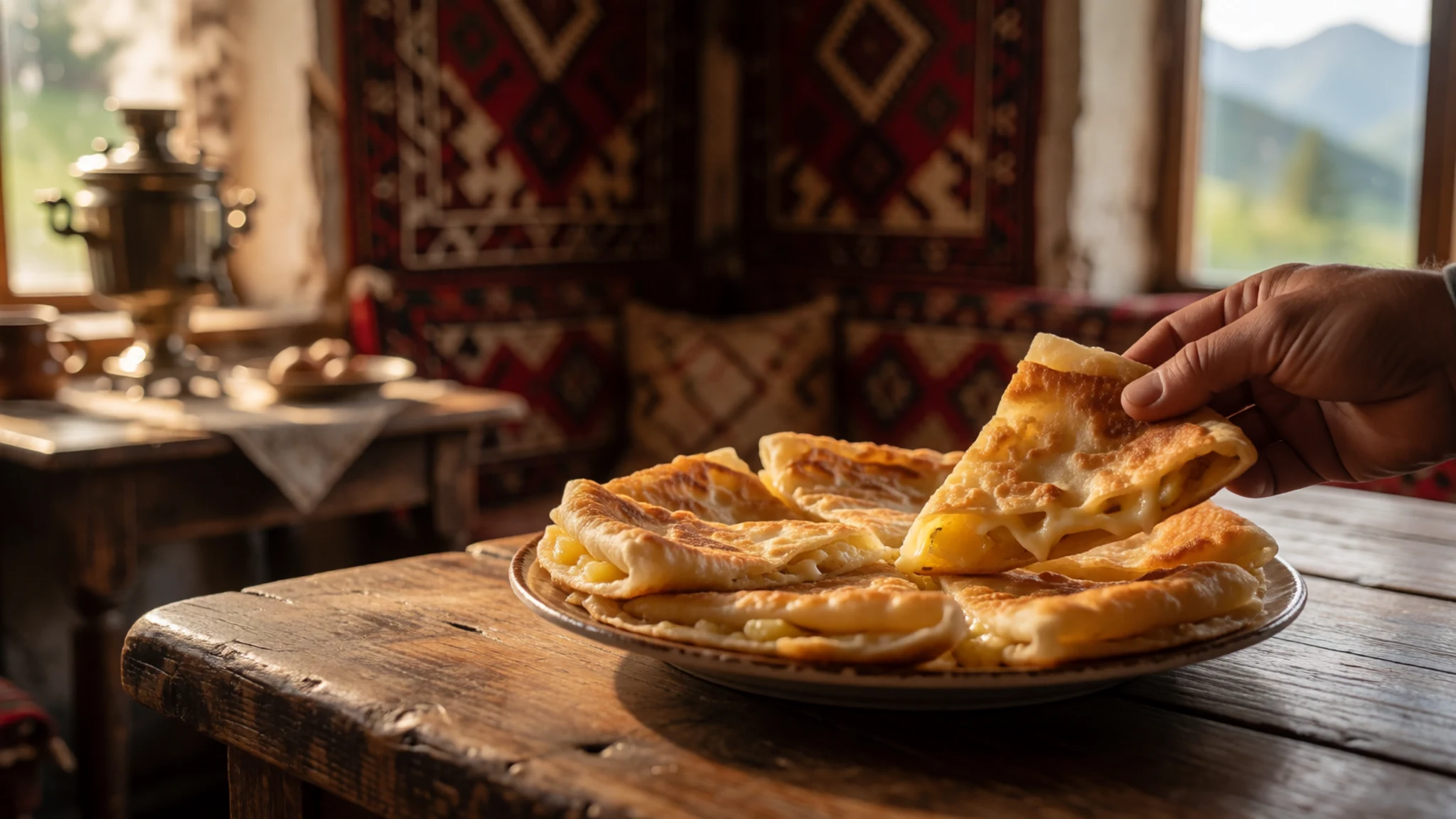
- Shashlik — Roadside grills
Skewered, grilled meat—usually lamb or pork—marinated in local spices and vinegar. You will find this at almost every mountain guesthouse or roadside grill near the base of the volcano.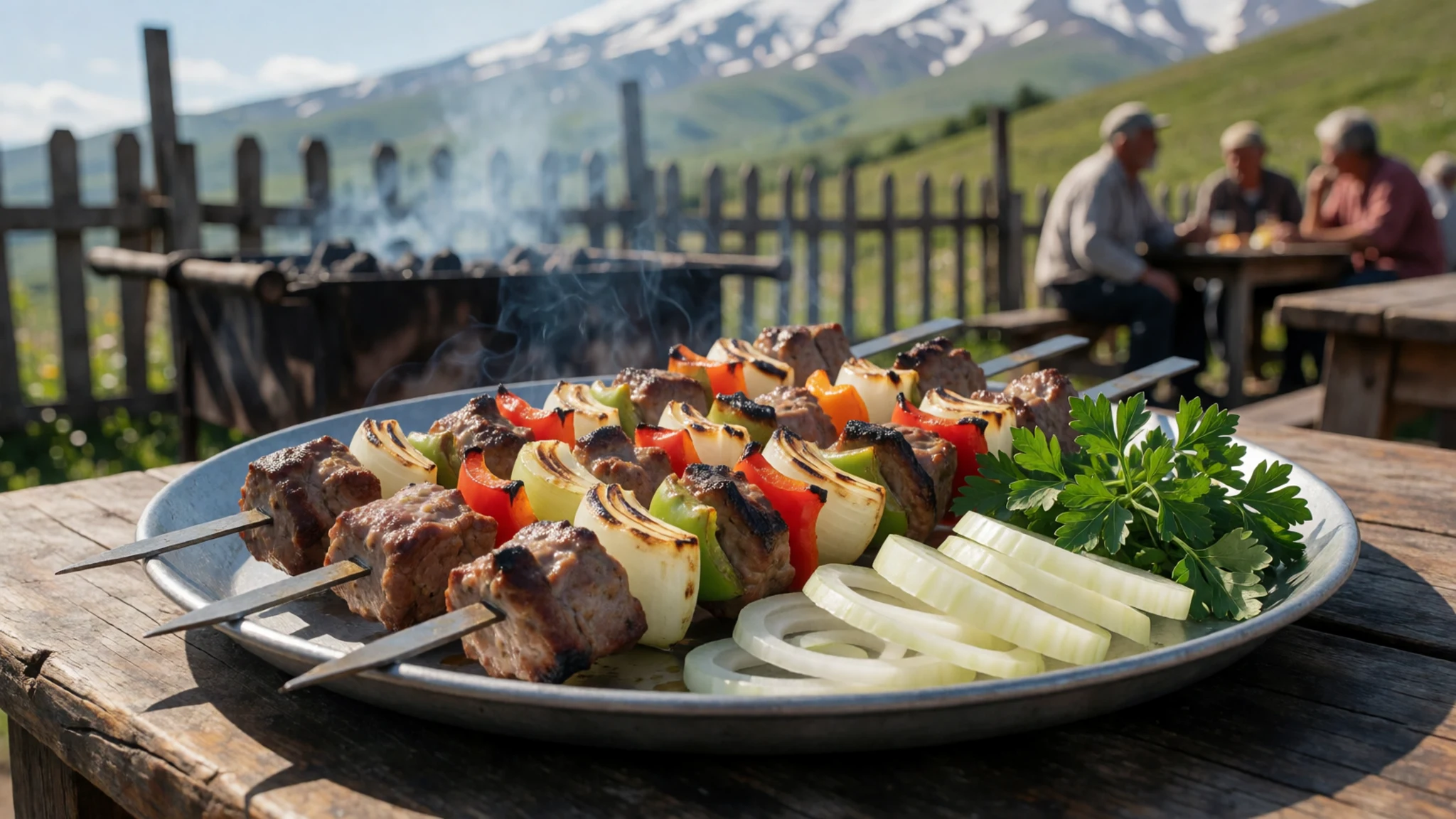
- Caucasian Pies — Village bakeries
Hearty, baked pastries filled with meat or greens, often served hot with a side of sour cream. These are staples in the village bakeries and mountain cafes. - Local Mountain Honey — Roadside markets
Rich, aromatic honey produced from the diverse wildflowers of the Caucasus foothills. It is often sold by locals in small jars along the road to the cable cars.
Plan it
Best time. June to August for the hottest weather and clearest paths; winter is for skiing but is extremely harsh.
How long. 7–10
Getting there. Fly into Mineralnye Vody, then take a taxi or shuttle to Nalchik or directly to the Baksan Valley.
Budget. mid
Tips
- Hire a local guide to handle permits and officialdom
- Acclimatise for several days in the valley before attempting the summit
- Carry plenty of cash for small village shops
- Check security alerts for the North Caucasus region before travelling
- Book your guided expedition months in advance for the summer season
Etiquette
- Dress modestly in villages
- Do not photograph military checkpoints or personnel
- Respect the silence and space of other climbers on the trail
Nearby
Sources
- Wikidata Q43105 (CC0)
- Wikipedia (CC BY-SA 4.0)
- Wikivoyage (CC BY-SA 4.0)