Mount Bulusan
Mount Bulusan, Philippines
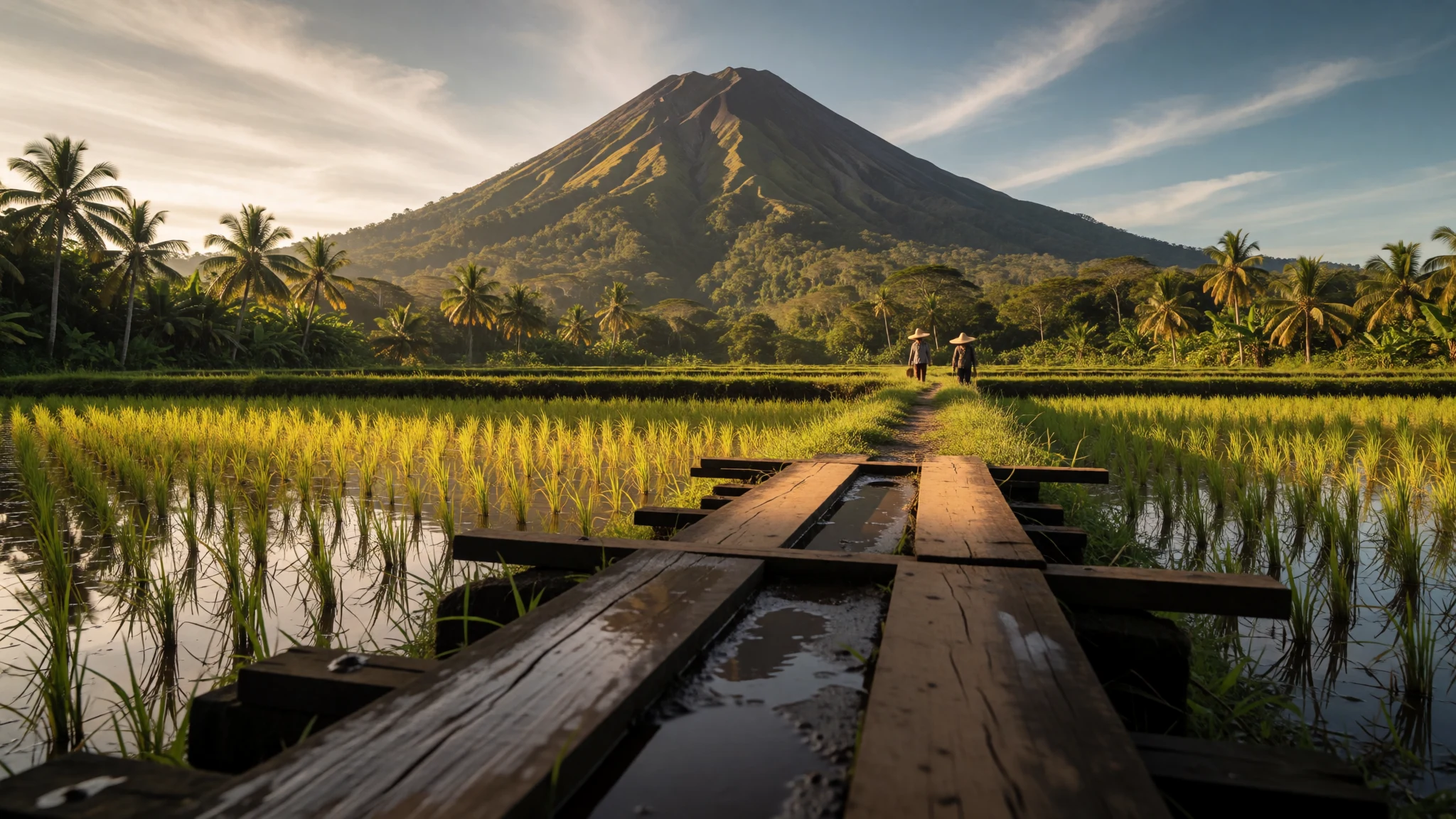
Mount Bulusan is a quiet, active volcano in southern Luzon, with a forest lake, farming towns and Bicol cooking close at hand.
The place
Mount Bulusan is a stratovolcano at the south-eastern end of Luzon, in Sorsogon province, which forms part of the Bicol Region. Its summit stands at 1,535 metres, modest beside many Philippine peaks, but it rises from a low, green coastal plain and dominates the skyline of the towns around it. The better-known cone of Mayon Volcano lies about 70 kilometres to the north-west, and Manila is roughly 390 kilometres away in the same direction. Sorsogon sits at the tip of the Bicol Peninsula, facing Samar across the San Bernardino Strait to the south-east and Ticao Island to the south-west. Bulusan is counted among the active volcanoes of the Philippines, which makes it a working mountain rather than a scenic backdrop: it is monitored, it can send up steam and ash, and access to its upper slopes depends on the current alert level. Around its base are farming and fishing towns where Bicolano is the everyday language. The forest is protected as Bulusan Volcano National Park, with a lake at its heart that is the usual first stop for visitors. Cloud tends to gather round the cone as the day warms, so early starts give the clearest views. A visit here suits slow travel: lakeside walks, village streets, coastal drives and long meals, with the volcano always in view.
Its story
Mount Bulusan has shaped life in southern Sorsogon for as long as there are written records. A colonial census from 1818 counted 1,777 native families paying tribute, living alongside 19 Spanish-Filipino families, which shows a settled farming district already organised around the mountain's slopes. Volcanic soil explains much of that. Ash and weathered rock break down into fertile ground, and the bargain of rich land in exchange for risk still defines the area. Bulusan's eruptions are generally steam-driven explosions that throw ash over nearby villages, rather than the slow lava flows many people picture. They are disruptive all the same, closing roads, dusting crops and sending families to evacuation centres for a few days at a time. The Philippine Institute of Volcanology and Seismology, known as PHIVOLCS, maintains a network of monitoring stations around the cone, and one of the reference photographs for this reading shows that network laid out on a map. Its alert levels decide where people may go, and local officials act on them. Photographs often show the mountain looking calm and green, and quiet spells can last a long time, yet it remains classed as active. Residents treat it accordingly, with the habits of people who have lived beside it for generations: a bag kept ready, an ear on local announcements, and respect for the exclusion zone on the upper slopes.
What to see
- Lake Bulusan — Bulusan Volcano National Park, Sorsogon
Lake Bulusan lies at the heart of Bulusan Volcano National Park, ringed by forest on the volcano's lower slopes. Kayaking is possible on the water, and a walking path gives a slow circuit in the shade. Go early, when the air is cooler and the cone is more likely to be clear. Check that the park is open before travelling.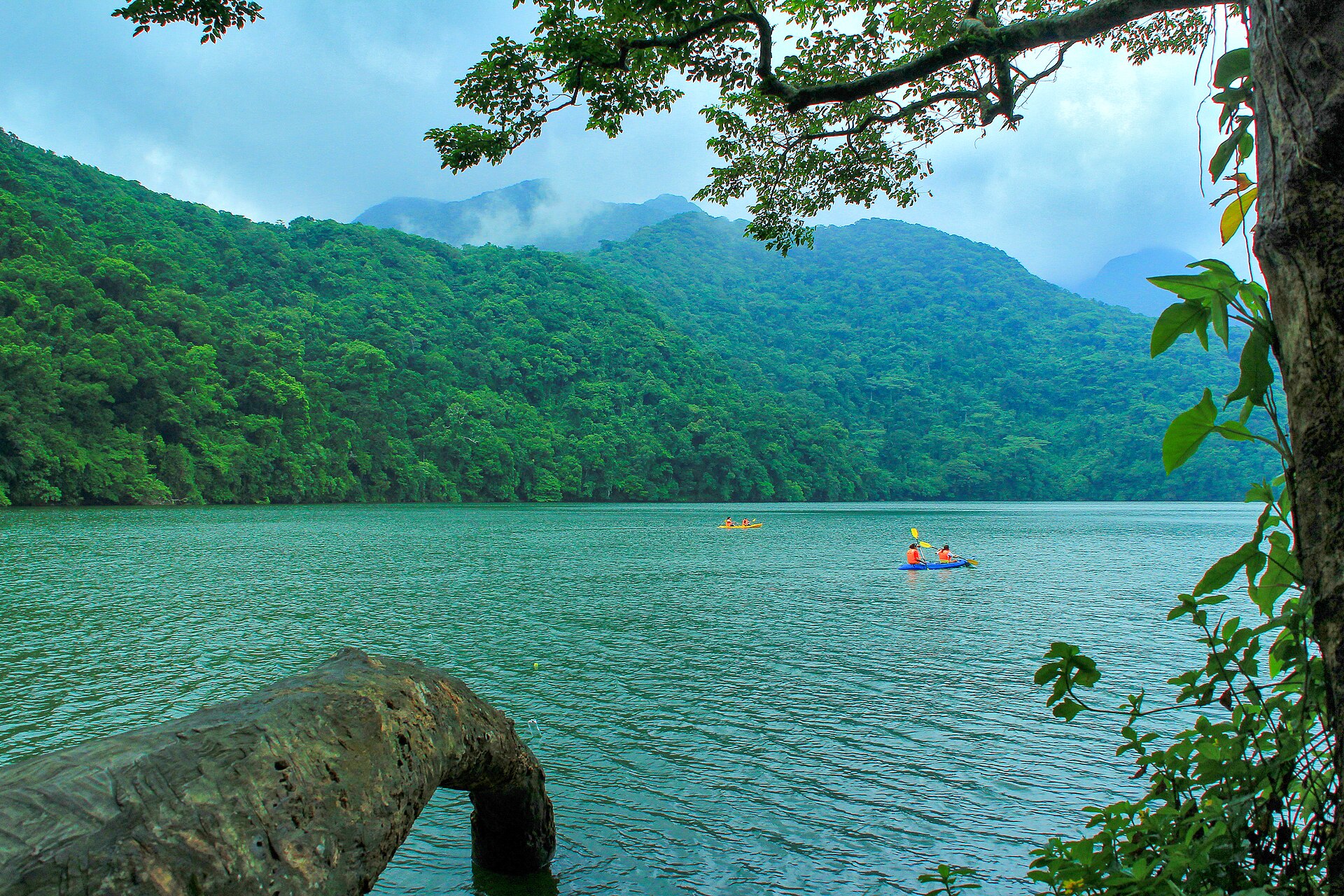
- Sorsogon City coastal road — Sorsogon City
The coastal road at Sorsogon City gives a long, unobstructed view of Mount Bulusan across the water, with the cone rising over palms and fishing boats. It works best at sunrise or late afternoon, when the light is soft and the summit is less likely to be hidden. It costs nothing, and a short stop is enough.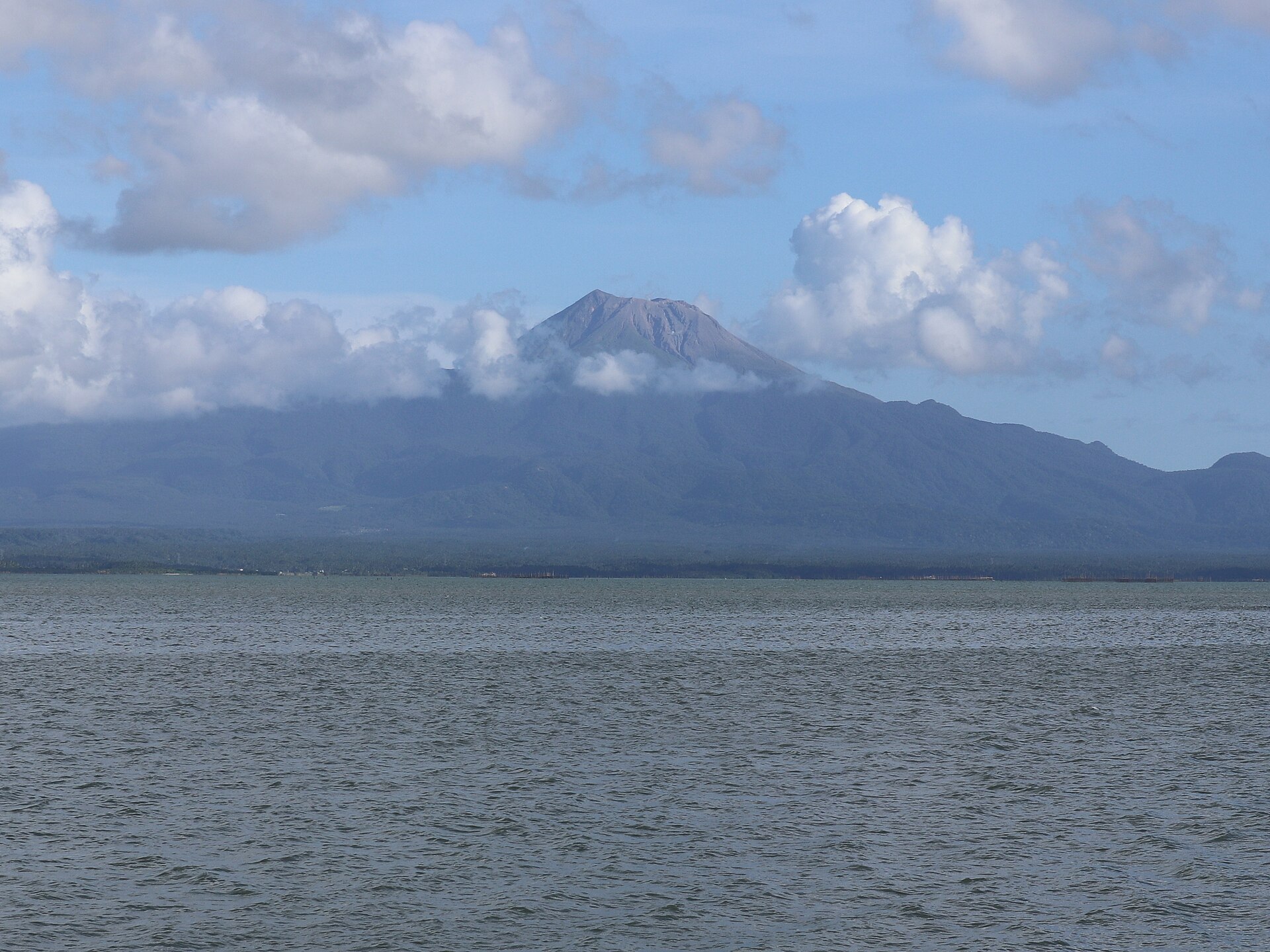
- Bulusan town poblacion — Bulusan, Sorsogon
The poblacion, or town centre, of Bulusan is the closest settlement where the volcano looms over rooftops and rice fields. A walk through the plaza, church and market streets shows how daily life carries on in the mountain's shadow. It is also the practical base for asking about current conditions on the slopes.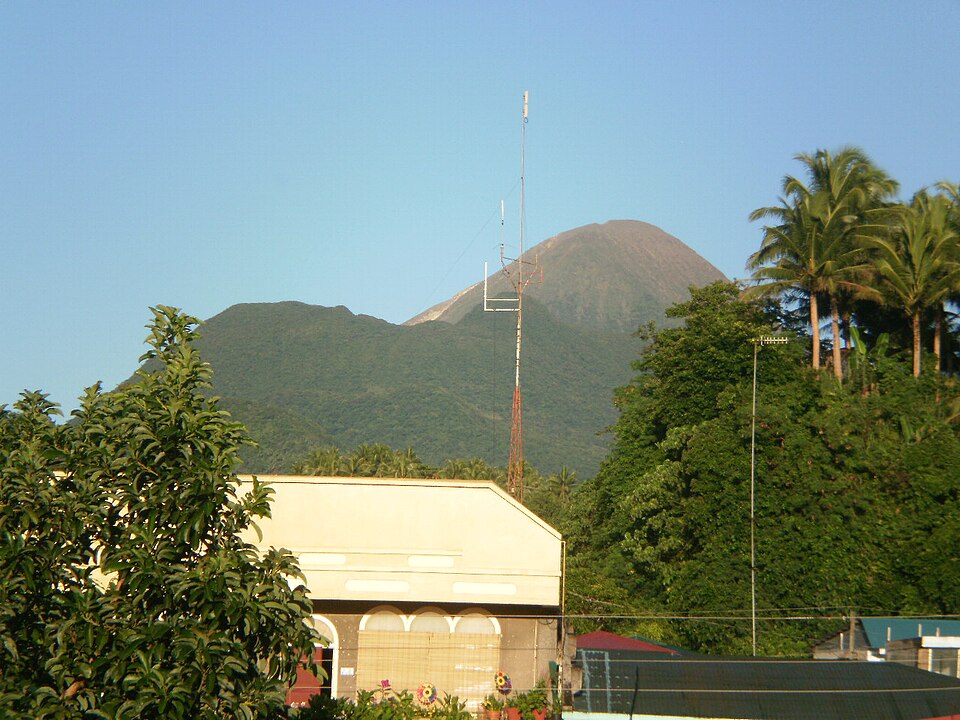
- Donsol whale shark encounters — Donsol, Sorsogon
Donsol, on the west side of Sorsogon province, is known for swimming with whale sharks, which are filter feeders and harmless to people. Trips run from the town with local boat crews and spotters. Seasons and rules vary, so check with the local tourism office before planning around it, as sightings are never guaranteed. - Gubat surf and coast — Gubat, Sorsogon
Gubat, on Sorsogon's eastern coast, has a surfing camp that offers lessons and boards for waves on the Pacific side. The town also hosts the Ginubat Festival. Conditions depend heavily on season and swell, so ask at the camp before committing a day, and treat it as a coastal add-on to the volcano.
Culture
Mount Bulusan sits in the Bicol Region, where Bicolano is the language of daily life and Catholic fiestas set the calendar of every town. Sorsogon's best-known celebration is the Kasanggayahan Festival, held across the province in the last week of October to mark its founding as a province. It brings parades, historical and religious events, and displays of local farm produce, food and handmade decorative items. Its centrepiece is the Pantomina sa Tinampo, a street dance native to the province, in which men and women in colourful traditional costume dance barefoot through the city. In Gubat, the Ginubat Festival draws on the town's own origins and includes a street parade, a sail-boat race, a beauty pageant and the Balik Gubat, which is the festival's highlight. Beyond festivals, culture around the volcano is practical and neighbourly: families farm and fish, share food readily, and talk about the mountain with a mix of pride and caution. Visitors who ask politely about local history usually get long, generous answers. Evacuation drills and alert-level notices are part of ordinary life, and locals take them seriously. At fiestas and parades, ask before photographing dancers up close, and follow marshals' instructions on closed streets and any off-limits zone on the mountain.
What to wear
Around Mount Bulusan, traditional dress means the national Filipino formal wear. Men wear the barong Tagalog, a lightweight embroidered shirt worn untucked, traditionally made from translucent fibres such as piña or jusi. Women wear the baro't saya or the terno, a dress with stiff, raised butterfly sleeves. Abaca, a plant fibre grown across the Bicol Region, is woven into mats, bags and decorative items. Costumes at the Pantomina sa Tinampo dance are bright and layered, and dancers go barefoot. Day to day, people in Sorsogon wear what suits a hot, humid, farming and fishing climate: cotton T-shirts, shorts or light trousers, flip-flops, and caps or umbrellas against sun and rain. School uniforms and office shirts are common in the towns, and church on Sundays brings out neater clothes. Visitors should pack light, quick-drying layers, a rain jacket, a hat and sun protection. For the park and any walking, wear closed shoes with good grip, since paths can be wet and muddy. Swimwear is fine at beaches and on boats but should be covered up in towns. For churches and festival events, shoulders and knees covered is the safe choice. Bring a dry bag for electronics, and a mask or scarf for ash if the volcano is active.
What to eat
- Laing — Any local eatery or carinderia in Sorsogon City or Bulusan
Laing is dried taro leaves slowly simmered in coconut milk with chilli, often with small pieces of pork or fish. It is rich, creamy and fiery, and eaten with rice. A defining Bicol dish, it appears on most menus. - Bicol express — Roadside eateries and market food stalls across Sorsogon
Bicol express is a stew of pork, coconut milk and plenty of chilli, usually served with plain rice to temper the heat. Spice levels vary from cook to cook, so ask before ordering if you prefer something mild. - Pinangat — Public market stalls and home-style eateries
Pinangat is a parcel of taro leaves wrapped around shredded taro stem, chilli and small fish or shrimp, then cooked in coconut milk. Each bundle is tied by hand. It tastes savoury and sweet at once. - Kinunot — Coastal eateries and the fish market in Sorsogon City
Kinunot is flaked fish, often ray or shark, cooked in coconut milk with moringa leaves and chilli. It has a soft texture and a light, green bitterness. Ask what fish is used if that matters to you. - Pili nut sweets — Souvenir shops and market stalls in towns across Sorsogon
Pili nuts grow in the Bicol Region and are sold roasted, candied or baked into brittle and pastries. They are buttery and rich, and they pack well as gifts or for a snack on the road.
Plan it
Best time. April and May tend to be drier and are the hottest months, while December is the wettest, making April and May best for walks despite the heat. The brief carries no local climate data, so check forecasts and typhoon advisories before booking, and always check the current PHIVOLCS alert level for the volcano.
How long. 2–3
Getting there. The nearest airport is Daraga (DRP) in Albay, close to Mayon Volcano. From there, take a bus or van towards Sorsogon City and onwards by local transport to Bulusan. Buses from Metro Manila run direct to Sorsogon City.
Budget. low
Tips
- Check the latest PHIVOLCS alert level and local advisories before going near the slopes or the national park
- Start early, as cloud often gathers round the cone later in the day
- Carry cash for small towns and markets, as card payment is not reliable
- Bring a rain jacket and insect repellent for forest paths
- Ask the local tourism office about whale shark seasons before planning a trip to Donsol
Etiquette
- Obey closures and exclusion zones on the mountain, even if a path looks clear
- Greet people politely and ask before photographing individuals
- Dress modestly in churches and during fiesta events
Nearby
Sources
- Wikidata Q473435 (CC0)
- Wikipedia: Mount Bulusan (rev 1379509671) (CC BY-SA 4.0)
- Wikivoyage: Sorsogon (rev 5361761) (CC BY-SA 4.0)
- Photo: Mount Bulusan view from Sorsogon City Coastal Road — Patrickroque01 (CC BY-SA 4.0)
- Photo: Bulusan Volcano's monitoring network — PHIVOLCS (Public domain)
- Photo: A dormant Mt. Bulusan — Chris Newhall, USGS (Public domain)
- Photo: Mt Bulusan from Poblacion — Alma Gamil (CC BY 2.5)
- Photo: Kayaking at Bulusan Lake — Allan Fesalbon Castañeda (CC BY-SA 4.0)


