Morotai
Morotai, Indonesia
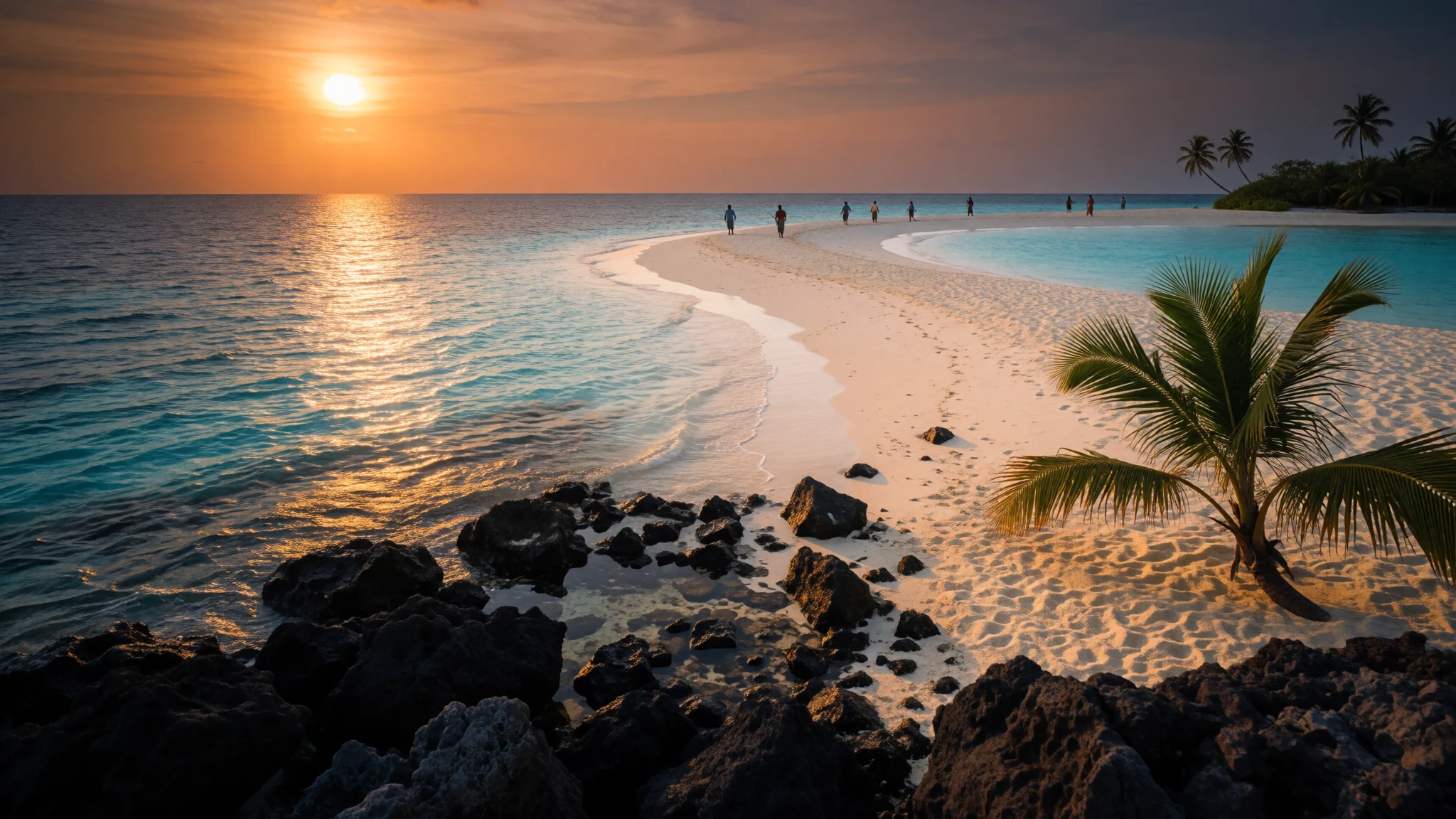
Morotai is a long, forested island in North Maluku where quiet white-sand beaches sit beside rusting Second World War relics.
The place
Morotai is a rugged, forested island at the northern edge of the Halmahera group in North Maluku, Indonesia, home to about 55,000 people. It runs roughly 80 km from north to south and is never much more than 42 km across, so the shape is long and narrow, with Rao Island lying off the west coast. The interior rises to 591 m and is almost empty of settlement. Villages hug the shore instead. Daruba, on the south coast, is the largest town and the place with the food stalls, the regency offices and the practical services. A paved road runs up the east coast from Daruba towards Berebere, the main east-coast town, and it has long been planned to reach further, so how far it goes today is worth asking locally. Beyond the road, boats do the work. The Morotai Strait separates the reefs and islets of the west coast from Halmahera, and short boat hops from the south reach the white-sand islands that draw most visitors. Two language groups share the island: Galela speakers in the south and on Rao, and Tobalo speakers across the northern two-thirds. The economy is modest, built on timber, resin and subsistence fishing. Morotai suits people who like quiet places with few facilities, wartime relics in the south and beaches without crowds. Heat and humidity are constant, rain is frequent, and distances that look short on a map take time on the ground.
Its story
Morotai's recorded history begins with Ternate. Through the fifteenth and sixteenth centuries the island lay within the sultanate's sphere and formed the core of a wider district called Moro, which also took in the nearest stretch of Halmahera's coast. A Portuguese Jesuit mission arrived in the middle of the sixteenth century, but neighbouring Muslim states resented it and drove it out as Portugal pulled back across the region. In the seventeenth century Ternate tightened its grip by moving islanders away in large numbers, first to Dodinga on Halmahera's west coast and later, in the case of Christian communities, to Malayu on Ternate, where they could be supervised more easily. By the end of that century Ternate itself answered to the Dutch East India Company. The island's modern fame comes from the Second World War. Japan took Morotai in 1942. In September 1944 American forces seized the southern plain, and the airfields built there became a launch point for the Allied return to the Philippines in early 1945 and then for the landings in Borneo that May and June. Decades later, in 1974, a Japanese soldier named Teruo Nakamura was found living in the jungle, having never surrendered. That is why a monument to him now stands on the island, not far from memorials to the Allied campaign. Morotai's calm present rests on layers of forced movement, colonial rivalry and one short, intense military build-up.
What to see
- Dodola Island — Off the south-west coast
Dodola Island is a white-sand islet off Morotai's south-west coast. As the tide rises in the afternoon, the sand link between its two halves goes under and it becomes two islands. Boats leave from the Daruba area. Low water is the time for walking across, and the clear shallows suit snorkelling and freediving.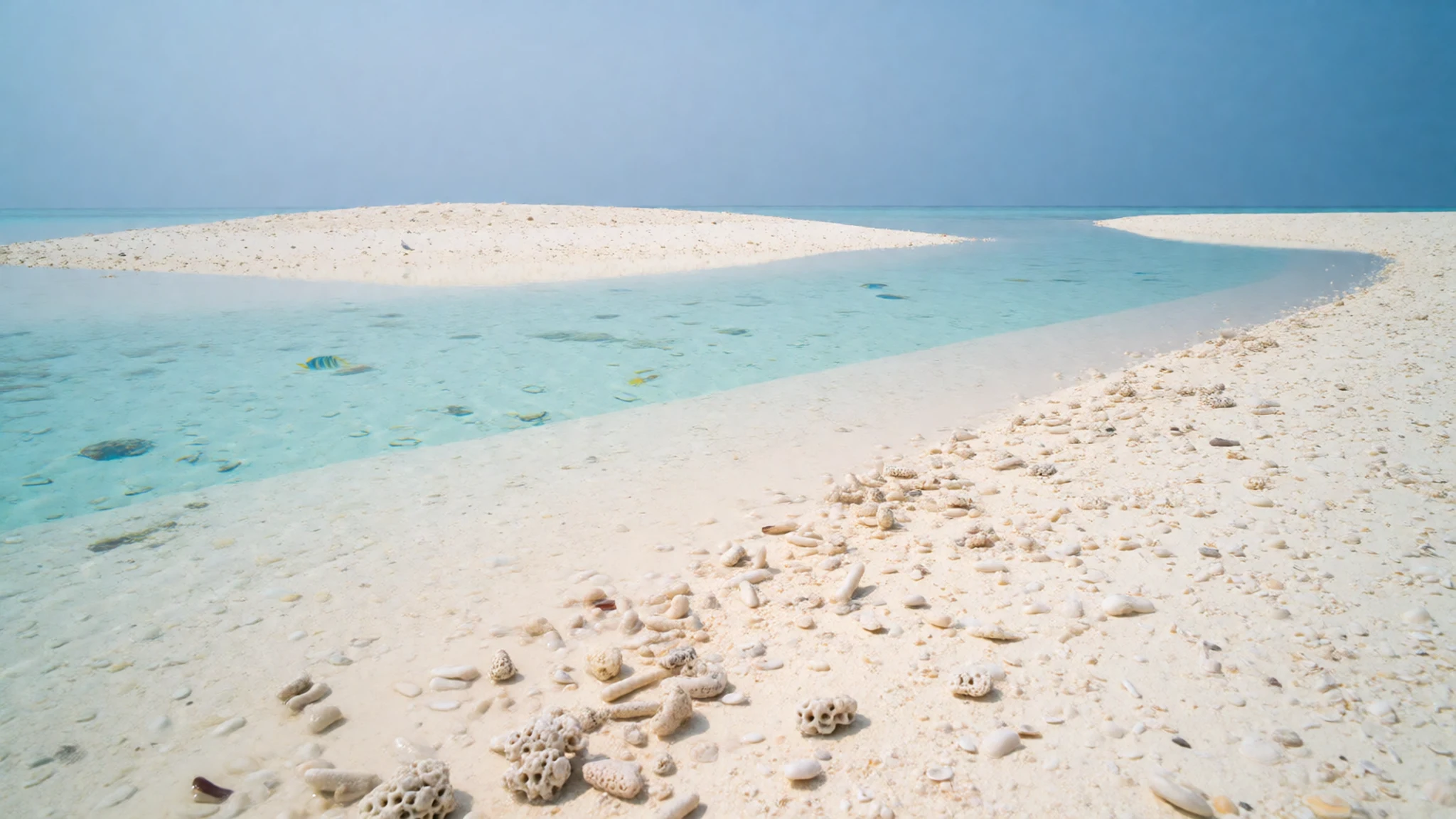
- Amphibious Tank Sites — South coast
A stretch of the south coast keeps the remains of a Landing Vehicle Tracked, the amphibious carrier the US Navy used in the Second World War. These machines crawled over reefs and beaches to put troops ashore. The weathered hull makes the scale of the wartime build-up easier to grasp than any plaque.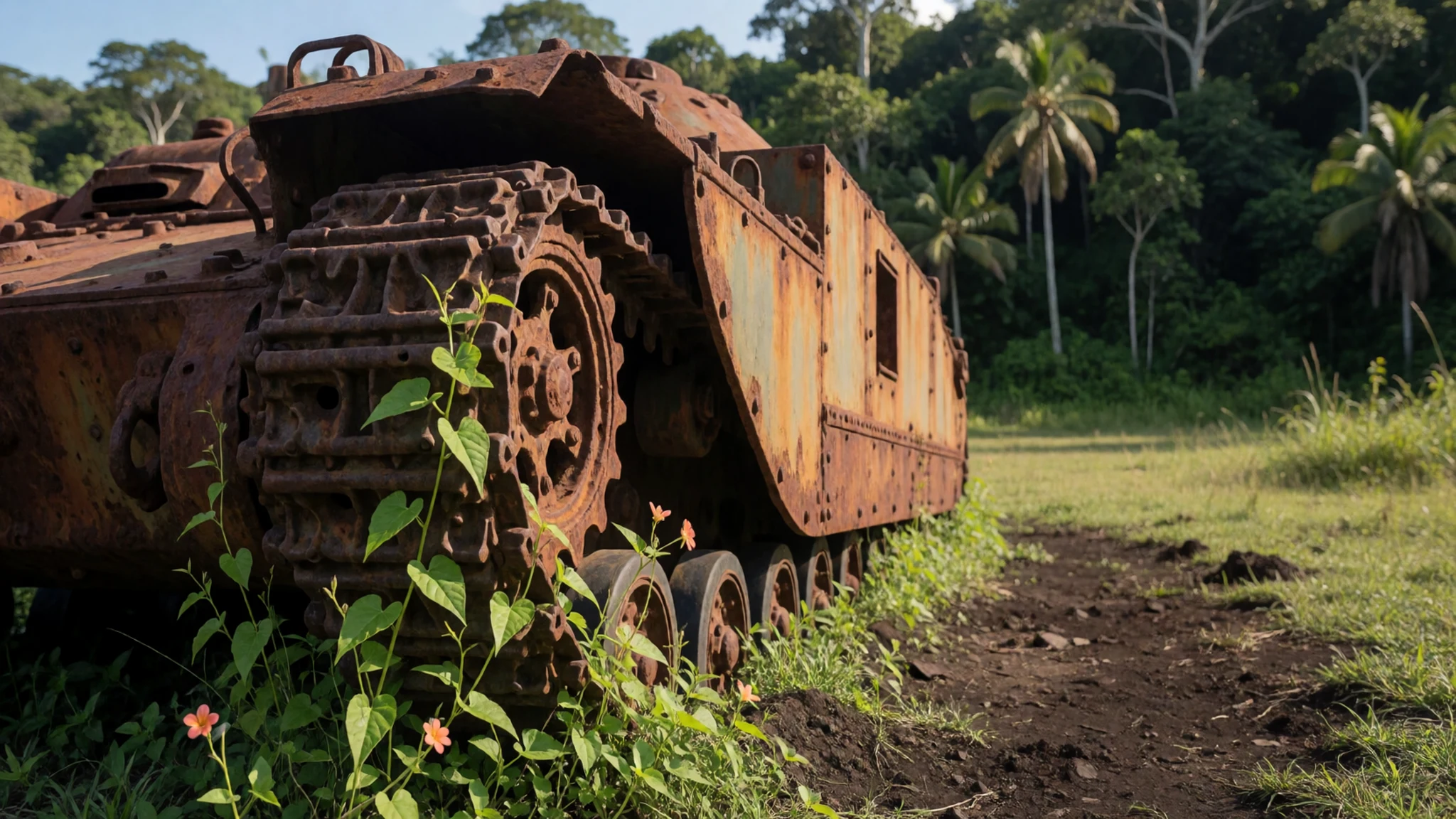
- McArthur Monument — South-west coast
This monument honours General Douglas MacArthur, the American commander who led the Allied return to the Philippines, for which Morotai served as a staging point. The site is more about memory than spectacle: a marker, a view of the sea and a sense of how busy this quiet shore once was.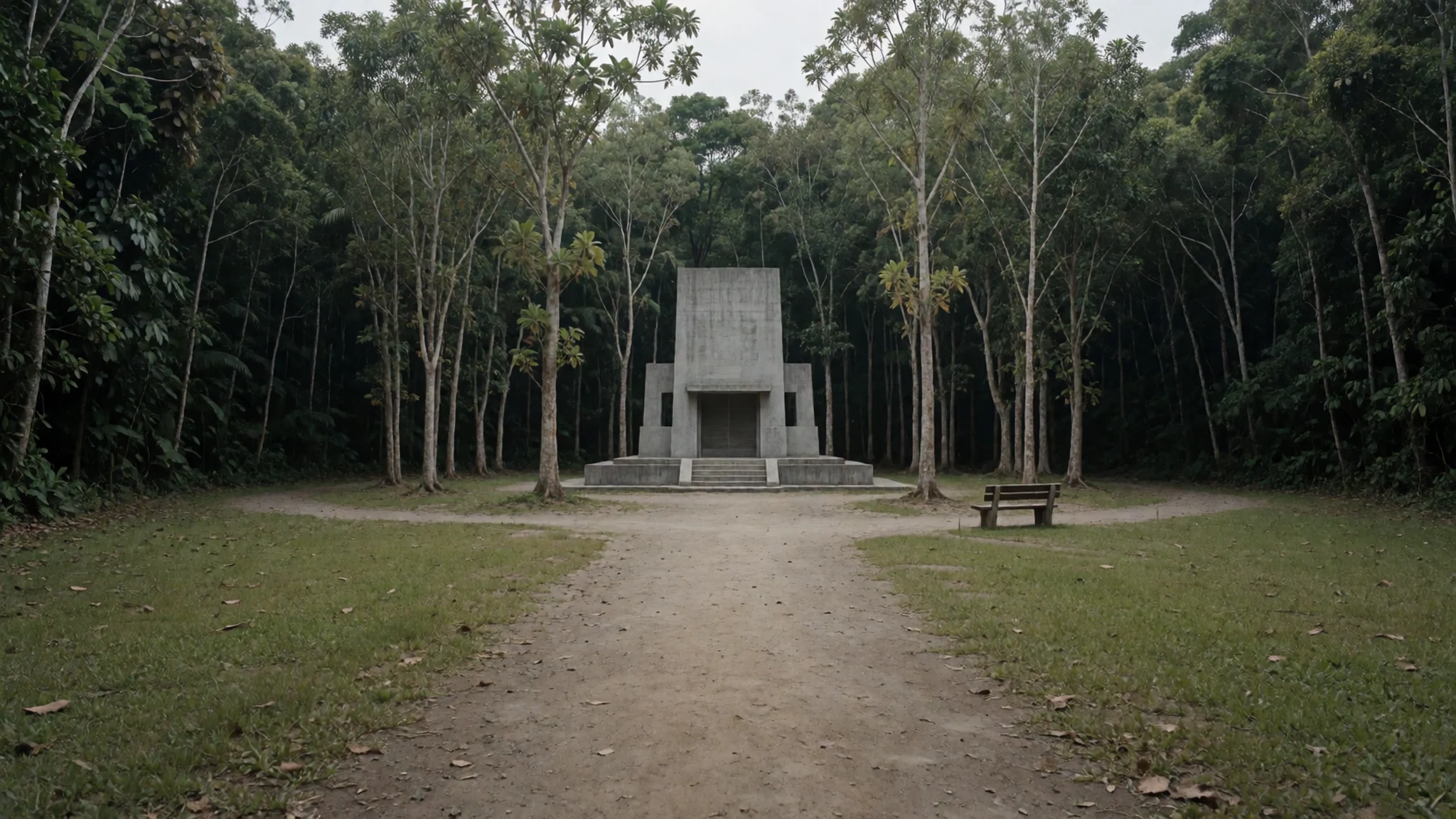
- World War II museums — Around Daruba
The Daruba area has two small museums, the World War II Museum and the Museum Swadaya Perang Dunia Kedua, which gather relics from the Allied base. Expect modest displays rather than polished galleries. Opening arrangements are informal and change, so ask at your accommodation before making a special trip.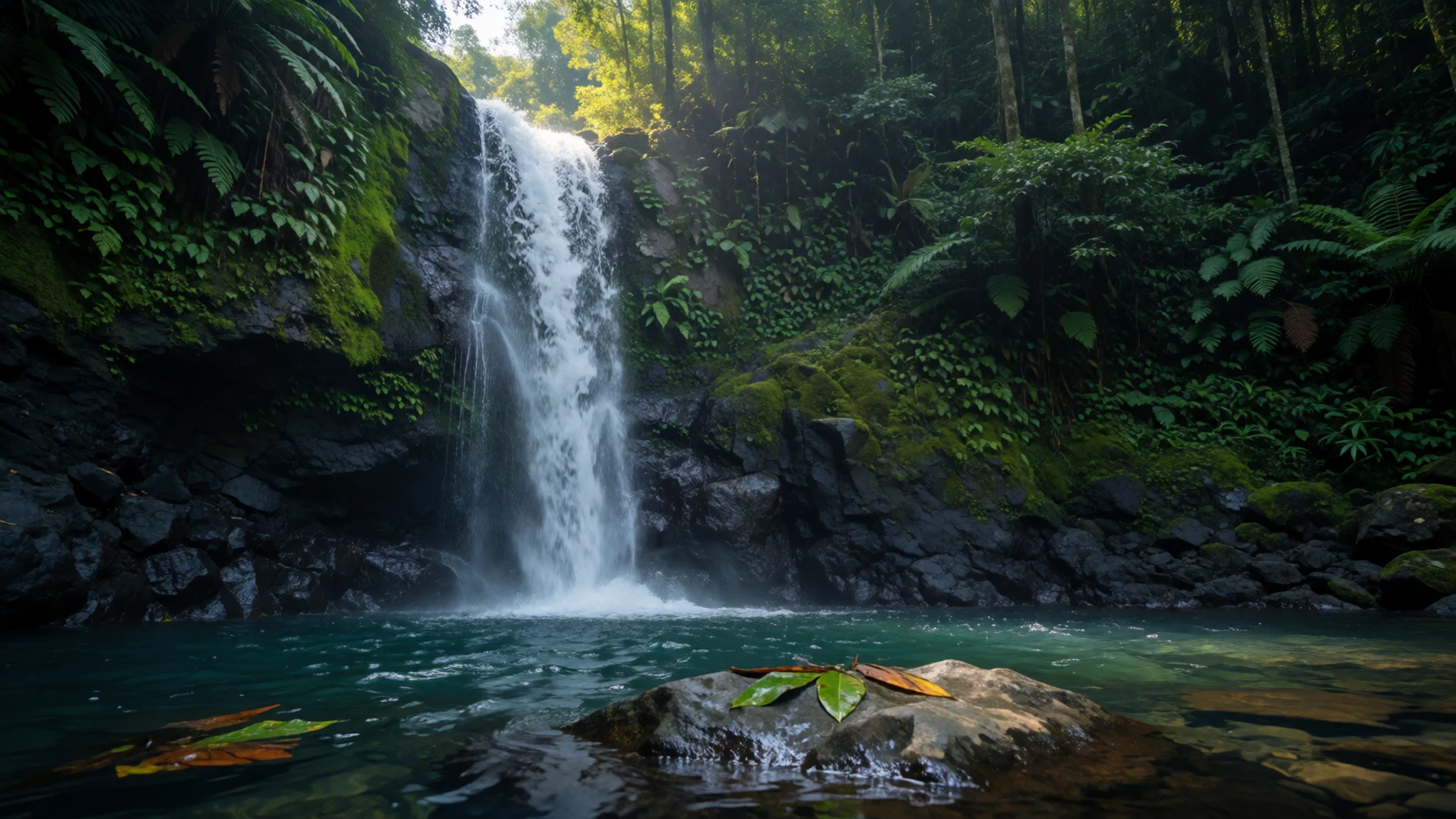
- Nakamura Monument — South coast
This monument marks the story of Teruo Nakamura, the Japanese soldier found in Morotai's jungle decades after the war had ended. It is a short, sober stop that adds a human story to the island's military relics, and it pairs easily with the nearby wartime sites on the south coast.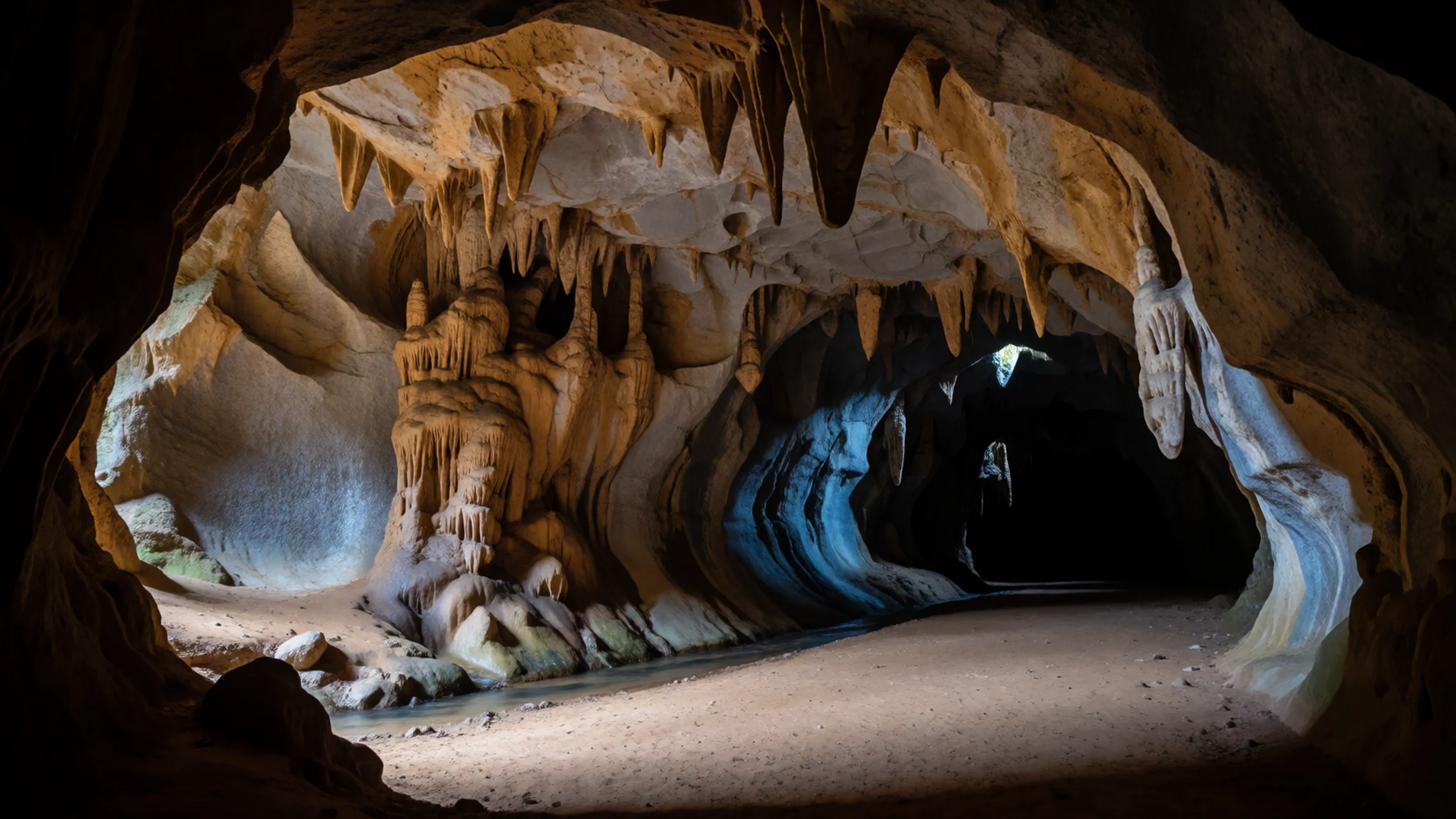
- Kokota Waterfall — Forested interior north of Daruba
Kokota Waterfall lies in the forested interior north of Daruba. Arrange access through a local driver or guide, since tracks are informal. The flow depends on recent rain, which in this climate is rarely far away, and a swim here makes a welcome break from the coastal heat.
Culture
Morotai's culture is shaped by Galela and Tobalo communities, a fishing life lived along the shore, and a long Moluccan history in which both Islam and Christianity took root. Islam arrived through the orbit of the Ternate sultanate, while Christianity came with Portuguese missionaries and persisted in communities that were later moved elsewhere. Today villages are strung along the coast, and the daily rhythm follows tides, boats and weather. Indonesian is the shared language, with local languages spoken at home. The war is part of local identity as well. Monuments and small museums in the south hold the memory of Allied and Japanese soldiers alike, and some visitors come with family connections to the campaign. Hospitality is genuine, but facilities are limited, so patience and a polite request go a long way. Religious life is visible: expect the call to prayer in Muslim villages and church services in others, with Friday and Sunday often quieter than other days. Fishing boats and shared meals matter more than formal entertainment, and evenings are usually calm. A visitor who greets people, asks before sitting down at someone's property and accepts a cup of tea or coffee will usually be received warmly. Ask before photographing people, especially women and children, and dress modestly in villages and at any mosque or church.
What to wear
Morotai has no single, well-documented traditional costume that this reading can name with confidence, so it is more honest to describe what is commonly worn across Indonesia and the Moluccas. Batik and woven sarongs are familiar, men often wear a sarong and a black peci cap for Friday prayers, and women in Muslim communities commonly wear a headscarf, while Christian families dress up for church on Sundays. Everyday clothing is simple and practical: cotton T-shirts, shorts or light trousers, sandals or rubber flip-flops, and wide-brimmed hats or caps against the sun. Fishermen and boat crews wear whatever dries quickly and tolerates salt. Visitors should pack light, quick-drying clothes that cover shoulders and knees, since village life is conservative even on the coast. Swimwear is fine at beaches and on the small islands, but put a shirt or sarong over it when walking through a settlement. Bring reef shoes for coral shallows and boat landings, sturdy closed shoes for the jungle and waterfall paths, a hat, sun protection and a light rain jacket. Dark, long-sleeved layers help against insects at dusk. Heat and humidity are constant, so choose natural, breathable fabrics.
What to eat
- Ikan bakar (grilled fish) — Seafront and roadside food stalls in Daruba
As an island, Morotai eats fish at almost every meal. Ikan bakar is the freshest way to try it: the day's catch grilled over coals and served with rice, chilli sambal and lime. Look for the stalls in Daruba, where the choice depends on the morning's boats.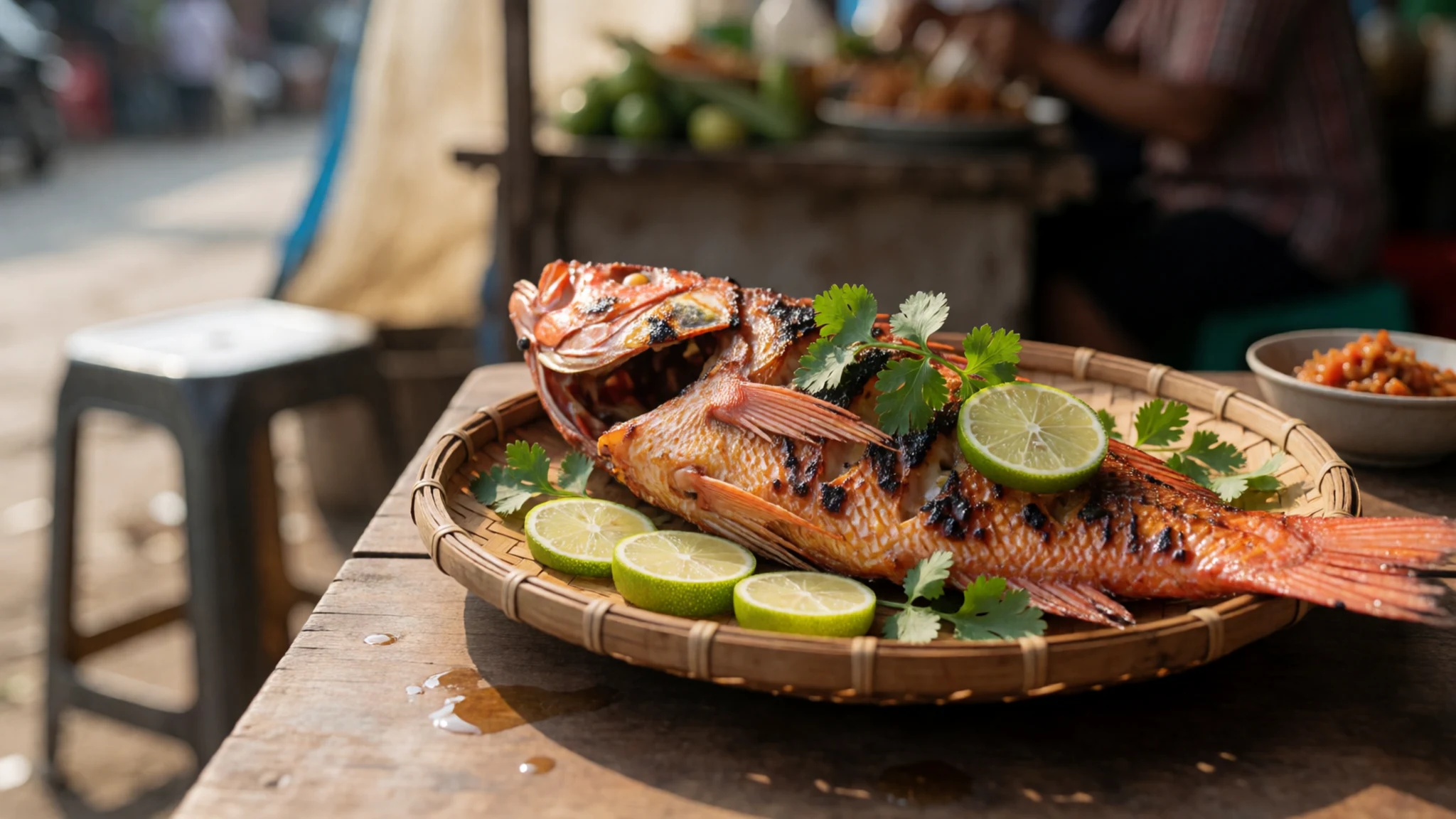
- Minahasan-style spiced fish — Daruba eateries
Local cooking borrows from Minahasan cuisine of North Sulawesi, which favours fiery chilli, lemongrass and ginger. Ask at a Daruba eatery whether fish or chicken is available cooked in that style. Expect heat, so ask for the sambal on the side.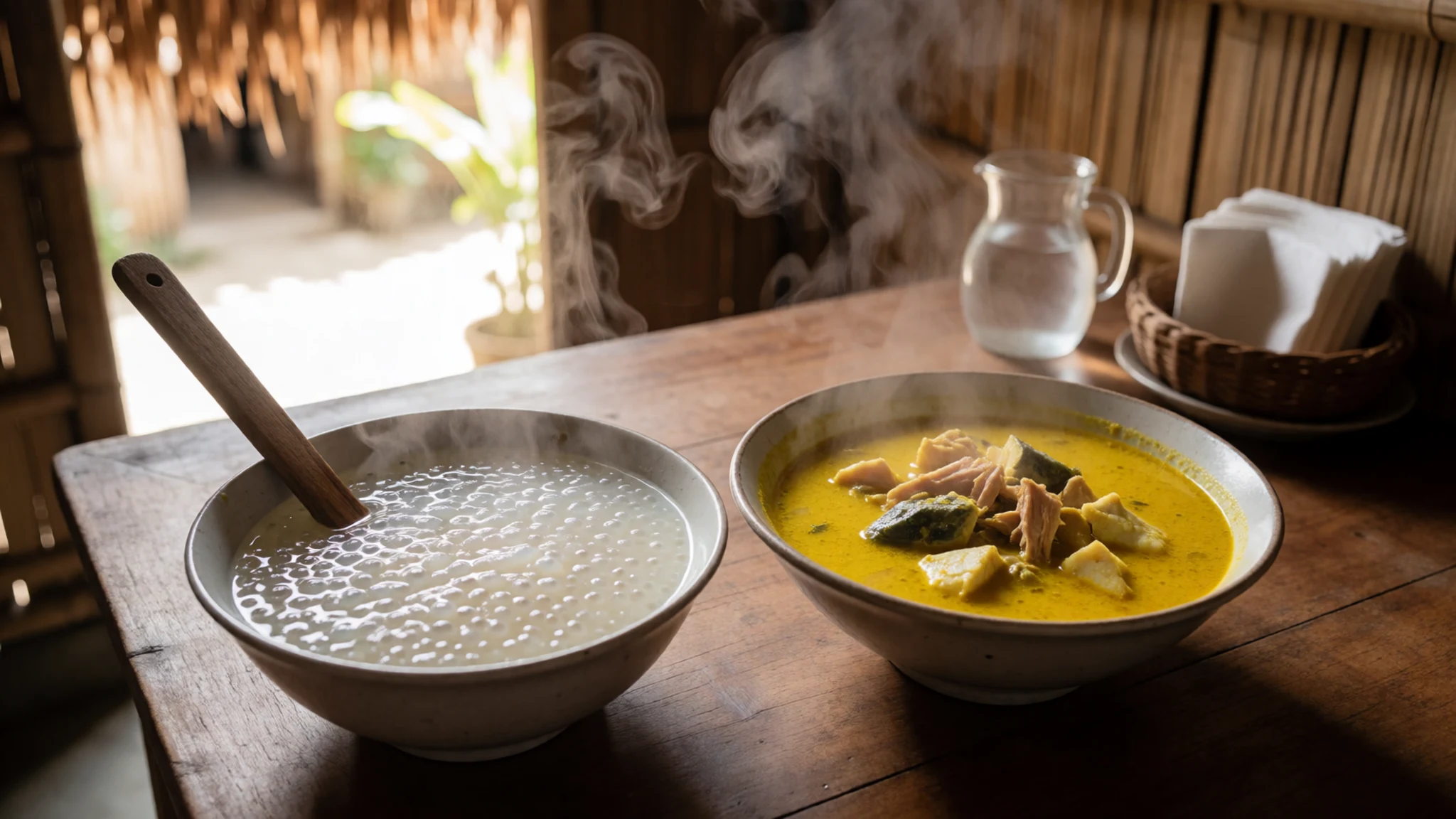
- Papeda with fish soup — Local eateries in Daruba, when available
Papeda is a sticky sago porridge common across eastern Indonesia, usually served with a sour-yellow fish soup. Maluku cooking influences Morotai's menus, but availability varies, so ask at Daruba eateries. It is an acquired texture and well worth trying once. - Nasi Padang — Padang (Minang) eateries in Daruba
Morotai has Padang, or Minang, restaurants that serve rice with a choice of rich curries, spicy beef and vegetables. You point at the dishes you want and pay for what you eat. It is a reliable, filling option on days spent on boats. - Javanese and Buginese eatery meals — Simple restaurants and stalls around Daruba
Migrants from Java and Sulawesi have brought their cooking to the island, so Daruba has soto soups, fried rice and noodles, and Buginese seafood dishes. These simple eateries are the easiest way to eat well on a budget. - Coffee at the town park — Coffee shops around Taman Morotai in Daruba
Several small coffee shops sit around the city park in Daruba, known as Taman Morotai. They suit an unhurried morning or a cool evening, when locals gather. Order a local coffee, sit outside and watch the town go about its day.
Plan it
Best time. August–October, when Daruba sees moderate rainfall; the other months bring heavy rain. The climate is tropical rainforest, so expect heat, humidity and sudden showers whenever you go, and check sea conditions before booking boat trips.
How long. 3–4
Getting there. Fly to Leo Wattimena Airport on Morotai itself, checking current routes and schedules with airlines, then travel by road to Daruba. Alternatively take the ferry from Tobelo on Halmahera, about 2 hours; check timetables locally, as sailings change.
Budget. mid
Tips
- Arrange boats for Dodola Island and the other small islands through your accommodation, and check tide times before you go.
- Carry enough cash from Daruba, as card facilities can be limited away from the main town.
- Bring drinking water, sun protection and insect repellent for long days on boats and forest tracks.
- Hire a local driver or guide for the waterfall and wartime sites, since public transport is thin and distances are long.
- Allow spare days in the plan, because weather and boat schedules can shift.
Etiquette
- Greet people in villages and ask before photographing them.
- Cover shoulders and knees away from the beach, and dress modestly near mosques and churches.
- Take your rubbish back from beaches and islands, as there is little waste collection.
Nearby
Sources
- Wikidata Q19146 (CC0)
- Wikipedia: Morotai (rev 1376842249) (CC BY-SA 4.0)
- Wikivoyage: Morotai Island (rev 5411517) (CC BY-SA 4.0)
- Photo: Morotai Topography, Sadalmelik (CC BY-SA 1.0)
- Photo: MacArthur Manila (Public domain)
- Photo: A beach on Dodola Island, M.akbar.raf (CC BY-SA 4.0)
- Photo: Boeing SB-17G Ready Teddy, Morotai, 1945, Clifford (Pat) Maurice Reedy (CC BY 4.0)


