Monarch Butterfly Biosphere Reserve
Monarch Butterfly Biosphere Reserve, Mexico
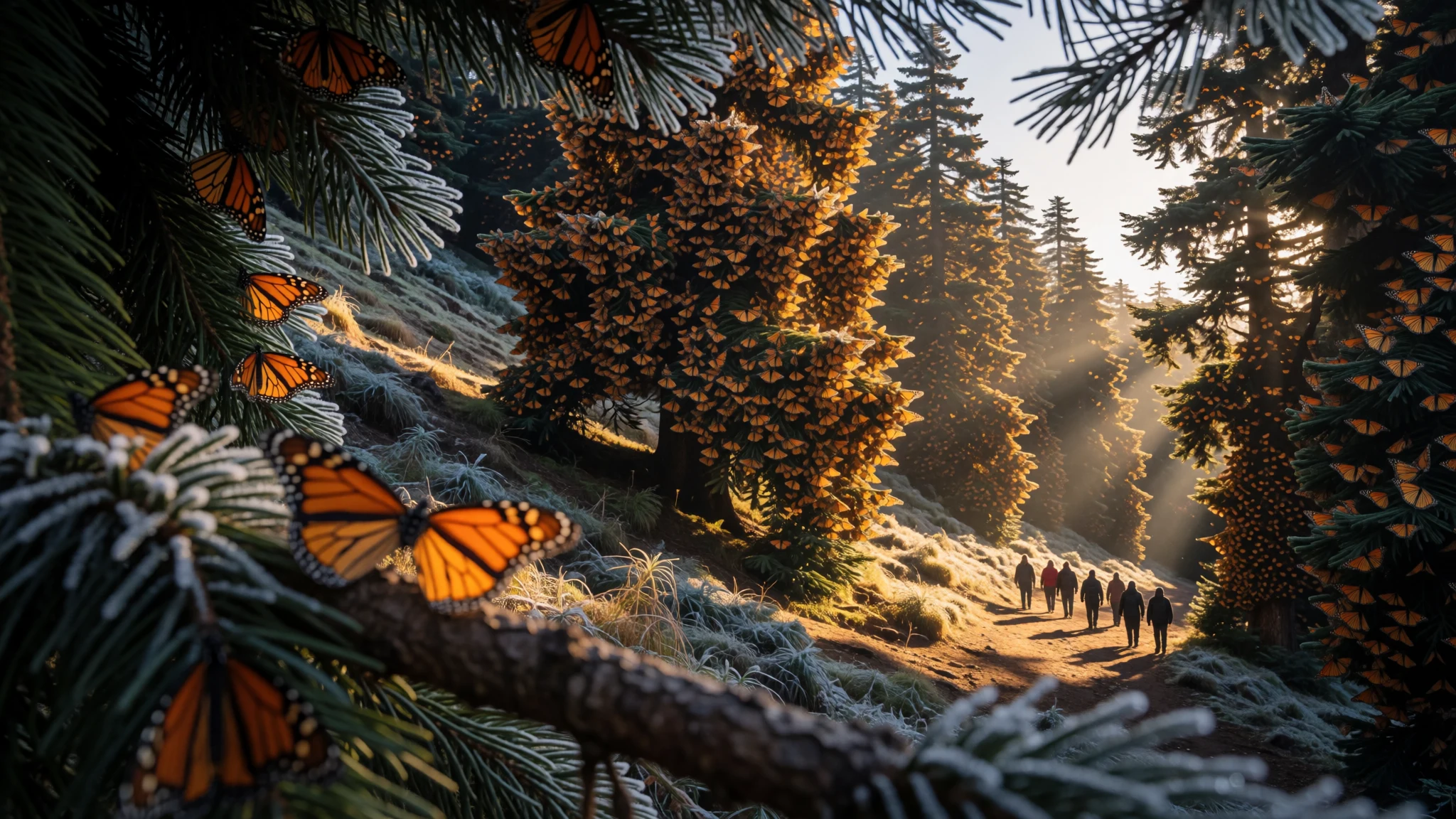
Millions of monarch butterflies cluster on fir branches in the Mexican highlands each winter, and walking up to them is quietly astonishing.
The place
The Monarch Butterfly Biosphere Reserve sits in the forested mountains where Michoacán meets the State of Mexico, to the north-west of Mexico City. It protects the forests where most of the eastern North American monarch population spends the winter. The reserve was created in 2000 and is a UNESCO World Heritage Site.
The reserve is large, but the butterflies occupy only a small part of it, and only for part of the year, from roughly October to March. The ground is pine and oyamel fir forest on steep hills, and the landscape is still mostly rural, with farms, villages and communal woodland all around the protected areas.
Five sanctuaries are open to the public: El Rosario and Sierra Chincua in Michoacán, and Cerro Pelón (El Capulín), Piedra Herrada and La Mesa in the State of Mexico. El Rosario is the best known and gets very crowded at weekends in season. Sierra Chincua is more rustic and generally feels calmer. Piedra Herrada is often chosen by people who want a shorter, gentler visit from the Mexico City side.
There is nothing to eat inside the sanctuaries, so food comes from the stalls and eateries near the entrances. At El Rosario the climb to the colony is about 2 km uphill, at altitude, on forest paths. Expect moderate effort, thin air and cold mornings. When the sun warms the colony, the butterflies lift off in swirls, which is the moment most visitors remember.
Its story
Researchers identified the Mexican overwintering sites in 1975, although local people had known the butterflies for far longer. That discovery began a push to protect the forests, which had already suffered heavy logging, much of it in the colonial period and the 19th century.
After the Mexican Revolution, land grants returned large areas to Indigenous communities, notably Otomí and Mazahua. These communities traditionally kept the upper mountain slopes as shared land for collective use, including careful forest harvesting, while the lower hills were split into family plots with food gardens. That pattern of ownership still shapes the reserve, because much of the protected land is held by communities and private owners rather than the state.
Protection arrived in stages. A first decree in 1980, under President José López Portillo, followed years of research on the migration. In 1986 the poet Homero Aridjis, founder of the Group of 100, persuaded President Miguel de la Madrid to sign a stronger decree. It covered Sierra Chincua, Sierra El Campanario, Cerro Chivatí-Huacal, Cerro Pelón and Cerro Altamirano, and banned logging and use of vegetation and wildlife in the core zones. A larger reserve followed in 2000, and UNESCO inscription in 2008.
Tensions remain. Illegal logging and the pressures of tourism worry the administrators, and conservation rules sometimes clash with the livelihoods of farmers and landowners. Climate change is also altering migration patterns. The butterflies' future depends on forests here and on milkweed and weather thousands of kilometres north.
What to see
- El Rosario sanctuary — Ocampo, Michoacán
The busiest and best-organised sanctuary, in Michoacán. A climb of about 2 km leads to the hillside where the colony hangs in the firs. Come on a weekday if you can, since weekends in season are very crowded. Local guides lead the way and the stalls at the entrance are a useful stop.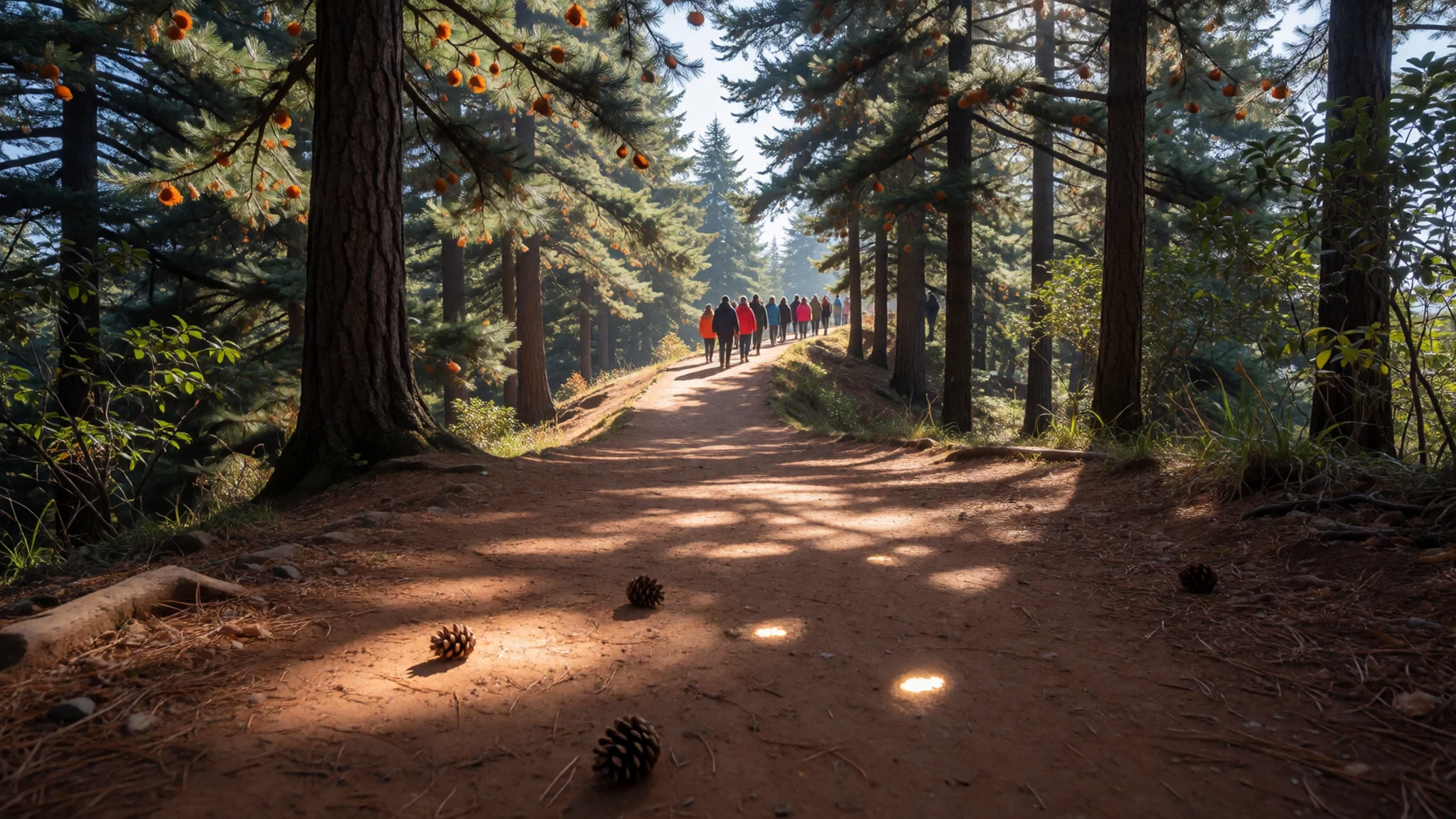
- Sierra Chincua — near Angangueo, Michoacán
A more rustic sanctuary in Michoacán, with forest trails, fewer crowds and a quieter, wilder feel than El Rosario. The walking is moderate and the air is cool and thin. Reaching the colony can take a while, so allow generous time and bring warm layers.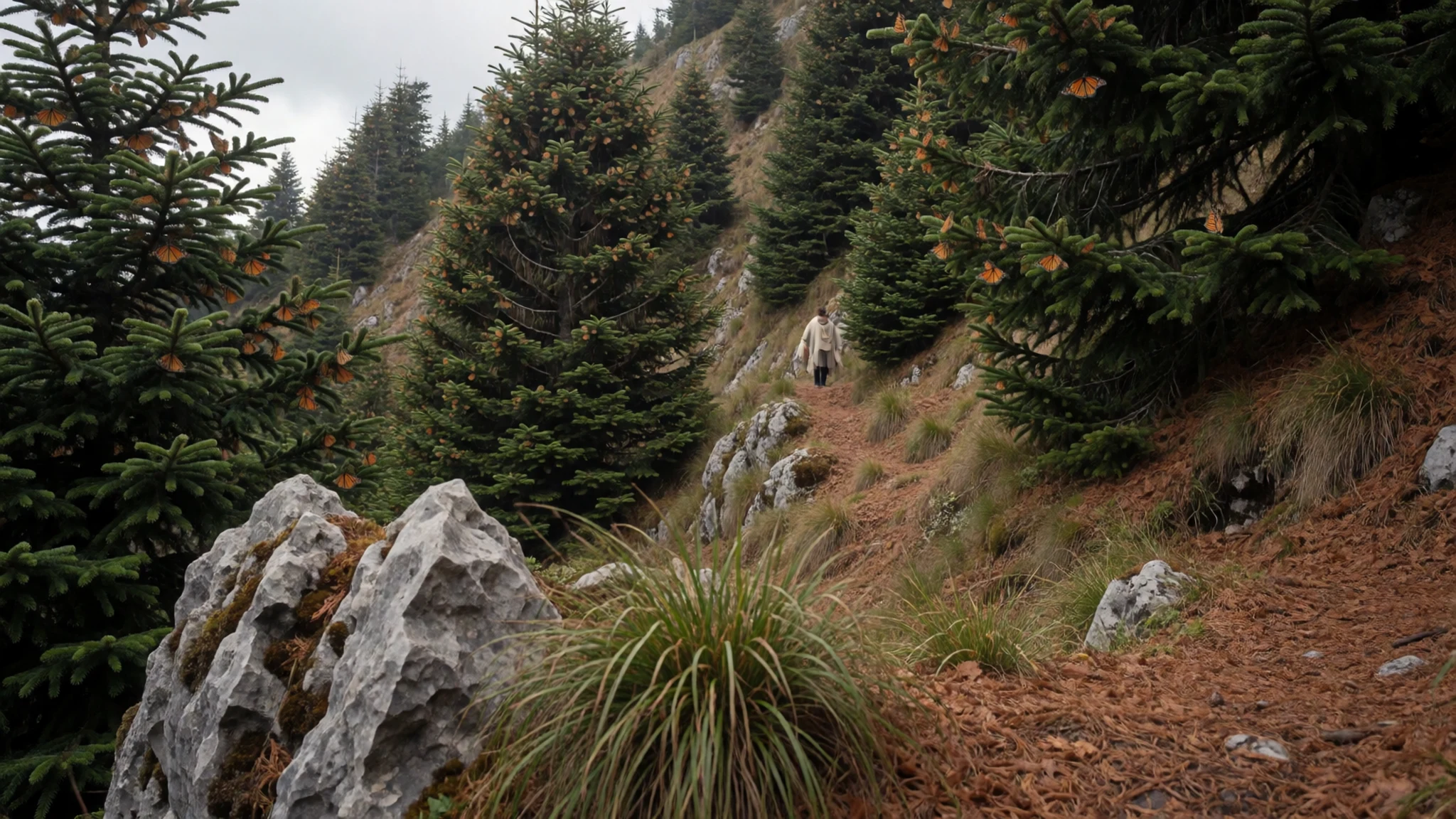
- Piedra Herrada — State of Mexico
One of the sanctuaries on the State of Mexico side, set in the valley country towards Valle de Bravo. It is often picked by visitors coming from Mexico City, and it shows the butterflies resting on oyamel firs, their wings folded to show the brown undersides until the sun hits.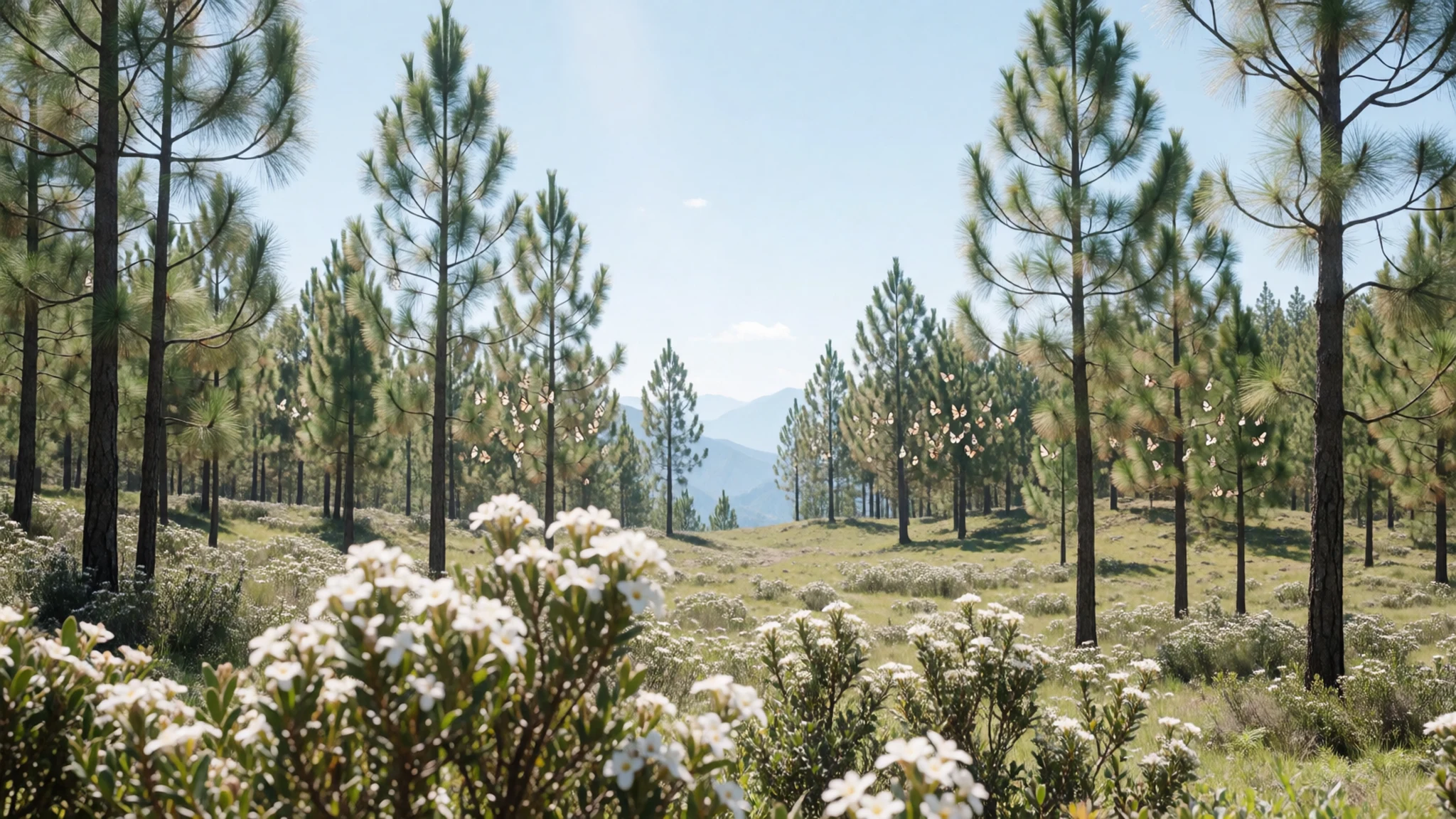
- Cerro Pelón (El Capulín) — State of Mexico
A sanctuary in the State of Mexico, reached by a longer and more strenuous hike than some of the others. It suits people who like a proper mountain walk and are happy to trade convenience for solitude. Ask locally about conditions before setting out.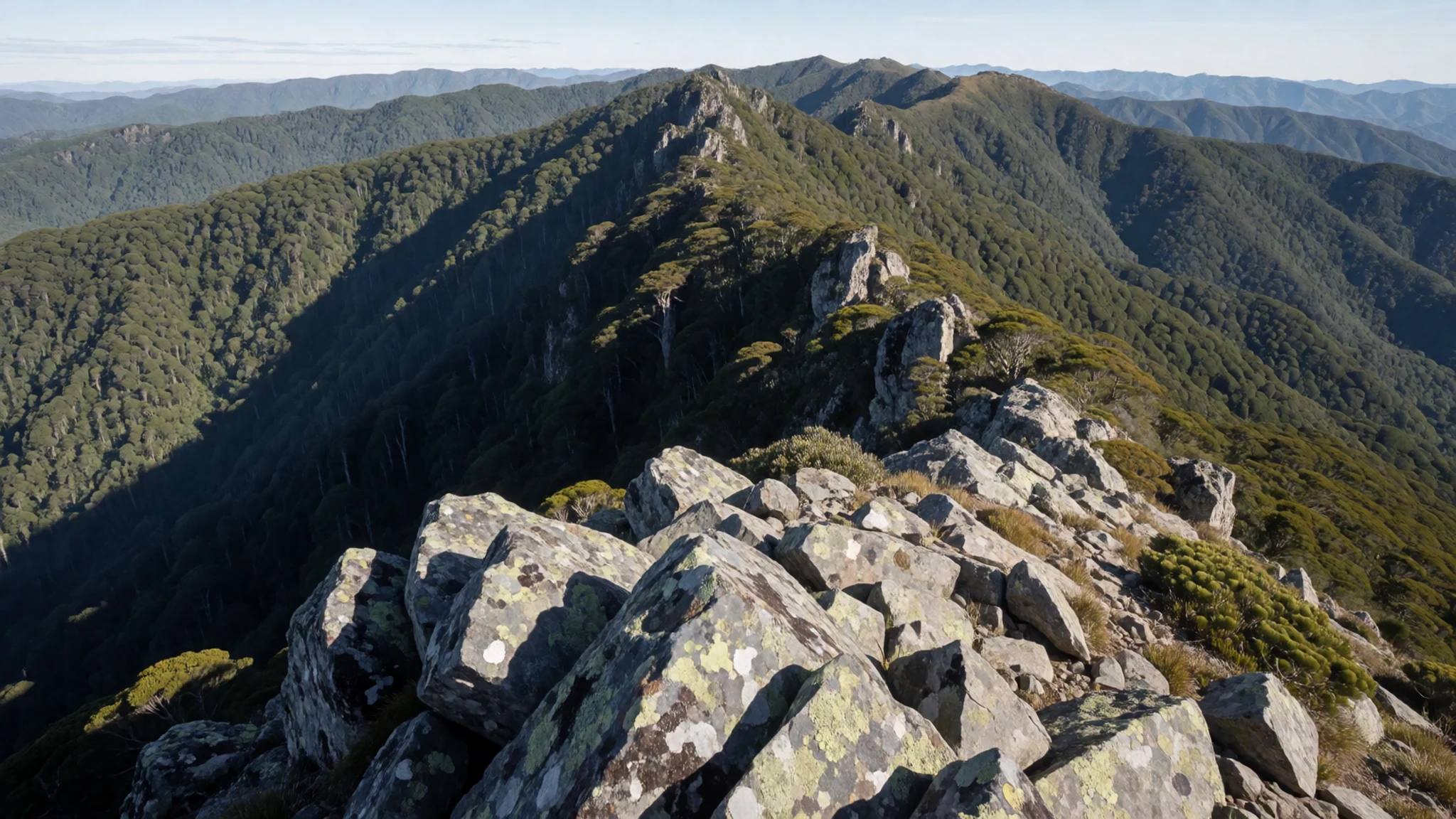
- Angangueo — Michoacán
An old mining town and one of Mexico's Magical Villages, useful as a base for Sierra Chincua and El Rosario. Its steep streets and old buildings make a pleasant evening after a day in the cold forest, and guesthouses are easy to find in season.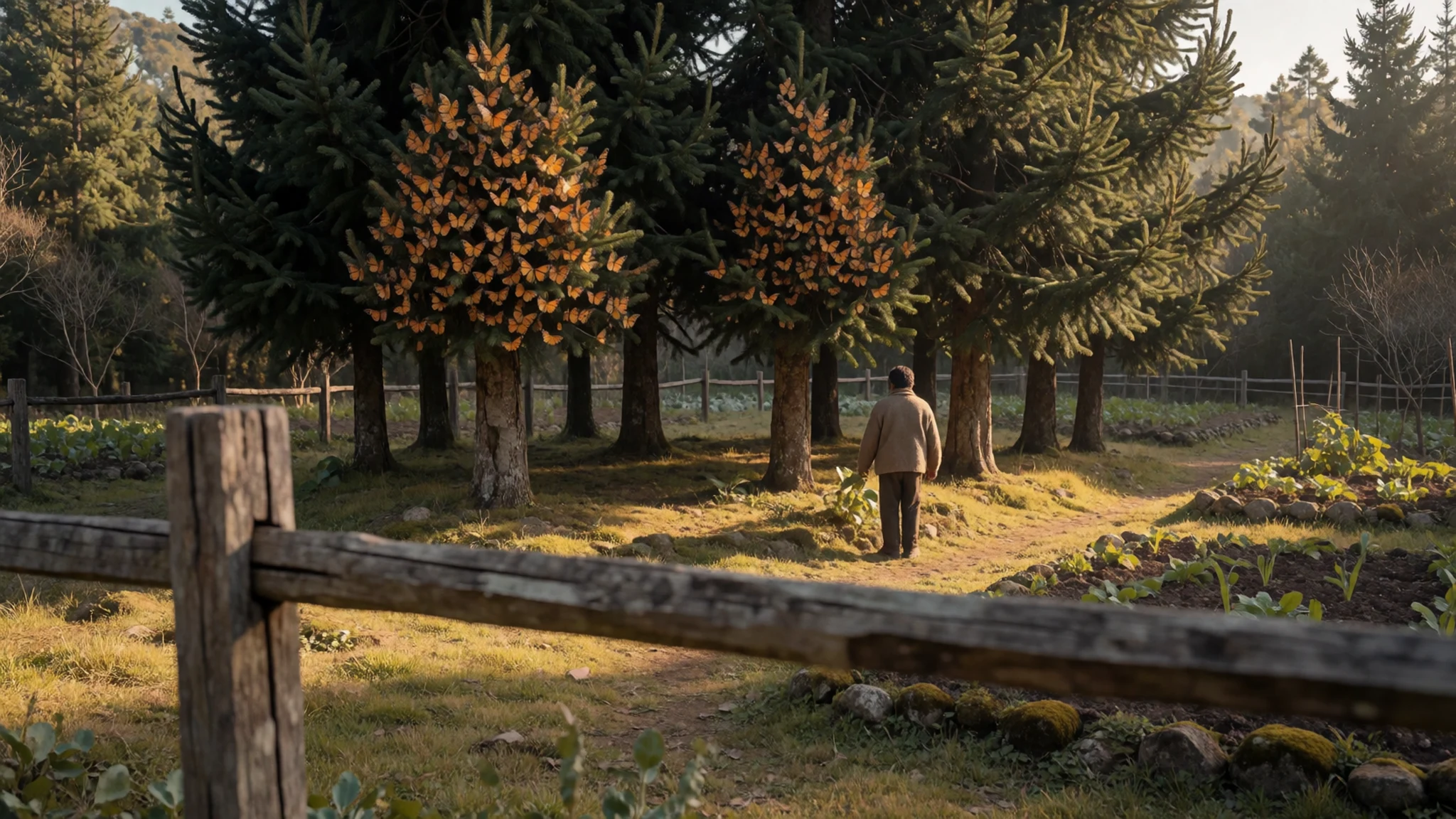
Culture
The Monarch Butterfly Biosphere Reserve is not a park in the usual sense. The land belongs to local communities, mostly rural, and the people who guide and run the sanctuaries are often their owners. Otomí and Mazahua communities have long kept the high forest as shared land, and many families now earn part of their living from visitors during the butterfly season.
That makes how you visit matter. Hiring a local guide, buying food and crafts at the stalls, and staying in nearby towns put money directly into the communities that have an interest in keeping the forests standing. Illegal logging is a real pressure on the reserve, so legal tourism is part of the conservation argument.
The sanctuary experience is deliberately quiet. The colonies are delicate, and a clustered mass of butterflies stays dormant in the cold. Loud noise, sudden movement and touching can disturb them, and when they are disturbed they burn energy they need to survive the winter and fly north. Guides will tell you where to stand and when to pause.
In Mexican villages in the highlands, a friendly greeting to people you pass on the trail is usual, and guides are used to questions. Ask before photographing people.
Stay on the marked path, keep your voice low, and never touch or pick up a butterfly, even one lying on the ground.
What to wear
Around the reserve, traditional dress belongs mainly to the Otomí and Mazahua communities. Women's clothing often includes embroidered blouses, wide skirts and woven sashes, with woollen shawls or rebozos made of cotton or wool. Many are worn for festivals, markets and family occasions rather than every day, and the patterns and colours differ between villages.
Day to day, people in the area wear what suits a cold, rural mountain life: jeans, fleeces, wool jumpers, wellington boots or sturdy shoes, and often a woollen hat or a cap. Guides wear practical outdoor clothes, and at the entrance stalls you will see plenty of ponchos, scarves and knitted hats for sale.
Visitors should dress for altitude and walking rather than for style. Mornings and evenings are cold at this height, even on sunny days, so bring layers: a thermal base, a fleece and a windproof or waterproof jacket. A hat, sunglasses and sun cream help when the butterflies take flight in the midday sun. Choose sturdy shoes with grip, since paths are steep, dusty or muddy and the climb is long. Dark clothing is fine, but avoid strong perfume or insect repellent near the colonies. Modest everyday clothing is fine; there is no special dress code beyond sensible outdoor wear. Carry a small daypack for water, snacks and a rain layer.
What to eat
- Quesadillas — stalls and eateries below the sanctuary entrances
Folded tortillas with melted cheese or fillings such as mushrooms, squash flowers or potato, griddled to order. They are the standard fuel for a walk to the butterflies and are sold at the stalls and small eateries by the sanctuary entrances.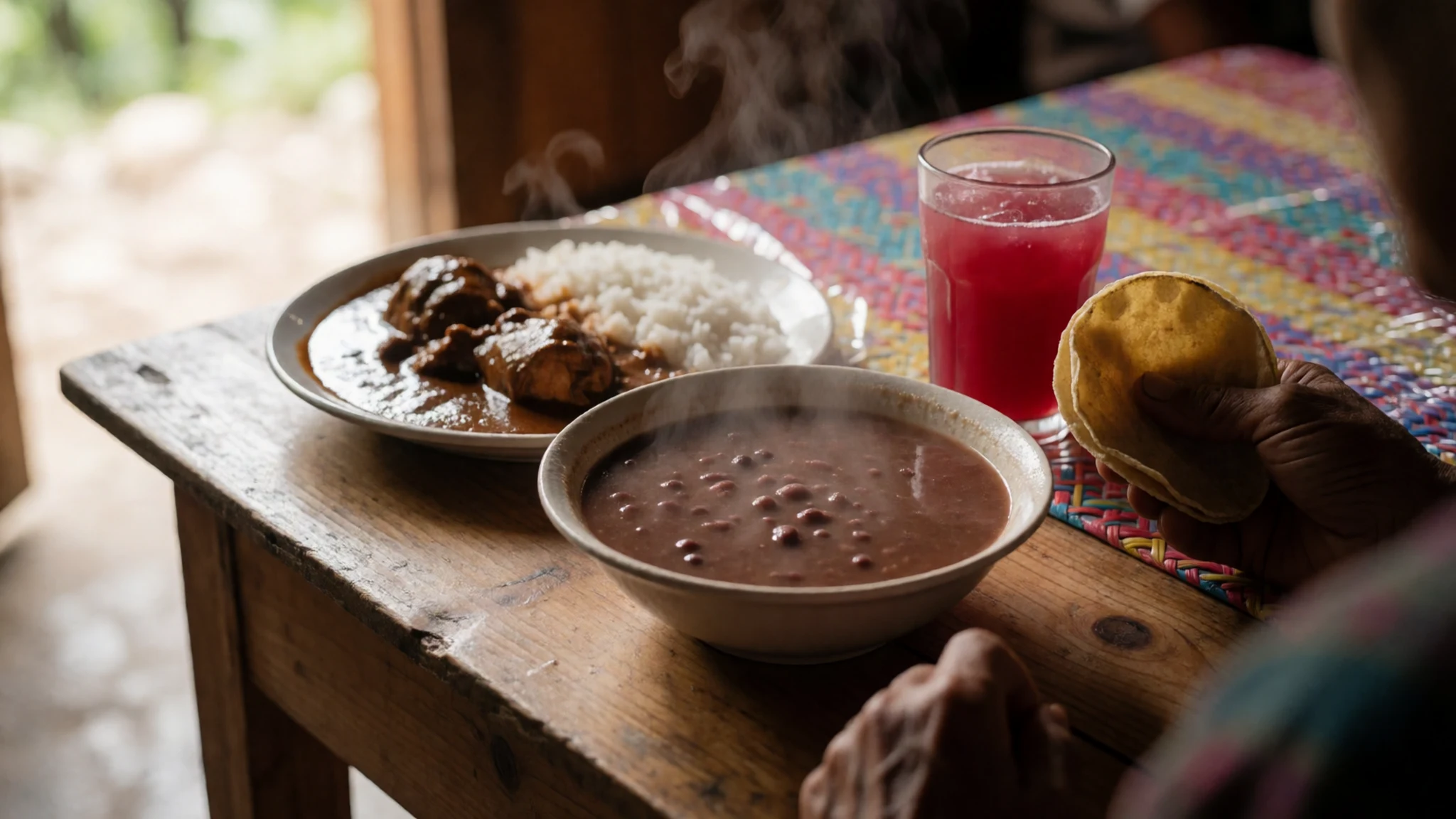
- Tacos de guisado — market stalls in Angangueo and nearby towns
Soft tortillas filled with stewed dishes, often chilli-spiked pork, beans or potatoes with chorizo. They are cheap, fast and filling, and are a typical lunch in the market towns around the reserve.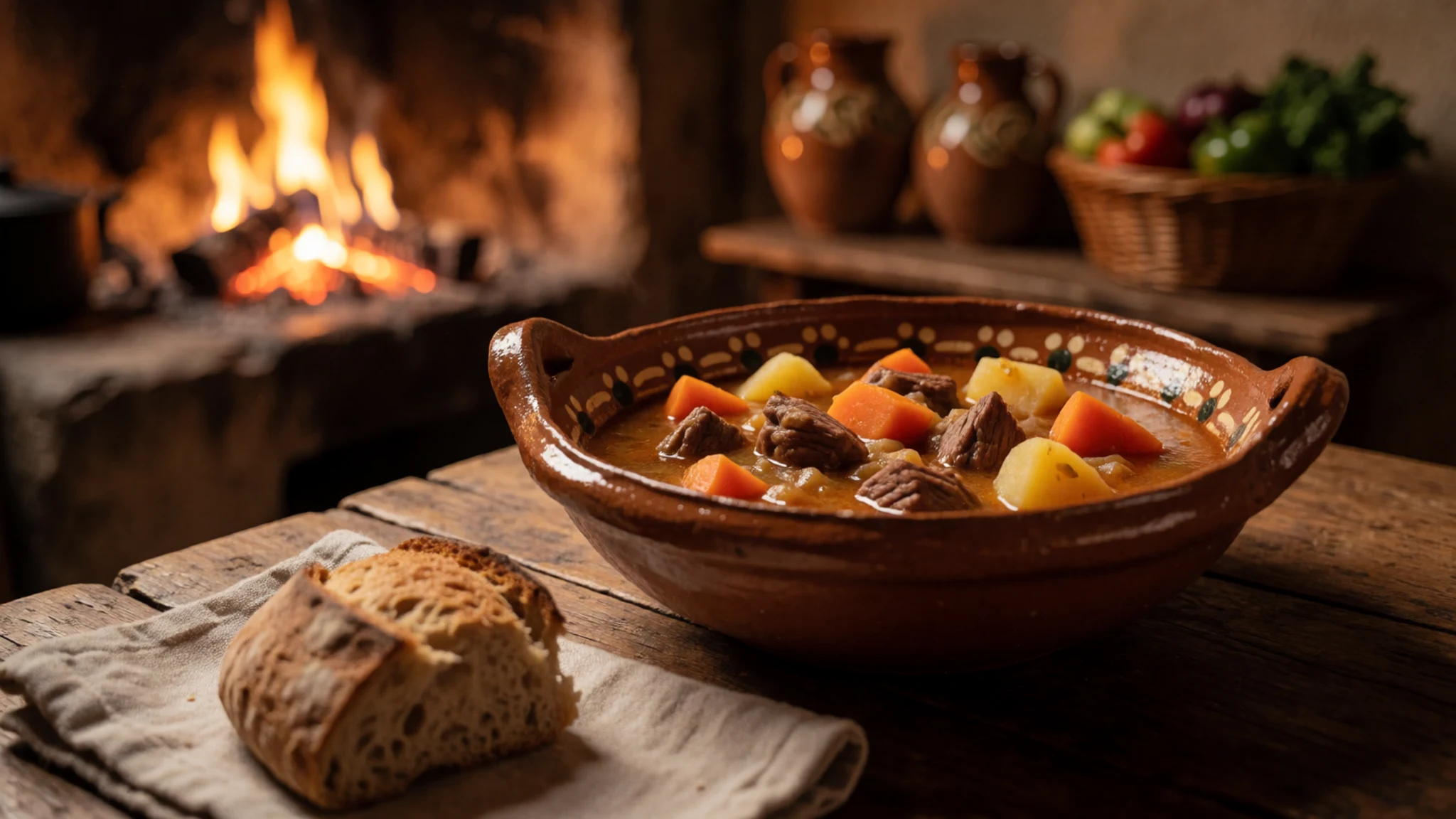
- Sopa de hongos — small family restaurants in Angangueo
Mushroom soup made with wild or farmed mushrooms, often with epazote and chilli. In the cool forest highlands it is warming after a morning on the trail, and mushrooms are a seasonal speciality in the damp months. - Trout (trucha) — roadside restaurants and fish farms in the highlands
Freshwater trout, often grilled with garlic or served in a chilli sauce, is a common dish in the mountain valleys, where fish farms use cold streams. It is a hearty lunch after the climb. - Atole and hot chocolate — stalls near the sanctuary entrances
Warm drinks make sense at this altitude. Atole is a thick, lightly sweet drink made from maize, sometimes flavoured with chocolate or fruit. Both are sold at the entrance stalls and are welcome on a cold morning.
Plan it
Best time. The butterflies are in residence roughly from late autumn to March; the colonies are usually at their densest in January and February, and the sanctuaries are cold in the mornings and crowded at weekends. Late February and March can be warmer, and the butterflies are more active as they prepare to leave.
How long. 2–3
Getting there. Fly to Mexico City or take a bus to Morelia or Toluca, the usual bases. From Morelia, buses to El Rosario take about 5 hours and need at least two changes, via Zitácuaro; tours from Morelia are an easier option. Check current transport options before you travel.
Budget. mid
Tips
- Go on a weekday if you can, as El Rosario is very crowded at weekends in season
- Start early: the climb is long and the butterflies are calmer in cool morning light
- Take layers, water and snacks, since there is nothing to eat inside the sanctuaries
- Carry cash for entry, guides, food and crafts, as cards are unlikely to work
- Allow time for altitude: take the climb slowly, and consider a tour if you are short of time
Etiquette
- Stay on marked paths and keep your voice low near the colonies
- Never touch, pick up or shake butterflies or the trees
- Hire a local guide and buy from community stalls
Nearby
Sources
- Wikidata Q852546 (CC0)
- Wikipedia: Monarch Butterfly Biosphere Reserve (rev 1371504981) (CC BY-SA 4.0)
- Wikivoyage: Monarch Butterfly Reserves (rev 5411335) (CC BY-SA 4.0)
- Photo: Abies religiosa Chincua 5 (CC BY-SA 2.0)
- Photo: Reserva de la Biósfera Santuario Mariposa Monarca (CC BY 2.5)
- Photo: Mexmonarchs (CC BY 2.5)
- Photo: Monarch butterflies on Oyamel fir, Piedra Herrada (CC BY-SA 4.0)
- Photo: Abetos, Reserva de la Biosfera de la Mariposa Monarca (CC BY-SA 4.0)
- Photo: Ejido El Rosario (CC BY-SA 4.0)
- Photo: Flor Mariposa, Temascaltepec (CC BY 2.5)
- Photo: Mariposa Monarca Santuario (CC BY-SA 4.0)


Wildlife
- Monarch butterfly (animal)
The monarch is the orange-and-black butterfly that travels a very long way to spend winter far from home, a tiny traveller with a passport made of wings. Its wings are patterned in black, orange and white. In the reserve, the eastern population shelters through the winter after journeying down from North America. To watch well, keep your distance, stay quiet and calm, go with a local guide, and never feed or touch them.