Misol-Ha
Misol-Ha, Mexico
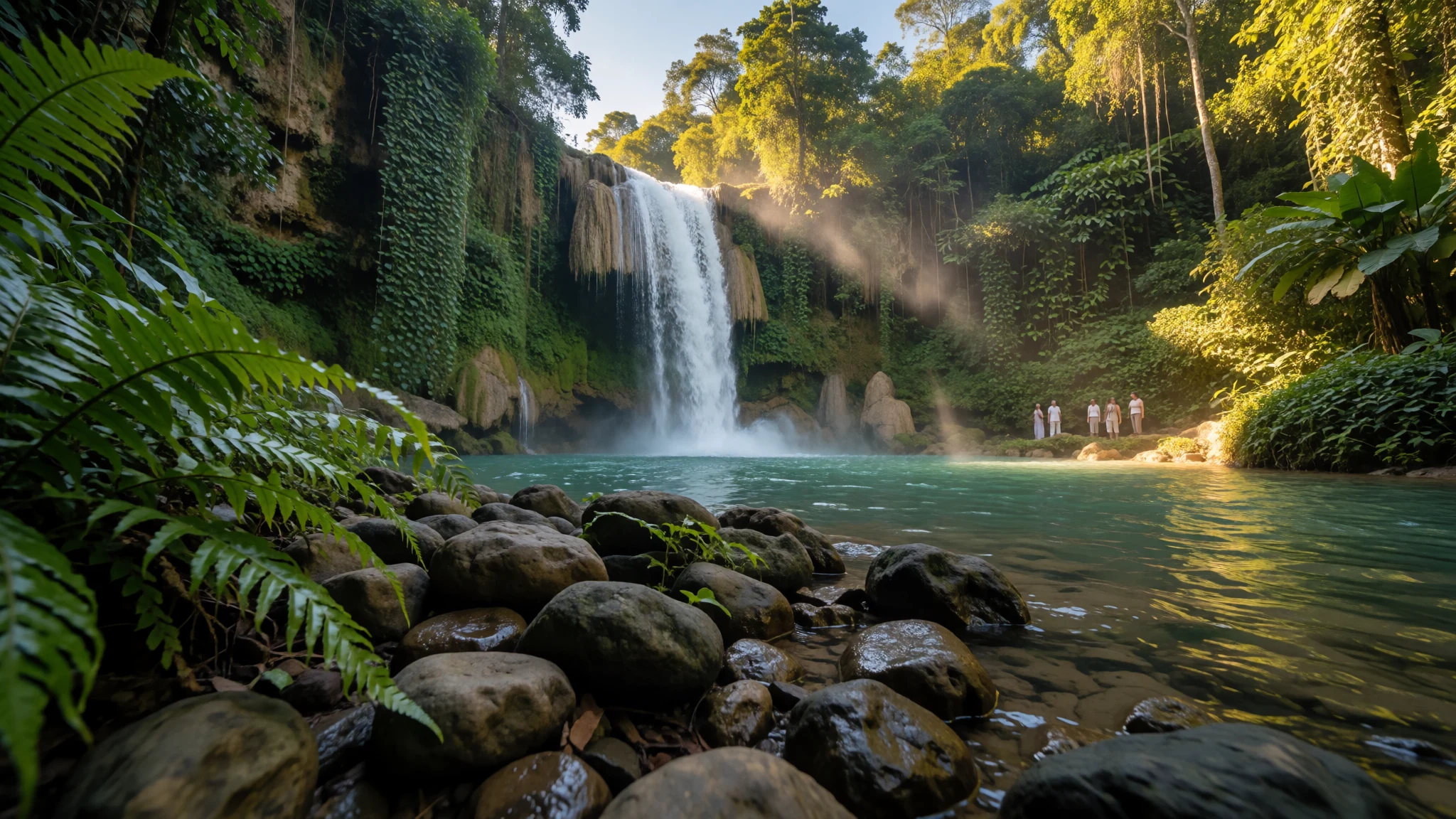
Misol-Há is a tall, single-drop waterfall in the Chiapas jungle, with a swimmable pool and a cave behind the falling water.
The place
Misol-Há is a waterfall in the Mexican state of Chiapas, in the municipality of Salto de Agua, about 20 km from Palenque along the road towards San Cristóbal de las Casas. The name comes from the Ch'ol language and means roughly "water falls". The river drops about 35 m in one unbroken ribbon into an almost circular pool, with tropical forest crowding the rim. Because the water carries a lot of dissolved minerals, the pool looks clear blue in good light, though heavy rain upstream can cloud it. Behind the falling water sits a cave of about 20 m, reached on foot along the edge of the pool. The pool is calm enough for swimming around its margins, and most visitors end up in the water at some point. The setting is humid lowland jungle, so the air is warm, the spray is constant and the sound of the fall carries a long way through the trees. The site is compact. Most people spend a couple of hours here, and it works best as a stop between Palenque and the highlands, or as a swim after a morning at the ruins. Simple facilities, including food and basic lodging, have grown up near the pool, but what is offered and what it costs changes, so check locally. Tour minibuses from Palenque tend to arrive mid-morning, which is when it is busiest. Early and late are quieter.
Its story
Misol-Há carries a Ch'ol name, and the name is the best clue to its history. The Ch'ol are a Maya people whose communities still live across northern Chiapas, and they called the place for what it does: water falling. The word needs no explanation, because the roar reaches the path before the view does. The fall belongs to a limestone landscape in which mineral-rich water cuts, deposits and rebuilds rock over very long stretches of time. That mineral load explains the pool's blue colour, and it also explains why the colour shifts when storms stir the river. Long before it appeared on tour itineraries, the pool was most likely known first to people from nearby villages, a place for washing, swimming and cooling off in a hot climate. Wider fame arrived with the road between Palenque and San Cristóbal de las Casas, which links the steamy lowlands with the cool mountains and passes close to the waterfall. Travellers heading for the Maya city of Palenque began to add a swim here to the same trip, and a modest set of visitor services followed. Today Misol-Há is a mix of things: a community landscape, a wayside attraction and a small lesson in how a short detour from a main road can lead to a whole river ecosystem. Who manages the site and what is charged at the gate are best confirmed locally before setting out.
What to see
- The main cascade — Misol-Há, Salto de Agua municipality
Misol-Há's fall drops about 35 m in a single ribbon, and the best first look is from the viewing area near the top of the steps, where the whole drop and the round pool fit in one frame. Mist drifts onto the platform on windy days, so a lens cloth helps. Morning light is softer than the midday glare.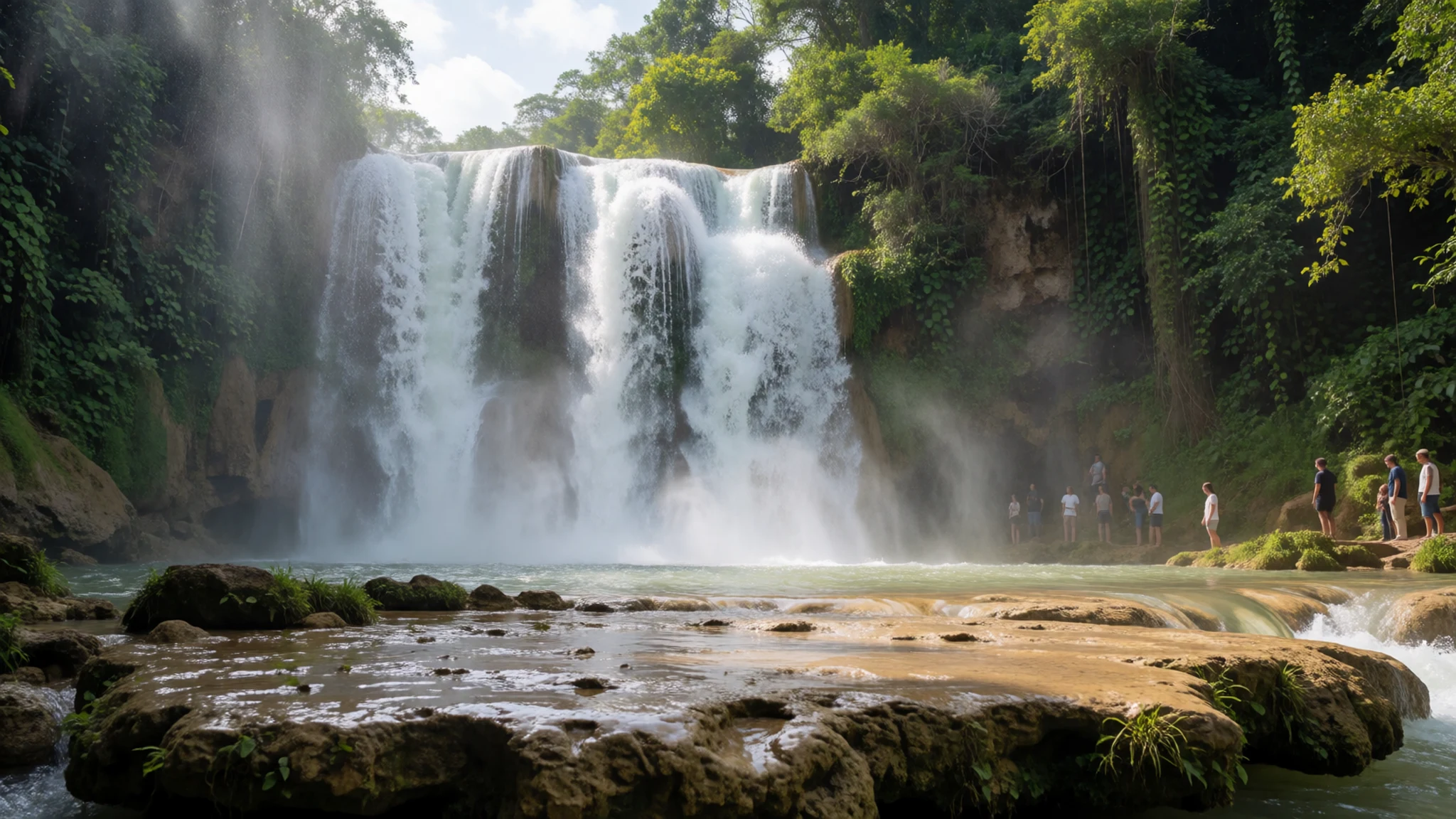
- The plunge pool — Base of the cascade
The pool below the fall is almost circular and lined with forest, and swimming is possible along its calmer edges. The water feels cool after a hot drive. Keep clear of the churning area directly under the fall, where the force of the water is greater than it looks from the bank.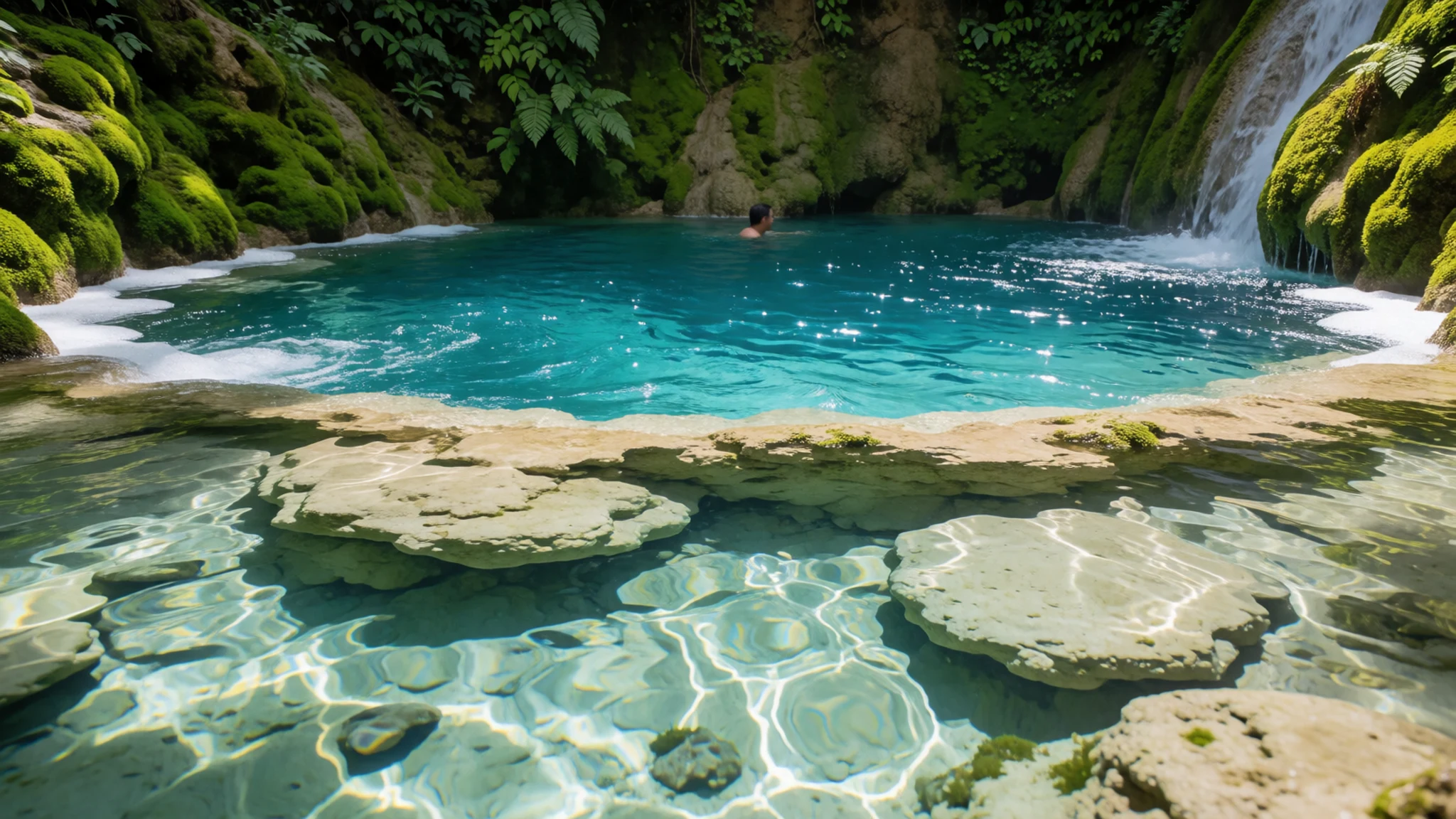
- The cave behind the fall — Behind the main fall
A path leads behind the curtain of water into a cave about 20 m long. Rock is wet and slick, light is poor and spray soaks everyone, so grippy footwear and a small torch are worth carrying. Water levels decide whether the walk is open, so ask staff on arrival.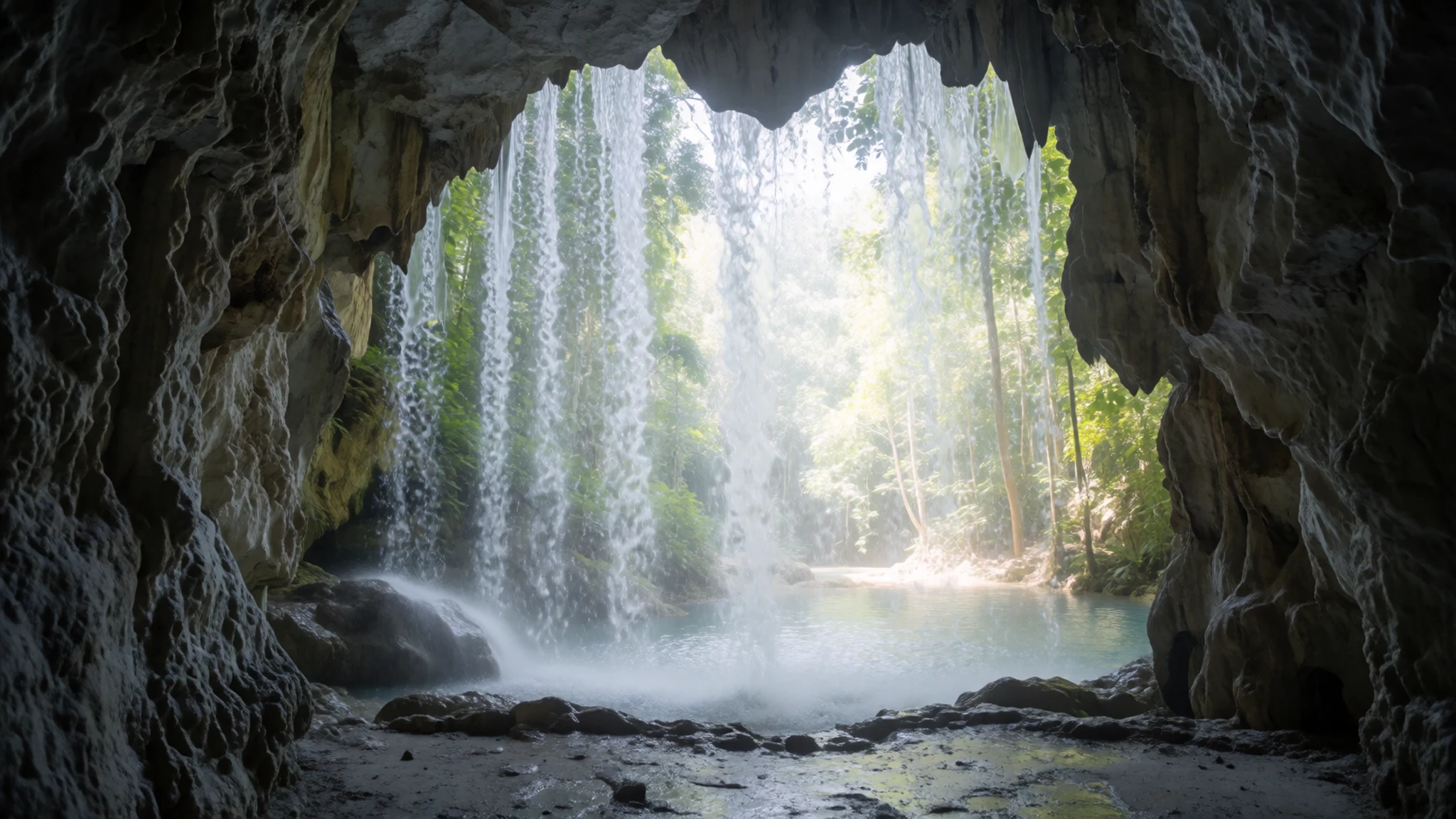
- The river and forest downstream — Downstream of the pool
Below the pool the river slips away through lowland forest. Where paths are open, a short walk along the water is a good way to get away from the busiest spot and look for birds, butterflies and lizards. Rain makes the ground muddy, so wear shoes you do not mind staining.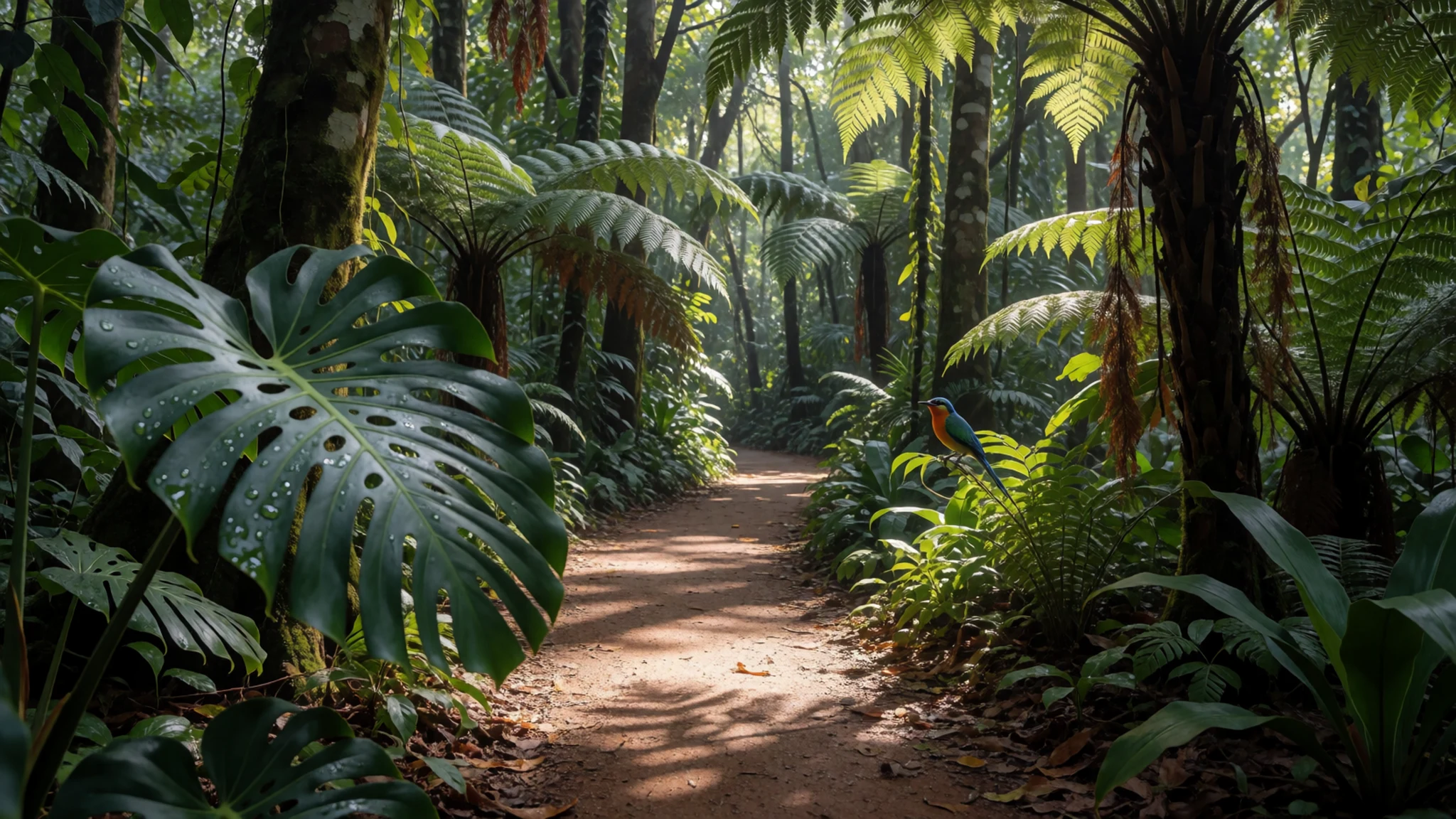
- Palenque, the usual base — Palenque, Chiapas
Palenque is about 20 km away and is where most visitors stay. Its Maya ruins sit in the forest and are best seen in the cool of the morning, leaving Misol-Há as a restorative swim in the afternoon. Check opening arrangements and entry charges with the official site before planning.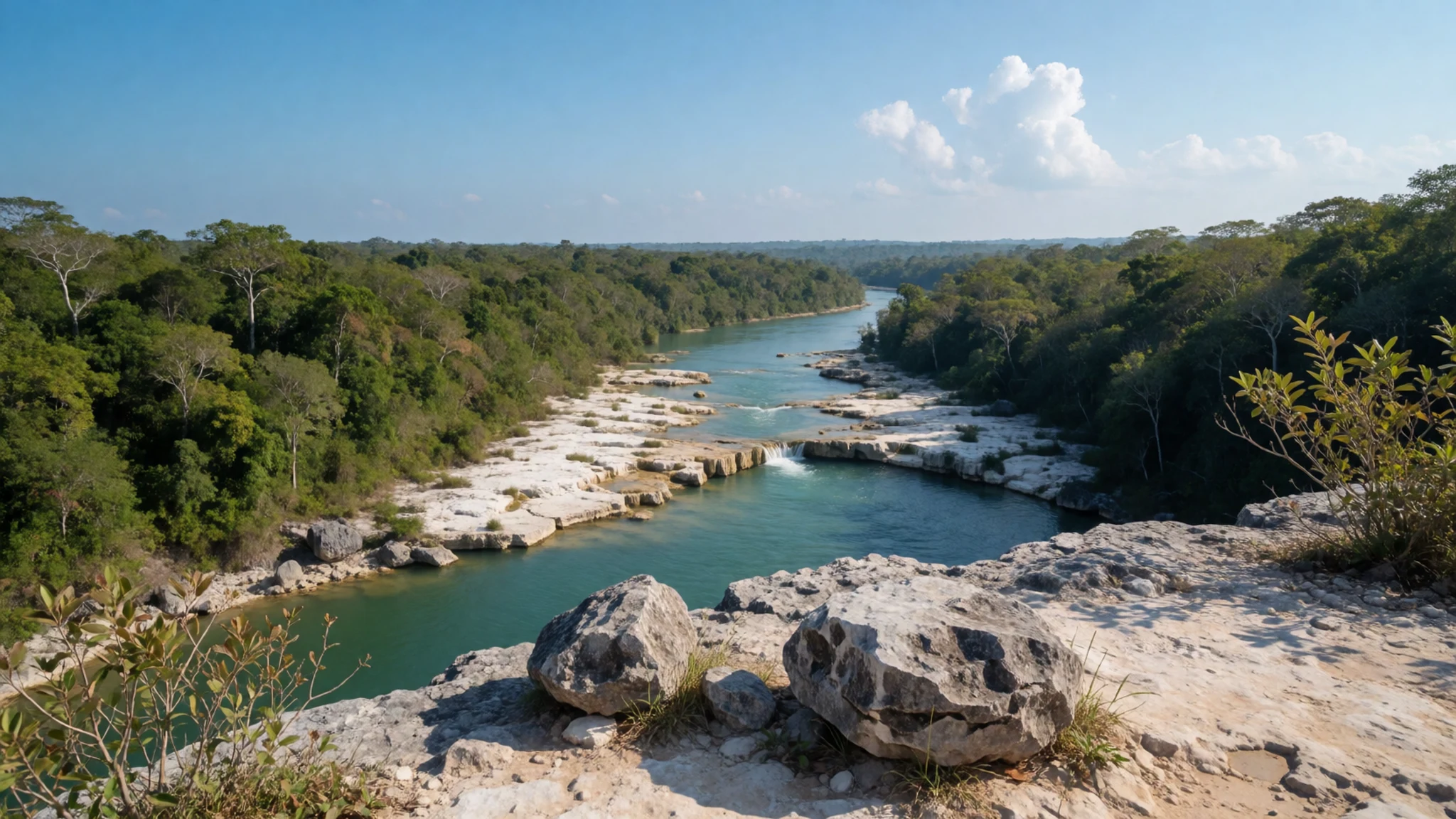
Culture
Misol-Há sits in Ch'ol Maya country, and the people running the stalls, paths and gate are usually from the surrounding villages. Spanish is the common language of visitors, but Ch'ol is widely spoken in the area, and a greeting in either is appreciated. Across Chiapas, waterfalls, caves and springs are often run by local communities, so entry charges and small purchases help fund upkeep and local livelihoods. In Maya traditions, caves and water sources have long carried spiritual meaning, and it helps to treat the cave behind the fall as more than a photo spot. The waterfall is also an everyday place for swimming and relaxing for people from nearby towns, especially at weekends and holidays, so the mood is relaxed and family-oriented rather than hushed. Food and drink are normally sold close to the pool, and buying from the local stalls is the simplest way to give something back. The road from Palenque passes villages, small farms and roadside stands, where slowing down for people and animals matters. The wet season brings heavy downpours that change the river quickly, and staff are the best guide to what is safe on any given day. Greet people with a friendly "buenos días", ask before photographing anyone, and keep soap, sunscreen and litter out of the pool.
What to wear
Around Misol-Há, traditional dress is best known through Ch'ol and other Maya communities of Chiapas, where women's clothing has long centred on embroidered cotton blouses worn over gathered or wrapped skirts. Bright thread, floral patterns and ribbon trim are common, and some cloth is still woven on backstrap looms. This dress is worn most reliably on festival days and by older women in villages, and styles differ from one community to the next. In daily life, most people in the area now wear what suits heat and work: T-shirts, light cotton shirts, jeans or shorts, caps and straw hats, with sandals or rubber boots when it rains. Visiting families at the pool wear swimwear and quick-dry layers. A visitor should dress for hot, humid lowland weather: light, quick-drying clothing, a swimsuit under it, a sun hat and insect repellent. The path to the pool and the cave behind the fall is wet and slippery, so footwear with grip matters more than looks; water shoes or sturdy sandals work well, and flip-flops are risky. Bring a light rain jacket in the wet season. In villages and when visiting a church on the road, shoulders and knees covered is a courteous default, and swimwear belongs at the pool, not in the streets.
What to eat
- Tamales de chipilín — Palenque's market and village breakfast stalls
Steamed maize dough flavoured with chipilín, a leafy herb widely used in Chiapas, often with cheese. They are soft, savoury and easy to eat by hand. Look for them at market stalls and breakfast counters in Palenque and nearby villages.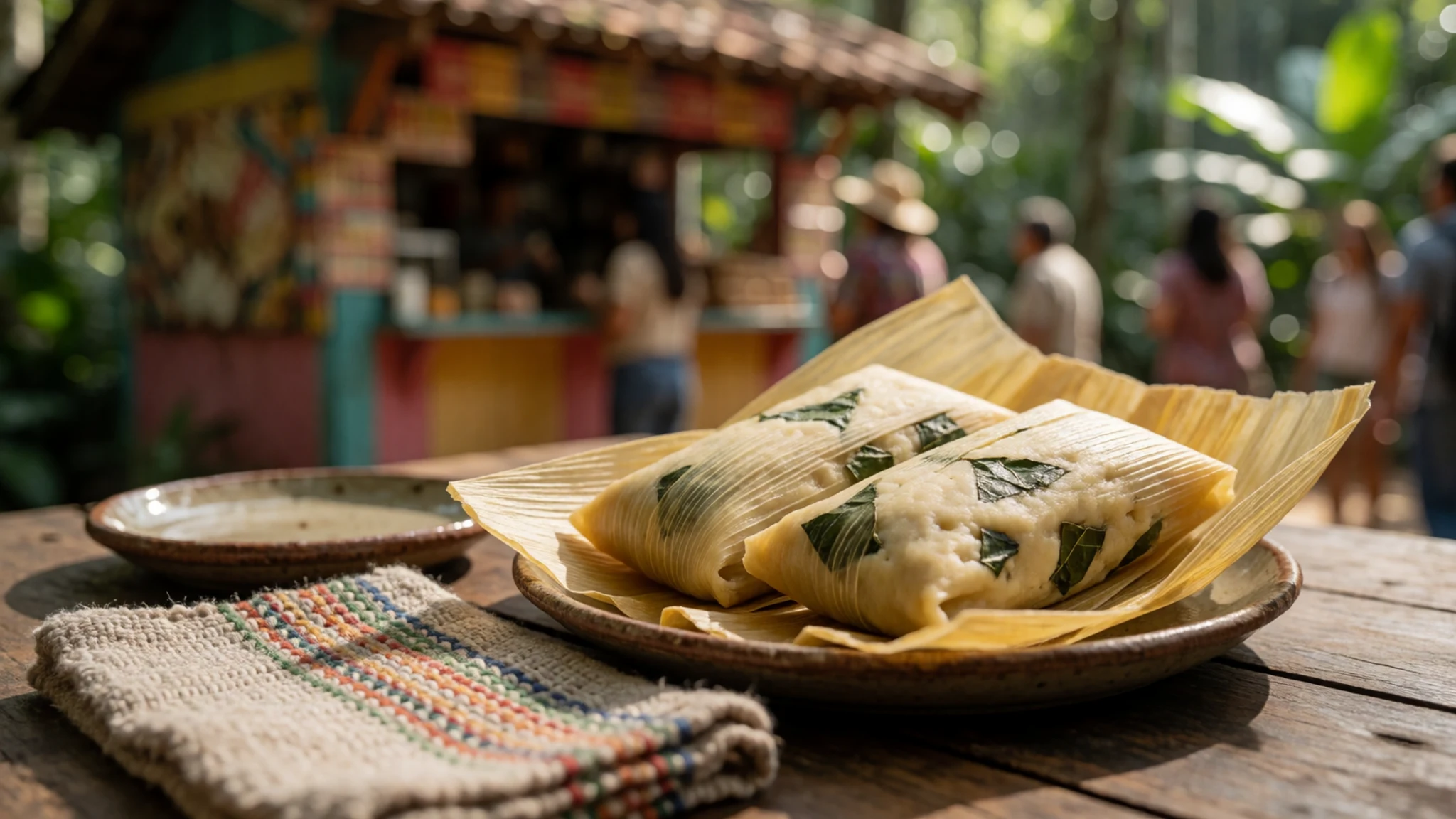
- Pozol — Market stalls and roadside stands around Palenque
A cold drink of ground maize dough mixed with water, sometimes sweetened or sprinkled with salt or chilli. It is filling and cooling in humid heat. Local sellers serve it from large bowls or jars; first-timers may prefer a small cup.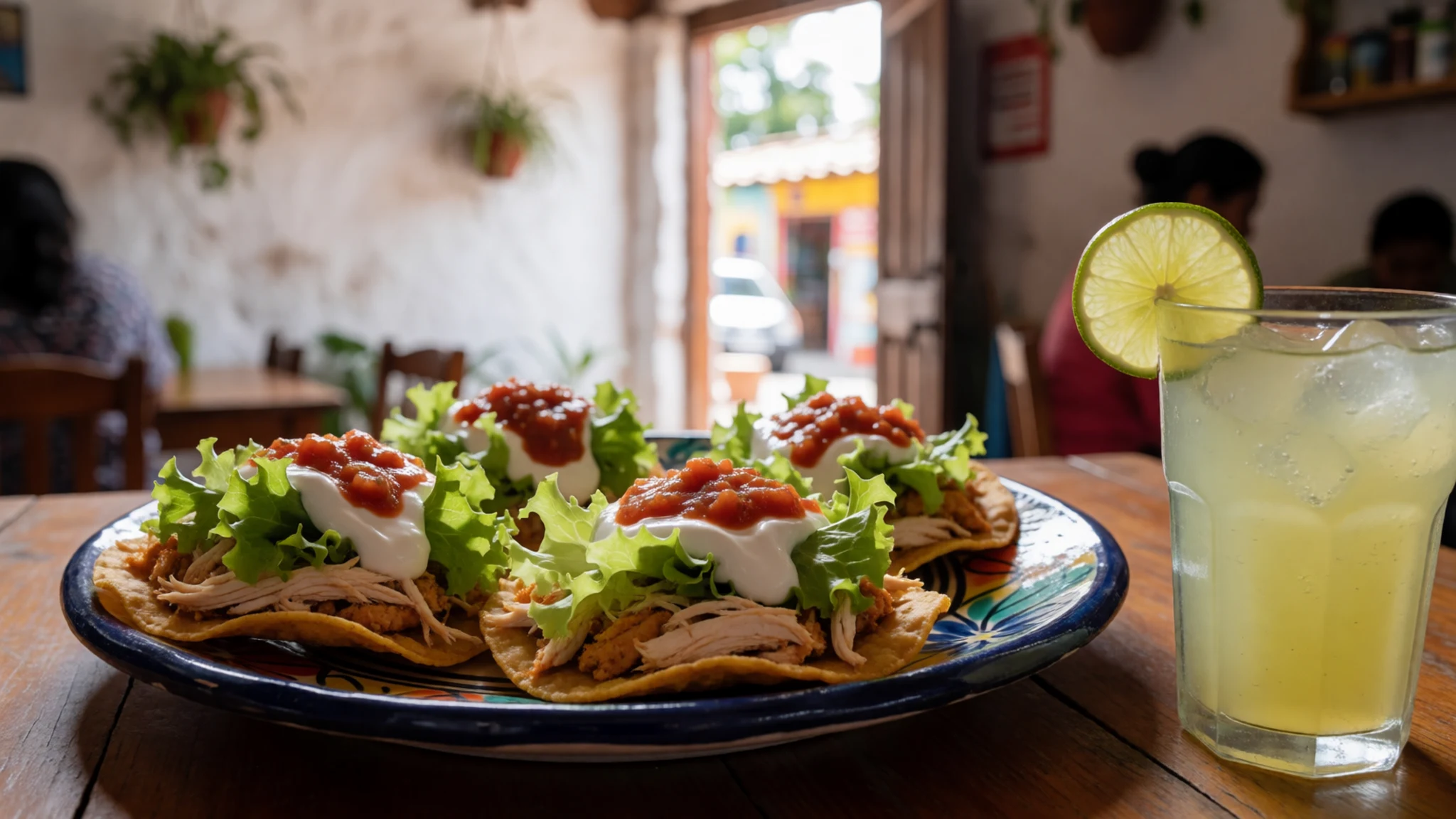
- Mojarra frita — Simple eateries near the waterfall and along the Palenque road
Whole fried freshwater fish, usually served crisp with rice, salad, lime and tortillas. It is a common lunch near rivers and waterfalls in the region. Sharing a plate between two is usually enough, and the bones are part of the experience. - Fruta con chile y limón — Fruit carts in Palenque and stalls at the waterfall
Cut tropical fruit such as mango, pineapple, jicama or watermelon, dressed with lime juice and chilli. It is a cheap, refreshing snack after a swim or a walk. Ask for it with little chilli if heat is a worry. - Café de Chiapas — Cafés and breakfast spots in Palenque
Chiapas is a coffee-growing state, and a cup of locally grown coffee is an easy way to taste the region. It is usually served black or with milk, sometimes sweetened with cane sugar. Cafés in town are better than instant versions at roadside stops.
Plan it
Best time. November to April is generally drier, with a lower river, clearer water and easier roads. The rainy season, roughly June to October, is hot and humid, and heavy rain can make the pool cloudy and the paths slick. Early mornings are cooler in any season.
How long. 1
Getting there. Fly to Villahermosa or Tuxtla Gutiérrez, or use the small Palenque airport where flights are running, then continue by road to Palenque town. From Palenque, Misol-Há is about 20 km along the road towards San Cristóbal de las Casas, reached by taxi, shared minibus or an organised tour.
Budget. low
Tips
- Go early or late in the day to avoid the mid-morning tour groups
- Carry some cash in small notes for entry, food and parking, and check current charges locally
- Bring a swimsuit, quick-dry towel and water shoes with grip
- Pair the visit with Palenque's ruins or other waterfalls on the same road, and check road conditions first
- Carry drinking water and insect repellent, and keep valuables in a waterproof bag
Etiquette
- Greet staff and villagers politely and ask before photographing people
- Keep soap, sunscreen and litter out of the pool
- Follow the staff's advice on where swimming is safe and whether the cave is open
Nearby
Sources
- Wikidata Q1938854 (CC0)
- Wikipedia: Misol-Há (rev 1370575773) (CC BY-SA 4.0)
- Wikivoyage: Palenque (CC BY-SA 4.0)
- Photo: Misol Ha cascade Chipas Mexico — Wasquewhat (CC BY 3.0)
- Photo: Misol-Ha — August Dominus (CC BY-SA 4.0)
- Photo: Mexico — Luca Nebuloni (CC BY 2.5)
- Photo: Chiapas — Deisy560 (CC BY 3.0)
- Photo: Cascada de Misol - Ha — jc_castaneda (CC BY 3.0)
- Photo: Cascada Misol Ha — ben_kitchener3 (CC BY 3.0)
- Photo: Cascada Misol Ha, Lago, Chiapas — Comisión Mexicana de Filmaciones (CC BY-SA 2.0)
- Photo: Cascada Misol-Ha — panza-rayada (CC BY 3.0)


