Mgahinga Gorilla National Park
Mgahinga Gorilla National Park, Uganda
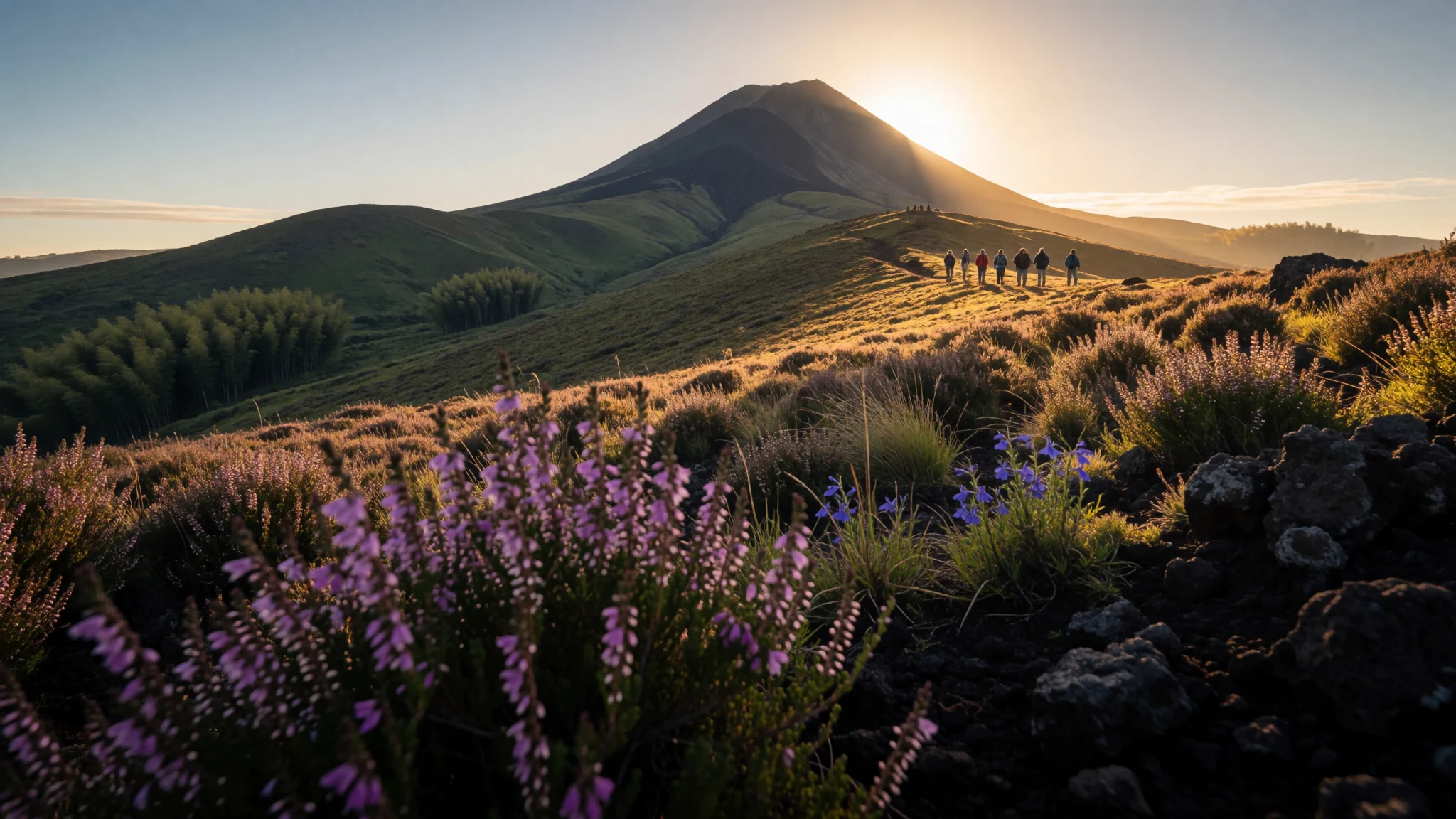
Mgahinga Gorilla National Park packs three volcanoes, mountain gorillas, golden monkeys and Batwa forest culture into a small, quiet corner of southwestern Uganda.
The place
Mgahinga Gorilla National Park occupies the far southwestern corner of Uganda, right where the country meets Rwanda and the Democratic Republic of Congo. It is Uganda's share of the Virunga Mountains, a chain of volcanoes that are no longer active. Three of them stand inside the park: Muhabura, Gahinga and Sabyinyo. Next door are Volcanoes National Park in Rwanda and the southern part of Virunga National Park in Congo, so the protected forest runs on across two borders, and the animals ignore lines that people need papers to cross. The park was created in 1991 and is compact, which means farmland, bamboo thickets and volcanic summits can all be taken in within a day's walking. Kisoro is the nearest town, a short ride to the north, and Kabale lies further east. Vegetation shifts with height: potato and bean terraces at the edge, then dense bamboo, then damp montane forest, then cold open ground near the tops. Rain falls in two seasons, roughly February to May and September to December, with October usually the wettest month and July the driest. Mud, cloud and cool air are normal here even when the lowlands are warm. The park shelters mountain gorillas and golden monkeys, and its forests hold many bird species that live only along the Albertine Rift.
Its story
Mgahinga Gorilla National Park was established in 1991, but the land had a long working life before that. Earlier in the twentieth century it was managed as a game reserve, and its lower slopes were gradually turned over to crops, because the soils around the volcanoes are fertile and the surrounding district is densely farmed. Turning farmland back into forest was the first job of the new park. Biological surveys began in 1989, snares set for wildlife were found and destroyed, rangers received training, and trees were planted on cleared ground. Households living within the boundary had to resettle elsewhere in the early 1990s. Conservation of this kind has a human cost. The Batwa, who lived by hunting and gathering in these forests, lost access to the land that had sustained them, and questions about land and fair treatment remain part of the park's story. Today Batwa guides lead visitors along a cultural trail, which is one way for the community to share its own knowledge in its own voice. Politics has also reached the park from across the frontier. After the Congolese army defeated the M23 rebel movement, its fighters crossed over and surrendered inside Mgahinga, a reminder that these volcanoes sit in a sensitive border region.
What to see
- Gorilla trekking with the Nyakagezi group — Forest slopes near the main entrance
Mgahinga's gorilla trekking follows the Nyakagezi group, a family used to human visitors that roams widely, so the search can be short or long depending on where the silverbacks have wandered. Rangers lead small parties, and the encounter tends to feel quieter than at busier gorilla sites. Keep to the distance your guide sets and never touch an animal.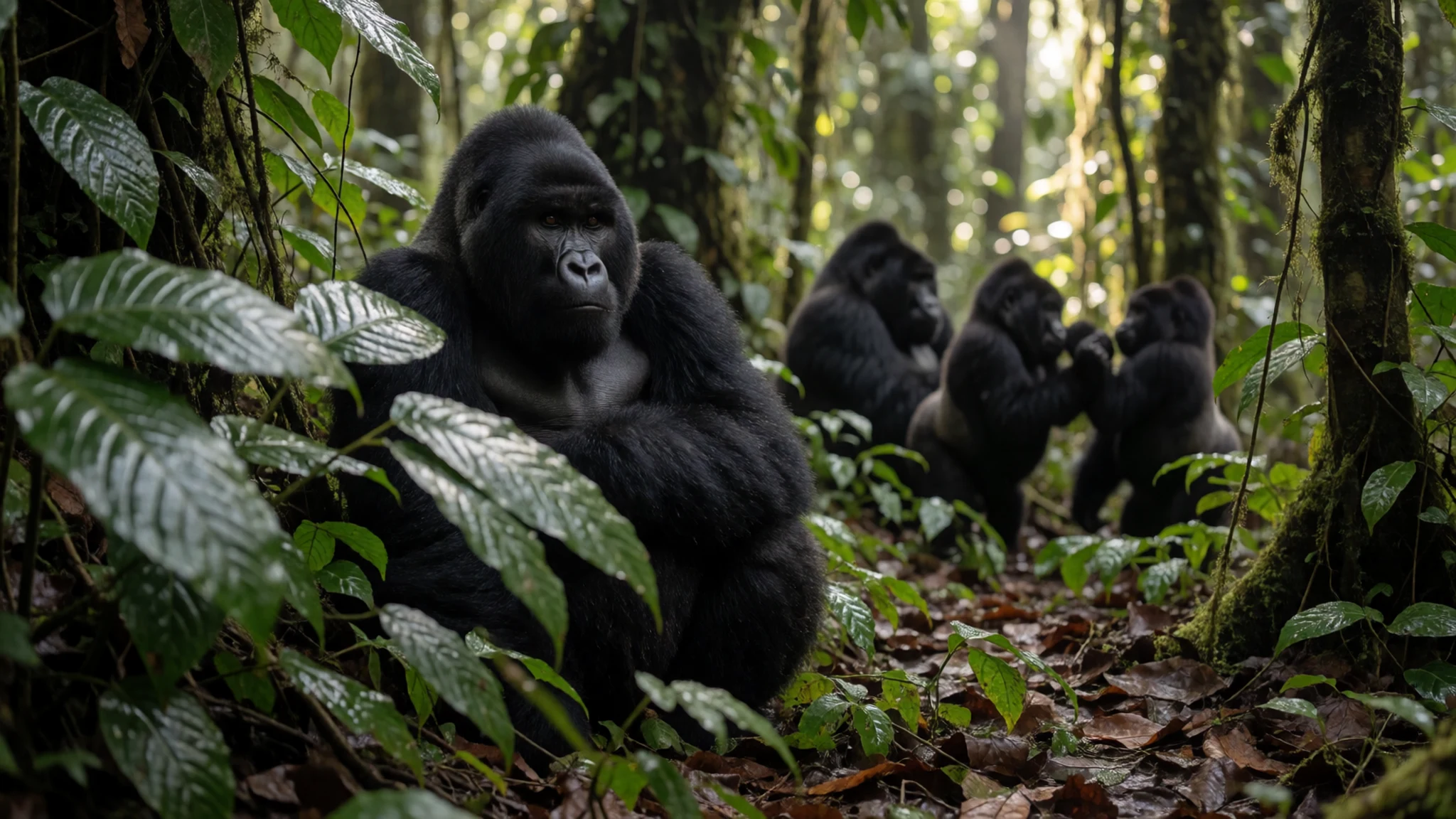
- Golden monkey tracking — Bamboo zone of the lower slopes
Golden monkeys live only in the Virunga volcano range, and Mgahinga is a good place to find them. Troops move noisily through the bamboo, feeding and tumbling between stalks, which makes for lively photography in dim green light. Tracking is done on foot with rangers and is a gentler outing than a volcano climb. Bring a camera that copes with low light.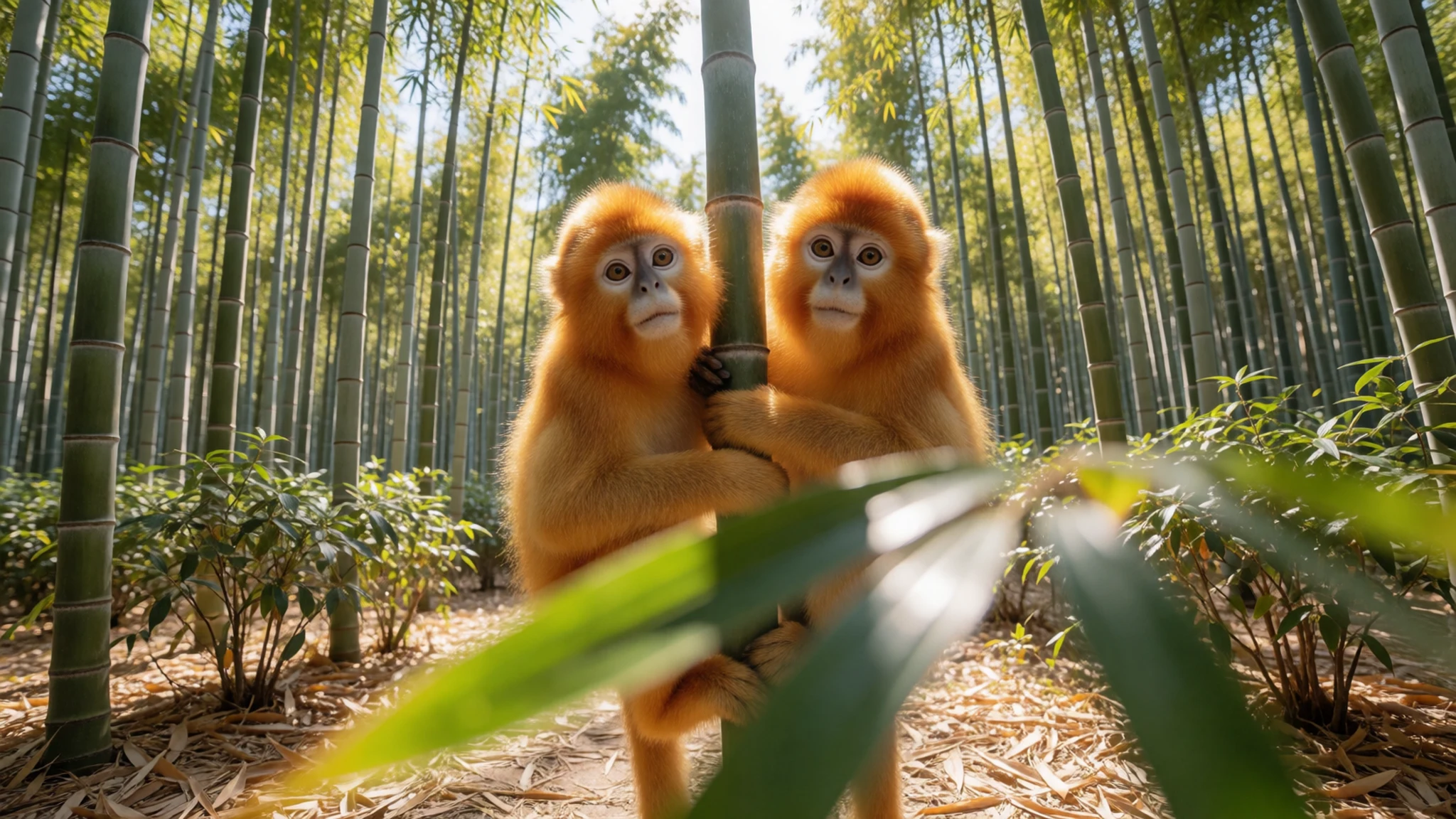
- The three volcanoes — Virunga summits within the park
Muhabura, Gahinga and Sabyinyo can each be walked in a long day with a ranger. Muhabura gives wide views over Rwanda and Congo, while jagged Sabyinyo has a summit where the three countries meet. Expect steep, muddy sections, cold wind near the top and a very early start. Fitness matters more than technical skill.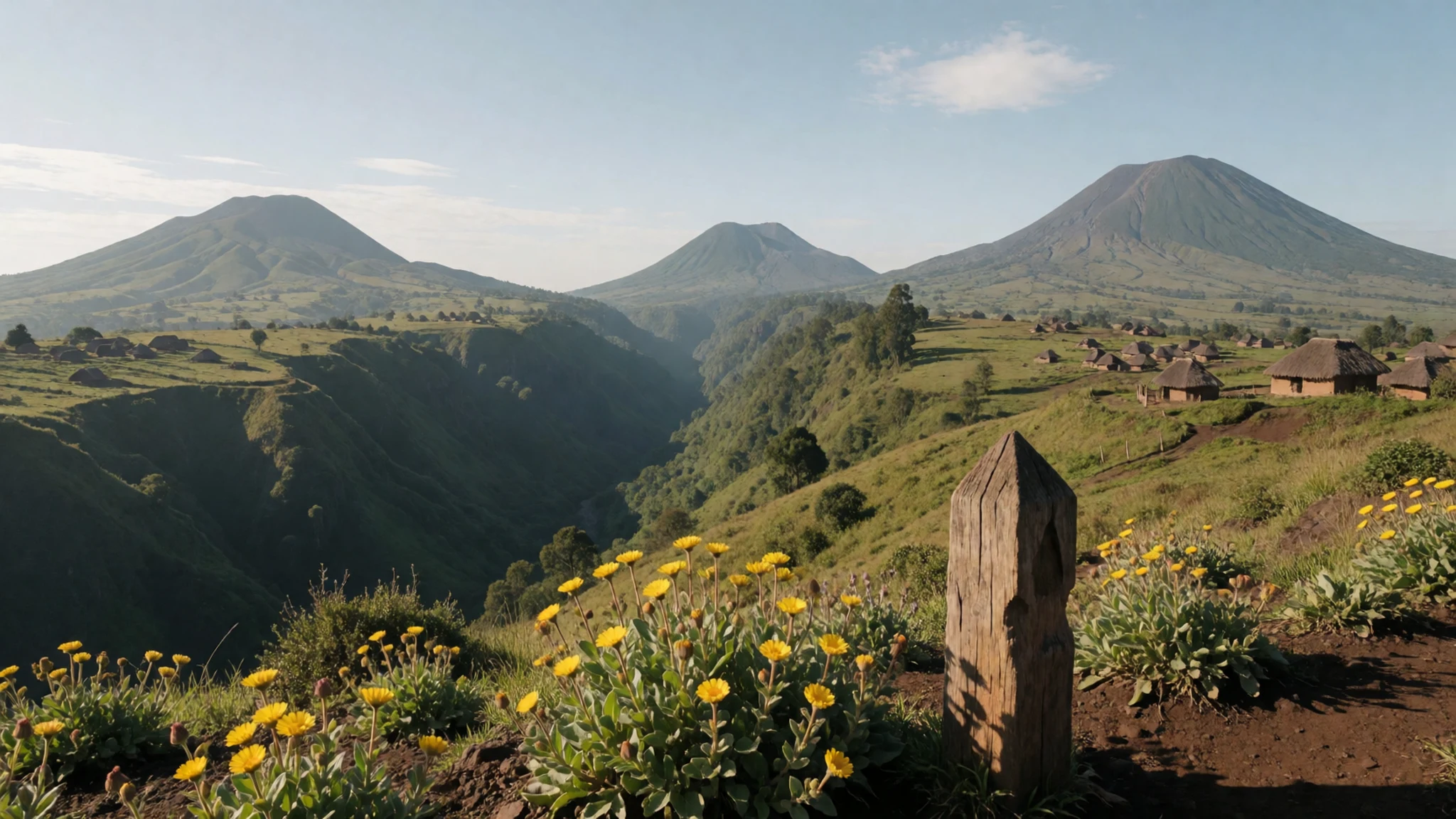
- Batwa Cultural Trail and Garama Cave — Lower forest near the park headquarters
The Batwa Cultural Trail is led by Batwa guides and ends at Garama Cave, once a home and gathering place for their community. Along the way guides demonstrate forest skills such as making fire, and talk about spiritual life and survival under the trees. It is a chance to hear the forest described by people who lived in it.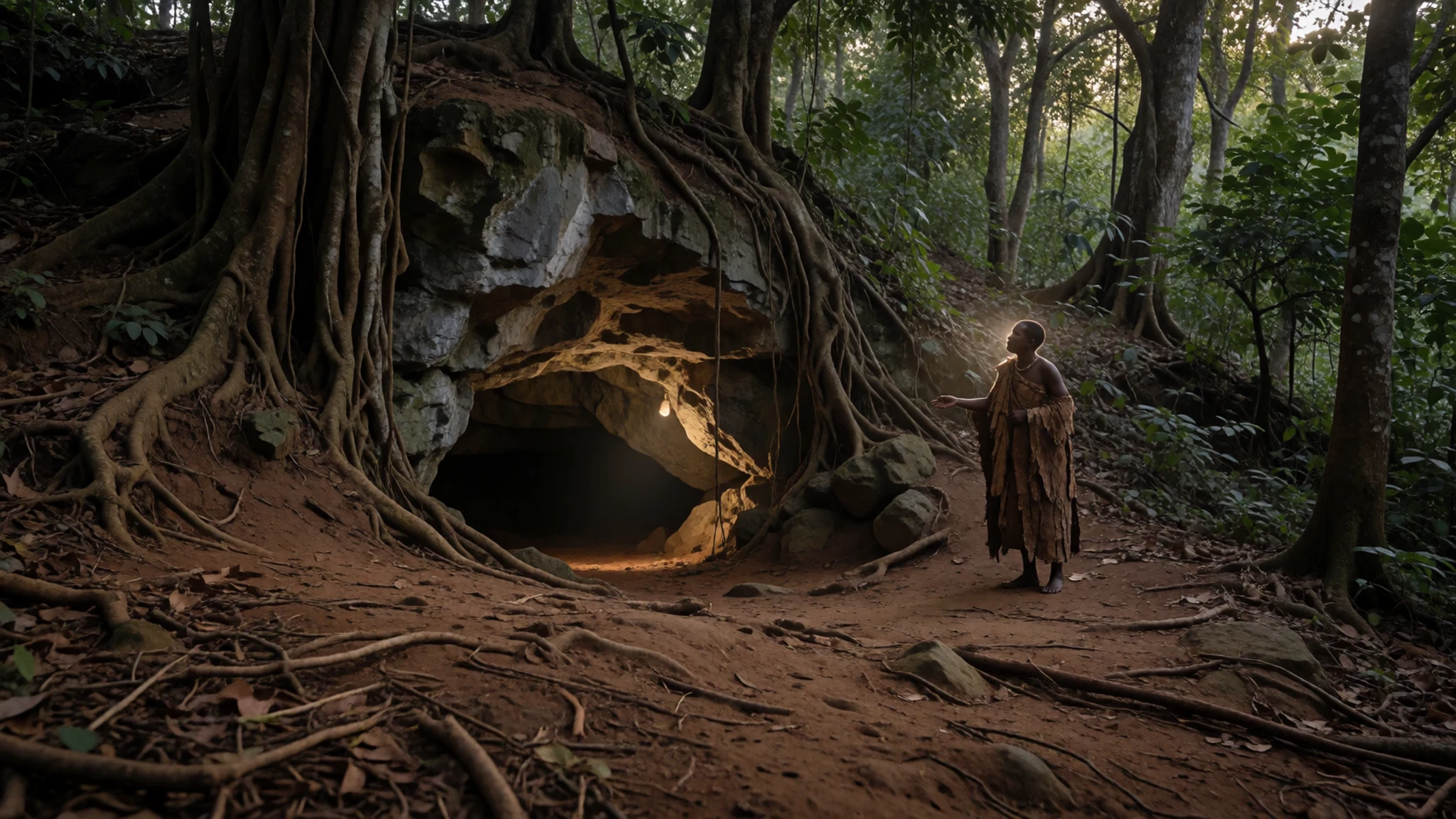
- Birdwatching in the montane forest — Bamboo and montane forest
Birders come for Albertine Rift species, birds found in the highlands along this rift and in very few other places. Turacos, ground thrushes and crimsonwings are typical targets in the bamboo and damp forest. Because the park is small, a dawn walk with a guide can pass through several habitats before breakfast.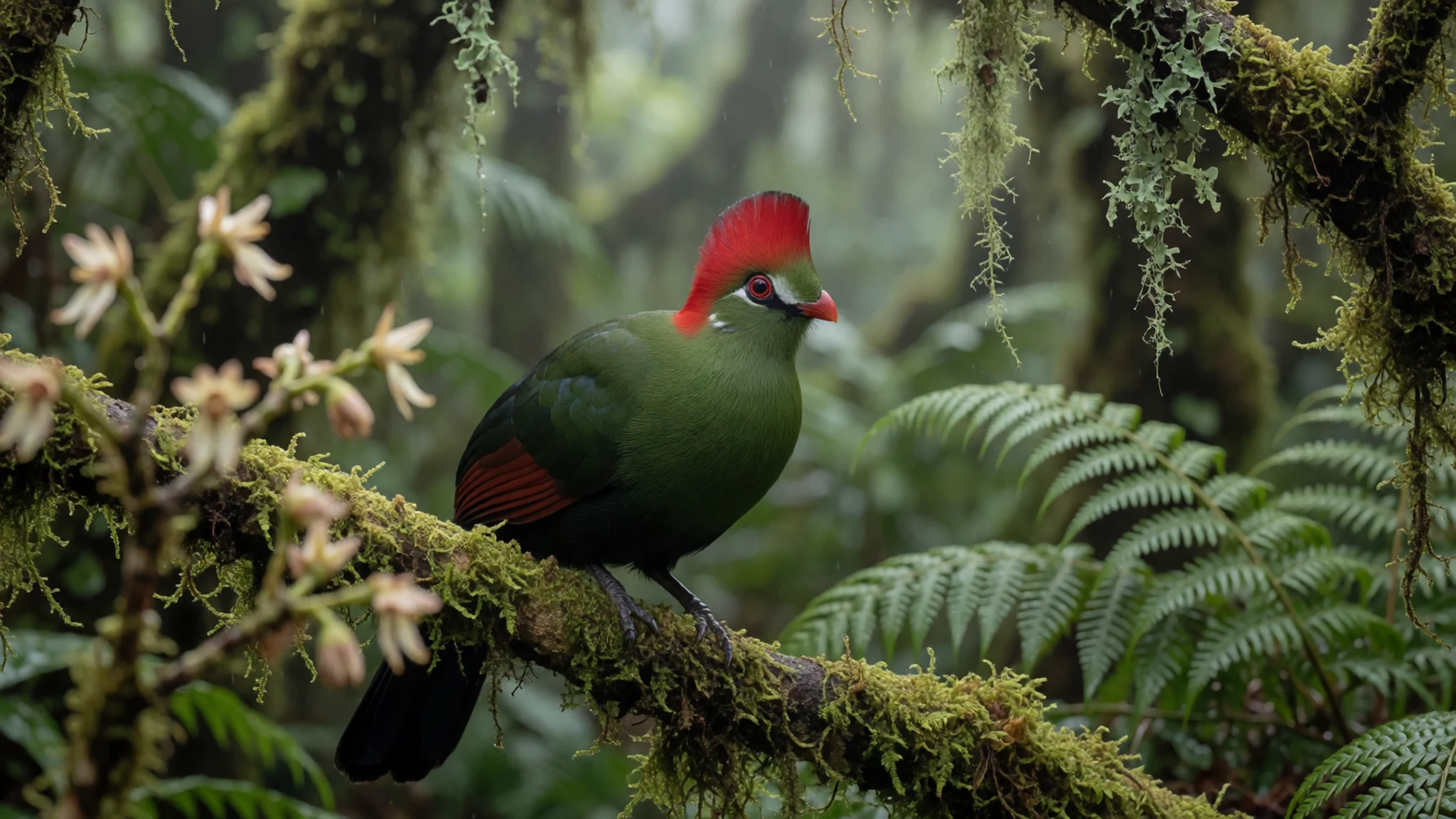
Culture
Mgahinga Gorilla National Park lies in a part of Uganda where several communities have shaped the land. Most people living around the park are farmers, working steep terraces of crops that climb right up to the forest edge, and daily life follows planting and harvest rather than the tourist calendar. The Batwa are the forest's former residents. They lived by hunting and gathering among the volcanoes before the park was created, and their songs, stories and ideas about the forest are now shared through guided cultural walks and community projects. A visit is worthwhile, but it works best as a conversation with hosts rather than a show. The border with Rwanda and Congo is close, and languages and customs spill across it; greetings in local languages or Swahili are warmly received, and English is widely used in the tourist trade. Conservation here is closely tied to the livelihoods of neighbours: park rules, farms along the boundary and the presence of wild animals all affect one another, and many families have a direct stake in how the forest is protected. Respect for the rangers and trackers, who spend long days in cold, wet forest, is part of the park's everyday culture. Greet people before asking questions or taking photographs, and always ask permission before photographing individuals, especially Batwa hosts and children.
What to wear
Mgahinga Gorilla National Park is a place where clothing is shaped by farming, altitude and weather more than by ceremony. Traditional dress across Uganda includes the gomesi, a floor-length women's dress with a square neckline and a sash, and the kanzu, a long white robe for men, both worn at weddings, church and formal occasions. These are national rather than specific to Kisoro. The Batwa, historically forest hunter-gatherers, used materials from the forest such as animal skins and plant fibre, and these are now seen mainly in cultural demonstrations. Day to day, people around Kisoro wear practical clothes: sweaters and jackets against cool mornings, rubber boots or sturdy shoes for the fields, and colourful wraps and headscarves for women at markets and church. Secondhand clothing is common. Visitors should dress for cold, wet, steep ground. Lightweight long trousers and a long-sleeved shirt protect against nettles and thorns, and muted greens and browns are sensible near wildlife. Pack a waterproof jacket, a warm layer, a hat, thin gloves for gripping vegetation and waterproof walking boots with good grip. Gaiters help in mud. In Kisoro town and at church, covering shoulders and knees is the polite choice.
What to eat
- Matoke — Lodges and local eateries around Kisoro
Steamed green plantain, mashed or served in chunks, is the staple of southwestern Uganda. It is mild and starchy, and usually comes with a groundnut sauce, beans or a meat stew. Lodges and small local eateries serve it at lunch and dinner.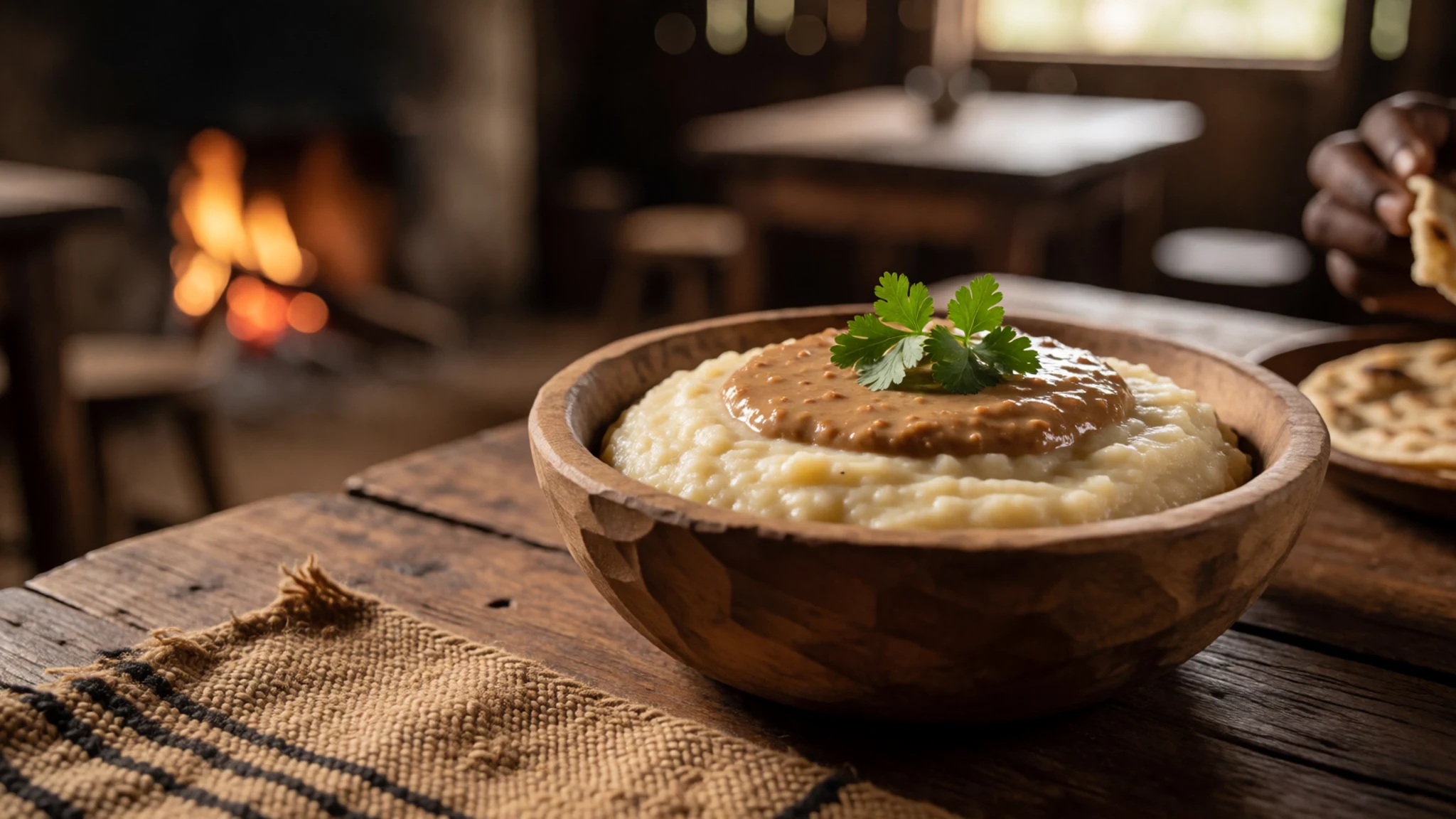
- Beans and rice — Local eateries in Kisoro town
A plate of stewed beans over rice is the everyday filling meal for farming families and trekking guides alike. It is simple, hearty and often spiced lightly with onion and tomato. It is also an easy choice for vegetarians.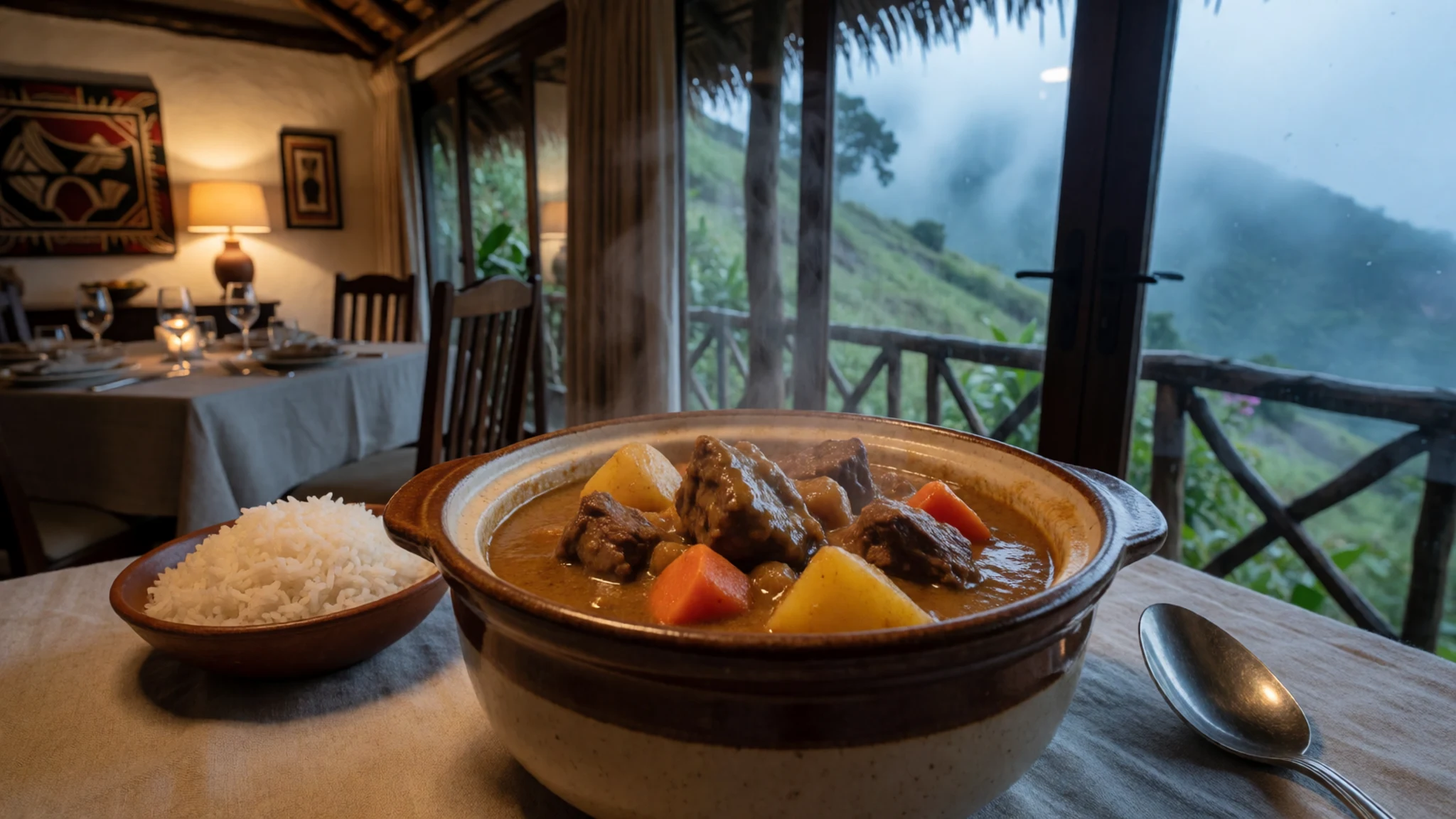
- Chapati — Snack stalls and roadside stops in Kisoro
Soft, layered flatbread fried on a griddle, chapati is eaten with stew, beans or eggs, or on its own as a snack. It arrives hot and slightly oily, and is a good companion to a cold morning. - Goat or chicken stew — Lodge dining rooms and local eateries
Slow-cooked goat or chicken in a tomato and onion gravy is the usual meat dish for celebrations and for visitors. Portions are generous, and the stew is typically served beside rice, matoke or potatoes. - Packed trek lunch — Your lodge or campsite, collected before setting out
Before gorilla treks, monkey tracking and volcano hikes, lodges hand over a boxed lunch at dawn. A sandwich, boiled egg, fruit, a pastry and juice are typical. It is eaten on the trail, so keep it dry in your bag.
Plan it
Best time. June to August is the driest stretch, with July the driest month, which makes trails and the rough road to the park easier. Rain falls from February to May and September to December, with October the wettest. Cloud can hide the volcanoes at any time of year.
How long. 3–4
Getting there. Fly from Entebbe International Airport to Kisoro Airstrip (check current schedules), or drive via Kabale to Kisoro. The last leg to the park gate is a rough dirt road, best covered by boda-boda or a high-clearance four-wheel drive; ask your lodge to arrange it.
Budget. mid
Tips
- Book gorilla permits and lodges well ahead; check the official site, https://www.mgahinganationalpark.com, for current rules and fees
- Allow separate days for gorilla trekking, golden monkey tracking and a volcano climb, as each starts early and tires the legs
- Pack waterproofs and warm layers, since mornings are cold and rain is possible in any month
- Carry cash in small notes for Kisoro, and bring drinking water and a packed lunch for each outing
- Start slowly on volcano hikes, as the altitude makes steep climbs harder than they look
Etiquette
- Keep to the distance your ranger sets from gorillas and never touch them, even if one approaches
- Do not go to the park if you have a cold or other illness, as gorillas can catch human infections
- Ask before photographing people, especially Batwa hosts and children
Nearby
Sources
- Wikidata Q636655 (CC0)
- Wikipedia: Mgahinga Gorilla National Park (rev 1362856096) (CC BY-SA 4.0)
- Wikivoyage: Mgahinga Gorilla National Park (rev 5411116) (CC BY-SA 4.0)
- Dylan Walters, Mountain Gorilla in Mgahinga Gorilla National Park 1, via Wikimedia Commons (CC BY 2.5)
- Nina R, Mgahinga Gorilla National Park, Uganda, via Wikimedia Commons (CC BY 2.5)
- Dylan Walters, Mountain Gorilla in Mgahinga Gorilla National Park, via Wikimedia Commons (CC BY 2.5)
- Esme Stewart, Mount Gahinga Lodge, via Wikimedia Commons (CC BY-SA 4.0)
- Happyartst, A group of people trekking in Mgahinga National Park, Uganda, via Wikimedia Commons (CC BY-SA 4.0)
- Happyartst, A Mutwa man demonstrating traditional fire-making techniques, via Wikimedia Commons (CC BY-SA 4.0)
- USAID Biodiversity & Forestry, Agricultural fields along the border of Mgahinga Gorilla National Park, via Wikimedia Commons (Public domain)
- Happyartst, BATWA PEOPLE024, via Wikimedia Commons (CC BY-SA 4.0)


Wildlife
- Mountain gorilla (animal)
The mountain gorilla is a gentle giant of the forest, and it is endangered, so every sighting is precious. In Mgahinga Gorilla National Park, the Nyakagezi family is the great draw for travellers who come to track them. The notes do not say which season or hour is best, so ask your guide. Go with a guide, keep your distance, speak softly, and never offer food. Quiet, respectful visitors help these rare apes stay safe.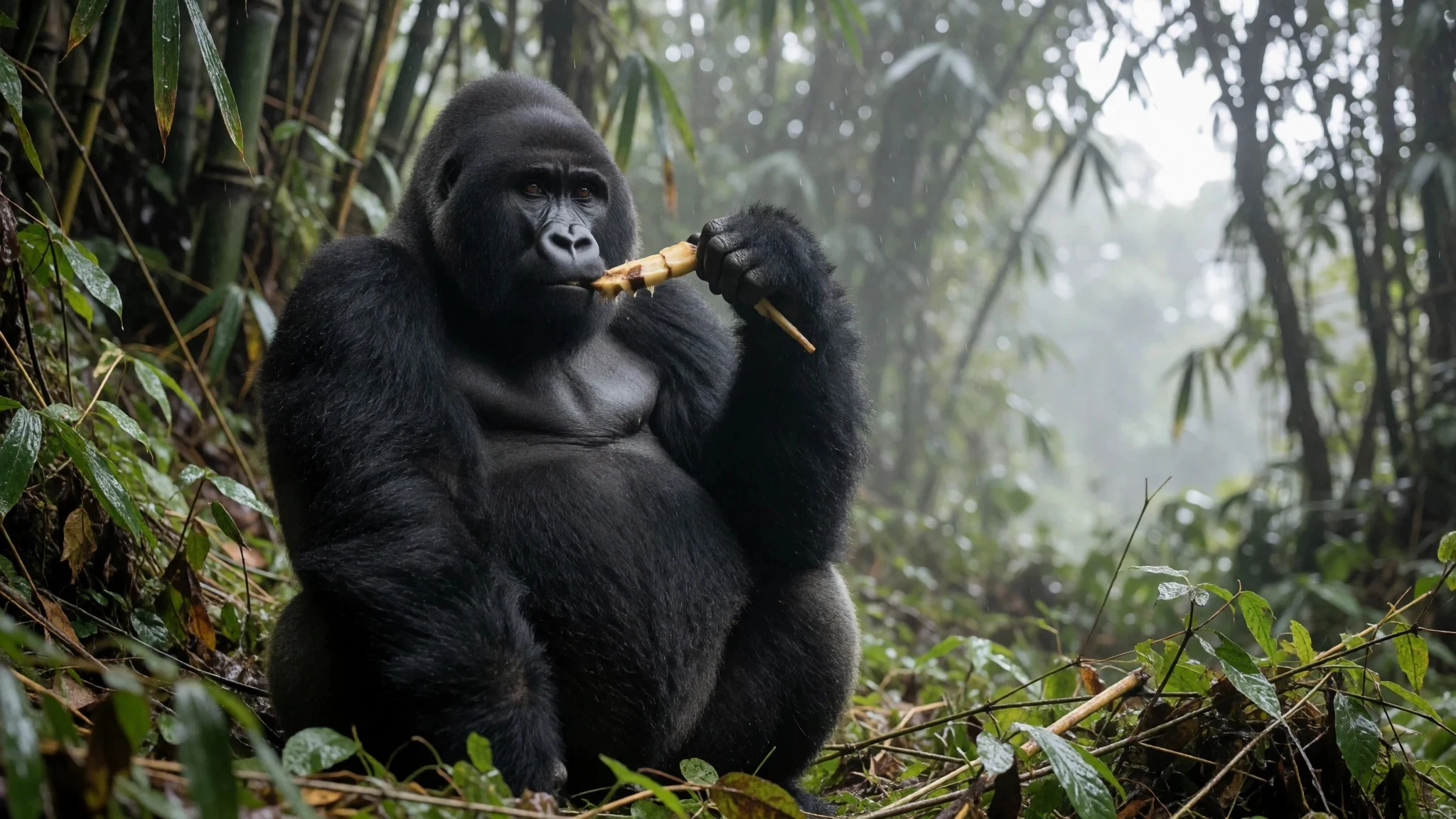
- Golden monkey (animal)
The golden monkey is a lively cousin of the blue monkey, a small acrobat of the high forest. In Mgahinga, part of the Virunga mountains in south-west Uganda, it stays in highland forest, especially close to bamboo, and visitors enjoy its playful ways. The notes give no season or time of day, so ask your guide when to look. Watch from a respectful distance, stay quiet and calm, walk with a guide, and never feed it.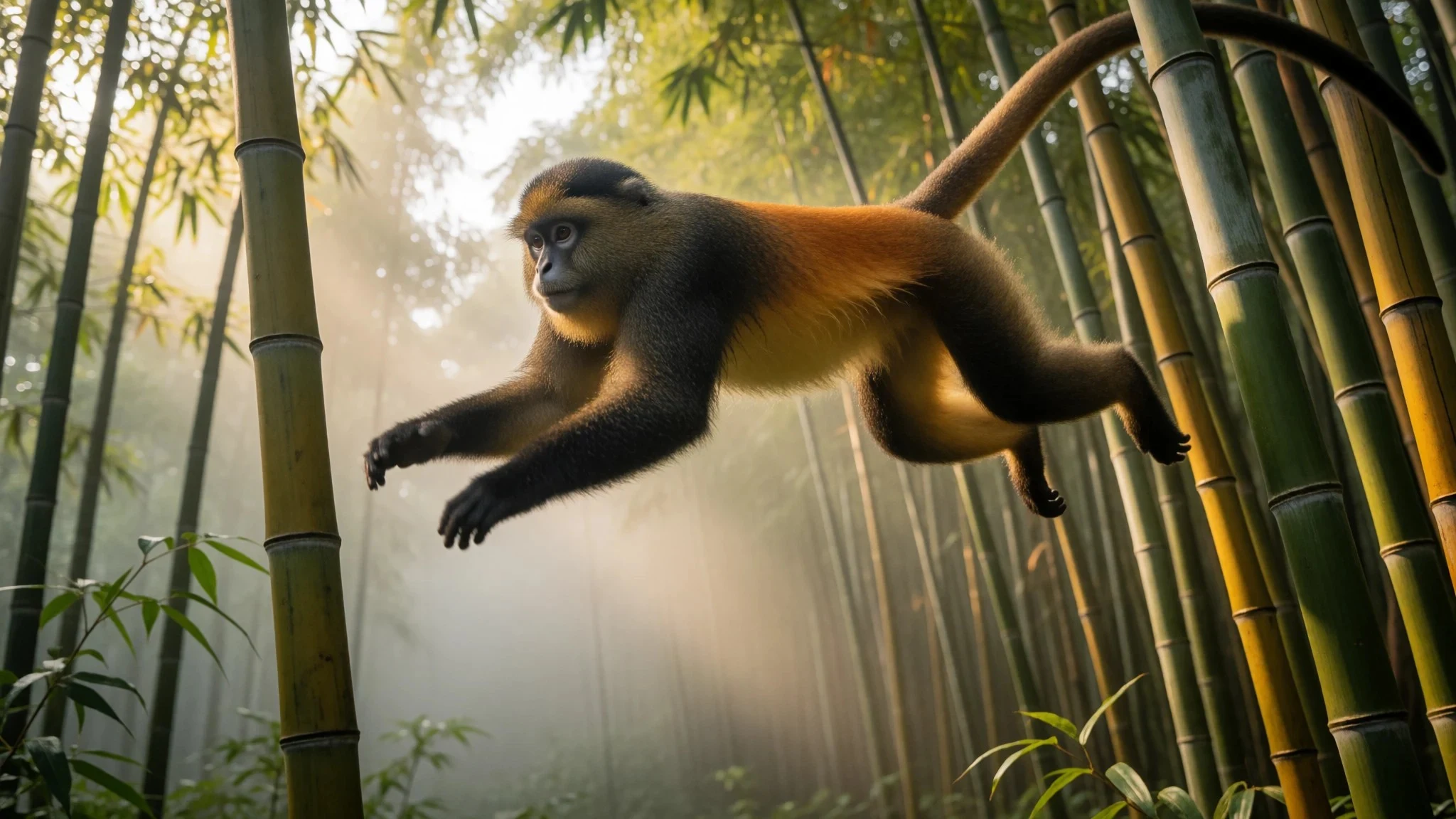
- Rwenzori turaco (bird)
The Rwenzori turaco is a bird that belongs to the mountain forests of the Albertine Rift, a true local of this part of Africa. Birders come to Mgahinga hoping to spot it, because the park packs a rich variety of birds into a small space. The notes do not say when or where in the park it shows itself, so ask your guide. Keep your distance, whisper, go with a guide, and never feed wild birds.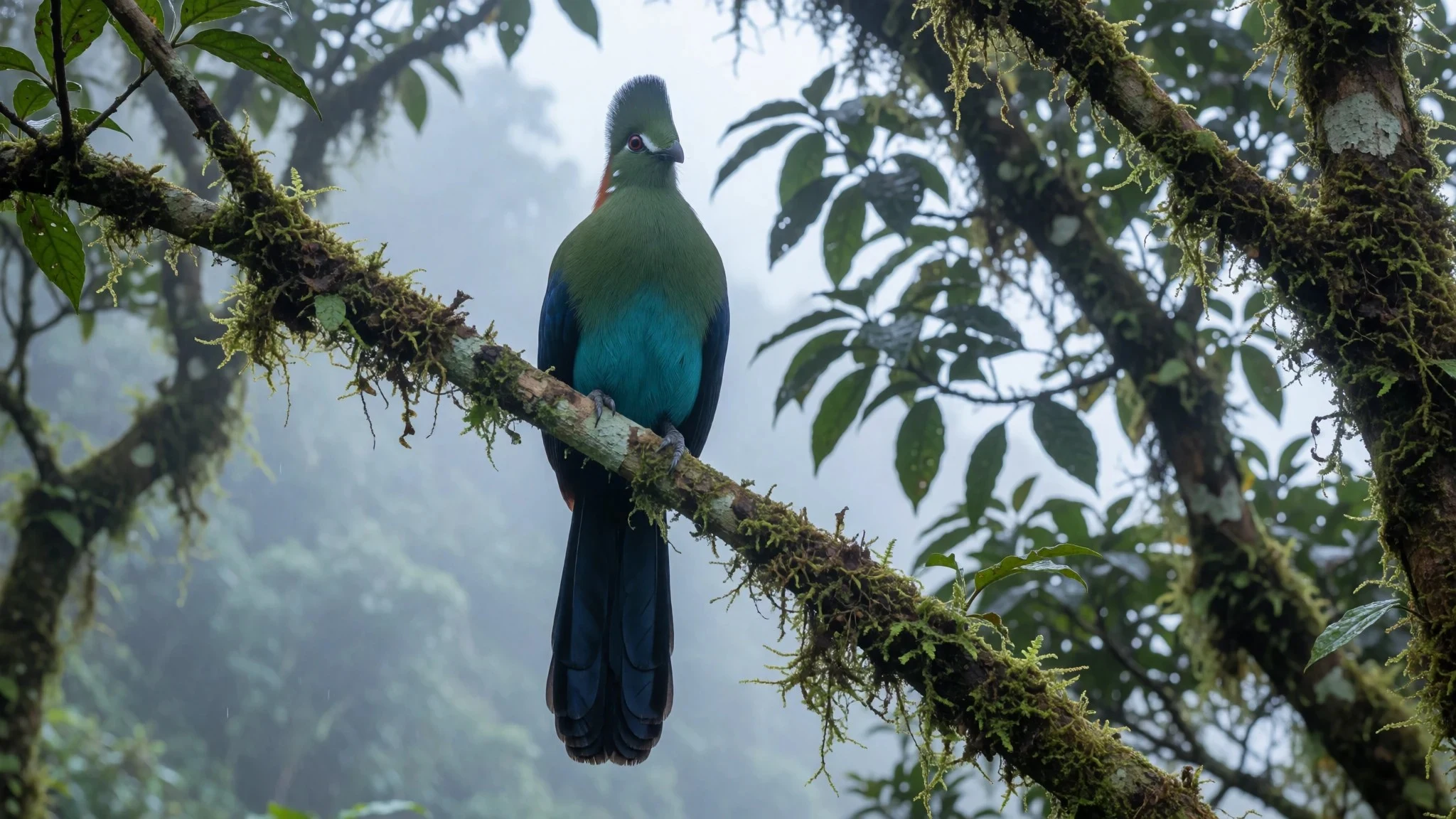
- Handsome francolin (bird)
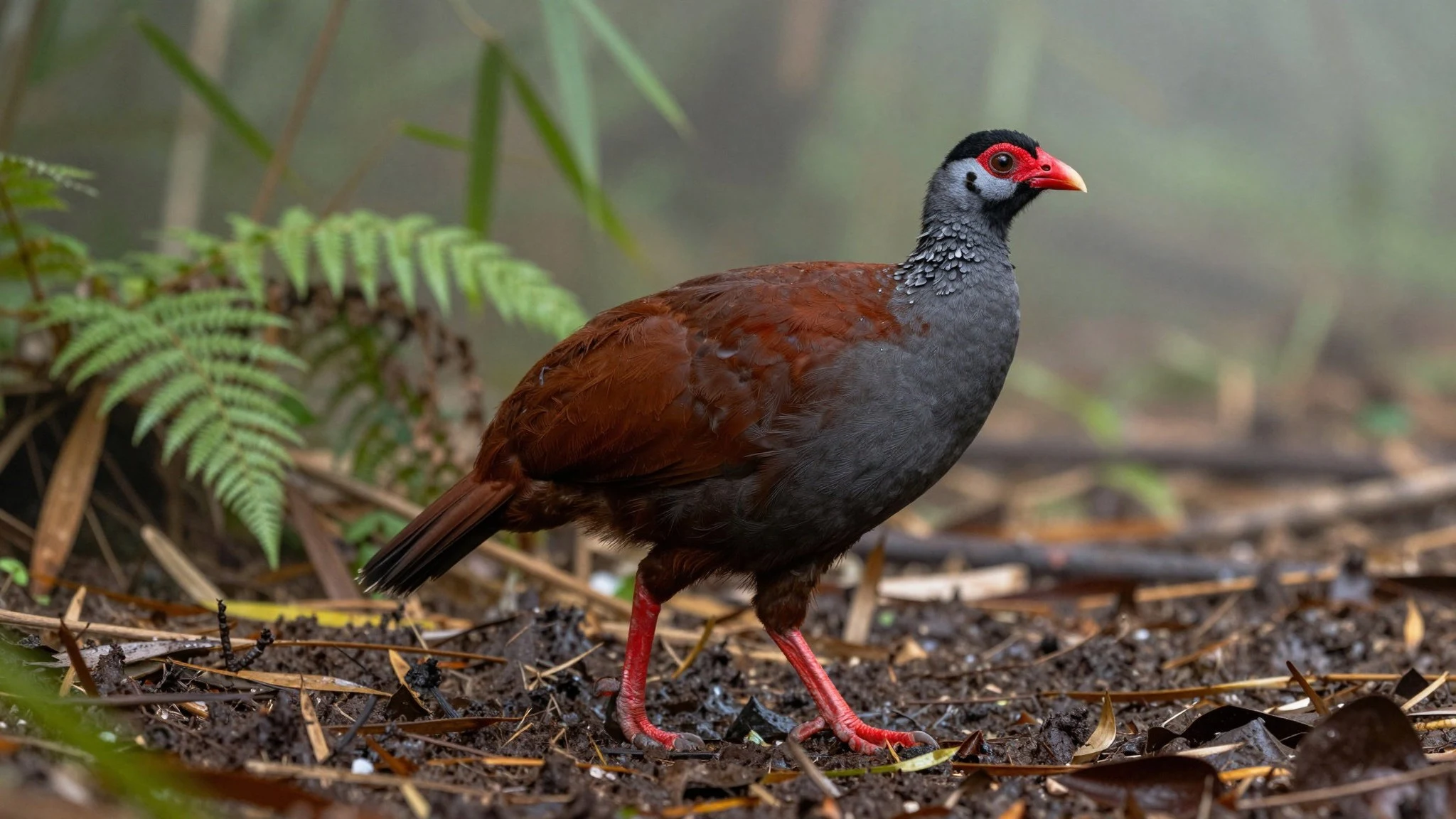
The handsome francolin is a big forest bird that lives on the ground, with a chestnut-brown body, grey head and bright red beak and legs. Birders visit Mgahinga hoping to see it, since the park is rich in birdlife for its size. The notes give no season or hour, so ask your guide where to look. Stay back, keep still and quiet, go with a guide, and never feed it.