Kampala
Kampala, Uganda
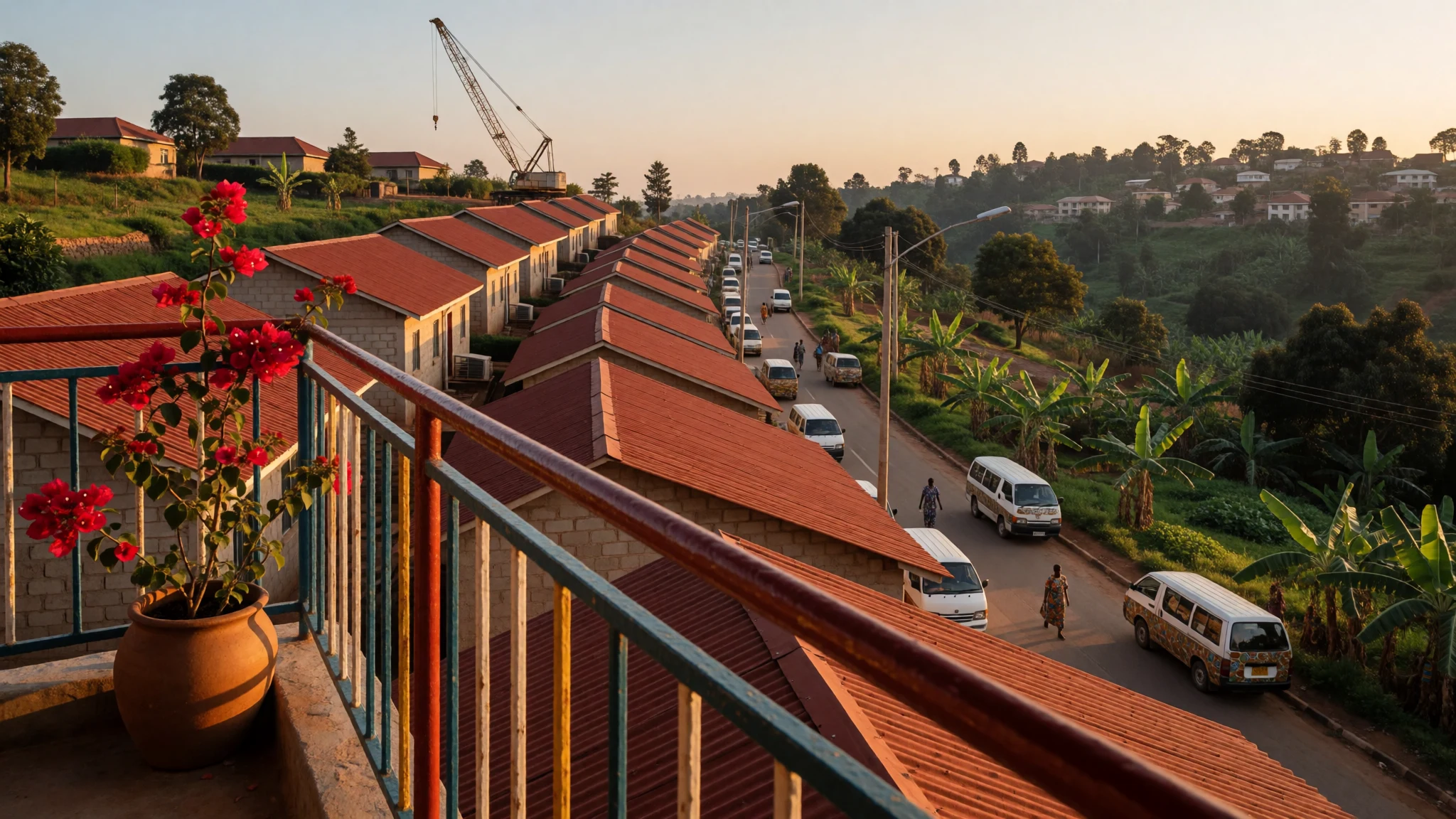
Kampala stacks Buganda kingship, busy markets and green hills into one equatorial capital that never quite sits still.
The place
Kampala, Uganda's capital and largest city, stands on a chain of hills at about 1,190 metres, with slow rivers, lakes and swamps in the valleys. About 1.8 million people live in the city proper, across Kampala Central, Kawempe, Makindye, Nakawa and Rubaga. Each ridge has its own character: dense commercial streets in the centre, residential slopes, and institutional grounds around Makerere and the older mission churches.
Beyond the municipal line the city runs on into Wakiso, Mukono, Mpigi, Buikwe and Luweero. Those neighbouring districts share the same matatu routes, markets and working day, so the lived city is wider than the official boundary. New housing and workshops climb the outer hills while the wetlands stay in the hollows.
From a high floor on Kampala Road the view is of red roofs stepping up the next ridge, cranes over mid-rise blocks, and green gaps where a valley has not yet been filled. Traffic follows the saddles between hills, and a journey that looks short on a map can take a long time once rain turns the lower roads slick. The altitude, almost on the equator, gives a warm climate without the heaviest lowland heat; showers arrive in seasons rather than in one short burst.
Kampala is the seat of Uganda's government and the commercial heart of the country. It is also the modern stage of the Buganda kingdom, whose royal seat remains at Mengo. Official city information is published at the Kampala Capital City Authority website.
Its story
Kampala grew out of the hills and swamps in the heart of the Buganda kingdom, a tightly governed state in the East African interior. The royal capital, called the kibuga, did not stay on one hill. Each kabaka, at his coronation or later in the reign, could move the court to a different ridge, so the capital travelled with the king.
A long written sketch of that kibuga was set down by the explorer Richard Burton, who relied on the Arab trader Snay bin Amir. Burton's account, published in The Lake Region of East Africa, pictures a widely scattered capital whose houses were built of woven reeds, so large that crossing it took a full day. At that time Buganda already had a formal court, chiefs and long-distance trade, and outsiders were only starting to describe it on the page.
In the decades that followed, missions, a colonial fort and trading compounds settled on neighbouring hills while the kabaka's enclosure stayed at Mengo. The name Kampala came to cover that whole cluster of hills. When Uganda became independent, the same hills were confirmed as the national capital, so the kingdom's seat and the republic's government have shared the city ever since.
Four kabakas lie at the Kasubi tombs, a sacred place for Baganda. The Uganda Museum holds a longer material record, from early stone tools to the objects of court and household life. The National Theatre and the independence monument in the centre speak to a newer public culture: performance, debate and the memory of the break with colonial rule. Palace, shrine, cathedral, mosque and market still keep separate ground, even where new concrete has closed the gaps.
What to see
- Kasubi Tombs — Kasubi
The Kasubi Tombs, on a hill west of central Kampala, are the burial ground of four kabakas of Buganda and a working shrine for Baganda. Reed-and-thatch buildings and resident keepers make a visit feel closer to a ritual than to a museum tour. Modest dress is expected, shoes and cameras follow the keepers' rules, and the site rewards an unhurried walk rather than a quick look.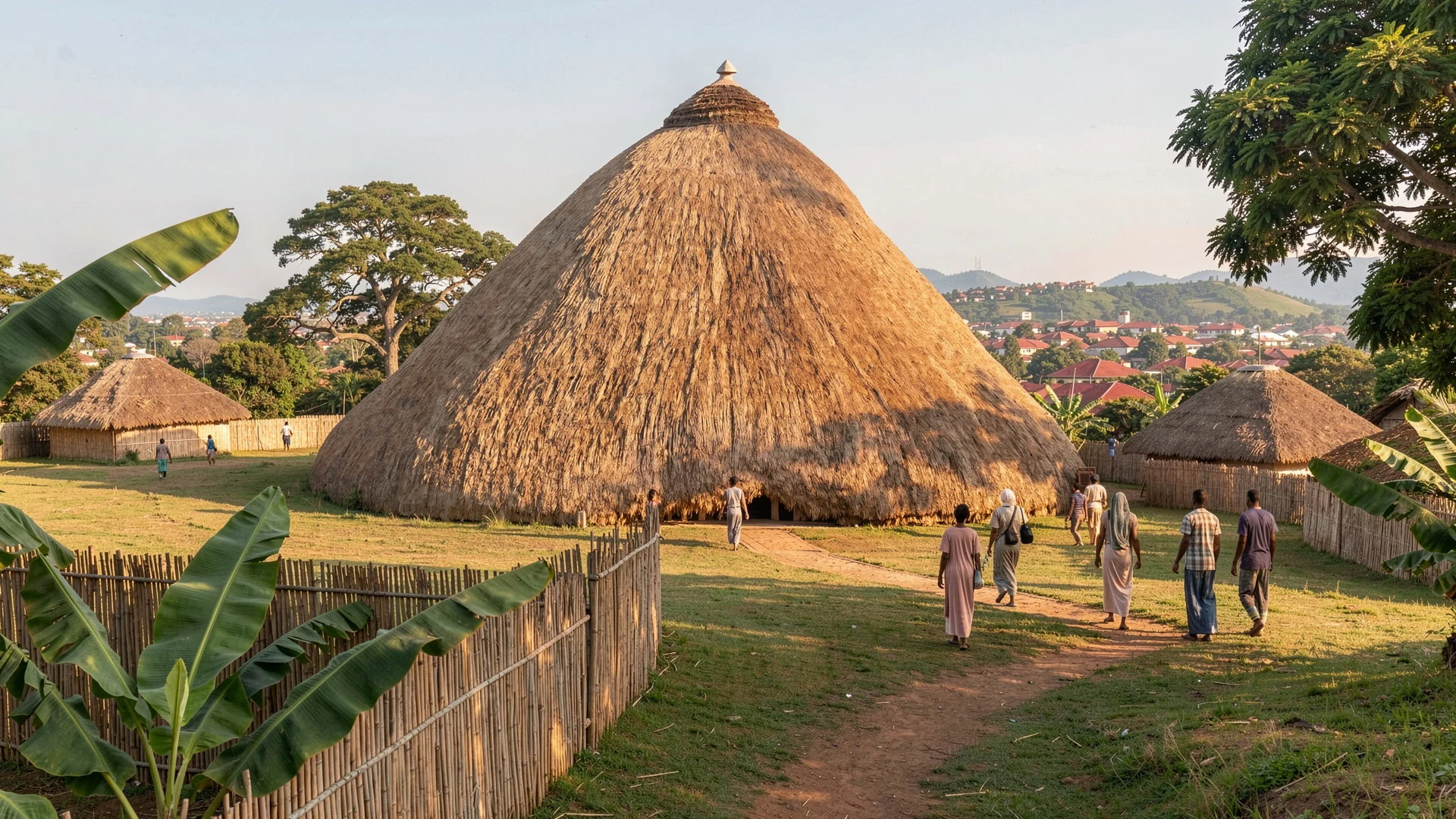
- Uganda National Mosque — west of the centre
The Uganda National Mosque stands on a hill just west of central Kampala, its dome and tall minaret readable from other ridges. Libya funded the building under Muammar Gaddafi and gave it to Uganda. Visitors who are not attending prayers can often look inside when the mosque is open to them, with modest clothing and shoes removed where required.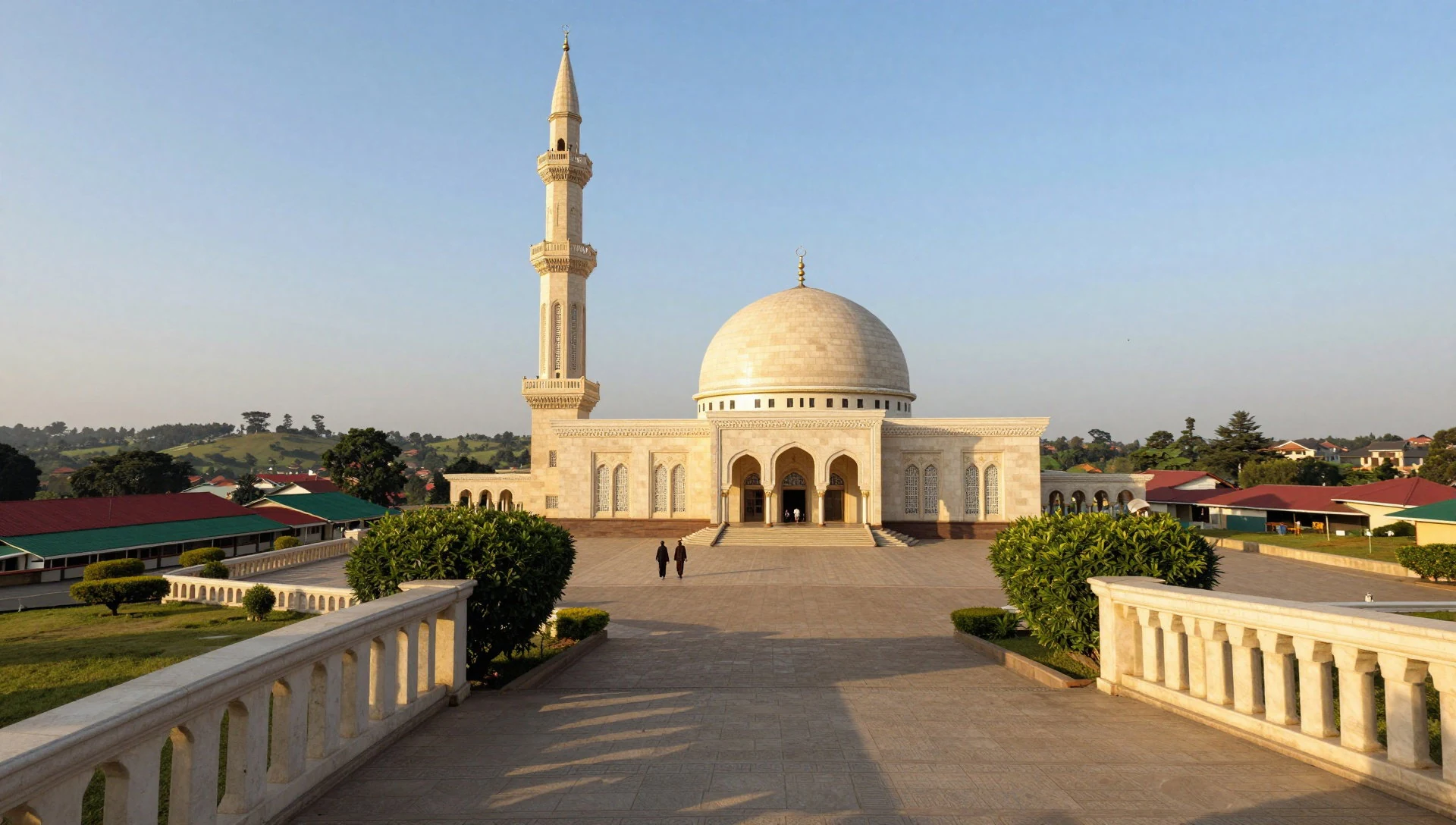
- Bahai Temple — northern Kampala
The Bahai Temple stands on a northern ridge of Kampala, a white domed house of worship in gardens above the city. After the noise of the centre it is a calm walk among lawns, with a long view back across the hills. The building is for prayer and quiet rather than for a historical tour. Visitors keep voices low and dress in a way that suits a place of worship.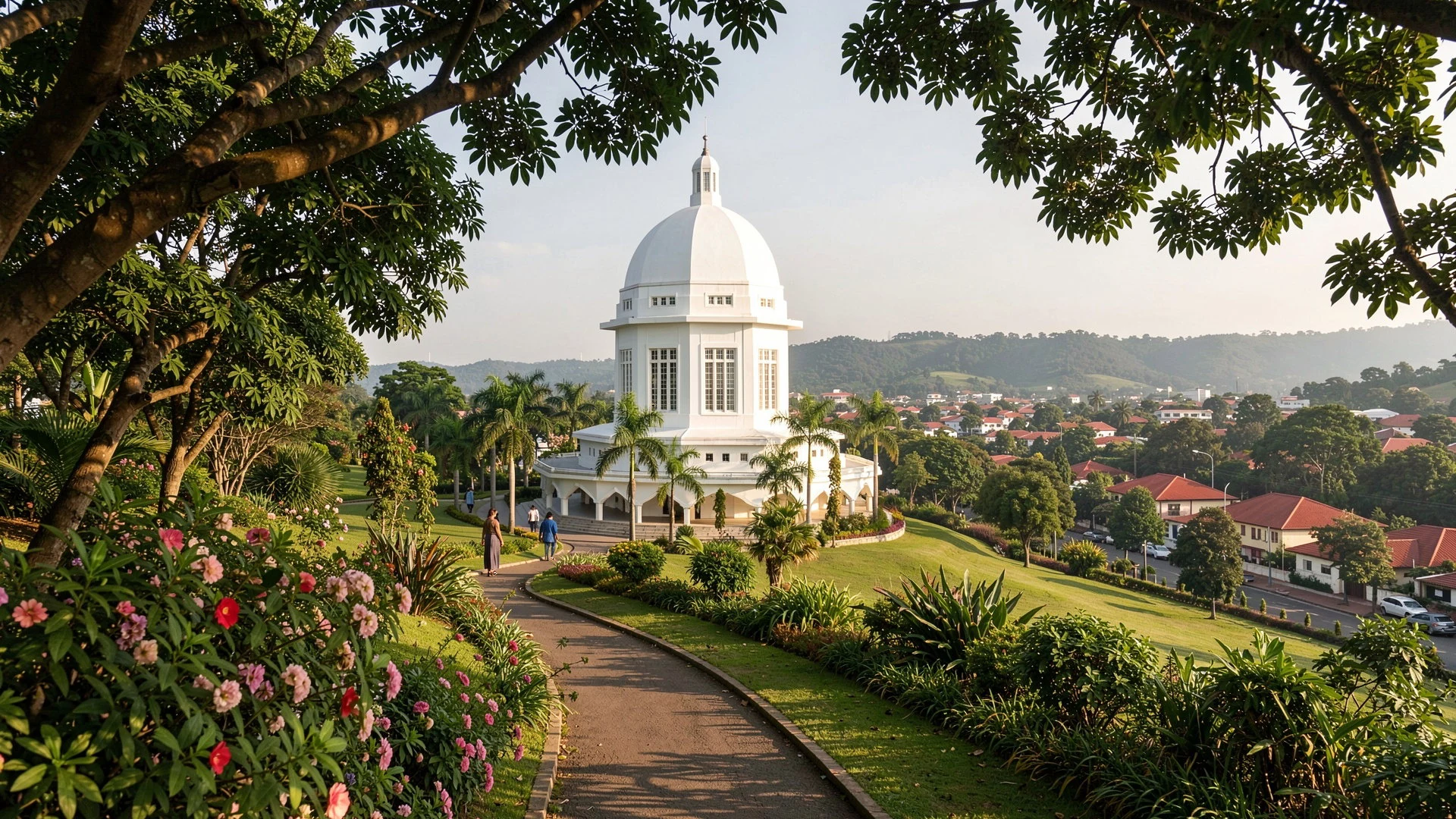
- Uganda Museum — north of the centre
The Uganda Museum, on a hill north of central Kampala, traces natural history and traditional life. Displays run from early stone tools through the kingdoms into household objects: instruments, regalia, hunting gear and crafts from several Ugandan peoples. The rooms are modest in scale and give the city's markets and palaces a longer background. Shady grounds offer a pause before the roads below.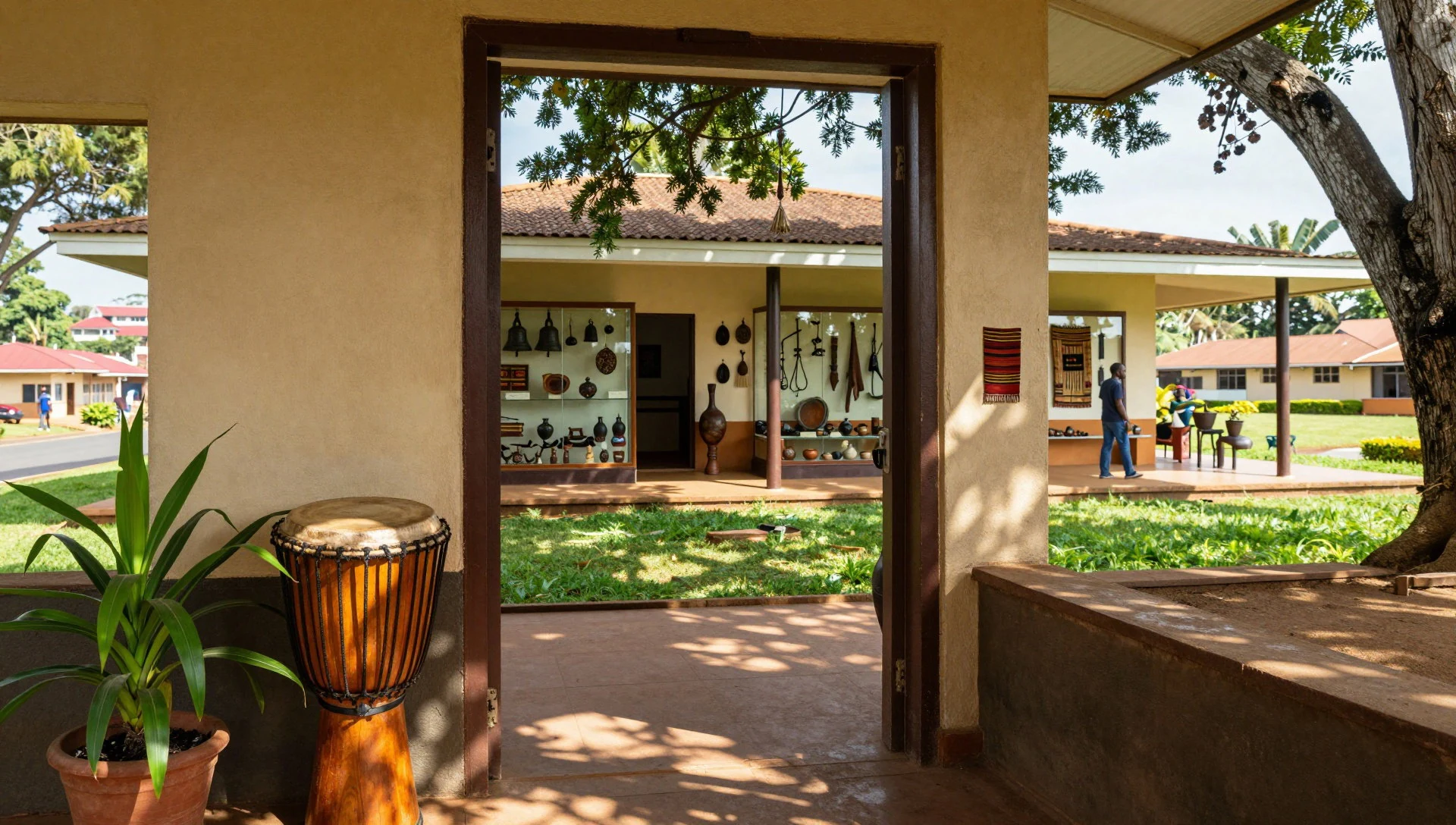
- National Theatre — Kampala Central
The National Theatre sits near the centre of Kampala and works as a cultural hall as much as a playhouse. The bill mixes plays, dance, comedy, music, film and public talks. It is a practical place to meet the city's performing scene without a long ride out of town. The diary changes often, so the current listing is worth checking before a visit.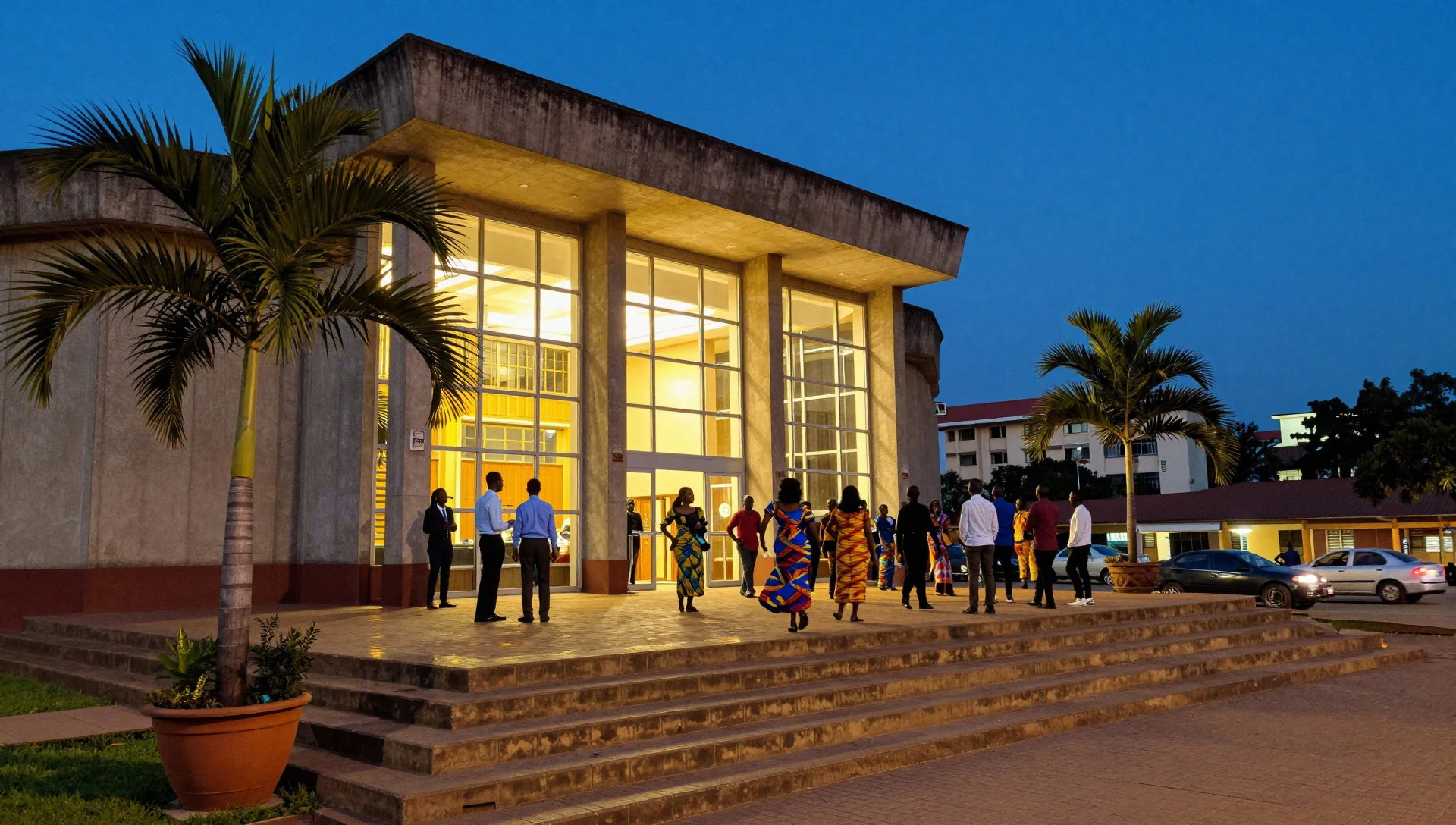
- Nommo Gallery — central Kampala
Nommo Gallery, Uganda's national art gallery, occupies a leafy, open plot in central Kampala. Exhibitions change, with paintings and sculpture, some of it for sale, and the compound stays calmer than the streets outside. Two eateries on the grounds draw office workers from nearby ministries at lunch. It is an easy stop between the museum hill and the city centre.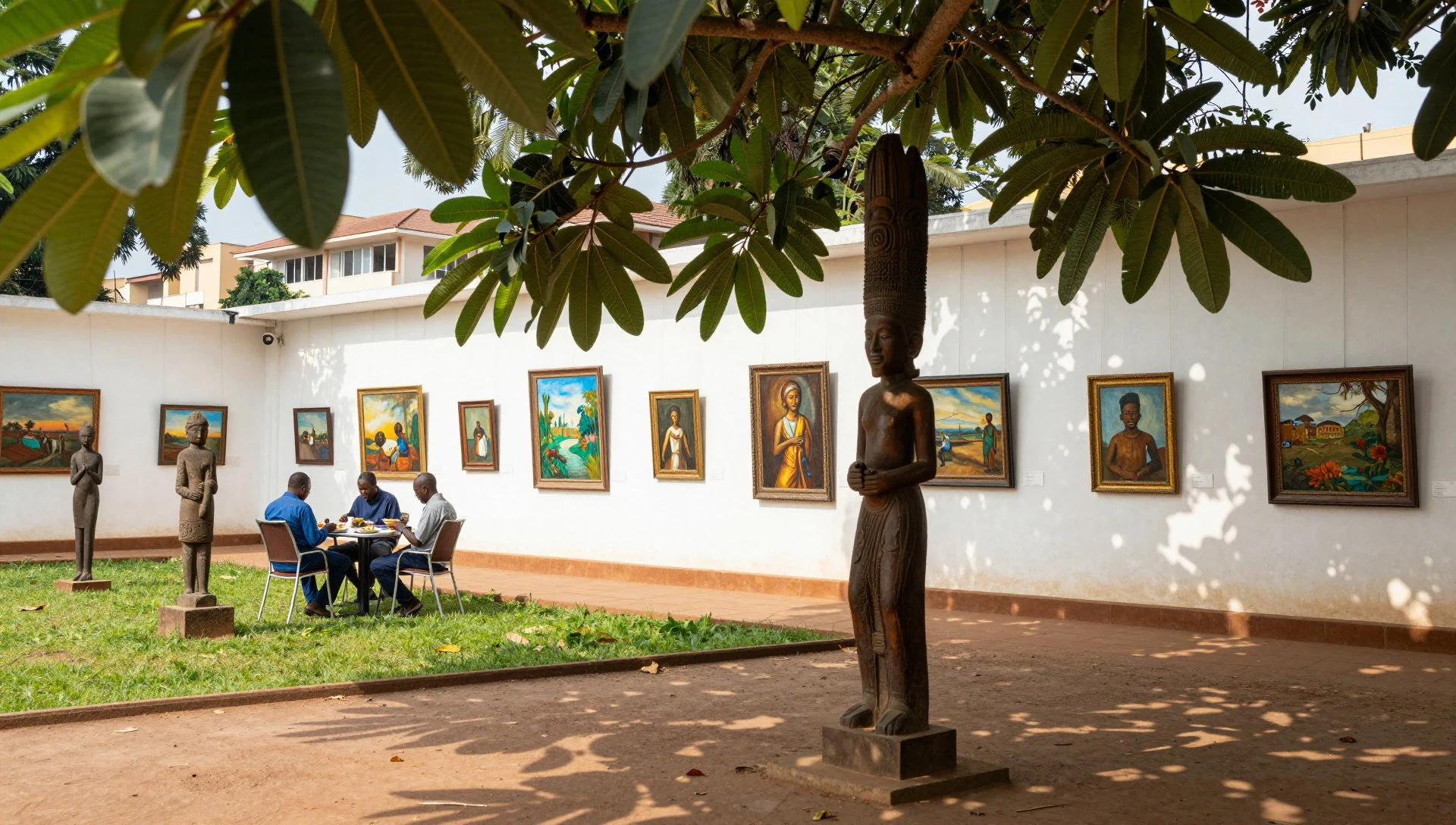
Culture
Kampala holds much of Uganda's public culture and is the seat of the Buganda kingdom at Mengo, where the kabaka's palace still anchors Baganda life. The Kasubi Tombs, burial place of four kings, are tended as a shrine. English and Luganda share the streets, offices and radio, and a greeting in Luganda is noticed and appreciated.
The Uganda Museum and the National Theatre are the formal institutions, but daily culture is in the markets. Owino Market, also called St Balikuddembe, is a dense covered market for clothes, shoes and fresh food. Wandegeya, beside Makerere University, serves students and the surrounding neighbourhood. Malls at Kamwokya, Nsambya and Bugolobi add air-conditioned shopping, yet the open markets still set the pace and the prices of ordinary life.
Music, church and mosque structure the week. Choirs, Friday prayers and Sunday services are loud and public, and the streets stay busy after work. Art at Nommo Gallery and dance at the National Theatre sit alongside that popular calendar. Kampala argues in newspapers, on radios and in matatus; conversation is direct and often political.
At the mosque, the tombs and the Bahai temple, dress modestly, remove shoes where required, and ask before photographing people at prayer or in a market.
What to wear
Kampala dresses in layers of kingdom, trade and office life. For Baganda ceremony the men wear the kanzu, a long white robe, often with a jacket at formal events, and women wear the gomesi, also called the busuuti: a floor-length dress with a square neck, puffed sleeves and a sash tied at the hip. Barkcloth, beaten from fig-tree bark, still appears at royal and funeral rites. Kitenge and other printed cottons turn up at introductions, weddings and political gatherings, cut as gowns, shirts or headwraps.
On an ordinary weekday the city looks different. Civil servants and shop staff wear shirts, trousers, knee-length dresses and suits; students live in jeans and T-shirts; boda-boda riders wear jackets against dust and rain. Tailors in Owino Market and around Wandegeya will copy a gomesi or run up a work shirt quickly. Smart malls in Kololo and Bugolobi sell imported fashion beside local designers.
Visitors do not need traditional dress. Light cotton is right for the warm days at 1,190 metres, with a light layer for evening rides and a rain jacket in the wet months. Shoulders and knees should be covered at the mosque, the Kasubi Tombs and other shrines, and shoes come off where a step or a sign indicates. Closed shoes with a grip help on steep, sometimes muddy hills. Flashy jewellery and loose bags are a poor match for crowded markets.
What to eat
- Luwombo — traditional eateries in Mengo and the city centre
Luwombo is steamed banana-leaf parcels of chicken, beef or groundnut sauce, a Buganda classic. In Kampala, traditional eateries around Mengo and the city centre serve it with matooke. It belongs in a local eatery rather than a mall food court.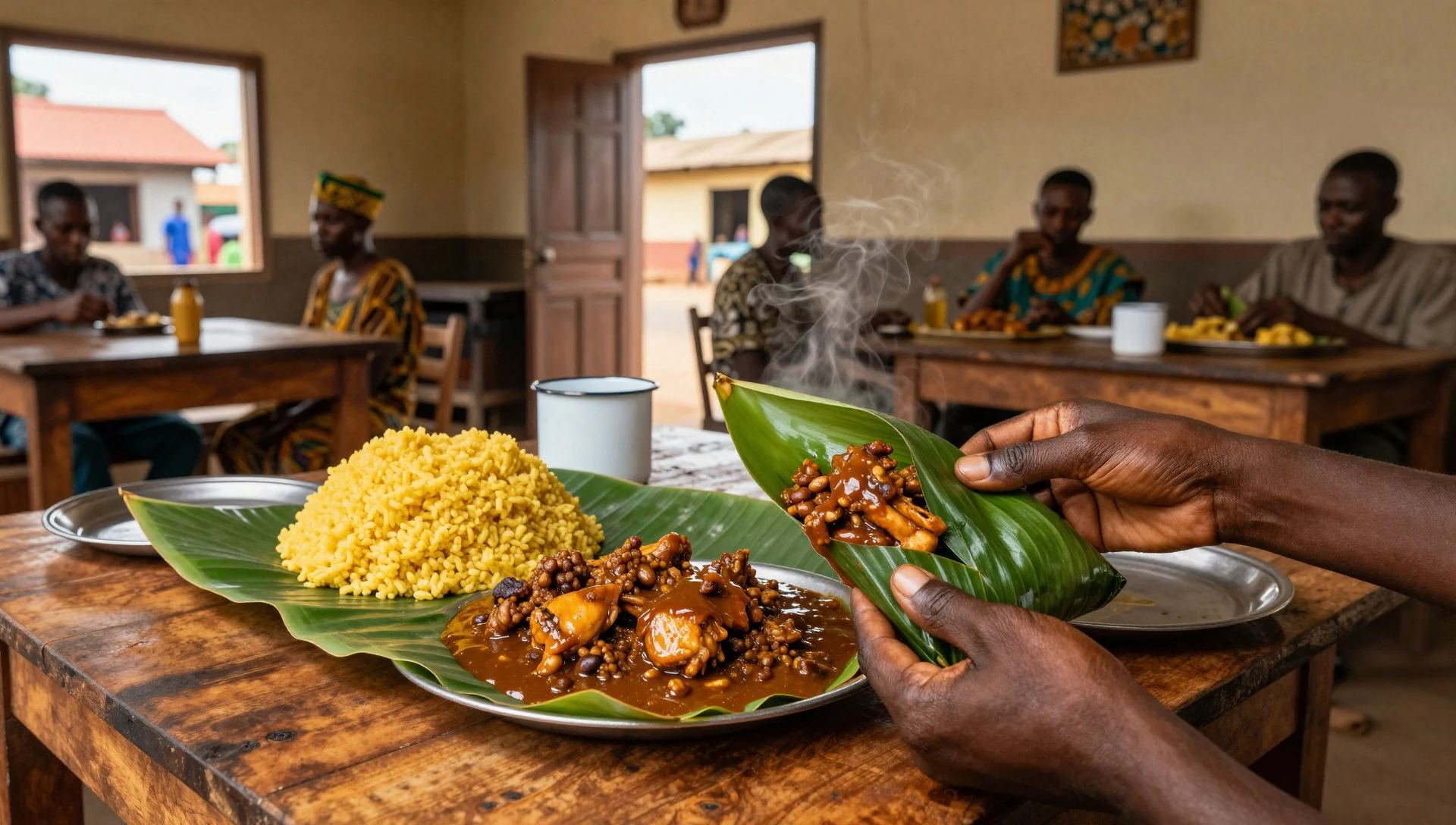
- Rolex — Wandegeya, taxi parks and night stalls
A rolex is Kampala street food: a chapati rolled around omelette, cabbage and tomato on a roadside griddle. Stalls cluster at Wandegeya, at taxi parks and on night corners near the university and the centre. The name is local slang, not the wristwatch, and the roll is eaten hot.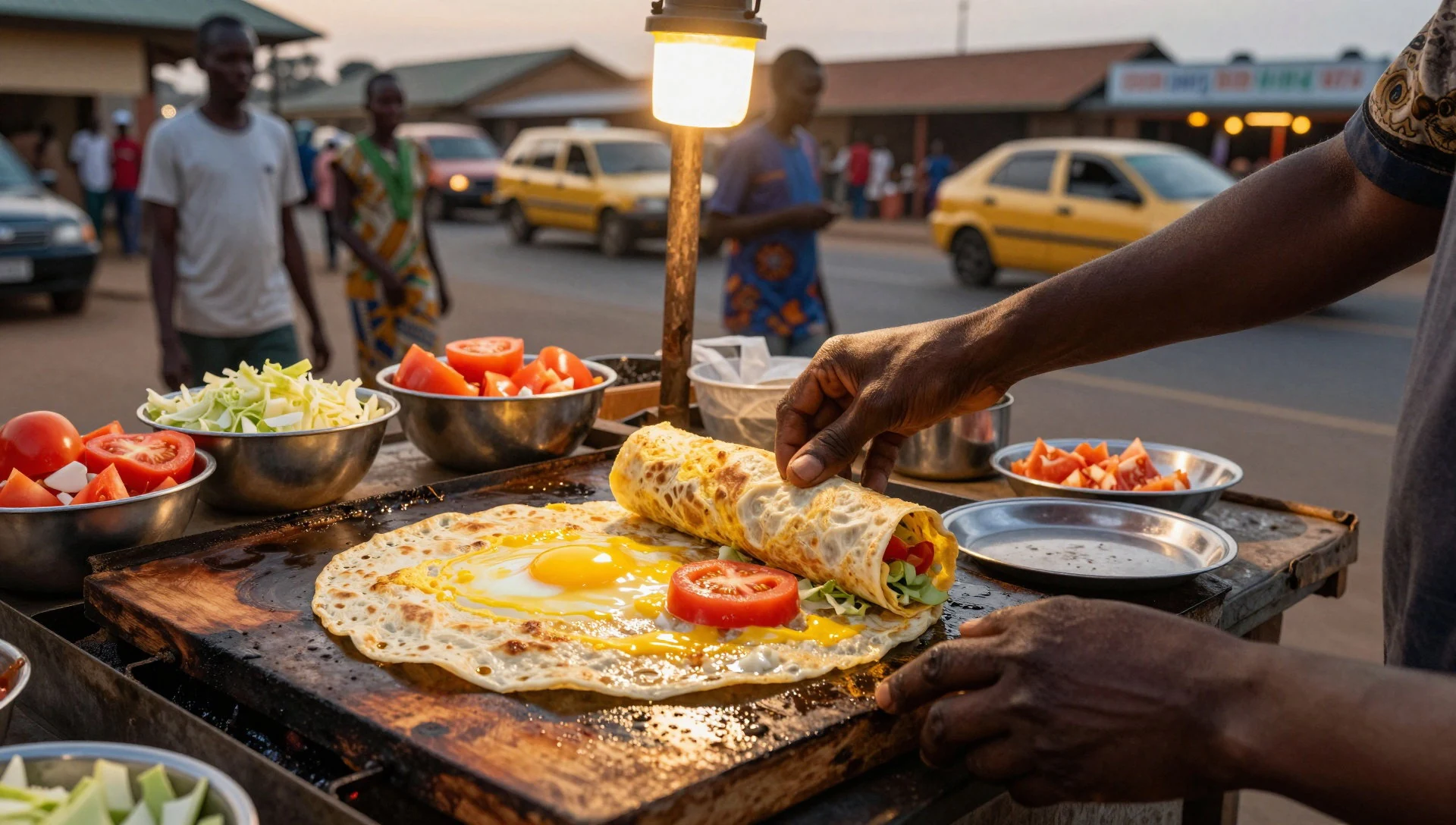
- Matooke with groundnut sauce — Owino Market and office-district lunch spots
Matooke, steamed green banana mashed into a soft mound, is the starch many Kampala meals are built on. Groundnut sauce, sometimes with beans or greens, is the usual partner in market eateries at Owino and in lunch spots near the offices. - Fried tilapia and Nile perch — evening stalls in the centre and near taxi parks
Tilapia and Nile perch, fried or stewed, are Kampala's everyday fish, a reminder of the lakes to the south. Evening stalls and simple eateries in the centre and towards the taxi parks serve it with chips, posho or matooke. Hot oil and chilli mark the stalls. - Katogo — local eateries by markets and taxi stages
Katogo is a breakfast stew that cooks plantain or cassava with offal, beans or groundnuts. In Kampala it is the early meal at local eateries near markets and taxi stages, on the table well before offices open. It is heavy, salty and meant to last until midday.
Plan it
Best time. Kampala stays warm all year at about 1,190 metres. January to February and June to July are the drier windows for walking the hills. March to May and September to December bring heavier showers that slow valley roads.
How long. 3–4
Getting there. Flights land at Entebbe, southwest of Kampala. A taxi, rideshare or airport bus covers the road into the city. Matatus link the hills by day; after dark a rideshare is the better last leg. City notices are on https://www.kcca.go.ug/.
Budget. mid
Tips
- Visit the tombs, mosque and museum in the morning, before heat and traffic.
- Do not walk after dark; use a rideshare or a pre-arranged taxi, and keep car windows up.
- Carry cash for markets and matatus; cards suit malls and larger hotels.
- Add time between hills in the rain; short distances crawl when valleys flood.
- Check the National Theatre listing before you go, and use kcca.go.ug rather than old hours.
Etiquette
- Remove shoes at the mosque, the tombs and anywhere shoes are left at the door.
- Cover shoulders and knees at shrines and the Bahai Temple.
- Ask before photographing people at prayer, at the palace or in a market.
Nearby
Sources
- Wikidata Q3894 (CC0)
- Wikipedia (rev 1384661568) (CC BY-SA 4.0)
- Wikivoyage (rev 5427268) (CC BY-SA 4.0)
- View from 7th floor on Crane Chambers at Kampala road (CC BY 3.0)
- Urban Rising, Kampala, Uganda (CC BY-SA 4.0)
- Bahai Temple Kampala Uganda (CC BY 4.0)
- Mengo Palace, traditional home of the Kabaka of Buganda (CC BY 2.5)
- Kasubi Tombs in Kampala (CC BY 4.0)
- Aerial view of the Gaddafi mosque in Uganda (CC BY-SA 4.0)
- Lubaga Cathedral (St Mary's Cathedral Rubaga), Kampala (CC BY-SA 4.0)
- Night aerial view of Hamz Stadium in Nakivubo, Kampala (CC BY-SA 4.0)


