Kibale Forest
Kibale Forest, Uganda
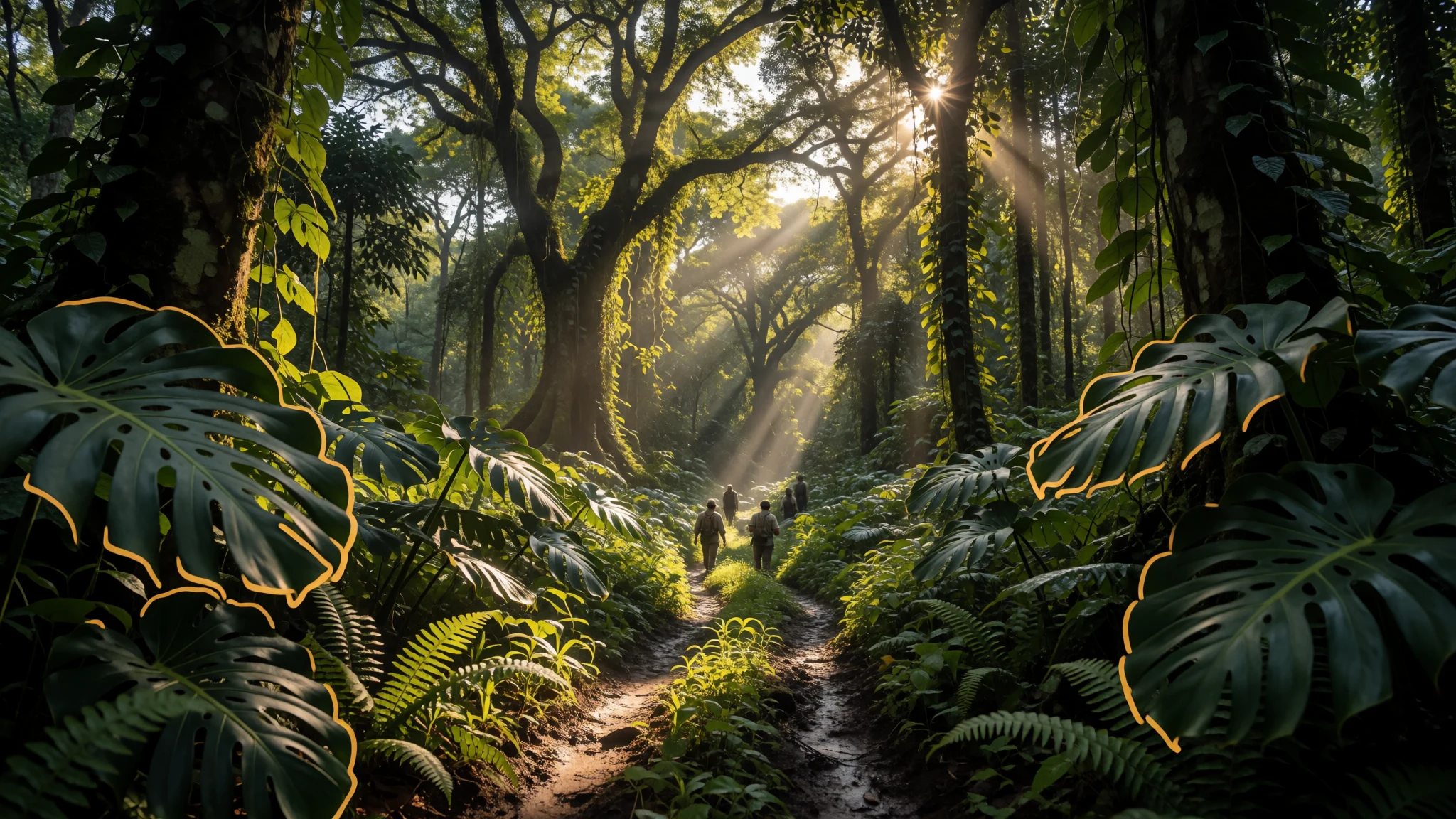
Kibale Forest in western Uganda offers an on-foot meeting with wild chimpanzees and a crowd of other primates under a damp, towering canopy.
The place
Kibale Forest, officially Kibale National Park, lies in western Uganda, with Fort Portal as the nearest town. The park protects about 766 square kilometres of rainforest, most of it moist and evergreen, rising from around 1,100 m to 1,600 m above sea level. That change in height gives the forest more than one face, and the lower and higher ground carry different mixes of trees and animals. On the ground it is damp and dim: buttressed roots, tangled vines, leaf litter that muffles footsteps, and a canopy that lets through only patches of sun. Sound does most of the navigating. Guides often locate chimpanzees by listening for their pant hoots long before anything is visible. Kibale is known above all for chimpanzees that have grown used to human visitors, but they are not the only primates here. Twelve other species live in the forest, and red colobus monkeys are regularly seen along the trails. To the south the forest runs into Queen Elizabeth National Park, and together the two form a wildlife corridor about 180 km long, used by elephants among other animals. Makerere University also keeps a biological field station inside Kibale, so the forest doubles as a research site where primates have been studied closely. Weather shapes every visit. Rain can fall in any month, paths turn to slick mud, and the air stays humid even on bright mornings. Most travellers come for a single chimpanzee walk, though the birds, butterflies and monkeys along the way justify a second day.
Its story
Kibale Forest owes its protection to timber before wildlife. British colonial officials set the area aside in 1932 as a managed forest, valued for hardwood and for the wild coffee growing beneath the trees. Foresters felled the large native timber trees and replanted cleared ground with exotic species, leaving a woodland of mixed origins. Demand for wood rose again after 1950, when copper mining began at Kilembe near Kasese and the works needed timber. For decades the forest was a working landscape first and a refuge second. Attitudes shifted as it became clear that the chimpanzees around Kanyanchu were under pressure and that forest of this kind was worth keeping standing. In 1993 the reserve was reclassified as Kibale National Park, ending its life as a logging estate. Day-to-day management passed to Uganda National Parks in 1994, and in 1996 that body merged with the Game Department to form the Uganda Wildlife Authority, which runs the park today. This history matters on the ground. Parts of the forest are regenerating, and the mix of ages and species reflects what was cut and what was planted. It also explains how tourism is framed here, as income for conservation. Chimpanzee walks, lodging and guiding help pay for protection and give nearby communities a reason to value the forest as it stands.
What to see
- Chimpanzee tracking and the habituation experience — Kibale National Park, near Kanyanchu
Following chimpanzees on foot with a ranger is the activity Kibale Forest is known for. The Chimpanzee Habituation Experience, run by the Uganda Wildlife Authority, takes a small group out before dawn for a full day with the apes, locating them by their calls. The pace can be brisk over rough ground, so fitness and patience both matter.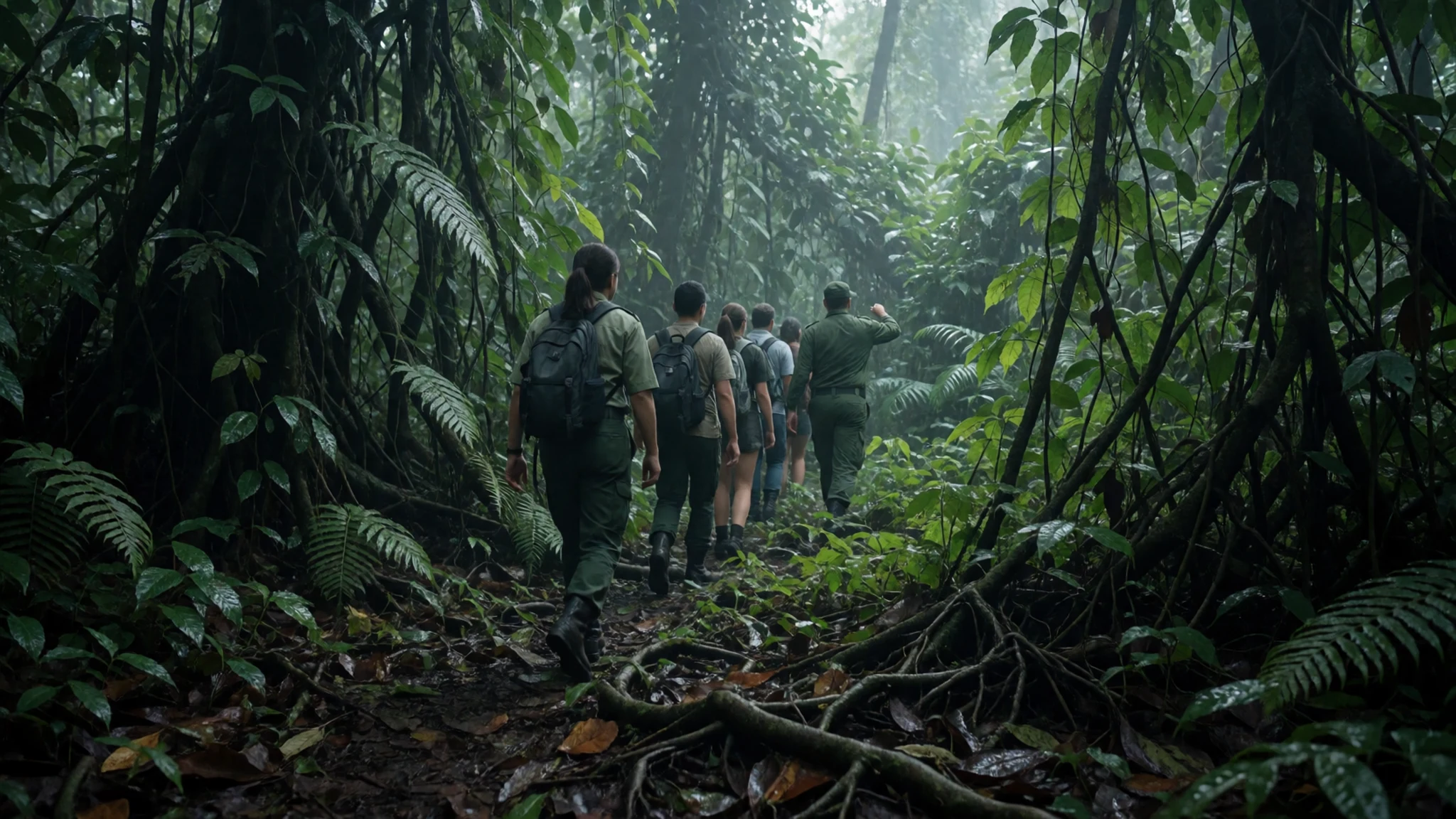
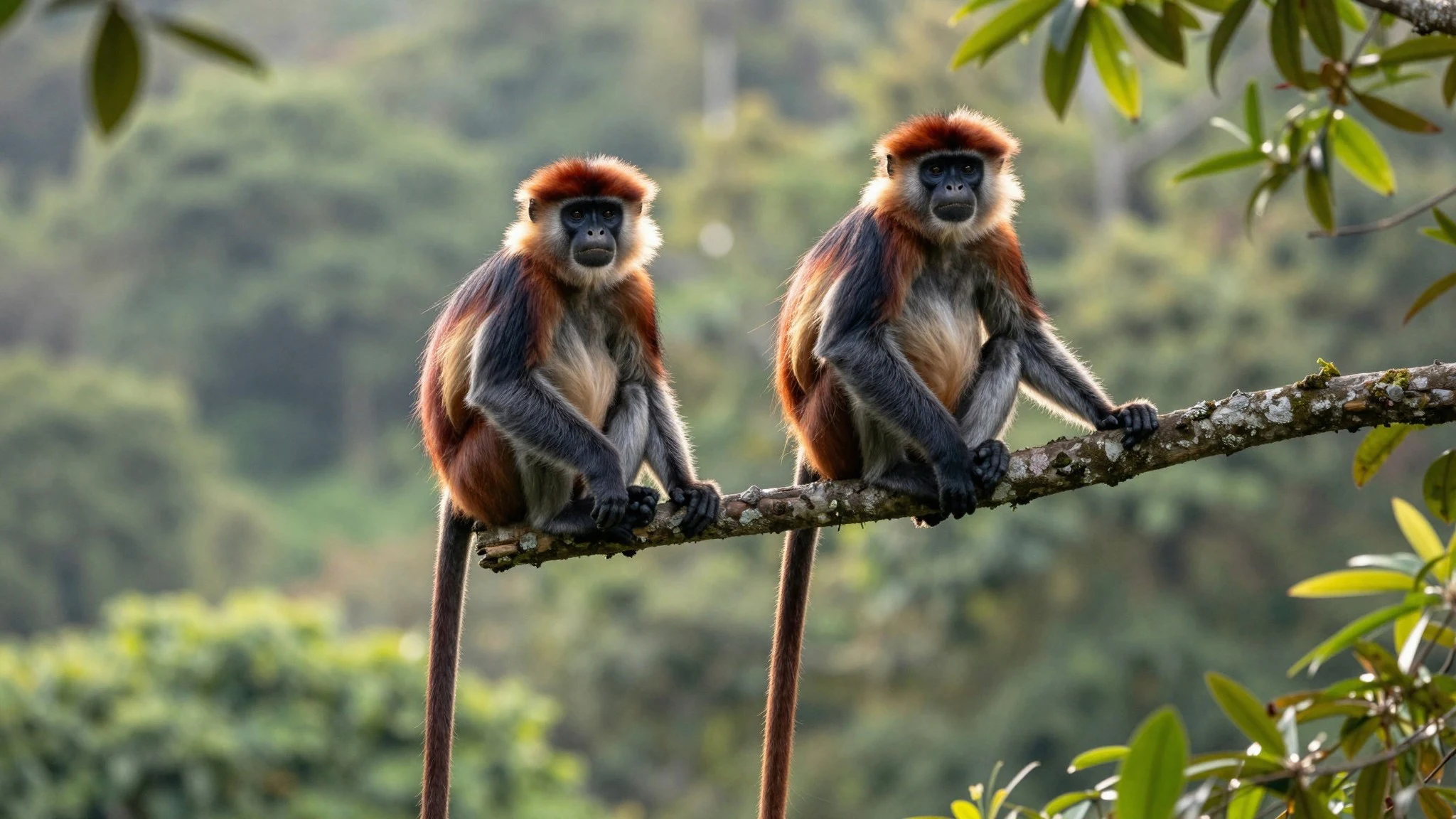
- Red colobus monkeys — Forest trails inside Kibale National Park
Ugandan red colobus are leaf-eating monkeys that travel through the middle and upper canopy in noisy groups. They tend to stay in view while feeding, which makes them easier to watch than chimpanzees. Bring binoculars, because the treetops are high and the light under the canopy is poor.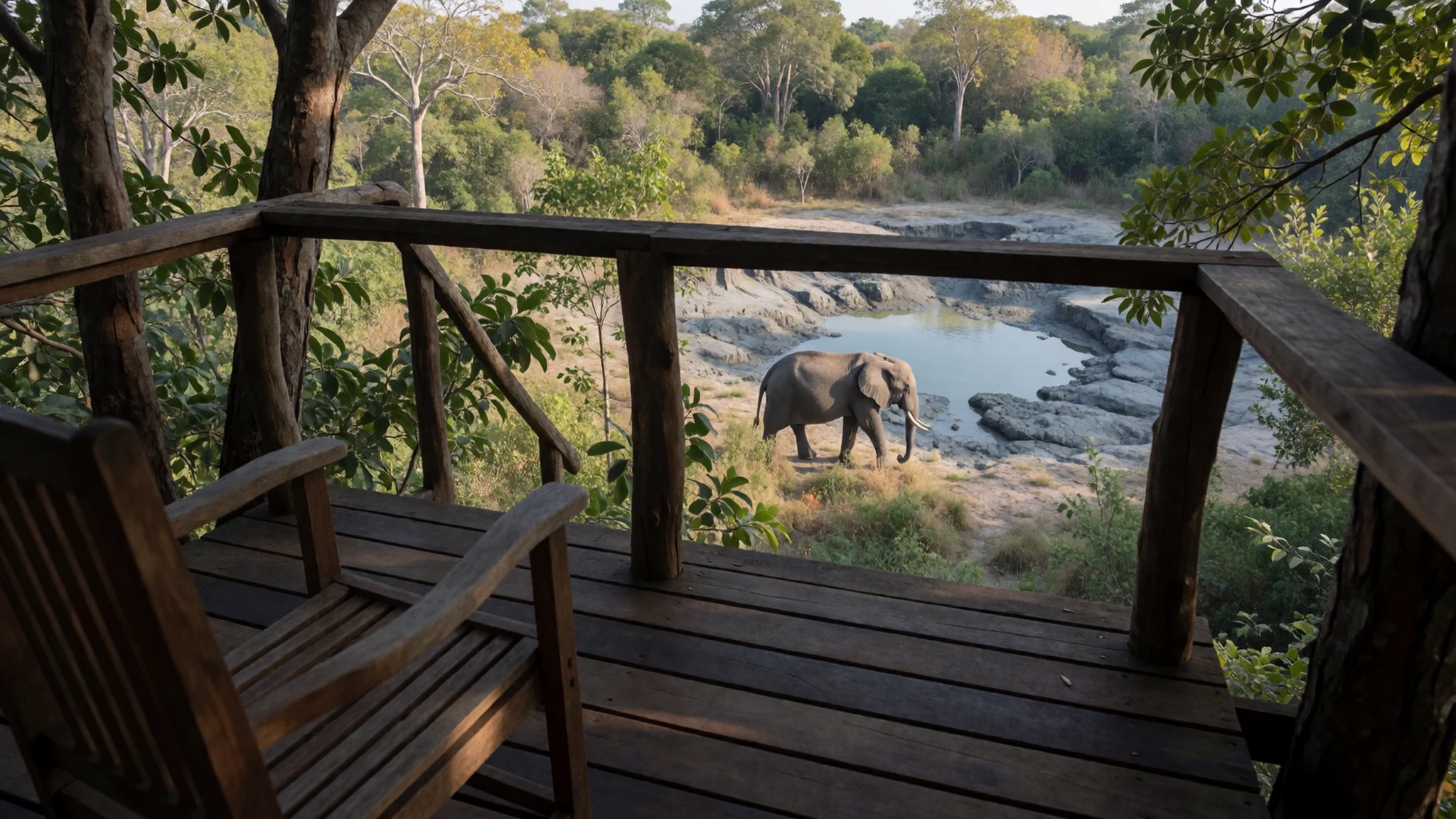
- Fruiting fig trees — Fruiting trees along the forest trails
Chimpanzees gather at fruiting trees, and a fig in season can hold apes, monkeys and birds all at once. Guides read the forest for what is ripe, which often shapes where a walk goes. Standing still beneath one, a visitor hears dropped fruit, calls overhead and rustling leaves before seeing much.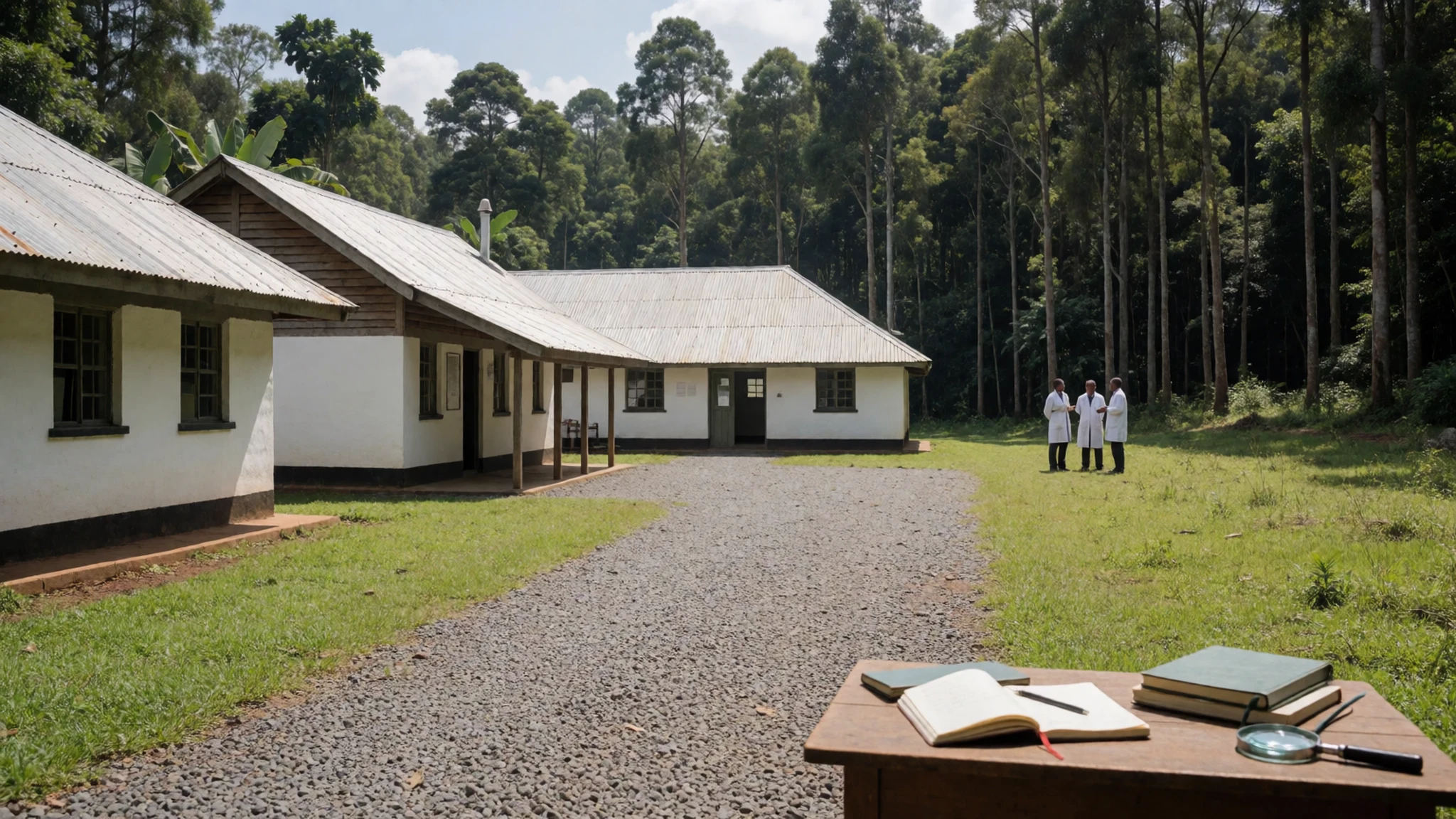
- The forest treehouse — Inside Kibale National Park, UWA accommodation
A raised room on stilts, reached by ladder, stands above a forest clearing with a seasonal waterhole and is part of the park's own accommodation. Forest elephants sometimes visit the water, which is the draw, though sightings are never guaranteed. It is secluded and simple, and suits visitors who do not mind the climb.
- Roads and forest edges — Roads and edges of Kibale National Park
The tracks that cross Kibale National Park show the forest from outside as well as within: a wall of green on either side, farmland beyond, and birds and butterflies in the gaps. Walking or driving slowly rewards patient looking. Fort Portal, the nearest town, is the base for most day trips.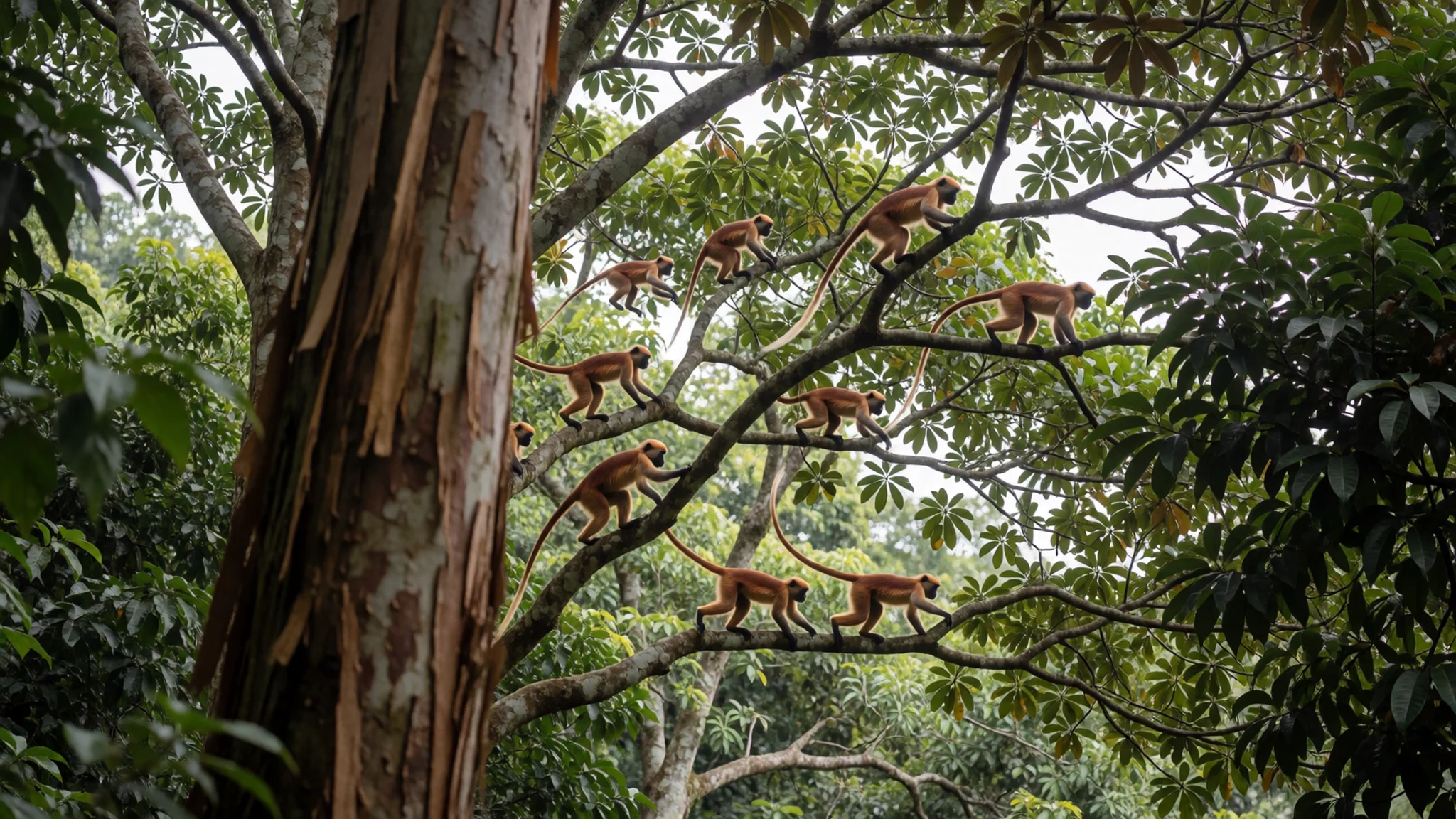
Culture
Kibale Forest is managed first as a conservation area, and the feel of a visit is shaped by rangers, researchers and the farming communities around its edges. Rangers lead every chimpanzee walk, carry arms as a precaution against forest animals, and set the rules, so the experience resembles a guided field trip more than a stroll. The Uganda Wildlife Authority oversees the park, and the Makerere University field station gives it a scientific side that visitors seldom see but benefit from, because chimpanzees that tolerate people exist thanks to years of patient work. Beyond the boundary, western Uganda is a landscape of small farms, banana groves and tea, with Fort Portal as its market town. English is widely used alongside local languages, and greetings matter; a handshake and a polite good morning open doors. Conversations about the forest often turn on the balance between protection and land for crops, an honest tension that guides will usually discuss if asked. Travellers help most by hiring local guides, buying from nearby stalls and keeping to the rules. Keep to the distance your ranger sets from the chimpanzees, speak quietly, and stay off the trail if you have a cold or other infection, because apes catch human illnesses easily.
What to wear
Fashion around Kibale Forest mixes Ugandan national dress with practical everyday clothing. Traditional dress in western Uganda includes the gomesi, a floor-length cotton or silk dress with a square neckline, puffed shoulders and a broad sash tied at the hips, worn by women at weddings, introductions and family occasions. Men wear the kanzu, a long cream or white cotton robe, often under a blazer, at similar ceremonies. Bark cloth, beaten from the bark of a fig tree, is a historic textile of southern Uganda and still appears in ceremonial settings. Day to day, people near the park wear shirts, trousers, skirts and dresses in cotton, with rubber boots on farms and in wet weather. Fort Portal's streets look much like any East African market town, with tailored clothes alongside second-hand imports. Visitors should dress for mud, insects and humidity. Long trousers and long-sleeved tops in quick-drying fabric protect against nettles and biting insects, and tucking trousers into socks or gaiters keeps ants out. Sturdy waterproof boots with good grip are essential, and a light rain jacket belongs in the bag in every month. Muted greens and browns are sensible, and strong perfume is best left behind. In towns, villages and churches, covering shoulders and knees is the polite norm.
What to eat
- Matoke — Local eateries and market stalls in Fort Portal and roadside villages
Matoke is green banana, peeled and steamed in leaves until soft, then mashed or served in chunks beside a stew or sauce. Mild and filling, it is the everyday staple of western Uganda and suits long days of walking.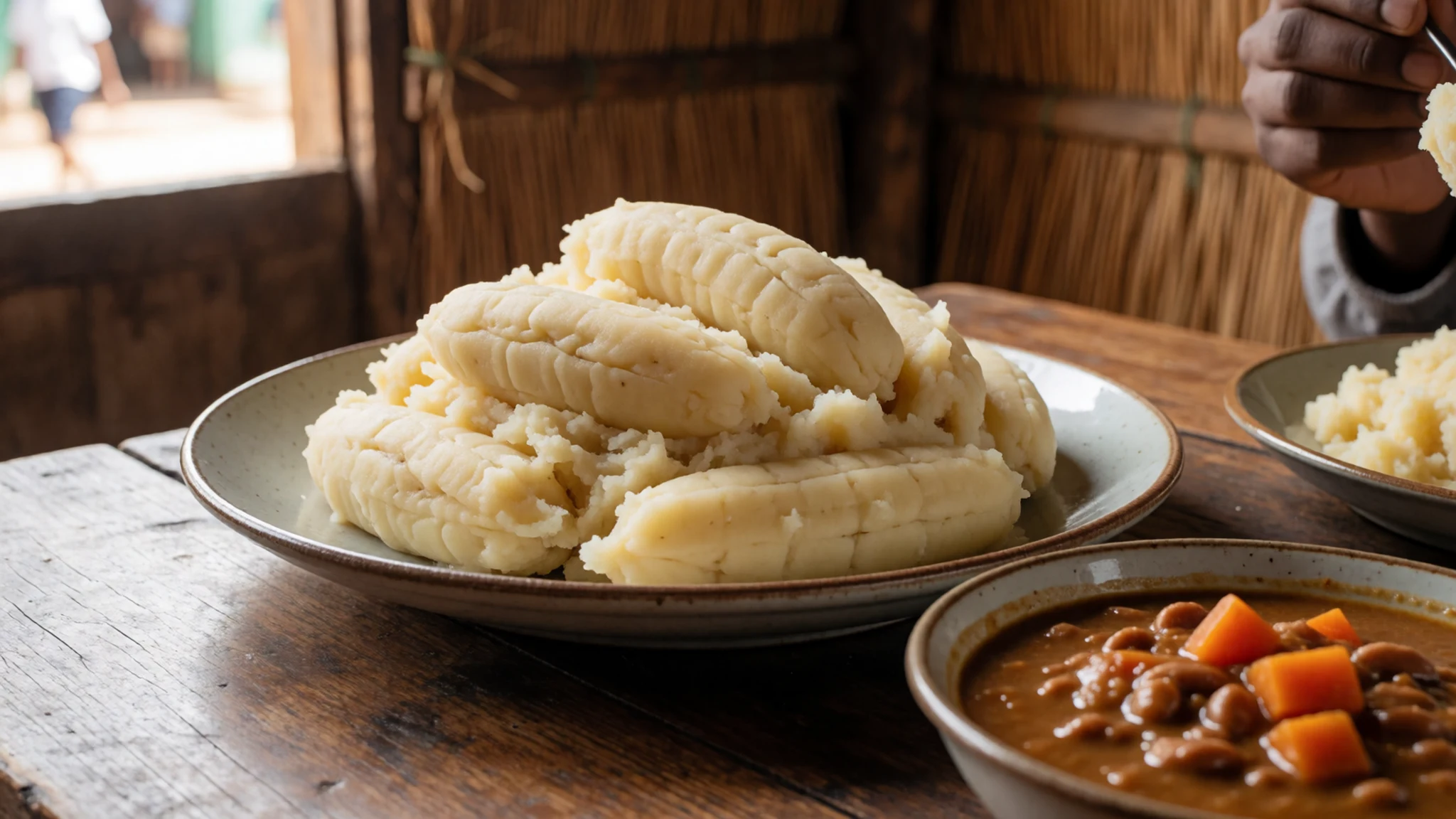
- Rolex — Street stalls and food corners near the bus stands in Fort Portal
A rolex is an omelette rolled inside a fresh chapati, cooked on a hot plate while you wait. It is cheap, quick and a handy breakfast before an early forest walk, often with tomato and cabbage folded in.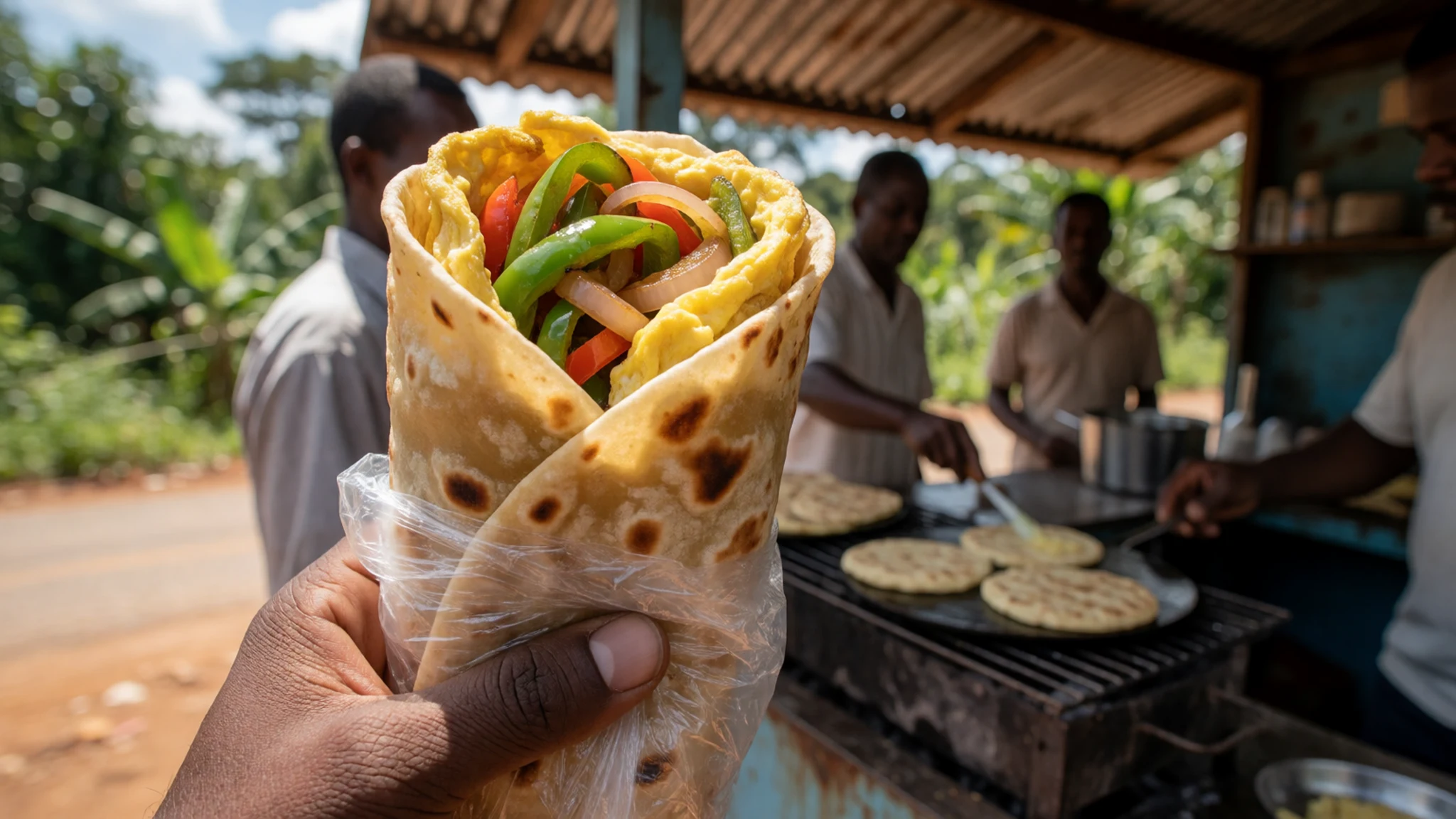
- Posho and beans — Simple local eateries near markets and bus stands
Posho is a firm maize-flour porridge, cut into slices and eaten with beans or stewed meat. Plain by itself, it is a sturdy base for the sauce beside it, and it is the kind of meal many working people eat at midday. - Groundnut sauce — Home-style eateries serving a plate lunch
Groundnut sauce is a thick, savoury sauce of ground peanuts, usually served with steamed matoke, sweet potato or cassava. It has a gentle nutty richness and is a good choice for vegetarians. - Luwombo — Restaurants and lodges serving traditional Ugandan food, often by advance order
Luwombo is a stew of chicken, beef or smoked fish, steamed slowly in banana leaves that give it a faintly smoky flavour. It is more a celebration dish than a daily one, so ask ahead where it is offered.
Plan it
Best time. June–July and December–February are generally the drier spells, which makes the forest paths easier underfoot. Rain can fall in any month and the forest stays humid all year, so pack rain gear whenever you go.
How long. 2–3
Getting there. Fly into Entebbe, then travel by road to Fort Portal, the nearest town, and on to the park's visitor area; allow most of a day for the journey and arrange a driver or a seat with a tour operator. Check with the Uganda Wildlife Authority for current access and guidance.
Budget. high
Tips
- Book chimpanzee permits ahead through the Uganda Wildlife Authority or a tour operator, especially in the drier months; the permit is the largest cost of a visit
- Start early, since walks set out in the morning and the Habituation Experience leaves before dawn
- Carry some cash for small purchases in Fort Portal, as card use outside larger lodges is patchy
- Bring water, rain gear, gaiters and gloves, because trails are muddy and the pace can be quick
- Allow a spare day in case rain or tired legs make you want a second chance at the chimpanzees
Etiquette
- Keep to the distance your ranger sets from the chimpanzees and never feed any animal
- Stay home from the walk if you are ill, as apes catch human illnesses
- Ask before photographing people in villages and markets
Nearby
Sources
- Wikidata Q1740785 (CC0)
- Wikipedia: Kibale National Park (rev 1383481124) (CC BY-SA 4.0)
- Wikivoyage: Kibale Forest National Park (rev 5394738) (CC BY-SA 4.0)
- Photo: Kibale National Park — Josefito123 (CC BY-SA 4.0)
- Photo: Ugandan Red Colobus — Duncan Wright (CC BY 3.0)
- Photo: Chimp at Kibale National Park — Dror Feitelson (CC BY 3.0)
- Photo: Chimpanzee eating figs — Drrobert (CC BY 3.0)
- Photo: Kibale Forest National Park — Dror Feitelson (CC BY 3.0)
- Photo: A road through the green scenery of Kibale National Park 01 — BalukuBrian (CC BY-SA 4.0)
- Photo: A road through the green scenery of Kibale National Park 02 — BalukuBrian (CC BY-SA 4.0)
- Photo: A road through the green scenery of Kibale National Park 03 — BalukuBrian (CC BY-SA 4.0)


Wildlife
- Chimpanzee (animal)
A chimpanzee is a big, clever ape with black hair and a bare face, among the animals most like us. In Kibale Forest, a rainforest rich in different kinds of life, you can meet chimpanzees that have grown used to visitors. Go with a guide, keep your distance, speak softly and move calmly so they stay relaxed. Never offer food; wild apes must stay wild, and your quiet respect will make the meeting feel all the more special.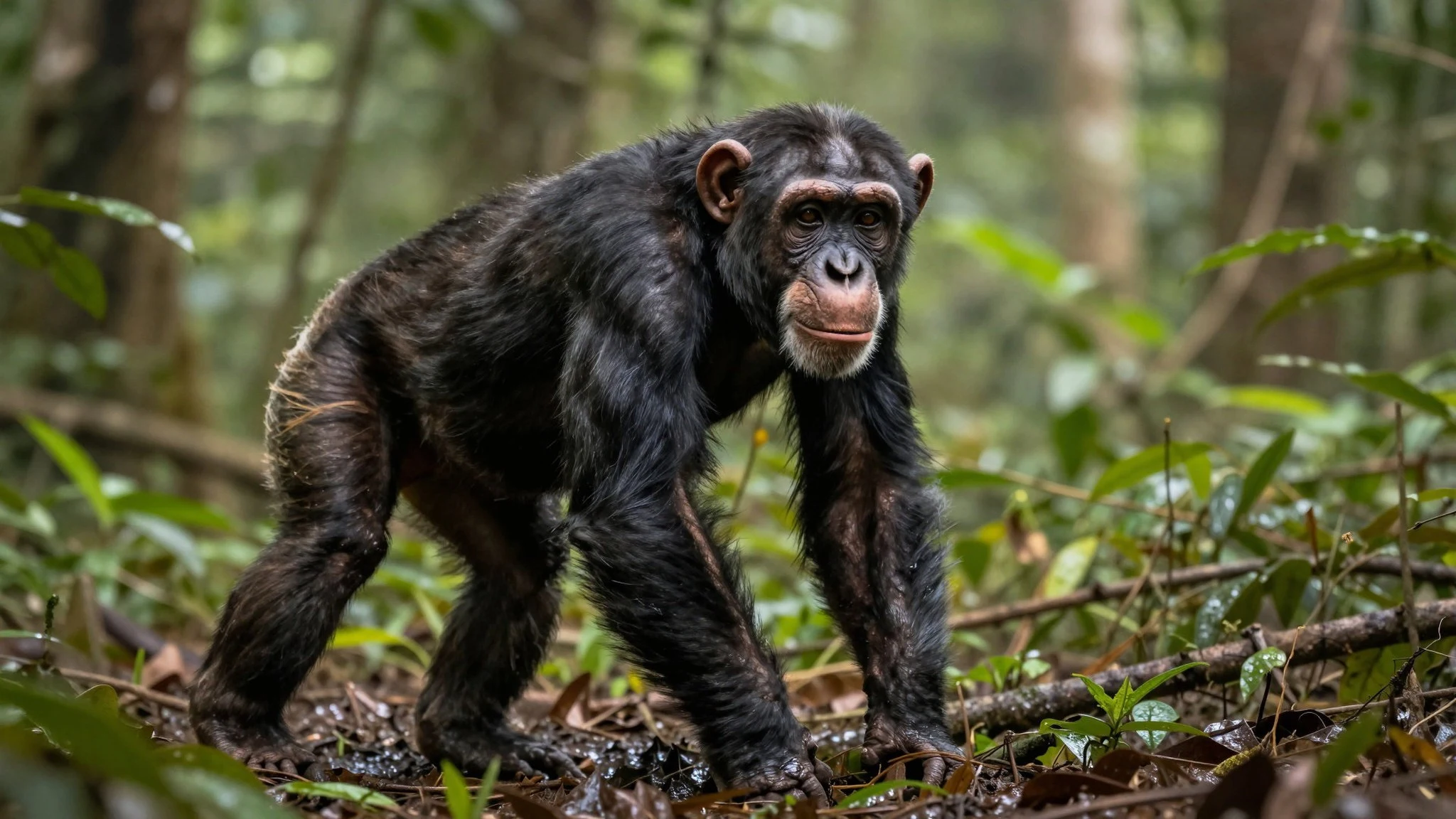
- Ugandan red colobus (animal)
The Ugandan red colobus is a rare monkey whose name tells you its colour, and it is in real danger of disappearing. In Kibale Forest, the park's paths are a very good place to look for it, so walk slowly and scan the branches around you. Go with a guide, keep a respectful distance and stay quiet so the monkeys carry on undisturbed. Never feed them; calm, gentle watching is the kindest way to enjoy an endangered animal.