Murchison Falls National Park
Murchison Falls National Park, Uganda
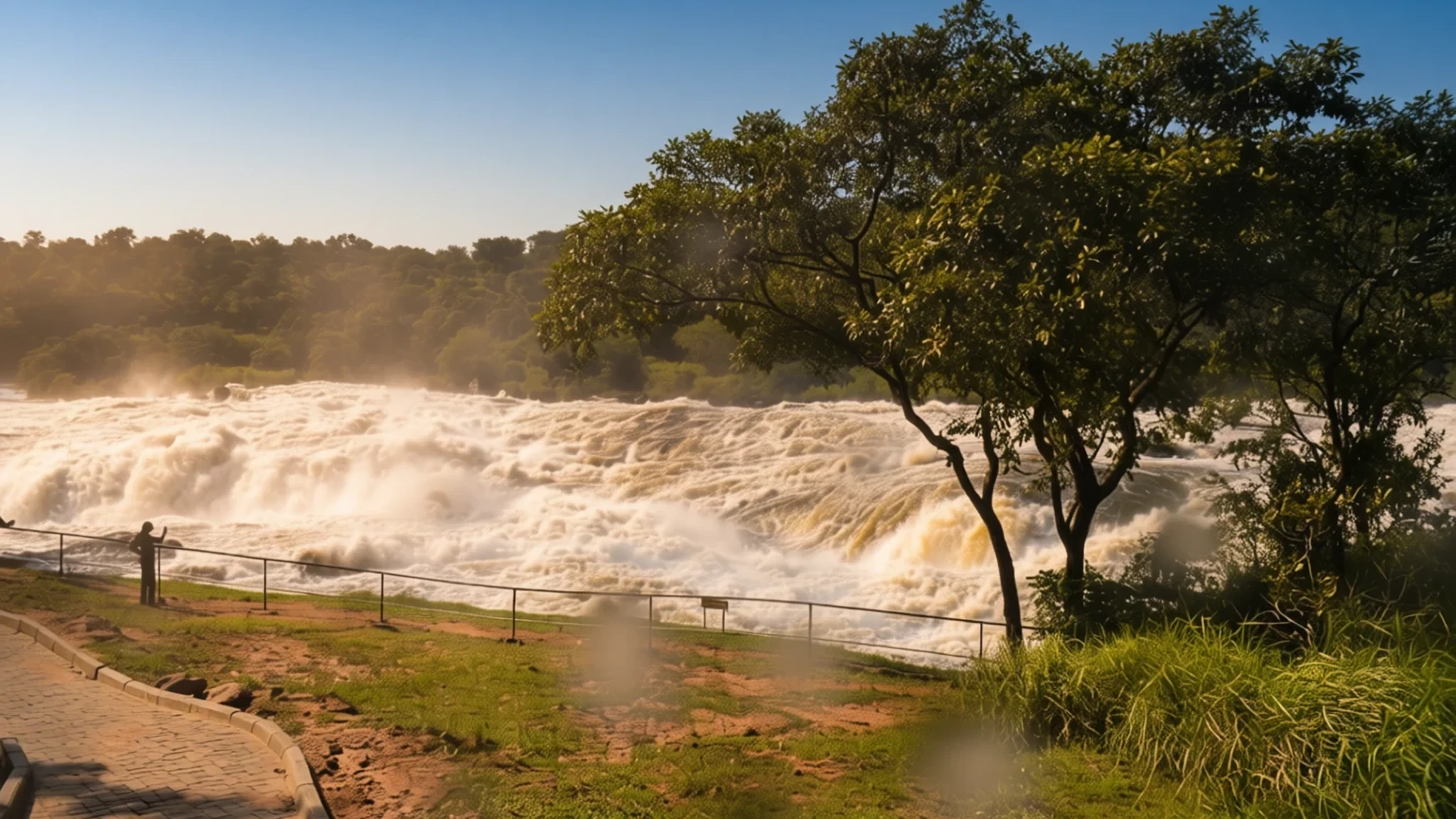
Uganda's largest national park, where the Nile is forced through a narrow gorge and the river is busy with hippos, elephants and crocodiles.
The place
Murchison Falls National Park sits in north-western Uganda, where the land rises from the shores of Lake Albert towards the Bunyoro escarpment. Its landscape moves from rolling savanna and open plains dotted with palms to woodland and riverside forest. The Ugandan Wildlife Authority manages the park, which forms the core of the wider Murchison Falls Conservation Area alongside two neighbouring wildlife reserves. It stretches across several districts, including Buliisa, Nwoya, Kiryandongo and Masindi, and it is now the largest national park in the country.
The centre of the park is the Victoria Nile. The river flows west through a long run of rapids before it is squeezed into a rocky cleft only about 7 metres wide, where the falls drop in a single dramatic rush. Most of the park's river activity, from launch cruises to the lodges that serve them, is organised around this stretch of water.
Away from the river the landscape changes quickly. Woodland and grassland hold giraffe, buffalo and antelope, while the wetter edges shelter hippos and crocodiles. Birdlife is rich throughout. At the northern end of Lake Albert, where the Victoria and Albert Nile meet, a maze of channels and papyrus islands supports a different set of species.
The wildlife is not as plentiful as in the big reserves of Kenya and Tanzania, but encounters can feel more intimate. The rewards come from patience and from the variety of habitats rather than from sheer numbers.
Its story
The first Europeans known to reach the area were the explorers John Speke and James Grant, but the fuller record begins with Samuel and Florence Baker, who travelled through the region in 1864 and documented the falls. Baker chose to name them after Sir Roderick Murchison, a Scottish scientist who led the Royal Geographical Society at the time. The naming tied a remote Ugandan landmark to the scientific circles of Victorian London, a link that still shapes how the park is known abroad.
Disease shaped the land as much as exploration did. In the years before the First World War, sleeping sickness carried by tsetse flies led to the evacuation of a large population from the surrounding country. A game reserve was created south of the Nile, and its boundaries were later pushed north across the river to take in more of the area.
The land was first protected as a game reserve in 1926. In 1952, under colonial rule, the government passed national parks legislation, and this place was among the first to be designated a national park in Uganda. The park's boundaries have shifted over the decades, but its core has remained the stretch of river around the falls.
In 1972, Idi Amin's government renamed the park Kabalega National Park as part of a wider campaign to reshape place names, honouring the historic king of Bunyoro. The name Murchison was later restored, although Kabalega Falls is still occasionally heard. The park's story is therefore one of explorers and conservation boundaries, and also of the Bunyoro kingdom, whose history is bound up with this land.
What to see
- Murchison Falls — Northern park, on the Victoria Nile
The falls are modest in height, with a drop of about 43 metres, yet the whole Nile is forced through a gap only about 7 metres wide. Up to 300 cubic metres of water a second can pass through it, so the noise and spray are the real draw. The launch cruise to the foot of the falls gives the closest view of the power of the water.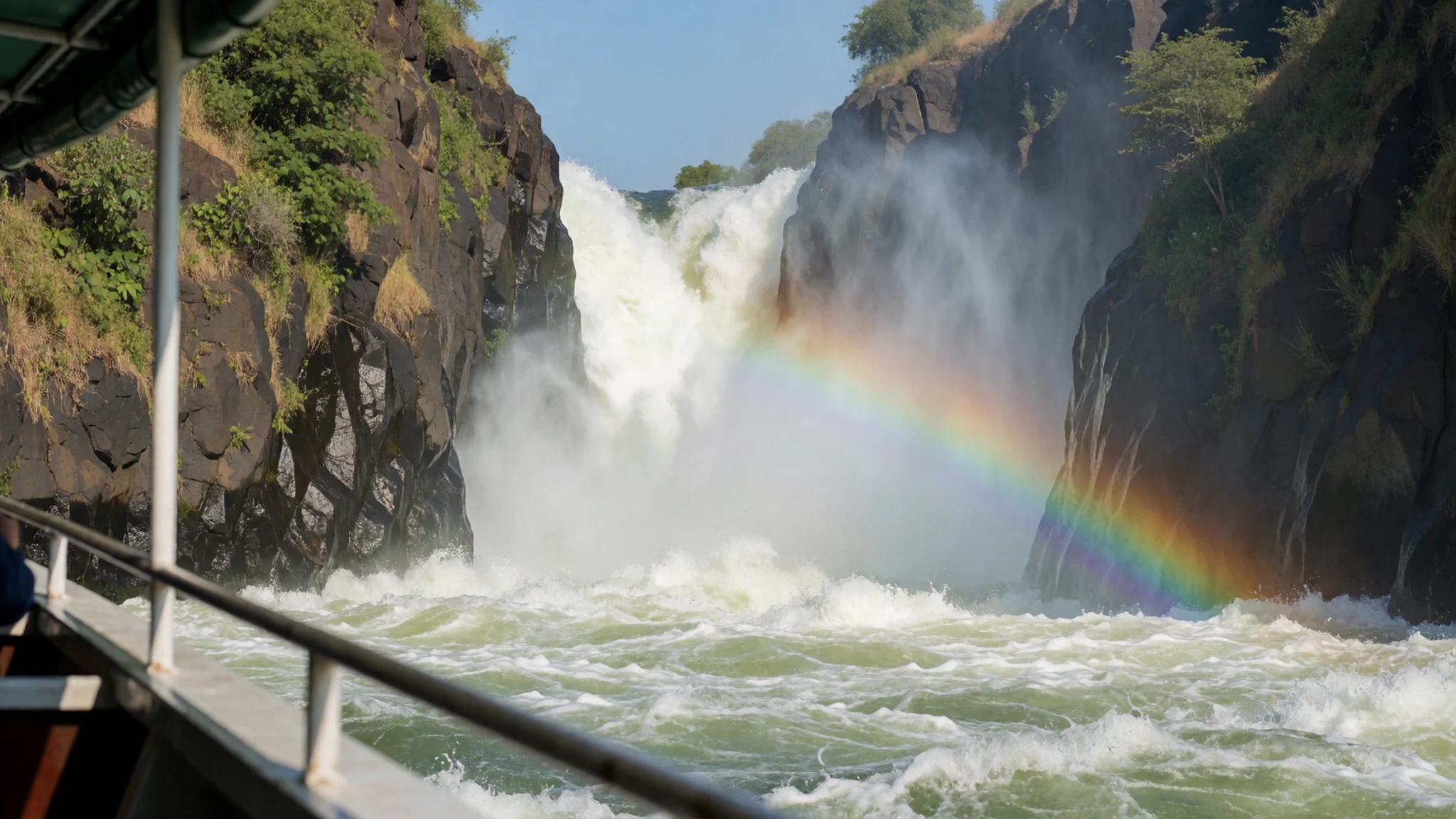
- Launch cruise on the Nile — River Nile below the falls
Launch trips run up the river towards the base of the falls, and they are the easiest way to see the park's animals. Elephants, buffalo, Defassa waterbuck and hippos come down to the water's edge, and Nile crocodiles bask on the banks. The pace is slow, so there is time to watch birds as well as large mammals.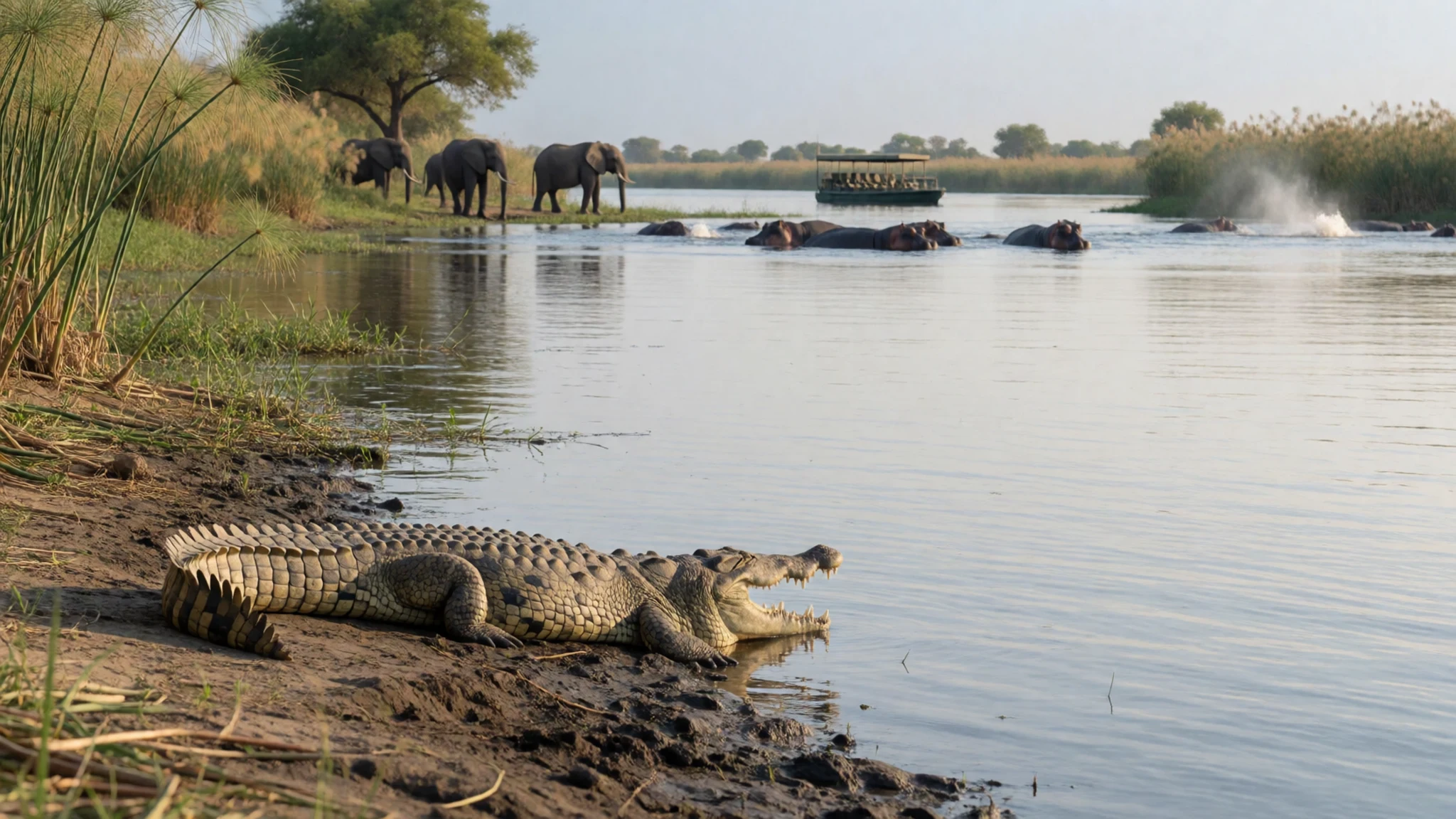
- Delta and the shoebill — Northern end of Lake Albert
Where the Victoria and Albert Nile meet at the northern end of Lake Albert, the delta is a network of channels and papyrus islands. Boats move between them in search of aquatic birds, and the prehistoric-looking shoebill is a prized sighting, often seen fishing for frogs and lungfish. Book the delta cruise as a separate trip, since it runs in the opposite direction to the falls.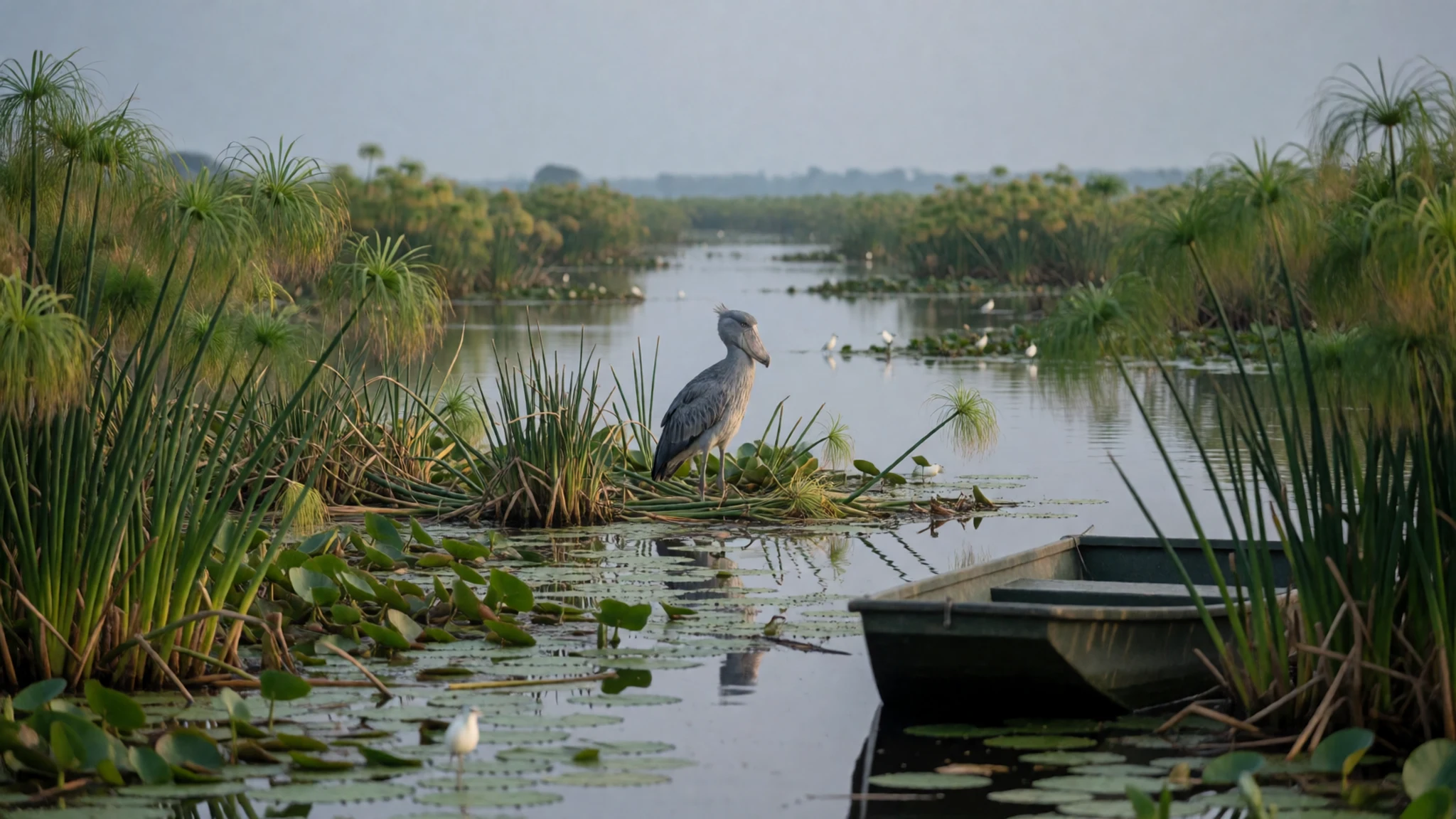
- Budongo Forest and chimpanzee trekking — Southern park, Budongo Forest
In the southern reaches of the park, Budongo Forest offers primate trekking and forest birding. The forest feels very different from the open savanna further north, with a dense canopy and quieter paths. Chimpanzee trekking is the highlight for many visitors, and it is best arranged well in advance.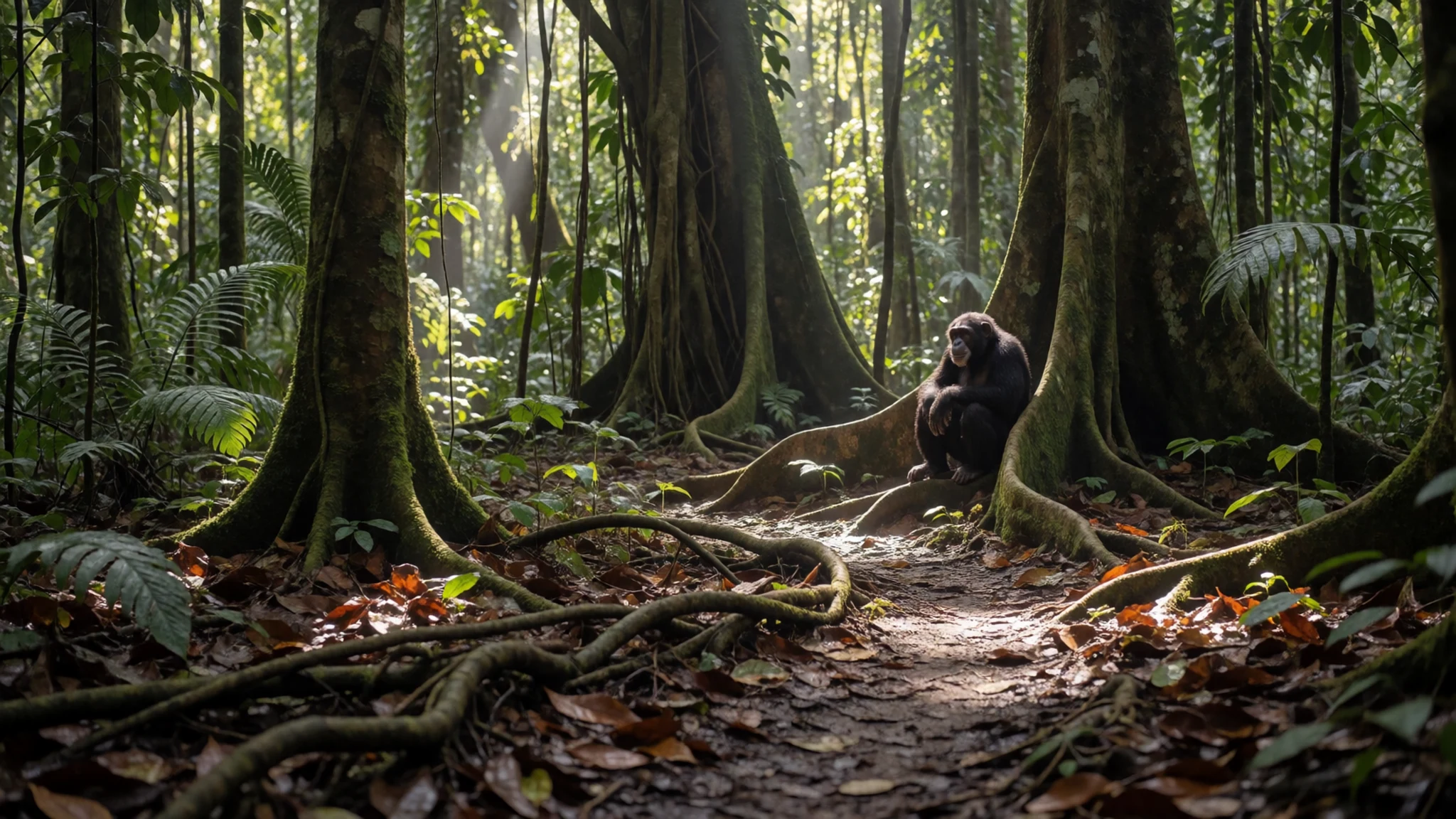
- Woodland game drives — Buligi circuit and the park's eastern and northern tracks
The Buligi circuit runs through the delta area, while other drives head east towards Karuma Falls or north to the Pakwach and Wangkwar gates. Game is not as plentiful as in Kenya or Tanzania, but encounters can feel more intimate. Giraffe move through the open woodland, and a ranger can often find them when the vehicle is quiet.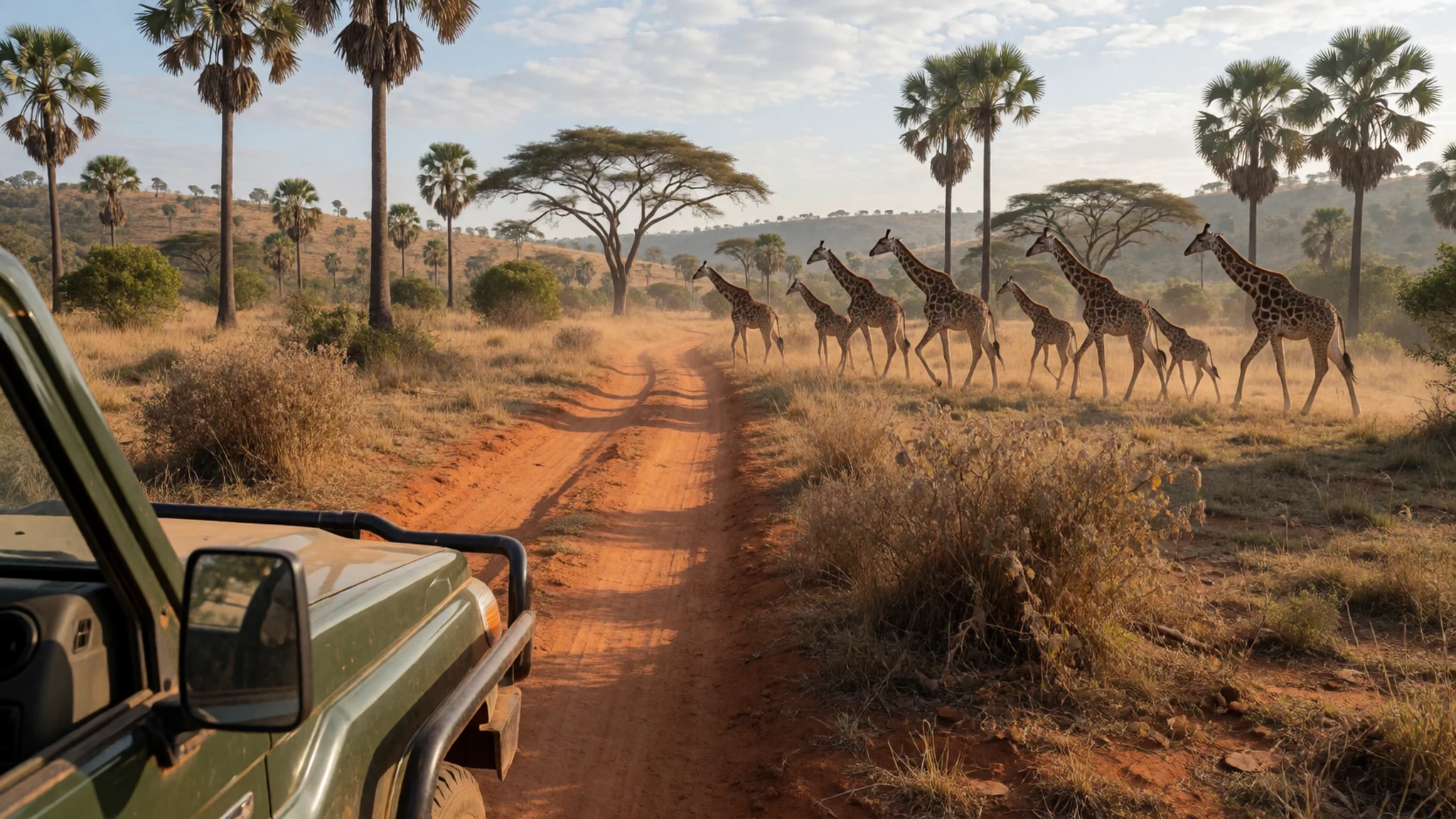
- Karuma Falls — Eastern drive towards the Karuma Wildlife Reserve
Karuma Falls, a second set of rapids on the Nile, lie east of the main park area on a longer drive. Because the route is longer, many visitors combine it with a game drive rather than making it a separate trip. A guide can advise on the road conditions and the timing before you set out.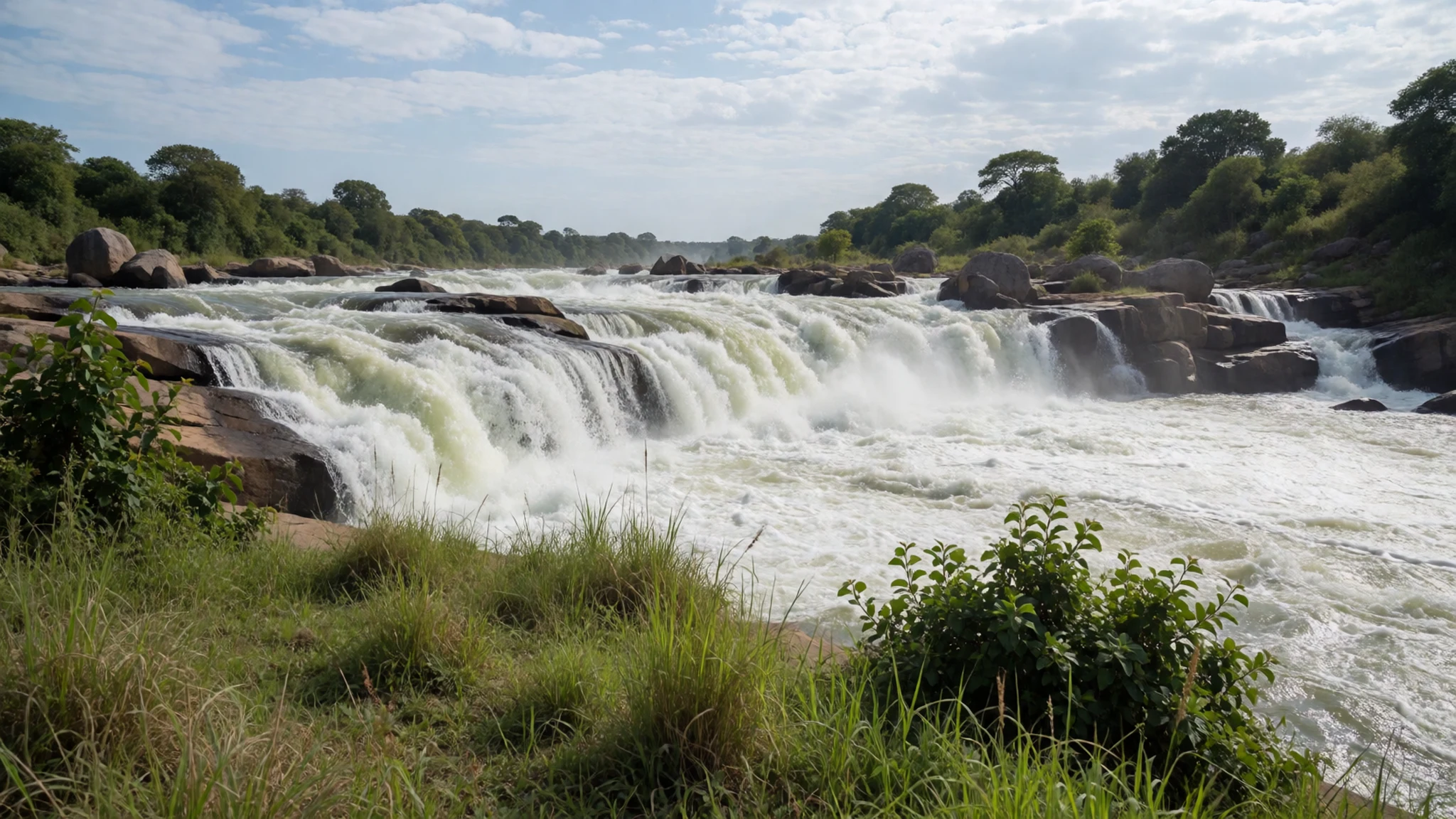
Culture
Murchison is a conservation area first, and most of what matters to visitors comes down to how they move around it. Wildlife rules are strict, and rangers and boatmen set the terms for drives and launch trips, so their instructions come first. Lodges and camps expect quiet evenings, so keep noise low after dark and avoid loud music on the river. The Boomu Women's Group runs a stay just outside the Kichumbanyobo gate, and visitors who stay there support a community project directly. Ask before photographing people in villages or at community groups, and do not take pictures of people who have not agreed. Food and drink are served at the lodges, so take any leftovers back with you and keep waste out of the river. Stay in the vehicle or boat whenever your guide or boatman tells you to, and never step out near hippos or crocodiles on the bank.
What to wear
Across much of Uganda, traditional dress has long been linked with ceremonies and formal occasions rather than everyday wear. The gomesi, a long fitted dress with a wide sash at the waist, is worn by many women at weddings and public events, usually in printed cotton with bold patterns. Men wear the kanzu, a long robe, on formal occasions. Printed wax-cloth fabrics, often called kitenge, are common in markets and at celebrations, and they are sewn into everything from dresses to shirts.
Day to day, people in and around the park wear what is practical: jeans, trousers, t-shirts, and sturdy shoes. Many people wear printed fabrics on Sundays and at church.
A visitor should dress for the sun and the insects. Lightweight long sleeves and trousers protect against the midday heat and the mosquitoes that come out at dusk. Avoid dark blue and black, which attract tsetse flies, and choose khaki, olive or light neutral colours for game drives. Wear closed shoes or sturdy sandals, and bring a hat and sunscreen. In villages and at community visits, cover shoulders and knees.
What to eat
- Grilled fish — Lodge dining rooms along the river, such as those at Paraa and Pakuba
Fish appears on most lodge menus, usually grilled and served with rice, potatoes or vegetables. It is a dependable lunch or dinner choice when the river is the reason you came. Ask the kitchen what came off the water that day.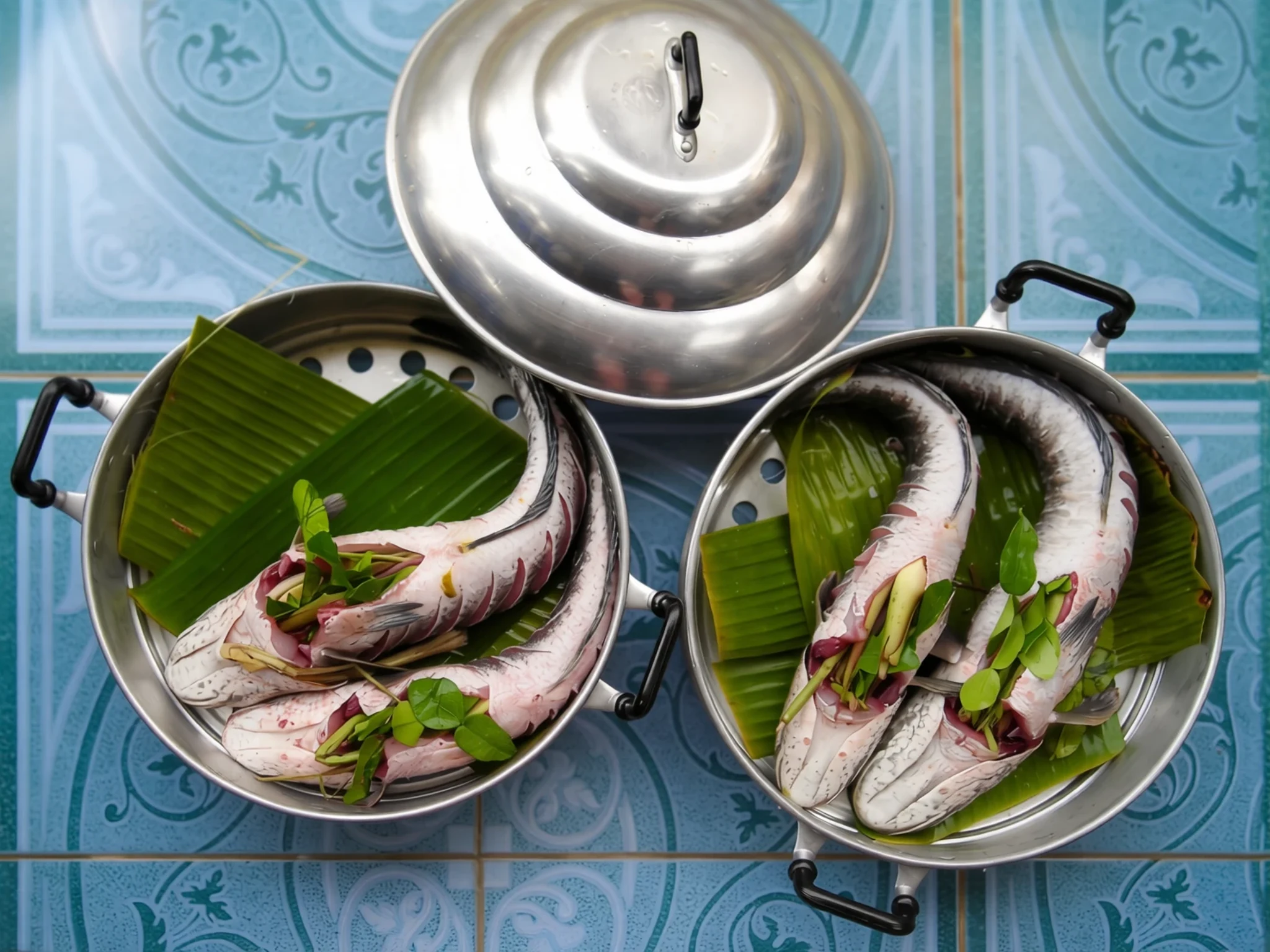
- Grilled meat and chicken — Lodge restaurants and the buffet lines at simpler camps
Grilled beef, goat and chicken are the staples of many dinners in the park. They are often served with rice, potatoes and a plate of fresh vegetables. Simpler camps may offer them as part of a set menu.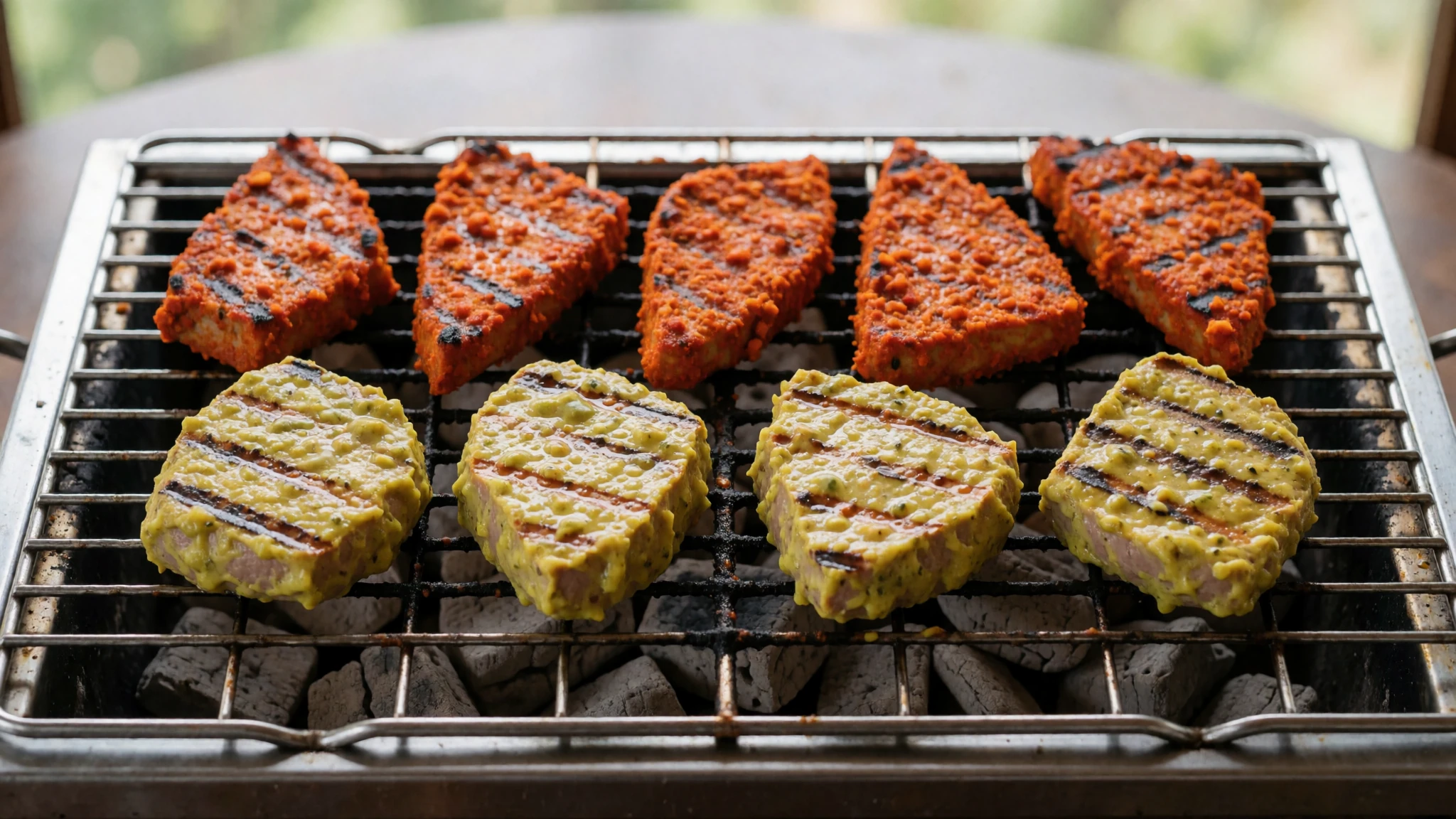
- Chapati and stew — Eateries on the road to Masindi, and lodge lunch tables
Chapati, a soft flatbread, is served with a thick stew of beans, vegetables or meat. It is a filling everyday dish across Uganda and makes a good light meal after a long drive. Vegetarians can usually ask for it with beans.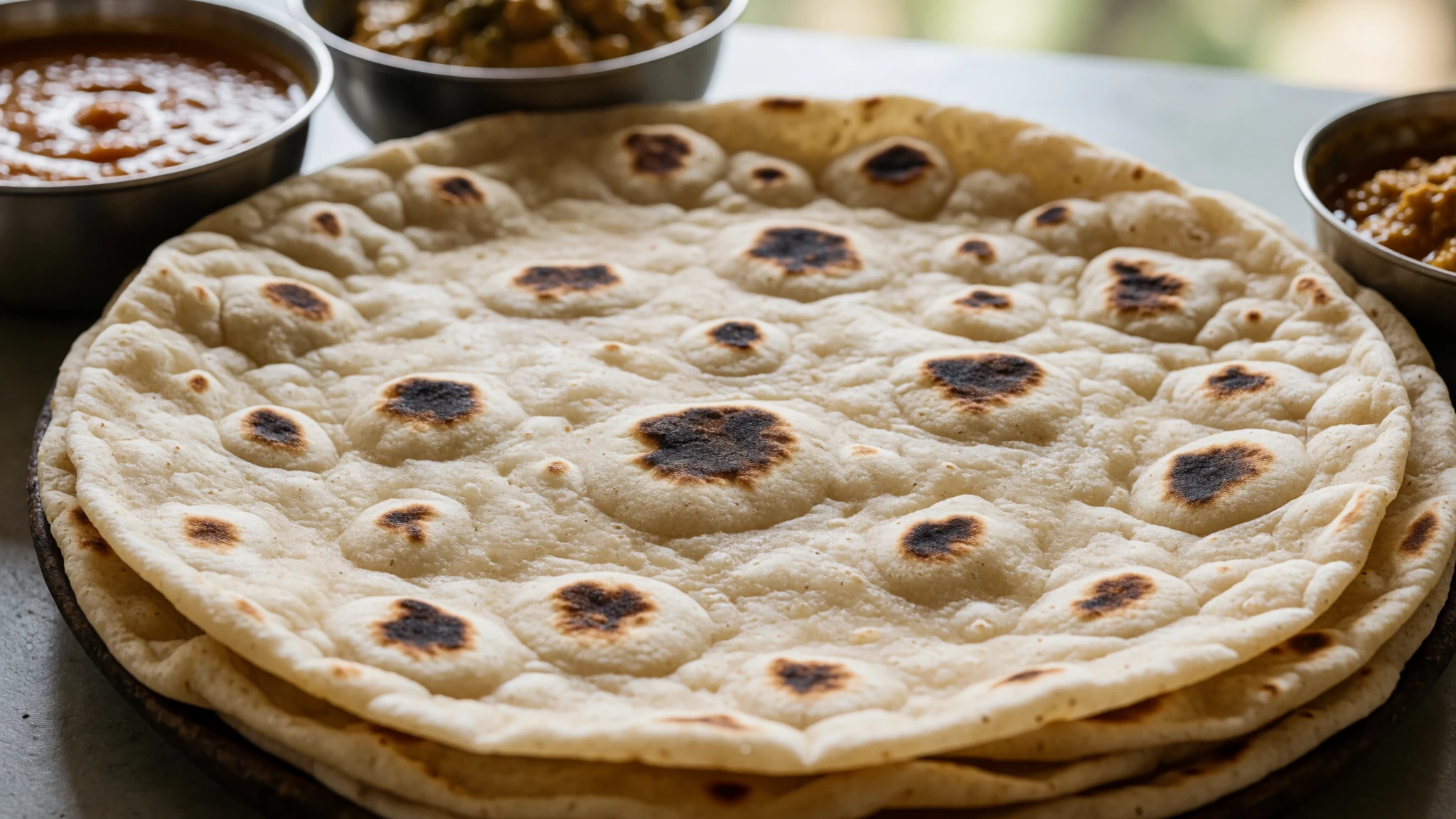
- Soups and fresh salads — Set lunches at simpler camps and lodge terraces
Soups, often vegetable-based, appear on many lunch menus, alongside fresh green salads. They are a lighter option in the middle of the day, when the heat is strongest. Simpler camps often serve them as part of a set lunch. - Fresh tropical fruit — Lodge breakfast buffets and roadside stalls on the way in
Bananas, pineapple, papaya and mango are common at breakfast tables and as dessert. Fruit is a cheap and refreshing way to cool down after a morning drive. Wash it or peel it before eating.
Plan it
Best time. Days are hottest in February and March, with highs near 41 C, while September and October are the wettest months, with up to 163 mm of rain, and July is the most comfortable, with highs near 35 C. Generally the drier spell, roughly December to February, makes tracks easier and wildlife more visible around water. The rains make roads slower and can turn some tracks difficult.
How long. 2–3
Getting there. There is no public transport inside the park, so you will need your own car or a rented one with a driver. The usual route is an early bus from Kampala to Masindi, then a safari vehicle or guide for the last leg. Flights into Arua with Eagle Air are another option, and flights from Entebbe to park airstrips can be arranged through Savannah Wings, Aerolink or Bar Aviation.
Budget. high
Tips
- Book your guide, vehicle and lodge well ahead, since the lodges are few and fill up.
- Take the first launch of the morning, when the river is calmer and animals are active.
- Check the official Uganda Wildlife Authority site for current park entry fees and opening times.
- Ask before you travel whether cards are accepted, and carry cash for gates and small stalls.
- Carry plenty of drinking water and sun protection, since the open plains are very hot at midday.
Etiquette
- Stay in your vehicle or boat when your guide asks, especially near elephants and buffalo.
- Ask before photographing people in villages or at community groups.
- Keep noise down on drives and at lodges, and never feed the animals.
Nearby
Sources
- Wikidata Q1893242 (CC0)
- Wikipedia: Murchison Falls National Park (rev 1368430272) (CC BY-SA 4.0)
- Wikivoyage: Murchison Falls National Park (rev 5332147) (CC BY-SA 4.0)
- Murchison Falls, Uganda (Rharnisch) (Public domain)
- Murchison Falls, Uganda (Boschlech) (Public domain)
- Crocodile along River Nile in Murchison Falls National Park, Uganda (Kateregga1) (CC BY-SA 4.0)
- Murchison Falls National Park tourists on the Nile (Ssemmanda will) (CC0 1.0)
- Toadstool at Murchison National Park (Shi Annan) (CC BY-SA 4.0)
- Wasp on her nest at Murchison Falls National Park (Shi Annan) (CC BY-SA 4.0)
- A Reef on banks of River Nile along Murchison Falls, Masindi (Chapelle musa) (CC BY-SA 4.0)
- A Tower of Giraffes in the Woodlands of Murchison Falls National Park (BMKME) (CC0 1.0)


