Queen Elizabeth National Park
Queen Elizabeth National Park, Uganda
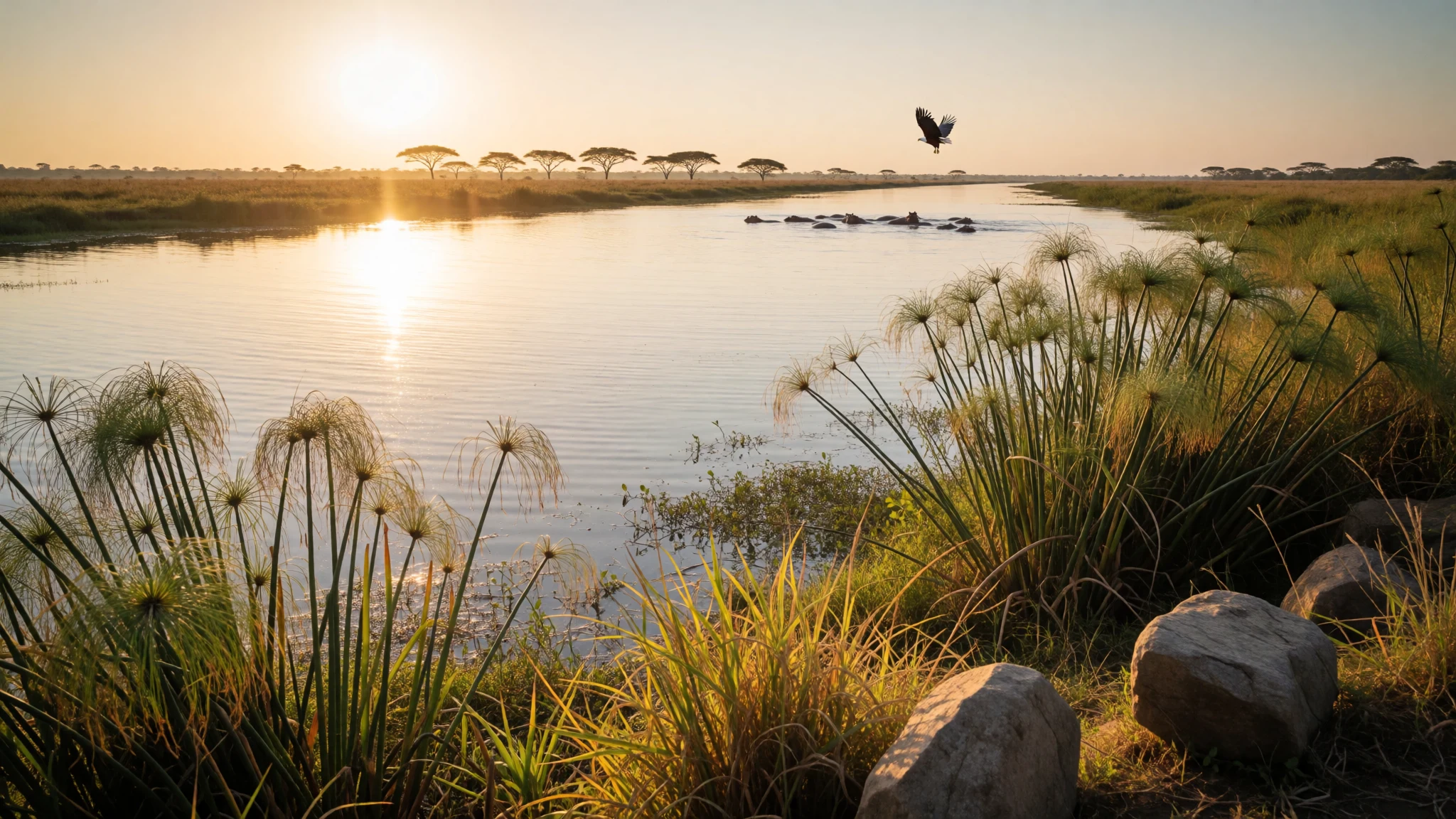
Queen Elizabeth National Park is an animal-rich Ugandan circuit of craters, forest and plains, best enjoyed with early game drives.
The place
Queen Elizabeth National Park sits in Uganda’s Western Region, tucked across the districts of Kasese, Kamwenge, Rubirizi and Rukungiri. At its core is the classic East African mix of habitats, with volcanic craters, grassy plains and tropical forest. The park also wraps around Lake Edward, a big geographical anchor that shapes the wildlife routes and the feel of drives.
What makes the place memorable is how quickly the landscape changes. A few kilometres can mean open grassland under bright sky, then a greener stretch where forest edges hold different species and different light. On clear days, the wider region feels like a corridor between major protected areas: to the east you’ll find Kyambura Game Reserve, and beyond that the Maramagambo Forest and links towards Kibale National Park; to the west lies Virunga National Park across the border. Together, these protected spaces complete the ring around Lake Edward.
The park has a reputation for good wildlife viewing, and it’s also a place with real local history layered into today’s conservation story. Even the park’s own name has shifted over time—there are references to earlier labels tied to colonial-era decisions.
Practical note: parts of the experience can feel “more safari, less sightseeing” depending on visibility. If the misty Rwenzori Mountains aren’t visible, there are still animals, crater lakes and forest edges—just fewer scenic big panoramas than some other East African parks.
Its story
Queen Elizabeth National Park’s story is tied to disease, displacement and the long ripple effects of conservation planning. In the early 1920s, a rinderpest outbreak and sleeping sickness among local communities triggered mass death and emigration. Colonial authorities were blamed for how the situation unfolded, and the result was a dramatic reshaping of where people could live and farm.
Later, the park’s creation fits the wider pattern of turning land into game reserves. The area was founded as Kazinga National Park in 1952, and then renamed in connection with a visit by Queen Elizabeth II. With communal grazing rights reduced, Songora herders were compelled to move; many crossed into what is now the Democratic Republic of the Congo, with some returning much later when conditions shifted.
Conservation here has never been simple. Years when communities were stressed by conflict and lack of compensation have left marks on wildlife management and tourism narratives. In the 2000s, Basongora families were forced to flee from the DRC and settled in the park north of Lake Edward. Predators caused losses to livestock, and frustrations around how deaths of animals were handled escalated into serious incidents with major consequences for predators. At the same time, poaching has also been a concern at different points in the park’s modern history.
Taken together, the park’s history explains why you’ll hear different, sometimes tense, stories alongside the wildlife one: it’s a landscape where ecology and human pressure have been intertwined for generations.
What to see
- Crater lake country on the Ruwenzori edge — south edge / crater country
Queen Elizabeth National Park’s southern edge rolls into crater-lake scenery near the Ruwenzoris, with volcanic craters and open grassland breaking the forest stretches. It’s scenic in a practical safari way: stop for photos, then get back into the game-drive rhythm.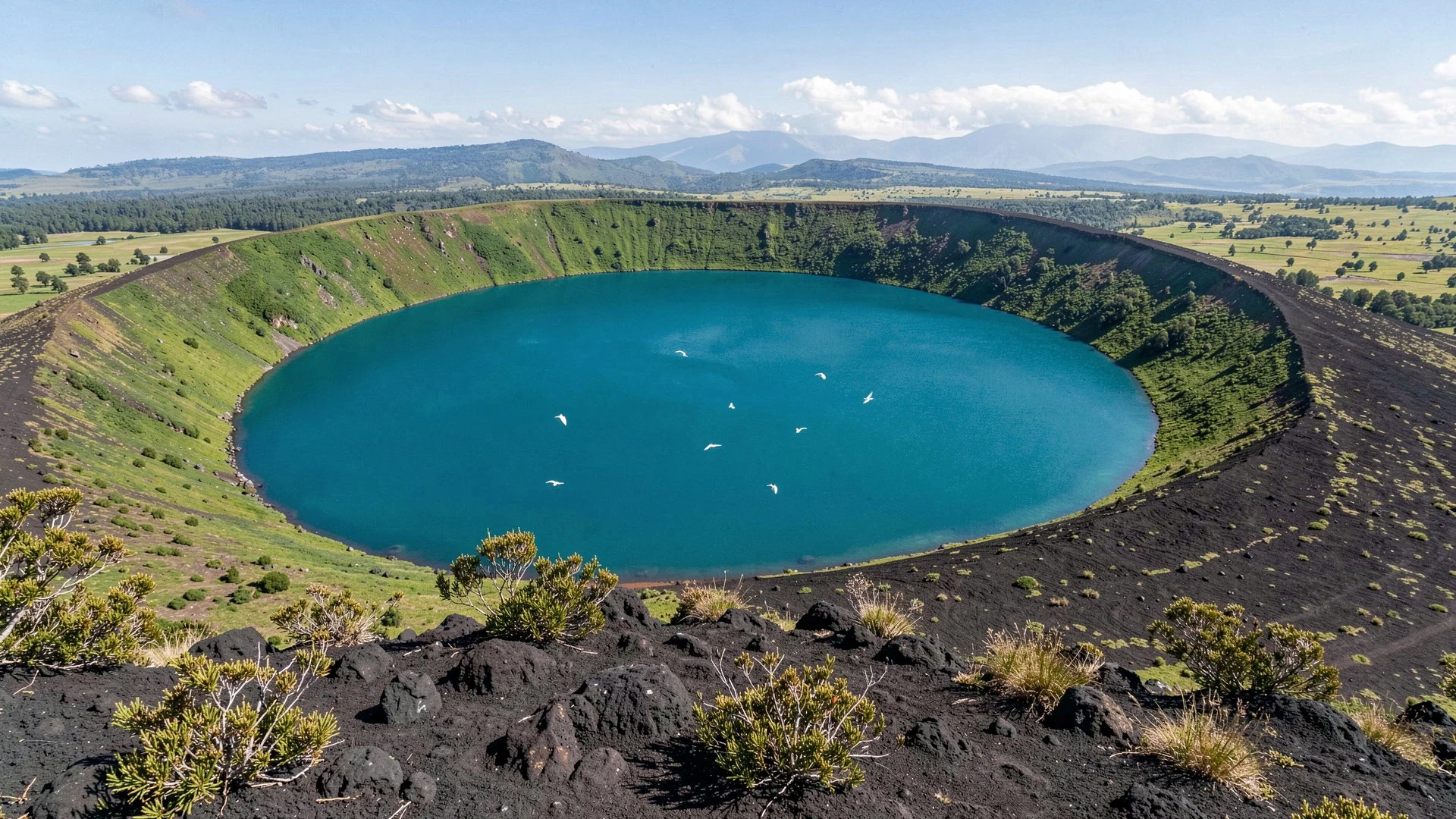
- Ishasha sector tree-lion landscape — Ishasha sector
In the Ishasha area, the wildlife flavour is different: elephants and lions are often discussed together, and lions have a reputation for spending time in fig trees. This is the part to seek out for longer, slower looking while you scan the branches and clearings.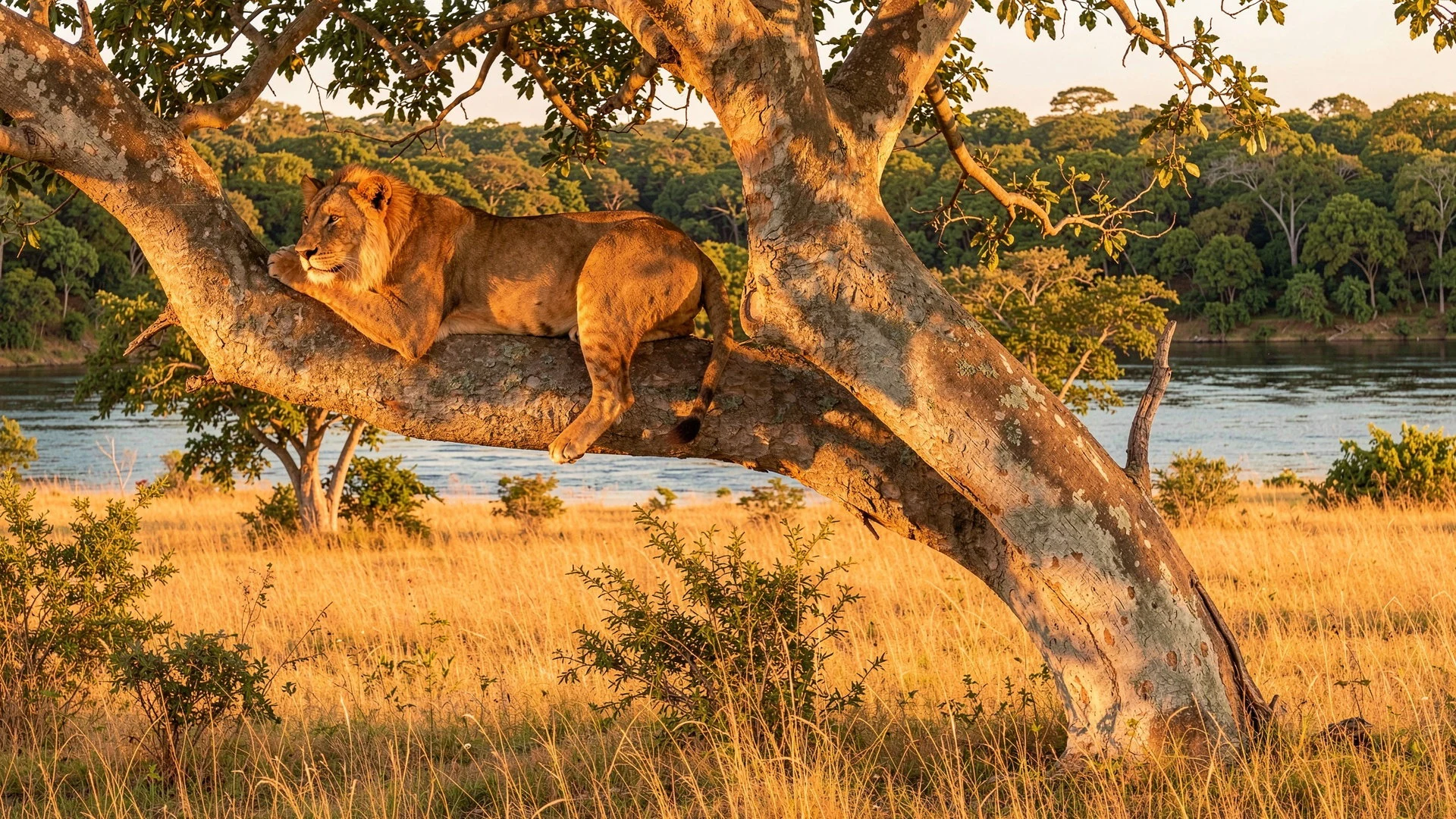
- Kazinga Channel wildlife time — Kazinga Channel
Around the Kazinga Channel, the water draws animals close, and it’s the setting for some of the park’s most reliable “watching from a boat or shore” moments. Hippopotami are a common sight here, with plenty of activity at the waterline.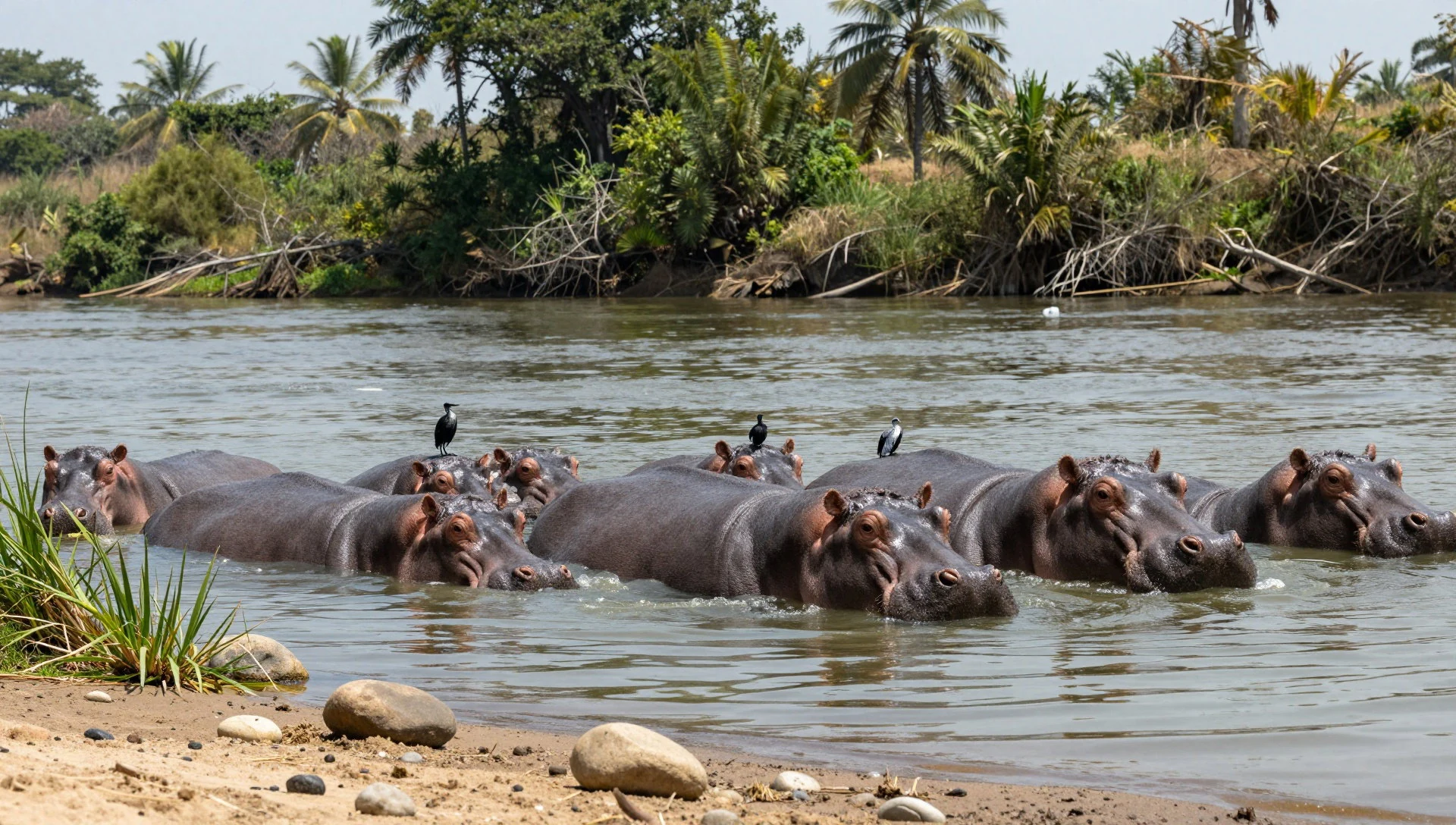
- Kyambura Gorge forest walk (Valley of apes) — Kyambura / near Kasese side
Kyambura Gorge is a forest pocket inside the broader park system, often described as the valley of apes. Trails here are about getting into shade and listening—expect a more intimate, greener experience compared with open plains drives.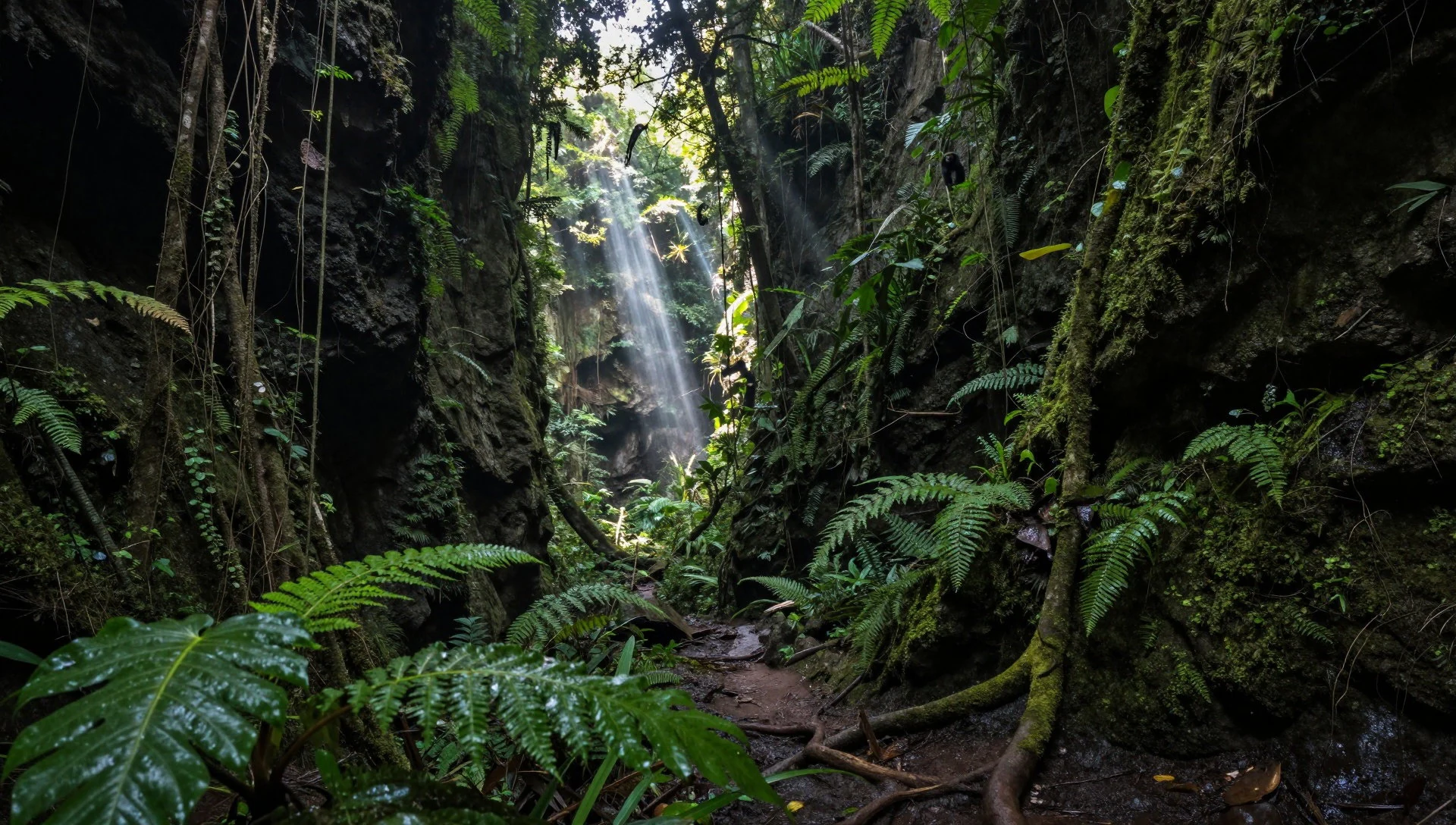
- Ugandan Kob spotting — grassland areas across the park
The Ugandan kob is an endemic antelope, and it’s one of those species that turns a drive into a focused search. When conditions are right—quiet vehicle movement and steady scanning—sightings can feel sudden, even on familiar tracks.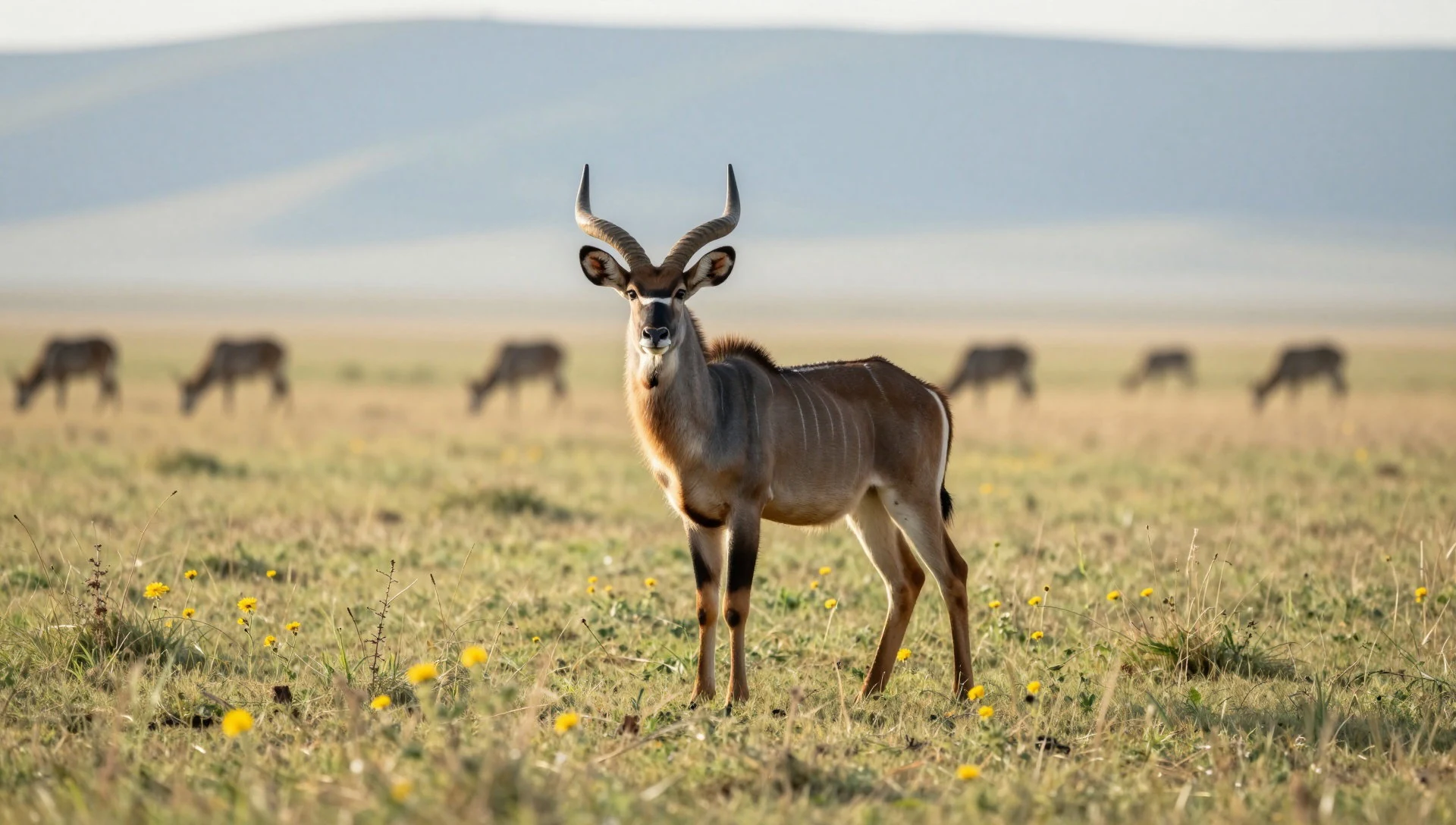
Culture
Queen Elizabeth National Park is more than a wildlife map; it’s a conservation space with layered community history in western Uganda. The park spans multiple districts—Kasese, Kamwenge, Rubirizi, and Rukungiri—so day-to-day life and stories around the reserve can feel local rather than “tourist-only”. You’ll also hear the evolution of the park’s names: conservation decisions have shaped the area’s identity for decades.
On the visitor side, the park asks for patience. Animal sightings come with waiting, and different sectors feel distinct: the forested Kyambura Gorge experience reads differently from crater-lake scenery, and the Ishasha sector has its own rhythm of scanning trees and clearings. That mismatch is part of why planning your time matters—some days are about covering ground; others are about staying with one landscape.
Because the park has a history tied to displacement and tensions around land use, respectful behaviour matters. Listening to guides, following vehicle instructions, and keeping to designated areas protects both the wildlife and the people who share the wider region.
Visitor etiquette: Keep voices low on walks, stay on the guide’s path, and avoid flash photography around people at lodges and gates.
What to wear
Queen Elizabeth National Park sits in a region where humidity and sun can both catch up quickly, and where vegetation can be thick. For traditional dress, you’ll see regional influences across Uganda—often cotton wraps and tailored pieces worn for everyday life and ceremonies—though in and around the park, most visitors prioritise practical comfort.
What many people actually wear now around the park is typically casual, breathable clothing: T-shirts or shirts layered under a light jacket for the morning and evening, plus trousers or long skirts to handle vegetation and insects. Footwear matters. In grassy areas and along safari tracks, sturdy closed-toe shoes help with uneven ground.
For visitors, aim for modest, neutral colours that won’t overheat in the sun. Long socks and long trousers reduce irritation from bugs, and a hat or cap helps with glare during game drives. For Kyambura Gorge, light layers are useful because you can shift from bright light into cooler, shaded forest conditions.
If religious sites or community spaces come up en route, go with sleeves and longer bottoms, and pack something you’re comfortable wearing even when the day turns warm.
What to eat
- Ugandan-style chapati-style flatbreads — roadside eateries and local markets
Look for flatbreads served warm with simple sides—perfect for a safari breakfast or a quick stop between drives. You’ll typically find them at roadside eateries and local market stalls rather than formal restaurant menus.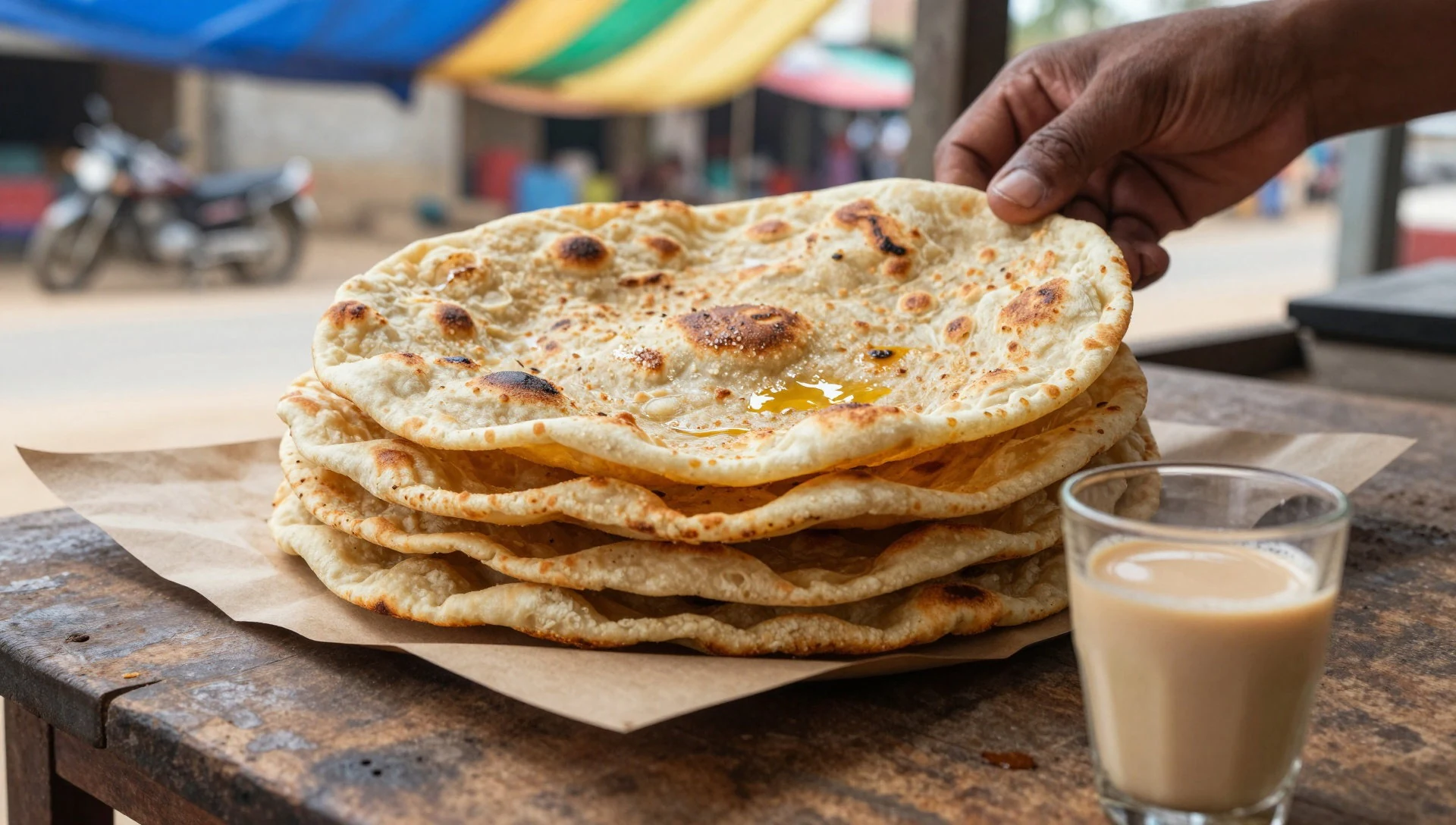
- Peanut-based sauces — local eateries near town centres
Nutty, hearty sauces show up across western Uganda and pair well with starchy staples. On a travel day, ordering a plate with vegetables and sauce is an easy way to eat well without hunting for a specific dish name.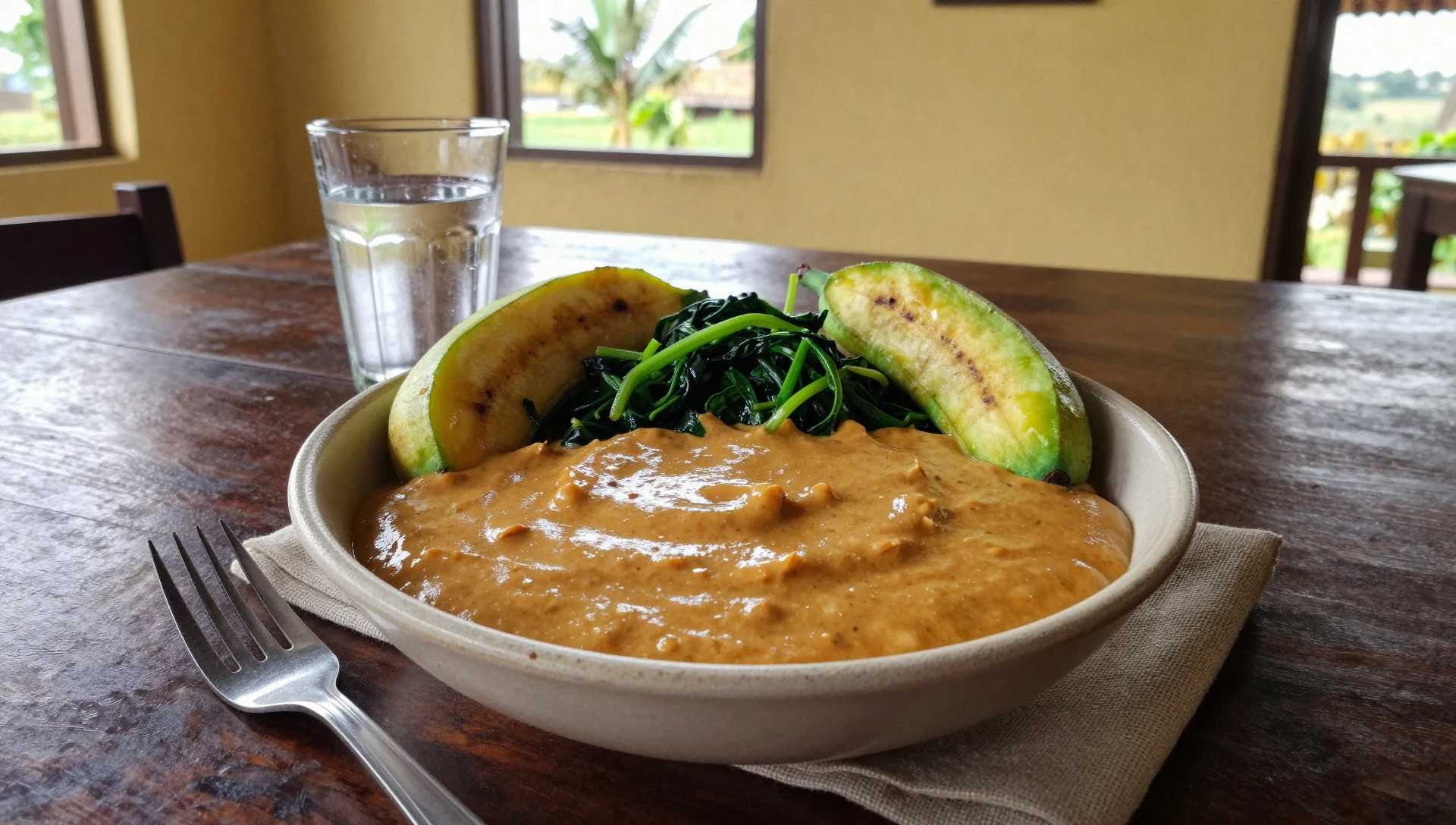
- Matoke (cooked bananas) — restaurants and community-run food spots
Matoke is a common banana dish in Uganda, cooked and served as a filling base with stews or sauces. It’s a reliable option when you want something that feels local and sustains you for an afternoon drive. - Rice and beans plates — cafés and small restaurants in nearby towns
Rice and beans turn up in many forms and are easy to share on longer travel days. It’s often the “just works” meal after a morning game drive, especially when menus are simpler at smaller places. - Fresh tropical fruit and juice — market stalls and roadside stops
Tropical fruit is a useful refresh on hot days, and fresh juice can be a calmer alternative to sugary drinks. It’s usually available from local vendors where you pause for supplies.
Plan it
Best time. March–April and October–November for steadier visiting conditions; the park is also reachable at other times, but June can be wetter and late summer can feel hot and humid.
How long. 3–4
Getting there. Access is easiest from Kampala. Buses leave from the old bus park area and the new bus park area in the morning for Kasese, with many continuing through the park; get off at Katunguru Gate. From there, you can negotiate a taxi to Mweya for onward transfers and game-drive arrangements.
Budget. mid
Tips
- Start game drives early to make the most of daylight for spotting animals
- Ask about tsetse flies before setting off, and follow your guide’s insect-prevention advice
- Plan around sector changes (Mweya, Ishasha, Kyambura) so you’re not rushing between landscapes
- Carry some cash for small purchases at gates and roadside stops, even if larger places take card
- Use a hat, sunscreen and water on crater-lake and grassland drives, then expect cooler shade in forest walks
Etiquette
- Follow your guide’s instructions on where vehicles and walkers can go
- Keep noise down during wildlife viewing so animals aren’t disturbed
- Respect community spaces near park access points—don’t block entrances or photograph people without permission
Nearby
Sources
- Wikidata Q530084 (CC0)
- Wikipedia (rev 1362899564) (CC BY-SA 4.0)
- Wikivoyage (rev 5153981) (CC BY-SA 4.0)
- Photo photos/01-crater-lake-in-queen-elizabeth-national-park.jpg (CC BY 3.0)
- Photo photos/02-tree-lion-2.jpg (CC BY 3.0)
- Photo photos/03-hippopotami-in-the-kazinga-channel-queen-elizabeth-national-.jpg (CC BY-SA 1.0)
- Photo photos/04-kyambura-gorge-in-kasese-western-uganda.jpg (CC BY-SA 4.0)
- Photo photos/05-uganda-kob.jpg (CC BY 3.0)
- Photo photos/06-045-sunrise-at-queen-elizabeth-national-park-photo-by-giles-.jpg (CC BY-SA 4.0)
- Photo photos/07-1972-1-1-queen-elizabeth-national-park-ricinus.jpg (CC BY-SA 4.0)
- Photo photos/08-1972-1-1-uganda-queen-elizabeth-park-theebloem.jpg (CC BY-SA 4.0)


