Lake Bunyonyi
Lake Bunyonyi, Uganda
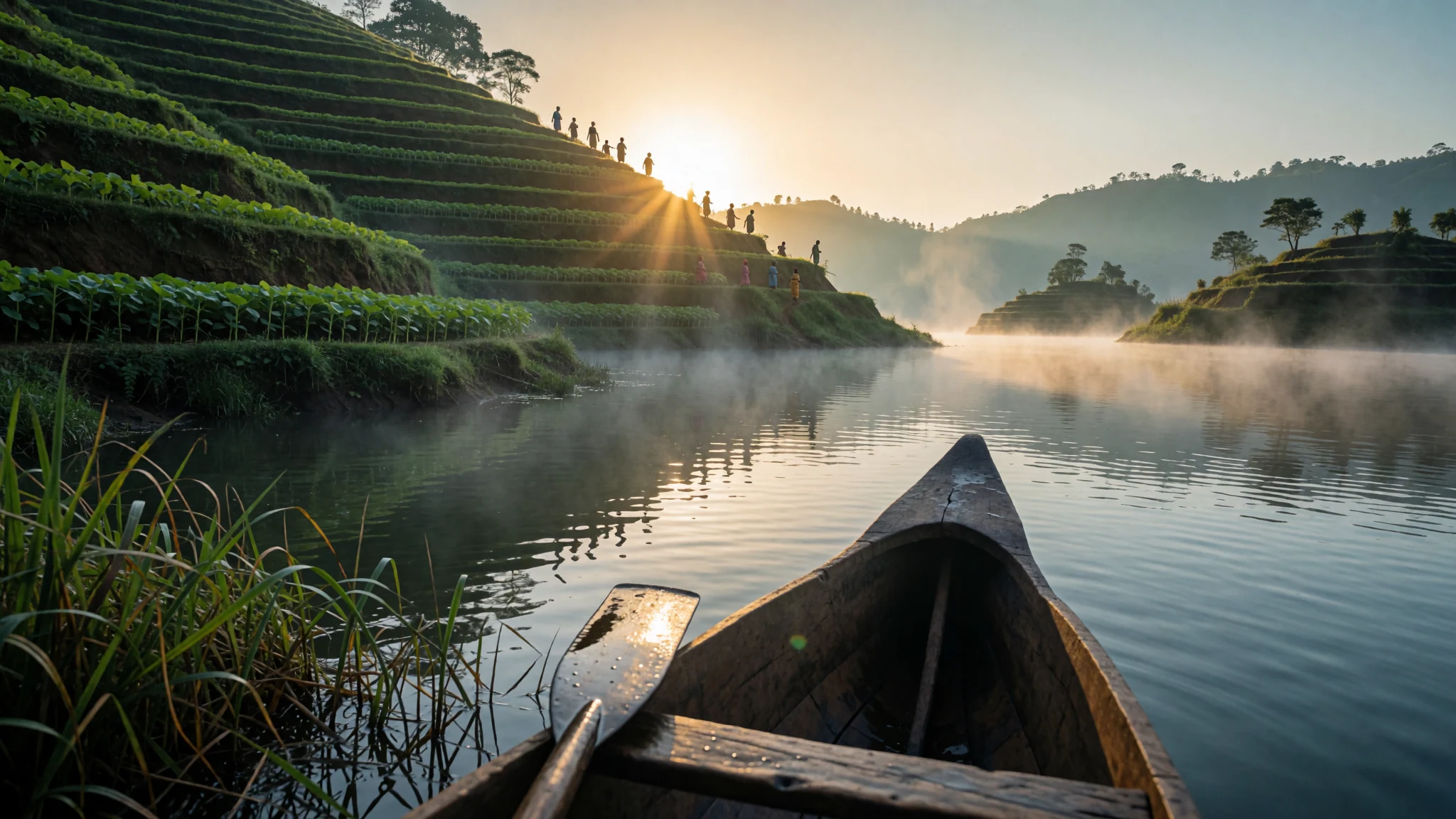
Come to Lake Bunyonyi for terraced hills, a lake studded with islands and birdlife that rewards a slow morning on the water.
The place
Lake Bunyonyi lies in the Kigezi highlands of south-western Uganda, a short drive west of Kabale town and close to the border with Rwanda. At about 1,962 metres above sea level, it is the largest and highest of three small lakes in this part of the country that feed the Nile basin. Steep hills rise straight out of the water, many of them cut into narrow terraces of beans, sorghum and bananas, so the shoreline stays green almost all the way round.
The lake is roughly 22 km long and 6 km across at its widest, and it holds 29 islands. Settlements cluster on the shores, and boats are the natural way to move between them. Canoes and motorboats hired from the landing points can take you to the islands, the marshy edges and the quieter bays, where the water is calm enough to drift without a plan.
Most visitors come for the birds and the views rather than for a single sight. The hills give you height for looking out over the water, and the stillness of early morning makes every sound carry. Days here move at the pace of the boats: slow mornings on the water, a walk up through the terraces in the afternoon, and a quiet evening by the shore. Nights can be cool at this altitude, so bring a layer even in the warmer months.
Its story
The lake's shape tells a story of fire and water. Roughly 18,000 years ago, a volcanic eruption dammed a valley in the Rukiga mountains near what is now the village of Muko, on the north-western tip of the lake. Water gathered behind that barrier, filled the basin and has stayed there ever since. Its only outlet today is a small stream at Muko that drains into the Ruvuma swamp, which in turn feeds a river on towards Lake Mutanda. The valley-damming account is the one most often repeated on the shore, and it is a good one to hear from a boatman while you drift past the islands.
The depth is a matter of argument. Published figures for the deepest point are considerably lower than some local claims, and the gap is one of those debates that the lake itself does nothing to settle. You do not need to resolve it to enjoy the water; it is enough to know that the bottom is well below the boat.
The land around the water has been farmed for generations. Terraces were built into the steep slopes to grow staple crops in a region where every usable patch of ground matters. That same landscape has become part of the lake's appeal, because the terraces shape the look of the shoreline and tie the water to the community life of the hills.
The lake has also had a public life beyond the hills, having once appeared on a Ugandan banknote. Today its story is carried by boatmen, guides and families who have lived by the water all their lives, and it is worth asking them for their version.
What to see
- Punishment Island — central lake, reached by boat from the main landings at Rotindo
Punishment Island, in Lake Bunyonyi, is the island most visitors ask about first. The name suggests a grim past, and local accounts of it vary, so ask your boatman what he knows. It is a short boat ride from the main landings and makes a good early stop, giving you a close look at the water, the terraces above and the way the islands sit together. Ask the boatman to pause for photographs.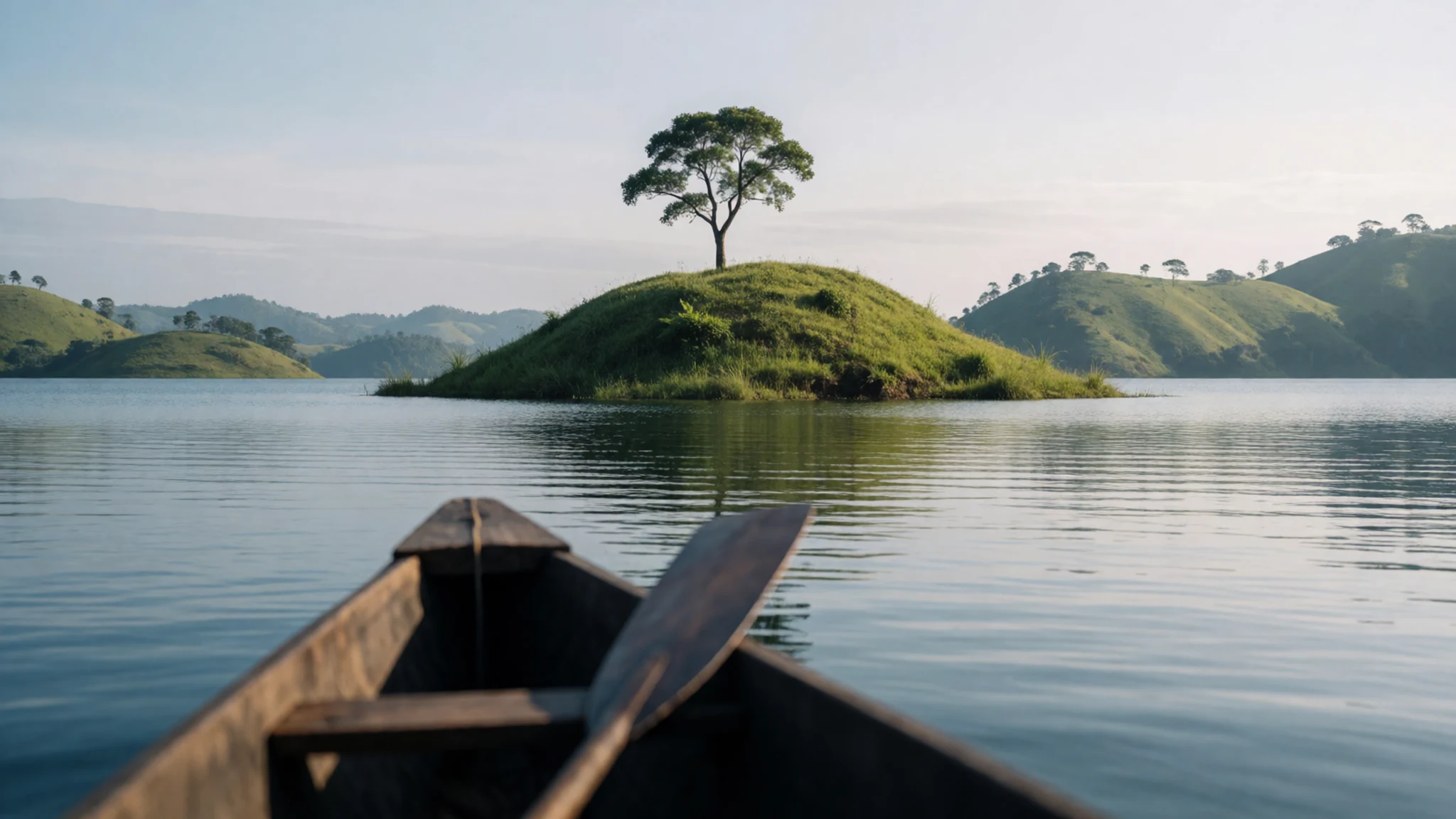
- Bird-watching boat trip — the open lake, departing from Rotindo Market
Spending a couple of hours exploring parts of the lake by local boat is the best way to see the birdlife. The hills and water support more than 200 species, including water birds and migrants. Pied kingfishers are common over the open water, and the boat lets you get close without disturbing them. Go early, when birds are most active, and bring binoculars.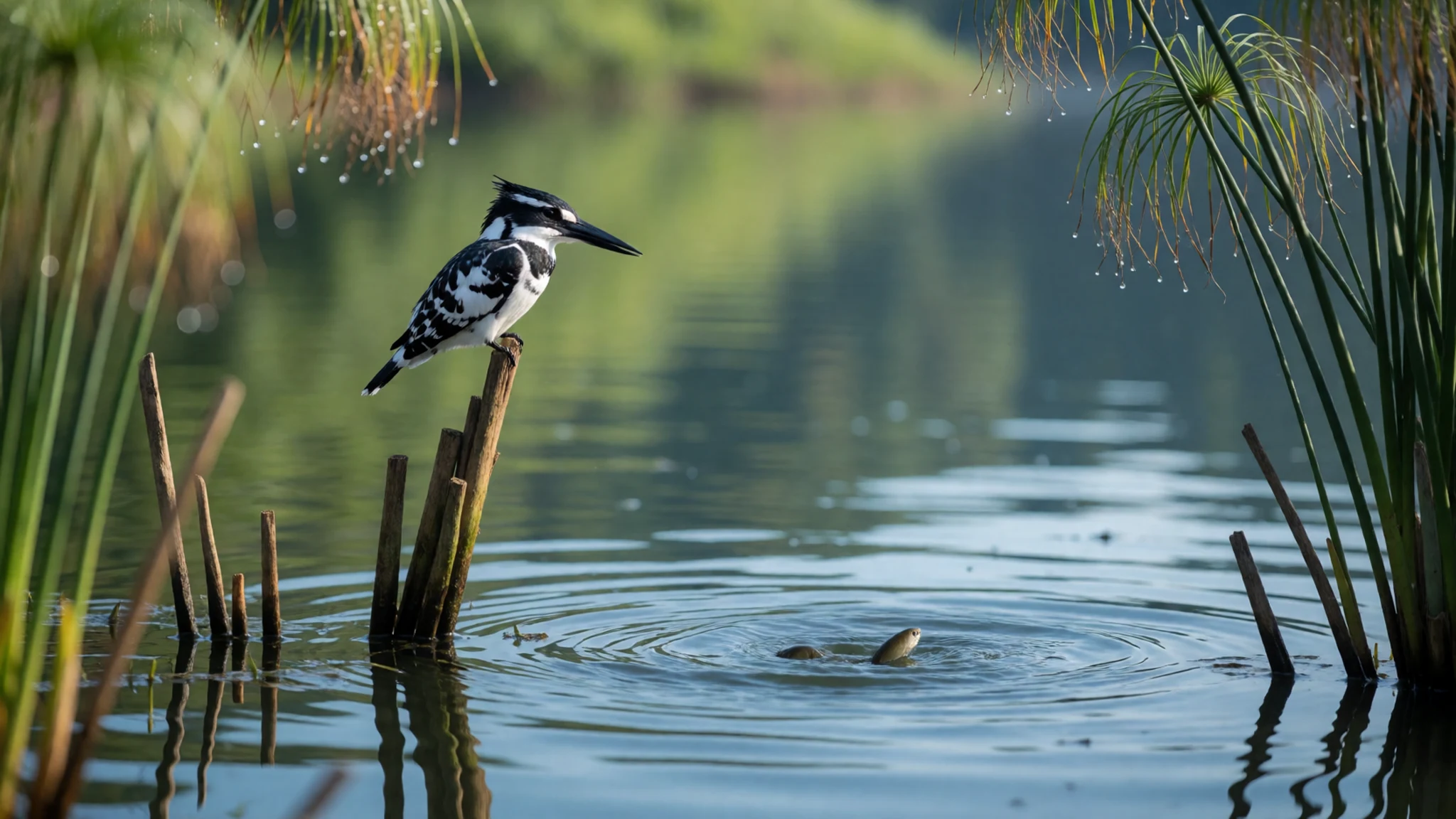
- Nyombi swamp — marshy southern edges of the lake, reached by boat
The Nyombi swamp, reached by boat, is a good place to slow down and watch reeds and open water. Birds move through the edges, and it is quieter than the main lake. Go with a boatman who knows the channels, since the paths through the reeds change with the water level. There is no shade on the water, so bring a hat and plenty to drink.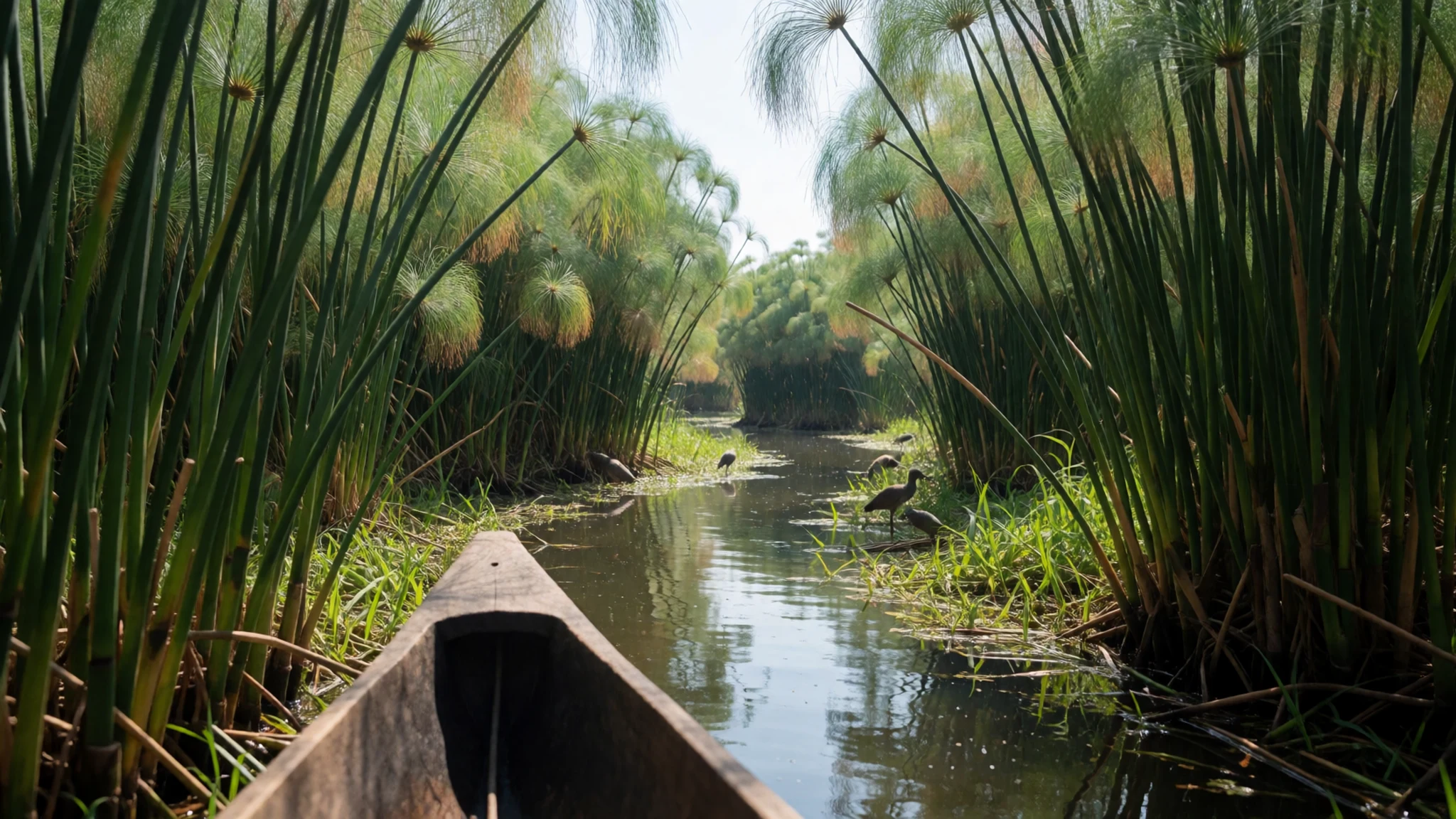
- The view from Kachwekano — hillside above the lake, Kachwekano area, reached on foot from the shore
The view of the lake from the Kachwekano side gives you the whole sweep of water, islands and terraces at once. It is the best place for photographs and for understanding the scale of the hills around you. Climb gently and avoid the midday heat, and allow time to sit and look. People working the slopes may be busy, so keep a respectful distance from fields and houses.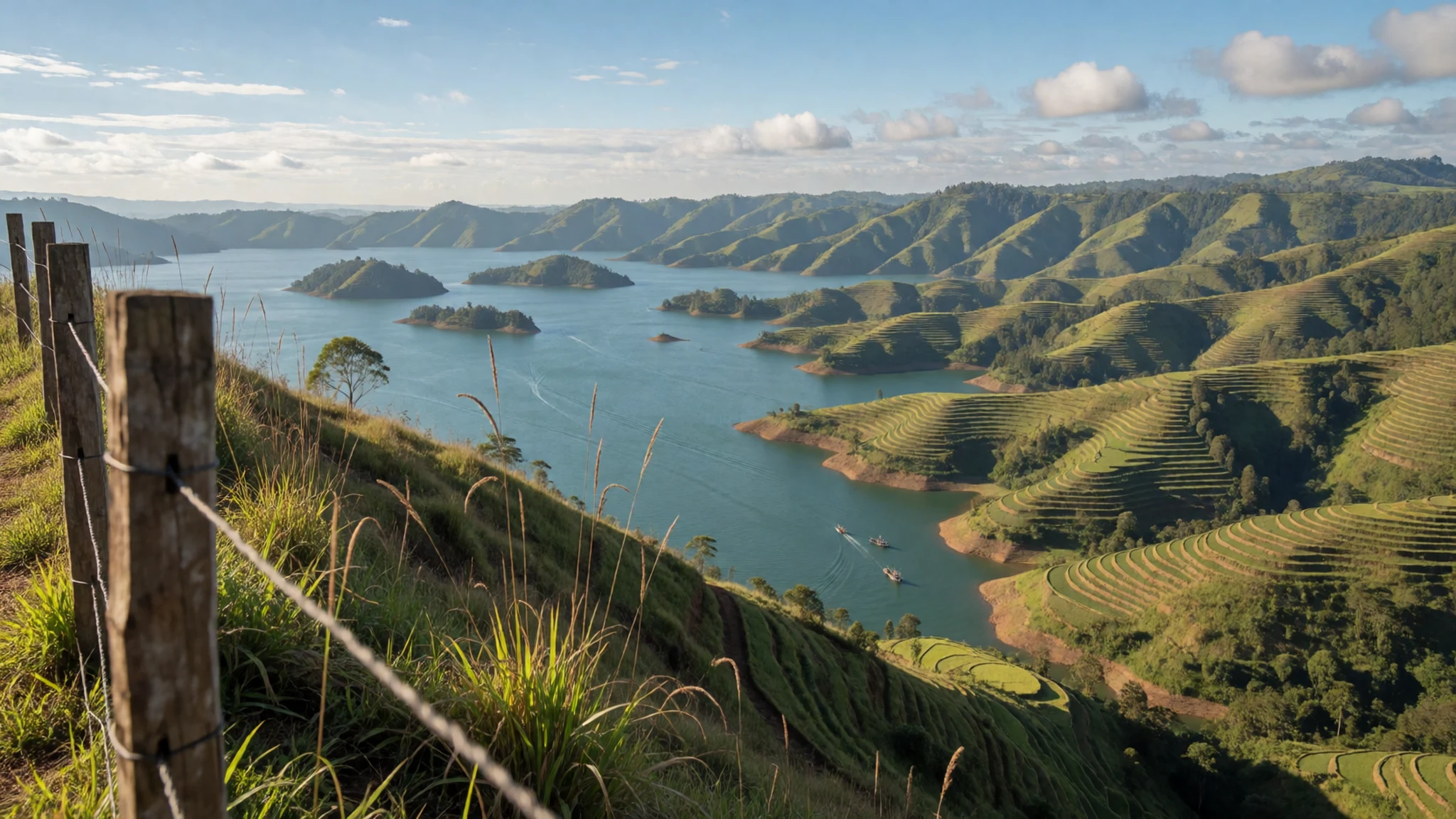
- Bakiga cultural museum and blacksmith sites — community walks from the lake shore, arranged through a lodge or guide
The Bakiga cultural museum and the local blacksmith sites are stops on the community walks around the lake. They offer a way to learn about the Bakiga people, whose farming and craft shaped these hills. Opening times can vary, so check locally before you set out. Allow an hour, ask questions, and let the guides explain the tools and techniques in their own words.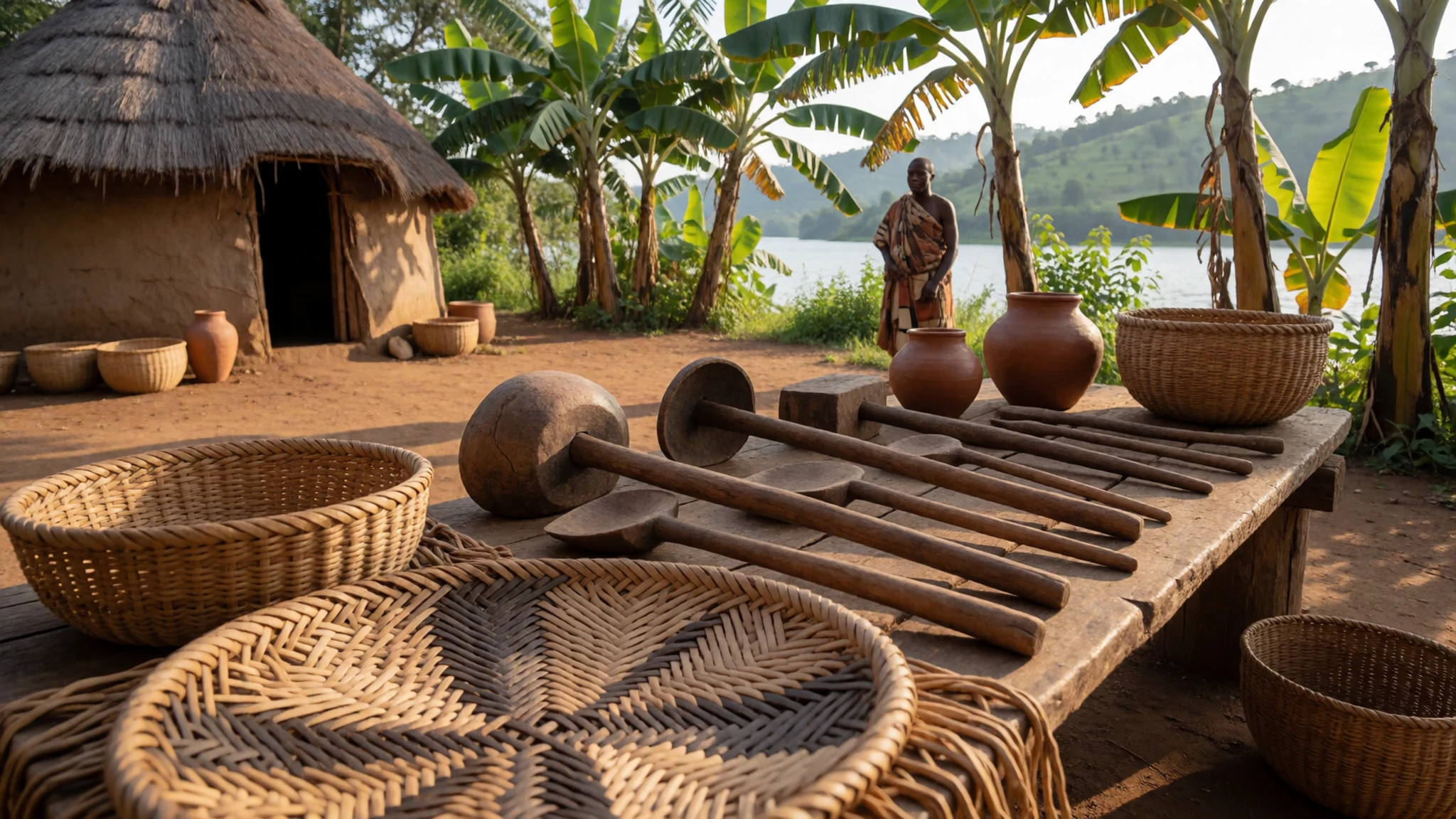
Culture
Lake Bunyonyi sits in Bakiga country, and the people of these hills have a long relationship with the land they farm. Terracing, small-scale crops and craft work are part of everyday life, and many families welcome visitors on community walks because those walks bring income and a chance to explain their history. The Batwa, who lived in the forests of the wider region, have their own history and traditions, and village visits that include Batwa and Bakiga experiences should be arranged through a recognised guide or lodge so that the people taking part are paid fairly and can refuse without pressure.
Greetings matter. A handshake, a warm word and a smile go a long way, and it is polite to ask before entering a home or taking a photograph. Children often gather when visitors arrive, and they are usually curious rather than demanding, so answer kindly and keep sweets and money out of sight. Many households are farming families with little spare time, so a visit that feels like an intrusion is better left for another day.
When you are on the water, follow the boatman's instructions about where to sit and how to load your bag, and avoid throwing litter overboard. Ask before you photograph anyone or their home, and accept a polite refusal without comment.
What to wear
At Lake Bunyonyi, traditional dress is best understood through the textiles of the wider country, since the details vary by family, district and generation. Across Uganda, bark cloth and woven plant fibres have long been part of ceremonial and everyday clothing, while cotton prints in bright patterns, known locally as kitenge, are the most widespread fabric today. Older Bakiga dress was practical rather than ornamental, shaped by farm work in the hills, and a guide can tell you more about specific local styles.
What people wear now is a mix of the everyday and the smart. Many women wear kitenge dresses or wraps, often sewn by local tailors, while men wear shirts and trousers, with cotton prints for weekends and church. Western clothing is common, particularly among younger people and in Kabale town, so you will see a range of looks on any given day.
For a visitor, the advice is simple. Choose lightweight clothing that covers the shoulders and knees, especially when walking through villages or visiting a church or museum. Bring a sun hat, a light layer for cool evenings at altitude, and sturdy closed shoes for the steep, muddy paths. Sandals are fine on the boat, but a light rain jacket is worth packing in case the weather changes.
What to eat
- Matooke — local eateries near the landing points and the morning market in Kabale
Matooke is steamed and mashed green banana, and it is the staple you will meet on most plates in the region. It is often served wrapped in banana leaves and eaten with a groundnut sauce or a bean stew. The texture is soft and mild, so it works as a filling base for a larger meal.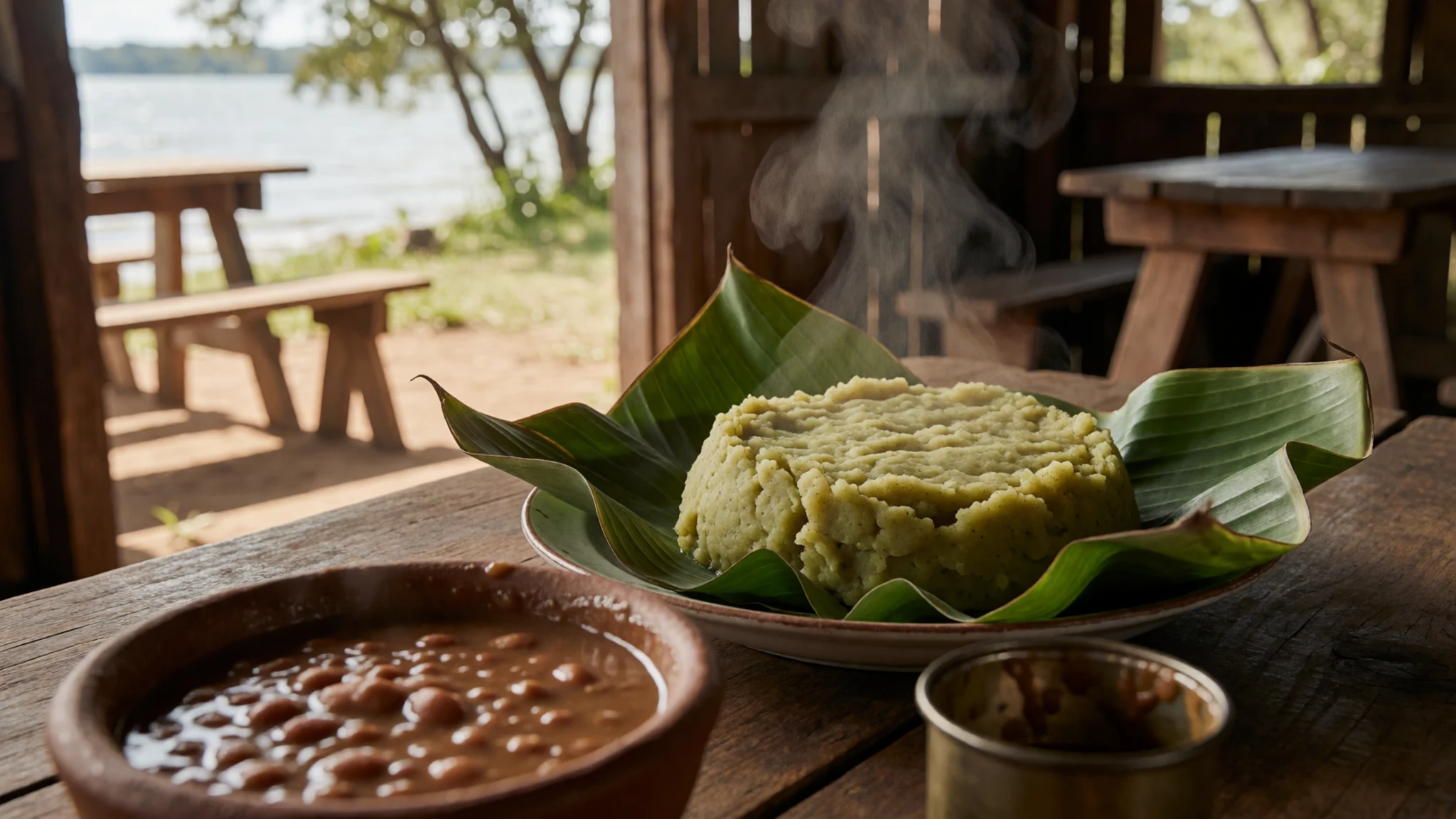
- Posho with beans — village eateries and market stalls around Kabale and along the lake road
Posho is a stiff maize porridge, often served with a bean stew. It is filling, inexpensive and eaten by hand, using small pieces of posho to scoop up the sauce. It is a good first meal to try and an honest taste of everyday food in the hills.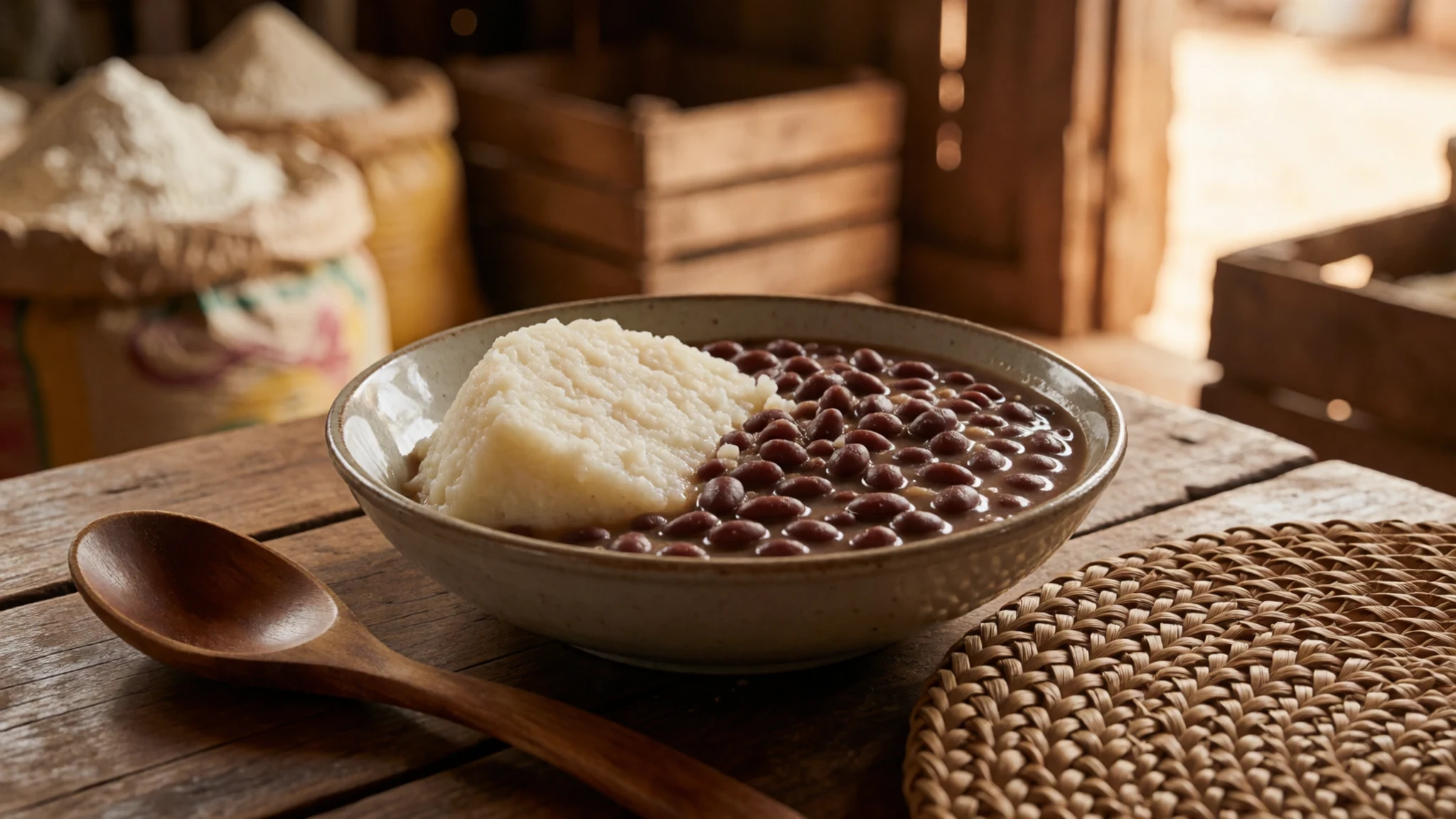
- Roasted maize and groundnuts — roadside stalls on the road into Kabale and near the landing points
Roasted maize, known as corn in some places, and groundnuts, or peanuts, are sold as a simple snack by the roadside. They make a good addition to a boat trip, since they keep well and cost little. Buy a small bag from a stall where the maize is freshly roasted and the nuts look dry. - Rolex — street stalls in Kabale town and at busy market junctions
A rolex is a street food: a chapati rolled around a spiced omelette, often with onion and tomato. It is quick, cheap and filling, and it makes a good breakfast before an early boat trip. Look for vendors cooking on a flat griddle at a busy junction, where the turnover is high and the food is freshly made.
Plan it
Best time. Uganda has two rainy seasons, and the lake is wetter and cloudier during them. The drier spell, roughly June to August, suits boat trips, hiking and birdwatching best, although rain can still arrive without warning.
How long. 2–3
Getting there. Reach Kabale by road from Kampala or Entebbe, then a taxi or boda-boda covers the roughly 8 km to Rotindo Market in 20–25 minutes, where boats are hired for the lake.
Budget. low
Tips
- Book a lodge or campsite on the lake in advance, especially in the drier months
- Take boats early in the morning, when the water is calm and birds are active
- Carry cash for boats, guides and small eateries, since card payment is limited
- Bring water, sun cream and a hat, because the water reflects a lot of heat
- Pack a warm layer for cool nights, as the altitude keeps evenings fresh
Etiquette
- Ask before photographing people, their homes or their children
- Dress modestly in villages and when visiting a church or museum
- Follow the boatman's instructions and take litter back with you
Nearby
Sources
- Wikidata Q1010056 (CC0)
- Wikipedia: Lake Bunyonyi (rev 1367444349) (CC BY-SA 4.0)
- Wikivoyage: Lake Bunyonyi (rev 5331973) (CC BY-SA 4.0)
- Lake Bunyonyi, photo by User:Edirisa (CC BY-SA 2.5)
- Uganda, photo by Carine06 (CC BY-SA 2.0)
- Rivers of South West Uganda, map (CC BY-SA 2.0)
- Market day in Uganda, photo by MSayagues (CC BY-SA 4.0)
- Punishment Island, photo by Mosmas (CC BY 3.0)
- Lake Bunyonyi camp, photo by Carine06 (CC BY-SA 2.0)
- Pied kingfisher at Lake Bunyonyi, photo by Thomas Fuhrmann (CC BY-SA 4.0)
- A view of Lake Bunyonyi, photo by PatriciaUganda (CC BY 4.0)


