Kidepo Valley
Kidepo Valley, Uganda
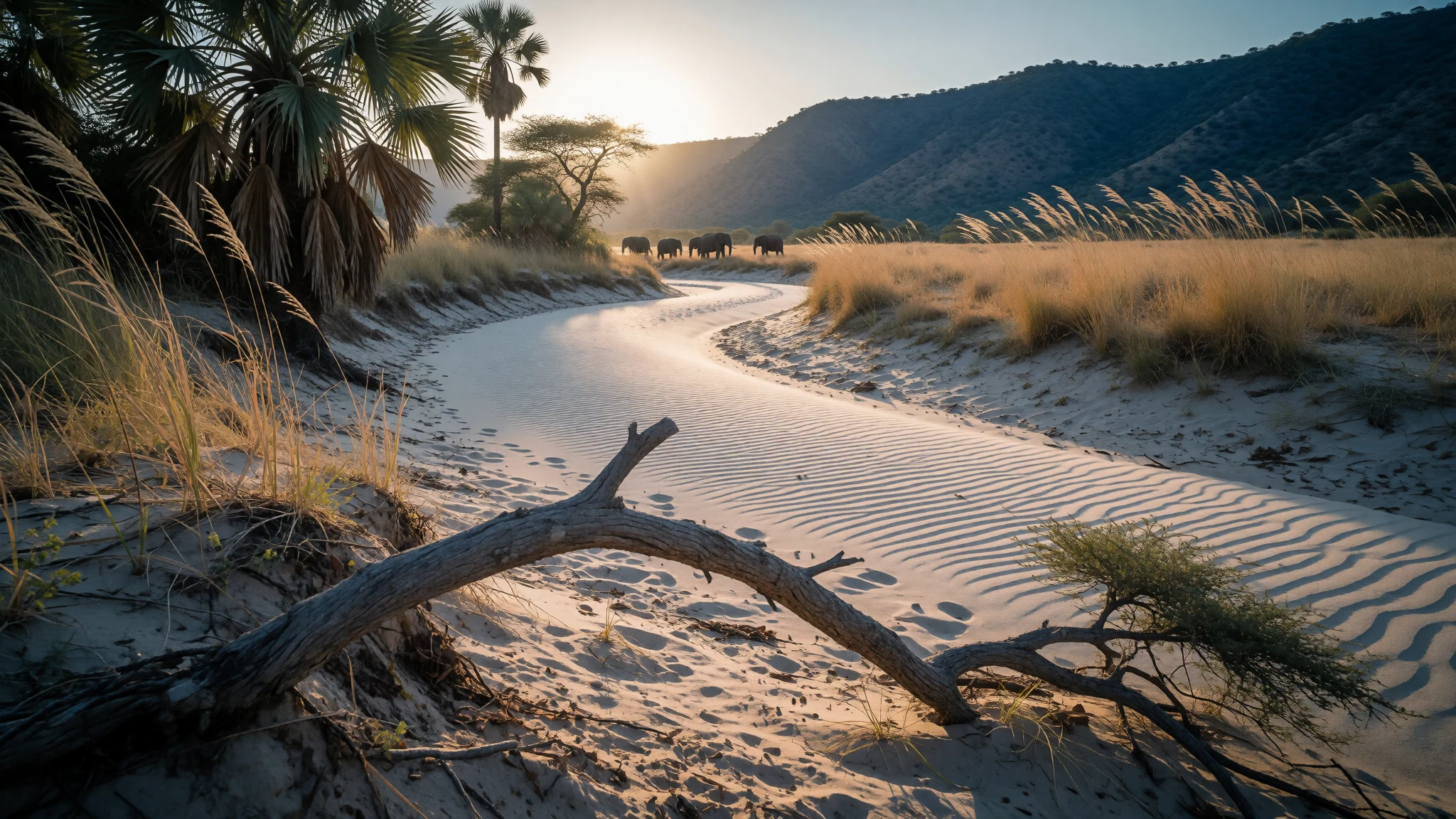
Kidepo Valley is remote savannah in Uganda's far north-east, where elephants, giraffe and lions roam under mountains with few other vehicles in sight.
The place
Kidepo Valley National Park lies in the Karamoja region of north-eastern Uganda, close to the South Sudan frontier, and it feels a long way from the green hills and lake shores most people picture in Uganda. The country is open tree savannah, with acacias and palms lining the rivers and the foothills of Mount Morungole rising behind. Two rivers cut through it, the Kidepo and the Narus. The Kidepo is often a wide, sandy bed that looks empty until an elephant walks across it, while pools along the Narus draw animals in when the land dries out.
Distance shapes everything here. Kampala is a very long road journey away, and even Moroto, the main town of the sub-region, is a hard drive from the gate. That remoteness is why many visitors fly in, and why game drives tend to be quiet affairs.
The animal list is long. Elephant, buffalo, Rothschild's giraffe, zebra, oribi, kob and several kinds of antelope share the plains with lion, leopard and cheetah. Rarer predators are the real draw for patient watchers: aardwolf, caracal, striped hyena, bat-eared fox and African hunting dogs. The Kavirondo bush baby is listed as found nowhere else. Birdlife is varied too, so a decent pair of binoculars earns its place in the bag.
Its story
Kidepo Valley National Park carries a history that shows more in its emptiness than in any monument. Before it was protected, the Ik and the Ketebo (also called Mening) had lived in the valley since about 1800, and Dodoth herders grazed cattle and hunted across the same country. In 1958 the British colonial administration declared it a game reserve, hoping to shield wildlife from hunters and to stop the bush clearance used against tsetse flies. The people living there were moved out.
The anthropologist Colin Turnbull, and later the park's own managers, held up the resulting famine as a warning about conservation that ignores the needs of local communities. It remains a reference point in debates about how parks and their neighbours should share land.
After independence, Milton Obote's government turned the reserve into a national park in 1962. In 1967 work began on a lodge on the Katurum kopje, backed by a Swedish consortium, but it was never finished and had been abandoned and vandalised by 1978. A new lodge on the site finally opened in 2019.
In 1972 the last British chief warden, Ian Ross, passed the job to a young Ugandan, Paul Ssali. That handover became the subject of an American documentary, The Wild and the Brave, released in 1974. Rangers and local guides are the best people to ask about how the park and its neighbours get along today.
What to see
- The Kidepo riverbed — Central park, along the Kidepo River
The Kidepo River is usually a broad sweep of pale sand fringed with palms and acacias, and it makes a good place to stop and scan. Elephants and buffalo cross it, and the open ground helps with spotting. Walk only where a ranger allows, since animals use the banks as roads.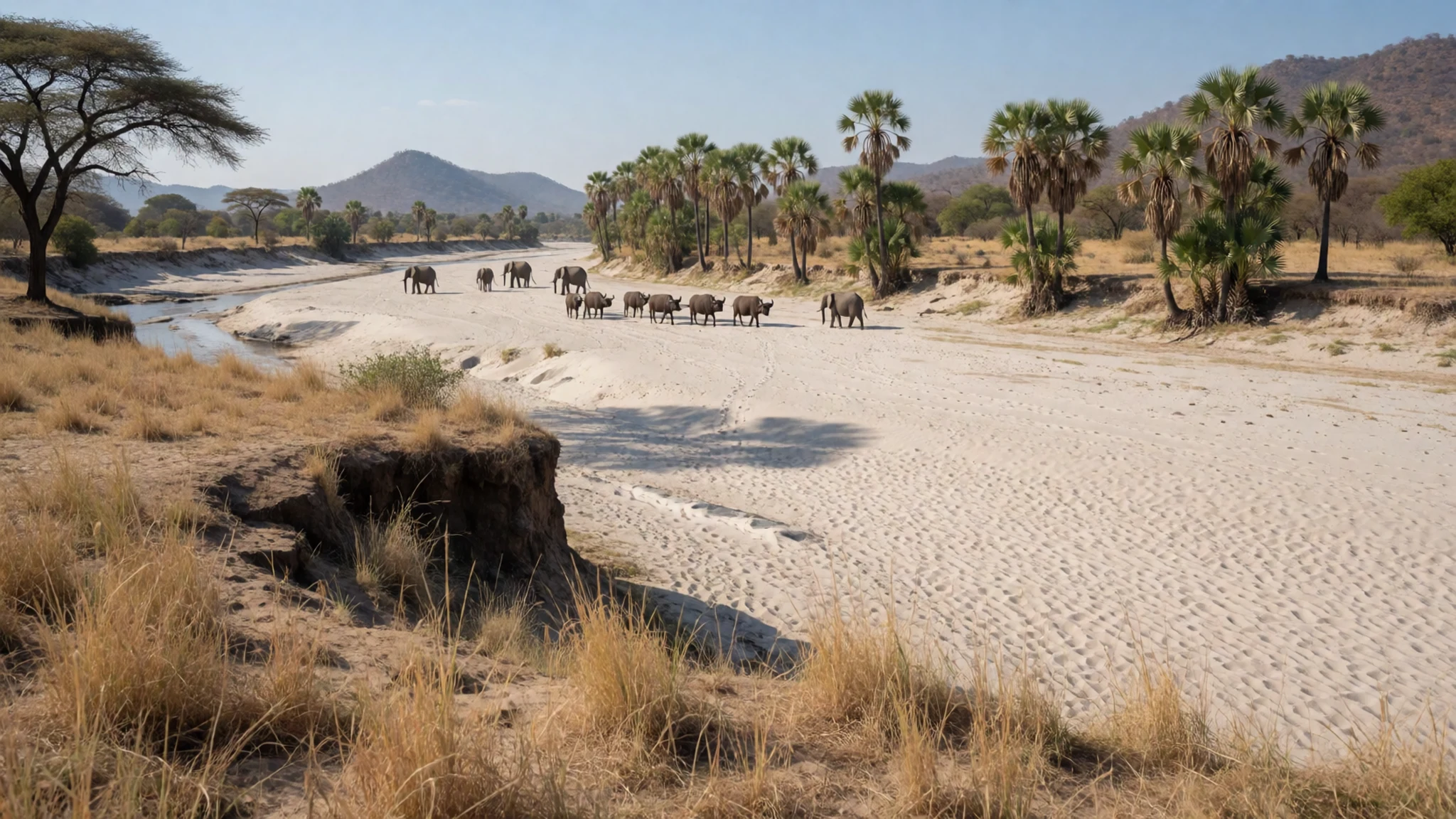
- Narus Valley game drives — Narus Valley, southern park
The Narus Valley is the usual base for wildlife drives, with grassland and seasonal pools that gather animals as the dry months wear on. Zebra, giraffe, kob and buffalo are common sights, and lions sometimes lie almost invisible in the grass beside the tracks. Early and late drives are best.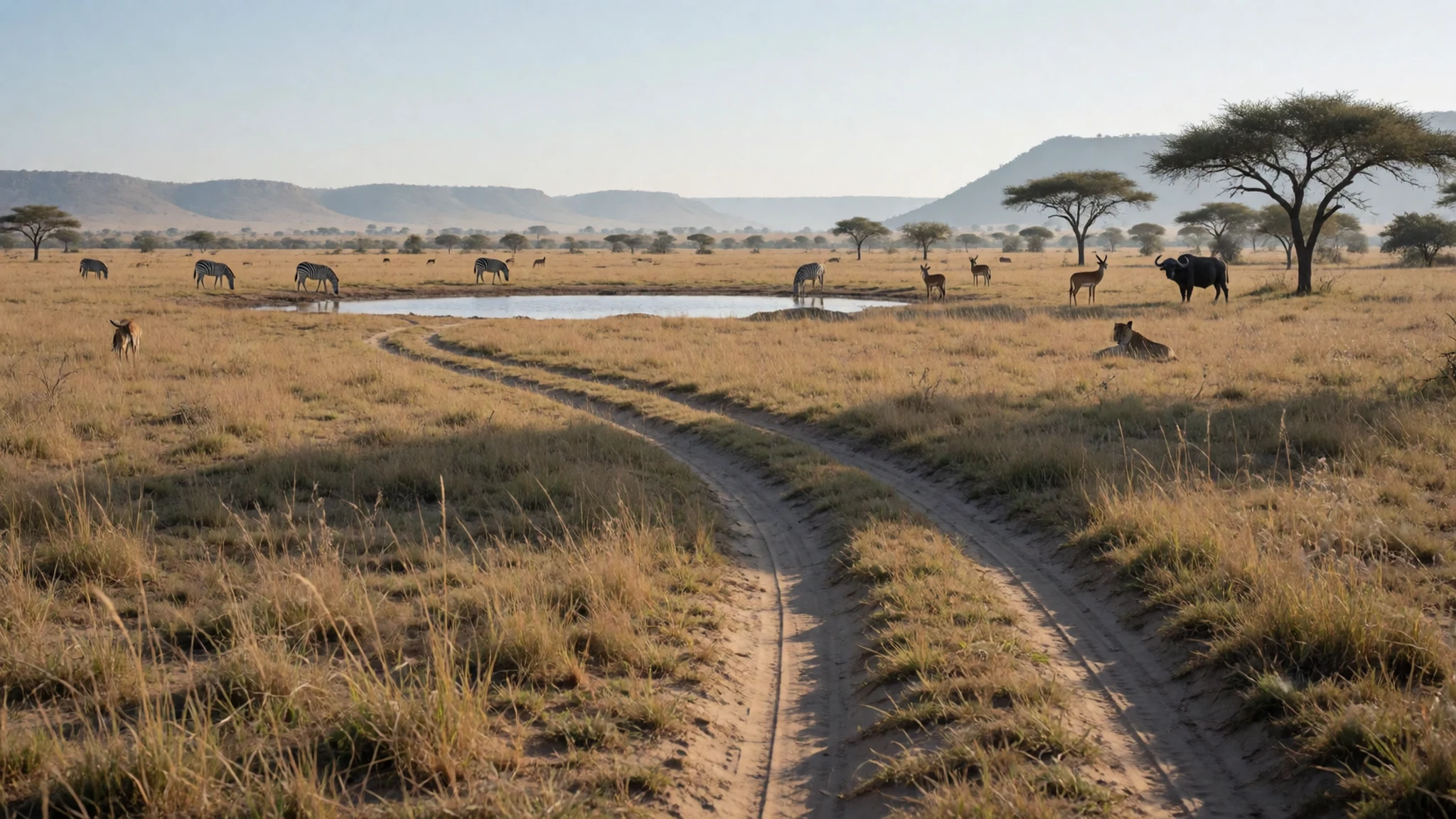
- Zebra and giraffe on the plains — Open savannah plains
Grazing herds of zebra, including the maneless form seen here, and Rothschild's giraffe are the easiest large animals to find in open savannah. Giraffe often stand against a backdrop of distant hills, which makes patient, slow photography rewarding. Switch the engine off and let the herd settle.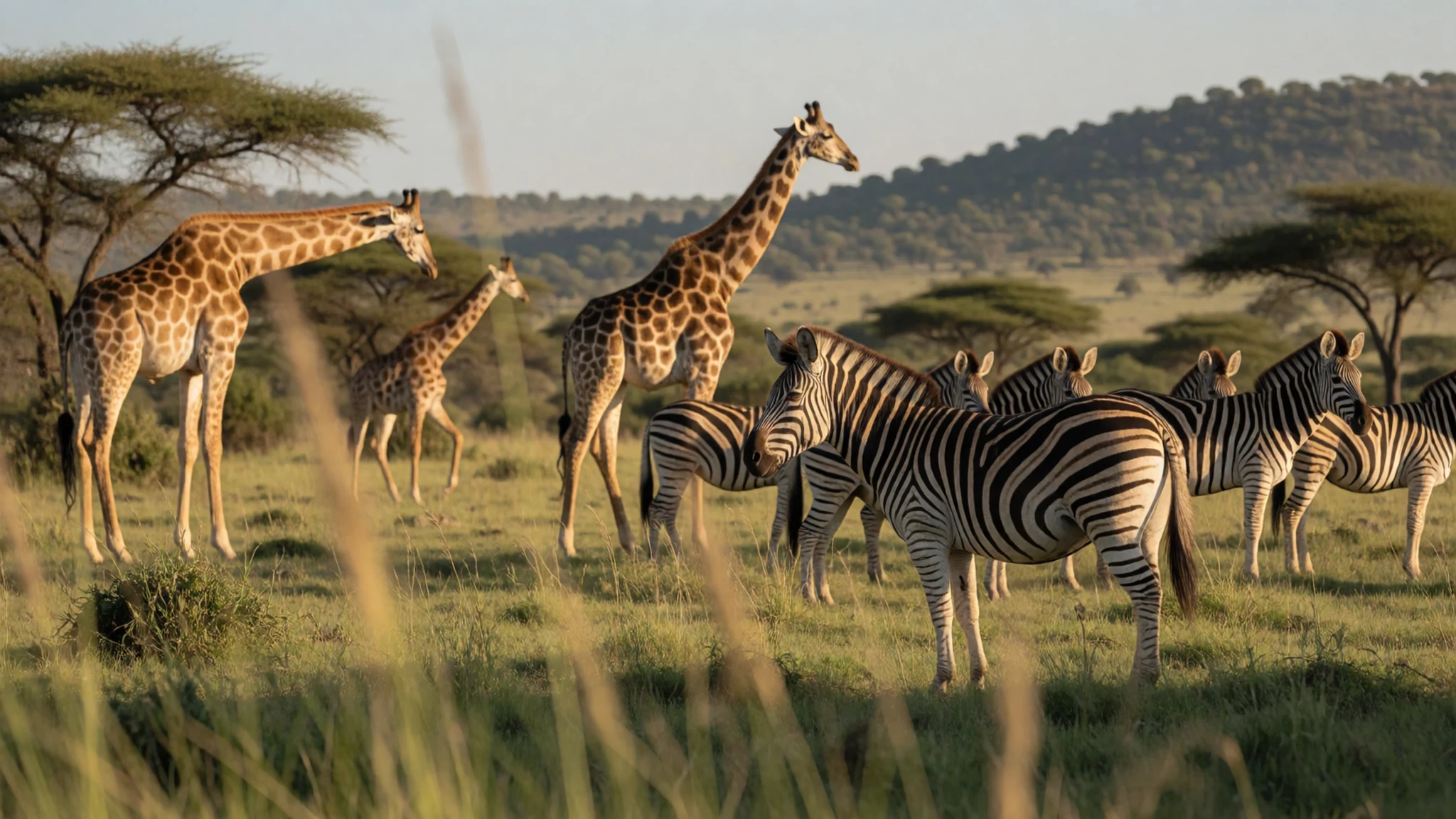
- Elephants and the big herbivores — River corridors and savannah
Elephants move between rivers, shade and grazing, and a quiet vehicle can sit with a family group for a long time. Buffalo, eland and several antelope share the same ground. Keep a respectful distance, particularly from young calves, and let the animals decide where they walk.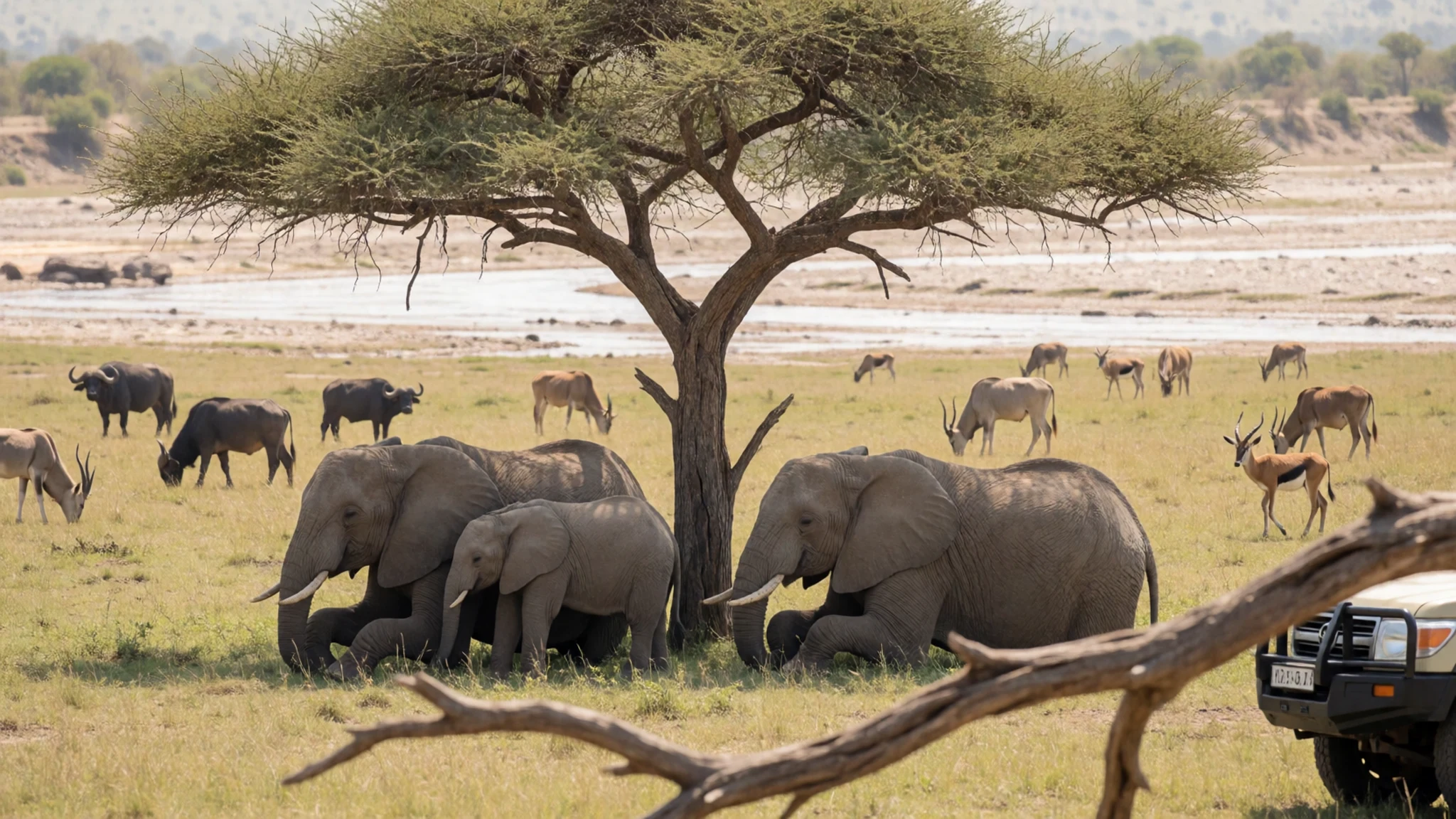
- Birds and the Morungole foothills — Foothills of Mount Morungole
The park's birdlife is varied, from raptors over the plains to small species in the riverside trees, and the slopes of Mount Morungole add another habitat. Bring binoculars and ask a ranger-guide to point out the local specialities. A guided walk toward the foothills is worth asking about when conditions allow.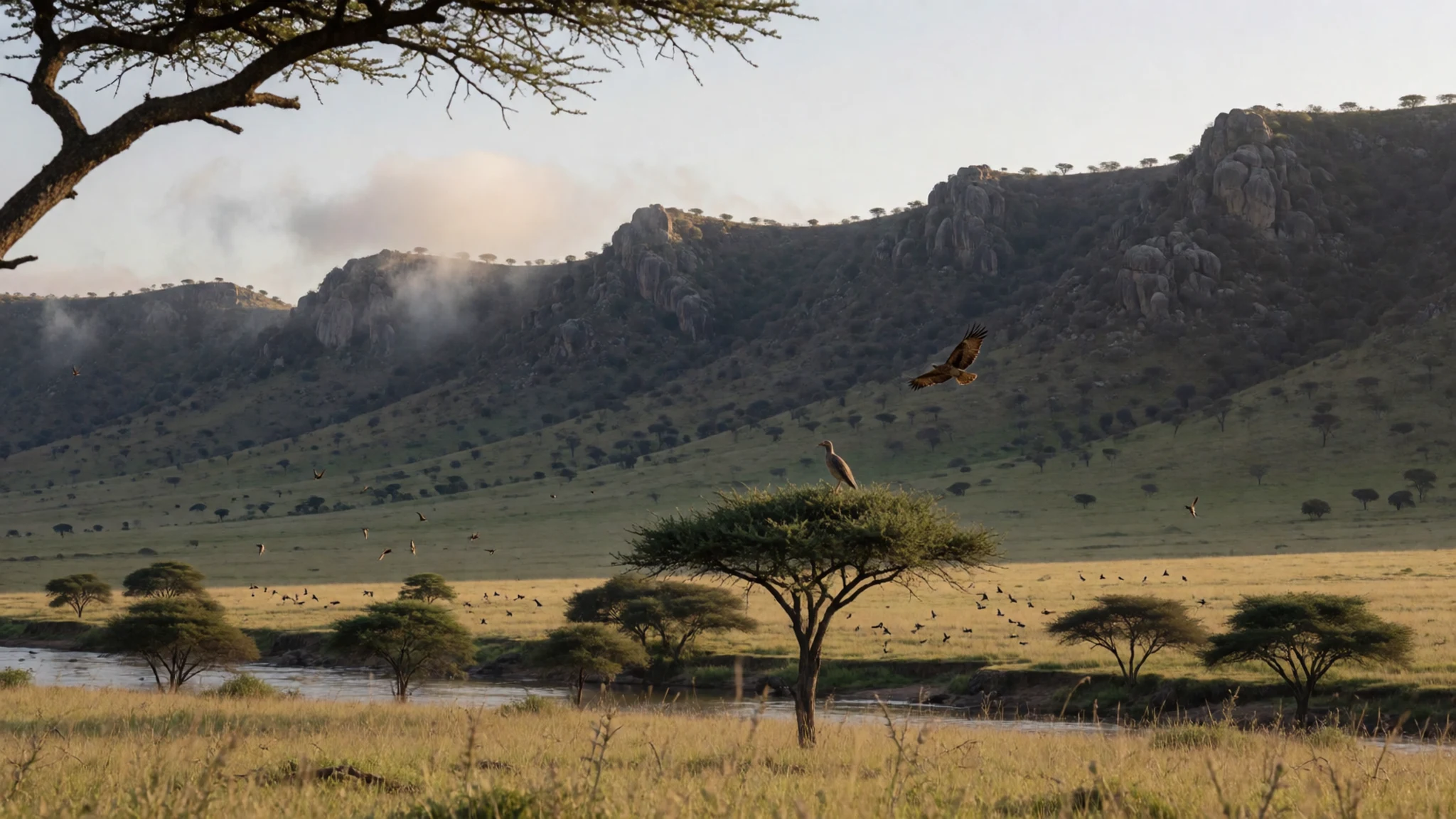
Culture
Kidepo Valley National Park sits within Karamoja, a region whose people have long lived by herding cattle, goats and sheep across dry country. The Dodoth are pastoralists, and the Ik, who lived in the valley before the park was created, have a distinct language and history. Cattle are central to how many families measure wealth, mark marriages and organise the year, so animals seen near the park boundary are valued livestock rather than scenery.
The creation of the reserve in 1958 involved the removal of resident communities, and that memory still colours how some local people view conservation. Many now work as rangers, guides, drivers and lodge staff, and community visits or craft sales near the park can offer a more direct link than a game drive allows. Ask your operator how any visit is arranged and who benefits, rather than turning up unannounced at a homestead.
Life here is quiet and dry, and hospitality is real, but it works on its own pace. Greetings matter, and a handshake and a few words of welcome go a long way before any request. English and Swahili are widely used in tourism, and learning one local greeting from your guide is appreciated.
Ask permission before photographing any person or homestead near the park, and never hand out money or sweets to children.
What to wear
Kidepo Valley National Park lies in Karamoja, where traditional dress is tied to herding life. Many Dodoth and neighbouring people have historically worn wrapped cloth, often checked or in strong red, along with leather and plenty of beadwork: layered necklaces, collars and bracelets that mark age, status and occasion. Blankets are also draped against the cold of early mornings and evenings. Ceremonial dress comes out for dances, weddings and gatherings rather than daily use, and beads are often worn with pride at events.
Day to day, most people now wear what is available in local markets: T-shirts, shirts, wrap skirts, trousers and rubber sandals, with second-hand clothing common across Uganda. Rangers wear a green uniform, and guides tend to dress in muted safari colours.
Visitors should dress for heat, dust and sun. Light, long-sleeved cotton shirts and long trousers in khaki, olive or neutral tones protect against sun and insects without standing out to animals. Avoid military camouflage patterns, which are not appropriate in Uganda. Bring a wide-brimmed hat, sunglasses, and a warm layer for dawn drives, which can feel cool in an open vehicle. Closed shoes or light boots suit rough ground and the sandy riverbed. Away from the park, dress modestly in villages and towns, with shoulders and knees covered, especially for women. Pack a scarf, which doubles as dust cover.
What to eat
- Posho and beans — Roadside eateries in Kaabong, Moroto and Kitgum
Posho is a stiff maize porridge, served in a heap and eaten by hand with a bean stew. It is filling, cheap and the standard meal across Uganda. Look for it in roadside eateries and staff canteens in towns on the way to the park.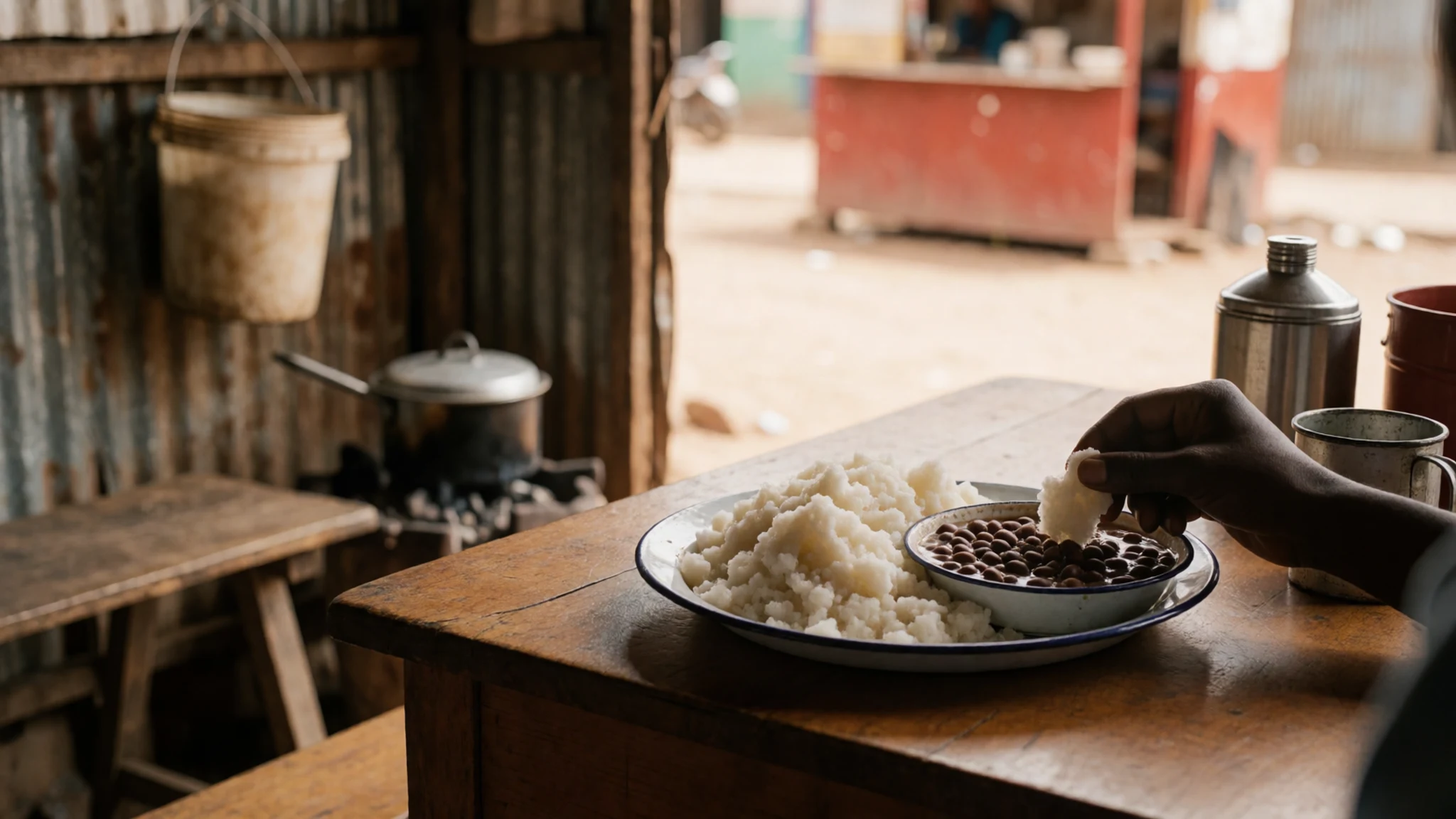
- Millet porridge — Local eateries and village kitchens in Karamoja
Millet is a traditional grain across Karamoja, cooked into a thick porridge or a stiff paste. It has an earthy, slightly sour taste and is often eaten with a sauce or milk. Ask a guide where a family-run eatery serves it.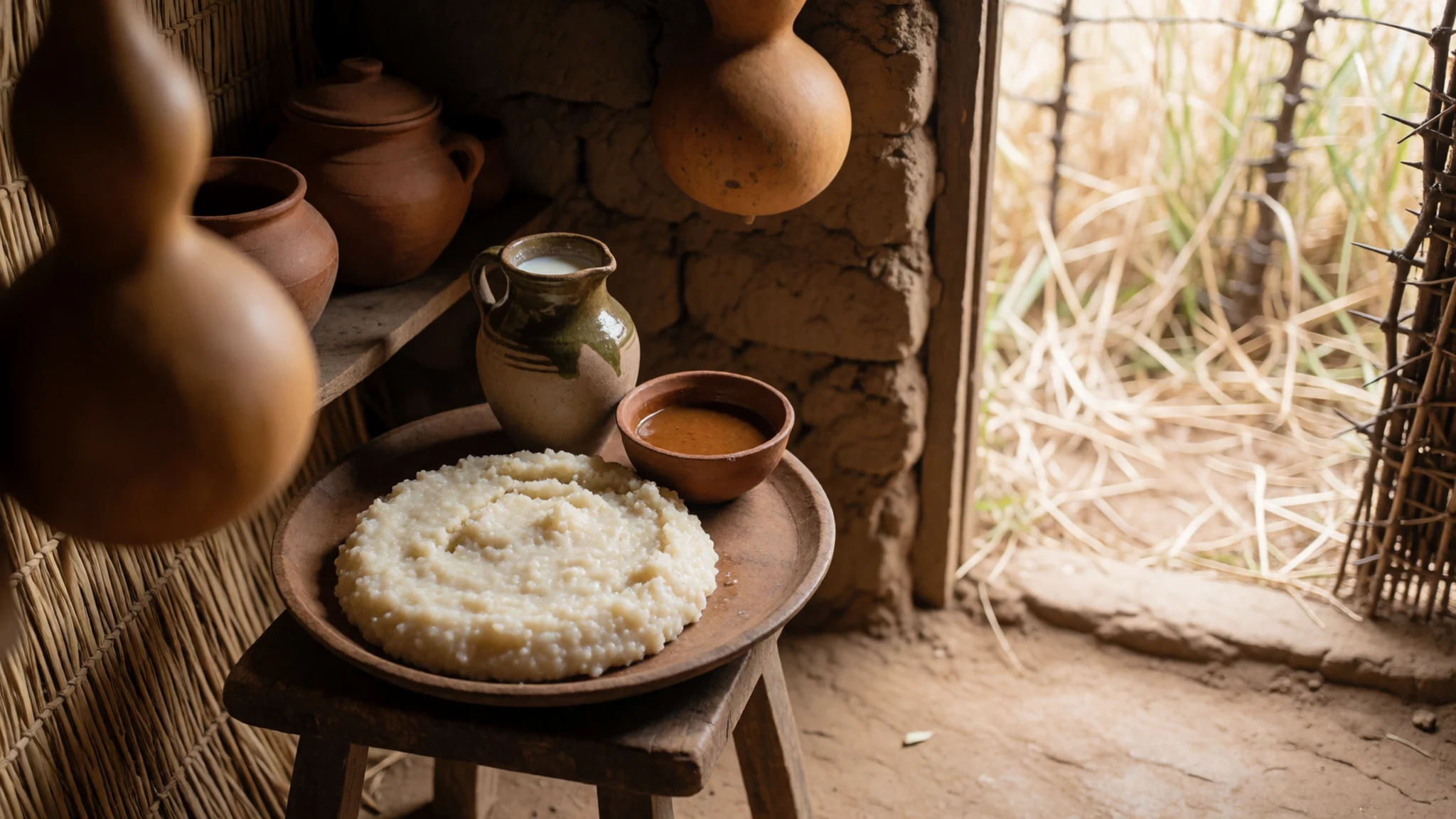
- Roast goat — Charcoal grill stalls in town markets
Goat is the meat many pastoral communities favour, and it is often grilled over charcoal until smoky and chewy, then served with salt and sometimes chilli. It is a sociable dish, shared among friends. Choose busy stalls where the meat is cooked fresh. - Rolex — Street stalls in towns along the route from Kampala
A rolex is a chapati wrapped around a fried egg omelette with tomato and onion, and the name comes from rolled eggs. It makes a cheap breakfast or snack before a long drive. Watch it being cooked to order. - Matoke with groundnut sauce — Lodge dining rooms and restaurants in larger towns
Matoke is steamed or boiled green banana, mashed to a soft yellow mound, and often paired with a rich groundnut sauce. It is more associated with southern Uganda, but many lodges and restaurants serve it on set menus. It suits a long day of driving.
Plan it
Best time. The dry season, roughly December to February, is usually the easiest time to see wildlife, as animals gather near the remaining water and the tracks are passable. During rains the roads can turn difficult and the grass grows tall, so animals are harder to spot. Check conditions with the Uganda Wildlife Authority before booking.
How long. 3–4
Getting there. Many visitors take a light aircraft from the Entebbe area to an airstrip near the park; check current schedules with operators. By road, the drive from Kampala is very long and best split over two days, often via Kitgum. The last stretch is on rough tracks, so a 4x4 with an experienced driver is sensible.
Budget. high
Tips
- Book lodges, flights and park permits well ahead, as places are limited and the region is remote
- Allow a full day or two for the road journey if you are not flying, and set off early
- Bring cash in small notes, as cards and mobile signal are unreliable around the park
- Carry plenty of drinking water, sun cream and insect repellent
- Go on dawn and late-afternoon drives, when animals are most active and the heat is lower
Etiquette
- Stay in the vehicle unless a ranger tells you it is safe to step out
- Keep voices low and never feed or approach the animals
- Ask before photographing people, and do not hand out gifts to children
Nearby
Sources
- Wikidata Q1740874 (CC0)
- Wikipedia: Kidepo Valley National Park (rev 1384637232) (CC BY-SA 4.0)
- Wikivoyage: Kidepo Valley National Park (rev 5407125) (CC BY-SA 4.0)
- Photo: Kidepo Riverbed — Keitsist (CC BY 3.0)
- Photo: Nataba Track, Kidepo Valley National Park — Keitsist (CC BY 3.0)
- Photo: Maneless zebras at Kidepo Valley NP — Mark Jordahl (CC BY 2.5)
- Photo: Elephants in Kidepo Valley National Park — Kateregga1 (CC BY-SA 4.0)
- Photo: Bird species at Kidepo National Park — Kyakwera (CC BY-SA 4.0)
- Photo: Mercy Corps Team 06 — Brownlongokbulasio (CC BY-SA 4.0)
- Photo: Daytime Magic, The Moon's Enigmatic Presence in Kidepo Valley — Chapelle Musa 2 (CC BY-SA 4.0)
- Photo: A giraffe grazing in Kidepo Valley National Park — EO3669 (CC BY-SA 4.0)


Wildlife
- African elephant (animal)
The African bush elephant is the biggest animal that walks on land, with a trunk that works like a hand and huge ears that help it keep cool. Families drift between rivers, shade and good grazing, so those are the places to look. Stay quietly in your vehicle, let your guide choose a respectful distance, and a family group may let you watch for a long, peaceful while. Never feed them.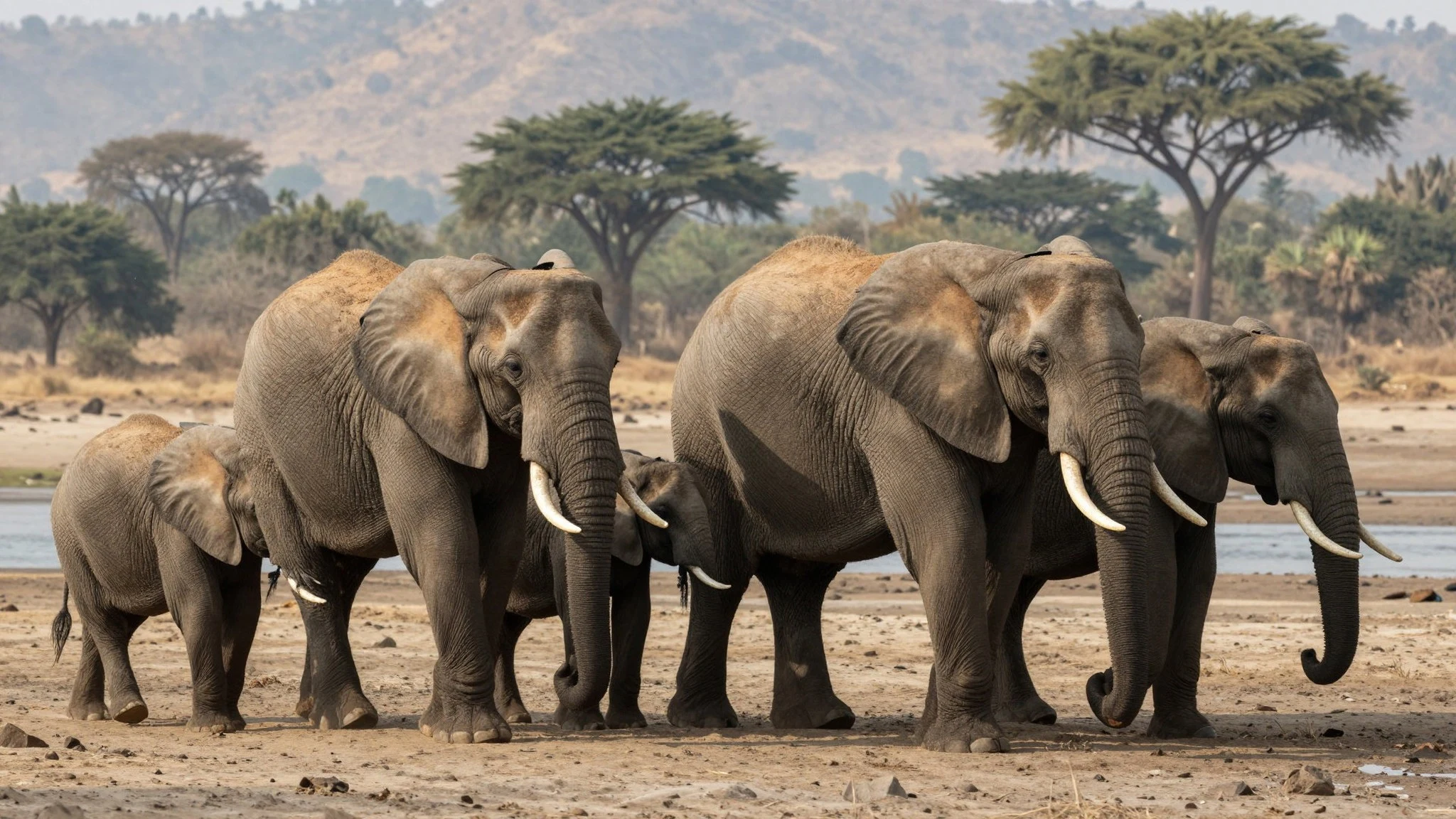
- Lion (animal)
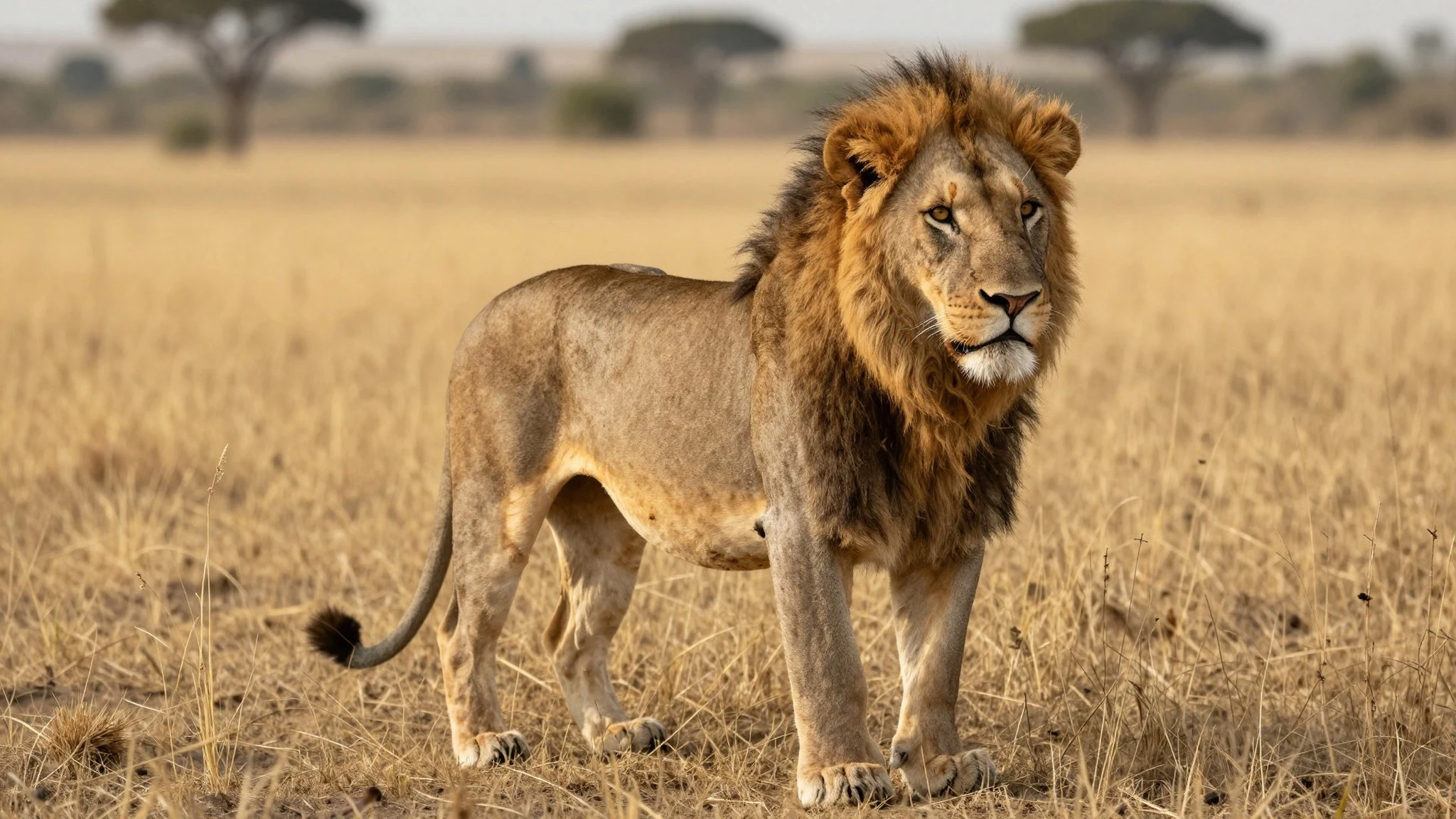
The lion is a big, muscular cat, and the males wear a thick mane like a crown. In Kidepo, drives around the Narus Valley are the usual way to look, especially as the dry months wear on and seasonal pools draw animals to the grassland. Lions can lie almost hidden in the grass beside the tracks, so scan slowly and let your guide help. Keep your voice low, stay in the vehicle at a safe distance, and never feed wildlife.