Maupiti
Maupiti, France
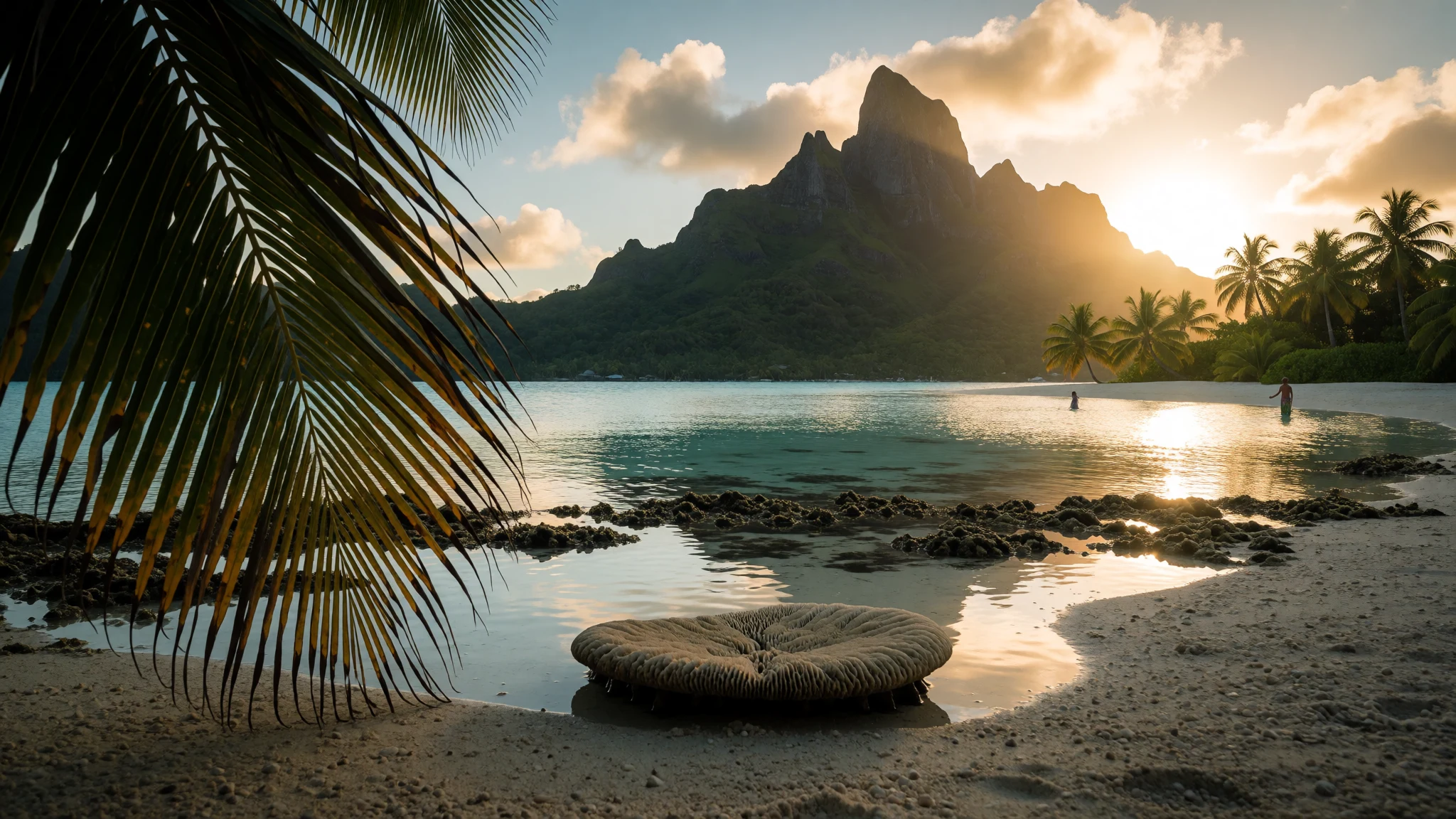
Maupiti is a quiet Polynesian island of lagoon, reef and sandy islets, run at the pace of family guesthouses rather than resorts.
The place
Maupiti is a small volcanic island at the western end of the Society Islands in French Polynesia, home to 1234 people and rising to 380 m at its highest point. Geographers call it a near atoll: a rocky central peak surrounded by a shallow lagoon, with a reef and a scatter of low sandy islets, the motu, along its edge. Bora Bora lies about 40 km to the east, and the two islands could hardly feel more different. Bora Bora is known for overwater resorts and big-name luxury; Maupiti has one main village, Vaiea, a coast road that can be cycled in an easy morning, and guesthouses run by local families. The airport is not on the main island but on a motu, Tuanai, so every arrival begins with a short boat ride across the lagoon, and that crossing sets the tone. Life here follows boats, tides and the supply ship. The main economic activity is noni, a fruit grown for juice and export, and barrels of it are a common sight at the quay. The lagoon is clear and shallow, good for snorkelling, and the reef is broken by only a narrow channel, so rough seas can affect boat movements. Visitors should expect simplicity: a few small shops, almost no nightlife, and prices that reflect the fact that nearly everything arrives by ship or plane. Heat and sun are constant, and the rhythm is deliberately slow.
Its story
Maupiti has been inhabited for well over a thousand years. Digs here turned up Polynesian remains dating back to 850 AD, and when a 1962 excavation of a burial site revealed early ties to New Zealand, it highlighted just how far the Polynesian navigators traveled and stayed in touch across open water. Marae, the stone-platform temples where gods and ancestors were honoured, once marked the four corners of the island, and about 30 archaeological sites are now signposted for visitors. Maupiti has long had close cultural ties with neighbouring Bora Bora. The first European known to have reached the island was the Dutch explorer Jacob Roggeveen in 1722, on a Pacific voyage that took in several island groups. Beneath the human story lies the geology. Maupiti is part of a chain of volcanoes created as the Pacific plate drifted over a hotspot in the Earth's mantle, and it is several million years old. Erosion and slow sinking have worn the volcano down, leaving the central peak, the lagoon and the surrounding reef. The island's calm has limits: a heavy cyclone struck in 1997, and storm season remains part of life here. The quiet of the present-day village sits on top of sacred sites, old family ties and a long history of living with the ocean.
What to see
- Mount Teerefaatiu — Central peak
The climb up Mount Teerefaatiu is the island's standard half-day walk, with views across the lagoon to Bora Bora and Raiatea, and to Tahaa when the air is clear. The path is steep and can be slippery after rain, so an early start, plenty of water and proper shoes make it far easier.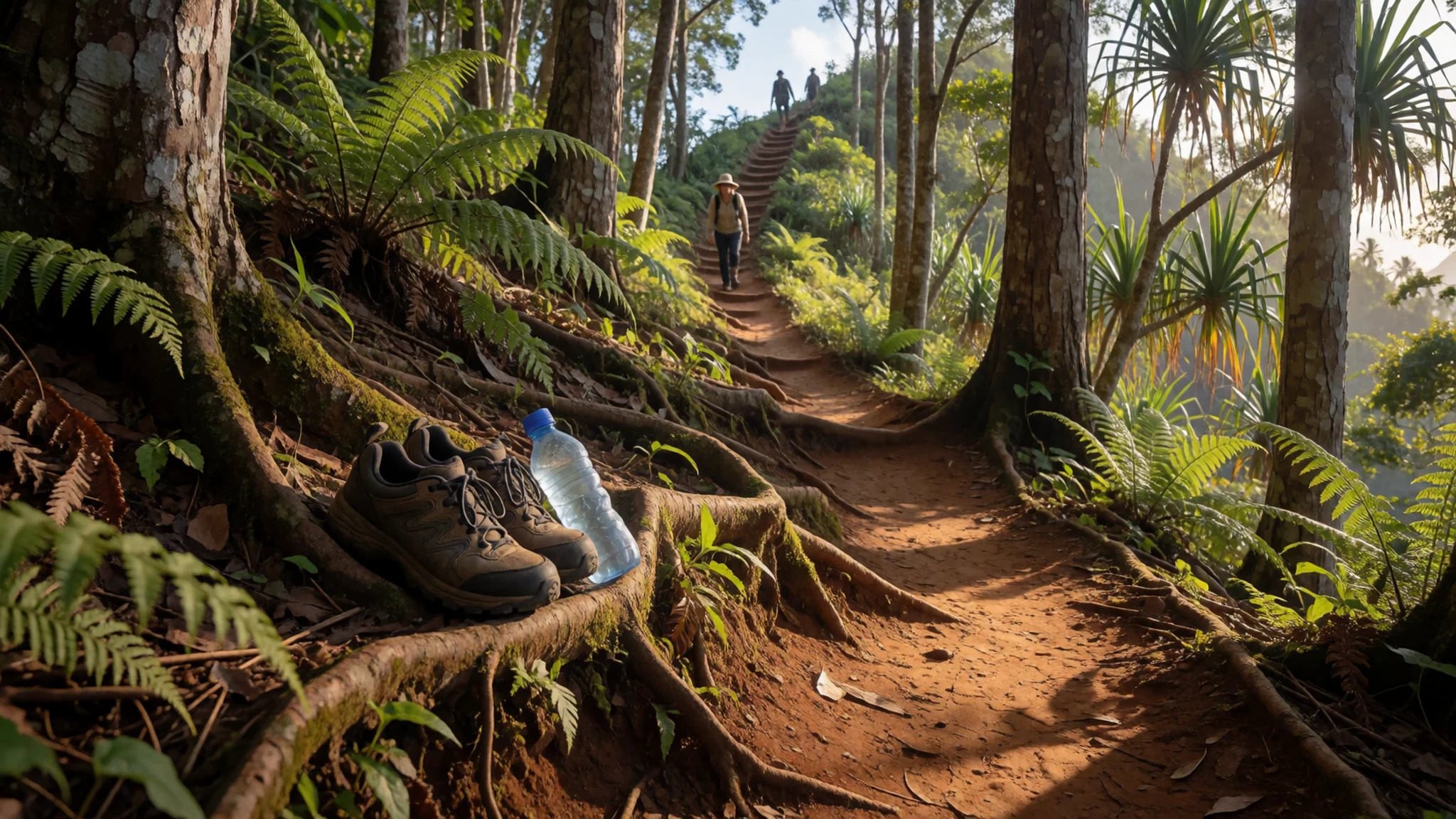
- Marae Vaiahu — Near Vaiea
Marae Vaiahu is one of the island's temple sites, a stone platform where ceremonies once took place. Maupiti has around 30 signposted archaeological sites, and the temples originally marked the four corners of the island. A slow bicycle ride along the coast road links several of them; expect low stone structures rather than grand ruins.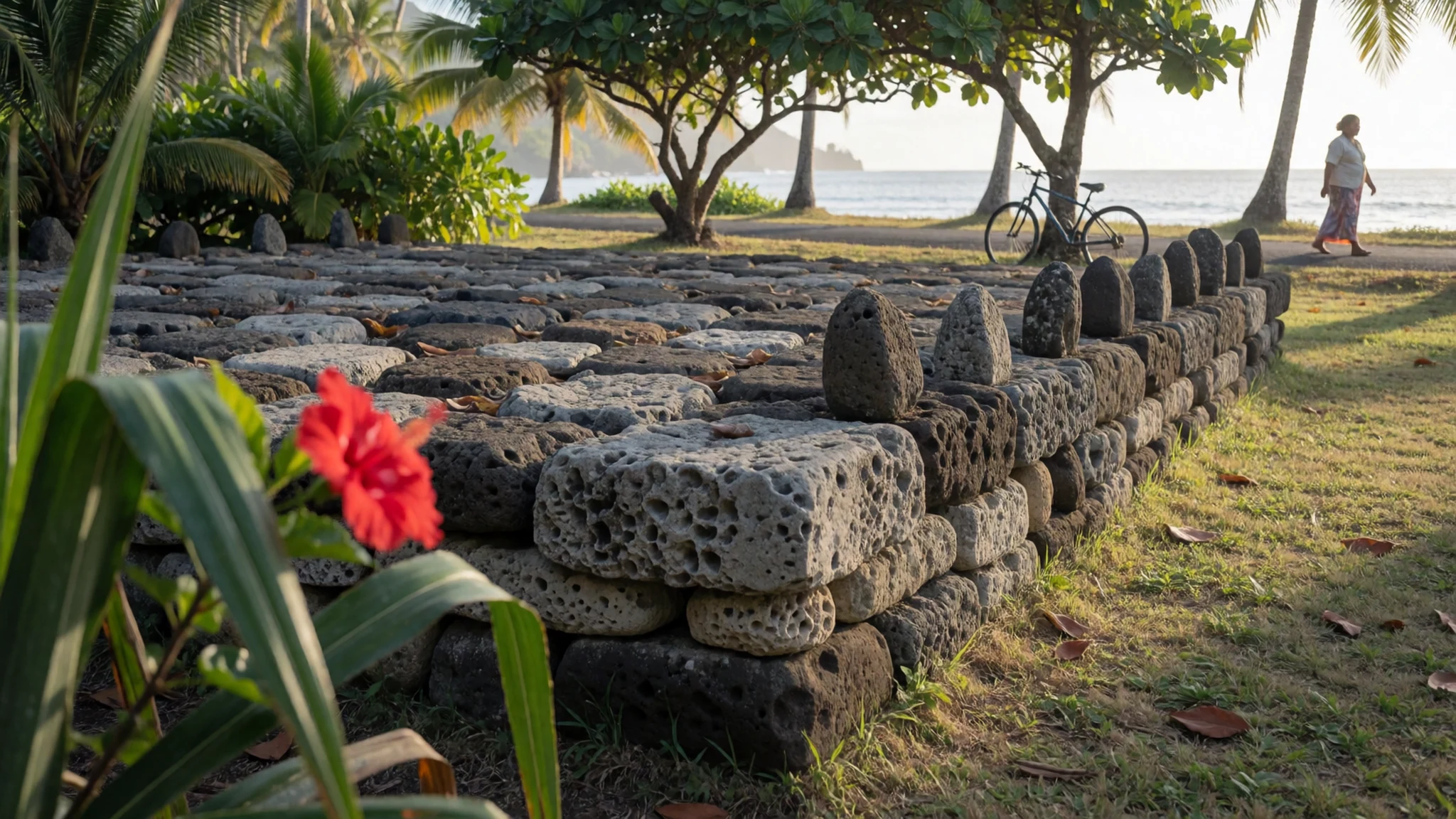
- The petroglyphs — North of Vaiea
The petroglyphs lie about 1 km north of the main village, reached by a turn off the road and a short walk. The carvings are modest and easy to miss, so a guesthouse host or local guide helps. They are worth seeing as one more thread in the island's long human history rather than as a headline sight.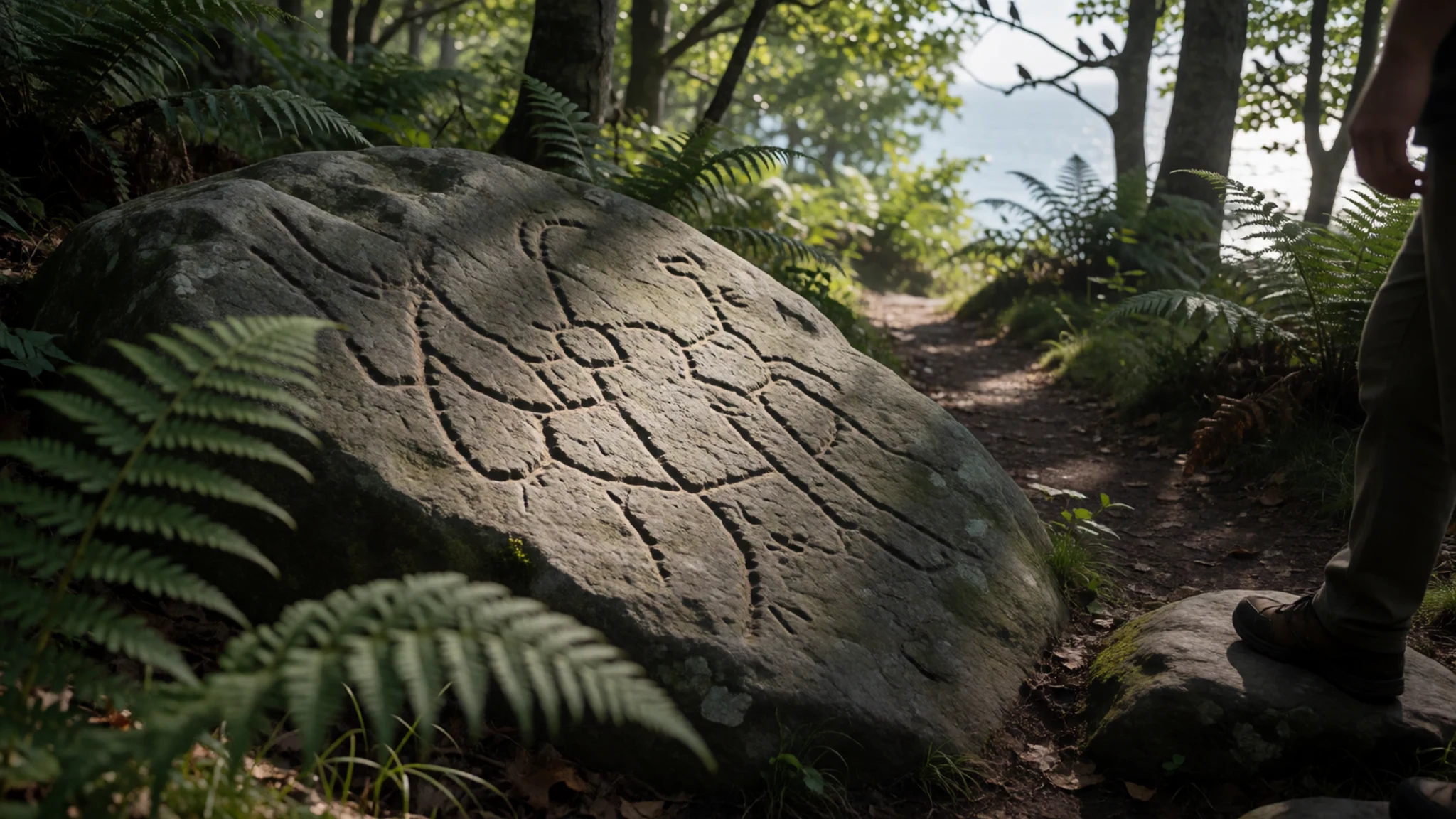
- The lagoon and Motu Tiapaa — Lagoon and reef
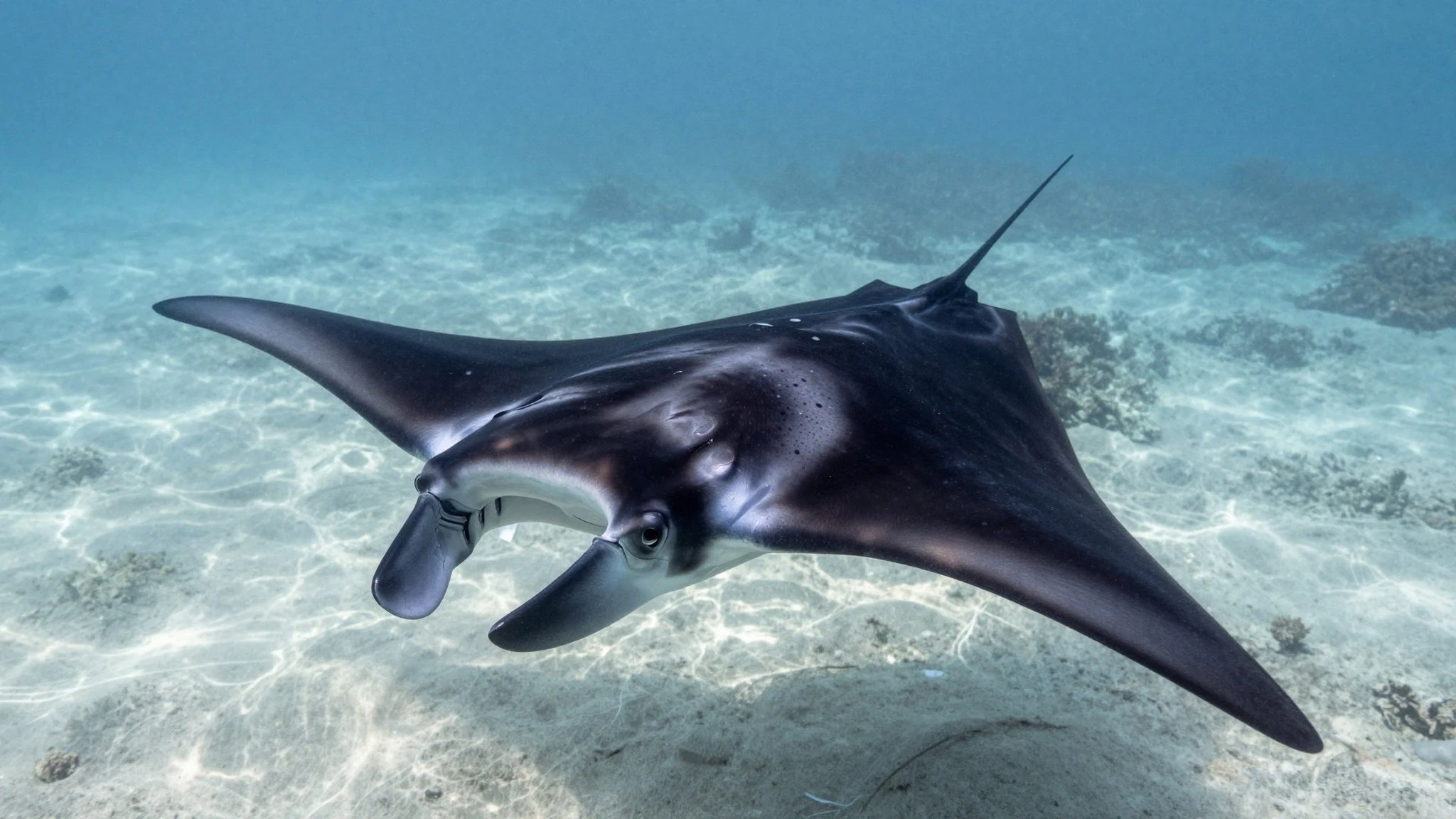
The shallow lagoon is the real centre of the island. Boat trips stop at sandbanks and coral gardens, and some operators take visitors to sites where manta rays gather. Motu Tiapaa, one of five sandy islets on the reef, has pale beaches and calm, shallow water that suits relaxed swimming.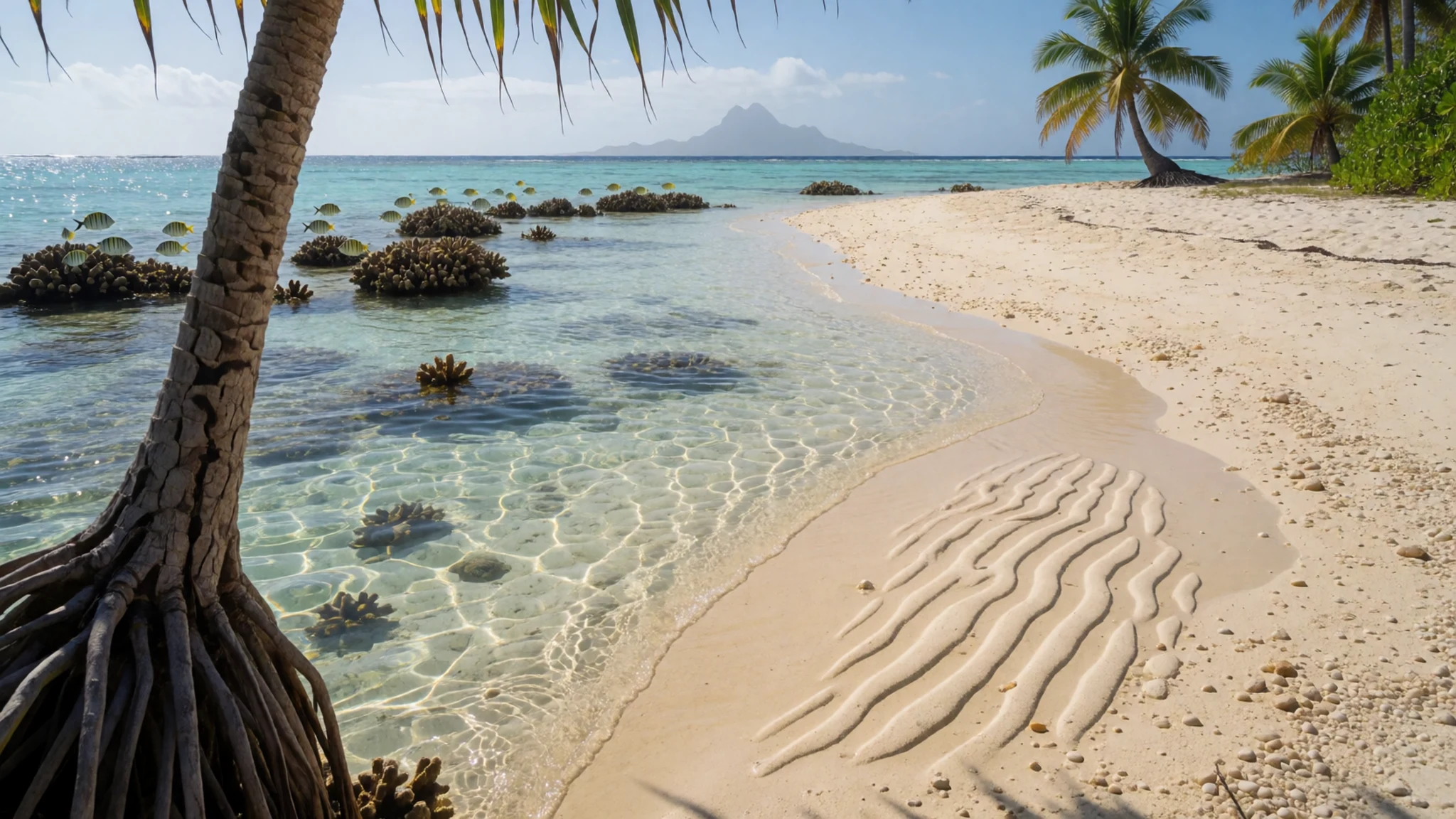
- Vaiea village — East coast
Vaiea is the main settlement, a line of houses, a church, a quay and a few small shops along the shore. The supply ship docks here and noni is loaded for export, so a morning walk shows how the island actually works. Facilities are limited, so buy essentials early in the day.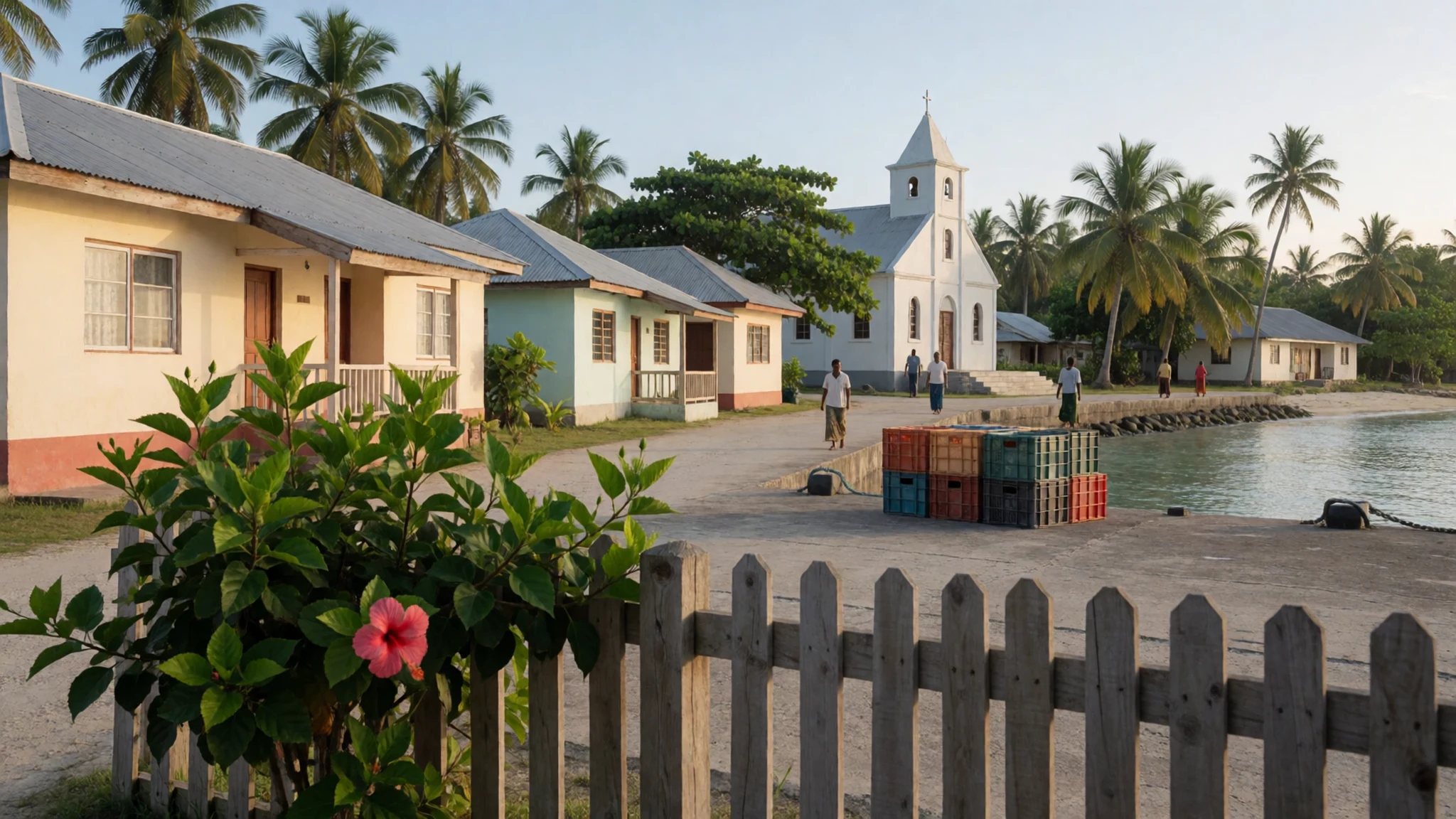
Culture
Maupiti's culture is Polynesian at its root, shaped by centuries of island life and, in more recent times, by Christianity and French administration. Tahitian and French are both spoken, and a friendly greeting in either goes a long way in a village where most people know each other. Church is central to community life, and Sundays are noticeably quiet, with services in the morning, family meals and little commercial activity. The marae scattered around the island are reminders of an older belief system. They were once the setting for ceremonies honouring gods and ancestors, and many islanders still treat them with respect even though they are no longer in ritual use. Family ties matter, and so does the connection with neighbouring Bora Bora, which goes back centuries. Daily life revolves around fishing, small-scale farming, noni production and the arrival of boats and planes. Music, dance and handicrafts remain part of how the community marks occasions, though a visitor may see them most easily at village events rather than staged shows. The pace is unhurried, and rushing, loud behaviour or impatience tends to stand out. Guesthouse hosts are often the best guides to local customs, from where to swim to when a family occasion is under way. At the marae and in the village, ask before photographing people or their homes, and do not take stones or shells away from the archaeological sites.
What to wear
Traditional dress in Maupiti, as across French Polynesia, centres on the pareu, a length of printed cotton wrapped around the body and worn by men and women. Flower crowns and necklaces made from fresh tiare blossoms, leaves or shells appear at celebrations and welcomes, and woven hats of pandanus or palm fibre are common. Dance costumes use fibre skirts, shells and feathers or leaves, and are worn at festivals and performances rather than daily. Everyday clothing now is simple and practical: shorts, T-shirts, sundresses, rubber sandals and sun hats. On Sundays, many women wear their best dresses and hats to church, and men often put on a clean shirt. Visitors should pack light, quick-drying cotton or linen, a wide-brimmed hat, sunglasses and reef-safe sunscreen, with a rash vest useful for long snorkelling sessions. Reef shoes protect against coral and urchins when wading in the lagoon, and sturdy trainers or walking shoes are needed for Mount Teerefaatiu, where the path is steep and may be wet. Swimwear is fine on beaches and boats, but cover shoulders and knees with a shirt or pareu when walking through the village or attending a church service. A light rain jacket is useful in the wetter months.
What to eat
- Poisson cru — Guesthouse dinners and small village eateries
Raw lagoon or ocean fish, usually tuna, marinated in lime juice and finished with coconut milk, cucumber and onion. It is a staple across French Polynesia, and fresh fish is the point, so it tastes best on the day it is caught.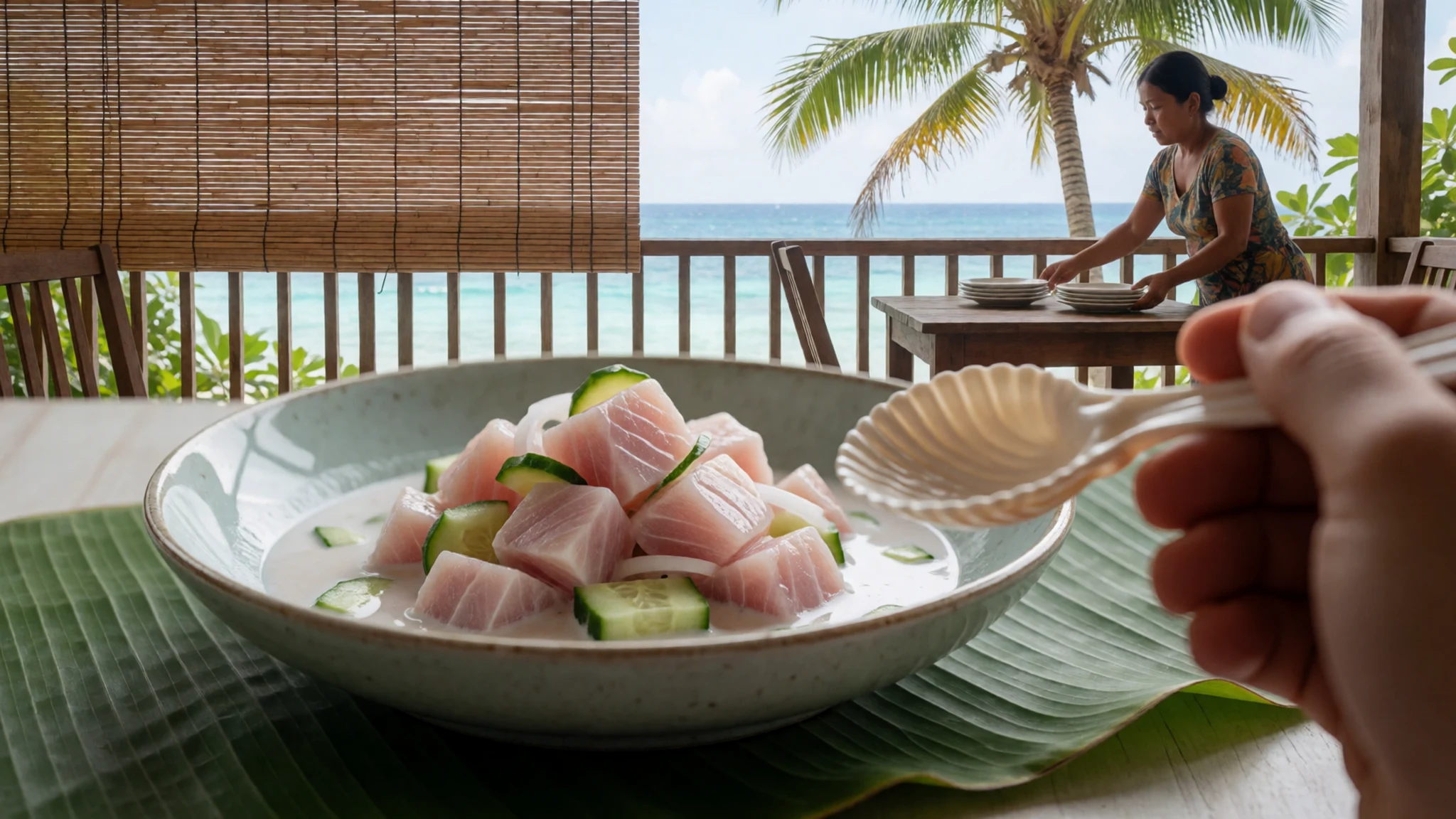
- Uru (breadfruit) — Family meals and village shops
A starchy fruit that stands in for potato or rice. It is baked or roasted over fire, boiled, or fried into chips, and often appears alongside fish and chicken dishes. Its dense, slightly sweet taste suits coconut milk sauces.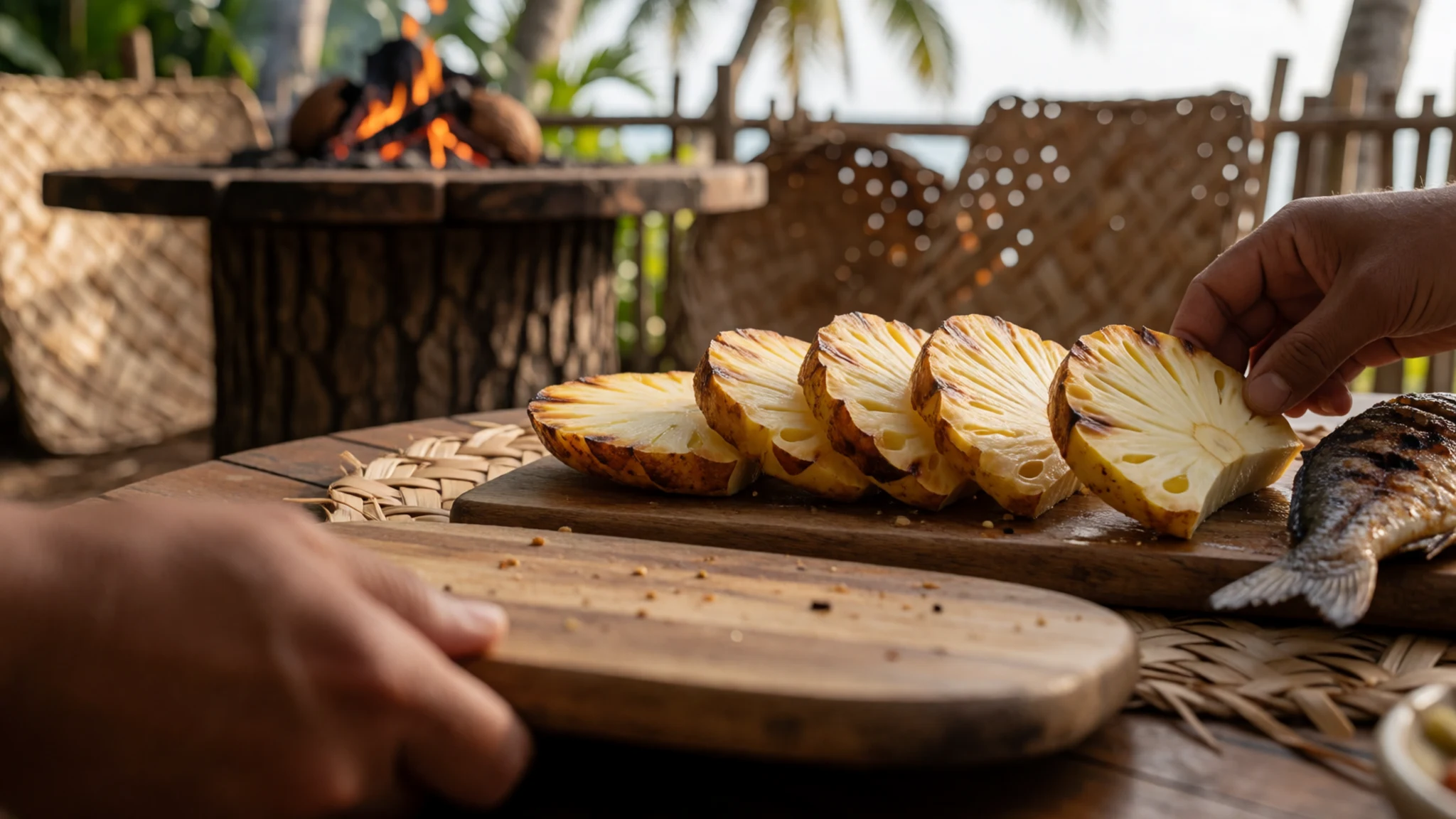
- Poulet fafa — Guesthouse tables and family occasions
Chicken cooked slowly with fafa, the leaves of the taro plant, in coconut milk. The result is rich, soft and mildly earthy, and it is usually served with rice or a root vegetable at the main meal of the day. - Ahima'a (earth oven feast) — Guesthouses and community events; ask your host
A traditional meal cooked in an underground oven of hot stones, typically with pork, fish, breadfruit and banana wrapped in leaves. It takes hours to prepare, so it is usually arranged in advance for groups or celebrations. - Firi firi — Village shops and morning stalls in Vaiea
A twisted, fried Tahitian doughnut, crisp outside and soft within, often dusted with sugar. It makes an easy breakfast or snack and pairs well with coffee or fresh fruit.
Plan it
Best time. May to October is the drier, slightly cooler season, with steadier skies for snorkelling and the Mount Teerefaatiu walk. November to April is hotter, more humid and wetter, with a higher risk of storms; a heavy cyclone hit the island in 1997.
How long. 2–4
Getting there. Fly with Air Tahiti from Tahiti, Bora Bora or Raiatea to Maupiti's airport on Motu Tuanai, then take a short boat transfer across the lagoon to the main village. A fast boat from Bora Bora operates on certain days; check the current schedule and fares with the operator or Air Tahiti, since services are limited and can change.
Budget. mid
Tips
- Book flights and guesthouses well ahead, as small planes and a few rooms fill quickly.
- Carry enough cash for small shops, guesthouses and boat trips, as card use is limited.
- Start the Mount Teerefaatiu walk early to avoid the heat, and take plenty of water.
- Bring sunscreen, insect repellent and any medication, as shopping options are limited.
- Leave slack in the schedule, as weather and sea conditions can affect boats and flights.
Etiquette
- Ask before photographing people, homes or private land.
- Treat marae and other archaeological sites with respect: do not climb on or remove stones.
- Dress modestly in the village and on Sundays, and keep noise low near churches.
Nearby
Sources
- Wikidata Q836283 (CC0)
- Wikipedia: Maupiti (rev 1366981499) (CC BY-SA 4.0)
- Wikivoyage: Maupiti (rev 5343400) (CC BY-SA 4.0)
- NASA Astronaut Image of Maupiti Atoll (Wikimedia Commons) (Public domain)
- NASA astronaut image of Maupiti, ISS002 (Wikimedia Commons) (Public domain)
- Supply ship Tahiti Nui VI for Maupiti, Kuurgen (Wikimedia Commons) (CC BY 3.0)


Wildlife
- Reef manta ray (animal)
The reef manta ray, or hāhālua, is a huge ray that glides through the water like an enormous underwater kite, and it ranks among the largest rays in the world. On Maupiti, some boat operators take visitors to sites where mantas gather, alongside stops at sandbanks and coral gardens. Go with one of those operators, keep a respectful distance, stay calm and quiet in the water, and never feed or chase the animals. Let the manta decide how close it comes.