Matsue
Matsue, Japan
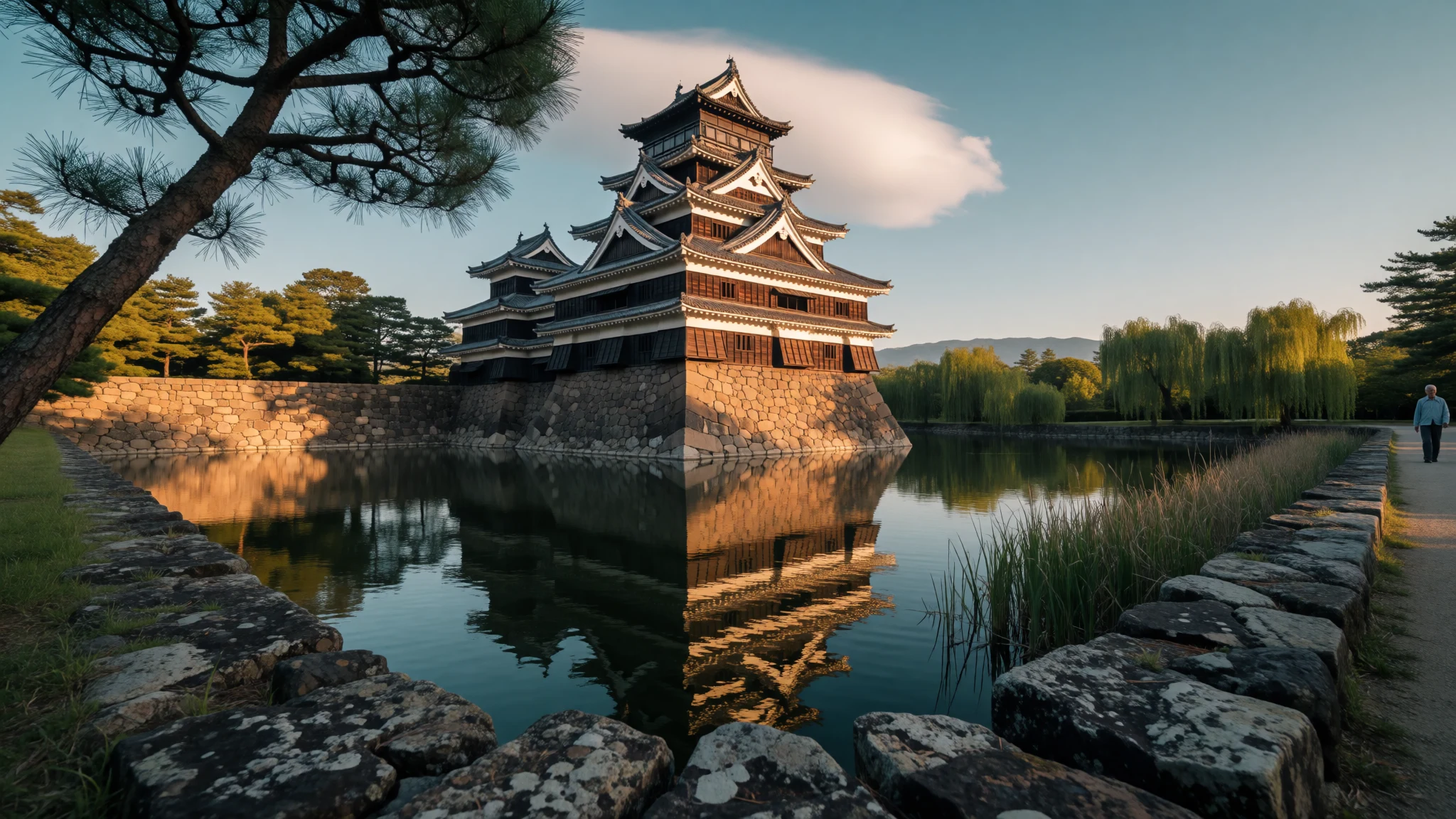
Matsue is a calm lakeside castle town where an original keep, samurai lanes and sunset over Lake Shinji fit into a slow day or two.
The place
Matsue is the capital of Shimane Prefecture, on the Sea of Japan side of western Honshu. It is a city of about two hundred thousand people, which makes it a manageable size: a compact centre, a few good museums, and water almost everywhere. The city sits between two bodies of water, freshwater-and-brackish Lake Shinji to the west and the lagoon-like Nakaumi to the east, joined by the Ohashi River, which runs right through the middle of town. Bridges, riverside paths and the lake shore give the place its character more than any single monument does.
The castle keep and its moat sit just north of the main rail station, with the old samurai district tucked along the moat's edge. Beyond the centre, the municipal boundary stretches to the coast, so fishing villages, shrines and hot-spring areas are part of the same city.
The climate is humid subtropical. Summers are very warm and sticky, winters are cool and grey, and rain falls in every season. July is the wettest month, with June and September also on the heavy side. August is the hottest month and January the coldest. That pattern makes spring and autumn the comfortable seasons for walking, although the Sea of Japan weather can turn quickly at any time, so a light rain layer is worth packing. Matsue is also much quieter than the famous cities of Kansai, which is a large part of its appeal. For current visitor information, the city's official site is https://www.city.matsue.lg.jp/.
Its story
Matsue lies within the old province of Izumo, a region with a long record of human settlement. You'll find traces of the Yayoi, Kofun and Nara eras scattered throughout the modern city, while the Amago clan held this land during the warring-states period.
The town in its present form dates from the early seventeenth century. Horio Yoshiharu, the local lord, built the castle and laid out the streets around it between 1607 and 1611, a project that took about five years. Samurai quarters, merchant streets and canals were planned together, and that basic layout still shapes the centre.
Power then changed hands several times, largely because of heirs who died without children. The Horio line ended this way and the domain passed to the Kyōgoku family. They too ran out of heirs, and in 1638 the Matsudaira clan took over, a branch of the Tokugawa family itself. The Matsudaira governed from Matsue Castle until the Meiji restoration swept the domain system away, and they left behind the armour, documents and tea-ceremony traditions that local museums still show.
The town also gained a literary footnote in the nineteenth century. Lafcadio Hearn, a writer born in Greece and raised in Ireland, taught here for a little over a year. He wrote about local customs, ghost stories and the daily rhythm of the town, and his books introduced many English readers to this corner of Japan. His former home is still preserved beside a small museum.
What to see
- Matsue Castle — Castle grounds, north of the station
Matsue Castle is among a dozen or so original keeps in Japan that were never rebuilt in concrete, and the dark timber and heavy stone base show it. Inside are armour and other items from the Matsudaira family. The climb is steep and narrow, so go early, and walk the moat path afterwards.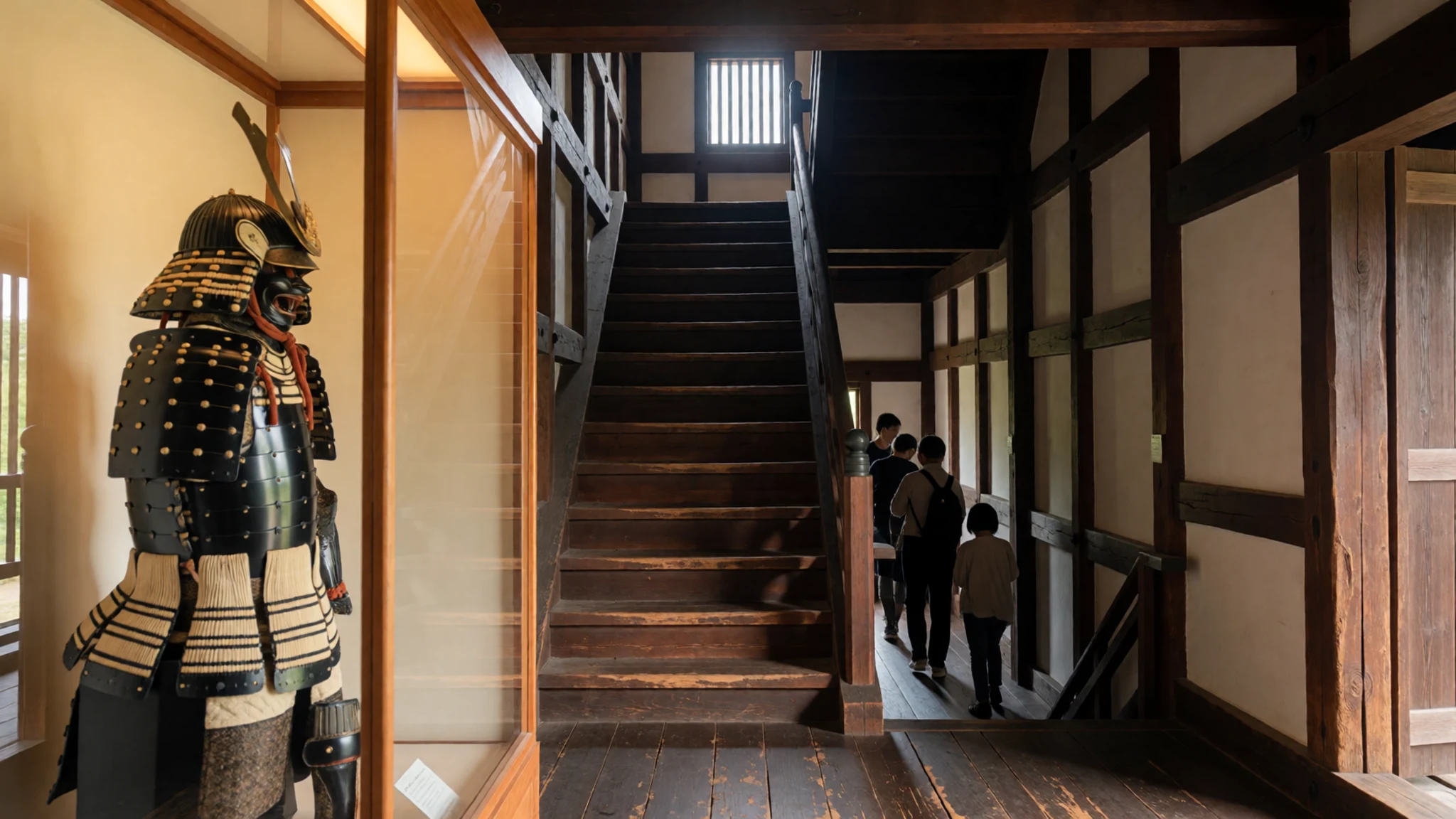
- Shiomi Nawate — Beside the castle moat
Shiomi Nawate is the old samurai street running along the moat on the castle's north-eastern side. Pine trees overhang low walls and tiled gates, and several of the city's museums and historic houses are within a short stroll. It is pleasant for an unhurried hour, particularly in soft morning light.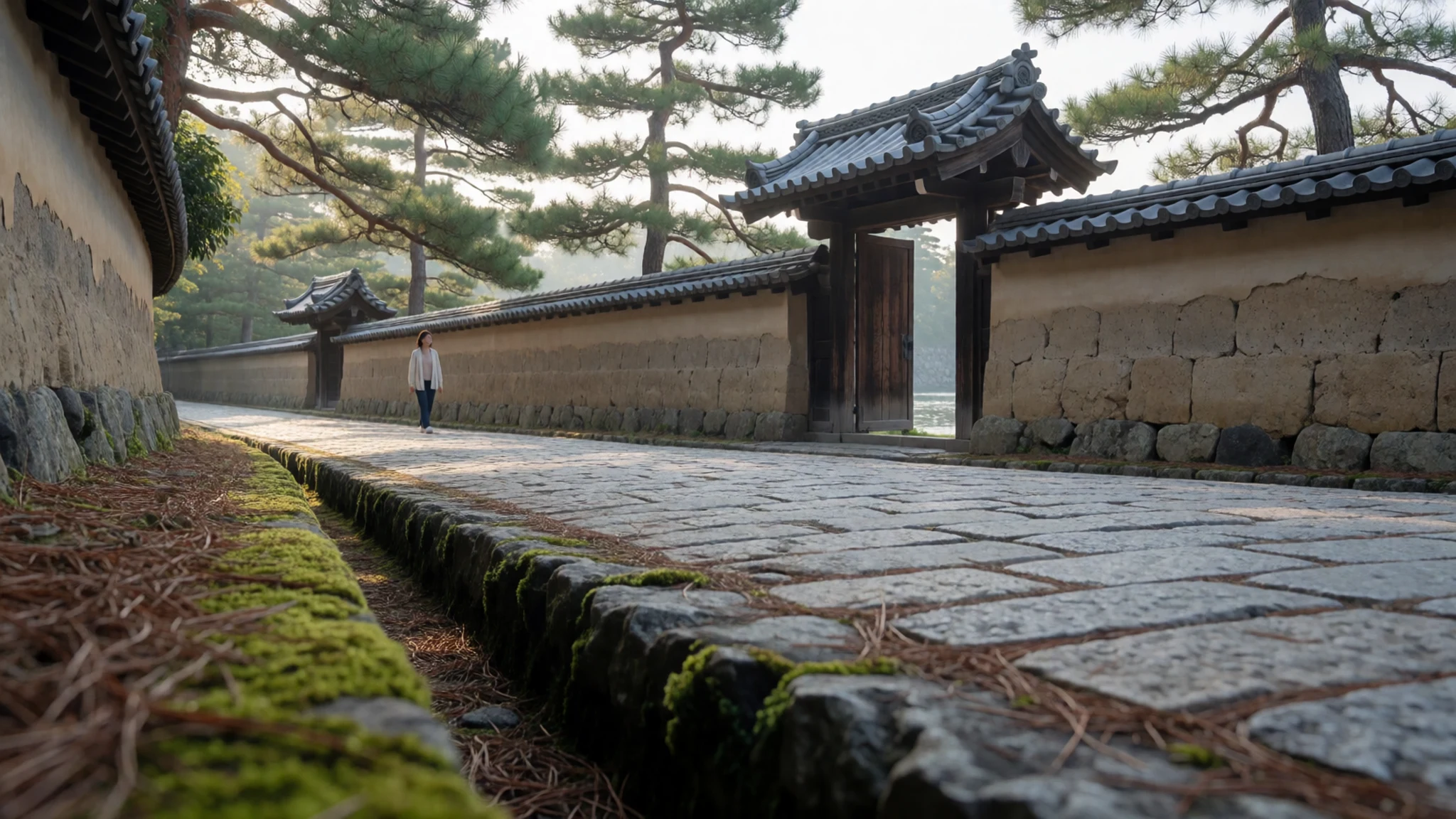
- Lafcadio Hearn Memorial Museum and Former Residence — Samurai district, near the castle
The memorial museum holds Hearn's desk, pen and other belongings, and the neighbouring house is where he lived while writing about the town. The small garden is quiet and the rooms are modest. Anyone who has read his Japanese sketches will find the visit especially rewarding, though it works as an introduction too.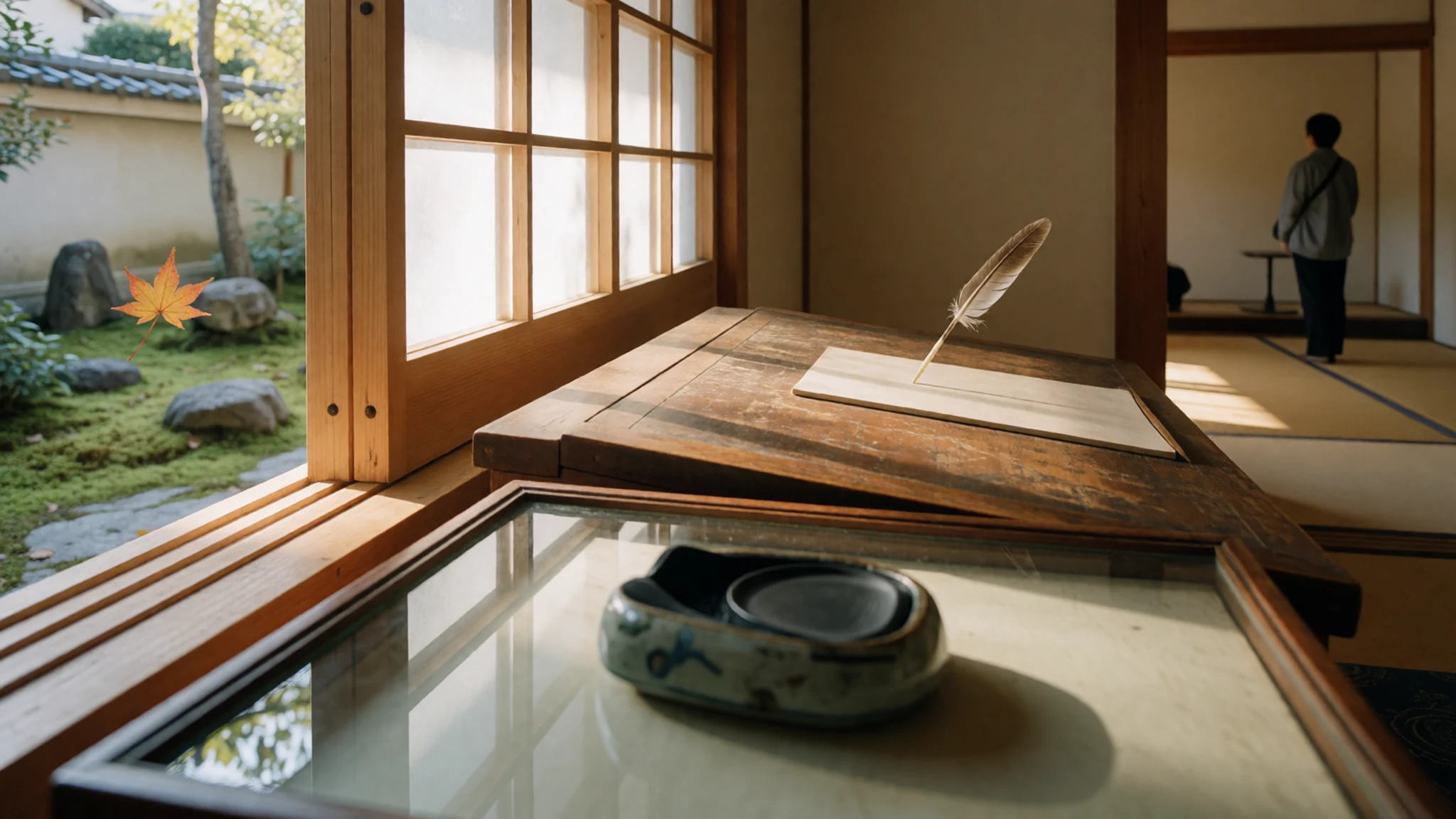
- Jōzan Inari Shrine — Just north of the castle
Jōzan Inari Shrine is a small fox shrine on the castle's edge, where hundreds of stone and ceramic foxes sit among the trees. Foxes are the messengers of Inari, a deity linked with harvests and business. The place is atmospheric and short, and it combines easily with the castle walk.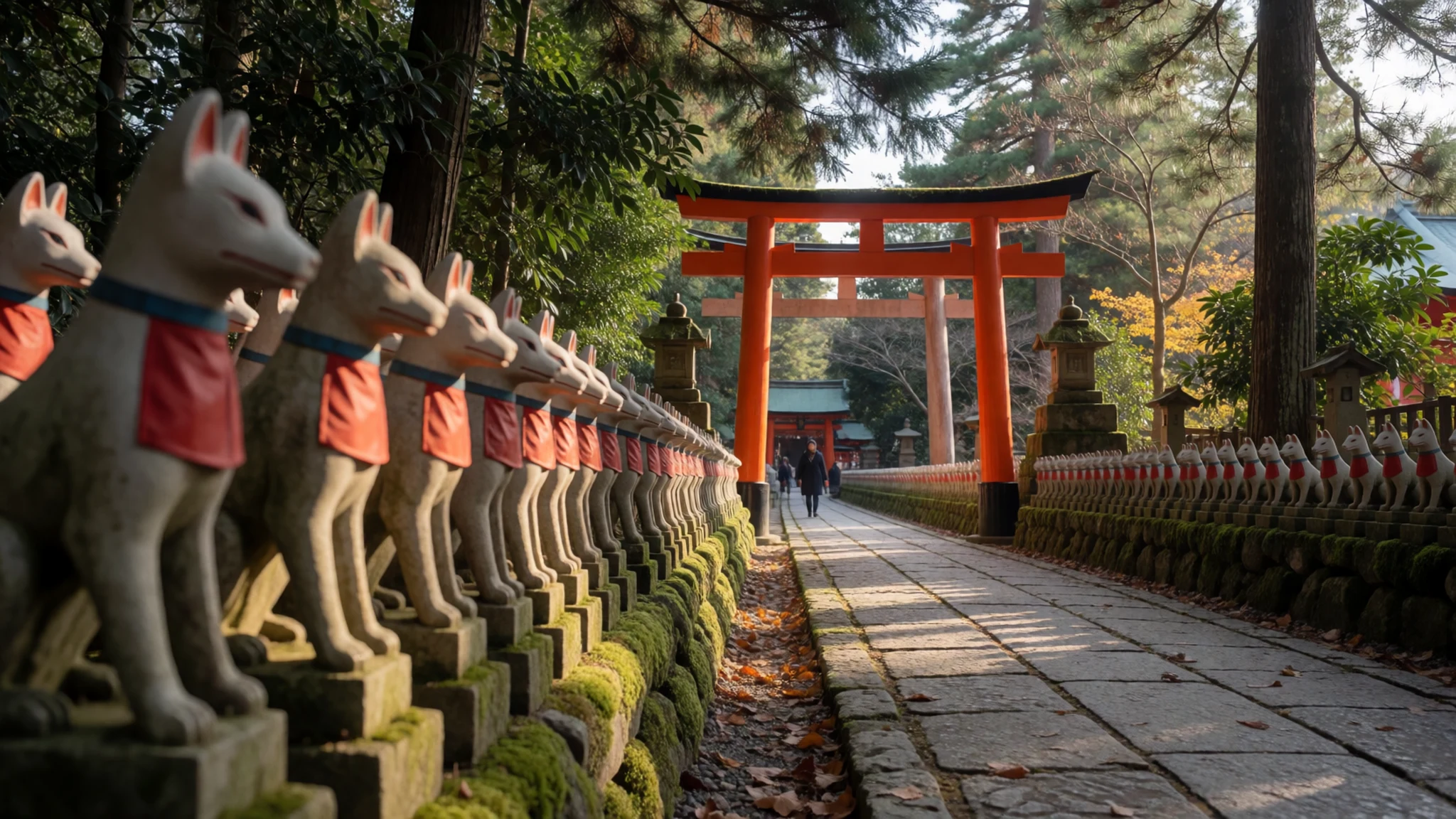
- Ohashi River and Lake Shinji — Lakeshore west of the centre
Matsue's main bridge crosses the Ohashi River where it flows out of Lake Shinji, and the lakeshore nearby is the usual place to watch the sun go down over the water. Locals walk and cycle here in the evenings. Wind off the lake can be cool even in warm months.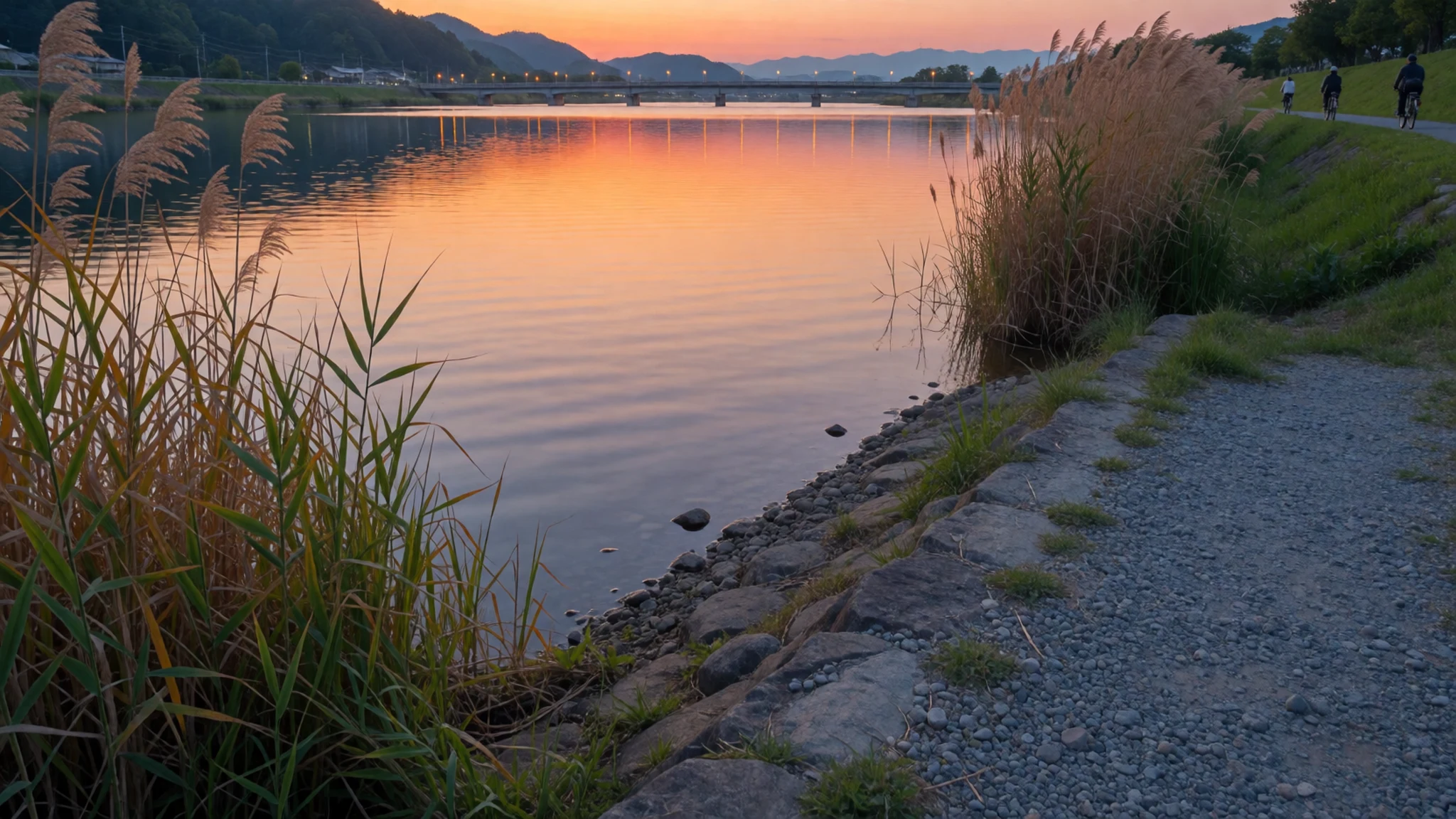
Culture
Matsue has a reputation as a place where older habits survive quietly. The castle-town past is visible in its tea culture, which grew under the Matsudaira lords, and in the sweets still made to go with tea. Many shops and houses keep to the slower style of a provincial capital, and visitors often notice how little rush there is compared with Japan's larger cities.
The region around Matsue is also tied to Izumo, the area of Japan most associated with myth. Local shrines are part of everyday life rather than tourist stops: people stop to bow, clap and leave a small offering on their way to work. The fox statues at Inari shrines are tied to farming and commerce, and are looked after by neighbours and businesses.
Water shapes daily routines as well. Lake Shinji is known for its small clams, which turn up in home cooking and local restaurants, and the sunset over the lake is something residents plan their evenings around. Writers, especially Lafcadio Hearn, have long treated the town as a place to listen to bells, frogs and temple drums. Even now the soundscape is quieter than in most Japanese cities.
Some older houses and ryokan operate as living homes, not museums, and the rhythm of meals and bathing is part of the experience.
At shrines and in former samurai houses, speak quietly, take shoes off where a raised floor begins, and ask before photographing anyone, including priests and people at prayer.
What to wear
Matsue's traditional dress follows the wider Japanese pattern. The kimono, a wrapped robe in silk, cotton or sometimes wool, is worn for weddings, festivals, tea gatherings and graduations, and the lighter summer yukata in printed cotton appears at fireworks and summer events. Samurai-era clothing is mostly seen in museum displays, where armour and ceremonial garments from the Matsudaira household are shown. Obi sashes, geta clogs and zōri sandals complete the outfit, and fabric choices change with the season.
Day to day, people in Matsue dress simply and neatly. Office workers wear dark suits, students wear uniforms, and everyone else tends towards plain, practical layers in muted colours. Rain jackets and umbrellas are common because the weather turns wet often. Bold fashion is more a big-city habit than a local one.
Visitors should dress for the weather first. Summers are hot and humid, so light cotton or linen and a hat are sensible, and a small towel is useful. Winters are cool and damp, so a warm coat and waterproof shoes help. Comfortable walking shoes matter for the castle's steep steps and the stone paths. Slip-on shoes save effort because shoes come off at many temples, traditional restaurants and museums, and clean socks without holes are a courtesy. No special dress code applies at shrines, but covered shoulders and knees and subdued clothing are respectful. If staying at a hot-spring inn, the yukata provided is meant to be worn around the building.
What to eat
- Soba noodles — Restored samurai houses near the castle
Buckwheat noodles are a regional staple, served cold in stacked bowls or hot in broth. Some of the best settings are old samurai houses turned restaurants, with garden views. Look near the castle's moat district for these.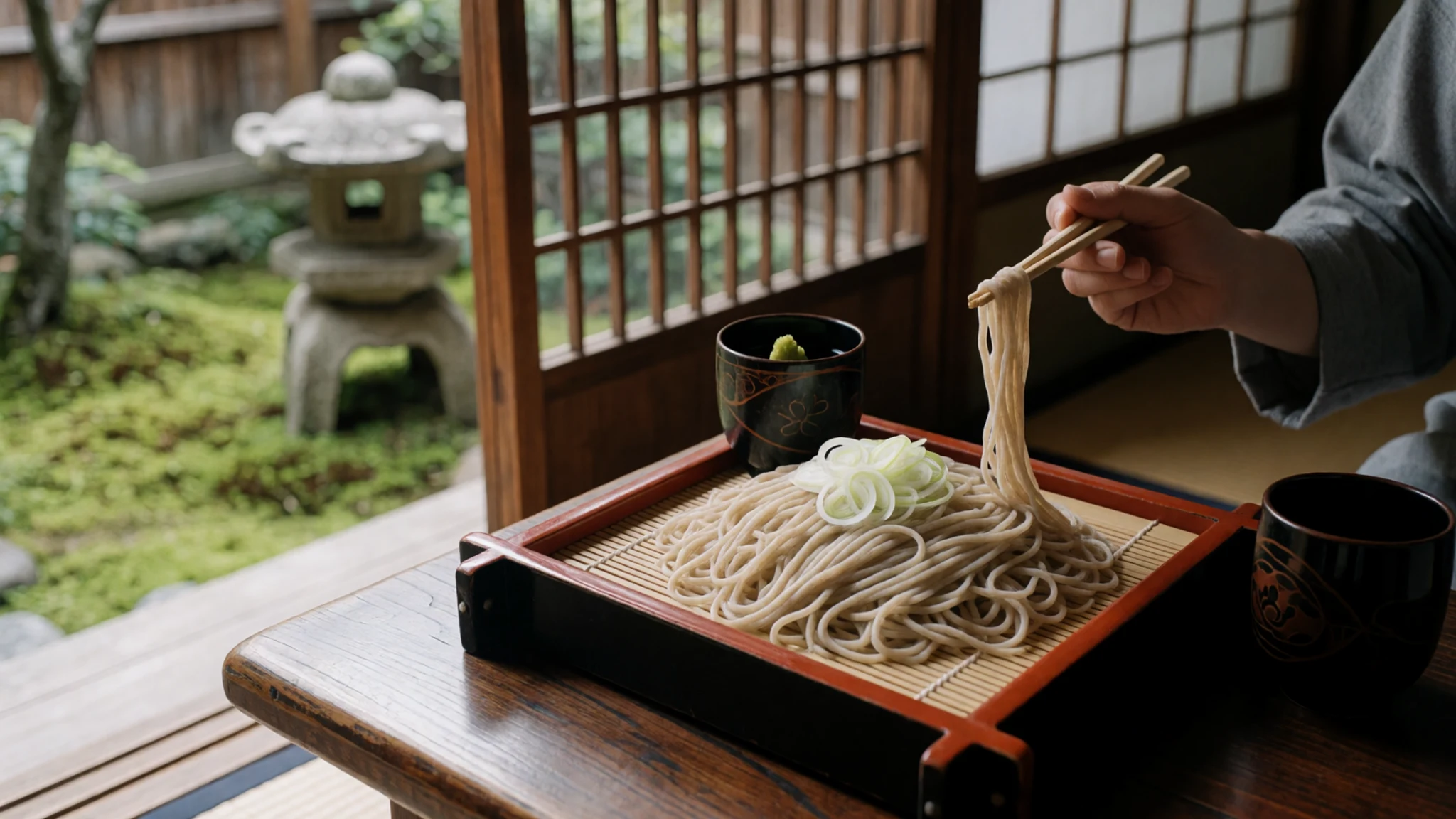
- Shijimi clam soup — Set-meal restaurants and inns around the lake
Tiny clams from Lake Shinji go into a clear, savoury miso or broth soup, often served at breakfast or alongside set meals. The flavour is delicate rather than strong. Try it at a local set-meal restaurant.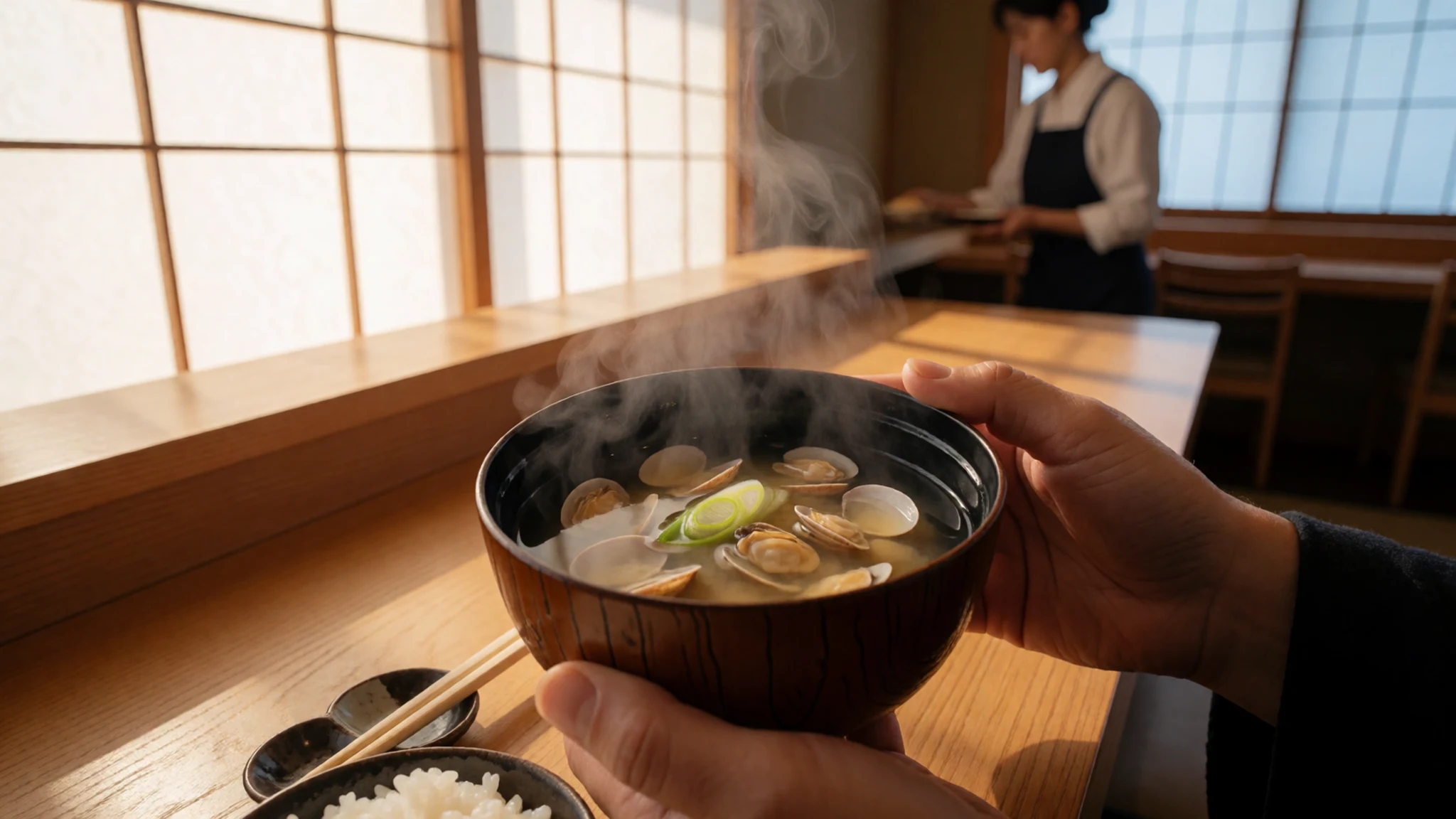
- Sushi and local seafood — Small sushi bars in the town centre
The Sea of Japan supplies fish for neighbourhood sushi counters, and a tasting set is a good way to sample what is in season. Counters are small, so a reservation or an early arrival helps. - Agodashi ramen — Ramen shops in the central streets
Agodashi is a clear stock made from dried flying fish, giving ramen a light, savoury broth that differs from heavier city styles. One well-regarded local ramen shop is known for it. - Gyoza and izakaya plates — Izakaya near the station and riverside
For an evening meal, casual izakaya serve crisp pan-fried dumplings with beer or sours. They are lively, inexpensive and good for trying several small dishes in a sitting. - Bakery bread and coffee — Neighbourhood cafés and bakeries
Matsue has a growing café scene, including specialist espresso bars and bakeries that bake both soft Japanese loaves and European-style bread. They suit a slow morning before the castle.
Plan it
Best time. April–May and October–November, when days are mild and walking is comfortable. June to July brings the heaviest rain, August is hot and humid, and January is the coldest month.
How long. 2
Getting there. Two airports serve the area, so check the official site and airline listings for the best connection and the last bus or train leg. By rail, Matsue is on the JR San'in Main Line, and the Yakumo limited express runs from Okayama in about two and a half hours. An overnight sleeper train from Tokyo also runs, so check the operator's current timetable.
Budget. mid
Tips
- Visit the castle early, before tour groups and the heat
- Carry some cash for small shops, shrines and cafés
- Pack a light rain jacket in any season
- Plan to be on the lakeshore by sunset, especially in clear weather
- Check opening days on the official site before visiting museums
Etiquette
- Remove shoes where there is a raised floor or slippers waiting
- Keep voices low at shrines and in historic houses
- Ask before photographing people, especially at prayer
Nearby
Sources
- Wikidata Q207321 (CC0)
- Wikipedia: Matsue (rev 1380987767) (CC BY-SA 4.0)
- Wikivoyage: Matsue (rev 5430936) (CC BY-SA 4.0)
- Photo 01: 松江城天守, 江戸村のとくぞう (CC BY-SA 4.0)
- Photo 02: Matsue city centre from Mt. Shinyama, Gkiseki (CC0 1.0)
- Photo 03: Ohashi in Matsue, 663highland (CC BY 3.0)
- Photo 04: Miho-jinja, Aimaimyi (CC BY-SA 2.5)
- Photo 05: Matsue Castle, 663highland (CC BY 3.0)
- Photo 06: 松江城天守, 江戸村のとくぞう (CC BY-SA 4.0)
- Photo 07: Tamatsukuri Onsen, 663highland (CC BY 3.0)
- Photo 08: Mihonoseki Lighthouse, Flow in edgewise (CC BY 3.0)


Wildlife
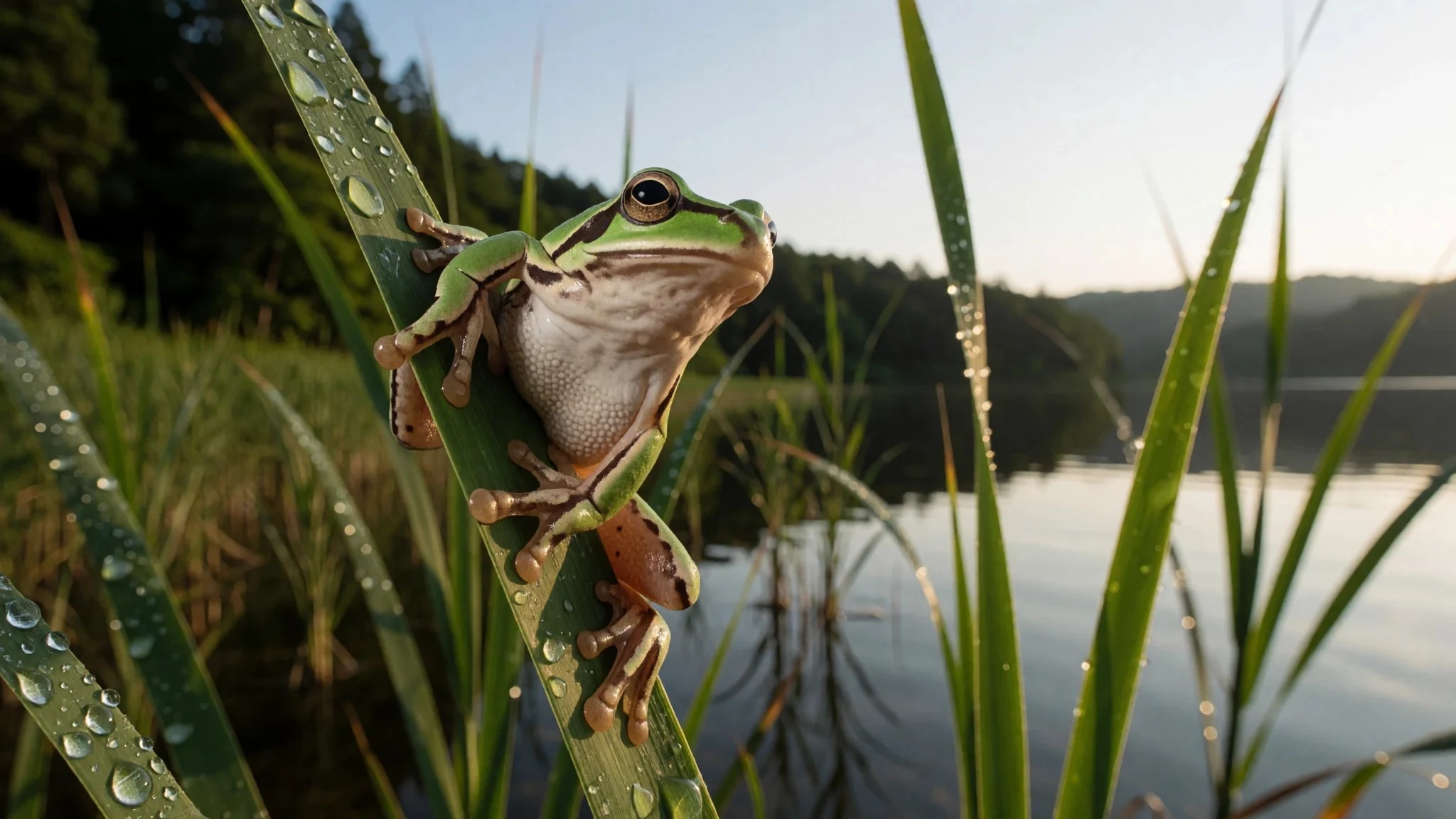
- Japanese tree frog (animal)
The Japanese tree frog is the hardy frog that can survive bitter cold which would defeat most creatures. Exactly where and when to find one in Matsue is not recorded here, but writers such as Lafcadio Hearn heard the town as a place for listening, with frogs joining the ringing of bells and the beat of temple drums. So come with patient ears. Keep a respectful distance, stay quiet, consider going with a local guide, and never touch or feed the frogs.