Matsu
Matsu, Taiwan

Matsu offers stone villages, old military tunnels and glowing summer seas on a quiet frontier archipelago, a long overnight ferry from Taiwan.
The place
Matsu is a scatter of 19 islands and islets in the East China Sea, lying just off the Fujian coast of mainland China. The Republic of China administers the group as Lienchiang County. The islands sit far closer to the Chinese coast than to the island of Taiwan, which is why the regular boat from Keelung is an overnight crossing. Five islands carry most of the settlement: Nangan, Beigan, Dongyin, and the Juguang pair of Dongju and Xiju. Nangan is the hub, with the main harbour, an airport and the largest villages. Beigan is the usual second stop, and Dongyin, further north, feels more remote still. The landscape is granite hills, stone-walled villages built tight against slopes, small fishing harbours and plenty of weather. Sea fog is common and can cancel flights, so a loose itinerary and a spare day work better than a tight schedule. Much of the former military infrastructure, including tunnels, gun positions and lookouts, is now open as sightseeing, and the whole archipelago is a national scenic area with signs in Chinese, English, Japanese and Korean. Crowds are thin for most of the year and build mainly on public holidays and during the glowing-algae season. The islands are small enough that a few days covers the main places on Nangan and Beigan, with Dongyin as a separate trip. Matsu keeps Taiwan time, and the official tourism and government site is https://www.matsu.gov.tw/#.
Its story
Matsu has been settled by fishing families from the Fujian and Zhejiang coasts since the Yuan dynasty, and most islanders trace their roots to Houguan, today's Changle. Net fishing gave the early villages their living and, over several centuries, the base for the settlements seen today. The name itself comes from Mazu, the sea goddess who protects sailors, and her temples remain the focus of village life. Sailors from the Ming voyages of Zheng He are said to have stopped here briefly, and in the early Qing period pirates made the islands so unsafe that residents left for a time. Matsu's twentieth-century story is shaped by lines on a map. Unlike Taiwan and Penghu, the islands were not handed to Japan under the 1895 Treaty of Shimonoseki. In 1912 the British built a lighthouse on Dongyin to guide the shipping that passed along this coast. After the 1911 revolution, the islands came under the Republic of China's Fujian administration. Then, in 1949, the islands remained under the Republic of China's control, though they are considered part of Fujian province by both governments. This creates the unique political status the islands hold today. For decades afterwards the islands were a heavily garrisoned front line, which explains the tunnels, bunkers and coastal restrictions that visitors now walk through.
What to see
- Fuxing Village (Niujiao) — Nangan
Fuxing is a fishing village of stone houses built against a steep hillside above the sea on Nangan. It rewards slow wandering through lanes and stairways rather than a checklist. The small temple has a bright red façade and looks across the water towards Beigan. Go in the morning, when the light is soft and the lanes are quiet.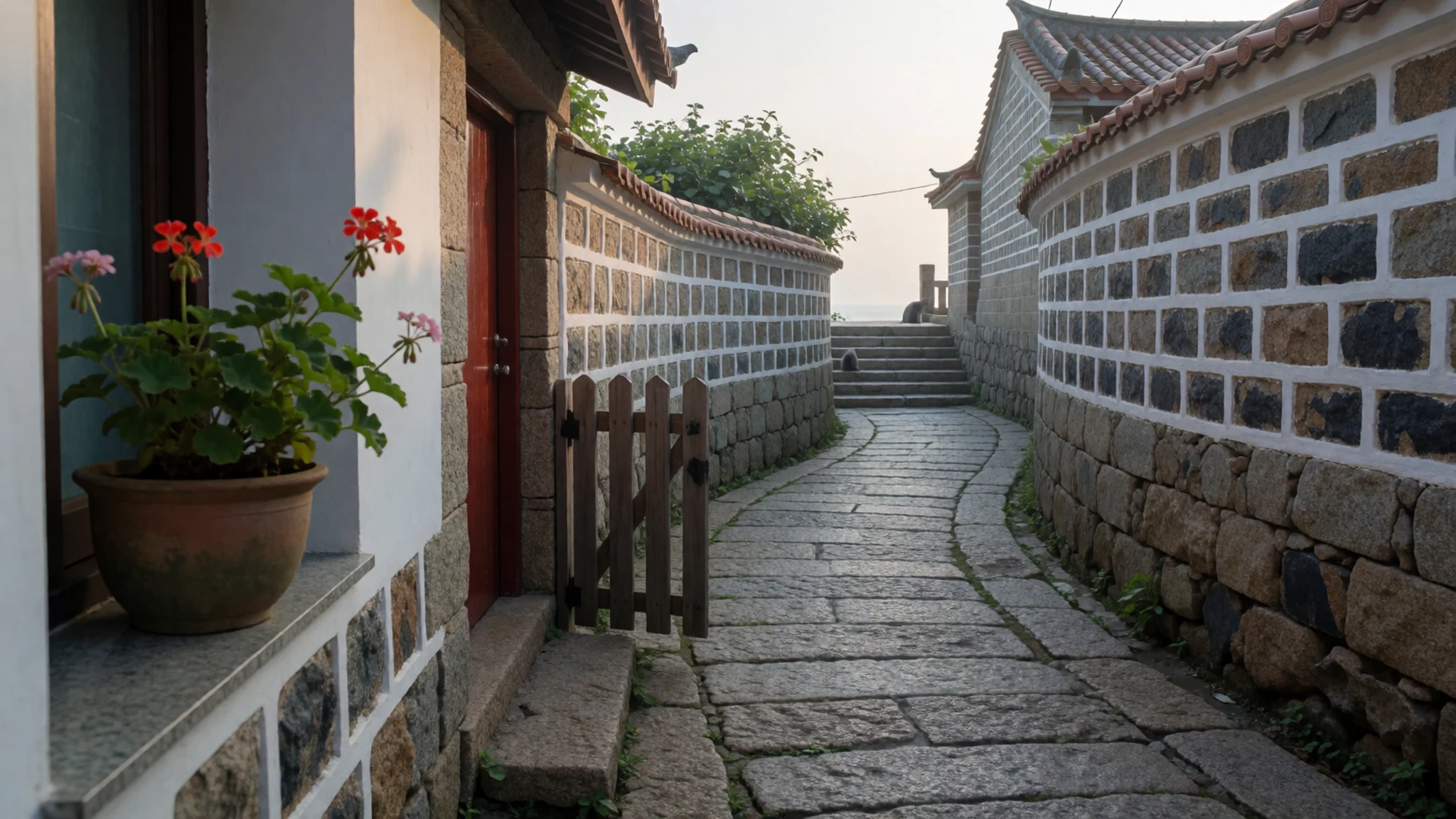
- The Matsu statue and park — Matsu Village, Nangan
Above Matsu Village on Nangan, a large statue of the sea goddess stands near the temple dedicated to her. The road climbs steadily to the park around it. On a clear day the view takes in the sea and the Chinese coast beyond, but fog often hides it, so check the sky before making the trip.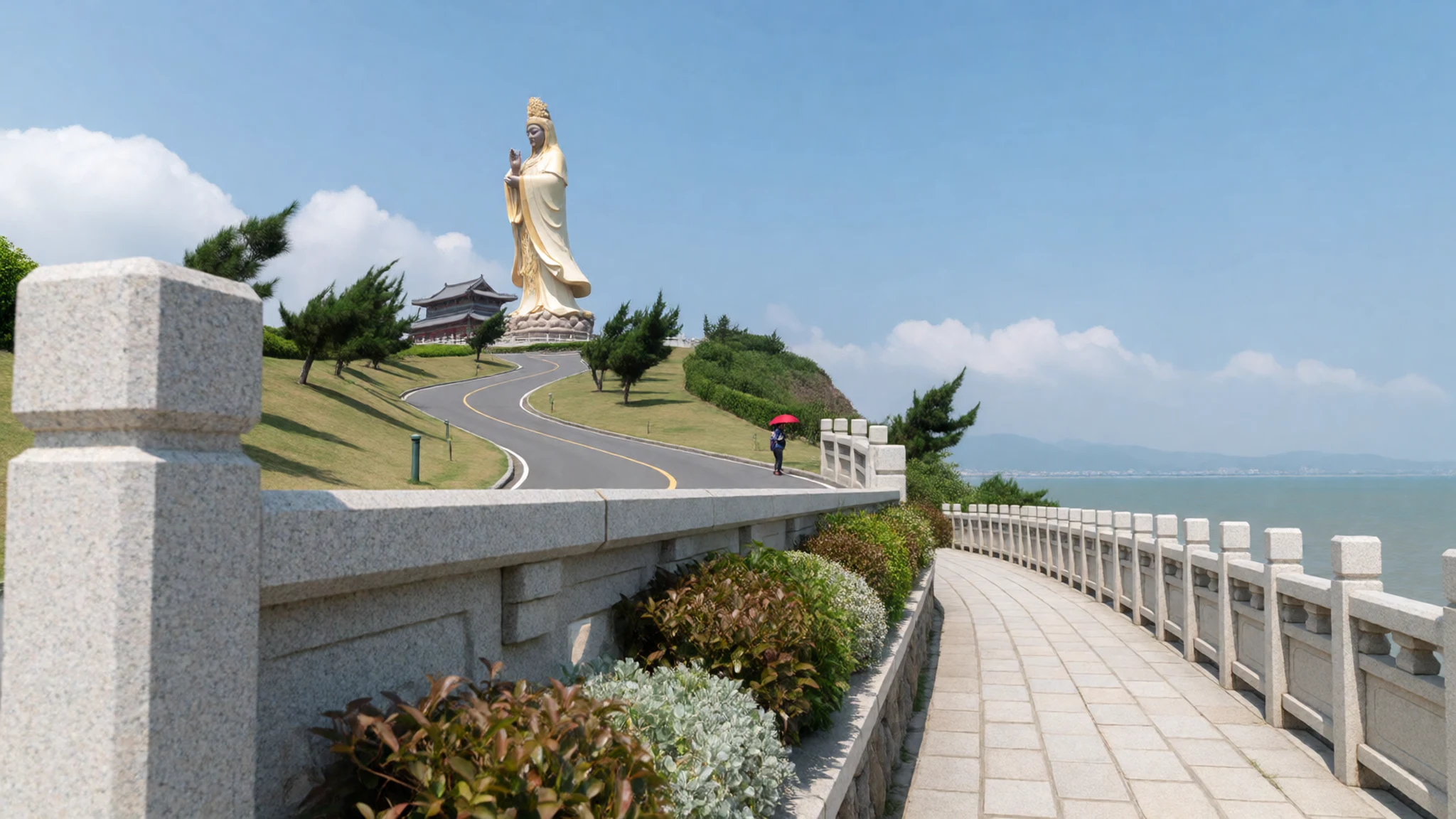
- Dongyin Lighthouse — Dongyin
The lighthouse on Dongyin dates to 1912 and was built by the British to help ships pass this stretch of coast. It stands on a rugged headland at the northern end of the archipelago. Reaching Dongyin takes extra planning, so it suits those with a few days to spare.
- The Blue Tears — Coasts of Nangan and Beigan
The Blue Tears are blooms of tiny glowing algae that turn parts of the shoreline electric blue after dark. They are the islands' biggest draw for visitors from Taiwan. Appearances are unpredictable and depend on season, tide and weather, so treat a sighting as a bonus and stay off restricted coastlines at night.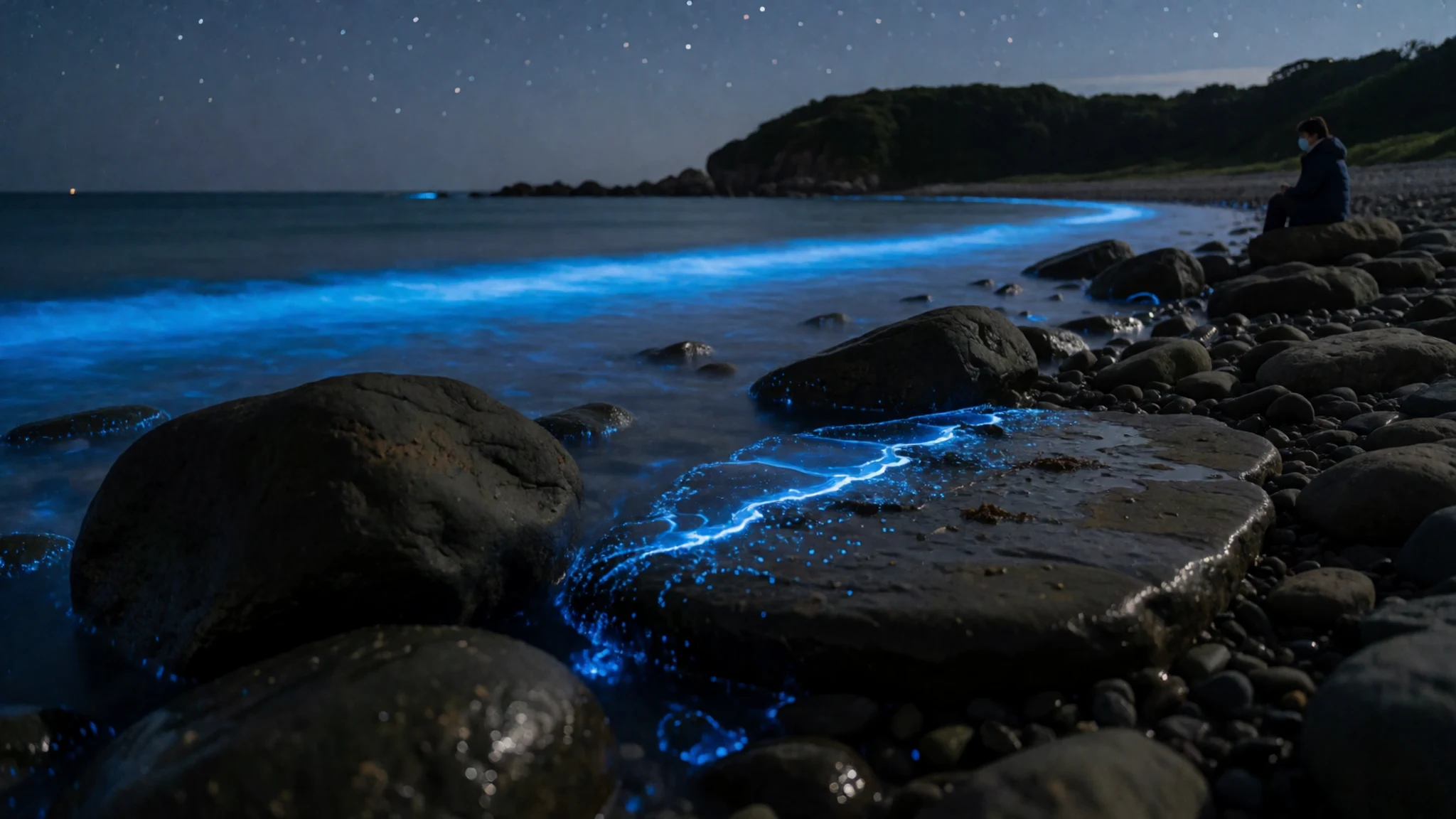
- Seabird islets and wildlife habitat — Off Beigan and Juguang
Several small uninhabited islands off Beigan and Juguang are protected as a wildlife habitat, notably the rocky stacks of Snake Island, which shelter nesting terns. Landing is not the point. Seeing them from a boat or a distant shore is enough, and bird-minded visitors should ask locally about sanctioned trips.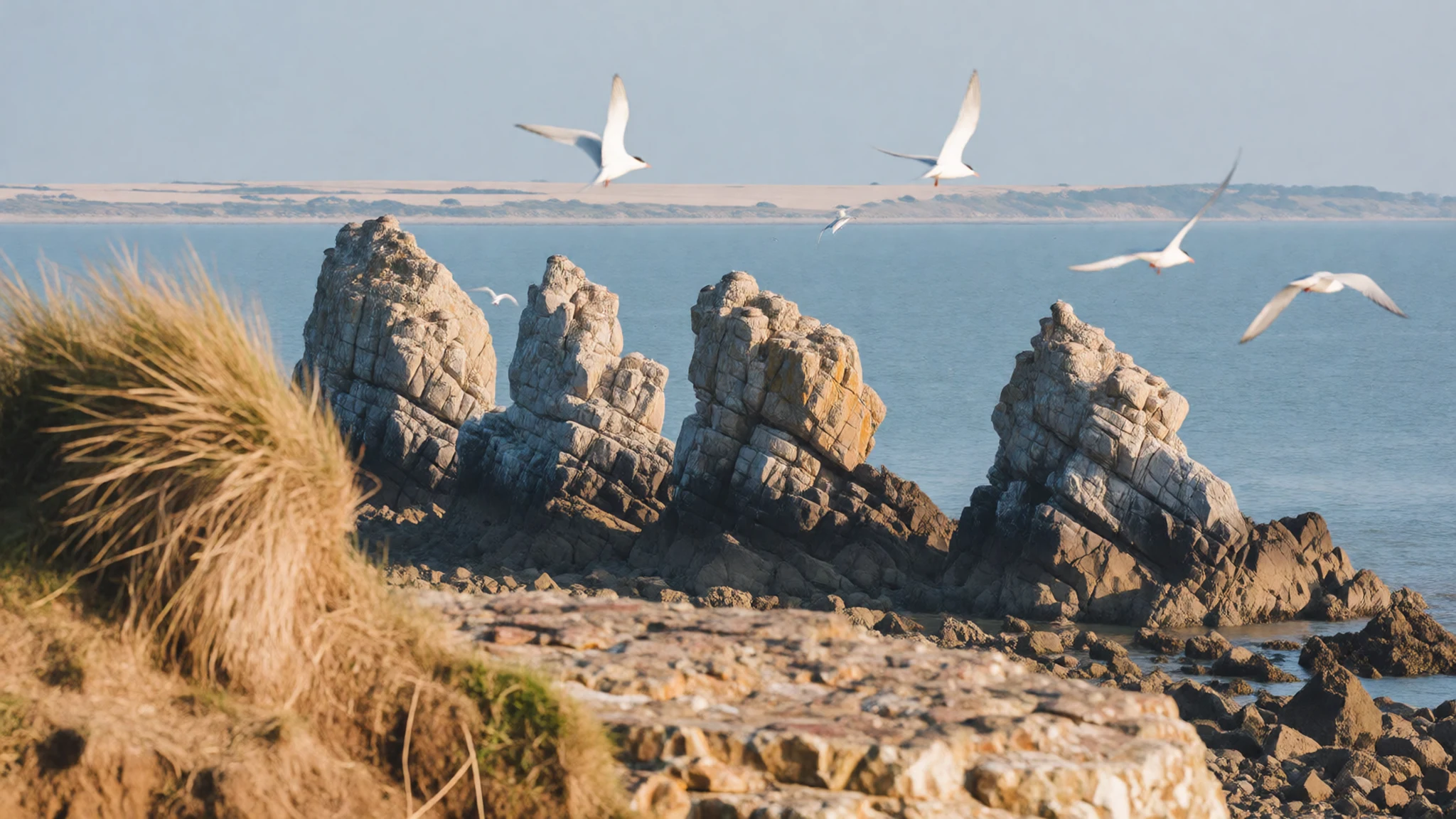
Culture
Matsu's culture grows from fishing villages, the goddess Mazu and decades as a garrison. Temples are the social centre of most villages, and festivals, offerings and processions follow the old fishing calendar. The people of the islands speak a local variety of Fuzhou speech, and Mandarin is used in shops and on signs. Islanders generally prefer to be called Matsunese or Chinese, not Taiwanese, a point worth noticing because the political situation is lived daily here and not just discussed. Military history is part of ordinary scenery. Tunnels, bunkers and lookouts sit beside homes, and many are now open as museums or viewpoints, usually free to enter. Food and drink carry the same mix of sea and soldiering, from seafood and fish noodles to sorghum liquor produced locally. Visitors find life unhurried, with small shops, early nights and a strong sense of community. Weather runs the calendar, because fog and typhoons can cancel boats and flights and everyone plans around them. Locals tend to be relaxed about delays, and travellers are best off doing the same. Stay on paved roads and away from coastal and military areas after dark, as old minefields remain, and refer to the country as the Republic of China, using Taiwan only for the main island.
What to wear
Matsu has no widely recognised island costume of its own, and visitors should not expect to see traditional dress in daily life. The clothing that belongs to the place is practical working gear: oilskins, rubber boots, caps and long sleeves worn by fishing families against salt, wind and sun. On festival days for Mazu, people dress up for temple processions, though what they wear varies by village and occasion, and it is best to ask locals rather than assume. What people wear now is ordinary modern casual clothing, much like on the main island of Taiwan: T-shirts, light jackets, trainers and sun hats. Older residents and former soldiers often dress plainly and practically, and nobody dresses up for dinner. For visitors, the sea air is cooler and windier than the mainland suggests, so bring a windproof layer even in warm months, plus a hat and sunscreen for exposed headlands. Wear shoes with proper grip, because stone lanes and stairways in villages like Fuxing get slippery after fog or rain, and rocky shorelines are worse. Sandals are fine for the harbour but poor for tunnels and hillside paths. At temples there is no strict dress code, but shoulders and knees covered is the polite choice. Swimwear belongs on beaches, not in villages, and a light waterproof is worth packing in every season.
What to eat
- Seafood and Buddha Hand clams — Eateries in Nangan's main village and harbour areas
Fresh seafood is the heart of eating on Matsu, cooked in the northern Fujian style. Buddha Hand clams, which look like small fingers, are a speciality worth ordering. Choose whatever the day's catch is and ask the cook what is best.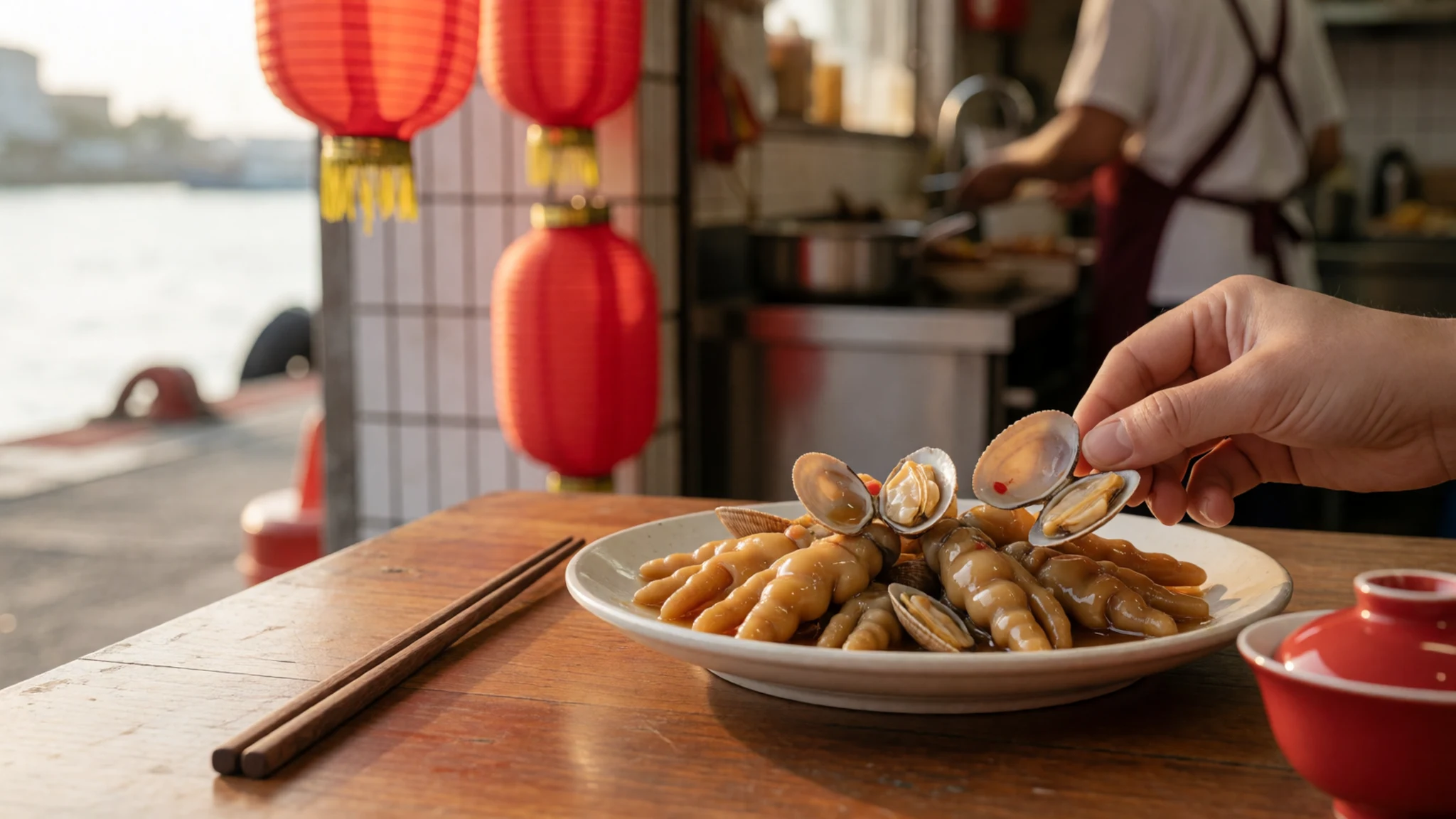
- Fish noodles — Qinbi village, Beigan
Fish meat is ground and worked with potato starch and salt into a dough, then cut into noodles. The result is springy and savoury, served in soup. It is a Matsu speciality, and Beigan is the place to try it.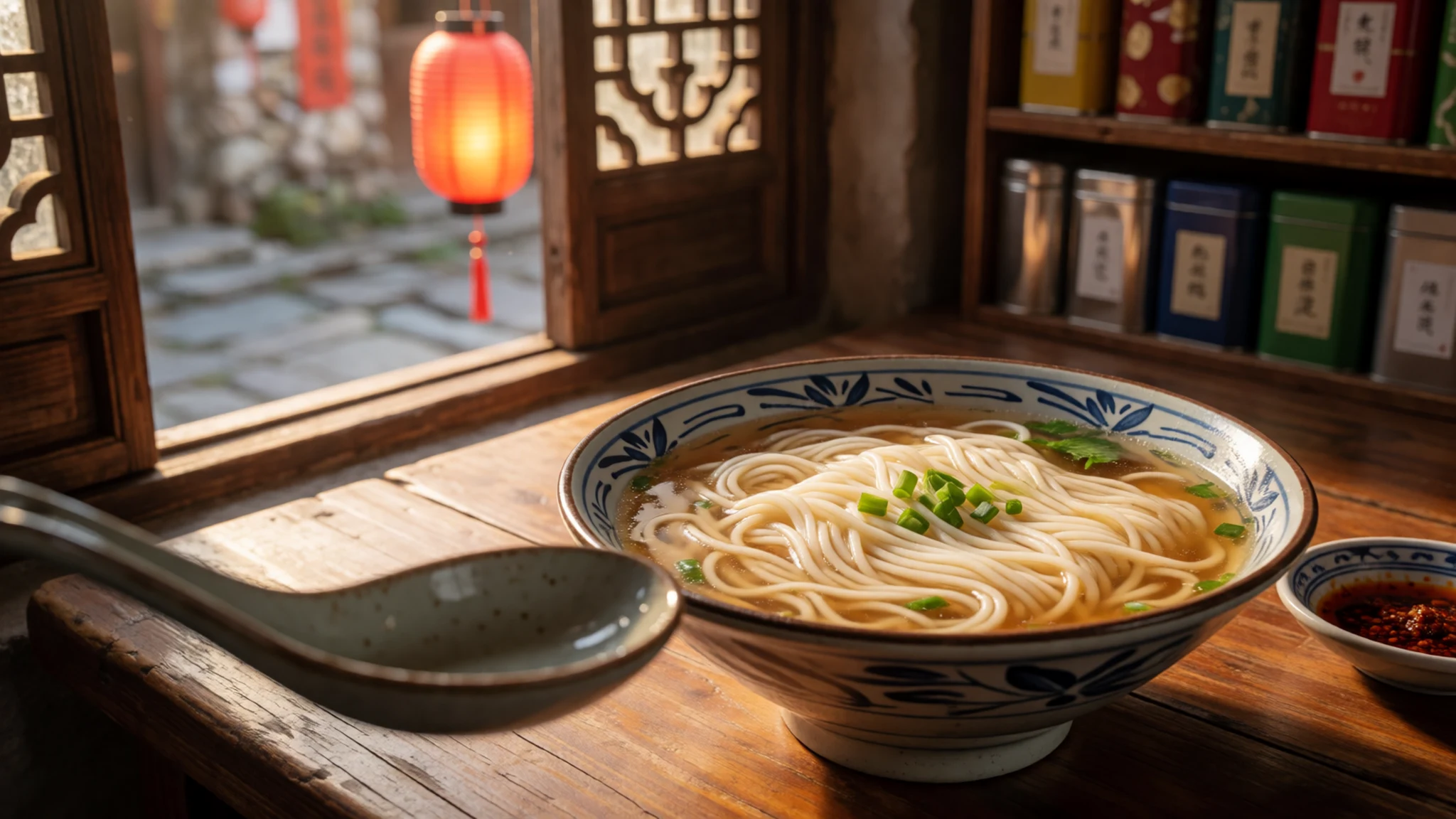
- Jiguang pastry — Bakeries and souvenir shops across the islands
A ring of baked flour, like a small bagel in shape and a little in taste, cooked in charcoal urns. Tradition ties it to a Ming general whose soldiers carried the rings on strings. It travels well, so buy a few for the ferry. - Golden dumplings — Small local eateries and dessert stalls in village centres
A sweet snack of sweet potato dough wrapped around a peanut and sugar filling. It is usually served cold with a sweet pea soup, which makes a pleasant, filling end to a seafood meal. - Kaoliang and laojiou — The distillery on Nangan, and shops across the islands
Matsu distils its own sorghum liquor, kaoliang, as well as an aged rice wine called laojiou. The distillery on Nangan runs a short visit and tastings, so check opening and any charges on the official site. Dongyin has its own kaoliang brand.
Plan it
Best time. April to June is the wettest period and good for the Blue Tears, though sightings are never guaranteed and spring sea fog often disrupts flights and boats. August and September are the hottest months, while October is usually clearer, though typhoon season can still affect plans early in the autumn. Winters are cold, windy and bleak. Build in spare days whatever the month.
How long. 3–4
Getting there. Fly from Taipei to Nangan or Beigan, or take the overnight ferry from Keelung to Dongyin and Nangan. Ferry days and sailing orders change, so check the schedule on the official website before booking anything. Between islands, use local boats, then scooters, taxis or hired cars on land.
Budget. mid
Tips
- Leave spare days at either end, because fog can ground flights and delay boats
- Check ferry days and times on the official site before booking, as some days have no sailings
- Carry cash for small shops, village eateries and local transport
- Stay on paved roads, as old minefields may still exist off them
- Bring a windproof layer and shoes with good grip for wet stone lanes
Etiquette
- Avoid coastal areas and areas near military sites after dark
- Call the country the Republic of China, and use Taiwan only for the main island
- Dress modestly and move quietly in temples
Nearby
Sources
- Wikidata Q609255 (CC0)
- Wikipedia — Matsu Islands (rev 1383932530) (CC BY-SA 4.0)
- Wikivoyage — Matsu (rev 5294942) (CC BY-SA 4.0)
- Fujian quan tu, Chongwen Bookstore (Public domain)
- Nationalist China administrative divisions, US Central Intelligence Agency (Public domain)
- Fuxing Village, Prince Roy (CC BY 3.0)
- Lienchiang County Council Hall, lienyuan lee (CC BY 3.0)
- Tung-yin Tao Lighthouse, Ying-lung LU (CC BY 3.0)
- Matsu WSY 01, Odinwang (CC BY-SA 4.0)
- Matsu (WDPA) Peter Wen 1, 温文佑 (CC BY-SA 4.0)
- Matsu (WDPA) Peter Wen 2, 温文佑 (CC BY-SA 4.0)


