Matheran
Matheran, India
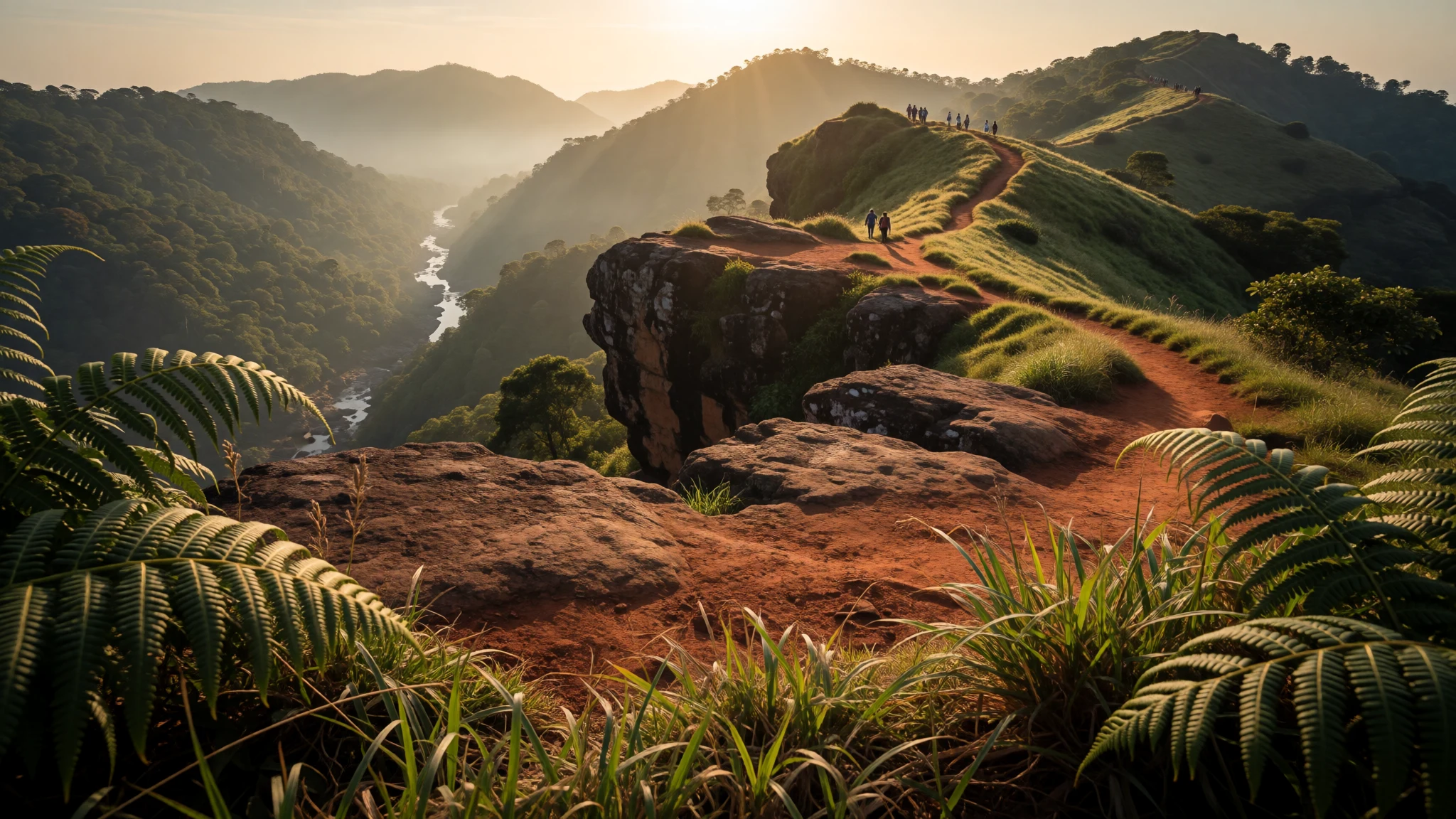
Matheran is a largely car-free hill station in the Western Ghats, where red-earth lanes, cliff-edge viewpoints and a toy train sit close to Mumbai.
The place
Matheran is a small hill station in the Western Ghats of Maharashtra, in Raigad district, standing at about 800 m above sea level. Its name is usually explained in Marathi as "forest on the forehead" of the mountains, and the description fits: a wooded plateau with cliff edges that look out over the plains below. The government has classed the area as eco-sensitive, and the most noticeable result is that motor vehicles are largely kept out. Cars stop at the foot of the climb, and everything after that happens on foot, by horse, by hand-pulled rickshaw or on the narrow-gauge railway. The lanes are made of red laterite earth, which turns to slippery mud in the rains and stains shoes a rusty orange the rest of the year. Along them stand colonial-era bungalows, Parsi holiday houses, guesthouses and a compact market bazaar. Because Mumbai and Pune are both within easy weekend reach, Matheran fills up on Saturdays, Sundays and school holidays, and a quiet midweek day feels like a different town. The altitude gives cooler, drier air than the surrounding lowlands, which is why people first came here to escape summer heat. Even so, April and May days can climb past 35 °C, while June to September brings heavy rain and mist that can erase the views completely. October to February is the gentler stretch, with mostly sunny days and chilly early mornings and evenings.
Its story
Matheran came to colonial notice in May 1850, when Hugh Poyntz Malet, then the district collector of Raigad, identified the wooded plateau as a place worth developing. Lord Elphinstone, Governor of Bombay at the time, laid the groundwork for turning it into a hill station, and the purpose was simple: somewhere cool for officials and families to sit out the summer heat of the plains. The bungalows, lanes and viewpoints seen today grew from that decision. Veer Bhai Kotwal, who joined India's independence struggle, was born here.
The best-known chapter is the railway. Sir Adamjee Peerbhoy built the Matheran Hill Railway in 1907, a narrow-gauge line that winds up through forest from the lowlands. UNESCO officials inspected it, but it did not join the World Heritage list that carries the Darjeeling, Kangra Valley and Nilgiri lines. In recent years its story has been bumpier. Services were largely halted during 2016 and 2017, restarted on 26 January 2018 in a ceremony led by the state's chief minister of the time, then stopped again after a landslide in 2019. When trains returned, they ran as a short shuttle between Aman Lodge and the town station rather than the full climb from the plains. Anyone planning a trip around the toy train should treat its running status as something to confirm locally rather than assume.
What to see
- Panorama Point — Matheran plateau
Panorama Point looks across the hills on one side and towards the Ulhas River on the other, and is the usual choice for sunrise. It sits well away from the market, so many visitors hire a horse or rickshaw rather than walk; agree the fare first. The photographs from here show how differently the view looks in dry haze and in monsoon green.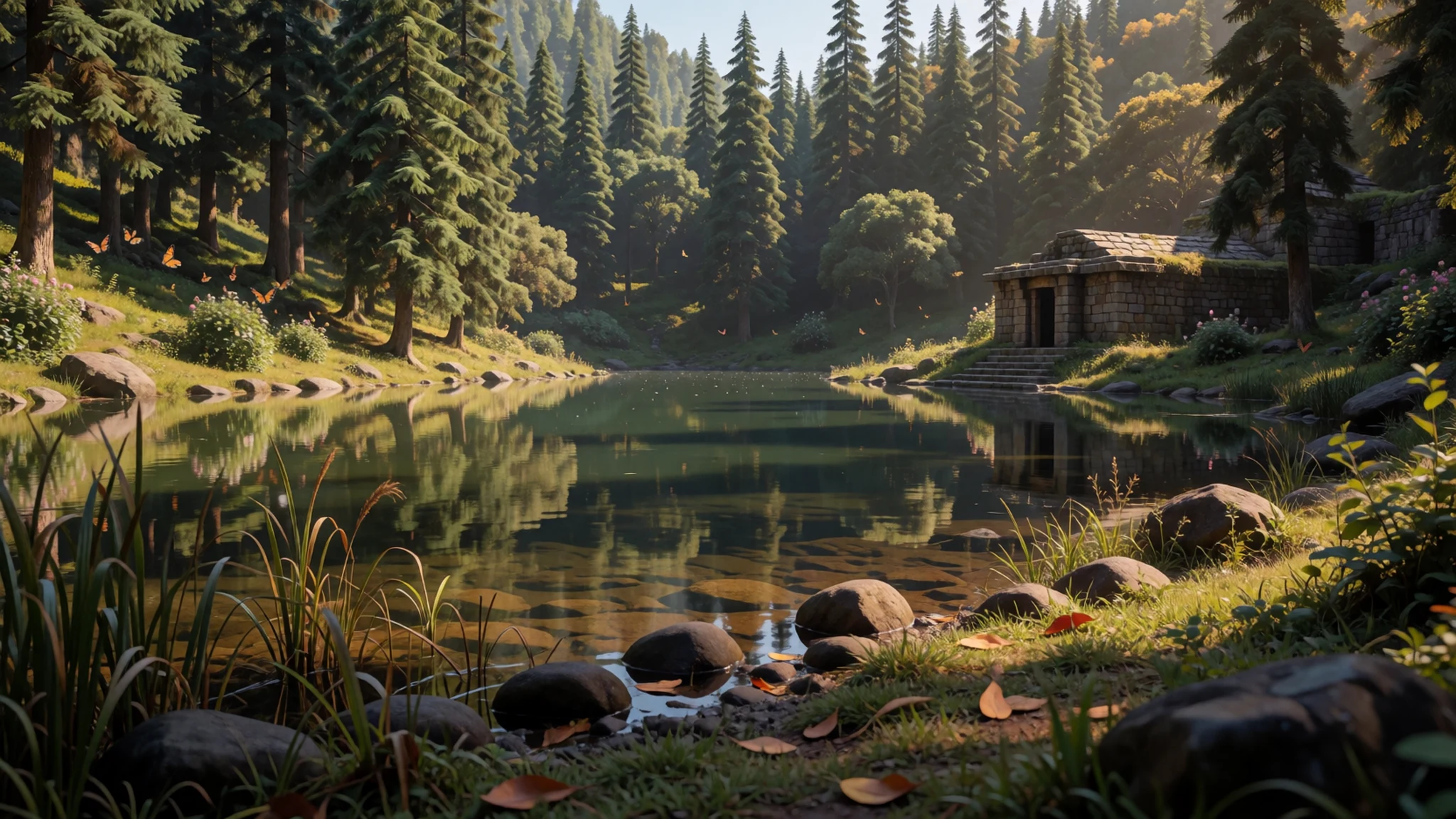
- Lake Charlotte — Near the town centre
Lake Charlotte is a quiet pool ringed by dense evergreen forest, with birdsong and butterflies outside the rains. During and just after the monsoon its overflow becomes a waterfall, which is when it draws most visitors. A small village shrine stands close by. Luisa Point is the viewpoint for watching that runoff fall away in the wet season.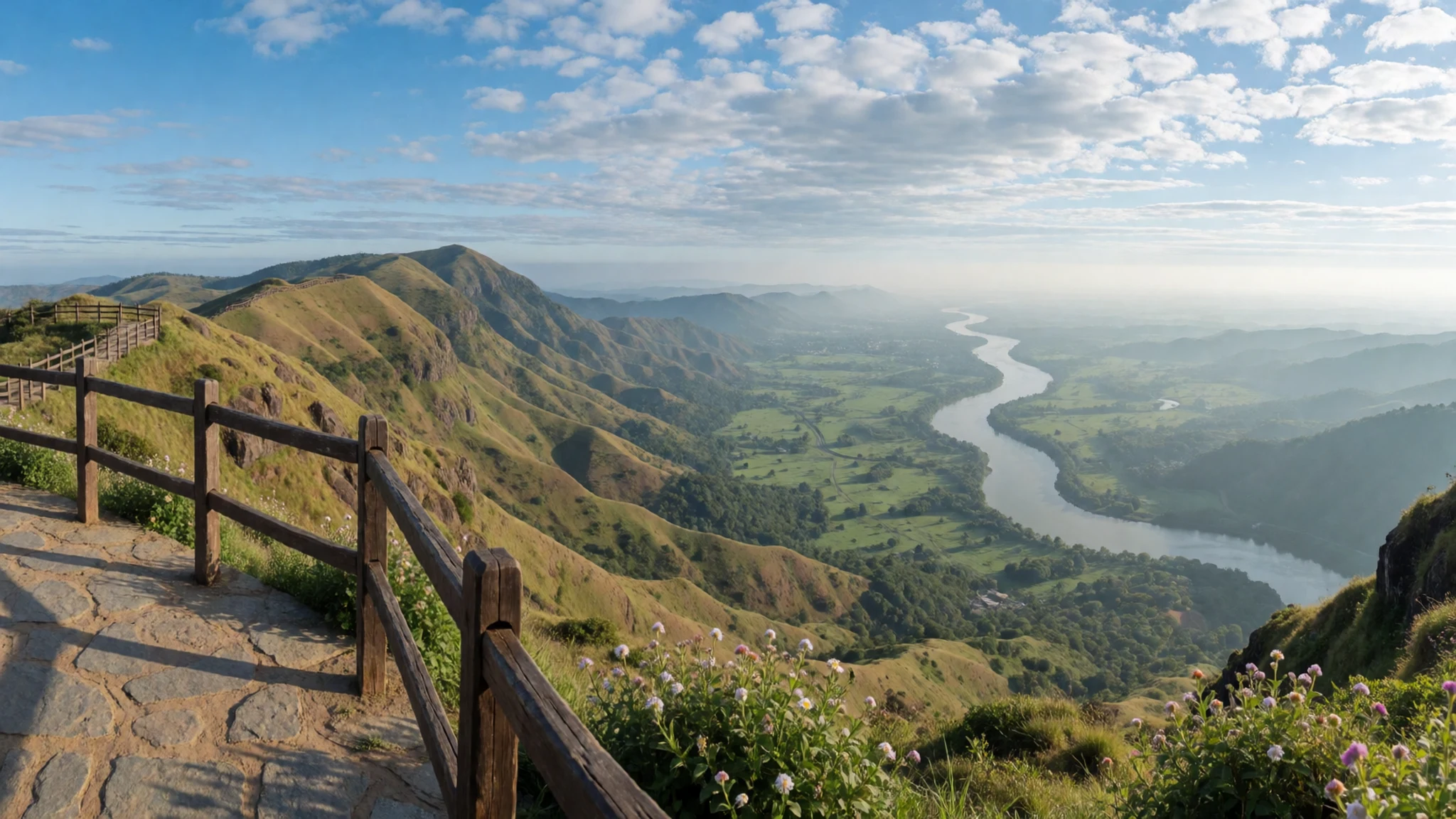
- Echo Point — Matheran plateau
Echo Point does what its name promises. Shout across the valley and the sound returns from the far hillsides, a cheap thrill that children and adults enjoy equally. Like most viewpoints on the plateau, it is better early in the day, before the weekend crowds arrive and the haze builds.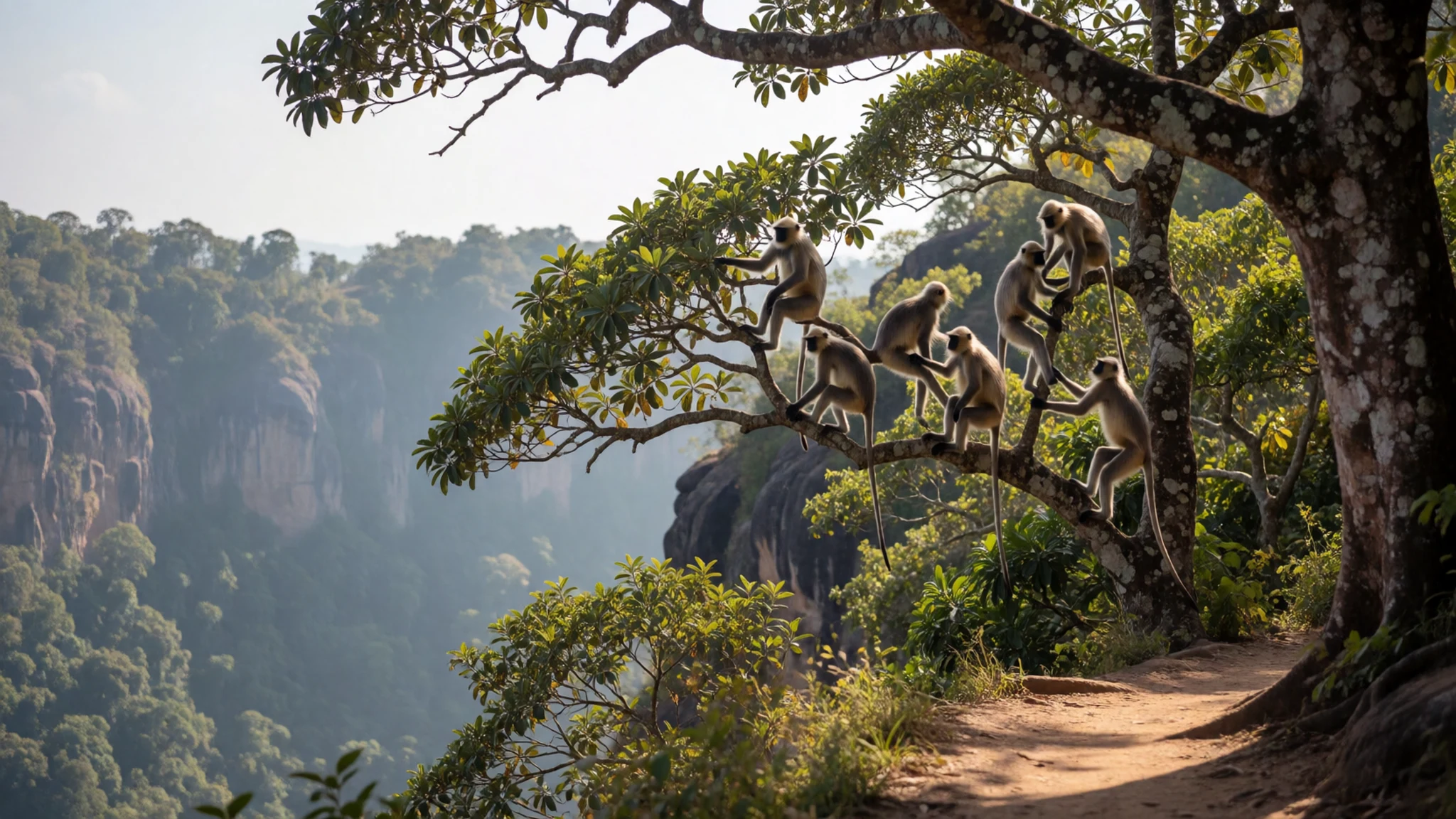
- Matheran Hill Railway — Neral to Matheran
The narrow-gauge toy train is a sight in itself as well as a way up. Small carriages crawl through forest and around tight curves, with views opening between the trees. Services have been interrupted several times in recent years, so check locally before building a day around the ride.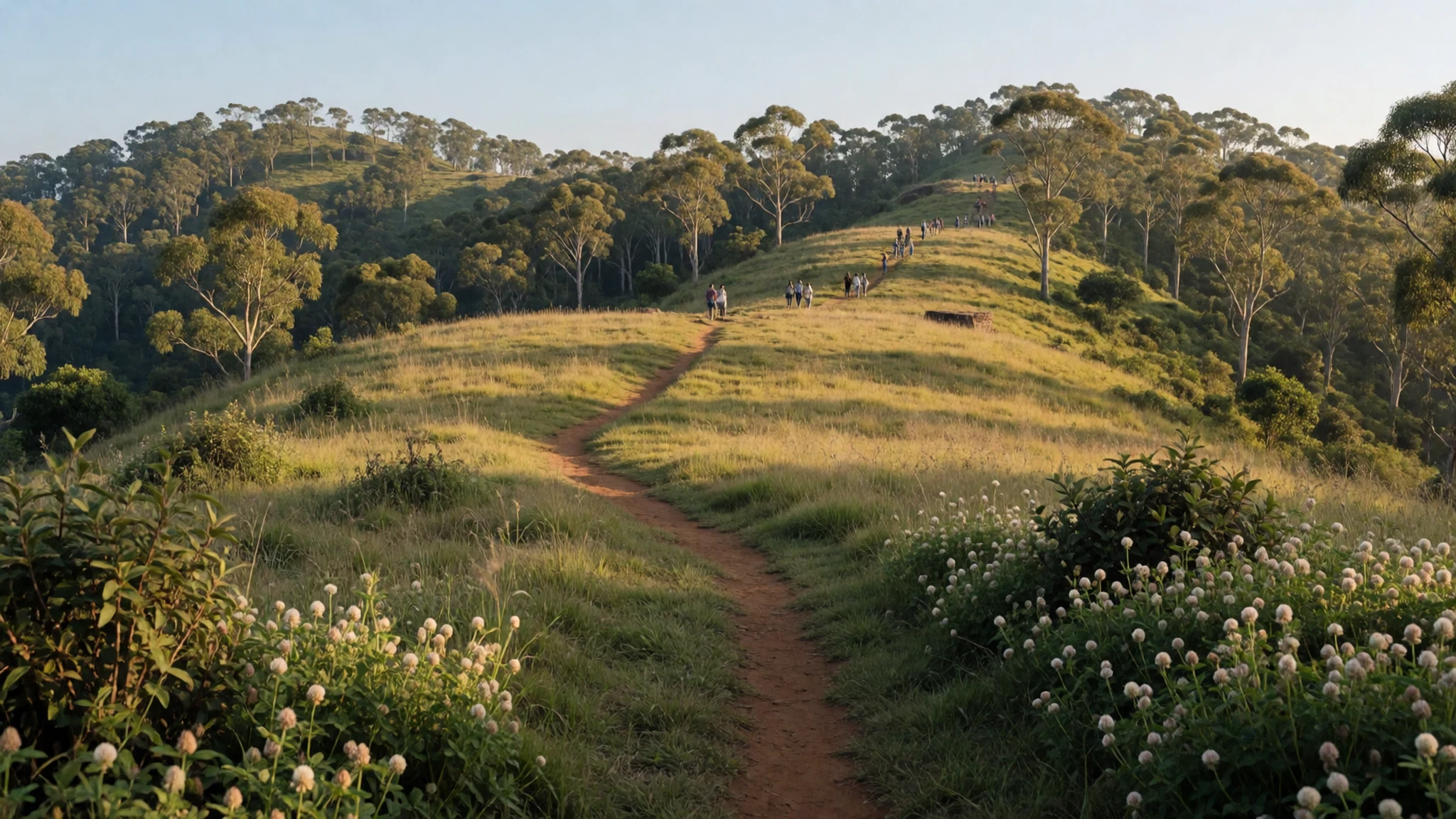
- Monkey Point and the forest wildlife — Forest lanes around the plateau
Monkey Point is named for the troops that gather there, and the forest around the plateau also holds Hanuman langurs and the Malabar giant squirrel, both photographed in Matheran. Watch from a distance. The monkeys are quick and used to visitors carrying snacks, and the squirrels are easier to spot in quiet early light.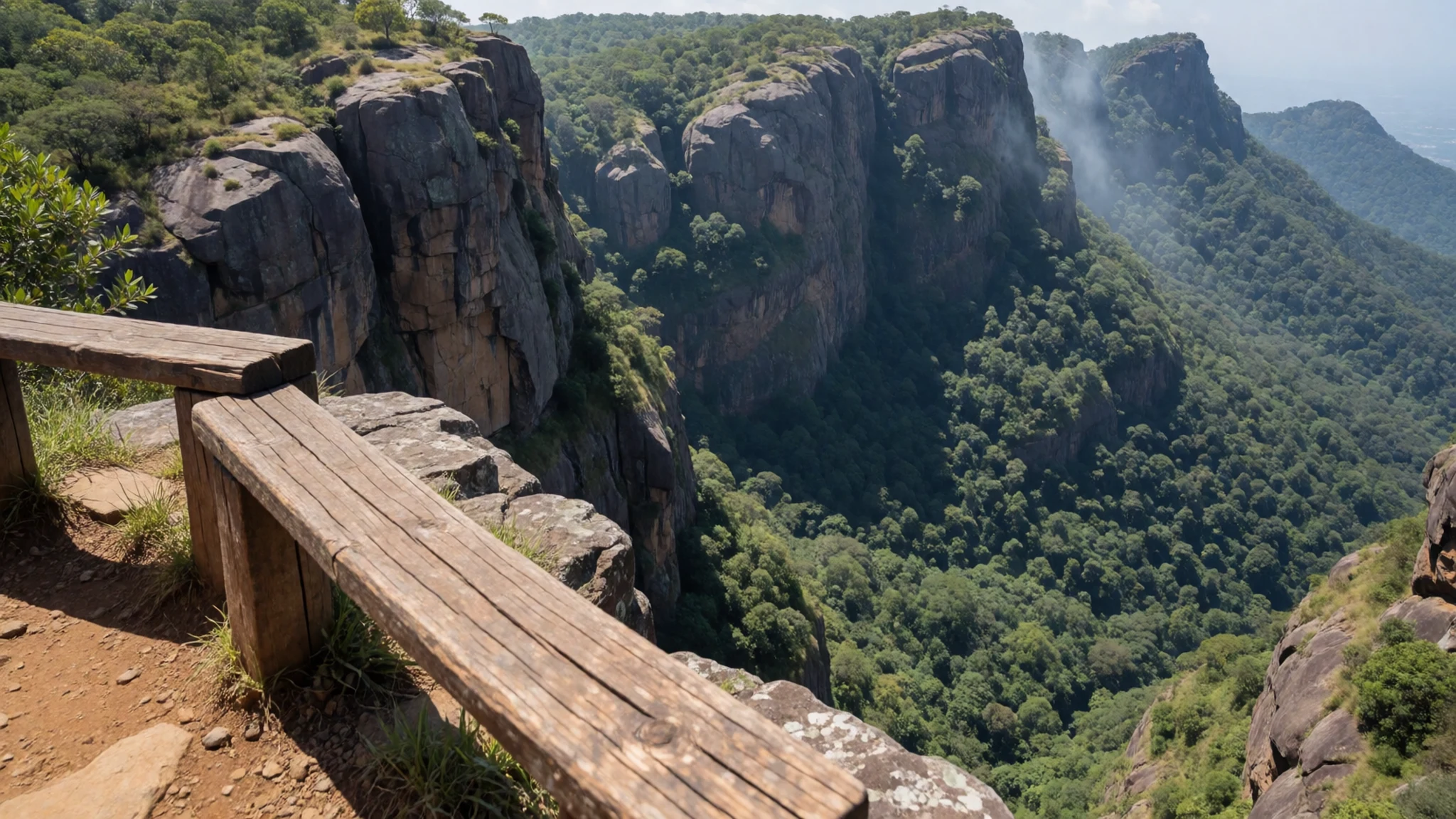
Culture
Matheran has a culture shaped by its long role as a retreat. Its bungalows were built for British officials and for Parsi families from Bombay, and some of that colonial and Parsi architecture still stands along the red lanes. Today most visitors are weekenders from Mumbai and Pune, many of them Gujarati and Maharashtrian families, and the town runs on their holidays. Guesthouses, eateries, souvenir stalls, pony stands and rickshaw pullers all earn their living from the same few busy days. Marathi is the local language, though Hindi is widely understood in the market. The restriction on most motor vehicles shapes daily life: goods arrive by hand, horse or train, and the quiet that results is a large part of the appeal. Because the area is officially eco-sensitive, locals and guides are firm about litter, plastic and picking things in the forest. Temples here are small village shrines rather than grand complexes, and one stands near Lake Charlotte in the local gramadevata tradition. Monkeys gather around the viewpoints and have become practised at snatching snacks and bags, a regular source of both amusement and irritation for residents. Many families who work with horses depend on visitors treating the animals and handlers fairly, so haggling is expected but should stay good-humoured. Keep food out of sight, never feed the monkeys, and carry your litter back down with you.
What to wear
Traditional dress in Matheran is Maharashtrian and Parsi rather than something specific to the hill. Maharashtrian women wear the nauvari, a nine-yard sari draped between the legs, in cotton or Paithani silk with a woven border, for festivals and weddings. Men wear a dhoti or kurta with a pheta, a folded turban, on ceremonial days. Parsi women have long worn silk saris with gara embroidery for weddings and the Parsi new year.
Everyday dress in town is plain and practical: jeans, T-shirts, cotton kurtas and salwar kameez among visiting families, light jackets and fleeces in the cooler months, and cheap plastic ponchos in the monsoon. Horse handlers and porters wear working clothes with sturdy sandals or rubber boots.
For visitors, comfort comes first. The red laterite lanes are dusty, then slippery in rain, so wear closed shoes or sandals with a firm grip, and expect white soles to turn orange. Bring a light layer for chilly mornings from October to February, breathable cotton for the hot months, and a waterproof with a cover for your bag in the rains. Shorts are normal at viewpoints, but covered shoulders and knees are more respectful at a village shrine or in the bazaar lanes. A hat and sunscreen help on the exposed points.
What to eat
- Gujarati thali — Vegetarian eateries around the main market
A Gujarati thali is a steel plate of dal, vegetables, roti, rice and sweets, often with refills offered. Several eateries near the main market are known for it, and some serve a lighter, home-style version that is less spicy. It makes a solid lunch after a morning of walking.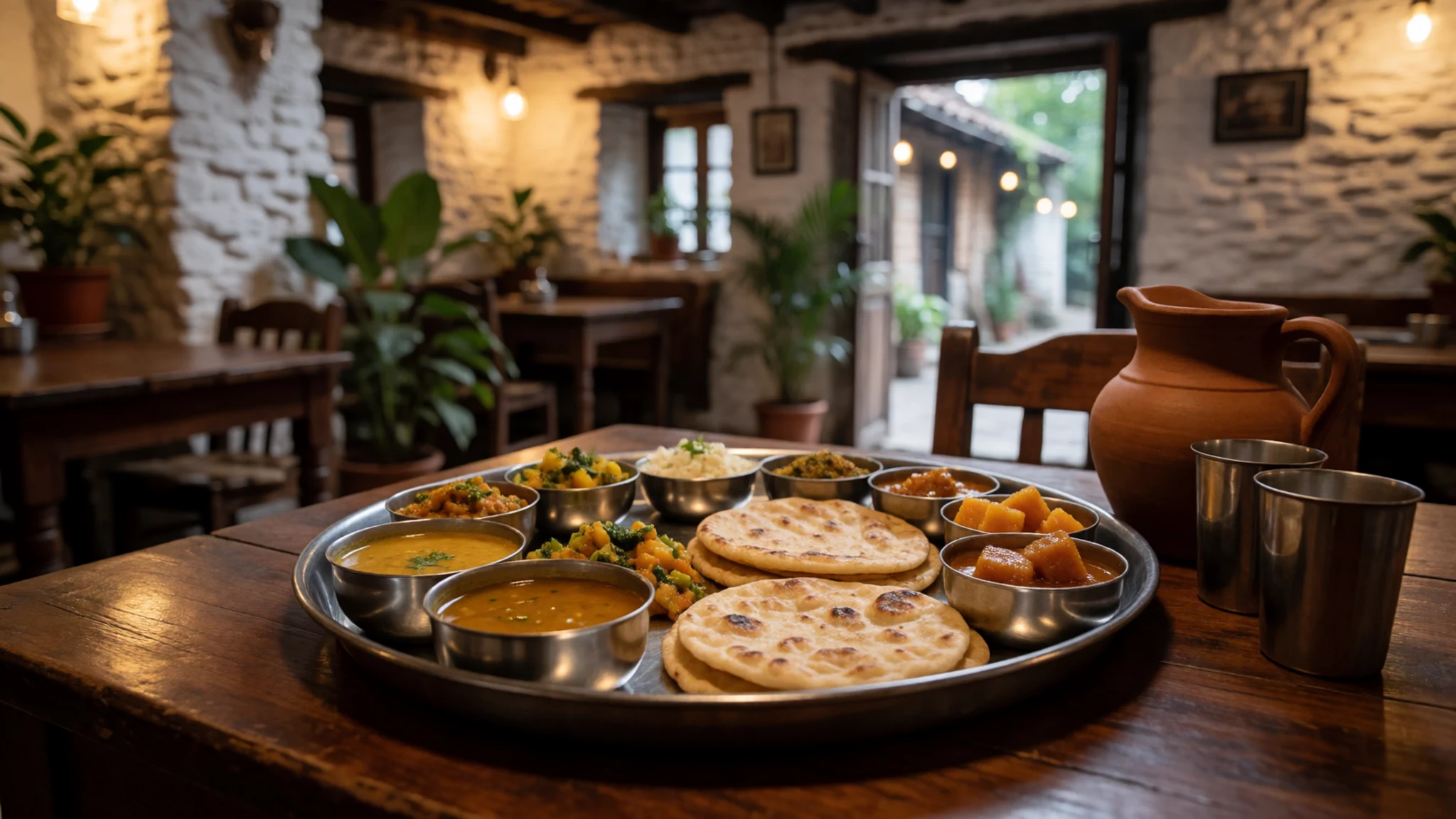
- Vada pav — Roadside stalls near the viewpoints and market lane
Vada pav is the Maharashtrian potato fritter tucked into a soft bread roll with chutney, sometimes called an Indian burger. Stalls sell it hot near the viewpoints and along the market lane. It is cheap, easy to eat on the move and especially welcome on a damp, misty afternoon.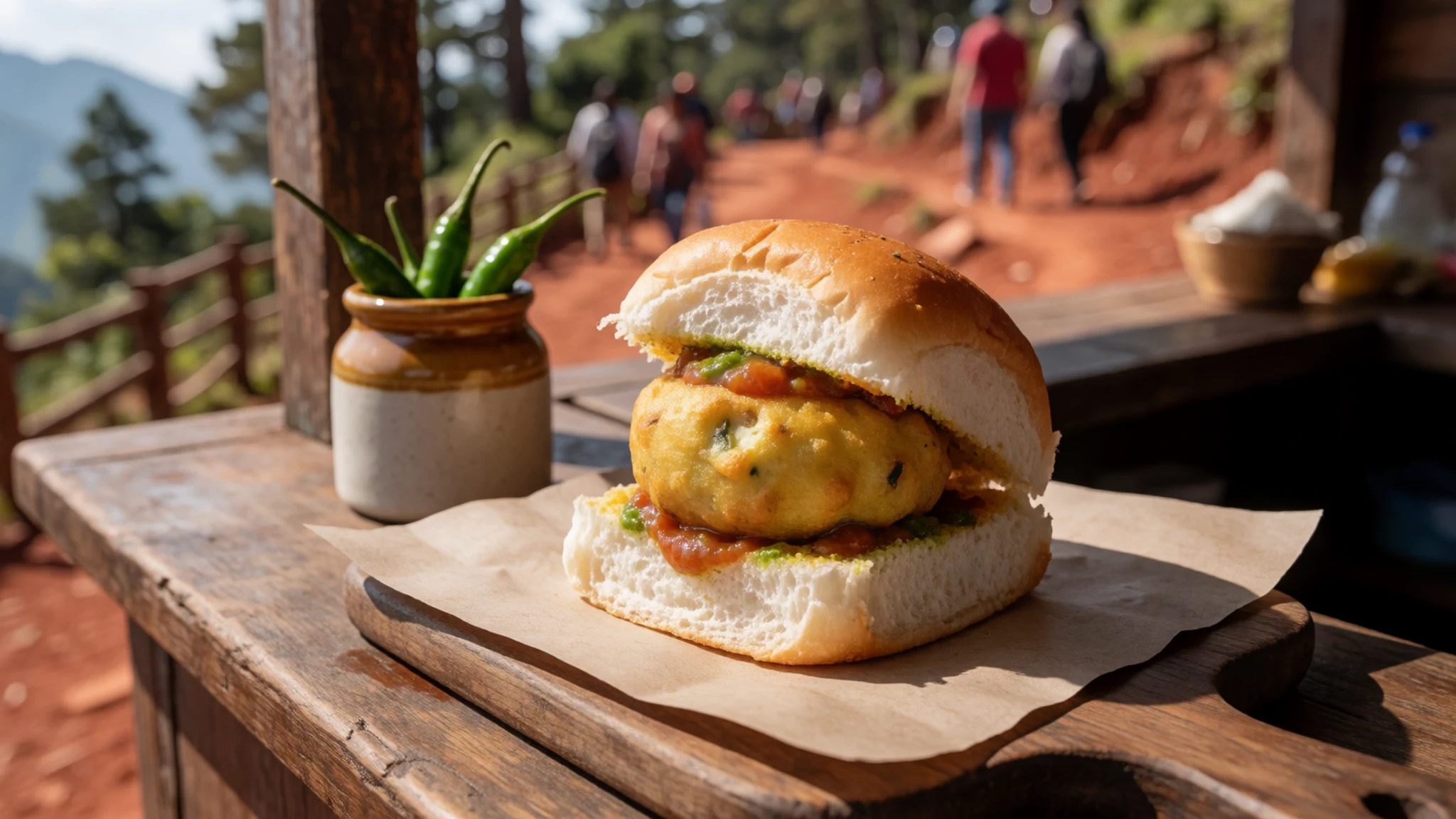
- Chikki — Sweet and snack shops in the main market
Chikki is a brittle of nuts or jaggery set into slabs and sold in many flavours. The shops in the main market stack it in boxes, and it travels well, so many visitors buy some to take home. Ask to taste a piece before choosing a flavour. - Kebabs and biryani — Non-vegetarian eateries near the market and station
Meat eaters can find kebabs, biryani and non-vegetarian thalis at a few eateries around the market and opposite the railway station. Standards vary from tidy to very basic, so choose a place that is busy and looks clean, and ask whether alcohol is served if that matters.
Plan it
Best time. October to February is the most comfortable: the monsoon has gone, days are mostly sunny and mornings and evenings are chilly. March to May is hot, with daytime temperatures that can pass 35 °C. June to September brings heavy rain, which fills the waterfalls but can cut views and sometimes stops the toy train.
How long. 1–2
Getting there. The nearest airport is Mumbai's, and the usual railhead is Neral Junction, reached by suburban services from Mumbai or by changing at Karjat when coming from Pune. From Neral the toy train takes about 2 hours up to Matheran, and shared taxis climb to the vehicle checkpoint where the last stretch is on foot, by horse or by rickshaw. The train does not run during maintenance or monsoon hazards, so confirm at Neral or on IRCTC.
Budget. mid
Tips
- Go midweek if you can; weekends and holidays crowd the main viewpoints, especially at sunset.
- Reach Panorama Point early for sunrise, and wear shoes with grip for the red laterite lanes.
- Book toy train tickets through IRCTC where possible, arrive early, and have a taxi plan in case the train is not running.
- Agree horse and rickshaw fares before setting off, and carry some cash because small stalls and handlers may not take cards.
- Carry drinking water and keep snacks zipped away from the monkeys.
Etiquette
- Do not feed the monkeys or leave food visible in open bags.
- Take litter back down; the area is eco-sensitive and plastic is a problem.
- Treat horses and their handlers fairly, and cover shoulders and knees at village shrines.
Nearby
Sources
- Wikidata Q463526 (CC0)
- Wikipedia: Matheran (rev 1384496408) (CC BY-SA 4.0)
- Wikivoyage: Matheran (rev 5385248) (CC BY-SA 4.0)
- Matheran in Summer, Udaykumar PR (CC BY 3.0)
- Matheran with a crown of clouds, Le Priyavrat (CC BY-SA 4.0)
- Matheran, 1874, British Library (Public domain)
- Hanuman langur at Matheran, Dhruva Pune (CC BY-SA 4.0)
- Malabar Giant Squirrel at Matheran, Dhruva Punde (CC BY-SA 4.0)
- Panorama Point, dry season, Arne Hückelheim (CC BY 3.0)
- Panorama Point, monsoon, Arne Hückelheim (CC BY 3.0)
- Matheran Mini Train, Udaykumar PR (CC BY 3.0)


Wildlife
- Hanuman langur (animal)
The Hanuman langur is a gray, long-tailed monkey that lives in family troops and loves to play. In Matheran, look for it where the trees grow thickest, as the leafy cover is where its troops shelter. No particular hour or season is promised, so simply stay alert on your walks. Watch from a respectful distance, keep your voice low, and ask a local guide to help you find a troop. Never feed it. - Malabar giant squirrel (animal)
The Malabar giant squirrel is a big, many-coloured squirrel that spends its life up in the trees. In Matheran, you may hear a rustle overhead as one moves through the branches of the thick woodland. It is active by day and eats mostly plants, so daylight walks are your best chance. Stand quietly beneath the canopy, keep a good distance, and let a guide point it out. Never offer it food.