Maria Island
Maria Island, Australia
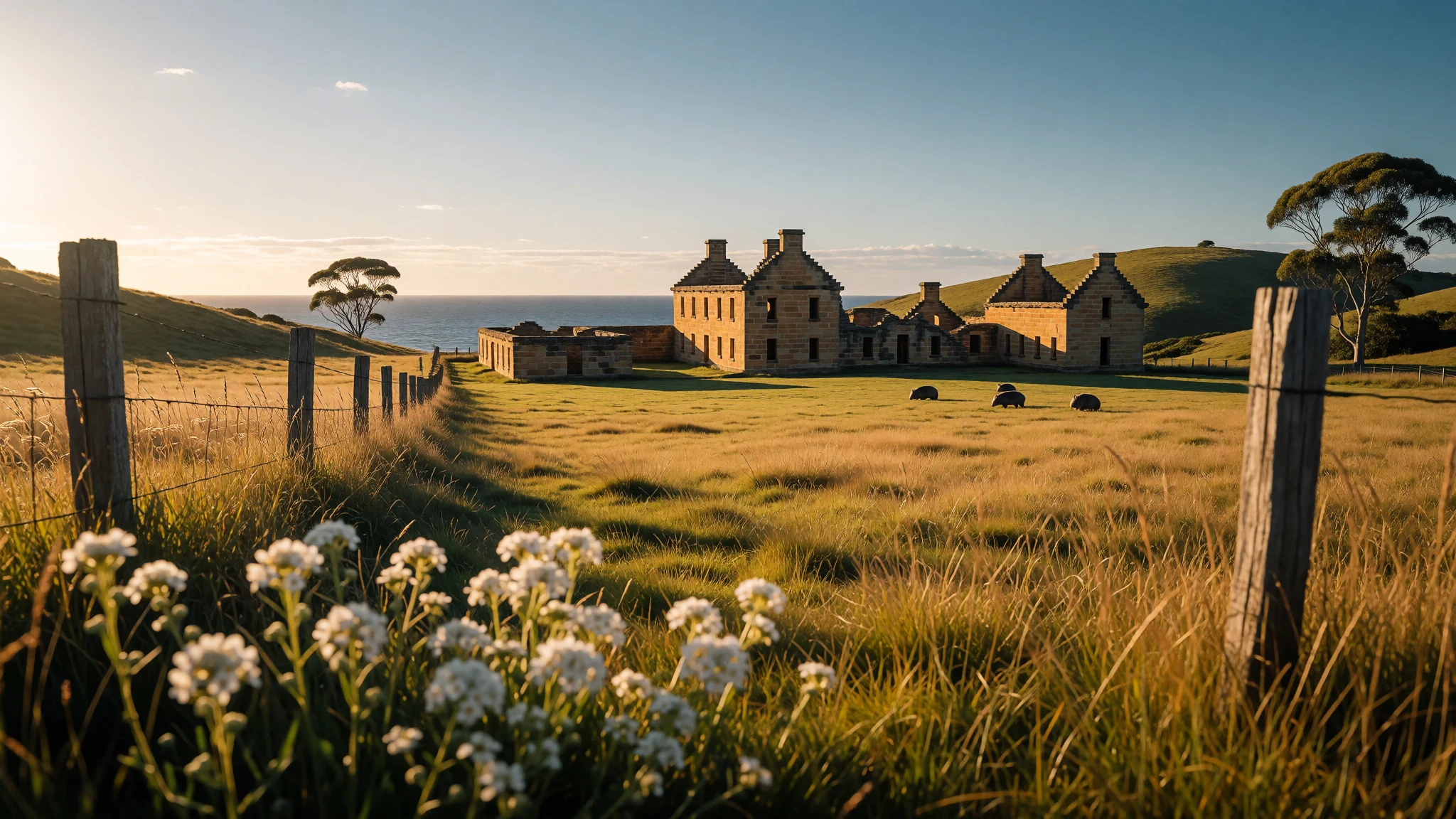
Maria Island is a car-free Tasmanian national park where convict ruins, quiet beaches and grazing wildlife can be covered on foot in a day or two.
The place
Maria Island sits in the Tasman Sea just off Tasmania's east coast, separated from the mainland by a channel called the Mercury Passage. The whole island is a national park, with a protected marine area off its northwest shore, and nobody lives there permanently apart from a few rangers. Its shape is a figure-eight: a larger northern lobe and a smaller southern one, tied together by McRaes Isthmus, a long sandy tombolo. Both halves are rugged. Mount Maria, in the north, reaches 711 metres, and the walk to its summit is the island's main climb.
Visitors cross by ferry from Triabunna, a small port on Spring Bay, with Orford, at the mouth of the Prosser River, a short way south. Once ashore, the only settlement is Darlington, an old convict station near the northern tip. Cars are not part of the picture, so everything is done on foot or by bicycle.
The island rewards slow movement: beaches, banded sandstone cliffs, open grassland where wildlife grazes towards dusk, and old brick-and-sandstone buildings that now serve as a visitor centre and lodgings. It works as a long day trip, but an overnight stay is better, because the ferry crowds leave in the afternoon and the place quiets down. Weather comes off the sea quickly, shade is scarce on the open stretches, and food and drinking water need planning before the crossing.
Its story
Maria Island was visited long before Europeans arrived. People of the Tyreddeme band, part of the Oyster Bay nation, crossed to it regularly, and traces of their presence are still found around the bays on either side of the isthmus. The palawa kani name for the island is wukaluwikiwayna. In 1802 a French expedition under Nicolas Baudin met Aboriginal people here, and whalers and seal hunters followed in the early nineteenth century.
The British turned the island into a penal station twice. The first settlement ran from 1825 to 1832 and held convicts whose offences were judged less serious than those sent to the harsh western harbour at Macquarie Harbour. Prisoners lived at first in huts and tents, then built permanent quarters from island-made brick and sandstone cut from the cliffs. They also worked at weaving, shoemaking, tanning, timber and pottery. The Commissariat Store and the penitentiary survive from this phase.
A second, probation-station era lasted from 1842 to 1850. Among its inmates was the Irish nationalist William Smith O'Brien, exiled after the Young Irelander Rebellion of 1848, who was later moved to Port Arthur and then elsewhere in Tasmania.
After the convicts came industry and farming, each leaving its own marks on the landscape, until the island became a national park. Darlington is now one of eleven sites in the Australian Convict Sites World Heritage listing, with thirteen convict-era buildings and structures still standing.
What to see
- Darlington and the Commissariat Store — Northern Maria Island
Darlington is the island's only settlement and the natural first stop. The Commissariat Store, built in 1825, now works as the park's reception and visitor centre. Walking the surrounding lanes shows how a convict station was laid out, and rangers can explain which buildings are original.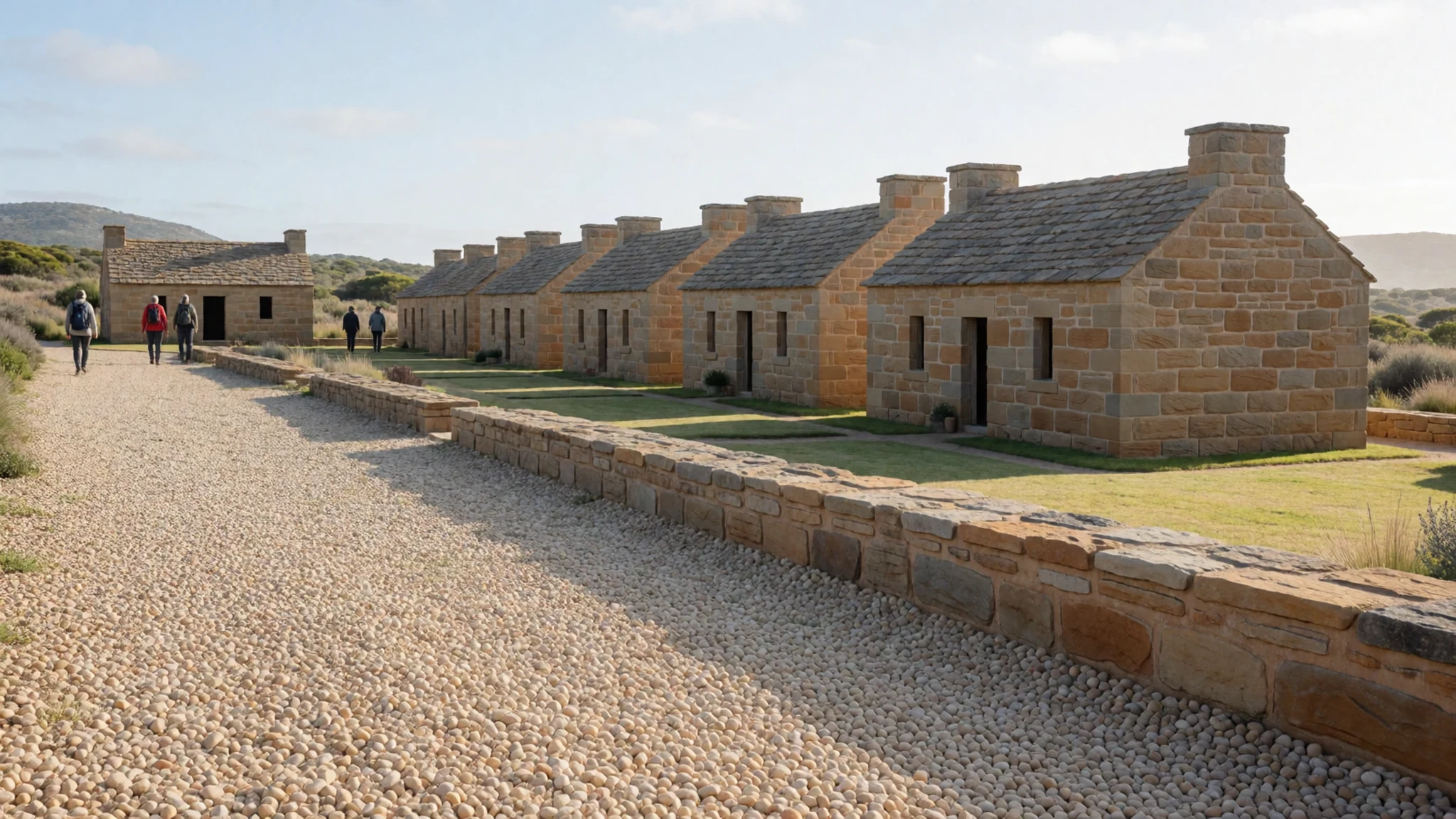
- The convict penitentiary — Darlington
Completed in 1828, the penitentiary once held prisoners and now offers bunk accommodation to visitors, a neat reversal. Even for day visitors, the brick exterior and the surrounding grounds give a clear sense of scale and of how basic life here was.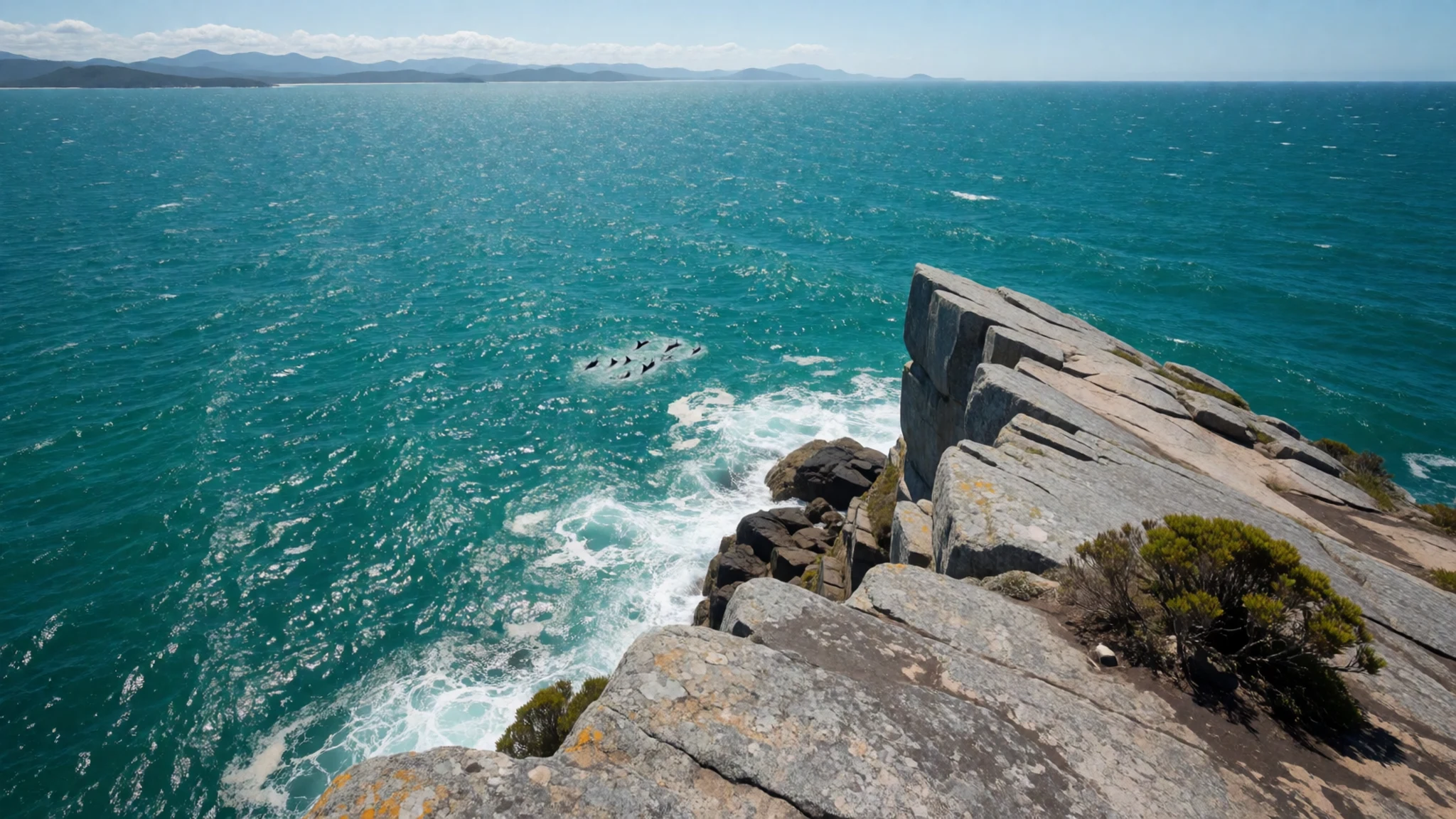
- Painted Cliffs — Northern coast near Darlington
A short walk along the shore from Darlington leads to sandstone cliffs patterned with rust-coloured bands, sculpted by water and salt. The best views come when the tide is low enough to walk beneath them, so check tide times before setting out and leave time to return.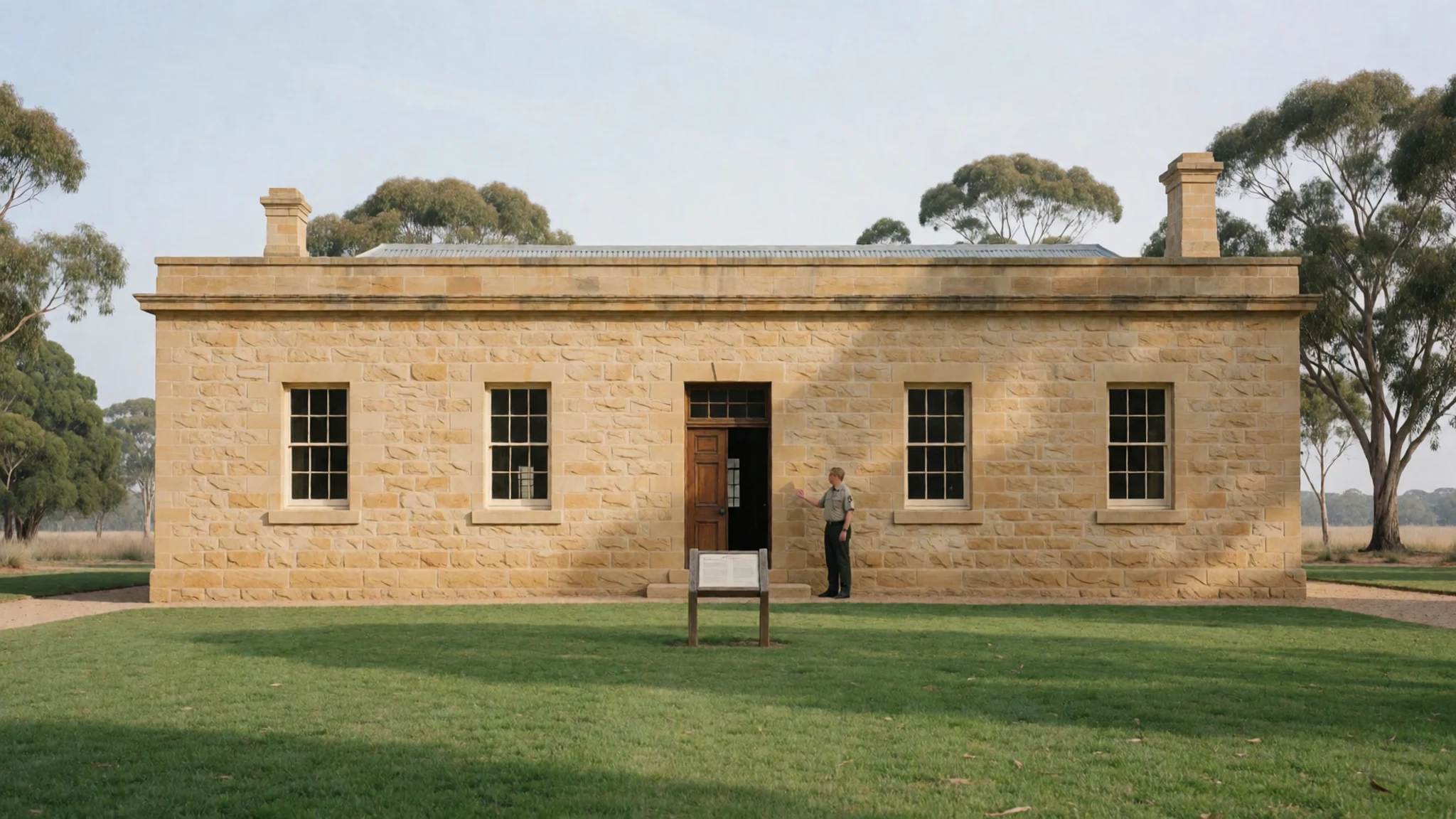
- McRaes Isthmus — Centre of the island
This long sandy strip joins the two halves of the island and is the physical link between the figure-eight's loops. Walking or cycling across gives sea views on both sides, plus a chance to see wildlife grazing on the grass behind the dunes, especially around dawn and dusk.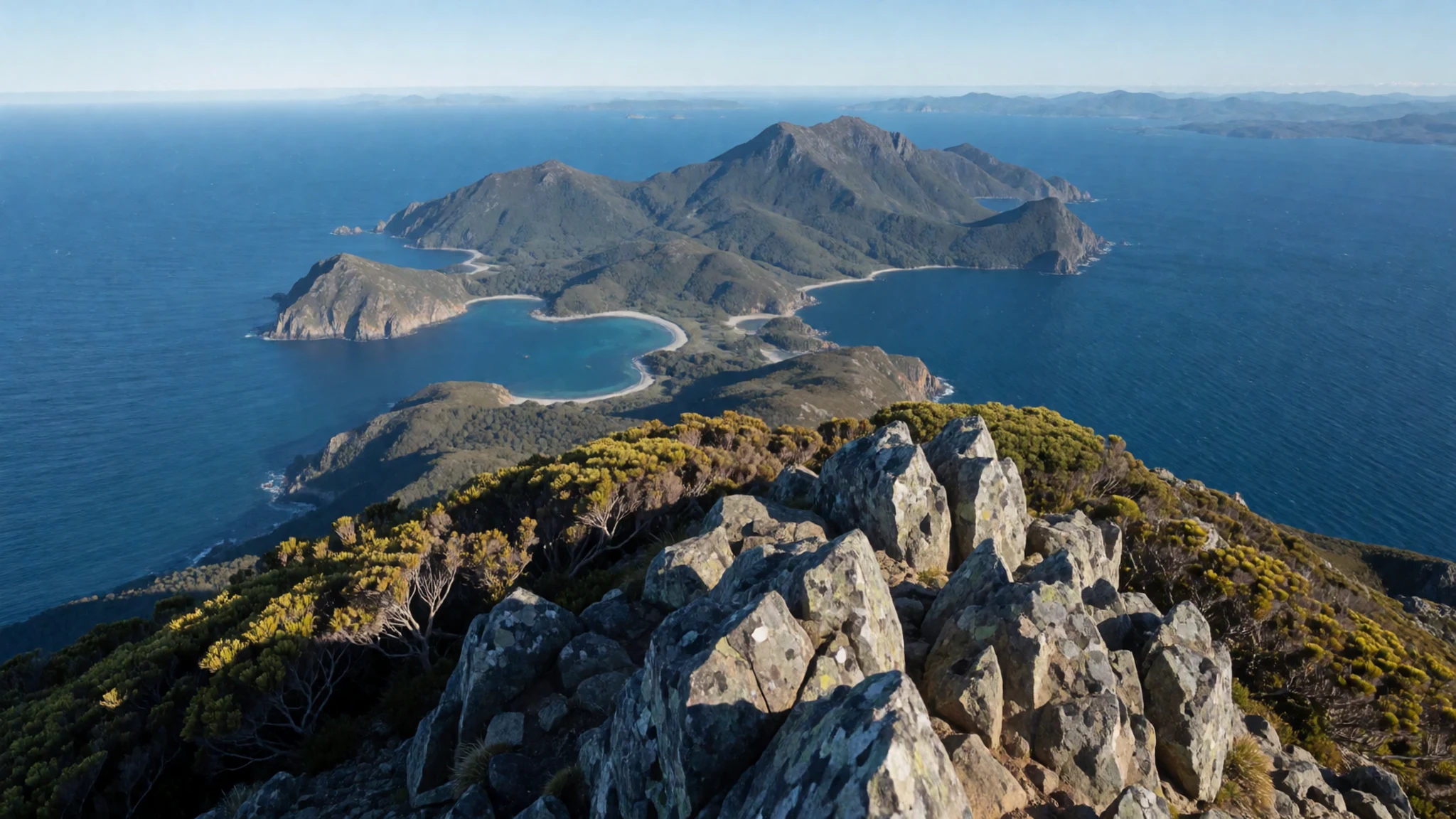
- Mount Maria — Northern Maria Island
The island's high point, at 711 metres, is a full-day walk from Darlington with steady climbing and little shade. On a clear day the summit looks back over the isthmus, the coast and the Tasmanian mainland. Take plenty of water, a windproof layer and enough daylight to return.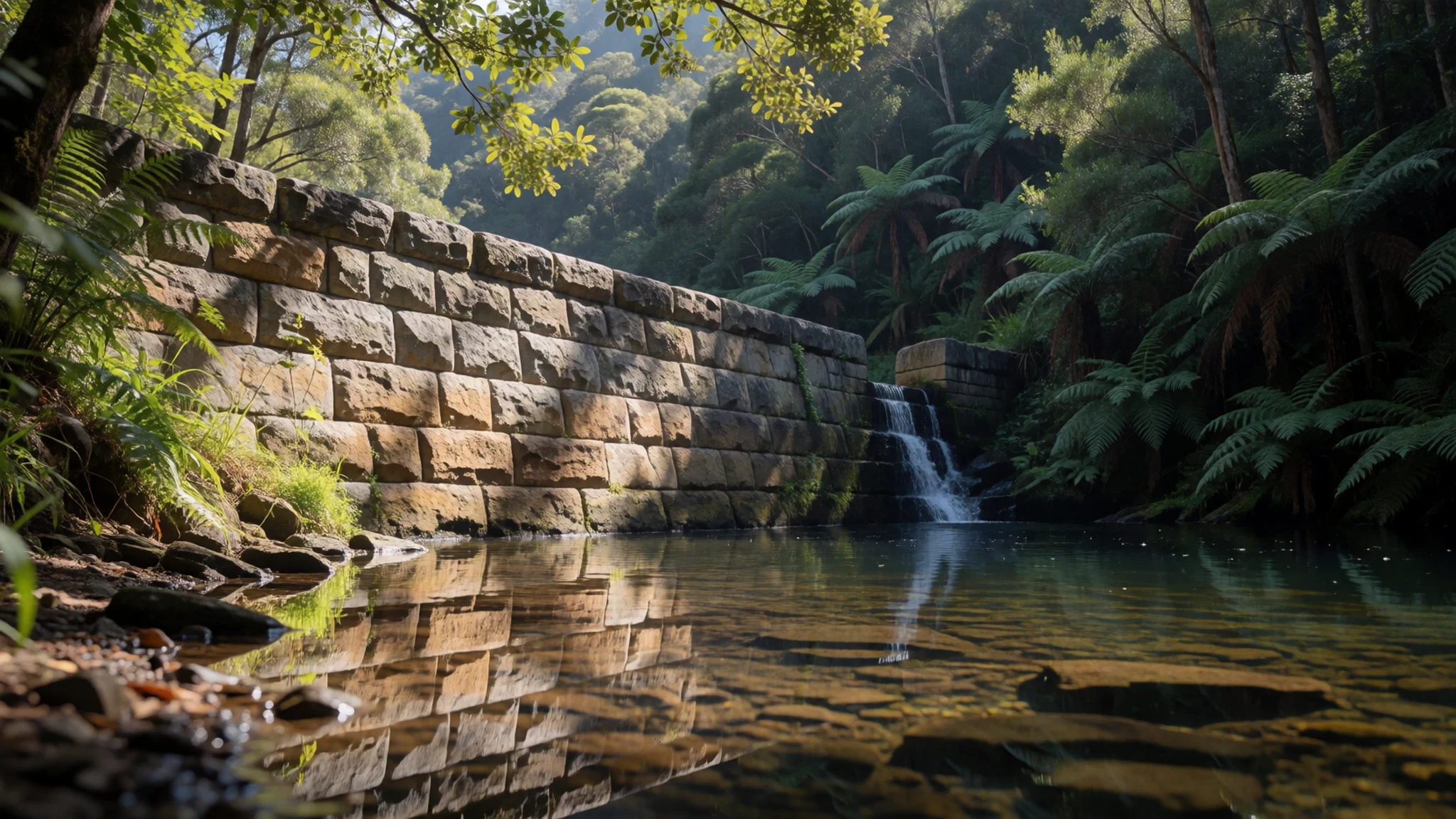
Culture
Maria Island carries two distinct layers of history, and a visit is richer for knowing both. The older layer belongs to Aboriginal Tasmanians, who still hold ties to the island. Its palawa kani name, wukaluwikiwayna, appears alongside the English one on park material, and the shell middens and other traces around the bays are part of a living heritage rather than museum pieces.
The second layer is the convict past. Darlington's buildings were put up by prisoners, many of whom had little choice in the work, and the story here is as much about hard labour and confinement as about architecture. Visitors who read the interpretation panels will notice how often the island's two penal eras, and the industries that followed, are described through the people who lived through them.
There is also a strong conservation culture. The whole island is a national park, so the unspoken rule is to leave it as found. Cars are absent, rubbish is carried out, and the wildlife, including the animals that wander near Darlington, is treated as wild rather than as an attraction. Overnight visitors share cooking facilities and quiet evenings, and most people turn in early after a day of walking.
Before stepping off the ferry, remember to carry all your rubbish back to the mainland, keep a respectful distance from the wildlife without feeding it, and treat the Aboriginal sites and convict ruins as places to look at carefully, never to climb on or remove anything from.
What to wear
Maria Island's older dress traditions belong to the Aboriginal people of Tasmania. Historically, cloaks of animal skin gave warmth in a cool maritime climate, and shell necklaces, strung by women from small iridescent marine shells, remain a celebrated craft among palawa communities today, often made and worn for ceremony and cultural events. Convict-era clothing was the opposite: coarse, standard-issue and meant to mark status rather than express any identity.
What people wear now is practical and weather-minded. Tasmanians dress for the outdoors in layers, with wool or fleece, waterproof shells and sturdy boots, since the east coast can turn from sunshine to wind and rain within a day. On the ferry you will see walkers, cyclists and families in hiking clothes and sun hats rather than anything dressy.
For visitors, think in layers. A windproof jacket is useful even in summer, with a lighter top beneath it, long trousers or quick-drying shorts, and a brimmed hat plus sunscreen, since the open grassland offers little shade. Footwear matters most: closed, grippy shoes or walking boots suit the gravel tracks, rocky shorelines and the climb to Mount Maria. Swimwear is fine for the beaches, though the Tasman Sea is cold even in warm months. No special modesty rules apply, but a spare dry layer and a small waterproof bag are worth carrying wherever you walk.
What to eat
- Scallop pie — Bakeries in Orford and Triabunna
A Tasmanian bakery staple, with scallops in a creamy, lightly curried sauce under pastry. It makes a sturdy walking lunch, and packing one for the island saves hunting for food once the ferry has left.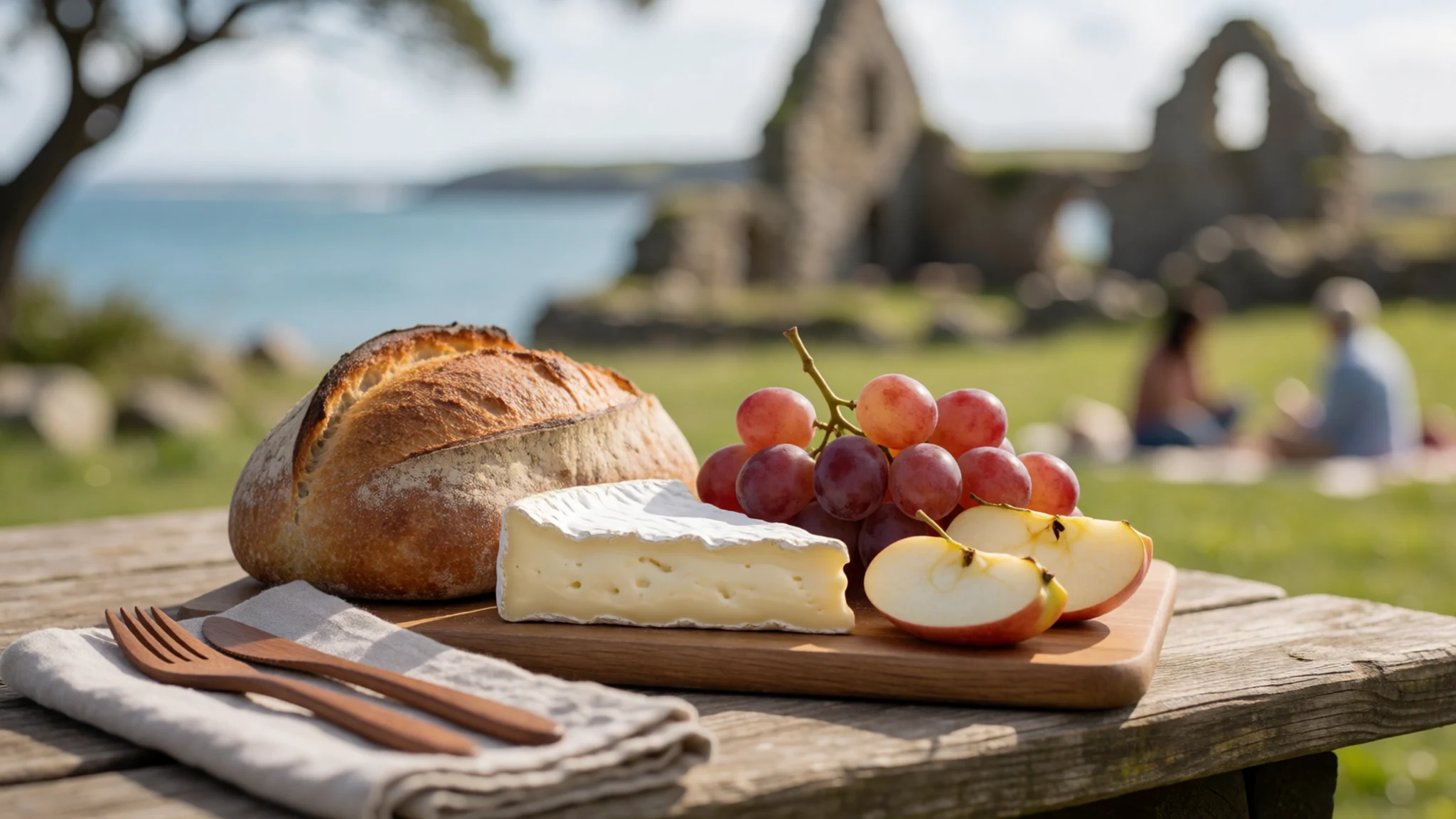
- Fresh oysters — Roadside oyster stalls and farm shops along the east coast
The east coast's cool, sheltered bays support oyster farming, and the shellfish are sold shucked or in the shell. They taste best eaten close to the water, with a squeeze of lemon and little else.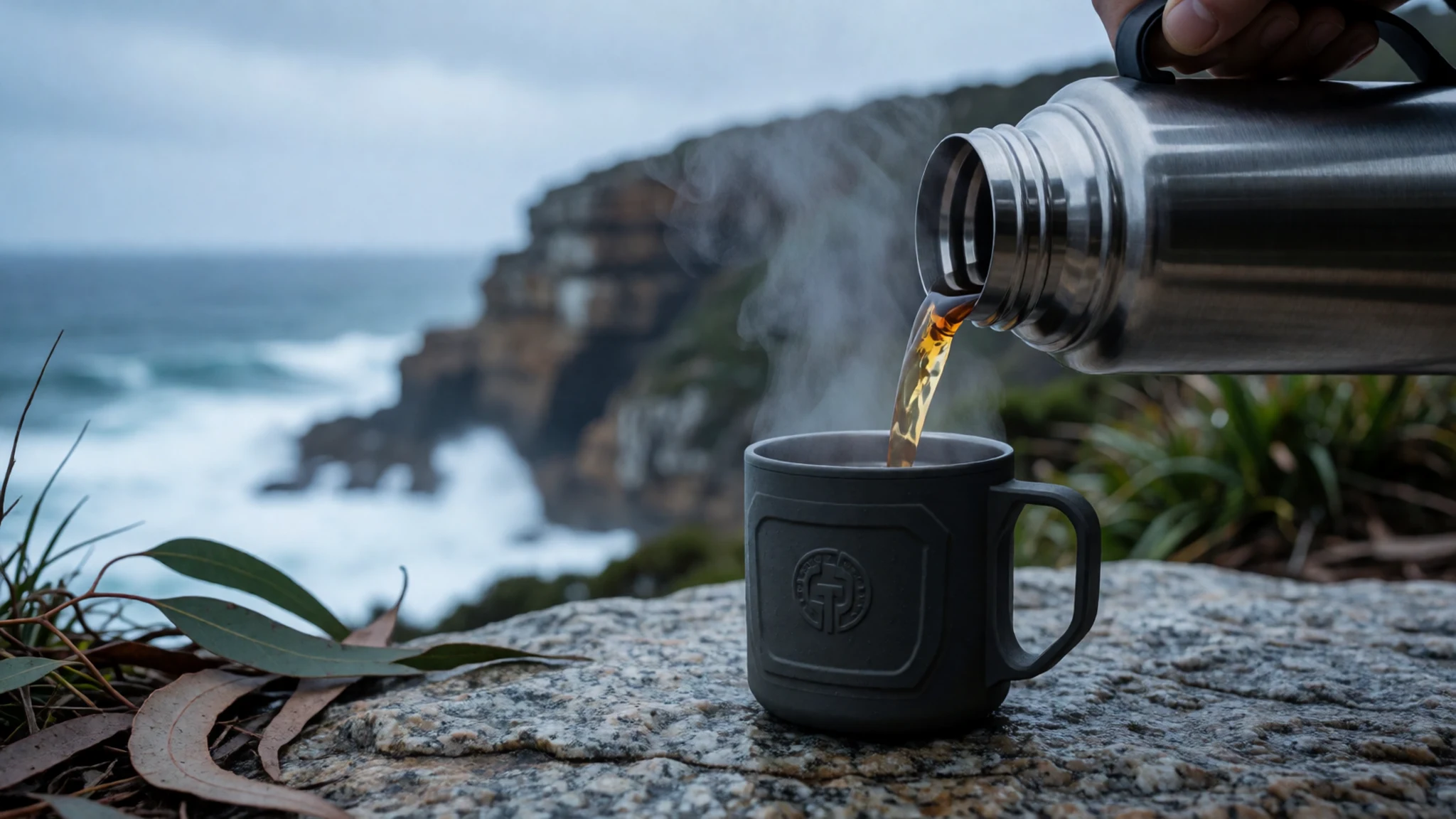
- Fish and chips — Takeaway shops near the Triabunna waterfront
Simple battered or grilled local fish with hot chips is the classic meal before or after the ferry. Order a portion to eat on the foreshore and watch the boats come and go. - Tasmanian cheese and cold-cut picnic — Hobart markets and supermarkets on the road to the east coast
Island day trips run on picnics. Local cheeses, bread, fruit and cured meats keep well in a daypack and suit a lunch beside the sea or at the Darlington lawns. - Cool-climate wine — Cellar doors on the east coast near Orford
Tasmania's east coast grows pinot noir and chardonnay in cooler conditions than most Australian regions. A glass at the end of a day suits the area's relaxed pace; it is best left for the mainland rather than carried over.
Plan it
Best time. December to March is the most settled and warmest part of the year for walking and swimming, though the sea stays cold and the wind can change quickly. Shoulder months bring fewer visitors but cooler, less predictable weather; winter is quiet and best for hardy walkers.
How long. 1–2
Getting there. Fly into Hobart Airport, then drive or take a transfer up the east coast to Triabunna, where the passenger ferry leaves for Darlington. Check the official Tasmania Parks and Wildlife Service site and the ferry operator for current timetables, fares and park passes.
Budget. mid
Tips
- Book the ferry and any overnight bunk in advance, especially for summer weekends and school holidays
- Carry all food and drinking water for the day; supplies on the island are limited, so plan meals before crossing
- Start walks early: shade is scarce, and the climb to Mount Maria needs a full day
- Check tide times before walking to the Painted Cliffs, and watch the weather forecast for sudden wind
- Bring a rubbish bag and carry everything back to the mainland
Etiquette
- Keep a respectful distance from wildlife and never feed it
- Stay on marked tracks and take all rubbish out
- Treat convict ruins and Aboriginal heritage sites with care; do not climb on walls or remove anything
Nearby
Sources
- Wikidata Q2077754 (CC0)
- Wikipedia — Maria Island (rev 1379669900) (CC BY-SA 4.0)
- Wikivoyage — Maria Island (CC BY-SA 4.0)
Wildlife
- Wombat (animal)
The common wombat is a marsupial with a bare nose, a little like a wild teddy bear that happens to be real. On Maria Island wombats wander freely through a peaceful sanctuary of wild shores and convict history, and the island has its own local kind. Watch them quietly and from a respectful distance, treat the place gently, leave no trace behind, and never feed them, so they stay truly wild.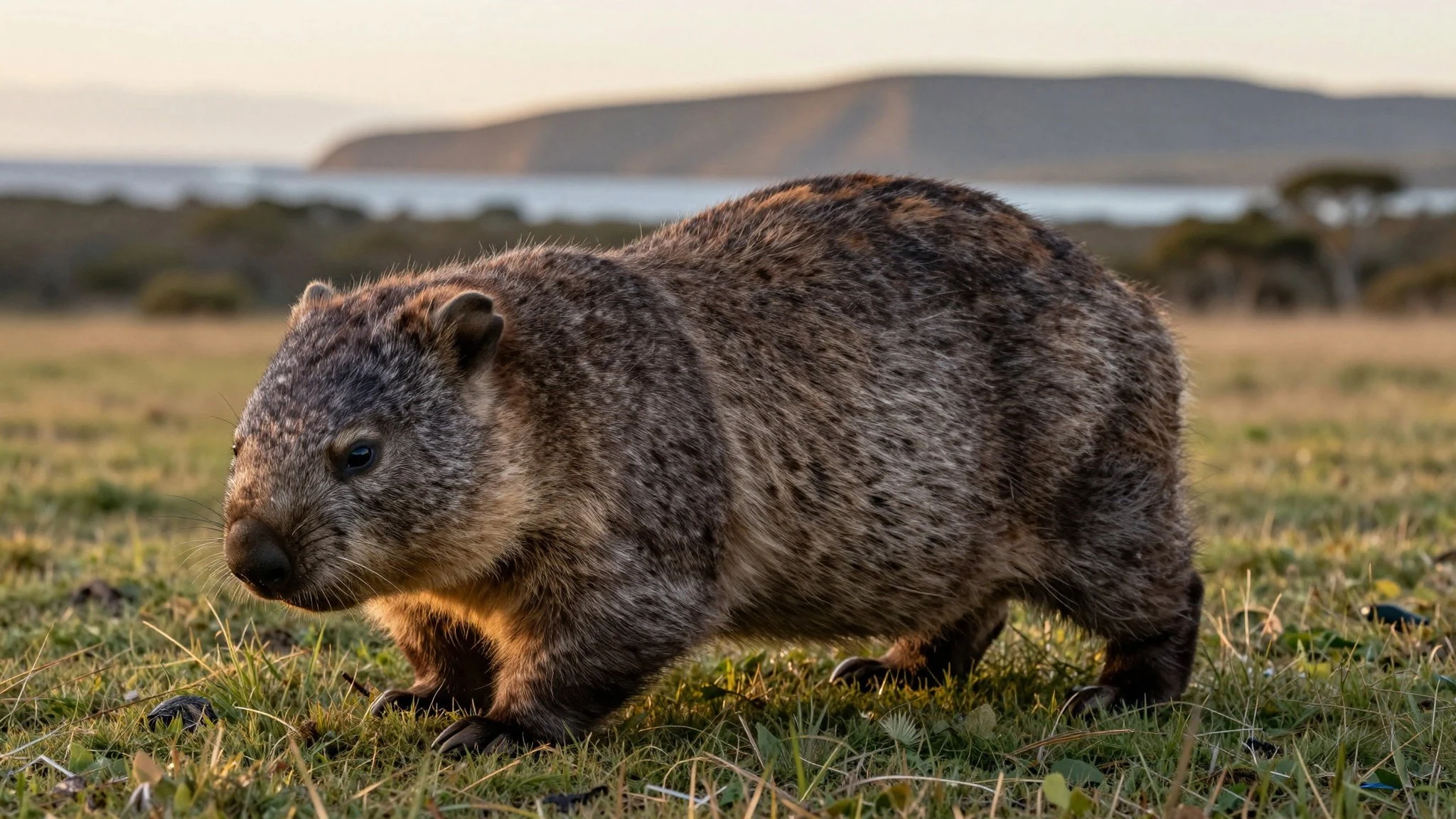
- Tasmanian devil (animal)
The Tasmanian devil is a black-furred marsupial, no bigger than a small dog, with a powerful bite and a very loud screech. It now lives only in Tasmania, and Maria Island, as a national park, is a sanctuary for it. Keep well back, stay quiet, and never feed it. Remember that the island is above all a home for wildlife, so leave no trace of your visit.