Maré
Maré, France
Maré is a raised coral island of caves, clear water and Kanak villages, where the pace is slow and the sea does the entertaining.
The place
Maré is the second-largest of the Loyalty Islands, a chain lying northeast of Grande Terre, the mainland of New Caledonia, which is an overseas territory of France in the Pacific. The island is also a commune in its own right, inside the Loyalty Islands Province. Its names change with the language: Île de Maré in French, Nengone in the Nengone language and Mengone in Dehu.
Geologically, Maré is a raised coral atoll, a ring of reef that has been lifted clear of the sea. The old lagoon is now the interior, held in by a higher rim that once formed a necklace of reef islets. Because the uplift is geologically recent, the coast has only short stretches of fringing reef, nothing like the long barrier reef around Grande Terre. The beaches are narrow and often sit under cliffs.
The island's fossil coral is riddled with caves, pools, and pits, and its jagged edges are sharp enough to slice through a casual sandal, making off-path walks slow. Villages are strung along the island from Roh in the north, through Tadine, the main centre, down to Eni in the south, and most daily life happens in and between them.
The climate is tropical and humid. February is the warmest month and August the coolest, while March brings the most rain. Visitors who expect a resort island find something different here: a working Kanak island with few crowds, modest facilities and a sea that is the main attraction.
Its story
The story of Maré begins under water. Coral grew in a ring around a lagoon, and then the whole structure was pushed upward until the reef stood out of the sea. That is why the middle of the island is a former lagoon floor, why cliffs back so many of its beaches, and why the rock is riddled with caves and sinkholes. On an island built of porous stone, fresh water tends to collect in pools and pits rather than in streams, which has always shaped how and where people live.
The people of Maré are Melanesian, and the island keeps its own language, Nengone, alongside French. Dozens of villages, many with names that look unfamiliar to French eyes, hold the island's social life together. Customary authority runs through la coutume, the code of respect and exchange that governs how visitors are received on tribal land, and it still matters in everyday dealings.
Politically, Maré belongs to France through New Caledonia, which controls its own immigration and sits outside both the European Union and the Schengen Area. Roman Catholicism is the largest denomination in New Caledonia, and Sunday is a church day, when most shops and businesses close.
This mix, an old Pacific society, a French administrative frame and a landscape lifted from the sea, explains why Maré feels so different from the more developed Grande Terre. It is a place where a visitor is a guest first and a customer second.
What to see
- Cap Wabao — Near Tadine
Cap Wabao lies near Tadine on Maré's coast, and the view from the north shows how the island's cliffs fall straight to a shoreline of pale rock and clear water. It is a good place to understand the raised-atoll shape of the island before heading inland. Go in the cooler part of the day.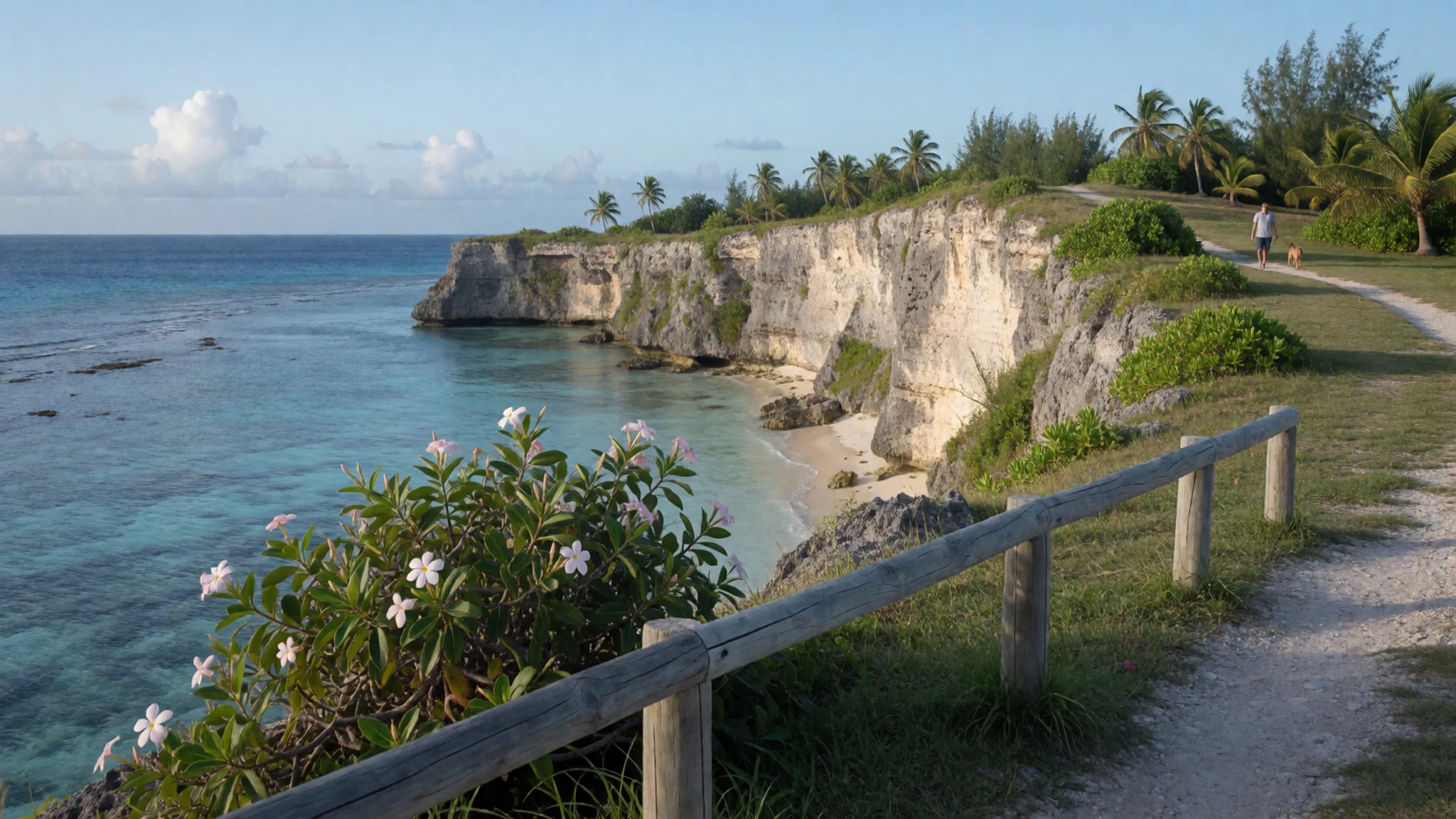
- Baie des Tortues — Coast of Maré
The Baie des Tortues is a sheltered bay on Maré where rays and, as the name promises, turtles can be seen in calm water. Snorkelling here is rewarding because the water is so clear. Keep a respectful distance from the animals, wear reef-safe sun protection and avoid standing on live coral.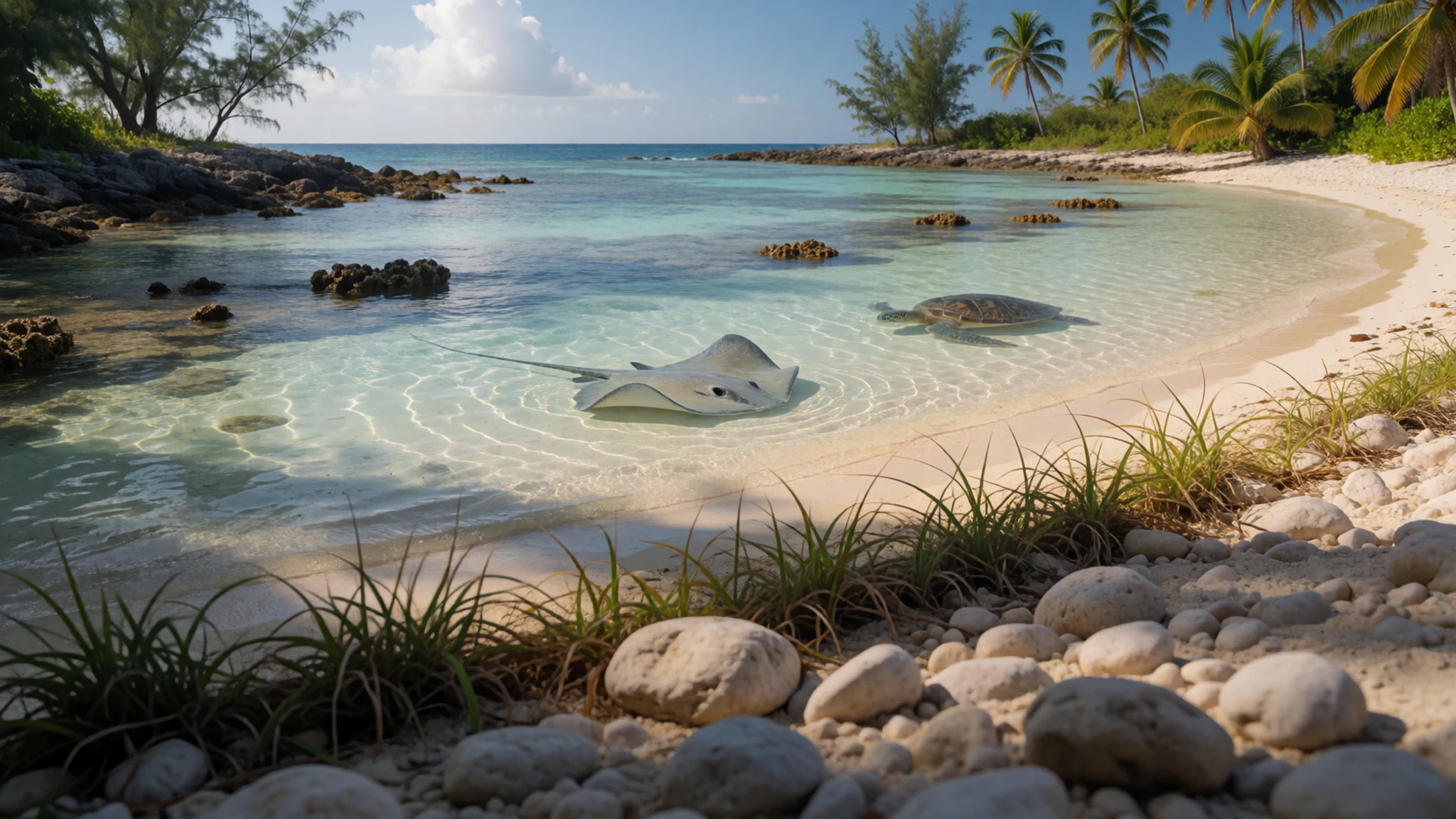
- Aquarium naturel — Coast of Maré
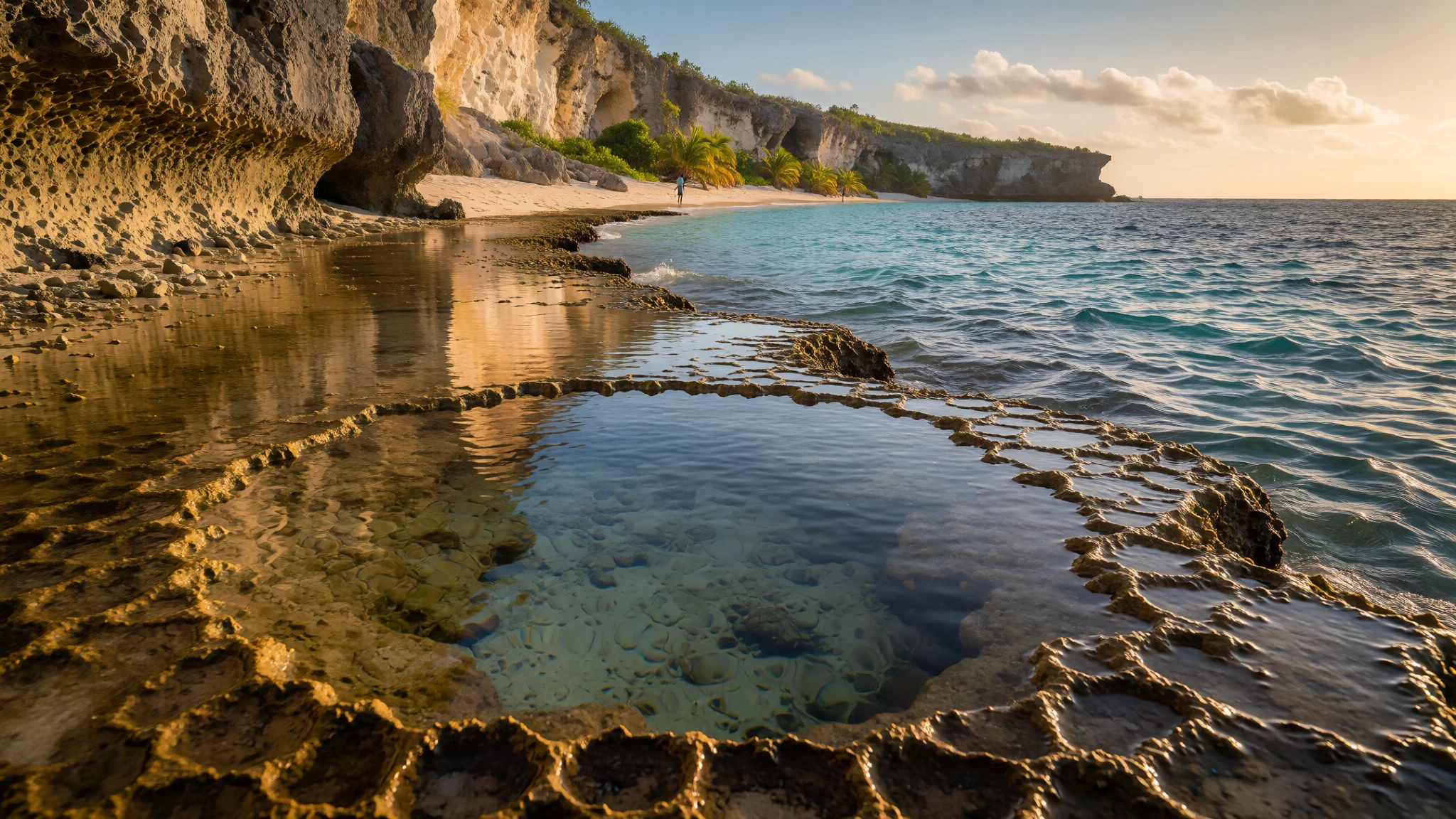
The aquarium naturel is a natural pool along the coast where the water is so transparent that fish seem to hang in the air. It works as a snorkelling spot and as a photograph. Tides and swell change conditions, so ask locally before getting in, and do not feed the fish.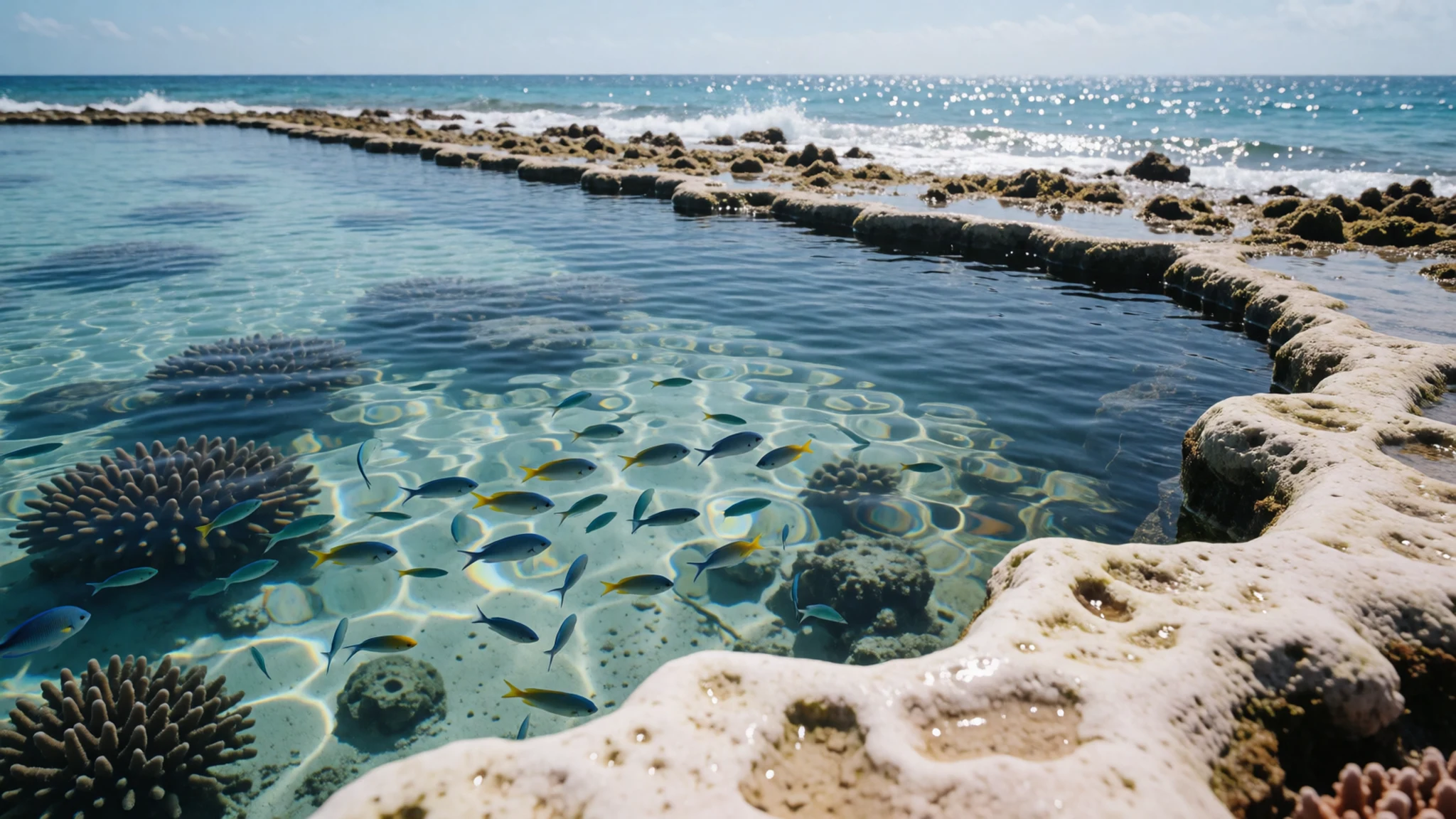
- Caves and fossil coral pits — Interior of the island
The interior of Maré is a former lagoon floor, and its fossil coral rock is full of caves, pools and pits. Sharp edges make the going slow, so closed shoes and a local guide are sensible. Ask in the village first, since many of these sites lie on tribal land.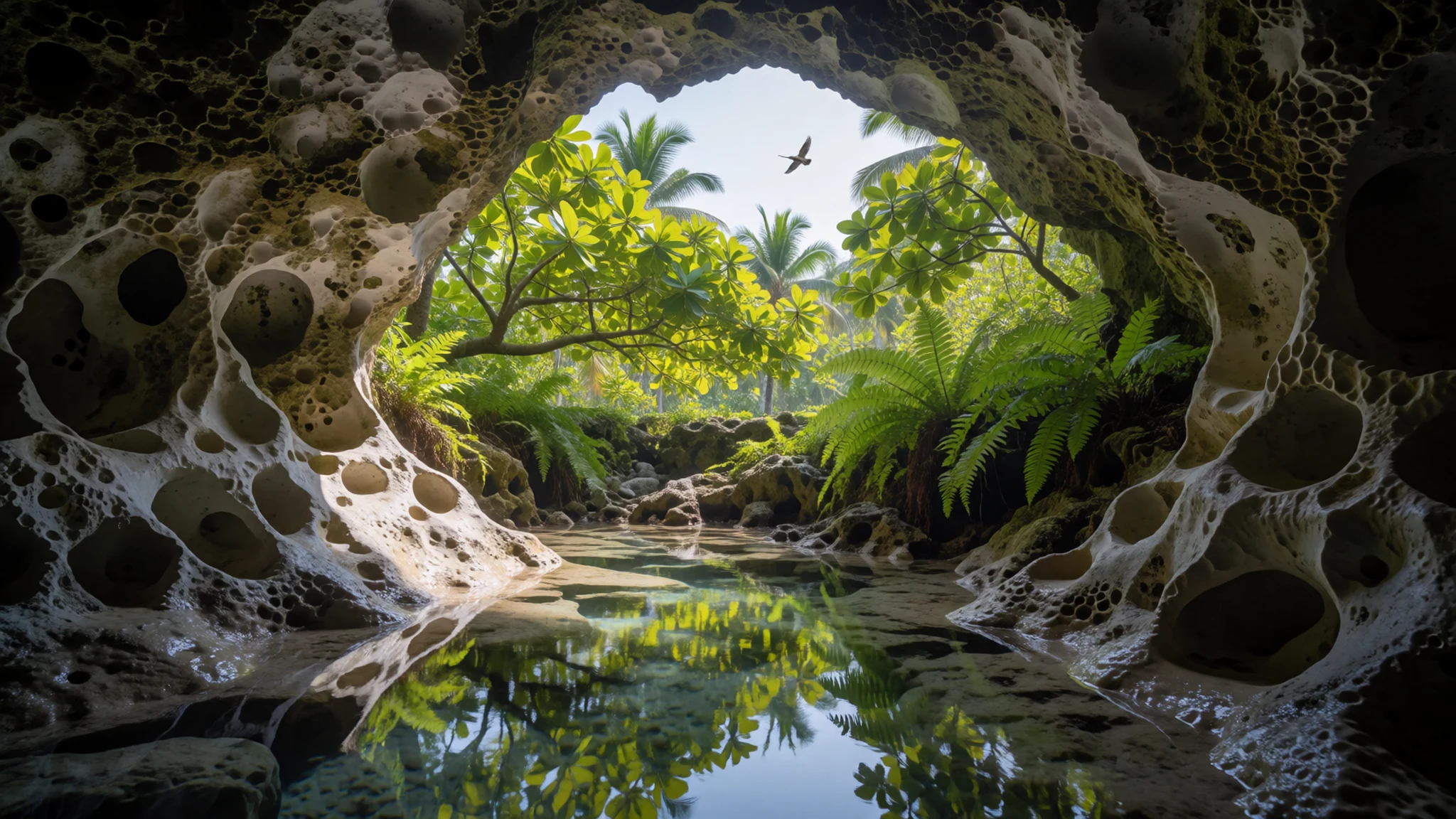
- Island cemeteries — Villages across Maré
Cemeteries on Maré, with their painted and decorated graves, are part of the island's visible landscape and are tended by families. They are not sightseeing stops in the usual sense. Admire them from the road or path, keep voices low and ask before entering or photographing.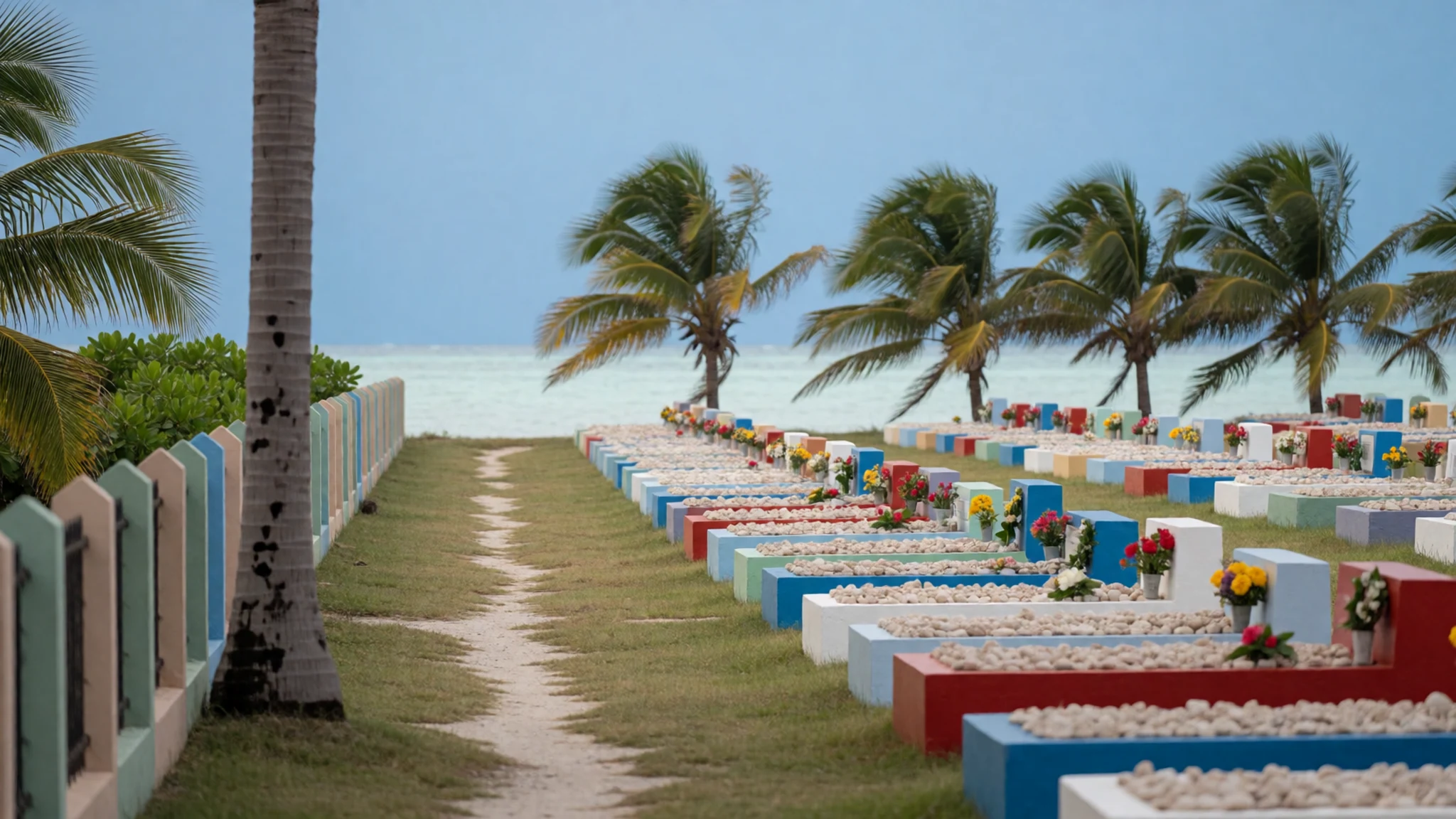
Culture
Maré is a Kanak island within a largely conservative Christian society, and the rhythm of life follows from that. Roman Catholicism is the largest denomination across New Caledonia, and on Sundays most shops and businesses close while people attend church. Visitors who plan around this will have a smoother stay than those who expect a day of normal trading.
Greetings carry real weight. As in metropolitan France, a conversation begins with bonjour by day and bonsoir at night, and it is common for Melanesian people to greet strangers on the road. Returning that greeting is expected, and ignoring it reads as rude. People also prefer a polite distance, about a handshake's length, so standing too close can feel intrusive.
The governing idea for visitors is la coutume, the customary code of respect observed on tribal land. In practice it means asking before going onto land, accepting guidance from the people who live there and being ready to follow local direction on where to walk, swim or take photographs. A small gift, offered as guidance from your host suggests, is part of the custom in many places.
Language is mixed: French is the common tongue of administration and shops, while Nengone is spoken at home and in the villages. Even a few words of French go a long way.
Etiquette: before entering any village, tribal land, cemetery or customary site on Maré, greet people with bonjour, ask permission, and follow their guidance on where you may walk and photograph.
What to wear
Traditional Kanak dress on Maré has two layers. For ceremony and dance, people wear skirts and decoration made from plant fibres and leaves, along with ornaments, and these appear at welcomes and customary events rather than daily life. For women, the long, loose cotton dress known as the robe mission, introduced in the colonial and missionary period, is the best-known everyday-and-church garment across the Pacific, often in bright printed cotton. Its modest cut suits the climate and the island's conservative outlook.
What people wear now is practical and relaxed: shorts or knee-length skirts, T-shirts, cotton dresses, flip-flops or sandals, and a good hat. Church clothes on Sunday are tidier, with shirts for men and dresses or skirts below the knee for women. Swimwear belongs on the beach and not in the village.
For visitors, the main rule is to dress for two settings. On tourist-facing beaches, normal swimwear is fine. Everywhere else, including villages, shops and church areas, cover shoulders and knees and avoid revealing clothing, which locals can read as disrespectful. The climate is tropical and humid, so lightweight cotton or linen works best, with a light rain jacket for wet spells, especially around March.
Footwear matters more than on most islands. Fossil coral rock is sharp, so bring closed shoes with a firm sole for walking and reef shoes for entering the water. Pack a wide-brimmed hat and strong sun protection, as shade is limited on the coast.
What to eat
- Bougna — Family and village gatherings; ask your host or guesthouse
Bougna is the traditional Melanesian meal, combining meat such as chicken or pork, sometimes crab, with yams and sweet potatoes, usually steamed in leaves. It is a communal dish and is best eaten with a host family or at a customary gathering.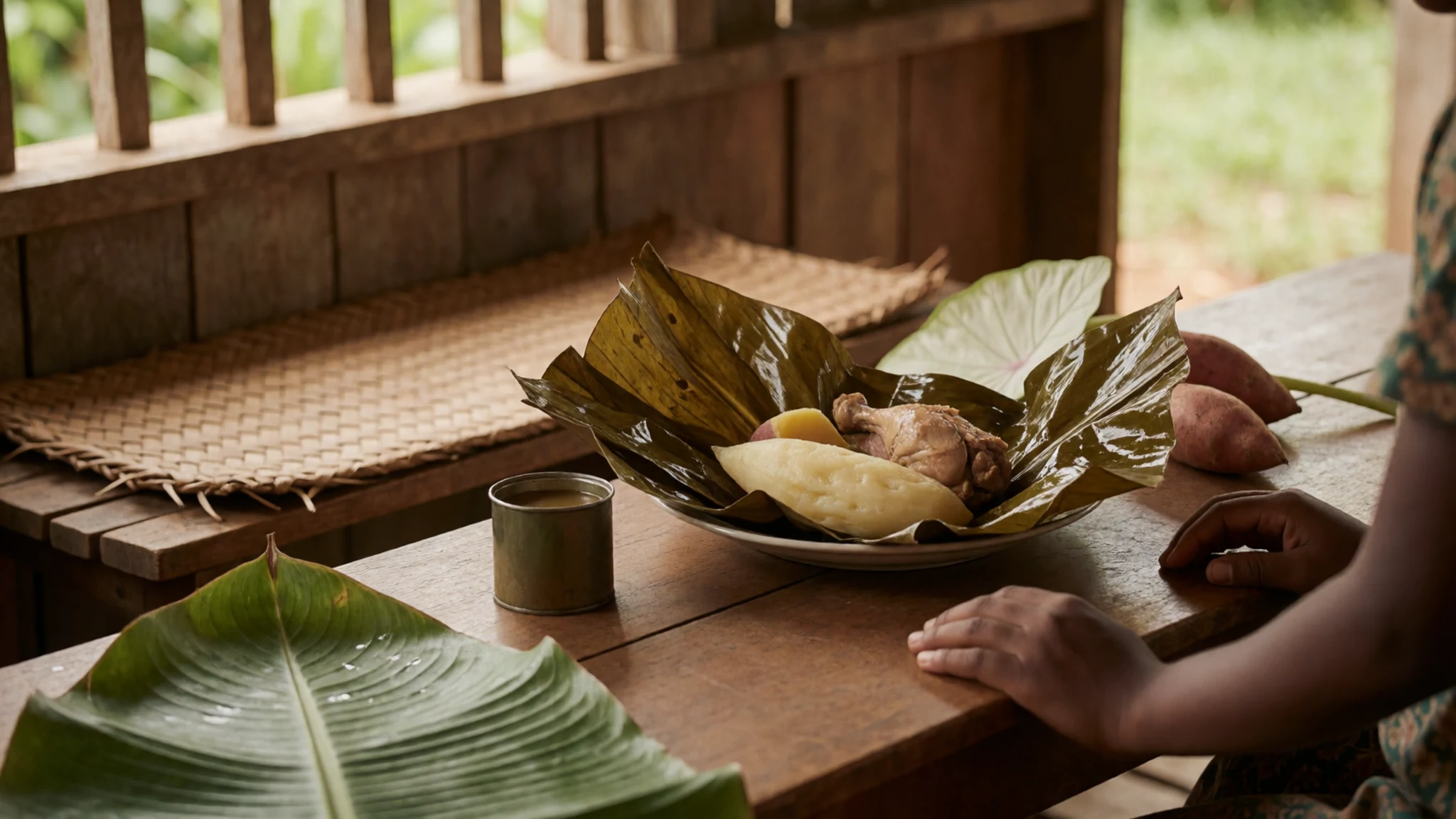
- Fresh seafood — The local market, strongest on weekend mornings, and village eateries
Tuna, shrimp and crab are the seafood to look for, and on an island the catch is as fresh as it gets. Simply grilled or served with rice or root vegetables, it is the best-value protein around.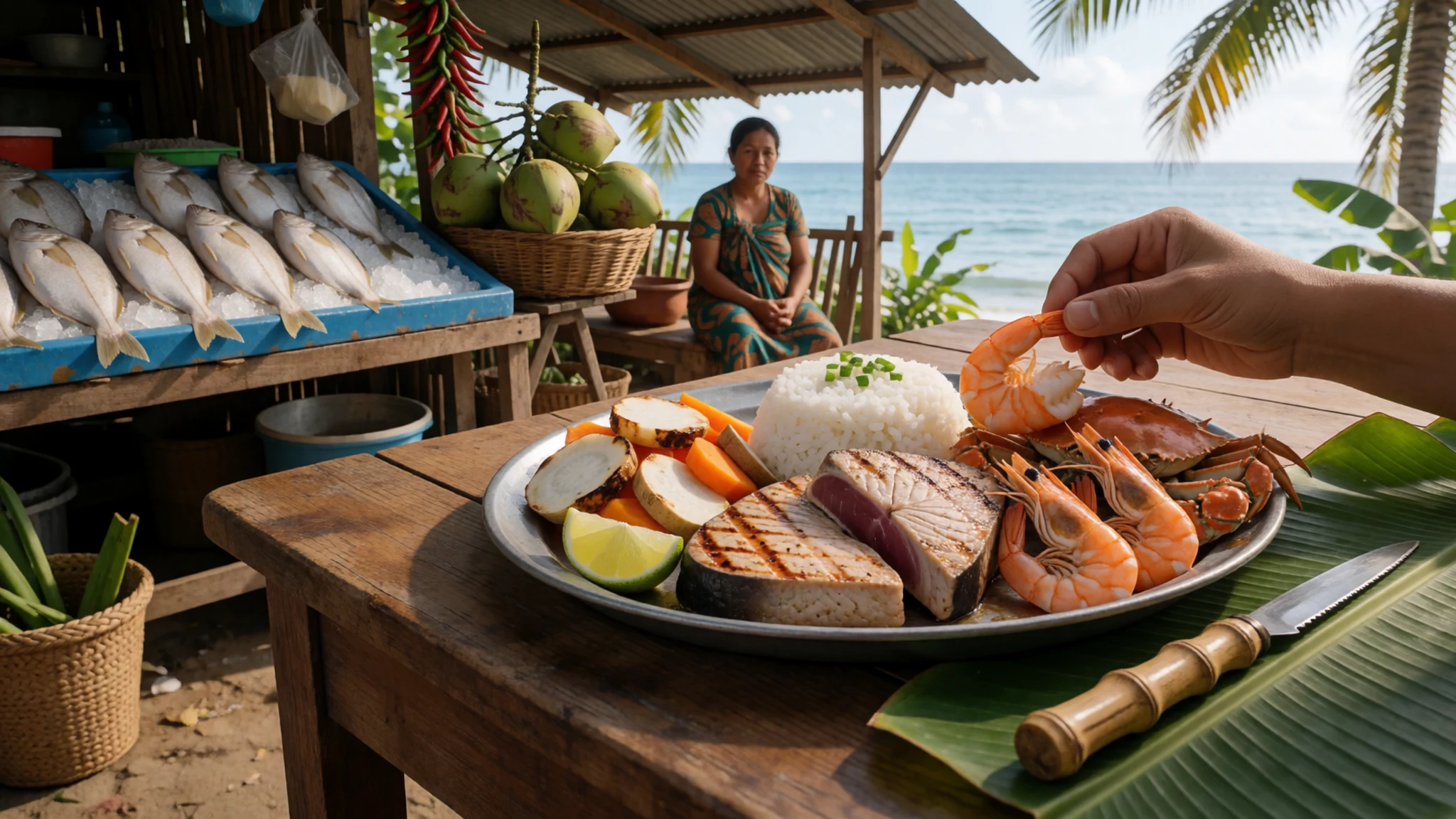
- Porc au sucre — A snack, the local name for a budget eatery
Porc au sucre is pork in a sweet soy-based sauce, an Asian-influenced favourite in New Caledonia. It comes with rice or inside half a baguette, and makes a filling, inexpensive lunch. - Croque madame — A snack or a bakery in Tadine
The croque madame is a hot ham and cheese toast topped with an egg, a reminder that French cooking is part of daily life here. It is a quick, filling stop on the road or between walks. - Baguette and boulangerie bread — Local boulangeries and village shops
French bread is a staple across New Caledonia, and fresh baguettes, pastries and sandwiches turn up everywhere. A baguette with local cheese or tinned fish is the simplest way to eat on a budget, particularly for picnics at the beach.
Plan it
Best time. September to November, when the weather sits between the wettest spell in March and the coolest weeks of August. February is the warmest month, so December to March is hot and humid, with the heaviest rain in March.
How long. 3–4
Getting there. Most visitors fly into Nouméa's international airport, which usually means a stopover in Singapore, Thailand or Japan if coming from metropolitan France, and then take a short domestic flight to Maré. Check the official airline and ferry sites for current schedules. All visitors except French citizens need a passport, and the last leg on the island is by hired car or a transfer arranged with your host.
Budget. mid
Tips
- Book accommodation and transport well ahead, as choices on Maré are limited and the island has few places to stay
- Carry cash, because small shops and village stalls may not take cards
- Shops and businesses close on Sundays, so buy food and fuel on Saturday
- Bring water, a hat and sturdy closed shoes for the sharp fossil coral rock
- Check biosecurity and customs rules before travelling, as some items are restricted
Etiquette
- Greet everyone with bonjour or bonsoir and return greetings in the street
- Ask permission before entering tribal land and follow la coutume as your host explains it
- Dress modestly outside tourist beaches, covering shoulders and knees
Nearby
Sources
- Wikidata Q9729 (CC0)
- Wikipedia, Maré Island (rev 1382028868) (CC BY-SA 4.0)
- Wikivoyage, New Caledonia (rev 5399121) (CC BY-SA 4.0)
- Photo: Nowa Kaledonia (Msniezek) (CC BY 3.0)
- Photo: Locator map of Maré 2018 (Tschubby) (CC BY-SA 2.0)
- Photo: View of Cap Wabao, Maré Island (William S. Kessler) (CC BY 3.0)
- Photo: 3 Raies, Baie des Tortues (Gui0123) (CC BY-SA 4.0)
- Photo: Aquarium naturel de l'île de Maré (Sorelia87) (CC BY-SA 4.0)
- Photo: Aquarium naturel (Pacificbluefilm) (CC BY-SA 4.0)
- Photo: Cimetière île de Maré (Murielle Baratier) (CC BY-SA 4.0)
- Photo: Island Dancing (Katrina Toohey) (CC BY 3.0)


Wildlife
- Green sea turtle (animal)
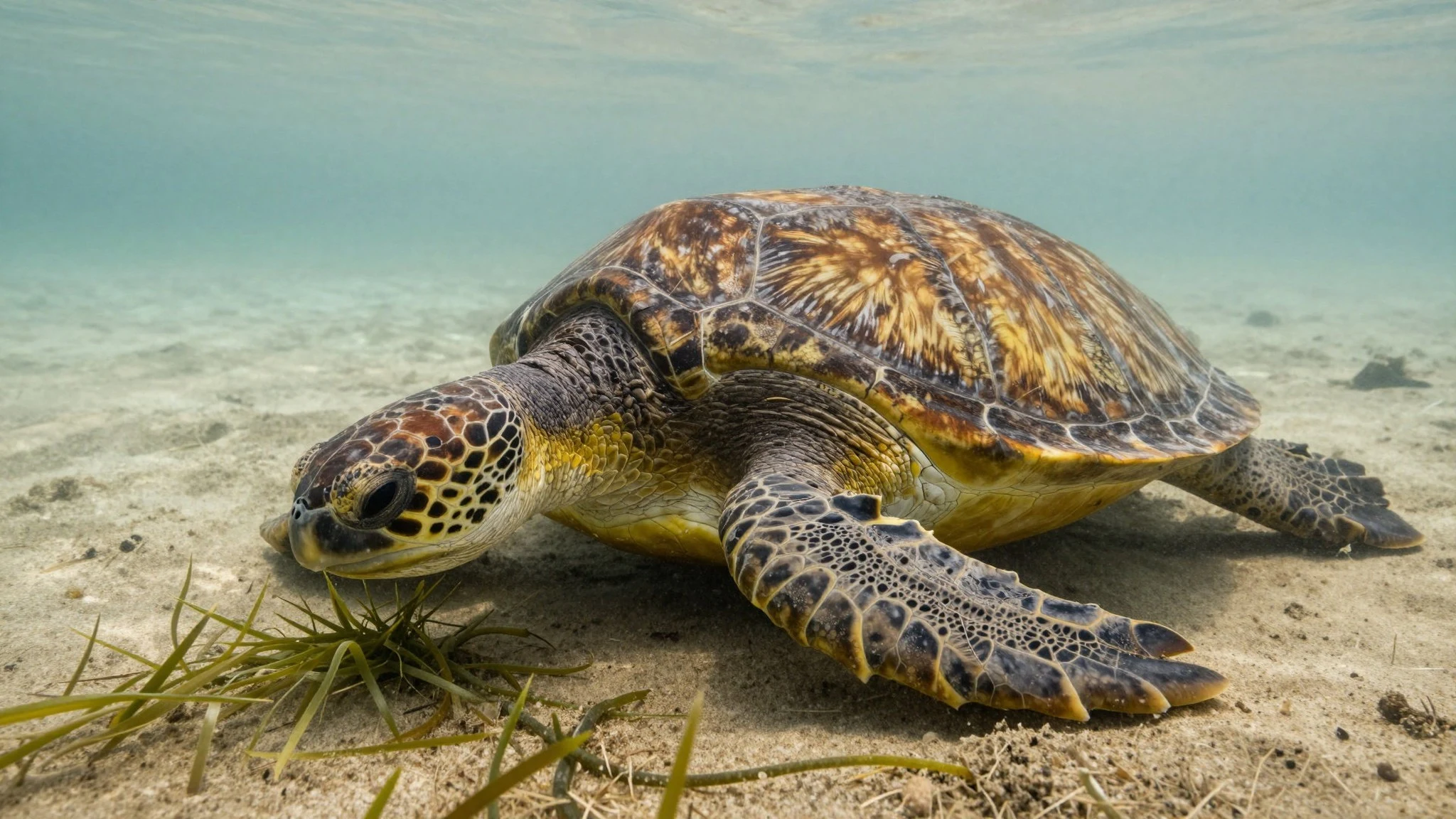
The green sea turtle is a big ocean turtle, named for the green fat beneath its shell, not for its olive-to-black back. On Maré, look for it in the Baie des Tortues, a sheltered bay of gentle, still water where rays glide by too. No season or hour is certain, so ask a local guide. Watch from a respectful distance, keep quiet, and never feed it; it lives on seagrass alone.