Man
Man, Ivory Coast

Man is western Ivory Coast's mountain town, a Dan market centre of weavers, wet forest and peaks above the coffee farms.
The place
Man is a working mountain town in western Ivory Coast, cupped by steep forested peaks far inland from the coastal lagoons. The Dan people, who also call themselves Yacouba, shape daily life here, with Wè and Toura neighbours and with Dioula-speaking traders who run much of the commerce. Coffee, cocoa, rice and kola come off the surrounding farms, so the streets belong first to growers, drivers and shopkeepers.
The Dent de Man, a bare tooth of rock, is the silhouette above the roofs. Below it the town is practical: low buildings under tin, shared taxis in bright colours, laterite on the verges, and a market that spills into the road. Rain rewrites the day. A clear morning can end in a brown torrent, with those same taxis creeping through standing water. In the drier months the peaks look sharper, until harmattan haze turns them grey.
Man is not arranged for visitors. Guesthouses sit among mosques, churches, weaving yards and the stands where bush taxis leave for villages towards Guinea and Liberia. A walk turns up new cloth, fruit, cooked sauces and school uniforms, then forest as soon as the houses stop. The usual outing is the waterfall on the edge of town, along a short track that is often muddy. Peak, market and waterfall together make Man a capital of the western hills, not a beach stop.
Its story
Man grew as the market town of Dan country, where forest, farms and peaks already held villages long before a colonial map fixed a French spelling. Those villages kept mask societies, initiation groves and fields. The town was where they met traders in salt, cloth and kola, and later the cash crops that still dominate the hills.
Under French rule Man became an administrative post for the western mountains: tax, gendarmes, and a road pushed through difficult country. Coffee and cocoa drew labour, Dioula trading networks thickened, and churches and mosques joined older sacred spaces without replacing them. After independence Man stayed the highland centre of the west, linked to Abidjan by a long road and to Guinea and Liberia by border paths.
The crises that divided Ivory Coast hit this side of the country hard. For a time the west lay outside ordinary government control. Roads failed, shops emptied, and people moved or traded across the borders to cope. Markets and mask festivals shrank, but they did not disappear. When the fighting stopped, Man had to rebuild the ordinary: schools, the taxi park, coffee trucks and weaving sheds.
That past shows in the streets. A new concrete shop stands beside a yard where a loom is lashed to posts, and a faded poster hangs near a path elders still treat as a mask's ground. Man is a Dan highland society, a colonial road town and a regional capital that has had to recover, all using one market.
What to see
- Dent de Man — above the town
The Dent de Man is the rock tooth that identifies Man from the roads into town. It stands clear of the forested ridges, bare stone above green slopes. People treat it as the town's emblem, not as a built viewpoint, so visitors meet it as a sightline from the streets and the taxi park once rain has lifted the haze.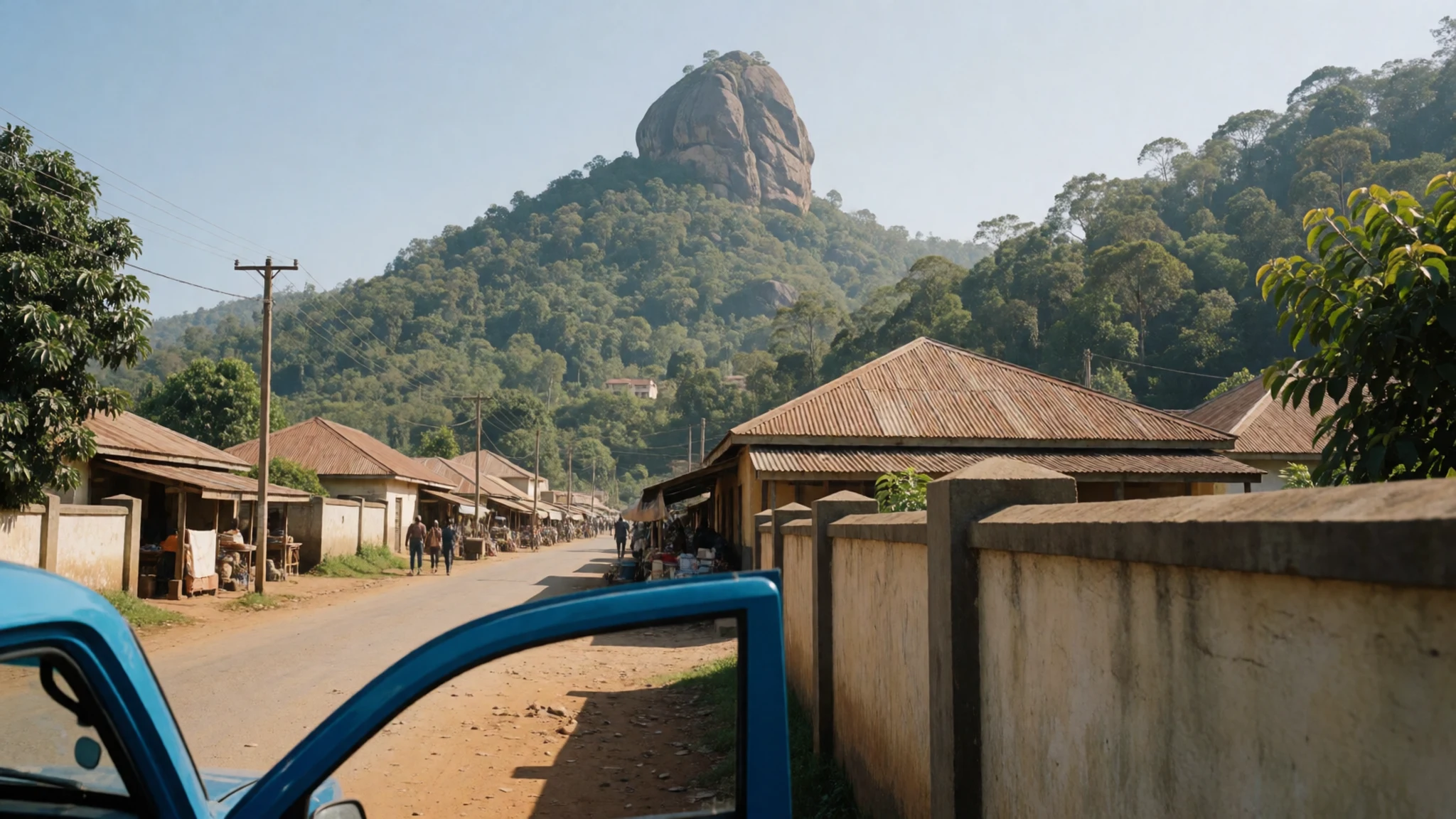
- La Cascade de Man — the edge of town
La Cascade de Man is the waterfall on Man's outskirts and the outing the town makes on a free day. A short track, often slick with mud, leads to a drop where forest water hits rock and spray hangs in the leaves. After heavy rain the flow is strong and the path is slippery; in a long dry spell it thins but stays shaded.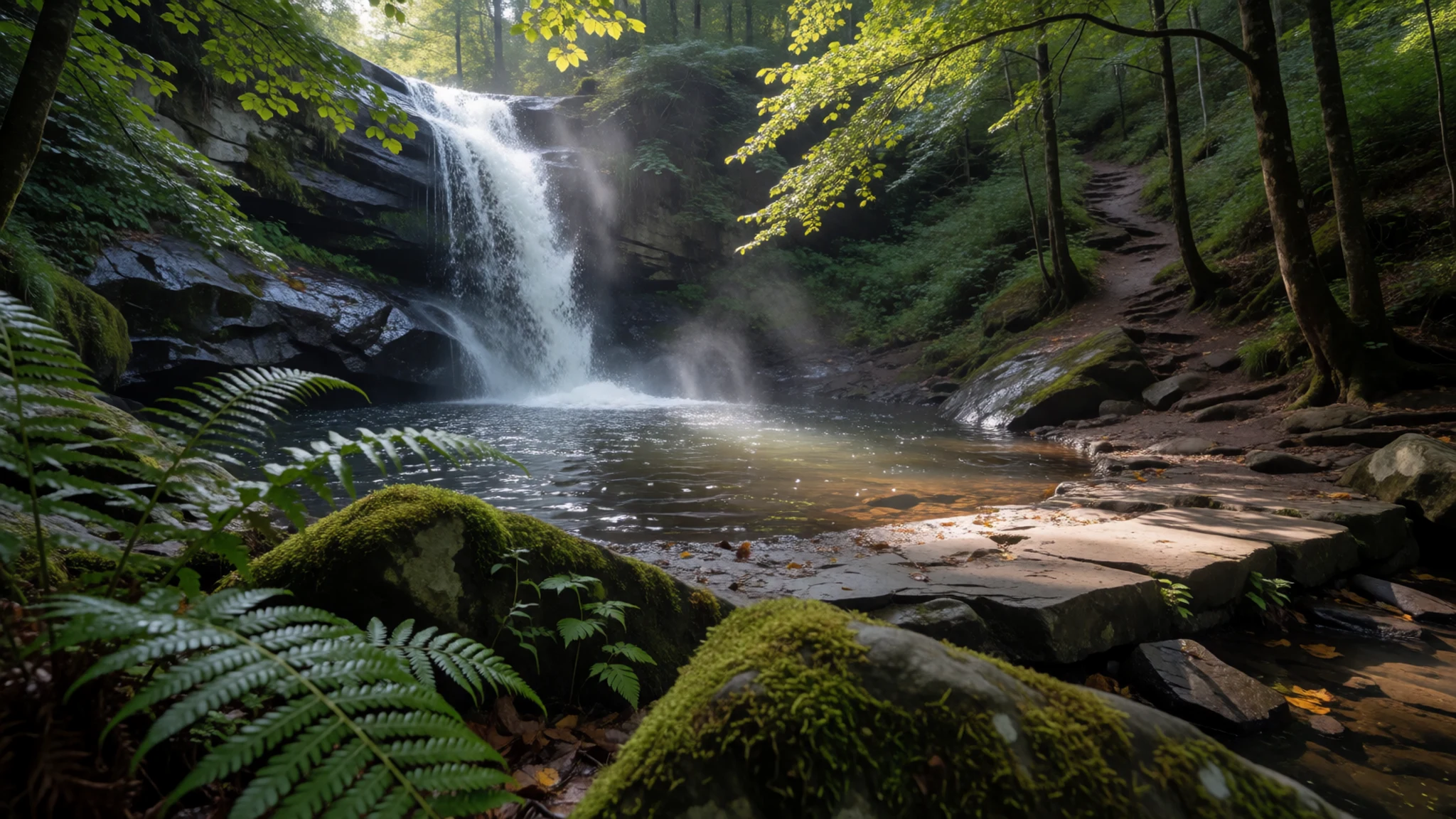
- Weavers' yards — town workshops
Man's weavers work in open yards and small sheds around town, on narrow looms braced against wooden frames. Cloth grows as long strips, later sewn side by side into a wrap wide enough to wear. The work is public: anyone walking past can watch the shuttle, and a polite greeting is the right way to pause.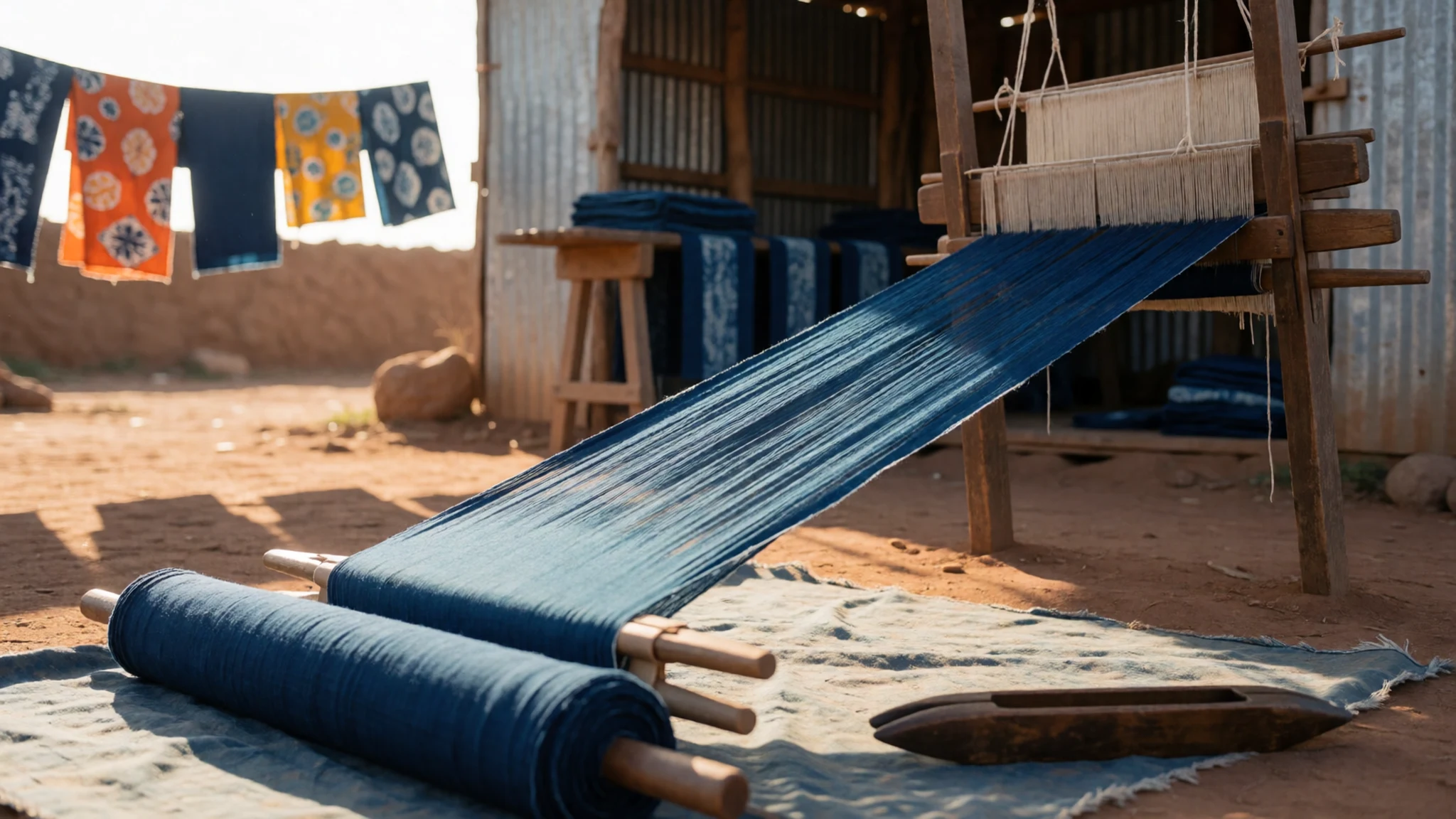
- Market and taxi park — the town centre
Man's market and taxi park are the working heart of town, busiest in the morning and slowed by rain. Shared taxis load for nearby villages and for the long road back towards the interior, with destinations shouted rather than printed on a timetable. Stalls sell fruit, cooked food, cloth, kola and the small hardware of farm life.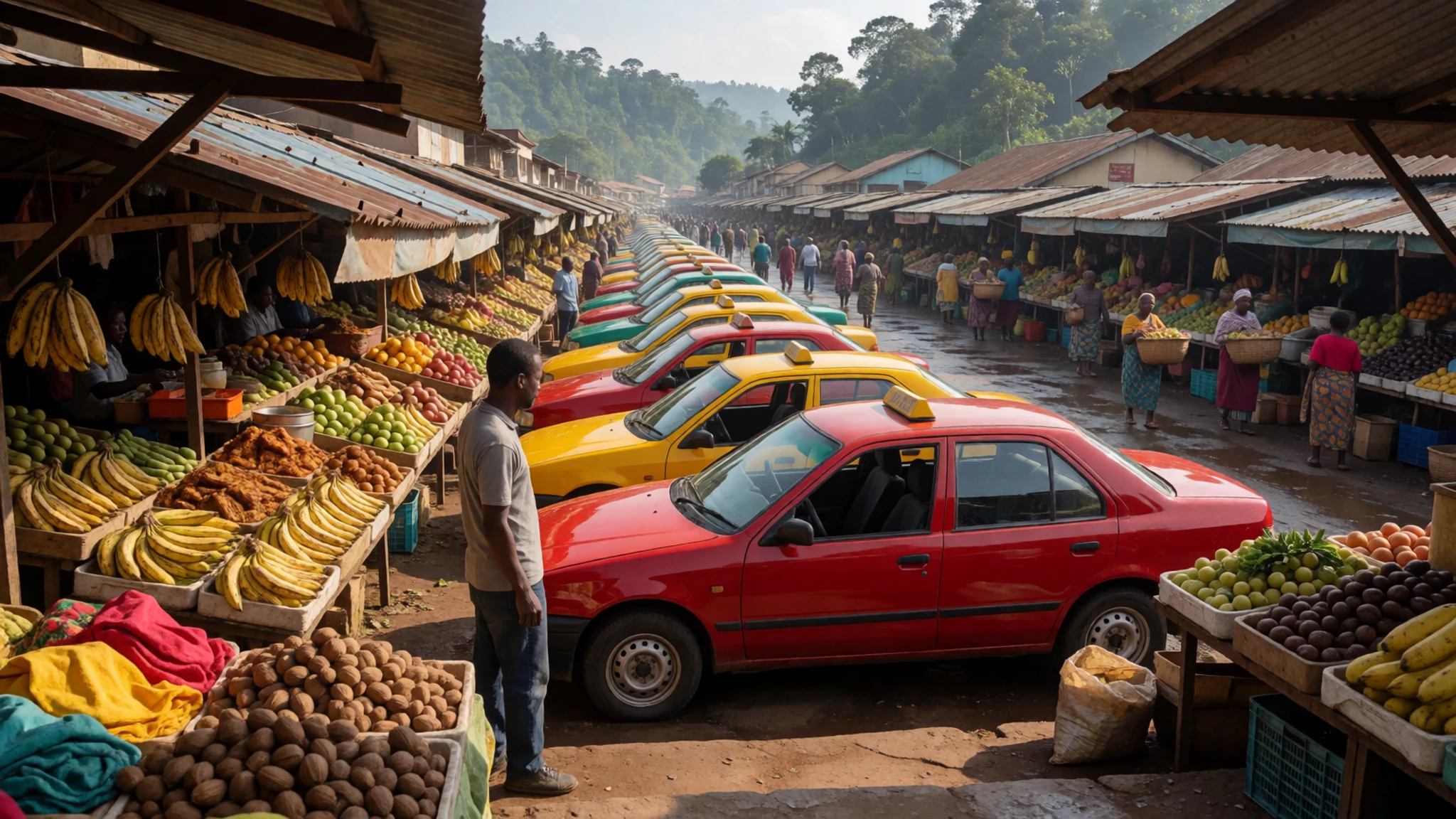
- Mask days in Dan villages — Dan villages around Man
Man's mask traditions belong mainly to Dan villages around the town, and they appear for funerals, harvests, initiations and moments when a community needs a presence that is more than entertainment. A mask is treated as a being, with rules about who may approach and when. Performances are not on a weekly public schedule a visitor can book.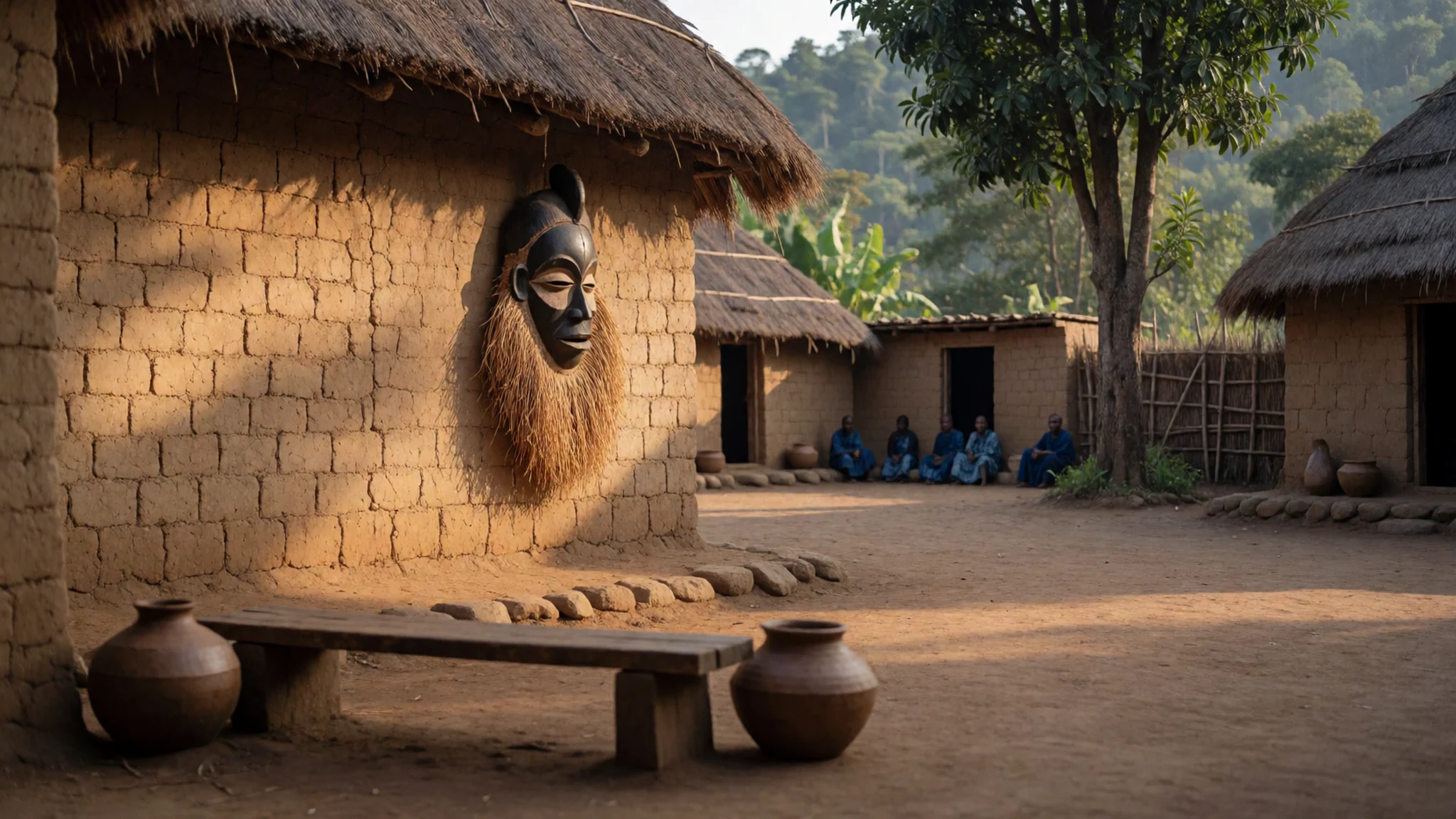
Culture
Man's cultural life rests on Dan society, even though the town also speaks French in offices and Dioula in trade. Among Dan families the mask is not a costume kept for tourists. It comes out, with its own name and character, at funerals, judgements, plantings and the passages of initiation, and people adjust their behaviour when it is in the street. Music, drumming and dance belong to that appearance; they are not a separate show on a stage. Sacred groves and certain paths still carry rules that elders know and newcomers will not guess.
Islam and Christianity are both part of public Man. Mosques and churches draw full courtyards on their days of prayer, and many households move between those faiths and older obligations without treating the combination as a contradiction. Weaving sits in the same ordinary category as farming: a skill passed through families, done in view of the lane, bought by neighbours as well as by travellers.
Hospitality is real and specific. A greeting comes before a question, and business in the market starts with that greeting rather than with a price. Ask before you photograph a person, a weaver or a mask in Man, and do not follow a mask or step into a sacred grove unless a local host has invited you.
What to wear
Man's traditional dress is built from local cloth and from the wider West African wardrobe of wraps and robes. Weavers in town produce narrow strips that are stitched into larger cloths, worn as a wrap, tailored, or kept for ceremonies. Indigo and other deep dyes, and the bright printed cotton known as pagne, cover both festive and ordinary days. For a funeral, an initiation or Friday prayer, a full boubou or a carefully tied wrap still signals respect. Raffia and other fibres appear on masks and dancers; that is ritual dress, not something for a guest to wear.
On an ordinary day Man mixes wardrobes. Young people wear jeans, football shirts and simple dresses; traders add tailored shirts; women wear pagne wrappers, headscarves and wax-print sets that cope with heat and rain. The same person may put on a formal robe if there is a ceremony that evening. Cloth from the local looms still sells beside factory prints.
A visitor should dress for humidity, sudden rain and unpaved tracks. Light cotton that covers shoulders and knees suits villages, mosques and mask events, and a scarf is worth carrying. Closed shoes with a grip are better than sandals on the waterfall path and in market mud. Clean, bright clothes fit in; copying ritual mask dress does not.
What to eat
- Sauce graine — market cookshops and family eateries
Sauce graine is palm-nut sauce, rich and red-orange, served in Man with rice, foutou or boiled plantain. Cookshops around the market simmer it with fish, smoked meat or chicken. It tastes of the forest belt: oily, filling and meant for the middle of the day.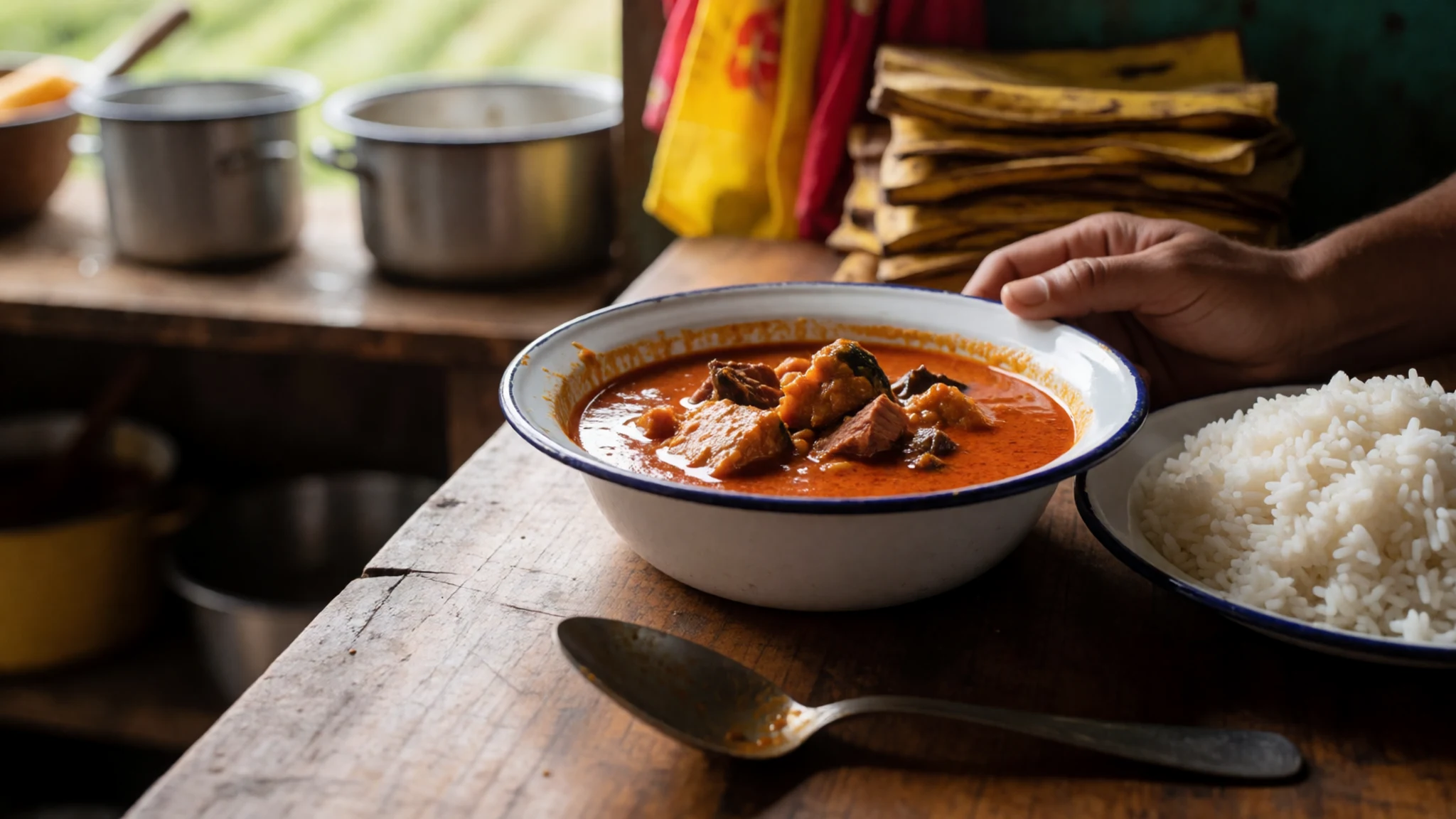
- Foutou — eateries beside the market
Foutou in Man is a smooth staple pounded from plantain, yam or cassava, paired with a sauce rather than eaten alone. Market eateries serve it in a mound beside sauce graine, okra or a lighter aubergine sauce. Diners pinch off a piece, shape it and dip.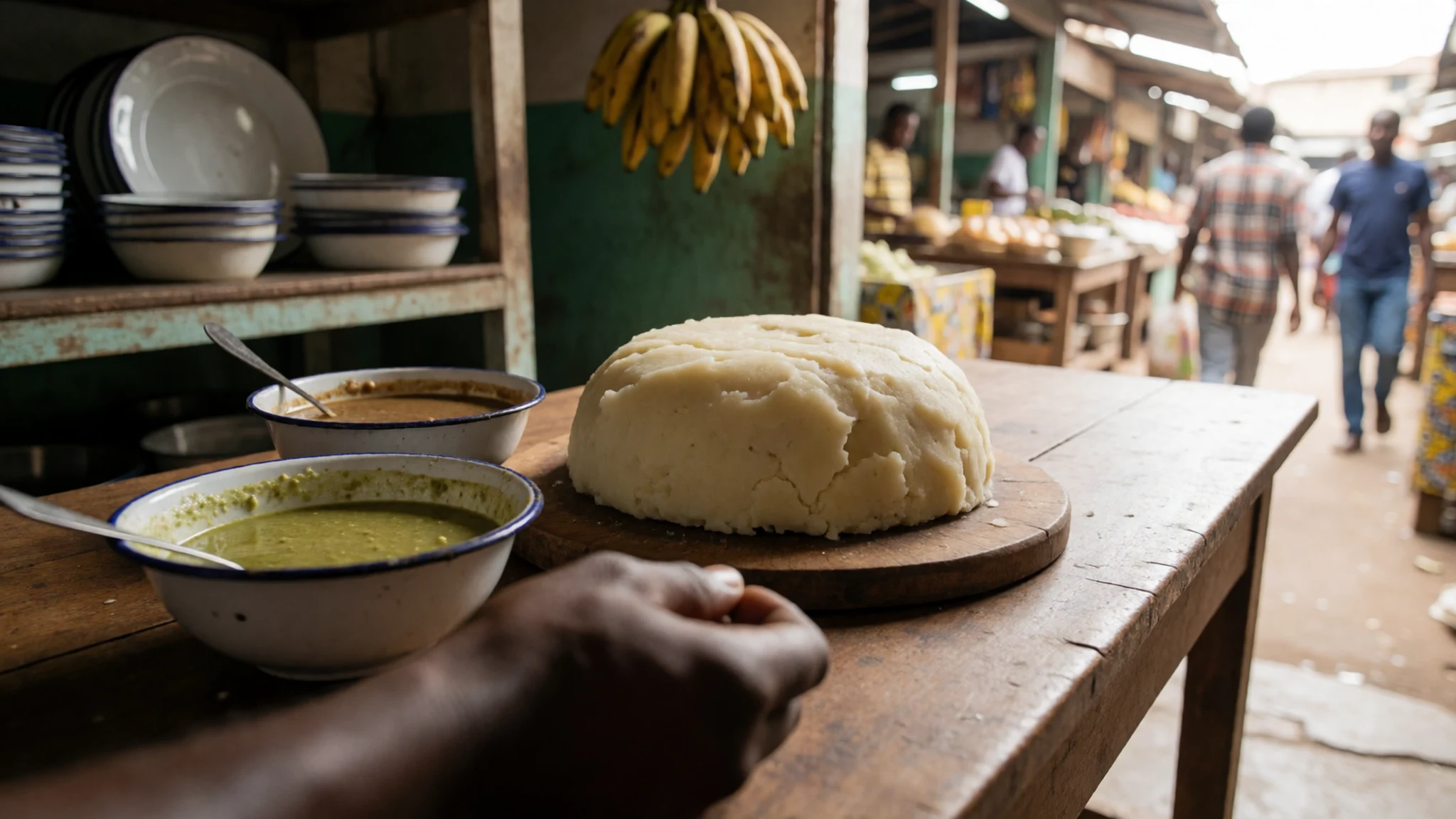
- Alloco — street stands near the taxi park
Alloco is ripe plantain fried in pieces and sold at stands around Man's taxi park and market edges. Eaten plain, with chilli, or beside grilled fish, it fills the wait for a shared car. Stands fold away when the rain is hard. - Kedjenou — cooked-food stalls and simple eateries
Kedjenou in Man is chicken, sometimes other meat, sealed in a pot with vegetables and slow-cooked without added water so the juices make the sauce. Simple eateries and cooked-food stalls in town serve it on ordinary days. Rice or foutou is the usual partner. - Attiéké with grilled fish — evening stalls along the main roads
Attiéké, fermented cassava couscous, is eaten across Man even though its home is the lagoon coast. Evening stalls along the main roads sell it with grilled fish, chopped onion, tomato and chilli. The grains should be slightly sour and the fish still hot.
Plan it
Best time. November to March is the easier window in Man, and December to February are especially settled, with firmer tracks and fewer storms. From about April the rains last into October: the forest is lush, the waterfall runs full, and afternoons often stop for thunder. Dry-season harmattan can hide the peaks.
How long. 2–3
Getting there. Most travellers reach Man by flying into Félix Houphouët-Boigny Airport in Abidjan and continuing by road. Buses and shared taxis cover that inland leg, and the town's taxi park handles the last local hop. Ask which park sends cars towards the interior, and confirm the departure on the morning you leave.
Budget. low
Tips
- Greet people before you ask a price, a direction or a photo.
- Start the waterfall walk in the morning, before rain softens the track.
- Carry cash, because cards are unreliable for taxis, market food and small guesthouses.
- Agree the shared-taxi fare before the car leaves the park.
- If you hope to see a mask, arrange a local host rather than searching alone.
Etiquette
- Ask before photographing people, weavers or masks.
- Do not follow a mask or enter a sacred grove unless a local host invites you.
- Cover shoulders and knees in villages and at mosques, and remove shoes where others do.
Nearby
Sources
- Wikidata (CC0)
- Wikipedia (CC BY-SA 4.0)
- Wikivoyage (CC BY-SA 4.0)
- 01-man-civ-3713.jpg (CC BY-SA 4.0)
- 02-man-c-te-d-ivoire.jpg (CC BY 3.0)
- 03-man-civ-3651.jpg (CC BY-SA 4.0)
- 04-ivoirian-weaver.jpg (CC BY-SA 4.0)
- 05-woman-with-watering-can-dent-de-man.jpg (CC BY-SA 4.0)
- 06-artisan-tisserand-de-la-ville-de-man-en-c-te-d-ivoire-01.jpg (CC BY-SA 4.0)
- 07-artisan-tisserand-de-la-ville-de-man-en-c-te-d-ivoire-02.jpg (CC BY-SA 4.0)
- 08-artisan-tisserand-de-la-ville-de-man-en-c-te-d-ivoire-03.jpg (CC BY-SA 4.0)