Grand-Bassam
Grand-Bassam, Ivory Coast
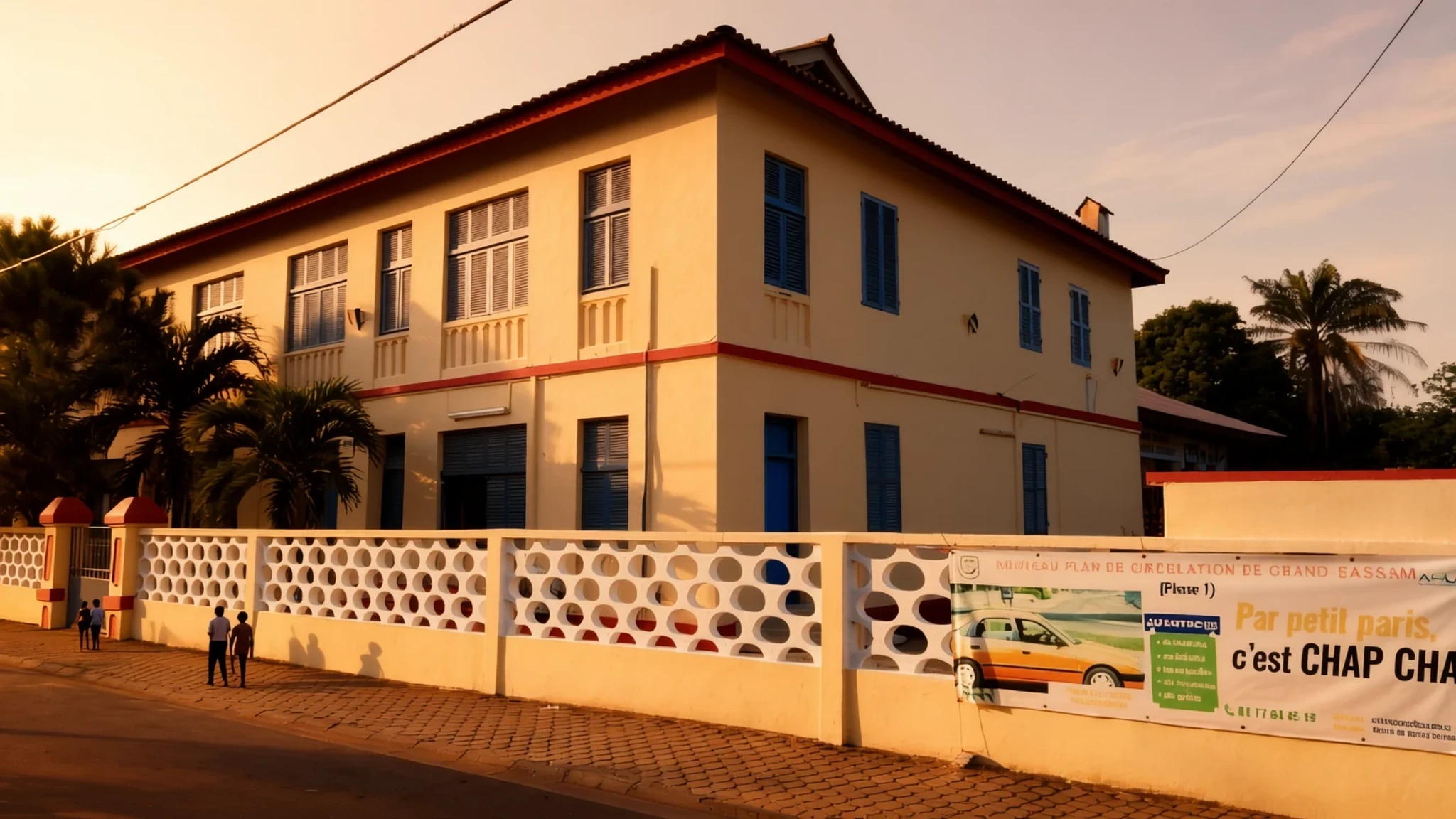
Grand-Bassam pairs a lived-in colonial quarter with lagoon water and an Atlantic beach a short ride from Abidjan.
The place
Grand-Bassam sits on the Atlantic edge of Ivory Coast, where a narrow coastal strip meets a broad lagoon and the road east from Abidjan reaches the old trading shore. The town is split by water. On the seaward side, the historic quarter keeps a grid of low houses with deep verandas, shuttered windows and metal roofs; on the landward side, a busier quarter handles markets, transport and everyday errands. Between them the lagoon is the town's real thoroughfare: pirogues, small boats and a bridge carry people, fish and goods from either bank to the other.
The beach is a working shore as much as a place to swim. Fishing boats are drawn up above the tide line, nets are mended in the shade of the palms, and at weekends families from the capital spread out with coolers and music. The sand is wide and the surf can be strong, so swimming sits more comfortably where local people are already in the water.
What marks Grand-Bassam is the way that colonial fabric is still a neighbourhood. Large sections of houses stood empty for decades, squatters held others for years after 1960, and some areas are still largely abandoned. Paint peels on long-quiet blocks, a late-1970s tourist revival brought galleries and eateries back, and the street life still feels like a ghost town. French is the language of signs and schools; N'zima and other local languages carry the market and the home. The town is close enough to Abidjan for a day out, and complete enough — beach, lagoon, old grid and market — to hold a traveller for several nights.
Its story
Grand-Bassam grew as a trading post on a coast long used by ships, and the French later made the settlement the seat of their colonial administration in Ivory Coast. The plan of the old quarter still reads as that choice: straight streets, official buildings set behind verandas, and merchants' houses turned towards the lagoon and the sea. Goods moved through the river mouth, and the town's weight depended on that anchorage more than on fields of its own.
The capital did not stay. Yellow fever shifted the administration to Bingerville, and Grand-Bassam kept its buildings and its role as a key seaport until Abidjan grew in the 1930s. Houses passed into Ivorian hands, were altered, subdivided and repainted, and the quarter became somewhere people live rather than a monument cleared and restored in a single campaign. That absorption is the story still visible in the streets: a colonial grid taken into a West African town, carrying on after the administrators had gone.
Later decades tied Grand-Bassam to Abidjan. As the economic capital expanded, this shore became its seaside neighbour — a place for weekends, for family ceremonies, and for artists who wanted the old streets without the crush of the city centre. N'zima communities along the coast kept their own calendar, above all Abissa, a new-year festival of dance, satire and reunion that fills the town when it comes around. Memory sits in layers here: a cannon still kept at Fort Nemours, family compounds, church and mosque, and lagoon traffic older than any of them.
What to see
- Ancien Bassam — Historic quarter, seaward of the lagoon
Ancien Bassam is the historic quarter of Grand-Bassam, a compact grid of colonial houses facing the lagoon and the sea. Deep verandas, wooden shutters and shaded courtyards organise daily life, with homes, small galleries and corner shops sharing the same blocks. Mornings suit a slow circuit, when the heat is lower and residents are out on errands, and the quarter reads as a neighbourhood before it reads as a monument.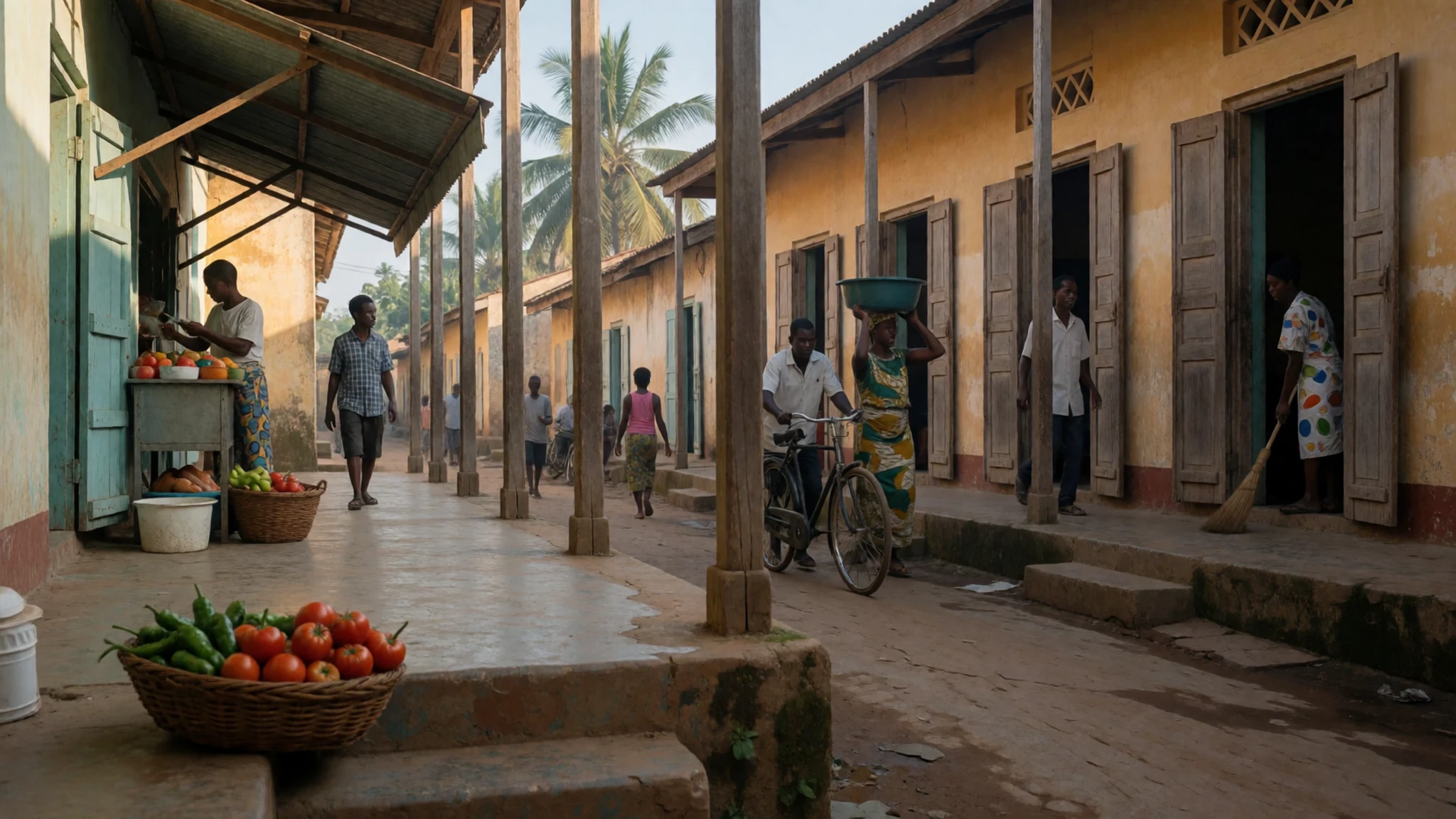
- Fort Nemours — Old quarter
Fort Nemours is the military trace inside Grand-Bassam's old quarter, an early French post on this shore. A recovered cannon is the tangible piece of that garrison past, set among streets that have long since turned back to houses and shops. The site is small and sits naturally on a walk through the surrounding blocks. It remains a layer of the town's memory among lived-in streets.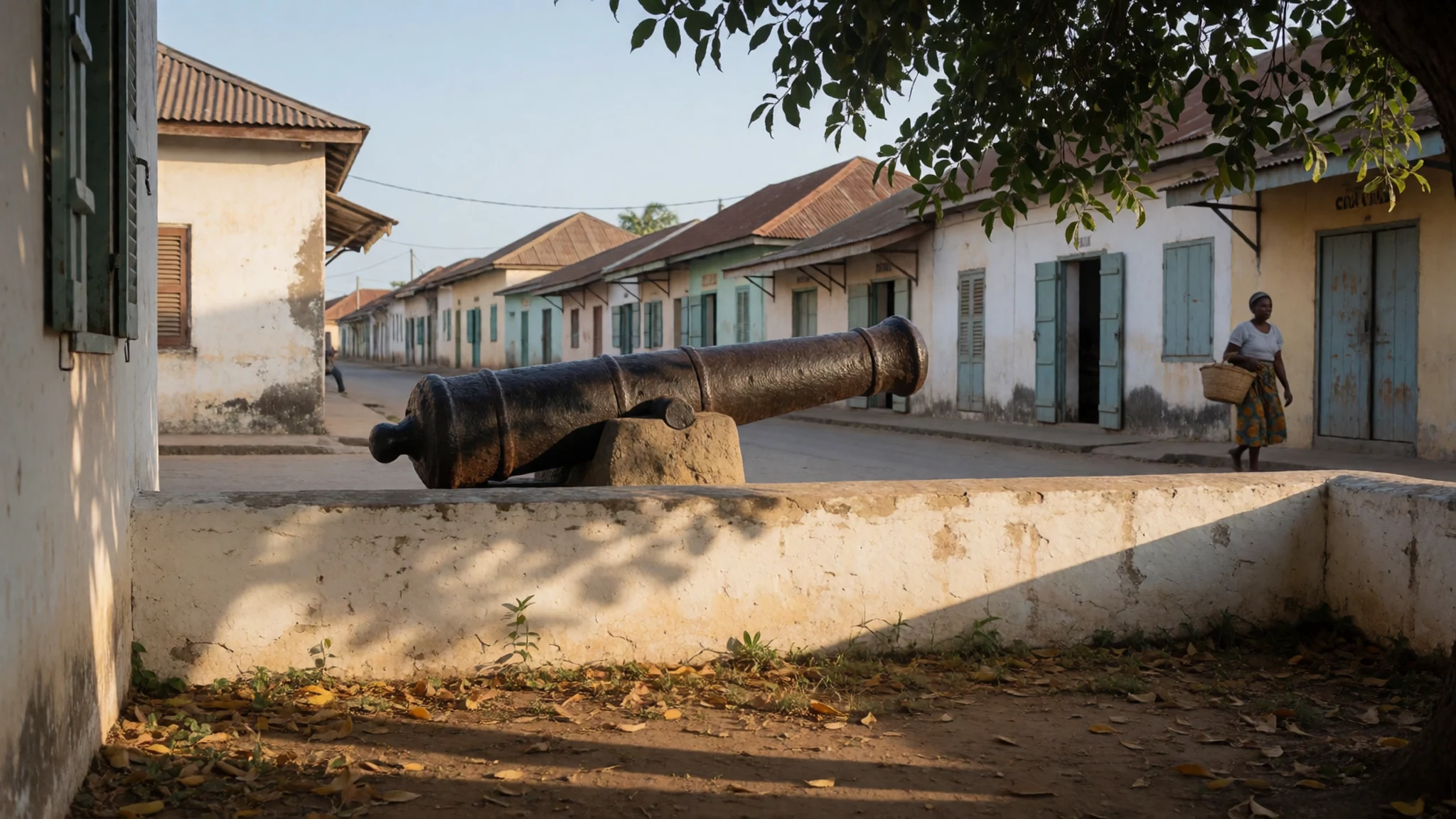
- Grand-Bassam beach — Atlantic shore, seaward of the historic quarter
The beach at Grand-Bassam runs along the Atlantic side of the coastal strip, a wide sandy shore backed by palms. Fishing boats rest above the tide, and weekends draw families from Abidjan. The surf is often energetic, so bathing sits more comfortably where other people are already in the water. Early morning and late afternoon are the kinder hours, once the sand has eased off the worst of the heat.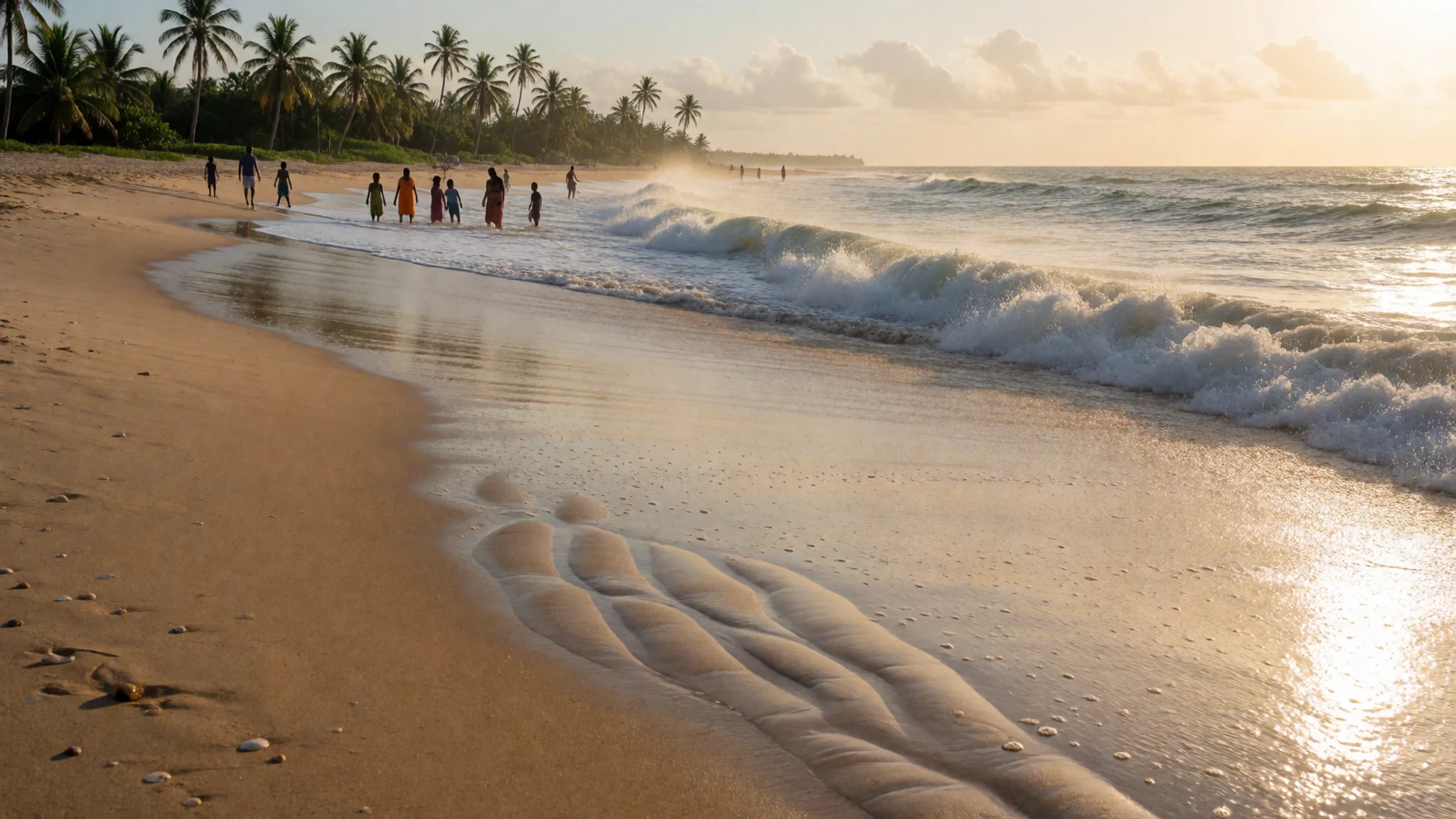
- The lagoon — Between the historic quarter and the mainland
The lagoon at Grand-Bassam separates the historic quarter from the busier mainland side and works as hard as the streets. Pirogues and small boats cross with fish, goods and people, while the bridge takes the road. Mangrove edges and open water change colour with the clouds. From either bank the town's split geography is obvious: old grid on the sea side, everyday commerce on the other.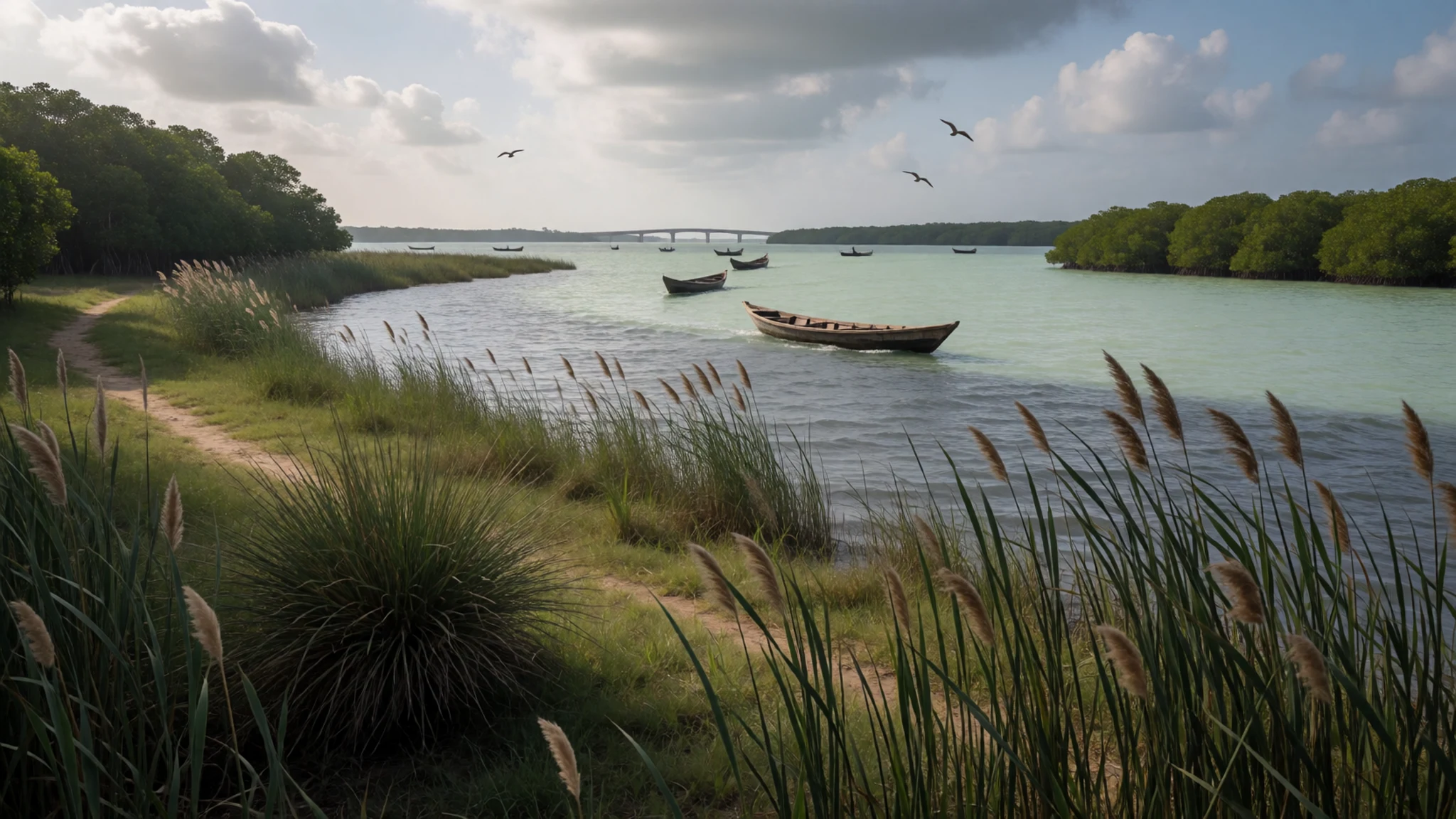
- Nouveau Bassam — Mainland side of the lagoon
Nouveau Bassam is the mainland face of Grand-Bassam, across the lagoon from the historic grid. Market stalls, bus stands and roadside cook-shops carry the daily trade in vegetables, smoked fish and cloth, plus the commute towards Abidjan. Architectural display is thinner here; the noise is that of a working Ivorian town. Food and transport are the reasons to linger; the slower walk belongs to the old grid.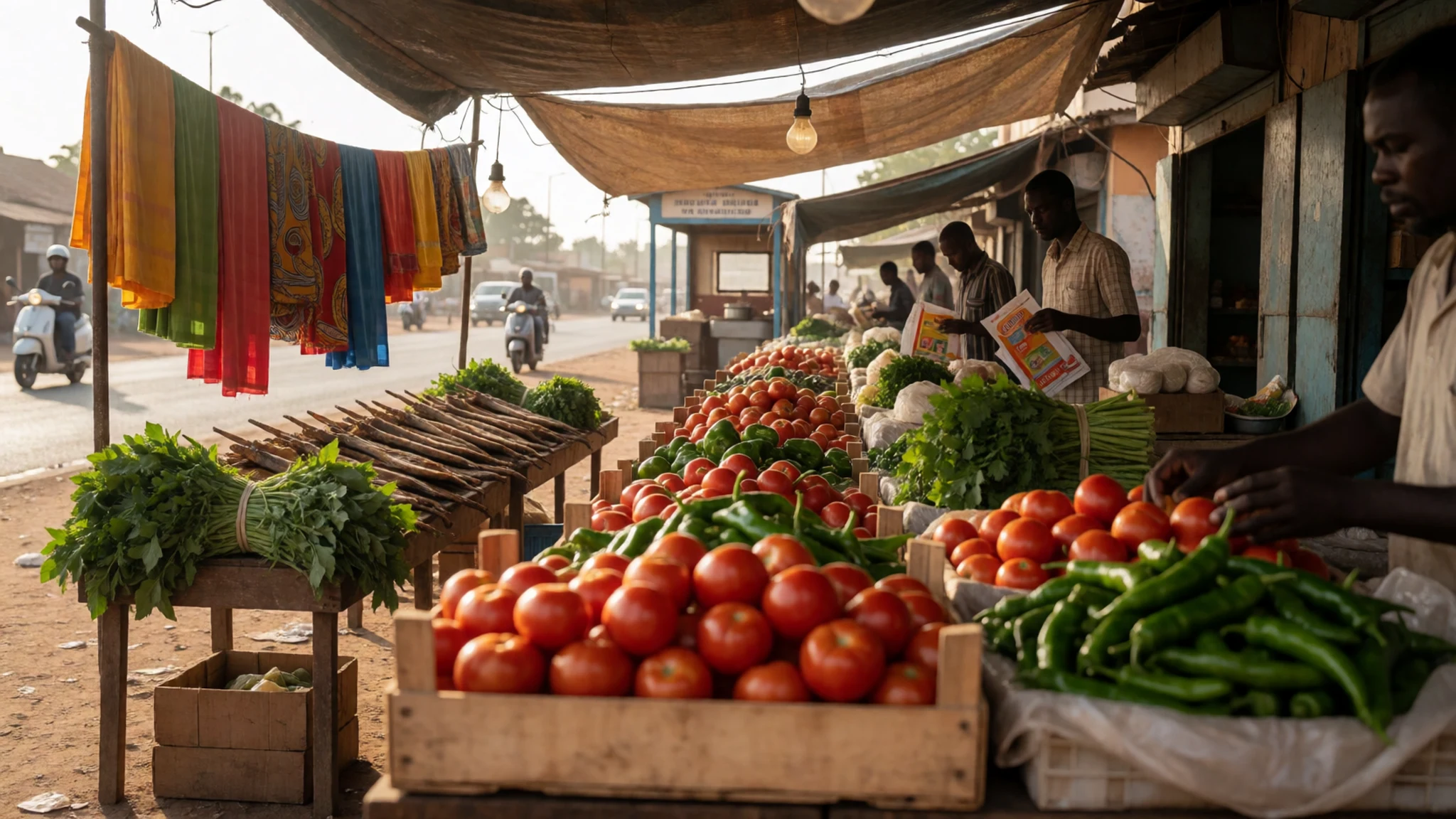
Culture
Grand-Bassam is a N'zima town as well as a colonial grid, and the culture a visitor meets is the coast's, not a museum version of the French period. N'zima and neighbouring Akan-speaking communities keep family ceremonies, chieftaincy and a festival calendar whose centrepiece is Abissa, the new-year celebration. When Abissa is on, dance troupes, satirical songs and processions take over the streets; the humour can be pointed, and the gathering is for the community before it is for onlookers. Churches and mosques both have congregations here, and French sits alongside local languages in the market and the home. Art and making are visible in a practical way: photographers, tailors and small galleries use the old houses, and cloth is still cut and sewn to order for funerals, weddings and the festival season. Weekend life leans towards the beach and the family table, with Abidjan's proximity meaning many residents move between the capital and the coast in a single day. Ask before you photograph people, and stay at the edge of a ceremony unless someone invites you in.
What to wear
In Grand-Bassam, formal and ceremonial dress still means West African cloth cut by a local tailor. Women wear pagne — wax-print cotton — as a wrapper, a fitted dress or a headtie, with the print chosen for the occasion; men wear a tailored shirt and trousers in the same cloth, or a flowing boubou when the event is a funeral, a wedding or Abissa. The textiles are mostly cotton wax print, bright and densely patterned, bought by the length in the market and sewn to measure rather than picked off a rack. Everyday dress is lighter and more mixed. On an ordinary weekday the street shows printed dresses and shirts alongside jeans, football tops and simple sandals, because the heat and the sand make heavy clothing impractical. Office workers heading for Abidjan dress sharper in the morning and relax it once they are back on the coast. For a visitor, the useful wardrobe is breathable cotton, a sun hat and footwear that can take sand, paved lanes and a boat step. Swimwear belongs on the beach; a shirt or a wrap is the right extra layer for the quarter, a shop or a place of worship. Shoulders and knees covered, and shoes easy to slip off, will suit both the climate and the courtesy of the town.
What to eat
- Attiéké with grilled fish — Beach grills and lagoon-side cook-stalls
Attiéké is the cassava couscous of the Ivorian coast, and in Grand-Bassam it comes with grilled fish, onion and chilli. Beach grills and lagoon-side cook-stalls serve it on a shared plate, the grains steamed and slightly sour, the fish hot off the grate.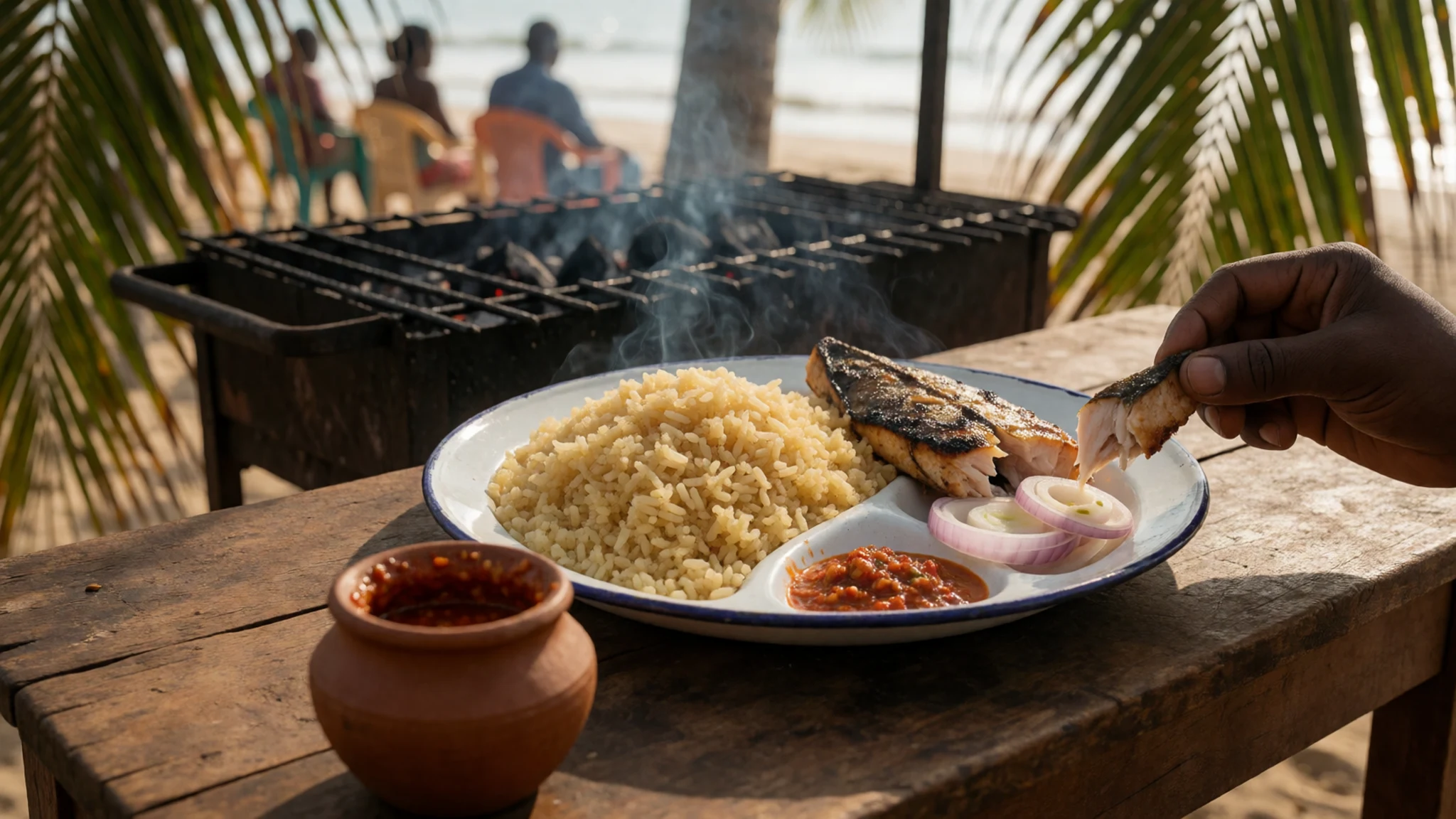
- Alloco — Street stalls on the mainland side and near the beach
Alloco is ripe plantain fried in pieces and sold across Grand-Bassam as a snack or a side. Street stalls on the mainland side and near the beach turn it out in paper, often with a pepper sauce and sometimes with grilled fish.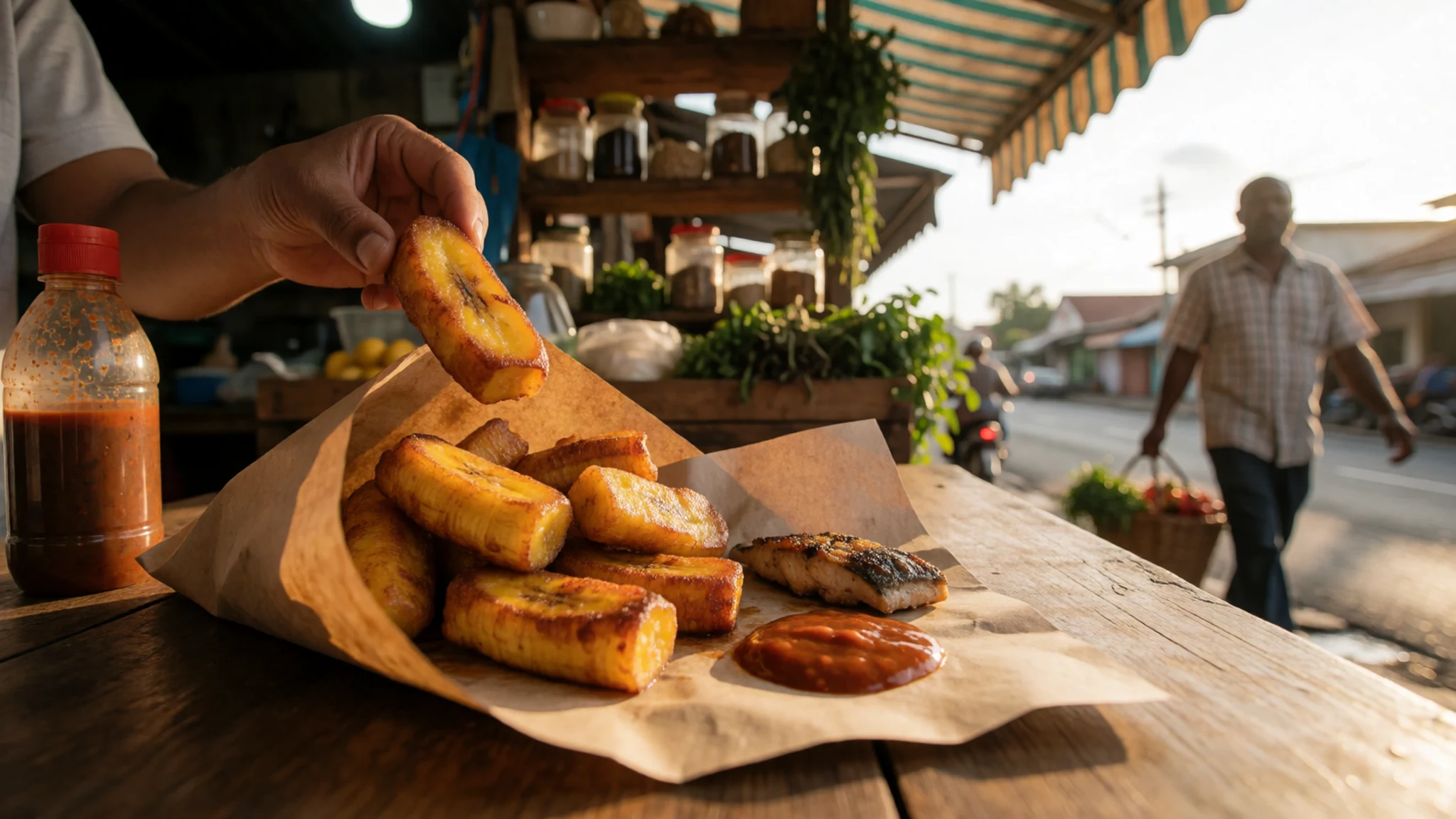
- Garba — Roadside cook-stalls on both sides of the lagoon
Garba is the cassava-and-tuna plate associated with Abidjan, and Grand-Bassam's cook-stalls serve it to beach crowds: attiéké with fried tuna, onion, tomato and chilli. Roadside spots on both sides of the lagoon sell it from midday into the evening, wrapped or plated, meant to be filling rather than formal. - Kedjenou — Eateries set back from the beach
Kedjenou is chicken sealed in a pot with vegetables and slow-cooked so the sauce comes from the ingredients. In Grand-Bassam it shows up at eateries set back from the beach, often with attiéké or rice, and it is a weekend lunch rather than a walking snack. - Sauce graine — Sit-down eateries around the market and in the historic quarter
Sauce graine is palm-nut sauce, rich and red-orange, served in Grand-Bassam with rice or foutou and a piece of fish or meat. Sit-down eateries around the market and in the historic quarter are the places to find it, more often at lunch than at a beach grill. - Bouillie de mil — Morning stalls and household kitchens
Bouillie de mil is a millet porridge eaten in Grand-Bassam at the start of the day, often with galettes, the small fried cakes that go with it. Morning stalls and household kitchens, rather than the beach grills, are where it appears.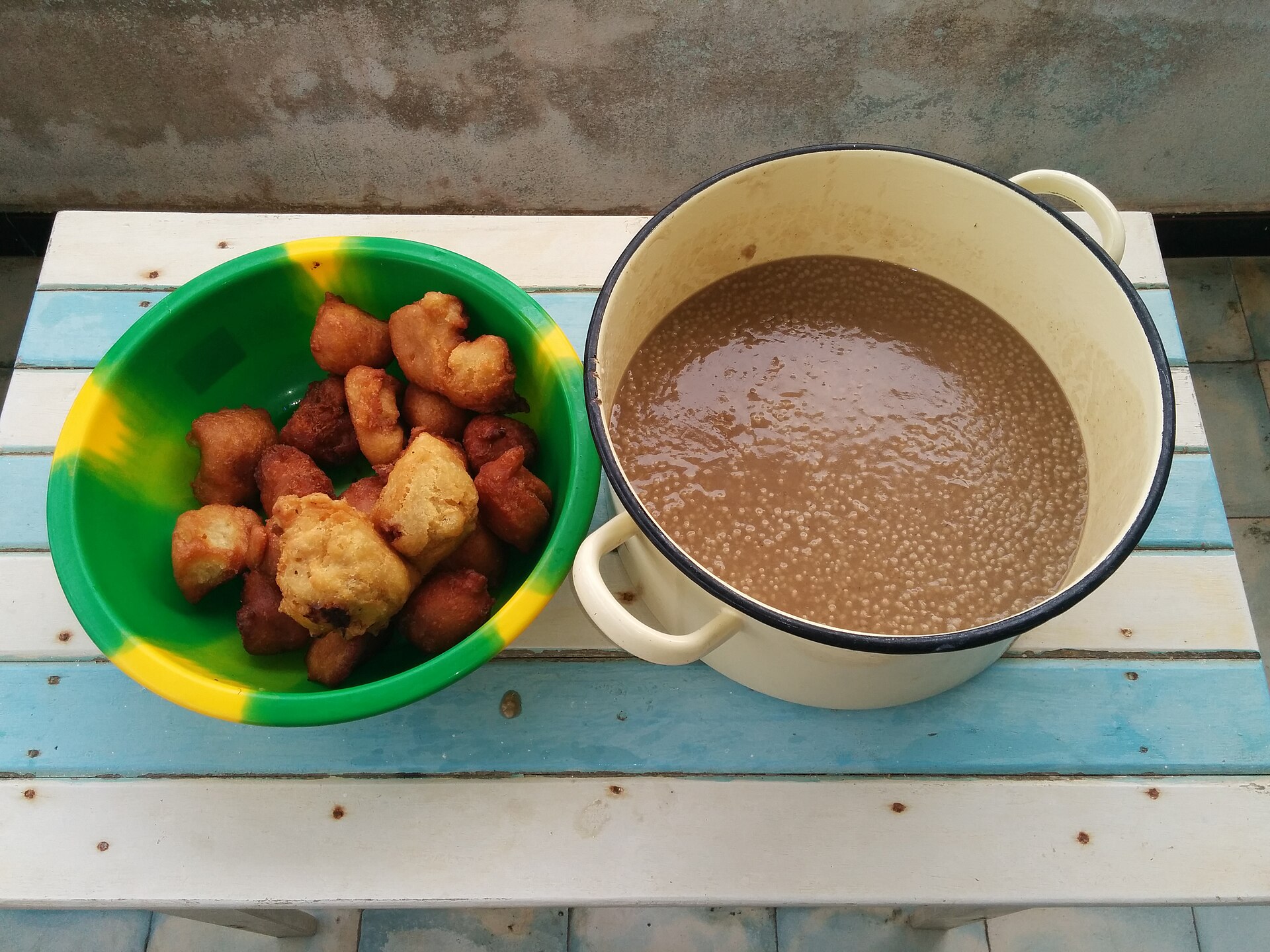
Plan it
Best time. Grand-Bassam is hottest from December to February, when rain is light and the sun is strongest, and most comfortable in August, the driest month and the mildest. May and June are the wettest months, April and October are wet as well, March is already rainy, July eases, and November is only moderately wet. Humidity stays high through most of the year, so shade and an easy pace matter even when the sky is clear.
How long. 2–3
Getting there. Félix Houphouët-Boigny International Airport in Abidjan, then the coastal road east to Grand-Bassam. Shared taxis and minibuses ply the route, and a hired car is the simpler option with luggage. There is no train into the town. The last stretch reaches the lagoon, where a bridge links the mainland quarter with the historic grid.
Budget. mid
Tips
- Start a walk through the old quarter in the morning, before the heat builds
- Weekends draw Abidjan crowds to the beach; a weekday is quieter
- Carry some cash for cook-stalls, boats and small shops
- Swim where local people are already in the water; the surf can be strong
- Sort the ride back to Abidjan before late afternoon, when shared cars thin out
Etiquette
- Ask before photographing people, and do not photograph private courtyards
- Off the beach, cover shoulders and knees, especially near churches and mosques
- Greet before buying or asking a question; a hello in French opens the exchange
- Stay at the edge of Abissa or any ceremony unless invited closer
Nearby
Sources
- Wikidata (CC0)
- Wikipedia (CC BY-SA 4.0)
- Wikivoyage (CC BY-SA 4.0)