Abidjan
Abidjan, Ivory Coast
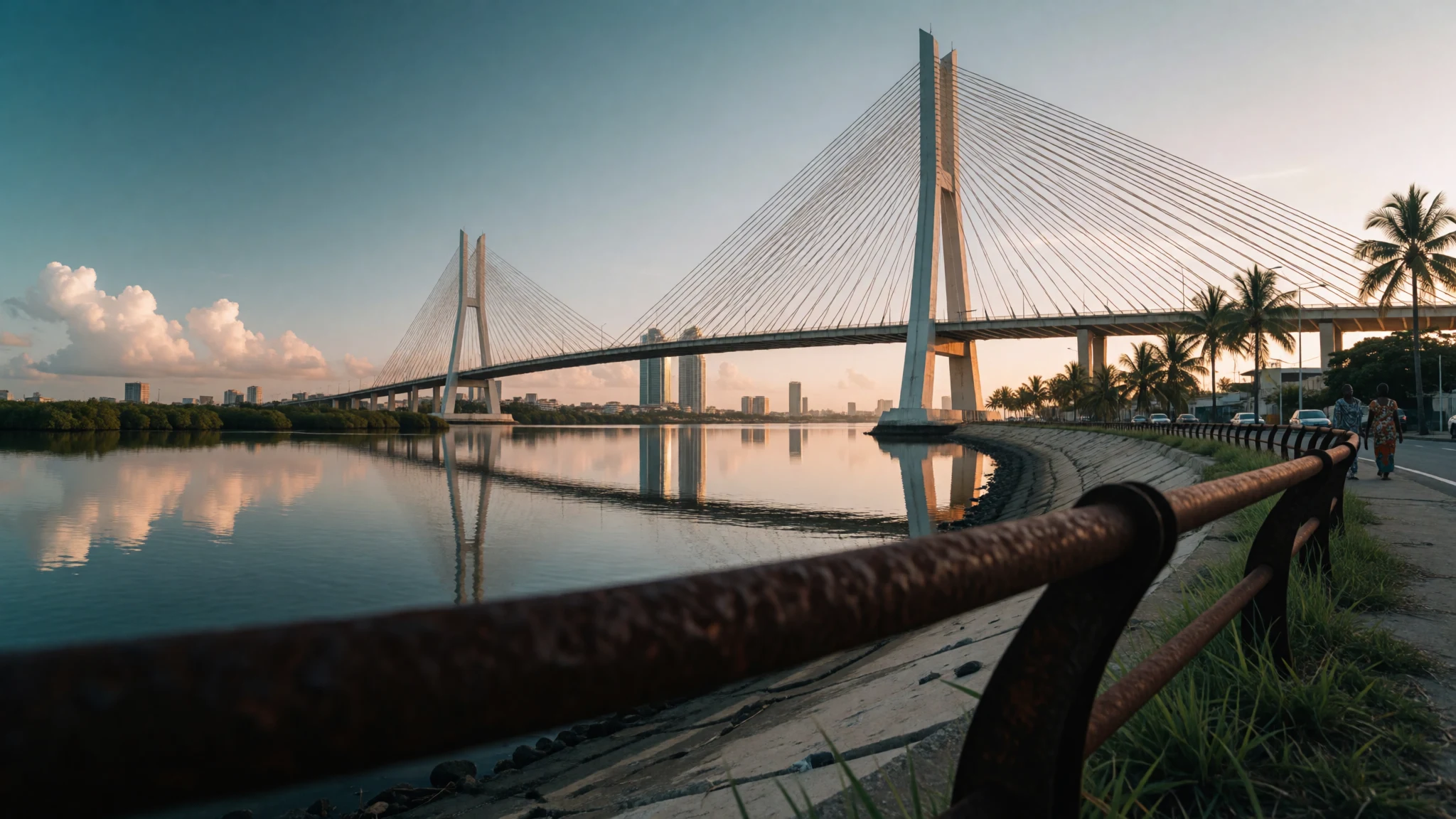
Abidjan is a lagoon city of towers, bridges, markets and music in West Africa, rewarding for those who can take heat and traffic slowly.
The place
Abidjan sits on the Ebrié Lagoon, on the southern coast of Ivory Coast, at an elevation of only 18 metres. About 6.3 million people live here. It is the country's economic capital, even though the official political capital moved to Yamoussoukro in 1983. Many government institutions and all the foreign embassies stayed behind, so Abidjan still feels like the place where decisions and deals are made.
Water shapes the city. Inlets and bridges split it into districts with very different moods. Le Plateau is the business centre, a tight cluster of towers with a cathedral and a mosque among them. Treichville and Marcory lie across the water to the south, busier and more working-class, with big markets, music venues and the port close by. Cocody, to the east, is leafier and holds universities, galleries and many embassies. Further south, the Atlantic beaches at Port-Bouët are divided from the lagoon by a narrow strip of land, cut through by the Vridi Canal.
Heat and humidity are constant, rush-hour traffic is heavy, and the tempo is quick. French is the common language, mixed with Ivorian languages and a lively street French heard in taxis and markets. Anyone expecting a preserved old town will not find one. The appeal is a working West African metropolis, with its restaurants, nightlife, art spaces and lagoon views, best explored one district at a time and by water taxi where possible.
Its story
Abidjan began as a small fishing settlement of the Atchan people on the lagoon shore. The modern city dates from 1898, when French administrators gave up Grand-Bassam, a coastal post plagued by yellow fever, and chose this healthier ground instead. The colony's capital sat for a time in nearby Bingerville, but Abidjan had what commerce needed: space to build, a sheltered lagoon and, soon, a railway.
In 1904 the rail line reached the Petit-Bassam shore, now Port-Bouët, and goods from the interior began meeting ships there. Abidjan became the colony's main trading hub, with Lebanese merchants prominent in distribution. The decisive change came in 1951, when the Vridi Canal was opened. It linked the lagoon to the ocean and let Abidjan work as a true seaport.
After independence from France in 1960, Abidjan stayed the capital. Under the long presidency of Félix Houphouët-Boigny it grew fast and earned the nickname 'Paris of West Africa' for its modern towers, boulevards and confidence. In 1983 Yamoussoukro was named the political capital, yet Abidjan kept the economy, the port and the embassies.
Political instability and civil war in the following decades took a toll. Buildings and public spaces were neglected, and many foreign residents left. Some of that faded grandeur is still visible, but the city has kept building, with new bridges, towers and cultural venues sitting beside older neighbourhoods that never stopped working.
What to see
- Le Plateau and the Pont ADO — Le Plateau
Le Plateau is the compact business district, and the Pont Alassane Ouattara, known as the Pont ADO, is the cable-stayed bridge that frames it from across the water. The skyline is best seen from the bridge approaches or the lagoon edge, ideally in morning light before haze and traffic build.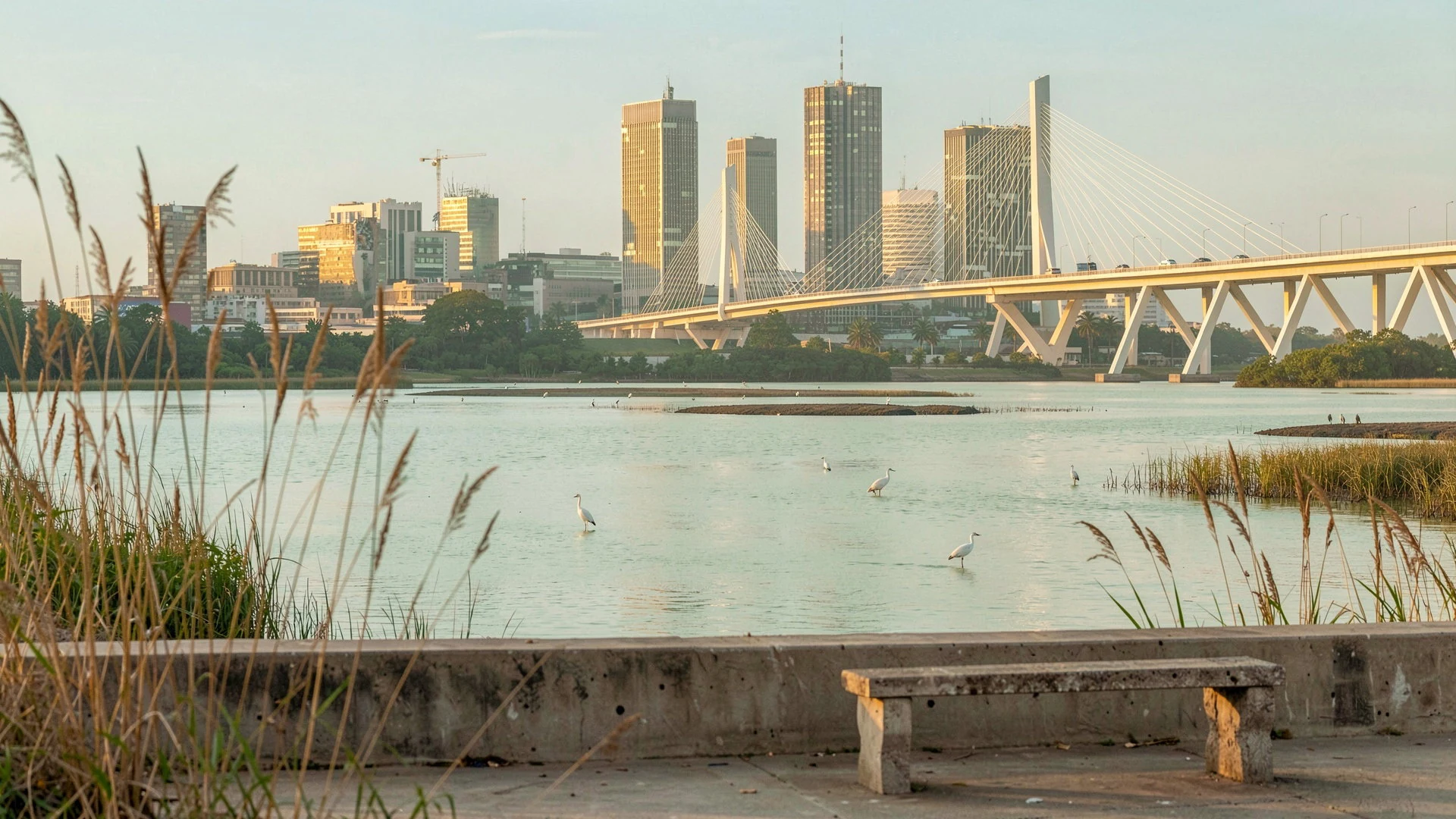
- Cathedral of Saint Paul — Le Plateau
Saint Paul's Cathedral rises above the Plateau skyline and is a landmark for finding one's bearings in the district. Its modern form is striking from outside, and photographs taken from its courtyard show how the bridge and towers line up. Go outside service times and dress modestly.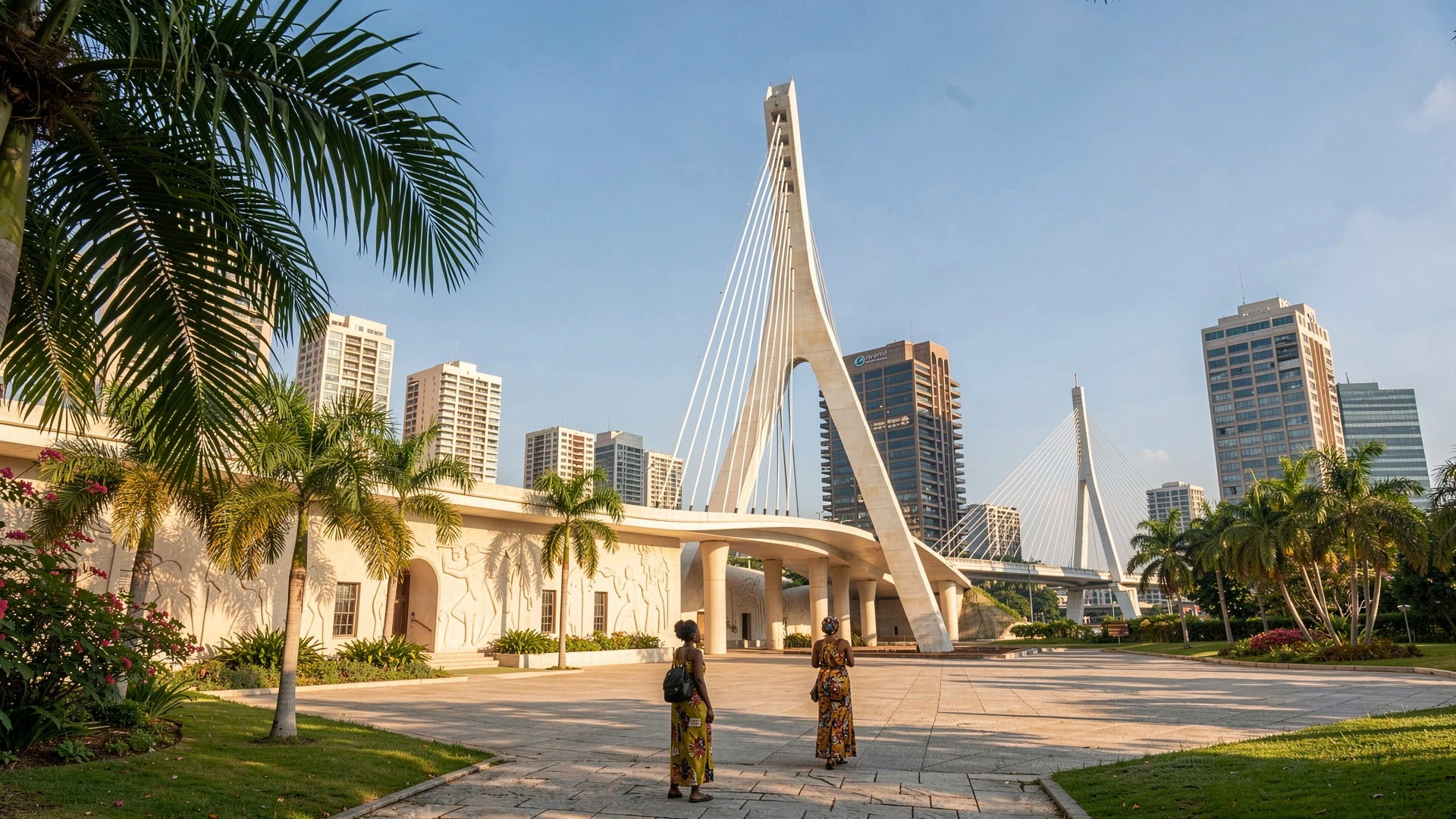
- Museum of Civilisations of Côte d'Ivoire — Le Plateau
The national museum opened in 1942 and holds archaeological and ethnographic collections. Its displays of Ivorian art include masks, statues, jewellery, tools, carved doors and musical instruments from across the country. It is a good first stop for making sense of the regions and peoples beyond the city.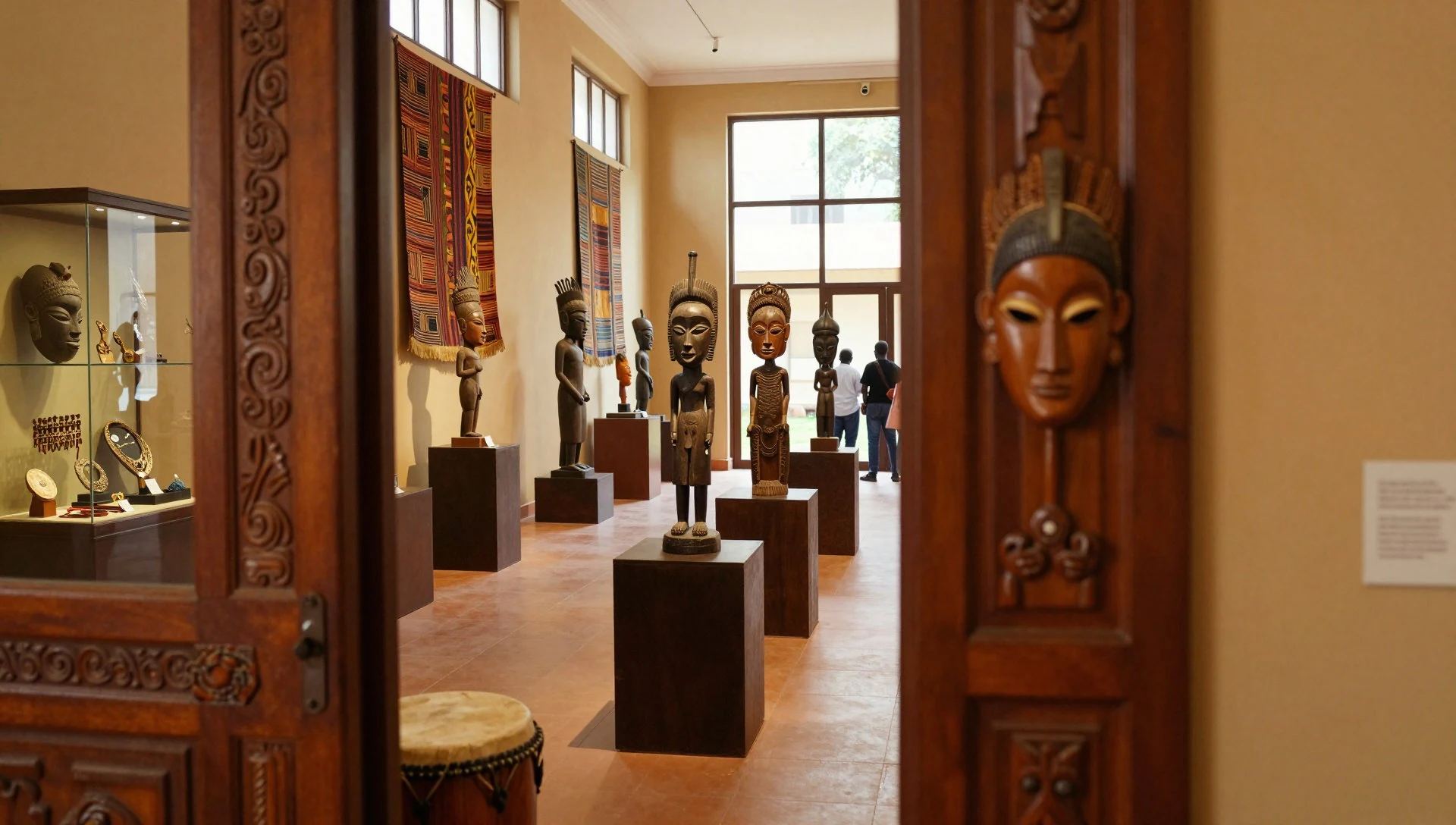
- Banco National Park — North of the city
Banco is a forest reserve of about 30 km² just north of the built-up area, with tall tropical hardwoods such as mahogany. Several walking trails make it a cool, shaded break from the pavements. Go early, bring water and insect repellent, and check access arrangements before setting out.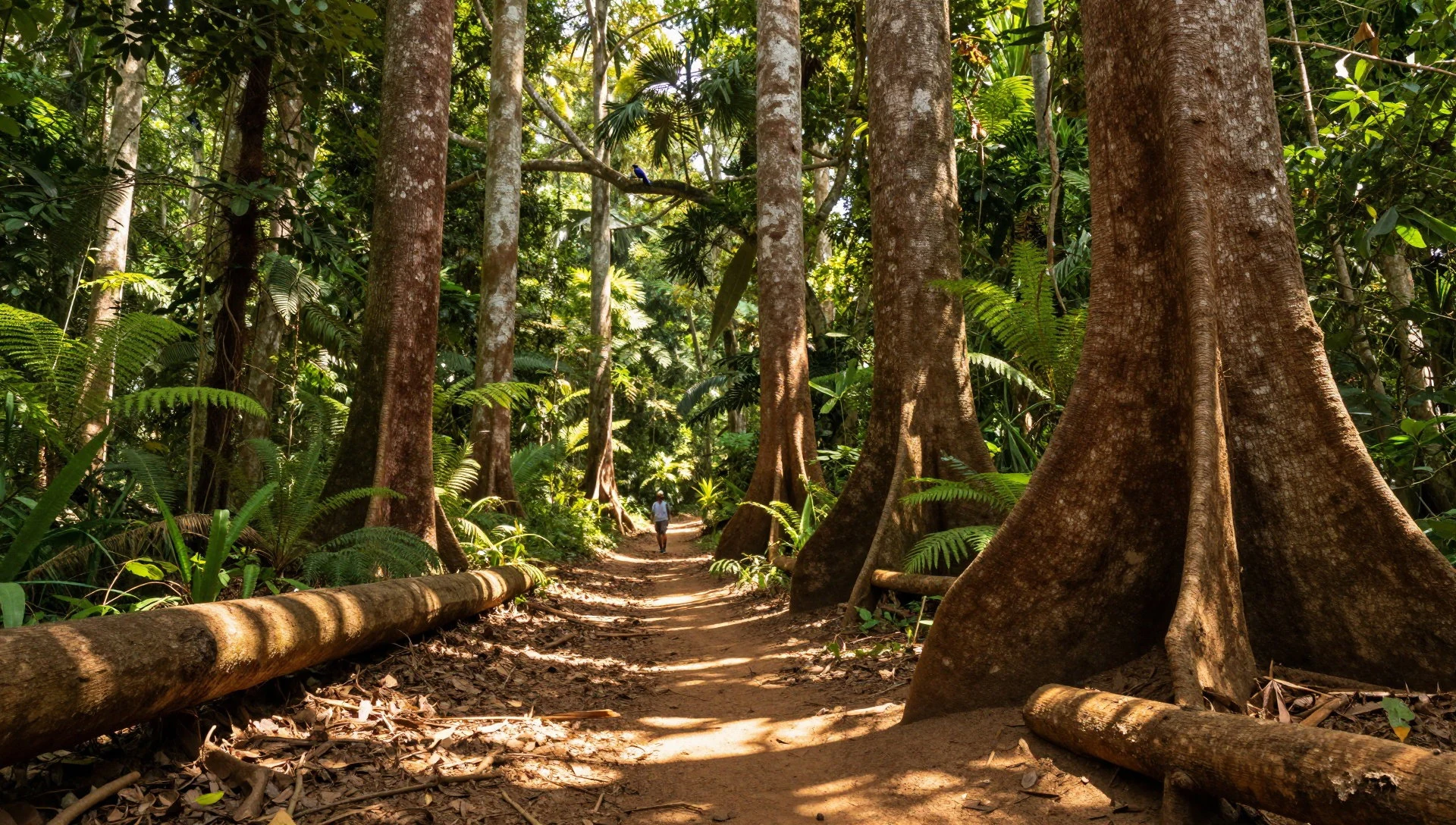
- The Ebrié Lagoon — Across the city
The lagoon is the reason Abidjan sits where it does, and it remains the clearest way to understand the city's layout. Water taxis and ferries link several districts, and the shoreline offers views of towers, bridges and fishing boats. Late afternoon, with the heat easing, is the most comfortable time.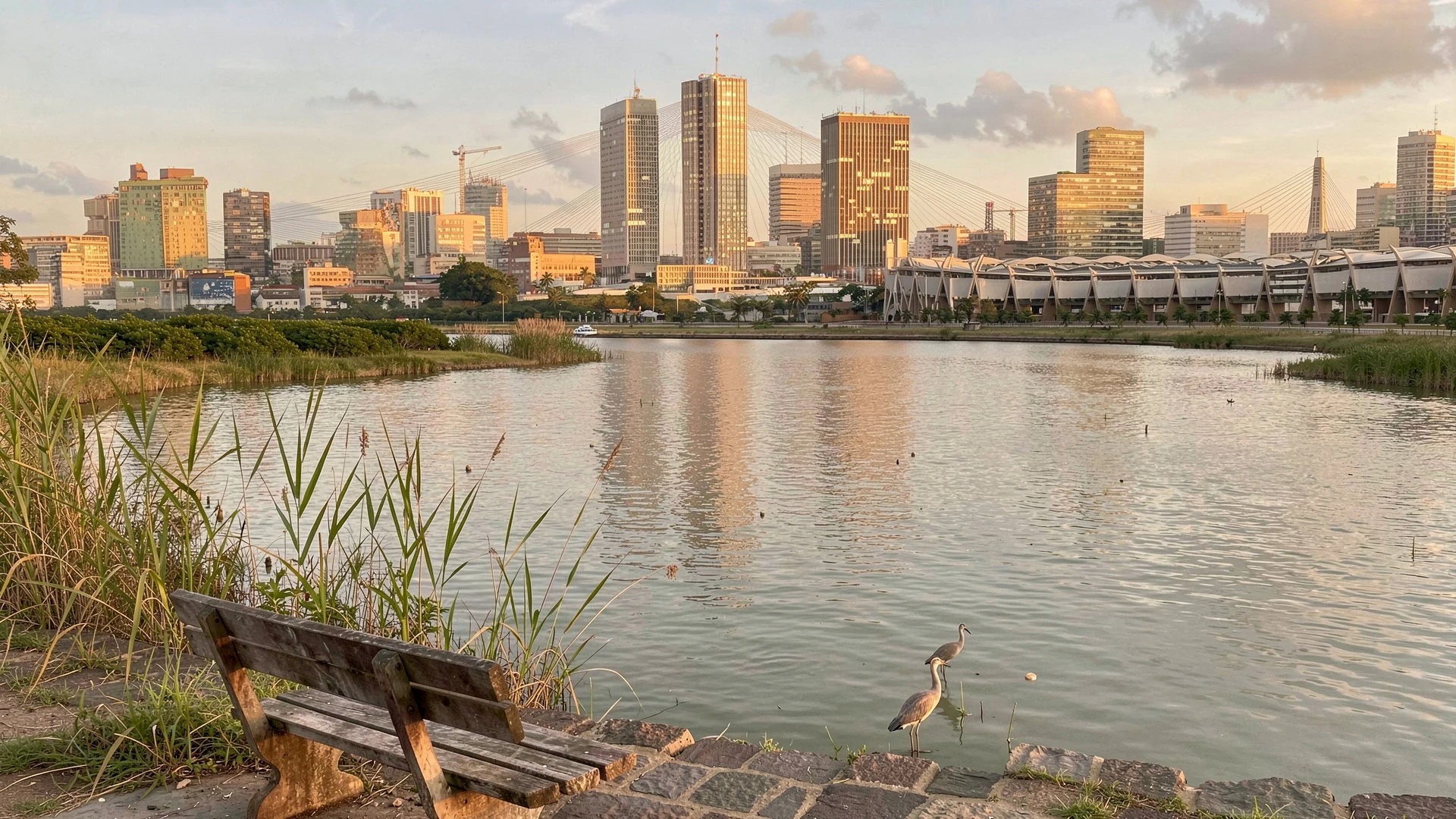
Culture
Abidjan is a city of many peoples, drawn from every region of Ivory Coast and from neighbouring countries, and its culture is shaped by that mixture. Christian churches and mosques stand within sight of each other in the centre, and religious practice is part of ordinary public life. Social life leans on greetings, humour and long conversations, and a rushed approach tends to be noticed.
The city's cultural institutions cluster in a few districts. In Le Plateau, the Museum of Civilisations and the French Cultural Centre are close together. Cocody has a municipal museum, a contemporary art museum, the Goethe Institute and the Ki Yi M'Bock Village, a centre for performance and the arts. Treichville has the Cultural Palace and the Sports Palace, which host concerts and events.
Music is central to the city's identity. Dance styles that began in Abidjan's neighbourhoods, such as zouglou and coupé-décalé, are heard in bars, open-air eateries and taxis, and a night out often begins late and runs long. Football is followed with equal passion, and match days can fill streets and cafés with supporters.
Traditional values still matter in daily encounters: respect for elders, modest manners and patience with formality. Visitors who show interest in local languages and customs are usually met with warmth.
Greet people with a polite 'bonjour' before asking anything, and ask permission before photographing individuals, officials, bridges or government buildings.
What to wear
Fashion in Abidjan mixes inherited cloth traditions with a confident, modern tailoring scene. Traditional dress across Ivory Coast uses the pagne, a wrapped or sewn length of cloth, most often brightly patterned wax-print cotton. Prestige cloths include hand-woven strip cloth from Baoulé communities and painted cloth from the Senufo north around Korhogo. Flowing boubou robes are common among Muslim communities. These outfits appear at weddings, funerals, naming ceremonies, religious festivals and on formal occasions.
Day to day, people dress for the heat. Offices in Le Plateau lean towards smart shirts, suits and neat dresses, while markets and neighbourhood streets show jeans, football shirts and relaxed cotton. Many residents have clothes made by a local tailor, so wax-print fabric often turns up in fitted dresses, shirts, skirts and sharp two-piece sets. Appearance matters, and people tend to dress well even for errands.
Visitors should pack light, breathable cotton or linen in loose cuts, with a hat and sunglasses for midday. Shoulders and knees should be covered for churches, mosques and family settings, and a light scarf is useful. Comfortable closed shoes or sturdy sandals suit uneven pavements and puddles, and a compact rain jacket helps in the wet months. Beachwear belongs on the beach, not in town. A tailored wax-print piece makes a good souvenir and fits in well.
What to eat
- Attiéké with grilled fish — Open-air eateries and street stalls, especially in Treichville and Marcory
Attiéké is fermented cassava grated into a light, slightly sour couscous-like side. It is served with grilled fish, onions, tomato and chilli. This is one of the most common meals in the city, eaten at lunch from simple roadside stalls.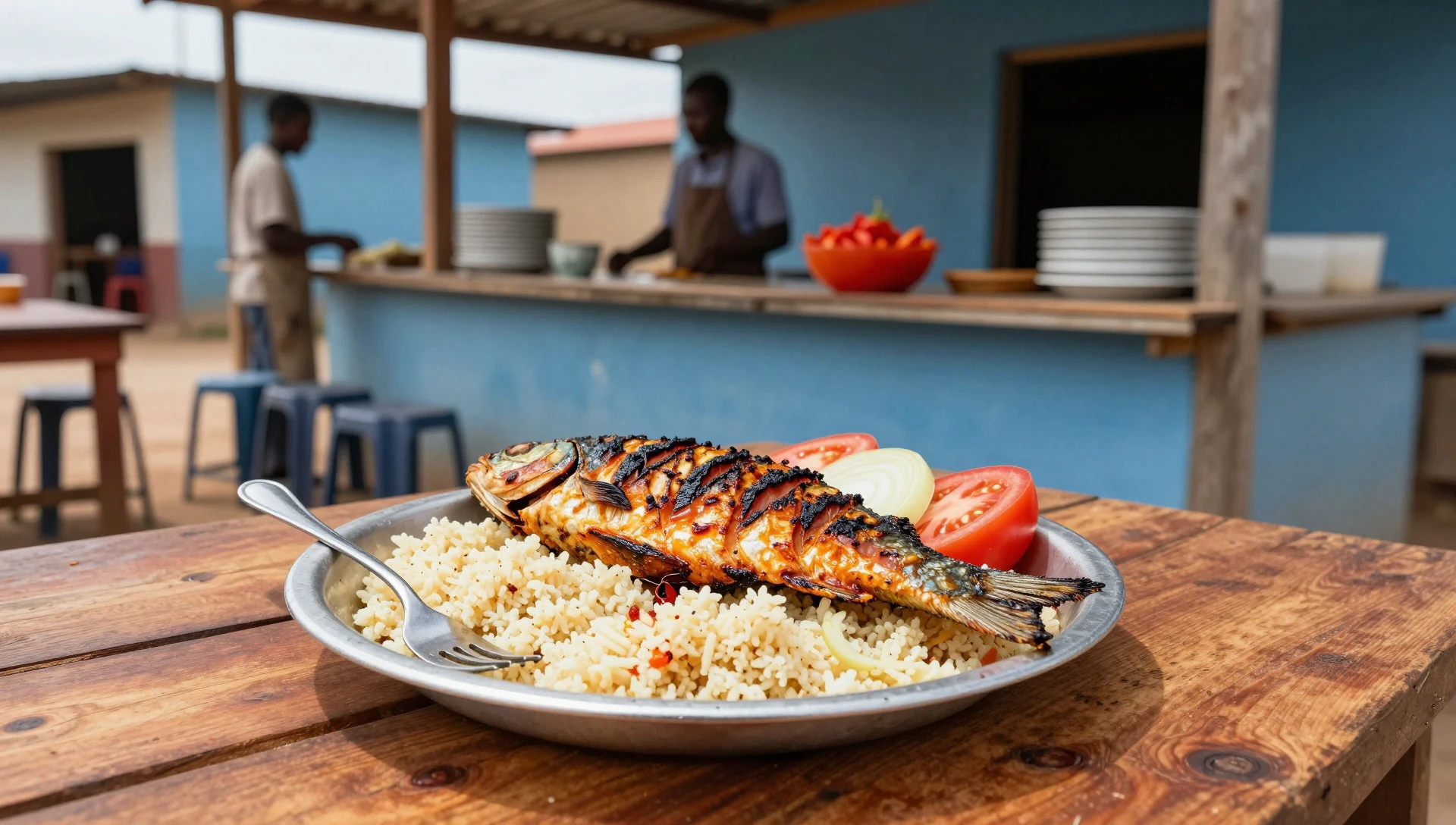
- Alloco — Street corners and evening stalls across the city
Alloco is ripe plantain fried until golden and sweet at the edges. It is sold hot in paper or plastic bags, often with a spicy tomato and onion sauce, and sometimes with fried fish or eggs. A cheap, filling snack at any hour.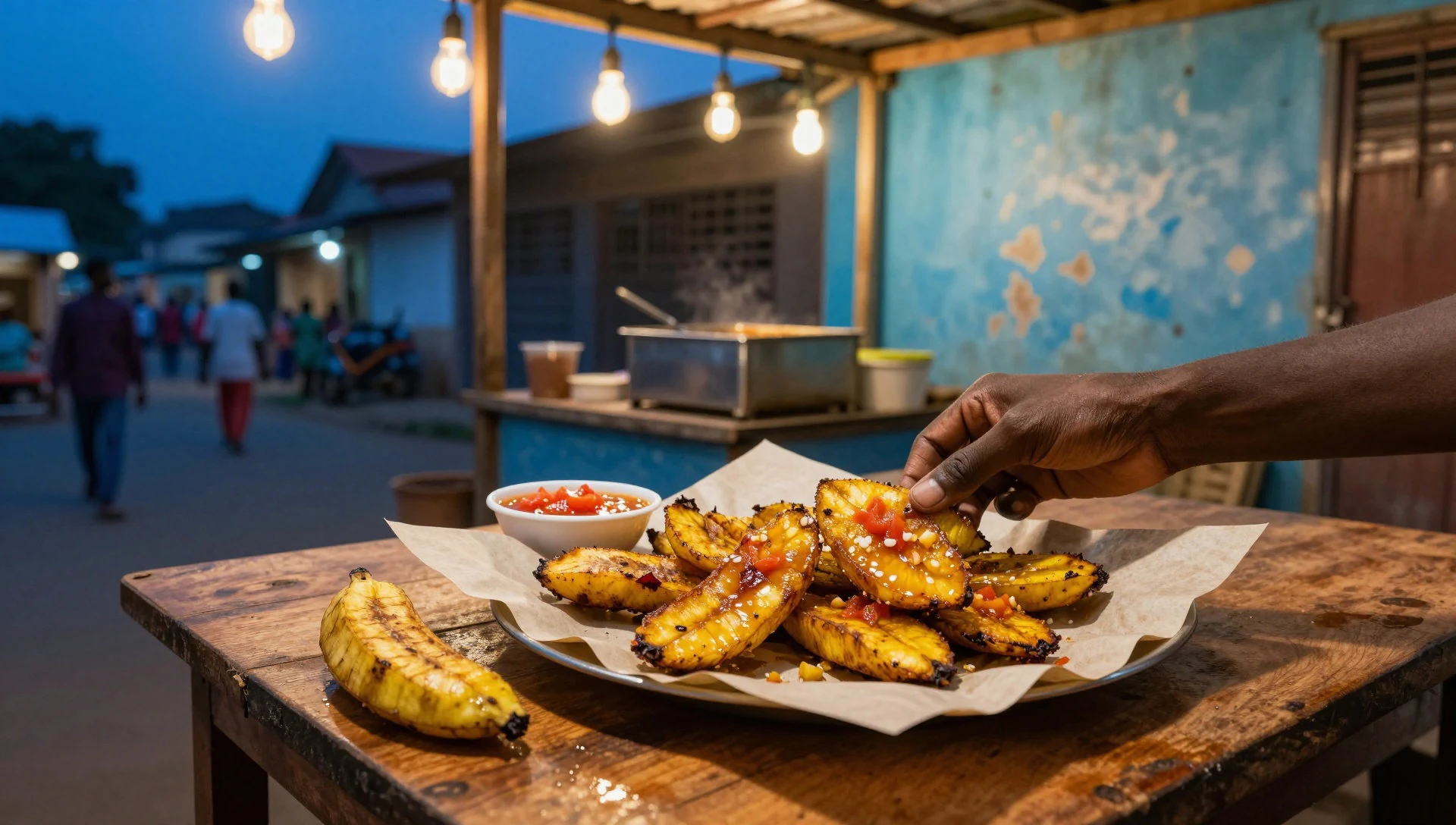
- Kedjenou — Ivorian restaurants and family-run eateries
Kedjenou is chicken, sometimes guinea fowl, slow-cooked with vegetables, ginger and chilli in a sealed pot, so it steams in its own juices. It is rich and gently spicy, normally served with rice, attiéké or yam. - Garba — Informal lunch counters and street stalls, often near markets
Garba pairs attiéké with fried tuna and a chilli-onion relish. It is a classic budget lunch, eaten quickly with the fingers at plastic tables. Expect plenty of heat from the pepper and a very busy lunchtime queue. - Foutou with sauce — Neighbourhood restaurants and family-run eateries
Foutou is a smooth, stretchy dough pounded from yam, cassava or plantain. It is shaped into balls and eaten with groundnut, palm-nut or okra sauce, often with meat or fish. Yam and cassava are core staples of Ivorian cooking, so it is a good introduction to home cooking.
Plan it
Best time. December to February is the drier, sunnier stretch, though it stays hot and humid. The long rainy season arrives in March and runs to July, and heavy downpours can flood roads and slow traffic. A shorter wet spell often returns around October and November.
How long. 3–4
Getting there. Abidjan's international airport at Port-Bouët has regular flights from Istanbul, Paris, Brussels, Lisbon, Nairobi, Addis Ababa and Dubai (via Accra), which suit travellers from India and the UK. The last leg into town is by taxi or ride-hailing; agree the fare before setting off. Visas can be applied for online, and a reply usually comes quickly; check the current rules before booking.
Budget. mid
Tips
- Apply for the visa online well ahead, and check health entry requirements, including yellow fever and malaria prevention, with a travel clinic
- Agree taxi fares before getting in, and avoid rush hours when crossing the bridges between districts
- Carry cash for street food and small stalls; cards work mainly in larger restaurants and shops
- Carry a photocopy of your passport and ID, as road checkpoints are common outside the centre
- Drink bottled or filtered water, and do the outdoor sightseeing early before the heat peaks
Etiquette
- Greet people before asking a question, a simple 'bonjour' goes a long way
- Ask permission before photographing people, and avoid photographing bridges, officials or government buildings
- Dress modestly at churches, mosques and in family settings
Nearby
Sources
- Wikidata Q1515 (CC0)
- Wikipedia: Abidjan (rev 1384747974) (CC BY-SA 4.0)
- Wikivoyage: Abidjan (rev 5423492) (CC BY-SA 4.0)
- Plateau 2010, Abidjan — RyansWorld (CC BY 3.0)
- Le Plateau depuis le Pont ADO à Abidjan — Edison McCullen (CC BY 4.0)
- Visite du musée de civilisation de Côte d'Ivoire 08 — Abiba Pauline (CC BY-SA 4.0)
- La lagune Ebrié, Abidjan — Yduffi (CC BY 4.0)
- Vue d'ensemble du pont Hauban, Abidjan — Jean Yves ESSIGAN (CC BY 4.0)
- Pont ADO, Abidjan — Edison McCullen (CC BY 4.0)
- Cathédrale Saint-Paul d'Abidjan en vue panoramique — Edison McCullen (CC BY 4.0)
- Mosquée du Plateau d'Abidjan — Alex Sirac (CC BY 4.0)


