Grand-Béréby
Grand-Béréby, Ivory Coast
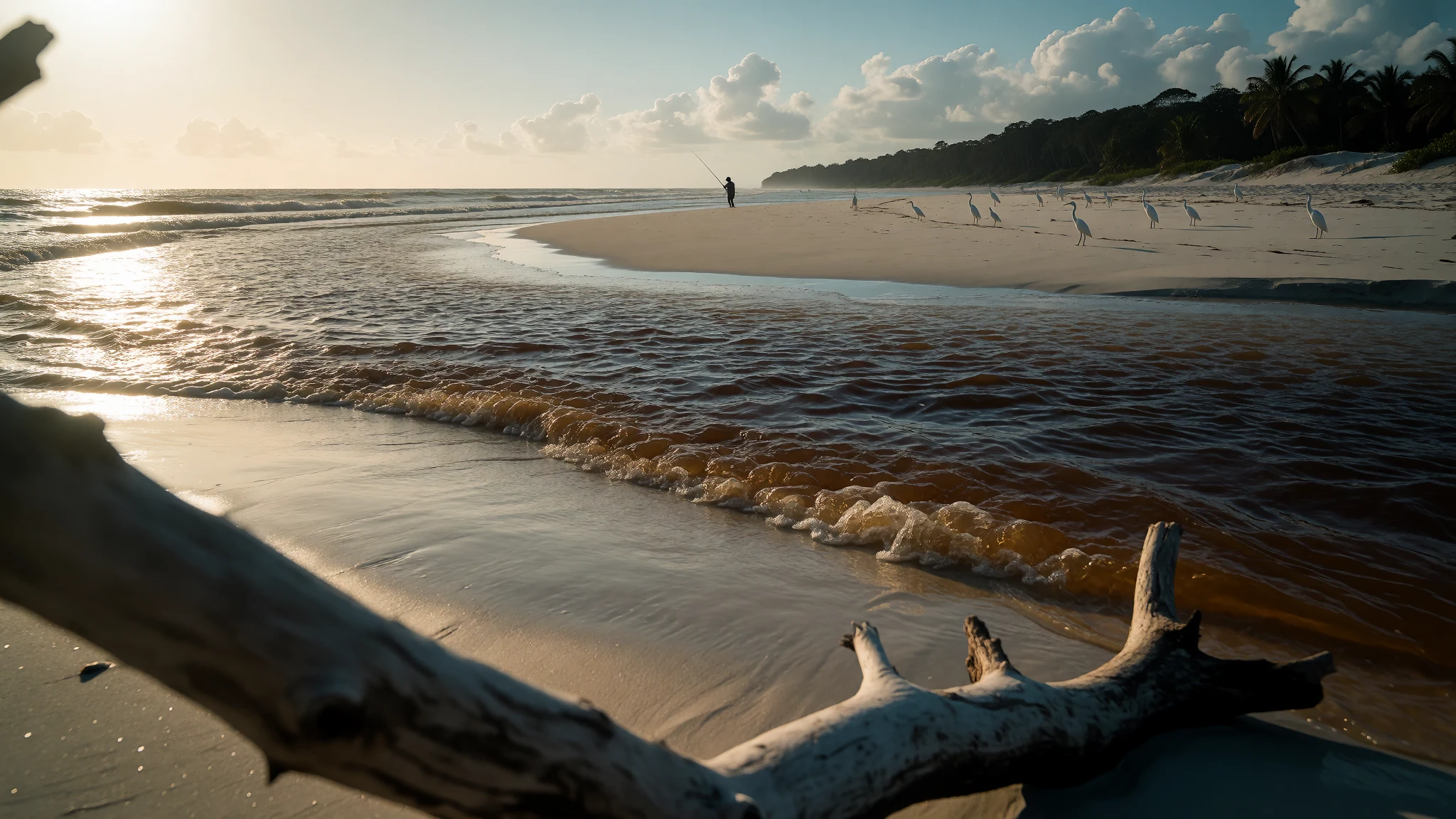
Grand-Béréby offers quiet Atlantic beaches, a river mouth and forest-edge lodges on Ivory Coast's south-west coast, far from any resort crowd.
The place
Grand-Béréby sits on the south-western coast of Ivory Coast, where the Néro river meets the Atlantic. Administratively it belongs to San-Pédro Department, within San-Pédro Region and the wider Bas-Sassandra District, and it counts as both a commune and a sub-prefecture. Wikidata records a population of 129,340. That count presumably covers the surrounding villages as well as the seafront town, so the place feels much smaller on the ground than the number suggests.
The geography is simple. The sea lies to the south, the river mouth runs beside the town, and humid, green country rises behind. Beaches stretch out on either side, and a handful of small lodges and eco-camps sit along the tracks that lead to the sand at Ménéké. An unpaved airstrip, 1,010 metres long, serves the town, though overland travel is the usual way to arrive.
It helps to be honest about expectations. This is not a developed resort strip with a full set of facilities. Infrastructure is modest, the Atlantic can carry strong currents and surf, and reliable online information is thin, so plans are best confirmed directly with a lodge or a local contact. Days here tend to follow fishing boats, river light and the weather. People come for open beaches without crowds, for the estuary scenery, and as a base for sport fishing further west along the road towards Tabou. Heat and humidity are the norm, and in the rainy months the tracks turn to mud.
Its story
Grand-Béréby's story is told more by its position than by famous events. The name appears on British naval charts of this stretch of the Gulf of Guinea, where captains needed to mark river mouths, bays and headlands between Baffu Bay and Cape Palmas. One chart in the town's photo record labels the place "Grand Berebi", a spelling that shows how outsiders heard and wrote local names. For sailors the mouth of the Néro was a landmark on a long coast with limited shelter, useful for fixing a position even where there was no harbour to enter.
On land, the settlement grew into a local administrative centre and is now a sub-prefecture and commune in the San-Pédro area. The recent chapter is one of a quiet fishing coast being slowly linked to roads, lodges and visitors, rather than a single dramatic turning point. The Catholic parish of Notre-Dame de la Mer, the town hall and the roundabout with its welcome banner all point to a place that has organised itself as a town rather than remaining a scatter of villages.
Written histories of Grand-Béréby are scarce in English, and this reading does not pretend otherwise. Anyone curious about earlier settlement, the Néro crossing or the fishing families will learn most from older residents, the parish and the town hall, who hold what the printed record does not.
What to see
- Grand-Béréby beach — Town seafront
The town's main beach runs along the Atlantic below the church district and looks best from the higher ground nearby. Expect wide sand, fishing boats drawn up above the tideline and few other visitors. Swim with care, since currents and surf can be strong and lifeguards should not be assumed. Early morning and late afternoon are the cooler hours for a walk.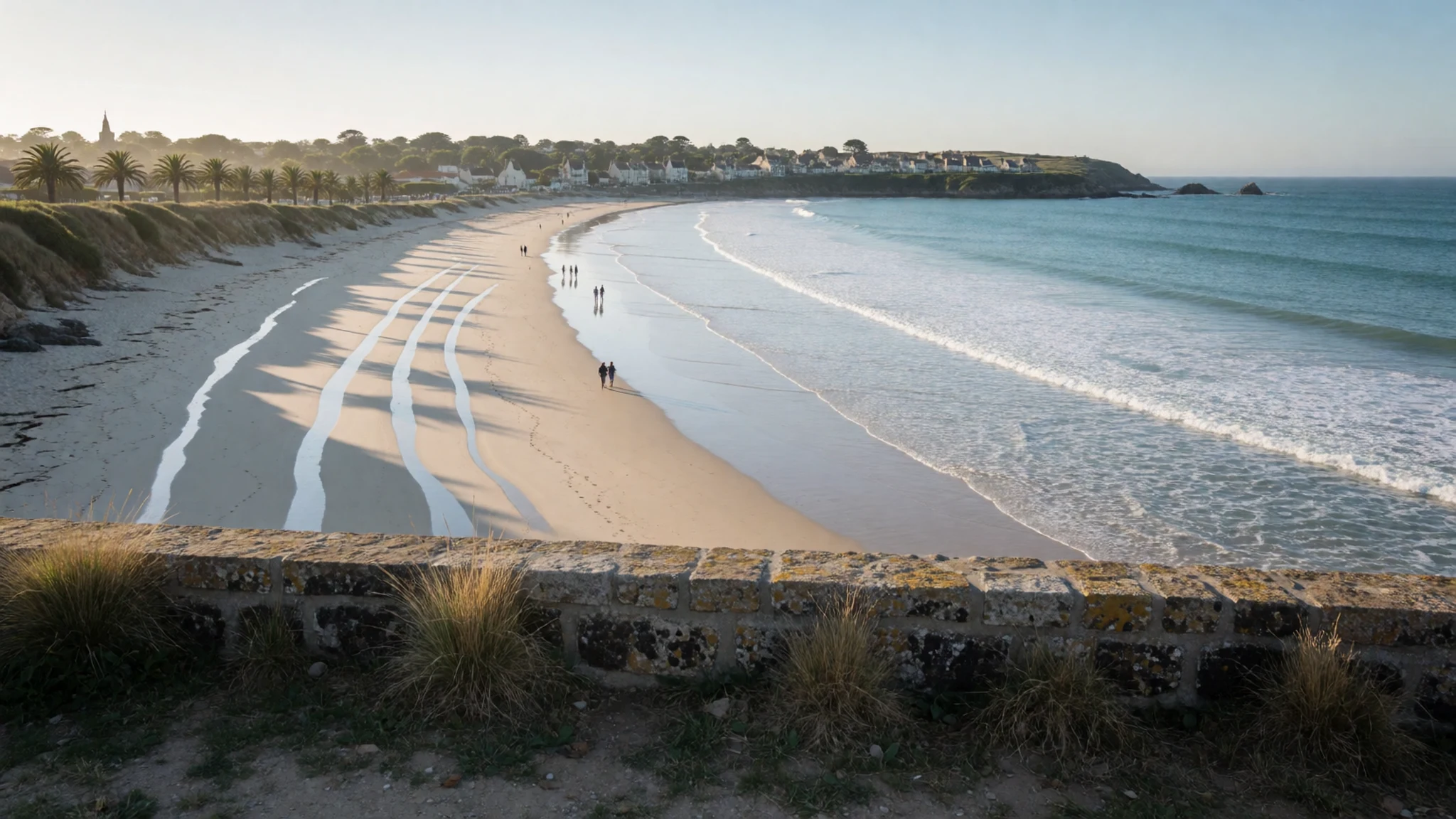
- Néro river mouth — Eastern edge of town
The Néro enters the sea at the edge of town, and the meeting of river and ocean gives the place its defining view. Sandbars shift, pirogues cross, and birds work the shallows at quiet hours. A lodge overlooks the estuary, so a drink or meal there is an easy way to watch it. Keep out of the water at the mouth, where currents are unpredictable.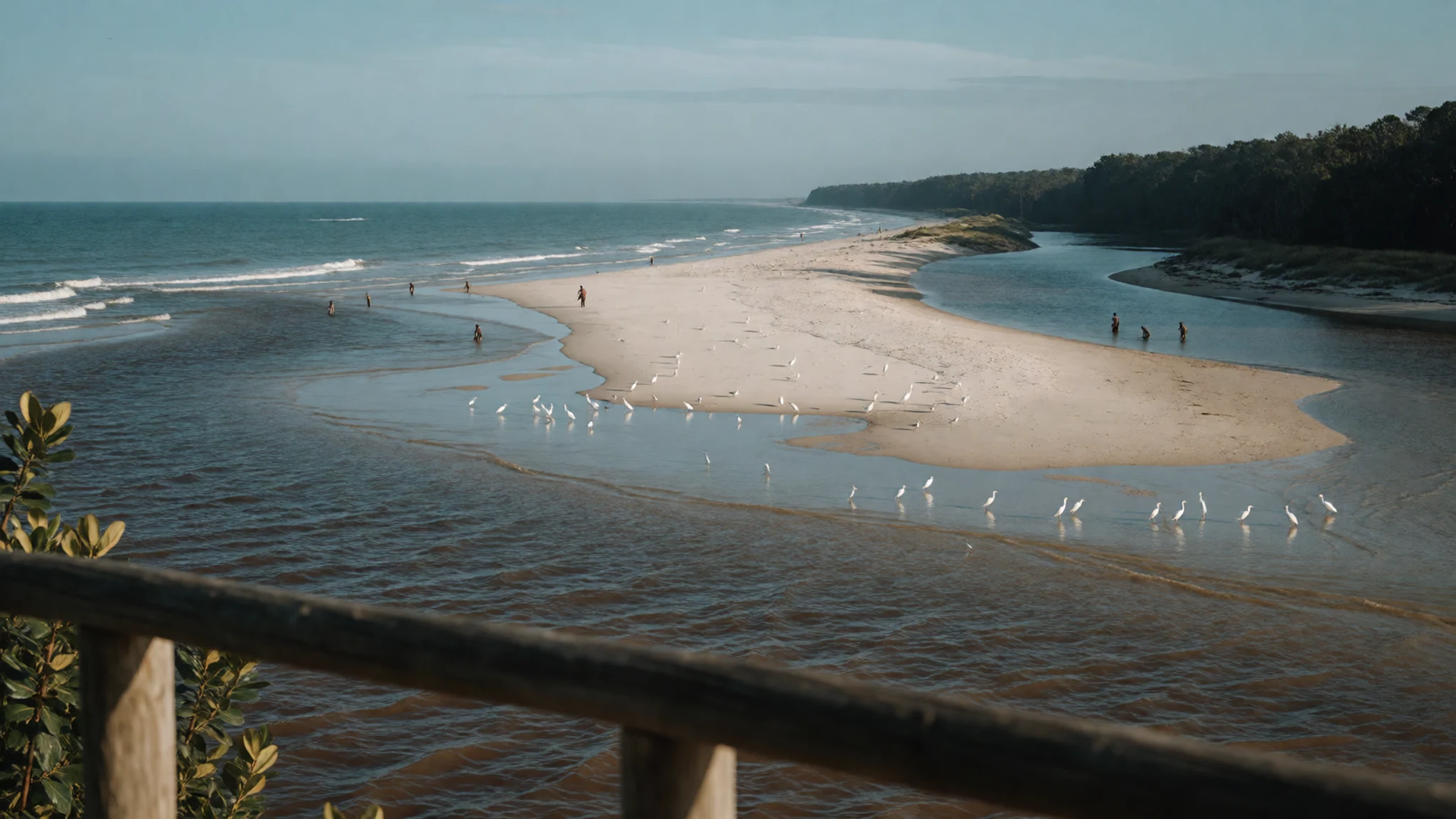
- Ménéké beach and eco-lodge — About 9 km from town by track
Ménéké lies about 9 km from town along an easy track, where forest runs close to the ocean and an eco-lodge sits among the trees. It suits people who want birdsong and surf sound more than activity. Arrange the transfer beforehand, as the track is not for casual wandering, and carry water and insect repellent.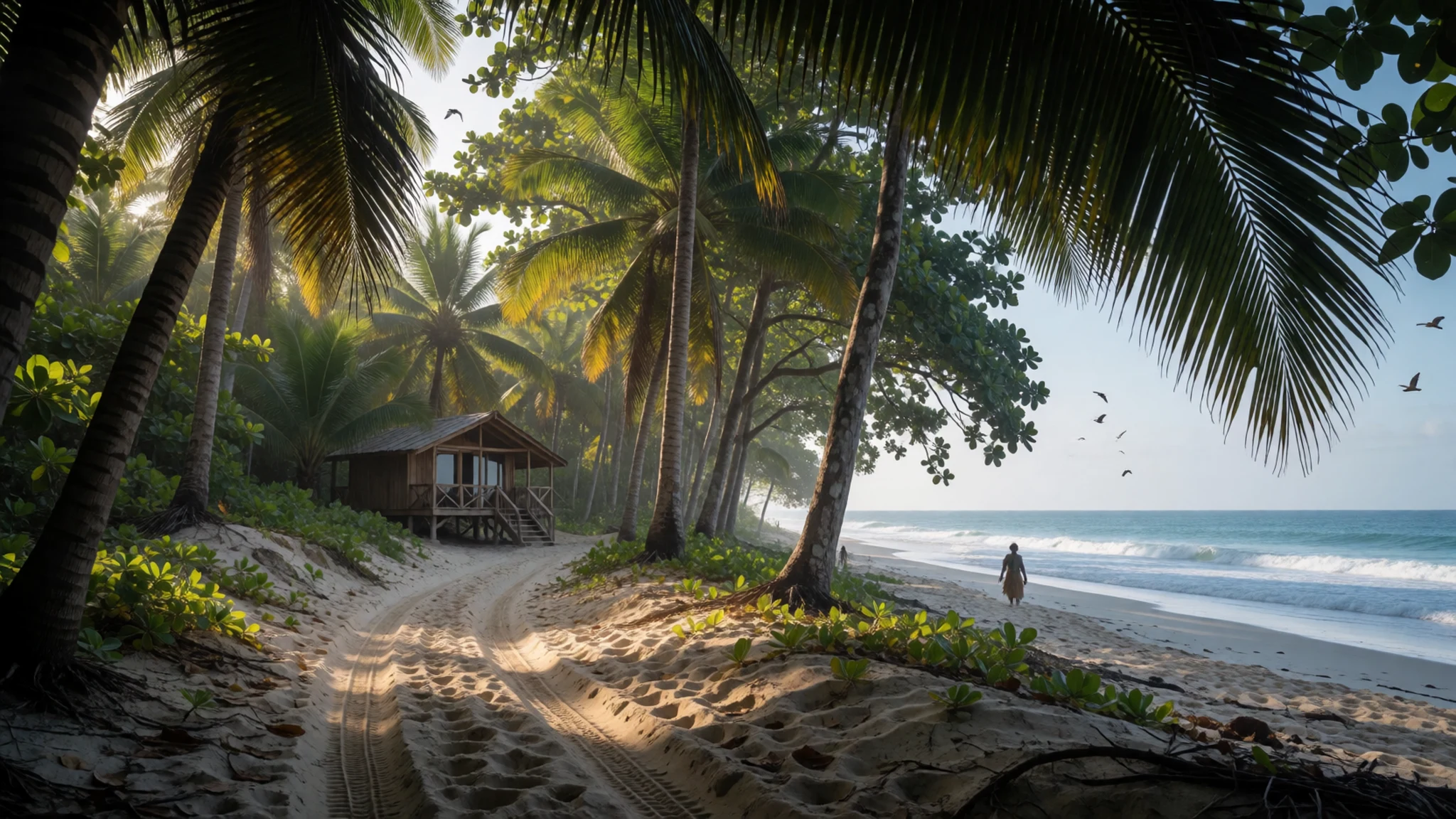
- Notre-Dame de la Mer parish — Rising ground above the sea
The Catholic parish of Notre-Dame de la Mer stands above the sea, and its boundary fence and gate feature in local photographs. It is a working church rather than a monument, so visits are best kept brief and respectful, away from service times. The outlook over the beach from the surrounding area is the main reason many people climb up.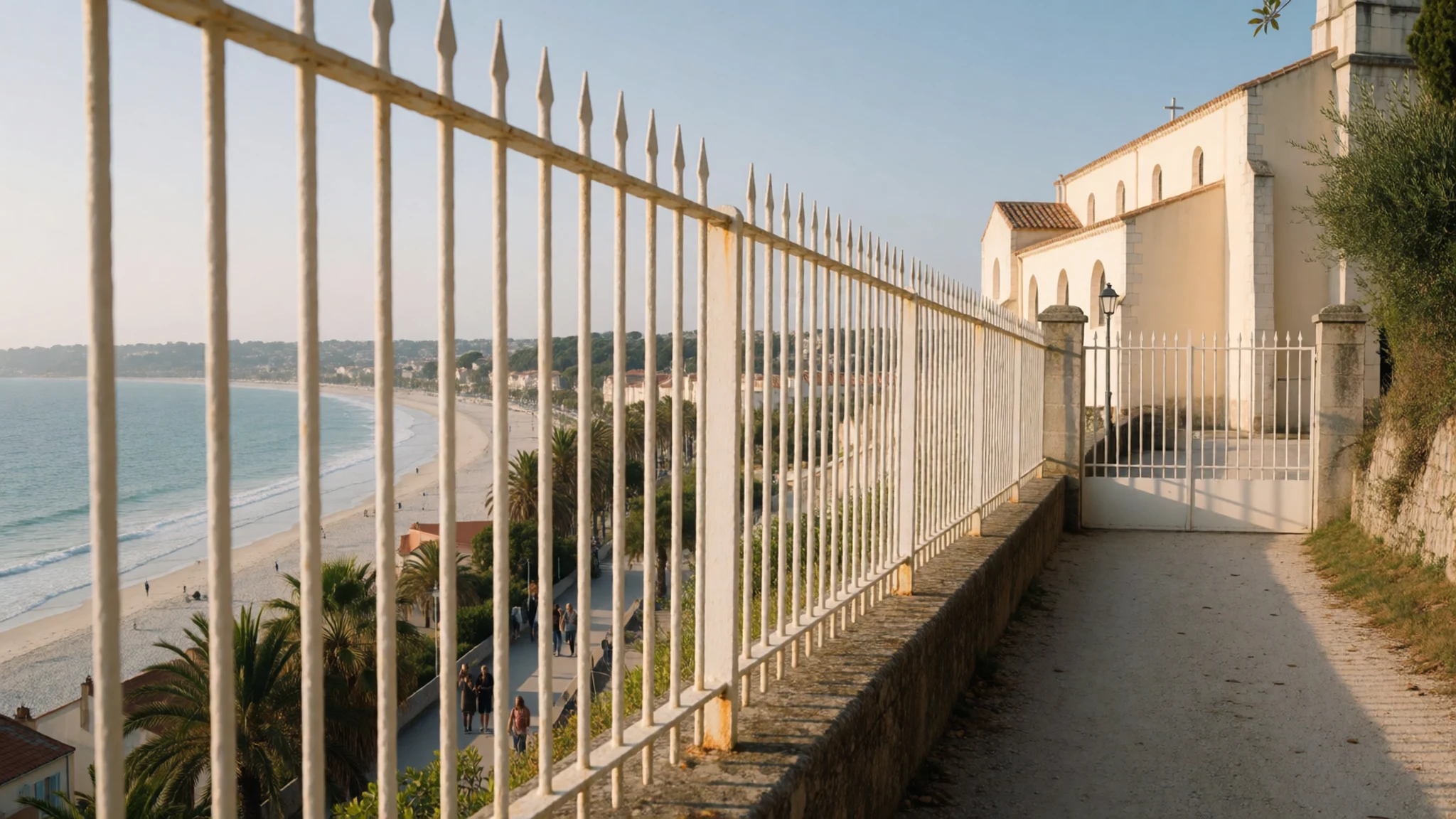
- Boubélé fishing village — About 60 km west, towards Tabou
Boubélé lies about 60 km west along the road to Tabou and is known for sport fishing. Barracuda, mackerel, trevally and marlin turn up in these waters, according to local descriptions. Anglers should arrange boats and gear through a lodge or local contact first, while others can simply watch the catch come in. Allow generous time for the road.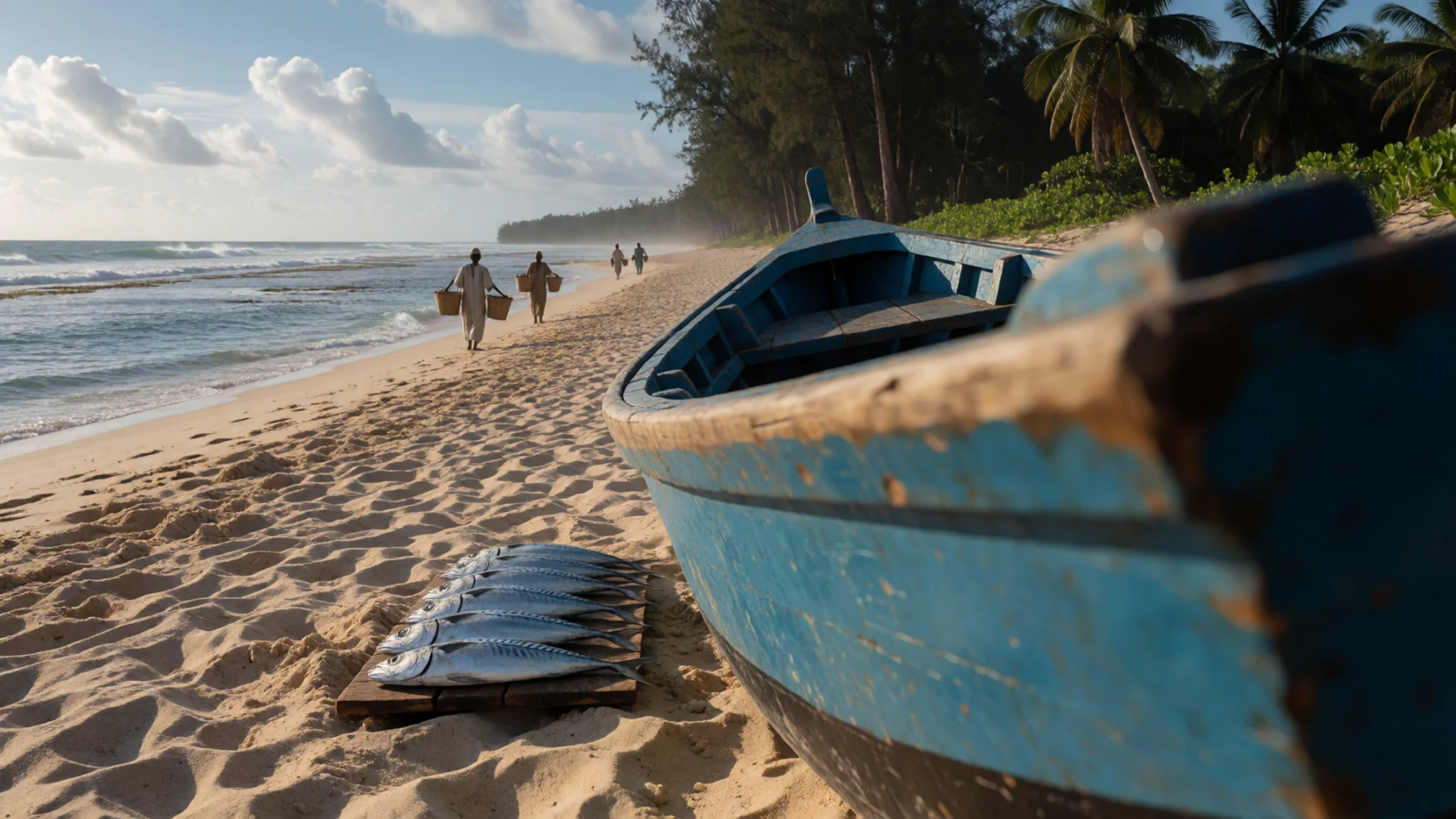
- Town hall and roundabout — Town centre
The mairie and the nearby roundabout with its welcome banner mark the middle of Grand-Béréby. It is a practical stop rather than a sight: a place to get oriented, ask directions, find local transport and pick up supplies before heading to the beach or a lodge further out.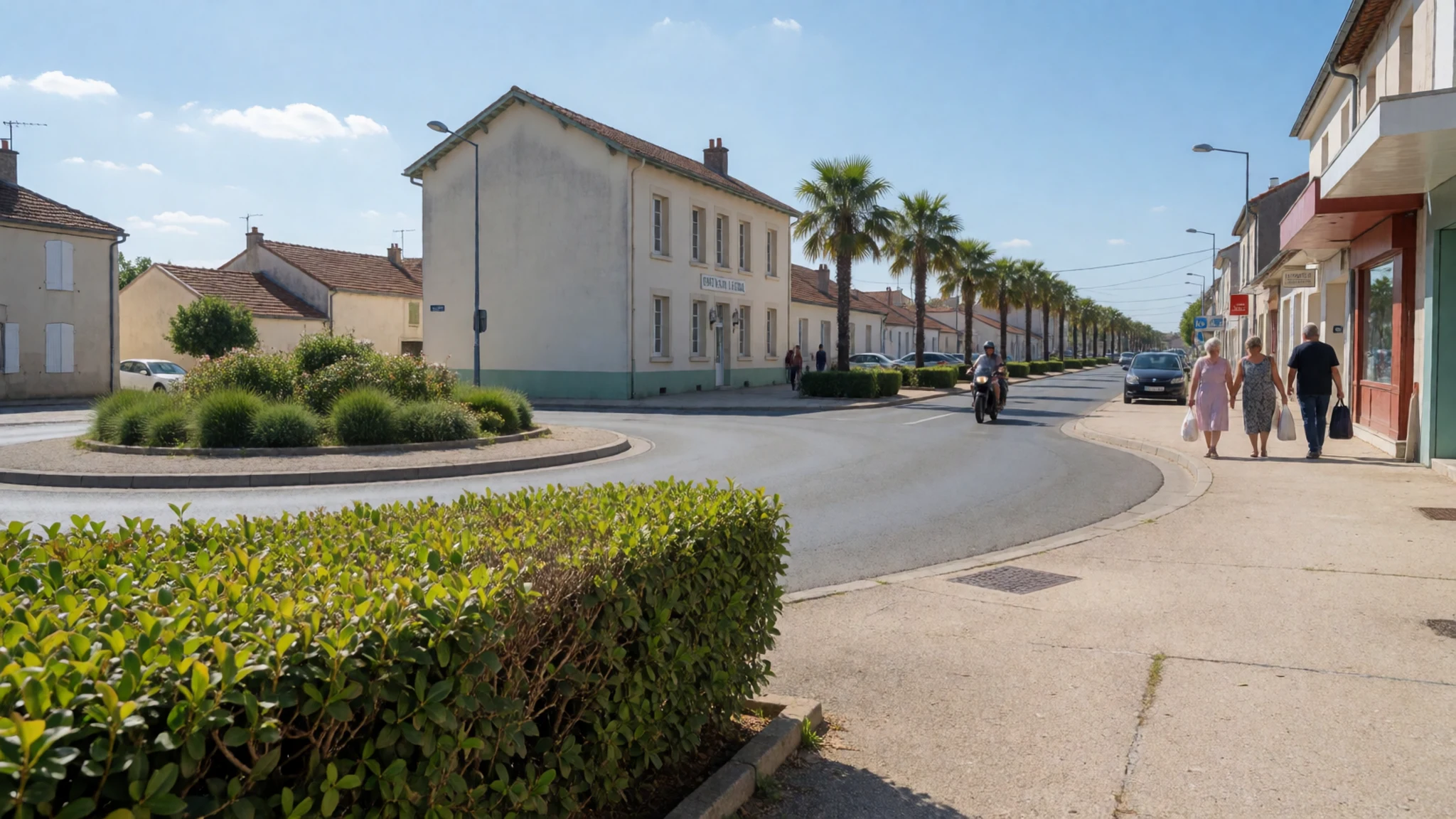
Culture
Grand-Béréby is an Ivorian coastal town where French is the language of administration and schooling, while everyday talk moves between French and local languages. The daily rhythm follows the sea and the market: boats go out early, catches are sold on the sand, and afternoons slow down in the heat. Christianity is visible, with the Catholic parish of Notre-Dame de la Mer among the local landmarks, and Islam and older local beliefs also shape Ivorian life more widely. Music matters across the country, from zouglou to coupé-décalé, and open-air eateries on the coast often play it loudly at weekends.
Greetings carry real weight. People expect a proper exchange, a handshake and a few questions about health and family, before any business is done, and hurrying through it can come across as rude. Hospitality is generous but resources are modest, so small choices, such as buying fish from a boat, eating at local places and hiring local guides or drivers, do more good than grand gestures. Evenings are social, with people gathering outside, and Sundays are often given over to church and family.
Greet people with a bonjour and a handshake before asking for anything, and always ask permission before photographing anyone, including fishers and their boats.
What to wear
Traditional dress in Grand-Béréby belongs to the wider Ivorian wardrobe rather than to one local costume. Pagne, a length of printed or woven cotton, is wrapped as a skirt, tailored into a fitted outfit with a matching headwrap, or cut into shirts and boubous for men. It comes out for church, weddings, funerals and festivals. Bold wax-print cloth is the most common; hand-woven strip cloth is more associated with other regions of the country.
Day to day, people wear what suits the heat and the work: T-shirts, shorts, light dresses, football shirts and rubber sandals, with fishers in practical shorts and often barefoot on the sand. Dress is smarter on Sundays and for visits to offices.
Visitors should pack light cotton or linen that dries quickly, a sun hat and a thin rain jacket for the wet months. Covering shoulders and knees is sensible in town and essential in church, and swimwear belongs on the beach or at the lodge. Sturdy sandals cope with muddy tracks, reef shoes help on rocky shore or at the river mouth, and long sleeves in the evening keep insects off.
What to eat
- Poisson braisé — Beachside maquis (open-air eateries) and fishing landing spots
Whole fish grilled over charcoal and served with onion, tomato and chilli sauce. On this coast the choice depends on the morning's catch, so it is worth asking what came in. Eat it with attiéké or plantain, and expect to use your fingers.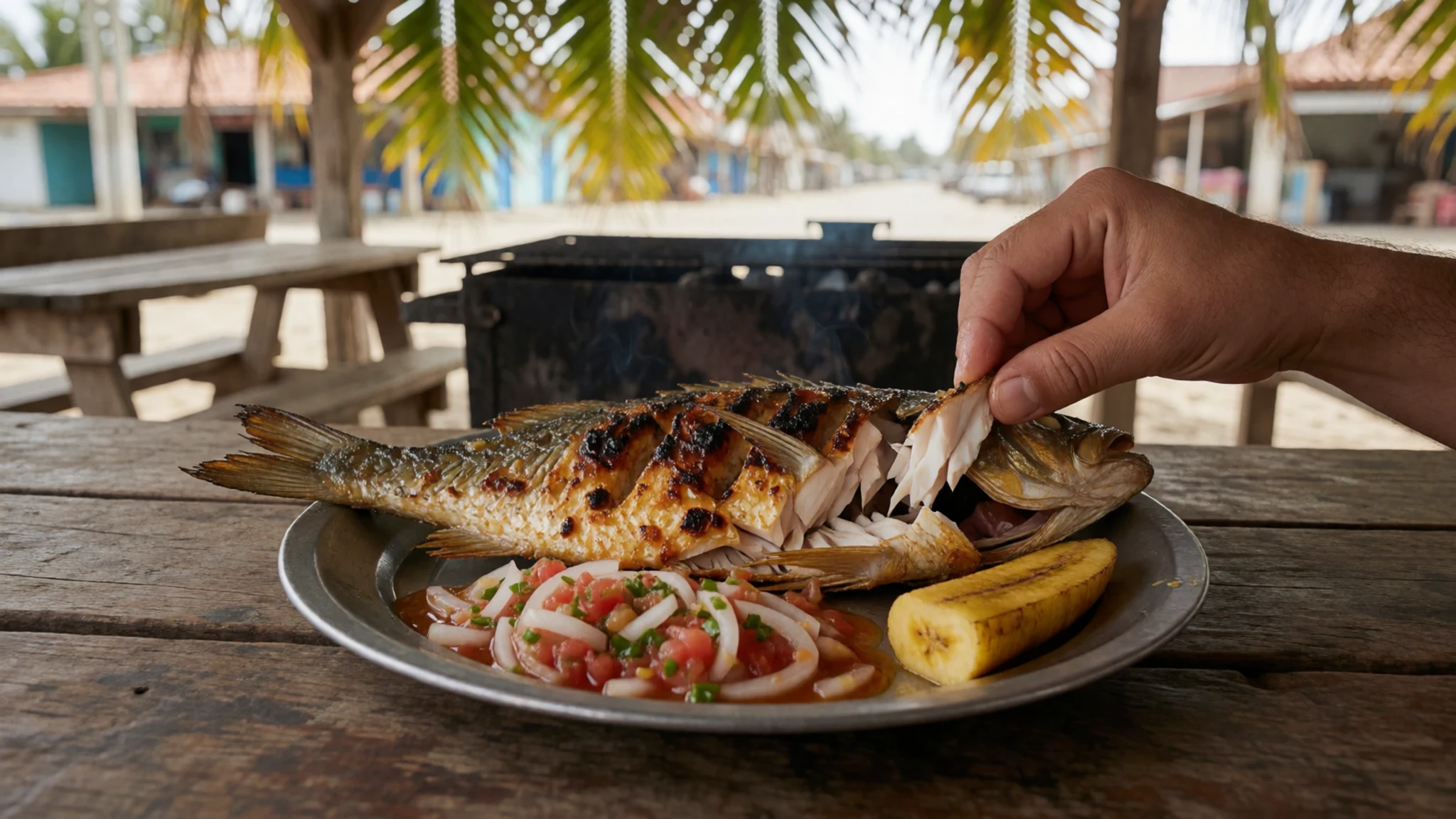
- Attiéké — Town market and roadside stalls
A couscous-like side made from grated, fermented cassava, steamed until light and slightly sour. It is the usual partner for grilled fish and is sold ready-made by women at markets and along the road, often with raw onion and tomato.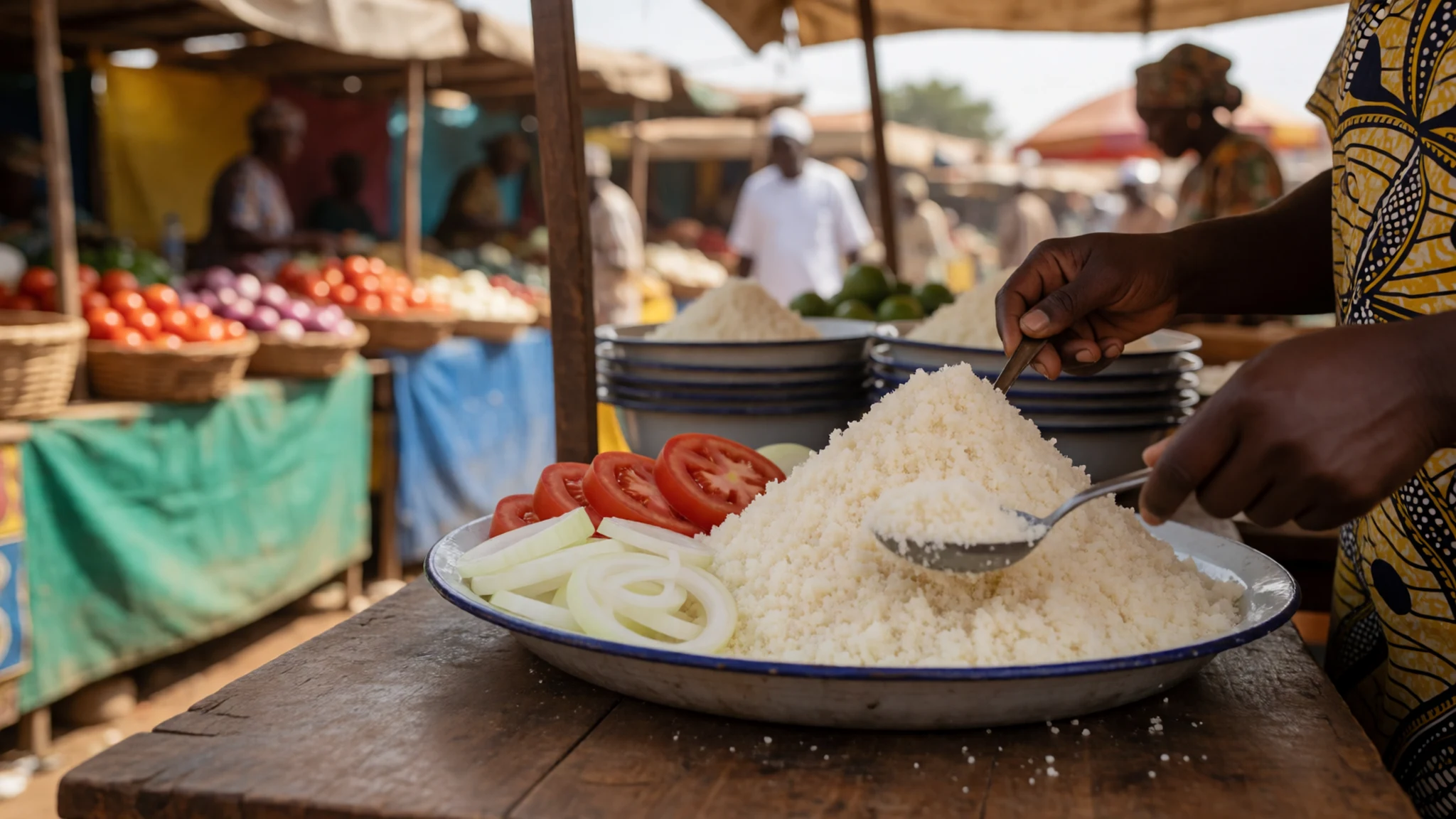
- Alloco — Evening street stalls in town
Ripe plantain cut into pieces and fried until caramelised at the edges, served hot with a spicy onion and tomato sauce. It works as a snack or a side with fish or eggs, and appears at roadside stalls once the day cools. - Kedjenou — Local family-run restaurants; order ahead
A slow-cooked stew of chicken or guinea fowl with vegetables and chilli, sealed in a pot so it cooks in its own juices. It takes time, so eateries often ask for notice, and it is usually eaten with rice or attiéké. - Fresh coconut and tropical fruit — Market and roadside sellers
Pineapple, papaya and green coconuts are sold by the roadside and in the market, and are a cooling break between beach walks. Sellers will usually cut a coconut open on the spot, and peeled fruit is safest when freshly prepared in front of you.
Plan it
Best time. December to March is generally the easier stretch on the south coast, with less rain and better road conditions. The main rains usually fall from around May to July, with a shorter wet spell in autumn, and heat and humidity persist year-round. Check a current forecast before booking.
How long. 2–4
Getting there. Fly into Abidjan, then continue west by road via San-Pédro to Grand-Béréby; allow a long journey and check current timings locally. A short unpaved airstrip serves the town, but check with a lodge whether any service uses it. Lodges can advise on the last stretch of track to the beaches.
Budget. mid
Tips
- Book lodges ahead and confirm the road and transfer arrangements in writing
- Carry cash in small notes, as cards and cash machines are unreliable in small towns
- Bring drinking water or purification and insect repellent
- Avoid the rainy months for track-based trips such as Ménéké
- Treat sea and river-mouth currents seriously and do not swim alone
Etiquette
- Greet people with a handshake and a bonjour before asking for anything
- Ask before photographing people, boats or catches
- Dress modestly in town and in church, keeping swimwear for the beach
Nearby
Sources
- Wikidata Q534166 (CC0)
- Wikipedia: Grand-Béréby (rev 1385134684) (CC BY-SA 4.0)
- Wikivoyage: Grand-Béréby (CC BY-SA 4.0)
- Admiralty Chart No 1365, Baffu Bay to Grand Berebi (UK Hydrographic Office) (Public domain)
- Banderole de Grand-Béréby (LIPARUS18) (CC0 1.0)
- Clôture de la paroisse Notre-Dame de la Mer de Grand Bereby (LIPARUS18) (CC0 1.0)
- Embouchure Néro Bis Hotel La Flotte (GillesJer) (CC BY-SA 4.0)
- Embouchure rivière Néro Hotel La Flotte (GillesJer) (CC BY-SA 4.0)
- La mairie de Grand-Bereby (LIPARUS18) (CC0 1.0)
- La plage de Grand Bereby (LIPARUS18) (CC0 1.0)
- Mairie de Grand-Bereby (LIPARUS18) (CC0 1.0)


Wildlife
- Great barracuda (animal)
The great barracuda is a long, slim sea fish that lives in warm oceans around the world. Local people describe barracuda among the fish that turn up in the waters off Grand-Béréby, though the notes don't say which season or hour is best. Go out with a local guide, keep a respectful distance, stay calm and quiet, and never feed it, so that it stays wild and wary.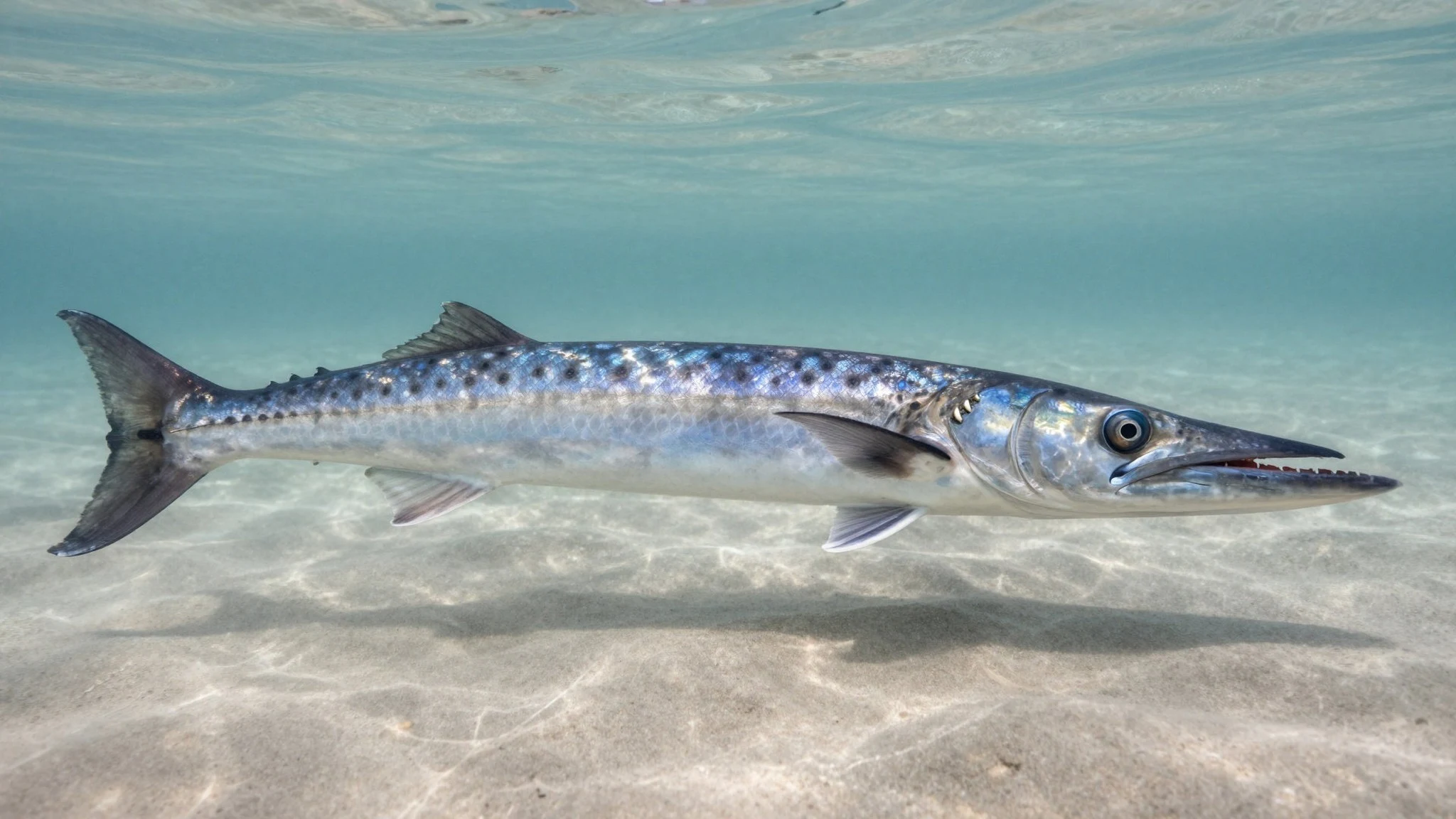
- Blue marlin (animal)
The Atlantic blue marlin is a fish of the deep blue open sea, one that spends most of its life far from any shore. Local descriptions say marlin turn up in the waters around Grand-Béréby, but there is no word on the season or time of day. Ask a local guide about boat trips offshore, keep your distance, stay quiet and calm, and never feed it.