Assinie
Assinie, Ivory Coast
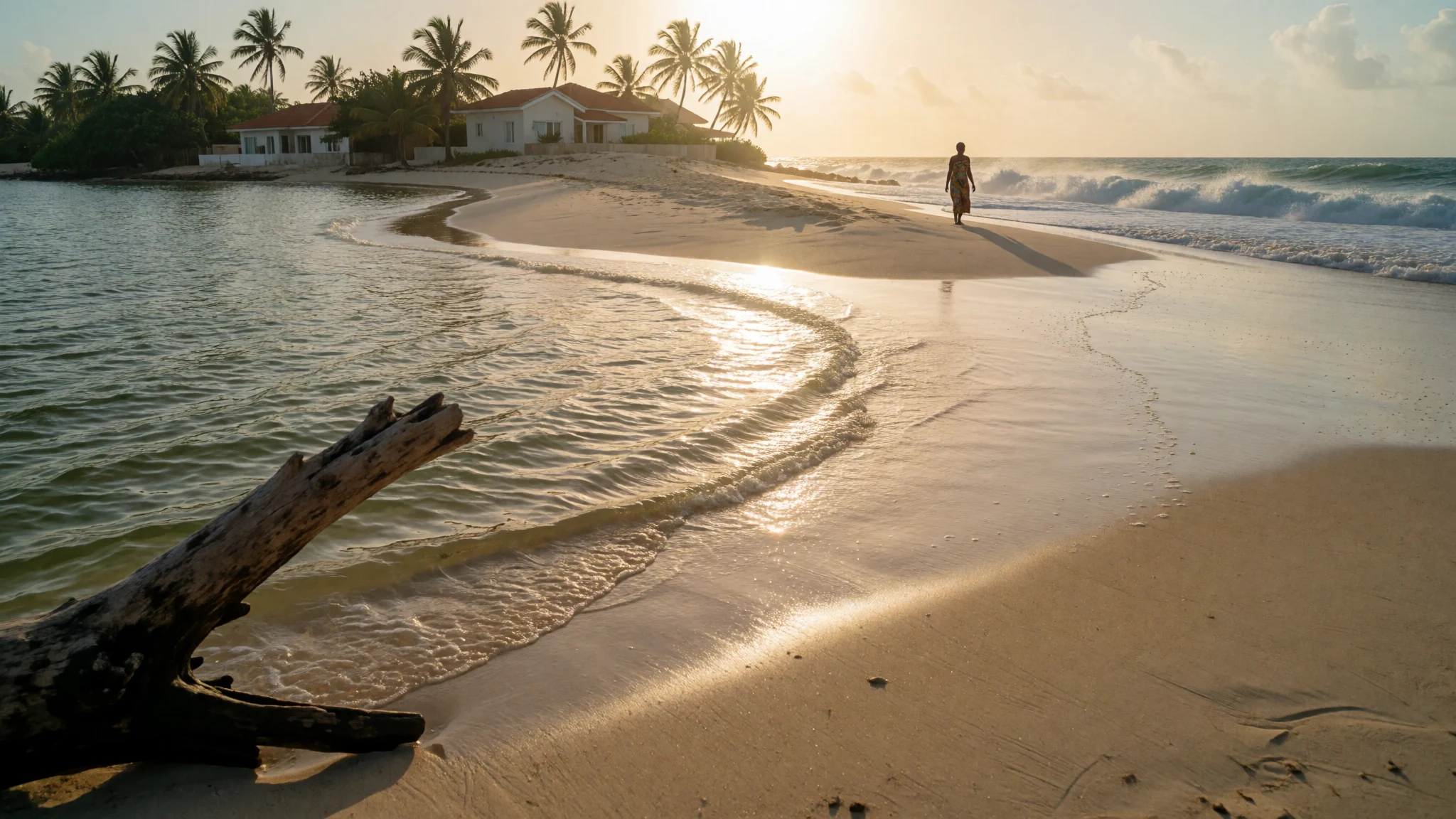
Assinie offers Atlantic surf on one side and a quiet fishing lagoon on the other, within a weekend's reach of Abidjan.
The place
Assinie, formally Assinie-Mafia, is a seaside town in south-eastern Ivory Coast, home to about 22,000 people and sitting just 6 metres above sea level. It lies about 80 km east of Abidjan on the Gulf of Guinea, and the coast road simply ends here, which gives the place a last-stop feel. The town is long and thin, stretched along the shore on both sides of the point where the Aby Lagoon meets the ocean. That geography explains almost everything: one side is Atlantic surf, the other is calm brackish water, and the two worlds are only minutes apart. Facing the town across the lagoon mouth is a narrow sandy peninsula, about 15 km long, known as La Passe. It is lined with private villas, holiday houses and larger resort buildings, and is reached by car over a bridge and sand track, or by boat and canoe across the water. This is the polished weekend-getaway side of Assinie and, frankly, the busier and costlier one. The lagoon side feels different. Wooden and thatched houses stand at the water's edge, fishing canoes are pulled up beside them, and much of the surrounding land and many islands fall inside the Îles Ehotilé National Park. Wealthy Abidjan families make Assinie a regular weekend escape, so Fridays and Sundays bring traffic and crowds, while midweek can be calm. The town also served as a location for the 1978 comedy Les Bronzés (French Fried Vacation), which helped fix its image as a sunny getaway.
Its story
Assinie, once written Issiny, has a longer European paper trail than most Ivorian beach towns, though nothing physical survives from it today. It is counted as the first trading post on this stretch of coast. In the seventeenth century a small party of Capuchin missionaries sailed from Saint-Malo and tried to settle, but climate and disease drove them out within a short time, and one of them died. French interest returned later in the century, drawn by gold moving towards the coast from the interior. A company director sent a naval officer and Dominican priests to found a post, and early in the eighteenth century the French built Fort Saint-Louis. They gave it up after only a few years, judging that the slave trade paid less than farming grain would. One priest posted there, Godefroy Loyer, wrote an account of his voyage that was printed in France after his return, and it remains a rare first-hand description of the kingdom of Issiny. The best-known tale is that of Aniaba, a young man described as a prince, who was taken to France with an interpreter called Banga. They were presented to Louis XIV and baptised as Catholics, with Bossuet, Bishop of Meaux, baptising Aniaba, before being sent home. Aniaba later became an adviser to a ruler in what is now Togo. Decades afterwards, the French built Fort Joinville at Grand-Bassam following a treaty with the king of Krindjabo, and the colonial focus moved along the coast.
What to see
- Îles Ehotilé National Park — Aby Lagoon, west and north of the town
Protected lagoon waters and islands around Assinie, with birdlife and manatees among the wildlife. The usual way in is a guided canoe trip across the Aby Lagoon. Go early, when the water is calm and the light is soft, and check locally that tours are running.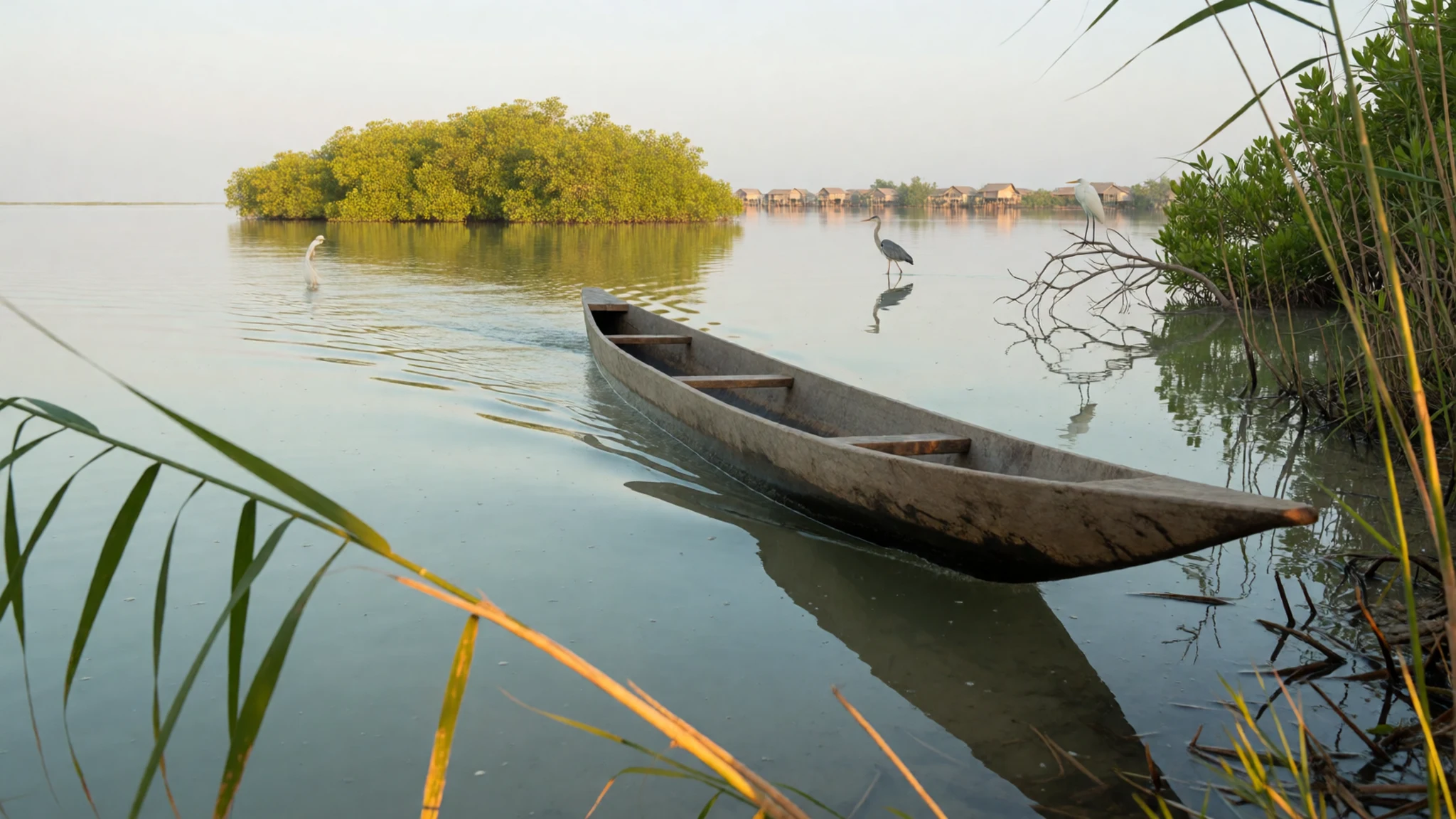
- La Passe peninsula — Peninsula opposite Assinie-Mafia
A narrow strip of sand between lagoon and ocean, dotted with villas and resort buildings. The beaches are broad and the surf is real, so take care swimming. It is the most developed part of Assinie and the busiest at weekends; midweek is far quieter.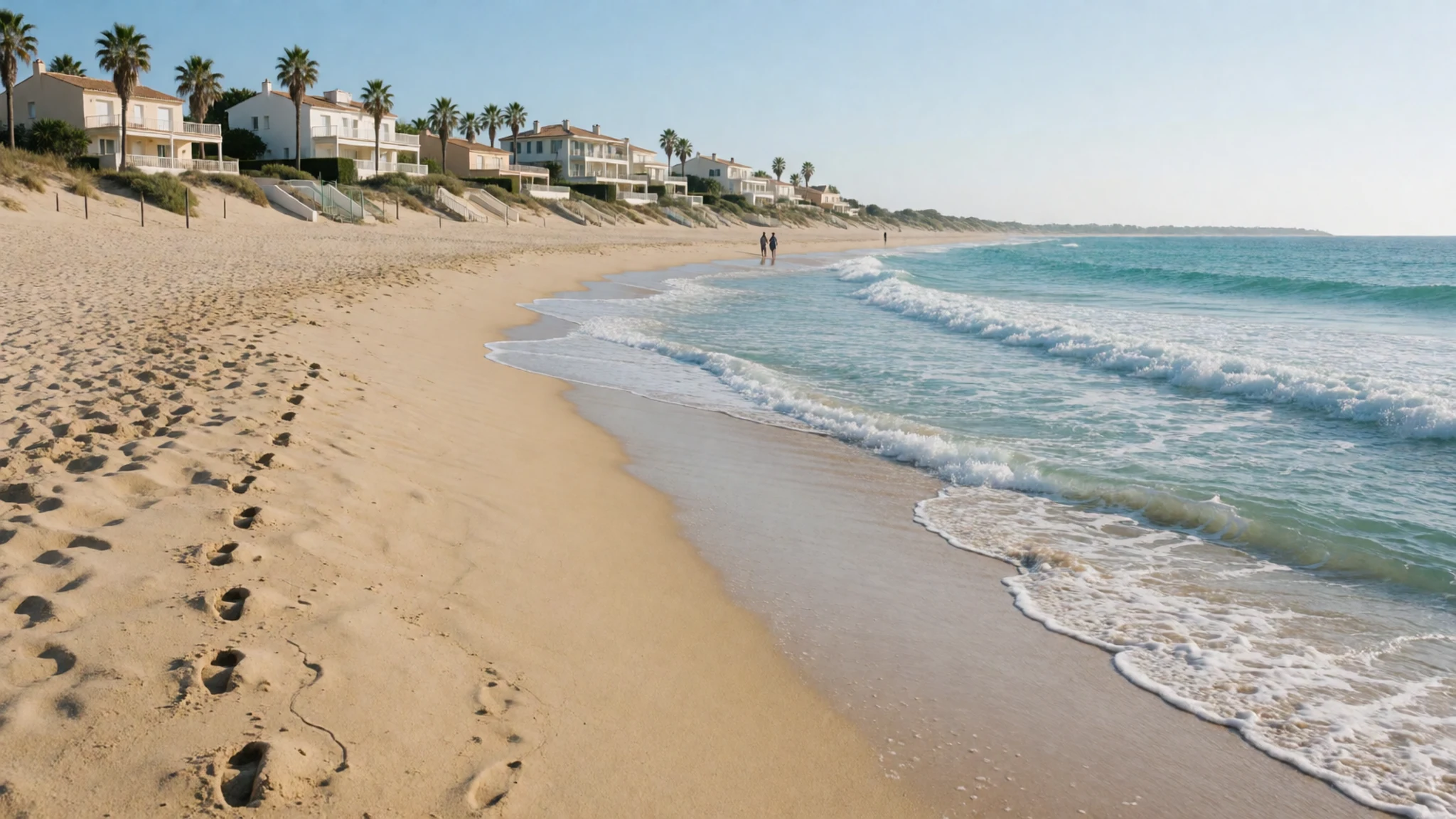
- Lagoon-side fishing houses — Aby Lagoon shore
On the lagoon shore, wooden and thatched houses stand over the shallows, with canoes and nets beside them. Hiring a local boatman gives a view of daily life that the resort strip hides. Agree the route and fee beforehand, and ask before photographing anyone.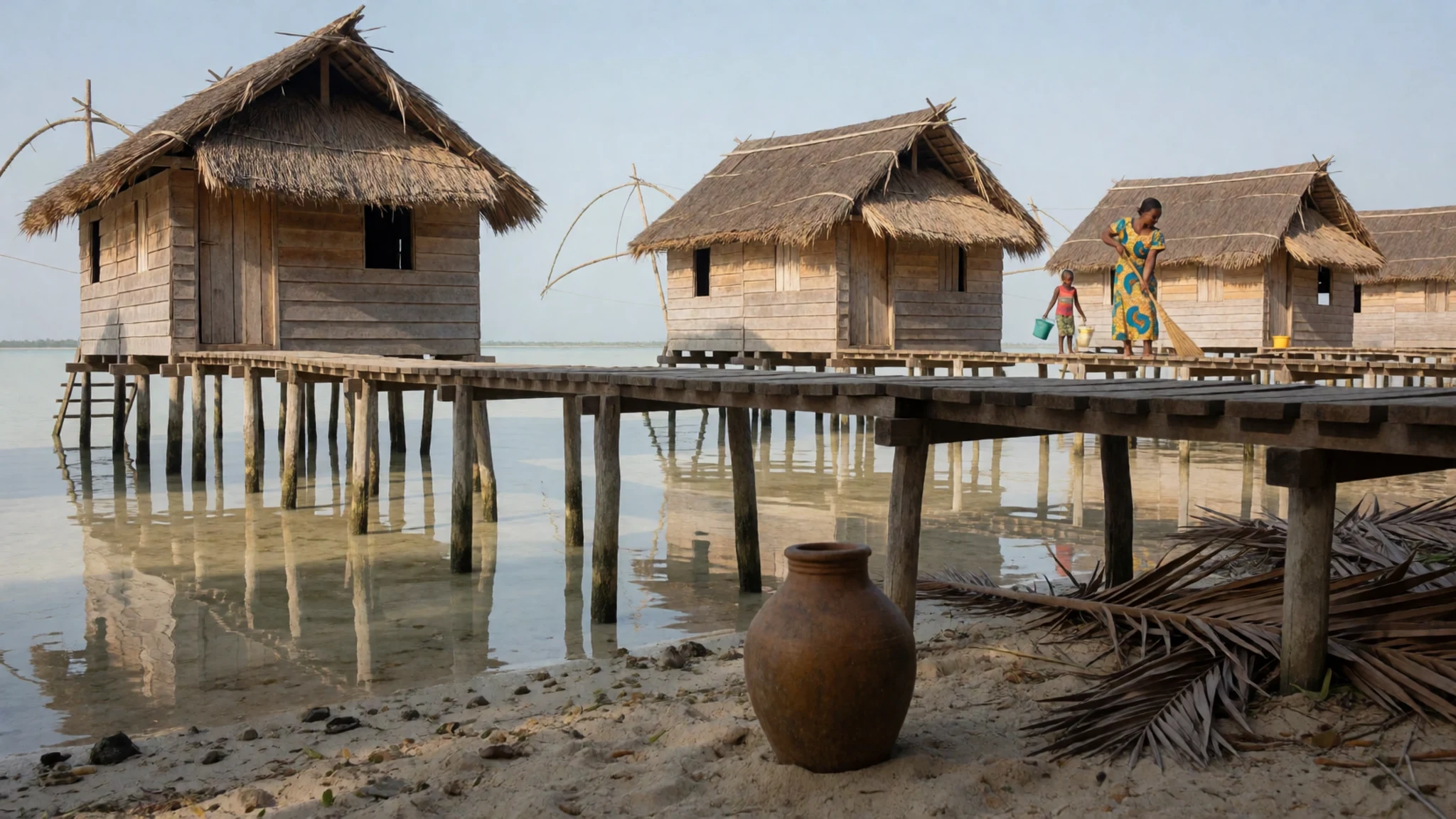
- The town beach and lagoon mouth — Assinie-Mafia town
Assinie-Mafia's own shoreline runs along the Atlantic to the point where the lagoon empties into the sea. It is a good place to watch canoes cross the channel and to see how the town divides between ocean and lagoon. Mornings are cooler and clearer.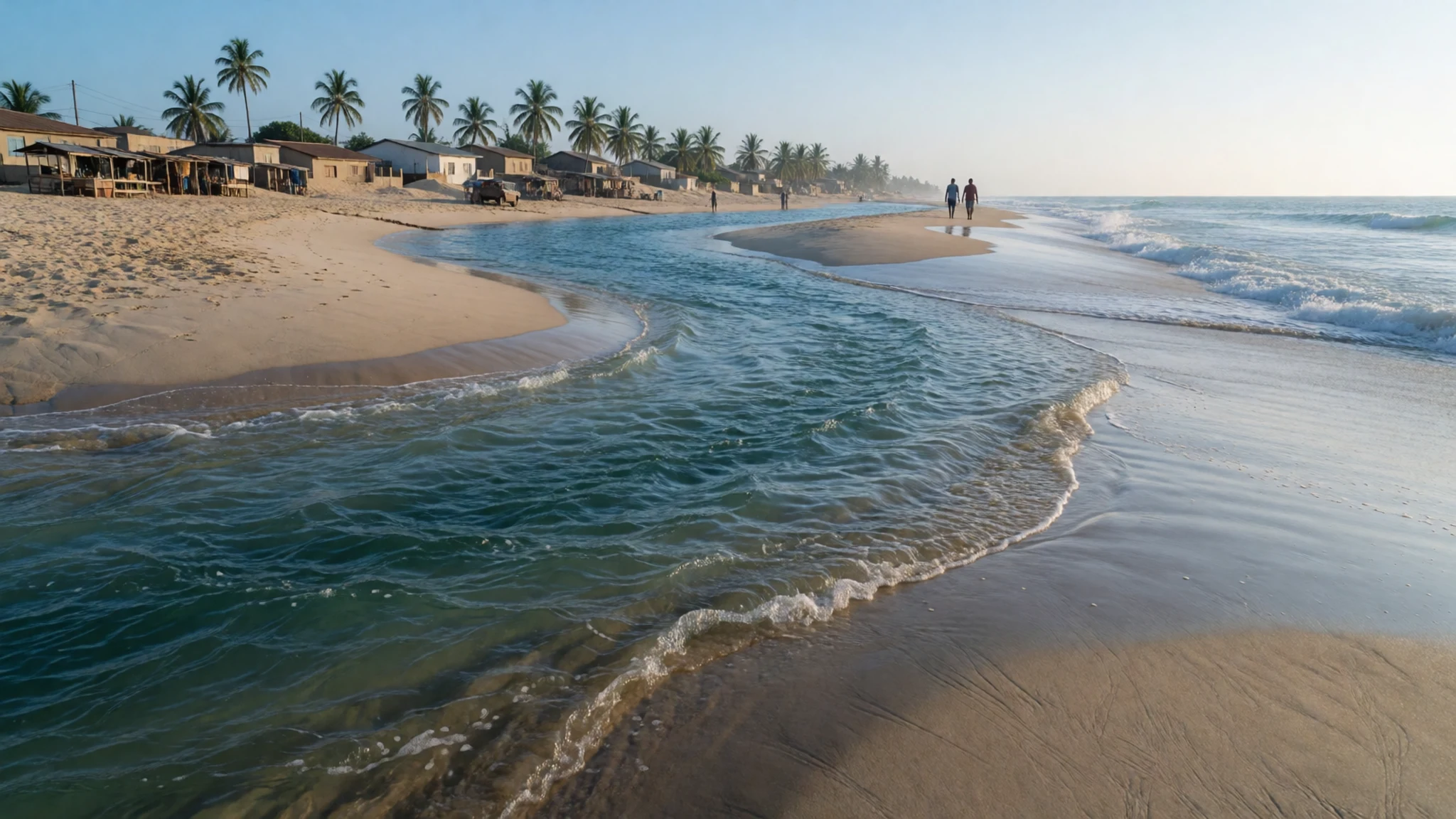
- Surf breaks — Atlantic beaches near Assinie-Mafia
Assinie has a small surfing scene, with swell rolling in off the Gulf of Guinea. Beginners and experienced surfers both use the beach breaks, though currents can be strong. Ask locally about conditions and rental boards, and surf with others rather than alone.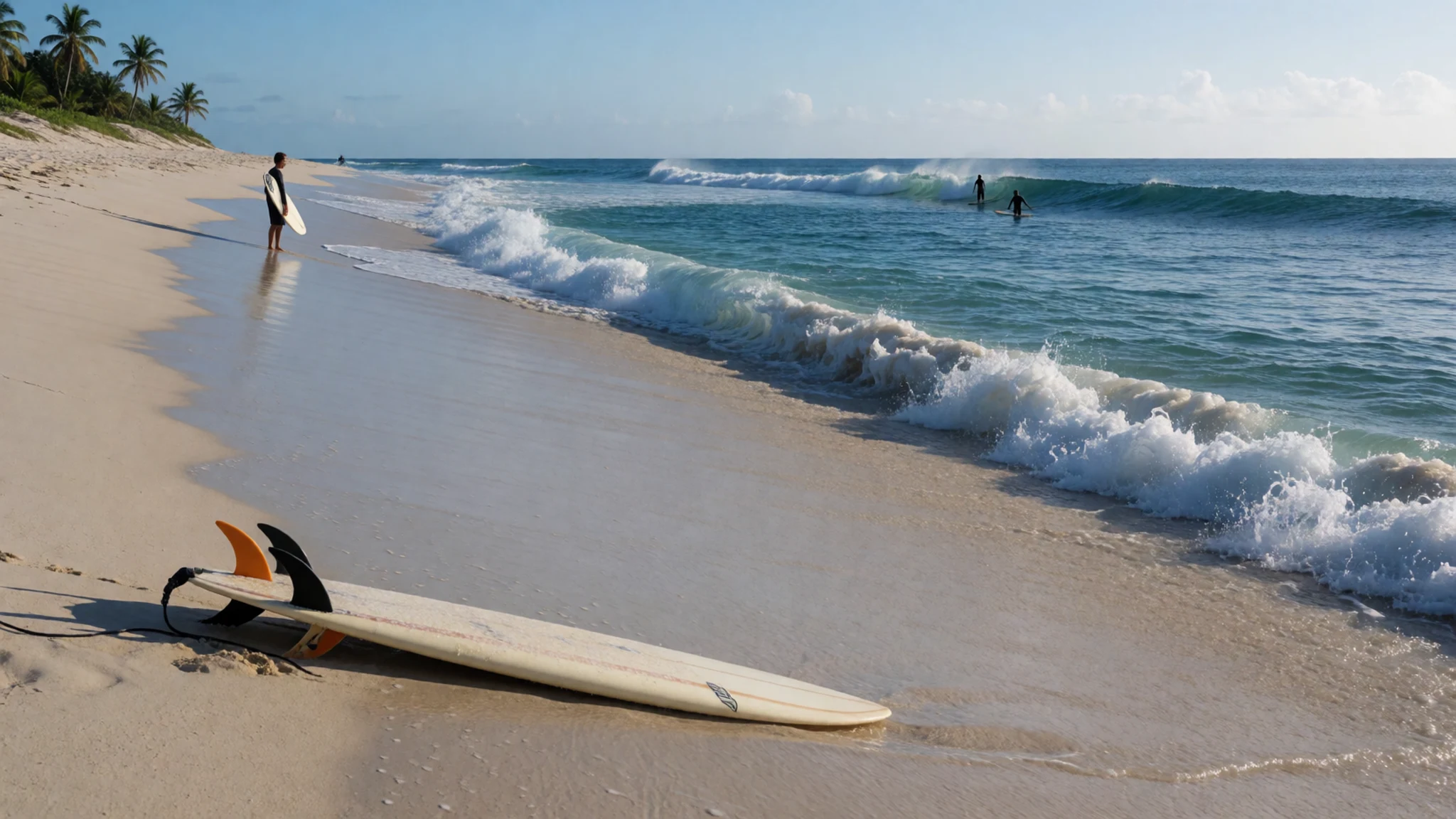
Culture
Assinie is a small town where daily life follows the water. Fishing families on the lagoon work from wooden canoes, mend nets on the bank and sell the catch locally, while the ocean side has turned towards weekend leisure for people from Abidjan. French is the common language, and greetings matter: a handshake, a 'bonjour' and a question about how someone is doing come before any request or bargain. Ivory Coast is religiously mixed, with Christian and Muslim communities and traditional beliefs all present, so dress and behaviour in villages tend to be more modest than on the resort strip. The area's history is also felt locally. Assinie was once the seat of a kingdom the French called Issiny, and the story of Aniaba, the prince taken to the court of Louis XIV, is still told with interest. Weekends are social: families gather at beachside eateries for long lunches, music plays, and the pace is relaxed. Visitors will find that patience goes a long way, whether waiting for a meal, a boat or a ride. Boat trips on the lagoon are usually arranged directly with boatmen, so agree the price and the route before setting off. Ask permission before you photograph fishermen, children or anyone's home in the lagoon villages, and respect a refusal with a smile.
What to wear
Assinie sits in a region where the everyday cloth is the pagne, a length of printed or woven cotton wrapped as a skirt, dress or shoulder cloth. Wax-print cotton, bright and bold, is the most common; woven strip cloths from Akan communities such as the Baoulé are kept for weddings, funerals, festivals and other formal days. Tailors turn pagne into fitted tops, long dresses and men's shirts within days, and many towns have a seamstress on almost every street. Day to day, people in Assinie dress for the heat: cotton shirts, shorts, sandals, and rubber boots or bare feet for those working with boats and nets. On the resort side, weekenders from Abidjan wear linen, swimwear and smart casual clothes, and the look is more Riviera than village. Visitors should pack light cotton or linen, a wide-brimmed hat, sunglasses and strong sunscreen, since the sun at this latitude is intense even under cloud. Swimwear is fine on the beach, but cover shoulders and knees when walking through lagoon villages or into town. Wear sandals that can get wet for canoe trips and loading from the shore, and bring a light rain jacket for the wetter months. A pagne bought locally makes a useful beach wrap and a good souvenir.
What to eat
- Poisson braisé — Open-air eateries (maquis) along the beach
Whole fish, often tilapia or sea fish, grilled over charcoal and served with sliced onion, tomato and a hot pepper sauce. Choose the fish yourself and it is cooked to order. A staple of the beachside eateries and open-air grills.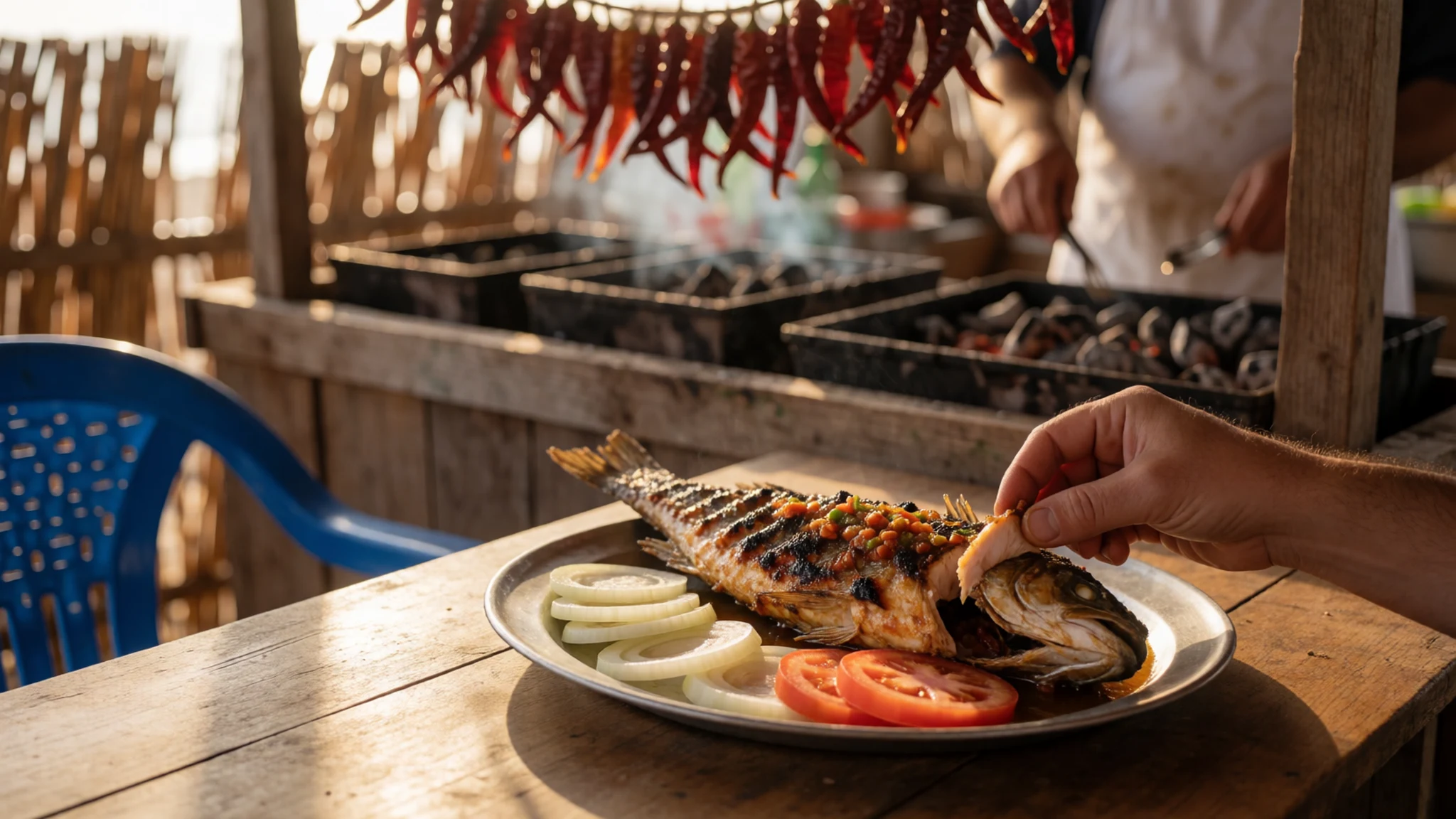
- Attiéké — Any grill or market stall serving fish
Fermented, steamed cassava grains with a light, slightly sour taste, served as the side to grilled fish. It is the everyday starch of southern Ivory Coast and eaten with fingers or a spoon, with onion and tomato.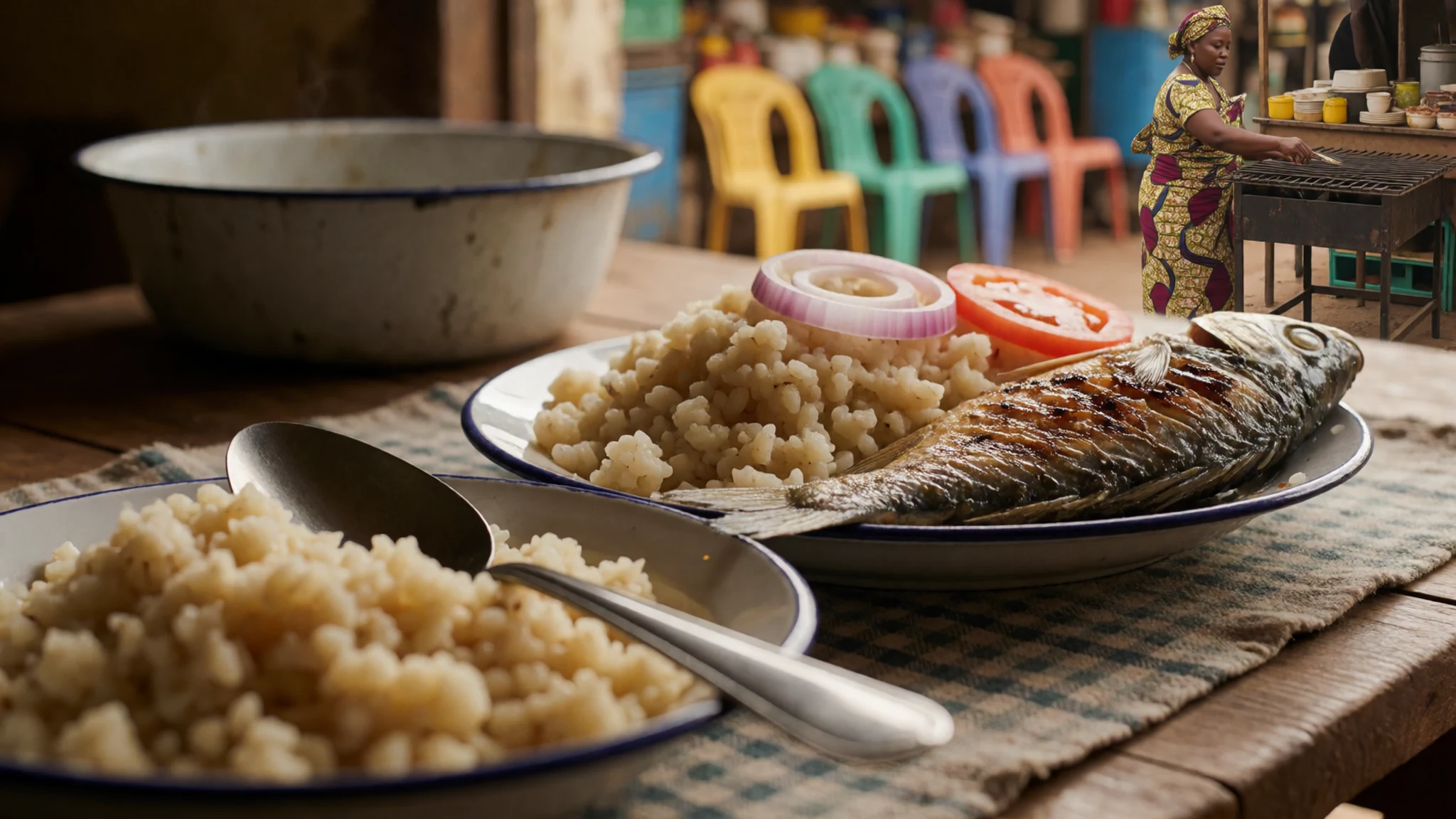
- Alloco — Roadside stalls in town
Ripe plantain cut into pieces and fried until caramelised at the edges, usually sold in a paper bag with pepper sauce. It works as a snack, a side or a light meal, and is easy to find in the evening. - Kedjenou — Family-run restaurants in town
A slow-cooked stew of chicken or guinea fowl with tomato, onion, pepper and ginger, traditionally sealed in a pot and shaken over low heat rather than stirred. It is rich but not heavy, and best with rice or attiéké. - Grilled lagoon prawns — Lagoon-side landing places and eateries
Prawns from the Aby Lagoon, cooked simply over coals with lime and pepper. They are best eaten the same day they are caught. Ask what is fresh and let the cook suggest the preparation.
Plan it
Best time. December to March is usually the most comfortable, with the least rain, though it is still warm and humid year round. The main rains fall in the middle of the year and bring heavy downpours that can make tracks muddy and boat trips less pleasant.
How long. 2–3
Getting there. Fly to Abidjan, then go by road east along the main highway, turning off towards Assouindé and following the Assinie-Mafia road to the end; the town is about 80 km from Abidjan. For La Passe, cross the bridge at Assouindé and follow the sand track down the peninsula. Taxis and hired cars both work; allow extra time at weekends.
Budget. mid
Tips
- Avoid Friday evenings and Sunday afternoons if possible, as the road and the beaches fill with Abidjan weekenders
- Book accommodation ahead for weekends and public holidays, especially on La Passe
- Carry cash in small notes for boatmen, stalls and village visits, as card acceptance is patchy outside the resorts
- Never swim where there are strong currents or no lifeguard, and ask locals about the sea before entering
- Bring sun protection, insect repellent and bottled water, and take lagoon trips early in the day
Etiquette
- Greet people before asking for anything, and ask permission before photographing individuals
- Agree the price of boat trips and guides before you set off
- Keep beachwear for the beach and cover up in villages
Nearby
Sources
- Wikidata Q2867185 (CC0)
- Wikipedia: Assinie-Mafia (rev 1377092075) (CC BY-SA 4.0)
- Wikivoyage: Assinie (rev 4770211) (CC BY-SA 4.0)
- Photo: Children having fun at the beach (Rodboston) (CC BY-SA 4.0)
- Photo: Castor, interprète du gouvernement à Assinie (Public domain)
- Photo: Morning Assinie sky (A FREE KA SMILE 4 ALL) (CC BY-SA 4.0)
- Photo: The King of Assini (Élisée Reclus) (Public domain)
- Photo: Anabia, Le Roy d'Eissinie (Henri Bonnart) (CC0 1.0)
- Photo: Assinie, Côte d'Ivoire (François-Edmond Fortier) (Public domain)
- Photo: Assinie Eden surf spot (A FREE KA SMILE 4 ALL) (CC BY-SA 4.0)
- Photo: Assinie en 2025 (Dadrik) (CC BY-SA 4.0)


Wildlife
- West african manatee (animal)
The West African manatee is a gentle, slow water giant, a sea cow that lives in rivers and lagoons rather than the open sea. Around Assinie, look for it in the protected lagoon waters and islands of Îles Ehotilé National Park, where it lives alongside the birdlife. The notes do not say which season or hour suits it best, so ask a local guide. Watch from a respectful distance, keep voices low and engines quiet, go with a guide, and never feed it.