Majuli
Majuli, India
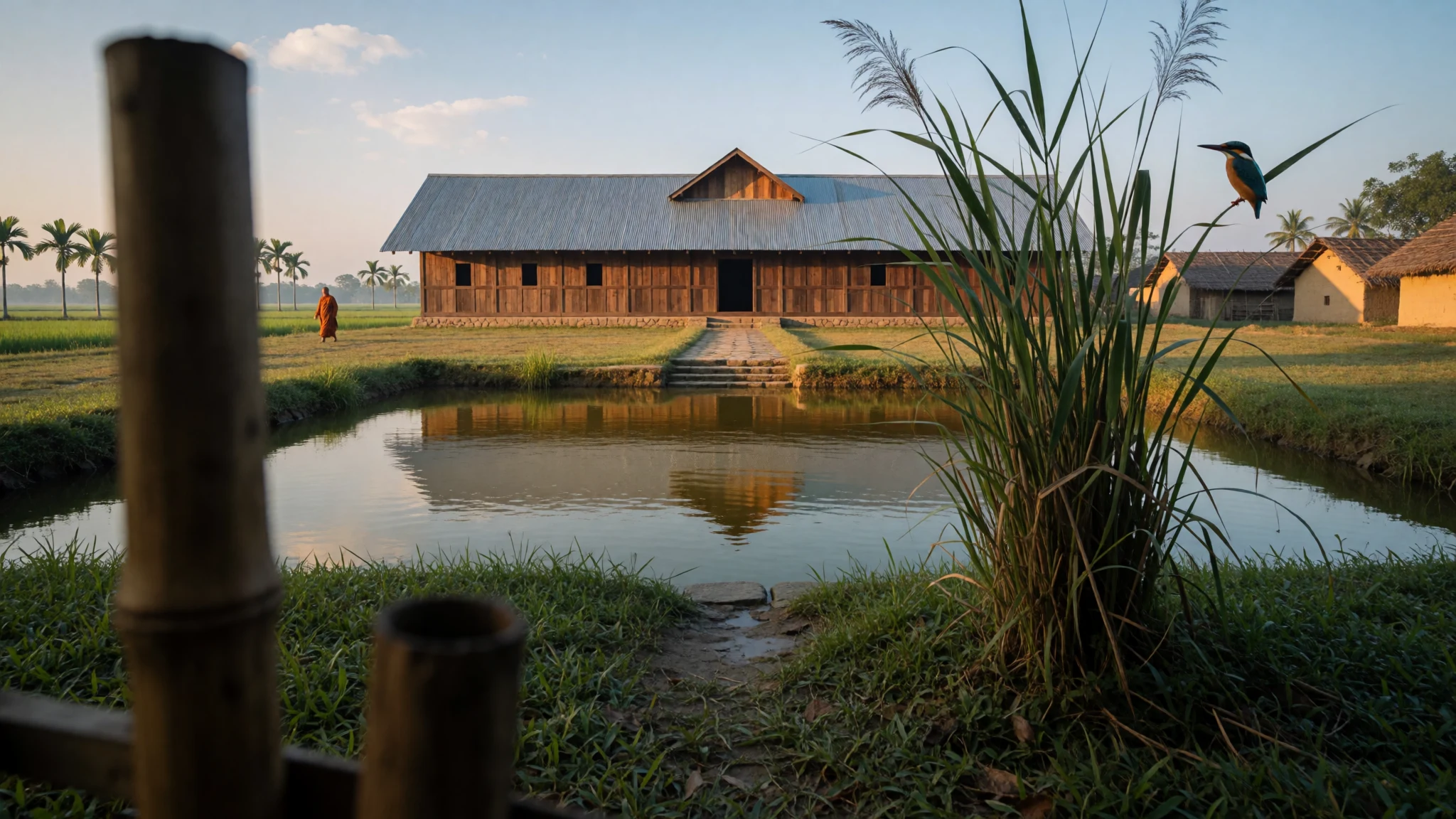
Majuli is a river island of satras, stilt villages and shifting wetlands in the Brahmaputra, reached by ferry from the Assam mainland.
The place
Majuli sits in the Brahmaputra in Assam, a low island of rice fields, wetlands and sandbanks whose outline the river redraws after every flood. Channels such as the Khekutia run along the northern side, and smaller rivers such as the Doriya thread the interior, so much of daily life faces water: ferries, dugouts, fishing nets stretched on poles, and paths that become mud when the monsoon rises. The land is almost flat. Rice is the crop that organises the year, from seedbeds to the stacked straw after harvest. Villages stand among ponds and paddy, and the Mishing people build chang ghar, houses on stilts, so a high river can pass underneath. Deori communities live here too, and Assamese villages cluster around the satras, the neo-Vaishnavite monasteries that give the island its cultural centre of gravity. Garamur is the administrative hub; Kamalabari, on the southern side, is the usual landing from the Jorhat bank. What holds the eye is the width of the sky, the pale sand of the Brahmaputra, and the green of wetland grass cut and carried by boat. Erosion is not a footnote. The main river and its anabranches eat banks, fields and sometimes whole settlements, and families shift their houses inland when a channel moves. Visitors who expect a fixed coastline will find a working floodplain instead: fishermen, weavers, monks and farmers sharing an island that is still being made.
Its story
Majuli's story is the story of Assamese neo-Vaishnavism finding a home on a river that will not stay still. The movement associated with Srimanta Sankardev and his disciple Madhavdev taught devotion to Krishna through prayer, music and drama rather than through elaborate temple ritual, and it organised itself in satras: monastic centres with a prayer hall, the namghar, ponds, rice land and resident monks or devotees. Over generations, several of those houses settled on Majuli. Auniati, Kamalabari, Dakhinpat, Garamur and others became places where naam, the congregational singing of the divine name, and bhaona, religious theatre, were rehearsed as ordinary work, not as a festival extra. Masks of gods, demons and animals, carved and painted at Samaguri, belong to that theatre. The autumn Raas brings the island's narrative into the open: lamps, processions and crowds around the satras, and a temporary city of visitors sleeping wherever a floor can be spared. The Brahmaputra has edited the plot. Bank erosion has forced satras to abandon land and rebuild further inland, so the map of holy ground on Majuli is a record of retreat as well as of faith. Sankardev's followers also carried a social idea into this landscape: devotion that did not depend on caste priesthood, taught in the vernacular, and practised in a hall anyone could enter. What remains is a living institution: monks who farm, boys who learn dance and drumming, and households who still measure the year by the satra calendar, on an island that keeps giving ground to the river.
What to see
- Kamalabari Satra — Kamalabari
Kamalabari Satra is the southern gateway most visitors meet first on Majuli, a short ride from the ferry landing of the same name. The compound holds a namghar, resident devotees and open ground where bhaona is staged in season. Morning is the kindest hour, with prayer underway and soft light on the pond. It is a working monastery, and visitors follow the monks' lead.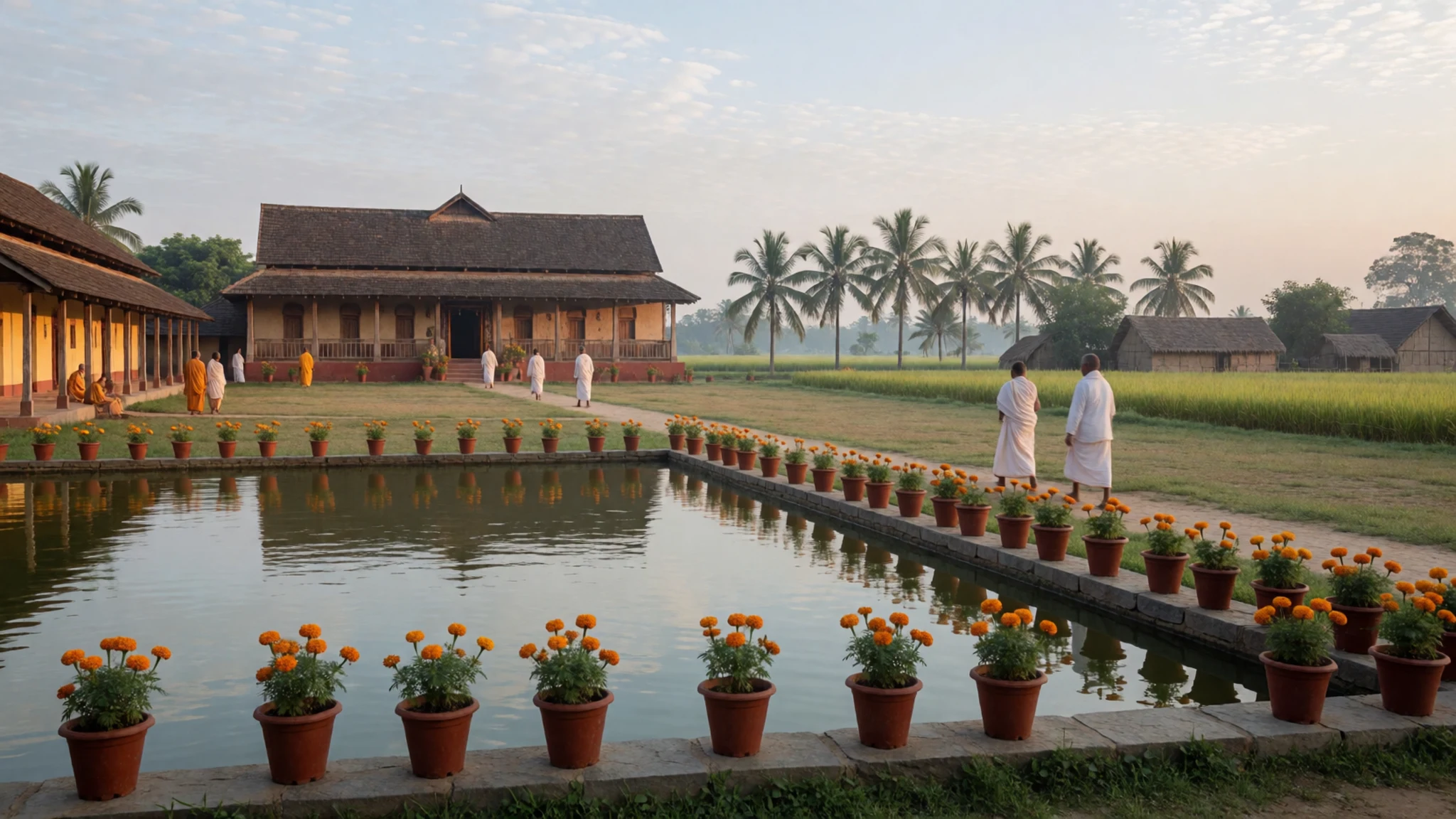
- Sri Sri Auniati Satra — north-west Majuli
Sri Sri Auniati Satra stands towards the north-west of Majuli, with a namghar, Vaishnavite manuscripts, woodwork and sky lamps lit in earthen bowls of mustard oil. The prayer hall is the heart of the compound. Outside festival days the paths are calm, with monks crossing between the hall and the ponds. Those lamps belong to worship. Visitors are welcome to watch a lighting and should leave the vessels untouched.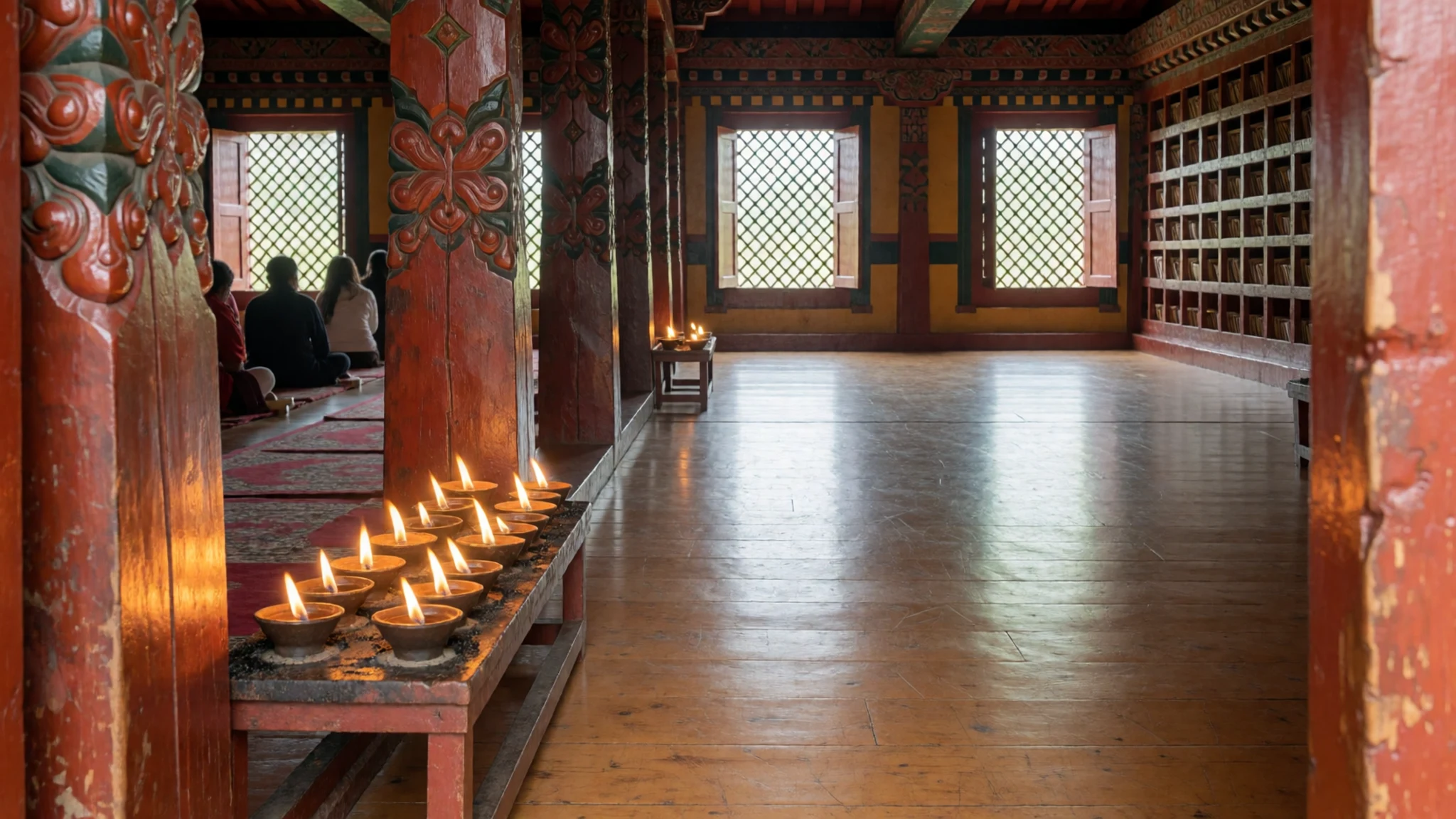
- Samaguri Satra — near Kamalabari
Samaguri Satra, near Kamalabari, is where Majuli's bhaona masks are made. Artisans build faces of gods, demons and birds over a light frame, then paint them in strong mineral colours for the religious stage. A workshop visit shows the half-finished heads, the brushes and the store of finished masks kept for performance. A small mask is sometimes offered for sale; the large ones stay with the theatre.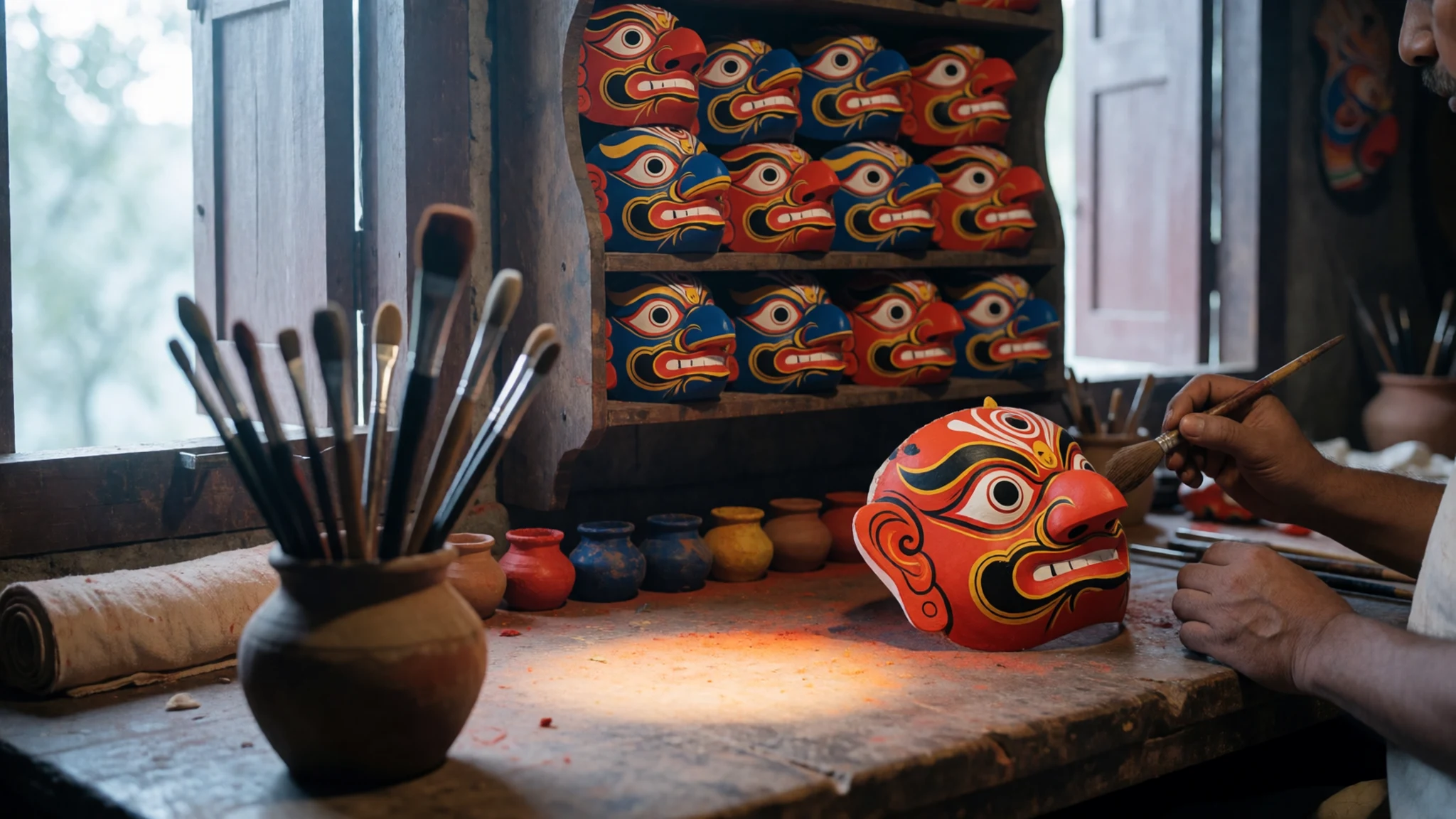
- Garamur Satra — Garamur
Garamur Satra sits in Majuli's administrative township, easier to reach than the northern houses and often combined with a walk through the market streets. The namghar, pond and monastic quarters follow the island's usual satra plan. Shops, tea stalls and district offices sit a short walk away, so the satra reads as part of the town rather than a place apart. Morning is the calmest hour.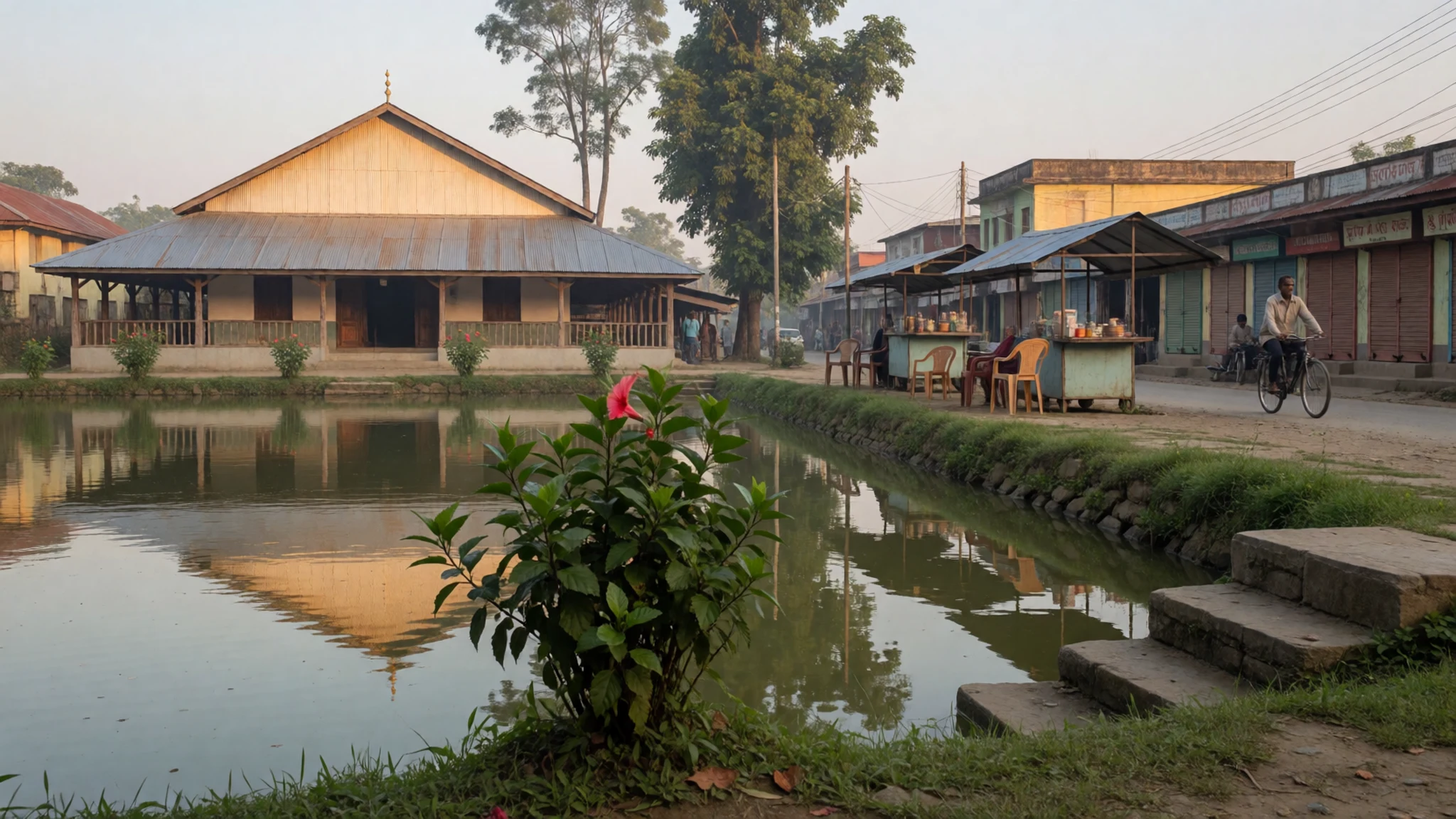
- Mishing villages — stilt villages across the island
Mishing villages on Majuli are built for a river that climbs. The chang ghar, a house on stilts of wood and bamboo, keeps the living floor above a high flood, with a ladder or notched log for the way up. In drier months livestock uses the space beneath, and paths run out to ponds and paddy. The lanes are public; a porch is private until an invitation comes.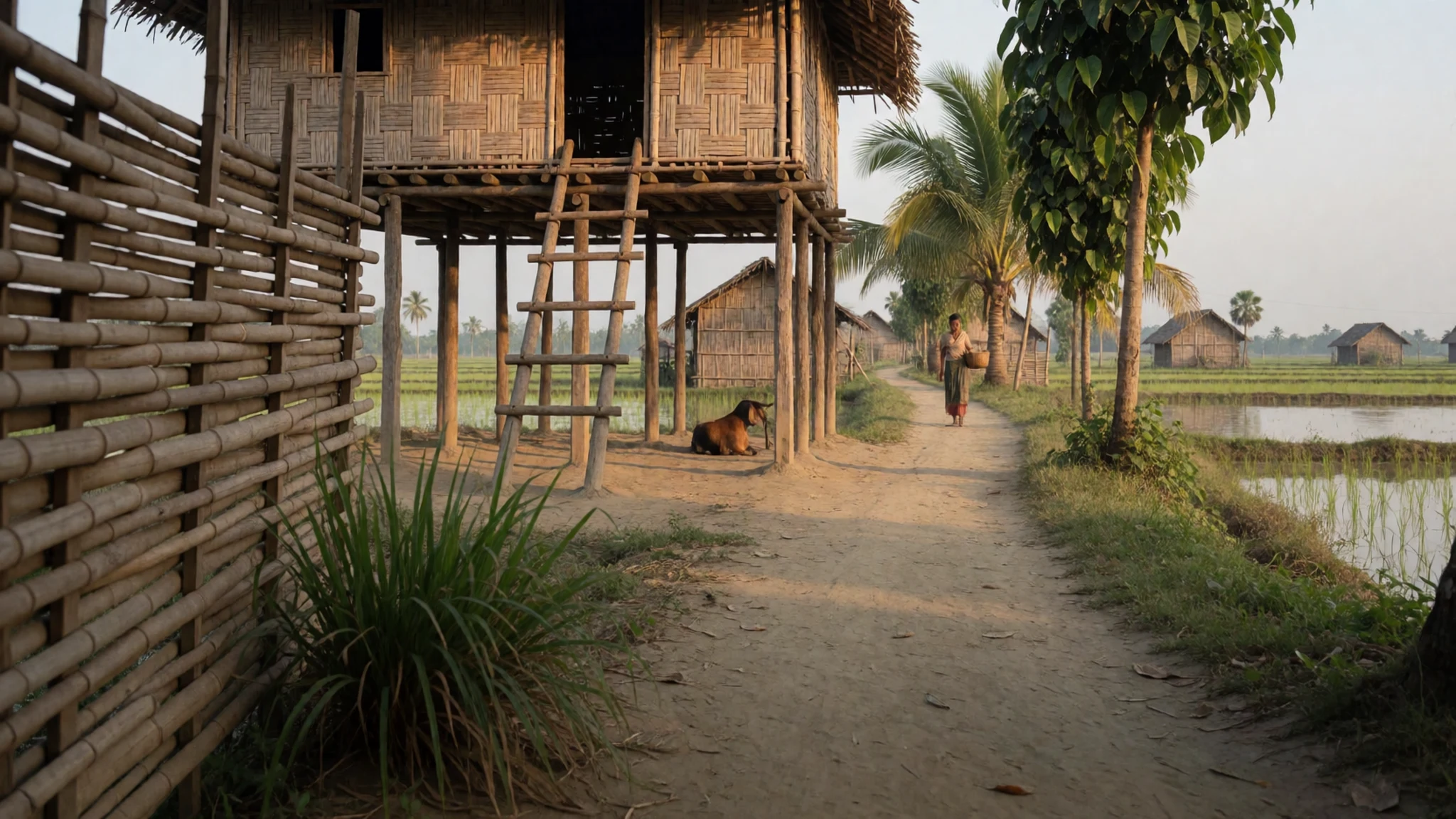
- Doriya wetlands — Doriya River
The Doriya is one of Majuli's inner rivers, and its wetlands are a working landscape rather than a park. Mishing boats move through grass and open water, carrying fodder cut from the marshes, while fishing nets and small channels mark the edges. In the drier months a country boat from a nearby village is the way in. Monsoon swells the same wetlands into the wider flood.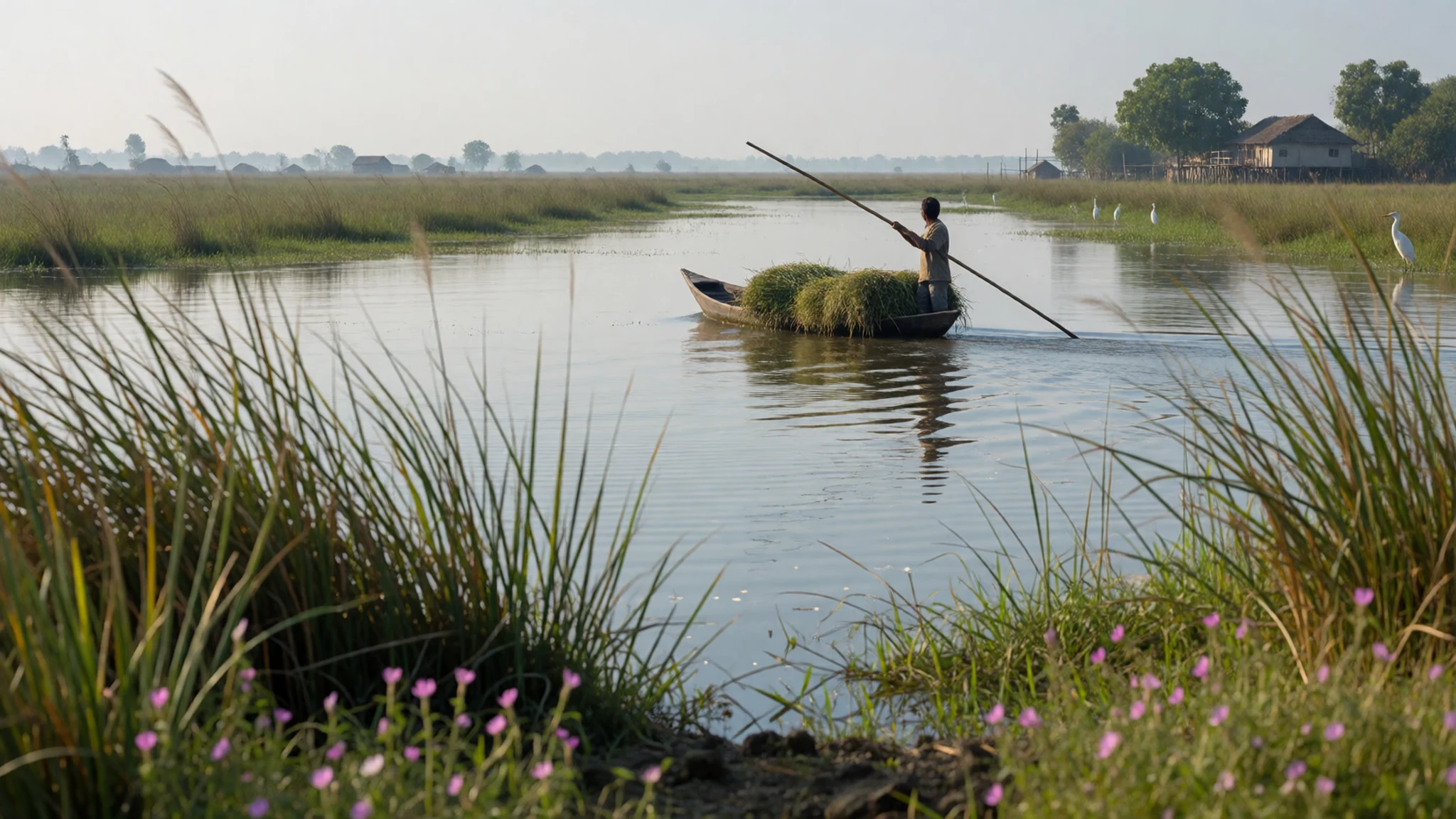
Culture
Majuli's culture holds satra life and village life side by side. In the monasteries the day turns on naam, singing of the divine name, with khol drums and cymbals, and on the discipline of a house that also farms. Bhaona, the religious play, brings masks, costume and a chorus onto a stage inside the compound; at Raas, in autumn, lamps and visiting devotees thicken the same courtyards. Manuscript copying, wood carving and mask-making are taught inside the satra, pupil by pupil, and they surface in public mainly when there is a performance. Beyond the namghar, Mishing and Deori households keep a different rhythm: fishing, wet-rice fields, weaving on the veranda, and the offer of apong, rice beer, to a guest who has come in peace. The gamusa, a white cotton cloth with a red border, is the ordinary sign of honour, placed around a guest, a monk or a dancer. Assamese carries the satra and the market; Mishing is the language of many stilt villages. Remove your shoes before stepping into a namghar, ask before you photograph monks, weavers or prayer, and keep shoulders and knees covered in the satras.
What to wear
Majuli's traditional dress splits by community and by the threshold of the satra. Assamese women wear the mekhela chador, a two-part wrapped garment, in cotton for the fields and in pat or muga silk when the occasion is a wedding, a Raas night or a visit that calls for silk. The gamusa, red on white, is both towel and ceremonial cloth; a Deori weaver at the tat, the frame loom, may be making one, or a patterned cloth with a denser border. Mishing women weave geometric designs of their own, often worn as a wrap with a blouse, and those textiles are a signature of the stilt villages. Men in the satras still wear a white dhoti and a shawl for prayer and dance; outside, shirts and trousers are ordinary. Younger people on the ferry and in Garamur dress as they do in any Assam town: salwar kameez, jeans, T-shirts. A visitor should copy the modest end of that range. In a namghar, covered shoulders and knees matter more than costume, and shoes come off at the step, so sandals or slip-ons are kinder than heavy boots. The climate is hot and wet for much of the year, then mild and dry in winter: breathable cotton, a scarf that can serve as a cover, and a rain layer if the sky is building. Sturdy sandals suit the ferry ramps and village ladders.
What to eat
- Masor tenga — village kitchens and small eateries in Garamur and near the ferry landings
Sour fish curry is everyday food on Majuli, made with river fish, tomatoes or elephant apple, and a light broth rather than a thick gravy. It turns up in village kitchens and in small eateries around Garamur and the ferry landings.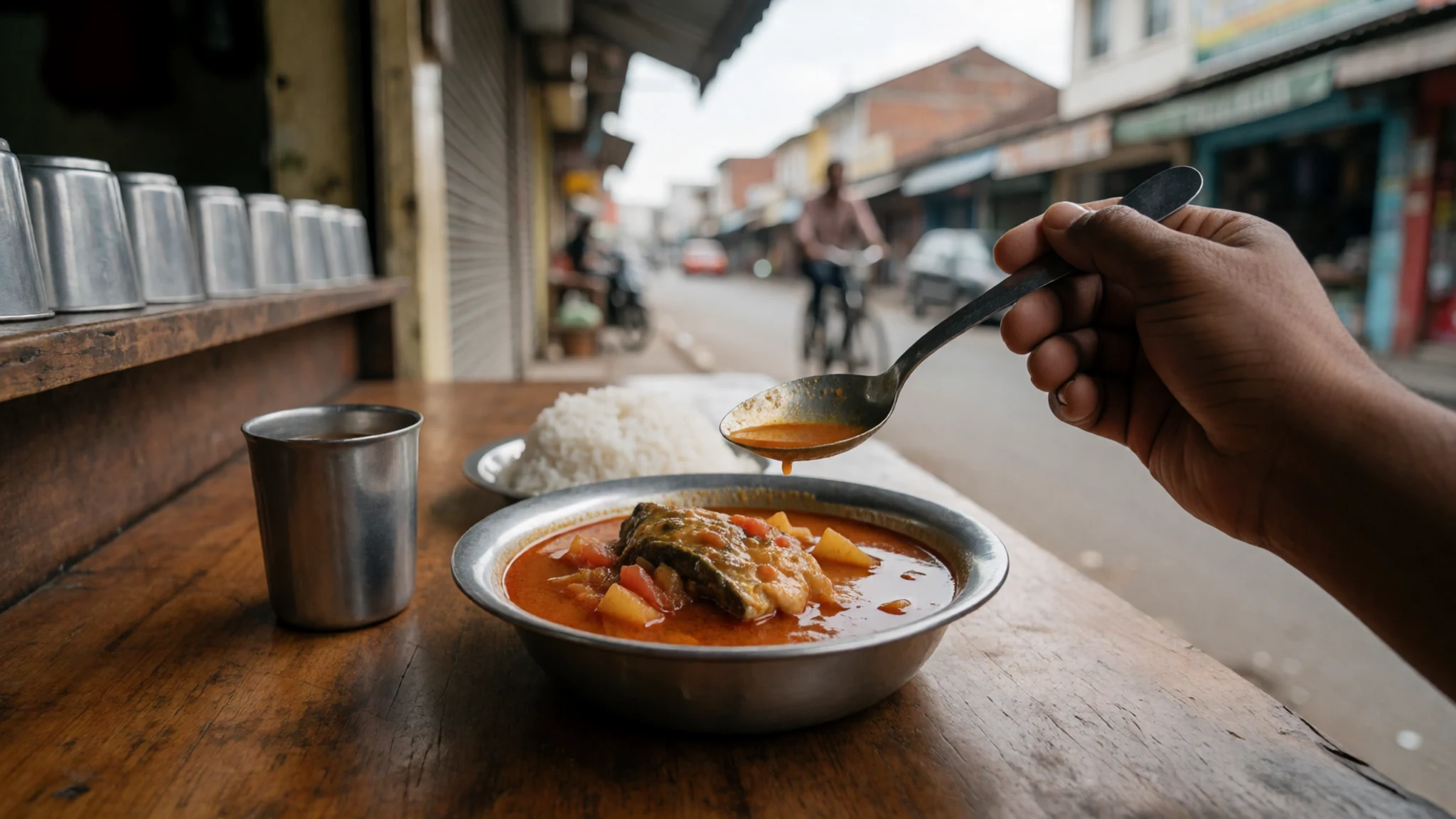
- Duck with ash gourd — Mishing households and simple restaurants in Garamur
Duck is a Majuli staple, often cooked with ash gourd or another soft vegetable and a restrained spice list. Mishing households prepare it for guests, and simple restaurants in Garamur serve it when the market has birds.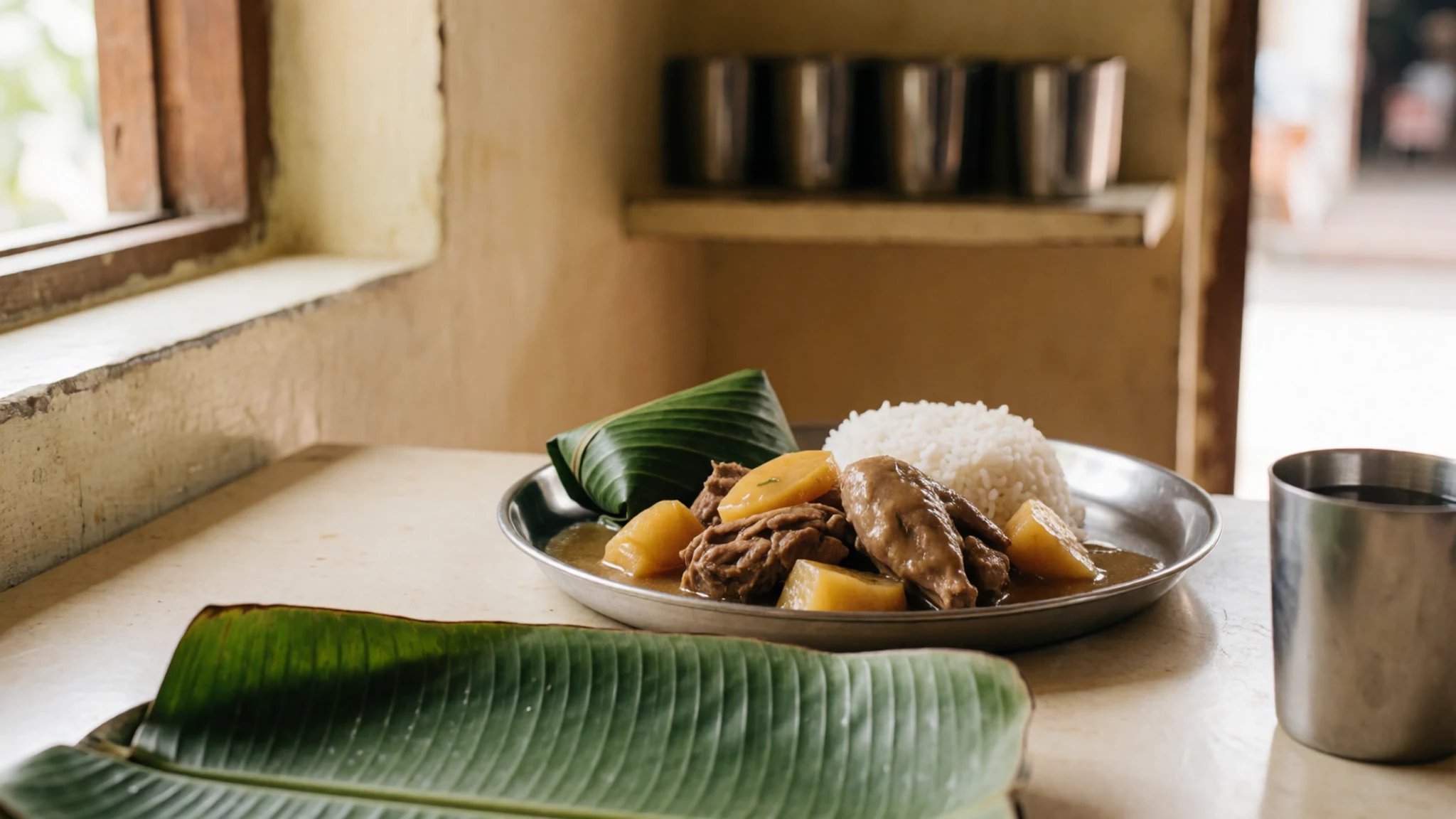
- Pitika — home kitchens and lunch stalls
Pitika on Majuli means a mash: potato, roasted eggplant or dried fish, pounded with mustard oil, onion and chilli, and eaten beside rice. It is the side that makes a plain meal sharp. Home kitchens and lunch stalls serve it from steel bowls. - Apong — Mishing village homes
Apong is rice beer brewed in Majuli's Mishing villages, mildly sour and served in a small bowl or a bamboo cup when a guest is welcomed. It is not a bar drink. Accept a little at a house, or decline with a smile; strength varies by batch. - Sunga saul — Mishing feasts and festival stalls
Sunga saul, eaten on Majuli, is rice cooked inside a bamboo tube, then slit open, and it tastes of the green wood and of smoke. It appears at Mishing feasts and sometimes at stalls during festivals. - Pitha — markets and satra-side stalls in festival season
Pitha on Majuli are rice cakes, steamed or pan-cooked, made for Bihu and other gatherings and also sold in the markets when the season is right. They range from a plain salted round to a sweet one filled with jaggery and coconut.
Plan it
Best time. On Majuli, October to March is the easier window: the river is lower, the paths drier, and the days mild to warm. November often brings Raas, which is lively and crowded. June through September is the monsoon; ferries can be disrupted and wetlands spread. April and May are hot, with rain already heavy.
How long. three to four
Getting there. Majuli is reached from Jorhat's Rowriah airport by road to Nimati Ghat, then a ferry across the Brahmaputra to Kamalabari. Ferries also run from the north bank. The island has no railhead. Sailings should be checked locally, because the channel moves.
Budget. low
Tips
- Ask the evening before about the morning ferry; sailings follow the river, not a fixed promise.
- Carry cash. Card payment is uncommon in villages and at small stalls.
- Begin satra visits in the morning, before prayer ends and the day grows hot.
- A bicycle or a hired boat covers the wetlands better than a car on the narrow village lanes.
- In the monsoon, leave a spare day. Flooded roads and cancelled boats are ordinary.
Etiquette
- Remove shoes at a namghar and at any house where footwear is left at the step.
- Ask before photographing people at prayer, at the loom or in a mask workshop.
- If apong or a meal is offered in a home, accept a little or refuse gently.
Nearby
Sources
- Wikidata (CC0)
- Wikipedia: Majuli (CC BY-SA 4.0)
- Wikivoyage: Majuli (CC BY-SA 4.0)