Mahabaleshwar
Mahabaleshwar, India
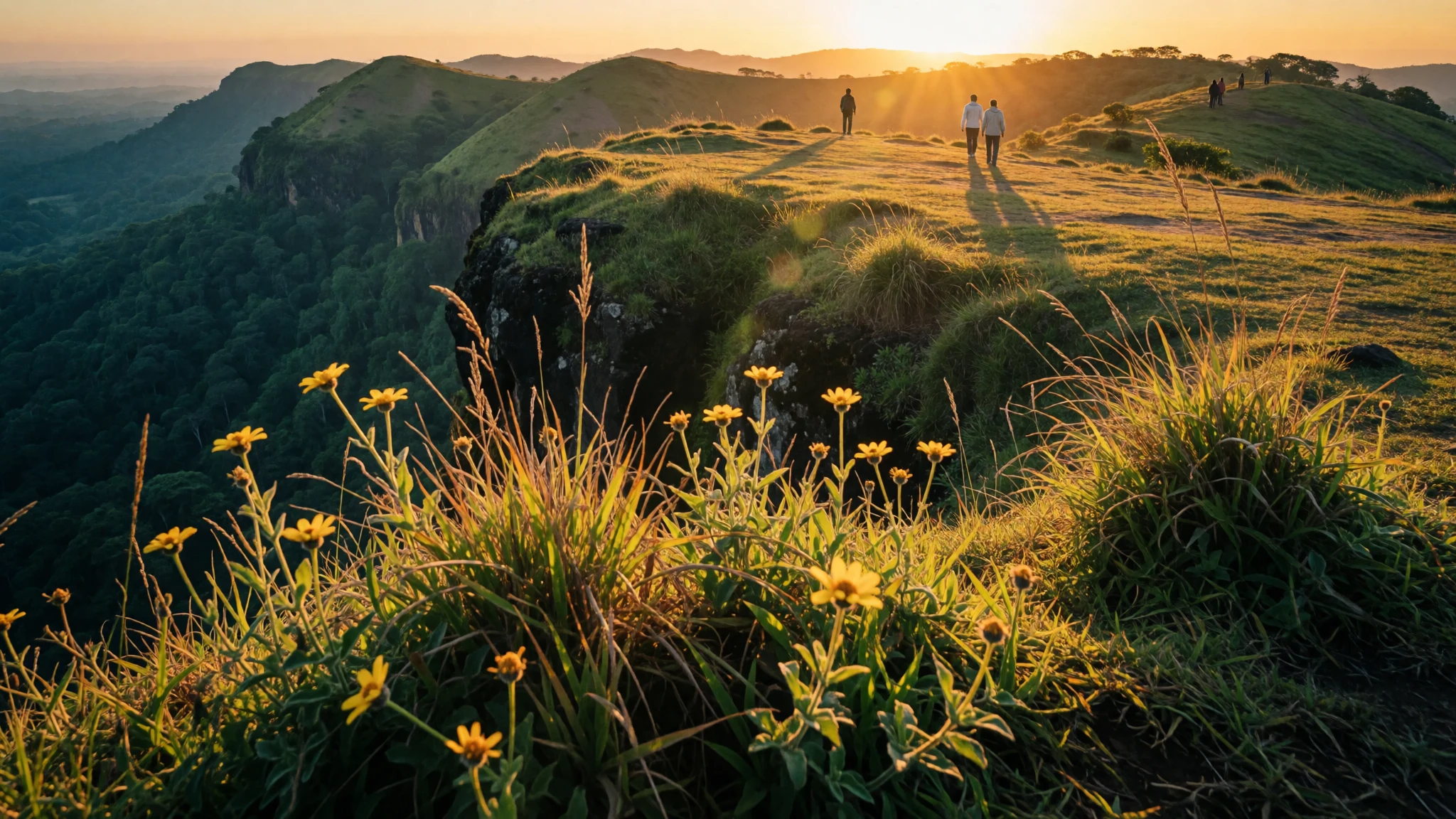
Mahabaleshwar is a cool Western Ghats plateau where the Krishna River rises, strawberries ripen and colonial Bombay once escaped the summer heat.
The place
Mahabaleshwar stands at 1353 metres on the Sahyadri range of the Western Ghats, a broad plateau in Satara district, Maharashtra, with valleys dropping away on every side. The rim is the point of the place: a visit is mostly a loop of lookouts, each named after a colonial official and each facing a different fold of forest and haze. Between the viewpoints lie red laterite lanes, damp woodland and small markets.
The town is three settlements run together: Malcolm Peth, with the main market and bus stand; Old Mahabaleshwar, the quieter pilgrimage quarter; and part of Shindola village. Pilgrims come because the Krishna River, sacred to Hindus, begins here, along with the Koyna, Venna and Gayatri. The Savitri also rises on the plateau but runs west to the Arabian Sea, while the Krishna crosses the peninsula eastward to the Bay of Bengal.
Cool air is the other draw. Families from Pune and Mumbai have been driving up for relief from the plains for generations, so weekends and school holidays bring packed lanes and full viewpoints. The monsoon is a different trade: green slopes and running water, but cloud and rain that can hide the views entirely. Clear winter mornings are the easiest time for the valleys.
Farming gives the plateau its second reputation. The climate suits strawberries, and the area accounts for about 85 percent of India's production, with a Geographical Indication tag awarded in 2010. Mulberries, carrots and corn are grown too, and stalls along the roads sell them fresh.
Its story
Mahabaleshwar's recorded story starts with a river source. Local legend credits a Yadava ruler of the 13th century with building a small temple and water tank where the Krishna rises, which made the plateau a pilgrimage spot long before it was a resort. The surrounding Jawali valley was held by the More clan under the Bijapur sultanate until 1656, when Shivaji, founder of the Maratha state, killed Chandrarao More and took the territory. Around the same time he built Pratapgad, a hill fort near the plateau.
The British arrived after the Maratha collapse. In 1819 the hills were handed to the Raja of Satara. Colonel Lodwick then climbed up and urged Sir John Malcolm, governor of Bombay, to turn the cool summit into a sanatorium for troops. The Raja received other villages in exchange, and the British took Mahabaleshwar in 1828. Old records call it Malcolm Peth after the governor, a name that survives in the town's main quarter.
Officials of the Bombay Presidency became regular guests, and several left their names on viewpoints: Arthur Malet at Arthur's Seat, Lodwick at his own point, and a later governor at Wilson Point. Venna Lake was dammed in 1842 to hold water from springs. Bartley Frere, commissioner at Satara in the 1850s, had a road built up from Satara. By the middle of that century the town served as the Presidency's summer capital, when the government of Bombay moved uphill to escape the heat. Many viewpoint names are therefore a record of who held power rather than anything older.
What to see
- Arthur's Seat — Western rim, end of the viewpoint road
Arthur's Seat sits at the end of a dead-end road, so it is the point most people aim for and the one most likely to be full. There is no parking at the viewing end, and in peak season even roadside spots vanish. A weekday morning, with a short walk, gives the clearest valley view.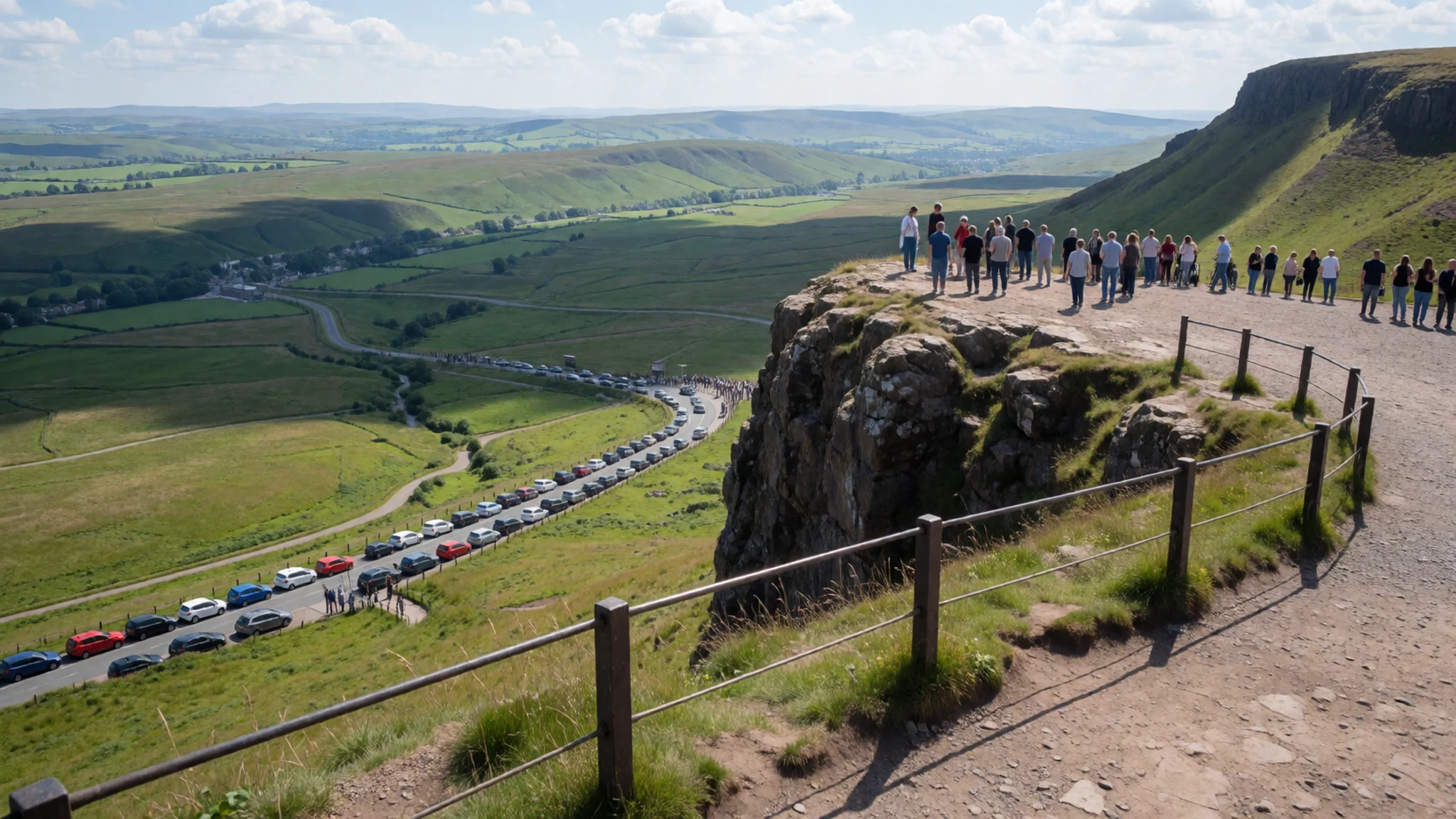
- Savitri Point — Western rim, just before Arthur's Seat
Savitri Point lies just before Arthur's Seat on the same road and has been rebuilt with stairways down to the railings. It looks into the valley of the Savitri River, which rises on the plateau and flows west to the Arabian Sea. A small car park makes it an easy stop alongside its busier neighbour.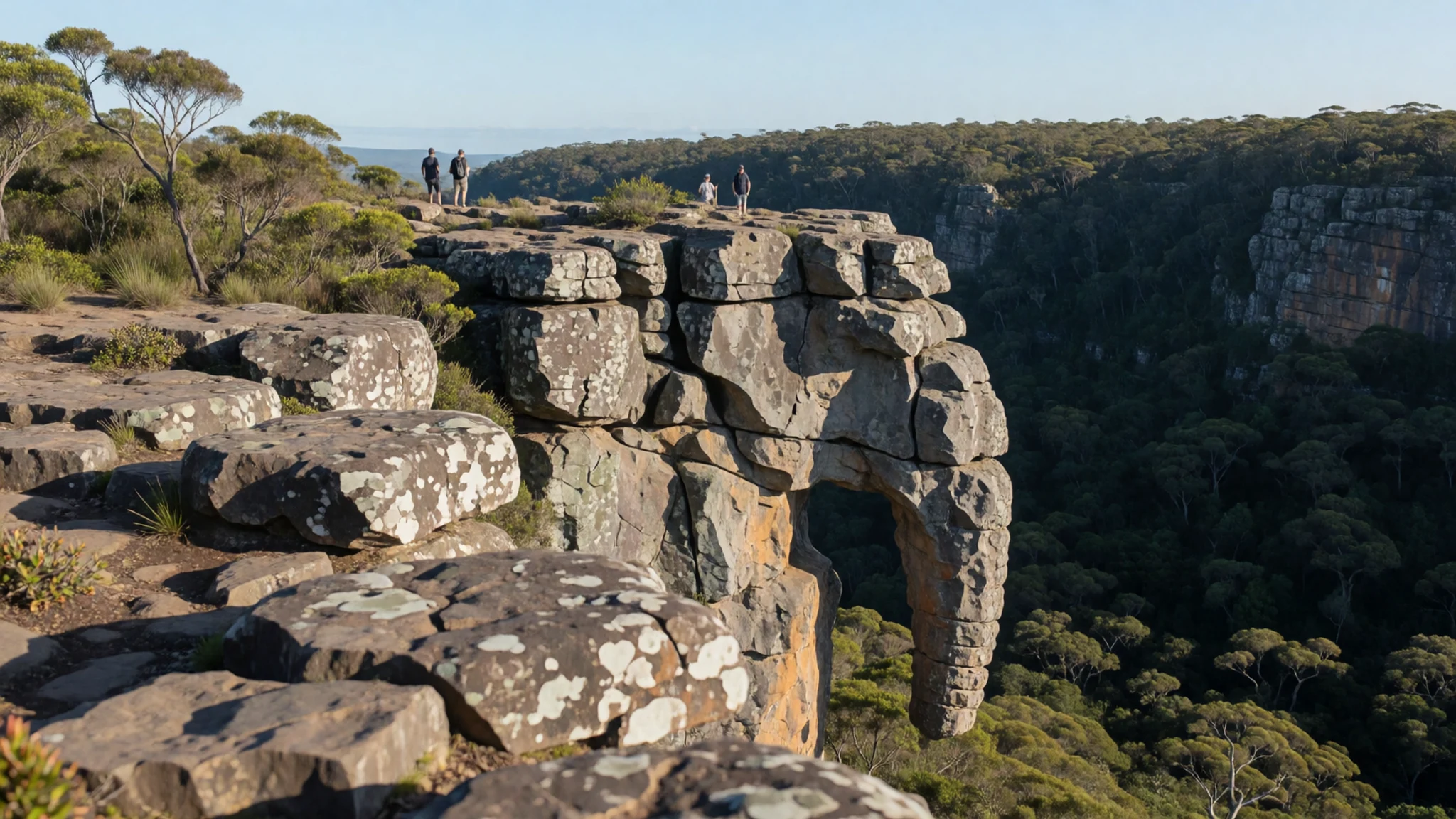
- Elephant's Head Point — North-western rim
Elephant's Head Point is named for an overhanging cliff whose outline resembles a trunk. The rock is odd enough to justify the stop, and the lookout also gives wide views across neighbouring cliffs and the forested drop below. It is less crowded than the headline viewpoints, which makes it good for a slower look.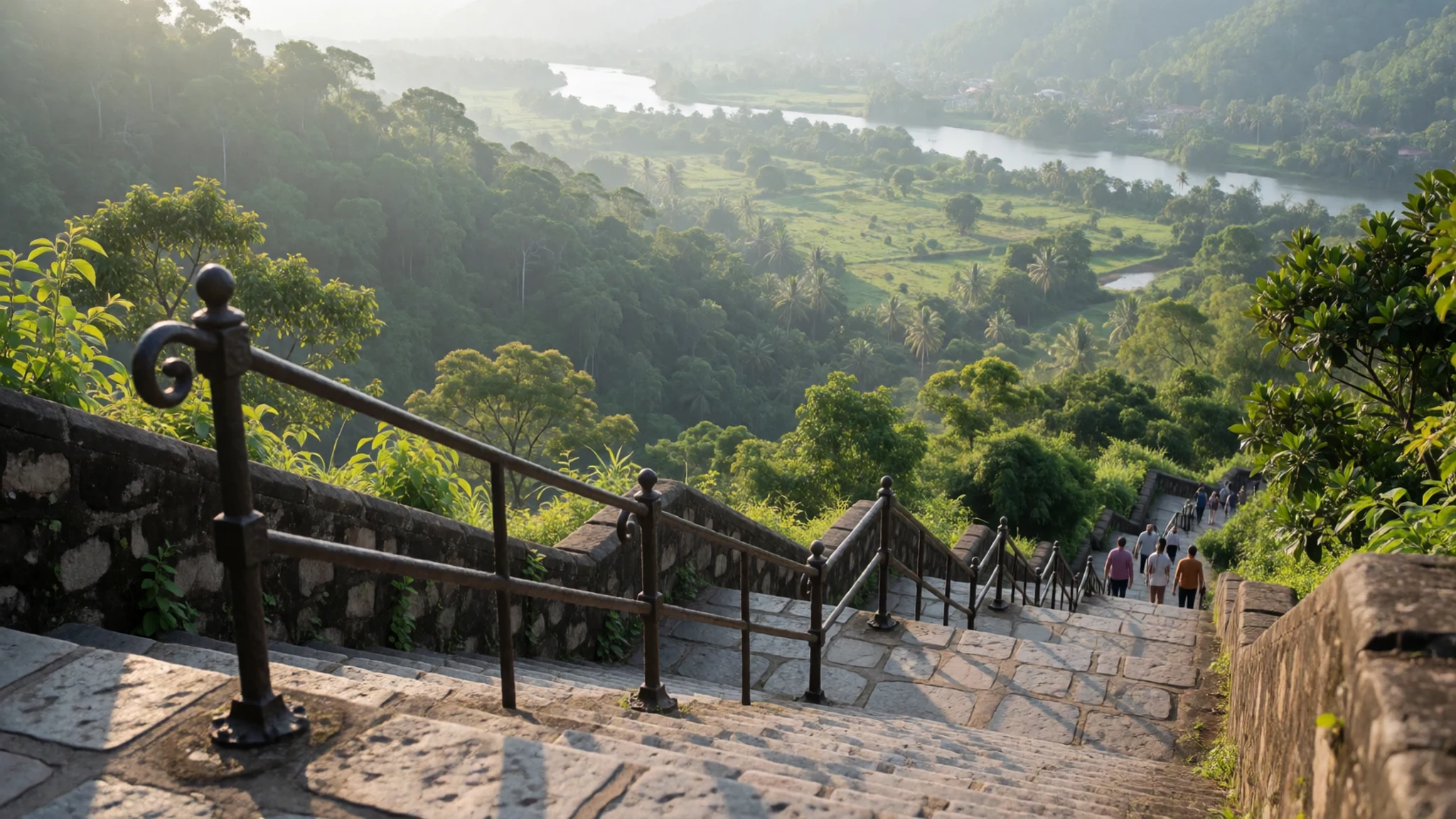
- Lodwick Point — Western rim
Lodwick Point is named after the British officer who first climbed the hill, and his son put up a stone column that still stands there. It is a small, quiet marker of how the hill station began, with a valley view that rewards a short pause rather than a long visit.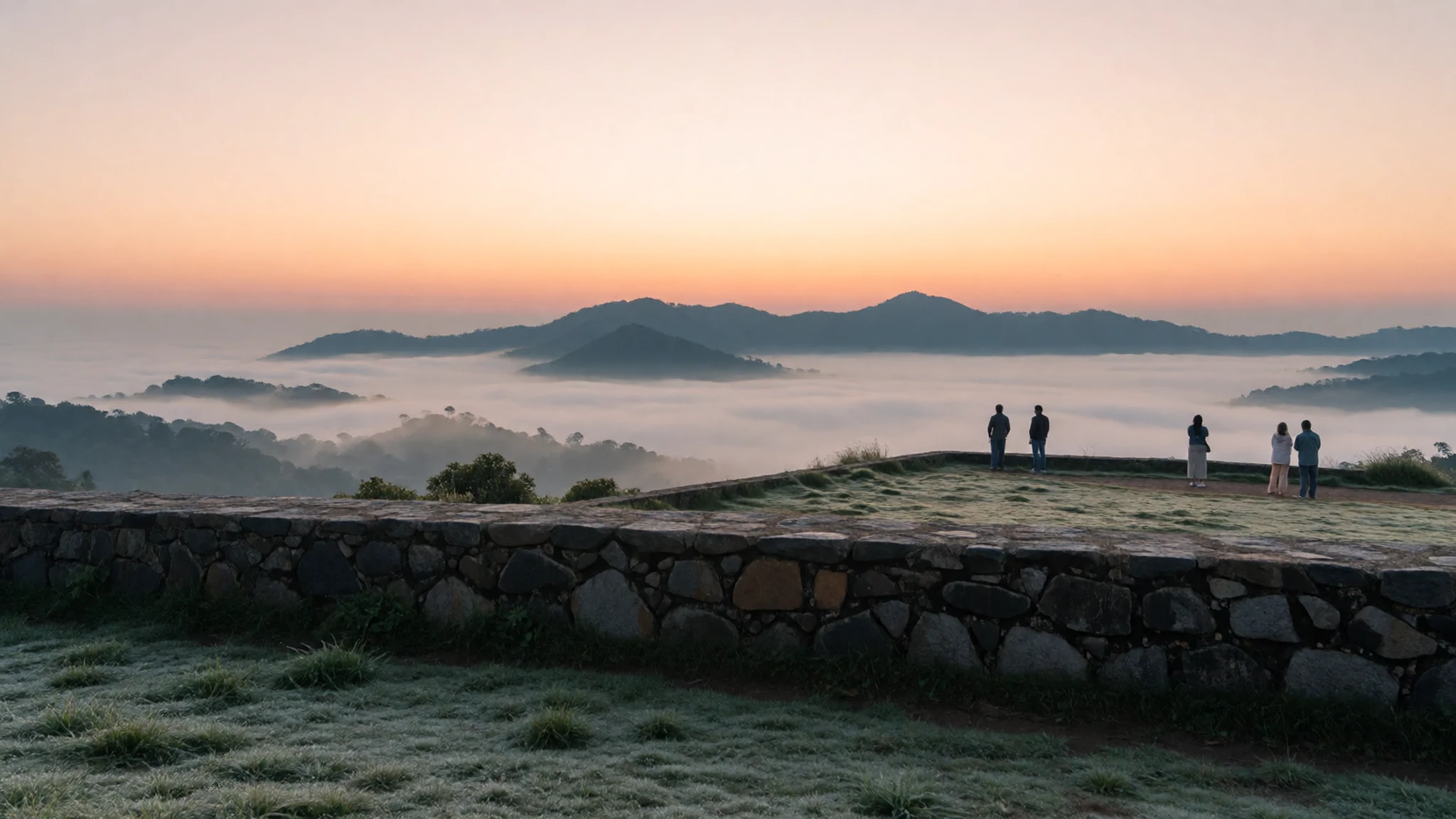
- Wilson Point — Southern plateau
Wilson Point, also called Sunrise Point, is the highest spot on the plateau. It is named after a governor of the Bombay Presidency. Getting there before dawn is the point: the light comes up over the ridges, and on clear mornings the haze in the valleys glows before it burns off.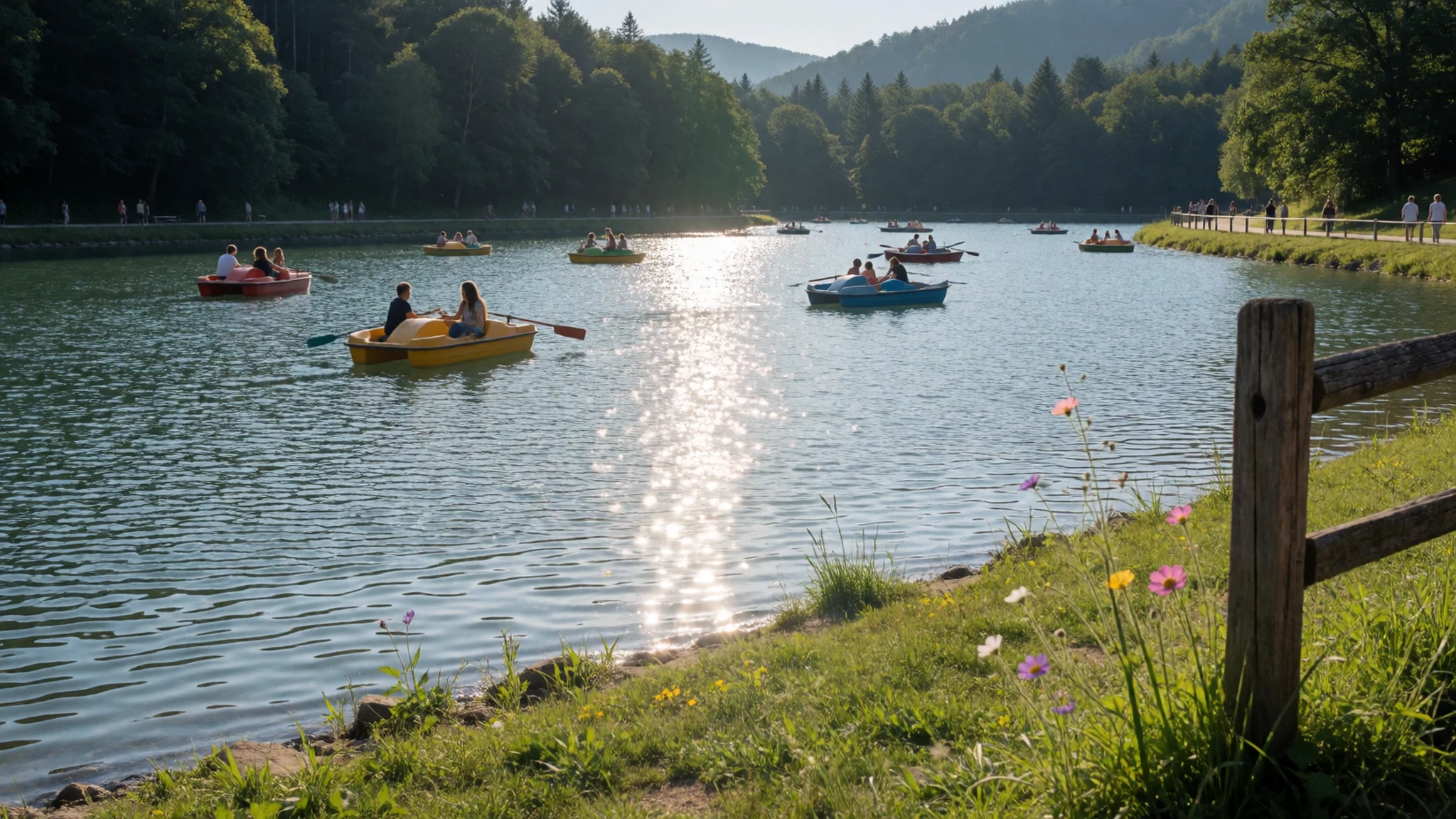
- Venna Lake — Town centre
Venna Lake was made in 1842 to collect water from springs, and the Venna River flows out of it. Today it is the town's relaxed gathering place, busiest in the evening when families stroll the shore. Sunset over the water is the usual draw, so arrive a little early on weekends.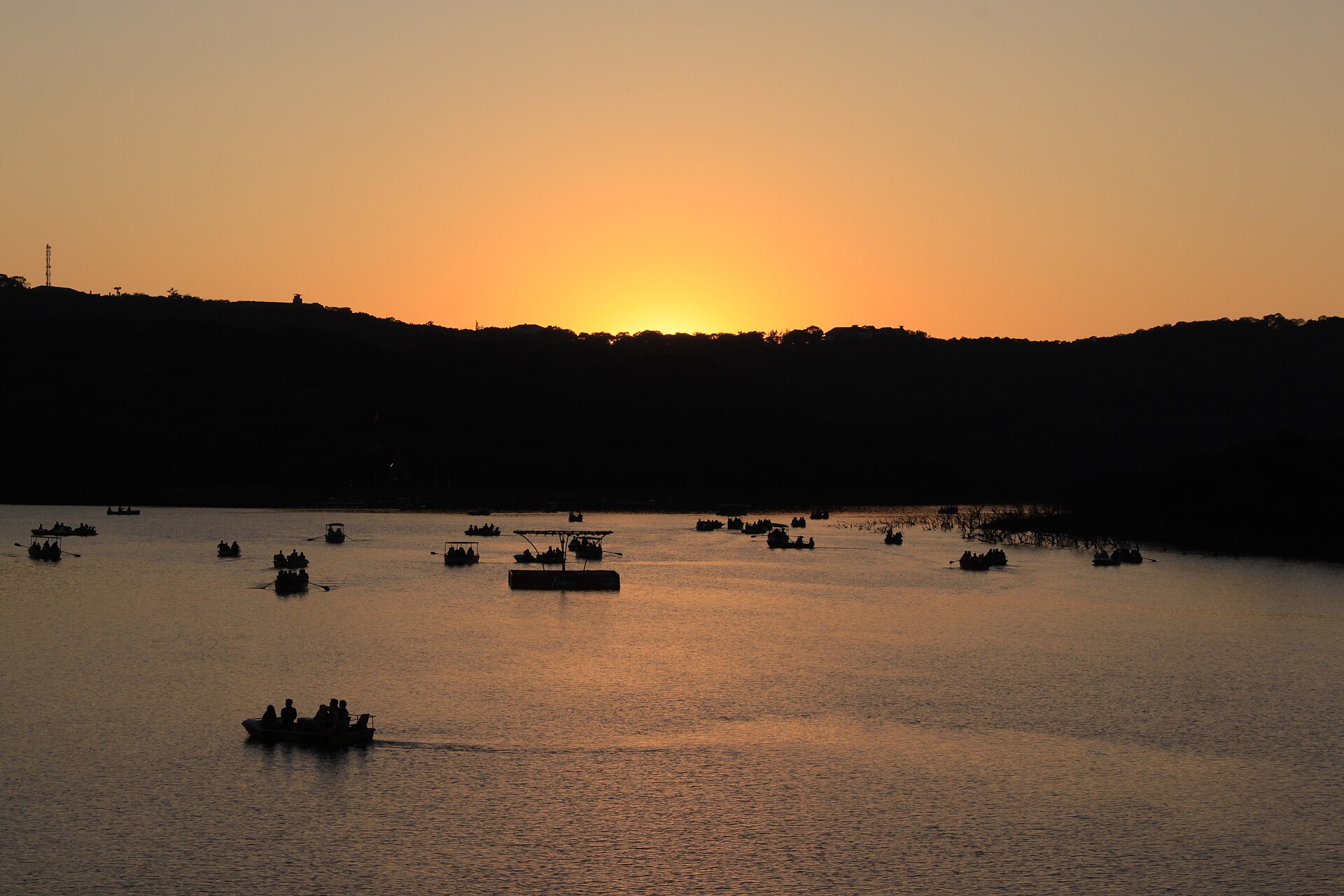
Culture
Mahabaleshwar has two cultural layers that sit side by side. The older is devotional. Old Mahabaleshwar, the original pilgrimage quarter, grew around temples and a water tank at the source of the Krishna, and the river's sacred status still draws worshippers. Local legend credits a Yadava ruler with the first shrine, so the religious tradition predates the British by centuries. The rhythm there is that of any Maharashtrian pilgrim town: early prayers, flower sellers, bells, and quiet in the afternoons.
The second layer is colonial. The British made the plateau a sanatorium and then a summer capital, and the viewpoints, lakeside and roads still carry their names. The market area around Malcolm Peth is now more a holiday town than a village, with Marathi, Hindi and English heard together. The busiest days are weekends and festival holidays, when families arrive from the cities. Marathi is the local language, and a few words of it are always welcomed.
Visitors who stay in Old Mahabaleshwar notice the contrast: forest and calm in the old quarter, crowds and traffic near the bus stand. Many people split their trip, using the old quarter for walks and quiet mornings and the main market for meals and shopping.
Remove your shoes before entering the temples of Old Mahabaleshwar, dress modestly, and ask before photographing worshippers at the river source.
What to wear
Traditional dress in the Mahabaleshwar area is Maharashtrian. Women wear the nauvari sari, a long cotton or silk drape passed between the legs for ease of movement, at weddings, festivals and religious occasions; Paithani silk with woven gold-thread borders is the prized choice. Men wear the dhoti or kurta-pyjama with a Gandhi cap, or a pheta turban for ceremonies. Everyday cotton suits the damp hills.
Day to day, locals and weekend visitors dress simply: jeans or trousers, T-shirts, kurtas and salwar suits, with shawls or sweatshirts in the cool months and raincoats or umbrellas during the monsoon. Shopkeepers and farmers often wear a scarf or cap against sun and rain.
Visitors should pack in layers. Days can be warm, winter mornings and evenings noticeably cool, and the monsoon wet. Shoes with grip matter more than style, since paths to the viewpoints turn slick and muddy after rain. A light waterproof, sun hat and sunglasses cover most seasons. For temples, bring clothes that cover shoulders and knees, and footwear that slips off easily for the shoe stands. Swimwear and sleeveless tops are fine at guesthouse pools but draw attention in the old quarter.
What to eat
- Fresh strawberries — The main market in Malcolm Peth and roadside stalls
Strawberries are the signature of the plateau, sold by the punnet through the cooler months. Locals recommend the sweet charlie variety from the main market. Eat them the same day, as they bruise quickly in warm weather, and wash before eating.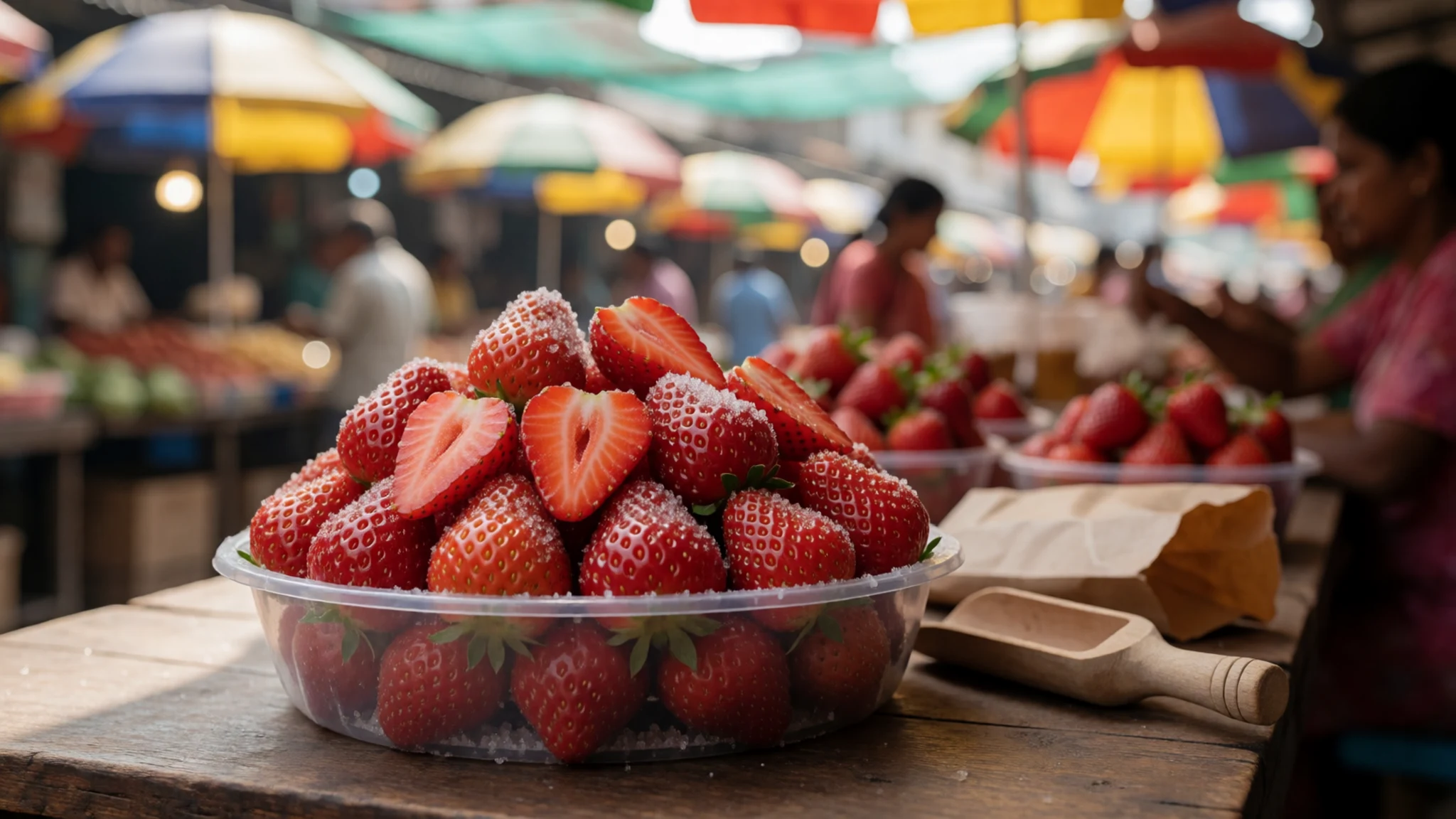
- Strawberry milkshake — Most restaurants and eateries in the main market
The strawberry milkshake is the standard drink of the town and appears on almost every menu. Some places add a scoop of strawberry ice cream on top. It is sweet and thick, best taken as a break after a morning of viewpoints.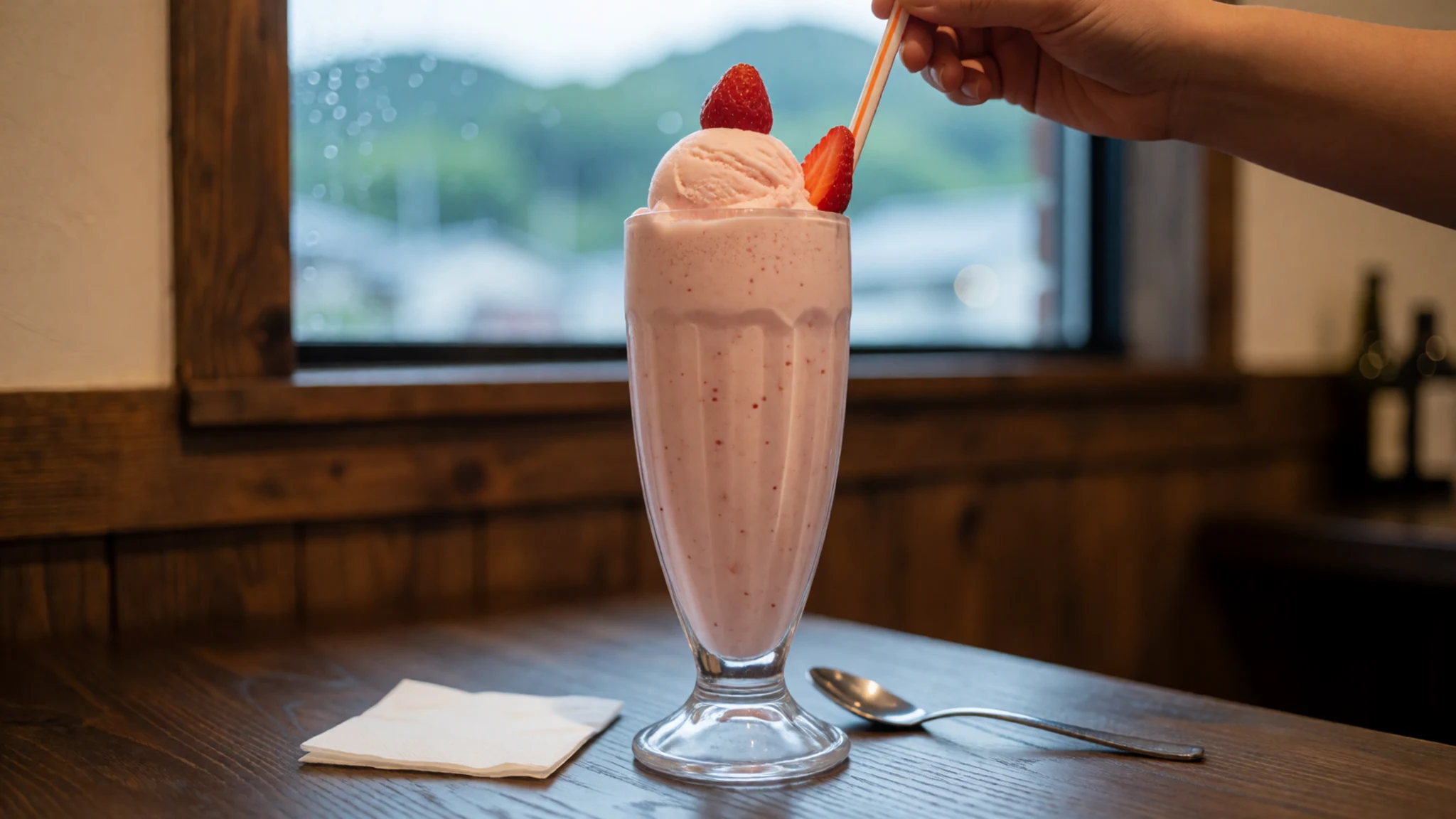
- Roasted and boiled corn — Roadside carts near viewpoints and the market
Local corn is sold roasted over coals or boiled, usually with lime and chilli salt. It is a monsoon favourite, eaten hot in the drizzle. Corn patties, made from the same crop, turn up at snack stalls and simple eateries. - Mulberries and mulberry preserves — Fruit stalls and shops around the market
Mulberries are one of the plateau's specialities, sold fresh in season and also as syrups, jams and crushes. They stain fingers and clothes, so eat them carefully, and look for the small glass jars if you want a souvenir. - Strawberry wine — Souvenir and wine shops on the approach roads and in the market
Strawberry wine is a sought-after keepsake, along with other local fruit wines. It is a sweet, light drink. Check the label and the current price in the shop, and remember that most restaurants here serve little alcohol beyond beer.
Plan it
Best time. October to February for clearer skies and cool air, with the clearest views on winter mornings. March to May is warmer but still fresher than the plains. June to September is the monsoon: heavy rain, cloud and fog that often hide the viewpoints, though the slopes turn green.
How long. 2
Getting there. Pune is the usual gateway, by air or rail, followed by a road journey southwest to the plateau; Mumbai is also reachable by road in a long day's drive. Many routes pass through Satara, or through Wai and Panchgani. Check current state bus services to Mahabaleshwar bus stand.
Budget. mid
Tips
- Come midweek if possible; weekends and school holidays fill the viewpoints and car parks.
- Be at Wilson Point before sunrise for the best light, and carry a warm layer in winter.
- Expect an entry fee at the town's gates, charged per person and per vehicle. Check the current amount, pay by UPI or cash, and count your tickets.
- Stay near the bus stand for convenience, or in Old Mahabaleshwar for forest and calm, and carry cash for stalls and small shops.
Etiquette
- Remove shoes at temple doors and dress modestly in Old Mahabaleshwar.
- Ask before photographing worshippers or local people.
- Take litter away from the viewpoints and keep to the railings at the cliff edges.
Nearby
Sources
- Wikidata Q463273 (CC0)
- Wikipedia: Mahabaleshwar (rev 1376437636) (CC BY-SA 4.0)
- Wikivoyage: Mahabaleshwar (rev 5410190) (CC BY-SA 4.0)
- Amitban77, The landscape of Mahabaleswar, Maharashtra (CC BY 4.0)
- Uwe Dedering, Location map of India (CC BY 3.0)
- Rishabh Tatiraju, Panorama of Mahabaleshwar (CC BY 3.0)
- Various, Map of Mahabaleshwar (Public domain)
- Rangan Datta Wiki, Willison Point Sunrise (CC BY-SA 4.0)
- Abid Hasan, View from Savitri Point (CC BY 3.0)
- Karthik Easvur, Savitri river and adjoining valley (CC BY-SA 4.0)
- Rdglobetrekker, A sunset seen from the Venna Lake (CC BY 3.0)


