Mabul
Mabul, Malaysia
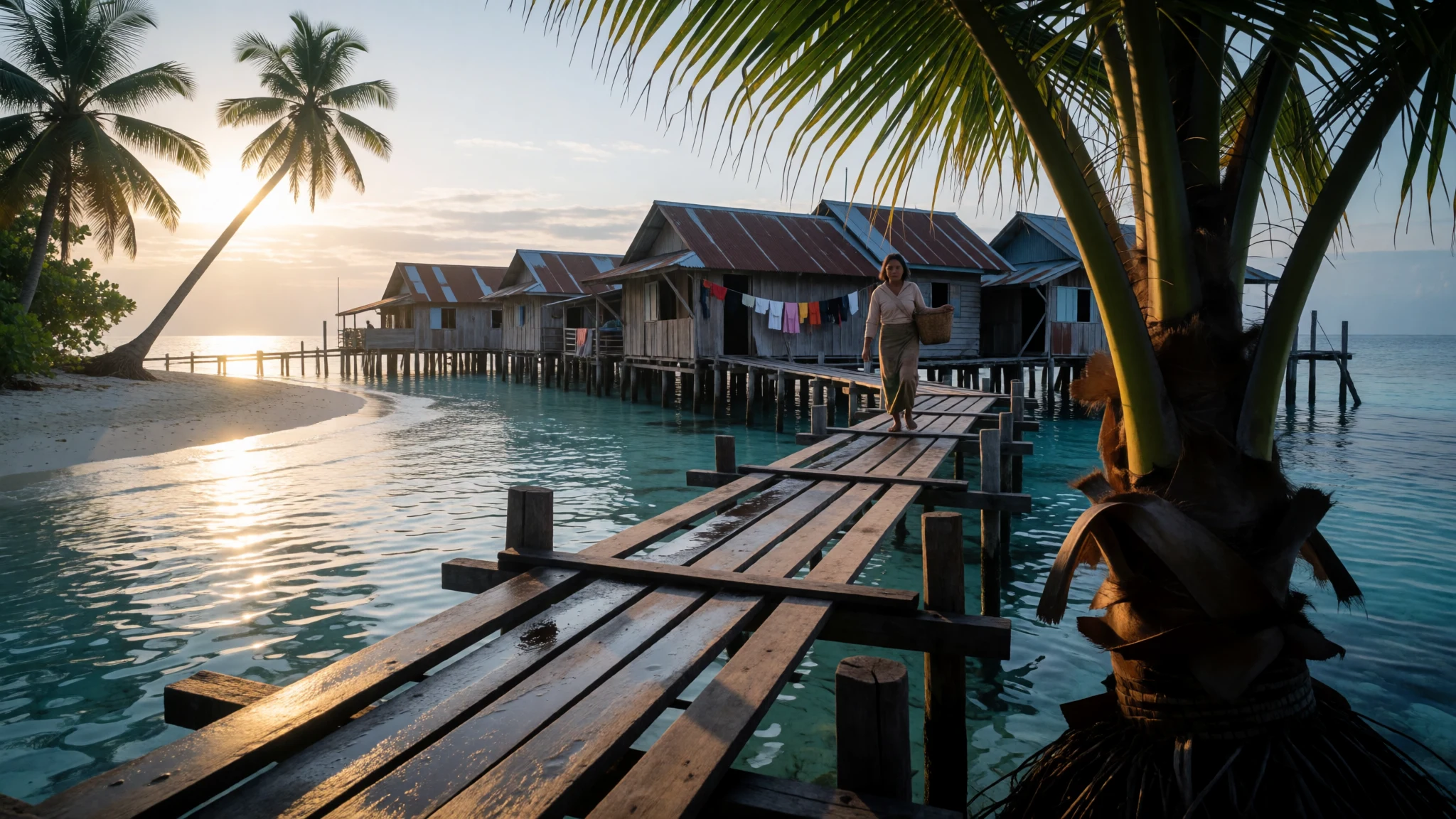
Mabul is a flat palm island off Borneo where divers stay to hunt tiny, strange reef creatures, in a fishing village that tourism has reshaped.
The place
Mabul is a small island off the southeastern coast of Sabah, on the Malaysian side of Borneo, and it falls within the Semporna area of Tawau district. It sits at the north-western edge of a reef, and the land is flat: Wikidata puts its high point at about 8 m above sea level, so sea and sky do most of the work in any view. Palms cover much of the island and pale sand rings it. The population is around 2,000, though the village feels busier because divers and resort staff come and go all year. Mabul began as a fishing settlement in the 1970s, and a village of stilt houses still sits at its heart. Since the 1990s the island has been tied to diving. Sipadan, the open-water site known for big fish, lies a short boat ride away, and Mabul has become the place where people stay and where they look for small things: frogfish, nudibranchs, crustaceans and other macro life that rewards slow, patient swimming. Resorts and the village sit side by side, and the contrast is plain to see. Parts of the shoreline, especially on the west, are spoiled by rubbish, and plastic drifts in the water near the beach. Mabul is not a polished resort island; it is a working village that diving has reshaped, and it is best approached with that in mind. Days here follow the boats: early dives, long surface intervals, afternoons in the shade.
Its story
Mabul's written history is thin, and much of what is told rests on oral accounts and on wider events in Sabah's past. The island is said to have started under the Brunei Sultanate and then passed, along with part of North Borneo, to the Sulu Sultanate as a reward for help in the Chermin War. Under Sulu influence, followers of the Sulu datus, including Bajau families, settled to live off the sea, and fishermen used Mabul as a stopover while collecting turtle eggs on nearby Sipadan. Later the British North Borneo Chartered Company took charge. It based its claim on a lease agreement made with Sulu in 1878, while the Dutch argued that Mabul and its neighbours belonged to the Bulungan Sultanate. The two powers settled the matter in the Anglo-Dutch Convention of 1891, which left Mabul under British control. Colonial officials paid it little attention, since policy favoured land-based economies over maritime ones. After Sabah joined the new Malaysia in 1963, Bajau families from the mainland resettled here, and Suluk and Bajau Laut people arrived from the Philippines, pushed out by the Moro conflict. Diving then put Mabul on the map. Together with Sipadan and Kapalai Reef it became a name among divers, and in 2004 the Sipadan operators were ordered to move their businesses to Mabul, which shaped how tourism grew on the island. The result is a community of mixed origins, with families who arrived by very different routes now sharing one small island.
What to see
- Macro diving at the muck sites — Reefs around the island
Mabul's reputation rests on small marine life. Scorpionfish, frogfish, crocodilefish, nudibranchs and many crustaceans turn up around sites such as Froggy Lair, Paradise Reef and the Seaventure Platform. Most dives are shallow and slow. Visibility at the muck sites is modest, so the pleasure is in close, patient looking.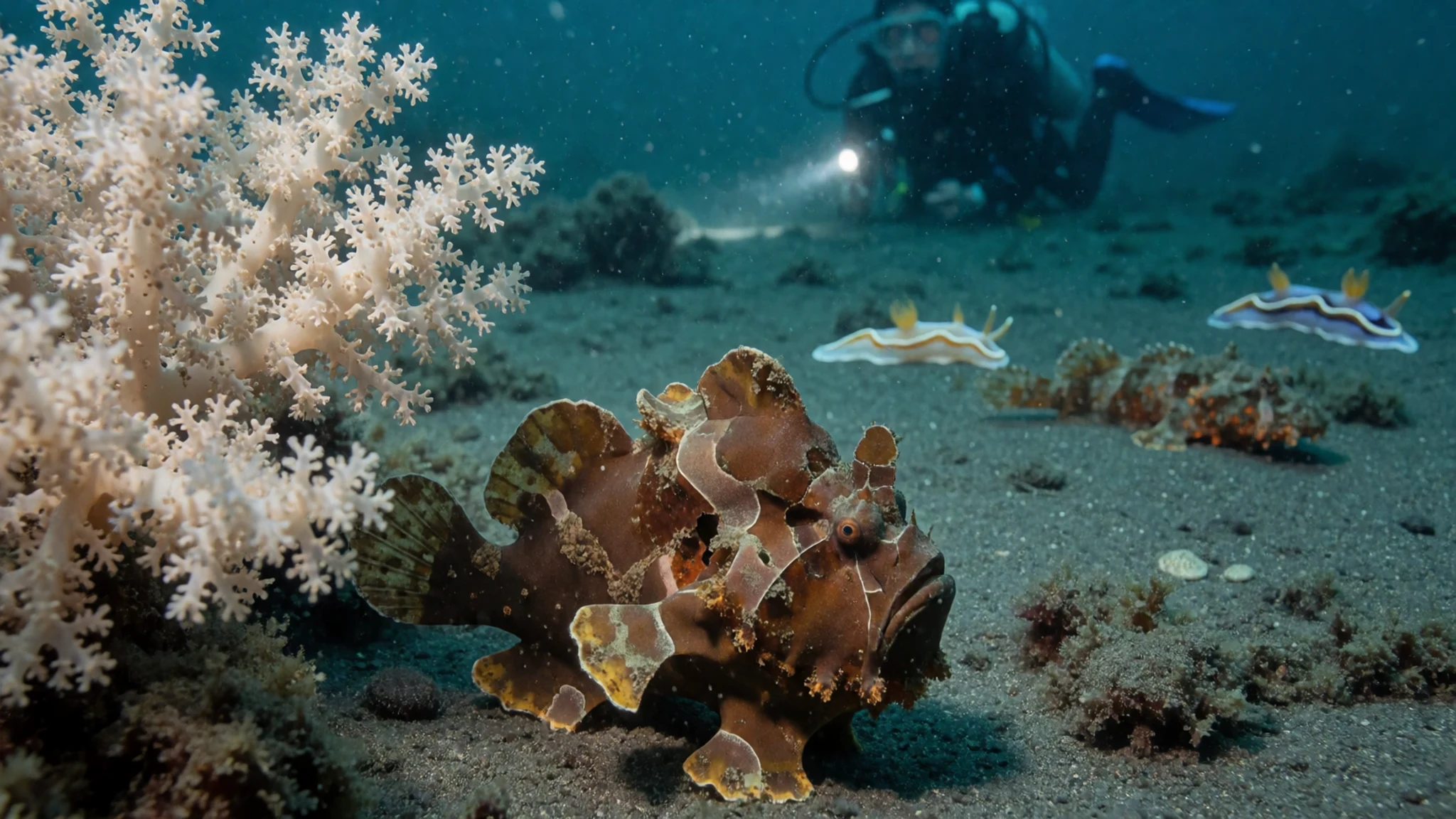
- Lobster Wall — Seaward reef
On the seaward side, Lobster Wall has clearer water than the muck sites and drops away in a steeper slope. It suits divers who want a change from the silty, shallow sites, and it also works for snorkellers who are happy to go out by boat with an operator.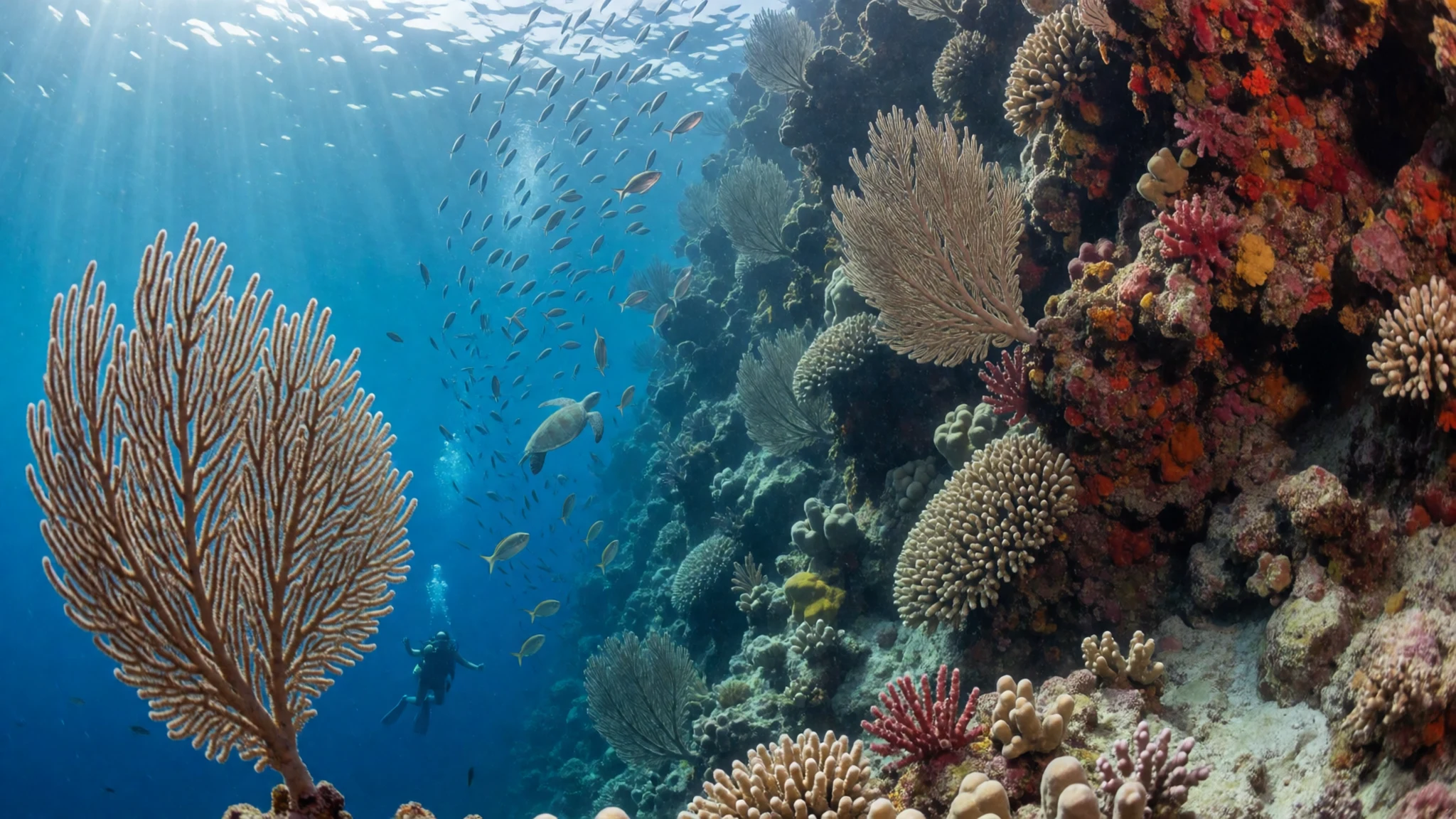
- Snorkelling off the beach — Island shoreline
A few sites close to shore suit snorkellers, mainly around Paradise Reef and Lobster Wall. In front of one of the dive lodges you can swim in straight from the sand and see coral, plenty of fish and, with luck, a turtle. Plastic bags in the water are a sad part of the picture.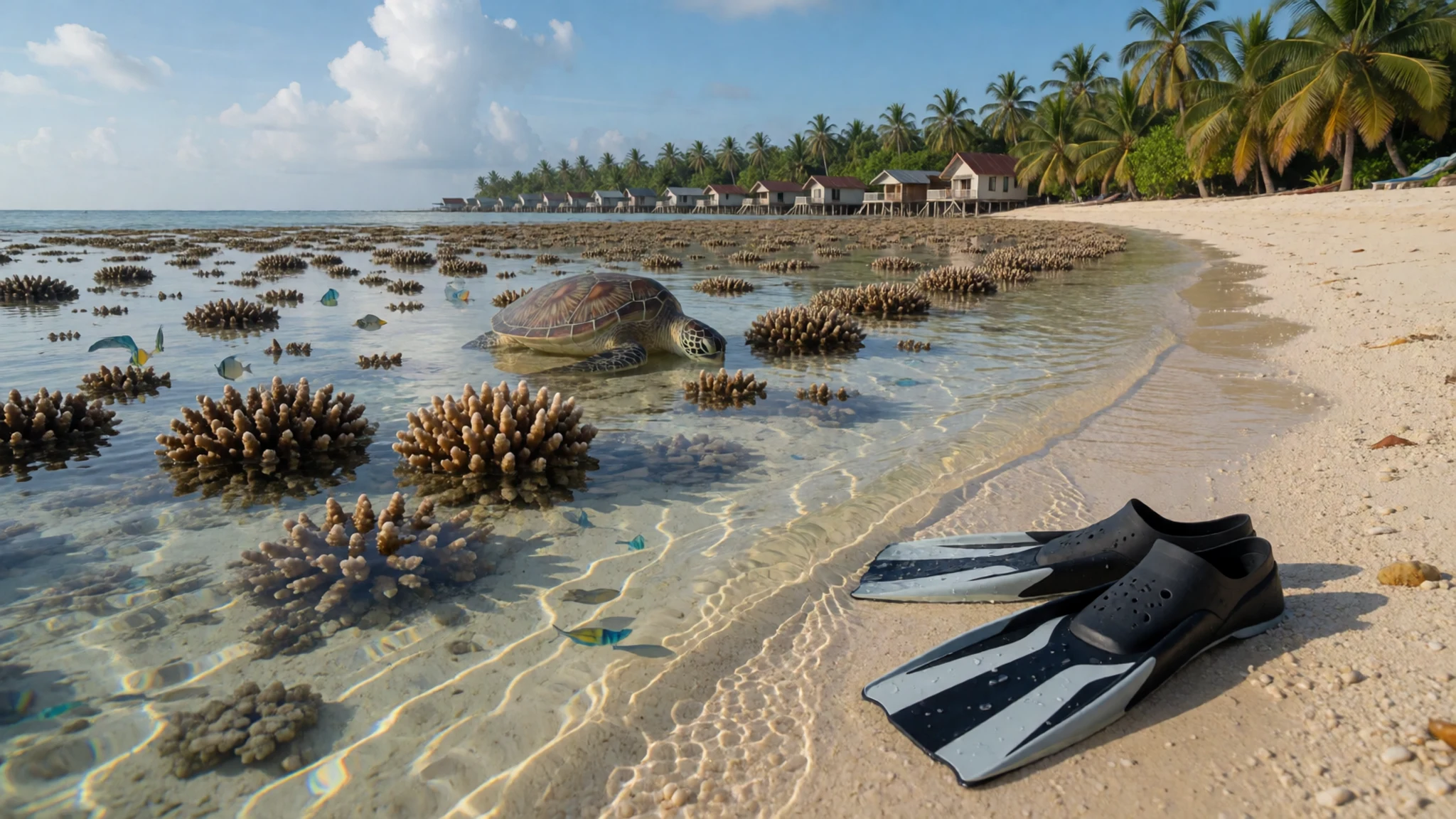
- The stilt village — Village centre
The village at the middle of the island is where the fishing community lives, in houses raised over the shallows. A slow walk shows daily life: boats being mended, children playing, small shops and barbecue stands. It is a useful reminder that Mabul is a home before it is a dive base.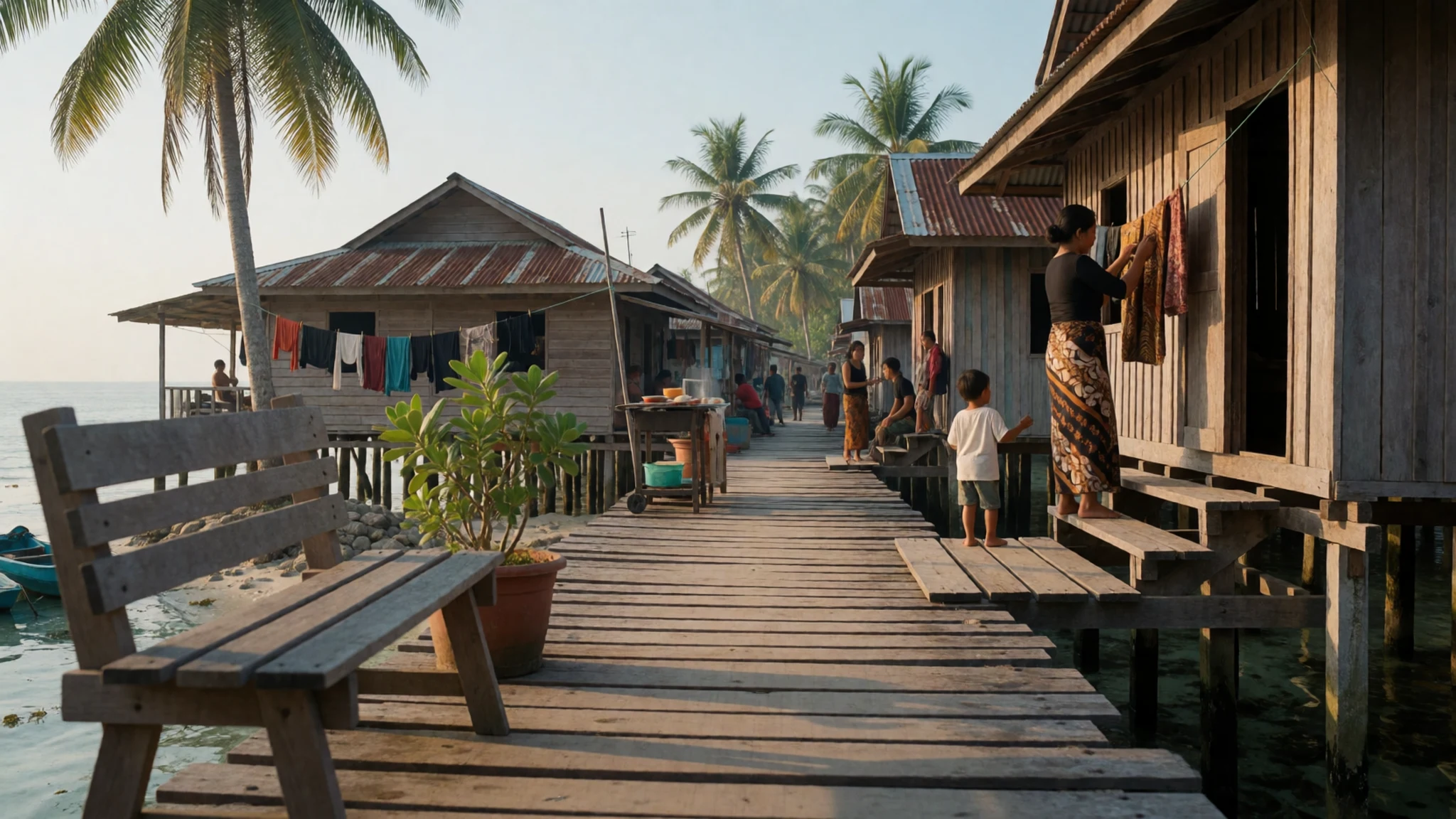
- Day trips to Sipadan — Short boat ride from Mabul
Sipadan is where the larger open-water species are found, including turtles in greater numbers than at Mabul. Trips run from the island's dive operators and from Semporna. Access and any permits are controlled, so ask your operator well ahead and do not count on a spare day.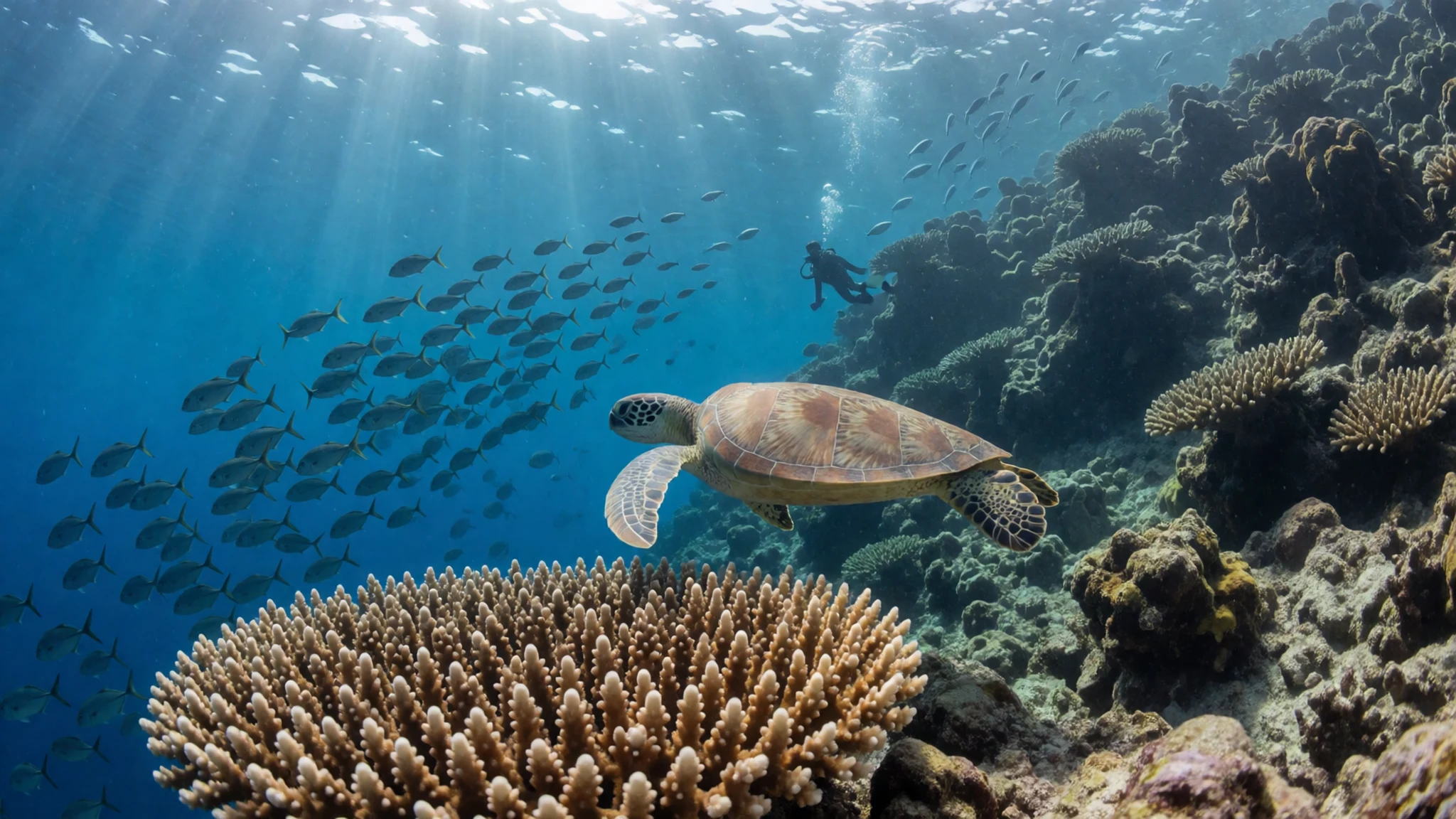
Culture
Mabul's culture is that of the sea peoples of eastern Sabah. Bajau families from the mainland, Suluk and Bajau Laut arrivals from the Philippines, and fishermen with long ties to these waters share a small island, and many residents are Muslim. Life in the village runs on boats, nets and the tide, and the island's old role as a fishing stop explains much of its layout. Tourism has brought work, but it has also created a sharp divide between the resorts, which provide most visitor services, and the village, whose residents are often far less well off. Diving is the main business, and most dive shops belong to the resorts and lodges rather than to independent operators, which affects who you can dive with. Rubbish is a real problem, as plastic from boats and households ends up on beaches and in the water. Visitors can help by carrying out their own waste and by choosing to spend a little in the village, at small eateries and stalls run by local families. Evenings are quiet; there is no nightlife to speak of, just generators, voices across the water and the sound of boats. Ask before photographing villagers, especially women and children, and dress modestly when you walk through the village rather than wearing swimwear.
What to wear
Traditional dress around Mabul reflects the Bajau, Suluk and wider Malay world of eastern Sabah. Women wear the sarong, often in batik or woven cotton, with the baju kurung, a long tunic over a skirt, and a tudung headscarf. Men wear a sarong or trousers with a shirt, and a songkok, the black cap, for the mosque, Friday prayers and festivals. Brighter, embroidered cloth tends to come out for weddings and celebrations rather than for daily use. What people actually wear now is practical. On a hot island where work happens in boats and shallow water, villagers and resort staff mostly wear light T-shirts, shorts or long trousers, and rubber sandals, with a scarf or cap against the sun. Women in the village usually keep shoulders and knees covered. Visitors should pack for heat, salt and sun. On the boat and beach, swimwear, a rash vest and a hat are ideal, and reef-friendly sun cream protects both skin and coral. In the village, put on a loose cotton shirt and a sarong or long shorts that cover the knees. Flip-flops or sandals that dry quickly are all the footwear most people need, since the paths are sand and boardwalk and there is no hiking.
What to eat
- Grilled tuna — Barbecue stands in the village centre
Small barbecue stands in the village sell slices of tuna cooked over charcoal at lunch and dinner. A slice is about enough for one person, smoky outside and firm within. Order it with rice or flatbread and eat it standing by the stall.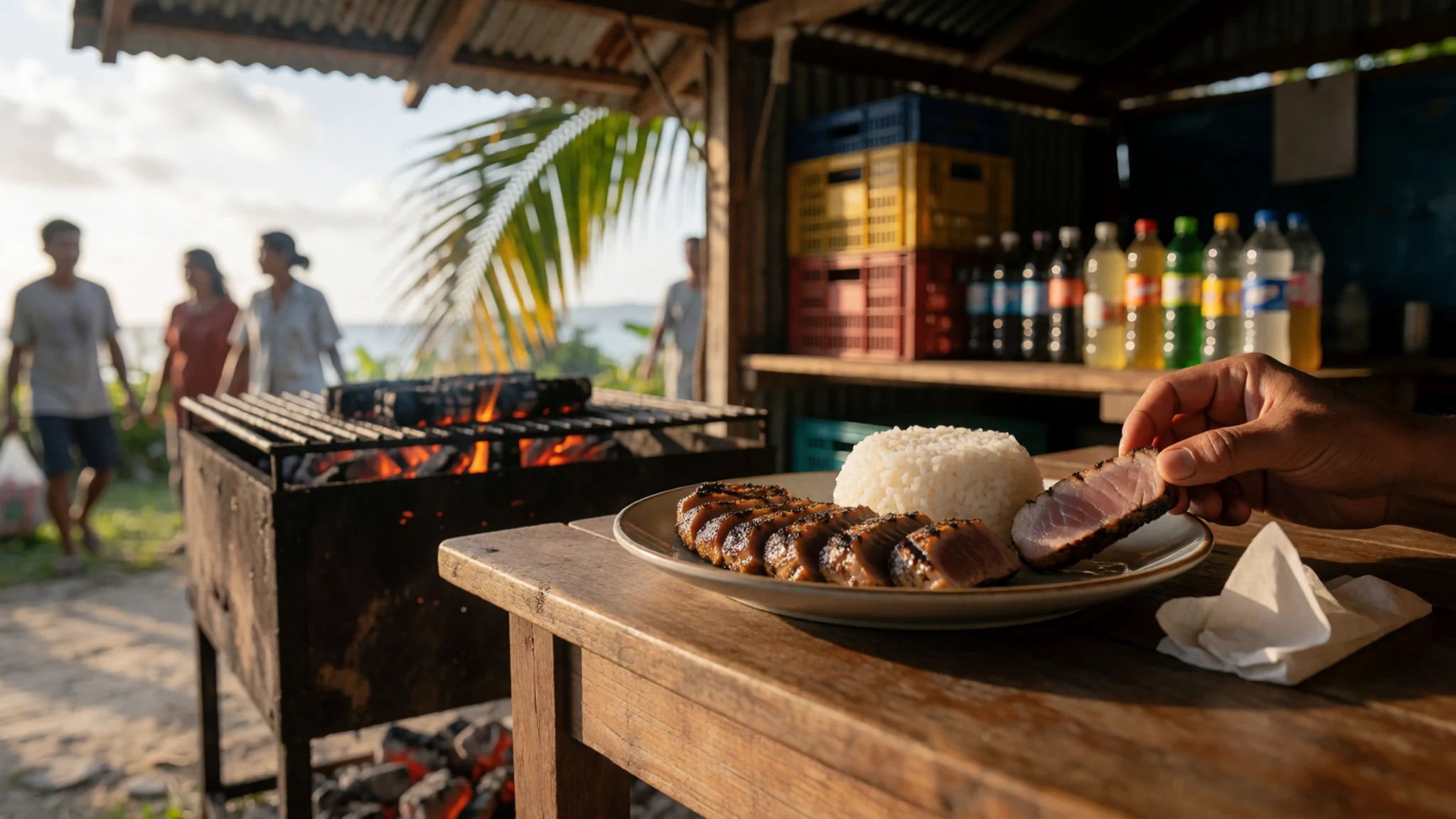
- Fried rice with chicken — Small family-run eateries in the village
Plain, filling and cheap, this is the everyday plate at the village's small family-run eateries. The rice is cooked fast with egg, soy and chicken, and often arrives with a fried egg on top. It is a good counterweight to resort set meals.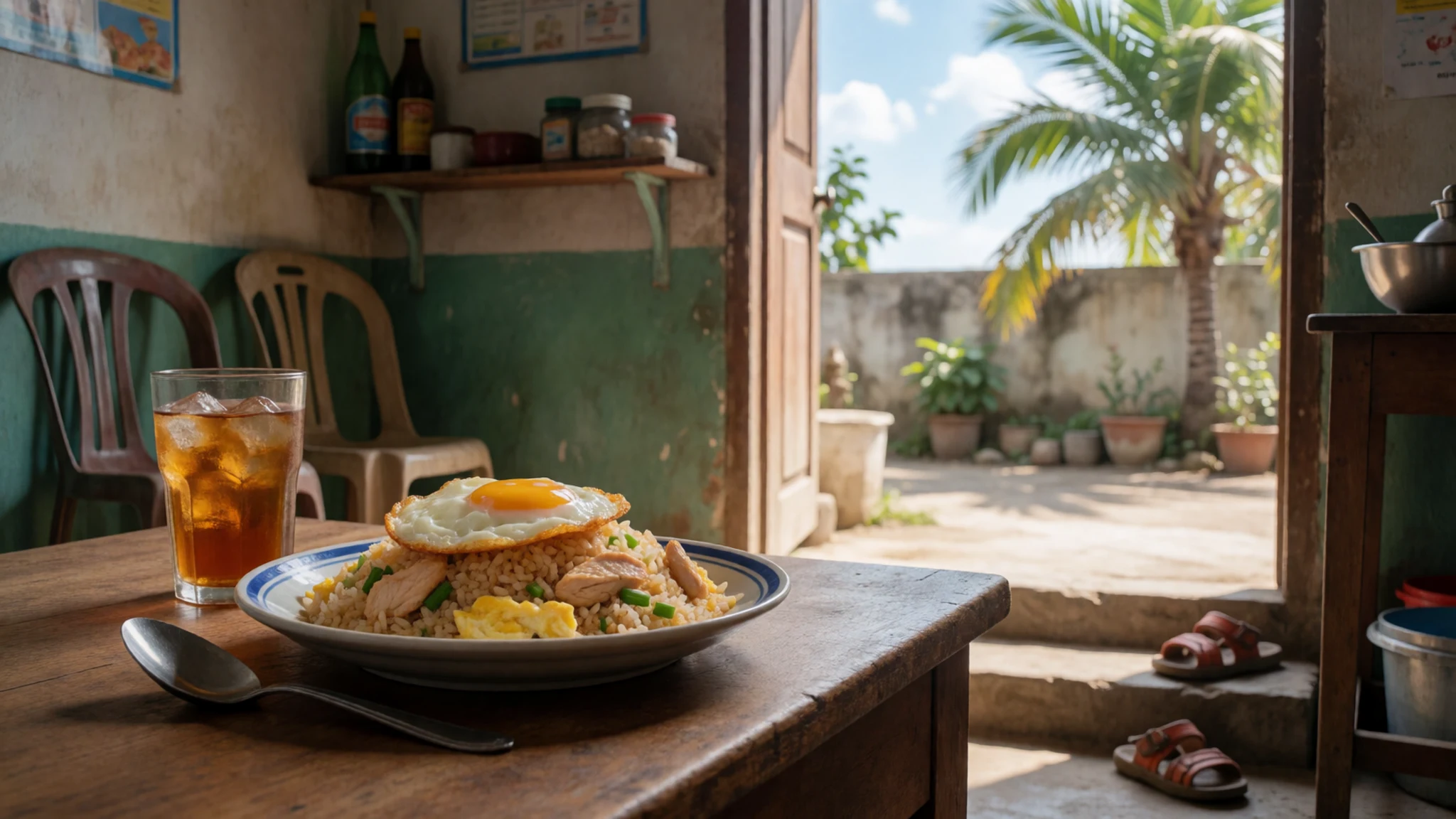
- Noodle soup — Village eateries behind the main resorts
Bowls of noodles in a light, savoury broth are served at the village's simple restaurants and are a reliable choice after a morning's diving. Expect fish or chicken, spring onion and a chilli sambal on the side to adjust the heat. - Resort buffet seafood — Resorts and lodges
Resorts and lodges serve all meals to their guests, usually a mix of Malaysian dishes and grilled fish, prawns or squid. It is convenient and filling, though meals at the village eateries give better value and put money into local hands. - Burgers and snacks — Village cafés in the centre of the island
A few village cafés cook large burgers and other quick plates for divers and day visitors alike. They are not traditional, but they are popular, generous and a useful break from fish and rice if you are staying for several days.
Plan it
Best time. February and September are the driest months, while December is the wettest; the weather remains hot and humid year-round, so check conditions with your operator before booking.
How long. 2–4
Getting there. Fly to Tawau, the nearest regional airport, then travel overland to Semporna, the mainland port. From Semporna take a boat to Mabul: about 30 minutes by speedboat or 1½ hours by slow boat. Resorts and lodges arrange transfers for their guests; the public jetty in Semporna also has boats for independent visitors.
Budget. high
Tips
- Book your accommodation and diving together, as most dive shops belong to resorts and lodges and may not take divers staying elsewhere.
- Bring enough cash from Semporna, as the island has few places to withdraw money and small village eateries prefer cash.
- Carry your own refillable bottle and take all rubbish back to Semporna with you.
- Expect high costs on the island compared with the mainland, since there are few local guesthouses and resorts set most prices.
- Protect yourself from the sun on boats, with long sleeves, a hat and reef-safe sun cream.
Etiquette
- Ask before photographing villagers, especially women and children.
- Cover your shoulders and knees when walking through the village.
- Do not touch or stand on coral and keep a respectful distance from turtles.
Nearby
Sources
- Wikidata Q1924217 (CC0)
- Wikipedia: Mabul Island (rev 1375406109) (CC BY-SA 4.0)
- Wikivoyage: Mabul (rev 5242206) (CC BY-SA 4.0)
- Photo: Mabul Island - Borneo (johnjodeery) (CC BY 2.5)
- Photo: Sabah Islands, Darvel Bay with Pushpin Marker for Pulau Mabul (Cccefalon) (CC BY 3.0)
- Photo: Mabul Island - Sabah - Borneo (Dario Severi) (CC BY-SA 4.0)


Wildlife
- Green sea turtle (animal)
The green sea turtle is a big sea turtle named for the green fat beneath its shell, not for its shell, which is olive to black, because it eats only seagrass. Off Mabul, outside one of the dive lodges, you can slip into the sea from the beach and, with a little luck, meet one among the coral and fish. Be patient and gentle in the water.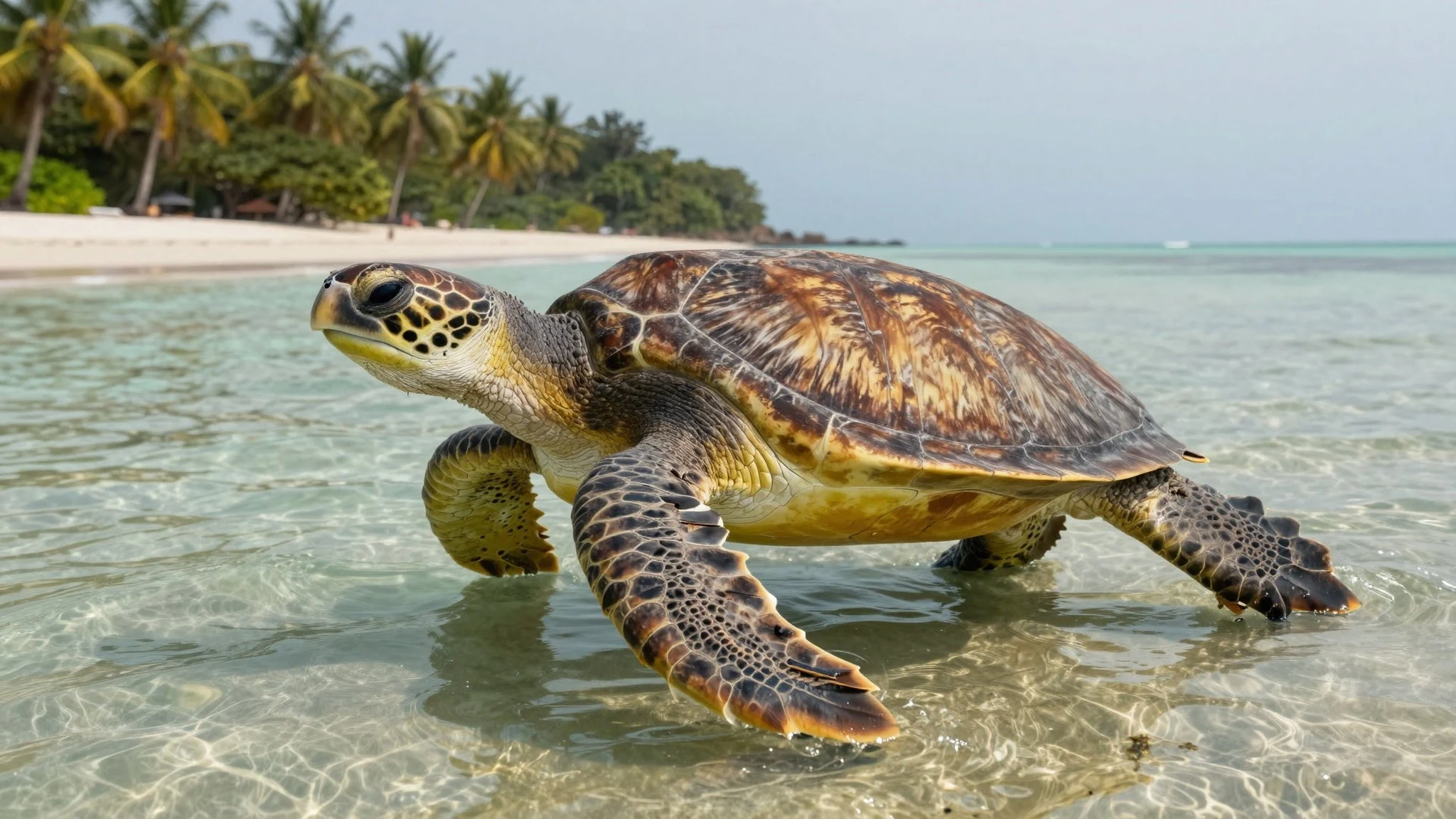
- Painted frogfish (animal)
The painted frogfish is a funny little fish, a member of the frogfish family, also called the painted anglerfish. It lives across the Indo-Pacific, and Mabul is where visitors go to hunt for tiny sea creatures like it, alongside nudibranchs and crustaceans. Finding one takes slow, patient swimming, because small life here rewards those who take their time and look closely.