Lukang
Lukang, Taiwan
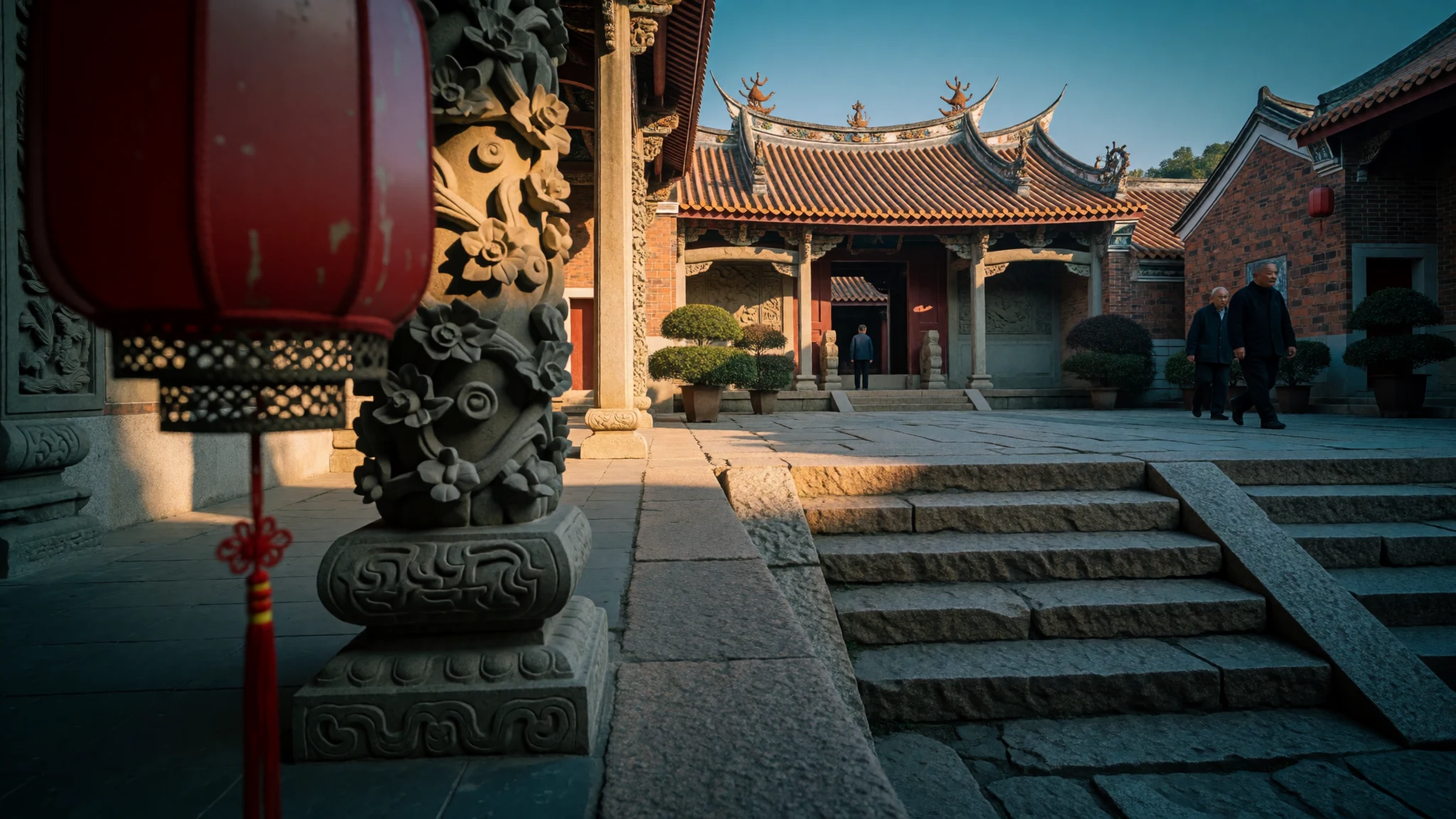
Lukang is a former rice port on Taiwan's west coast where temples, brick lanes and old bakeries survived because the money went elsewhere.
The place
Lukang is an urban township on the west coast of Taiwan, in northwestern Changhua County, facing the Taiwan Strait across flat land only about 3 metres above sea level. Around 82,000 people live here. Older books spell the name Lugang, but the national ministry decided to keep the older Lukang rather than switch to the pinyin form. The town is a tangle of narrow lanes, temple courtyards, brick shopfronts and old trading houses, and the Tourism Bureau has named it among the country's top small tourist towns. It still feels like a working market town rather than a museum. Families burn incense at neighbourhood temples, bakeries sell local cakes, and the Taiwanese heard in the streets is close to the speech of Quanzhou, across the strait, where many of the first settlers came from. Much of its character comes from a gradual loss of importance. The harbour silted up, the railway went elsewhere, and the money and the bulldozers followed other cities, so the older streets survived largely intact. Day trippers arrive from the bigger cities nearby, and weekends and festival days can be crowded, with the main old street shoulder to shoulder. Weekday mornings are calmer, and the back lanes are quiet most of the time. Summers are hot and sticky, so the town is best walked slowly, with stops in temple halls for shade.
Its story
Lukang grew rich as a sea port in the eighteenth and nineteenth centuries, when rice from the central plains was loaded onto boats here for the trip across the strait. At its peak it ranked as Taiwan's second city after Tainan, larger than Bangka, now a district of Taipei. Settlers came mostly from Quanzhou and Xiamen in Fujian, bringing their dialect, their gods and their music. Nanguan, a soft chamber music with roots in Quanzhou, is still popular in Lukang. In the late nineteenth century the Huang and Koo clans were the most prominent families. Then the harbour silted up and ships could no longer reach the quays. Locals also refused to let the railway pass through, and trade drifted to towns that had it. Lukang fell down the rankings, though under Japanese rule it was still the island's fifth largest city, and it was administered as Rokkō town within Taichū Prefecture. That slow decline had one lucky side effect. While Tainan and Taipei pulled down old buildings to modernise, Lukang had little money or pressure to do the same, so its lanes, shophouses and temples stayed much as they were. The modern township dates from 1946, according to the records, but the streets feel far older than that.
What to see
- Longshan Temple — Old town, southern side
Lukang's Longshan Temple is a large Qing-era complex known for its carved stone, painted beams and clay figures of birds and flowers. The decoration is dense but not showy. Go early, before tour groups arrive, and spend time in the courtyards, where the roofs and carvings reward a slow look.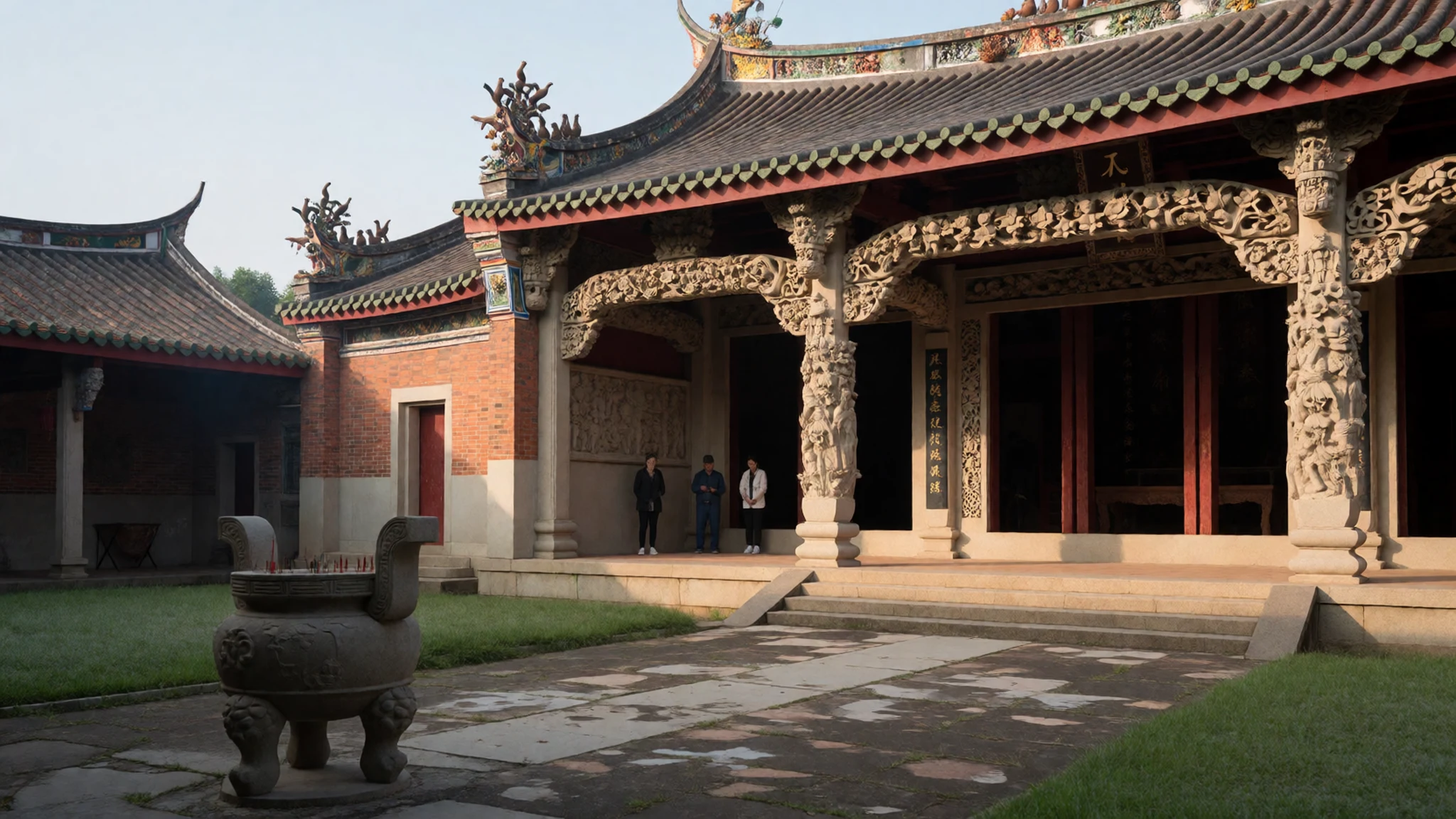
- Lugang Mazu Temple — Central Lukang
This temple is dedicated to Mazu, the sea goddess whom the port's settlers prayed to before crossing the strait. After many expansions it is now a grand, busy hall, with old plaques from the imperial era. It is a working place of worship, so expect incense smoke, queues of worshippers and the sound of offerings.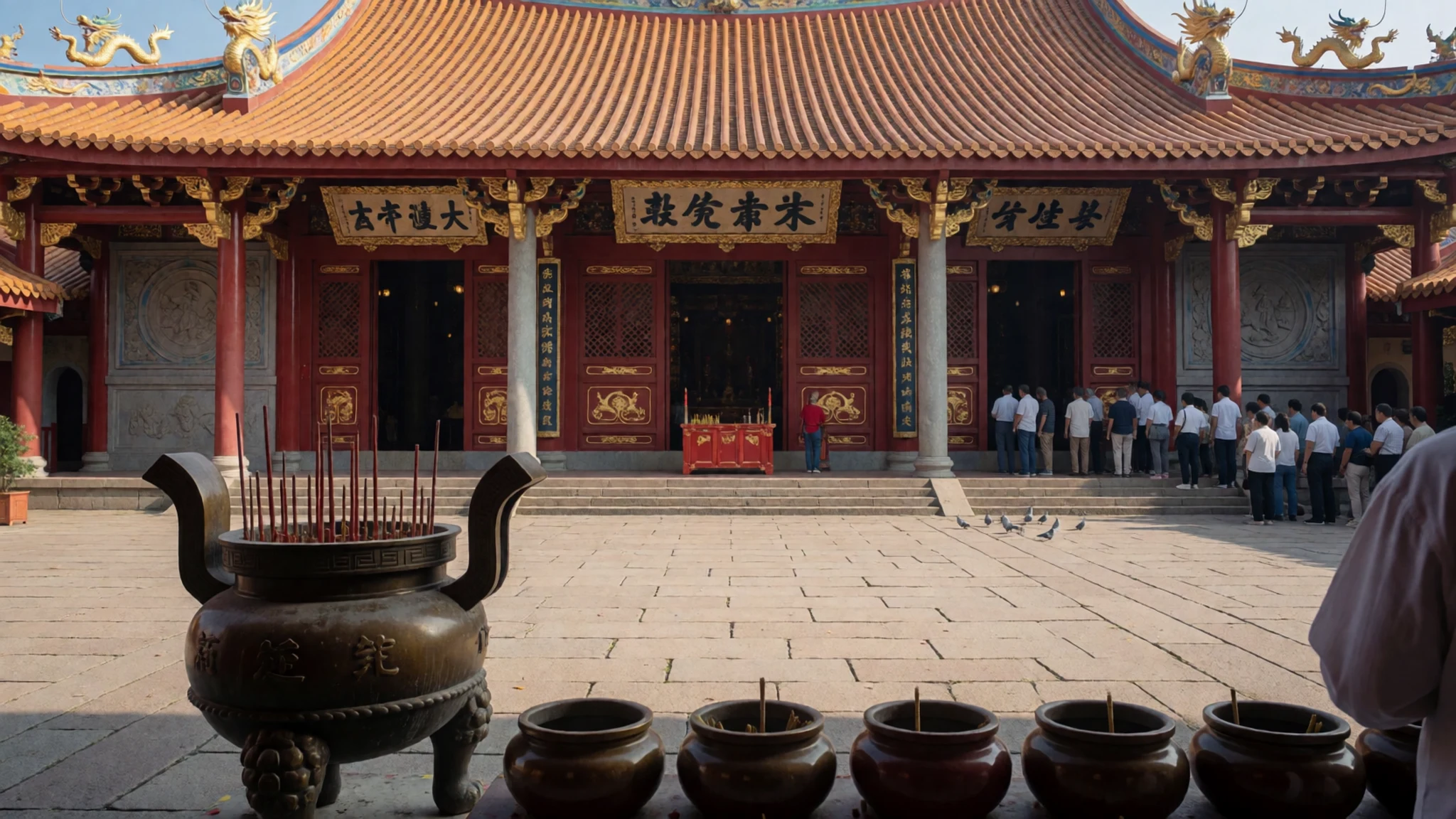
- The old street and its alleys — Old town
The old street and its side lanes are where Lukang's brick shophouses and narrow passages survive. Bakeries, craft stalls and snack sellers fill the main strip, while the quieter alleys behind it show the town's older layout. Wander without a plan and let the lanes lead you.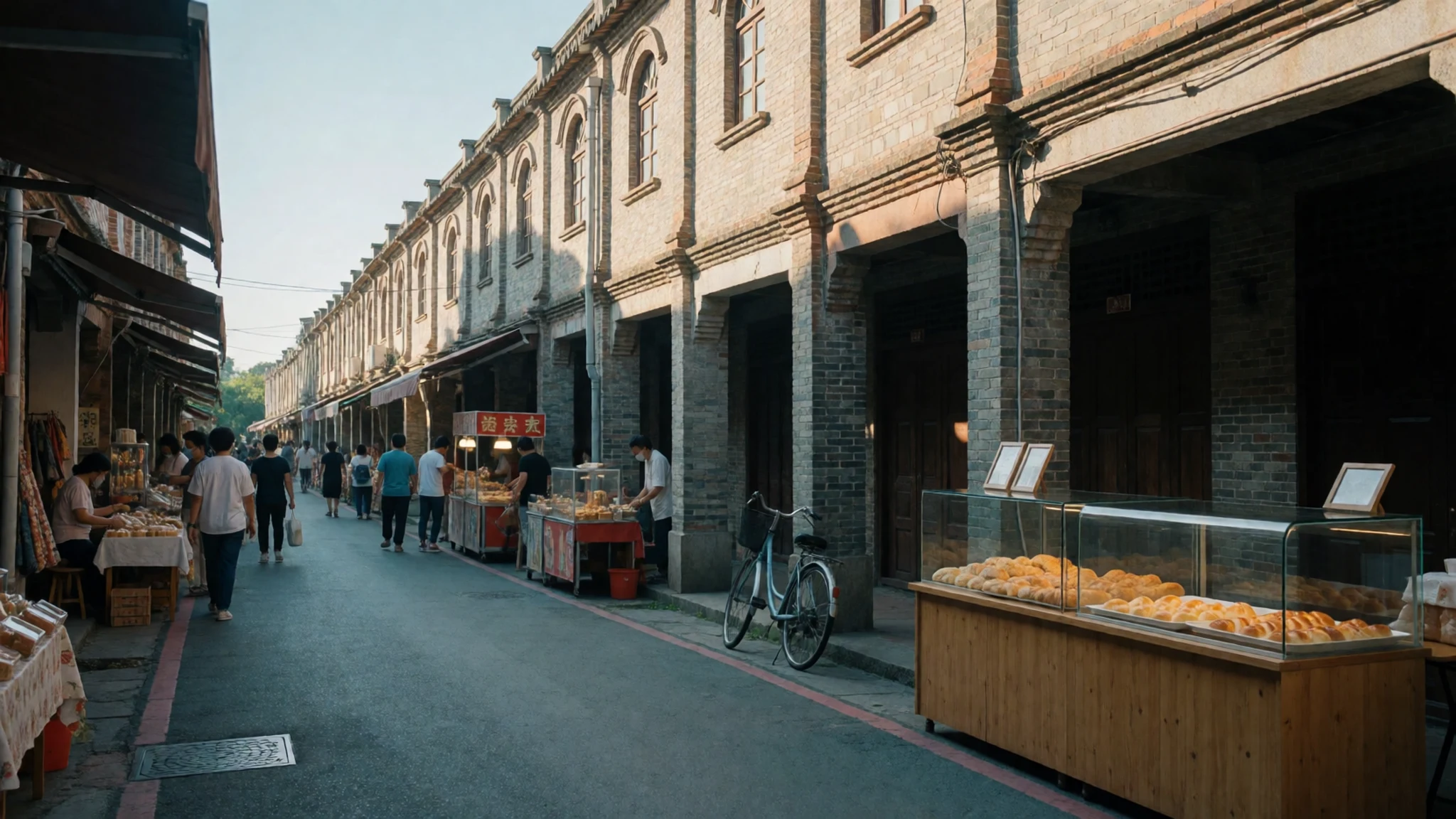
- Husheng Temple (Glass Temple) and Taiwan Glass Gallery — Outskirts, towards the coast
Husheng Temple is an unusual Mazu temple built in the style of a traditional temple, but made of glass. The Taiwan Glass Gallery stands across the road, with displays on glassware and how it is made. It sits away from the old centre, so it suits a short taxi or scooter hop.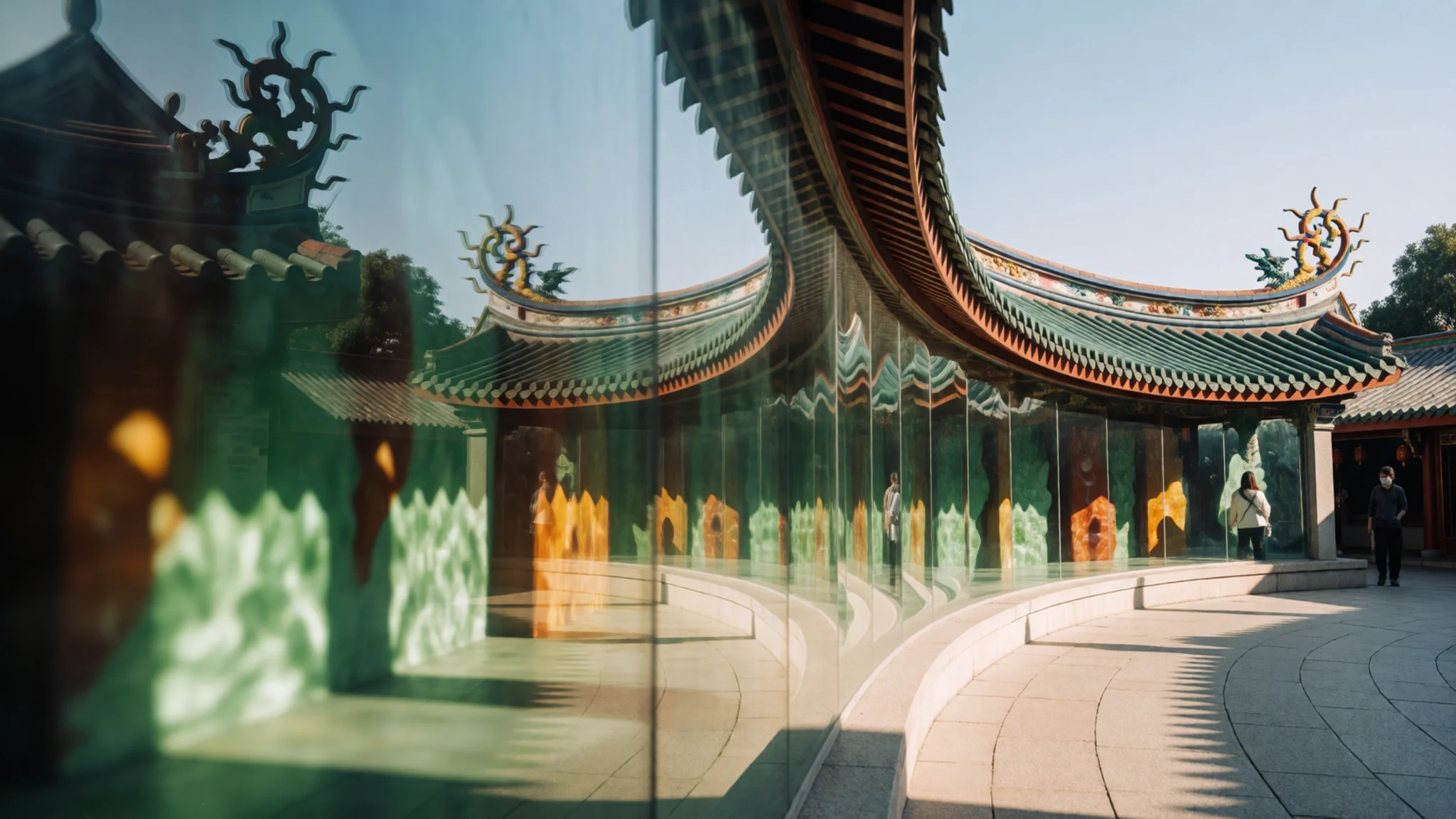
- Lukang Folk Arts Museum — Town centre
The Folk Arts Museum holds Ming and Qing dynasty objects, including lacquerware, porcelain, carved stone, embroidery and musical instruments, along with old photographs. It helps explain the wealth and taste of the port's merchant families, and it is a good shaded stop on a hot afternoon. Check the official site for opening details.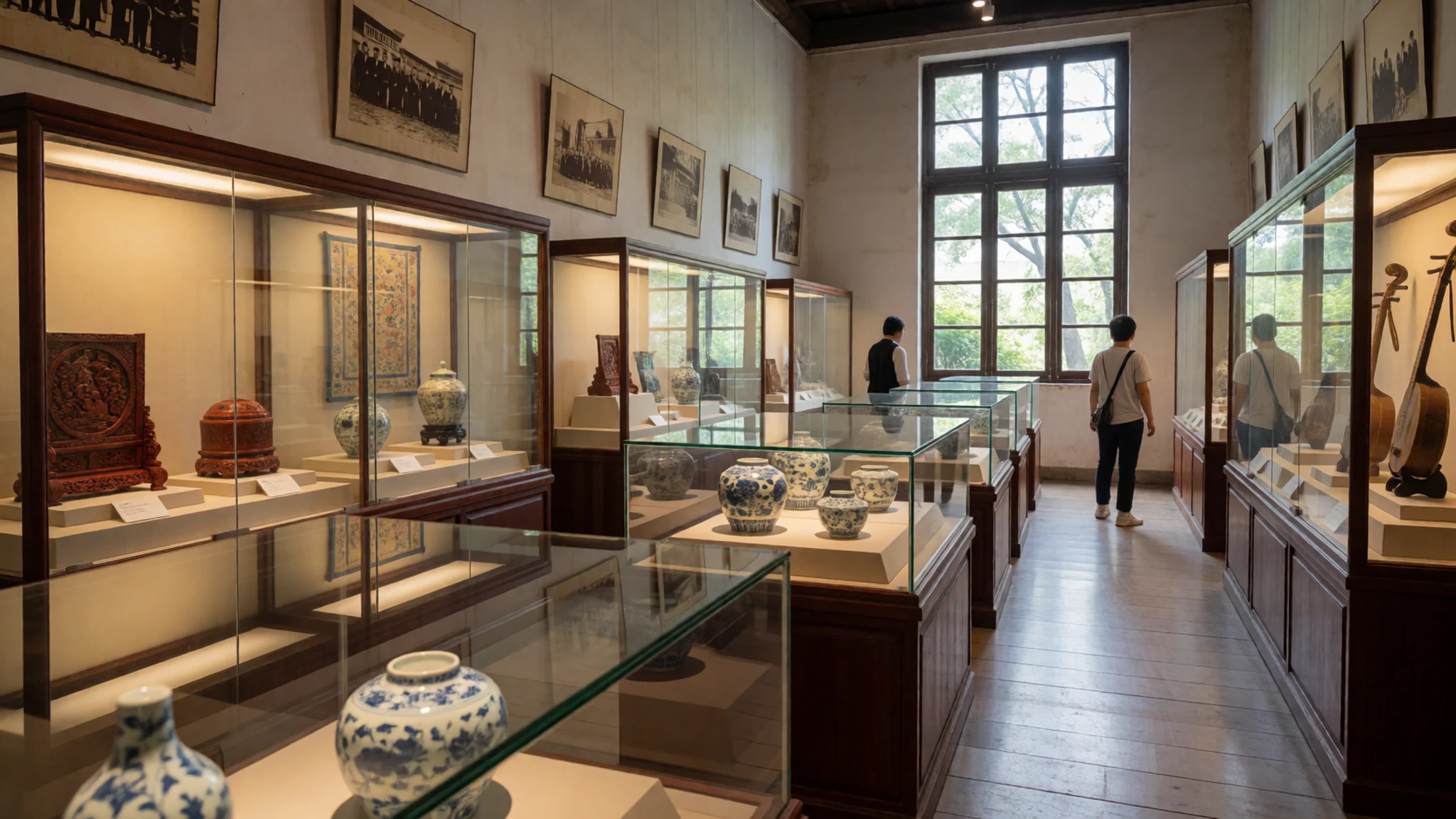
- Wen Wu Temple — Old town
Wen Wu Temple lies close to the old centre and is easy to add to a temple circuit between Longshan and the Mazu temple. It is quieter than its bigger neighbours, which makes it a gentle place to sit and watch local worshippers at a calmer pace.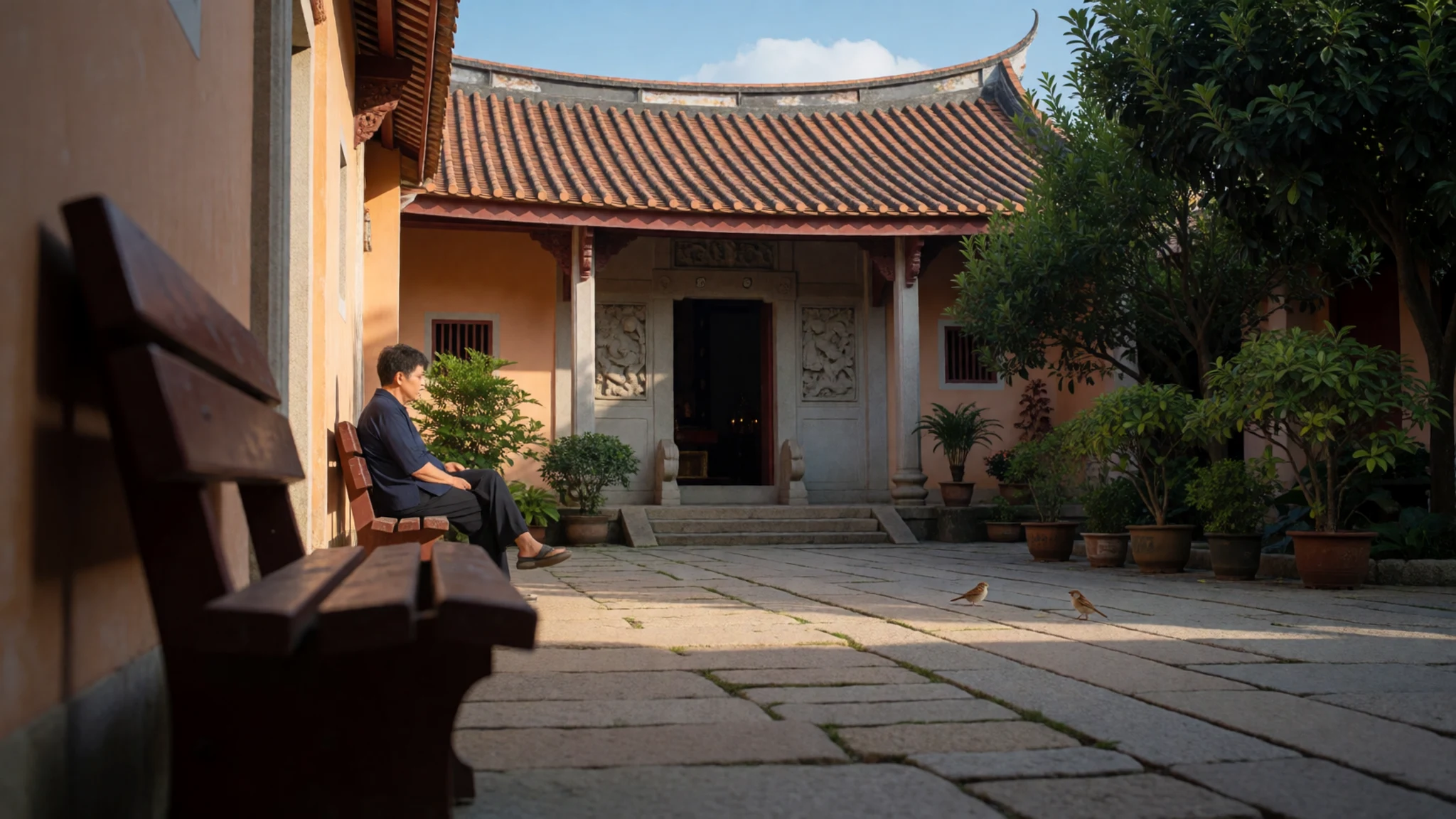
Culture
Lukang is a town shaped by Hoklo settlers from Fujian, and its culture still reflects that. Temples are the centre of social life. Mazu, protector of sailors, is honoured here as the goddess who watched over the sea crossing, and her festivals fill the streets with processions, music and firecrackers. Worship is practical and daily: people arrive with incense, bow to several deities in turn, and leave offerings of fruit or flowers. The local speech is Taiwanese, close to that of Quanzhou, and older residents may use it more than Mandarin. Nanguan, a slow, delicate music with Quanzhou roots, is still played and taught, and a concert in a temple courtyard is a good way to hear it. Craftsmanship also matters here, from temple carving and lacquer to embroidery and glass. The old merchant clans left behind houses and halls that reflect a taste for fine wood and stone. Food is part of the same inheritance, with cakes and snacks that families have made for generations. Visitors will find people proud of the town's preservation, and happy to explain a temple's gods or a local snack if asked politely. Visitors should keep their voices low in temple halls, never step between worshippers and the altar, and ask before photographing anyone at prayer.
What to wear
Lukang's traditional dress comes from its Hoklo heritage, as seen in the Qing-era embroidery and textiles held at the Folk Arts Museum. Families once wore long gowns and jackets in silk and cotton, with embroidered borders and panels, and brides and festival performers still sometimes wear richly embroidered outfits. Today this dress appears mainly at weddings, temple festivals and in costume shops and museums. In daily life people wear what is common across Taiwan: T-shirts, shorts or light trousers, sundresses and sports sandals, with a rain jacket or umbrella close at hand. Older residents may wear more modest, long-sleeved clothing on temple visits. Visitors should dress for heat and humidity, in loose, breathable cotton or linen, with a hat and sunscreen for the open lanes. Temples are working places of worship, so covered shoulders and knees are respectful, and very short or low-cut clothes can feel out of place. A light scarf is handy for covering up. Wear comfortable, closed or well-strapped shoes for uneven brick and stone, and carry a compact umbrella, as showers can arrive suddenly in the warmer months. In winter a thin jacket is enough, though sea winds can make evenings feel cooler than expected.
What to eat
- Ox tongue cakes (牛舌餅) — Old-style bakeries along the old street
Flat, oval pastries named for their shape, with a thin crisp shell and a lightly sweet filling. They are a Lukang signature and are sold as gifts and snacks. Buy a small bag fresh and eat a few while they are still crisp.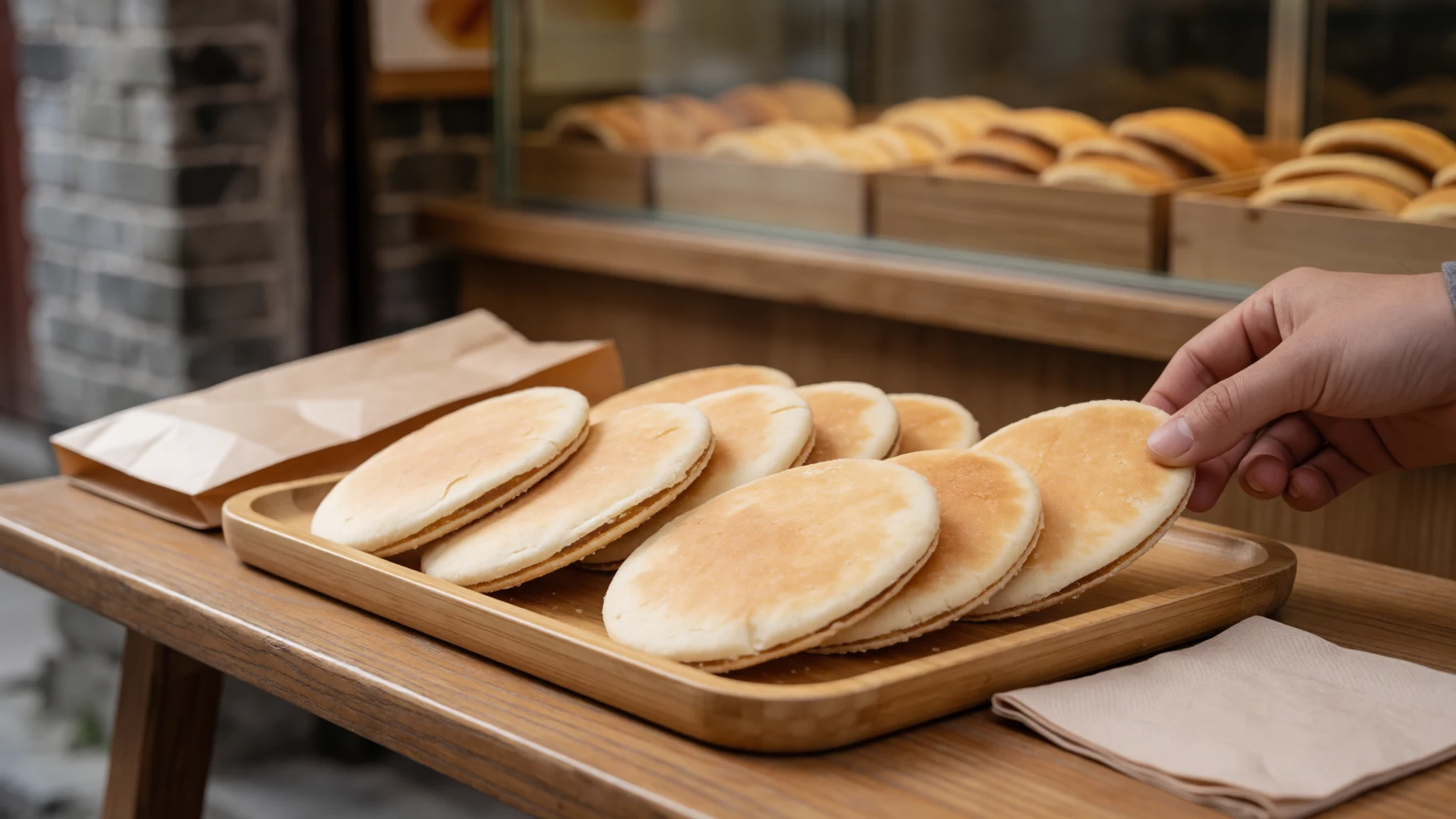
- Oyster pancakes — Street stalls and snack sellers near the temples
A soft, chewy pancake with fresh oysters, egg and greens, topped with a sweet-savoury sauce. It suits a coastal town and is made fresh on a hot griddle. It is best eaten hot, standing at the counter or at a simple table nearby.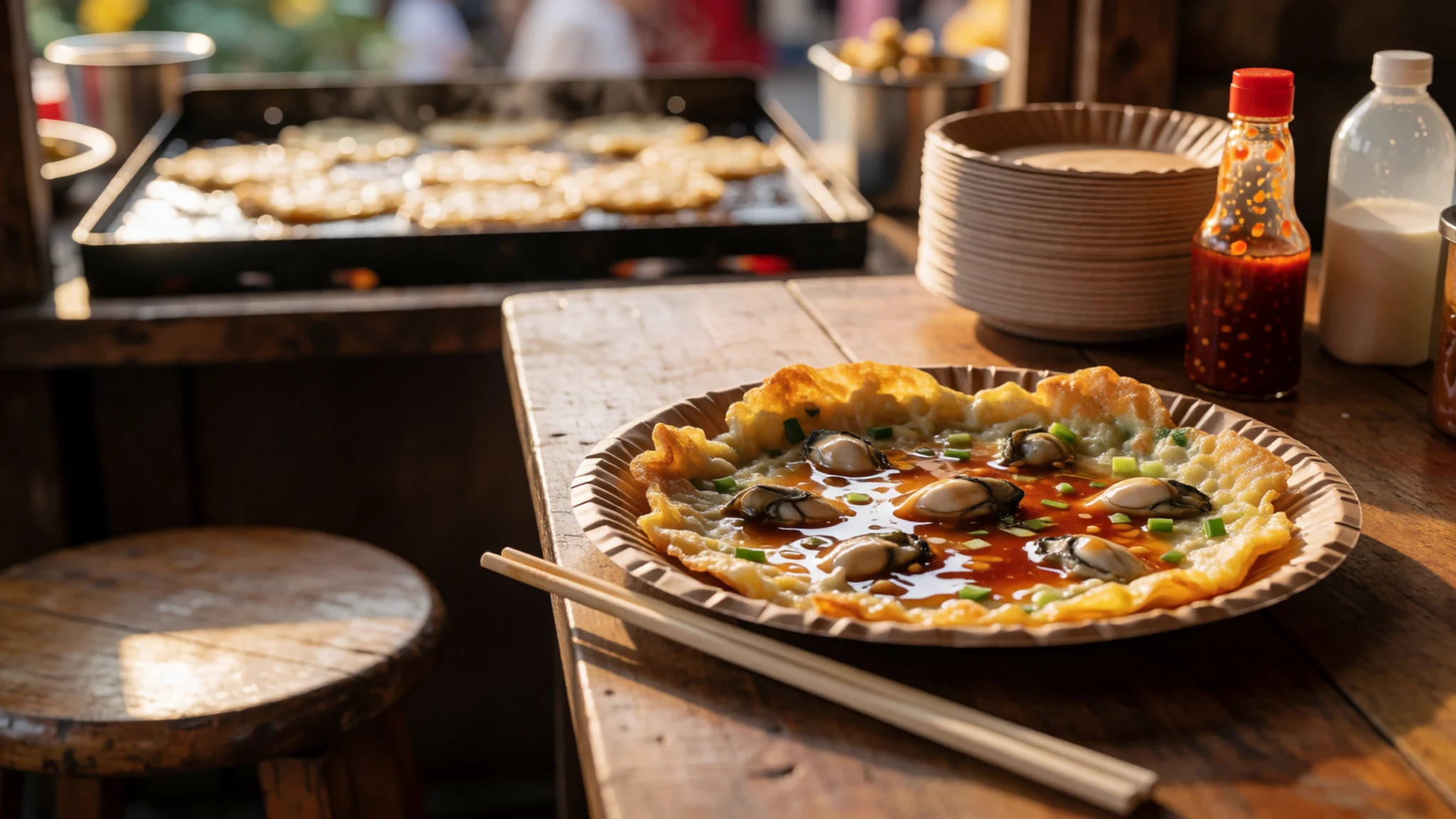
- Yu Jen Jai cakes (玉珍齋) — Old bakeries in the central old town
The traditional cakes from this old bakery are among the local specialities, often boxed as souvenirs. They come in several fillings and are good with tea. Check the official town website or the shop itself for what is on offer. - Thick noodle soup (misua) — Stalls and small eateries around the temple lanes
A comforting bowl of fine wheat noodles cooked down in a thick, savoury broth, a common Taiwanese street snack. It is a good, cheap way to refuel between temples, especially on a cooler day. Ask for it at the stalls clustered near the temple lanes.
Plan it
Best time. October–November and March–April, when the weather is milder and the lanes are comfortable to walk. Summer is hot, humid and can bring typhoons and heavy rain, and winter evenings can feel breezy near the coast.
How long. 1–2
Getting there. Taichung International Airport is the nearest airport, and Taoyuan is the main international gateway. By rail, take the high-speed rail to Taichung or Changhua, then a local bus or taxi for the last leg to Lukang. Check current timetables before you travel.
Budget. low
Tips
- Visit on a weekday morning to avoid the weekend crowds on the old street
- Carry some cash for small stalls, bakeries and temple offerings
- Bring water, a hat and sunscreen, as the lanes have little shade in summer
- Start with the big temples early, then wander the back alleys at midday
- Check the official township site for events and festival dates: https://www.lukang.gov.tw/English/
Etiquette
- Keep your voice low and do not touch offerings in temples
- Ask before photographing worshippers, and avoid flash near altars
- Dress modestly when entering temple halls
Nearby
Sources
- Wikidata Q701693 (CC0)
- Wikipedia: Lukang (rev 1379259443) (CC BY-SA 4.0)
- Wikivoyage: Lukang (rev 5353242) (CC BY-SA 4.0)
- Photo: Lokkang, Luuva (CC BY 3.0)
- Photo: An alley in the old town of Lukang, 林高志 (CC BY-SA 4.0)
- Map from Formosa (Taiwan) 1:50,000 AMS Series L792, Army Map Service (Public domain)
- Map of the Taichung area, Army Map Service, 1954 (Public domain)
- Photo: Lukang Lung-shan Temple 2004, a-giâu. (CC BY 3.0)
- Photo: monument in Taiwan, Regina800809 (CC BY 3.0)
- Photo: Lukang Township Office, Changhua County, Bunkichi Chang (CC BY 2.5)
- Photo: 鹿港老街08, 林高志 (CC BY-SA 4.0)


